Search for a drink that lowers blood pressure and the answers arrive by the dozen: beet juice, hibiscus tea, pomegranate juice, cherry juice, vinegar. Almost none of those pages say by how many points, or how sure anyone is. The gap matters, because the trials disagree with each other more than the headlines admit.
Some drinks lowered systolic pressure (the top number on a reading) by about 7 mmHg (millimeters of mercury, the unit on a blood pressure cuff) in pooled trials. Others, including kefir, Concord grape juice and chokeberry juice, produced little or nothing measurable in controlled trials. A few popular choices raise it instead.
Sorting the first group from the second takes more than a list of what each drink contains. It takes dose, duration, the size of the trial, and an honest look at the studies that came back empty. One of the most popular drinks on this page has a Cochrane review calling its evidence insufficient, while two larger meta-analyses of the same drink point the other way.
How this ranking works
The 12 drinks below are ordered by three things: the size of the average drop in blood pressure, the number of trials behind it, and how confident the researchers were in the result. The order is a judgment call that weighs all three, not a formula. Every figure is a group average from published research, and no single reader is guaranteed to match it.
Those averages come from different studies run on different people, so they are not head-to-head comparisons. A reduction of 7 mmHg in one review and 5 mmHg in another does not prove the first drink beats the second. It does show where the strongest signals sit. The table below sets the dose, the evidence type, and the main caveat side by side.
The 12 best drinks to reduce blood pressure, ranked by the evidence
1. Hibiscus tea
Hibiscus tea has one of the largest pooled effects on this list, and the biggest argument attached to it. A meta-analysis that pooled 17 trials in Nutrition Reviews reported an average systolic drop of 7.1 mmHg, though the confidence interval was wide (from 1.2 to 13.0 mmHg) and the results varied sharply from trial to trial.
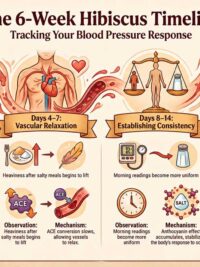
The best-known single trial gave 65 adults with prehypertension or mild hypertension three 240 mL servings of hibiscus tea daily for six weeks. In the Journal of Nutrition, their systolic pressure fell 7.2 mmHg, compared with 1.3 mmHg on placebo.
A 2025 overview of 26 randomized trials and 1,797 people in Complementary Therapies in Medicine reported that the effect grew with the dose, and that the evidence was most credible in adults over 50 and in trials longer than four weeks. It also recorded a minor rise in a liver enzyme (AST).
Then comes the dissent. A Cochrane review of roselle (hibiscus) for hypertension turned up only one eligible trial, in 60 people with type 2 diabetes taking capsules, and rated the certainty very low. That says less about hibiscus tea than about how strictly Cochrane screens trials. Still, it is a fair reason to hold the 7 mmHg figure loosely.
Three 240 mL cups a day for six weeks is the dose the best trial used. Whether the 7 mmHg shows up on your own cuff is the one question none of the reviews can answer.
2. Pomegranate juice
The headline number for pomegranate juice is 7.9 mmHg systolic and 3.2 mmHg diastolic (the bottom number), the average drop across 22 randomized trials in a 2024 meta-analysis in Phytotherapy Research.
The effect was larger in people whose starting systolic pressure was above 130. Heterogeneity was high, at roughly 90%, which means the trials disagreed widely about the size of the effect.
An earlier review in Nutrition Research reached a different verdict. Its authors pooled eight trials covering 619 people and called the evidence for pomegranate supplements weak. Both can be true: the average result looks large while the underlying trials are uneven.
Anyone taking prescription medication should check with a pharmacist before making pomegranate juice a daily habit.
3. Beetroot juice
Beetroot juice comes with a clear mechanism and several meta-analyses behind it. Beets are rich in dietary nitrate, which the body converts into nitric oxide, a molecule that relaxes blood vessels.
In a trial published in Hypertension, 68 people with high blood pressure drank 250 mL of beetroot juice daily for four weeks. Clinic readings fell 7.7 mmHg systolic, and home readings fell 8.1 mmHg.
The pooled picture is smaller. Across 11 trials and 349 patients, a 2024 meta-analysis in Nutrition, Metabolism and Cardiovascular Diseases put the systolic drop at 5.3 mmHg, with no consistent effect on diastolic pressure or 24-hour readings, and the certainty of the evidence graded low.
New work adds a twist. A 2025 study in Free Radical Biology and Medicine gave nitrate-rich beetroot juice to young and older adults for two weeks. Mean arterial pressure (the average pressure across a heartbeat) fell about 4 mmHg in the older group and not at all in the younger one, a difference the researchers linked to age-related changes in the oral microbiome and nitric oxide availability. That detail changes the question. The finding is early, and the honest answer is that nobody knows yet how far it generalizes.
4. Tart cherry juice
Tart cherry juice looks impressive on one measure and uncertain on another. In a small trial of 15 men with early hypertension, reported in the American Journal of Clinical Nutrition, a single 60 mL dose of Montmorency cherry concentrate lowered systolic pressure by about 7 mmHg at its peak, two hours later.
Fifteen men and one dose say little about a daily habit. A 12-week trial of 480 mL a day in 37 older adults, published in Food and Function, did report lower systolic pressure and LDL cholesterol, but glucose, triglycerides and body mass index rose. Juice carries sugar, and the trial was too small to say which effect wins.
5. Cocoa
Flavanol-rich cocoa products lowered both systolic and diastolic pressure by about 1.8 mmHg on average across the 35 trials reviewed in the Cochrane Database of Systematic Reviews. The effect was larger, around 4 mmHg systolic, in people who already had high blood pressure.
Sweetened cocoa mixes are a different product from the cocoa used in the trials. A cup of hot cocoa made with unsweetened cocoa powder and low-fat milk is the closest everyday match.
6. Green tea
Green tea is where the evidence stops agreeing with itself. One pooled analysis of 13 studies in the European Journal of Nutrition measured drops of 2.1 mmHg systolic and 1.7 diastolic. Another group pooled 14 trials and 798 people for the Journal of Nutrition and found nothing significant after four to 24 weeks of tea.
The reconciling detail may be the dose and the product. Trials of green tea catechin extracts and trials of ordinary brewed tea are not the same experiment. Green tea earns its place because it costs little, can replace a sugary drink, and might lower pressure slightly.
7. Black tea
Black tea shows a similar small effect at a higher dose. Four to five cups a day lowered systolic pressure by 1.8 mmHg and diastolic by 1.3 mmHg in a PLOS ONE review of 11 studies and 378 people. That is a lot of tea for a small change.
Black tea contains caffeine, so anyone sensitive to it should count those cups toward a daily limit.
8. Low-fat milk and probiotic milk drinks
Probiotic fermented milk lowered systolic pressure by 3.1 mmHg and diastolic by 1.1 mmHg in a meta-analysis of 14 trials and 702 people in the British Journal of Nutrition. Plain low-fat milk has softer support: a review of dairy cohorts covering about 45,000 people in the Journal of Human Hypertension linked low-fat dairy to a 16% lower risk of developing hypertension. That is an association, and it cannot show that dairy caused the lower risk.
Kefir, often grouped with probiotic drinks, did not fare as well: seven trials pooled in Endocrinology, Diabetes and Metabolism in 2025 showed no significant effect on blood pressure. The positive result applies to probiotic fermented milk, and kefir did not reproduce it.
9. Unsalted tomato juice
A Japanese study in Food Science and Nutrition followed 94 adults with untreated prehypertension or hypertension who drank unsalted tomato juice. Average systolic pressure fell from 141.2 to 137.0 mmHg, and diastolic from 83.3 to 80.9.
The study had no control group and received funding from a food manufacturer, so treat the result as a lead worth watching. Unsalted matters here, since many commercial tomato juices contain added salt.
10. Hesperidin-enriched orange juice
Orange juice earns a place only when it has been fortified with hesperidin. In a trial of 159 adults with mildly elevated blood pressure, published in the European Journal of Nutrition, drinking 500 mL of hesperidin-enriched orange juice daily for 12 weeks lowered systolic pressure and pulse pressure (the gap between the top and bottom numbers). This is a single trial.
11. Vinegar drinks
Vinegar is a popular home remedy for blood pressure. Each additional 30 mL a day was associated with a 3.3 mmHg drop in both systolic and diastolic pressure in a dose-response analysis in Complementary Therapies in Medicine, though the authors graded the certainty low.
Vinegar belongs here as a low-certainty option: worth a trial, with expectations to match.
12. Water, as the swap
Water does not lower blood pressure like a drug, and one small trial suggests that more of it is not automatically better. In a study of 20 healthy people in Clinical and Experimental Hypertension, adding two liters a day for two weeks raised average daytime mean arterial pressure from 89.0 to 91.4 mmHg.
In the PREMIER study of 810 adults, reported in Circulation, each sugar-sweetened drink cut from a person’s daily intake was associated with a 1.8 mmHg lower systolic pressure and a 1.1 mmHg lower diastolic pressure. Water works best as a substitute for sugary drinks.

How much can a drink really lower blood pressure?
The chart below lines up the pooled systolic changes from meta-analyses. Pomegranate juice and hibiscus tea sit at the top, beetroot juice follows, and the teas and cocoa cluster near 2 mmHg. Tart cherry, tomato juice, and enriched orange juice are missing because the research reviewed here has no pooled estimate for them.
A drop of 5 to 7 mmHg is meaningful, yet it happens only with daily use over weeks, and several of the pooled results carry wide uncertainty. The hibiscus and pomegranate trials disagreed widely about the size of the effect, so a cuff on your own arm settles what the pooled numbers cannot. No drink replaces prescribed treatment.

Drinks that raise blood pressure
Some popular drinks work in the opposite direction. One energy drink raised systolic pressure by 4.4 mmHg and diastolic by 2.7 mmHg within hours across 15 studies pooled in the Annals of Pharmacotherapy, and drinks with 200 mg of caffeine or more raised systolic pressure by 6.4 mmHg. That is about the size of beetroot juice’s pooled drop in the opposite direction, and it appears within hours.
Caffeine behaves differently in a single sitting than across a habit. At 200 to 300 mg, it raised systolic pressure by about 8 mmHg and diastolic by about 6 mmHg for three hours or more in people with hypertension, according to a review in the American Journal of Clinical Nutrition. Yet coffee trials lasting two weeks showed no sustained rise. The spike is real, and it is temporary.
Alcohol is the drink where cutting back matters most. Heavy drinkers who cut back lowered systolic pressure by 5.5 mmHg and diastolic by 4.0 mmHg across 36 trials and 2,865 people reviewed in Lancet Public Health, while at two drinks a day or fewer, the trials showed no significant effect.
A large Japanese checkup study of 58,943 adults in the Journal of the American College of Cardiology linked stopping one to two drinks a day with a reduction of roughly 1 mmHg in systolic pressure.
Popular drinks that have not earned a place
Several drinks appear on lists of natural blood pressure remedies without strong evidence behind them, and the same story repeats down the list. Cranberry juice lowered diastolic pressure slightly in a Journal of Nutrition trial of 56 adults, then missed its main outcome in a Nutrients trial of 40.
Chokeberry split the same way: a small daytime diastolic drop in a Nutrition Research trial, nothing in a Nutrients trial.
Concord grape juice showed no effect on 24-hour pressure in 64 adults, according to the American Journal of Clinical Nutrition.
Coconut water and lemon water never got that far. The coconut literature rests on tiny studies, such as a West Indian Medical Journal trial of 28 people.
A Journal of Nutrition and Metabolism study linked lemon intake with walking to lower pressure in 101 women, and the design cannot separate the lemon from the walking.
They may still suit a healthy diet, but the trials do not support them as blood pressure drinks.
What to eat and drink together
A drink rarely acts alone. In the DASH trial, published in the New England Journal of Medicine, 459 adults were assigned to different diets. The one rich in fruits, vegetables, and low-fat dairy lowered systolic pressure by 5.5 mmHg and diastolic by 3.0 mmHg on average, with drops of 11.4 and 5.5 mmHg in people with hypertension.
A glass of beetroot juice beside a diet high in sodium and low in produce is a weak intervention. Beside a DASH-style plate, it joins a pattern with trial evidence behind it, and the open question is how much of the benefit belongs to the glass.
What a daily cup can and cannot do
Seven mmHg is a real number, and it is also an average of studies that disagree. A drink that works for six weeks and is abandoned in week seven does nothing, and a drink that is never measured is a guess.
The most useful experiment is a personal one: choose one drink from the top of this list, pour it daily for six weeks, and check your blood pressure at home at the same time each morning. If the average shifts, keep it. If it does not, the evidence was never about you, and the next drink is worth trying.
FAQs about drinks and blood pressure
What is the best drink to reduce blood pressure fast?
No trial reviewed here tested a drink that lowers pressure within five minutes. The fastest signal came from tart cherry concentrate, which peaked at two hours in a small trial of 15 men. Most other effects appeared over weeks of daily use.
Does drinking water help reduce blood pressure?
Water works best as a substitute for sugary drinks. Replacing sugar-sweetened drinks was linked to lower pressure, while doubling water intake raised daytime mean arterial pressure in 20 healthy adults.
Can lemon water lower blood pressure?
The evidence is weak. The one study reviewed here linked lemon intake combined with walking to lower pressure in women, and it could not separate the two habits.
What is the best hot drink to lower blood pressure?
Hibiscus tea has the strongest pooled evidence among hot drinks, followed by green tea and cocoa, both with small effects. The trials gave it daily for several weeks.
What should I drink before bed to lower blood pressure?
No trial reviewed here tested bedtime timing. An unsweetened herbal tea such as hibiscus is a reasonable evening choice because it is caffeine-free, but the timing itself has no evidence behind it.
How long does blood pressure take to fall after stopping alcohol?
No trial reviewed here measured how quickly pressure falls after the last drink. The Japanese checkup study found a dose-dependent reduction, so the larger the cut, the larger the drop.