Your spinal discs absorb fluid while you sleep and can increase by about 10% in volume overnight. That may explain why your back feels worse when you wake.
The worst thing you can do for morning back pain is lie there waiting for it to pass. This is what most people do. And it prolongs the very process causing the pain.
Your spinal discs absorb fluid while you sleep. Unloaded and horizontal, each disc swells by roughly 10% in volume overnight as the spine’s compression is removed. Research published in Spine tracked this directly.
The study measured lumbar disc volume from the end of a normal day through the following morning. The increase corresponded to nearly a full cubic centimeter of absorbed fluid per disc.
By the time your alarm goes off, those discs are at their highest pressure point of the day. The first movement you make is the first load they have managed since you lay down. The pain is the system working as designed. Movement is what resolves it.
Five moves, done in order, take under five minutes. They work by gently reloading the spine, restoring circulation, and waking up the surrounding muscles (the opposite of everything that happens during a prolonged horizontal wait). Most people notice a real difference within the first week. Before starting, one quick check.
Is This Your Kind of Morning Back Pain?
This routine targets mechanical morning stiffness: the kind caused by overnight stillness and disc rehydration. Answer yes or no to each of these:
- Does your back hurt most in the first 30–60 minutes after waking, then ease as you move around?
- Is the pain worst when you first stand up or first sit up, rather than during sustained activity?
- Does it improve in a warm shower?
- Is it worse after sleeping in an unfamiliar bed?
A mostly-yes pattern means you are dealing with mechanical morning back pain, and this routine is directly suited to it. If your pain does not ease with movement, if it radiates down your legs, or if it comes with numbness, tingling, or other symptoms, skip ahead to the warning signs section before attempting any exercise.
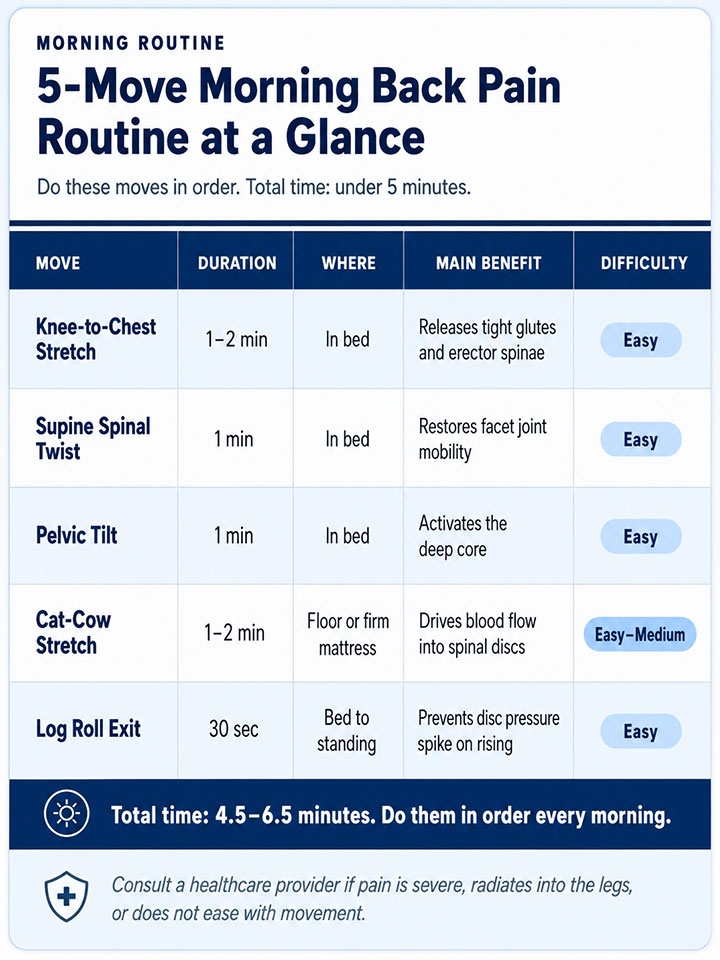
The 5 Best Stretches for Lower Back Pain in the Morning
Do these in order, right after waking. The first three require nothing more than your bed.
Move 1: Knee-to-Chest Stretch
Most people trace their morning stiffness to the lower back. A significant portion of it originates in the hips. The glutes compress overnight and pull on the lumbar spine, and that tension contributes more to the morning ache than many people realize.
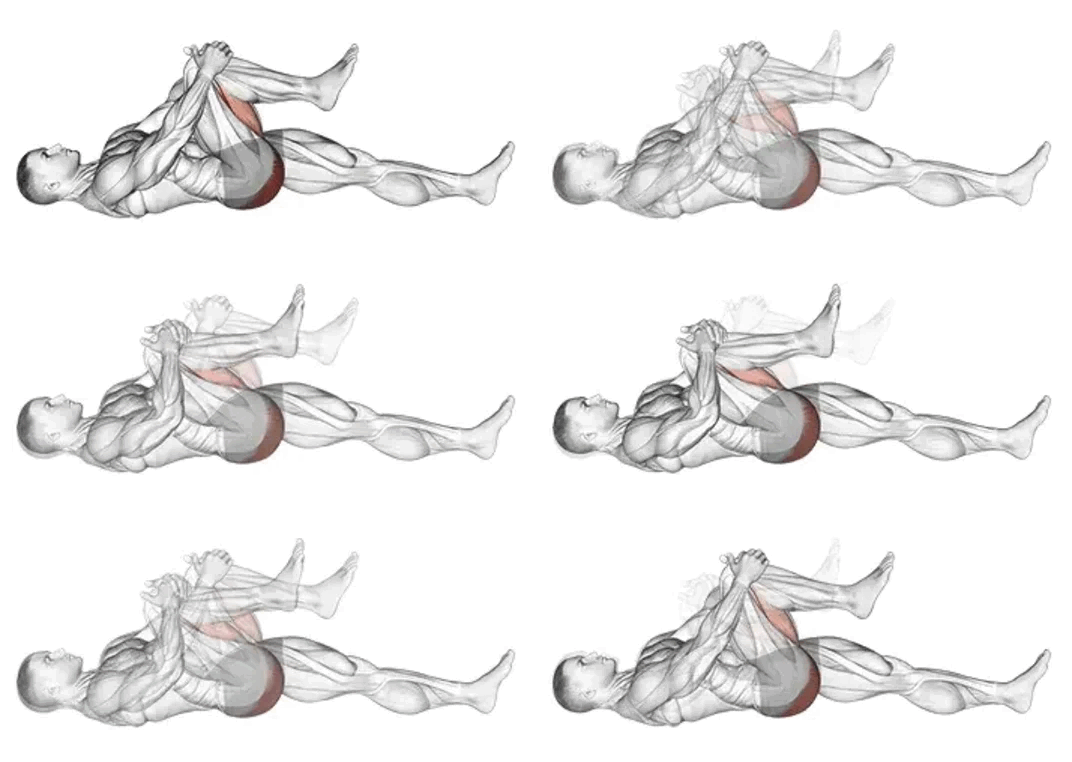
- Lie on your back.
- Slowly pull one knee toward your chest using both hands.
- Hold for 20–30 seconds, breathing normally.
- Release and switch legs.
- Repeat 2–3 times per side.
The erector spinae (the long muscles running either side of your spine) and the glutes are both targeted here. Keep the opposite leg relaxed on the mattress. If it angles upward, you are reducing the stretch in the hip you are trying to reach.
Move 2: Supine Spinal Twist
The facet joints in your lumbar spine guide rotation and have been compressed in the same position for six to eight hours. Restoring mobility there takes deliberate coaxing, not force.
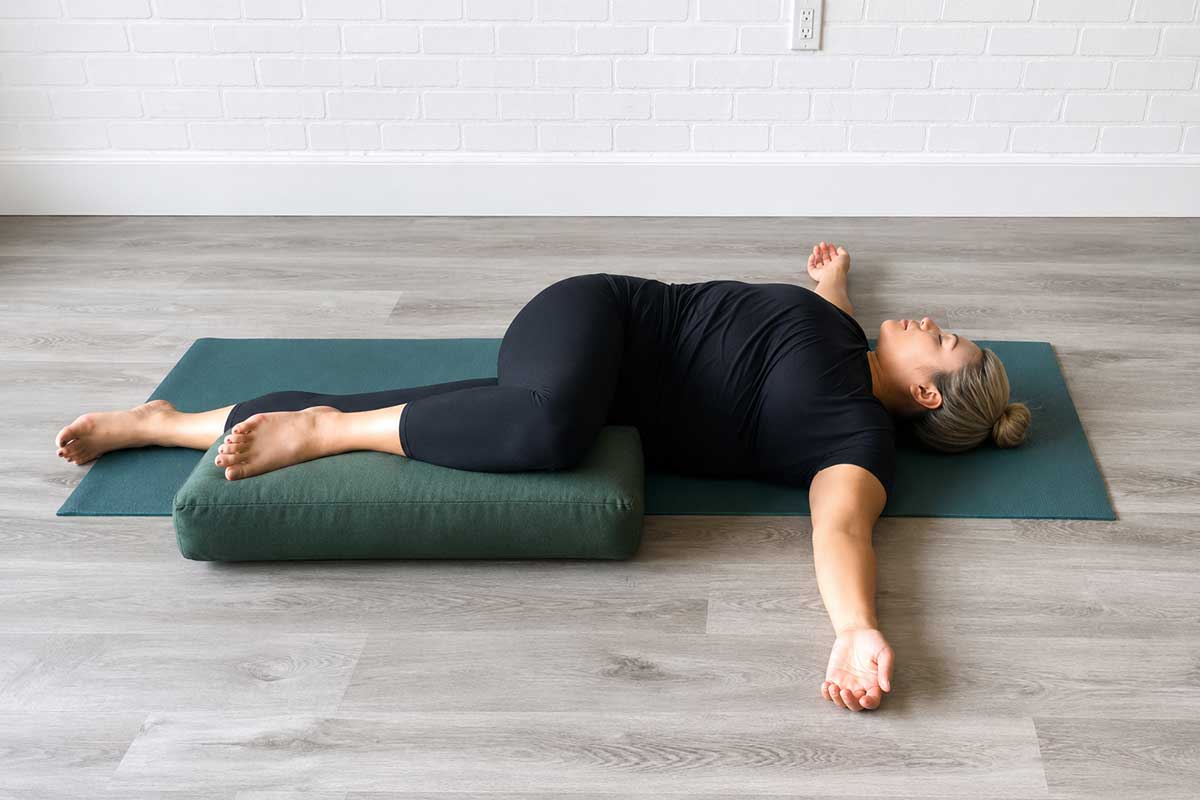
- Lie on your back with knees bent and feet flat on the bed.
- Let both knees drop slowly to one side, keeping your shoulders flat on the mattress.
- Hold for 20–30 seconds.
- Bring your knees back to center and repeat on the other side.
If the stretch feels sharp, place a pillow between your knees before dropping them to the side. The goal is a sustained, comfortable rotation. Tight hips are a common hidden driver of lower back pain. Most people do not realize how much of their morning stiffness lives there until they try this one.
Move 3: Pelvic Tilt
This is activation, not a stretch. You are waking up the transverse abdominis, the deep core muscle that acts as a natural back brace throughout the day. People often underestimate this one because the movement is small.
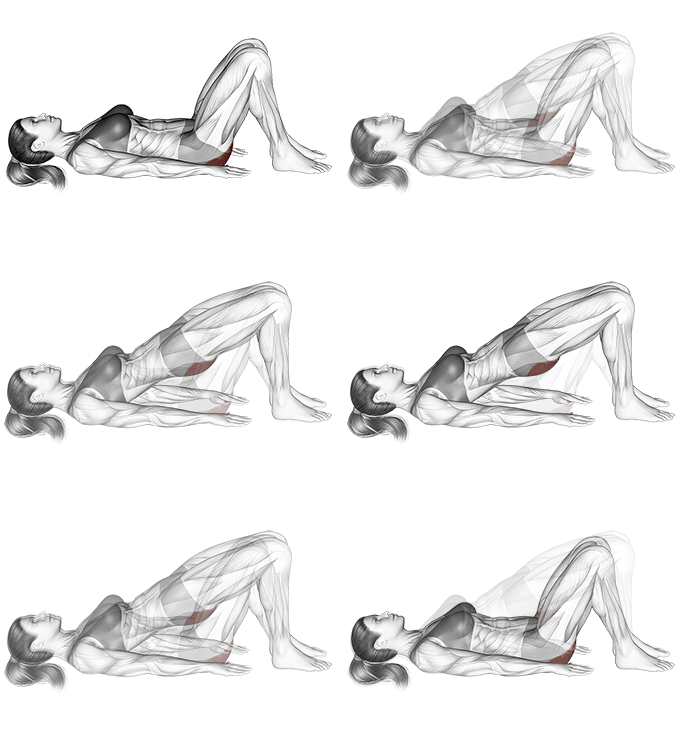
- Stay on your back with knees bent and feet flat on the mattress.
- Press your lower back gently into the mattress by tightening your abdominal muscles.
- Hold for 10 seconds, then relax.
- Repeat 5 times.
The movement should be subtle. If your hips are rising off the mattress, you have gone further than needed.
Move 4: Cat-Cow Stretch
This one feels awkward for the first three or four days. Most people have not been asked to deliberately mobilize the full spinal range in an arch-and-round cycle before, and the body needs a few sessions to find the movement. By the third or fourth morning, most of the awkwardness is gone.
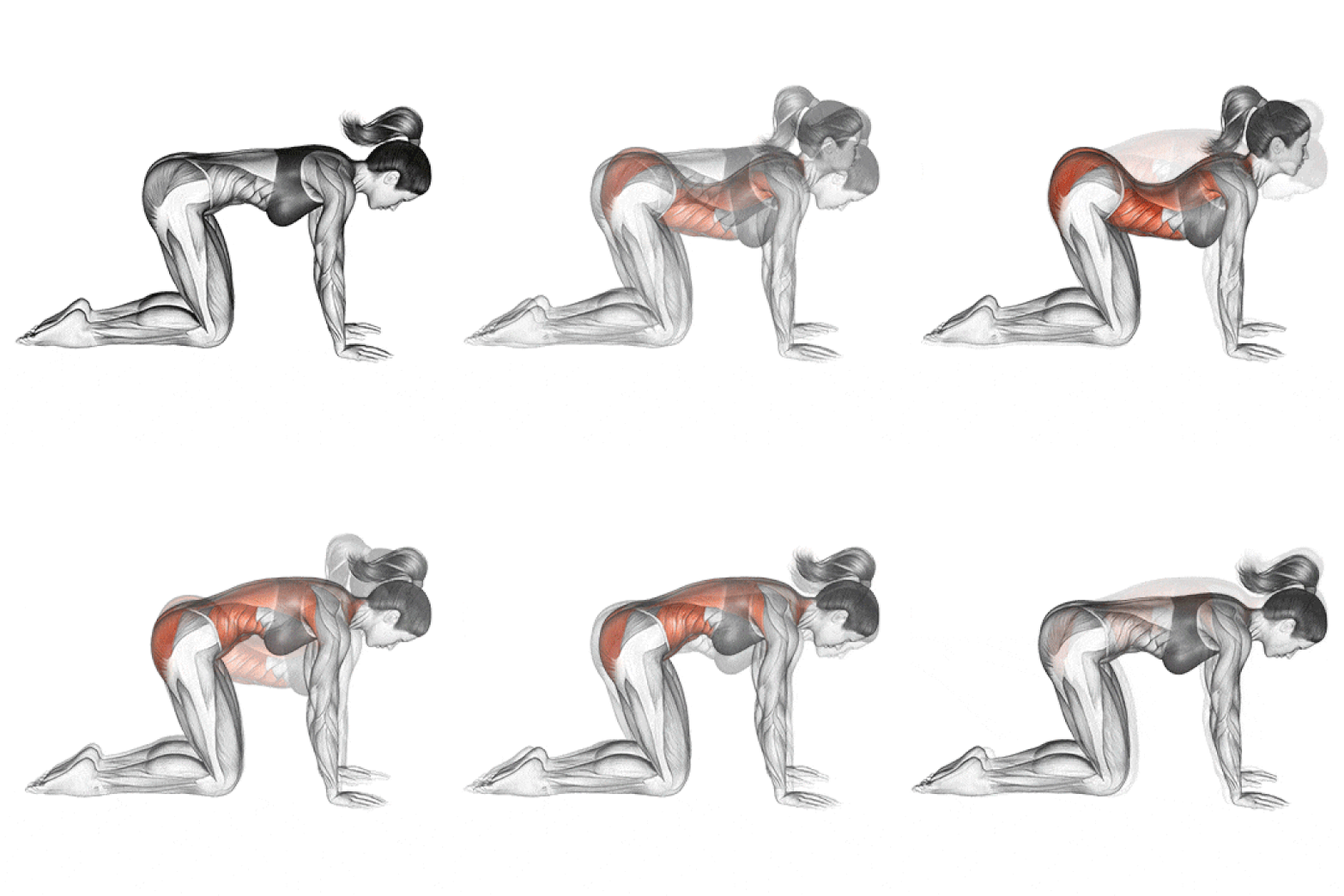
- Move to a firm surface: the floor, or a firm mattress.
- Get on your hands and knees, wrists directly below your shoulders, knees below your hips.
- Slowly arch your back toward the ceiling.
- Tuck your chin to your chest and hold for 5 seconds.
- Reverse the movement: let your belly sink toward the floor as you look gently upward. Hold 5 seconds.
- Repeat 5–10 times, moving slowly and deliberately between the two positions.
The pumping motion drives blood flow into the spinal discs and helps disperse inflammatory fluid that accumulates during extended rest. This is the actual warm-up in the sequence, not just another stretch.
By the end of the first week, you have moved from warming up a cold engine to maintaining one that already knows how to run.
Move 5: Log Roll Exit
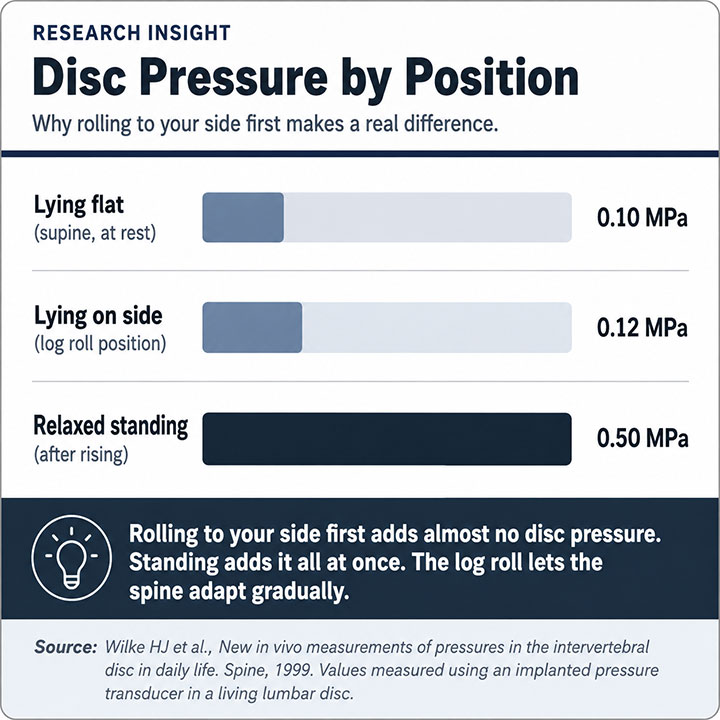
Hans-Joachim Wilke and colleagues at the University of Ulm implanted a pressure transducer in a lumbar disc and measured intradiscal pressure across a full 24-hour day. Their findings in Spine showed that lying flat registers roughly 0.1 megapascals.
Snapping upright from that position drives pressure considerably higher, fast. Your discs, already at their maximum morning level, are not set up to absorb that spike comfortably.
- Roll onto your side before sitting up. Do not sit straight up from lying flat.
- Use your arms to push yourself to a seated position while your legs swing off the edge of the bed.
- Pause seated for 2–3 seconds.
- Stand up slowly.
It takes about 30 seconds once it becomes a habit. The first few mornings you will forget. It becomes automatic faster than you would expect.
Do these right after waking
The first three moves are done in bed. Get up only for the cat-cow stretch and the log roll exit.
- 1Knee-to-Chest Stretch90 sec
- 2Supine Spinal Twist60 sec
- 3Pelvic Tilt60 sec
- 4Cat-Cow Stretch90 sec
- 5Log Roll Exit30 sec
Routine complete
When Morning Back Pain Goes Away on Its Own
If your pain resolves within an hour of being up and moving, that pattern carries real information. Lower back pain in the morning that goes away with activity almost always has a mechanical origin. The overnight disc fluid shift normalizes as progressive load is applied.
Muscles that have been still for hours warm up and begin actively supporting the lumbar region. The body has its own resolution process. This routine accelerates something that was already going to happen.
When it does not ease with movement, the picture changes. Pain that stays constant whether you are lying, sitting, or walking suggests a different driver.
Pain that worsens during the day rather than improving, or that wakes you from sleep at 3 a.m. rather than appearing at the normal wake-up, is a different signal. The warning signs section below covers the patterns that need medical evaluation rather than a morning exercise routine.

How Your Sleep Position Affects Morning Stiffness
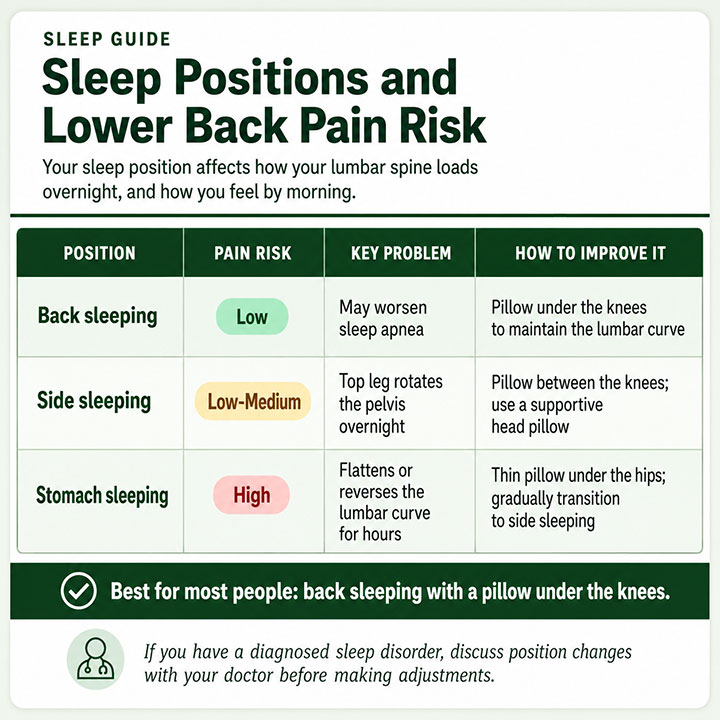
Back sleeping with a pillow under the knees keeps the lumbar spine in a neutral curve and is the lowest-risk position for morning pain. Side sleeping with a pillow between the knees is a close second. The pillow prevents the top leg from rotating the pelvis overnight and creating lateral strain on the lumbar region.
Stomach sleeping carries the most risk, as it flattens or reverses the lumbar curve and loads the facet joints in a position they are not built to hold for seven hours. For committed stomach sleepers, a thin pillow placed under the hips (not under the head) reduces the lumbar arch.
Transitioning to side sleeping takes time. A body pillow behind the back can make staying on your side easier through the night while the habit forms.
Is Your Mattress Making It Worse?
The widespread belief that firmer means better for back pain has been directly tested. Francisco Kovacs and colleagues published a randomized controlled trial in The Lancet in 2003.
They assigned 313 adults with chronic non-specific low back pain to 90 days on either a firm or a medium-firm mattress. Those on medium-firm reported significantly better outcomes across all three primary measures: pain in bed, pain on rising, and daytime disability.
The firm mattress group improved less on every measure. Most of the participants had been told, at some point, that a firm mattress was better for their backs. The trial ran for 90 days.
A practical test at home: press your palm flat into the mattress and release. If a body impression remains, the mattress has lost structural support. A mattress older than seven to ten years with visible sagging warrants replacement regardless of how it feels to lie on. If you regularly sleep better in hotel beds or guest beds than your own, the mattress is a credible contributing factor to your mornings.
When Morning Back Pain Is a Red Flag
Mechanical morning stiffness is common and self-limiting in most people. The patterns below have different origins and need medical evaluation. Some of them need it quickly.
One distinction worth making directly: kidney pain and lumbar muscle pain can feel like they occupy the same region, and the confusion is understandable. Kidney pain is typically felt higher than the lumbar band, in the flank between the lower ribs and the top of the hip, and it does not change with body position or movement. Lower back muscle pain usually shifts with movement, and easier in some positions and worse in others.
It also tends to come with accompanying symptoms: fever, changes in urination frequency or color, or a burning sensation. If your morning back pain does not ease at all when you start moving, and is felt higher in the flank rather than across the lumbar band, have it evaluated rather than treating it as muscle stiffness.
On the concern about cancer and back pain: persistent, worsening pain that is unrelated to movement (particularly if it is worse at night than in the morning, comes with unexplained weight loss, or appears alongside other systemic symptoms) is worth raising with a doctor.
This is a different presentation from the mechanical stiffness this routine addresses, which reliably improves with activity and resolves through the morning.

Conclusion
The five moves in this routine work not because they are exceptional, but because they address something specific: a system that completed a full overnight cycle and has not yet been told the day has started. The discs rehydrated. The muscles went still. Everything is primed to hurt until movement signals otherwise. Five minutes is the signal. Most days, that is all it takes.
Frequently Asked Questions
Why does lower back pain hurt more in the morning?
The lumbar discs absorb fluid overnight while the spine is unloaded. By morning, they have expanded by roughly 10% in volume. Research in Spine confirmed this pattern with direct measurements in living subjects.
By then, those discs are at maximum pressure, and the surrounding muscles have been still for hours. The combination of elevated disc pressure and inactive muscles is the primary driver of mechanical morning back pain.
Why does morning back pain often go away once I start moving?
Movement is what normalizes disc pressure after the overnight rehydration cycle. As you load the spine progressively during normal activity, fluid redistributes, and pressure returns to daytime levels. Muscles warm up and begin actively supporting the lumbar region.
Lower back pain in the morning that goes away within an hour of being active almost always has a mechanical cause, and this routine is designed for exactly that pattern.
Can morning back pain be a sign of kidney problems?
It can, though kidney pain and lumbar muscle pain tend to feel different. Kidney pain is typically felt higher, in the flank between the lower ribs and the top of the hip, and does not shift with body position or movement.
Lumbar pain usually changes with movement. It also tends to accompany other symptoms: fever, urinary changes, or nausea. If your morning back pain does not ease with movement and is felt higher in the flank, have it evaluated rather than assuming it is muscular.
Are these stretches safe for herniated discs?
Gentle movement is appropriate for most disc conditions, but the right approach depends on the disc level, the degree of involvement, and your specific presentation. The pelvic tilt and knee-to-chest stretch are commonly included in physical therapy for disc-related issues. The cat-cow helps many people but occasionally aggravates specific disc positions.
If you have a confirmed herniation, check with a physical therapist or doctor before starting. The routine may be well-suited, but specific modifications may matter.