You can spend weeks doing sit-ups and still miss the lower abs you’re trying to strengthen. Researchers have found a more targeted way to train them
Sit-ups have a mechanics problem. When you pull your torso off the floor with your feet anchored, the hip flexors take a disproportionate share of the load, and the lower abs, the area most people are trying to train, contribute far less than the motion appears to deliver.
This 10-minute routine uses five exercises for lower abs chosen because they flip that equation. All five move the legs toward the torso rather than the torso toward the legs, a bottom-up pattern that shifts the work toward the lower portion of the rectus abdominis and the deep transverse abdominis underneath it. No equipment is needed. You can do it on a mat in your living room, and it takes less time than a warm-up at most gyms.
One thing this article will not promise is visible abs. That is a body fat question, and it has more to do with diet and overall energy balance than with which core exercises you choose. What these five exercises will do is build a lower core that actually functions: one that stabilizes your spine under load, reduces lower back fatigue during long days, and makes compound movements more efficient across the board.
The Science of Lower Ab Targeting
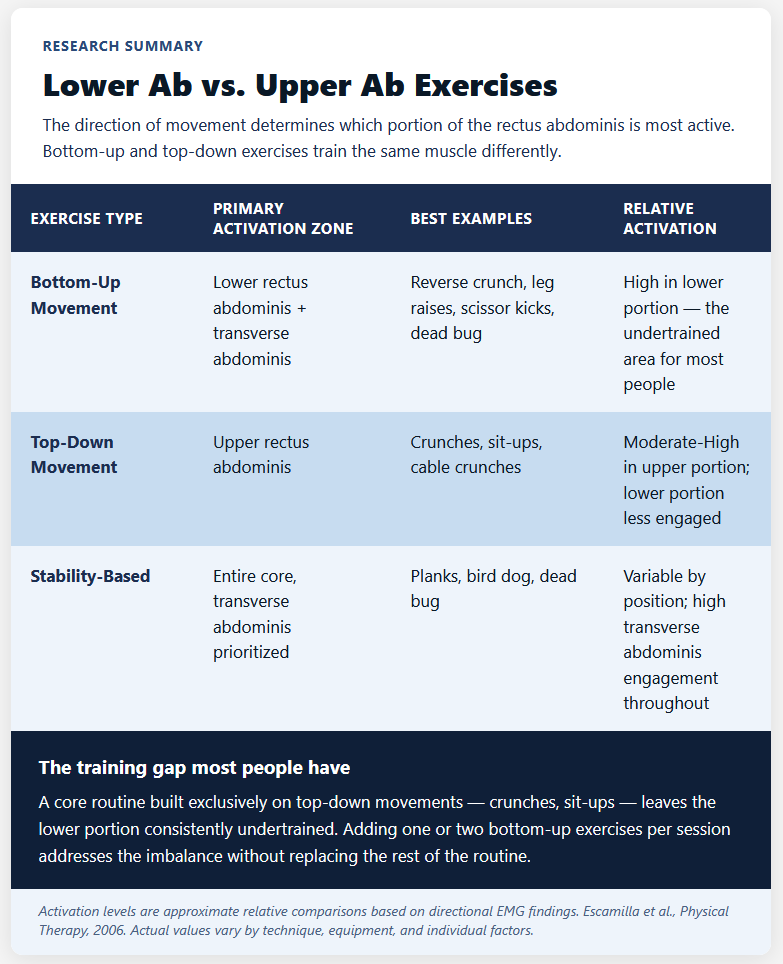
The rectus abdominis is anatomically one continuous muscle, running from the sternum to the pubic bone. It does not have a hard anatomical boundary between upper and lower halves. But the fact that the muscle is continuous does not mean that every exercise activates every part of it equally, and researchers have spent years trying to quantify exactly how much the pattern of activation changes depending on the direction of movement.
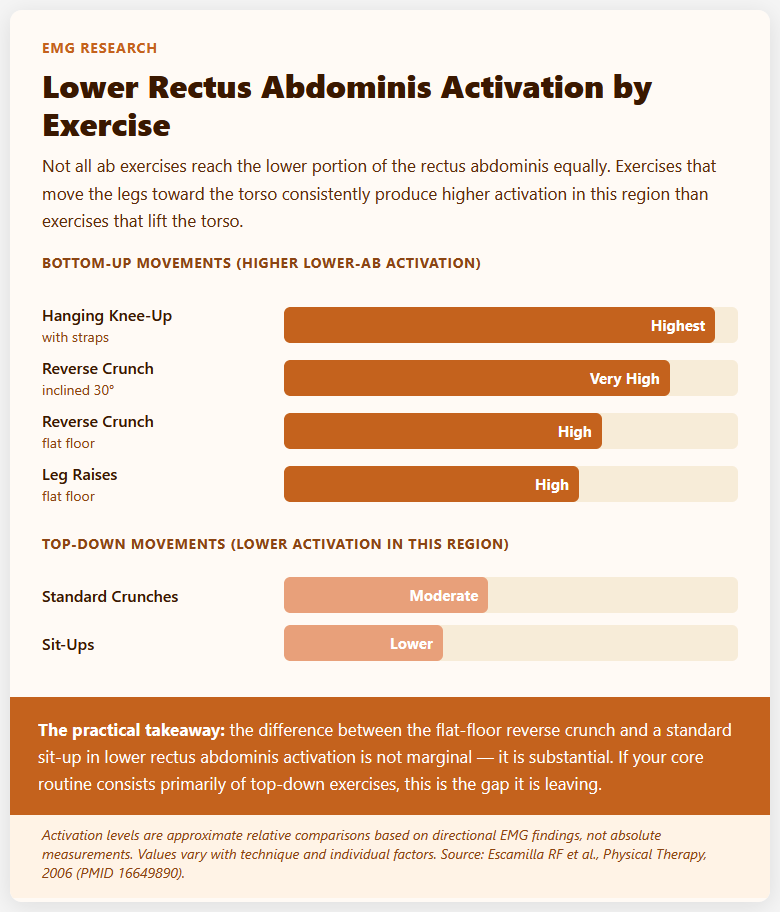
The most frequently cited evidence comes from a 2006 EMG study by Escamilla et al. published in Physical Therapy. The researchers measured surface electromyography across multiple exercises and found the highest activation in the lower rectus abdominis for hanging knee-ups performed with straps and reverse crunches performed at a 30-degree incline, not the flat-floor version.
The flat-floor reverse crunch still outperformed traditional sit-ups and standard crunches, but the comparison is considerably more condition-specific than the fitness industry typically acknowledges.
A 2023 study by Gomirato and Grenier at Laurentian University adds a genuinely unresolved detail. Using diagnostic ultrasound to measure muscle shortening rather than surface electrical activity, the researchers found that crunch variations produced greater shortening near the sternum, while leg raises produced greater shortening near the pubic bone, suggesting that muscle recruitment may be biased toward whichever segment is physically closest to the moving load.
Researchers still do not fully agree on whether this reflects a meaningful functional distinction or a measurement artifact. The practical answer, that bottom-up movements feel different and activate the lower portion more than crunches do, remains consistent across exercise science. The mechanistic explanation is less settled than most fitness content suggests.
Where the evidence is considerably clearer is on lower back pain. A 2012 meta-analysis by Wang et al. in PLOS ONE, covering 414 participants across five randomized controlled trials, found that core stability exercise reduced pain and improved back-specific function more than general exercise in people with chronic low back pain over a short-term follow-up period.
A 2022 systematic review by Smrcina et al. in the International Journal of Sports Physical Therapy confirmed those findings across a wider body of literature. The advantage is most pronounced in the first three months of training.
At six and twelve months, the difference between core-specific and general exercise narrows considerably, which is worth knowing before treating core stability as a permanent alternative to other forms of physical therapy.
Your 10-Minute Routine
The circuit runs twice through all five exercises. Each exercise gets 45 seconds of work, followed by a 15-second transition to the next movement. Total working time: just under 10 minutes.
Speed is the most common way people undermine every exercise in this routine. Move slowly on every repetition. This is not a cardio circuit. Slow movement forces the abs to control the load rather than allowing momentum to carry it, and the slower you move, the more activation you generate from the muscle rather than from velocity. If you cannot feel your core engaging, slowing down is almost always the right correction before any form adjustment.
Three to four sessions per week are the target frequency, not daily training. Muscle adapts during rest, not during exercise. Daily sessions without adequate recovery generate cumulative fatigue rather than strength gains over time, and two days off is not regression. It is when the work from the previous sessions consolidates.
The 5 Exercises for Lower Abs
Exercise 1: Reverse Crunch
Primary muscles: Lower rectus abdominis, transverse abdominis
This is the right place to start if your lower abs feel undertrained. The motion is forgiving enough that most people execute it correctly within a session or two, and the bottom-up pattern puts the lower rectus abdominis in its most active position from the first repetition.
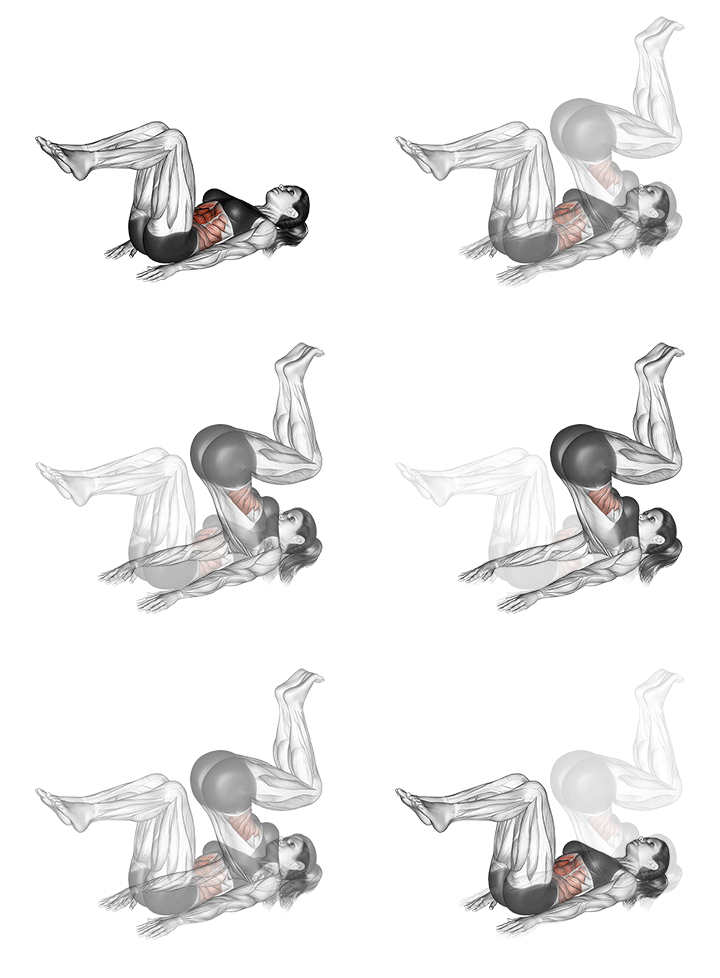
- Lie on your back with knees bent to 90 degrees, shins parallel to the floor. Place both arms flat at your sides.
- Exhale and contract your abs, lifting your hips off the floor and drawing your knees toward your chest.
- Keep your upper back and shoulders in contact with the floor throughout. The movement comes from your abs contracting, not from swinging your legs into position.
- Inhale as you lower your hips back to the start with a slow, controlled descent. Stop just before your hips touch down and repeat.
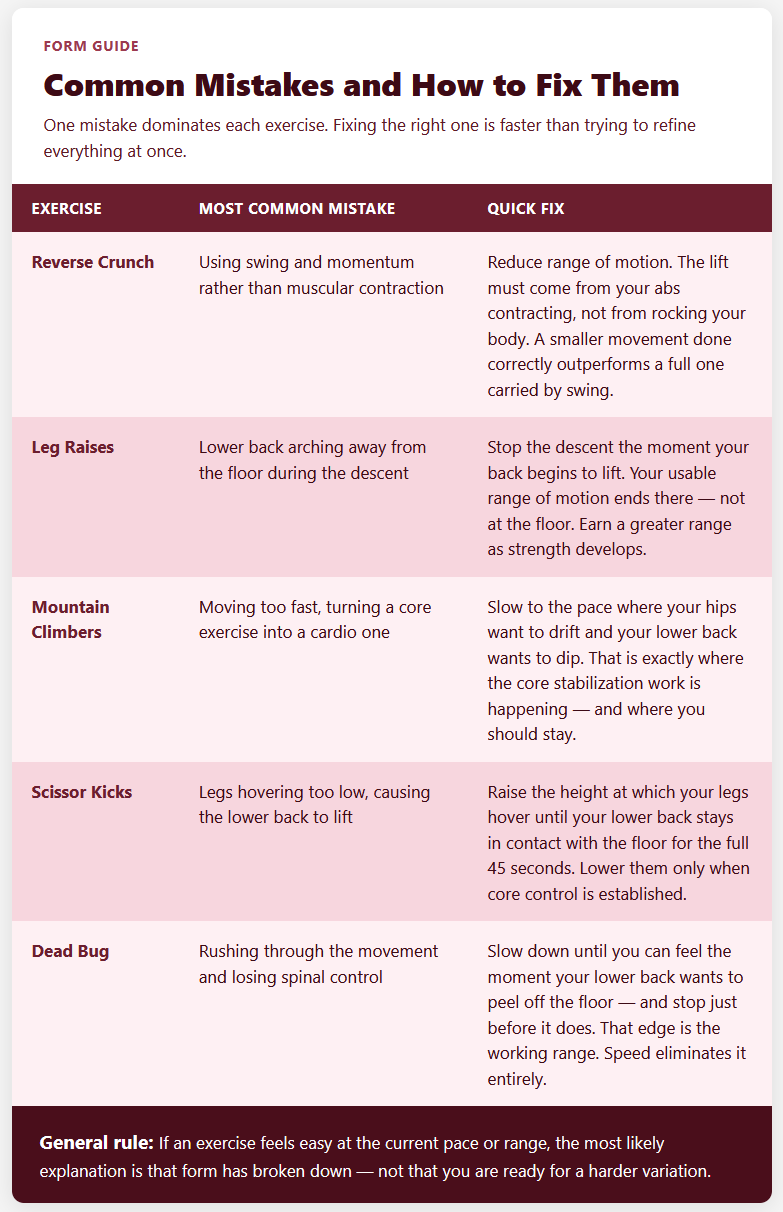
Momentum is the primary error here. If you can feel your body rocking rather than lifting steadily, reduce the range of motion until control is established. A partial reverse crunch done with genuine abdominal engagement outperforms a full one carried by a swing every time.
Exercise 2: Leg Raises
Primary muscles: Lower rectus abdominis, hip flexors, deep core
Leg raises rank among the most effective floor exercises for the lower core, and among the most frequently done in a way that trains the lower back rather than the abs. The issue is almost always the lower back arching away from the floor as the legs descend.
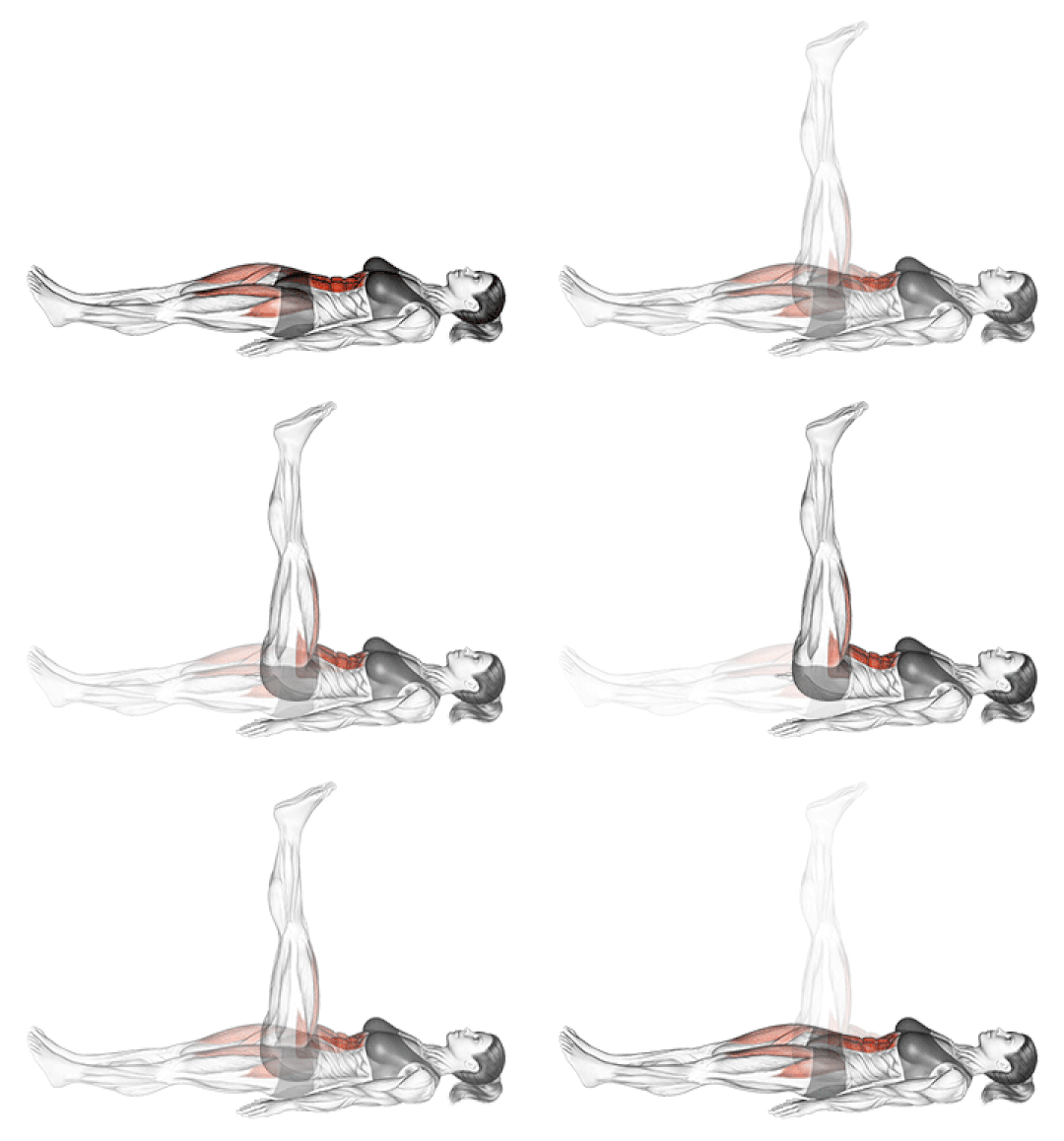
- Lie flat on your back, legs straight. Place your hands flat under your lower back for support, or at your sides.
- Raise both legs to 90 degrees, feet pointing toward the ceiling.
- Press your lower back actively into the floor. This contact must stay throughout the entire movement, including the descent.
- Lower your legs slowly toward the floor, stopping at whatever point your lower back begins to lift. Return to 90 degrees and repeat.
Your useful range of motion on the descent is wherever your lower back stays flat, not the floor. For most people in the first few weeks, that is between 30 and 60 degrees rather than full leg lowering. The range of motion expands as core strength develops. Forcing it early just turns a lower ab exercise into a lower back exercise.
Exercise 3: Mountain Climbers (Controlled)
Primary muscles: Entire core, shoulders, hip flexors
Most people have done mountain climbers in a HIIT class where the point is speed. That version trains your heart. This version trains your core, and the difference becomes obvious within the first two repetitions: when you slow down enough that your hips want to rise and your lower back wants to drop, you have found exactly where the core work is happening.
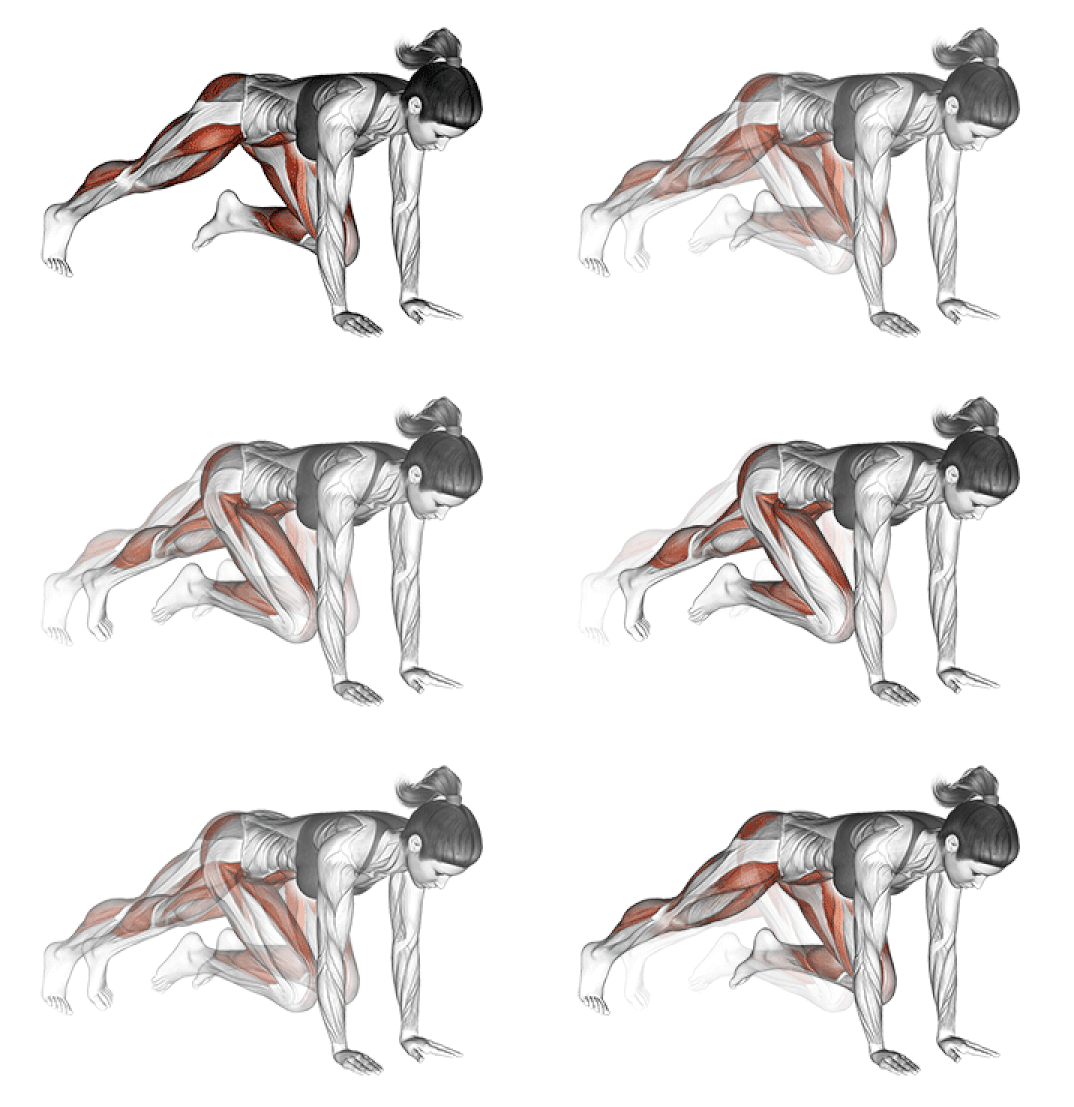
- Start in a high plank with your hands directly under your shoulders and your body forming a straight line from head to heels.
- Slowly drive your right knee toward your chest, pausing briefly at the end of the movement.
- Return your right foot to the starting position with control. Keep your hips level throughout and resist letting them rise or drop.
- Repeat with the left leg. Continue alternating at a deliberate, unhurried pace for the full 45 seconds.
The slower you move, the harder your core works to stabilize a constantly shifting load. If the exercise feels easy, you are almost certainly moving too fast.
Exercise 4: Scissor Kicks
Primary muscles: Lower rectus abdominis, hip flexors, inner thighs
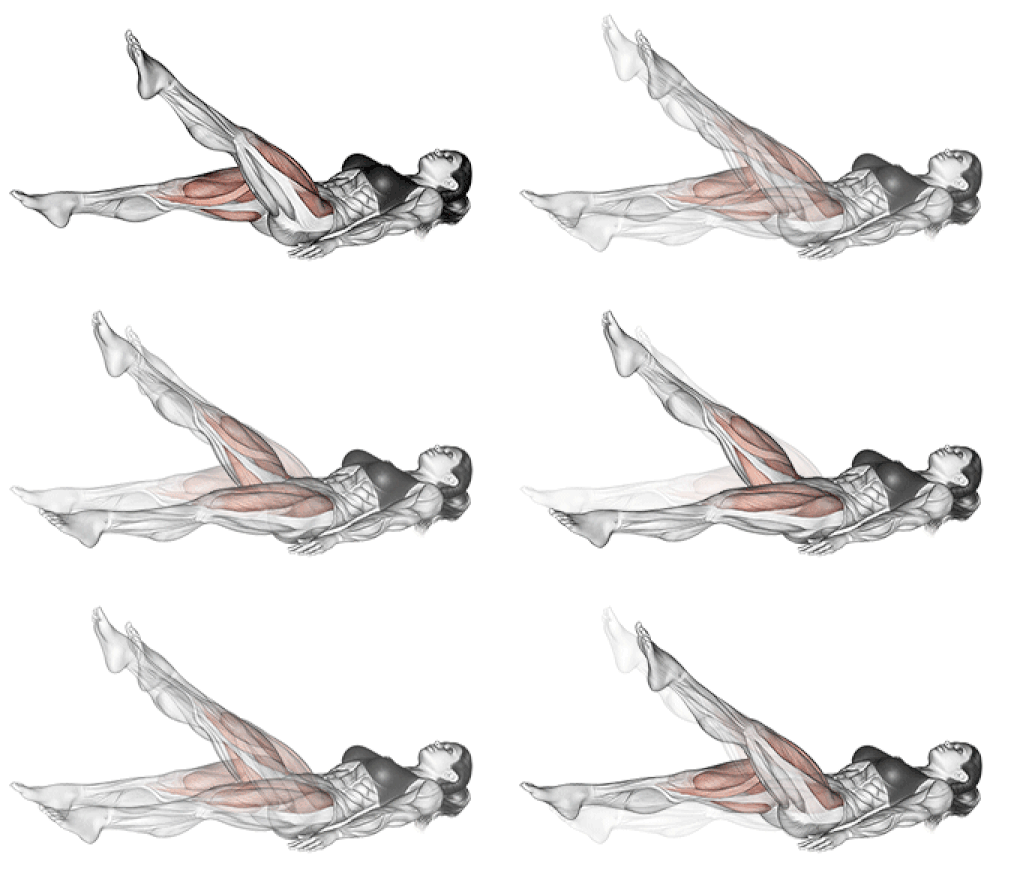
- Lie on your back with both legs extended. Place your hands flat under your lower back for support.
- Lift both legs a few inches off the floor.
- Make small, alternating scissor motions, one leg rising as the other lowers. Keep the movements steady and continuous rather than jerky.
- Press your lower back into the floor throughout. The lower your legs hover above the ground, the more demanding this becomes. Find the height where your form holds for the full 45 seconds and start there.
Exercise 5: Dead Bug
Primary muscles: Transverse abdominis, multifidus, pelvic floor
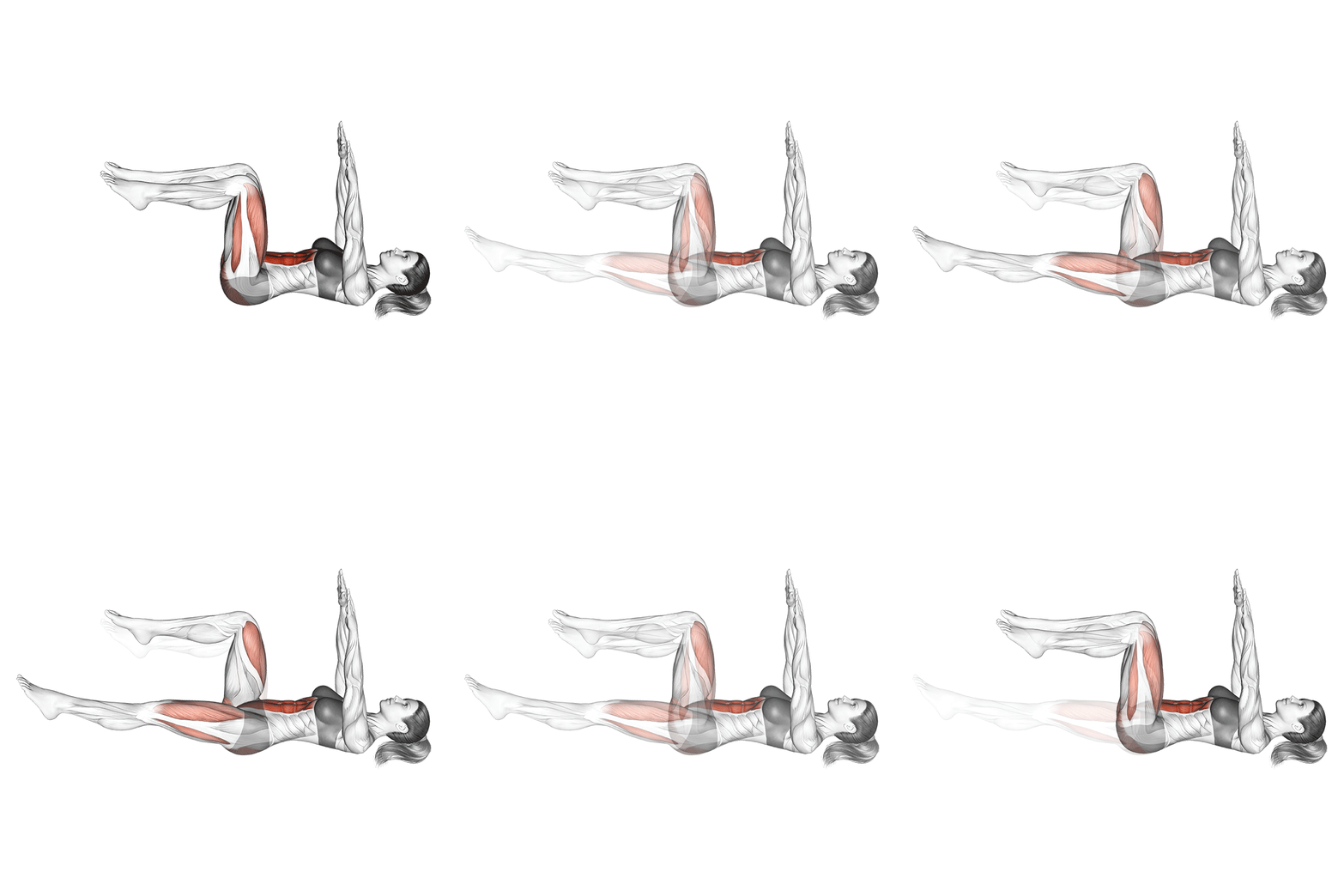
The dead bug is the exercise in this routine that clients underestimate almost without exception, and then come back and describe as the hardest. It looks like a slow stretch. It is not.
The task is to extend one arm and the opposite leg simultaneously while keeping your torso completely still, your lower back in contact with the floor, and your spine in a neutral position. All of that has to happen at once, without your torso rotating, without your lower back arching, and without rushing through a range of motion you have not genuinely earned. Most people find within 10 seconds of trying that their spinal stability is considerably less solid than they assumed.
- Lie on your back with your arms reaching straight toward the ceiling. Bend your knees to 90 degrees, shins parallel to the floor.
- Slowly extend your right arm back toward the floor above your head while simultaneously extending your left leg toward the floor in front of you. Opposite arm and leg move together.
- Keep your lower back in contact with the floor for the entire movement. This is the whole exercise. If your back begins to arch, reduce the range rather than allowing it to lift.
- Return both limbs to center. Switch sides: left arm back, right leg forward. Continue alternating.
The coaching cue I return to most often with athletes who are new to this movement is to imagine balancing a small object on your stomach. Any rotation in your torso means the object shifts. That image slows people down immediately in a way that verbal instructions often do not.
Going too fast removes the entire benefit. Speed allows momentum to substitute for spinal control, which is exactly what this exercise is designed to train. A well-executed dead bug is slow enough that you can feel the moment your lower back wants to peel off the floor, and you stop just before it does. That is the working range. It will expand over weeks as the transverse abdominis adapts.

Lower Ab vs. Upper Ab Exercises: What the Research Shows
The practical distinction between upper and lower ab training comes down to the direction of movement. Bottom-up exercises, where the legs move toward the torso, tend to produce higher activation in the lower portion of the rectus abdominis based on the available EMG evidence.
Top-down exercises, where the torso lifts toward anchored legs, favor the upper portion. The muscle is continuous, but the portion nearest the moving load contracts most forcefully. The EMG percentages often cited in fitness content are approximations derived from normalized activation data, not fixed values, and they vary meaningfully depending on technique and equipment.
Equipment-Free Alternatives
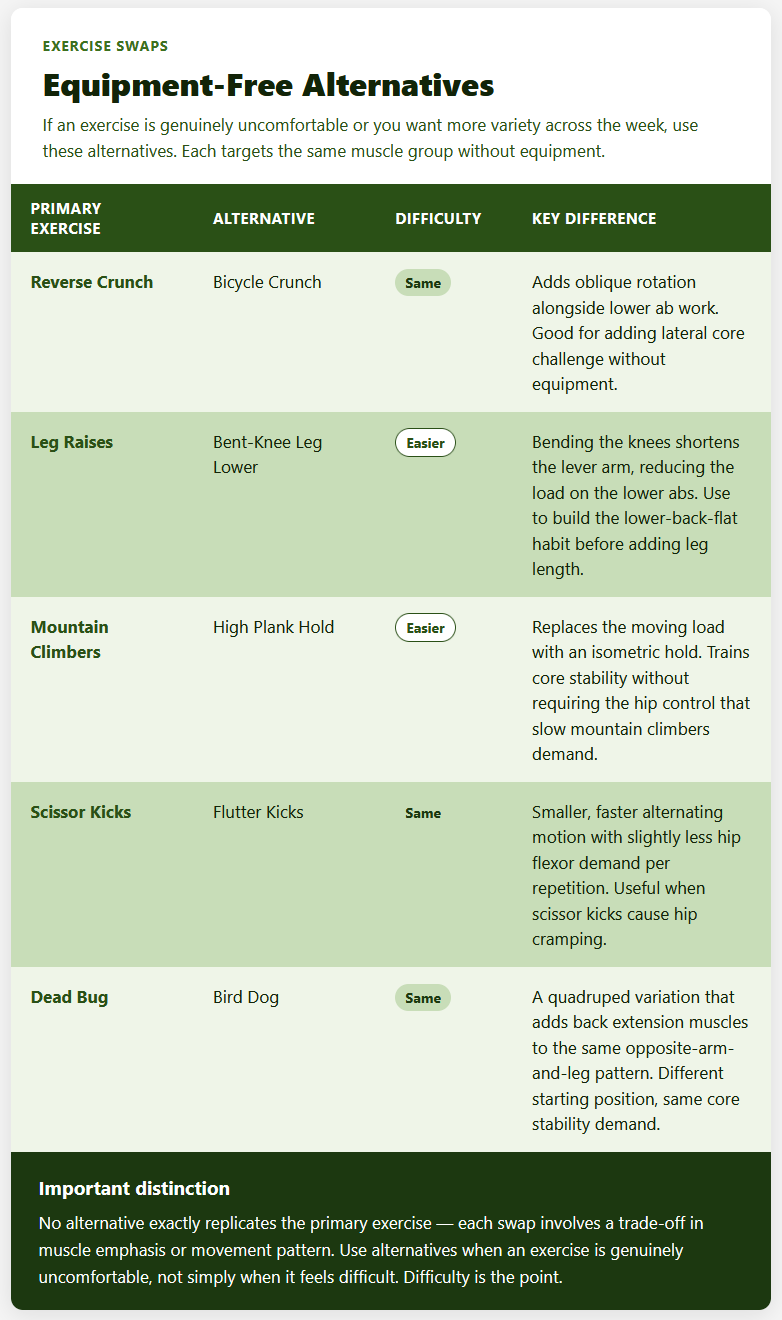
If any of the five primary exercises is genuinely uncomfortable for your body, or if you want more variety across the week, these alternatives target the same muscle groups without changing the no-equipment, floor-based format. Bicycle crunches, in particular, add rotational work that engages the obliques alongside the lower core. They make a useful complement to the straight-leg exercises in the primary circuit.
Lower Ab Exercises for Beginners
If you are new to core training, start with one round instead of two and extend the rest between exercises to 30 seconds. At that ratio, 30 seconds of work to 30 seconds of rest, the session becomes far more manageable without changing what the exercises actually ask of your body.
The two exercises worth learning in the correct order before progressing are leg raises and the dead bug. Leg raises performed with an arching lower back are a back exercise, not a core exercise. The dead bug performed too quickly does not train spinal stability at all. Get those two right before worrying about increasing difficulty on anything else. The form requirement is strict, and the strength gains are directly proportional to how closely you meet it.
For beginners who find that leg raises cause lower back discomfort immediately, start with knees bent to 90 degrees rather than legs fully extended. Raise and lower the bent legs rather than straight ones. The range of motion and the load both decrease, which lets you build the pattern of keeping the lower back flat without fighting a load the core cannot yet support.
Getting Results Without Guesswork
The first signs that this routine is working will appear before any visible change. Lower back fatigue during long sitting days tends to decrease within four to six weeks of consistent training. Posture during standing and walking becomes more stable.
Athletes I have worked with often notice it first in compound movements, where the core stops being the limiting factor it previously was. Those are functional gains, and they arrive ahead of any aesthetic ones.
Visible abs are a body fat question, and the number is less forgiving than most fitness content admits. Men generally need to reach 10 to 15% body fat before definition appears, and women at 16 to 20%, according to American Council on Exercise guidelines.
Those thresholds require a sustained caloric deficit maintained over months, not weeks. The exercises in this routine build what becomes visible when the fat decreases. They do not create the deficit that makes it happen, which is worth being direct about, because a significant number of people put months of effort into the wrong variable and draw the wrong conclusion when nothing changes.
Progress within the routine follows a clear sequence. First, complete the full two-round circuit with full range of motion and solid form on every exercise. Then, reach the point where the 15-second transitions no longer feel necessary.
After that, add a third round before moving to harder exercise variations. The goal at each stage is not to make the workout feel hard again. The goal is to maintain the training stimulus that produced adaptation in the previous weeks, and to extend it incrementally rather than going beyond the point where form holds.
Am I Ready to Progress?
Answer five questions about your current performance to find out whether to add difficulty or stay with the current routine.
Conclusion
The most useful thing about this routine is also the most unglamorous: it trains what sit-ups claim to train. The physics of a bottom-up movement put the lower core in a mechanically honest position, where the muscles being asked to work are the ones doing it.
That does not make these exercises a shortcut. The dead bug will be harder than it looks, the leg raises will expose a range of motion limitation most people did not know they had, and neither of those things is a flaw in the exercises. That friction is exactly what adaptation needs. Ten minutes, four days a week, is a surprisingly small investment for what a functional lower core actually changes in daily movement.
FAQs
How long until I see results?
Functional improvements tend to arrive first: more stable posture, less lower back fatigue during long sitting days, better core engagement during compound lifts. Those typically appear within four to six weeks of training three to four times per week. Visible changes depend on body fat percentage and require a caloric deficit to address. Core training and fat loss are separate processes that happen on different timelines.
What is the best exercise for lower abs?
Among floor-based exercises requiring no equipment, the reverse crunch and leg raise consistently produce the highest activation in the lower portion of the rectus abdominis based on EMG evidence. The dead bug targets the deeper transverse abdominis rather than the superficial rectus abdominis, which makes it more useful for spinal stability than for visible muscle development. Those are different goals, both worth pursuing.
Are lower abs harder to build?
The lower portion of the rectus abdominis is harder to train with traditional exercises because most common ab movements involve lifting the torso toward anchored legs, which preferentially activates the upper portion of the muscle. That bias in exercise selection, not any anatomical resistance to development, is why the lower abs feel underworked in most people who have been doing crunches and sit-ups for months. Shifting to bottom-up movements corrects that bias directly.
What is the difference between lower belly pooch and lower abs?
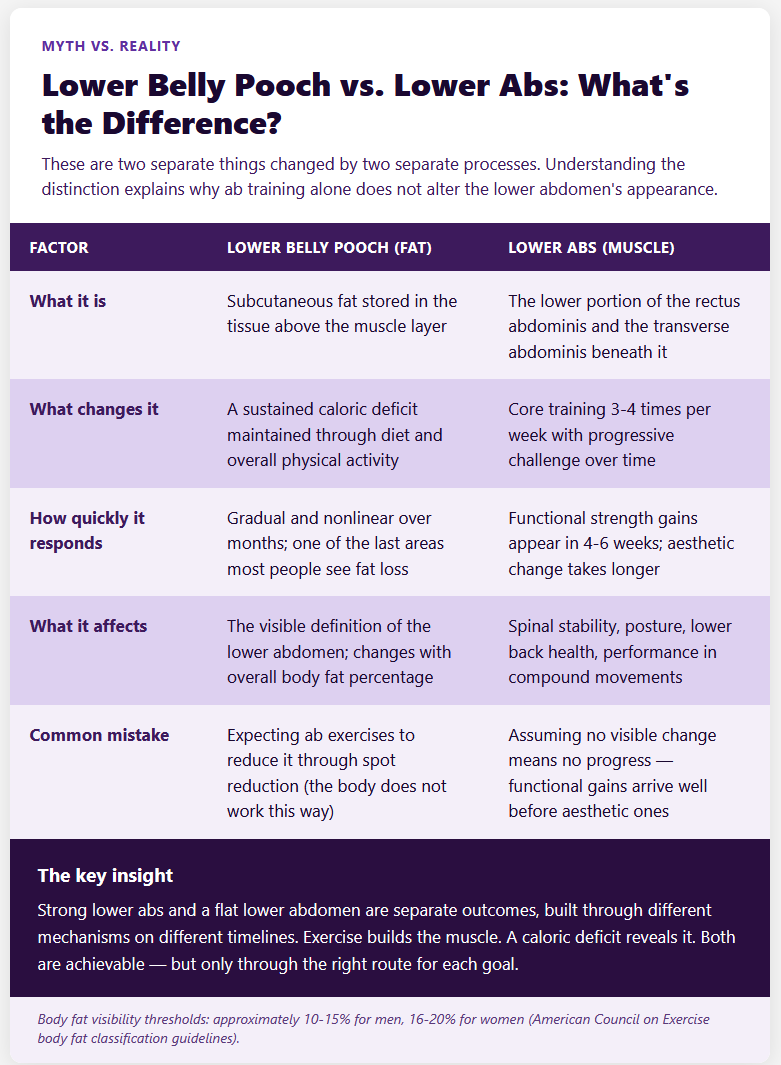
The lower belly “pooch” is subcutaneous fat stored in the lower abdomen, not an undertrained muscle. Strengthening the lower abs through exercise will not reduce or eliminate it, because the body does not draw on fat stored at a specific location when the muscles underneath that location are working harder.
Fat loss operates body-wide: the body reduces overall fat stores in response to a sustained energy deficit, and the lower belly is often one of the last places that deficit produces visible change. The exercises in this routine will build the muscles under the pooch. Those muscles become visible as body fat decreases through diet and overall activity, but the two processes operate on separate timelines through different mechanisms.
What exercises target the FUPA?
FUPA (fat in the lower pubic area) is stored fat, not muscle tissue, so no exercise removes it directly. The lower ab exercises in this routine will strengthen the muscles in that area, and a sustained caloric deficit will reduce the fat layer over time, but that reduction is body-wide rather than localized to one region.
Where your body draws on fat first during a caloric deficit is largely determined by genetics. Strength training and cardiovascular activity contribute to the energy deficit that drives fat loss across the whole body. The exercises here are worth doing regardless, because the core stability they produce has real functional value independent of any aesthetic change in a specific region.
Why am I not seeing visible abs?
You can have a very strong lower core and no visible definition. The two are entirely independent. Abdominal muscles become visible when the fat layer above them is thin enough not to obscure them, which happens at roughly 10 to 15% body fat for men and 16 to 20% for women according to American Council on Exercise guidelines.
Getting there requires a sustained caloric deficit over months. If you have been training consistently and visible definition has not appeared, the most likely explanation is not that the exercises are wrong. It is that the required body fat threshold is lower than most people expect, and closing that gap is primarily a nutrition project rather than a training one.
What if I have lower back pain?
Stop any exercise that sharpens or worsens existing pain. Mild discomfort during lower ab work often means the lower back is compensating for core muscles that are not yet strong enough to carry the load, which is usually a form problem rather than a structural one. Reduce the range of motion and check that your lower back stays in contact with the floor throughout the movement. If pain persists or is sharp at any point during the exercises, consult a physical therapist before continuing.
Can I do this workout every day?
Three to four sessions per week are more effective than daily training. Muscles adapt during rest, not during exercise. Daily sessions without adequate recovery accumulate fatigue rather than build strength over time, and rest days are not lost progress. They are when the previous session’s work consolidates into actual adaptation.
How do I know if I am doing the exercises correctly?
You should feel the work in your abs, not your neck, lower back, or hip flexors. If leg raises produce lower back discomfort, your lower back is coming off the floor. Reduce the range of motion. If the dead bug feels too easy, you are probably moving through the motion without maintaining spinal neutrality, rather than genuinely controlling the movement.
Slow down before adding difficulty. If mountain climbers feel more like shoulder work than core work, your hips are probably too high, and your core is not engaged at the start position.