Cutting cholesterol-friendly foods isn’t always the answer. Some of the most effective changes involve swapping one everyday ingredient for another.
Coconut oil and butter both appear on every list of worst foods for high cholesterol. Put them side by side in a clinical trial, though, and butter is the worse offender by a meaningful margin.
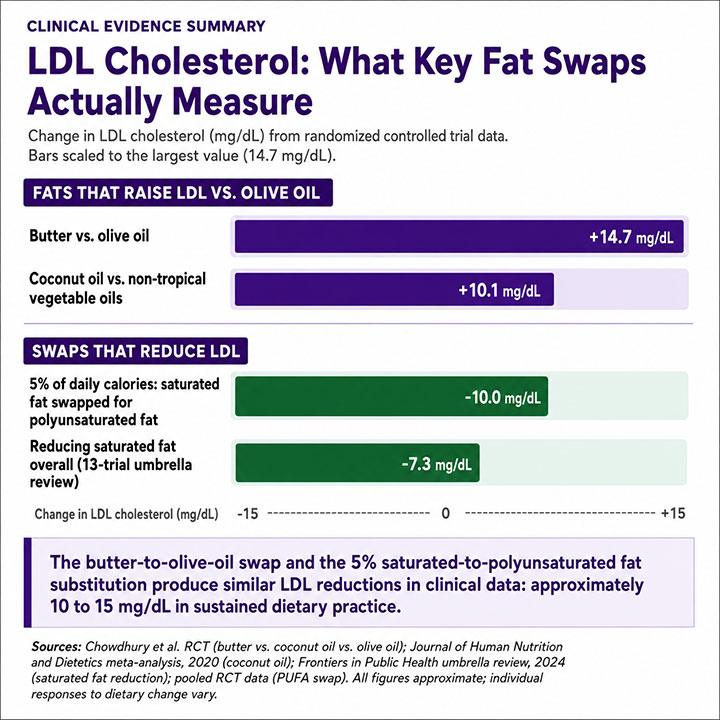
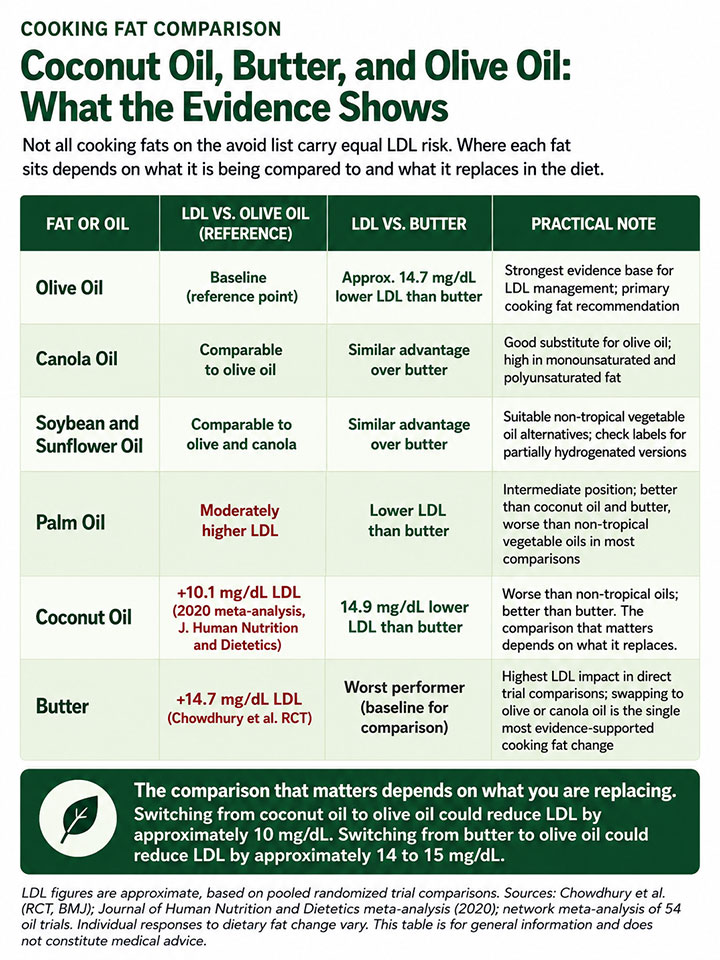
A 2020 meta-analysis found that compared to butter, coconut oil lowered LDL by nearly 15 mg/dL, while compared to most non-tropical vegetable oils like olive, canola, and soybean, coconut oil raised LDL by roughly 10 mg/dL.
This doesn’t make coconut oil a healthy choice. It means butter performs worse on this particular measurement, and most lists of worst foods for high cholesterol never make that distinction. They collapse a hierarchy into a flat warning list and leave the reader with no sense of where to start.
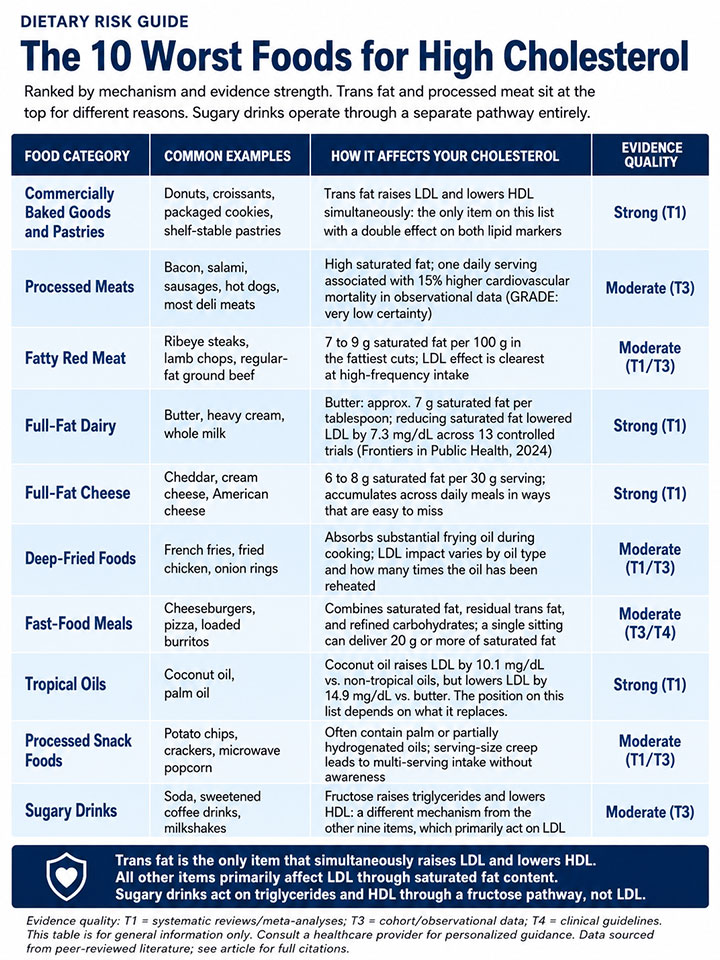
What follows ranks the ten most damaging foods for high cholesterol by what the clinical evidence actually shows. Not all of them work through the same mechanism. One item near the end of this list affects a different blood lipid entirely, a detail that matters more than it first sounds.
1. Commercially Produced Baked Goods and Pastries
Donuts, croissants, packaged cookies, shelf-stable pastries: these are the primary dietary source of partially hydrogenated oils, the industrial process that produces artificial trans fat. Trans fat carries the clearest and most consistent evidence of harm for cholesterol among any dietary fat.
The reason it sits at the top of this list is the double effect: trans fat raises LDL and lowers HDL at the same time. A controlled feeding trial published in the New England Journal of Medicine found that a trans fat-heavy diet lowered HDL by 7 mg/dL compared to a diet built around oleic acid, the primary fat in olive oil.
A subsequent meta-analysis pooling randomized trial data confirmed significant increases in LDL and decreases in HDL across study populations, the kind of effect most dietary fats produce only on one side of the ledger.
Most countries have phased out partially hydrogenated oils, but they remain in some imported and shelf-stable products. A label reading “0g trans fat” means less than 0.5g per serving under FDA labeling rules, an amount that accumulates across multiple servings throughout the day. The ingredients list is the reliable check: “partially hydrogenated” anywhere in that list means trans fat is present.
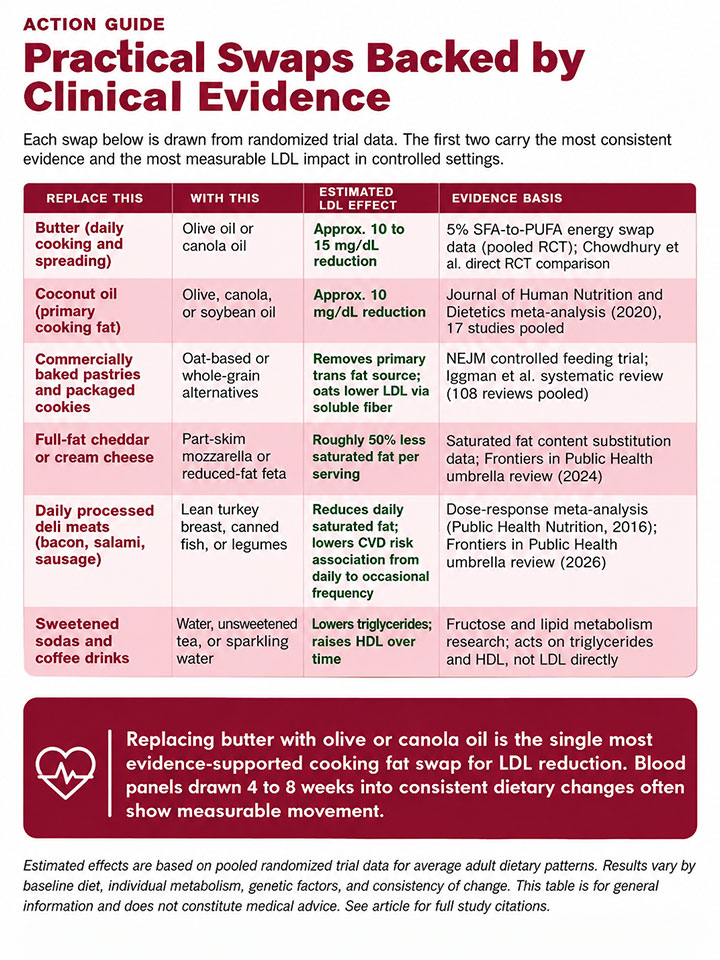
Replacing commercially made pastries and packaged cookies with oat-based or whole-grain alternatives removes the primary trans fat source from a typical diet. The alternatives carry a favorable record in LDL clinical trials.
2. Processed Meats
Bacon, salami, sausages, hot dogs, and most deli meats share a profile that distinguishes them from a plain steak: chemical preservation through smoking, curing, or nitrite treatment, combined with high saturated fat and sodium.
Researchers who pooled data from multiple prospective cohort studies found that one daily serving of processed meat was associated with a 15% higher risk of cardiovascular mortality compared to those who ate little or none.
That finding needs appropriate context: the quality of evidence is rated very low by GRADE standards, meaning the association is real in observational data but the evidence base does not support a firm causal claim. What the lipid data does confirm is that the saturated fat content alone is sufficient to raise LDL with regular consumption, independent of the broader mortality question.
The distinction between processed and unprocessed red meat matters here. A separate meta-analysis published in Circulation found no significant association between unprocessed red meat and coronary heart disease at a 100g serving per day. A plain cut of beef carries a meaningfully different risk profile than a processed sausage, and the two should not be treated as equal.
For someone eating processed meat daily, the most evidence-supported change is reducing frequency rather than eliminating it entirely. The observational data draws its strongest signal at the daily-consumption end of the scale.
3. Fatty Red Meat
Ribeye steaks, lamb chops, and regular-fat ground beef carry 7 to 9 grams of saturated fat per 100g serving in the fattiest cuts. Saturated fat is the dietary input most consistently tied to LDL elevation, and high-frequency consumption of fatty cuts is where that relationship becomes most visible in lipid panels.
Researchers still don’t fully agree on exactly how much moderate unprocessed red meat consumption shifts cardiovascular risk in people without other compounding factors. The evidence for a problem is clear at high intake levels and in the context of a diet already heavy in saturated fat from other sources.
For cuts specifically, the gap between a ribeye and a sirloin or tenderloin is substantial: the leaner cuts carry roughly half the saturated fat at a comparable serving size.
The strongest cardiovascular evidence in this area points to processed meat and to daily consumption frequency, not to an occasional serving of fatty red meat in an otherwise varied diet.
4. Full-Fat Dairy Products
Butter, heavy cream, and whole milk represent the highest saturated fat density in the dairy category by volume. Butter carries approximately 7 grams of saturated fat per tablespoon. It is one of the most concentrated sources in a typical diet.
The researchers behind a 2024 umbrella review published in Frontiers in Public Health analyzed 13 randomized controlled trials on saturated fat reduction and found that lowering saturated fat intake reduced LDL by 0.19 mmol/L (roughly 7.3 mg/dL) on average. That effect held at high quality of evidence by AMSTAR-2 standards.
A related body of trial data found that swapping 5% of daily energy from saturated fat to polyunsaturated fat (the kind of swap involved in replacing butter with olive or canola oil) was associated with approximately a 10 mg/dL reduction in LDL across pooled randomized trial data.
The swap is one of the most directly evidence-supported dietary changes available for LDL management, and the effect appears quickly enough to register in a follow-up blood panel within weeks of a consistent change.
5. Full-Fat Cheese
Cheddar, cream cheese, and American cheese carry 6 to 8 grams of saturated fat per 30g serving. The saturated fat mechanism is identical to butter. What makes cheese worth noting separately is how it accumulates across a day in ways that are easy to miss: a slice in a sandwich, grated over pasta, spread on crackers, folded into eggs.
Someone who has reduced butter and is careful about red meat portions may still be consuming significant saturated fat through cheese without it registering as a dietary variable. Part-skim mozzarella and reduced-fat feta carry roughly half the saturated fat of full-fat cheddar, which means the reduction is achievable without eliminating cheese from the diet.
6. Deep-Fried Foods
The cholesterol impact of fried food depends considerably on the oil used and how many times that oil has been reheated. Restaurant deep frying at commercial volume tends to use oils that are either high in saturated fat (palm, coconut) or significantly degraded through repeated high-temperature heating, which alters the fatty acid profile of the oil in ways that affect LDL.
Beyond the oil type, the quantity of fat absorbed during deep frying is substantial. A portion of french fries or fried chicken absorbs meaningful amounts of frying oil through the cooking process.
Air frying and pan-frying with a small amount of oil reduce absorbed fat by roughly half compared to commercial deep frying at volume. A home-cooked preparation, by that measure, lands in a genuinely different category from the same item ordered at a restaurant.
7. Fast-Food Meals
The problem with a fast-food meal is the combination, not any single item on the menu. A cheeseburger, fries, and sweetened drink can arrive at the same table with saturated fat from the patty, residual trans fat from frying, and fructose that acts on triglycerides through a separate pathway, all in one sitting.
Twenty grams of saturated fat in a single meal is not unusual. That number lands differently when you consider what a daily habit makes of it.
NHS and American Heart Association guidelines place fast food in the context of overall dietary pattern rather than isolated incidents. Someone eating fast food two or three times a week as part of an otherwise varied diet operates in a different risk zone than someone for whom it is a daily meal. Frequency and the specific menu choices within a fast-food meal both shift the calculation.
8. Tropical Oils
Coconut oil and palm oil contain more saturated fat than most other cooking oils, and the clinical evidence for their effect on LDL is more specific than most general lists convey.
A meta-analysis published in the Journal of Human Nutrition and Dietetics in 2020 pooled randomized trial data across 17 studies and found that compared to non-tropical vegetable oils (soybean, corn, safflower, and olive oil), coconut oil raised total cholesterol by 15.4 mg/dL and LDL by 10.1 mg/dL.
Compared to butter, however, coconut oil lowered LDL by nearly 15 mg/dL. Palm oil sits in the middle range: it raises LDL relative to most vegetable oils, but less sharply than coconut oil in most head-to-head comparisons.
The comparison that matters depends on what it’s replacing in the diet.
Is coconut oil as bad as butter for cholesterol? No, based on direct randomized trial comparisons. Coconut oil raises LDL significantly less than butter in head-to-head studies but meaningfully more than olive, canola, or soybean oil. If the question is whether to use coconut oil instead of butter, the evidence supports the swap. If the question is whether coconut oil is a neutral cooking fat, the evidence does not support that framing.
9. Processed Snack Foods
Microwave popcorn, potato chips, and many crackers often contain palm oil, partially hydrogenated soybean oil, or coconut-derived fats as their primary fat sources. These land at varying points in the LDL-impact hierarchy above, and the serving-size problem mirrors cheese: a handful of crackers with a dip can represent two or three servings before the bag is closed.
The practical skill for this category is reading the ingredients list rather than the nutrition panel. “Made with vegetable oil” is not specific enough to evaluate. Products listing sunflower, soybean, or canola oil as the primary fat are meaningfully different from those using palm or partially hydrogenated oils.
Almonds and walnuts carry a more consistent evidence base for LDL than almost any other snack category. They’re also among the few foods that appear on both the avoid list and the eat-more-of list in cholesterol research, depending on which population and study design you’re reading.
10. Sugary Drinks
Regular sodas, sweetened coffee drinks, and high-calorie shakes make this list through a different mechanism than the other nine items. Their primary lipid effect is on triglycerides and HDL rather than LDL directly: high fructose intake raises triglycerides and lowers HDL cholesterol, both of which are independent cardiovascular risk factors separate from LDL elevation.
This is the point where the list of “worst foods for high cholesterol” turns out to be working through more than one pathway. Someone careful about saturated fat who drinks two sweetened beverages a day is still creating a lipid profile that carries cardiovascular risk, through a mechanism that a standard LDL-focused dietary framework may not account for.
Replacing sweetened drinks with water, unsweetened tea, or sparkling water removes that risk factor. No other dietary adjustment is needed.
This tool estimates the potential LDL impact of swapping common dietary fats, based on pooled randomized trial data. Answer three short questions about your current habits.
What About Hamburgers, Pasta, and Sandwiches?
These are among the most common questions that follow a high cholesterol diagnosis, and the answer for each depends more on what goes into them than on the food category itself.
A hamburger’s cholesterol impact is mostly determined by the patty fat content and the toppings. An extra-lean beef patty on a whole-grain bun with vegetables is a very different proposition from a double-patty with full-fat cheddar, sauce, and bacon. The cholesterol impact depends on the saturated fat loading of the specific build, not the format.
Spaghetti with a tomato-based sauce presents no meaningful LDL concern as a standalone food. Pasta is a refined carbohydrate, not a saturated fat source. The Mediterranean dietary pattern (which includes regular pasta consumption) is among the most well-documented for favorable cardiovascular outcomes. Cream-based pasta sauces fall into a different category, where the cream, not the pasta, is the relevant variable.
A sandwich depends entirely on its construction. Processed deli meat with full-fat cheese on refined white bread pulls from multiple categories on this list simultaneously. Lean turkey, avocado, and mustard on whole-grain bread do not. The format of a food is rarely the issue in isolation.
What the Evidence Shows
Ten items can make a dietary change feel like an overhaul. The evidence doesn’t require one. Trans fat is where the signal is clearest and the mechanism most damaging, as it operates on both LDL and HDL at once.
Commercially produced baked goods and pastries that still use partially hydrogenated oils are the primary source, and they are also the category most amenable to direct substitution.
After that, reducing processed meat frequency and replacing butter with an oil higher in polyunsaturated fat are the two changes with the most consistent evidence behind them. Neither requires a full dietary restructuring to start shifting the numbers.
Blood panels drawn four to eight weeks into sustained dietary changes often show measurable movement, which means the distance between knowing what’s on this list and seeing a difference is shorter than most people assume.