Congestion, mucus, sore throat, or sleeplessness? The best tea depends on what is bothering you, and the research doesn’t point to the same cup for everyone.
The over-the-counter cold aisle is full of medications that are not always as effective as they are made out to be. A landmark Penn State study found that dextromethorphan, the active cough suppressant in most cold syrups, performed no better than a placebo at reducing children’s nighttime coughs. The $9 billion cold-remedy industry has a modest scientific record. Tea, meanwhile, has accumulated a quietly respectable one.
That’s not permission to overclaim. Tea will not cure a cold. But the steam loosens congestion before you swallow a single drop, the warmth eases throat pain almost immediately, and depending on what’s in the cup, you may be delivering compounds that slow viral replication or reduce the inflammation making your throat raw. Some of those claims are stronger than others, and this article sorts them honestly.
The ten teas below are ranked not by tradition but by the quality of evidence behind them. Where the research conflicts or falls short, that’s noted rather than overstated.
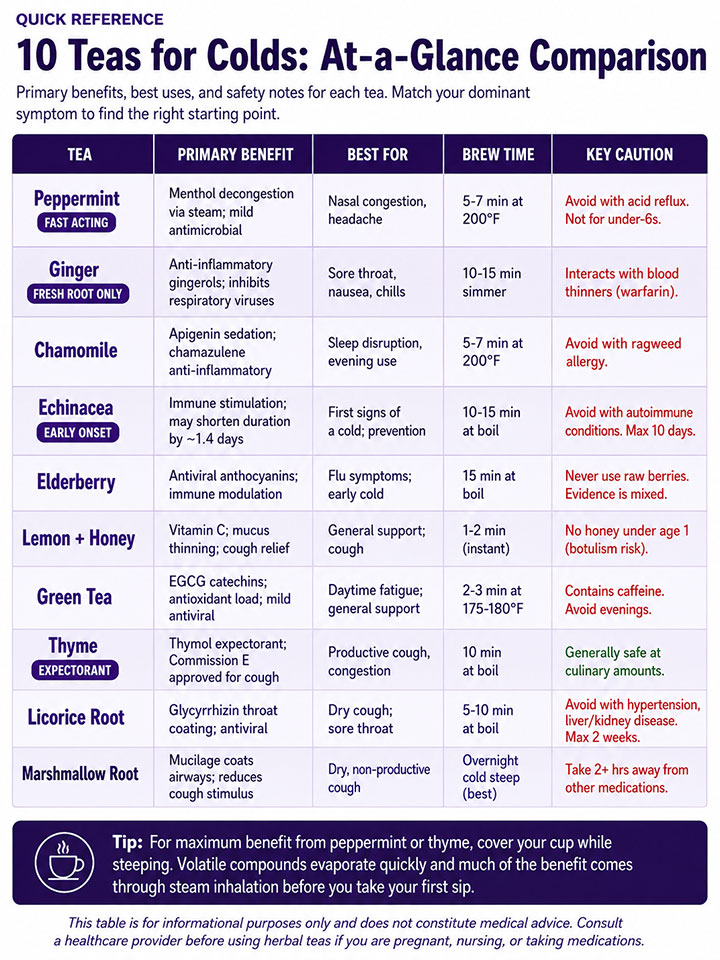
1. Peppermint tea: the only one where the steam does most of the work
Peppermint works faster than anything else here because the mechanism is physical, not pharmacological. Menthol, the dominant compound in peppermint, binds to cold-receptor proteins in the nasal passages and throat. The result is an immediate sensation of openness, reduced mucus viscosity, and mild topical pain relief. You get most of the benefit the moment you inhale the steam.
A 2018 study in BMC Complementary and Alternative Medicine found that peppermint essential oil showed antimicrobial activity against common respiratory pathogens including Streptococcus pneumoniae, S. pyogenes, Haemophilus influenzae, and Moraxella catarrhalis, suggesting some benefit that goes beyond the menthol cooling effect.
But the decongestant effect is where peppermint genuinely shines: it’s the one tea where the primary benefit is immediate and requires no systemic absorption to work.
Brew with water at 200°F (just below boiling), steep covered for five to seven minutes to trap the volatile menthol, and drink while hot. The covering matters. Peppermint’s active compounds evaporate readily, and an uncovered cup loses a significant portion of them before the tea reaches you.
Avoid peppermint if you have acid reflux. Menthol relaxes the lower esophageal sphincter, which can worsen symptoms. Not recommended for children younger than six years old.
2. Ginger tea: anti-inflammatory, antiviral, and most people are brewing it wrong
Ginger tea earned its reputation across centuries of use in Chinese medicine, Ayurveda, and European herbalism before the research caught up. The active compounds, gingerols and shogaols, have measurable anti-inflammatory and antioxidant effects on respiratory tissues.
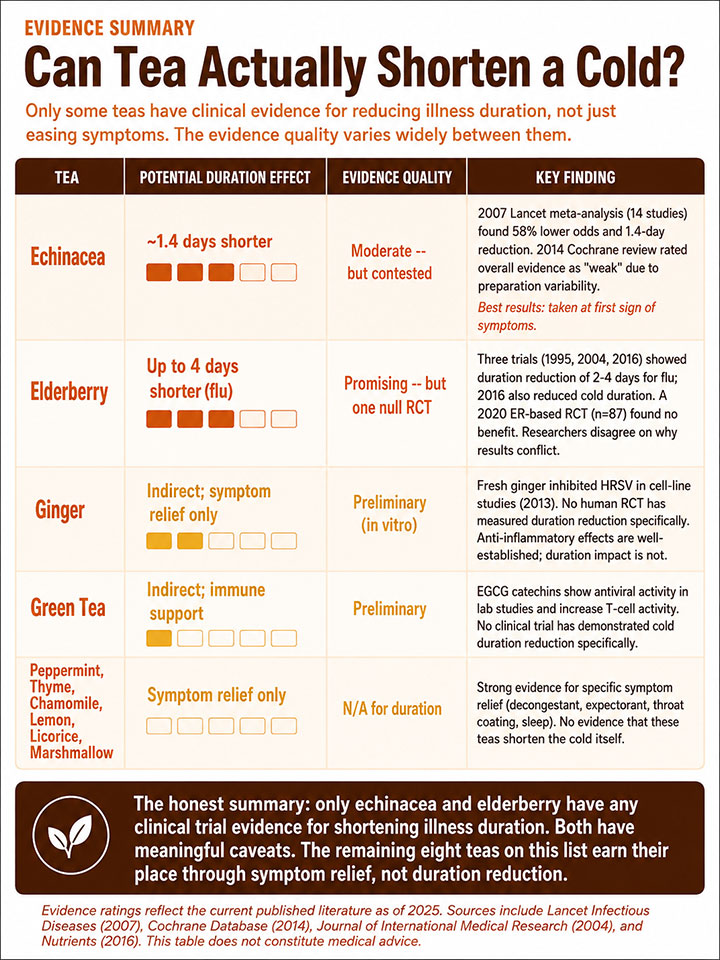
A 2013 study published in the Journal of Ethnopharmacology found that fresh ginger dose-dependently inhibited human respiratory syncytial virus (HRSV) in both upper and lower respiratory tract cell lines, with the strongest effect when it was introduced before viral contact. The same team found that fresh ginger stimulated immune cells to secrete IFN-beta, an antiviral signaling protein.
Dried ginger showed no comparable effect. If you have been treating the tea bags and the fresh root as equivalent, they are not. The compounds responsible for the antiviral activity are present in fresh ginger in a form that hot water extracts readily, and are largely absent in the dried version. It matters which one is in your cup.
Fresh ginger tea is straightforward: thinly slice a one-inch piece of unpeeled root, add it to two cups of cold water, bring to a boil, then reduce heat and simmer for ten to fifteen minutes. Strain, add honey and lemon if desired, and drink hot. For store-bought bags, steep for at least five minutes at a full boil to extract the gingerols properly.
Ginger can interact with blood-thinning medications, including warfarin. Check with a physician if you’re on anticoagulants before consuming ginger in large amounts.

3. Chamomile tea: what you actually want when you can’t sleep
Chamomile contains two compounds worth understanding: chamazulene, which has anti-inflammatory effects on irritated tissues, and apigenin, which binds to GABA receptors in the brain and produces mild sedation.
Neither of these is a miracle ingredient, but together they make chamomile the most appropriate choice for evening use, when the goal is rest rather than symptom suppression.
A study published in Life Sciences confirmed chamomile’s anti-inflammatory activity, identifying it as a selective COX-2 inhibitor, with the apigenin fraction appearing to play a significant role.
Chamomile also raises hippurate and glycine levels in urine after consumption, compounds associated with antibacterial activity, though whether the amounts in a standard cup of tea are clinically meaningful for a respiratory infection remains unclear. That finding is real. The clinical implication is not yet proven.
Steep chamomile for five to seven minutes at 200°F. Avoid chamomile if you have a ragweed allergy; the two plants are closely related and cross-reactivity is common.
4. Echinacea tea: real benefits, genuinely contested evidence
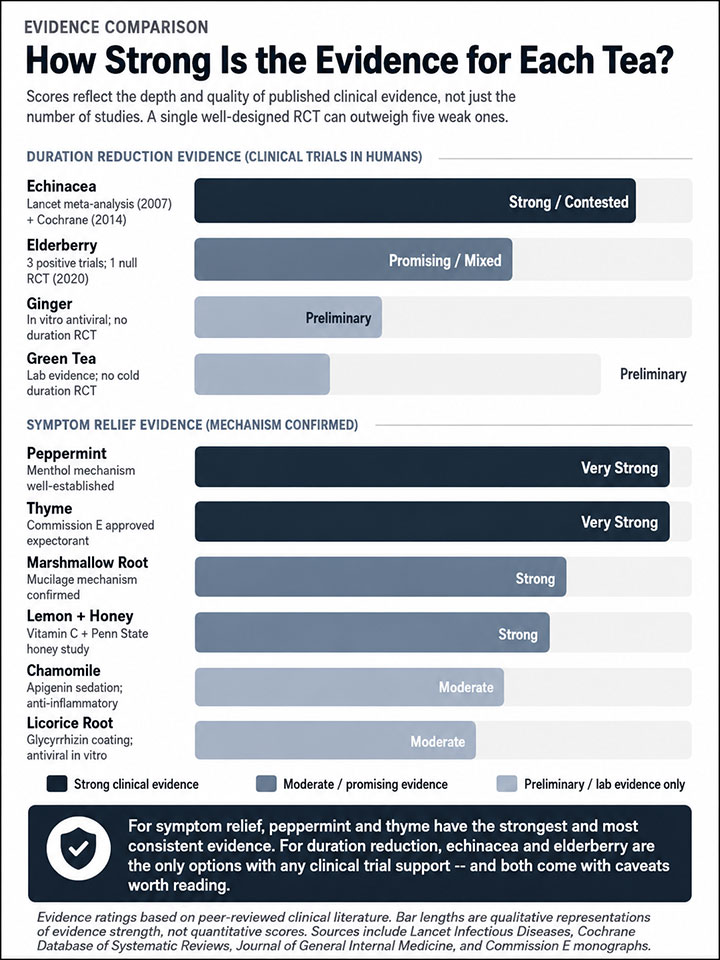
Echinacea has the most polarizing research profile of anything on this list. The positive case is real and substantial: a 2007 meta-analysis in The Lancet Infectious Diseases pooled 14 studies and found that echinacea reduced the odds of developing a cold by 58% and shortened cold duration by an average of 1.4 days. The active compounds, including alkamides, phenolic acids, and polysaccharides, appear to increase white blood cell activity and stimulate immune response.
The complication: the Cochrane Collaboration’s 2014 systematic review of 24 double-blind trials with 4,631 participants was considerably more cautious. Reviewers concluded the overall evidence for clinically relevant effects was “weak,” noting significant heterogeneity across preparations and study designs.
The honest answer is that the benefit probably exists for some echinacea preparations taken at the first sign of symptoms, but the 58% figure from the 2007 meta-analysis is at the optimistic end of what the full evidence base supports.
Steep one to two teaspoons of dried echinacea, or a quality tea bag, for ten to fifteen minutes at a full boil. People with autoimmune conditions should consult a physician before use, as echinacea activates immune pathways that could be counterproductive for them. Do not use continuously for more than ten days.
5. Elderberry tea: promising antiviral, but the 2020 data added nuance
The case for elderberry starts strong. A landmark Israeli study published in the Journal of Alternative and Complementary Medicine (1995) found that elderberry extract reduced symptoms and shortened illness duration during an outbreak of influenza B.
The same research team confirmed a four-day duration reduction in a follow-up trial, published in the Journal of International Medical Research (2004), in 60 patients. A 2016 trial in Nutrients extended the finding to common colds in air travelers, showing shorter cold duration, though not a significant reduction in how many people caught a cold in the first place.
Then a 2020 randomized controlled trial published in the Journal of General Internal Medicine enrolled 87 emergency-room influenza patients and found no benefit at all for elderberry on either duration or severity.
The researchers called their results a direct contradiction of the prior three trials. Researchers still don’t agree on why the results diverged. Differences in patient population (ER patients are typically sicker than trial participants recruited from the community), elderberry preparation, and timing of treatment are all plausible explanations.
The elderberry evidence is real and worth taking seriously. It is also more contested than most articles covering this topic will acknowledge. Elderberry tea is reasonable to try at the first sign of illness; it’s not a guaranteed four-day cure.
Brew with two teaspoons of dried elderberries or a quality bag, steep at a full boil for fifteen minutes. Never prepare tea from raw, uncooked elderberries, which contain toxic cyanogenic glycosides.
6. Lemon tea: the least glamorous option that most people should try first
Squeezed lemon in hot water does three things. The vitamin C provides modest immune support: levels in the blood do rise significantly after lemon juice consumption, as documented in a review in the Frontiers in Immunology journal
Lemon water is not a cure, but it is a fast, cheap, evidence-adjacent remedy that genuinely helps with two common cold symptoms. Adding raw honey adds antibacterial properties and, according to a Penn State study, honey significantly outperformed no treatment for cough relief and was rated best overall by parents of sick children. Never give honey to a child younger than one year old due to the risk of infantile botulism.
Squeeze half a fresh lemon into a mug, add one tablespoon of honey, and fill with just-boiled water. Stir and drink hot. Lemon also works well added to any other tea on this list.
7. Green tea: mild antiviral, meaningful antioxidant load
Green tea contains catechins, particularly epigallocatechin gallate (EGCG), a compound studied extensively for antiviral and immune-modulating effects. A review in the British Journal of Pharmacology found that EGCG and related catechins can inactivate a range of viral and bacterial proteins, disrupting pathogen entry and replication across multiple mechanisms.
Research on green tea catechin metabolites published in the Journal of Agricultural and Food Chemistry (2016) found that these compounds increase CD4+ T cell activity, one of the immune system’s primary adaptive response mechanisms.
There’s a gap between the lab findings and your mug. EGCG concentrations in a standard cup of green tea are lower than those used in most in vitro studies, and whether a few cups deliver a clinically meaningful dose to respiratory tissues is less certain.
Green tea’s clearest benefit during illness is the antioxidant load, the hydration, and the moderate caffeine that eases the fatigue component of a cold without the jitteriness of coffee.
Brew at 175 to 180°F, not boiling, for two to three minutes only. Boiling water makes green tea bitter and degrades some catechins. Green tea does contain caffeine. Choose a decaffeinated version for evening use.

8. Thyme tea: the under-recognized expectorant
Thyme is the most overlooked herb on this list and arguably the one most precisely matched to a specific symptom: a productive cough with congestion. The active compound thymol is classified as an expectorant, meaning it loosens and mobilizes mucus so it can be cleared from the airways rather than sitting there.
Germany’s Commission E, a federal regulatory body evaluating herbal medicines, has formally approved thyme for bronchitis and upper respiratory tract coughs based on its proven expectorant action. A review in Molecules confirmed thymol’s antiviral and antibacterial activity against common upper respiratory pathogens, including influenza viruses and human rhinoviruses.
Fresh or dried thyme from a kitchen herb collection works fine. Add one to two teaspoons of dried thyme (or a small handful of fresh) to a cup, pour boiling water over the herbs, cover, and steep for ten minutes. Strain before drinking. Adding honey improves the flavor considerably. Thyme tea is generally well-tolerated with no significant drug interactions at culinary amounts.
9. Licorice root tea: throat coating with real caveats
Licorice root contains glycyrrhizin, a triterpenoid compound with documented antiviral activity. A review in Frontiers in Pharmacology (2021) surveyed the antiviral research across multiple studies and found inhibitory effects against influenza, herpes simplex, and several respiratory viruses.
The mechanism most relevant to a cold is physical: glycyrrhizin forms a coating on irritated throat tissue, which physically reduces irritation and coughing by keeping the mucous membranes moist and protected.
The clinical cautions here are more serious than with any other tea on this list. Licorice root should not be used by anyone with high blood pressure, kidney disease, or liver disease. It interacts with diuretics, corticosteroids, and some blood pressure medications.
Do not drink it continuously for more than two weeks. The soothing effect is real, but it comes with a meaningful risk profile that places this one squarely in “use it if it fits you, skip it if it doesn’t” territory.
Steep one teaspoon of dried licorice root in boiling water for five to ten minutes. Strain well before drinking.
10. Marshmallow root tea: it works by coating, not by suppressing
Marshmallow root works through a mechanism that is immediately intuitive once you understand it. The root contains mucilage, a viscous, gel-forming polysaccharide that, when dissolved in water, creates a physical coating over the throat and airway surfaces.
Unlike thyme, which acts systemically as an expectorant, marshmallow root acts locally and physically: it covers irritated tissue and holds moisture against it, reducing the stimulus that triggers a dry, non-productive cough.
A study in Frontiers in Pharmacology found that marshmallow root extract produces an immediate protective film on inflamed mucosa, reducing irritation of the mucous membranes and supporting tissue recovery, consistent with the mucilage mechanism. The effect is temporary but repeatable, and the tea has an extremely low risk profile.
One preparation note matters: hot infusions extract some mucilage, but cold infusions extract significantly more. For maximum effect, add two tablespoons of dried marshmallow root to four cups of cold water and let it sit for four to eight hours or overnight.
Gently warm the strained liquid before drinking. If a cold infusion is impractical, the hot version still provides some benefit. Take marshmallow root tea at least two hours away from any other medications, as the mucilage can slow their absorption.
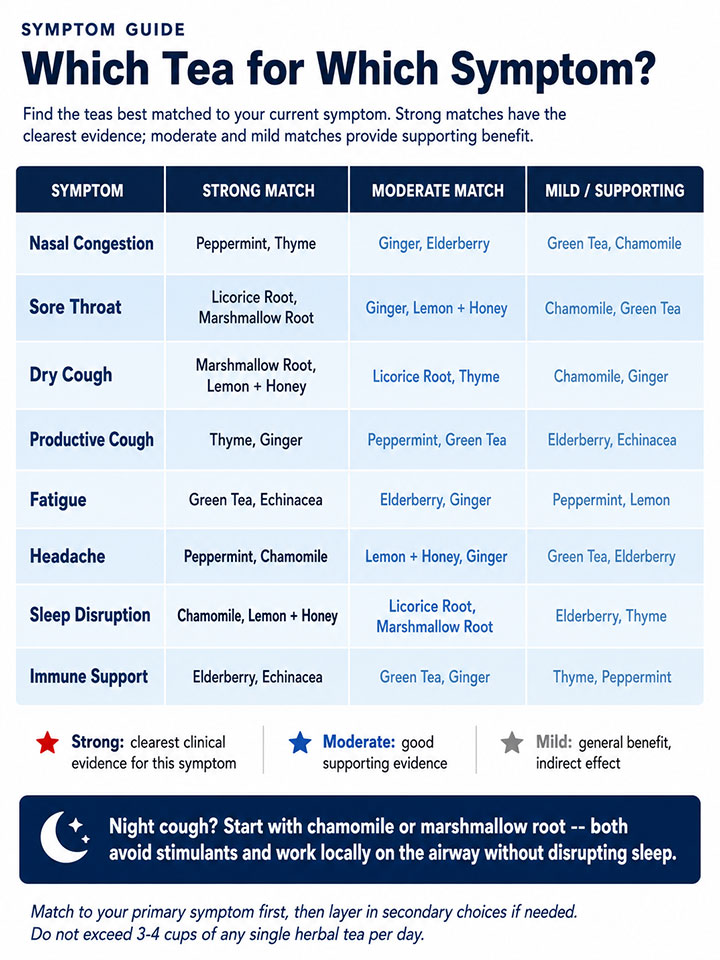
Which tea is right for your symptoms?
The quick version: start with peppermint if congestion is the main problem, ginger or marshmallow root for throat pain, echinacea or elderberry if you want to try shortening the illness duration, chamomile if sleep is the issue, and thyme if you have a productive cough with mucus.
Steam inhalation extends what any of these teas can do. Brew a strong cup of peppermint or thyme tea, pour it into a bowl, drape a towel over your head, and breathe slowly over the steam for five to ten minutes.
The volatile compounds, menthol and thymol especially, reach the nasal passages and upper airways directly through inhalation. Mullein tea is also worth knowing for deeper respiratory congestion or a persistent cough that extends into the lower airways.
Tea combinations are worth trying. A respiratory blend of one part thyme, one part peppermint, and a half part ginger addresses congestion, mucus mobilization, and inflammation together. For nighttime use, two parts chamomile, one part peppermint, and a half part thyme covers sleep, mild decongestion, and cough suppression. Combine dried herbs, use one tablespoon per cup of hot water, and steep covered for ten minutes.
When tea isn’t enough
Most colds resolve within seven to ten days. Contact a healthcare provider if a fever higher than 101.3°F (38.5°C) persists for more than three days, if symptoms improve and then worsen after initial recovery, if you experience shortness of breath or chest pain, if you develop a severe sore throat with swollen lymph nodes but minimal cough (which may indicate strep throat rather than a viral cold), or if symptoms last longer than two weeks.
Children younger than three months, older adults, pregnant women, and people with chronic conditions should contact a healthcare provider earlier rather than later. Tea supports symptom management. It is not a treatment for bacterial infections or serious respiratory illness.
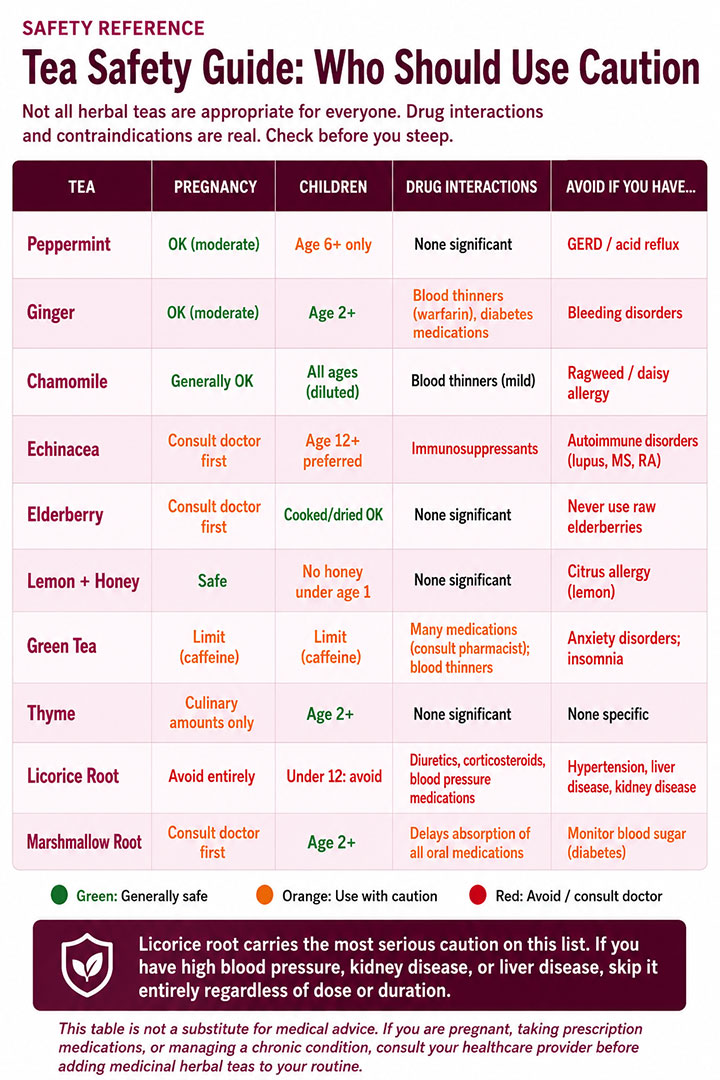
Safety and drug interactions
Herbal teas carry their own risk profiles. The ones most worth knowing: ginger and green tea can both potentiate the effects of blood-thinning medications, so anyone on warfarin or similar drugs should check with a physician before drinking them in large quantities.
Echinacea interacts with immunosuppressants. Licorice root interacts with diuretics and some blood pressure medications and should not be used by anyone with hypertension, kidney disease, or liver disease. Marshmallow root delays absorption of other drugs. Chamomile can trigger allergic reactions in people sensitive to ragweed.
Specific populations to note: peppermint is not appropriate for children younger than six. Licorice root should not be given to children younger than twelve. Echinacea is generally considered appropriate for children older than twelve, but consult a physician for younger children.
Chamomile, diluted ginger, and lemon tea are appropriate for most children over one year old. Honey in any tea should not be given to a child younger than one year due to the risk of infantile botulism.
Pregnancy warrants extra caution. Licorice root should be avoided entirely during pregnancy. Echinacea use during pregnancy should be discussed with a physician first. Thyme at culinary amounts is generally considered safe, but medicinal quantities warrant the same conversation.
Which Tea Is Right for Your Cold?
Answer 3 quick questions to get a personalised recommendation.
The honest verdict on tea for colds
The best case for tea during a cold is not that it defeats the virus. It’s that it does several useful things at once that over-the-counter cold medications mostly fail to do: it provides hydration with active compounds, heat with a decongestant mechanism, and for the right herb at the right dose, some real pharmacological activity in the airway tissues where you need it most.
The evidence behind peppermint’s menthol, ginger’s gingerols, and thyme’s thymol is considerably more solid than the label copy on most drugstore cold products. The evidence behind echinacea and elderberry is real but contested enough that you should hold your expectations in check.
One thing no article covering this topic usually says directly: the steam is not ceremonial. Covering your cup while the tea steeps, drinking it hot, and inhaling over the mug before you sip all matter. The volatile compounds in peppermint and thyme are exactly that: volatile.
They leave the water quickly, and inhaling them is a genuinely different delivery route than drinking them. The person who gets the most out of their cup of cold-season peppermint tea is the one who lingers over it, not the one who lets it go cold.
FAQs
What tea clears up mucus in the throat?
Thyme tea is the most targeted option for clearing mucus. The active compound thymol acts as a clinical expectorant, loosening and mobilizing mucus rather than simply masking the sensation of congestion.
Peppermint tea’s menthol reduces mucus viscosity and creates the sensation of clearer airways almost immediately via steam inhalation. For mucus that has settled into a coating on the throat itself, marshmallow root tea’s mucilage physically covers and loosens the tissue.
What tea acts as a decongestant?
Peppermint tea is the most reliable decongestant, with menthol triggering cold receptors in the nasal passages and producing immediate relief from congestion. Thyme tea is the better choice if you also have a productive cough with mucus, as it addresses both congestion and the underlying mucus load through expectorant action. Inhaling the steam from either tea provides additional benefit beyond what you absorb from drinking.
What herb dissolves mucus?
Thymol, the active compound in thyme, has the strongest clinical standing here. It’s classified as an expectorant, which specifically means it mobilizes and clears mucus from the airways rather than just masking the sensation of congestion.
Ginger addresses a different part of the same problem. Its gingerols reduce the underlying inflammation that drives excess mucus production. For mucus that has settled into a coating on the throat surface, marshmallow root’s mucilage is the more targeted choice. It works by physically covering and loosening what has adhered to the tissue.
Can I drink these teas if I have the flu?
Yes. Elderberry and echinacea have the most direct evidence for flu-related illness, though the elderberry evidence is mixed (see the elderberry section above). Ginger, peppermint, and chamomile address the specific symptoms that accompany flu, including body aches, nausea, congestion, and sleep disruption.
Flu can be more serious than a common cold. If you’re in a high-risk group (older adults, young children, immunocompromised individuals, pregnant women, or people with chronic respiratory conditions), contact a physician rather than relying on tea alone.
How much tea should I drink per day when sick?
Three to four cups spread throughout the day is a reasonable target for most herbal teas. The hydration benefit is as real as the herbal one, and staying consistently hydrated thins mucus and supports immune function.
Rotate teas based on your dominant symptoms rather than drinking large quantities of one herb. The exception is echinacea, which should not be consumed continuously for more than ten days.
Is it okay to drink tea when you have a cold?
Yes, for most people. Warm fluids are actively helpful during a cold because they maintain hydration, thin mucus, and ease throat discomfort. The herbs in most cold-support teas have favorable safety profiles at typical quantities.
The exceptions to “most people” are the specific interactions noted in the safety section above, particularly for ginger and green tea with blood thinners, licorice root in hypertension or liver disease, and echinacea with immunosuppressants.