Olive oil is more than a cooking ingredient. It’s one of the most studied dietary fats on the planet, and the research behind it is more interesting than most summaries let on.
The cardiovascular data is the most robust: a landmark trial of more than 7,000 people found that a Mediterranean diet enriched with extra-virgin olive oil reduced the rate of major heart events by roughly 30% over five years.
That finding has been replicated and extended in U.S. cohorts tracking nearly 100,000 people across three decades. What those studies don’t resolve, and what most olive oil articles skip over, is how much of the benefit belongs to olive oil specifically versus the broader dietary pattern it travels with.
That distinction matters. It doesn’t make the evidence weaker. The evidence is genuinely strong. It makes it more honest, which is the only version worth reading carefully.
What makes olive oil work?
Four compound families are responsible for most of what the research documents.
Oleic acid, the monounsaturated fat that makes up about 73% of olive oil’s composition, influences cholesterol metabolism and cell membrane function. Polyphenols (particularly oleocanthal and hydroxytyrosol) act on inflammatory pathways in the body.
Oleocanthal is structurally similar enough to ibuprofen that it inhibits the same COX-1 and COX-2 enzymes involved in inflammation, though at much lower potency per serving. Vitamin E contributes antioxidant protection, and squalene, a minor but notable compound, plays a role in skin barrier function and has been studied for its cancer-preventive properties.
These compounds don’t act in isolation. That’s part of why isolating olive oil’s contribution in a whole-diet study is genuinely difficult.
Not all olive oil is the same
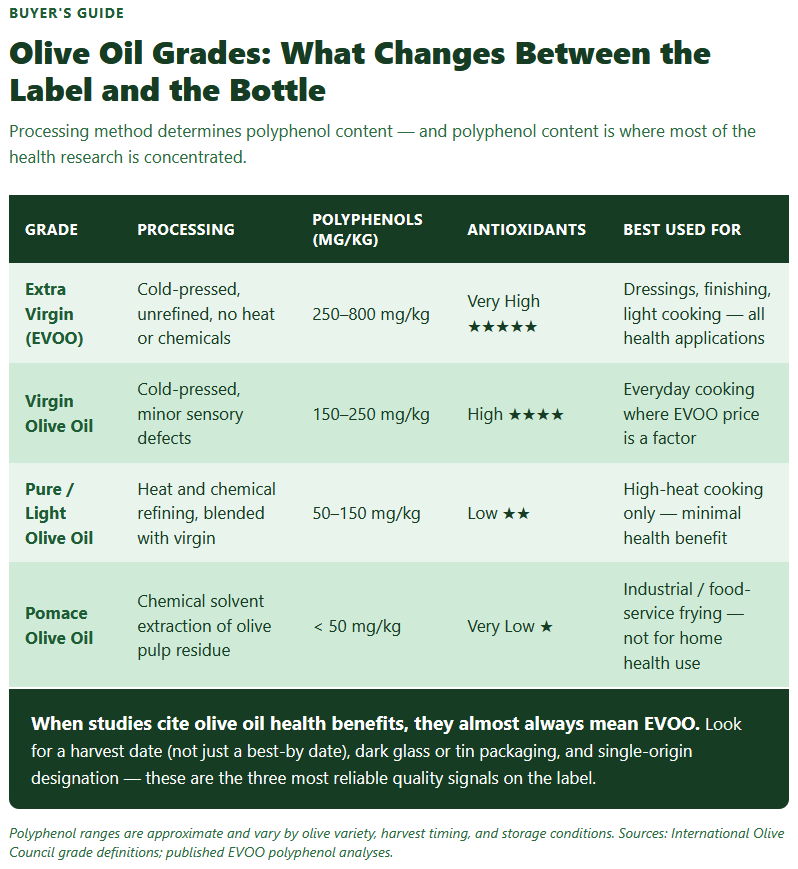
The grade matters more than most labels suggest. Extra virgin olive oil, cold-pressed and unrefined, retains the polyphenol and antioxidant content that the research is built on. Virgin olive oil is similar but with minor sensory defects that drop it from the top grade.
Pure, light, or refined olive oil has been processed with heat and chemical solvents, stripping most of the beneficial compounds. It’s primarily oleic acid and fat content at that point.
When buying EVOO, look for a harvest date (not just a best-by date), a dark glass bottle, and a single-origin designation. A peppery bite at the back of the throat is a reliable sign that oleocanthal is still present and intact.

A note on the evidence before we get into specifics
Most of the studies on olive oil and human health are observational. Researchers follow large groups of people, track what they eat, and see which outcomes correlate with higher olive oil intake. Correlation is useful. It is not causation.
The one major exception is PREDIMED, a randomized controlled trial and the gold standard of nutritional research. PREDIMED actually assigned people to different diets, which allows much stronger conclusions than a cohort study.
But even PREDIMED tested a Mediterranean diet supplemented with olive oil, not olive oil alone. The oil was doing real work in that trial. How much of the benefit would remain if every other element of the Mediterranean diet were stripped away is genuinely unknown.
Every benefit described below is real and research-supported. Where the evidence is from observational work only, that’s noted. Where the distinction between “olive oil benefit” and “Mediterranean-diet benefit” is blurry, that’s noted too. The goal is findings you can actually act on, not a list of things that sound more certain than they are.
Heart health and circulation
1. Reduced risk of major cardiovascular events
The PREDIMED trial (7,447 participants, five years, published and corrected in the New England Journal of Medicine in 2018) is the most rigorous large-scale evidence on olive oil and the heart. Participants who followed a Mediterranean diet supplemented with extra virgin olive oil experienced about a 30% reduction in the rate of major cardiovascular events (heart attack, stroke, and cardiovascular death) compared to a low-fat control group.
A separate observational analysis within the same study cohort found that higher EVOO consumption specifically, independent of other Mediterranean diet components, was associated with reduced cardiovascular disease risk and cardiovascular mortality.
The relationship was dose-dependent: each additional 10g of EVOO per day corresponded to a meaningful decrease in risk. That analysis, published in BMC Medicine in 2014, involved 7,216 participants and is the source of some of the olive oil literature’s most frequently cited cardiovascular numbers.
2. Cholesterol and blood pressure
Oleic acid, olive oil’s primary fat, has a well-documented effect on the LDL/HDL ratio. It tends to reduce LDL cholesterol (particularly the oxidized form most associated with arterial plaque) while leaving HDL relatively stable. This is the mechanism behind most of the cardiovascular protection the research documents.
Blood pressure effects are smaller but real. Polyphenols in EVOO appear to influence nitric oxide production in the endothelial lining of blood vessels, which supports vasodilation. The clinical significance of the effect is modest at normal dietary doses, but it contributes to the cardiovascular picture.
3. Lower risk of stroke
A large French observational study tracking more than 40,000 older adults found that those with the highest olive oil consumption had a significantly lower incidence of stroke compared to those who consumed none.
The finding held after adjusting for physical activity, diet quality, and other cardiovascular risk factors. Stroke protection likely operates through the same pathways as general cardiovascular benefit: improved lipid profiles, better endothelial function, and reduced inflammation throughout the body.
That said, this is observational data. The PREDIMED trial did show a statistically significant reduction in cerebrovascular events. It is the one component of the primary cardiovascular composite outcome that reached significance on its own, which gives the stroke story more weight than most individual cohort findings.
Inflammation and cellular protection
4. Reduced chronic inflammation
Oleocanthal, first identified by researcher Gary Beauchamp at the Monell Chemical Senses Center in Philadelphia, produces the peppery, throat-catching sensation in high-quality EVOO.
Beauchamp’s team recognized that the sensation was pharmacologically similar to ibuprofen’s and eventually confirmed that oleocanthal inhibits the same inflammatory enzymes. The 2005 paper in Nature reporting this was among the most widely cited findings in nutritional chemistry that decade.
The practical question is dosage. A typical two-tablespoon serving of EVOO contains far less oleocanthal than an anti-inflammatory drug dose, roughly 10% of an adult ibuprofen dose. That’s not a medication effect.
But chronic low-level inflammation, the kind associated with cardiovascular disease, cognitive decline, and metabolic dysfunction, may respond meaningfully to consistent dietary inputs over months and years rather than acute pharmacological doses. The Mediterranean populations driving the Blue Zones data weren’t taking supplements. They were using olive oil daily for their entire adult lives.
5. Antioxidant protection at the cellular level
Hydroxytyrosol, one of olive oil’s most studied polyphenols, has demonstrated strong free-radical scavenging activity in laboratory and human studies. Free radicals are unstable molecules that damage cell structures, including DNA. The damage accumulates over time and is implicated in aging, cancer initiation, and chronic disease progression.
EVOO’s antioxidant content is substantially higher than refined olive oil’s. Estimates vary, but cold-pressed oils can contain 250–800 mg/kg of polyphenols, versus 50–150 mg/kg in refined varieties. This is why the grade distinction matters: the antioxidant case for olive oil is primarily a case for EVOO specifically.
6. Potential cancer risk reduction
The cancer evidence for olive oil is real but requires context. Population studies consistently show lower rates of certain cancers (particularly breast and colorectal) in Mediterranean populations with high olive oil consumption.
Laboratory research offers plausible mechanisms: polyphenols appear to trigger apoptosis (programmed cell death) in cancer cells, reduce oxidative DNA damage, and inhibit tumor blood vessel formation.
The most striking clinical data comes from a secondary analysis of the PREDIMED trial. Women in the group following a Mediterranean diet supplemented with extra virgin olive oil had a 68% lower relative risk of malignant breast cancer compared to women on the low-fat control diet, according to a 2015 analysis published in JAMA Internal Medicine.
That number deserves context: the analysis involved only 35 confirmed breast cancer cases across 4,282 women, making the confidence interval wide. Breast cancer was also a secondary endpoint, not the trial’s primary focus. The finding is suggestive and worth continued study. It’s not a settled number.
A meta-analysis covering observational studies puts the breast cancer risk reduction at roughly 38% for high versus low olive oil consumption, which is more conservative than the PREDIMED secondary analysis and probably more representative of what a population would see at scale.
The reason neither number translates to an individual guarantee is worth understanding: population risk reductions describe what happens across thousands of people over decades. Your personal risk depends on genetics, lifestyle, and factors no dietary study can fully account for. The data on olive oil and cancer are genuinely promising. It is not a prescription.
Brain and metabolic health
7. Cognitive protection and dementia risk
The brain-olive oil connection is one of the more interesting aspects of the research, and one of the least settled. The Mediterranean diet as a whole is consistently associated with slower cognitive decline in observational studies, but attributing that specifically to olive oil is difficult given how many components of the diet are implicated in brain health.
What the mechanistic research does suggest: oleocanthal and other polyphenols cross the blood-brain barrier. Once there, they appear to activate microglial cells (the brain’s resident immune cells) in ways that may support clearance of beta-amyloid proteins, which accumulate abnormally in Alzheimer’s disease.
Animal models have shown this effect clearly. Human evidence is more limited, though a 2022 analysis from the Three-City Study found associations between olive oil consumption and slower cognitive decline in older French adults.
Researchers still don’t fully agree on the mechanism or the dose required to produce meaningful effects in humans. What they do agree on is that the Mediterranean diet is the single most consistently brain-protective dietary pattern in the epidemiological literature, and olive oil is a defining component of it.
8. Blood sugar regulation and type 2 diabetes
Multiple cohort studies and smaller intervention trials have found associations between olive oil consumption and improved insulin sensitivity, meaning cells respond more readily to insulin and glucose is cleared from the bloodstream more efficiently. The PREDIMED trial found a 39% lower incidence of type 2 diabetes in the Mediterranean-diet-plus-olive-oil group compared to the low-fat control diet.
The mechanism likely involves oleic acid’s effect on cell membrane composition. Monounsaturated fats appear to influence how insulin receptors on cell surfaces behave, making them more responsive. Polyphenols also have direct effects on glucose metabolism pathways. The two may work together, which makes it harder to study one in isolation from the other.
9. Gut microbiome support
The polyphenols in EVOO are only partially absorbed in the small intestine. The portion that reaches the large intestine functions as a prebiotic, selectively feeding certain beneficial bacterial populations, particularly Bifidobacterium and Lactobacillus strains, while being less welcoming to pathogenic species like Clostridium.
This is an emerging research area. The studies are smaller and less long-term than the cardiovascular literature, and the clinical significance of the microbiome changes observed is still being worked out. What’s clear is that a whole-food dietary source of polyphenols reaches the gut in ways that isolated supplements often don’t replicate.
Everyday wellness
10. Weight management
The relationship between olive oil and weight is counterintuitive enough to be worth stating plainly: a fat-rich food can support healthy weight management, but only if it’s replacing other fats rather than being added on top of everything else.
The Mediterranean diet produces better long-term weight outcomes than low-fat diets in most head-to-head comparisons, and olive oil is a central component of how that diet keeps people satiated.
Olive oil’s fat content triggers the release of satiety hormones including cholecystokinin and GLP-1, which signal fullness. It also slows gastric emptying, the rate at which the stomach empties into the small intestine, which extends the window before hunger returns. That last point matters more than it sounds.
Two tablespoons of EVOO on a salad at the start of a meal behaves differently in the body than the same two tablespoons drizzled over a plate that was already going to be too much food. The fat is the same. The context isn’t.
11. Bone health
The bone health research on olive oil is observational and less robust than the cardiovascular literature, but consistent enough to mention. Mediterranean populations show lower rates of hip fractures than northern European populations, and several cross-sectional studies have found higher bone mineral density in people with higher olive oil consumption, independent of calcium intake.
One proposed mechanism: olive oil’s phenolic compounds appear to stimulate osteoblast activity (bone-building cells) and reduce osteoclast activity (the cells that break bone down). A second: as a fat, olive oil improves absorption of fat-soluble vitamins including vitamin D and vitamin K, both of which play important roles in bone mineralization. The bone studies that exist are consistent. There just aren’t enough of them yet to say what a clinician would need to say.
12. Liver health
Non-alcoholic fatty liver disease (NAFLD) is a condition where fat accumulates in liver cells in people who drink little or no alcohol. It’s increasingly common and closely linked to metabolic syndrome and insulin resistance.
Oleic acid appears to help the liver metabolize fat more efficiently, reducing the accumulation that drives NAFLD progression. Several clinical studies have found improvements in liver enzyme levels and reduced liver fat in people with NAFLD who increased EVOO consumption.
The mechanisms overlap with olive oil’s metabolic effects: better insulin sensitivity means the liver receives clearer signals about fat storage and release, and the anti-inflammatory polyphenols reduce the low-grade inflammation that accelerates liver disease progression.
13. Skin and hair
Applied topically, olive oil has been used for skin care since antiquity, and the reasoning holds up reasonably well under modern examination. Vitamin E and squalene penetrate the skin barrier, providing antioxidant protection against UV-related oxidative damage and supporting moisture retention. The antimicrobial properties of certain olive oil phenolics may also contribute to their historical use against minor skin infections.
For hair, the benefit is primarily mechanical: oil application reduces protein loss during washing and increases the elasticity of hair shafts under tension. High-quality EVOO works for this. A cheap refined olive oil works almost as well, since the benefit here is the lipid content, not the polyphenols.
14. Immune function
Olive oil’s polyphenols influence immune function through two related pathways: direct effects on immune cell activity and indirect effects via the gut microbiome, where a substantial portion of immune signaling originates.
Research on EVOO phenolics shows that they modulate cytokine production (the chemical signals immune cells use to communicate) in ways that tend to reduce excessive inflammatory responses without suppressing protective immunity entirely.
This is mostly mechanistic and laboratory-level evidence. Controlled trials measuring immune outcomes in healthy people who increase EVOO consumption specifically, rather than adopting a whole Mediterranean diet, are sparse.
What the observational data shows clearly is that Mediterranean diet adherence is associated with better immune outcomes. Whether olive oil is carrying that effect, or simply accompanying the vegetables and fish that are, is a question the evidence hasn’t separated yet.
15. Antibacterial properties
EVOO compounds have demonstrated activity against several bacterial species in laboratory settings, most notably Helicobacter pylori, the bacterium responsible for most peptic ulcers. Multiple strains of H. pylori appear vulnerable to EVOO’s phenolic compounds, including strains resistant to standard antibiotic therapies.
A small study in the Journal of Agricultural and Food Chemistry established this in vitro. The question nobody has cleanly answered is whether the concentrations that reach the gut through normal dietary consumption are high enough to replicate what happens in the lab. That gap between in vitro results and in vivo reality is one the olive oil research community has been sitting with for twenty-five years.
16. Eye health
The eye health data is primarily observational and indirect. People who follow Mediterranean-style diets show lower rates of age-related macular degeneration in several cohort studies.
The proposed mechanisms involve vitamin E’s antioxidant protection of retinal tissue, lutein and zeaxanthin absorption (fat-soluble compounds from leafy vegetables that concentrate in the retina are better absorbed when consumed with dietary fat), and the general cardiovascular benefit of improved blood flow to the ocular microcirculation.
The evidence is real but thin for olive oil specifically. This is more accurately a Mediterranean-diet benefit with olive oil as one component.
17. Sleep quality
This is the least evidenced of the 17 benefits, and worth saying so. The proposed mechanisms are physiologically plausible: oleic acid may support hormone production pathways, anti-inflammatory effects may reduce discomfort that disrupts sleep, and consuming fat with dinner may stabilize blood glucose overnight.
What’s missing is direct clinical trial evidence. The associations between Mediterranean diet adherence and better sleep quality in observational studies don’t isolate olive oil as a specific contributor.
The honest answer is that nobody has measured olive oil’s effect on sleep properly yet. If you eat it as part of a good evening meal, the benefit probably comes from the meal rather than the oil specifically.
What the Blue Zones actually show
The populations most often cited in olive oil discussions (Sardinia, Crete, Ikaria) are places where people live longer and maintain physical and cognitive function well into old age. They also consume substantial amounts of olive oil, typically three to four tablespoons daily, and have done so for their entire lives.
What the Blue Zones can’t tell us is whether it’s the olive oil, the diet as a whole, the physical activity patterns, the social cohesion, or the cumulative effect of never having spent thirty years eating processed food. Epidemiologists have been working on this question for decades. The honest answer remains layered.
What they do tell us is that these populations didn’t treat olive oil as a supplement with dosing protocols. They cooked with it every day. That consistency over decades may matter more than the specific amount consumed on any given Tuesday.
What the population studies actually found
Three large studies form the evidence base most often cited for olive oil’s health effects.
The PREDIMED trial is the gold standard: a randomized controlled trial showing a 30% relative reduction in major cardiovascular events with a Mediterranean diet supplemented with extra virgin olive oil versus a low-fat control diet.
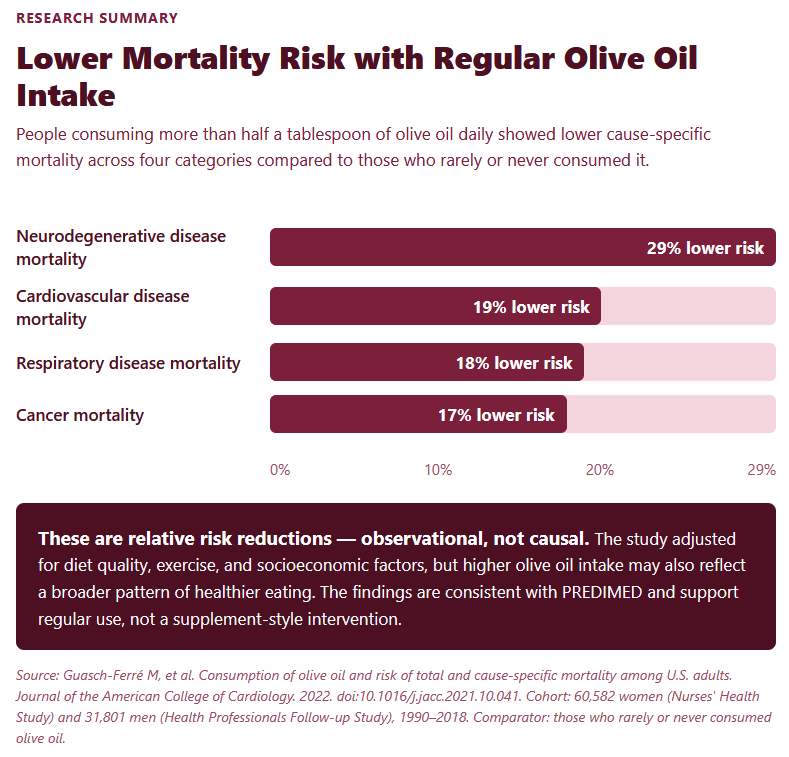
The combined Nurses’ Health Study and Health Professionals Follow-up Study analysis (60,582 women and 31,801 men tracked from 1990 to 2018) found that higher olive oil intake (greater than half a tablespoon daily) was associated with 19% lower cardiovascular mortality, 17% lower cancer mortality, 29% lower neurodegenerative disease mortality, and 18% lower respiratory mortality compared to those who rarely or never consumed it.
That analysis was published in the Journal of the American College of Cardiology in 2022. It is observational, and the authors noted that higher olive oil intake may partly reflect a marker of overall diet quality.
These are not small studies or short experiments. They follow real people eating real food across decades. Their consistency across different populations and research designs is why the cardiovascular case for olive oil is considered robust rather than preliminary.
How much olive oil per day?
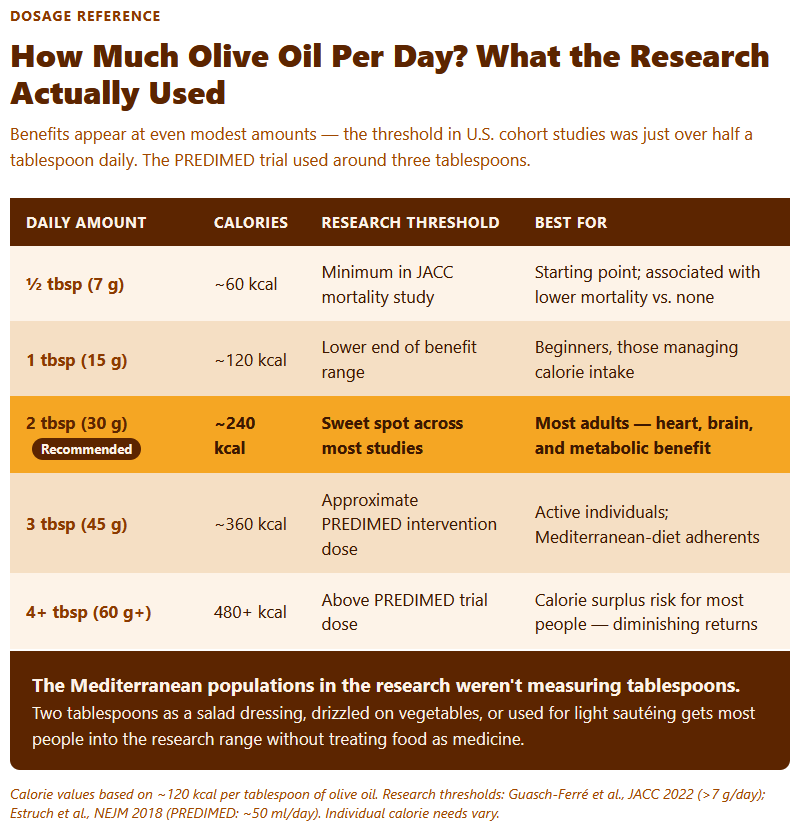
The research most consistently points to two to three tablespoons of extra virgin olive oil daily as the range associated with health benefits. PREDIMED participants in the olive oil group consumed approximately 50 ml (just over three tablespoons) per day. The mortality benefit in the Harvard cohort studies appeared at greater than half a tablespoon daily, a much lower threshold.
The practical implication: you don’t need to take “shots” of olive oil to see benefit. Two tablespoons used as a salad dressing, for light sautéing, or drizzled on cooked vegetables gets you into the research range without treating food as medicine.
Daily Olive Oil Dose Calculator
Find your research-based target and see how it fits into your daily calorie picture.
Is taking a spoonful of olive oil daily good for you?
Yes, with qualifications. A tablespoon of quality EVOO daily puts you at the lower end of the range associated with cardiovascular and mortality benefits in the population research. The benefit appears to be real at this dose, though larger amounts (two to three tablespoons) are associated with stronger effects in the intervention data. The format matters less than the consistency: daily use over time is what the research reflects, not periodic “shots” for acute benefit.
Why take olive oil before bed?
The idea has some physiological logic behind it. Consuming olive oil with the evening meal may help stabilize blood glucose overnight and support overnight anti-inflammatory processes, since oleocanthal’s effects operate over hours rather than minutes.
Whether consuming it specifically before bed offers anything beyond consuming it at dinner is not well-supported by direct evidence. The association between Mediterranean diet adherence and better sleep quality in population studies doesn’t isolate bedtime timing as a variable.
Is there a downside to olive oil?
A few worth knowing. Olive oil is calorie-dense, about 120 calories per tablespoon, so adding it on top of an existing dietary pattern rather than using it to replace less beneficial fats can contribute to a calorie surplus.
People with active gallbladder disease should be cautious, as dietary fat triggers gallbladder contractions that can be painful or provoke complications. And olive oil taken in large amounts can have a mild laxative effect in people with sensitive digestion, particularly at doses well above the normal dietary range.
People taking blood-thinning medications should also know that olive oil has a mild anticoagulant effect and may modestly increase the effect of those medications. This is worth discussing with a physician before significantly increasing intake.
What organ is olive oil good for?
The strongest evidence is for the cardiovascular system: the heart and blood vessels. The brain is a strong second, with consistent associations between Mediterranean diet adherence and slower cognitive decline. The liver has a fairly well-supported mechanistic story around NAFLD prevention and progression. After those three, the evidence becomes thinner or more indirect.
How to use olive oil effectively
Cooking temperature and what actually happens to EVOO at heat
One of the more persistent misconceptions about EVOO is that cooking destroys its benefits. The evidence doesn’t support this. A 2020 study in Antioxidants found that EVOO retained the large majority of its polyphenols after sautéing at typical home cooking temperatures.
EVOO’s smoke point is around 375–405°F depending on quality and acidity, and most home cooking stays well below this range. High-heat deep frying above that threshold will degrade polyphenols significantly, and it falls outside typical home cooking in any case.
The more important variable is storage. Exposure to light and heat degrades polyphenols more than cooking does. A bottle left on a sunny counter for three months is a worse product than one that was briefly sautéed in a covered pan. Store EVOO in a dark glass bottle, away from the stove.
Best combinations for nutrient absorption
Many beneficial plant compounds are fat-soluble, meaning they are absorbed more efficiently when consumed alongside dietary fat. Carotenoids including lycopene and beta-carotene, fat-soluble vitamins (A, D, E, K), and some polyphenols from vegetables all benefit from the presence of olive oil.
A simple tomato salad dressed with EVOO delivers meaningfully more bioavailable lycopene than the same tomatoes eaten plain. Adding olive oil to a kale or spinach salad increases vitamin K and folate absorption. Adding a squeeze of lemon also increases polyphenol bioavailability, as the acidity appears to improve polyphenol stability in the digestive tract.
What about olive oil and lemon juice?
Olive oil and lemon juice together are one of the most searched combinations in the olive oil space, often framed around liver health or morning detox routines. The evidence for dramatic “liver flush” claims associated with this combination is not credible.
What is supported: lemon juice’s acidity appears to improve polyphenol bioavailability from the olive oil, making the combination a genuinely useful salad dressing from a nutritional standpoint. The vitamin C in lemon juice may also help with iron absorption from leafy greens dressed in this way. The simpler claim is credible. The dramatic version is not.
Choosing and storing EVOO
Quality degrades from the moment olives are pressed. The compounds that make EVOO worth buying (polyphenols, oleocanthal, antioxidants) oxidize over time. A harvest date (not just a best-by date) is the most useful piece of information on the label.
Look for oil pressed within the last eighteen months. Single-origin oils tend to have better quality control and more reliable polyphenol content than blended oils, which often mix olives from multiple harvests and countries.
Dark glass bottles matter. Light accelerates polyphenol degradation. A clear bottle on a brightly lit store shelf is already a warning sign.
Once opened, use within three to four months. Refrigeration isn’t necessary and causes the oil to cloud (it returns to normal at room temperature), but a cool pantry cupboard away from the stove is better than next to the cooker. If the oil tastes flat, waxy, or like old nuts, it’s rancid. Rancid oil has lost its beneficial compounds, and the oxidized fats it now contains are mildly pro-inflammatory.
Olive oil versus other oils
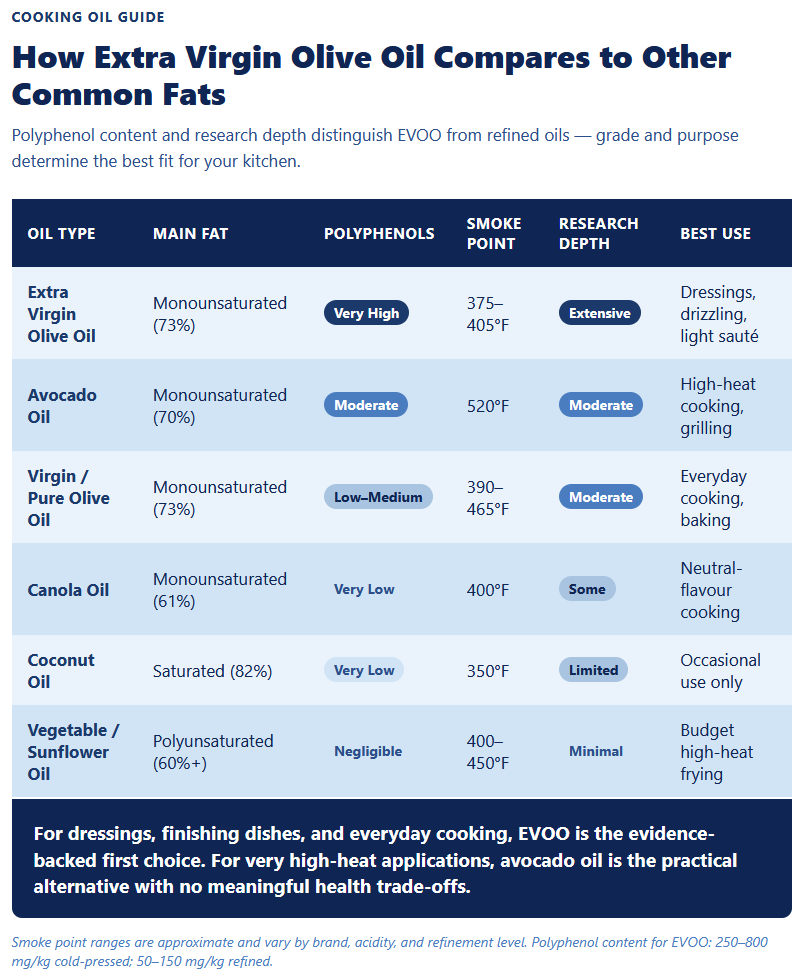
The comparison that matters most for everyday cooking is EVOO against other commonly used fats. Avocado oil has a similar monounsaturated fat profile and a higher smoke point, making it the better choice for high-heat cooking, though it lacks EVOO’s polyphenol content.
Coconut oil is high in saturated fat and the marketing around it runs well ahead of the science. There is no credible evidence it matches EVOO’s cardiovascular or metabolic effects. Highly refined vegetable oils and canola oil have minimal polyphenol content, a different fat composition, and a much thinner body of health research.
For dressings, finishing dishes, light sautéing, and baking, EVOO is the defensible first choice based on the evidence. For very high-heat applications, avocado oil or even refined olive oil may be more practical without meaningful health trade-offs, since the polyphenols that differentiate EVOO degrade above its smoke point anyway.
Conclusion
The clearest version of what the evidence actually shows: use good extra-virgin olive oil consistently in place of less beneficial fats, as part of a diet that includes plenty of vegetables, fish, and whole grains.
The Mediterranean populations generating the long-term longevity data weren’t optimizing their polyphenol intake or timing their consumption around workouts. They were eating the way their grandparents ate, with olive oil as the default cooking fat across a lifetime.
That consistency is almost certainly what the research is measuring, not a supplement effect that arrives and departs with each tablespoon.
FAQs
Can olive oil help you lose weight?
Directly, no. As a calorie-dense fat, olive oil adds energy to meals rather than removing it. The indirect effect is more useful: olive oil consumed with meals increases satiety hormones and slows gastric emptying, which helps with appetite regulation.
The Mediterranean diet, which uses olive oil as its primary fat, consistently outperforms low-fat diets in long-term weight management trials. The mechanism appears to be satiety and dietary adherence rather than any fat-burning property of olive oil itself.
What’s the best way to store olive oil?
Cool, dark, and away from the stove. A pantry cupboard is ideal. Dark glass bottles are better than clear ones, and tins are the most protective container available. Use within three to four months of opening. Buy in quantities you’ll actually use in that window rather than stockpiling large bottles.
Can I cook with extra virgin olive oil?
Yes. EVOO’s smoke point is around 375–405°F, which is above typical sautéing and roasting temperatures. Research on heated EVOO finds that most polyphenols survive light to moderate cooking. High-heat deep frying is a different matter, though EVOO is not the right tool regardless.
How can I tell if my olive oil is high quality?
Look for a harvest date on the bottle, single-origin designation, and dark glass or tin packaging. High-quality EVOO should produce a mild, throaty bite when you taste it straight. That’s oleocanthal. A flat, oily, or rancid taste indicates either poor quality or degradation.
The PDO (Protected Designation of Origin) and PGI (Protected Geographical Indication) certifications add a layer of origin verification, though they don’t directly guarantee polyphenol content.
Does olive oil go bad?
Yes. A properly stored bottle lasts up to eighteen months from the harvest date unopened, then three to four months after opening. The sign is a flat, waxy, or cardboard-like taste. Rancid oil isn’t dangerous, but it has lost what made it worth buying.
Can I use olive oil for skincare?
Yes, with caveats. Olive oil is an effective skin moisturizer. Its vitamin E and squalene content provide meaningful antioxidant protection, though it can be comedogenic (pore-clogging) for some skin types, particularly acne-prone skin.
Test on a small area first. For hair, it works well as a pre-wash treatment to reduce protein loss and improve elasticity. Use the grade that fits the purpose: EVOO for skin, where the polyphenol content is part of the benefit. Refined olive oil works equally well for hair, since the lipid effect is the same at lower cost.
Is expensive olive oil always better?
No, but price is loosely correlated with quality for a reason. The conditions required to produce high-polyphenol EVOO (careful harvesting, rapid cold-pressing, proper storage) cost more than industrial production.
A reasonable price range for quality single-origin EVOO is roughly $15–30 per 500ml bottle. Above that range you’re often paying for packaging and branding. Below it, the chances of getting oil that’s been blended, stored improperly, or mislabeled as EVOO when it doesn’t meet the standard increase.
How much olive oil is too much?
The research doesn’t show a clear upper threshold for benefit, but caloric reality sets a practical ceiling. At 120 calories per tablespoon, four or more tablespoons daily (480+ calories) adds a meaningful caloric load that has to come from somewhere in the diet. Most of the significant benefits in the literature appear at two to three tablespoons daily. More than that doesn’t appear to add proportionally more benefit and introduces a calorie surplus risk for most people.