You’re in your first trimester. Nothing seems edible. And then someone suggests miso soup, warm, salty, gentle on a stomach that has declared war on almost everything, and suddenly it’s the one thing you want. The question that follows is the same one that brings most people here: is it actually safe?
The short answer is yes. Miso soup is safe during pregnancy when prepared thoughtfully and eaten in moderation. But the more useful answer is more specific than that, because the things most people worry about (the sodium, the soy, the fermentation) are not necessarily the things worth watching most closely. And there are findings from large-scale pregnancy research that most pregnancy nutrition guides haven’t caught up to yet.
This article works through what’s actually known, what’s still uncertain, and what a pregnant woman who eats miso soup three times a week in her second trimester needs to consider.
Is Miso Soup Safe During Pregnancy?
Yes, with two practical conditions. The miso paste should be pasteurized, and seaweed additions should be chosen carefully. Both conditions are straightforward to meet, and neither requires avoiding miso soup altogether.
Miso paste is made from fermented soybeans, sometimes with rice or barley added. The fermentation process creates a probiotic-rich food with deep umami flavor. Most commercial miso paste sold in Western supermarkets is pasteurized, which eliminates the bacterial risk associated with raw fermented foods. If you’re buying from a specialty store or using artisanal miso, check the label or ask the producer. If no answer is available, treat it as unpasteurized and either avoid it or heat the soup thoroughly before eating.
The American College of Obstetricians and Gynecologists considers soy foods, including fermented soy products like miso, compatible with a healthy pregnancy diet. The Academy of Nutrition and Dietetics similarly supports fermented food consumption for the probiotic and digestive benefits it can offer during pregnancy.
What Is Miso Soup?
Miso soup is a traditional Japanese dish built from two components: dashi (a stock, typically made from dried kombu seaweed and sometimes dried fish flakes) and miso paste (dissolved into the stock just before serving). The dish usually contains tofu, wakame seaweed, and green onions, though mushrooms, daikon radish, and leafy greens are common additions.
The miso paste itself is where most of the nutritional action happens. Soybeans are fermented with a mold called Aspergillus oryzae (koji), which breaks down proteins into amino acids and produces a range of bioactive compounds during fermentation. The result is a concentrated paste high in protein, B vitamins, minerals, and (in unpasteurized forms) live probiotic cultures.
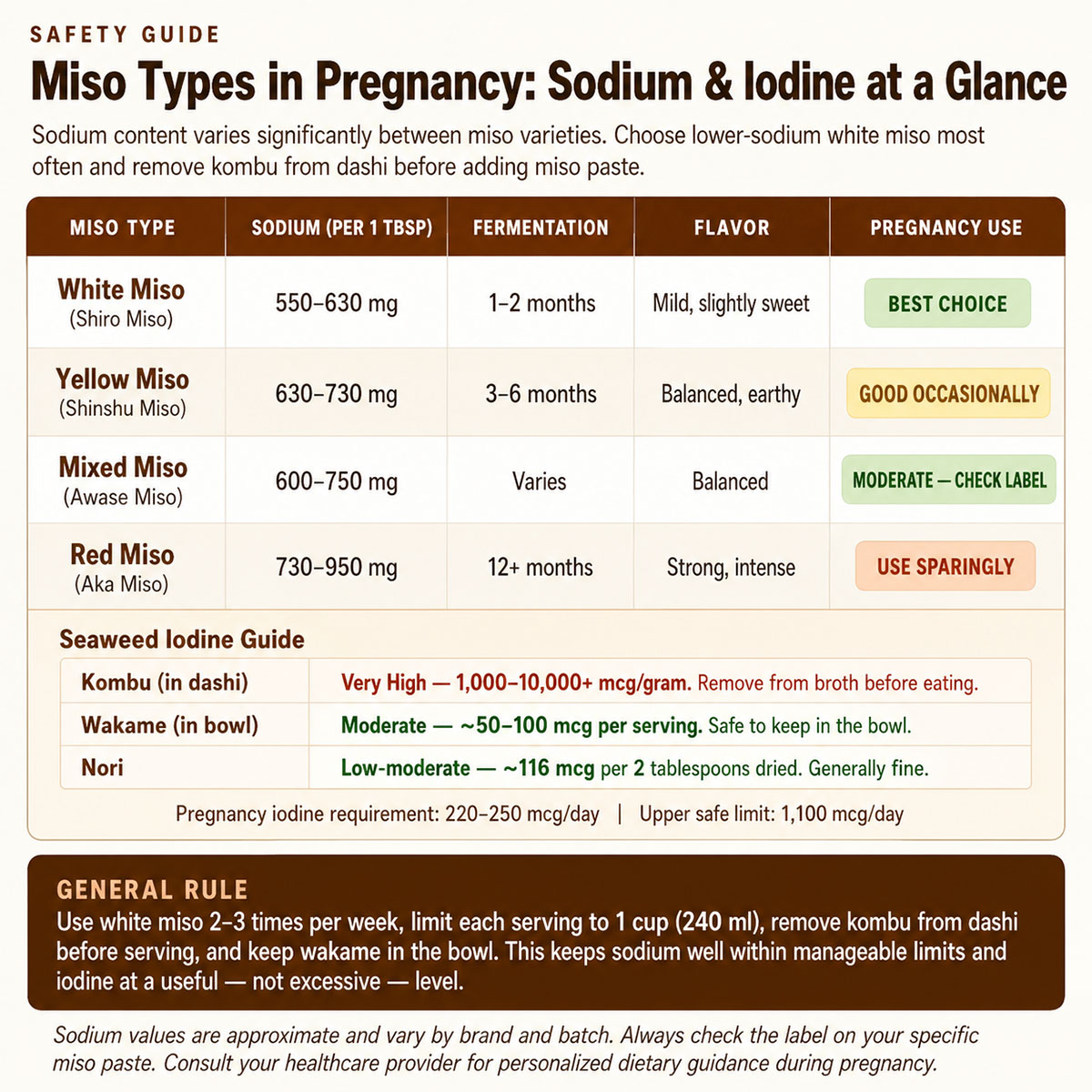
One tablespoon of miso paste contains approximately 550–950 mg of sodium, depending on the variety, which matters a great deal during pregnancy. That number is worth remembering: it becomes useful when thinking about how often to eat miso soup and which type to choose.
Nutritional Benefits for Pregnant Women
Miso soup offers a genuinely useful nutritional profile for pregnancy, particularly in the first trimester when food aversions make getting adequate nutrition difficult.
Protein is the starting point. A standard bowl of miso soup with firm tofu delivers 8–12 grams of complete protein. Tofu provides all nine essential amino acids, and the soy protein in miso paste adds further. Pregnancy increases daily protein needs, particularly in the second and third trimesters when fetal tissue is developing rapidly.
The mineral content matters too. Miso provides iron, zinc, and calcium, three nutrients with elevated requirements during pregnancy. Wakame seaweed, which most miso soups contain, adds iodine, which is essential for fetal thyroid development and brain growth. The daily iodine requirement during pregnancy is 220–250 mcg/day (the WHO recommends the higher end). A bowl of miso soup with wakame can contribute meaningfully toward that target. More on the iodine nuance in the seaweed section below.
B vitamins round out the picture. Miso contains B2, B6, and small amounts of B12 and folate. Folate is critical during the first trimester for neural tube development, though miso soup alone is not a sufficient source. Fortified cereals, leafy greens, and legumes carry a much heavier load here. Think of miso as a useful contributor, not a primary source.
The Sodium Question (and Why the Answer Is More Interesting Than You’d Expect)
Sodium is the concern that comes up most often in pregnancy miso soup discussions, and it’s a legitimate one. Excessive sodium intake during pregnancy is associated with elevated blood pressure and fluid retention, both of which can complicate pregnancy outcomes. A single tablespoon of white miso contains 550–630 mg of sodium; a tablespoon of red miso can reach 730–950 mg. Since a typical bowl uses one to two tablespoons, the sodium adds up quickly.
The practical recommendation is to choose white miso (shiro miso) when possible, keep servings to one cup (240 ml), and limit frequency to two to three times per week rather than daily. That keeps the sodium contribution manageable within a broader diet that stays mindful of salt.
What makes this more complicated than a simple warning is a small randomized controlled trial published in Hypertension Research in 2019 that found eight weeks of daily miso consumption actually decreased nighttime blood pressure in people with elevated blood pressure, compared to an equivalent amount of sodium from non-fermented soy foods. The researchers attributed this to ACE-inhibitory peptides formed during fermentation, which may partially offset sodium’s effects on blood pressure.
That finding took a while to register. The implication is that miso’s fermentation process may behave differently in the body than plain salt, not that sodium stops being relevant, but that the fermented matrix around it changes the calculation somewhat.
One important caveat: the trial involved 40 non-pregnant adults. The findings cannot be applied directly to pregnancy, where blood pressure dynamics are different, and sodium management matters for reasons beyond hypertension alone. This is emerging evidence worth knowing about, not a reason to skip sodium monitoring. Women with pre-existing hypertension, gestational hypertension, or preeclampsia risk should discuss miso consumption specifically with their healthcare provider.
The Seaweed and Iodine Distinction Most Guides Miss
This is the section most miso soup pregnancy guides get wrong, or skip entirely. All seaweeds are not the same, and the type used in miso soup matters substantially for iodine intake during pregnancy.
Kombu (dried kelp) is used to make dashi stock, the base of most traditional miso soups. Kombu is extremely high in iodine: a single gram can contain anywhere from 1,000 to 10,000 mcg, well above the pregnancy upper limit of 1,100 mcg/day. The kombu is typically removed from the dashi before the miso paste is added, which reduces exposure significantly. But if you’re making miso soup from scratch and leaving kombu in the broth, or using a dashi powder or concentrate that includes it, the iodine contribution can be considerable.
Wakame (the thin, dark green seaweed typically found in the miso soup bowl itself) is a different story. Two tablespoons of rehydrated wakame contain roughly 50–100 mcg of iodine, a moderate amount that contributes usefully toward the daily requirement without risking excess. Nori (used in some variations) is also in the low-to-moderate range.
The practical rule: use wakame in the bowl, make sure kombu is removed from the dashi, and avoid soups with large visible chunks of kelp. Women with thyroid conditions should flag this specifically to their healthcare provider, since iodine requirements and tolerances vary.
What About Unpasteurized Miso?
This is the question that generates real anxiety in pregnancy forums, and with good reason. Unpasteurized fermented foods carry a higher risk of harmful bacteria, including Listeria monocytogenes, which can cause serious complications during pregnancy, including miscarriage, stillbirth, and newborn illness.
Most commercial miso paste sold in Western grocery stores is pasteurized. Look for “pasteurized” on the label: it’s usually listed in the ingredient notes or on the side panel. If you’re buying miso from a Japanese grocery store, specialty health food store, or artisanal producer, pasteurization is not guaranteed. Some traditional Japanese miso is deliberately left unpasteurized to preserve live cultures.
If you cannot confirm pasteurization status, the safest option during pregnancy is to heat the soup thoroughly before eating. The miso is typically dissolved into hot (but not boiling) broth, and temperatures higher than 70°C (158°F) will kill most pathogens. This does sacrifice some of the probiotic benefit, but it eliminates the bacterial risk.
Restaurant miso soup is a common point of uncertainty. Most Japanese restaurants use commercially produced miso paste, which is pasteurized. Asking the restaurant is always an option. Most are accustomed to the question.
Miso Soup Pregnancy Safety Checker
Answer 5 quick questions to get a personalized safety verdict for your situation.
The Research Finding Most People Haven’t Heard
The most interesting evidence on miso soup and pregnancy doesn’t come from a nutrition breakdown. It comes from two large Japanese cohort studies that looked at outcomes for the babies themselves.
Researchers working with data from the Japan Environment and Children’s Study, a cohort of more than 100,000 pregnancies, found that women who consumed miso soup one to five or more days per week before conception had significantly lower odds of early preterm birth (before 34 weeks) compared to women who consumed it less than once a week. The adjusted odds ratios ranged from 0.58 to 0.62, translating to a 38–42% lower likelihood of early preterm birth in the miso soup group.
That’s a substantial association from the largest pregnancy nutrition dataset ever assembled. The timing matters: the benefit appeared strongest for consumption before pregnancy, not only during. The proposed mechanism is the gut microbiome, and regular fermented food intake before conception may support a healthier maternal microbiome that in turn, reduces inflammatory pathways associated with preterm labor.
A second study, also from the JECS cohort and published in PLOS ONE in 2019, found something stranger. Among nearly 73,000 mother-child pairs, higher maternal miso soup intake during the second and third trimesters was independently associated with infants sleeping longer at one year of age. Babies of mothers in the highest miso intake group had significantly lower odds of sleeping fewer than 11 hours.
A 2025 systematic review in Frontiers in Nutrition by Arun Pandiyan and colleagues reviewed these and related findings, concluding that fermented food consumption during pregnancy, miso specifically included, was associated with positive immune, microbiome, and mood outcomes for both mothers and infants.
Researchers still don’t have a clear mechanistic explanation for the sleep finding. The gut-brain axis is the leading candidate. Maternal gut microbiome composition during pregnancy may influence the microbial colonization of the infant’s gut, which in turn affects sleep-regulating neurotransmitter pathways. But that’s a plausible chain of inference, not a confirmed mechanism. These studies establish associations in observational data, they do not prove causation, and the Japanese population context matters for interpreting the findings.
What they do suggest is that miso soup in pregnancy is doing something more interesting than just contributing some protein and sodium to a bowl of broth.
Miso Soup by Trimester
The evidence and practical guidance shift somewhat depending on where in pregnancy you are.
First Trimester
This is when miso soup is most commonly craved and when the nutritional entry point matters most. Food aversions, nausea, and difficulty eating mean that a warm, easily digestible broth with a manageable amount of protein and B vitamins is genuinely useful. White miso (shiro miso) is the best choice here: lowest sodium, mildest flavor, least likely to trigger aversive reactions.
Adding fresh ginger to first-trimester miso soup has a practical basis. Ginger has been studied for nausea reduction in pregnancy, with several randomized controlled trials finding meaningful benefit. A quarter teaspoon of grated fresh ginger stirred in just before serving is an easy addition. Start with small portions, half a cup rather than a full bowl, to test tolerance.
The focus on pasteurization is most relevant here. The first trimester is when fetal development is most sensitive to potential pathogens, so checking miso paste labels is worth the extra attention.
Second Trimester
The second trimester is when nutritional needs increase most rapidly, coinciding (for most women) with improved appetite and reduced nausea. This is the window where the JECS sleep study found the strongest association between miso consumption and infant outcomes, which may simply reflect that maternal nutrient absorption and gut microbiome health are most consequential during this period of rapid fetal development.
Iron-rich additions make sense here: baby spinach, sliced shiitake mushrooms, and edamame all pair naturally with miso broth and address the elevated iron requirements of the second trimester. A squeeze of lemon or a side of vitamin C-rich vegetables at the same meal supports iron absorption from plant sources.
Third Trimester
Sodium management becomes more important in the third trimester, when the risk of edema (fluid retention) is higher, and blood pressure tends to rise. This is a reason to be particularly consistent about choosing white miso, limiting serving size to one cup, and balancing the rest of the day’s meals toward lower-sodium options, not a reason to avoid miso altogether.
Digestive support also becomes relevant. Fermented foods like miso may support gut motility at a point in pregnancy when slowed digestion is common. Smaller, more frequent servings (half a cup with a meal rather than a full bowl on its own) tend to sit better when fullness is reached quickly.
Safe Preparation Guidelines
The key preparation principle for miso soup during pregnancy is straightforward: add miso paste after removing the pot from heat, never boil it. Boiling destroys the heat-sensitive probiotic cultures that make fermented miso nutritionally distinct from a generic soy broth. It also degrades the flavor. Dissolve the miso paste in a small amount of warm broth, whisk until smooth, then stir the mixture back into the pot.
A practical sequence for a pregnancy-safe bowl:
- Prepare dashi by soaking kombu in cold water for 30 minutes, then heating to just below a boil. Remove and discard the kombu before proceeding. This eliminates the high-iodine component while preserving the mineral-rich base stock.
- Add tofu, wakame, and any vegetables to the dashi. Simmer for two to three minutes until cooked through.
- Remove from heat. Dissolve one to two tablespoons of white miso paste in a ladleful of the warm broth, then stir the mixture back into the pot.
- Serve immediately. Do not reheat after the miso has been added.
For instant miso packets or restaurant miso: these are typically made with pasteurized miso paste and commercially produced dashi. They’re generally safe choices during pregnancy, and a reasonable option when cooking from scratch isn’t practical. The sodium content in instant packets tends to be toward the higher end, so check the label and factor that into the day’s total intake.
Soy and Pregnancy: Is There Anything to Worry About?
Soy contains isoflavones, plant compounds that interact weakly with estrogen receptors. This has led to concerns about soy consumption during pregnancy affecting fetal hormonal development. The concern is more prominent in online health forums than in clinical guidance.
ACOG’s position on soy during pregnancy is that moderate consumption of whole and fermented soy foods is compatible with a healthy pregnancy diet. The isoflavone concern is largely based on animal studies using concentrated isoflavone doses well above what standard dietary consumption provides. Fermented soy, including miso, may actually have lower isoflavone activity than unfermented forms, since fermentation partially metabolizes these compounds.
Women with thyroid conditions should be aware that soy can interfere with thyroid hormone absorption when consumed in large quantities alongside thyroid medication. This concern applies to soy broadly, not to miso specifically, and the interaction is primarily relevant at high intake levels or when thyroid medication is taken close to a soy-containing meal. Discussing this specifically with a healthcare provider is advisable for this group.
Miso Soup and Gestational Diabetes
Miso soup is one of the more gestational diabetes-friendly options in a pregnancy diet. The glycaemic impact of a standard bowl is low: the combination of protein from tofu, fiber from vegetables, and the negligible carbohydrate contribution of the miso paste and dashi base means that blood sugar response is minimal.
Adding firm tofu rather than soft, and including edamame or leafy greens, increases the protein and fiber content further, which supports more stable post-meal blood glucose levels. The sodium monitoring advice is the same for women with gestational diabetes as for any pregnant woman, and possibly more relevant if blood pressure monitoring is also part of the management plan.
The Miso Soup Picture in Pregnancy
Most pregnancy nutrition guidance on miso soup stops at “it’s fine in moderation.” That’s accurate but incomplete. The more interesting picture, drawn from one of the largest pregnancy cohort studies ever conducted, is that regular miso soup consumption before and during pregnancy may be doing something meaningful at the level of preterm birth risk and infant gut development. The mechanism almost certainly runs through the maternal microbiome. The exact chain isn’t fully established.
What is established: the concerns most women lead with (the soy, the fermentation, the sodium) are either manageable or, in the case of sodium, more nuanced than a simple warning captures. The one thing genuinely worth attention is the seaweed type, specifically the kombu in dashi, which carries an iodine load the dish’s wakame does not. Remove the kombu, use white miso, eat it two to three times a week, and a bowl of miso soup is one of the more nutritionally coherent things a pregnant woman can reach for.
FAQs
Is unpasteurized miso safe during pregnancy?
No, not without heat treatment. Unpasteurized miso carries a risk of harmful bacteria, including Listeria, which can cause serious pregnancy complications. Most commercial miso paste is pasteurized, so check the label. If pasteurization status is unclear, heat the soup to at least 70°C (158°F) before eating. This reduces the probiotic benefit but eliminates the bacterial risk.
Can miso soup help with morning sickness in the first trimester?
Many women find warm miso broth easier to tolerate during first-trimester nausea than heavier foods, likely because of its bland-savory flavor profile and easy digestibility. There is no clinical trial evidence specifically on miso soup and morning sickness, but the evidence on ginger for pregnancy nausea is reasonably strong, and adding a small amount of fresh grated ginger to the bowl may provide additional benefit.
Does miso soup provide enough iodine during pregnancy?
A bowl of miso soup with wakame seaweed provides roughly 50–100 mcg of iodine, a meaningful contribution toward the 220–250 mcg daily requirement during pregnancy, but not sufficient on its own. Miso soup with kombu-based dashi (where the kombu is left in) may provide much more, potentially exceeding safe limits. Do not rely on miso soup as a primary iodine source, and do not leave kombu in the broth.
Is miso soup safe if I have gestational diabetes?
Yes, generally. The glycaemic impact of a standard miso soup is low, and the protein and fiber content from tofu and vegetables supports blood glucose stability. Monitor sodium intake as usual and discuss your specific diet plan with your healthcare provider or registered dietitian.
Is miso soup safe during breastfeeding?
Yes. The pasteurization and sodium considerations are less pressing during breastfeeding than during pregnancy, though moderate consumption is still sensible. Some evidence suggests that maternal probiotic intake during breastfeeding may benefit infant gut health through breast milk, though the research in this area is still developing.