The idea sounds perfect: swish some coconut oil around your mouth and get a brighter smile without expensive treatments. Researchers have run clinical studies on this practice. Not one of them measured tooth color.
That omission is the whole argument. Coconut oil does something real inside your mouth. Four independent studies have confirmed it reduces plaque-forming bacteria. But reducing plaque is not the same as whitening enamel, and no plant oil carries the chemistry to do the latter.
The Scientific Verdict: Is There Proof?
Direct Whitening Effects
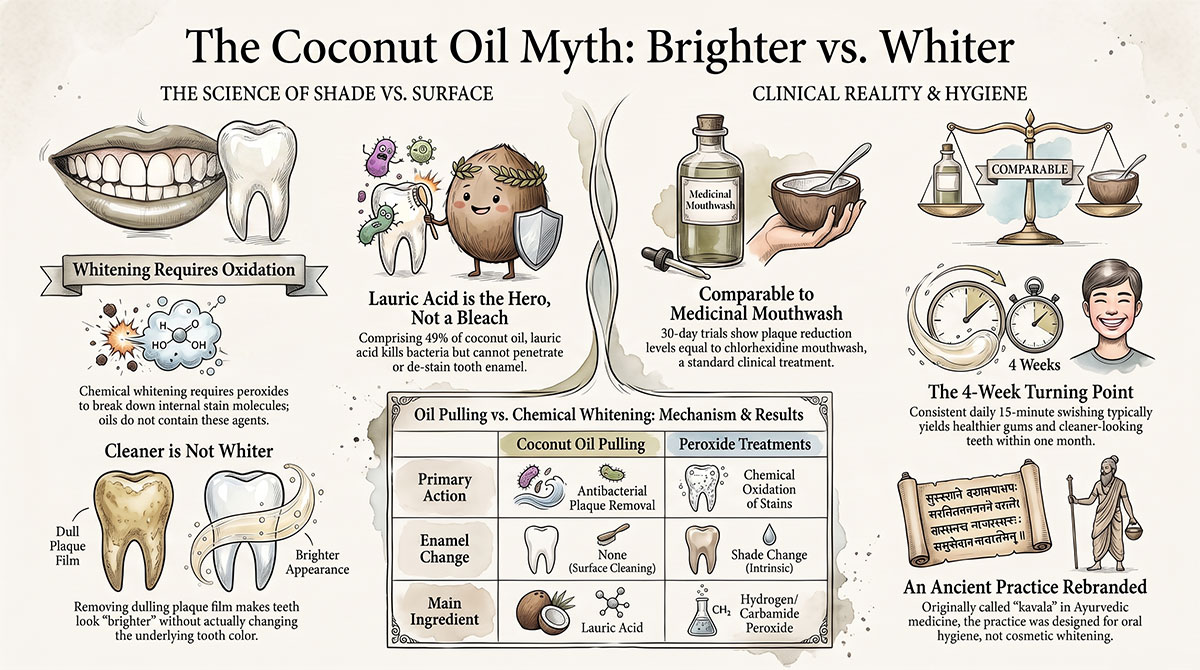
No peer-reviewed study has demonstrated that coconut oil chemically whitens teeth. Whitening works through oxidation: chemical reactions that break down stain molecules on or within the tooth structure. Hydrogen peroxide and carbamide peroxide are the agents that produce this reaction.
Coconut oil contains neither. Its molecular structure cannot penetrate tooth enamel or break down the stain compounds that peroxide-based products target. That is a property of all oils, not a specific weakness of coconut oil.
Coconut Oil Composition
The dominant compound in coconut oil is lauric acid, which accounts for roughly 49% of its weight. Lauric acid has well-documented antibacterial properties against certain oral pathogens. Nothing else in the oil’s composition approaches a mechanism capable of bleaching or de-staining teeth.
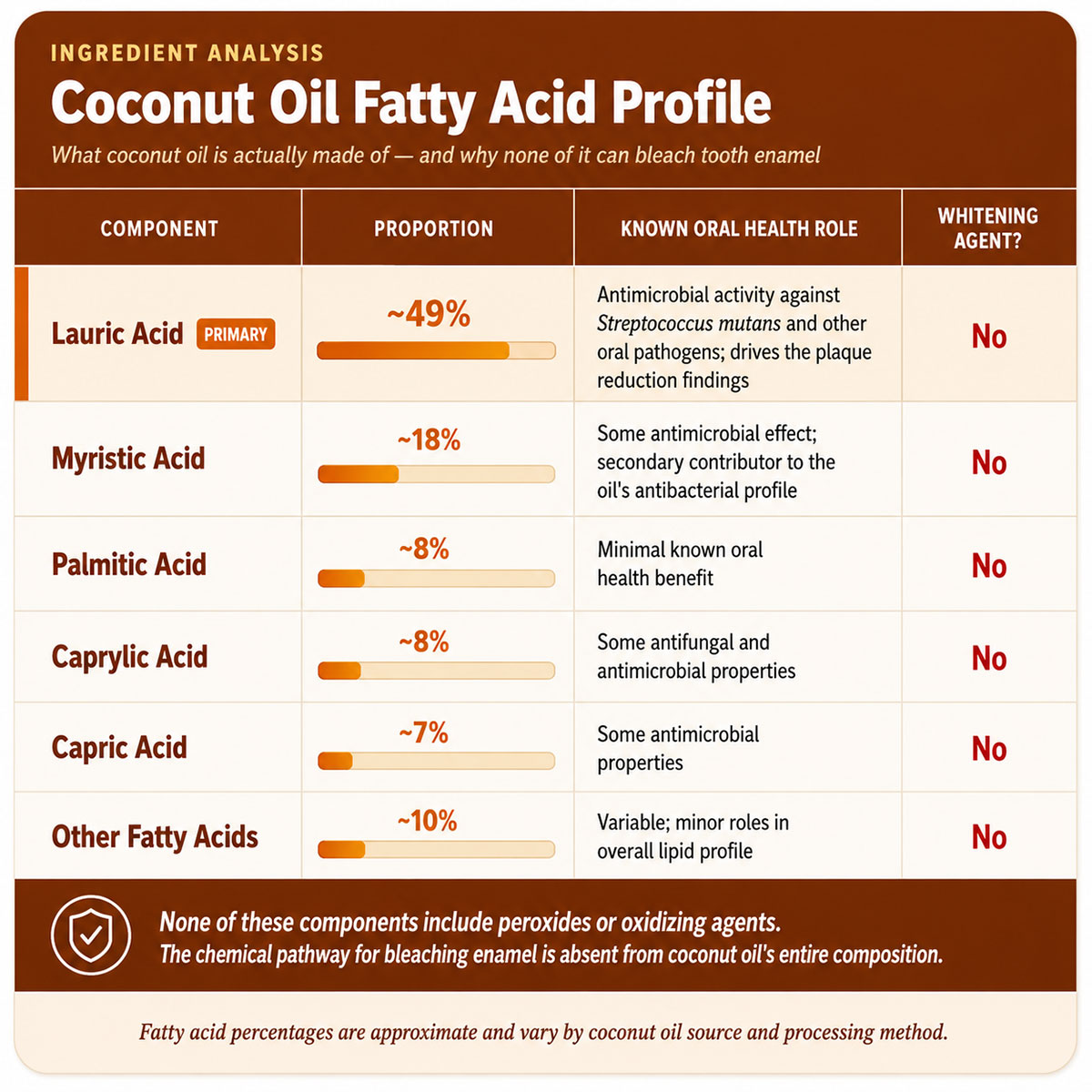
None of these components includes peroxides or other compounds that oxidize stain molecules. The chemical pathway for whitening simply is not present.
Indirect Brightening: The Plaque Factor
Plaque, the sticky bacterial film that accumulates on teeth, makes them look duller than their baseline shade. By reducing plaque, oil pulling can make teeth appear slightly cleaner. This is not a change in tooth color. The dentin underneath has not been affected.
The distinction matters because it explains the user experiences that drive the practice’s popularity. People often notice their teeth looking slightly brighter after consistent oil pulling. They are seeing less plaque discoloration. That is a genuine, modest benefit. It is not whitening.
What Oil Pulling Is and Its Historical Context
Oil pulling comes from Ayurvedic medicine, practiced in India for thousands of years. The traditional practice involves swishing oil in the mouth for oral hygiene purposes. Whiter teeth were not the original goal.
In Ayurveda, the practice is called “kavala” or “gandusha” and was performed to remove bacteria, improve gum health, and strengthen the jaw. Social media carried it into modern wellness culture with a different promise attached.
Oils Used Traditionally
- Sesame oil: the traditional choice in Ayurvedic texts
- Sunflower oil: a common alternative in older practice
- Coconut oil: the most widely used today, primarily for its flavor and antibacterial profile
Understanding Tooth Discoloration: Why Do Teeth Stain?
Extrinsic Stains
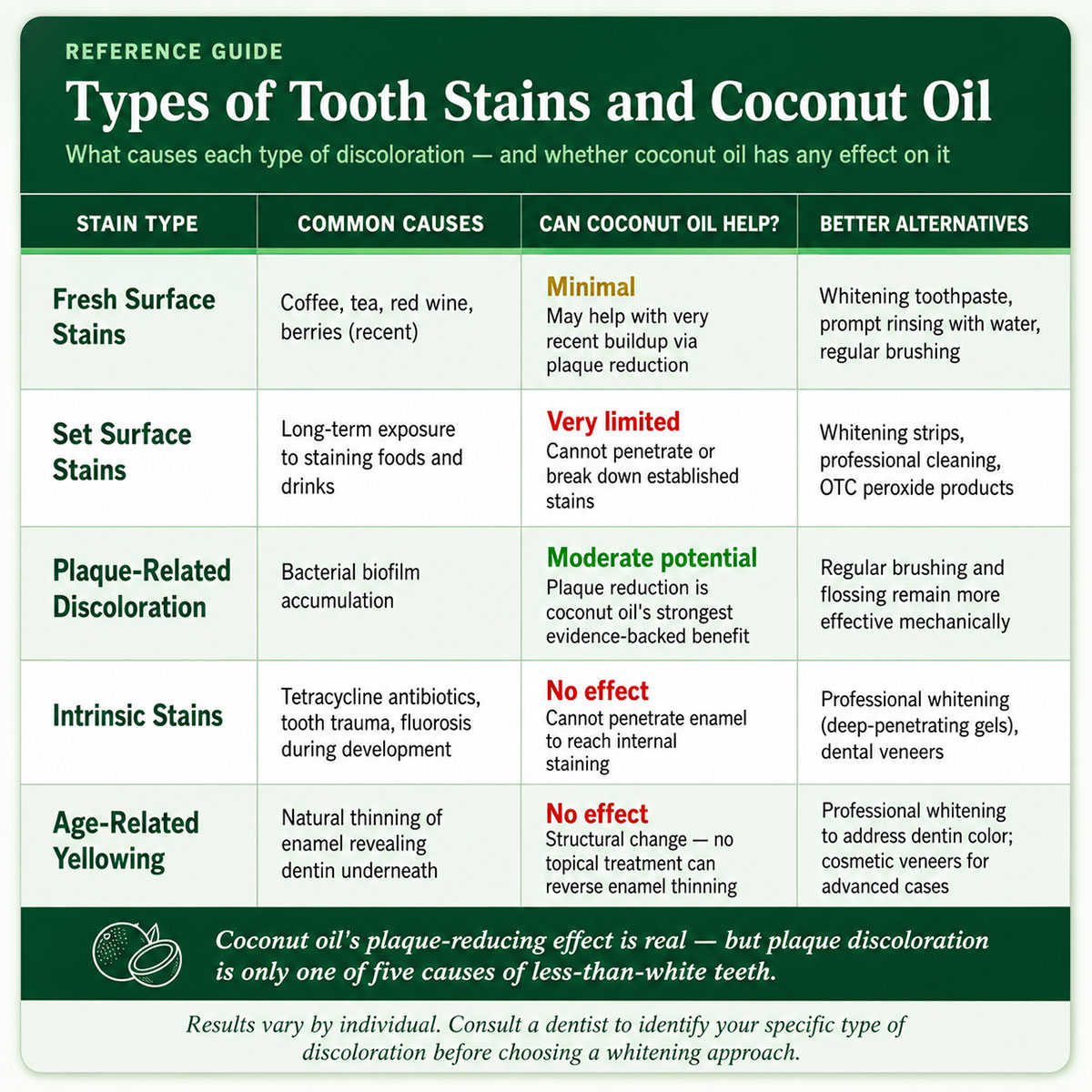
Surface stains from coffee, tea, red wine, tobacco, and certain foods sit on the outer surface of the tooth. These respond to cleaning interventions: whitening toothpaste, professional polishing, and peroxide-based treatments all address them to varying degrees. Coconut oil may marginally reduce fresh surface buildup through plaque reduction, but its effect on established extrinsic staining is minimal.
Intrinsic Stains
Intrinsic stains sit within the tooth structure itself, caused by tetracycline antibiotics taken during tooth development, trauma to the tooth, or fluorosis. No oil can reach these stains. They require professional bleaching agents capable of penetrating enamel, or cosmetic interventions such as veneers.
Age-Related Discoloration
As enamel thins with age, the yellowish dentin layer underneath becomes more visible. This is a structural change, not surface staining. Professional treatments are the only approach that can address it, and results depend on the degree of thinning.
Coconut Oil for Oral Health: What the Evidence Shows
The evidence for coconut oil is not about whitening. It is about oral hygiene, and that evidence has some genuine substance behind it.
Reducing Plaque and Gingivitis
The most consistent finding across the research is that coconut oil pulling can reduce plaque and the gum inflammation associated with it. The mechanism runs through lauric acid, which disrupts the fatty membranes of certain oral bacteria, particularly Streptococcus mutans, one of the primary drivers of tooth decay and plaque formation.
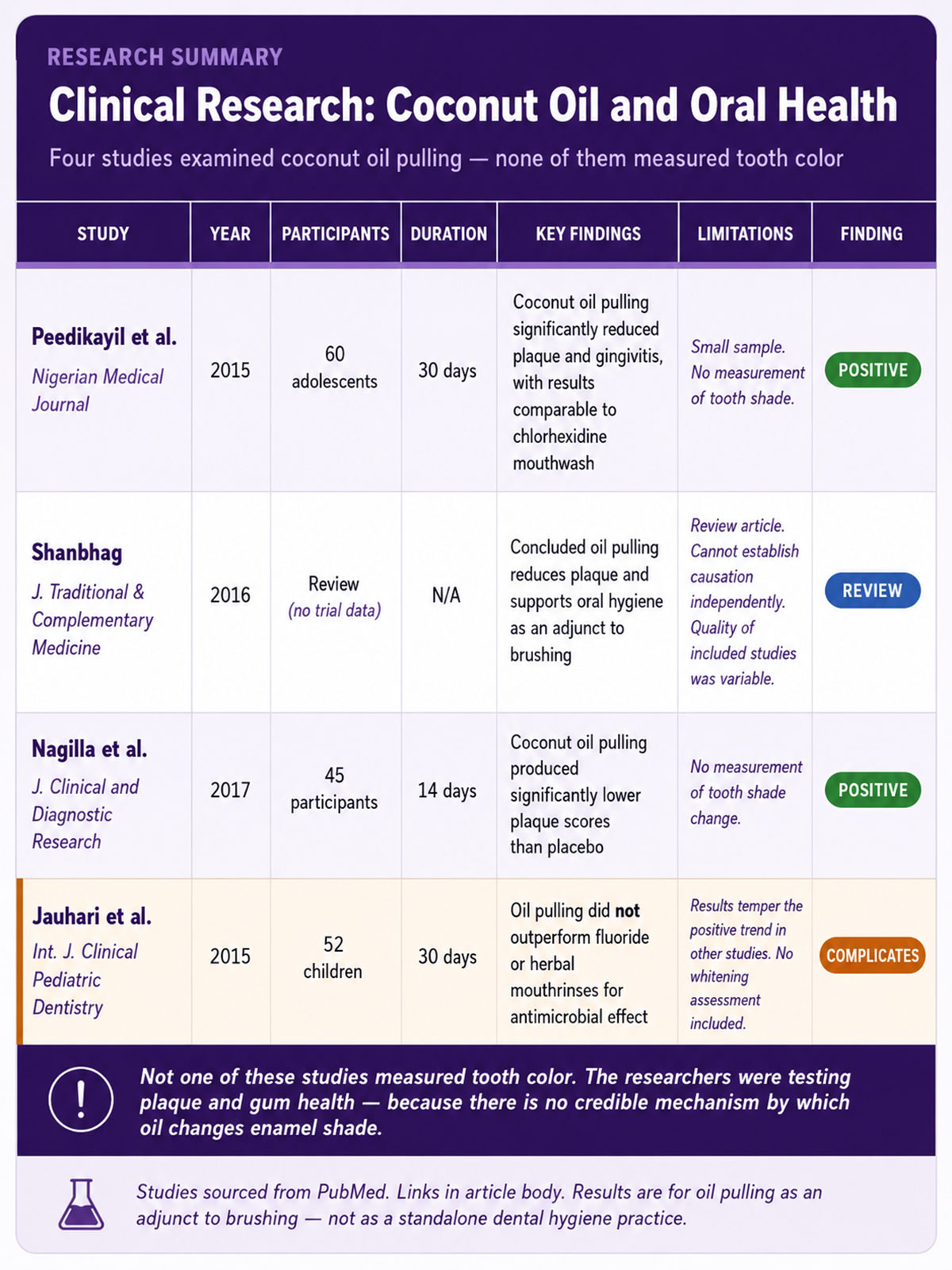
Dr. Faizal Peedikayil at Kannur Dental College in India wanted to know whether coconut oil could match the standard antimicrobial treatment. His team ran a 30-day trial with 60 adolescents and found that coconut oil pulling produced plaque and gingivitis reductions comparable to chlorhexidine mouthwash, a clinically meaningful finding for gum health. But the researchers were not looking for whitening effects. The mechanism for whitening was not present to measure.
Combating Bad Breath
Most bad breath originates from volatile sulfur compounds produced by oral bacteria. By reducing those bacterial populations, oil pulling may provide some freshening effect, though no study in this area has listed halitosis as a primary outcome. The plaque reduction data is the more reliable finding.
What the Research Table Actually Shows
One thing stands out when you look at all four studies together: not one of them measured tooth color. The researchers were testing plaque, bacterial counts, and gum scores, because those are the outcomes that could plausibly change. A 2020 systematic review in Heliyon by Woolley and colleagues reviewed all available evidence and reached the same conclusion: coconut oil pulling reduces plaque and improves gum health as an adjunct to brushing, with no meaningful whitening effect.
One study in the table below also complicates that picture. It found that oil pulling did not outperform fluoride or herbal mouthrinses for antimicrobial effect in children, a finding that tempers the more positive results from the other trials and reflects where the evidence currently stands.
How to Do Oil Pulling (If You Choose to Try)
The oral hygiene case for coconut oil is real enough to be worth trying as an adjunct to brushing, not a replacement for it. If you want to try it, technique matters. Swishing too hard for too long produces jaw soreness. Swishing too briefly reduces the antibacterial contact time.
- Place one tablespoon of organic, cold-pressed coconut oil in your mouth.
- Swish gently for 15 to 20 minutes. Start with 5 minutes if that feels too long.
- Do not gargle or swallow. The oil collects bacteria as you swish.
- Spit into a trash can, not down the drain. Solidified oil clogs pipes.
- Rinse thoroughly with warm water.
- Brush your teeth as usual afterward.
Oil Pulling Timer
Choose your duration, then press Start. Swish gently the whole time.
What Oil Is Best for Teeth Whitening?
No oil whitens teeth through the peroxide-based oxidation process that actually changes enamel color. That applies to coconut oil, sesame oil, sunflower oil, and every other oil used in pulling practices. Of the available options, coconut oil has the most clinical research behind it for oral hygiene purposes and is generally the best-tolerated for flavor and texture. If oral health is the goal rather than whitening, coconut oil is a reasonable choice. If whitening is the goal, oil is not the right tool, and no amount of swishing time changes that.
What to realistically expect from oil pulling
With consistent daily practice of 15 to 20 minutes, here is what the evidence actually supports. Within one to two weeks, most people report fresher breath and gums that feel less tender. By weeks three and four, teeth may look slightly cleaner (not lighter in shade, but less dull from reduced plaque buildup). No meaningful change in tooth shade should be expected at any point. The color of your teeth reflects the depth of staining and the natural shade of your dentin, neither of which oil can reach.
Troubleshooting Common Issues
- Gag reflex activates: Start with one teaspoon and build up gradually over several days.
- Cannot manage 15 to 20 minutes: Begin with 5 minutes. A shorter session still provides some antibacterial contact.
- Oil becomes thick and white: That is expected. The oil emulsifies with saliva during swishing. That is a sign it is working correctly.
- Jaw soreness: Swish more gently or reduce duration. Aggressive swishing is not more effective.
- Unpleasant taste: A single drop of food-grade peppermint oil can be added. Confirm with your dentist before adding essential oils.
Important Considerations and Potential Downsides
Oil pulling is generally safe when done correctly, but it is not without considerations. People with coconut allergies should avoid it entirely. Swallowing the oil during practice carries a small risk of digestive upset from the bacteria it has collected.
Rare cases of lipoid pneumonia have been reported when oil is aspirated into the lungs rather than swallowed. This reinforces the importance of swishing gently, not vigorously. The practice also takes 15 to 20 minutes daily, which is a real time commitment. And above all, it does not replace brushing, flossing, or professional dental cleanings.
Proven Ways to Whiten Teeth
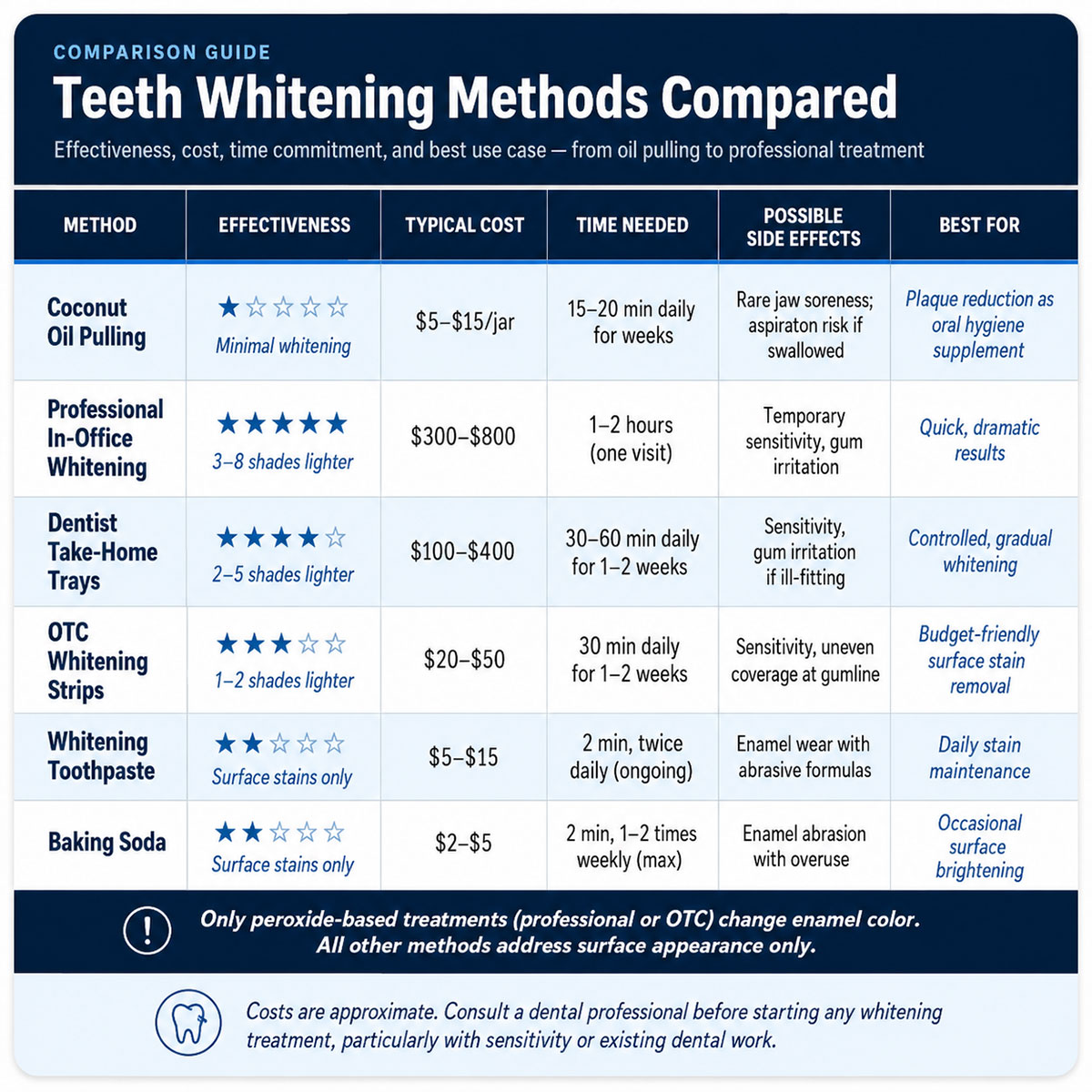
If measurably lighter teeth are the goal, the options that actually work fall into two categories: professional treatments and over-the-counter peroxide products. Both operate through oxidation: the chemistry that coconut oil cannot replicate.
Professional Teeth Whitening
In-office treatments use high-concentration peroxide gels (25% to 40%) activated by specialized lights or lasers. A single visit can lighten teeth by several shades, at a cost of approximately $300 to $800, depending on the practice and treatment type. Dentist-prescribed take-home kits use custom trays with 10% to 22% carbamide peroxide, producing more gradual results over one to two weeks at a lower cost.
What makes professional whitening effective is concentration, fit, and time. The whitening agent is held against the tooth at a high enough concentration, for long enough, to actually break down the stain compounds within enamel. No natural remedy achieves this.
Over-the-Counter Whitening Products
Whitening strips containing 5% to 10% hydrogen peroxide can lighten teeth one to two shades with consistent use over seven to fourteen days. Whitening toothpastes work primarily through mild abrasion and very low peroxide concentrations. They remove surface discoloration but do not affect intrinsic tooth shade. Tooth sensitivity affects roughly 10% to 30% of people who use peroxide-based products, typically resolving within a few days of stopping treatment.
Other Home Remedies (Use with Caution)
Baking soda removes surface stains through mild abrasion. It is not harmful in moderation, but daily use can damage enamel over time. The American Dental Association recommends limiting use to once or twice a week. Diluted hydrogen peroxide rinses (1% to 3%) may offer modest brightening, but household hydrogen peroxide at full strength (typically 3% to 6%) should not be used directly on teeth without dental guidance.
The Most Effective Whitening Strategy Is Prevention
The teeth that stay whitest longest are the ones that accumulate less staining in the first place. A few practical habits make a measurable difference over time.
- Brush twice daily with fluoride toothpaste
- Floss daily to remove plaque between teeth
- Rinse with water immediately after coffee, tea, or red wine
- Use a straw when drinking staining beverages
- Quit or reduce tobacco use
- Get professional cleanings twice yearly
Three Claims That Follow Coconut Oil Everywhere
Three claims follow coconut oil through social media and resist correction. The first is that it whitens, it does not, and no study has ever found that it does. The second is that it detoxifies the body through the mouth, this has no mechanism and no supporting evidence. The third is that results appear quickly, any brightening from plaque reduction takes three to four weeks of daily practice and does not involve enamel color at all.
What coconut oil can do (reduce plaque, support gum health, complement a regular dental routine) is a more modest and more defensible claim. Used correctly as a supplement to brushing and flossing, it may meaningfully improve gum health over time. That is worth something. It is just not the something most people searching this topic are looking for.
What Dentists Actually Say
Professional dental organizations view oil pulling with measured caution. The American Dental Association states that scientific studies have not proven that oil pulling reduces cavities, whitens teeth, or improves oral health and well-being. The ADA recommends proven practices (brushing with fluoride toothpaste and regular flossing) rather than oil pulling as a primary hygiene strategy.
Dr. Mark Burhenne, DDS, founder of AsktheDentist.com, notes that oil pulling may help reduce plaque and improve gum health, but should not be expected to significantly whiten teeth. “The whitening products we use professionally contain peroxides that actually change the color of the teeth, which oil simply cannot do,” he explains.
Dr. Suhail Mohiuddin, DMD, a holistic dentist, recommends oil pulling to some patients as a supplementary practice for gum health. He is clear that it will not replace thorough brushing and flossing, and will not whiten teeth the way professional treatments can.
That alignment is itself telling. The ADA’s evidence-only position and a holistic dentist’s more integrative approach diverge on many things in oral care. On whether coconut oil whitens teeth, they do not.
Combining Coconut Oil with Other Natural Remedies
The internet’s preferred upgrade to oil pulling is to add something to it. Baking soda for abrasion, turmeric for its Ayurvedic credentials, and essential oils for antimicrobial reinforcement. Here is what the evidence says about each.
Coconut oil and baking soda: Baking soda’s mild abrasiveness may help remove surface stains, while coconut oil reduces plaque. The combination is not harmful in moderation, but it remains far less effective than peroxide-based products for actual whitening and too abrasive for daily use.
Coconut oil and turmeric: Some studies show turmeric has anti-inflammatory properties relevant to gum health. Despite claims, turmeric is unlikely to whiten teeth and may temporarily stain them yellow. Its oral health benefits, such as they are, do not extend to enamel brightening.
Coconut oil and essential oils: Adding a drop of food-grade peppermint or tea tree oil may improve the flavor and provide additional antibacterial properties. Use only food-grade essential oils in tiny amounts, and confirm with your dentist before adding them routinely.
What to Take From This
Coconut oil pulling is not the whitening treatment its social media reputation suggests. The chemistry simply is not there. But the evidence for its oral hygiene benefits is genuine, the practice carries minimal risk when done correctly, and the plaque reduction it produces is real enough to be clinically interesting.
Ayurvedic tradition developed this practice over thousands of years, and whitening teeth was never the goal. It was about keeping the mouth clean. That turns out to be the one thing it demonstrably does. For people drawn to natural routines, that is a reasonable reason to include it, alongside brushing and flossing rather than in place of them, and without expecting a shade change that no plant oil can deliver.
Frequently Asked Questions
Does coconut oil pulling actually whiten teeth?
Coconut oil pulling does not chemically whiten teeth. It may make teeth appear slightly less dull by reducing plaque buildup, but this is not a change in tooth color. Any brightening effect is indirect and modest. Peroxide-based products are the only options that change enamel shade.
What oil is best for teeth whitening?
No oil whitens teeth. The chemistry required to break down enamel stain compounds (oxidation via peroxide) is absent in all plant oils. Of the oils used for oral hygiene, coconut oil has the strongest research base for plaque reduction and is generally the most palatable. It is the best choice for oral health, but not for whitening.
How fast does coconut oil whiten teeth?
Coconut oil does not produce whitening in the clinical sense at any speed. If you notice your teeth looking slightly cleaner after three to four weeks of daily oil pulling, that reflects reduced plaque, not a change in tooth shade. For genuine whitening, professional treatments or over-the-counter whitening strips show results within one to two weeks.
Can coconut oil remove plaque from teeth?
Multiple studies show that daily coconut oil pulling can reduce plaque accumulation when practiced consistently for 15 to 20 minutes. The effect appears to come from lauric acid’s antibacterial properties against plaque-forming bacteria. It is less effective than brushing and flossing, which remove plaque mechanically, but may offer additional benefit as a supplement to those practices.