Muscle loss can begin in your 40s and accelerate later. The surprising part is how little training time research suggests you actually need to push back.
The jar lid that used to twist open without thinking is the first sign. Then stairs. Then the realization that carrying groceries in from the car has become something you notice.
None of this is about effort. You haven’t gotten lazier. Your body has started quietly dismantling something it no longer considers essential: muscle tissue. It begins in your 40s, accelerates in your 50s, and unlike most gradual physical changes, it has a clinical name and a clear biological mechanism.
The research on reversing this process has shifted considerably in the past decade, and the story that’s emerged is stranger and more useful than most fitness content lets on. The time required is far shorter than you’ve been told. The equipment required is nothing you need to buy.
Why the Rate Matters More Than the Fact
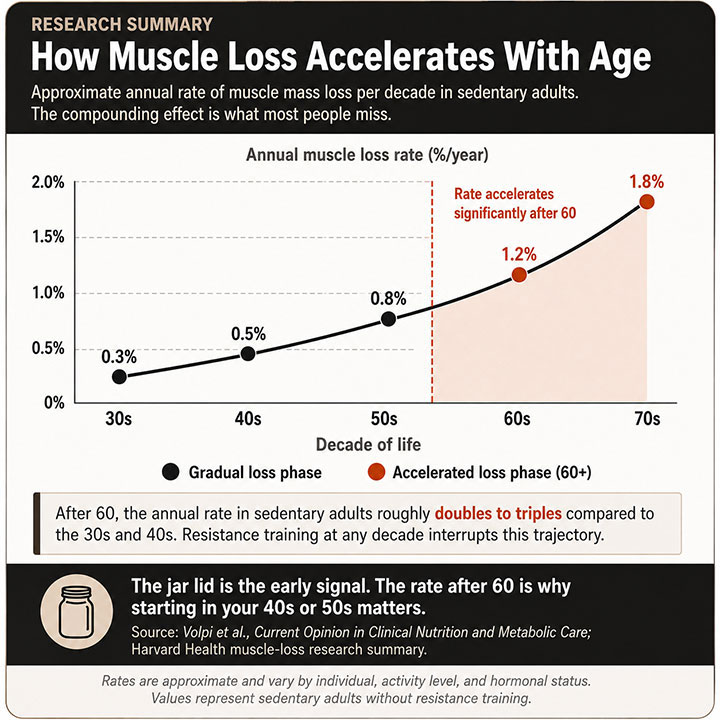
Adults begin losing muscle mass at roughly 3 to 8 percent per decade from their 30s onward, according to a widely cited review by Elena Volpi and colleagues published in Current Opinion in Clinical Nutrition and Metabolic Care.
That sounds manageable. What changes the picture is what happens after 60: in sedentary adults, the rate accelerates to roughly 1 to 2 percent per year, according to Harvard Health’s research summary on age-related muscle loss.
The compounding effect is what most people miss. A person who loses 3 percent of muscle mass per decade in their 30s and 40s, then 15 percent per decade in their 60s, is not experiencing a slow, linear decline. They’re experiencing something closer to a cliff with a long approach. The jar lid is the approach.
The reason involves at least three overlapping mechanisms: declining testosterone in men and declining estrogen in women (both directly affecting muscle protein synthesis), a drop in growth hormone production that slows tissue repair, and the condition called anabolic resistance described above, which means older muscle no longer responds to the same protein stimulus that younger muscle does.

The Science Got Shorter
The dominant assumption in fitness culture has been that building muscle requires long sessions, heavy weights, and high frequency. Each of those assumptions has been challenged, and for adults over 40, each has been revised significantly.
The frequency question was settled first. A 2018 meta-analysis by Jozo Grgic and colleagues in Sports Medicine found that when total weekly training volume is held constant, there is no significant difference in strength gains between training once, twice, or three times per week. That subgroup finding held across 21 studies. Session count is not what drives the result. Session effort is.
The load question followed, and its answer was more surprising. A 2012 randomized controlled trial by Cameron Mitchell and colleagues at McMaster University, published in the Journal of Applied Physiology, found that men training with light loads (30 percent of their one-rep maximum) to the point of near-fatigue produced the same muscle growth over 10 weeks as men training at 80 percent.
The key variable was not the weight. It was effort, specifically reaching close to muscular failure on each set. A 2016 meta-analysis by Robert Csapo and colleagues in the Scandinavian Journal of Medicine and Science in Sports confirmed this pattern in elderly populations specifically, finding that low-to-moderate loads produced meaningful hypertrophy provided enough repetitions were completed. For older adults with joint concerns or limited mobility, this matters considerably.
The variable with the most leverage turned out to be time under tension. A systematic review and meta-analysis by Ron Borde, Tibor Hortobagyi, and Urs Granacher published in Sports Medicine in 2015 analyzed dose-response data from 25 randomized controlled trials in adults aged 65 and older.
Among all the training variables they examined, the time a muscle spends under load per repetition was one of the strongest independent predictors of muscle development. Moving slowly and deliberately produces greater stimulus than moving quickly with the same weight. The total clock time per session is far less important than the quality of tension within it.
Before You Start: The Warm-Up That Actually Matters
Cold muscle tears. Warm muscle adapts. For adults over 40, three to five minutes of preparation before training is not optional, and the joints specifically need more lead time than they did at 25.
Perform the following sequence before every session:
- March slowly in place for 30 seconds to raise heart rate slightly without taxing the joints.
- Perform 10 slow arm circles in each direction, moving from the shoulder socket, not the elbow.
- Stand with hands on hips and perform 10 slow hip circles in each direction to mobilize the lower back and hip flexors.
- Perform 5 slow ankle rolls on each foot, moving through the full range of motion before adding any load to the lower legs.
This takes less than four minutes. Skipping it is one of the most common reasons people over 40 develop exercise-related joint pain in the first weeks of a new program.
The 12-Minute Routine
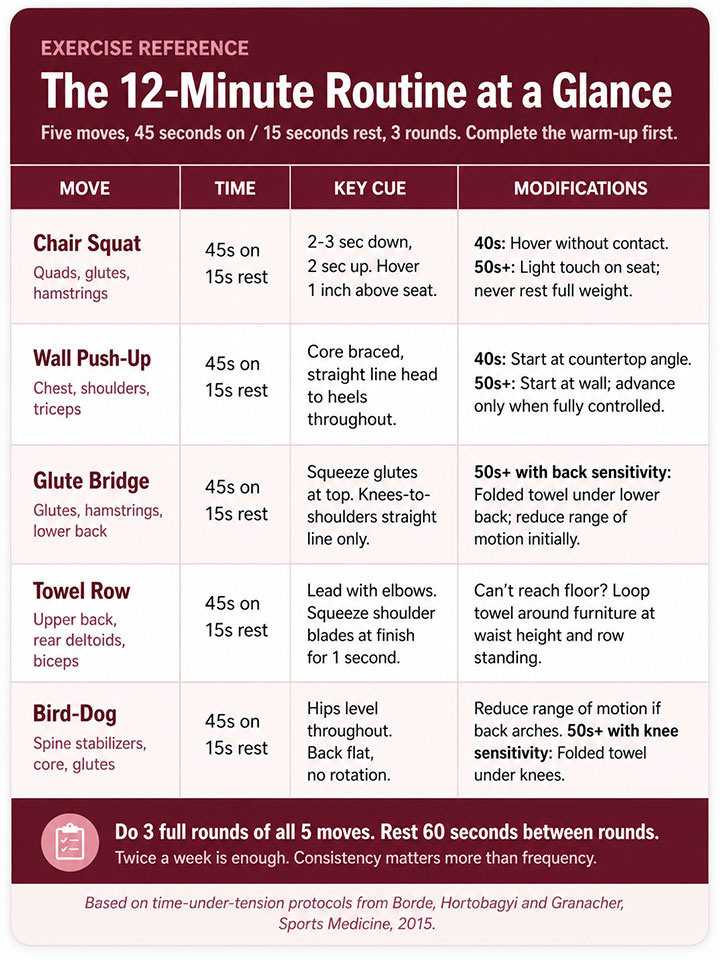
The structure is five movements. Each gets 45 seconds of effort followed by 15 seconds of rest. Three full rounds. That comes to 15 minutes including transitions.
The mechanism that makes this work is called Time Under Tension, or TUT. By moving slowly and deliberately through each repetition (two to three seconds down, two seconds up), you keep the muscle under continuous load throughout the set. That sustained tension is the actual signal that triggers the body’s muscle-building response. Speed is not the goal here. Control is.
Move 1: The Chair Squat
Getting up from a chair, climbing stairs, stepping off a curb: these daily movements all draw on the same pattern the chair squat trains, specifically the quadriceps, glutes, and hamstrings. It’s not a gym exercise made accessible. It’s the actual movement, done deliberately.
A 12-week randomized controlled trial by Eduardo Cadore and colleagues at the University of Navarra, published in the journal Age in 2014, found that twice-weekly multicomponent sessions in frail older adults produced significant improvements in muscle mass, power output, and the ability to perform daily functional movements. The chair squat is the clearest single-exercise expression of that functional demand.
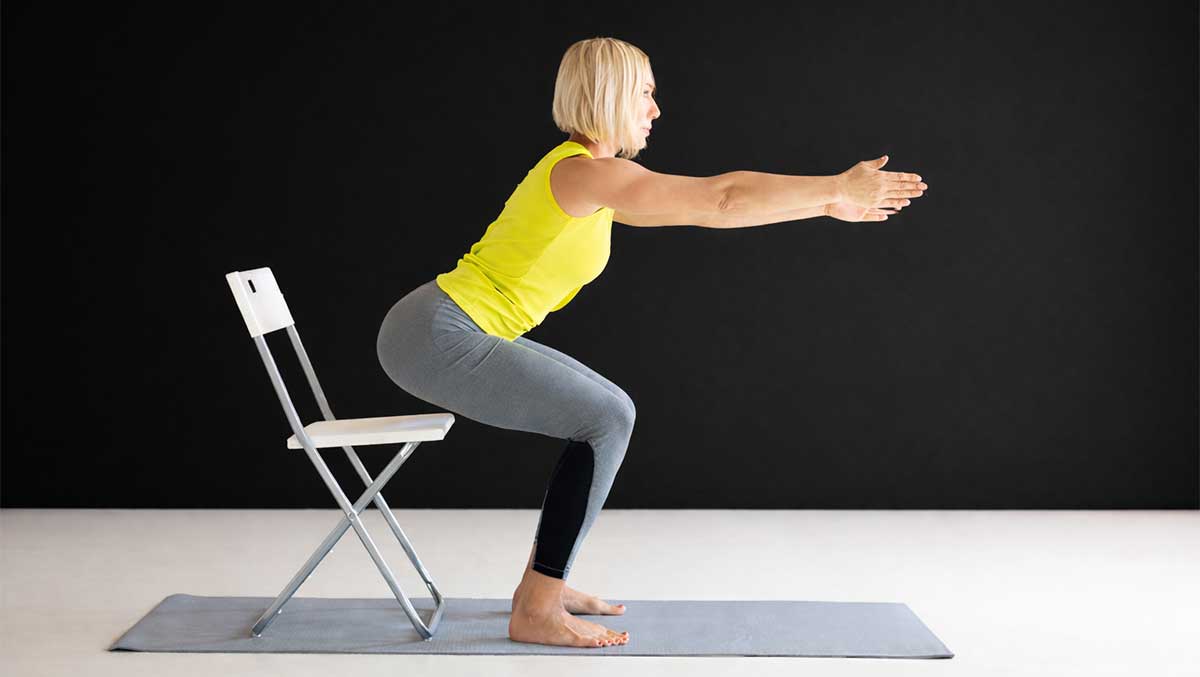
- Place a sturdy chair on a flat, non-slip surface. Stand with your back to it, feet hip-width apart, toes pointed slightly outward.
- Extend your arms in front for balance, or cross them over your chest.
- Take two to three seconds to hinge at the hips and lower slowly, as if about to sit.
- Stop just before your weight settles onto the seat, with your hips hovering one inch above it.
- Press firmly through both heels and take two seconds to return to standing.
- At the top, squeeze the glutes briefly before beginning the next repetition.
If you’ve had knee pain in the past, reduce the depth of the squat until your form is fully controlled. A smaller range of motion done well beats a deeper range done with compensations.
For adults in their 40s, aim to hover without making contact. For adults in their 50s and beyond, a light touch on the seat is fine. The rule in both cases is not to rest full body weight between reps.
Move 2: The Wall Push-Up or Countertop Push-Up
Floor push-ups place considerable load on the wrists and shoulders. For many adults over 40 with a desk-job history or previous shoulder issues, a wall or countertop angle is not a compromise. It’s a smarter choice.
The 2015 Borde meta-analysis found that time under tension and training intensity were stronger predictors of muscle development than session volume in older adults. An inclined push-up done slowly and deliberately against a wall produces more useful stimulus than a rushed floor push-up with broken form.
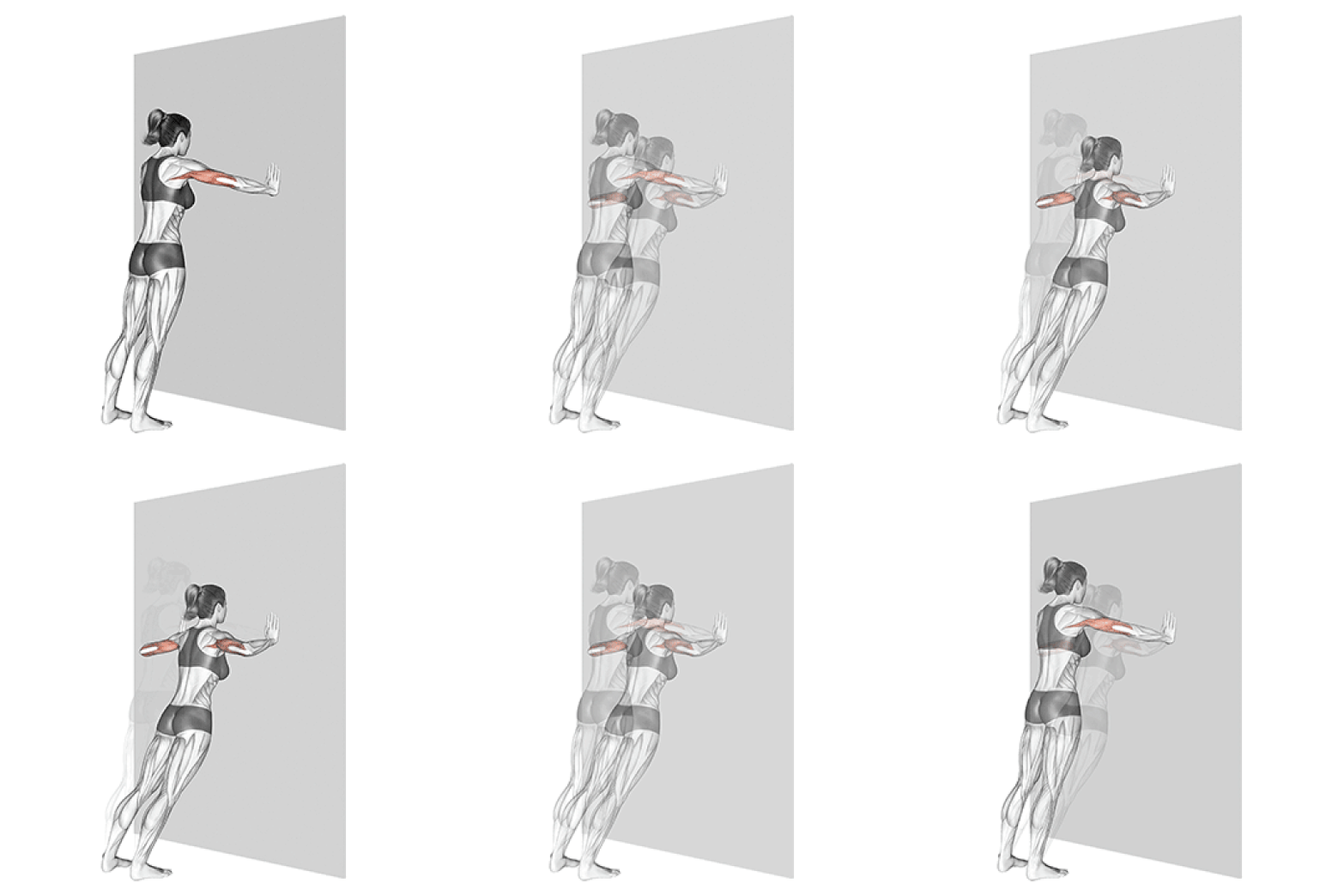
- Stand facing a wall, roughly arm’s length away. Place palms flat at chest height, slightly wider than shoulder-width.
- Step feet back slightly so your body is at a mild angle. Keep your core braced so your body forms a straight line from head to heels.
- Take two to three seconds to bend your elbows and lower your chest toward the wall in a controlled descent.
- Stop when your nose is close to the wall but not touching it.
- Take two seconds to push back to the start. Do not lock out your elbows at the top.
Progress over time by moving to a lower surface: countertop after two weeks at the wall, a sturdy table after four weeks. The lower the surface, the greater the angle and the more challenging the movement.
For adults in their 40s who are reasonably active, starting at the countertop angle from week one is appropriate. For adults in their 50s with shoulder sensitivity, begin at the wall and advance only when every repetition feels fully controlled with no compensation at the shoulder or wrist.
Move 3: The Glute Bridge
If you sit for more than four hours a day, the muscles of your posterior chain are almost certainly underperforming. The glutes, hamstrings, and lower back stabilizers become inhibited during prolonged sitting in a pattern that is both measurable and reversible. This is one of the most commonly identified contributors to lower back discomfort in middle-aged adults.
The glute bridge addresses this directly.
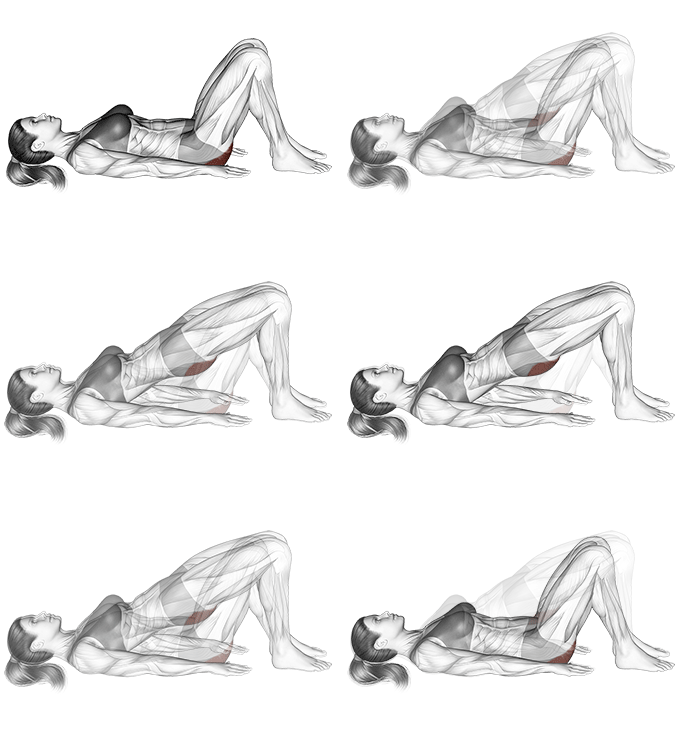
- Lie on your back on a mat or carpeted surface. Bend both knees, feet flat, hip-width apart, heels about one foot from your glutes.
- Rest arms at your sides with palms facing down for stability.
- Inhale. On the exhale, press through both heels and lift your hips off the floor over two controlled seconds.
- Rise until your body forms a straight line from knees to shoulders. Do not push past this point.
- Squeeze the glutes firmly at the top and hold for one second.
- Take two to three seconds to lower back to the floor. Touch briefly, do not rest the full weight, then begin the next repetition.
For adults in their late 50s experiencing lower back sensitivity, placing a folded towel under the lower back and reducing the range of motion slightly in the first few weeks allows the posterior chain to strengthen before full range is attempted. The support also helps the brain locate the correct muscles faster.

Move 4: The Towel Row
Most home exercise routines focus entirely on pushing movements and skip pulling movements. The result is a muscular imbalance that worsens posture and increases shoulder injury risk over time, particularly for anyone spending hours at a screen.
The muscles of the upper back, including the rhomboids, rear deltoids, and biceps, are responsible for pulling the shoulders back and maintaining an upright spinal position. In most desk-bound adults, these muscles are overstretched and chronically underused.
The towel row rebuilds that balance.
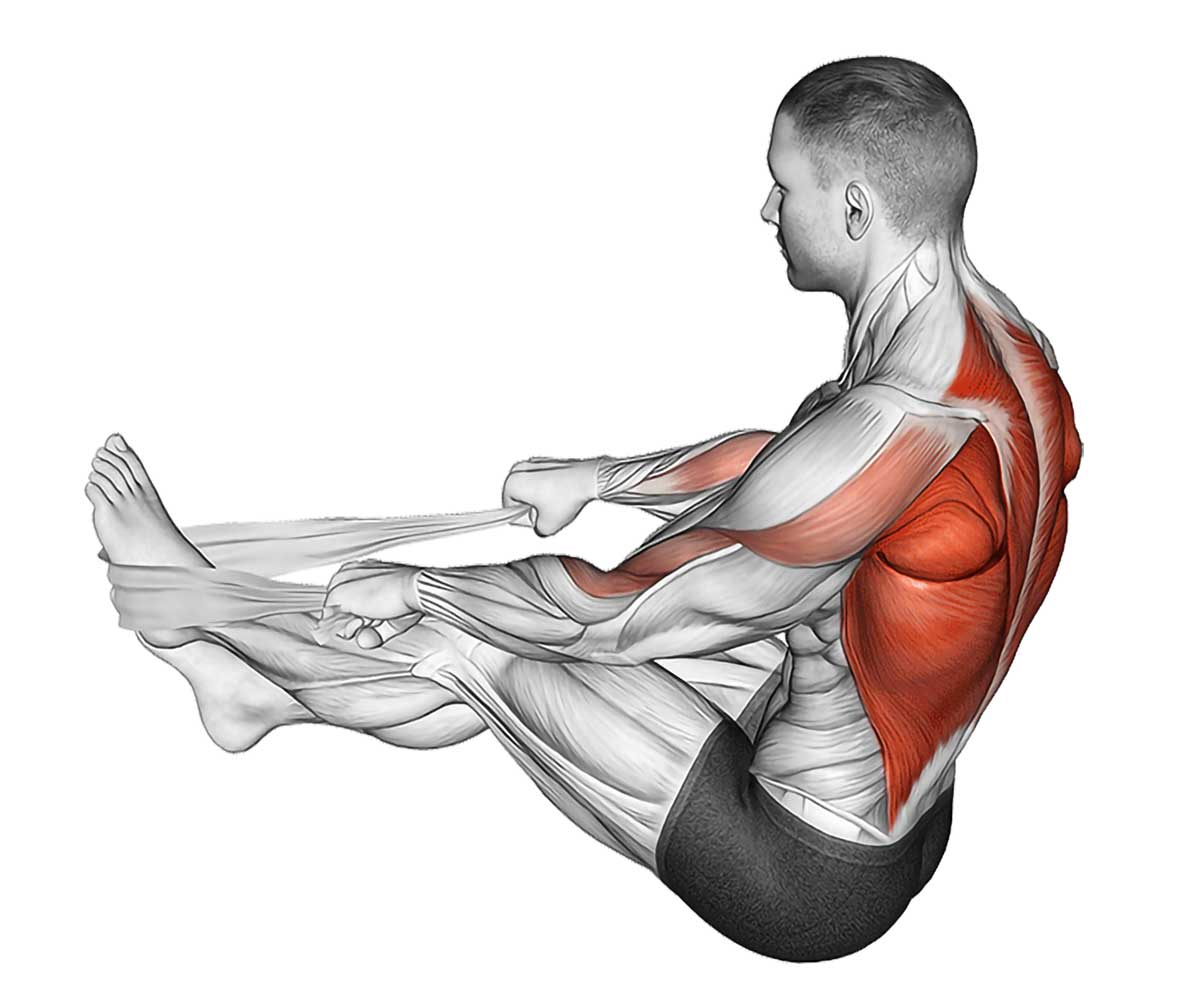
- Sit on the floor with legs extended. If hamstrings are tight, sit on a folded blanket to tilt the pelvis slightly forward.
- Fold a bath towel lengthwise and loop it around the soles of both feet. Hold one end in each hand with a relaxed grip.
- Sit tall with your back upright. This is the starting position.
- Inhale. On the exhale, draw both ends of the towel toward your lower ribcage, leading with the elbows, pulling back and past your sides.
- At the finish, pause and squeeze your shoulder blades together firmly for one second.
- Take two to three seconds to extend your arms back to the start with control.
If getting to and from the floor is a challenge in itself, the standing version works just as well: loop the towel around a heavy, stable piece of furniture at waist height, stand facing it, hinge slightly at the hips, and row. The movement is identical. The floor is not the point.
The most common form error here is turning it into a biceps exercise. The arms are secondary movers. Focus the attention on the shoulder blades pulling together at the finish, not on the hands arriving at the ribcage. If the wrists ache from gripping, wrap the towel ends loosely around the forearms instead.
Move 5: The Bird-Dog
The Bird-Dog is the least glamorous exercise in this routine and, for most adults over 40, the most important one. It trains the deep stabilizing muscles of the spine, including the multifidus and transverse abdominis, which maintain lumbar stability during any loaded movement.
These muscles weaken significantly with both age and prolonged sitting, and their decline is directly linked to chronic lower back pain.
What makes this exercise distinctly useful is the anti-rotation demand. Unlike the glute bridge, which builds posterior chain strength in isolation, the Bird-Dog requires coordination between opposite limbs while the spine holds completely still.
That specific challenge mirrors what the core must do in daily life without injury: carry something, reach overhead, walk on uneven ground, absorb an unexpected shift in balance.
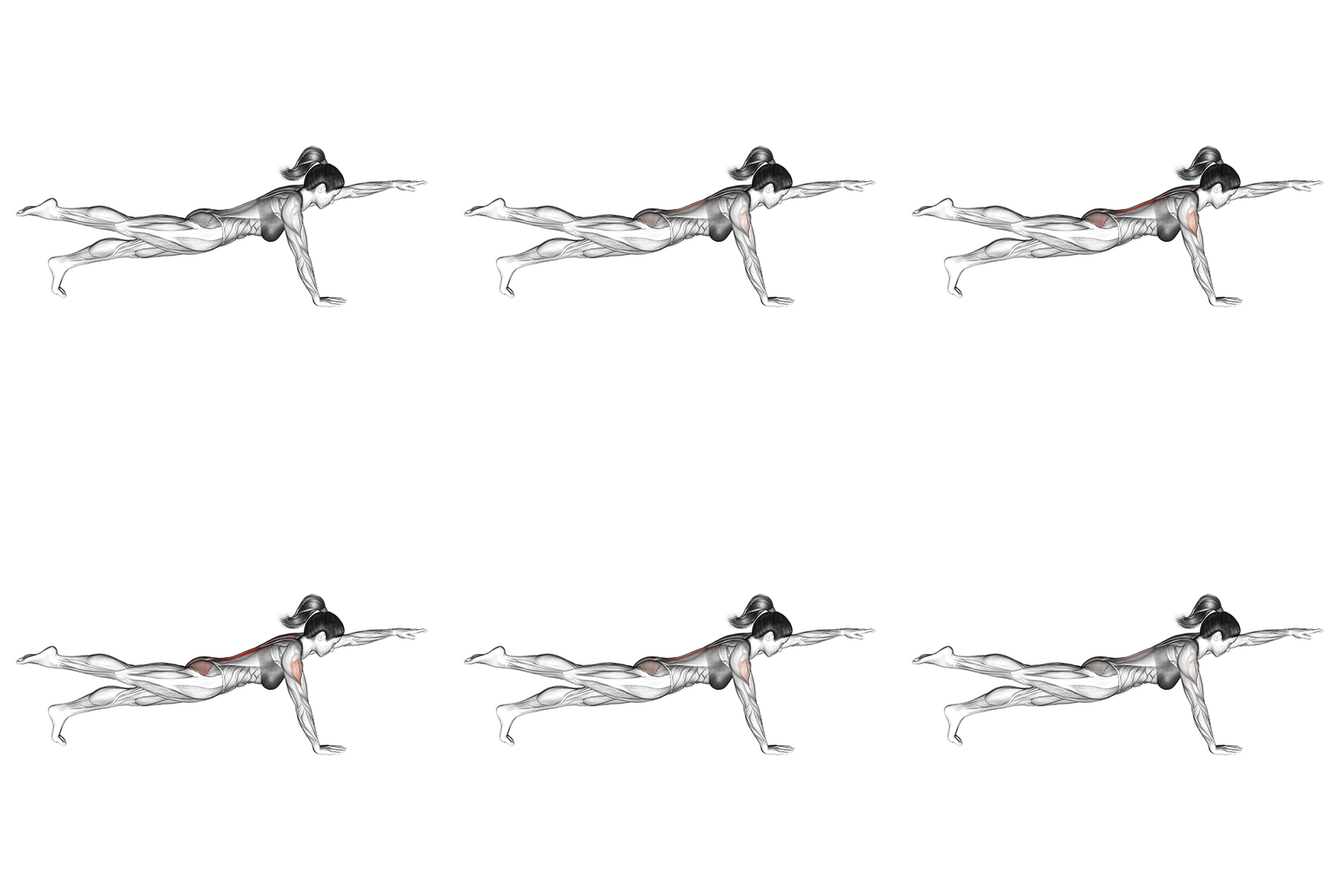
- Start on all fours on a mat, wrists directly below your shoulders, knees directly below your hips.
- Keep your back flat, as if balancing a glass of water on your lower back. Spine neutral, not arched or rounded.
- Inhale. On the exhale, slowly extend your right arm straight forward at shoulder height while simultaneously extending your left leg straight back at hip height.
- Hold this extended position for two full seconds. Keep the hips level throughout. Resist any tendency for the raised-leg hip to rotate upward.
- Take two to three seconds to return both limbs to the floor. That is one repetition.
- On the next exhale, extend the left arm and right leg. Continue alternating for the full 45-second window.
If your lower back arches or your hips shift when you extend, reduce the range of motion until your core can hold the position with control. A full-range Bird-Dog done with a rotating hip is a lower back exercise, not a core exercise.
By week eight, if the standard version has become easy, add a one-second pause at the top of each rep. That single change increases the stabilization demand without adding weight or complexity. For adults in their 50s with knee sensitivity on the floor, a folded towel under both knees before starting is all that’s needed.
12-Minute Routine Timer
45 sec work / 15 sec rest. 5 moves. 3 rounds.
What to Expect Week by Week
One of the most consistent reasons people quit exercise programs after two weeks is this: they expected to see the body change, and it didn’t. What they don’t know is that the body is changing. They can’t see it yet.
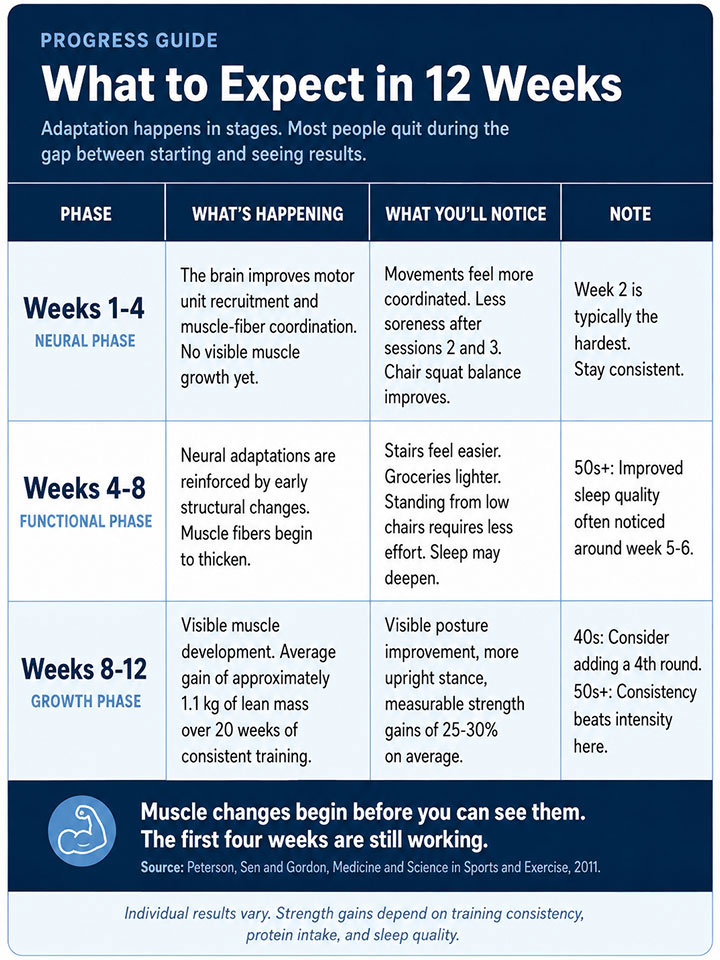
Weeks 1 to 4: The Nervous System Moves First
Early strength gains in resistance training come primarily from neural adaptation, not from muscle growth. The brain gets better at recruiting existing muscle fibers, recruiting more of them simultaneously, and coordinating the firing pattern between opposing muscle groups.
This is why someone can feel measurably stronger after two weeks in a program that couldn’t have produced visible muscle growth yet.
A 2010 meta-analysis by Simon Steib, Daniel Schoene, and Klaus Pfeifer in Medicine and Science in Sports and Exercise, which reviewed progressive resistance training data from adults 65 and older across trials ranging from six to 52 weeks, found that early-phase strength gains in this population were largely neurological in origin. The physical architecture of the muscle had not yet changed. The brain’s access to that architecture had.
In practical terms: movements will feel more coordinated by week three. The slight balance uncertainty on the chair squat disappears. You’ll notice less soreness after sessions two and three than after session one.
Week two is usually the hardest. The novelty of starting has worn off, and the visible results haven’t manifested yet. That’s the gap where most people stop, and it’s exactly the gap the neuroscience says is worth closing. These are real adaptations happening in there. They’re just not the ones you can see in the mirror yet.
Weeks 4 to 8: The World Outside the Mirror Changes First
This is the phase most people notice before they expect to. Not in a reflection, but in a flight of stairs. In carrying groceries. In standing up from a low chair without the slight involuntary sound.
The nervous system adaptations from the first four weeks are now being reinforced by early structural changes in muscle tissue. Individual muscle fibers are beginning to thicken. Cellular energy production within them becomes more efficient. For adults in their 50s specifically, there is often an unexpected secondary benefit at this point: improved sleep depth.
Resistance training has a well-documented effect on slow-wave sleep in older adults. The mechanism involves temperature regulation and adenosine clearance during the recovery period following exertion. Most people report it around weeks five or six, and it tends to arrive before they’re looking for it.
Weeks 8 to 12: The Research Catches Up with What You’re Feeling
Mark Peterson, Ananda Sen, and Paul Gordon at the University of Michigan conducted a meta-analysis published in Medicine and Science in Sports and Exercise in 2011 that examined the effects of resistance training on lean body mass across adults aged 50 to 83.
Their analysis, which covered 49 controlled trials, found that 20 weeks of training produced an average gain of approximately 1.1 kilograms (about 2.4 pounds) of lean muscle mass, along with strength gains averaging 25 to 30 percent across older age groups.
A 25 to 30 percent strength increase changes how the body moves through daily life in ways that are visible from the outside: improved posture, more upright walking stance, greater ease in the movements that used to require a moment’s effort.
For adults in their 40s, this phase is the right time to consider adding a fourth round or a sixth exercise if three rounds have become genuinely comfortable. For adults in their 50s, consistency still does more work than intensity. The compound effect of showing up twice a week is larger than the marginal benefit of adding more at once.
Can You Regain Muscle After 40?
Yes, and the evidence is clear on this point. The Peterson meta-analysis above is one of dozens of controlled trials demonstrating that adults in their 50s, 60s, and 70s can add lean muscle mass with consistent resistance training. The process is slower than it was at 25 and requires sufficient protein alongside the training stimulus, but the underlying physiology supports it at every age studied.
The more useful question is what “regain” means in practice. Adults returning to training after years of inactivity tend to rebuild muscle faster than people who have never trained, because the motor patterns and connective tissue adaptations from earlier training are not fully lost.
This is sometimes called muscle memory, though the mechanism is more accurately described as persistent epigenetic marks on satellite cells. Either way, the practical implication is the same: the work you did at 30 is not entirely gone. It’s waiting.
What Losing Muscle Actually Feels Like
Sarcopenia doesn’t announce itself with pain. It arrives as reduced capacity: things that were easy become slightly less so, and the change is gradual enough that most people attribute it to aging in general rather than to the specific loss of contractile tissue.
The most common functional signs include difficulty with tasks that require grip strength (jar lids, opening bottles), reduced balance on one leg, difficulty rising from low surfaces without using arms, and a noticeable drop in what exercise physiologists call “power tasks,” movements that require speed and strength together, like catching yourself after a stumble.
Loss of muscle also tends to produce a visible change in body composition even at a stable weight, because muscle tissue is denser than fat tissue. A person who loses 5 pounds of muscle and gains 5 pounds of fat weighs the same. They don’t look the same, and they don’t function the same.
The Nutrition Half of the Equation
Resistance training creates the signal. Protein provides the material. Without adequate protein in the hours surrounding training, the signal goes unanswered.
Before a session, a light combination of protein and carbohydrate 60 to 90 minutes beforehand gives muscles accessible fuel. Greek yogurt with berries, or a handful of nuts with a banana, both meet this standard without requiring anything elaborate.
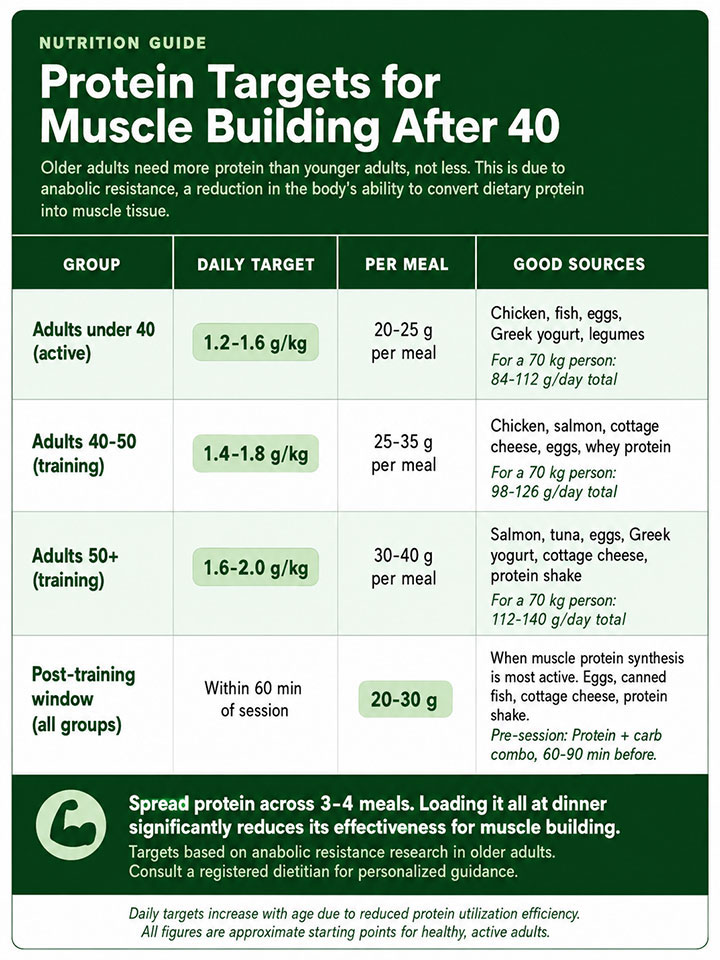
After training, protein intake within 60 minutes is when muscle protein synthesis is most active. A target of 20 to 30 grams of protein in this window is supported by the research. Eggs, cottage cheese, canned fish, a chicken-based meal, or a quality protein supplement all reach that target easily.
The broader protein question deserves specific attention. For adults over 50, the body’s ability to convert dietary protein into muscle tissue is reduced by the anabolic resistance mentioned at the start.
Research consistently shows that older adults need more protein per kilogram of body weight than younger adults, not less. A practical daily target for adults in this age group who are actively training is 1.2 to 1.6 grams per kilogram of body weight, spread across three or four meals rather than concentrated at one.
Why Sleep Is Not Optional
Muscle is not built during training. It is built during sleep, specifically during slow-wave sleep, when the pituitary gland releases the majority of its daily growth hormone pulse, and the body directs resources toward cellular repair.
When a training session creates micro-tears in muscle fiber, sleep is when the body rebuilds those fibers slightly thicker and stronger. A session that ends without adequate sleep following it produces less adaptation than the same session with seven to nine hours. The training was real. The payoff was incomplete.
For adults over 40, where the anabolic response to training is already somewhat blunted by hormonal changes, sleep quality becomes a more significant variable than it was at 25. A consistent bedtime, a cool room, and limiting screen exposure in the hour before bed are not biohacks. They are the basic conditions under which the training you’ve already done actually finishes its work.
After the Session: A Cool-Down That Works
Ending a session abruptly leaves heart rate and blood pressure temporarily elevated and can contribute to post-exercise stiffness in older joints. Two to three minutes is enough to avoid this.
- Walk slowly around the room for 60 seconds to allow heart rate to return toward baseline.
- Perform a slow standing quad stretch, holding each leg for 20 seconds. Use a wall for balance if needed.
- Clasp hands behind your back, straighten both arms, and gently lift them while opening the chest. Hold for 20 seconds.
- Take three slow deep breaths, inhaling through the nose for four counts and exhaling through the mouth for six.
This lowers cortisol, reduces the likelihood of next-day stiffness, and gives the nervous system a clear signal that the work is done.
A Different Way to Think About Effort
The fitness industry has spent decades telling people that more is better. More intensity. More frequency. More equipment. More sessions per week. This framing makes sense for competitive athletes. For adults over 40 trying to preserve or rebuild muscle mass, it mostly just creates the conditions for quitting.
Twelve minutes of genuine effort, twice a week, compounds over months in a way that sporadic intense sessions never do. The physiology does not care about your intentions. It responds to consistent, sufficient stimulus applied regularly over time. That’s the entire model.
Start with one round instead of three if that’s where you are. Do the wall push-up instead of the table push-up. Touch the seat on the squat. There is no version of this routine that is “too easy.” There is only the version you actually do.
The biology supports you at 40, at 50, and well past 60. The mechanism works the same way it always did. It just needs a smaller, more honest, more consistent signal than most people have been told to give it.