The first changes can begin within days, but by week four, researchers found a surprising shift in the bacteria, chemistry, and metabolites inside the gut.
There are roughly 2,000 plants that humans eat with any regularity. Most nourish the person consuming them. A smaller number also nourish the bacteria living inside that person, doing so selectively, in ways that shift the microbial population of the colon over weeks. An onion is one of the least expensive items in that second category.
The research on this has sharpened considerably in the past five years. Scientists now have a reasonably clear picture of which bacteria respond to onion fiber, what metabolites they produce, and what the timeline looks like. Some of what they have found extends well beyond digestion. That is probably the most interesting part of the story.
This is what actually happens, week by week.
How Onions Feed Your Gut Bacteria
Your gut hosts trillions of microorganisms that need to eat. Not all fiber feeds them equally. Most carbohydrates are broken down by your digestive enzymes in the small intestine, leaving nothing for the bacteria further down. Inulin and FOS behave differently: your enzymes cannot break them down. They arrive in the colon fully intact.
Once there, certain bacteria metabolize them as an energy source and ferment them. The selectivity is what matters. Joanne Slavin’s 2013 review in Nutrients identified onions as one of the more concentrated dietary sources of these two fibers, with inulin and FOS making up roughly 2 to 6 percent of the onion’s dry weight depending on variety and growing conditions. Over a week of daily eating, that adds up to a consistent, meaningful dose.
The bacteria that benefit most are not random. They are Bifidobacterium specifically, a genus that gut microbiome research keeps returning to.
Week 1: The Bacteria Begin to Shift
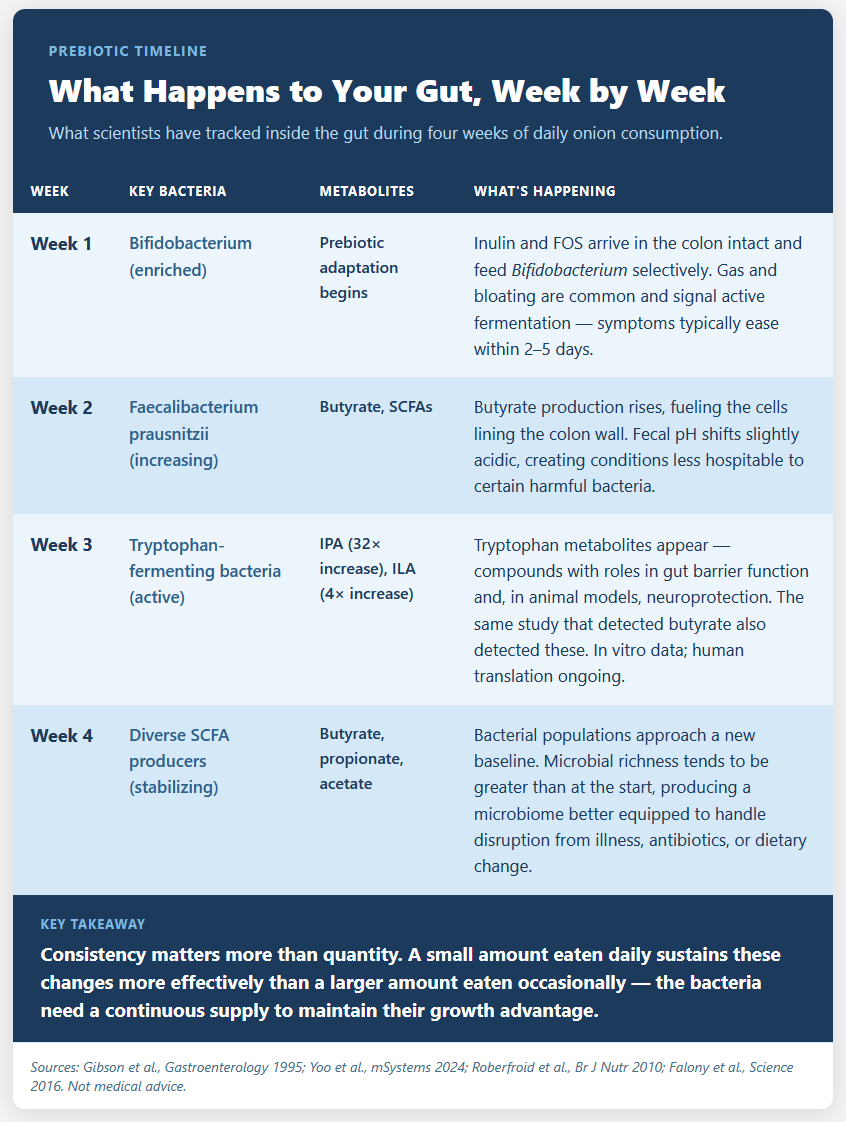
Within the first few days of eating onions regularly, something you probably won’t notice is already underway. The inulin and FOS reaching your colon are being metabolized almost exclusively by one bacterial genus: Bifidobacterium. Other bacteria in your gut cannot efficiently process these fibers, which is precisely the point. That selectivity is why onion fiber works at all.
The scientific evidence for this goes back to 1995. Glenn Gibson and colleagues at the Medical Research Council’s Dunn Clinical Nutrition Centre in Cambridge ran a 45-day controlled feeding trial with eight healthy volunteers, substituting oligofructose or inulin for sucrose in their daily diets during a 15-day intervention period.
The results, published in Gastroenterology, showed that both fibers significantly raised Bifidobacterium counts in stool samples within that window while Bacteroides populations remained largely unchanged. That same year, Gibson and Marcel Roberfroid formally named the class of compounds producing this selective effect: prebiotics.
A dose-response study led by Yoram Bouhnik, published four years later in the Journal of Nutrition, tracked 40 healthy volunteers taking FOS in five different daily doses over seven days and found that Bifidobacterium counts rose in proportion to the dose, with the effect detectable within the first week.
What you might feel during week one is gas, some bloating, or minor changes in bowel habit. Researchers who study prebiotics see this pattern consistently enough that they have a name for it: prebiotic adaptation. The discomfort signals active fermentation. It tends to ease within two to five days as the microbiome adjusts, particularly if you start with a small amount and build gradually.
Week 2: The Chemistry of What They’re Making
By week two, the story shifts from which bacteria are growing to what those bacteria are producing. The Bifidobacterium and related organisms enriched by onion fiber are now generating short-chain fatty acids, especially one called butyrate.
Butyrate is the primary fuel for the cells lining your colon. It supports the tight junctions between those cells, which is what keeps the gut wall intact. When that barrier weakens, bacterial fragments and food particles can move into the bloodstream, a condition often called leaky gut in popular health media. Butyrate works against that process by supplying the energy those barrier cells need to function properly.
A 2024 study in mSystems, led by Yoo and colleagues, used fecal samples from 19 healthy donors to test what onion extracts do to gut bacteria in a controlled in vitro fermentation model. Among participants with Bacteroides-dominant microbiomes, the onion extracts selectively increased Bifidobacterium adolescentis and Faecalibacterium prausnitzii, both known for butyrate production, while butyrate levels in the fermentation medium rose measurably.
Faecalibacterium prausnitzii is worth a moment of attention. It is one of the most abundant organisms in a healthy human gut and one of the most productive butyrate generators known. In people with inflammatory bowel conditions, this species is typically depleted. Its increase in response to onion fiber is one of the more meaningful signals the study tracked.
Alongside the butyrate changes, fecal pH shifts become detectable. As fermentation increases short-chain fatty acid output, the colon environment becomes slightly more acidic. Certain harmful bacterial strains, including some Clostridium and E. coli variants, grow less effectively at lower pH values. Onion fiber feeds the beneficial bacteria and simultaneously acidifies the colon enough to suppress several harmful strains. The same fermentation process drives both effects.
Week 3: A Gut-Brain Connection Worth Taking Seriously
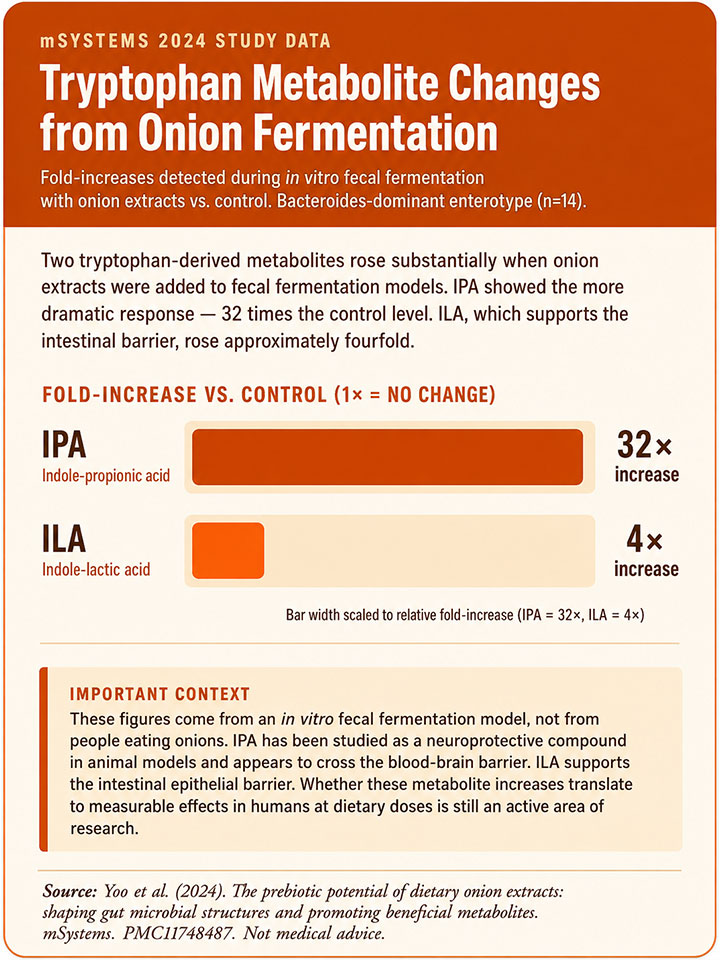
The same mSystems study that flagged the butyrate increase in week two measured something less expected. The fermentation models showed increased levels of two tryptophan-derived metabolites: indole-propionic acid (IPA) and indole-lactic acid (ILA). IPA concentrations were roughly 32 times higher in the onion-treated samples than in the controls. ILA rose approximately fourfold.
These are not digestive byproducts in any ordinary sense. The honest caveat is that this data comes from an in vitro fermentation system, not from people eating onions over weeks. The jump from fecal fermentation models to human physiology involves real uncertainty: dose, individual variation, transit time, and absorption are all variables the in vitro setup does not capture.
Researchers are still working out how closely the metabolite changes observed in fermentation models correspond to what happens in a living gut. That is the honest version of this finding, and it should stay in view while reading what follows.
The tryptophan pathway that generates IPA and ILA sits at the intersection of gut microbiology and brain chemistry in ways that are increasingly well documented. IPA has been studied as a neuroprotective compound. In animal models, it crosses the blood-brain barrier and appears to reduce oxidative stress in neural tissue.
ILA, for its part, supports the intestinal epithelial barrier and has shown anti-inflammatory properties in early-stage research. Neither of these mechanisms requires speculation about supplements or therapeutic doses. They describe a biological pathway that is active in the gut of anyone whose bacteria are fermenting prebiotic fiber.
The gut-brain axis is the communication network through which signals travel between the digestive system and the central nervous system. It is bidirectional: the gut sends signals to the brain, and the brain responds. The tryptophan pathway is one of its main chemical routes. Gut bacteria shape more than digestion.
They influence the production of compounds that your nervous system uses. Whether the shifts driven by daily onion consumption are large enough to produce measurable neurological effects in humans is, right now, an open question. Three competing explanations for the magnitude issue exist. None of them has been adequately tested at the population level.
This doesn’t mean eating an onion daily will improve mood or sharpen cognition. That claim goes further than the evidence currently runs. What the week-three picture does support is that the gut changes underway are producing metabolites with biological reach well past the colon, in ways the standard gut-health framing (fiber feeds bacteria, bacteria make short-chain fatty acids, short-chain fatty acids protect the gut lining) does not fully capture.
Week 4: The Microbiome Settles
By the end of the first month, the bacterial population has largely stopped shifting and is approaching a new baseline. Bifidobacterium levels are higher than they were at the start. Faecalibacterium prausnitzii counts, in people who respond well to the fiber, have reached their new plateau. The rapid early changes have given way to something more stable.
A 2010 expert consensus review in the British Journal of Nutrition, led by Marcel Roberfroid and co-authored by more than a dozen specialists in gut microbiology and nutrition, examined the human trial evidence on inulin-type fructans and concluded that increased Bifidobacterium populations were a consistent, repeatable finding when prebiotic intake was maintained. The effect didn’t reverse during the review periods as long as intake continued.
Microbial diversity, the overall richness of species in the gut, also tends to be wider at this stage. A population study in Science by Falony, Joossens, Vieira-Silva, and colleagues, tracking over 1,100 adults in the Belgian Flemish Gut Flora Project, found that dietary fiber intake correlated with higher Bifidobacterium abundance and greater overall microbial richness. A more diverse microbiome handles disruption better, including disruption from illness, antibiotics, and dietary change.
What Four Weeks Can and Cannot Do
The microbiome shifts above are real. That part is well-supported. The overclaim is that four weeks of daily onions will resolve irritable bowel syndrome, improve mood, or eliminate gut problems. The research doesn’t support that, even though the metabolites produced during this period (butyrate, IPA, ILA) do have documented roles in those conditions.
Microbiome changes of this kind are foundational. They create better conditions for gut health rather than guaranteeing it. Meaningful improvements in gut symptoms or broader health outcomes typically require months of sustained dietary change, and usually depend on other variables as well: sleep quality, stress levels, antibiotic history, and the overall variety of fiber sources in the diet. The four-week window documented in the research is the point at which bacterial shifts begin to stabilize. It is not the point at which you will feel markedly different.
That is worth knowing before starting, not after.
Why Two People Get Such Different Results
Two people can eat the same amount of onion daily for four weeks and get different results. Not slightly different. Meaningfully different, in both the microbial shift and the lived experience of getting there. Part of that is microbiome composition.
The mSystems 2024 study sorted its 19 participants into two groups based on gut microbiome type: 14 with a Bacteroides-dominant profile and 5 with a Prevotella-dominant profile. The Bacteroides-dominant group showed the stronger short-chain fatty acid and butyrate response to onion extracts.
People who start with a Prevotella-dominant microbiome still benefit, but the magnitude of the metabolic response appears smaller in the short term. Antibiotic history, chronic stress, and overall dietary diversity further shape baseline composition and how efficiently it responds to prebiotic fiber.
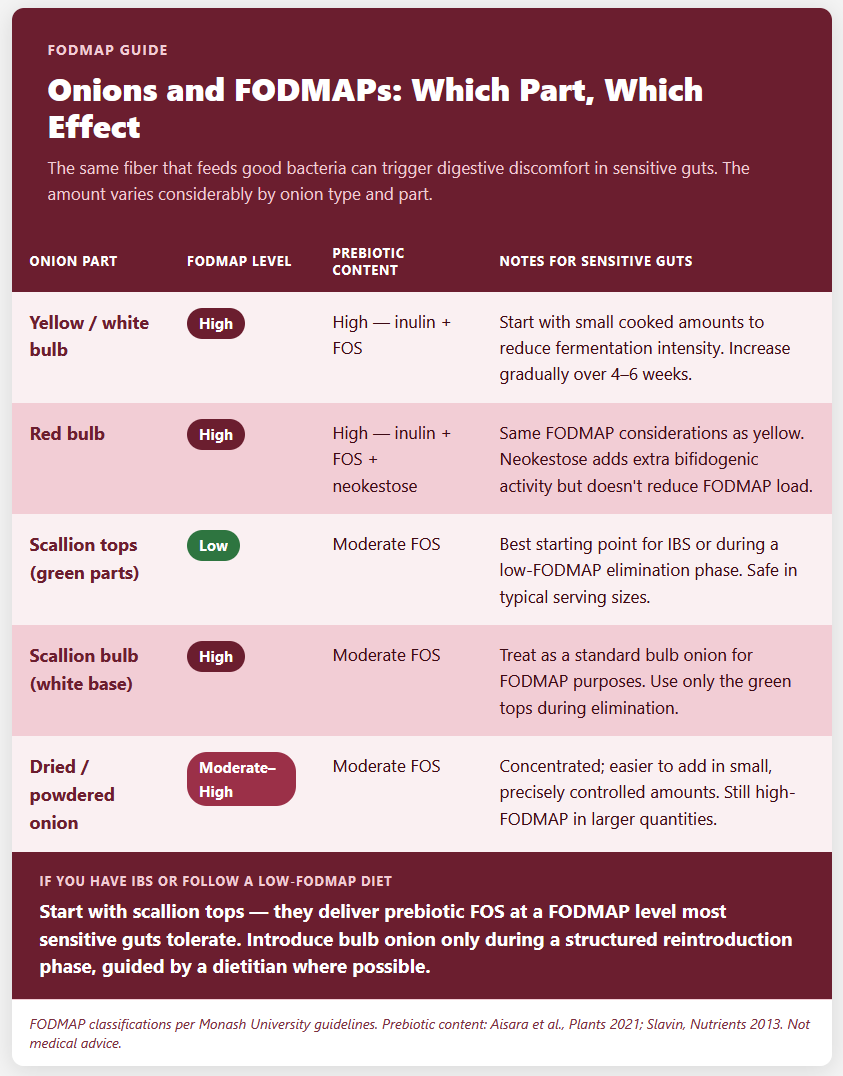
The other source of variation is less about microbiome type and more about tolerance. Onions are high in fermentable oligosaccharides, the F and O in the acronym FODMAP. These are the same fructan fibers that feed beneficial bacteria, but they also draw water into the colon and produce gas during bacterial fermentation. That is not a coincidence.
The fermentability that makes them useful as prebiotics is exactly what drives the gas. For people with irritable bowel syndrome or otherwise sensitive digestive systems, this process can trigger cramping and bloating that goes beyond typical prebiotic adaptation.
If that describes you, the gradual protocol matters more here than for anyone else. The green tops of spring onions (scallions) are considerably lower in FODMAPs than bulb onions and can be a useful starting point. Anyone in an active low-FODMAP elimination phase should avoid onions during that restriction period and reintroduce them during the challenge phase.
Pairing onions with a fermented food like sauerkraut combines prebiotic fiber (to feed existing bacteria) with live cultures (to diversify the population itself).
Which Onion, How to Eat It
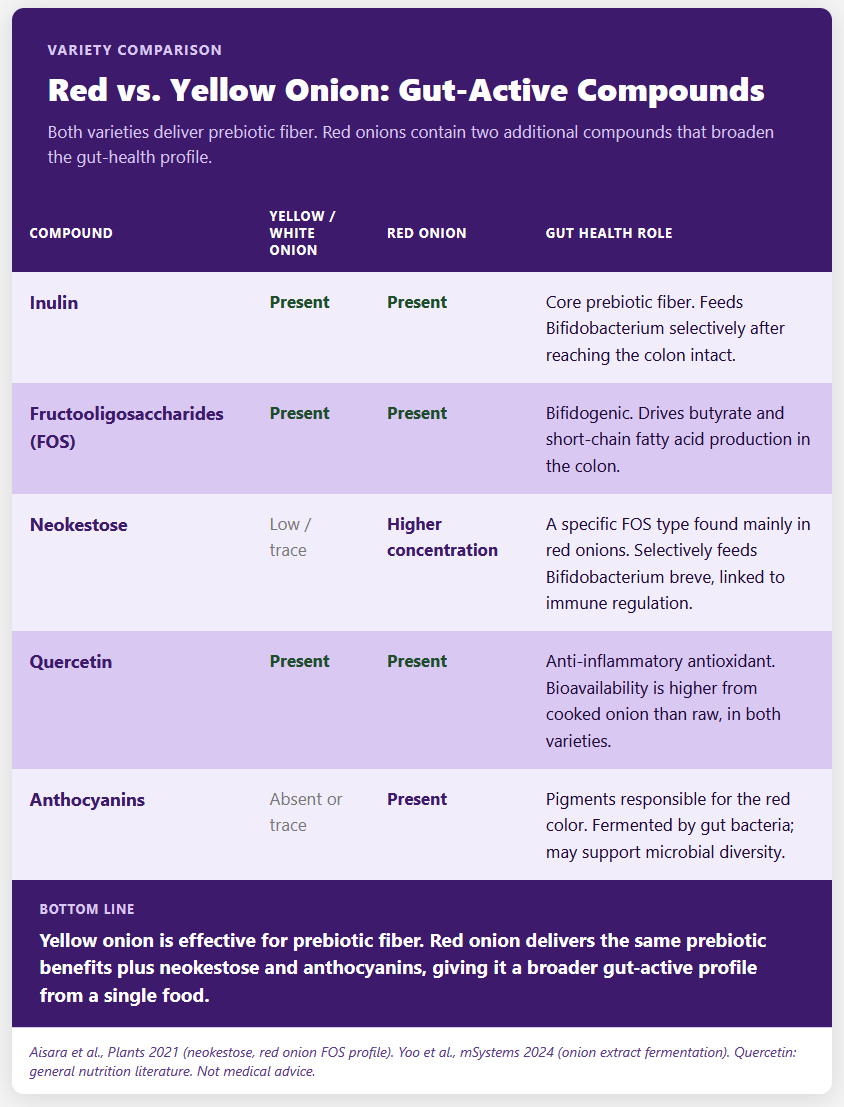
All onion varieties contain inulin and FOS, so the week-by-week timeline above applies whether you are using yellow, white, or red. The weekly changes described are driven by the fiber, not the color. Red varieties add something on top of that.
A 2021 study in the journal Plants, led by Jakkrit Aisara and colleagues at Chiang Mai University, extracted inulin-FOS from red onions and found that the extract contained a sugar called neokestose, a specific type of FOS found in higher concentrations in red varieties than in yellow or white onions.
In an in vitro fermentation model using a mixed bacterial culture, neokestose was fermented more rapidly than other FOS chain lengths and selectively increased the growth of Bifidobacterium breve, a species associated with immune regulation. Red onions also carry anthocyanins, the pigments responsible for their color, which are themselves fermented by gut bacteria and may add further diversity to the microbial response.
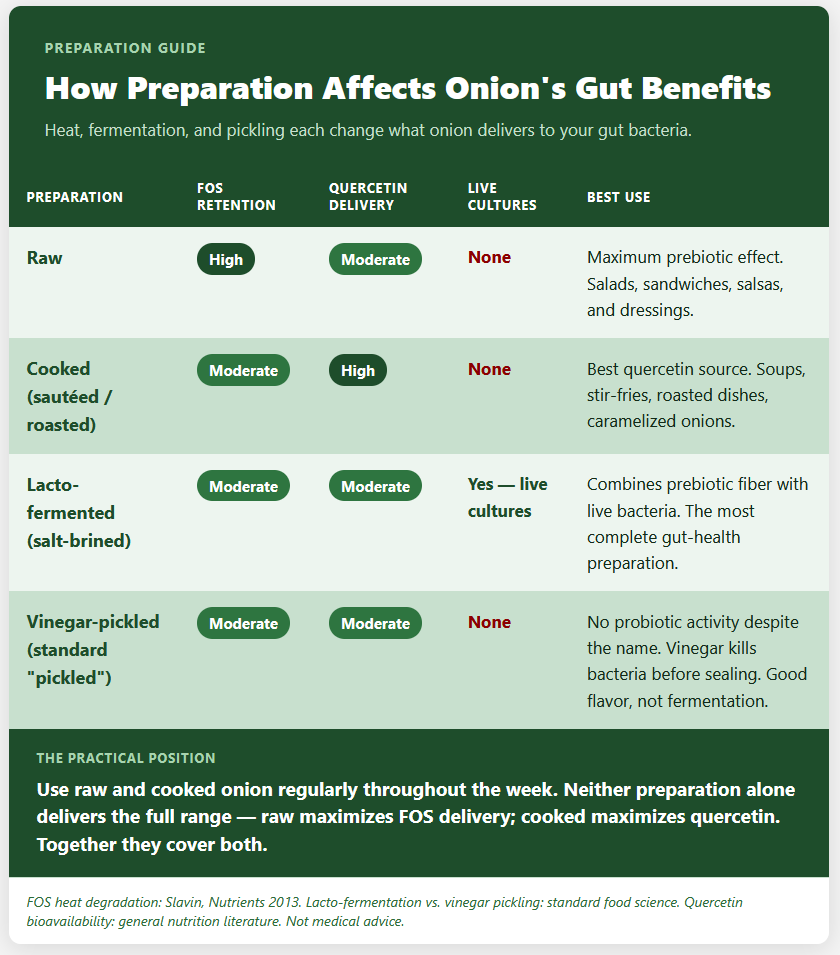
As for preparation: heat breaks down some FOS chains, reducing the prebiotic fiber that survives to reach your colon. Raw onion delivers more inulin and FOS per gram. Cooking, though, increases the availability of quercetin, an antioxidant found throughout the onion’s layers, by breaking down cell walls that otherwise limit absorption.
Quercetin has been studied for anti-inflammatory and cardiovascular properties, and cooked onions deliver more of it than raw. The practical position is to use both. Raw onion in salads, sandwiches, and salsas for the prebiotic dose. Cooked onion in soups and stir-fries for the quercetin.
Pickled onions sit in their own category. Vinegar-pickled onions (the common refrigerated or jarred variety) retain some FOS content but are not fermented in a bacterial sense. They contain no live cultures and carry no probiotic activity.
Lacto-fermented onions (brined in salt without vinegar and fermented at room temperature) are a different product: they deliver live bacteria alongside whatever prebiotic fiber survives the fermentation process. If you want to combine prebiotic fiber with live cultures in the same food, lacto-fermented onions are the target. Most onions marketed as “pickled” at the supermarket are vinegar-brined and will not deliver that combination.
The most common mistake is adding too much too fast. Start with a quarter of a small onion in the first week, move to half in week two, and work toward a full onion by weeks three to four if your gut is tolerating it. Consistency across days matters more than daily quantity. A small amount eaten every day produces more durable microbiome shifts than a larger amount eaten intermittently, because the bacteria need a continuous supply to sustain their growth advantage.
Gradual Onion Introduction Planner
Answer three quick questions to get a personalized week-by-week onion protocol based on your gut tolerance.
Conclusion
After four weeks of daily onions, the changes inside your gut are invisible to you but measurable in a laboratory. Bifidobacterium populations are higher. Butyrate production is higher. Tryptophan metabolites that have no obvious business appearing if all you did was add an onion to your meals are circulating at higher concentrations in the fermentation system that runs your digestion. The gut-brain connection those metabolites hint at is real biology, even if the clinical translation is still being worked out.
None of this shows up on day fourteen. The four-week timeline is not a promise of feeling different. It is a description of the biological foundation being built. The bacteria that have lived alongside humans for thousands of years appear to have very specific reasons to want that building to continue.
For another fermented food worth pairing with a prebiotic routine:

Your Questions Answered
Is eating raw onions good for gut health?
Yes, with a real caveat. Raw onions deliver more intact inulin and FOS than cooked versions, since heat degrades some of the prebiotic fiber chains before they reach the colon. For the bifidogenic effect the research documents, raw is the more efficient delivery route. The trade-off is that raw onion also ferments more rapidly, and for anyone whose gut is still adapting, that means more initial gas. The efficiency works in both directions.
Do onions clean your intestines?
Not in any mechanical or detoxifying sense. Onions do not flush or clear the intestines. What they do is feed beneficial bacteria, which then produce short-chain fatty acids that maintain the gut lining and shift the colon’s pH in ways that are less hospitable to certain harmful organisms. The effect is chemical and microbial, not physical.
What is the best time to eat onions for gut health?
Timing matters less than consistency. Daily intake across any meal produces more meaningful microbiome shifts than any particular hour of the day. Including onion in protein-containing meals may slightly support tryptophan metabolite production, since the IPA and ILA pathway requires both prebiotic fiber and available tryptophan, but this is a minor consideration compared to simply eating onions regularly.
Are onions safe to eat with a sensitive gut or IBS?
Yes, but the starting amount matters more here than anywhere else in this protocol. People with IBS or gut permeability issues often react more acutely to rapid fermentation, which is exactly what happens when a significant amount of onion fiber arrives in a gut that is not accustomed to it.
Starting with a very small amount (a tablespoon or two of diced raw onion) and building gradually over four to six weeks gives the microbiome time to adjust. Scallion tops (green parts only) are lower in FODMAPs and a more forgiving entry point. Anyone in an active low-FODMAP elimination protocol should avoid onions entirely during that phase and reintroduce them during the structured challenge phase.
Does onion skin pass through the gut unchanged?
Largely yes. Onion skin is primarily composed of cellulose, a structural fiber that most gut bacteria do not efficiently ferment. It passes through the digestive tract largely intact and contributes little to the bifidogenic effects described above. The gut-health activity in onions comes from the flesh, particularly the inner layers where inulin and FOS concentrations are highest.