What if your afternoon brain fog isn’t caused by tiredness at all? The answer may involve your diet, immune system, hormones, sleep, or even what’s happening in your gut.
Your blood work looks fine. Your doctor says you’re healthy. So why does your brain feel like it’s wrapped in wet cotton?
You’re not imagining it. That thick, foggy feeling in your head (where words slip away mid-sentence, where you read the same paragraph three times without retaining a single word) is real. It has a name: brain fog.
But here’s what’s frustrating. You go to the doctor. You describe it. You get a blood panel. Everything comes back “normal.” You leave with a pamphlet suggesting you sleep more and reduce stress.
Nothing changes.
This happens more often than it should. Standard medical check-ups aren’t designed to catch the subtle, slow-burning problems that quietly rob your mind of its sharpness. The causes are often hiding in plain sight, buried inside systems your doctor may not even test during a routine visit. And one of them involves a process your immune system is running on purpose. Not as a malfunction. As a design feature.

Cause 1: Subclinical Hypothyroidism
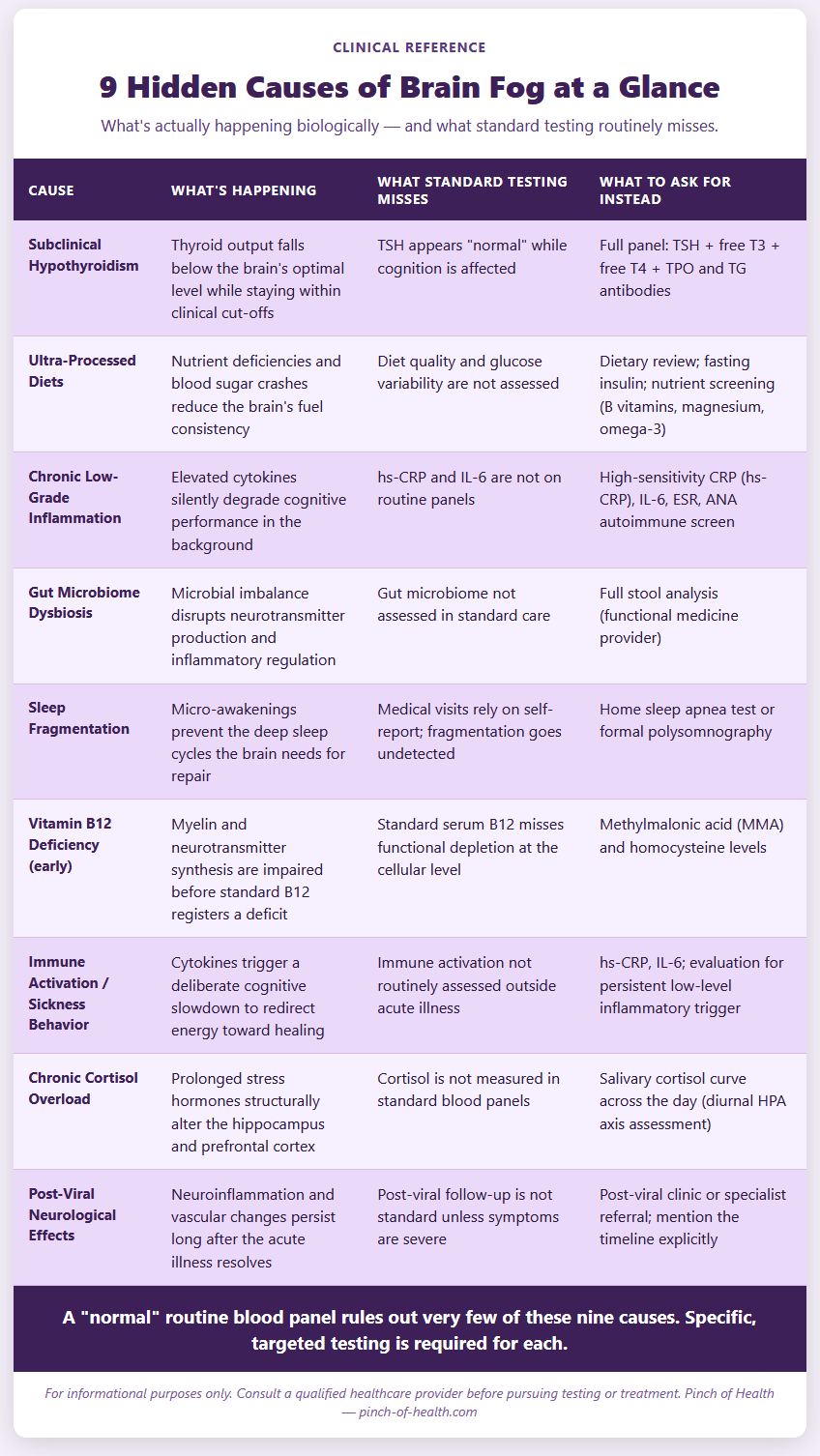
Your thyroid produces hormones that regulate nearly every cell in your body, including every neuron in your brain. Even mild underperformance can be enough to noticeably slow cognition, and “mild” is exactly where standard testing tends to lose the thread.
TSH (thyroid-stimulating hormone) levels are what most routine panels check. But the reference range is wide. Research by Bono, Fancellu, Blandini, Santoro, and Mauri, published in Acta Neurologica Scandinavica in 2004, found that even mild hypothyroidism below clinical cut-off thresholds was associated with measurable slowing on cognitive and neuropsychological tests. Numbers that look fine on paper don’t always reflect how a brain is actually functioning.
This condition is called subclinical hypothyroidism. “Subclinical” means the dysfunction is real but not severe enough to trigger a formal diagnosis using standard reference points.
If brain fog comes together with fatigue, cold sensitivity, dry skin, or unexplained weight changes, a full thyroid panel is worth requesting. That means TSH plus free T3, free T4, and thyroid antibodies. Ordering TSH alone misses significant detail about how the thyroid is actually functioning.
Cause 2: Ultra-Processed Diets
Felice Jacka had been studying the diet-mood connection for long enough to know that the research community wasn’t taking it seriously.
Then her 2010 study in the American Journal of Psychiatry changed the conversation. Among 1,046 women, those eating Western-style diets high in processed foods, refined carbohydrates, and takeaway meals showed significantly higher rates of depression and anxiety disorders compared to women eating traditional whole-food diets. The finding wasn’t subtle.
The mechanism isn’t hard to trace. Ultra-processed foods are low in what your brain actually runs on: B vitamins, omega-3 fatty acids, magnesium, zinc, and a steady glucose supply. They spike blood sugar sharply and crash it just as fast. The result is hours of mental flatness.
Your brain accounts for roughly 2% of your body weight but uses around 20% of its energy. Give it an inconsistent fuel supply, and concentration is the first thing to go.
This also plays out at the single-meal level. The post-lunch fog many people experience isn’t laziness. A meal high in refined carbohydrates and low in protein or fat can produce a pronounced blood sugar peak followed by a sharp drop, which reliably impairs focus and recall for two to four hours.
People who swap the big starchy lunch for something smaller and more protein-forward often notice the afternoon fog lifts without any other changes.
Over time, the damage accumulates. Convenience foods come at a cognitive cost that builds slowly, without obvious symptoms, until brain fog becomes the baseline instead of the exception.
Cause 3: Chronic Low-Grade Inflammation
Inflammation has an obvious role in conditions like arthritis and heart disease. Its effect on the brain is less commonly discussed, but the evidence is just as solid.
A 2009 meta-analysis by Howren, Lamkin, and Suls, published in Psychosomatic Medicine, pooled data from dozens of studies and found that elevated CRP, IL-1, and IL-6 appeared consistently in people experiencing depression, with fatigue and cognitive slowing among the most reliably associated symptoms.
The picture that emerged shifted inflammation from a purely physical phenomenon to a documented driver of how the mind functions day to day.
The problem is that this kind of inflammation doesn’t hurt. No fever. No obvious illness. It just quietly degrades cognitive performance in the background. Common drivers include poor sleep, abdominal adiposity, a diet high in processed foods, chronic stress, and gut imbalances.
Many people carrying chronic low-grade inflammation would show nothing unusual on their last basic check-up, because CRP and inflammatory cytokines aren’t part of a standard blood panel.
The honest answer is that most people with this going on have no idea. High-sensitivity CRP (hs-CRP) is the most accessible screening marker and can be added to a blood draw, but you usually have to ask for it specifically.
Cause 4: Gut Microbiome Dysbiosis
For most of the twentieth century, gut bacteria were understood as digestive housekeeping. What upended that picture was the discovery that microbial communities in your gut produce neurotransmitters, regulate inflammation, and communicate directly with your brain via the vagus nerve. The gut isn’t just downstream from the brain. It talks back.
The detailed case was laid out in a landmark 2019 review by Cryan, O’Riordan, Cowan, and colleagues, published in Physiological Reviews. The paper documented how gut microbiota influence brain function, mood, and cognition through tryptophan metabolism, short-chain fatty acids, enteric nerve signaling, and modulation of the hypothalamic-pituitary-adrenal axis.
When this balance breaks down (a state called dysbiosis), disruption to neurotransmitter production and inflammatory signaling can show up as mood instability, poor focus, and cognitive cloudiness.
What makes gut dysbiosis a particularly hidden cause of brain fog is the timing. Cognitive symptoms can appear months before any obvious digestive complaint. Someone can have significant microbial imbalances and feel mentally clouded long before they notice bloating or altered bowel habits. The brain reports the problem first.
The microbiome is heavily shaped by diet, antibiotic use, sleep quality, and stress, all of which are modifiable. A diet rich in fermented foods and diverse plant fiber is the most evidence-backed daily solution. A full stool analysis through a functional medicine provider can give a clearer picture of what’s actually out of balance if symptoms are persistent.
Researchers still don’t fully agree on which specific microbial changes drive cognitive symptoms or why the same dysbiotic patterns seem to affect some people’s cognition heavily and others’ barely at all. The gut-brain axis is real and well-documented. The individual variation in how it manifests is still an open question.
Cause 5: Sleep Fragmentation
Eight hours in bed is the number everyone aims for. It’s also one of the most misleading metrics in sleep science.
Sleep fragmentation refers to repeated micro-awakenings throughout the night: brief interruptions the sleeper almost never remembers, but which prevent the brain from cycling through the deeper restorative stages it needs.
You can log eight hours on a tracker and still wake up cognitively wrecked, because the hours that counted toward your total weren’t the hours doing the neurological work. If you’ve ever clocked a full night and spent the following morning staring at a screen while nothing registers, this is the likely explanation.
Prof. Kristine Yaffe at the University of California, San Francisco, reviewed a decade of research on this question for The Lancet Neurology in 2014.
Her finding: objectively measured sleep disturbances, particularly fragmentation, were among the most consistent predictors of cognitive impairment and accelerated cognitive decline in older adults. The critical detail in that body of research: total sleep time was frequently not associated with cognitive performance. Fragmentation was.
Standard sleep questions in a medical visit rely on self-report, and patients reliably say they sleep fine because they don’t remember the interruptions. Common drivers include sleep apnea, restless leg syndrome, chronic pain, and alcohol use. If you consistently wake feeling unrefreshed, a referral for a formal sleep study is one of the more direct diagnostic steps available.
Cause 6: Vitamin B12 Deficiency
The question that drove a large part of the B12 research in the early 2000s was straightforward: why were people showing clear cognitive and neurological symptoms when their standard B12 levels looked normal? The answer turned out to be that the test most commonly used wasn’t the most sensitive one.
Stabler and Allen’s 2004 review in the Annual Review of Nutrition made the case clearly: elevated methylmalonic acid (MMA) and homocysteine are functional markers that rise before serum B12 drops to the conventionally deficient range.
By the time a standard blood count flags deficiency, the nervous system has often been under metabolic stress for some time. B12 is essential for producing myelin (the protective sheath around nerve fibers) and for synthesizing neurotransmitters, so the cognitive effects of early depletion are real, even when the basic numbers look acceptable.
Groups at elevated risk include older adults (gastric changes reduce absorption with age), vegetarians and vegans (animal products are the primary dietary source), people taking metformin for type 2 diabetes, and regular users of proton pump inhibitors for acid reflux, which interfere with B12 absorption at the stomach level.
For anyone in those groups, MMA and homocysteine measure something a standard B12 test doesn’t touch.
Cause 7: Immune Activation and Sickness Behavior
Here is the twist most people don’t expect: brain fog can be something your immune system is producing on purpose.
When your body detects a threat (an infection, a tissue injury, even chronic psychological stress), it releases proteins called cytokines. Those cytokines cross into the brain and trigger a coordinated behavioral state called “sickness behavior.”
You feel tired and unmotivated. Your thinking gets foggy, and social engagement becomes unappealing. That is the program running correctly, not a side effect of being sick. Your immune system is forcing you to rest and redirect metabolic resources toward fighting the threat.
Robert Dantzer and colleagues described this mechanism in a 2008 paper in Nature Reviews Neuroscience. Their analysis traced how cytokine-mediated immune activation produces this cluster of symptoms. Under normal conditions, the state resolves when the threat clears.
The problem is that for many people, the pathway never fully shuts down. Persistent low-grade infections, autoimmune conditions, gut dysbiosis, and ongoing psychological stress can all maintain cytokine levels just high enough to keep a version of sickness behavior running as background noise. The immune system is executing a program that was designed to be temporary. It never received the signal to stop.
This is why brain fog turns up across such a wide range of conditions: autoimmune disorders, chronic fatigue syndrome, post-viral syndromes. The mechanism is the same in all of them. What varies is whether the immune system eventually receives the signal that the threat has passed. In many people, it doesn’t.

Cause 8: Chronic Cortisol Overload
“Reduce your stress” as medical advice is close to useless without understanding what chronic stress is actually doing to your brain on a structural level.
Cortisol is the body’s primary stress hormone. In short bursts, it’s useful: it sharpens attention and mobilizes energy quickly. But when cortisol stays elevated for weeks or months, it begins degrading the very brain structures responsible for memory and clear thinking.
Bruce McEwen’s 2007 review in Physiological Reviews documented this in detail: chronic stress causes measurable structural changes in the hippocampus and the prefrontal cortex. The hippocampus is the brain’s memory hub.
The prefrontal cortex manages focus, judgment, planning, and impulse regulation. When sustained cortisol exposure degrades both areas, the cognitive effects are measurable and specific: memory retrieval slows, concentration narrows, decision-making becomes labored, and emotional reactions run closer to the surface.
This is not metaphor. The changes are structural. They show up in imaging studies. And they are not permanent. McEwen’s work also shows the brain has significant recovery capacity when the stress load is reduced, and the right supporting conditions are in place.
Consistent sleep, aerobic exercise, and mindfulness-based practices all show documented effects on cortisol regulation and hippocampal function in the research literature.
What makes chronic cortisol overload a hidden cause of brain fog is that the people most affected have usually normalized the stress load over years. It no longer feels like stress. It just feels like Tuesday. But the biological cost is accumulating regardless of whether the person subjectively experiences it as stressful anymore.
Cause 9: Long COVID and Post-Viral Brain Effects
Before 2020, post-viral cognitive symptoms were understood primarily within a small clinical community treating conditions like post-Lyme syndrome and myalgic encephalomyelitis.
The assumption in mainstream medicine was that viral illness might leave lingering fatigue in some people but didn’t seriously affect the brain past the acute phase. That assumption was wrong, and it took a pandemic to prove it at a scale too large to dismiss.
A landmark 2022 study by Xu, Xie, and Al-Aly, published in Nature Medicine, analyzed long-term neurological outcomes across hundreds of thousands of COVID-19 survivors. Post-COVID patients showed substantially higher rates of persistent cognitive impairment, memory problems, and brain fog compared to matched control groups.
In many cases, these effects persisted for a year or more past the initial infection. The effect was present even in people who had mild acute illness by standard measures.
The mechanisms are still being mapped. Neuroinflammation, microvascular changes in brain tissue, disruptions to the blood-brain barrier, and possible reactivation of latent viruses like Epstein-Barr are all under active investigation.
What’s striking is that the different mechanisms produce overlapping cognitive symptoms, which makes it difficult to target them without more individual-level diagnostic clarity. Researchers don’t yet agree on which pathway is primary, whether it varies by patient, or why some people recover cognitive function within months while others remain affected at two years.
The more important point for people outside the COVID context is what this pattern reveals about post-viral illness generally. A viral infection can leave a neuroinflammatory footprint long after the acute illness resolves.
This isn’t new. It was documented in post-Lyme patients, in post-influenza populations, in people who recovered from severe respiratory infections before SARS-CoV-2 existed. The phenomenon received wider attention starting in 2020, but the biology predates it by decades.
If brain fog appeared or worsened following any viral illness (COVID-19, influenza, or an illness you couldn’t identify at the time), that timeline is worth mentioning explicitly to a healthcare provider. Post-viral clinics and specialists familiar with these presentations are increasingly available, and the workup is different from a standard cognitive screening.
What to Do Next: Tests Worth Asking About
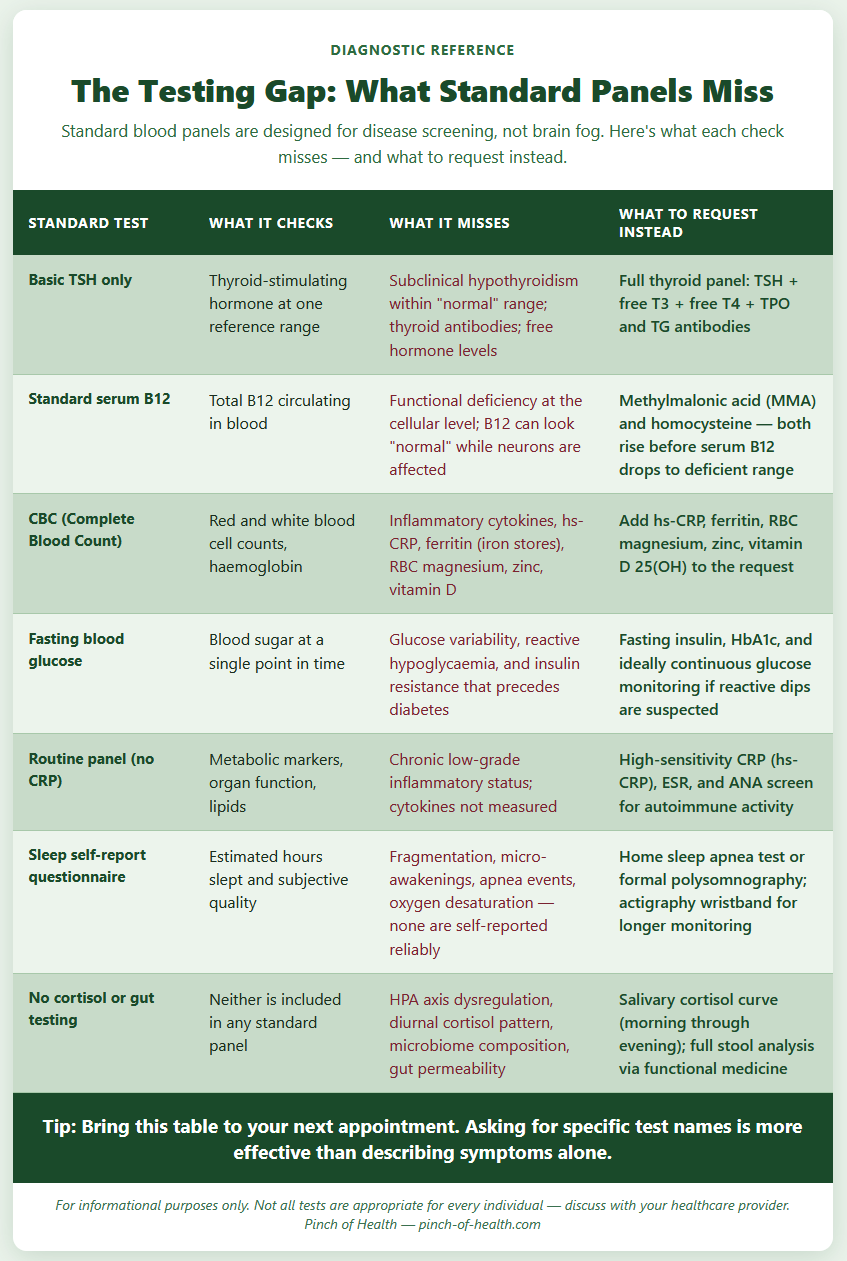
Brain fog is a symptom, not a diagnosis. Finding the cause requires asking for specific things, because the standard check-up wasn’t designed to look for most of what’s on this list.
These aren’t recommendations for every person, but a starting point for a more targeted conversation with a healthcare provider willing to look beyond the routine panel.
Thyroid: Full panel (TSH, free T3, free T4, TPO antibodies, TG antibodies). Not TSH alone.
Inflammation: High-sensitivity CRP (hs-CRP), and if warranted, IL-6, ESR, and ANA to screen for autoimmune activity.
Nutritional status: Methylmalonic acid (MMA) and homocysteine for functional B12 assessment, plus vitamin D, RBC magnesium, zinc, and ferritin.
Sleep: If you consistently wake unrefreshed or a partner reports snoring, a home sleep apnea test or formal polysomnography is worth requesting before attributing the fog to stress or lifestyle.
Gut health: A full stool analysis through a functional medicine provider can assess microbiome composition, dysbiosis markers, and intestinal permeability.
Stress markers: Salivary cortisol testing across the day (diurnal cortisol curve) can assess whether the HPA axis is dysregulated if chronic stress is clinically suspected.
Post-viral history: If symptoms started or worsened after an infection, mention the timeline explicitly. Some providers miss it if they’re not specifically looking for the connection.
Brain Fog Cause Screener
5 questions that help identify which of the 9 causes is most worth investigating for your situation
No personal data is collected. Your answers are stored locally on your device only.
Frequently Asked Questions
How long does brain fog last?
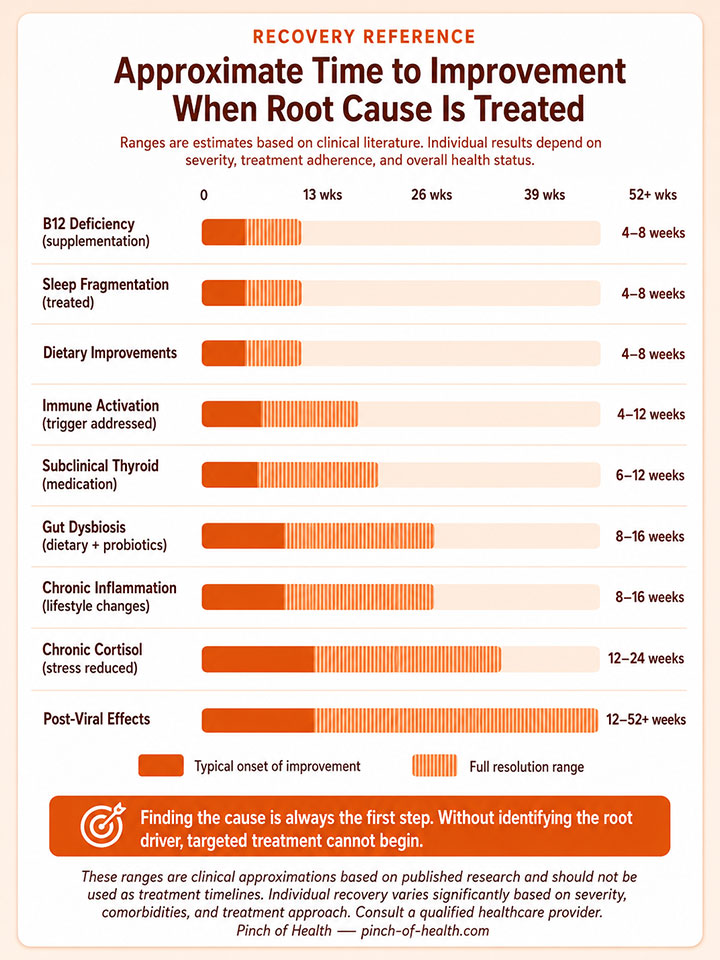
It depends on what’s driving it. Fog linked to a nutritional deficiency or sleep fragmentation often improves within weeks of addressing the underlying cause. Cortisol-related fog can take months to fully lift once stress is reduced and recovery behaviors are in place.
Post-viral brain fog has the least predictable timeline. Some people recover cognitive function within a few months, while others report symptoms for a year or longer. Duration is closely tied to whether the root cause has been identified and is being addressed.
Is brain fog permanent?
For most causes, no. The brain shows meaningful capacity for recovery when the underlying driver is removed or treated, including neurological recovery from cortisol-related hippocampal changes, which McEwen’s research documented as reversible under the right conditions.
Post-viral fog is the one area where the evidence on full recovery is less complete, though longitudinal studies are beginning to show improvement in many patients at the two-year mark.
When should brain fog be taken more seriously?
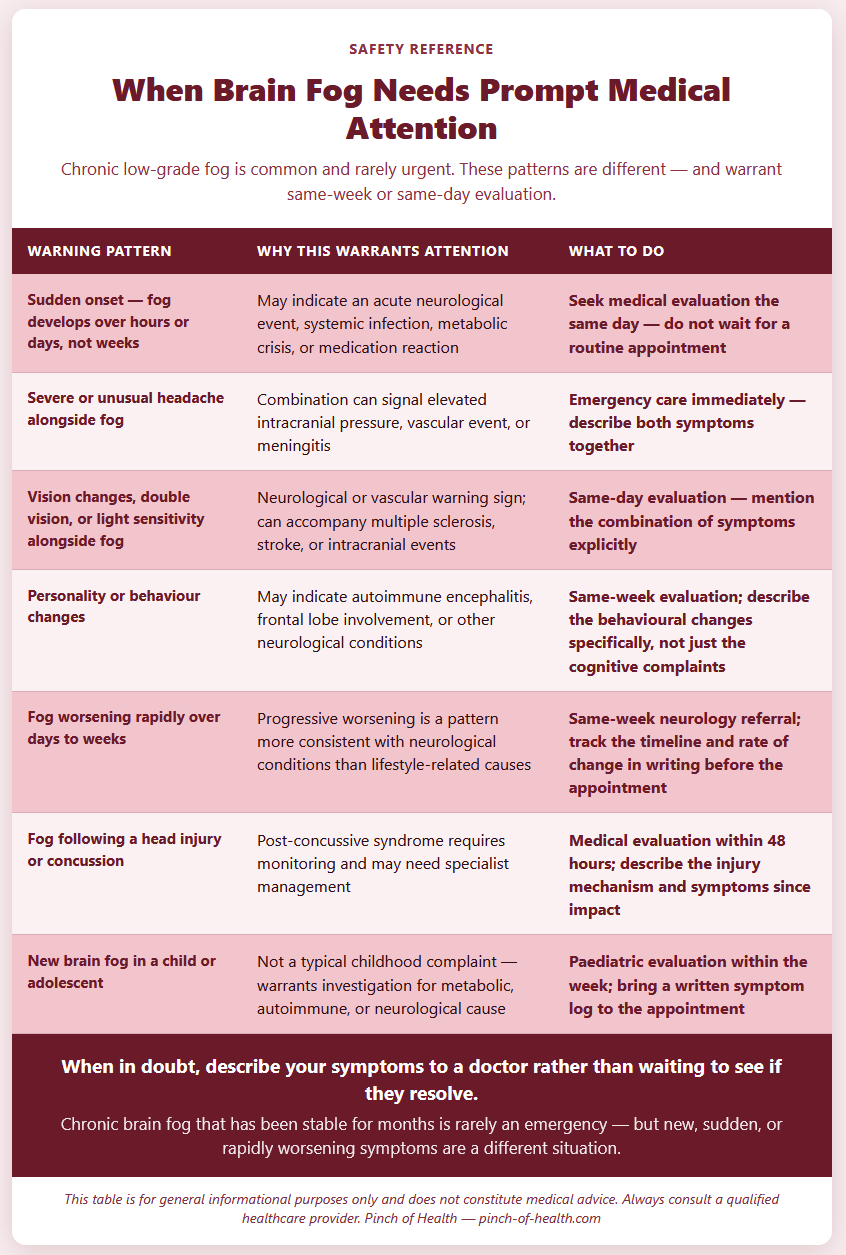
Fog that comes on suddenly, worsens rapidly over weeks, or arrives alongside significant personality changes, vision problems, severe headaches, or balance issues warrants urgent medical attention.
These are patterns more consistent with neurological conditions that require prompt evaluation. Chronic, low-grade brain fog that has been stable for months and occurs alongside fatigue is more typically in the territory covered in this article, but a provider should make that distinction, not a self-assessment.