Most people assume flexibility comes from stretching harder. The research found a different explanation entirely, and one popular pose deserves extra caution.
Some mornings, your body already seems to know what to do. You fold forward, and your hamstrings just let go. Other mornings, on the same mat, the same stretch feels like negotiating with a rusty robot that hasn’t been oiled in years.
Most people read that gap as proof they’re failing at this. The research tells a stranger story than “try harder,” and it starts with a popular explanation that turns out to be wrong.
Does Yoga Actually Make You More Flexible?
It helps to settle this before going further, because the rest of this only matters if the premise holds up. When researcher Sivaramakrishnan and colleagues pooled 22 separate clinical trials in older adults for a 2019 meta-analysis in the International Journal of Behavioral Nutrition and Physical Activity, the lower-body flexibility gains from yoga were both substantial and statistically reliable across trials. A second, independent analysis published in 2023 reached the same conclusion in a different group of older adults, this time with strength and balance improvements showing up alongside the flexibility gains.
Neither paper claims yoga is magic. Both show something real and repeatable, which leaves the more interesting question wide open. Why does the day-to-day experience of it feel so inconsistent?
Why Some Days Feel Like Progress and Others Feel Like Nothing Happened
For years, the standard explanation for why stretching gets easier was that the nervous system “rewires” itself, a kind of neuroplasticity story that sounds precise and scientific. The research that actually tested it found no support for that explanation.
A controlled trial of 40 participants tracked the reflex pathway responsible for that explanation over a six-week stretching program. It found no meaningful change there at all.
The authors concluded the real gains were coming from somewhere else entirely, most likely mechanical changes in the tissue or a shift in how much stretch a person can tolerate before it registers as uncomfortable. A 2025 systematic review and meta-regression in Sports Medicine filled in what that “somewhere else” actually is, and the answer involves two separate processes running on two separate clocks.
That distinction matters more than it sounds like it should.
The fast process is stretch tolerance. Within days, the nervous system simply allows you to go further into a stretch before it feels unpleasant, even though the muscle tissue itself hasn’t changed shape yet.
This is real. It’s also why a single good week of practice can feel like a breakthrough.
The slow process is sarcomerogenesis, the literal addition of new sarcomere units that physically lengthen a muscle fiber over time. This one depends on how much volume and intensity you apply, and it doesn’t show up overnight.
Exactly how much volume tips the slow mechanism into gear isn’t settled. The research points to dose and intensity mattering a great deal, not to one clean threshold everyone can rely on.
Put the two together, and the rusty-robot days make sense. Tolerance can vary day to day with sleep, stress, and how warmed up the tissue is, while the structural change underneath is compounding quietly on a much slower timeline. A persistent plateau despite consistent practice is sometimes a sign of something more specific going on, but for most people, an inconsistent feeling from one day to the next is exactly what two mechanisms running at different speeds should look like.
What’s Happening to Your Flexibility as You Get Older
How fast does flexibility actually decline with age? A cohort study spanning roughly 6,000 Flexitest assessments put a real number on it: flexibility declines by about 0.6% per year in women and 0.8% per year in men, with the decline typically beginning around age 30 in men and age 40 in women.
The pattern isn’t uniform across the body. Some joints lose range faster than others, which is part of why a 50-year-old might feel fine in their shoulders and locked up in their hips.
That’s a meaningfully different picture than a flat “you lose flexibility at 1% a year after 30,” which sounds tidy but doesn’t match what the data on real bodies actually shows.
Flexibility Decline by Age and Sex
Annual rate of decline, based on a cohort of roughly 6,000 Flexitest assessments
The pattern is joint-specific, not uniform across the body. Source: cohort study of Flexitest assessments, 2009.
How Often You Need to Practice
Two sessions a week, sustained for about five weeks, were enough in a systematic review pooling multiple stretch-training trials to produce measurable range-of-motion gains. A separate meta-analysis confirmed that stretching done consistently for at least two weeks reliably increases range of motion over time. Repeating the 15-minute routine below twice a week meets that bar in the research record.
That’s the floor, not the ceiling. More frequent practice compounds faster, particularly for the slower structural changes described above. Whether more is worth the extra time is a separate question from whether the floor itself holds up.
These beginner-friendly tools can support your flexibility journey and help you get the most out of your practice.
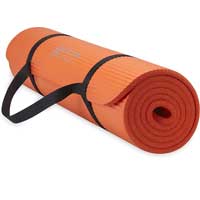
Gaiam Yoga Mat
A good quality, non-slip mat provides stability and comfort for your practice.
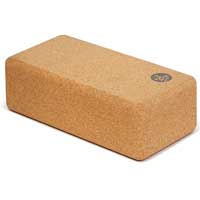
Manduka Yoga Block
Use for support, stability, and to help modify poses as you build flexibility.
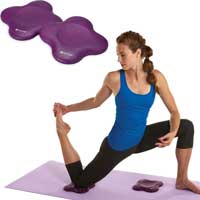
Gaiam Yoga Knee Pads
Extra cushioning for your knees during kneeling poses and floor work.
These are Amazon Associate affiliate links, which help support this site at no extra cost to you.
The 15-Minute Routine
The sequence below works through the body in a logical order, spine first, then hamstrings and the back line, then hips, then a gentle reverse stretch through the front line, finishing with poses that calm the nervous system down before you stand back up.
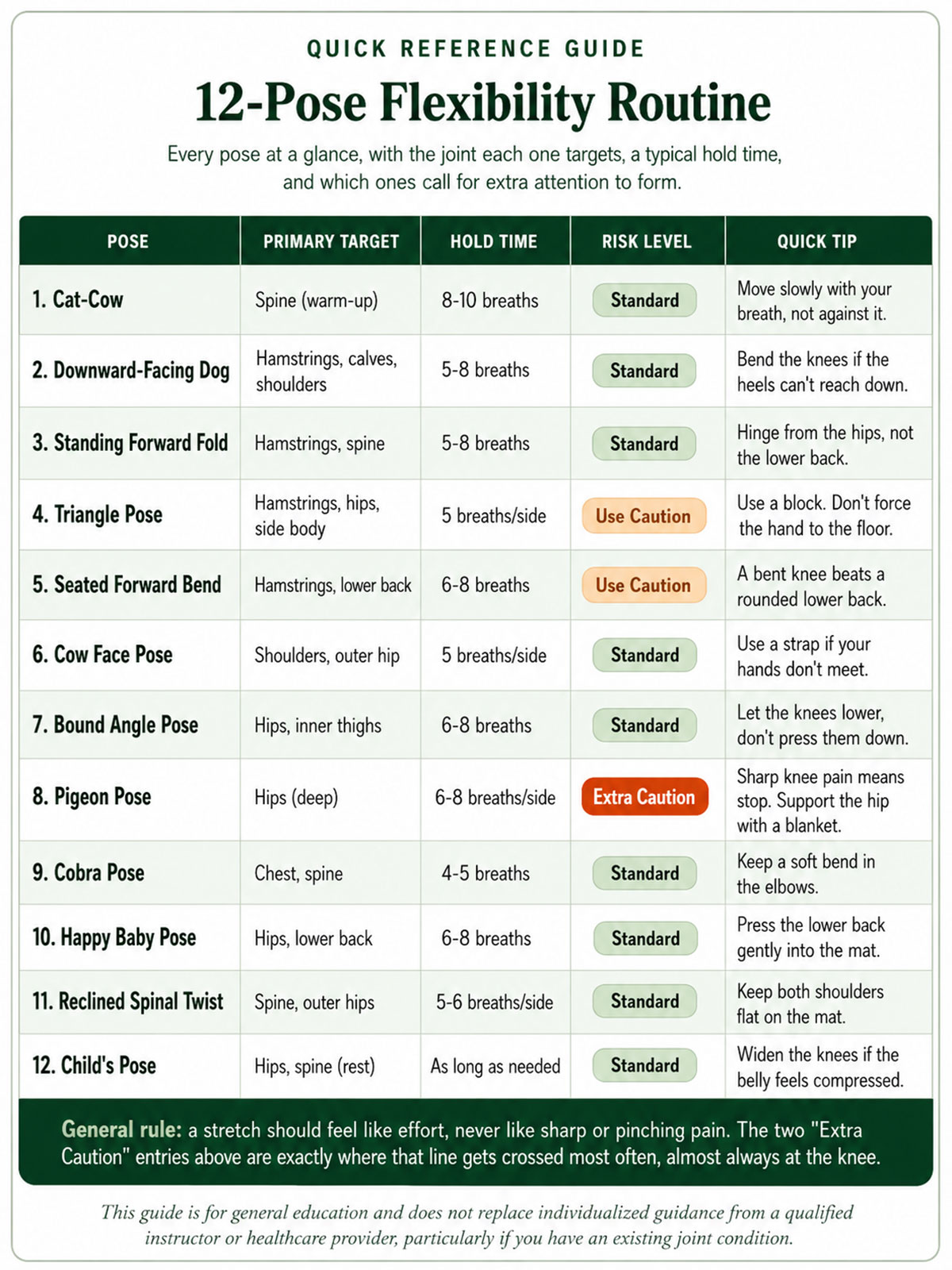
1. Cat-Cow (Marjaryasana/Bitilasana)
A warm-up for the entire spine before anything more demanding.
- Start on your hands and knees, wrists stacked under shoulders and knees under hips.
- Inhale and drop your belly, lifting your chest and tailbone toward the ceiling.
- Exhale and round your spine, tucking your chin and tailbone toward each other.
- Repeat the full cycle slowly for 8 to 10 breaths.
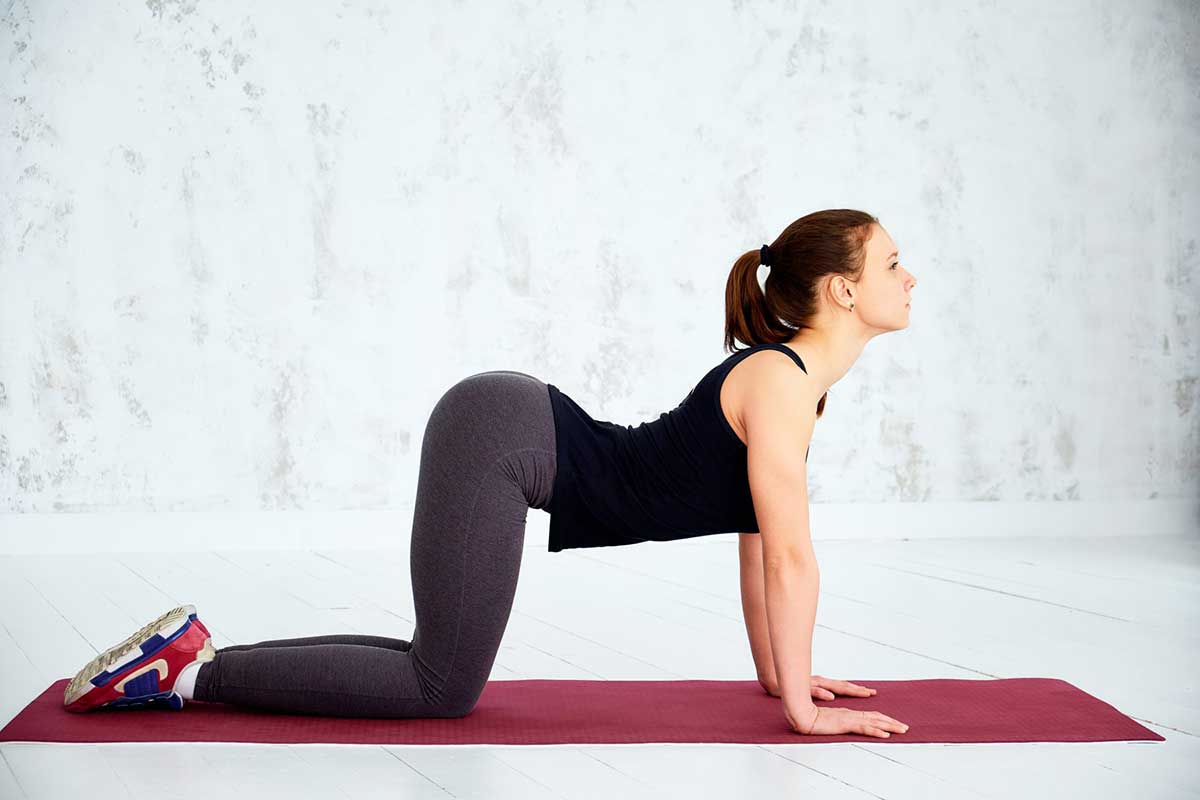
2. Downward-Facing Dog (Adho Mukha Svanasana)
Stretches the hamstrings, calves, and shoulders in one shape.
- From hands and knees, lift your hips up and back to form an inverted V.
- Press your hands firmly into the mat and let your heels reach toward the floor without forcing them down.
- Keep a soft bend in your knees if your hamstrings feel tight.
- Five to eight breaths is plenty here, this isn’t a pose to grind through.
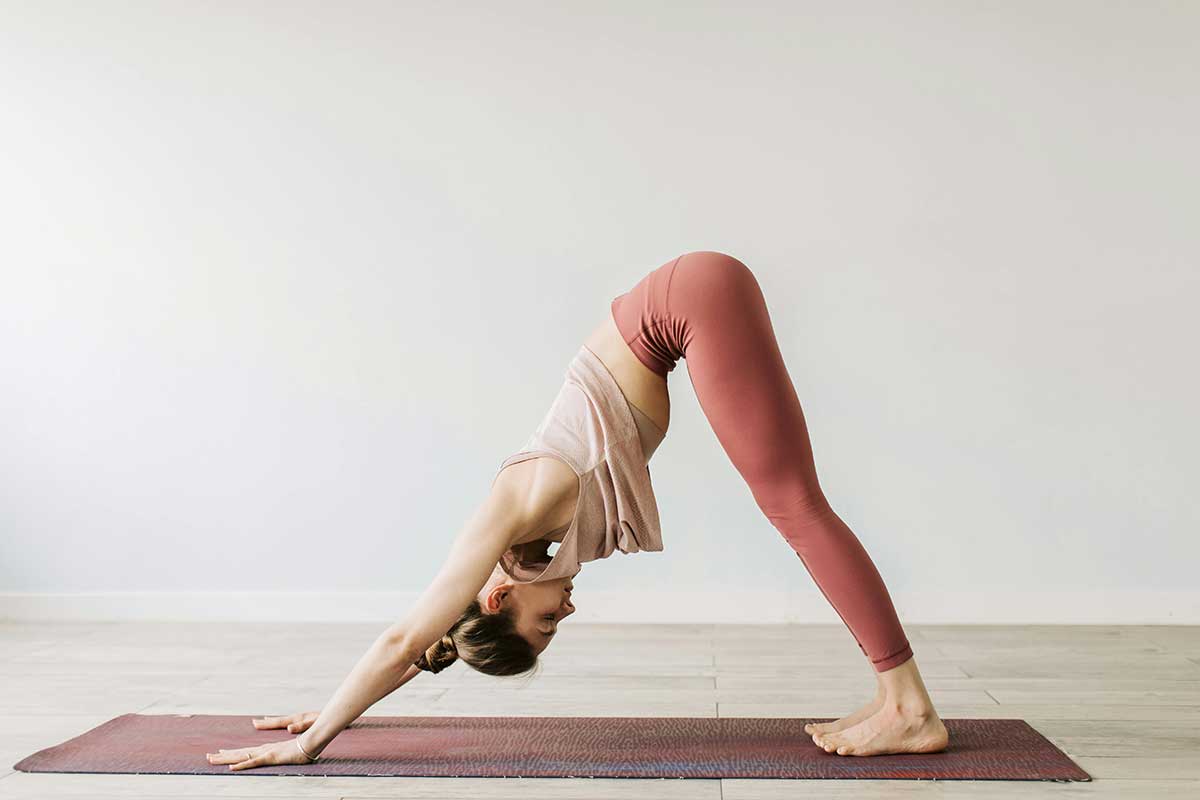
3. Standing Forward Fold (Uttanasana)
A gentler hamstring and spine stretch that also resets your breathing.
- Stand with feet hip-width apart and hinge forward from your hips, not your waist.
- Let your head hang heavy and bend your knees as much as you need to.
- Hold opposite elbows or let your hands rest on the floor or a block.
- Hold for 5 to 8 breaths, then roll up slowly through the spine.
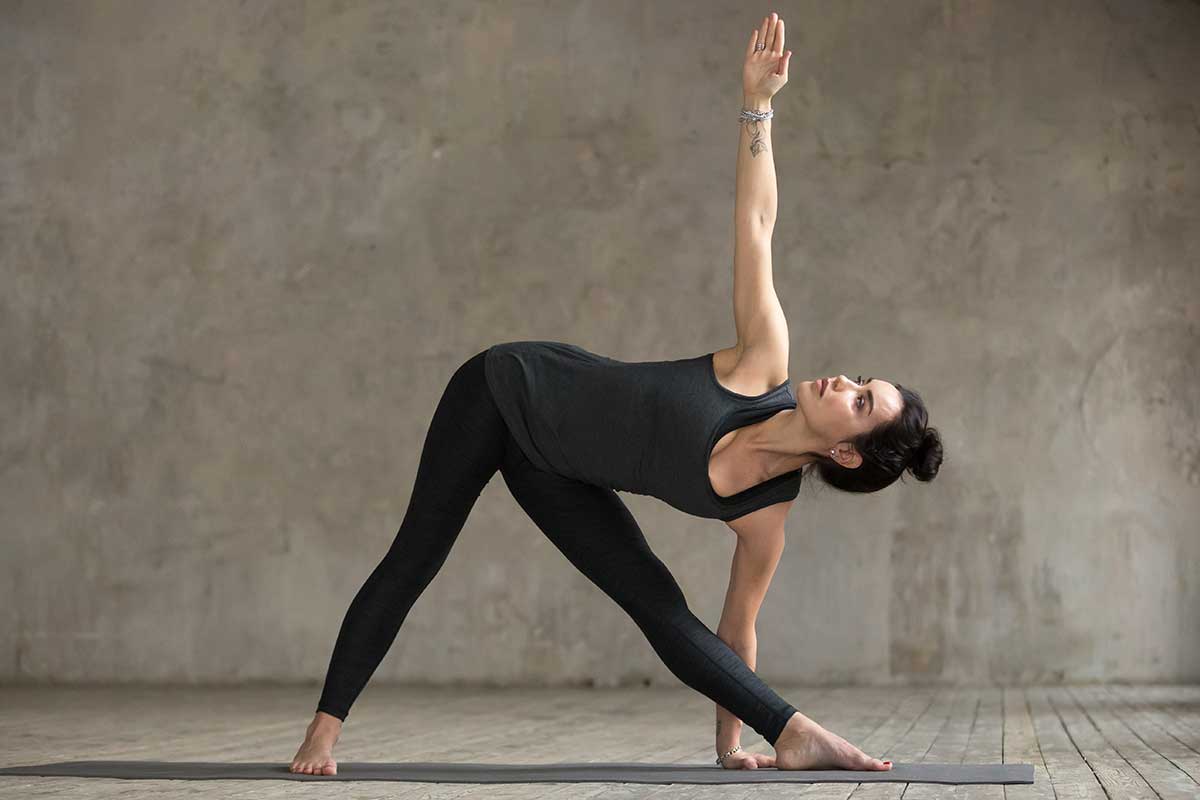
4. Triangle Pose (Trikonasana)
A strong stretch through the hamstrings, hips, and side body. Use caution here: reaching too far for the floor before your hamstrings and hips are warmed up is a common way this pose strains the lower back. Reach for a block or your shin instead of forcing your hand to the ground.
- Step your feet wide apart, turning your right foot out and your left foot slightly in.
- Extend your arms out to the sides at shoulder height.
- Hinge at your right hip and reach your right hand toward your shin, ankle, or a block, extending your left arm toward the ceiling.
- Keep both legs straight but not locked, and hold for 5 breaths before switching sides.
5. Seated Forward Bend (Paschimottanasana)
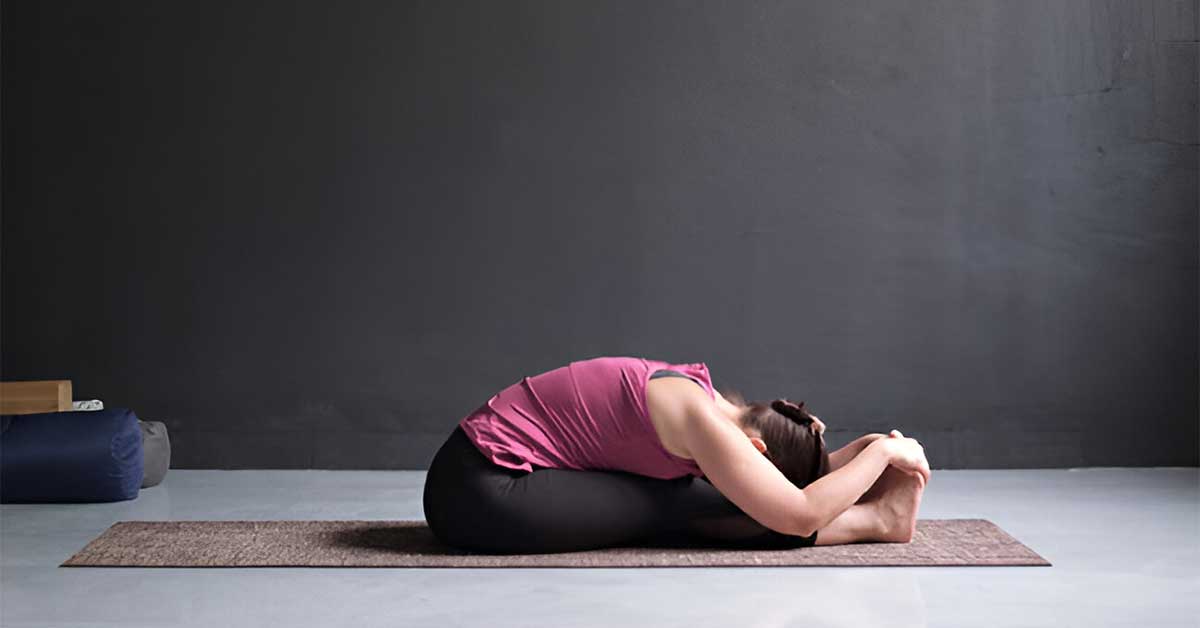
One of the deepest hamstring and lower-back stretches in the routine. Use caution here: rounding aggressively through the lower back to reach further is the most common way this pose causes strain. A bent knee with good posture beats a straight leg with a collapsed spine.
- Sit with both legs extended straight in front of you.
- Hinge forward from your hips, keeping your spine long rather than rounding into your lower back.
- Reach for your shins, ankles, or feet, using a strap around your feet if you can’t comfortably reach.
- Bend your knees as much as needed to keep your back straight, and hold for 6 to 8 breaths.
6. Cow Face Pose (Gomukhasana)
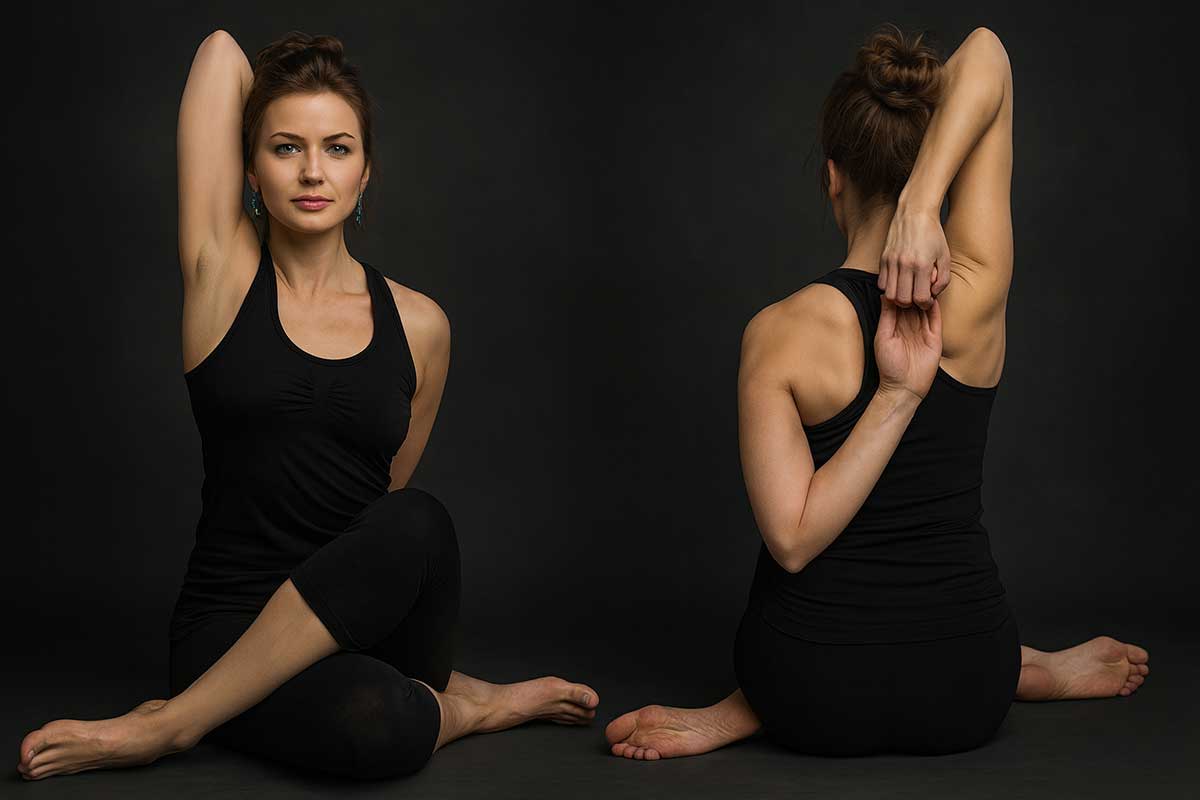
Opens the shoulders and the outer hip at the same time.
- Sit and stack your right knee directly over your left knee, feet wide to either side.
- Reach your left arm up and bend it behind your head.
- Reach your right arm down and bend it behind your back.
- Try to clasp your hands behind your back, or hold a strap between them if they don’t meet.
- Hold for 5 breaths, then switch the stack of your legs and arms.
7. Bound Angle Pose (Baddha Konasana)
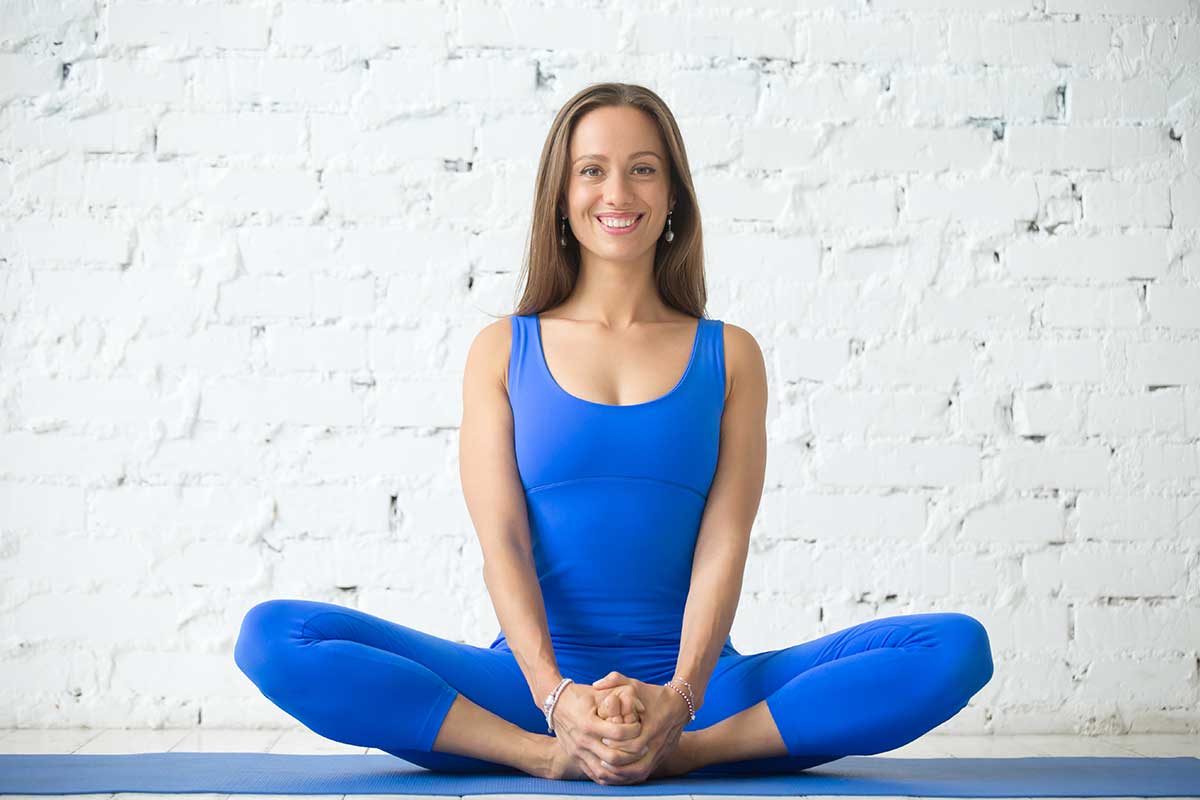
A classic inner-thigh and hip opener that most people can do comfortably.
- Sit with the soles of your feet together and your knees falling out to the sides.
- Hold your feet or ankles and sit as tall as you can through your spine.
- Let your knees lower naturally without pressing or bouncing them toward the floor.
- Hold for 6 to 8 breaths, breathing into any tightness you feel in the hips.
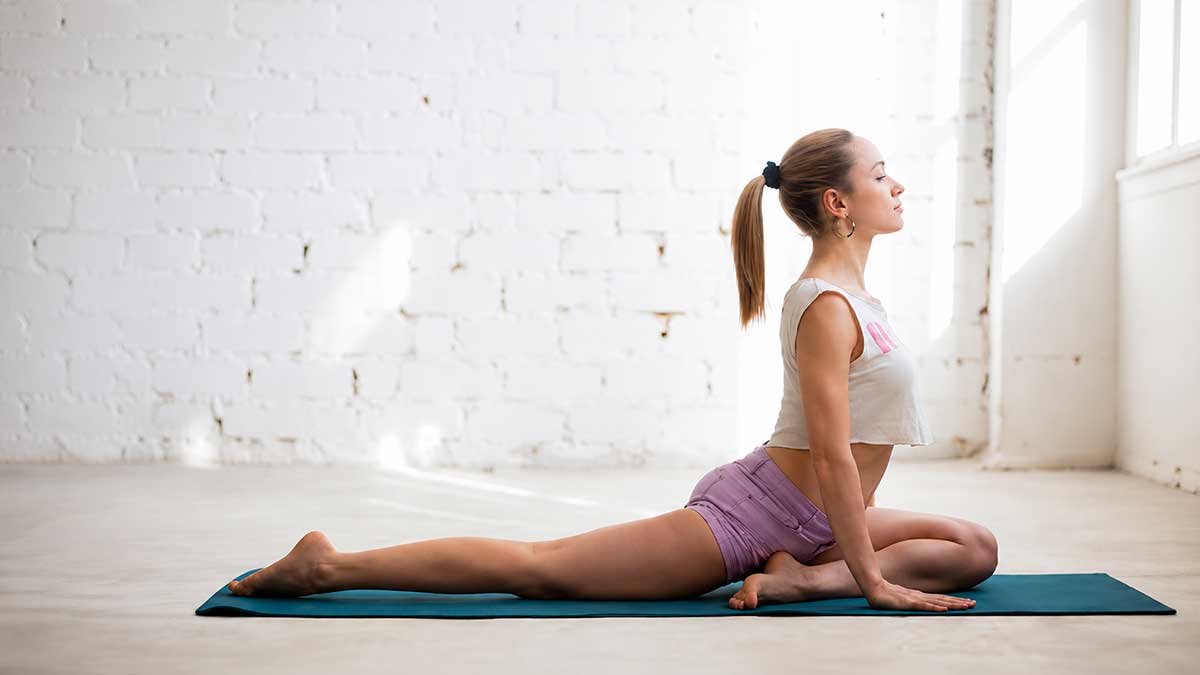
8. Pigeon Pose (Eka Pada Rajakapotasana)
Pigeon deserves more caution than any other pose in this routine, and it’s worth knowing why before you try it. A systematic review of published yoga injury case reports in PLoS One found the knee was the most frequently injured joint across several deep hip-opening poses, Pigeon Pose among them, almost always from the knee bearing weight at an angle it wasn’t ready for rather than from the stretch itself. A survey of more than 1,300 yoga teachers and therapists reached a similar conclusion about this pose specifically.
The real takeaway is to respect the front knee, not to skip the pose.
- From hands and knees, bring your right knee forward and place it behind your right wrist, angling your right shin gently across the mat.
- Slide your left leg straight back behind you, keeping your hips as level as you can.
- If your right hip doesn’t comfortably reach the floor, place a folded blanket or cushion underneath it for support.
- Press your fingertips into the mat beside your hips and sit tall, lifting through the chest with your spine upright rather than rounding forward.
- Hold for 6 to 8 breaths, then switch sides.
If you feel anything sharp or pinching in the knee itself, rather than a stretch through the hip and outer thigh, come out of the pose and try a gentler hip opener instead, such as a reclined figure-four stretch.
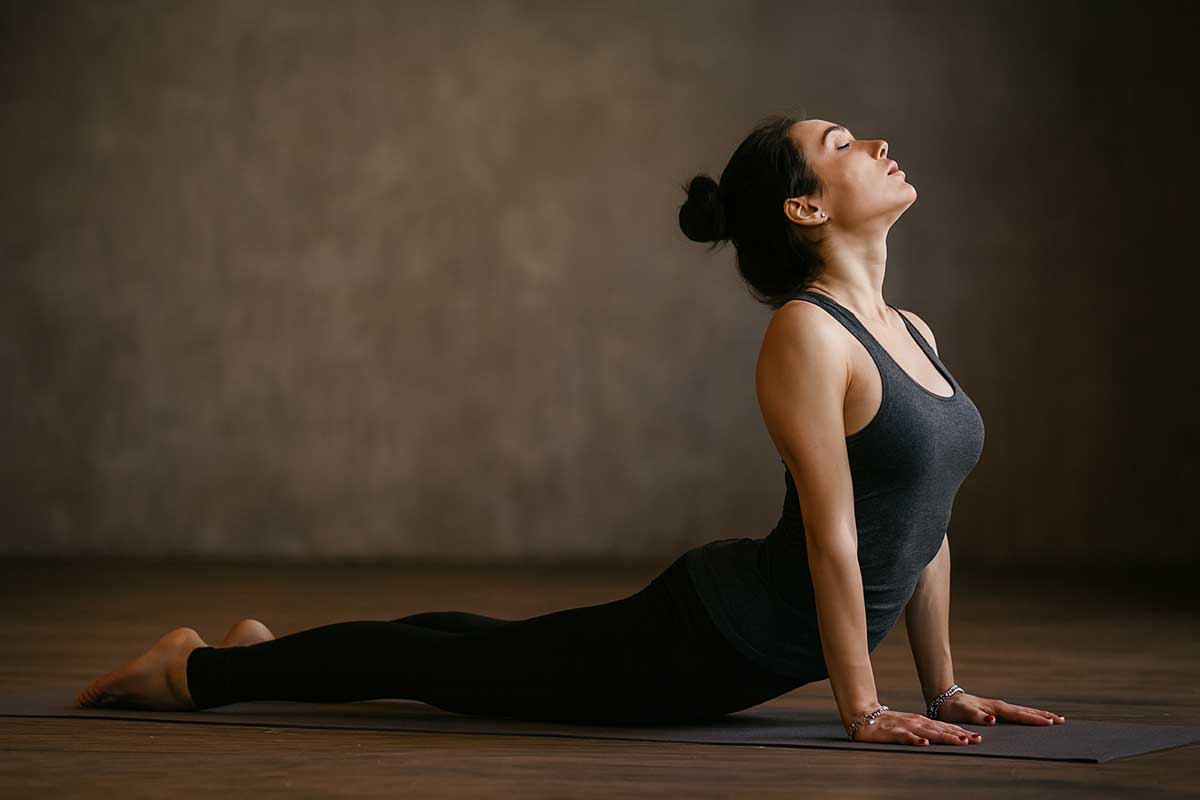
9. Cobra Pose (Bhujangasana)
A gentle backbend that opens the chest after several forward-folding poses.
- Lie face down with your hands planted under your shoulders, elbows tucked close to your body.
- Press into your hands and lift your chest off the mat, keeping your shoulders rolling back and down.
- Keep a slight bend in your elbows rather than locking them straight.
- Hold for 4 to 5 breaths, then lower back down slowly.
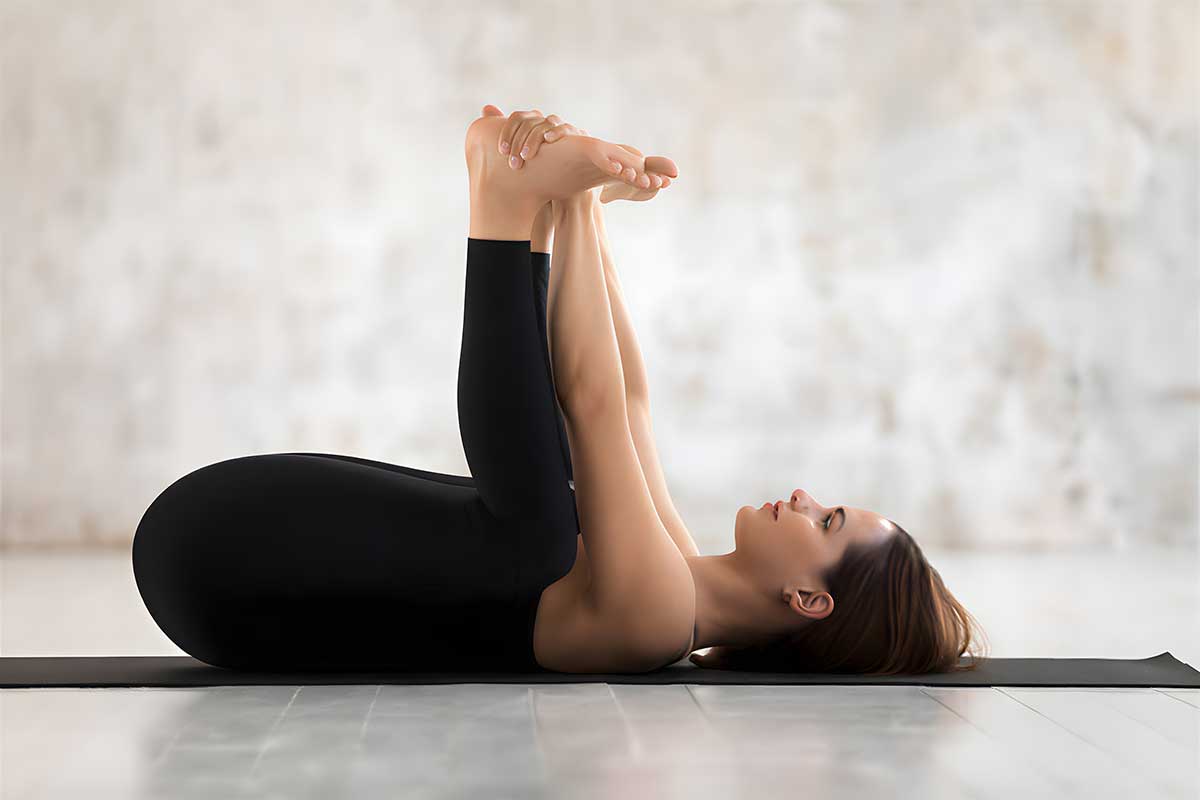
10. Happy Baby Pose (Ananda Balasana)
A hip and lower-back release that most people find genuinely restful.
- Lie on your back and draw both knees toward your chest.
- Grab the outer edges of your feet and open your knees wider than your torso.
- Gently rock side to side if it feels good, keeping your lower back pressed toward the mat.
- Stay here as long as it feels good, six to eight breaths is a reasonable target.
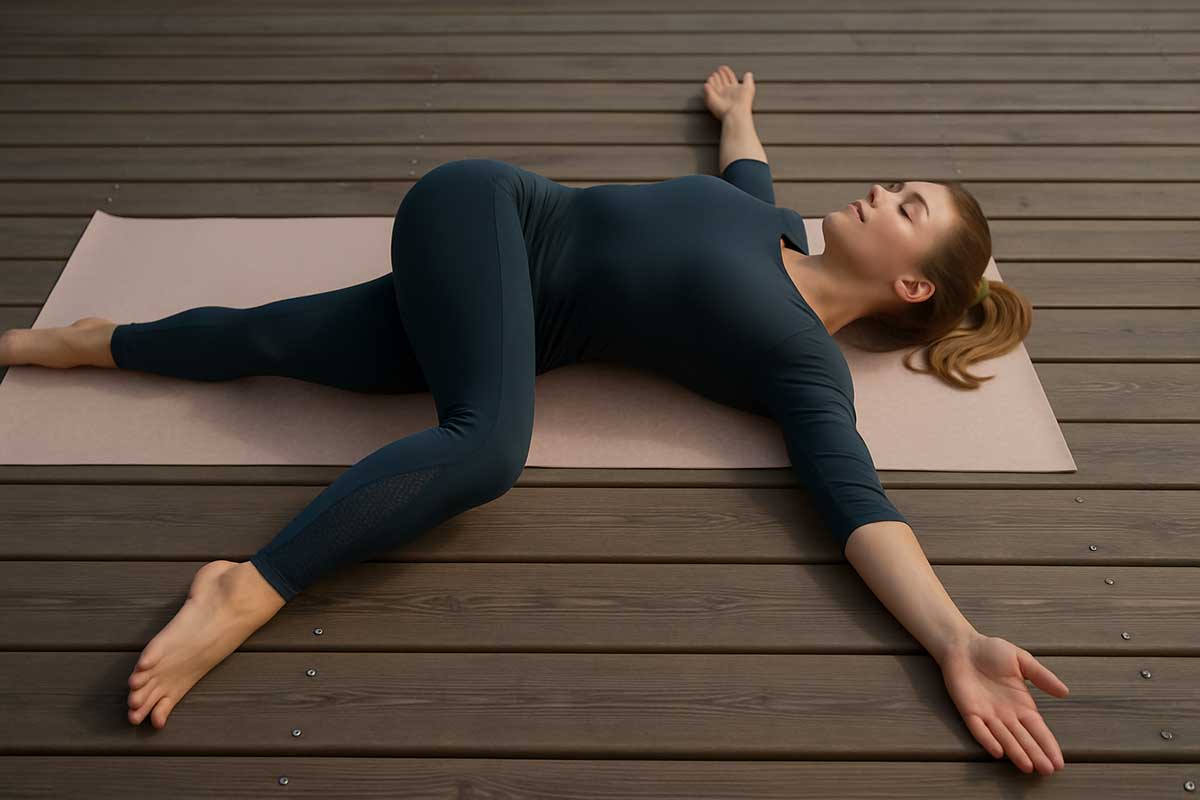
11. Reclined Spinal Twist (Supta Matsyendrasana)
A gentle wind-down for the spine and outer hips.
- Lie on your back and draw both knees into your chest.
- Let your knees fall to the right while keeping both shoulders flat on the mat.
- Extend your arms out to the sides in a T shape, turning your head to the left if comfortable.
- Hold for 5 to 6 breaths, then repeat on the other side.
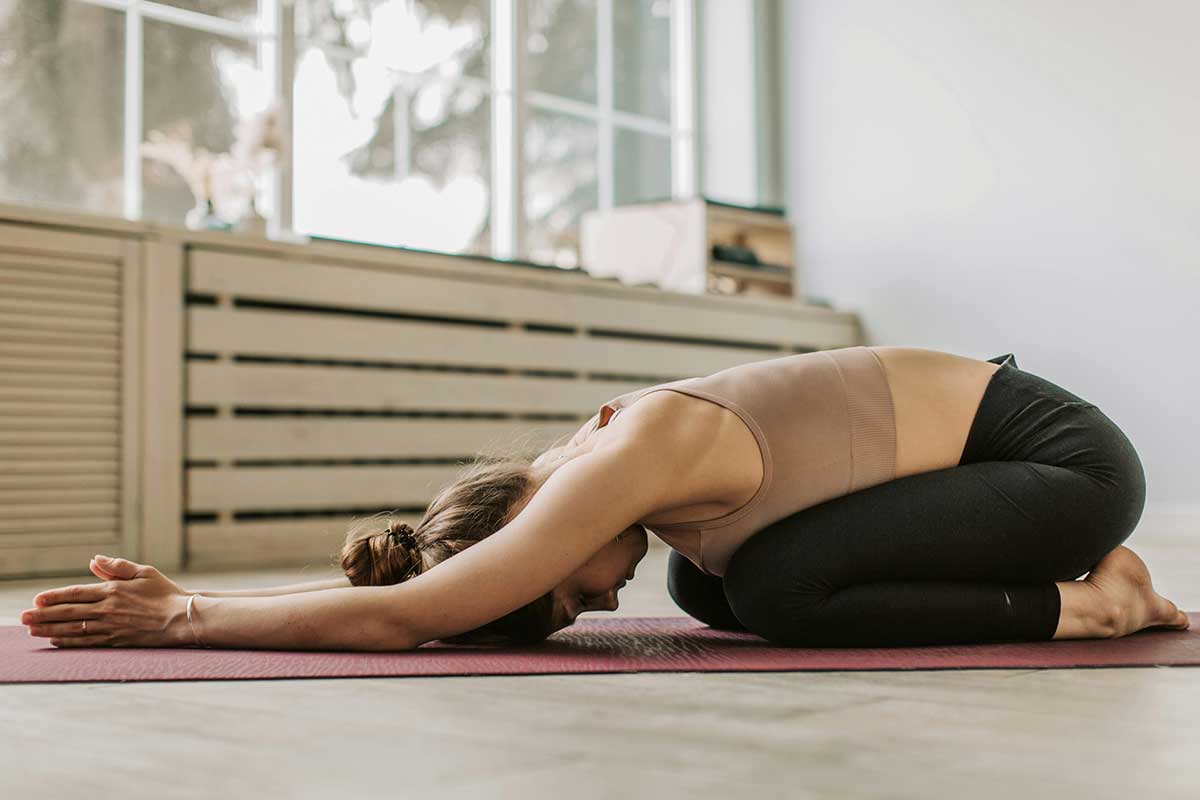
12. Child’s Pose (Balasana)
The closing pose, used to settle the nervous system before you stand back up.
- Kneel and bring your big toes together, sitting your hips back toward your heels.
- Walk your hands forward and lower your chest toward the mat, knees as wide as feels comfortable.
- Let your forehead rest on the mat or a block, arms extended or relaxed by your sides.
- Hold for as long as you like, breathing slowly, before rolling up to sit.
A Routine for Mornings, Evenings, and Days You’re Stuck at a Desk
The same 12 poses can be reordered for different moments in your day. A faster morning version favors the standing and forward-fold poses to wake up the legs and spine.
An evening version emphasizes the floor-based poses, Pigeon Pose, Happy Baby Pose, the Reclined Spinal Twist, and Child’s Pose, to wind the body down before sleep. A version built for a long desk-bound day puts the hip openers first, since hip flexor and hamstring tightness from sitting is a distinct pattern from general stiffness.
Whichever version gets used most often is the one worth building a habit around.
Routine Builder: Morning, Evening, or Desk Day
Same 12 poses, reordered for the moment you actually have time for
If You’re Working Around an Injury or Limitation
Knee discomfort, lower back issues, tight shoulders, and limited hip mobility each call for a slightly different approach to this routine rather than skipping it outright. Use a folded blanket under any joint bearing weight at an angle, favor reclined versions of hip openers over seated ones if your knees are sensitive, and never push a stretch into sharp or pinching pain.
A stretch should feel like effort. It should never feel like an injury in progress.
FAQs
How long does it really take to get flexible from yoga?
It depends on what kind of “flexible” you mean. The fast gains, driven by stretch tolerance rather than tissue change, often show up within the first one to two weeks of consistent practice.
The slower gains, actual structural lengthening of the muscle fiber, build over a longer timeline and depend on how much volume you apply. A systematic review found measurable range-of-motion improvements after as little as five weeks of practice at two sessions per week, which is a reasonable real-world timeline to expect, not a guarantee of a specific date.
Which style of yoga is best for flexibility: Hatha, Vinyasa, or Yin?
This one gets argued about more than the real differences justify. Hatha tends to build strength and balance alongside flexibility through held, foundational postures. Vinyasa moves faster between poses and builds energy and general fitness more than deep flexibility specifically.
Yin holds poses for several minutes at a time and is the style most directly designed to increase flexibility. If flexibility is the main goal, Yin or a Yin-influenced class is the most direct route. The routine above borrows from that approach with its longer holds.
Does yoga actually improve flexibility, or is this just a popular belief?
It’s been tested directly, including outside the older-adult populations covered earlier in this piece. A 10-week yoga intervention in college athletes found measurable improvements in both flexibility and balance compared to athletes who didn’t add yoga to their training. Combined with the two meta-analyses already discussed, the effect shows up across very different groups of people, from older adults to college athletes, a wider net than most single studies cast on this question.
Is yoga alone enough, or do I need strength training too?
Yoga builds flexibility effectively, but it isn’t designed to build significant muscle mass or resolve more complex mobility limitations on its own. For most people working on general flexibility, that’s not a problem. For anyone also chasing strength goals, or working through a stubborn limitation that flexibility work alone hasn’t touched, pairing this routine with dedicated strength work fills a real gap rather than a hypothetical one.
Is it safe to do yoga for flexibility every day?
For most healthy adults, yes, especially at the gentle intensity in this routine. The research on minimum effective dose found benefits at just two sessions a week, so daily practice isn’t required, but it isn’t risky either, as long as you’re listening to your body rather than pushing through sharp pain. Build in extra rest if a particular joint feels irritated rather than simply tight.
Is yoga or Pilates better for flexibility?
This comparison gets asked constantly, and the honest answer disappoints people looking for a winner. Yoga generally places more direct emphasis on held stretches and range of motion, while Pilates emphasizes core control and muscular endurance more heavily. Neither has been shown in a direct head-to-head trial to be categorically superior for flexibility specifically, so the honest answer is that they target overlapping but distinct goals, and many people benefit from both rather than choosing one over the other.
Is twice a week realistically enough?
According to the dose-response research already discussed, yes. Two sessions a week for about five weeks were sufficient to produce measurable range-of-motion gains in a systematic review pooling multiple stretch-training trials. More frequent practice will likely get you there faster, but twice a week is a legitimate, evidence-backed minimum rather than a compromise.
Can someone who’s very inflexible actually start this routine?
Yes. Every pose above includes a way to modify the range, whether that’s a folded blanket, a block, a strap, or simply bending the knees more than the photo suggests.
Flexibility work meets you at whatever range you currently have. The point of the practice is the direction you’re moving, not how close you start to a textbook version of the pose.
How do I start a daily practice if I’ve never done yoga before?
Start with the routine above at a pace you can actually keep up, even if that means three sessions a week rather than seven to begin with. Consistency over the first month matters more than intensity. Skipping the warm-up poses to get to the “real” stretches faster is the most common early mistake, since Cat-Cow and the Standing Forward Fold prepare the tissue for everything that follows.
What’s the best time of day to do this routine?
Whichever time you’ll actually do consistently. Morning practice tends to feel stiffer at first but wakes the body up for the day ahead, while evening practice benefits from muscles already warmed up by daily activity and can help with winding down before sleep.
Neither is objectively superior in the research. The version of this routine you’ll repeat is the right one.
The rusty-robot mornings were never proof that nothing was working. They were the fast mechanism doing exactly what it does, rising and falling with sleep and stress, while a slower, more durable change compounded quietly underneath, on its own schedule, waiting its turn.
Consistency is the only input that actually moves both clocks forward. How a given Tuesday happens to feel isn’t a reliable measure of anything at all.