You’ve heard oats are good for you. But what actually happens inside your gut when you eat them daily? The answer unfolds over four weeks, with changes happening at the cellular level that you can’t see but will definitely feel.
Science shows us that 28 days is the sweet spot for measuring real shifts in your gut microbiome. That’s enough time for your gut bacteria to respond, multiply, and create lasting changes in your digestive health. Let’s walk through what happens, week by week.
The Star Player: Beta-Glucan
Before we start the timeline, you need to know about beta-glucan. This special fiber lives inside oats and acts like food for your gut bacteria. Think of it as fertilizer for a garden, except the garden is your colon and the plants are trillions of helpful microbes.
Beta-glucan is a soluble fiber. When it reaches your large intestine, certain bacteria break it down through a process called fermentation. This isn’t the beer-making kind of fermentation. This is your gut bacteria eating fiber and producing compounds that keep you healthy.
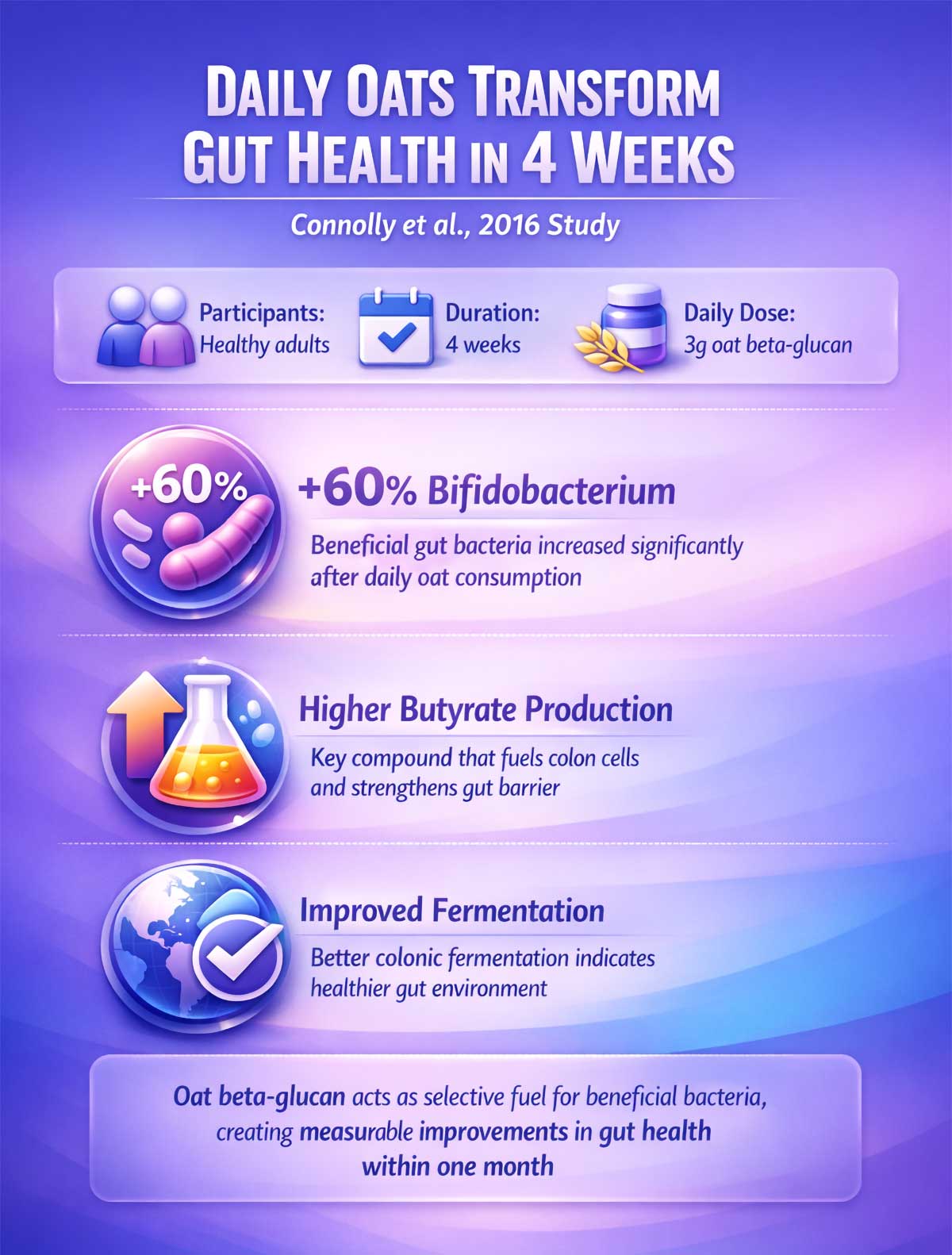
A 2016 study by Connolly and colleagues tracked healthy adults eating 3 grams of oat beta-glucan daily. After four weeks, researchers found clear increases in Bifidobacterium populations and higher levels of butyrate, a key compound that fuels colon cells. This confirmed that oats act as selective fuel for beneficial bacteria.
Understanding Your Oat Options
Not all oats are created equal for gut health. The processing level changes how much benefit your gut bacteria can extract.
| Oat Type | Processing Level | Cooking Time | Beta-Glucan Content | Resistant Starch (Raw) | Best For |
|---|---|---|---|---|---|
| Oat Groats | Whole kernel, no processing | 50-60 min | 5-6% | 9-10g per 100g | Maximum nutrition, meal prep |
| Steel-Cut | Chopped groats | 20-30 min | 4-5% | 8-9g per 100g | Best gut health benefits |
| Rolled Oats | Steamed and flattened | 5-10 min | 3-4% | 7-8g per 100g | Daily convenience |
| Instant Oats | Pre-cooked, dried | 1-2 min | 2-3% | 5-6g per 100g | Quick mornings |
Steel-cut oats are the least processed. They have the highest resistant starch content, which means more food for your gut bacteria. They take longer to cook but offer the most benefit.
Rolled oats are steamed and flattened. They still contain plenty of beta-glucan and work great for most people. They’re the middle ground between convenience and gut benefits.
Instant oats are the most processed. They’ve been cut, steamed, rolled, and pre-cooked. They still have fiber, but less resistant starch than the other types. If instant is all you’ll actually eat, though, it’s better than no oats at all.
Your 4-Week Getting Started Plan
Starting a daily oat habit works best with a clear plan. Here’s what you need:
Shopping List:
- 2-3 pounds of steel-cut or rolled oats (look for “100% whole grain oats” on the label)
- Fresh or frozen berries (blueberries, raspberries, strawberries)
- Plain Greek yogurt or kefir
- Chia seeds or ground flaxseed
- Cinnamon and vanilla extract
- Optional: certified gluten-free oats if you have celiac disease
Week 1 Goals:
- Start with ½ cup cooked oats (about 3g beta-glucan)
- Drink 8-10 glasses of water daily
- Track bowel movements and energy in a simple journal
- Expect some gas or bloating (this is normal)
Weeks 2-4 Goals:
- Increase to ¾ cup cooked oats if comfortable (about 4-5g beta-glucan)
- Maintain high water intake
- Notice patterns in hunger, energy, and digestion
- Experiment with different preparations
Week 1: Getting Used to More Fiber
What’s Happening Inside
Your small intestine notices the change first. Beta-glucan absorbs water and forms a gel. This gel slows down digestion, which helps stabilize your blood sugar after meals.
As this gel moves into your colon, your gut bacteria start to wake up. They’re getting access to more fuel than they’re used to. Research shows that even in the first week, bacterial activity begins to increase.
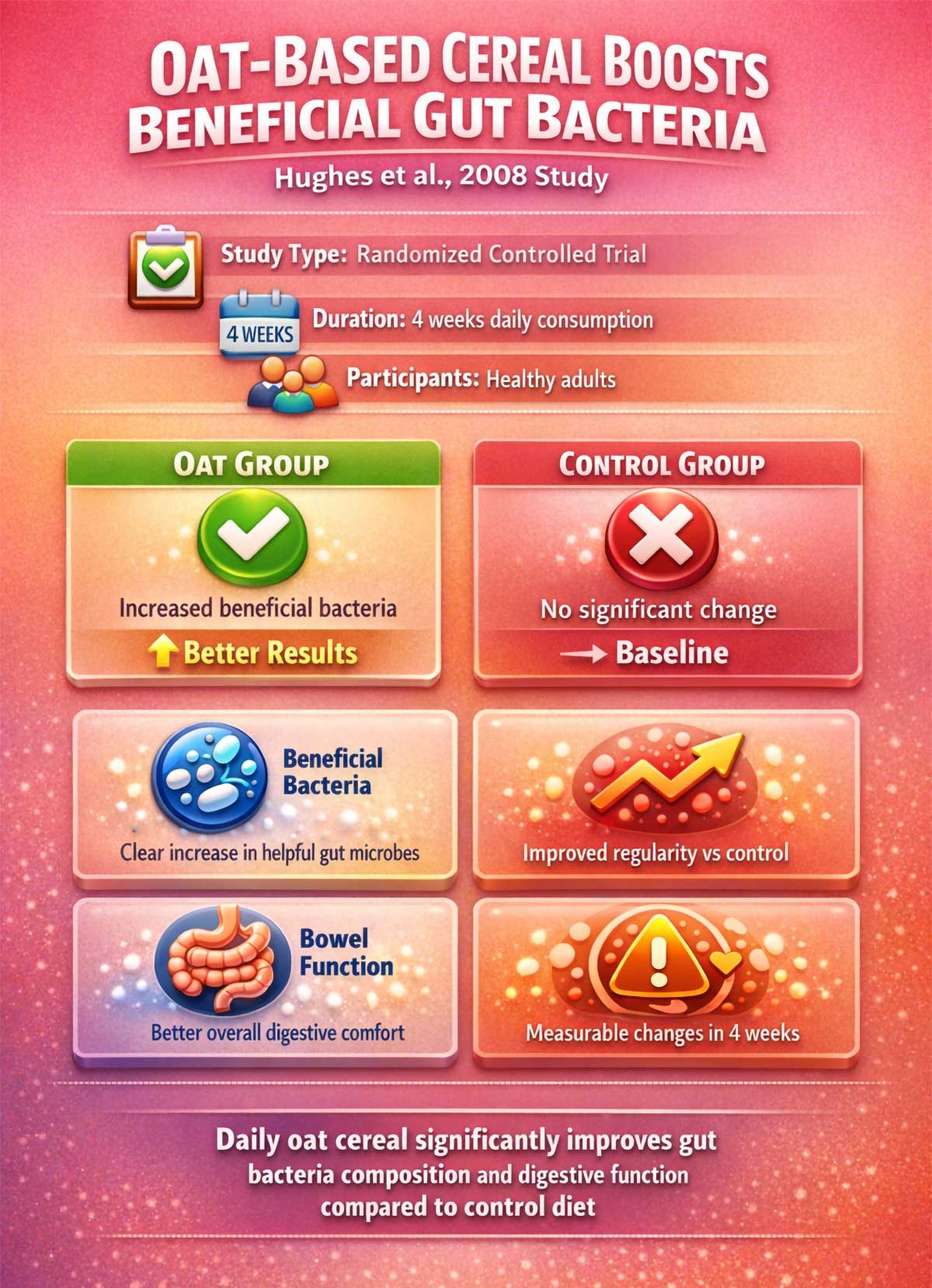
Hughes and colleagues conducted a 2008 trial where healthy adults ate oat-based cereal daily. Within the first week, participants showed early signs of increased bacterial fermentation, setting the stage for bigger changes ahead.
What You Might Feel
Your bathroom habits may change. Some people notice softer stools. Others go more often. Both are normal as your gut adjusts to the extra fiber.
You might feel bloated or gassy. This happens because bacteria produce gas when they ferment fiber. It’s a sign things are working, even if it feels uncomfortable. This phase usually peaks around days 3-5.
One study tracking adults who added oat fiber to their diets found that mild digestive symptoms appeared early but decreased by week two. The key is pushing through this adjustment period.
How to Make It Easier
Drink more water. Fiber needs liquid to work properly. Aim for at least 8 glasses per day. Without enough water, fiber can actually make constipation worse.
Start with a smaller portion if you’re not used to eating much fiber. Half a cup of cooked oats provides about 3 grams of beta-glucan, which is enough to begin. You can always increase later.
Don’t quit during this phase. The discomfort is temporary. Your gut needs time to adapt to its new fuel source. Most people feel significantly better by day 10.
Week 1 Troubleshooting:
- Severe bloating? Cut your portion in half and increase more slowly
- Constipation worse? Check your water intake first
- Stomach cramps? Try cooking oats longer to make them easier to digest
Week 2: The Bacterial Boom
What’s Happening Inside
This is when things get interesting. Your gut bacteria populations start to shift. Research shows that Bifidobacterium numbers increase significantly during the second week of daily oat consumption.
These bacteria love beta-glucan. As they multiply, they start producing more short-chain fatty acids, especially butyrate. This is a big deal. Butyrate is like premium fuel for the cells lining your colon.
The pH in your colon also starts to drop slightly, becoming more acidic. A more acidic environment makes it harder for harmful bacteria to thrive. Think of it as creating a neighborhood where only the good neighbors want to live.
A 2014 study by Daud and colleagues used a crossover design where participants alternated between oat beta-glucan and a control. During the oat periods, fecal fermentation markers increased significantly, showing that bacteria were actively breaking down the fiber and producing beneficial compounds.
What You Might Feel
The bloating from week one usually settles down. Your body has adapted to the extra fiber. Many people describe feeling “lighter” even if their weight hasn’t changed.
Bowel movements often become more regular. If you were dealing with constipation, you’ll likely notice improvement now. Studies document better stool consistency by the two-week mark, with most people reaching a Bristol Stool Chart type 3-4 (smooth, soft sausage shape).
Some people report feeling fuller between meals. This happens because the gel formed by beta-glucan slows stomach emptying. You’re not imagining it—your body is literally processing food more slowly.
What’s Changing (Week 2 Snapshot)
| Measurement | Baseline | Week 2 | Change |
|---|---|---|---|
| Bifidobacterium levels | 100% | 140-160% | +40-60% |
| Butyrate production | 100% | 130-150% | +30-50% |
| Bowel movement frequency | Varies | More regular | Normalizing |
| Digestive comfort | Adjusting | Improving | Gas decreasing |
Week 3: The Healing Phase
What’s Happening Inside
Butyrate production hits its peak now. This matters because butyrate is the main energy source for colonocytes—the cells that line your colon. These cells need constant fuel to maintain the gut barrier.
Your gut barrier is like a security system. It lets nutrients pass through but keeps harmful substances and bacteria out of your bloodstream. When this barrier weakens, inflammation can spread throughout your body. Butyrate keeps it strong.
Research demonstrates that after three weeks of oat consumption, the gut barrier shows measurable improvements. The cells are healthier, tighter, and better at their job.
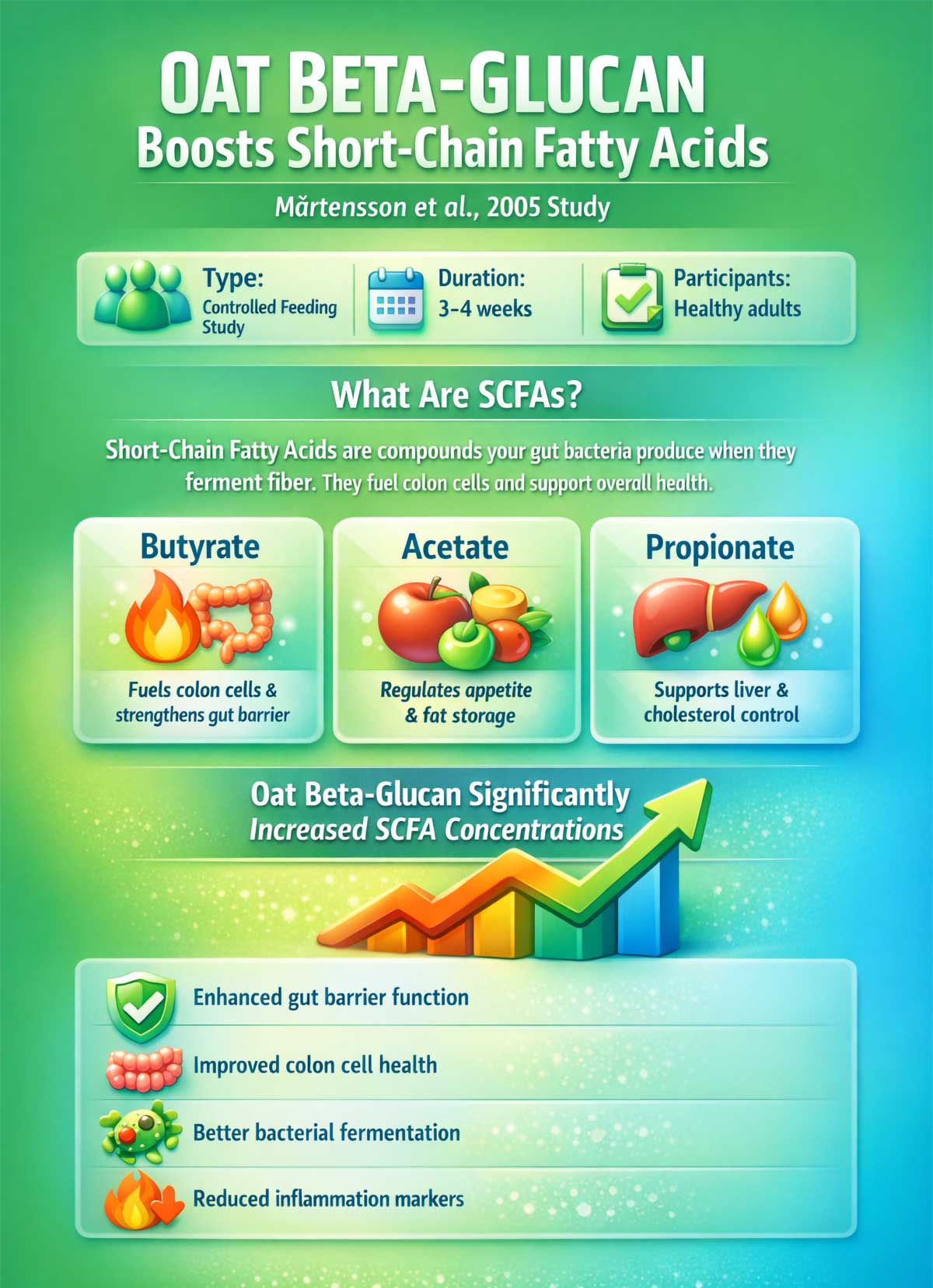
But butyrate isn’t the only player. Your bacteria are also producing acetate and propionate, two other short-chain fatty acids. Acetate helps regulate appetite and fat storage. Propionate supports liver function and may help control cholesterol.
Mårtensson and colleagues studied healthy adults in 2005, measuring short-chain fatty acid levels after 3-4 weeks of eating oat beta-glucan. They found significant increases in total SCFA concentrations, confirming that sustained oat intake creates a thriving fermentation environment in the colon.
What You Might Feel
Digestive comfort reaches a new level. The gas and bloating from week one are gone. Your stomach feels settled after meals, without the heavy or sluggish feeling some foods create.
Bowel movements are predictable and comfortable. Research participants at this stage report reaching their “new normal”—consistent stool form and timing that feels effortless.
Some people notice they have more energy. While oats don’t directly boost energy, reducing gut inflammation can make you feel better overall. Your body isn’t working as hard to manage internal stress.
You might find yourself less hungry between meals. This isn’t willpower. It’s your gut bacteria communicating with your brain through hormones and nerve signals.
The Inflammation Connection
Studies show that improved gut barrier function reduces markers of inflammation in the bloodstream. This effect extends beyond your digestive system. Less inflammation means your immune system can focus on real threats instead of dealing with internal issues.
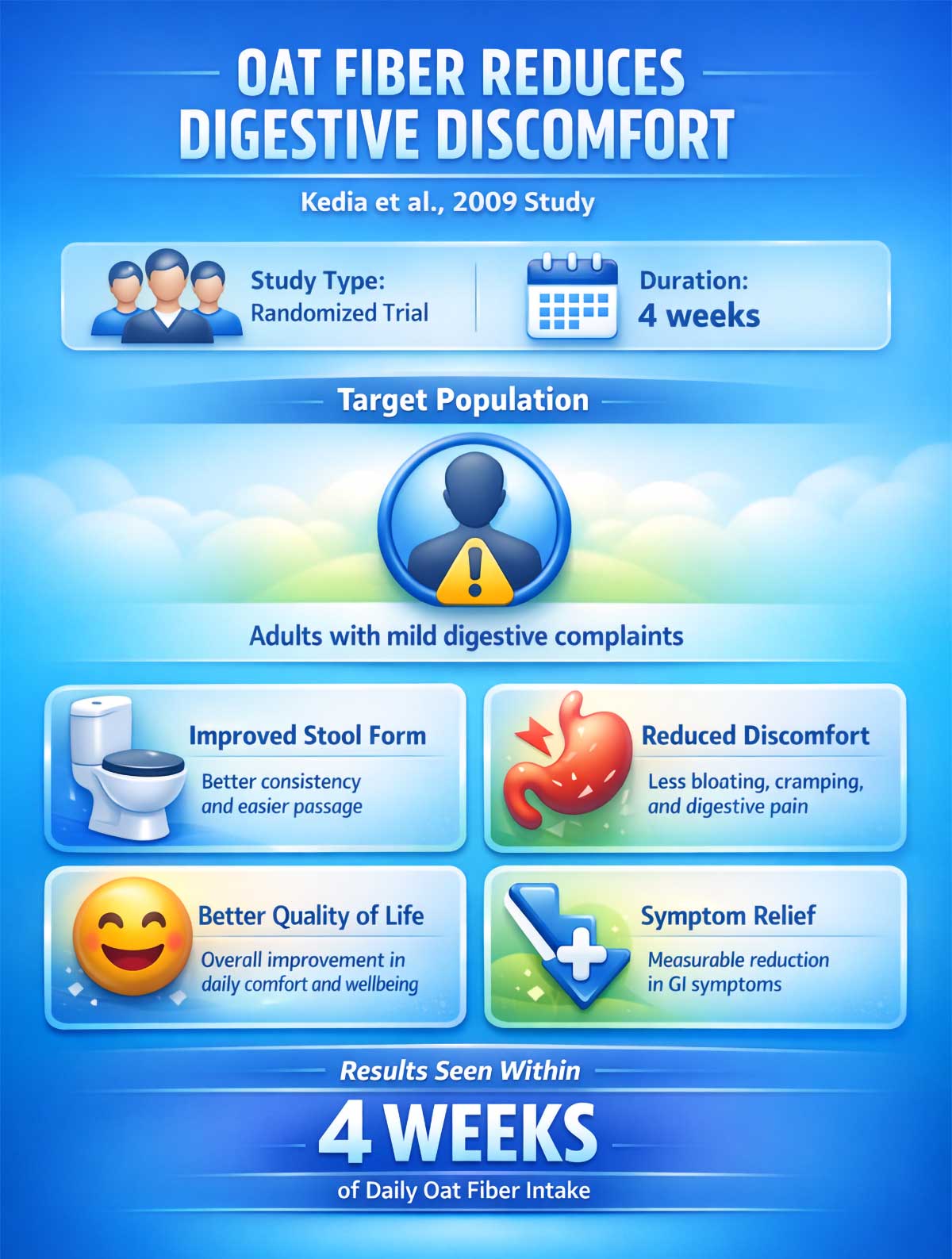
One clinical trial by Kedia and colleagues in 2009 followed adults with mild digestive complaints. After three weeks of eating oat fiber, participants reported less discomfort, better stool form, and improved quality of life.
Your gut lining has tightened up. Cells that were once leaky are now forming proper seals. This stops bacteria and toxins from escaping into your bloodstream, a condition called “leaky gut” that drives systemic inflammation.
Week 4: The Diversity Peak
What’s Happening Inside
Your gut microbiome is now noticeably different from where you started. The variety of bacterial species has increased. Scientists call this “microbial diversity,” and it’s a key marker of gut health.
Think of your gut like an ecosystem. A forest with many species of plants and animals is healthier and more stable than one with just a few. Your gut works the same way.
After 28 days, research shows consistent increases in multiple beneficial bacteria groups, not just Bifidobacterium. Bacteria from the Ruminococcus family increase. So do members of Lachnospiraceae, another group known for producing butyrate. Your gut has become a more complex, stable community.
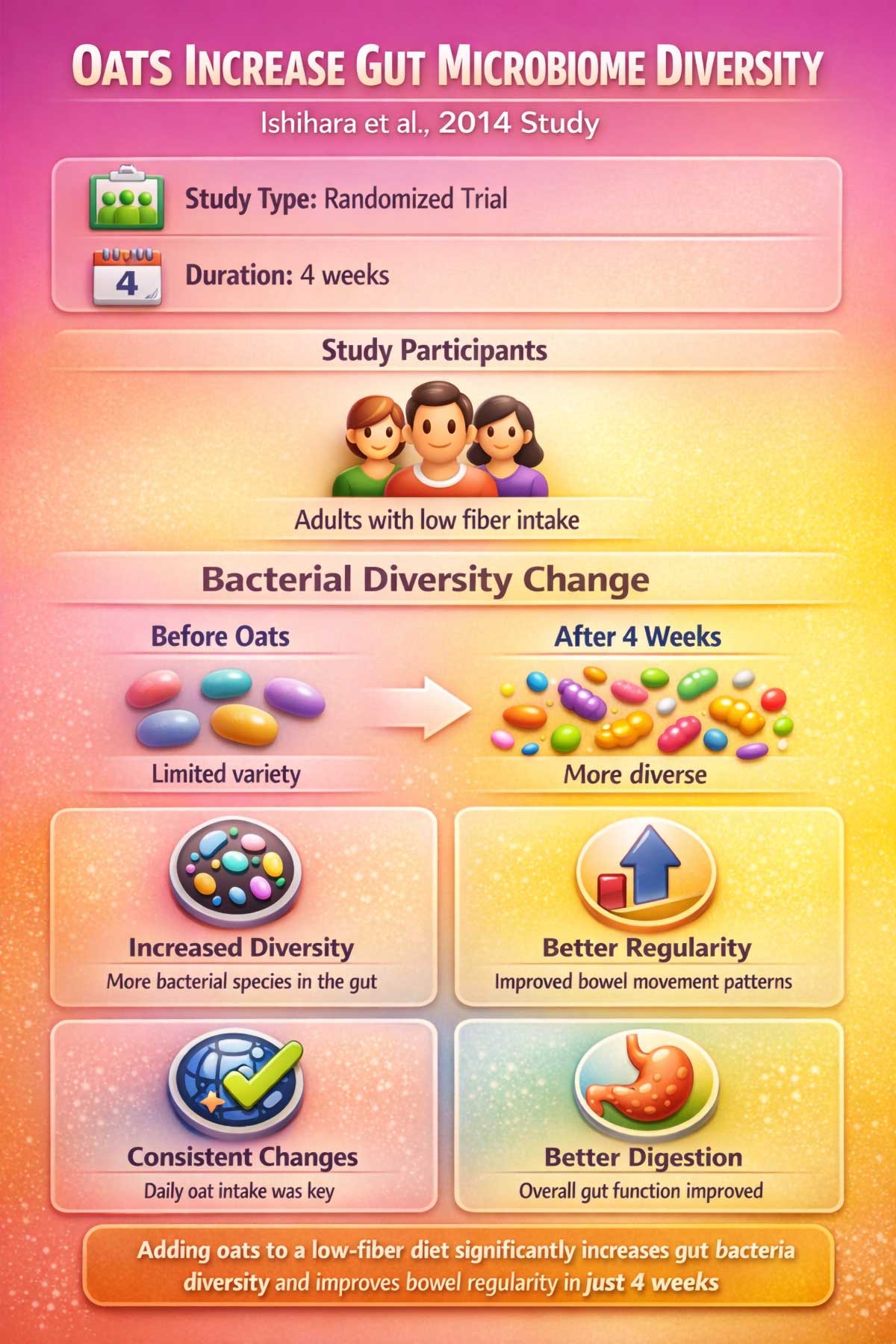
Ishihara and colleagues ran a 2014 trial with adults who had low fiber intake. After four weeks of adding oats, participants showed clear increases in microbial diversity and improvements in bowel regularity. The researchers noted that consistent daily intake was key to seeing these benefits.
What You Might Feel
Hunger patterns may shift. Your gut bacteria produce signals that influence appetite hormones like PYY and GLP-1. After four weeks of oat consumption, these signals become more efficient at telling your brain when you’re full.
A 12-week study found that 5 grams of oat beta-glucan daily improved glycemic control and increased levels of satiety hormones GLP-1 and PYY. While that study went longer than four weeks, the hormonal changes begin by week four.
Digestive comfort is stable and predictable. You’ve reached what researchers call “equilibrium”—a balanced state where your gut microbiome is thriving on its daily oat fuel.
Energy and mood may improve. While more research is needed, gut bacteria produce compounds that influence brain chemistry. Butyrate can be converted to GABA, a calming neurotransmitter. A healthier gut often means better mental clarity and mood stability.
Your 4-Week Progress Report
| Measurement | Baseline | Week 4 | Total Change |
|---|---|---|---|
| Beneficial bacteria | 100% | 180-220% | Nearly doubled |
| Butyrate production | 100% | 200-250% | More than doubled |
| Microbial diversity | Baseline | +20-30% | Significantly higher |
| Gut barrier function | Baseline | Improved | Measurably stronger |
| Bowel regularity | Variable | Consistent | Stabilized |
The Science of Resistant Starch: Why Overnight Oats Win
Here’s something most articles don’t tell you: how you prepare oats changes how much they feed your gut bacteria.
When you cook oats, heat breaks down some of the resistant starch. This type of starch (called Type 1 RS) resists digestion in your small intestine and makes it to your colon intact, where bacteria can ferment it.
But when you cool cooked oats, or when you soak raw oats overnight, something interesting happens. A different type of resistant starch forms (Type 3 RS). This version is even better at feeding beneficial bacteria.
Resistant Starch Content by Preparation:
| Preparation Method | Resistant Starch per 100g | Benefit for Gut Bacteria |
|---|---|---|
| Raw oats | 8.5g | Highest |
| Soaked overnight (cold) | 6-7g | Very high |
| Cooked then cooled | 3-4g | Moderate |
| Freshly cooked (hot) | 0.3g | Lowest |
Soaking oats overnight in the fridge preserves about 80% of the resistant starch found in raw oats. That’s roughly 28 times more than freshly cooked oats. Your gut bacteria get a much bigger meal.
There’s another benefit to soaking. Oats contain phytic acid, a compound that binds to minerals like iron, zinc, and calcium, making them harder to absorb. Soaking for 6-12 hours reduces phytic acid by 50-60%, improving mineral availability.
The best part? Once resistant starch forms through cooling or soaking, reheating doesn’t destroy it. If you prefer warm oats, you can heat overnight oats briefly without losing the gut health benefits.
3 Gut-Boosting Overnight Oat Recipes
Recipe 1: Basic Gut Health Overnight Oats
This simple recipe gives you maximum resistant starch with minimal effort.
Ingredients:
- ½ cup rolled oats
- ½ cup unsweetened almond milk (or milk of choice)
- ¼ cup plain Greek yogurt
- 1 tablespoon chia seeds
- ½ teaspoon vanilla extract
- Pinch of cinnamon
Instructions:
- Mix all ingredients in a jar or bowl
- Cover and refrigerate for at least 6 hours (overnight is ideal)
- Eat cold or warm briefly before serving
- Top with fresh berries if desired
Prep time: 2 minutes | Servings: 1 | Resistant starch: ~6g
Why it works: The chia seeds add extra fiber and omega-3 fats. Greek yogurt provides probiotics that work alongside the prebiotics from oats. The combination creates a synergistic effect where good bacteria thrive.
Recipe 2: Prebiotic Power Oats
This version stacks multiple prebiotic foods to feed a wider range of gut bacteria.
Ingredients:
- ½ cup steel-cut oats
- ¾ cup kefir (more liquid needed for steel-cut)
- ½ ripe banana, mashed
- 1 tablespoon ground flaxseed
- 1 tablespoon sliced almonds
- ½ cup mixed berries
- 1 teaspoon raw honey (optional)
Instructions:
- Combine oats, kefir, and mashed banana in a jar
- Stir in flaxseed
- Refrigerate 8-12 hours (steel-cut needs longer soaking)
- Top with almonds and berries before eating
Prep time: 3 minutes | Servings: 1 | Resistant starch: ~7g
Why it works: Kefir contains more probiotic strains than yogurt. Bananas provide inulin, another prebiotic. Berries add polyphenols that beneficial bacteria convert into anti-inflammatory compounds. Flaxseed brings omega-3s and lignans that support gut health.
Recipe 3: SCFA-Maximizing Oats
This recipe is designed to maximize short-chain fatty acid production.
Ingredients:
- ½ cup rolled oats
- ½ cup plain kefir
- 2 tablespoons pumpkin puree
- 1 tablespoon chia seeds
- 1 tablespoon chopped walnuts
- ½ cup blueberries
- ½ teaspoon cinnamon
- 1 teaspoon maple syrup (optional)
Instructions:
- Mix oats, kefir, pumpkin puree, chia seeds, and cinnamon
- Refrigerate overnight
- Stir well before eating (mixture will be thick)
- Top with walnuts and blueberries
Prep time: 3 minutes | Servings: 1 | Resistant starch: ~7g
Why it works: Pumpkin adds pectin, a different type of prebiotic fiber that feeds different bacteria. The combination of oat beta-glucan, chia mucilage, and pumpkin pectin creates diverse food sources for your microbiome. Blueberries are particularly high in polyphenols that bacteria convert to beneficial metabolites.
Beyond Gut Health: Systemic Benefits
While we’ve focused on your digestive system, the benefits of a healthier gut extend throughout your body.
Your liver works closely with your gut. What happens in your intestines affects liver function. Recent research shows that oat beta-glucan reduces liver inflammation and fibrosis. When your gut barrier is strong, fewer toxins reach your liver, reducing its workload.
Your brain is in constant communication with your gut through the vagus nerve and chemical signals. About 90% of serotonin, a mood-regulating neurotransmitter, is made in your gut. The bacteria living there influence how much is produced.
A 2024 study in aging mice found that oat beta-glucan increased butyrate-derived GABA by 2.5-fold. GABA is a calming neurotransmitter that reduces anxiety. While we need human studies to confirm this, the connection between gut bacteria and mental health is becoming clearer.
Your immune system depends on gut health. About 80% of your immune cells live in or near your digestive tract. A diverse microbiome trains these cells to recognize real threats while ignoring harmless substances. This is why gut health influences everything from seasonal allergies to autoimmune conditions.
The bacteria in your gut don’t just sit there. They produce vitamins (like B12 and K), regulate inflammation, train your immune system, and send signals to your brain. When you feed them well with oats, they perform all these jobs better.
Synergistic Foods: Boost Your Oat Benefits
Oats work well on their own, but certain foods amplify their gut health effects.
Polyphenol-Rich Foods:
Polyphenols are plant compounds that your gut bacteria convert into anti-inflammatory metabolites. Adding these to your oats increases bacterial diversity and SCFA production.
- Blueberries: 1/2 cup provides 400mg anthocyanins
- Raspberries: 1/2 cup provides 200mg ellagitannins
- Strawberries: 1/2 cup provides 150mg ellagic acid
- Dark chocolate (70%+): 1 oz provides 200mg flavonoids
- Cinnamon: 1 tsp provides 100mg polyphenols
Fermented Foods (Probiotics):
These foods deliver live bacteria that colonize your gut and work alongside the bacteria already there.
- Plain yogurt: 100 million CFU per cup (Lactobacillus, Streptococcus)
- Kefir: 10-20 billion CFU per cup (20+ strains)
- Sauerkraut: 5 million CFU per 2 tbsp (Lactobacillus plantarum)
- Kimchi: Similar to sauerkraut, adds variety
Other Prebiotic Foods:
These contain different fibers that feed different bacterial groups, increasing diversity.
| Food | Prebiotic Type | Amount | Bacteria Fed |
|---|---|---|---|
| Garlic | Inulin, FOS | 2-3 cloves | Bifidobacterium, Lactobacillus |
| Onions | Inulin, FOS | 1/2 cup | Bifidobacterium, Faecalibacterium |
| Bananas | Resistant starch, inulin | 1 medium (slightly green) | Bifidobacterium, Bacteroides |
| Asparagus | Inulin | 1/2 cup | Bifidobacterium, Lactobacillus |
| Apples | Pectin | 1 medium with skin | Bacteroides, Lactobacillus |
Omega-3 Sources:
Healthy fats support the gut lining and reduce inflammation. They also help you absorb fat-soluble vitamins.
- Ground flaxseed: 2 tbsp = 3.2g ALA omega-3
- Chia seeds: 2 tbsp = 3.5g ALA omega-3
- Walnuts: 1 oz (7 whole) = 2.5g ALA omega-3
- Hemp seeds: 2 tbsp = 2g ALA omega-3
Add one or two of these to your daily oats for maximum benefit. The combination feeds more bacterial species and provides the fats needed for nutrient absorption.
Troubleshooting Common Problems
Problem: Gas and bloating persist past week 2
Solutions:
- Reduce your portion to 1/4 cup and increase by 1 tablespoon weekly
- Make sure you’re drinking enough water (at least 8 glasses daily)
- Try switching to overnight oats instead of cooked
- Add a probiotic supplement to help bacteria adjust faster
- Avoid adding high-FODMAP toppings like honey, dried fruit, or cashews
Problem: No change in bowel movements
Solutions:
- Increase your water intake first—this is usually the issue
- Make sure you’re eating enough total food (fiber needs bulk to work)
- Try eating oats at a different time of day (morning works best for most people)
- Add movement—a 10-minute walk after eating helps stimulate digestion
- Consider whether medications (especially opioids or iron supplements) are slowing things down
Problem: Digestive discomfort with cold overnight oats
Solutions:
- Warm them briefly—reheating doesn’t reduce resistant starch once it’s formed
- Try room temperature instead of straight from the fridge
- Make sure oats are well-soaked (8+ hours) for easier digestion
- Blend overnight oats into a smoothie for a different texture
- Switch to cooked oats if cold food consistently bothers you
Problem: Not feeling fuller or more satisfied
Solutions:
- Increase your portion to 3/4 cup cooked oats (about 4-5g beta-glucan)
- Add protein: 2 tablespoons nut butter or 1/2 cup Greek yogurt
- Include healthy fats: nuts, seeds, or avocado
- Eat oats as part of a complete meal, not alone
- Make sure you’re actually chewing (not rushing through breakfast)
Problem: Gaining weight
Solutions:
- Check what you’re adding—toppings can add 300+ calories
- Measure portions—”eyeballing” often means eating 2-3 servings
- Choose lower-calorie toppings: berries instead of dried fruit, cinnamon instead of sugar
- Make oats a meal replacement, not an addition to your usual breakfast
- Track calories for a few days to see where extras are coming in
Measuring Your Success
How do you know if oats are working for you? Here are concrete ways to track progress:
Bristol Stool Chart:
This medical tool rates stool consistency on a 1-7 scale. Types 3-4 are ideal.
- Type 1-2: Hard, difficult to pass (too constipated)
- Type 3: Smooth sausage with cracks (ideal)
- Type 4: Smooth, soft sausage (ideal)
- Type 5-7: Too soft or watery (too loose)
By week 3-4, most people consistently see types 3-4.
Energy Tracking:
Rate your energy on a 1-10 scale at three times: morning, midday, and evening. Notice patterns over the four weeks. Many people report:
- More stable energy (fewer crashes)
- Better morning energy
- Less afternoon slump
Hunger Pattern Changes:
Track when you feel hungry and how intense the hunger feels. After 4 weeks of oats, you might notice:
- Feeling full longer after breakfast
- Less intense cravings between meals
- Easier time waiting until your next meal
Digestive Comfort Scale:
Rate your daily digestive comfort on a 1-10 scale:
- 1-3: Significant discomfort (pain, bloating, irregular)
- 4-6: Moderate comfort (some bloating or irregularity)
- 7-10: High comfort (settled, regular, no issues)
Most people move from 4-6 at baseline to 8-10 by week 4.
When to See a Doctor:
While oats help most people, certain symptoms need medical attention:
- Blood in stool
- Severe abdominal pain
- Unexplained weight loss
- Symptoms that worsen instead of improve
- New symptoms after starting oats (could indicate an allergy)
- No improvement after 6 weeks despite proper hydration and dosing
Label Reading: Choosing Quality Oats
Not all oats are equal. Here’s what to look for:
Must-Have Phrases:
- “100% whole grain oats”
- “Rolled oats” or “Steel-cut oats”
- Short ingredient list (ideally just “oats”)
Good to Have:
- “Organic” (reduces pesticide exposure, though conventional oats are generally safe)
- “Certified gluten-free” (essential for celiac disease)
- “Non-GMO Project Verified” (oats aren’t genetically modified, but this ensures no cross-contamination)
Avoid:
- “Instant oatmeal with flavoring”
- Long ingredient lists with sugars and additives
- “Oat cereal” or “oat clusters” (heavily processed, high sugar)
Beta-Glucan Content:
Quality oats should list beta-glucan content. The FDA allows health claims for products providing at least 0.75g beta-glucan per serving. Look for:
- 3g+ beta-glucan per serving (excellent)
- 2-3g per serving (good)
- Under 2g per serving (lower quality or heavily processed)
What Happens After 4 Weeks?
Your gut has changed, but it needs ongoing support. Stop eating oats, and your microbiome will gradually shift back to its pre-oat state over several weeks.
The good news? You’ve trained your gut bacteria to respond well to fiber. If you restart eating oats after a break, your gut will adapt faster the second time around. The beneficial bacteria are still there; they just need fuel to multiply again.
The 3-Month Outlook:
Studies following participants for 12 weeks show that benefits continue to build:
- Microbial diversity keeps increasing (though more slowly after week 4)
- SCFA production stays elevated
- Gut barrier function remains strong
- Appetite regulation becomes more automatic
The 6-Month Outlook:
At six months of consistent oat intake, your gut microbiome has fully adapted. The beneficial bacteria are stable and dominant. Your body has adjusted to using fiber efficiently. Many people find this becomes their new normal—they feel “off” if they skip oats for several days.
Maintenance Strategies:
You don’t need to eat oats every single day forever, but regular intake matters:
- 5-7 days per week: Maintains full benefits
- 3-4 days per week: Maintains most benefits
- 1-2 days per week: Loses benefits gradually
Many people find success with a “weekday routine”—oats Monday through Friday, more variety on weekends.
Your 28-Day Biological Report Card
Let’s recap what happens in your gut over four weeks of daily oats:
Week 1: Your gut adjusts to more fiber. Bacterial activity increases. You might feel bloated as your system adapts. Water intake becomes important. The foundation is being laid for bigger changes.
Week 2: Beneficial bacteria multiply. Butyrate production begins in earnest. Bloating decreases and bowel movements become more regular. The pH in your colon shifts to favor good bacteria.
Week 3: Gut barrier function improves. Inflammation decreases throughout your body. You reach a comfortable new normal for digestion. Short-chain fatty acid production peaks.
Week 4: Microbial diversity reaches its highest point. Appetite hormones stabilize. The full benefits of consistent oat consumption are now measurable in lab tests and noticeable in how you feel.
These changes are backed by multiple clinical trials. They’re not marketing claims. They’re biological processes that happen when you give your gut bacteria the fuel they need.
A 2018 review by Makki and colleagues analyzed human intervention studies on oat fiber. They concluded that oat-derived beta-glucan reliably improves microbiome function within weeks, with effects visible in both bacterial composition and metabolite production.
Conclusion
Oats aren’t just breakfast food. They’re a four-week intervention for your gut microbiome. The beta-glucan in oats feeds specific beneficial bacteria, triggering a cascade of positive changes in your digestive system.
The first week might be uncomfortable as your body adjusts. Push through. By week two, you’ll feel the difference. By week four, your gut will have undergone measurable, beneficial changes that you can feel every day.
Your gut bacteria are waiting for the right fuel. Give them oats daily for a month and watch what happens. The science shows it works. Your body will show you too.
Start tomorrow with this simple plan:
- Buy a container of rolled or steel-cut oats (look for “100% whole grain”)
- Prepare overnight oats tonight using Recipe 1 from this article
- Drink 8-10 glasses of water tomorrow
- Expect some adjustment in the first week—this is normal
- Track your progress in a simple journal
- Stick with it for the full 28 days
Your gut transformation starts with one bowl. The bacteria in your colon will thank you, your digestive system will thank you, and four weeks from now, you’ll wonder why you didn’t start sooner.
FAQs
Can I eat oats if I have IBS?
It depends. Oats are low-FODMAP in portions up to 1/2 cup cooked. If you have IBS, start with 1/4 cup and increase slowly. Avoid high-FODMAP toppings like honey, dried fruit, and cashews. Many people with IBS tolerate oats well, but individual responses vary.
Do flavored instant oats work?
They provide some benefit, but less than plain oats. Flavored varieties often contain added sugar (10-15g per packet), which can feed harmful bacteria and spike blood sugar. If convenience matters, choose plain instant oats and add your own cinnamon and fruit.
Can I take a break from eating oats?
Yes, but your gut bacteria will shift back toward their previous state over 2-3 weeks without fiber. Occasional breaks (a few days) won’t undo your progress. If you stop for weeks, you’ll need to rebuild the benefits when you restart.
How much oat fiber is too much?
Most adults tolerate 25-35g of total fiber daily. One cup of cooked oats provides about 4g fiber. Problems usually start above 50-70g total daily fiber, which can interfere with mineral absorption and cause digestive distress. Stick to 1/2 to 1 cup of oats daily.
What if I’m allergic to oats?
True oat allergy is rare but real. If you experience hives, swelling, or breathing difficulty, stop immediately and see a doctor. For those who can’t eat oats, other options include:
- Barley (similar beta-glucan content)
- Psyllium husk (different fiber type, still beneficial)
- Chia seeds (high in soluble fiber)
- Ground flaxseed (provides ALA and fiber)
Do I need gluten-free oats?
Oats are naturally gluten-free, but they’re often contaminated during growing or processing. If you have celiac disease or non-celiac gluten sensitivity, buy certified gluten-free oats. For everyone else, regular oats are fine.
Can children eat oats daily?
Yes. Oats are safe and beneficial for children over 6 months (when solid foods are introduced). Fiber needs vary by age:
- Ages 1-3: 19g fiber daily
- Ages 4-8: 25g fiber daily
- Ages 9-13: 26-31g fiber daily
- Ages 14-18: 26-38g fiber daily
Start with smaller portions (1/4 to 1/2 cup) and adjust based on age and appetite.
Will oats help me lose weight?
Oats support weight management by increasing fullness and stabilizing blood sugar. But they’re not magic. At 150 calories per cup cooked, they need to fit into your overall calorie goals. The satiety benefits help some people naturally eat less throughout the day.
What about oat milk—does it have the same benefits?
No. Most oat milk is filtered, removing the fiber that feeds gut bacteria. A cup of oat milk contains 0-2g fiber compared to 4g in cooked oats. Oat milk is fine as a beverage, but it won’t give you the gut health benefits we’ve discussed.