Some teas may genuinely support kidney health, while others can be surprisingly dangerous. The research reveals which belong in each group, and why.
Every few months, a new “kidney cleanse” tea hits the market with claims that would satisfy a medieval alchemist. Flush toxins. Purify your blood. Restore function. The products are almost uniformly useless, and a handful are genuinely dangerous.
What gets lost in all of it is a more interesting truth: some teas do have real, peer-reviewed evidence behind them for kidney protection, and the mechanisms are specific enough to matter.
Your kidneys don’t accumulate toxins the way a drain collects hair. They filter continuously, around the clock, processing approximately 200 liters of blood per day. What actually damages them is slower and less dramatic: sustained high blood pressure grinding away at the tiny vessels inside, oxidative stress accumulating in kidney tissue, chronic inflammation from metabolic disease. Those are the things certain teas can address. Not through cleansing. Through chemistry.
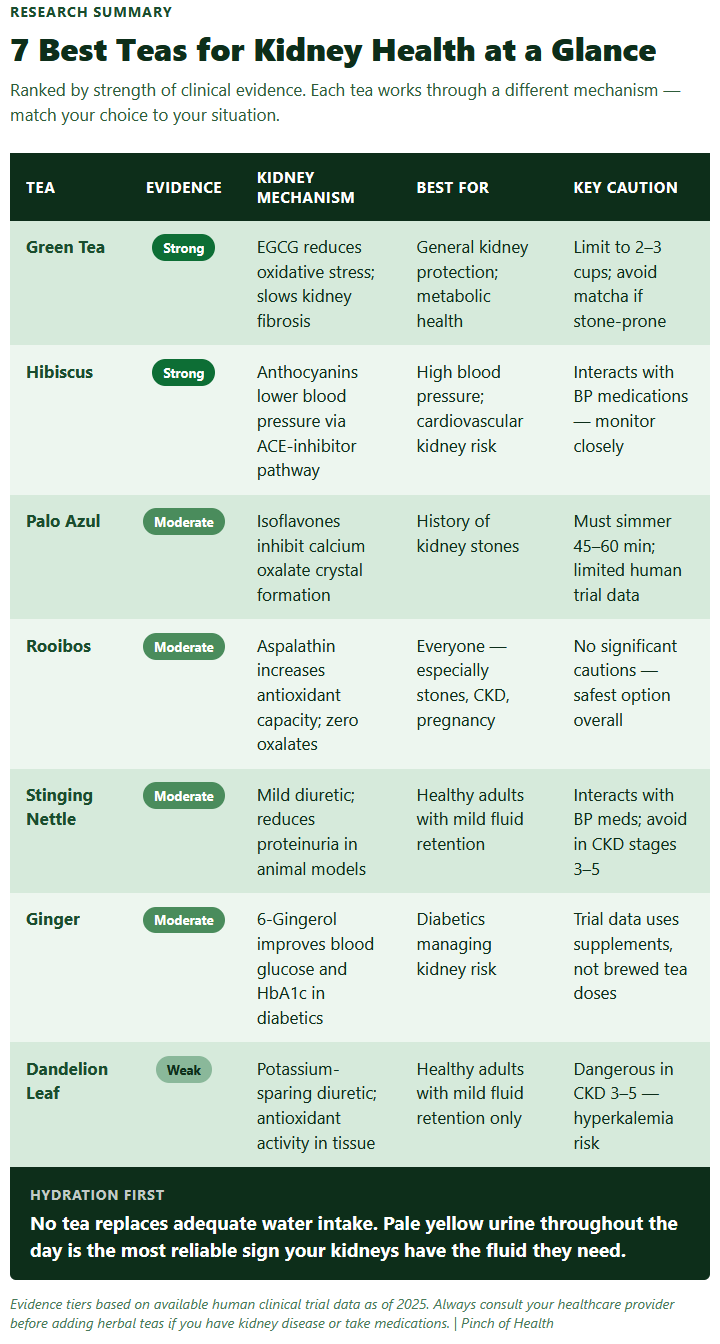
This guide covers the seven kidney teas with credible clinical support, ranked by evidence strength. It also covers the ones that can send you to the emergency room, and that list is longer than most people expect.
What Your Kidneys Actually Need (And Don’t)
The phrase “kidney detox” is marketing language, not physiology. The kidneys are the detox system. They don’t need help clearing toxins. They need protection from the things that damage them over time.
Three factors account for the vast majority of chronic kidney damage. High blood pressure is the most significant: it damages the delicate capillary networks inside the kidneys over years, causing scarring and progressive loss of filtration capacity.
Oxidative stress, driven by free radicals that outpace the body’s antioxidant defenses, directly injures kidney cell membranes. Chronic low-grade inflammation, often tied to metabolic disease, accelerates both processes.
This matters for evaluating kidney teas. The teas with the best evidence aren’t doing something exotic. They’re addressing one or more of those three mechanisms through compounds that have been measured in clinical settings. The ones that don’t have evidence for any of the three are, at best, harmless hot water.
The 7 Best Teas for Kidney Health, Ranked by Evidence
1. Green Tea: Strongest Overall Evidence
Green tea earns the top position because its active compound, EGCG (epigallocatechin gallate), has been studied more thoroughly in relation to kidney function than any other tea constituent. EGCG reduces oxidative stress in kidney tissue, modulates inflammatory signaling, and appears to slow the fibrosis process that drives progressive kidney damage.
The human evidence is genuine, if not perfectly tidy. A large Japanese cohort study published in Environmental Health and Preventive Medicine in 2025 followed 110,585 adults over a median 19 years and found that women drinking three or more cups of green tea daily had a statistically significant reduction in CKD mortality risk, with hazard ratios in the range of 0.55–0.56 compared to light drinkers. The effect was not significant in men, which researchers have not fully explained.
A separate 2020 finding from the American Journal of Clinical Nutrition found regular green tea consumption was associated with a 17% lower risk of impaired kidney function over follow-up. Neither study proves causation, but they’re consistent with mechanistic data showing EGCG protecting kidney cells from oxidative injury.
One caution that most green tea coverage underplays: the dose-response gap. Studies typically use concentrations of EGCG achievable through brewed tea, but matcha is a different story. Matcha is powdered whole-leaf tea, so you consume the entire leaf rather than a brewed extract. It carries substantially higher oxalate loads, and concentrated green tea extract supplements have caused acute liver injury at therapeutic doses.
If you’re drinking brewed green tea, two to three cups daily is the range that aligns with human data. If you’re considering green tea extract capsules, there’s a meaningful difference in risk profile.
Brew at 160–175°F for three to four minutes. Boiling water extracts more bitterness than EGCG. Add lemon: the citrate it provides can reduce calcium oxalate crystal formation, which matters if kidney stones are a concern for you.
Best for: General kidney protection, metabolic health, oxidative stress reduction.

2. Hibiscus Tea: Strongest Blood Pressure Evidence
Hibiscus has a better clinical trial record for blood pressure reduction than any other herbal tea, and that matters directly for kidneys. Sustained high blood pressure is the second-leading cause of kidney failure, and the capillary damage it causes is cumulative and largely silent until function is already significantly compromised.
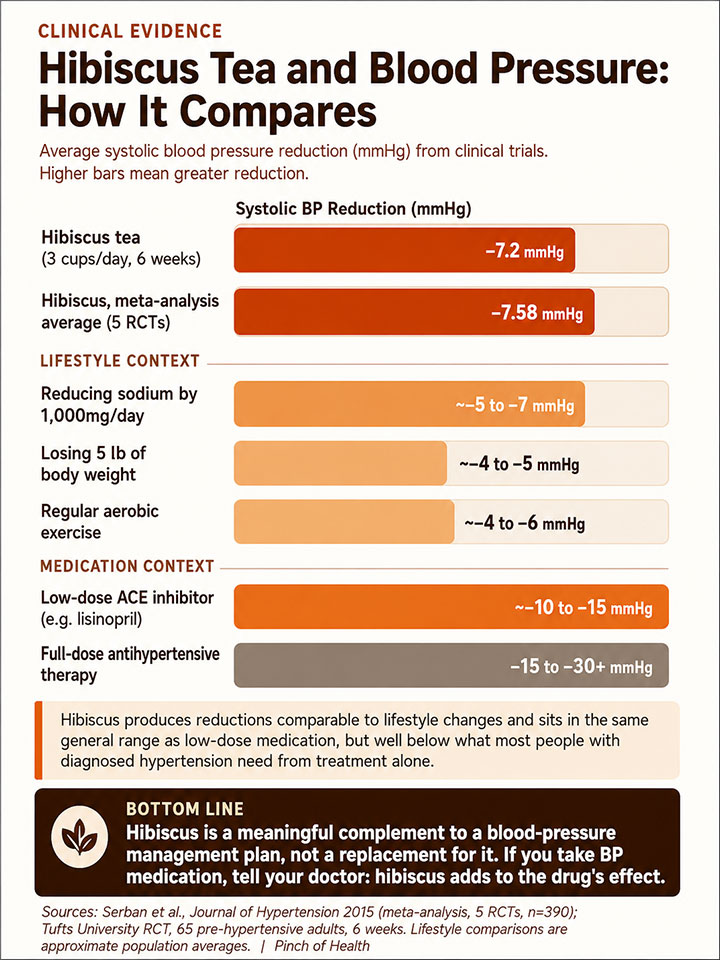
What’s interesting about the clinical data is that the comparison point researchers keep reaching for isn’t lifestyle change. It’s medication. A 2015 systematic review in the Journal of Hypertension, pooling five randomized controlled trials with 390 participants, found systolic blood pressure reductions of 7.58 mmHg and diastolic reductions of 3.53 mmHg, numbers that put hibiscus in the same conversation, if not the same league, as low-dose ACE inhibitors.
A more recent 2022 meta-analysis in Nutrition Reviews confirmed the effect across 19 trials and found it was largest in people with elevated baseline blood pressure. The mechanism appears to involve anthocyanins acting on angiotensin-converting enzyme (ACE), similar in principle to those medications, though substantially weaker in magnitude.
That last point is the one most “hibiscus for blood pressure” articles skip: a 7 mmHg reduction is clinically meaningful as a complement to other lifestyle measures, but it is nowhere near the reduction most patients with diagnosed hypertension need. If you are on blood pressure medication, hibiscus can interact with it by adding to its effect. That’s not a reason to avoid hibiscus. It’s a reason to mention it to whoever manages your blood pressure.
Use one to two teaspoons of dried hibiscus calyces per cup and steep five to ten minutes. The flavor is tart, similar to cranberry. Drink through a straw or rinse your mouth afterward, as the acidity can affect enamel over time.
Best for: Blood pressure management, cardiovascular and kidney protection, general antioxidant support.
3. Palo Azul Tea: Best for Kidney Stone Prevention
Palo Azul (Eysenhardtia polystachya, sometimes called kidneywood) is a traditional Mexican remedy that flies below the radar in English-language health writing. Its claim to kidney relevance is specific and more interesting than the usual “antioxidant support” pitch: the isoflavones in its bark appear to inhibit calcium oxalate crystal formation and aggregation, which is the mechanism behind the most common type of kidney stone.
The research base is real, if modest. Studies published between 2002 and 2004 on Eysenhardtia polystachya isoflavones demonstrated inhibition of calcium oxalate and calcium phosphate crystal growth and aggregation in laboratory models.
Animal studies confirm anti-urolithiatic effects. Large-scale human trials haven’t been completed, which means this sits at a lower evidence tier than green tea or hibiscus. What makes Palo Azul worth including is that its mechanism is specific to the problem (stone prevention, not a generic antioxidant claim), its safety profile in traditional use is long, and its oxalate content is minimal, which makes it one of the safer teas for people who form stones.
The preparation is non-negotiable: you can’t steep Palo Azul in hot water and expect much from it. Simmer approximately one ounce of bark chips per gallon of water for 45 to 60 minutes. The active compounds require sustained heat to extract.
Quality check: properly brewed Palo Azul will produce a faint fluorescent blue glow under a UV blacklight, a result of the flavonoids unique to this plant. If it doesn’t glow, the product quality or preparation is off.
Best for: People with a history of calcium oxalate kidney stones.
4. Rooibos Tea: Safest Option for Almost Everyone
Rooibos wins the safety category by a large margin. It contains zero oxalates, zero caffeine, and very low tannins, which means it places essentially no demands on kidney physiology. For anyone with kidney stones, caffeine sensitivity, advanced CKD, or who is pregnant, rooibos is the default recommendation, and unlike most defaults, it’s one that’s hard to argue with.
What’s less widely known is that the evidence for active benefit is now accumulating. A 2024 systematic review in the journal Beverages, covering eight human intervention studies with 175 participants, found consistent antioxidant improvements: rooibos increases plasma total antioxidant capacity in both healthy adults and those with chronic conditions.
The review also confirmed no adverse effects at any dose tested. Rooibos contains aspalathin, a rare antioxidant found almost exclusively in this plant, which in animal studies protects kidney cells from toxin-induced oxidative damage. Human data directly on kidney function is still limited, so this is a promising-but-incomplete picture rather than a proven effect.
Best for: Everyone, particularly people with kidney stones, CKD, caffeine sensitivity, or pregnancy.
Think of rooibos the way you’d think of a seatbelt: the benefit isn’t dramatic under normal conditions, but it’s real, the downside risk is essentially zero, and consistency matters more than intensity.
Steep five to seven minutes in fully boiling water. Unlike green tea, rooibos doesn’t become bitter with longer steeping, so ten to fifteen minutes is fine if you want stronger flavor.
5. Stinging Nettle Leaf Tea: Mild Diuretic Support
Nettle leaf (not root, a distinction that matters, as the two have different applications) has a long history as a kidney tonic across multiple traditional medicine systems. The modern evidence is more modest than the tradition suggests.
Nettle acts as a mild diuretic, increasing urinary output without causing the potassium loss that pharmaceutical diuretics produce. Several animal studies demonstrate antioxidant and anti-inflammatory effects in kidney tissue, and some animal research shows reductions in proteinuria (protein in the urine, an early marker of kidney damage).
Human clinical trials specifically on kidney outcomes are sparse. For nettle, that matters more than it does for rooibos, because rooibos’s case rests largely on safety, which requires less clinical proof of concept. Nettle asks you to trust a diuretic effect in a context where the wrong diuretic can shift electrolytes in ways your kidneys may not tolerate.
The caution here is meaningful: nettle interacts with blood pressure medications, diuretics, and blood thinners. For people with early-stage CKD, even mild diuretic effects can shift electrolyte balance in ways that require monitoring.
Anyone with kidney disease stages 3 through 5 should discuss nettle with their nephrologist before using it. For healthy adults with mild fluid retention or those simply looking for a kidney-supportive herbal, it’s a reasonable choice at moderate intake.
Best for: Healthy adults with mild fluid retention, urinary tract support.
6. Ginger Tea: Indirect Protection Through Metabolic Health
Ginger doesn’t target the kidneys directly. It targets the metabolic conditions that cause kidney damage over time. That’s a genuine distinction, and it’s why ginger appears in the evidence-based list rather than the traditional-use-only list.
A 2019 meta-analysis in Medicine pulled together eight randomized controlled trials involving 454 diabetic patients and found that ginger supplementation produced significant reductions in fasting blood glucose and HbA1c compared to control groups.
The compounds responsible (6-gingerol and 6-shogaol) reduce both oxidative stress and inflammatory signaling, two of the primary drivers of diabetic kidney disease. Since diabetes is the leading single cause of chronic kidney disease globally, a tea that meaningfully improves glycemic control in diabetics has a credible case for kidney relevance even without direct nephroprotection trials.
The honest caveat: most of those trials used concentrated ginger supplements rather than brewed tea. The active compounds in a cup of fresh ginger tea are real, but whether two cups daily replicates the effects seen in clinical dose studies hasn’t been directly established. The benefit is plausible, but the magnitude in everyday tea form is uncertain.
Slice a one-inch piece of peeled fresh ginger and steep in near-boiling water for ten minutes. Dried powder works but delivers less 6-gingerol per gram. Add lemon for citrate.
7. Dandelion Leaf Tea: A Significant Warning Comes First
Dandelion leaf rounds out the list, and it does so with an asterisk that belongs up front rather than buried in a warning box.
For healthy people, dandelion leaf is a natural diuretic with a specific advantage over pharmaceutical diuretics: it’s potassium-rich, so it doesn’t deplete the potassium that conventional diuretics strip out. Animal studies show antioxidant activity in kidney tissue. It’s a reasonable occasional choice for healthy adults with mild fluid retention, used in moderation.
For people with chronic kidney disease, particularly stages 3 through 5, dandelion leaf can be genuinely dangerous. Damaged kidneys cannot excrete potassium efficiently. Hyperkalemia (elevated blood potassium) causes cardiac arrhythmias and, at sufficient levels, cardiac arrest.
Dandelion leaf adds a potassium load to a system that can’t manage excess. This isn’t a theoretical risk. It’s a documented clinical concern with potassium-rich herbal teas in CKD patients.
The human research supporting dandelion for kidney health specifically is very limited. Use it only if your kidneys are healthy and your potassium regulation is normal, and avoid it entirely if you take ACE inhibitors, ARBs, or potassium-sparing diuretics, which already increase potassium retention.
Best for: Healthy adults only. Do not use with CKD stages 3–5 or potassium-altering medications.
Oxalate Content: The Stone Former’s Guide
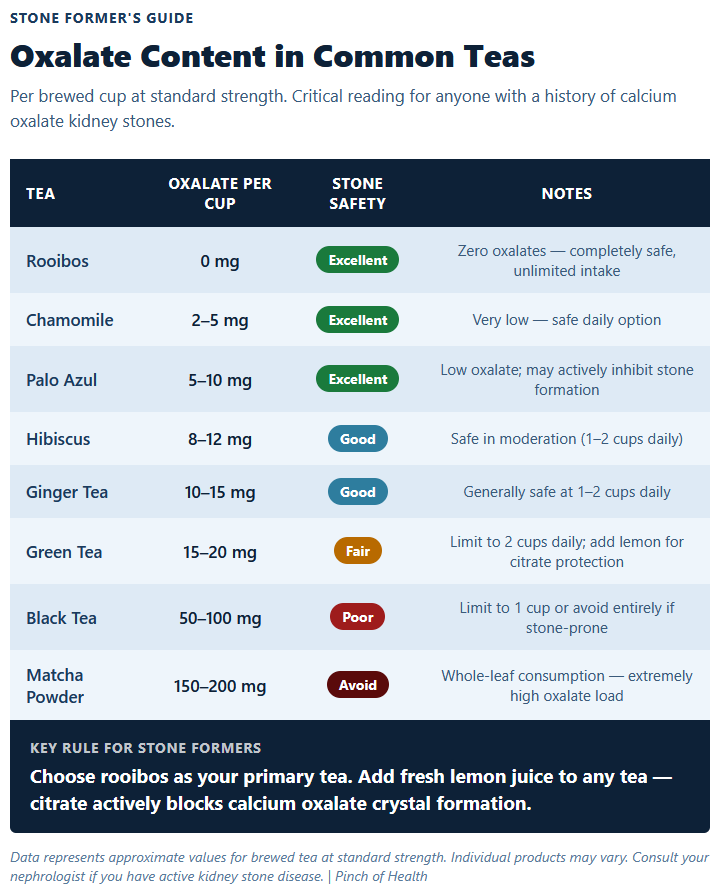
If you’ve had a calcium oxalate kidney stone, oxalate content in tea is not a minor consideration. High oxalate intake concentrates oxalate in the urine, where it binds calcium and forms crystals. The numbers below are per brewed cup of standard strength.
The practical rules: stick to rooibos as your primary beverage if you form stones. Chamomile and Palo Azul are also stone-safe options. Green tea in reasonable amounts (one to two cups daily) is manageable for most stone formers.
Black tea and matcha are the drinks to avoid: black tea carries 50 to 100mg of oxalate per cup, and matcha runs substantially higher due to whole-leaf consumption. Adding lemon juice to any tea you drink provides citrate, which actively inhibits calcium oxalate crystal formation.
The Danger Zone: Teas That Can Harm Your Kidneys
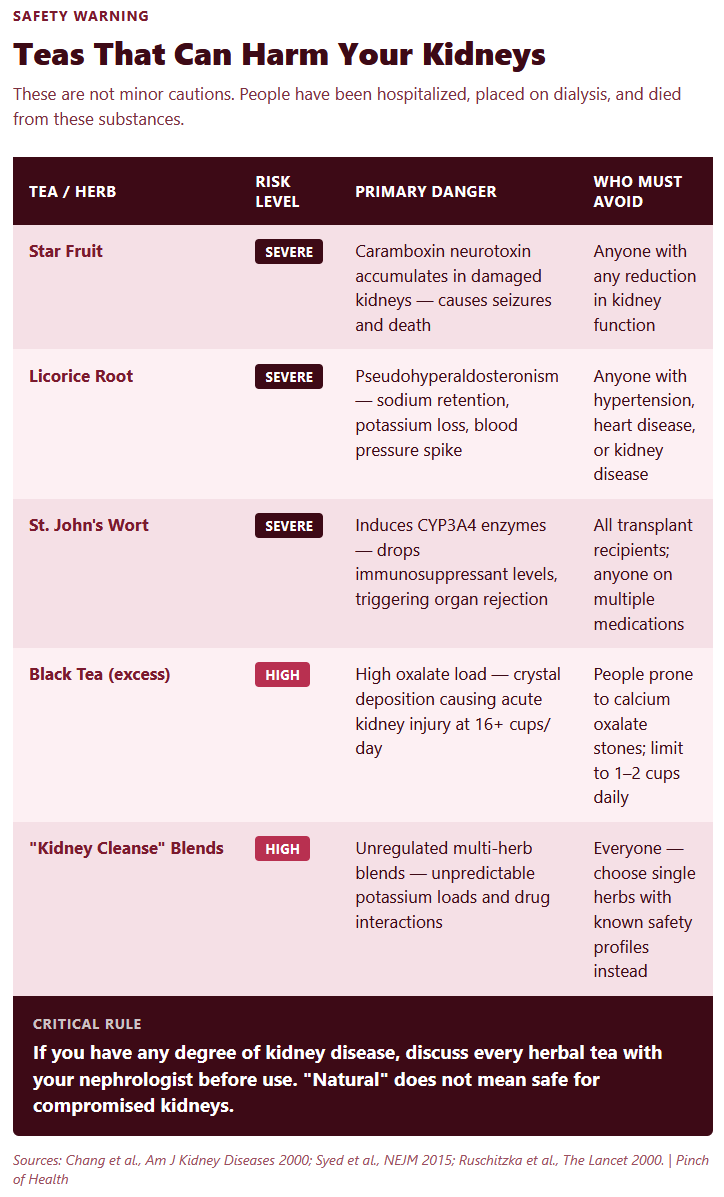
The following are not minor cautions: people have been hospitalized, placed on dialysis, and died from these.
Star Fruit Tea
Star fruit contains a neurotoxin called caramboxin that healthy kidneys filter without incident. Kidneys that don’t function normally cannot clear it. The toxin accumulates, crosses into the central nervous system, and causes hiccups, confusion, seizures, and death.
You don’t need advanced kidney failure for this to be a risk: patients with creatinine levels as low as 6.4 mg/dL have died from star fruit consumption despite emergency dialysis. A 2000 case series in the American Journal of Kidney Diseases documented 20 patients who developed neurological symptoms after eating star fruit. Eight of them died within five days despite intensive treatment. Avoid entirely if there is any known reduction in kidney function.
Licorice Root Tea
Licorice contains glycyrrhizin, which causes pseudohyperaldosteronism: the body retains sodium and loses potassium, blood pressure rises, and edema develops. Documented case reports describe people developing dangerous hypertension and acute kidney injury from regular licorice tea consumption. Anyone with high blood pressure, heart disease, or kidney disease should avoid licorice root entirely, and even healthy people shouldn’t drink it in quantity.
St. John’s Wort Tea
St. John’s Wort is one of the most potent drug-interaction herbs in common use. It induces CYP3A4 enzymes and increases P-glycoprotein activity, which accelerates the metabolism and reduces the blood concentration of dozens of medications. For kidney transplant recipients, this is potentially fatal: the immunosuppressants tacrolimus and cyclosporine both rely on CYP3A4 for clearance.
When St. John’s Wort drives CYP3A4 activity higher, immunosuppressant levels drop, and the kidney can reject. A 2000 report in The Lancet documented two heart transplant patients who experienced acute rejection directly attributable to St. John’s Wort use. Subsequent case series have confirmed the same pattern in kidney and liver recipients. Transplant patients should treat this as an absolute prohibition.
Excessive Black Tea
Black tea isn’t categorically dangerous, but the quantity ceiling matters more than most people realize. A case report in the New England Journal of Medicine in 2015 described a 56-year-old man who developed permanent kidney failure traced to a habit of drinking 16 large glasses of iced black tea daily.
His daily oxalate intake exceeded 1,500mg, between three and ten times the average American intake. His kidneys failed from oxalate crystal deposition. The lesson is not to avoid black tea. One to two cups per day poses minimal risk to healthy kidneys. It’s to understand that concentration and quantity matter in ways the “tea is healthy” general narrative often glosses over.
Unregulated “Kidney Cleanse” Blends
Products marketed specifically as kidney cleanses or detox blends frequently combine multiple diuretic herbs, potassium-rich plants, and ingredients with no disclosed research profile. The FDA does not evaluate these products before they reach shelves.
Several have caused documented electrolyte imbalances and acute kidney injury. If you want herbal kidney support, choose single herbs with known safety profiles and established preparation methods rather than commercial blends with opaque ingredient lists.
Matching the Right Kidney Tea to Your Situation
Healthy Kidneys
You have the widest range of options and the lowest risk profile. Green tea at two to three cups daily offers the strongest evidence for long-term kidney protection. Hibiscus adds blood pressure support, particularly relevant if yours runs on the higher end of normal. Rooibos is an unlimited, zero-oxalate baseline. Rotating among these three gives you breadth without over-relying on any single compound.
History of Kidney Stones
Oxalate content drives your choices. Rooibos is unlimited. Chamomile and Palo Azul are stone-safe. Limit green tea to one to two cups daily. Eliminate black tea and matcha. Drink 2.5 to 3 liters of total fluids daily and add fresh lemon juice to water and tea, because the citrate is more protective than the tea itself.
Early-Stage CKD (Stages 1–2, GFR 60–90)
Rooibos and chamomile are your safest defaults. Hibiscus is reasonable if you’re not already on ACE inhibitors or ARBs. Green tea at one to two cups is generally well-tolerated. Avoid diuretic teas (nettle, dandelion) without nephrologist approval, as even mild diuresis can shift electrolytes in ways that matter at this stage.
Advanced CKD (Stages 3–5, GFR Below 60)
Rooibos, with medical approval, is the only tea in this article with a broad green light for this group. Everything else requires nephrologist sign-off, including chamomile. Star fruit is fatal. Licorice causes fluid retention. Dandelion, nettle, and Java tea add potassium the kidneys can’t clear. Count all tea toward your daily fluid allowance if you’re on restriction.
Kidney Transplant Recipients
The constraint here isn’t just which teas are safe. It’s what happens when they aren’t. St. John’s Wort lowers immunosuppressant blood levels. At sufficient reduction, the transplanted kidney rejects. That’s not a theoretical risk. It’s documented in transplant literature going back to 2000. Treat it as an absolute prohibition.
Any tea marketed as “immune boosting” works against the pharmacological goal of transplant care by design. Rooibos, chamomile, and limited green tea (one cup daily) are generally low-risk, but the conversation with your transplant team is not optional before adding anything new. The consequences of drug interactions at this stage aren’t always reversible.
The Real Truth About “Kidney Cleanse” Products
The marketing of kidney cleanse products relies on a misunderstanding that has proven remarkably durable: that toxins accumulate in the kidneys the way sediment settles in a pipe, and that periodic flushing removes the buildup. That’s not how kidneys work. Healthy kidneys filter continuously and don’t hold toxins between sessions. There is no accumulated waste to flush.
What kidney-supportive teas can legitimately do is different: protect the tissue that performs that continuous filtration from the blood pressure damage, oxidative stress, and inflammation that degrade it over time.
That’s a real benefit, but it’s a maintenance benefit, not a cleansing one. The distinction matters because people with actual kidney damage sometimes substitute cleanse products for medical care, and that substitution has consequences.
Adequate hydration is a more direct kidney intervention than any tea. The kidneys need sufficient water to concentrate and excrete waste products efficiently. Pale yellow urine is the practical target. Teas that increase your total fluid intake contribute to that goal. Teas that promise to “flush” something specific do not deliver what the label suggests.
Tea and Medication Interactions: The Essentials
Herbal teas are pharmacologically active. They contain compounds that bind receptors, affect enzyme systems, and alter how the body absorbs and clears medications. Most of the time, at normal intake, this doesn’t matter. In certain combinations, it does.
Green tea reduces iron absorption by up to 60% when consumed around the same time as iron supplements, so separate them by two to three hours. Hibiscus has ACE-inhibitor-like effects, so if you take ACE inhibitors or ARBs, your blood pressure could drop more than intended.
Ginger has mild anticoagulant properties that can compound the effect of warfarin. St. John’s Wort interacts with more medications than most people realize, including statins, oral contraceptives, and most immunosuppressants. Dandelion interacts with diuretics and potassium-sparing medications.
The general rule is simple: if you take any regular medications and you’re considering adding herbal teas, mention it to whoever manages your prescriptions. This is especially important for anyone on immunosuppressants, blood thinners, or blood pressure medications.
Tea and Medication Safety Checker
Select your teas and current medications to check for potential interactions.
Conclusion
The most useful framing for kidney tea isn’t “which one should I drink” but “what am I trying to protect against.” Green tea’s case rests on oxidative stress reduction and the human cohort data. Hibiscus’s case rests on blood pressure.
Rooibos’s case rests on safety. Each works through a different mechanism, against a different risk factor, for a different type of kidney concern. Picking the right one depends on knowing something about your own situation, which is why the conversation with your doctor matters more than any single article can deliver.
What a well-chosen kidney tea can do is add a genuine, low-cost layer of protection to a kidney-friendly lifestyle. What it can’t do is substitute for one.
Frequently Asked Questions
Is there a tea that cleanses the kidneys?
No tea cleanses kidneys in any meaningful biological sense, because the kidneys don’t accumulate toxins that require periodic removal. They filter continuously. Teas marketed as “kidney cleanse” products are selling a solution to a problem that doesn’t exist. What some teas can do is reduce blood pressure, oxidative stress, and inflammation that damage kidney tissue over time. That’s protective, not cleansing, and the distinction affects which teas are worth your attention.
What is the best morning tea for kidneys?
Green tea with a squeeze of lemon is the most evidence-supported morning choice for general kidney health. The EGCG provides antioxidant protection and the lemon adds citrate, which reduces calcium oxalate crystal formation. If you’re sensitive to caffeine or have a history of kidney stones, unsweetened rooibos with lemon is a better morning option: zero oxalates, no caffeine, and a consistent antioxidant profile in human studies.
What’s the fastest way to flush your kidneys?
Adequate water intake is more effective at optimizing kidney filtration than any tea. Kidneys work best when they have sufficient fluid volume to concentrate and clear waste products. The practical target is urine that runs pale yellow throughout the day, which indicates your kidneys have the fluid they need. There is no shortcut that accelerates filtration beyond what hydration achieves.
Can I drink tea if I’m on dialysis?
Dialysis patients typically have strict fluid restrictions, and all tea counts toward the daily allowance. The safest options are rooibos (low potassium, zero oxalates) and very dilute chamomile. Avoid any high-potassium tea, including dandelion and nettle, and avoid star fruit entirely. Discuss any tea addition with your dialysis team before starting, as even small potassium variations matter when the kidneys aren’t clearing it independently.
Is green tea good for kidney creatinine?
There is no strong evidence that green tea directly lowers creatinine levels. Creatinine is a waste product of muscle metabolism, and the kidneys’ ability to clear it depends on filtration capacity, not on specific dietary compounds.
What the evidence does support is that green tea’s antioxidant activity may slow the progression of kidney damage over time, which could, over a long period, influence filtration capacity indirectly. If your creatinine is elevated, that’s a medical issue that requires clinical management, not a tea intervention.
Medical disclaimer: This article provides educational information only and does not replace medical advice. If you have kidney disease, CKD, or take medications, consult your healthcare provider before changing your diet or adding herbal teas.