Green tea sits quietly on millions of kitchen shelves. It’s affordable, simple, and easy to make. But could it also be one of the most effective dietary tools for protecting your kidneys over the long run?
A growing body of research says yes — and the evidence is stronger than most people realize.
The 13-Year Study That Changed the Conversation
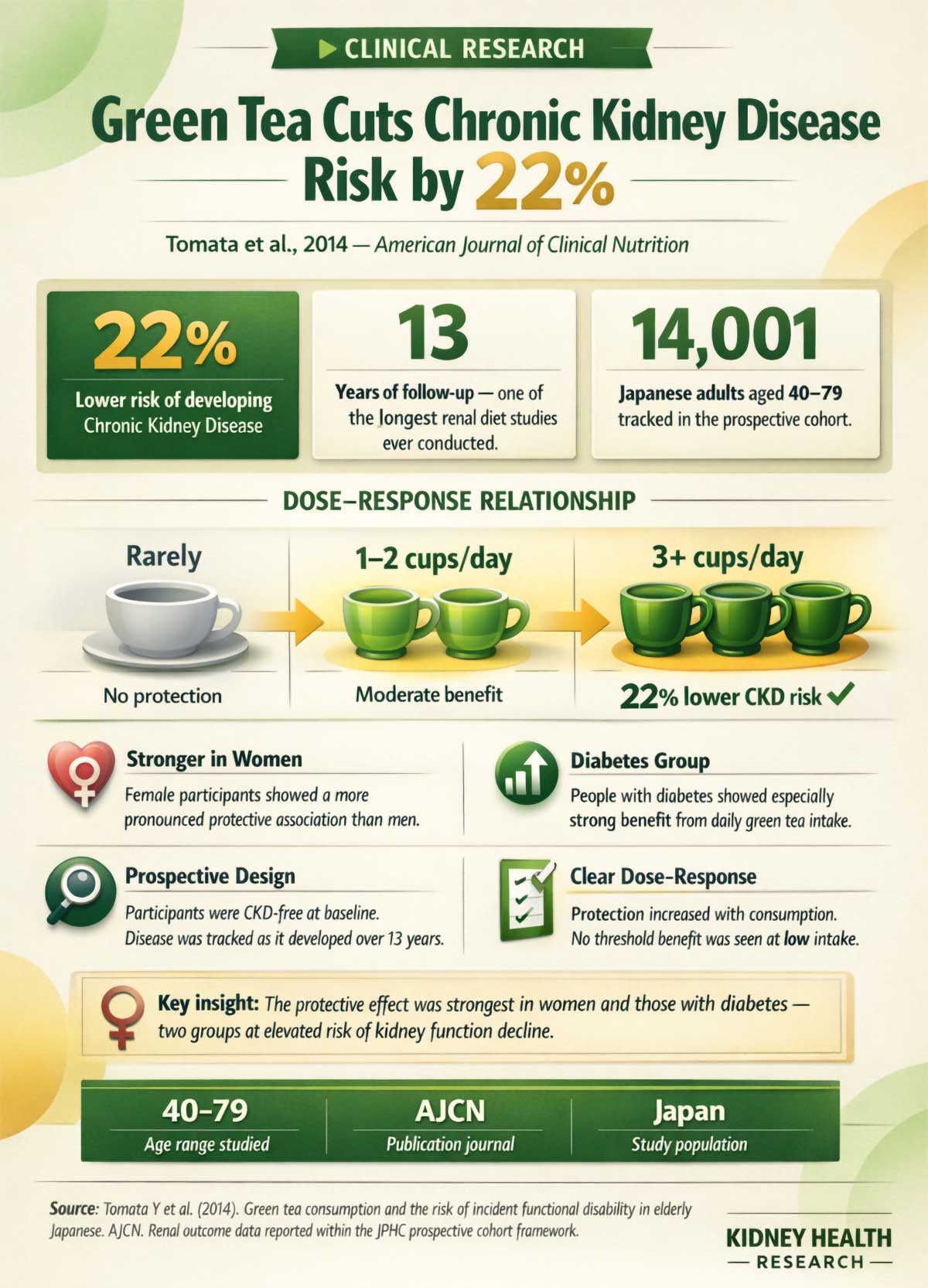
In 2014, researchers Tomata and colleagues followed 14,001 Japanese adults between the ages of 40 and 79 for 13 full years. That kind of long-term study is rare. Most nutrition research lasts months, not over a decade. This one tracked what people drank and then measured who developed chronic kidney disease (CKD).
The result? Adults who drank three or more cups of green tea daily had a 22% lower risk of developing CKD compared to those who rarely drank it.
That’s not a small number. For a condition affecting roughly 1 in 7 American adults, a 22% risk reduction from a simple dietary habit carries real weight.
One detail worth noting: this study followed Japanese adults, whose tea quality, consumption patterns, and genetic backgrounds differ from Western populations. The 22% figure is a real finding, but exact numbers may shift across different groups. What strengthens confidence in the result is that later research in Chinese populations found similar protective patterns, pointing to benefits that appear to hold across different geographic and ancestry groups.
The 13-year window also matters for a specific reason. CKD is a slow-moving disease. It can silently damage kidney tissue for years before any symptoms appear. Short studies often miss it entirely. A 13-year follow-up captures the kind of slow, cumulative protection that everyday habits actually provide.
The study also found a clear dose-response pattern. People who rarely drank green tea saw little to no protective benefit. The three-cup threshold appeared to be where protection became meaningful. This isn’t a situation where even trace amounts make a difference — consistency matters.
That said, the dose-response curve suggests that even one to two cups daily likely provides some benefit. The protective effect appears to strengthen at higher intake levels, but people who can’t manage three cups shouldn’t dismiss green tea entirely. Some consistent intake beats none at all.
What “Three Cups a Day” Actually Does to Your Kidneys
The kidneys work constantly. Every day, they filter around 200 liters of blood, removing waste products and excess fluid. The workhorse of this process is a tiny structure called the glomerulus — a cluster of small blood vessels that acts as the kidney’s primary filter.
When the glomerulus is under stress — from high blood pressure, inflammation, or oxidative damage — it can start to break down. Over time, this leads to a gradual loss of kidney function, measured by a test called the eGFR, or estimated Glomerular Filtration Rate.
A healthy eGFR is above 60. As it drops, kidney function falls. CKD is defined in stages based on eGFR decline.
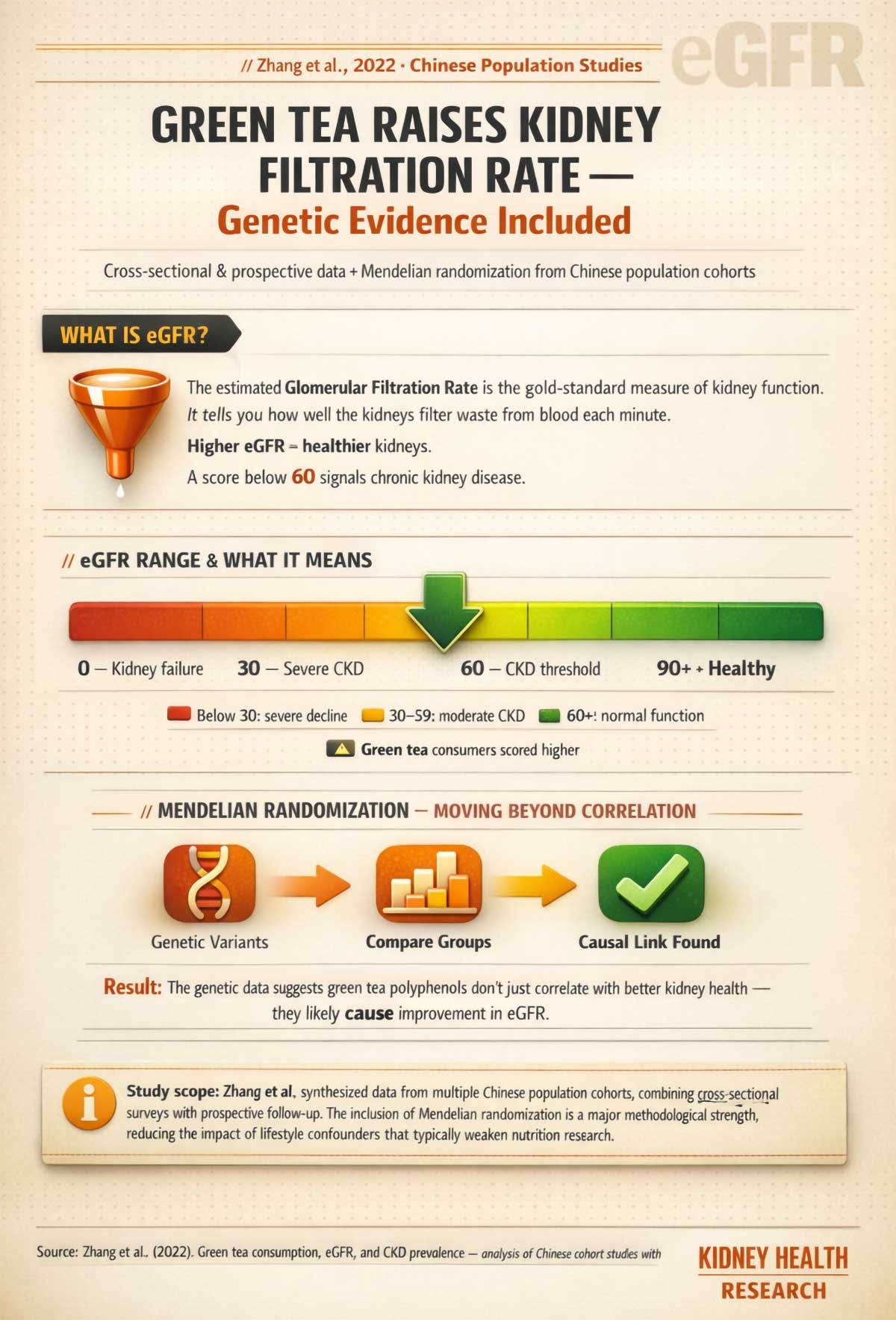
Green tea appears to help protect this system. Research by Zhang and colleagues in 2022, drawing on multiple Chinese population studies including Mendelian randomization data, found that higher green tea consumption was linked to better eGFR scores and lower CKD rates. The dose-dependent pattern held here too — more regular consumption was tied to better outcomes.
The Mendelian randomization component is particularly significant. Traditional observational studies show associations but can’t prove cause and effect. Mendelian randomization uses genetic variants as a kind of natural experiment, which reduces the chance that the results are just coincidence. The findings pointed toward a genuine causal relationship between green tea intake and improved kidney function — not just a correlation.
EGCG: The Compound Doing the Heavy Lifting
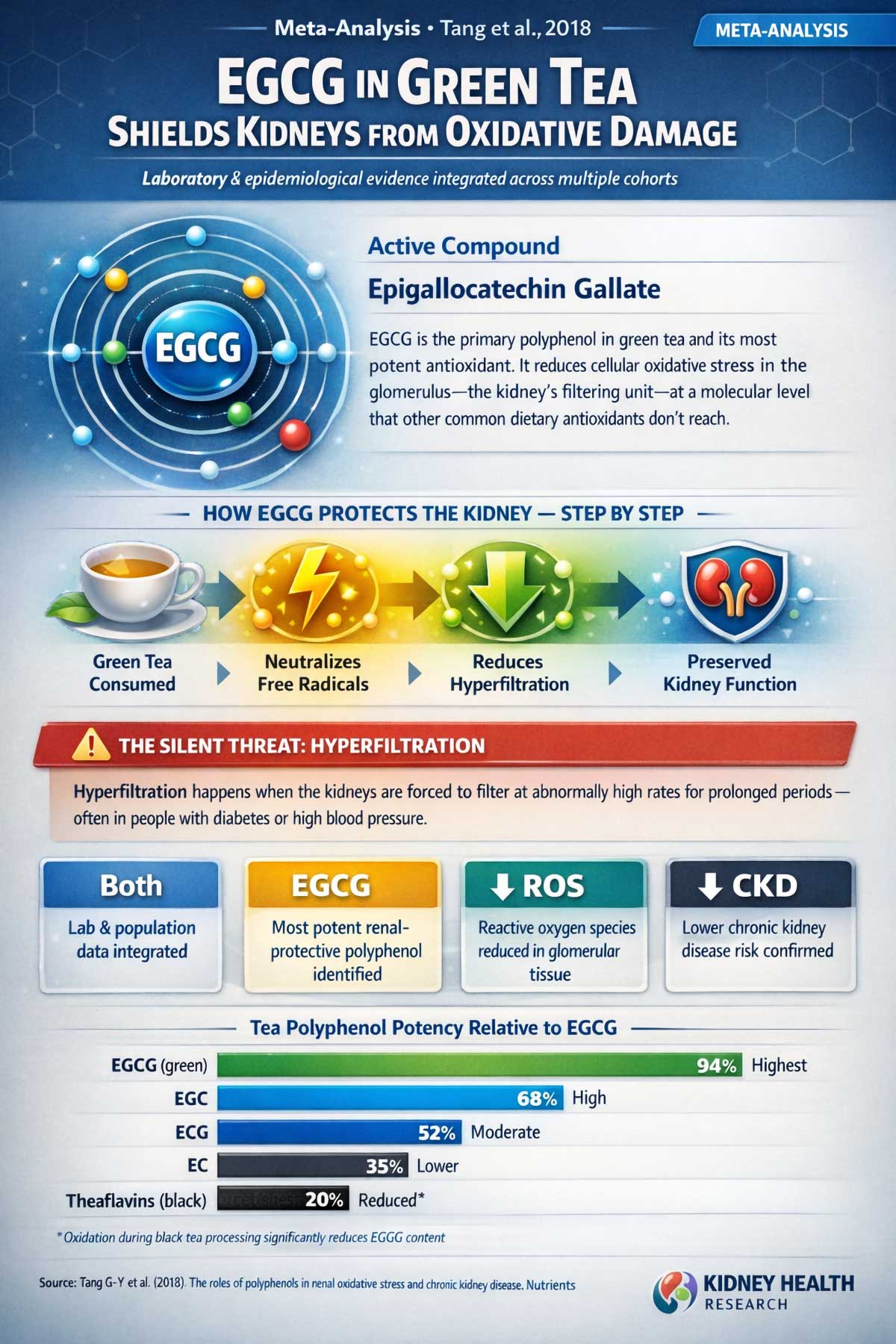
When people talk about green tea’s health benefits, they usually point to “antioxidants.” That’s accurate, but vague. The more precise answer is EGCG — epigallocatechin gallate — the most abundant and potent polyphenol in green tea.
EGCG works at a molecular level inside the kidney. It reduces oxidative stress in the glomerulus, calming the cellular damage that accumulates from years of low-grade inflammation. This is especially relevant because kidney damage often develops through a process called hyperfiltration — where the kidneys are forced to work too hard, straining the filtering units over time.
A 2018 meta-analysis by Tang and colleagues, which integrated both laboratory and epidemiological data, confirmed that tea polyphenols — especially EGCG — are linked to measurable improvements in renal oxidative stress markers. The review found reduced hyperfiltration and lower CKD risk in populations with consistent tea intake.
Think of EGCG like a buffer. The kidneys face constant low-level chemical stress from everyday metabolic processes. EGCG absorbs some of that stress before it can damage tissue. Over years and decades, that kind of quiet protection adds up.
Why Women May See Stronger Benefits
The Tomata study noted something worth taking seriously: the protective association between green tea and CKD was stronger in women than in men. This wasn’t a minor footnote — it pointed toward a real physiological difference worth understanding.
A more recent 2025 study by Guo and colleagues, drawing on the large JACC Study cohort from Japan, added depth to this finding. It found that daily green tea consumption was specifically associated with lower CKD mortality risk in women. The cardiovascular-renal connection appears especially responsive to tea polyphenols in female physiology.
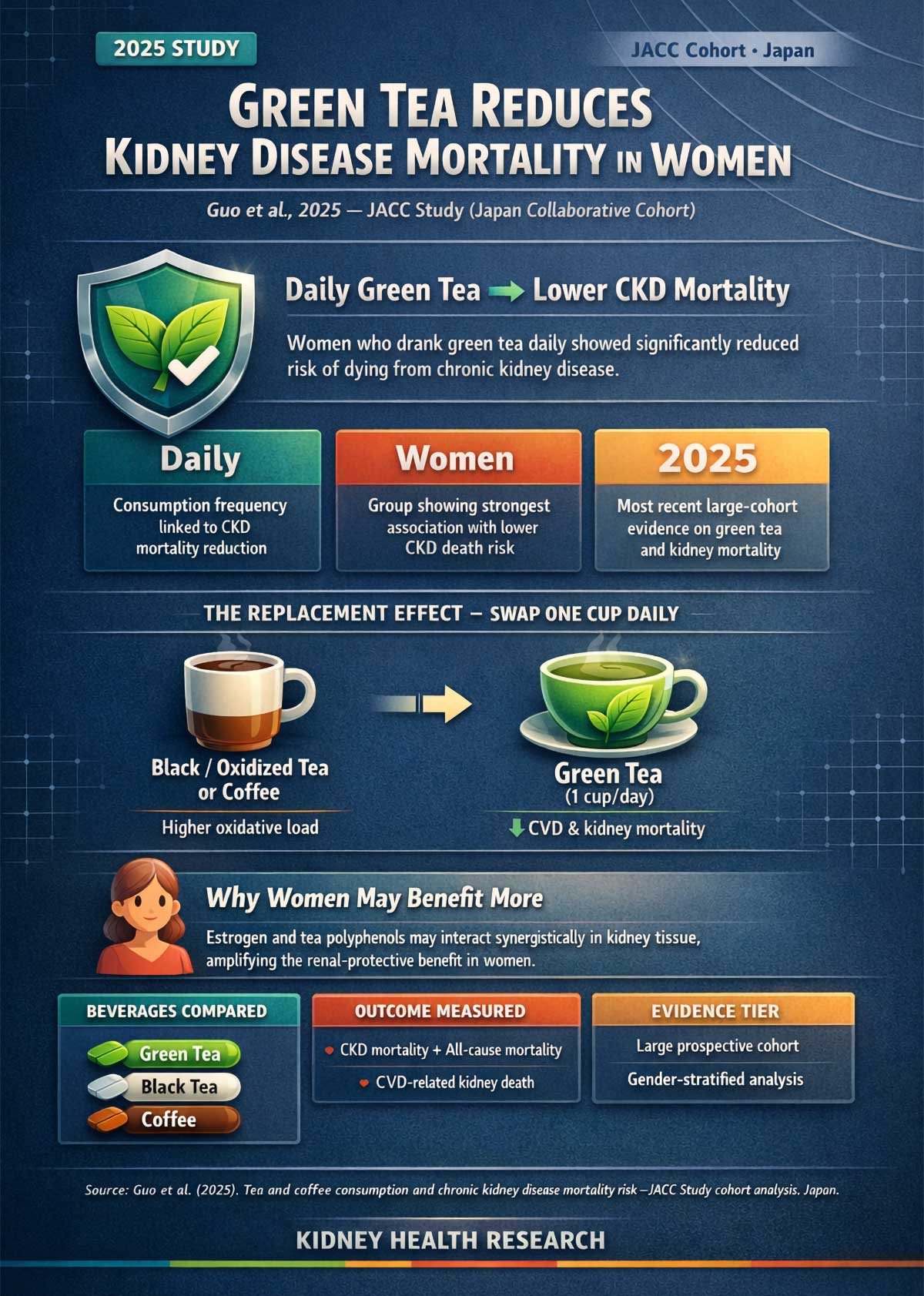
Why might this be? One early theory involves hormonal interactions. Some research suggests estrogen and tea polyphenols may amplify anti-inflammatory effects in kidney tissue — but this mechanism isn’t fully understood yet. Estrogen plays a known role in renal protection, and polyphenols may enhance those effects in ways that don’t translate as strongly in men. More research into sex-based differences in polyphenol use by the body is still needed before firm conclusions can be drawn.
This doesn’t mean men get no benefit — the evidence still shows protection across both sexes. But women who drink green tea regularly may be getting an additional layer of kidney protection that’s specific to their biology. For women with a family history of kidney disease or early-stage CKD, this is worth noting.
h2>The Swap Strategy: Replacing One Drink Can Make a Difference
Not everyone is starting from zero when they consider green tea. Many people already drink tea — just not the green kind. The question becomes: does switching matter?
The 2025 Guo study addressed this directly. It found that replacing one daily cup of oxidized tea (black tea) or coffee with green tea was linked to meaningful reductions in cardiovascular-related kidney mortality. This “replacement logic” is practical because it doesn’t require adding a new habit — it involves swapping one that already exists.
Black tea is made from oxidized tea leaves, which reduces the polyphenol content significantly. Green tea skips the oxidation step, keeping EGCG levels intact. So the shift from black to green isn’t just about switching flavors. It’s about increasing the concentration of the specific compounds that appear to protect kidney tissue.
For those who currently drink sugary beverages, the case is even stronger. Replacing one daily soda or sweetened drink with unsweetened green tea removes a source of metabolic stress on the kidneys while adding direct protective compounds. That’s a two-way benefit from a single habit change.
The Oxalate Question: Should You Be Worried?
One concern often raised about green tea — particularly for people who’ve had kidney stones — is oxalate content. Oxalates are compounds that can bind with calcium in the urinary tract and form crystals, contributing to certain types of kidney stones.
This concern is worth taking seriously, but the full picture is reassuring for most people.
Green tea is actually lower in oxalates than black tea. Oxidation increases oxalate concentration, which means the typical “health-conscious” choice is already the lower-risk option on this front. Green tea’s oxalate levels are moderate and, at typical consumption levels of two to four cups per day, fall well within safe ranges for most adults.
Maintaining adequate calcium intake also matters. Calcium binds to oxalates in the digestive tract before they can reach the kidneys — meaning a calcium-rich diet is one of the most practical ways to offset any oxalate risk. Drinking green tea with a meal that contains dairy or calcium-rich foods adds a simple safety layer.
A small subset of people — those with a diagnosed hyperoxaluria condition or a history of calcium oxalate stones — may need to be more careful. For that group, a conversation with a nephrologist before increasing green tea intake is a reasonable step. For everyone else, the oxalate concern doesn’t outweigh the protective evidence.
From “It Might Help” to “It Likely Causes” Better Outcomes
A persistent challenge in nutrition research is separating correlation from causation. People who drink more green tea might also exercise more, eat better, and sleep longer. Maybe it’s not the tea. Maybe it’s everything else they’re doing right.
The Zhang 2022 analysis confronted this directly using Mendelian randomization — a method that uses inherited genetic variants as a natural randomization tool. Certain people are genetically predisposed to metabolize tea compounds differently. By comparing kidney outcomes in those genetic groups, researchers can test whether the tea itself drives the effect, rather than lifestyle confounders.
The data supported a causal link. People with genetic profiles associated with higher tea polyphenol absorption showed better eGFR outcomes. This doesn’t close every scientific question, but it moves the evidence well past simple correlation into territory where “green tea likely improves kidney function” is a defensible scientific statement.
A meta-analysis by Xu and colleagues, synthesizing data from 24 studies involving nearly 1,700 subjects, reached similar conclusions. Habitual tea intake was consistently associated with lower CKD prevalence and reduced risk of progression. The consistency across so many independent studies — different populations, different methods — strengthens the overall case considerably.
6 Ways to Make Your Green Tea Work Harder
Buying green tea is the easy part. Getting the most out of it takes a little attention to how it’s prepared. Small changes in technique can significantly affect how much EGCG actually ends up in your cup.
1. Watch the water temperature. Boiling water (100°C / 212°F) degrades EGCG. Steep green tea at around 70–80°C (160–175°F) instead. If you don’t have a temperature-controlled kettle, let boiled water sit for two to three minutes before pouring.
2. Steep for the right amount of time. Two to three minutes is the sweet spot for most green teas. Longer steeping doesn’t extract more polyphenols — it mostly extracts bitterness, which makes the tea less enjoyable and less likely to become a regular habit.
3. Choose loose leaf over tea bags when possible. Loose leaf green tea typically contains higher-grade leaves with more surface area exposure during steeping. Most commercial tea bags use lower-grade fannings and dust, which can mean less EGCG per cup. It doesn’t have to be expensive — mid-range loose leaf teas are widely available and affordable.
4. Skip the sugar and creamers. Adding sugar reintroduces metabolic stress that the tea is partly working to offset. Milk proteins may also bind to some polyphenols and reduce their absorption. Plain is better. If you need flavor variety, a squeeze of lemon — which may actually enhance EGCG absorption — is a solid option.
5. Think about your water quality. Water quality has a modest effect on how well polyphenols are extracted. Very hard tap water — high in dissolved minerals — can slightly reduce EGCG yield. Filtered water isn’t strictly needed for most people, but if your tap water is particularly mineral-heavy, it’s worth considering.
6. Make it a daily ritual, not an occasional treat. The Tomata study’s protective effect appeared at three-plus cups daily over years. A single cup here and there doesn’t move the needle. The benefits come from consistent, long-term intake. Pairing green tea with a specific daily moment — morning, after lunch, before bed — makes consistency much easier to maintain.
The Bigger Picture for Long-Term Kidney Health
CKD affects hundreds of millions of people globally, and rates are climbing. Management options are limited, expensive, and often focused on slowing damage rather than preventing it. Early-stage prevention matters enormously.
Green tea sits in an unusual position in preventive health. It has a wide safety profile, centuries of consumption history, a compelling and growing evidence base, and a cost that puts it within reach of nearly anyone. The 22% risk reduction found in the Tomata study is the kind of number that, if it came from a pharmaceutical drug, would generate significant attention.
It won’t replace medical care, and it’s not a treatment for existing kidney disease. But as a low-cost, daily habit that may meaningfully protect kidney function over decades — particularly for women, people with diabetes, and those with early signs of reduced kidney function — green tea deserves serious consideration.
Three cups a day. Loose leaf if possible. No sugar. Consistent, not occasional.
That’s a small ask for a potentially large return.