Eating half an avocado daily for 12 weeks can lower harmful LDL cholesterol by up to 10%, reduce oxidized LDL particles by 27%, and improve overall heart health markers. The key? You must replace saturated fats or refined carbs with the avocado, not just add it on top of your current diet. This guide shows you exactly what happens week by week and how to do it right.
You’ve heard the warnings about high-fat foods. Yet here’s the twist: eating the right fats can help fix your cholesterol problem. Sounds like a paradox, right?
For the next 12 weeks, we’re going to talk about what happens when you eat half a Hass avocado daily. That’s about 75 grams of edible fruit (without the pit and skin). Simple enough to fit into any meal plan. But here’s what makes this different from other diet advice: we’re not just trying to lower a number on your lab report. We’re changing the actual quality of the cholesterol particles floating through your bloodstream.
Clinical trials show that avocados can reduce harmful cholesterol types. But most people miss the key point: you can’t just pile avocado on top of your usual diet and expect magic. You need to swap it for something else. That’s where the real benefits start.
What You’re Getting: Half an Avocado vs Your Usual Choices
| Nutrient | Half Hass Avocado (75g) | 2 Tbsp Mayo | 2 Tbsp Butter | 1 oz Cheddar Cheese |
|---|---|---|---|---|
| Calories | 120-130 | 180 | 200 | 110 |
| MUFAs (Healthy Fats) | 7g | 2g | 3g | 2g |
| Saturated Fat | 1.5g | 2.5g | 14g | 6g |
| Fiber | 3-4g | 0g | 0g | 0g |
| Phytosterols | 38mg | 0mg | 0mg | 0mg |
| Potassium | 345mg | 5mg | 7mg | 20mg |
The numbers tell the story. When you swap mayo, butter, or cheese for avocado, you’re cutting saturated fat while adding fiber and plant sterols. These compounds block cholesterol absorption in your gut. That’s the substitution effect at work.
Substitution Swap Calculator
See what you gain by replacing unhealthy fats with half an avocado
The First Four Weeks: Your Body Learns a New Pattern
When you eat half an avocado, you’re getting about 7 grams of monounsaturated fats. These are the same healthy fats found in olive oil and nuts. You’re also getting 3 to 4 grams of fiber in that creamy green flesh.
Here’s the rule that most articles skip: the avocado must replace another food. Not add to it. Replace it.
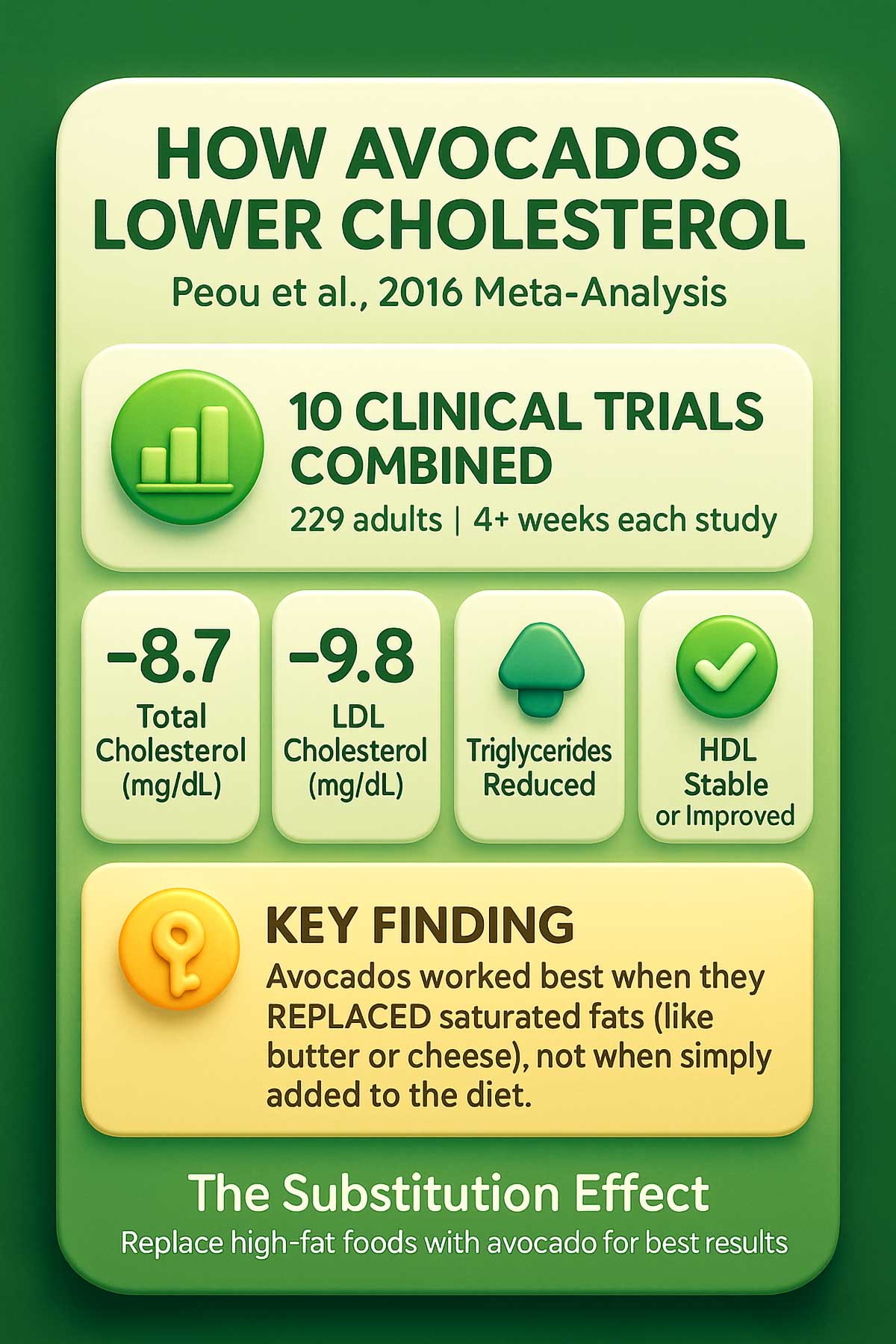
Spread mashed avocado on your sandwich instead of mayo. Use it in place of butter on your morning toast. Blend it into your smoothie instead of adding yogurt or banana. This swap is what scientists call the “substitution effect.” A 2016 meta-analysis by Peou and colleagues looked at 10 different studies with 229 adults total. The researchers found that diets where avocados replaced other fats led to lower total cholesterol, LDL cholesterol, and triglycerides compared to control diets. The benefits weren’t from adding avocado. They came from replacing saturated fats or refined carbs.
Week-by-Week: What’s Actually Happening
Weeks 1-2: Physical Changes You Can Feel
Your digestive system slows down in a good way. The fiber from that half avocado makes you feel full longer. This isn’t just about comfort. When digestion slows, your blood sugar stays more stable. Your liver doesn’t get the signal to pump out extra cholesterol.
You might notice you’re not as hungry between meals. Some people report better energy levels because they’re not riding the blood sugar roller coaster. Your bathroom habits might improve too. That extra fiber keeps things moving.
Weeks 3-4: Early Metabolic Shifts
Something else is happening that you can’t feel yet. Your gut bacteria start to shift. A 2019 study by Henning and team tracked 105 overweight adults eating one avocado daily during a weight-loss program. After 12 weeks, their gut microbiome had changed. The bacteria in their intestines were producing different metabolites. These compounds help regulate how your body handles fats and sugars.
If you got blood work done at week four, you might see small changes. Your triglycerides could be trending down. Your HDL (the good cholesterol) might inch up slightly. But the big changes are still cooking.
Weeks Five Through Eight: The Quality Shift
Let’s clear up a common confusion. When your doctor talks about “bad cholesterol,” they mean LDL. But not all LDL particles are equally harmful.
Some LDL particles get damaged by a process called oxidation. Think of it like rust forming on metal. These oxidized LDL particles are the ones that actually stick to your artery walls and cause plaque buildup. Regular LDL? Less of a problem. Oxidized LDL? That’s where the real danger lives.
Why Oxidized LDL Matters More
Your arteries have a smooth inner lining. Healthy LDL particles float past without causing trouble. But oxidized LDL particles trigger inflammation. Your immune system sees them as invaders. White blood cells rush in to clean up the mess. This creates a sticky situation (literally) where plaque starts forming.
Most cholesterol tests don’t measure oxidized LDL. They just count total LDL. That’s like counting cars on the highway without checking which ones are leaking oil. You need to know both the quantity and the quality.
This is where avocados show their true power.
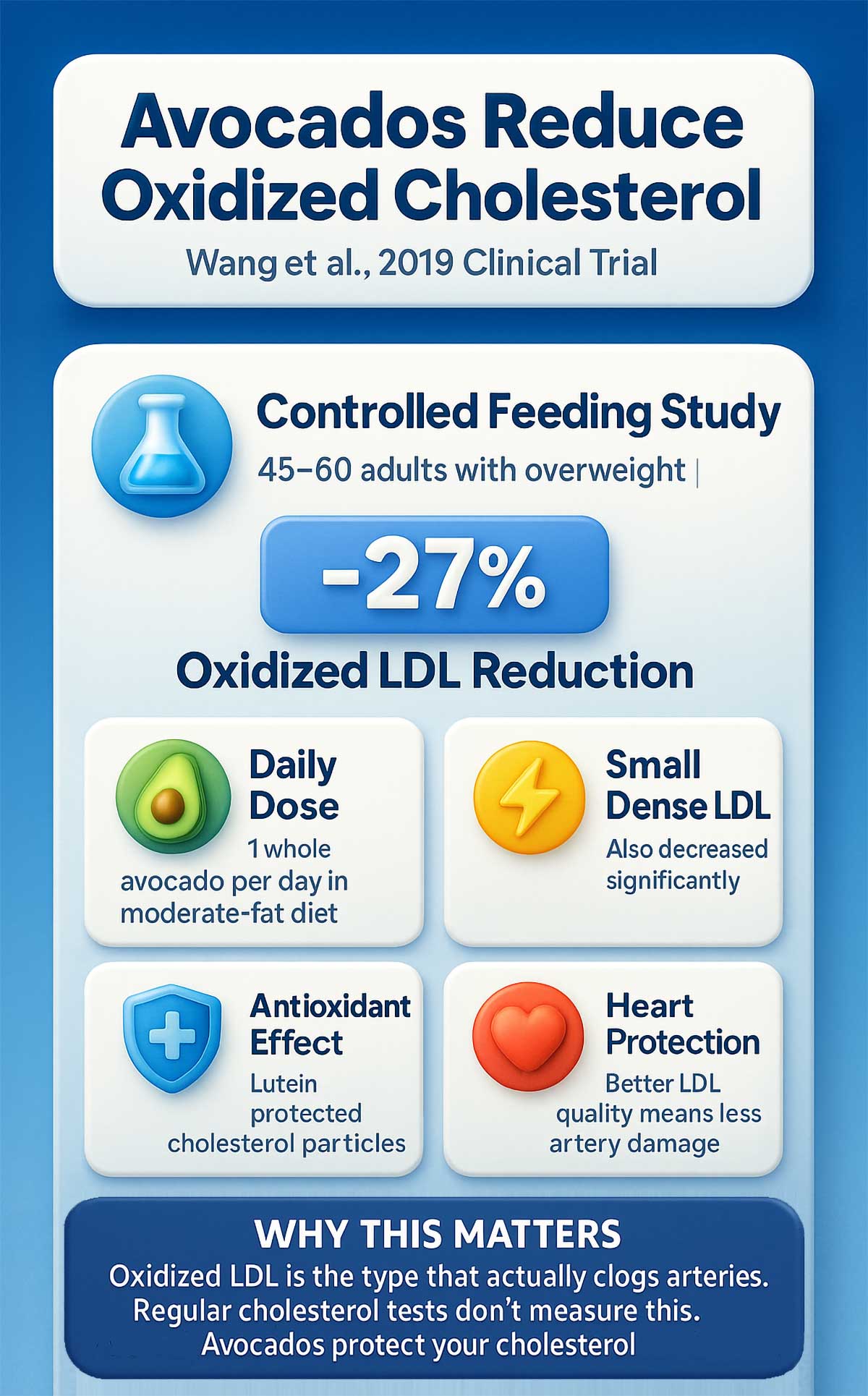
Avocados contain lutein and other antioxidants. These compounds act like a protective shield around your LDL particles. They prevent oxidation from happening in the first place. A 2019 controlled feeding study by Wang and colleagues gave people one avocado per day for five weeks. These folks were overweight or obese, eating a moderate-fat diet. The result? Their oxidized LDL levels dropped by 27%. Their small dense LDL particles also decreased.
Weeks 5-6: Oxidative Stress Markers Begin to Change
Your antioxidant defenses are building up. The lutein from avocados gets stored in your tissues. It’s working behind the scenes, protecting your cholesterol particles from damage. Your body is making fewer inflammatory compounds.
Weeks 7-8: LDL Particle Size Shifts Become Measurable
Small dense LDL is another type you want to avoid. These particles are tiny and dangerous. They slip through artery walls more easily than larger LDL particles. The bigger, fluffier LDL particles are less likely to cause problems.
By week eight, if you’ve been consistent with your half-avocado habit, your LDL profile is shifting. Your total cholesterol might not have plummeted 50 points. But the cholesterol you do have is less toxic to your arteries.
That’s a win most blood tests won’t capture.
Weeks Nine Through Twelve: The Full Picture Emerges
You’re three months in now. This is where multiple benefits start to stack up.
Your LDL particles continue to shift from small and dense to large and buoyant. This change matters more than most people realize. Large LDL particles don’t invade artery walls as easily. They’re less likely to trigger the inflammation that leads to heart disease.
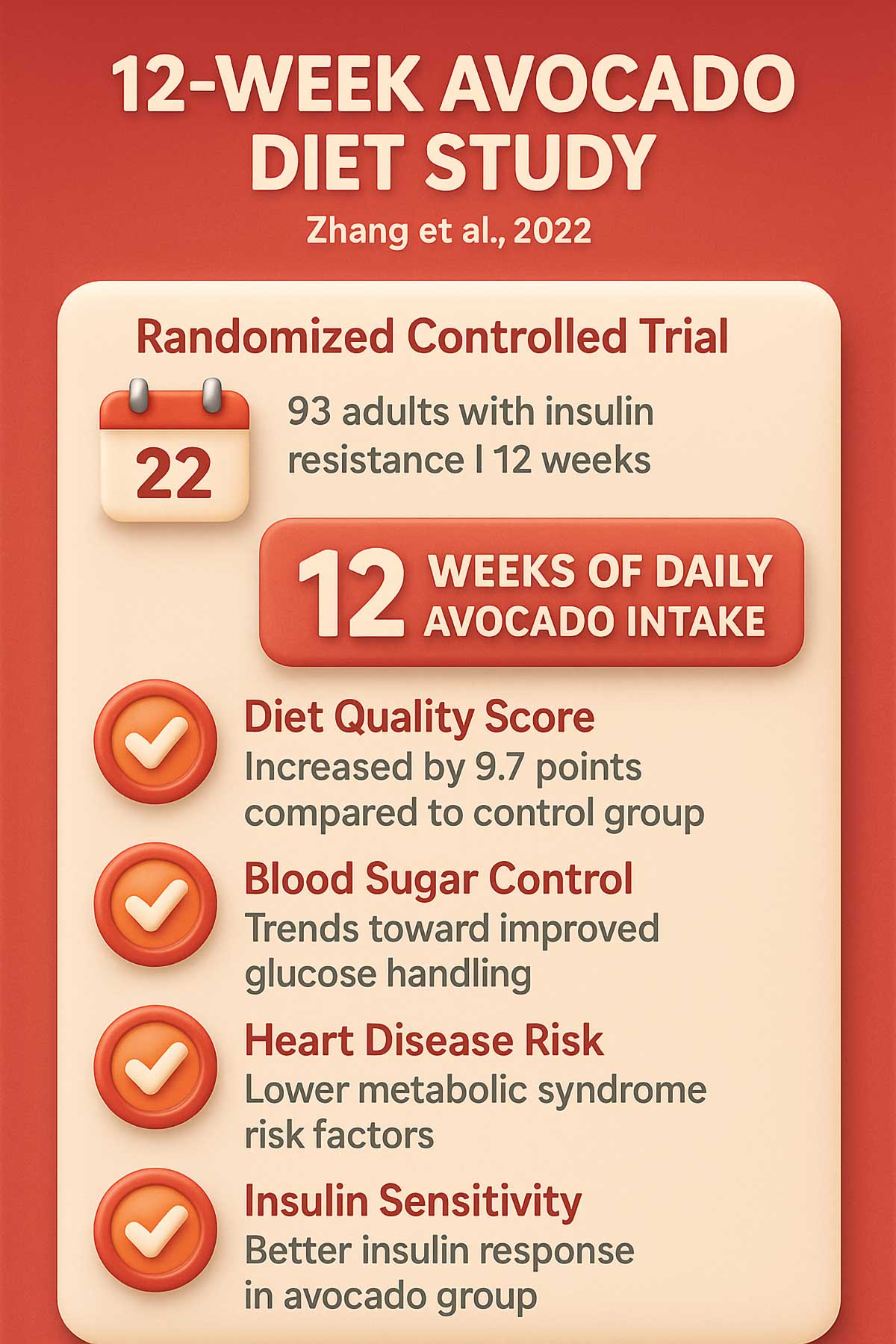
If you’ve been swapping avocado for refined carbs like white bread or sugary snacks, you might notice something else. Your body handles insulin better. A 2022 trial by Zhang and team studied 93 adults with insulin resistance and excess weight. Those who ate avocados daily for 12 weeks improved their diet quality score. They also showed trends toward better blood sugar control and lower risk factors for metabolic syndrome. The study specifically used an “exchange” model, where avocado replaced carbohydrate calories rather than being added on top.
Weeks 9-10: Gut Microbiome Stabilizes with New Profile
Remember those gut bacteria changes from week three? They’re now stable. Your microbiome has adapted to regular avocado intake. The beneficial bacteria are thriving. They’re producing compounds that help your liver process cholesterol more efficiently.
Weeks 11-12: Full Lipid Panel Changes Visible
This is when you want to get blood work done again. Compare it to your baseline from before you started. Here’s what research suggests you might see:
- Total cholesterol: Down 5-15%
- LDL cholesterol: Down 8-13%
- Triglycerides: Down 10-20% (if they were high to start)
- HDL cholesterol: Up 5-8% or stable
- Oxidized LDL: Down significantly (if your lab offers this test)
A 2023 systematic review by Okobi and colleagues pooled data from multiple studies. Adults who followed avocado-enriched diets had measurably lower LDL levels than control groups. The effects on triglycerides and fasting blood sugar were less consistent across all studies. But the pattern was clear: avocados help when they’re part of a balanced eating plan.
Cholesterol Improvement Calculator
See your potential results after 12 weeks with daily avocado
Your Projected Results After 12 Weeks
What the Research Shows: A Quick Reference
| Study | Duration | Participants | Key Finding | Change |
|---|---|---|---|---|
| Peou et al., 2016 (Meta-analysis) | 4+ weeks | 229 adults across 10 trials | Avocado substitution lowered cholesterol markers | TC: -8.7 mg/dL, LDL: -9.8 mg/dL |
| Wang et al., 2019 | 5 weeks | 45 adults with overweight/obesity | One avocado daily reduced oxidized LDL and small dense LDL | Oxidized LDL: -27% reduction |
| Zhang et al., 2022 | 12 weeks | 93 adults with insulin resistance | Avocado exchange improved diet quality and metabolic trends | Diet quality: +9.7 points |
| Henning et al., 2019 | 12 weeks | 105 adults in weight-loss program | Daily avocado altered gut microbiota favorably | Microbiome diversity improved |
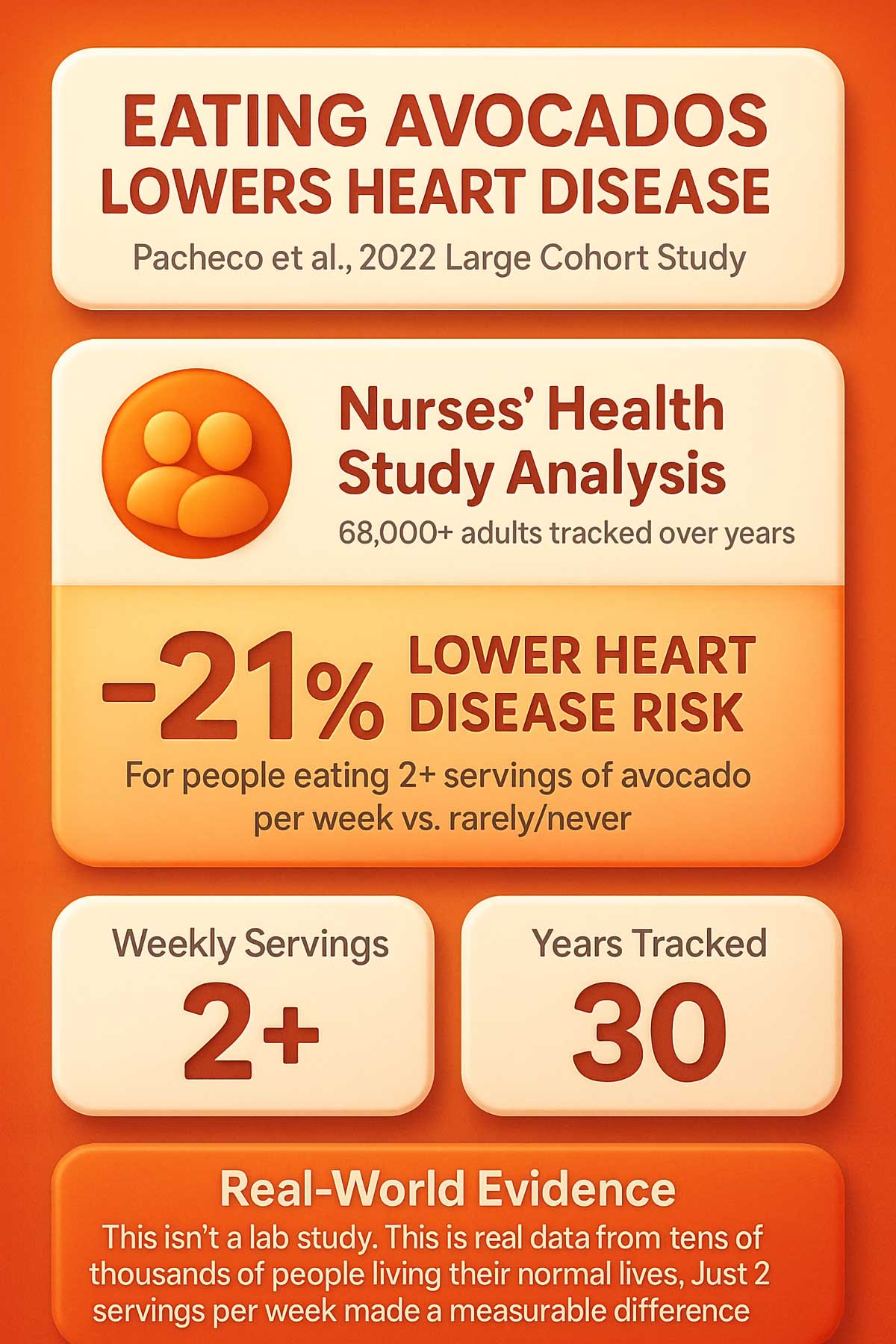
| Pacheco et al., 2022 | Years (cohort) | 68,000+ adults in long-term study | Higher avocado intake linked to lower CVD risk | 21% lower CVD risk with 2+ servings/week |
This table shows the strength of evidence. Multiple studies, different populations, consistent findings. The benefits are real when you do it right.
How to Actually Do This: The Half-Avocado Method
Why half an avocado instead of a whole one? Simple math.
Clinical trials often use one whole avocado per day. That’s about 240 to 260 calories. For many people, that’s a lot to fit into a daily calorie budget without gaining weight. Half an avocado gives you 120 to 130 calories. You still get a therapeutic dose of phytosterols, which are plant compounds that help block cholesterol absorption in your gut. But you’re not overdoing the calories.
Half a Hass avocado means 75 to 80 grams of edible fruit. That’s after you remove the pit and peel. The ripeness matters too. A perfectly ripe avocado (yields slightly to gentle pressure) has higher levels of beneficial compounds than an under-ripe one.
Best Way to Eat Avocado for Cholesterol: 7 Simple Recipes
Each recipe explicitly states what it replaces. This is your roadmap for the substitution effect.
1. Avocado Egg Bowl (Breakfast) Replaces: Butter or oil used for cooking eggs Prep time: 5 minutes | Calories: ~220
Mash half an avocado in a bowl. Top with a poached or soft-boiled egg. Add cherry tomatoes and a sprinkle of everything bagel seasoning. The healthy fats help you absorb the egg’s vitamins A and D.
2. Creamy Avocado Pasta Sauce (Lunch) Replaces: Heavy cream or cheese-based sauce Prep time: 10 minutes | Calories: ~280 per serving
Blend half an avocado with fresh basil, garlic, lemon juice, and a splash of pasta water until smooth. Toss with whole grain pasta. You’ve just created a creamy sauce with zero saturated fat and tons of fiber.
3. Avocado Hummus (Snack) Replaces: Oil in traditional hummus Prep time: 5 minutes | Calories: ~140 for 1/4 cup
Blend half an avocado with canned chickpeas (drained), tahini, lemon juice, and cumin. Skip the olive oil that most hummus recipes call for. The avocado makes it creamy enough. Serve with veggie sticks.
4. Mayo-Free Chicken Salad (Lunch) Replaces: Mayonnaise Prep time: 8 minutes | Calories: ~250
Mash half an avocado with a squeeze of lime and a pinch of salt. Mix with shredded rotisserie chicken, diced celery, and grapes. You’ve cut out 15 grams of saturated fat compared to mayo-based chicken salad.
5. Avocado-Lime Grilled Fish Topping (Dinner) Replaces: Sour cream or butter sauce Prep time: 5 minutes | Calories: ~180 (fish + topping)
Dice half an avocado and mix with lime zest, cilantro, and a touch of jalapeño. Spoon over grilled white fish. The healthy fats help your body absorb omega-3s from the fish more efficiently.
6. Green Smoothie Bowl (Breakfast) Replaces: Banana or yogurt for thickness Prep time: 5 minutes | Calories: ~240
Blend half an avocado with spinach, frozen berries, unsweetened almond milk, and a scoop of protein powder. Pour into a bowl and top with sliced almonds. You get creaminess without the sugar spike from banana.
7. Avocado Chocolate Mousse (Dessert) Replaces: Heavy cream in traditional mousse Prep time: 10 minutes | Calories: ~160
Blend half an avocado with unsweetened cocoa powder, a touch of honey or maple syrup, and vanilla extract until silky. Chill for 30 minutes. You won’t believe there’s no cream in this. The cocoa adds extra antioxidants too.
Avocado vs Other Cholesterol-Lowering Foods
How does the half-avocado approach stack up against other dietary interventions? Here’s what you need to know.
Oatmeal (3g soluble fiber per serving): Lowers LDL by about 5-10% through bile acid binding. Works well but doesn’t provide the antioxidant protection avocados offer. You can eat both.
Walnuts (1 oz daily): Similar MUFA content to avocados. Studies show 8-10% LDL reduction. The catch? Walnuts pack 185 calories per ounce. Half an avocado gives you similar benefits for 130 calories and more fiber.
Fatty Fish (2-3 servings weekly): Excellent for triglycerides and inflammation. Doesn’t lower LDL as much as avocados do. Best used together, not as an either-or choice.
Plant Stanols/Sterols (2g daily): Found in fortified foods. Can lower LDL by 6-10%. Half an avocado provides 38mg naturally. You’d need multiple servings to match fortified products, but avocados offer other nutrients those products lack.
The bottom line? Avocados aren’t magic bullets. They’re one tool in a complete strategy. But they’re versatile, tasty, and backed by solid research.
What to Tell Your Doctor: Tracking Your Progress
When you go in for your 12-week follow-up, ask for these specific tests. Standard cholesterol panels don’t tell the whole story.
Standard Lipid Panel (covered by most insurance):
- Total cholesterol
- LDL cholesterol
- HDL cholesterol
- Triglycerides
Advanced Lipid Panel (may require specific request):
- LDL particle number (LDL-P)
- LDL particle size (small vs large)
- Apolipoprotein B (ApoB)
- Lipoprotein(a) if elevated initially
Optional but Valuable:
- Oxidized LDL (OxLDL) if available
- High-sensitivity CRP (inflammation marker)
- Fasting insulin (metabolic health)
Tell your doctor you’ve been following a heart-healthy eating pattern with daily avocado intake as a substitution for saturated fats. Ask them to note changes in LDL particle size if that test is available. This information helps both of you understand if the intervention is working for your specific body.
Don’t stop any prescribed medications without consulting your doctor. Dietary changes support medical treatment. They don’t replace it.
Who Needs to Be Careful?
Avocados aren’t a free food. If you add half an avocado to your diet without removing anything else, you’re adding 120 calories daily. Over 12 weeks, that could lead to 3-4 pounds of weight gain. The studies that show benefits all involve substitution, not addition.
Some people respond better to dietary changes than others. A 2018 systematic review by Mahmassani and colleagues noted mixed results across studies. They found considerable variation in how people responded. The authors called for more well-designed trials because individual responses varied so much. Your genetics play a role. So does the rest of your diet.
If you’re allergic to latex, use caution with avocados. Some people with latex allergies also react to avocados due to similar proteins. Start with a small amount and watch for symptoms like itching or swelling.
People on blood thinners should maintain consistent avocado intake once they start. Avocados contain vitamin K, which affects blood clotting. Sudden changes in vitamin K intake can interfere with medication effectiveness. Talk to your doctor before starting.
This is a dietary tool, not a prescription drug. If your doctor has you on cholesterol medication, don’t stop taking it because you’re eating avocados. Talk to them about your diet changes. Track your numbers together. See what works for your body.
Week 1 vs Week 12: What to Expect
Here’s a realistic comparison framework you can use to track your progress.
Week 1 Baseline:
- Cholesterol numbers from your blood panel
- How you feel 2 hours after meals (hungry, satisfied, sluggish)
- Energy levels throughout the day
- Digestion patterns
- Current weight and measurements
Week 12 Outcome:
- New cholesterol panel showing changes
- Sustained satiety for 3-4 hours after meals
- More stable energy without crashes
- Regular, comfortable digestion
- Weight stable or slightly down if substituting high-calorie foods
Keep a simple journal. Note what you replaced each day. Rate your hunger and energy on a 1-10 scale. This data helps you see patterns that blood tests might miss. It also keeps you accountable to the process.
Conclusion
Eating half an avocado every day for 12 weeks is a low-risk strategy with solid science behind it. You’re not chasing miracle cures. You’re making a simple swap that supports your heart health.
The benefits build over time. Better satiety in the first few weeks. Improved LDL quality by week eight. A measurable shift in your overall risk profile by week twelve. Large cohort studies like the Nurses’ Health Study analysis found that people who ate avocados twice weekly or more had 21% lower risk of heart disease compared to those who rarely or never ate them. That’s real-world data from tens of thousands of people tracked over years.
The catch? You have to actually swap something out. Replace the butter, the mayo, the cheese, or the refined carbs. That’s how this works. Half an avocado gives you therapeutic benefits without breaking your calorie budget. It provides fiber, healthy fats, and antioxidants that protect your cholesterol from becoming dangerous.
Start your 12-week counter today. Keep half an avocado in your daily meal plan. Pick two or three recipes from this guide and rotate them. Track how you feel. Get your blood work done at the beginning and end. Compare the numbers.
FAQs
Won’t Eating Fat Make Me Gain Weight?
Not if you’re truly replacing other foods rather than adding. Half an avocado has 120-130 calories. If you swap it for 2 tablespoons of mayo (180 calories), you’re actually cutting 50 calories. The fiber and healthy fats increase satiety, which often leads to eating less overall. A 2024 study tracked 900+ adults eating one avocado daily for six months. They didn’t gain weight despite the extra fat intake. The key was mindful substitution.
What If I Don’t See Changes in My Cholesterol After 12 Weeks?
Several factors could be at play. First, check if you’re truly replacing foods or just adding avocado on top. Second, genetics matter. About 15-20% of people are “hyper-responders” whose cholesterol doesn’t budge much with dietary changes alone. Third, the rest of your diet matters. If you’re eating avocado but still loading up on processed foods and sugar, the benefits get canceled out. Finally, make sure you’re eating Hass avocados consistently. Studies use this variety specifically because of its nutrient profile.
Can I Eat a Whole Avocado Some Days and None Others Instead of Half Daily?
Consistency works better. The studies showing benefits used daily intake. Your gut bacteria adapt to regular fiber intake. Your antioxidant levels build up gradually. Sporadic eating won’t give the same results. That said, if you miss a day here and there, don’t stress. Get back on track the next day. Aim for at least 5-6 days per week minimum.
Are Frozen Avocados as Good as Fresh?
Pretty close. Frozen avocado chunks retain most of their nutrients and all of their healthy fats. They’re great for smoothies and some recipes. The texture won’t work as well for things like avocado toast or salad toppings. For cholesterol benefits, frozen works fine. Just check the ingredient list to make sure it’s 100% avocado with no added oils or sugars.
What If I Have High Cholesterol AND High Triglycerides?
This combo often signals insulin resistance. Avocados can help both markers, especially if you’re replacing refined carbs. The 2016 meta-analysis found that avocado-enriched diets lowered both LDL and triglycerides. Focus your substitutions on removing white bread, sugary snacks, and sweetened drinks. Replace them with avocado paired with protein and fiber. Your triglycerides should respond within 4-6 weeks if you’re consistent.
How Do I Know If It’s Working Before Getting Blood Tests?
Pay attention to these signs: better satiety between meals (you’re not starving an hour after eating), more stable energy (no mid-afternoon crashes), improved digestion, and better sleep quality. Some people notice their clothes fit better even if the scale doesn’t move much. These are all positive metabolic changes. But blood work is the only way to confirm cholesterol improvements. Don’t skip that 12-week follow-up.