Researchers identified the exact bacteria, metabolites, and timeline. This is what onions do to your gut—week by week.
Most people reach for an onion to add flavor to a meal. Scientists, though, see something far more interesting—a low-cost, widely available food that acts like a precision tool for feeding your gut bacteria. Emerging research—rooted in nearly three decades of prebiotic studies beginning with Gibson and Roberfroid’s 1995 landmark work—shows that eating onions daily sets off a chain of biological changes inside your digestive system. And the most significant shifts don’t happen overnight. They unfold over two to four weeks.
This isn’t a story about a single nutrient. It’s about a sequence of events—a biological timeline—that most nutrition articles never explain. Here’s what actually happens inside your gut, week by week.
The Gut Microbiome Needs to Be Fed
Before getting into the timeline, it helps to understand why onions matter so much to gut bacteria.
Your gut hosts trillions of microorganisms. These bacteria, fungi, and other microbes need food to survive. Not just any food—specific types of fiber that your own digestive system can’t break down. These fibers pass through the stomach and small intestine untouched. They arrive in the colon, where your bacteria ferment them for energy.
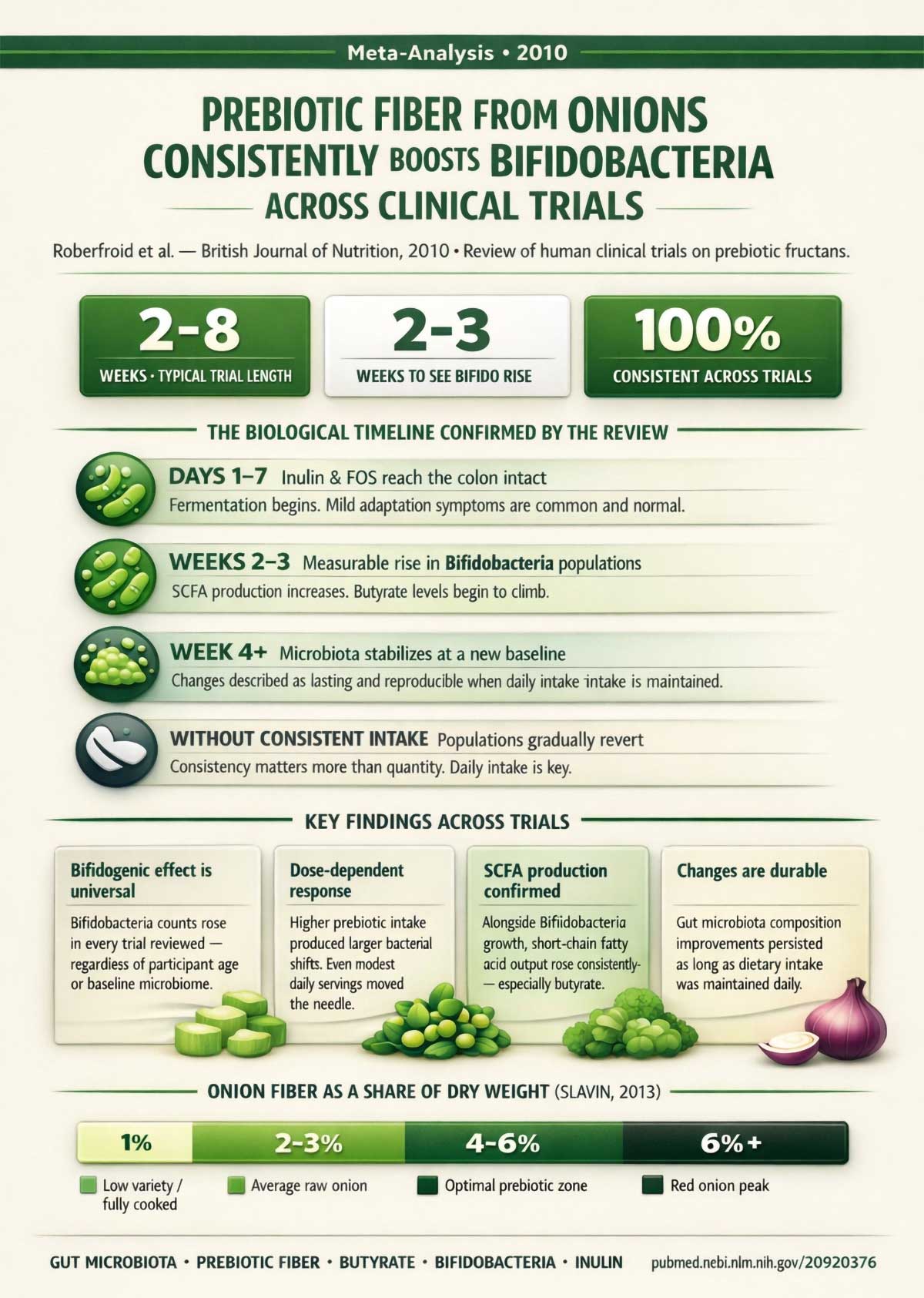
Onions are rich in two of these fibers: inulin and fructooligosaccharides (FOS). A 2013 nutrition review published in Nutrients identified onions as a major dietary source of inulin and FOS—making up roughly 2–6% of the onion’s dry weight (Slavin, 2013). That may sound small, but over a week of daily eating, it adds up to a meaningful, consistent dose.
The selective nature of these fibers is what makes them so valuable. They don’t feed all bacteria equally. They preferentially feed the ones you want more of.
Week 1: The “Bifidogenic” Kickstart
Within the first few days of eating onions regularly, inulin and FOS begin reaching your colon largely intact. Once there, they act as food almost exclusively for a group of bacteria called Bifidobacterium.
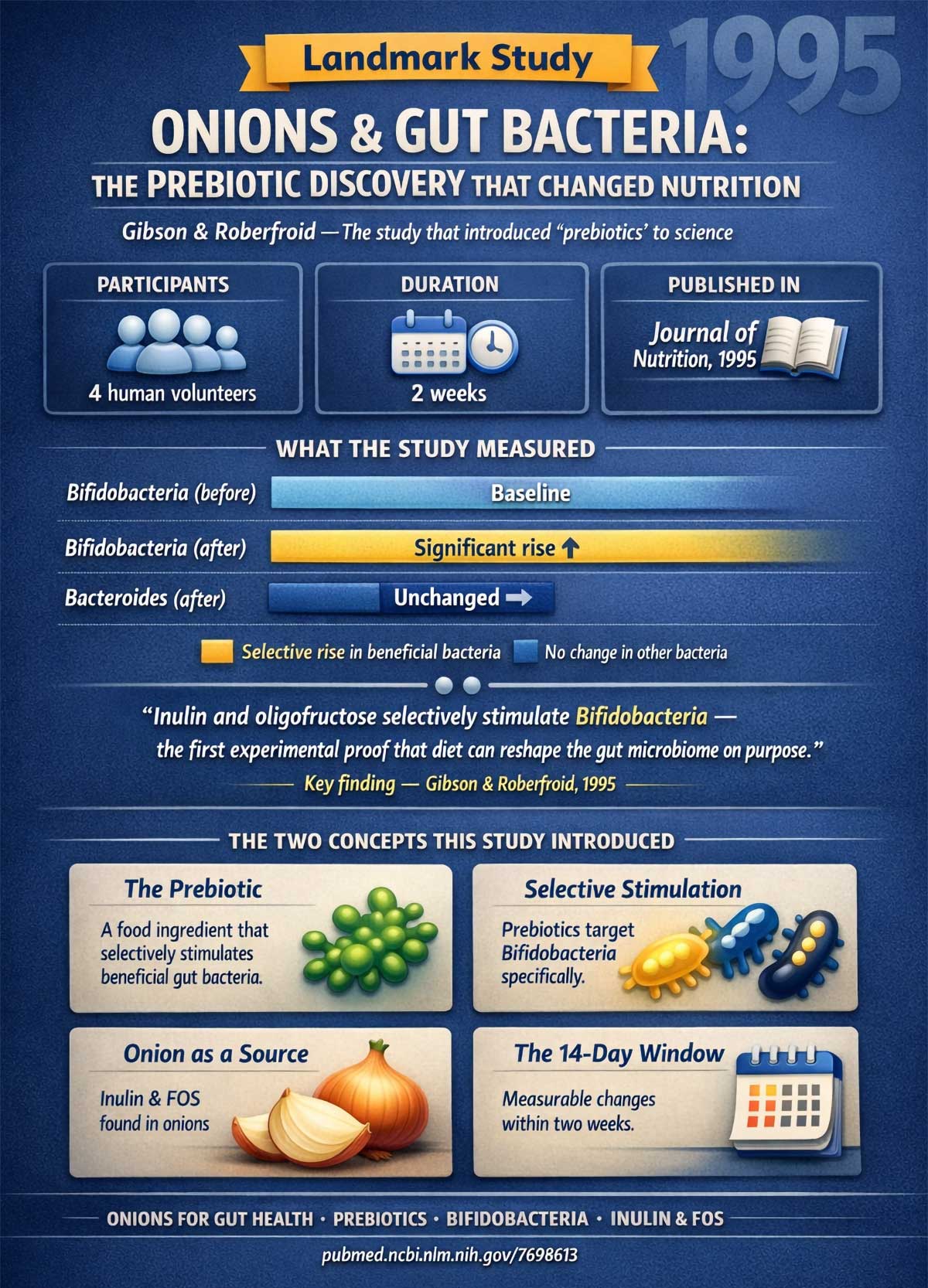
This selective effect was first described in a landmark 1995 study by Gibson and Roberfroid. They tested inulin and oligofructose in four human volunteers over two weeks. Bifidobacteria counts rose noticeably, while other bacterial groups—like Bacteroides—stayed relatively unchanged. This was the research that introduced the concept of “prebiotics”—foods that selectively stimulate beneficial bacteria (Gibson & Roberfroid, 1995).
Bifidobacterium are among the most studied beneficial bacteria in the gut. They help crowd out harmful microbes, support the gut lining, and produce compounds that other bacteria then use as fuel.
You probably won’t feel dramatic changes in week one. What you might feel is some mild bloating or gas—sometimes along with changes in bowel frequency or stool consistency. This tends to alarm people, but it’s actually a sign that bacterial fermentation is taking place and your microbiota is actively adapting. As your system adjusts to the new fiber load, these symptoms usually settle within 2–5 days, especially if you follow the gradual approach outlined later. This temporary discomfort is so common in prebiotic studies that researchers have a specific term for it: “prebiotic adaptation.” It’s not a sign something is wrong. It’s the opposite.
A 1999 crossover study by Bouhnik and colleagues tracked 12 healthy adults taking short-chain FOS for 15 days. Fecal Bifidobacterium counts increased in a dose-dependent way—more FOS, more growth—and participants tolerated the treatment well. The effect was measurable within the first week.
Week 2: Butyrate Builds Up
By week two, the bacterial changes from week one start producing something important: short-chain fatty acids (SCFAs)—particularly butyrate.
Butyrate is the primary fuel source for the cells lining your colon. It helps maintain the tight junctions between those cells, which keeps the gut wall intact. A compromised gut lining allows bacterial fragments and food particles to pass into the bloodstream—a condition sometimes called “leaky gut.” Butyrate directly counteracts this by strengthening the barrier.
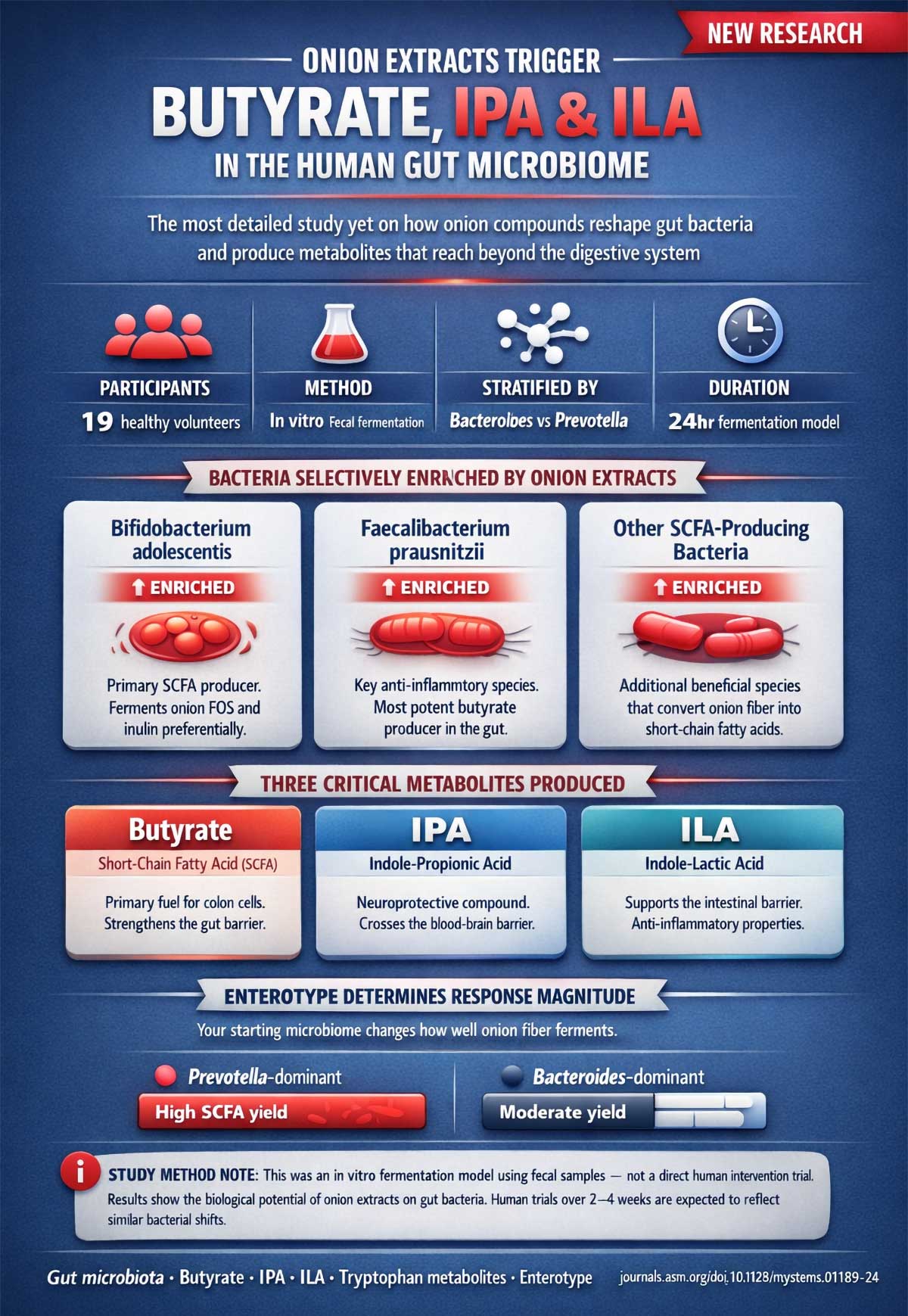
A 2024 study published in mSystems used an in vitro fermentation model with fecal samples from 19 healthy volunteers to test the effects of onion extracts on the gut microbiome. Researchers stratified participants by enterotype—more on that later—and measured what happened to their gut bacteria and metabolites over 24 hours of fermentation. The results were striking: onion extracts selectively enriched Bifidobacterium adolescentis, Faecalibacterium prausnitzii, and other SCFA-producing bacteria, while raising butyrate levels notably (mSystems, 2024).
Faecalibacterium prausnitzii deserves special mention. It’s one of the most abundant bacteria in a healthy human gut and one of the most potent butyrate producers known. Low levels of this organism have been linked to inflammatory bowel conditions, so its growth is a meaningful marker of gut health.
Around the same time, changes in fecal pH become detectable. As bacteria ferment fiber and produce SCFAs, the colon environment becomes slightly more acidic. This shift is important because many harmful bacteria—including certain strains of Clostridium and E. coli—struggle to survive in a low-pH environment. The onion, in effect, helps change the chemical climate of your colon in ways that favor health.
Week 3: The Metabolite Shift — IPA and ILA
Week three is where the science gets genuinely fascinating—and where most articles stop short.
Beyond butyrate, your gut bacteria also produce a class of compounds called tryptophan metabolites, including indole-propionic acid (IPA) and indole-lactic acid (ILA). These metabolites are generated when bacteria ferment tryptophan—an amino acid found in protein-containing foods—alongside prebiotic fibers.
The 2024 mSystems study found that onion extracts increased both IPA and ILA significantly in fecal fermentation models. This matters because IPA and ILA aren’t just digestive byproducts. They have roles that extend well beyond the gut.
IPA, for example, has been studied as a neuroprotective compound. It appears to cross the blood-brain barrier and may reduce oxidative stress in neural tissue. In animal models, elevated IPA has been tied to improved cognitive performance and reduced brain inflammation. Whether these effects translate directly to humans at the doses produced by prebiotic fermentation is still an active area of research—but the biological pathway is well-mapped and increasingly plausible. ILA, for its part, plays a role in supporting the intestinal barrier and has shown anti-inflammatory properties in early studies.
What this means practically is that a shift in your gut bacteria—driven by eating onions—can influence the production of molecules that affect your brain and nervous system. The gut-brain axis is bidirectional: the gut sends signals to the brain, and the brain responds. The tryptophan pathway is one of the key routes through which this communication happens.
This doesn’t mean eating an onion will fix anxiety or sharpen focus overnight. But the gut changes taking place during weeks two and three are producing metabolites with effects that go beyond digestion.
Week 4: Stabilization and Microbial Diversity
By the end of the first month, the microbiome begins to stabilize around a new baseline.
A wide-ranging meta-analysis by Roberfroid and colleagues, published in 2010 in the British Journal of Nutrition, reviewed human clinical trials on prebiotic fructans. It found that consistent prebiotic intake increased Bifidobacteria populations reliably across trials, with meaningful increases typically observed within two to three weeks. The authors described the gut microbiota changes as lasting and repeatable when dietary intake was maintained (Roberfroid et al., 2010).
The increase in Faecalibacterium prausnitzii tends to be most pronounced at this stage. A larger population of these bacteria means more butyrate being produced, stronger gut barrier function, and lower levels of inflammatory signals in the gut lining.
Microbial diversity—sometimes described as the “richness” of your internal ecosystem—also tends to improve. A large observational study by Vandeputte and colleagues (2017), involving over 1,100 adults, found that diets rich in prebiotic fibers were tied to higher Bifidobacteria abundance and greater overall microbial diversity. A more diverse microbiome is generally better equipped to handle disruption from illness, antibiotics, or changes in diet.
Why Your Results May Vary: The Enterotype Factor
Not everyone responds to onion fiber the same way. Your starting point matters.
Gut microbiomes can be broadly grouped into two types based on which bacteria dominate: those with higher Bacteroides and those with higher Prevotella. These are called enterotypes. The 2024 mSystems study specifically grouped its 19 participants by enterotype and found that the fermentation response to onion extracts differed between the groups.
People with Prevotella-dominant microbiomes appeared to ferment onion fibers more efficiently, producing higher SCFA yields. Those with Bacteroides-dominant profiles still benefited, but the magnitude was smaller.
This explains why two people can eat the same amount of onions for four weeks and have noticeably different experiences. It’s not that the onion isn’t working—it’s that the bacteria doing the fermentation are different to begin with. Over time, consistent prebiotic intake can gradually shift the composition of your microbiome, but the pace and ceiling of that shift vary from person to person. Other factors—including antibiotic history, current stress levels, and overall dietary variety—also influence how efficiently your microbiota ferments onion fiber and produces beneficial metabolites. Your starting microbiome is one variable among several.
Red Onions: A Different Profile
All onions contain inulin and FOS. But red onions bring something extra.
A 2021 study by Kaewpet and colleagues, published in Frontiers in Nutrition, used an in vitro fecal fermentation model to test red onion inulin-FOS extract on infant gut microbiota. The extract, which contained 74 g/L FOS, selectively promoted Bifidobacterium breve growth. The researchers identified neokestose—a specific type of FOS found in higher concentrations in red onions—as a particularly effective bifidogenic compound (Kaewpet et al., 2021).
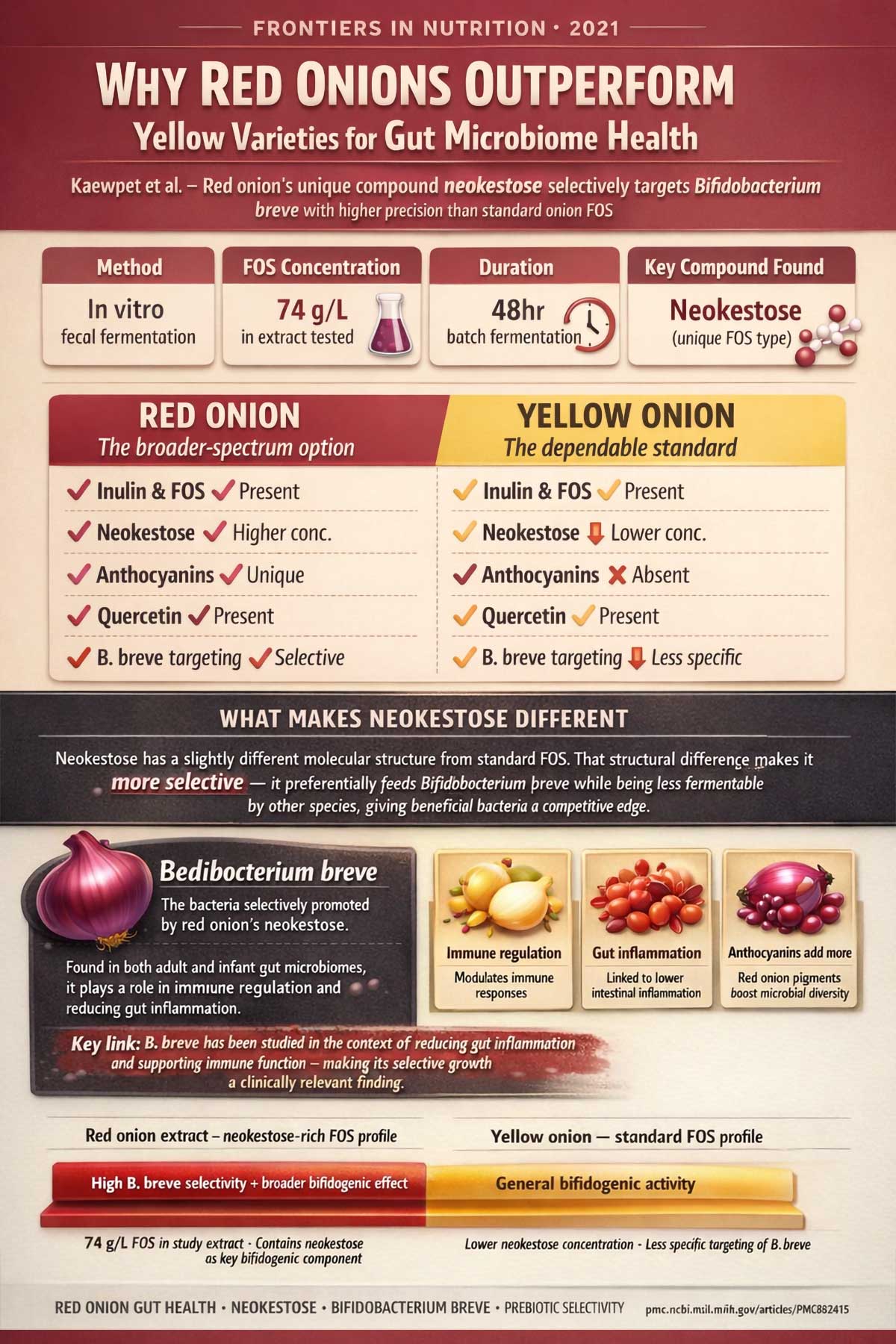
Neokestose has a slightly different molecular structure from the FOS types found in yellow or white onions. That structural difference appears to make it more selective in which bacteria it feeds, with Bifidobacterium breve being a key beneficiary. B. breve is tied to immune regulation and has been studied in the context of reducing gut inflammation.
Red onions also contain anthocyanins—the pigments responsible for their deep color. Anthocyanins are polyphenols with antioxidant activity. In the gut, a portion of these compounds is fermented by bacteria, potentially supporting microbial diversity further.
So while a yellow onion is by no means ineffective, red onions offer a broader range of gut-active compounds.
Raw vs. Cooked: Does It Matter?
Cooking changes onions in ways that affect their gut benefits.
Heat breaks down some of the FOS chains in onions, reducing the amount of intact prebiotic fiber that reaches the colon. If your primary goal is to feed Bifidobacteria through prebiotic fiber, raw onion delivers more of it.
That said, cooking has its own benefits. Heat increases the availability of quercetin—an antioxidant found in onions—by breaking down cell walls that would otherwise limit its absorption. Quercetin has been studied for anti-inflammatory and cardiovascular effects, and cooked onions deliver more of it than raw ones.
The practical takeaway is to mix it up. Use raw onion in salads, salsas, and sandwiches to preserve FOS content. Use cooked onion in soups, stir-fries, and sauces to get more quercetin. A diet that includes both gives you the widest range of benefits.
The Practical Protocol: Building Up Slowly
One mistake people make is adding too much onion too fast. Prebiotic fibers cause fermentation, and a rapid rise in fermentation can produce bloating and discomfort that feels discouraging—even though it’s biologically harmless.
A gradual approach works much better. Start with a quarter of a small onion daily for the first week. Move to half an onion in week two. By week three or four, work up to a full onion per day if your gut tolerates it comfortably.
Slavin’s 2013 review noted that onions contain roughly 2–6% of their dry weight as inulin and FOS, depending on variety and growing conditions. Even a modest daily serving delivers a meaningful prebiotic dose without needing to eat large quantities.
Consistency matters more than quantity. A small amount of onion eaten daily is more useful for shifting your microbiome than a large amount eaten occasionally. The bacteria need a steady supply to keep their growth advantage.
What Won’t Happen in Four Weeks
It’s worth being clear about what the research doesn’t show. Eating onions for a month won’t cure irritable bowel syndrome, resolve depression, or eliminate bloating for good—even though the metabolites being produced (butyrate, IPA, ILA) do have roles in these conditions. The microbiome changes are real, but they’re foundational. Think of them as necessary conditions, not sufficient ones.
Meaningful changes in gut symptoms or systemic health typically require sustained dietary shifts over months, not weeks. They often benefit from addressing other factors too—stress, sleep quality, physical activity, and overall diet variety. The four-week window tracked here is the point at which the microbiota shift begins to stabilize. It’s not the point at which you’ll feel dramatically different.
Knowing this up front helps set realistic expectations. You’re building a biological foundation, not taking a supplement with an overnight effect.
Conclusion
After four weeks of eating onions daily, the changes happening inside your gut are invisible—but measurable. Bifidobacteria populations are higher. Faecalibacterium prausnitzii has likely increased. Butyrate production is elevated. The gut barrier is stronger. Tryptophan metabolites like IPA and ILA are being produced in greater amounts.
None of this shows up in the mirror. You won’t feel a dramatic shift on day two or even day ten. But the biology is moving in a direction that matters for digestion, immune function, and potentially mood and brain health over the long term.
The onion has been part of human diets for thousands of years. It turns out the gut bacteria we’ve lived alongside have very specific reasons to want us to keep eating them.