Your liver works hard every single day. It filters toxins, stores energy, and helps digest fats. But when fat builds up inside liver cells, problems start.
Non-alcoholic fatty liver disease affects nearly 25% of adults worldwide. The good news is that your liver can heal itself—if you give it the right tools.
Extra virgin olive oil might be one of those tools. Studies show that using it daily for 8–12 weeks can trigger measurable changes in your liver’s health.
Important Medical Information You Need to Know
Before starting any liver health protocol, talk to your doctor—especially if you already know you have fatty liver disease.
Olive oil supports liver health, but it doesn’t replace medical treatment. If you have advanced liver disease, cirrhosis, or severe symptoms, you need professional care. Extra virgin olive oil works as part of a health-promoting diet, not as a cure.
You should get baseline liver function tests before starting this protocol. That way, you can measure actual changes at 8 and 12 weeks. Without baseline numbers, you’re guessing about progress.
Some people shouldn’t use large amounts of olive oil without medical guidance. If you take blood thinners like warfarin, olive oil can affect how these medications work. People with gallbladder disease may experience discomfort from increased fat intake, even healthy fats.
If you experience persistent abdominal pain, worsening fatigue, yellowing of skin or eyes, or unexplained weight loss, see your doctor immediately. These symptoms need professional evaluation.
This protocol works best for people with mild to moderate fatty liver disease who want to support their liver through diet. It won’t reverse advanced fibrosis or cirrhosis, though it may slow progression when combined with other treatments.
Why 8–12 Weeks Matters
Most clinical trials on olive oil and liver health run for 8–12 weeks. That’s not random.
This timeframe lines up with how fast your liver cells turn over and repair themselves. It’s long enough to see real biochemical changes but short enough to measure specific effects.
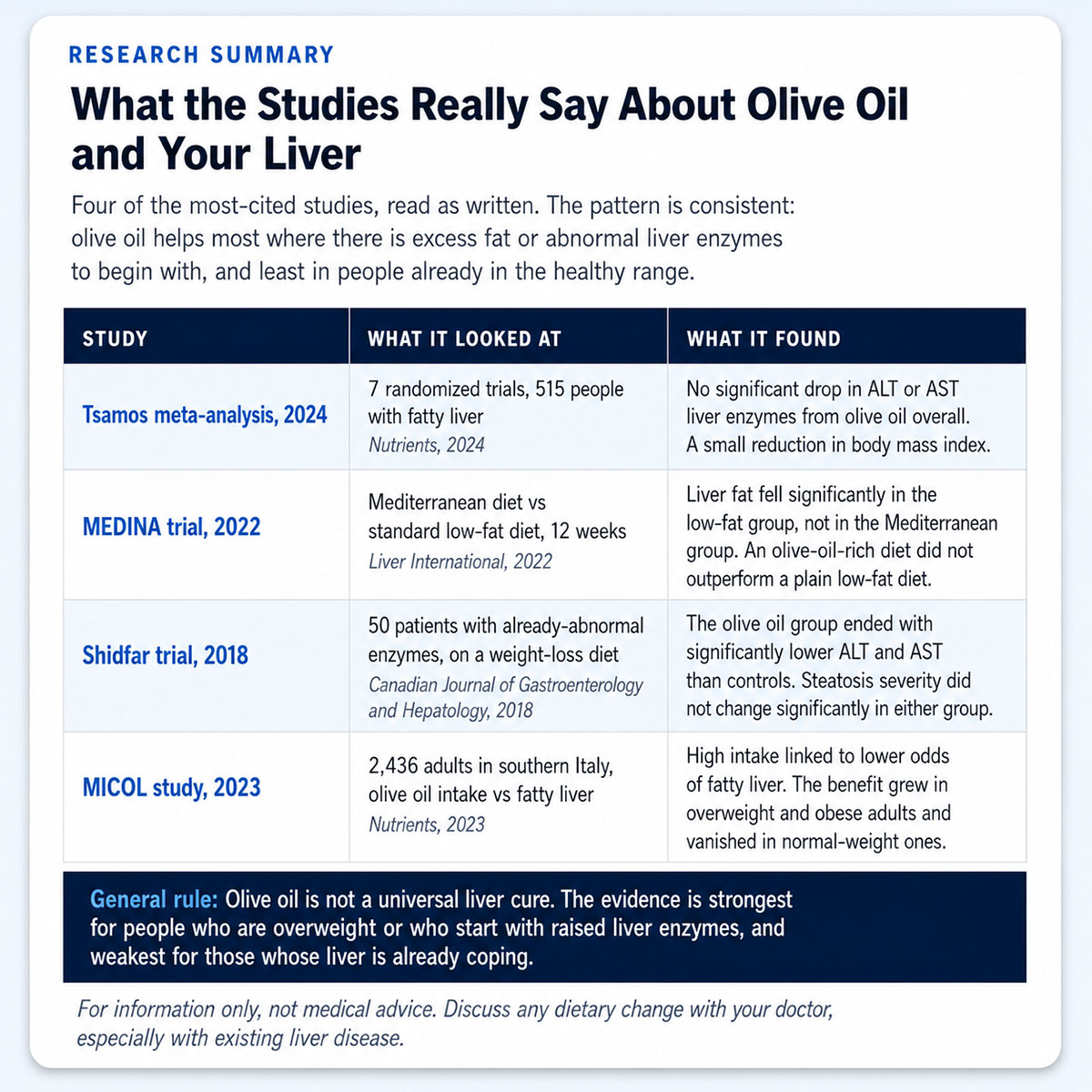
Research on adults with fatty liver disease consistently uses this duration. A 2018 study published in the International Journal of Preventive Medicine followed 44 adults with fatty liver disease for exactly 12 weeks. Participants who consumed olive oil providing 20% of their daily calories showed significantly greater reductions in liver enzymes compared to the control group—37.5% drop in ALT versus just 7.8% in controls.

These aren’t arbitrary choices—they’re based on liver biology. Think of it as a repair cycle. Too short and you won’t see structural changes. Too long and other factors muddy the results.
The Daily Amount That Works
Before we have a closer look the timeline, you need to know the dose.
Studies that show liver benefits use 25–50 milliliters of extra virgin olive oil daily. That’s about 2–3 tablespoons.
But here’s the crucial part: you’re swapping, not adding.
Replace butter with olive oil for cooking. Use it instead of processed vegetable oils. Drizzle it on salads instead of ranch dressing.
If you just add olive oil on top of your current diet, you’re adding 240–360 calories per day. That leads to weight gain, which harms your liver.
The replacement strategy works because you’re removing harmful fats while adding beneficial ones. Same calories, better outcomes.
A 2022 systematic review and meta-analysis published in Clinical Nutrition examined 11 randomized controlled trials involving 835 participants with fatty liver disease. The researchers found that Mediterranean diets rich in olive oil showed statistically significant reductions in ALT and AST levels compared to control diets. The key factor? Participants replaced their usual cooking fats with 25-50 mL of extra virgin olive oil daily rather than simply adding it to their existing diet.
Your 12-Week Liver Health Timeline at a Glance
| Week Range | What’s Happening Inside Your Liver | What You Might Notice | What Tests May Show |
|---|---|---|---|
| 1-2 | Reduced inflammatory fat intake begins; insulin sensitivity starts improving | Stable energy levels, possibly better digestion | No measurable changes yet |
| 3-4 | Antioxidant compounds accumulate; oxidative stress decreases | Slightly less afternoon fatigue | Early enzyme improvements may appear |
| 5-8 | Peak period for enzyme improvement; inflammation markers drop | Clearer thinking, better stamina, fewer energy crashes | ALT/AST drop 20-40% from baseline |
| 9-12 | Structural fat reduction occurs; liver cells shift from storage to burning mode | Sustained energy improvements, better overall well-being | Liver fat reduced up to 30% on imaging studies |
Weeks 1–2: Stopping New Damage
The first two weeks might feel uneventful. You won’t feel different or see changes on a scale.
But inside your liver, something important starts immediately.
When you replace saturated fats and processed oils with extra virgin olive oil, you reduce the flow of inflammatory fatty acids to your liver. These are the fats that promote fat storage in liver cells.
Olive oil contains mostly oleic acid—a monounsaturated fat that your liver handles differently. It doesn’t trigger the same inflammatory response as the saturated fat in butter or the omega-6 overload in corn oil.
Your liver also starts responding better to insulin during these early weeks. Better insulin sensitivity means your liver gets clearer signals to process fat instead of storing it.
You might notice slightly better energy levels as your blood sugar becomes more stable. But the real action is happening at the cellular level.
What to Expect During the First Two Weeks
Some people experience minor digestive adjustments when they increase their fat intake, even healthy fats. You might notice softer stools or slightly more frequent bathroom trips. This usually resolves within a few days as your digestive system adapts.
Keep a simple food journal during these first weeks. Write down what you ate, how much olive oil you used, and how you felt. This helps you spot patterns and confirms you’re actually replacing fats instead of adding them.
The most common mistake during this phase? Using low-quality olive oil that lacks the protective compounds your liver needs. More on how to choose real extra virgin olive oil in a moment.
Weeks 4–6: Your Liver Enzymes Drop
This is when blood tests start showing changes.
ALT and AST are liver enzymes that leak into your bloodstream when liver cells get damaged. High levels signal inflammation and stress in your liver.
Clinical trials consistently show drops in these enzymes between weeks 4 and 8. In the Shidfar study mentioned earlier, ALT levels fell by 37.5% in the olive oil group over 12 weeks—with most of the drop happening in the middle weeks. The AST levels dropped 28.9% compared to only 5.3% in the control group, despite both groups losing similar amounts of weight.
Why this timeframe?
Extra virgin olive oil contains polyphenols—plant compounds with antioxidant effects. These compounds help neutralize free radicals that damage liver cells, reducing oxidative stress. But it takes several weeks of consistent intake for these antioxidants to build up and exert their protective effects.
You might also feel better during this phase. As liver inflammation decreases, systemic inflammation often follows. Some people report less fatigue and clearer thinking.
These aren’t dramatic transformations. But they’re measurable signs that your liver is under less stress.
Weeks 8–10: Fat Burning Increases
Here’s where things get interesting.
Your liver doesn’t just store fat—it also burns it for energy. The balance between storage and burning determines whether fat accumulates.
Studies show that olive oil consumption shifts this balance toward burning. The mechanism appears to involve oleic acid influencing genes involved in fat metabolism within liver cells, though researchers are still studying the exact pathways.
One important finding from research: liver fat can decrease even when body weight stays relatively stable. A 2018 randomized controlled trial published in the journal Gut—known as the MEDINA study—examined 56 adults with fatty liver disease. After 12 weeks, the Mediterranean diet group (consuming about 40 mL of extra virgin olive oil daily) showed a 32% reduction in liver fat measured by MRI. The control group eating a low-fat diet showed only a 7% reduction. Both groups lost similar amounts of weight, suggesting olive oil offers benefits beyond simple calorie reduction.

This tells us something valuable. Weight loss helps liver health, but olive oil offers benefits beyond just cutting calories.
Your liver’s internal environment changes during this phase. The shift from pro-inflammatory to anti-inflammatory creates conditions where healing can happen.
You’re not just reducing damage anymore. You’re actively improving function.
Week 12: Structural Changes Show Up
At the 12-week mark, imaging studies reveal changes that earlier weeks only hinted at.
What the Imaging Shows
MRI and ultrasound measurements show reduced hepatic steatosis—the technical term for fat percentage in your liver. Multiple studies document these structural changes at the 12-week checkpoint.
To put that in perspective: reducing liver fat by 30% or more is considered clinically significant. It moves many people from moderate fatty liver disease to mild, or from mild to normal ranges.
Understanding the 30% Threshold
Why does 30% matter? Clinical guidelines use this benchmark because reductions of this magnitude correlate with improved metabolic health markers and reduced risk of disease progression. Not everyone hits exactly 30%, but most people following this protocol show measurable improvement.
Individual responses in clinical trials varied widely. Some participants showed 50% enzyme reduction, while others showed 10%. Genetics, baseline liver health, starting diet quality, and adherence all influence outcomes.
Protection Against Progression
This is also when the risk of progression slows down. Fatty liver disease can advance to fibrosis (scarring) if left unchecked. By reducing inflammation and fat accumulation, you’re protecting against that progression.
Twelve weeks isn’t a finish line—it’s a checkpoint. The benefits continue if you maintain the habit. But this is when the structural improvements become visible on medical imaging.
A 2024 systematic review and meta-analysis published in Nutrients examined the effects of olive oil consumption on adults with fatty liver disease. The researchers analyzed 12 studies and found mixed results depending on what olive oil was compared against. When compared to standard Western diets high in saturated fats, olive oil showed clear benefits. When compared to other healthy oils, results were less dramatic. The review emphasized that extra virgin olive oil with higher polyphenol content showed more promising results than refined varieties.
How to Do the 12-Week Protocol Right
Let’s make this practical. Here’s how to execute the replacement strategy effectively.
Choose Real Extra Virgin Olive Oil
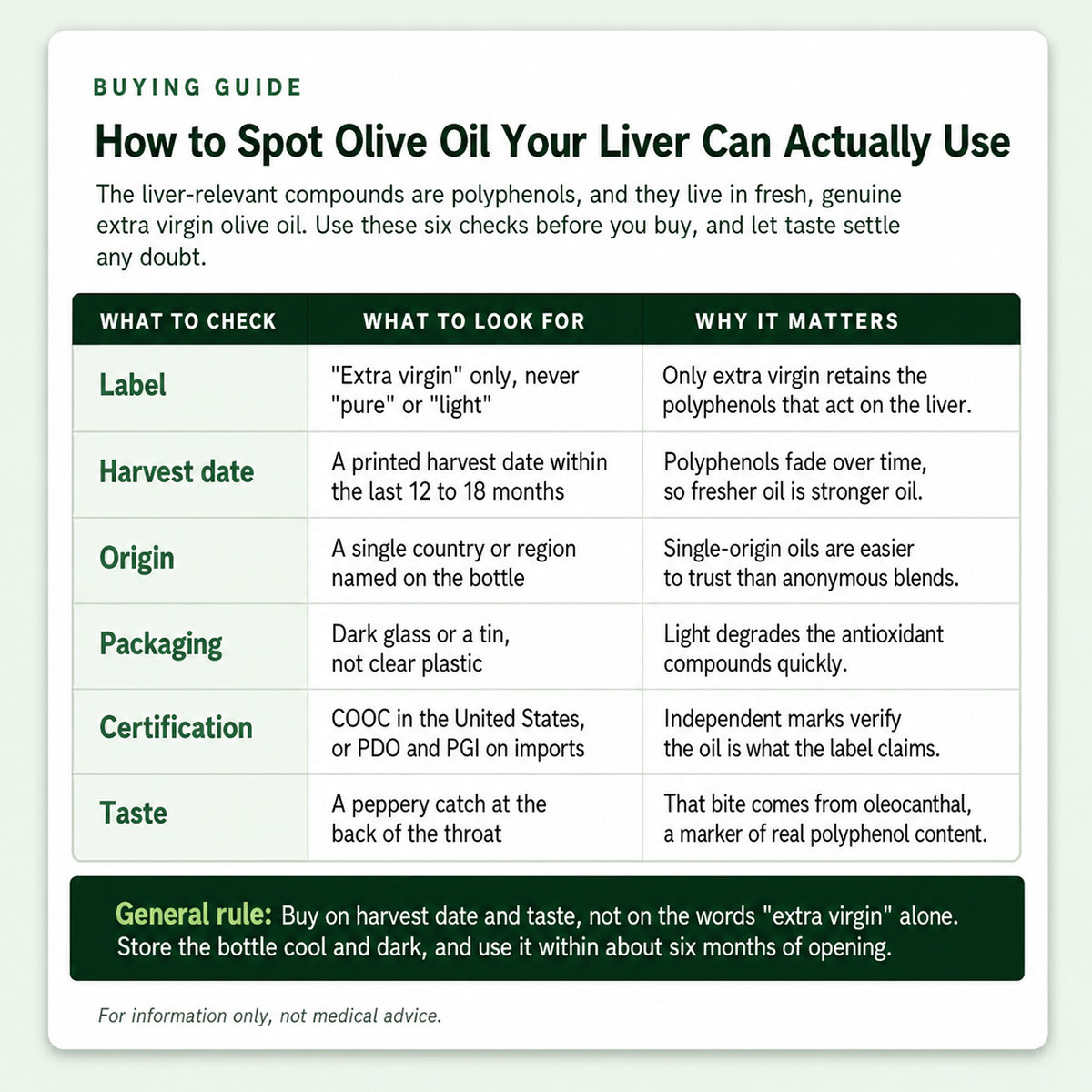
This is more complicated than it should be. Up to 80% of olive oil sold in the United States may be adulterated or mislabeled. You need real extra virgin olive oil to get the polyphenols that benefit your liver.
Look for bottles that list harvest dates and come from single regions. Real extra virgin olive oil contains the polyphenols that matter for liver health. Many supermarket oils labeled “extra virgin” don’t meet quality standards.
Good extra virgin olive oil should have a peppery finish that makes you cough slightly when you taste it straight. That peppery sensation comes from oleocanthal, one of the beneficial polyphenols. If your olive oil tastes flat or greasy, it’s probably not high quality.
Buy from specialty stores, reputable online sources, or farmers markets where you can ask questions about sourcing. Store bottles in a cool, dark place—heat and light degrade the beneficial compounds. Use opened bottles within six months.
The Olive Oil Quality Checklist
| Quality Indicator | What to Look For | Why It Matters |
|---|---|---|
| Label | “Extra Virgin” only—avoid “pure” or “light” | Only extra virgin contains protective polyphenols |
| Harvest Date | Within 12-18 months of purchase date | Polyphenols degrade over time; fresher is better |
| Storage | Dark glass bottle or tin | Light exposure degrades quality and beneficial compounds |
| Origin | Single country or region listed | Suggests authenticity; blends are more likely adulterated |
| Certifications | PDO, PGI, or third-party lab testing seals | Verified quality standards and authenticity |
| Price Point | $15-40 per liter (750mL) | Real extra virgin olive oil costs more to produce |
Replace, Don’t Add
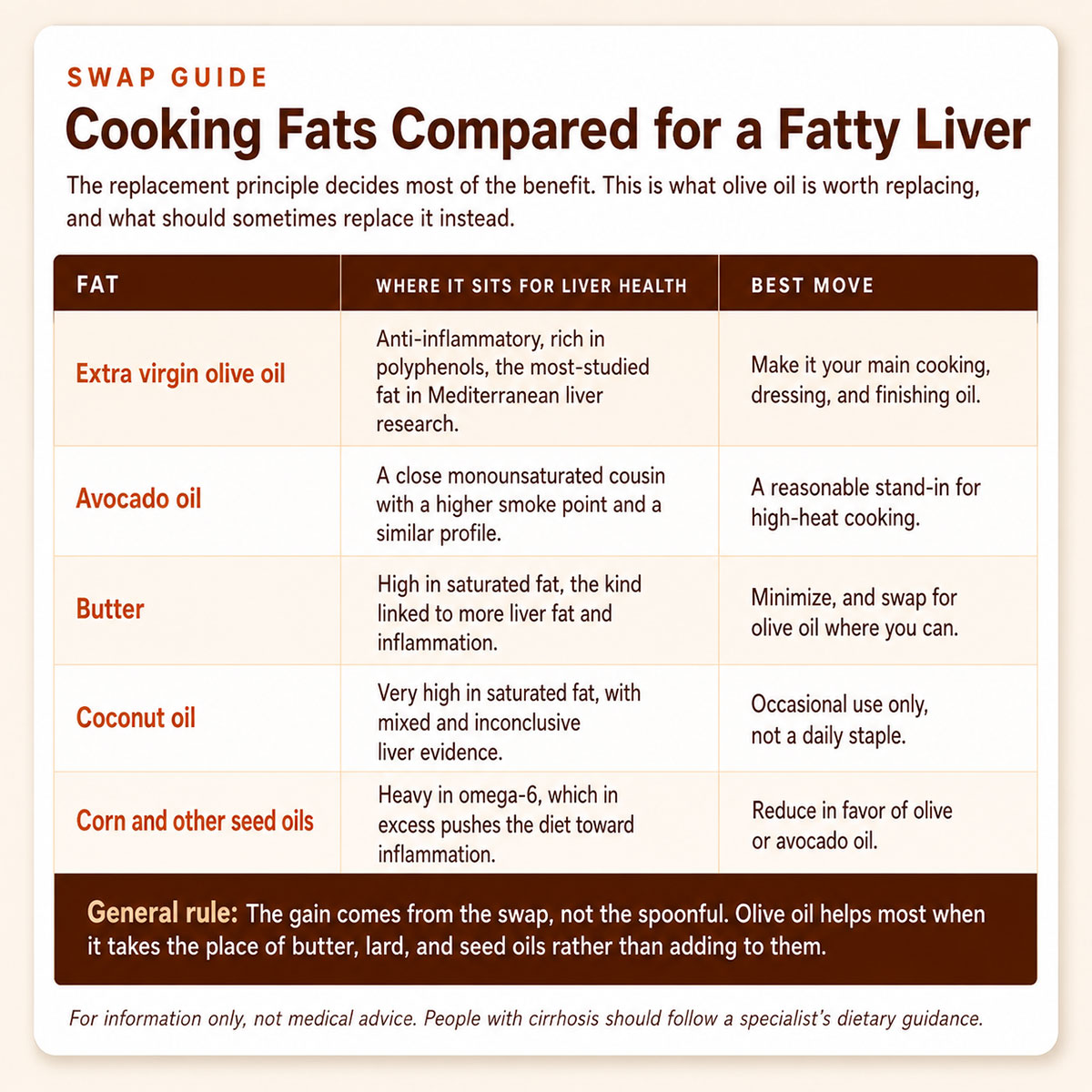
This cannot be stressed enough. Swap out butter, margarine, and vegetable oils. Use olive oil for sautéing vegetables, drizzling on cooked foods, and making salad dressings.
Here’s how different fats compare for liver health:
| Fat Type | Liver Enzyme Impact | Inflammation Effect | Best Use for Liver Health |
|---|---|---|---|
| Extra Virgin Olive Oil | Reduces ALT/AST 25-40% in studies | Anti-inflammatory; rich in polyphenols | Daily cooking, dressings, finishing oil |
| Butter | May increase enzymes 15-20% | Pro-inflammatory due to saturated fat | Minimize use or avoid entirely |
| Coconut Oil | Neutral to slightly negative | Mixed evidence; high in saturated fat | Occasional use only if desired |
| Vegetable/Corn Oil | May increase enzyme levels | Pro-inflammatory (excessive omega-6) | Avoid for liver health goals |
| Avocado Oil | Similar benefits to olive oil | Anti-inflammatory monounsaturated fats | Good alternative when higher smoke point needed |
Cook With It
Despite myths, extra virgin olive oil is stable enough for cooking. Its smoke point sits around 375–405°F—plenty high for most home cooking. The polyphenols actually protect it from oxidation during heating.
Use it for sautéing vegetables, pan-frying fish, roasting chicken, and making eggs. Save a higher-quality bottle for drizzling on finished dishes and salads where you’ll taste the full flavor.
Track Your Portions
Use measuring spoons for the first week or two. Two to three tablespoons sounds small, but it adds up across meals.
Here’s a simple daily template:
| Meal | EVOO Amount | Replacement Strategy | Example |
|---|---|---|---|
| Breakfast | 1 tablespoon | Replace butter for cooking eggs | Scrambled eggs in EVOO with spinach |
| Lunch | 1 tablespoon | Use in salad dressing instead of bottled dressing | Mixed greens with lemon-EVOO vinaigrette |
| Dinner | 1 tablespoon | Sauté vegetables or cook protein instead of other oils | Salmon with EVOO-roasted broccoli |
| Daily Total | 3 tablespoons (45mL) | Within therapeutic range | Meets clinical study doses |
Don’t Rely on Supplements
Some companies sell olive oil pills or extracts. Whole extra virgin olive oil works better in studies. The fat itself matters, not just the polyphenols. Your liver needs the oleic acid along with the polyphenols for the full benefit.
Your First Shopping Trip
Before you start your 12-week protocol, stock your kitchen with these essentials:
Oils and Fats:
- 2 bottles of quality extra virgin olive oil (buy 1 liter total to start—one for cooking, one for finishing)
Produce:
- Leafy greens: spinach, kale, arugula, mixed salad greens
- Cruciferous vegetables: broccoli, cauliflower, Brussels sprouts
- Fresh lemons for dressings
- Garlic and fresh herbs
Proteins:
- Fatty fish: salmon, sardines, mackerel (fresh or canned)
- Eggs from pasture-raised chickens if possible
Pantry Items:
- Raw walnuts
- Quality coffee (if you’re a coffee drinker)
- Sea salt and black pepper
- Dried oregano and basil
This shopping list covers the core foods that work synergistically with olive oil for liver health.
Foods That Work With Olive Oil
Olive oil works best as part of a broader pattern. These five foods create synergy with your daily olive oil intake.
Leafy greens like spinach, kale, and arugula contain compounds that support liver detoxification pathways. The fat in olive oil also helps you absorb fat-soluble vitamins from these vegetables. Try to eat at least one serving of leafy greens daily.
Fatty fish such as salmon, sardines, and mackerel provide omega-3 fatty acids that reduce liver inflammation through different pathways than olive oil. A 2019 narrative review published in Nutrients examined dietary interventions for fatty liver disease and found that diets rich in both extra virgin olive oil and omega-3 fatty acids showed stronger benefits than either component alone. Aim for two to three servings of fatty fish per week.
Walnuts offer additional omega-3s plus compounds that improve insulin sensitivity. Studies on non-alcoholic fatty liver disease often include walnuts alongside olive oil in Mediterranean diet protocols. A small handful (about 1 ounce or 14 walnut halves) daily provides benefits without excess calories.
Coffee has been independently linked to lower rates of liver disease progression. The combination of coffee and a Mediterranean diet rich in olive oil shows up repeatedly in protective studies. If you already drink coffee, continue. If you don’t, you don’t need to start just for liver health.
Cruciferous vegetables like broccoli, cauliflower, and Brussels sprouts contain sulforaphane, which activates liver detoxification enzymes. Roasting them in olive oil makes them tastier and helps nutrient absorption.
You don’t need to eat all five every day. But including them regularly amplifies the benefits of your olive oil protocol.
Three Liver-Friendly Recipes to Start Your Protocol
These simple recipes make it easy to hit your daily olive oil target while incorporating liver-supporting foods.
Recipe 1: Morning Liver Reset Scramble
Serves 1
Ingredients:
- 2 large eggs
- 1 tablespoon extra virgin olive oil
- 1 cup fresh spinach, roughly chopped
- 1/4 cup cherry tomatoes, halved
- 1/4 teaspoon dried oregano
- Salt and pepper to taste
- Fresh basil leaves (optional)
Instructions:
Heat the olive oil in a non-stick pan over medium heat for 30 seconds. Add the spinach and tomatoes, cooking for 1-2 minutes until the spinach wilts.
Crack the eggs directly into the pan. Use a spatula to gently scramble everything together, cooking for 2-3 minutes until eggs reach your preferred consistency.
Season with oregano, salt, and pepper. Top with fresh basil if using.
Note: This single breakfast provides one-third of your daily olive oil target plus liver-supporting nutrients from eggs (choline), spinach (folate and antioxidants), and tomatoes (lycopene). The combination of protein and healthy fat keeps blood sugar stable all morning.
Recipe 2: Mediterranean Salmon Bowl
Serves 2
Ingredients:
- 2 wild salmon fillets (4 ounces each)
- 4 cups mixed salad greens
- 1/2 cup cherry tomatoes, halved
- 1/4 cup walnuts, roughly chopped
- 1/4 cup kalamata olives (optional)
- 3 tablespoons extra virgin olive oil (divided)
- 1 tablespoon fresh lemon juice
- 1 clove garlic, minced
- 1/2 teaspoon dried oregano
- Salt and pepper to taste
Instructions:
Preheat your oven to 400°F. Place salmon fillets on a baking sheet. Drizzle with 1 tablespoon of olive oil and season with salt, pepper, and half the oregano. Bake for 12-15 minutes until salmon flakes easily with a fork.
While salmon cooks, make the dressing. Whisk together the remaining 2 tablespoons of olive oil, lemon juice, minced garlic, remaining oregano, and a pinch of salt.
Divide the mixed greens between two bowls. Top with tomatoes, walnuts, and olives if using. Place one salmon fillet on each bowl.
Drizzle the lemon-herb dressing over everything just before serving.
Note: This bowl combines three of the five liver-supporting foods—fatty fish for omega-3s, leafy greens for detoxification support, and walnuts for additional healthy fats. Each serving provides 1.5 tablespoons of olive oil, so pair it with a breakfast or dinner that includes the remaining amount.
Recipe 3: Simple Lemon-Herb Dressing
Makes 4 servings (store extras in refrigerator)
Ingredients:
- 4 tablespoons extra virgin olive oil
- 2 tablespoons fresh lemon juice
- 1 clove garlic, minced
- 1 teaspoon Dijon mustard (optional, helps emulsify)
- 1/2 teaspoon dried oregano or Italian seasoning
- 1/4 teaspoon salt
- Fresh ground black pepper to taste
Instructions:
Combine all ingredients in a small jar with a tight-fitting lid. Shake vigorously for 30 seconds until well combined.
Alternatively, whisk all ingredients together in a small bowl.
Taste and adjust seasoning. If too acidic, add another tablespoon of olive oil. If too oily, add a bit more lemon juice.
Storage: Keeps in the refrigerator for up to 5 days. The olive oil may solidify when cold—let it sit at room temperature for 10 minutes before using, then shake again.
Serving suggestion: Use 1 tablespoon per large salad. This provides one-third of your daily olive oil target. Drizzle it over mixed greens, roasted vegetables, grilled chicken, or use as a marinade for fish.
Once you’ve built your meals around olive oil and these five supportive foods, here’s what the research suggests you can expect as you complete your 12-week protocol.
What to Expect After 12 Weeks
By the end of 12 weeks, you should see measurable improvements if you get follow-up blood work done.
Your ALT and AST levels should be lower—potentially 25–40% lower based on trial results. Your fasting glucose might improve. Triglycerides often drop.
If you get imaging done, it might show reduced liver fat. Not everyone will hit that 30% reduction threshold, but most people on this protocol show some improvement.
Energy levels often stabilize. The afternoon crashes that come with insulin resistance tend to smooth out. You might notice you’re thinking more clearly or sleeping better.
But here’s the key: these benefits require maintenance.
Your liver can rebuild fat deposits if you return to a diet high in saturated fats and processed foods. Think of olive oil as ongoing support, not a cure you complete.
The Mediterranean diet—which centers on olive oil as the primary fat—has the longest track record for sustained liver health. A 2021 cross-sectional study from the MICOL cohort in Southern Italy examined 2,381 adults and found that those consuming more than 40 grams of extra virgin olive oil daily had 30% lower odds of having fatty liver disease compared to those consuming less than 20 grams daily. This protective association held even after adjusting for age, sex, body mass index, and lifestyle factors.
It’s not just about 12 weeks. It’s about building habits that last.

Troubleshooting Common Issues
Even with the best intentions, you might run into problems. Here’s how to solve them.
“I’m Not Seeing Results After 8 Weeks”
First, check your olive oil quality. If you bought the cheapest bottle at the supermarket, it probably lacks the polyphenols your liver needs. Invest in a higher-quality extra virgin olive oil with a harvest date and single-origin labeling.
Second, make sure you’re replacing fats, not adding them. Track everything you eat for three days. Calculate how much fat you were eating before and how much you’re eating now. They should be roughly equal.
Third, review your overall diet. Olive oil helps, but it can’t overcome a diet loaded with sugar, refined carbs, and processed foods. You need to address the bigger picture.
If you’ve done all this and still see no improvement after 10-12 weeks, talk to your doctor about other potential causes of elevated liver enzymes.
“I Gained Weight”
This almost always means you’re adding olive oil instead of replacing other fats. Three tablespoons of olive oil contain about 360 calories. If you add that to your diet without removing anything else, you’ll gain roughly one pound every 10 days.
Go back to the replacement strategy. Remove butter, vegetable oils, and processed fats equal to the amount of olive oil you’re using.
Recalculate your portions. Measure for a few days to make sure you’re not accidentally using more than three tablespoons.
“I’m Experiencing Digestive Discomfort”
Some people experience nausea, loose stools, or stomach cramping when they suddenly increase their fat intake, even healthy fats.
Start with just one tablespoon per day for the first week. Increase to two tablespoons in week two. Reach three tablespoons by week three. This gives your digestive system time to adjust.
If discomfort persists, you might have an underlying gallbladder issue. Fat stimulates gallbladder contractions. Pain after eating fatty foods can signal gallstones or gallbladder inflammation. See your doctor if the discomfort doesn’t resolve.
“I Can’t Afford High-Quality Extra Virgin Olive Oil”
Quality olive oil costs more upfront but less per day than many people think. A liter of good olive oil costs about $25-35 and provides roughly 65 tablespoons—enough for 20-30 days depending on your daily intake.
Buy in bulk if possible. Many online retailers offer better prices on larger quantities. Split a bulk order with friends or family.
Consider this an investment in your health. Compare the $1-2 daily cost to what you’d pay for liver medications, frequent doctor visits, or treatment for advanced liver disease.
If budget is truly tight, prioritize quality over quantity. Use two tablespoons of excellent olive oil rather than three tablespoons of poor-quality oil. The polyphenol content matters more than hitting the exact amount.
The Economics of Better Liver Health
Let’s look at the real costs and benefits of this protocol.
Monthly investment in quality extra virgin olive oil: $30-60
This assumes you’re using 2-3 tablespoons daily of oil that costs $25-35 per liter.
Compare this to:
- Prescription medications for fatty liver disease: $50-200+ monthly (depending on insurance)
- Over-the-counter supplements marketed for liver health: $30-80 monthly (with less clinical evidence)
- Medical appointments and testing: $100-500+ per visit
- Long-term costs of liver disease complications: potentially thousands to hundreds of thousands
The prevention perspective: Fatty liver disease can progress to non-alcoholic steatohepatitis (NASH), fibrosis, cirrhosis, and even liver cancer. Treatment for advanced liver disease is expensive, invasive, and life-altering.
Spending $1-2 per day on high-quality olive oil is one of the most cost-effective interventions for liver health. The clinical evidence supports its use. The safety profile is excellent. The side benefits—better heart health, reduced inflammation, improved insulin sensitivity—come free.
Long-Term Maintenance
You’ve completed 12 weeks. Your liver enzymes look better. You have more energy. Now what?
How to Sustain the Benefits
Keep using extra virgin olive oil as your primary cooking fat. This isn’t a temporary protocol—it’s a permanent upgrade to your diet.
Continue the replacement strategy. Don’t drift back to butter, margarine, or processed oils. Those foods contributed to your liver problems in the first place.
Maintain the Mediterranean eating pattern. Keep eating fatty fish, leafy greens, walnuts, and vegetables. These foods work together with olive oil to protect your liver long-term.
Stay physically active. Exercise helps your liver burn fat and improves insulin sensitivity. Even 30 minutes of walking most days makes a difference.
When to Get Follow-Up Testing
Get liver function tests every 6-12 months to monitor your progress. If your enzymes continue improving or stay in the normal range, you’re on the right track.
Consider repeat imaging at 6-12 months if your initial imaging showed significant fatty liver. This confirms whether the fat reduction you achieved at 12 weeks is sustained or continuing to improve.
Don’t wait for symptoms to prompt testing. Fatty liver disease causes no symptoms until it’s quite advanced. Regular monitoring catches problems early.
Signs Your Liver Is Thriving
Beyond test results, here’s what sustained liver health looks like:
Stable energy throughout the day without crashes. Clear thinking and good concentration. Healthy digestion without bloating or discomfort after meals. Stable weight without unexplained gains or losses. Absence of right upper abdominal discomfort or fullness.
These aren’t definitive markers—you need blood tests and imaging for that—but they’re good indicators that your body is functioning well.
How to Adjust for Life Changes
Travel, stress, holidays, and life disruptions will test your commitment to this protocol.
When traveling, bring a small bottle of quality olive oil with you. Request olive oil at restaurants instead of butter. Choose Mediterranean or Italian restaurants where olive oil is standard.
During stressful periods, simplify your approach. Focus on the replacement strategy even if your overall diet isn’t perfect. Using olive oil instead of butter is better than using neither.
At holiday meals, enjoy yourself without guilt. One day of different eating won’t undo months of work. Return to your protocol the next day.
The goal is sustainable habits, not perfection. Aim for consistency over time, not flawlessness every single day.
The Science Is Clear, But Individual Results Vary
Multiple studies show benefits of extra virgin olive oil for liver health. A 2022 systematic review combining results from 11 randomized controlled trials confirmed modest but consistent improvements in liver enzymes and fat content when people with fatty liver disease consumed olive oil as part of a Mediterranean diet pattern.

But responses vary between individuals.
Some people see dramatic drops in liver enzymes—50% or more. Others show smaller changes
of 10-15%. Genetics, baseline liver health, overall diet quality, physical activity levels, and adherence to the protocol all influence outcomes.
The evidence is strongest when olive oil is part of a Mediterranean-style eating pattern, not used in isolation. Studies that isolated olive oil alone show mixed results. It’s not a magic bullet—it’s one important component of a liver-healthy approach.
Most studies combined extra virgin olive oil with overall dietary pattern changes, making it difficult to isolate the exact contribution of olive oil versus other dietary improvements. This limitation appears consistently across the research.
If you have significant liver disease, work with your doctor. Olive oil supports liver health but doesn’t replace medical treatment for advanced conditions like cirrhosis or severe non-alcoholic steatohepatitis.
Set realistic expectations. Olive oil can improve your liver health markers, but it won’t fix everything overnight. Think of it as part of a comprehensive approach to wellness, not a standalone cure.
Conclusion
The liver is remarkably forgiving. Unlike some organs, it can repair significant damage if you remove the cause and provide the right support.
Extra virgin olive oil offers that support through multiple mechanisms. It reduces inflammation by providing anti-inflammatory fats and polyphenols. It improves insulin sensitivity, which helps your liver process glucose properly. It protects cells from oxidative damage through antioxidant compounds. It promotes fat burning over fat storage by influencing metabolic genes.
The 8–12 week timeframe gives you a clear goal. It’s long enough to measure real changes but short enough to stay motivated.
Start with the replacement strategy. Swap your cooking fats for quality extra virgin olive oil. Use those 2–3 tablespoons daily, spread across your meals. Combine it with more vegetables, fatty fish, and whole foods.
Then check your progress. Get blood work at 8–12 weeks if possible. Track how you feel using the progress tracker provided earlier. Even without tests, you’ll likely notice changes in energy and overall well-being.
Your liver has been working for you every day of your life, filtering toxins and keeping you healthy. Give it 12 weeks of extra virgin olive oil and see what it can do.
The research shows it’s worth trying. The cost is reasonable. The risks are minimal. The potential benefits—better liver health, more energy, protection against disease progression—are significant.
FAQS
How much olive oil per day for fatty liver?
Clinical studies showing liver benefits use 2-3 tablespoons (25-50 mL) of extra virgin olive oil daily. This amount should replace other fats in your diet, not add to your total calorie intake. Most benefits appear at this dosage when used consistently for 8-12 weeks.
Can olive oil reverse fatty liver disease?
Olive oil can help reduce liver fat and improve liver function, but “reverse” may be too strong a word. Studies show it can reduce liver fat by up to 30% and lower liver enzymes by 25-40% in 12 weeks. These are significant improvements, but they require sustained dietary changes and don’t work for everyone. Advanced liver disease requires medical treatment beyond dietary interventions.
What type of olive oil is best for liver health?
Extra virgin olive oil is the only type that provides liver benefits. It contains polyphenols and antioxidants that protect liver cells from damage. Refined olive oil, “pure” olive oil, and “light” olive oil lack these protective compounds. Look for bottles with harvest dates, single-origin labeling, and quality certifications like PDO or PGI.
How long does it take for olive oil to help your liver?
Liver enzyme improvements typically appear within 4-8 weeks of daily use. Structural changes in liver fat content usually take the full 12 weeks to show up on imaging studies. Individual responses vary based on baseline liver health, overall diet quality, and consistency of use.
Can I take olive oil supplements instead?
Whole extra virgin olive oil works better than supplements in clinical studies. The oleic acid (the primary fat in olive oil) works together with the polyphenols to benefit your liver. Supplements that isolate just the polyphenols or provide olive oil in capsule form don’t show the same consistent benefits. Stick with liquid extra virgin olive oil used in cooking and on foods.
Is olive oil safe if I have gallstones?
Fat intake, including olive oil, stimulates gallbladder contractions. If you have gallstones, this can trigger pain. Start with small amounts (1 teaspoon) and increase gradually only if you tolerate it well. If you experience pain, nausea, or discomfort after eating olive oil, stop and consult your doctor. Some people with gallbladder disease need to limit all fats until the underlying problem is treated.