Bone density naturally declines with age, but the right resistance exercises can help slow the process. The key is choosing movements that actually challenge your bones.
The advice has been consistent for thirty years: walk for your bones. It is, for the most part, wrong.
Walking is excellent for your cardiovascular system and your joints. As a bone-building strategy after 60, it barely registers. Bone tissue responds to mechanical stress that exceeds what it experiences during ordinary daily movement, and a comfortable walk does not clear that threshold.
After age 50, bone density declines at roughly 1 to 2 percent per year. For women in the years immediately following menopause, that rate can reach 3 to 5 percent annually. Over 54 million Americans are living with low bone density or osteoporosis, and one in five people who fracture a hip will not survive the following year. These are not numbers that walking solves.
What actually moves the needle is targeted resistance training, using dumbbells to place controlled load on the bones most prone to fracture: the spine, the hips, and the wrists. Add one complementary loading strategy that most routines leave out entirely (one your skeleton is specifically built to respond to) and the 10-minute workout here gives your bones the kind of signal they require.
That second strategy comes later. First, a brief look at what the numbers on your bone density report actually mean.
What Your DEXA Results Actually Mean
Bone mineral density (BMD) tests use a scale called T-scores to compare your bone density against that of a healthy 30-year-old, the age at which bone mass typically peaks.
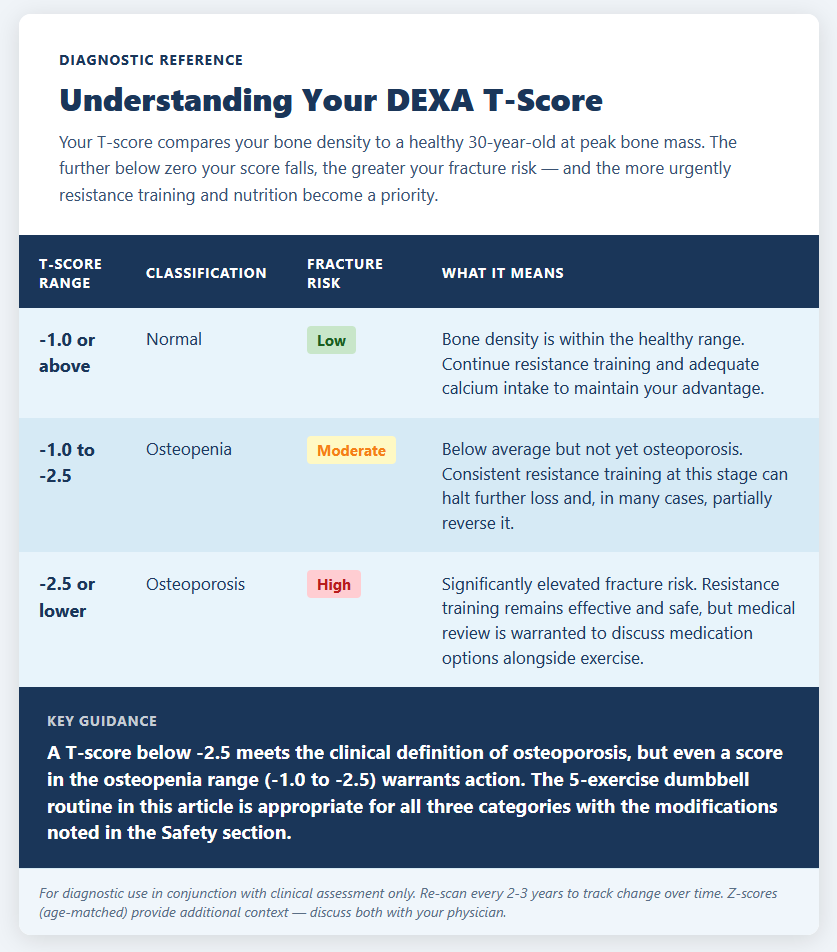
The World Health Organization established these thresholds because they predict fracture risk with reasonable accuracy. A T-score of -2.5 means your bones are roughly 25 percent less dense than peak bone mass. That number is worth knowing, and resistance training can move it in the right direction.
Z-scores compare your density against others your age and sex rather than against peak bone mass. If your Z-score is significantly below what is expected for your age group, that points toward an underlying condition accelerating the decline. That warrants a conversation with your physician rather than just an exercise adjustment.
Most adults should have their first scan between 65 and 70, or earlier if significant risk factors apply: family history of osteoporosis, long-term steroid use, or fractures from low-impact incidents. After the baseline scan, every two to three years allows meaningful tracking of change over time.
The Real Cost of Bone Loss
The statistics are stark. Hip fractures cost the US healthcare system more than 19 billion dollars annually, and 40 percent of people who could walk independently before a hip fracture never recover that ability.
The statistics do not capture what bone loss actually takes from a life.
There is the hesitation before stepping off a curb. The decision to stop dancing or hiking, not because of a fracture, but because the fear of one arrives first. These invisible losses happen gradually, long before any fall or diagnosis, accumulating quietly in the gap between the person someone was and the person they have become cautious about being.
Every percentage point of bone density maintained or gained now is insurance against both kinds of loss: the fracture and the life shrinking around the fear of one.
Why Dumbbells Are Effective for Bone Health After 60
The Mechanostat: How Your Skeleton Monitors Load
Bone is not a passive structure. It is living tissue that constantly rebuilds itself in response to mechanical signals, and it does this through a mechanism that is genuinely remarkable once you look at it closely.
Researcher Harold Frost described what he called the bone mechanostat in a 2003 update to his foundational theory, published in The Anatomical Record. The central finding: your bones contain embedded strain sensors, specialized cells called osteocytes, that detect mechanical deformation as it occurs. When that deformation exceeds a certain threshold, they trigger a cascade of cellular activity that deposits new mineral into the bone matrix.
Your bones actively measure load and decide whether the demand is high enough to warrant a structural response.
This is precisely why walking is insufficient after 60. The load a walk places on the skeleton is, for most older adults, below the mechanostat’s activation threshold. Your bones have already adapted to body weight. They need external resistance to register a demand they have not yet encountered, and that is exactly what a dumbbell provides.
What the Research Shows
A 2022 systematic review and meta-analysis led by Steven O’Bryan and colleagues, published in Sports Medicine, analyzed 14 randomized controlled trials involving adults aged 65 and older. The average increase in femur and hip bone mineral density was 2.77 percent, but the O’Bryan team also noted substantial variability between studies, which is the honest asterisk on that number.
Some trials produced gains well above that average. Others produced considerably less. What differed was how progressively they loaded, how consistently they attended sessions, and how long the programs ran. The 2.77 percent is the floor for what a well-run program can do.
An earlier study brings that finding closer to home. In work by Ashley Herda and colleagues at the University of Kansas, 57 older adults (average age 66.5) were randomized to six weeks of dumbbell training, elastic band training, or a control period.
Arm bone mineral content improved in the dumbbell group, and age-matched bone Z-scores (the comparison against peers, not just against peak bone mass) shifted significantly in only the dumbbell group.
Bone mineral density itself did not change over six weeks, which is not surprising: BMD takes months to shift. The BMC and Z-score findings, however, confirm that the skeleton was already responding to the loading stimulus.
A 2018 review in Endocrinology and Metabolism by A. Ram Hong and Sang Wan Kim confirmed the underlying mechanism: for exercise to produce an osteogenic effect, the mechanical load applied to bone must exceed what those bones encounter in daily activity. The threshold is modest: high enough to exclude a daily walk, low enough to be within reach.
High-Velocity Training: A Promising Variation
Researchers are still refining the optimal training speed for bone outcomes. A 2024 systematic review by Inaya Haque, Thomas Schlacht, and Dawn Skelton, published in the journal Bone, reviewed studies involving more than 1,200 older adults and found that high-velocity resistance training (rapid concentric movements against an external load) significantly increased BMD at the lumbar spine and hip. The gains appear to require at least two sessions per week, and they decline if training stops for six months or longer.
Standard dumbbell training at controlled speed, as in the workout below, is the appropriate starting point. For anyone three or more months into consistent training, a brisk pressing or pulling speed on the way up (followed by a slow, controlled return) is a reasonable progression that may amplify the bone response.
Hormones and Bone Health After 60
Bone loss accelerates after 60 partly because of hormonal changes that are difficult to avoid. Estrogen acts as a brake on bone breakdown. When estrogen drops sharply during menopause, bone resorption outpaces formation for several years, which is why bone loss is fastest for women in the three to five years immediately following the menopause transition.
In men, testosterone declines more gradually, but its protective effect on bone is similar, and by the mid-60s many men have levels low enough to contribute meaningfully to bone loss. Parathyroid hormone also becomes more active with age, drawing calcium from bone to maintain blood calcium levels when dietary intake falls short.
Hormone replacement therapy (HRT) can substantially preserve bone density in postmenopausal women, and the evidence base for it is reasonably strong. Whether it is appropriate for any individual case involves a risk-benefit calculation that belongs with a physician.
Many people navigating this question do not realize what the research makes clear: the two approaches operate through entirely separate pathways. HRT slows bone resorption by restoring the hormonal brake. Resistance training drives bone formation through mechanical load.
A woman who cannot or chooses not to take HRT has not lost the exercise option. The mechanostat responds to strain regardless of estrogen levels. That is the more useful framing for anyone trying to decide what to do.
The 5-Move Dumbbell Workout for Bone Density
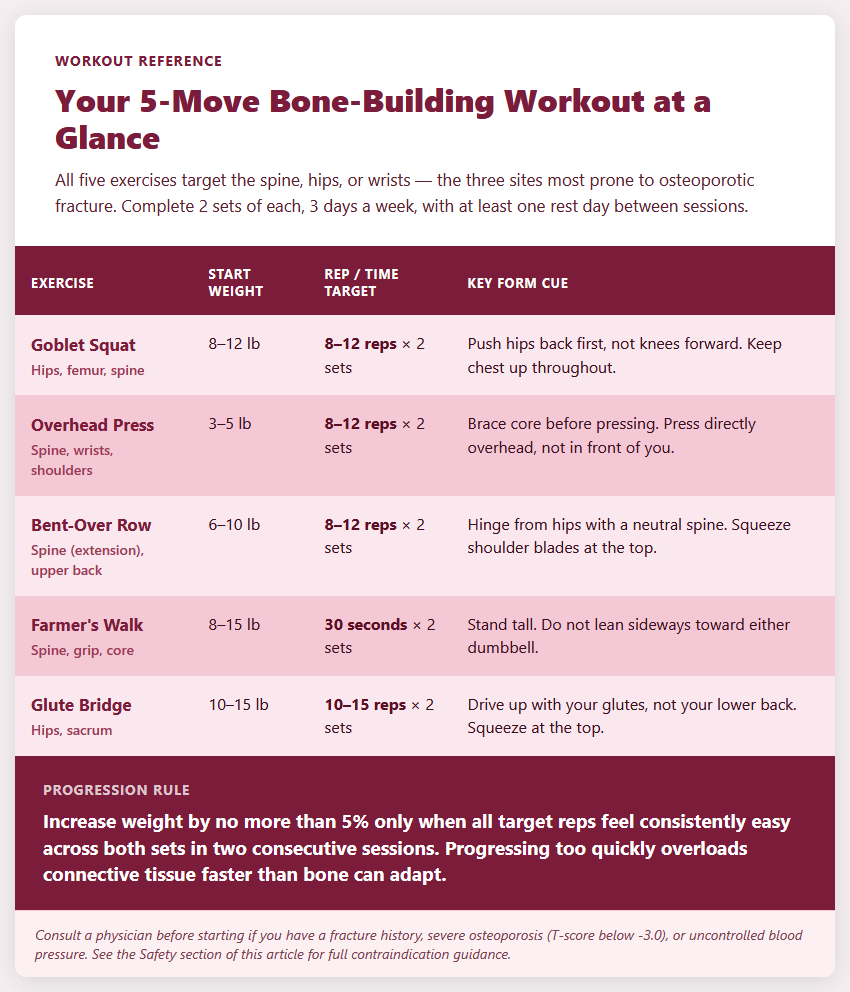
These five exercises target the three fracture-prone regions (spine, hips, and wrists) through standing, hinging, carrying, and floor-based positions. Moving between positions distributes the loading signal across the skeleton rather than concentrating it in one area.
The sequence takes 10 minutes once you know the exercises. Allow a little longer in the first two weeks while the movements become familiar.
Exercise 1: The Goblet Squat
The goblet squat is the single most effective movement in this sequence for hip and spine density. It loads the femur, the femoral neck (the fracture site most associated with serious hip injury), the sacrum, and the lower vertebrae simultaneously, all while keeping the movement accessible and safe for older adults with a wide range of starting fitness levels.
The key mechanical principle is sitting back rather than bending forward. Holding the dumbbell at chest height creates a counterweight that pulls your torso upright and naturally distributes your weight over your heels, which is exactly where the bone-loading force needs to land.
- Hold one dumbbell vertically at chest height with both hands, fingers laced around the top end.
- Stand with feet shoulder-width apart, toes turned out slightly.
- Push your hips back and lower until your thighs are parallel to the floor, or as deep as you can go without your heels rising from the ground.
- Keep your chest up and your spine long throughout the descent.
- Drive through your heels to stand, squeezing your glutes at the top.
- Complete 8 to 12 repetitions for 2 sets.
For knee discomfort: place a sturdy chair behind you and lower until you lightly touch the seat, then stand. That range of motion is sufficient to load the hip and spine without stressing the knee beyond its comfortable range.
Exercise 2: The Standing Overhead Press
The overhead press is the primary exercise for loading the vertebrae of the upper and mid-spine. Pressing weight overhead creates axial compression through the spinal column, the loading direction that most directly stimulates vertebral bone formation.
It also builds the shoulder musculature that stabilizes the rotator cuff and reduces injury risk at a joint that becomes progressively vulnerable after 60.
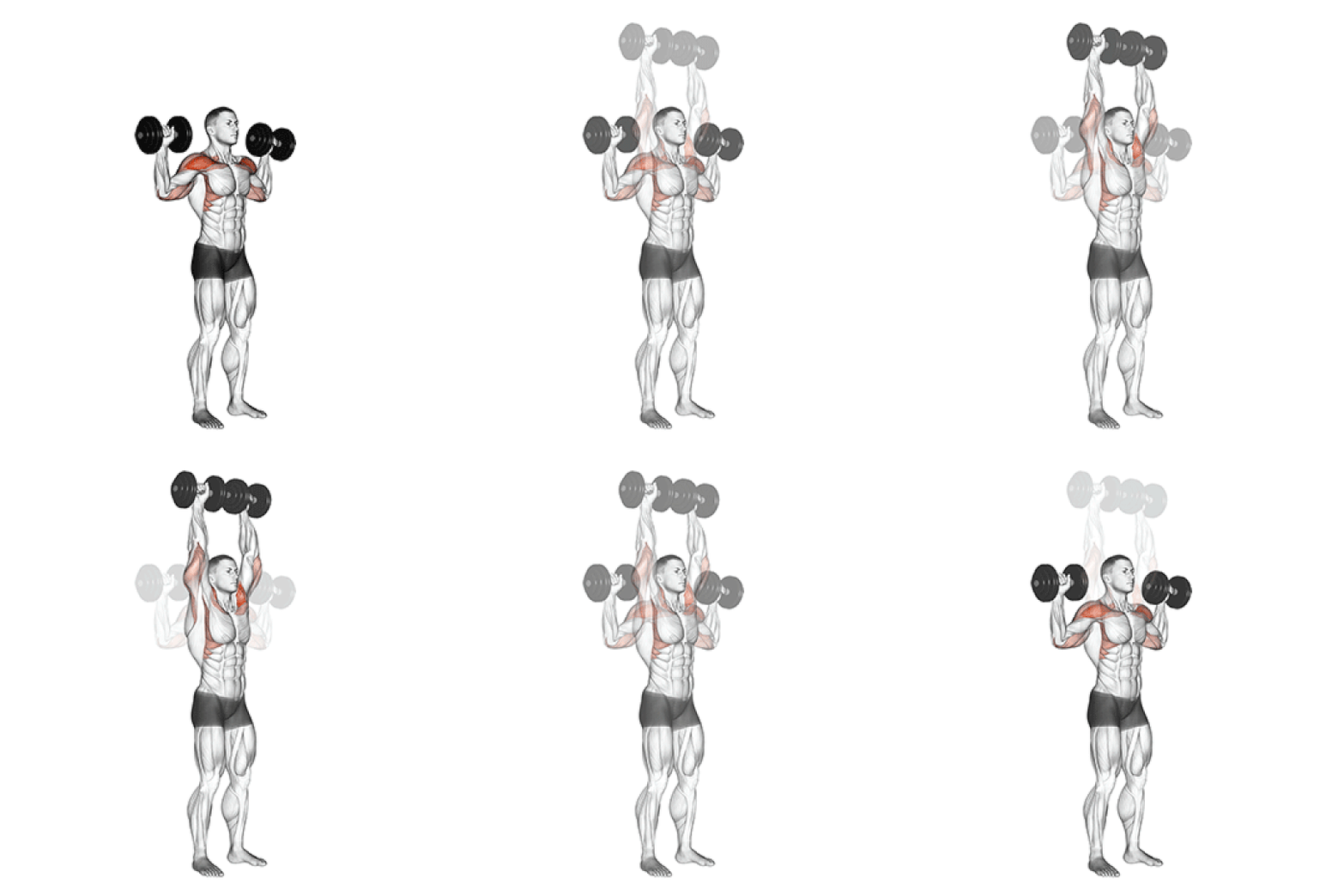
- Hold a dumbbell in each hand at shoulder height, palms facing forward.
- Stand with feet hip-width apart, core braced against the movement.
- Press both weights directly overhead until your arms are fully extended.
- Lower with control back to shoulder height.
- Complete 8 to 12 repetitions for 2 sets.
For any shoulder discomfort: angle your arms slightly forward into a Y-shape, approximately 30 degrees in front of vertical rather than directly overhead. This reduces impingement risk while preserving most of the spinal loading benefit.
A seated variation, with your back supported against a firm chair, is appropriate for anyone with lower-back sensitivity or balance concerns during standing pressing.
Exercise 3: The Bent-Over Row
The bent-over row targets a loading gap the other exercises do not fill. Squats and presses create compressive forces through the spine. The row creates extension forces that pull the vertebrae open from behind.
This strengthens the posterior chain muscles responsible for upright posture and counters the forward-flexion pattern associated with compression fractures.
Most vertebral fractures in older adults do not occur from falls. They occur from years of cumulative forward loading: prolonged rounded posture, repetitive bending under light loads, carrying objects without the posterior chain strength to offset the forward pull. This exercise builds the musculature that addresses that risk directly.
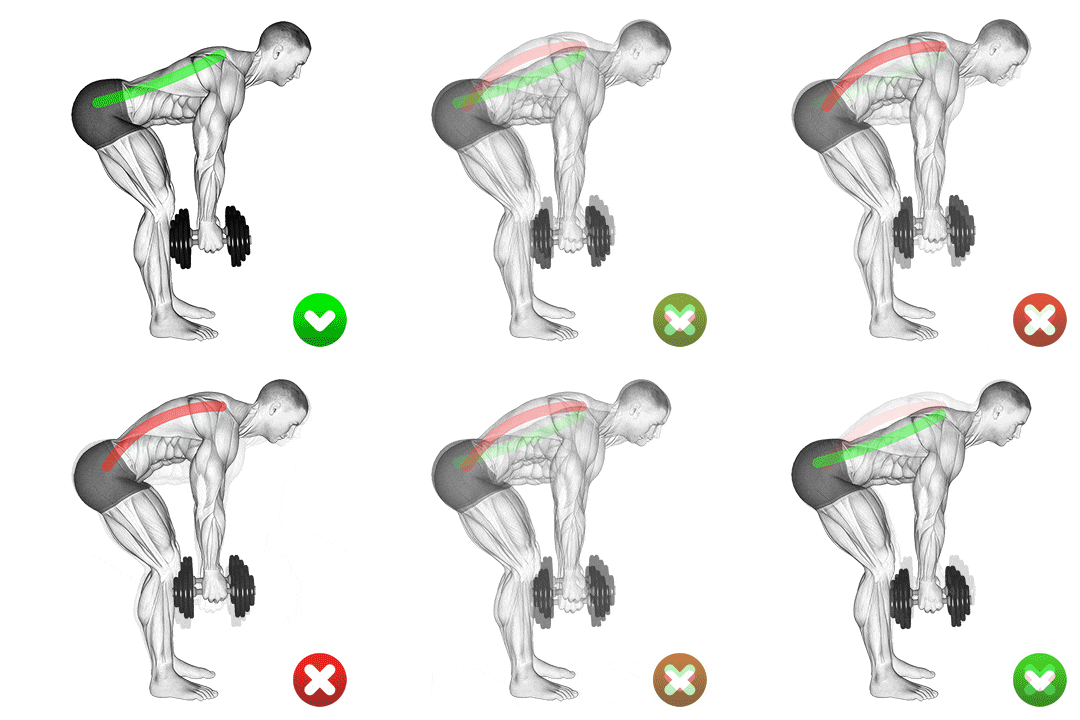
- Hold a dumbbell in each hand, arms at your sides.
- Hinge forward at the hips until your torso is roughly parallel to the floor, spine neutral (not rounded).
- Let the dumbbells hang directly below your shoulders.
- Pull your elbows back and up, squeezing your shoulder blades together at the top of the movement.
- Lower with control.
- Complete 8 to 12 repetitions for 2 sets.
For lower-back sensitivity: perform the same movement seated on the edge of a chair, leaning forward from the hips with your spine neutral. The pulling mechanics are identical. The seated position reduces spinal demand during the hinge.
Exercise 4: The Farmer’s Walk
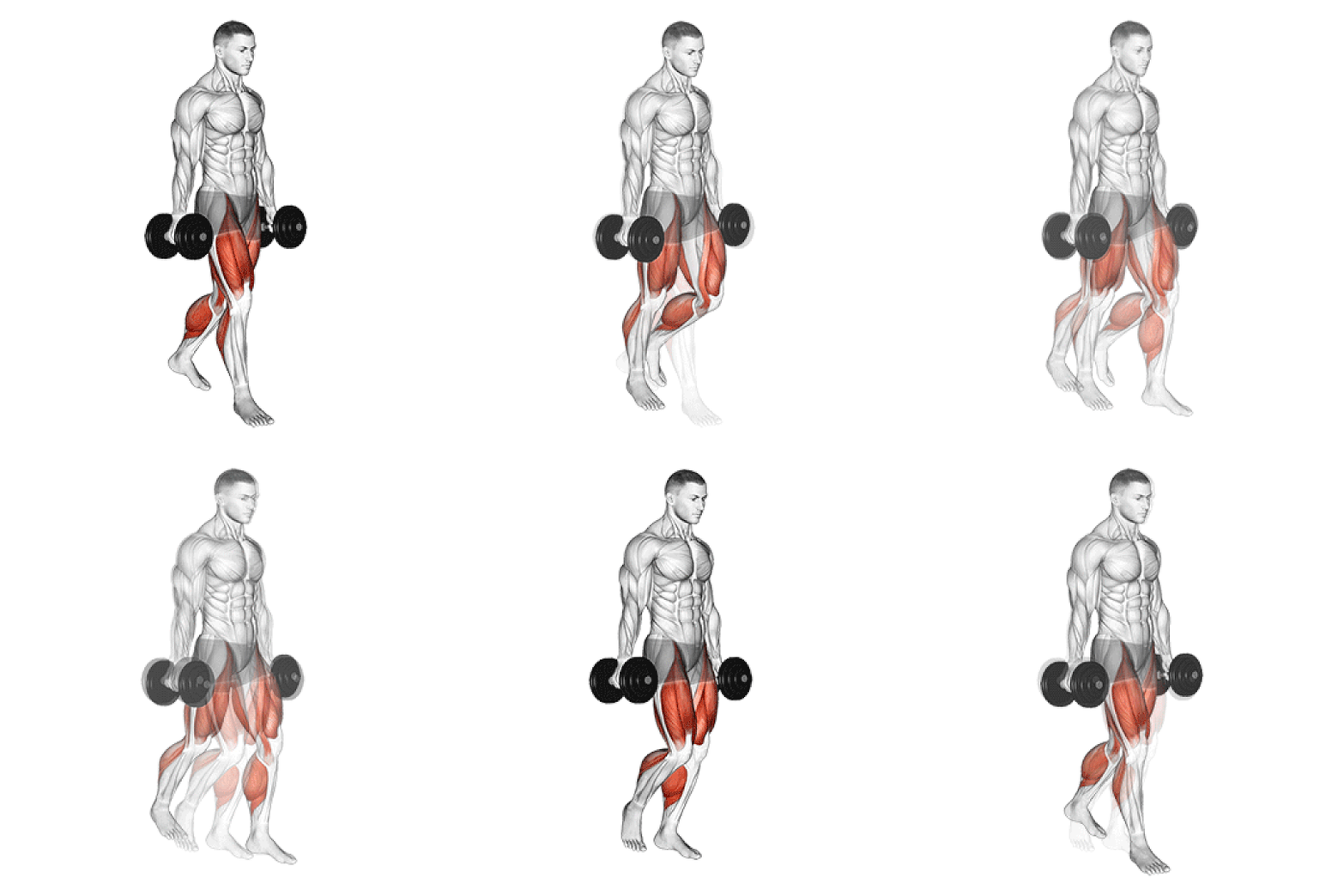
Hold a dumbbell in each hand, stand tall, and walk. That is the exercise. What makes it disproportionately effective is the total-body loading it creates: your grip muscles work hard against the weight pulling your hands open, your core braces against the lateral sway of the load at each step, and your spine compresses evenly under sustained external weight it does not encounter during ordinary movement.
Walk for 20 to 30 seconds, rest briefly, and repeat twice. Start beside a wall or countertop if balance is any concern. The weight does not need to be heavy: the bone-loading effect comes from sustained duration, not from maximum load.
Exercise 5: The Dumbbell Glute Bridge
The glute bridge is often omitted from programs for older adults on the assumption that getting to the floor and back is too difficult. This is worth reconsidering on two counts. First, the transition from floor to standing is itself a functional skill worth practicing.
Second, the glutes are the primary drivers of hip extension, the movement pattern involved in rising from a chair, climbing stairs, and recovering from a stumble. Weak glutes are a fall-risk factor independent of bone density.
The bridge also loads the hip joint from a lying position. This removes the standing balance demand while still generating compressive force through the femoral head and sacrum.
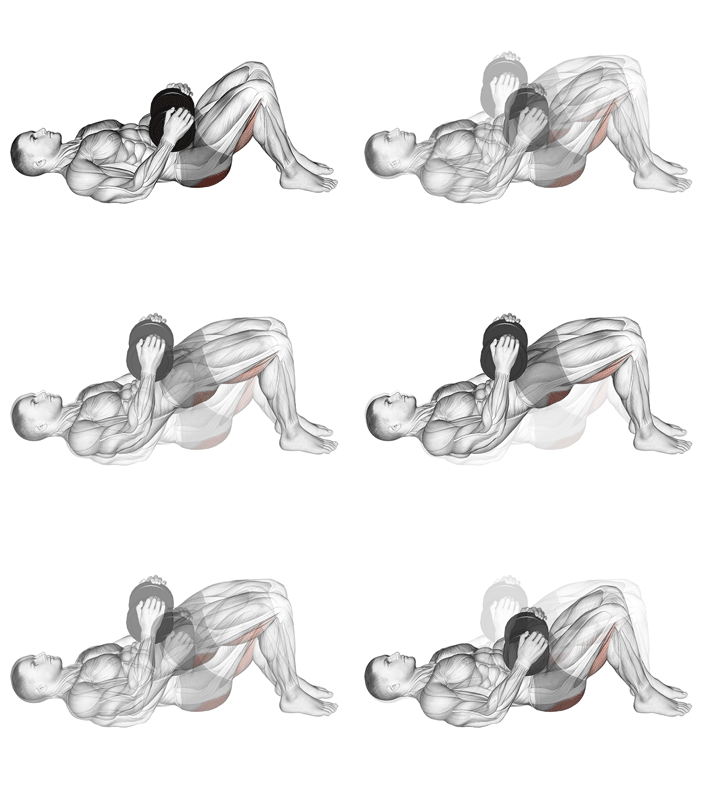
- Lie on your back with knees bent, feet flat on the floor at hip width.
- Place one dumbbell across your hips and hold it in place with both hands.
- Squeeze your glutes and press your hips toward the ceiling until your body forms a straight line from knees to shoulders.
- Hold briefly at the top of the movement.
- Lower with control.
- Complete 10 to 15 repetitions for 2 sets.
Start with no weight and add the dumbbell only once 15 bodyweight repetitions feel easy throughout. The glute-squeeze at the top is the whole movement. If you are pushing with your lower back rather than your glutes, reduce the range or reset the position.
Bone Builder Exercise Timer
Customize Your Session
Congratulations!
You've completed your bone-building routine! Your bones are thanking you.
Sessions completed today: 1
Adding Safe Impact: The Piece Most Routines Leave Out
The dumbbell routine above builds bone through muscular tension applied to bone attachment points. This is effective, but not the whole picture.
Impact loading (the brief compressive shockwave that travels through the long bones when the foot meets the ground with force) creates a different kind of mechanical signal to bone. Bone responds to both, and the research suggests they are complementary rather than interchangeable.
Current clinical guidance places impact training alongside resistance training as a foundational pillar for bone health after 60. Most dumbbell programs for older adults include neither.
Safe impact loading after 60 does not mean jumping. It means controlled, progressive ground force at a level appropriate to your current bone status:
- Heel drops: rise slowly onto your toes, then let your heels drop firmly to a hard floor. Ten repetitions twice a day is a reasonable starting protocol. The brief impact sends a loading signal directly through the calcaneus and along the lower-leg bones.
- Step-downs from a low step (6 to 8 inches onto a firm surface): stepping down and landing with a controlled, deliberate contact rather than a cushioned placement loads the femoral neck and hip, the two most common fracture sites.
Anyone with a T-score below -3.0, recent fractures, or significant balance difficulties should discuss impact loading with their physician or a physiotherapist before adding it. For most adults over 60 who are cleared for resistance training, heel drops are a low-risk addition that the current routine does not include, and the skeleton will respond to.
Equipment Alternatives and Progressions
Dumbbells are the most efficient tool for this program, but they are not the only entry point. Canned goods (typically 400 to 450 grams), water bottles filled to the desired weight, and laundry detergent bottles with handles are all workable substitutes for the first few weeks while you are learning the movement patterns.
Resistance bands are a reasonable alternative for the row and overhead press: the Herda 2023 study found BMC improvements in the dumbbell group specifically, but the elastic band group showed positive trends that did not reach statistical significance, likely because band resistance is lower and less consistent than dumbbell load at these rep ranges.
For anyone ready to invest in equipment, adjustable dumbbells that add weight in 1- to 2-pound increments are the most practical long-term option. The balance and range-of-motion demands of free weights appear to produce stronger bone responses than machines, likely because the stabilizing muscles involved in free-weight training contribute additional loading signals to adjacent bones.
Progress conservatively: increase resistance by no more than 5 percent when an exercise feels consistently easy across all sets in two consecutive sessions. That pace of progression keeps the mechanostat activated without overloading connective tissue that is adapting on a slower timeline than muscle.
Your 10-Minute Daily Bone-Building Blueprint
The Warm-Up (2 Minutes)
Two minutes of movement preparation before adding external load reduces injury risk and improves the range of motion you can access in the early sets:
- Arm circles, 10 forward and 10 backward: loosens the shoulder capsule before pressing
- Leg swings, 10 per side: takes the hip joint through its natural range before loading it
- Torso rotations, 10 in each direction: prepares the lumbar spine for the hinge movements
- Ankle circles, 5 per direction per foot: reduces stiffness at the joint closest to the ground contact forces
The Workout Progression
Weeks 1 and 2 are for learning movement patterns. One set of each exercise, with very light weight or no weight. The goal is range of motion and body position awareness, not exertion. This phase matters more than most people give it credit for. Motor pattern learning during this window largely determines whether the subsequent loading phases are safe.
Weeks 3 and 4: add the second set. Keep weight conservative. Add heel drops at this stage if you have no fracture history or significant balance concerns.
Weeks 5 through 8: work up to 12 repetitions per set on each exercise. The last two repetitions of the set should feel challenging but not cause form to break down. Introduce step-down impact loading if heel drops have been comfortable for two weeks.
From week 9 onward: increase weight by the smallest available increment when any exercise feels consistently easy for all reps and both sets. The goblet squat and bent-over row will typically progress faster than the overhead press. Individual variation is normal.
The Cool-Down (1 to 2 Minutes)
Brief static stretching after the session supports the flexibility that makes safe movement between sessions easier:
- Chest stretch in a doorframe, 15 seconds per arm
- Calf stretch against a wall, 15 seconds per leg
- Hip flexor stretch in a low lunge position, 15 seconds per side
- Neck tilt, 10 seconds per side
Frequency and Bone Remodeling
Three sessions per week with rest days between sessions is the frequency the resistance training research supports for bone outcomes. This is not arbitrary. Bone remodeling involves three sequential phases (resorption, reversal, and formation) that run on a months-long cycle, as described by Hadjidakis and Androulakis in their 2006 review in Annals of the New York Academy of Sciences.
The training stimulus does not need to be daily. It needs to be consistent and progressive. On non-training days, light activity (walking, gentle yoga, stretching) maintains blood flow to working tissues without adding resistance load.
What to Eat for Stronger Bones
Exercise creates the mechanical signal for bone formation. Nutrition provides the materials the body uses to respond to that signal. Trying to address one without the other produces limited results, and the research on this is reasonably settled.
Calcium: Prioritize Food Over Supplements
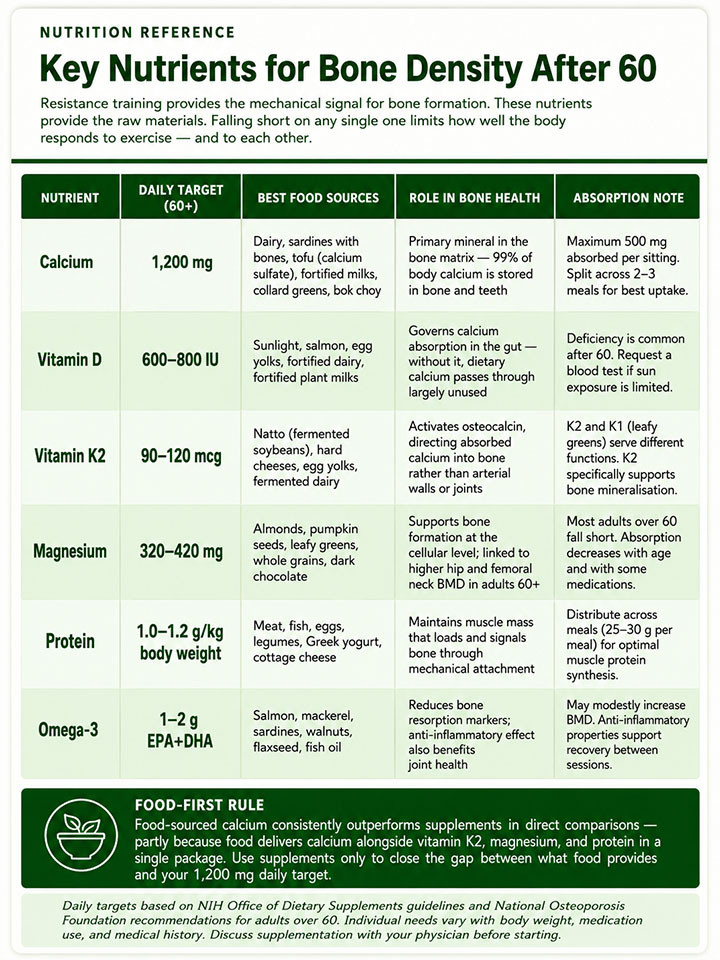
Adults over 60 need approximately 1,200 milligrams of calcium daily. Most fall well short of that from food alone, which is why calcium supplements became a standard recommendation for older adults over the past three decades.
The picture on supplementation has become more complicated since then. Major meta-analyses of calcium supplements in adults over 50 (including a wide-ranging analysis led by Ian Reid of the University of Auckland found limited evidence that supplemental calcium reduces fracture risk and raised concerns about potential cardiovascular effects with high supplemental doses.
Dietary calcium consistently outperforms supplements in the studies that directly compare the two, likely because food sources deliver calcium alongside vitamin K2, magnesium, and protein that improve its incorporation into bone.
The direction from this research is more actionable than most supplement conversations allow: food first, supplements to close a genuine gap, and no more than 500 milligrams in any single dose since that is approximately the absorption limit per sitting.
Food sources also carry an advantage supplements cannot replicate: calcium absorbed across multiple small meals incorporates more efficiently than a large single dose, and it arrives alongside the co-nutrients (K2 in dairy, magnesium in leafy greens) that support its destination in bone rather than arterial walls or joints.
Vitamin D and K2: Two Nutrients People Confuse With One
Vitamin D and vitamin K2 are frequently mentioned together but play distinct roles. Vitamin D governs calcium absorption in the gut: without adequate vitamin D, calcium passes through largely unused regardless of dietary intake.
Adults over 60 need 600 to 800 IU daily. Many run chronically below that, particularly those with limited sun exposure, which is a common issue after retirement when the rhythms of daily activity change.
Vitamin K2 activates osteocalcin, a protein that binds calcium into bone matrix. Without adequate K2, calcium absorbed through the gut may end up in soft tissue (arterial walls and joints) rather than in bone.
K2 is structurally different from K1 (found in leafy greens) and is not interchangeable with it for bone purposes. Good K2 sources include natto (fermented soybeans, extraordinarily high in K2 though an acquired taste), hard cheeses, and egg yolks.
What Prunes, Omega-3s, and Magnesium Contribute
Three nutritional signals that most bone health discussions underplay.
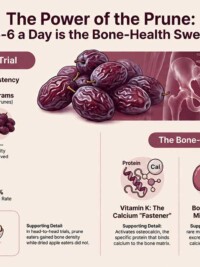
Prunes: research published in the American Journal of Clinical Nutrition found that eating five to six dried plums daily was associated with preserved bone mineral density at the hip and spine in postmenopausal women. The proposed mechanism involves polyphenol compounds that suppress bone resorption markers. The evidence is stronger than most people realize.
Omega-3 fatty acids (found in fatty fish, walnuts, and flaxseed) appear to reduce markers of bone resorption and may modestly increase bone mineral density. A 2022 meta-analysis found that higher magnesium intake in adults over 60 was associated with significantly higher hip and femoral neck BMD, a mineral that rarely gets the attention calcium does but which is involved in the bone formation process at the cellular level.
A Bone-Building Smoothie That People Actually Make
The post-workout window appears to be a practical time to meet calcium targets, since nutrient uptake is generally efficient following resistance training.
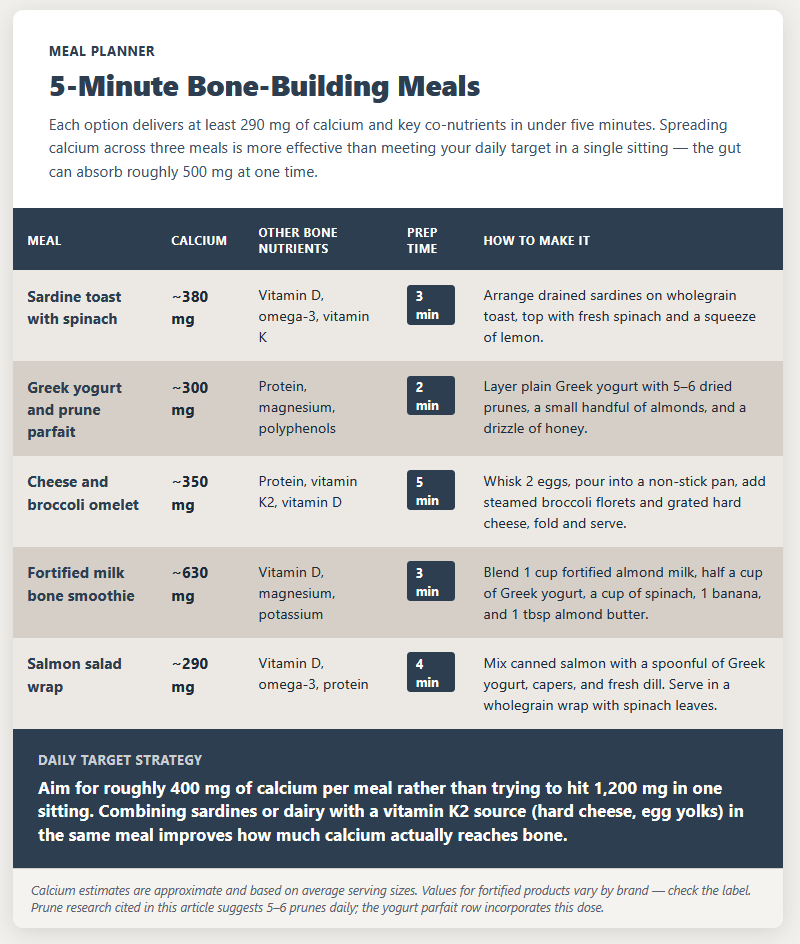
Calcium Power Smoothie
- 1 cup fortified almond milk (approximately 450 mg calcium)
- 1/2 cup plain Greek yogurt (approximately 150 mg calcium)
- 1 cup fresh spinach (approximately 30 mg calcium plus vitamin K)
- 1 banana (potassium, which supports calcium retention)
- 1 tablespoon almond butter (magnesium and healthy fats for K2 absorption)
- Ice to preference
Blend on high for 60 seconds. The spinach disappears into the flavor of the banana and almond butter. Total calcium: approximately 630 milligrams. Preparation time: 3 minutes.
When to Get Medical Advice
Resistance training is safe for most adults over 60, including most people with an osteoporosis diagnosis. The exercises in this program use controlled movements without high-impact loading (aside from the optional impact section) and can be modified for a wide range of starting fitness levels.
Medical clearance is appropriate before starting if any of the following apply:
- Uncontrolled high blood pressure (systolic consistently higher than 180 mmHg)
- Recent cardiac event or unstable cardiac condition
- Fractures within the previous six months
- Active inflammatory arthritis during a flare
- Severe osteoporosis with multiple vertebral fractures (T-score below -3.0)
- Recent surgery within the previous eight weeks
Stop exercising and seek medical attention for chest pain or pressure, sudden dizziness that does not clear within a minute of stopping, nausea, or sharp joint pain that increases during movement. Muscle burn and mild joint ache that clears within minutes are normal. Any of the above symptoms are not.
A Note on Medications
Blood pressure medications can cause dizziness when changing positions quickly: move deliberately from floor to standing. Blood thinners increase bruising risk from minor impacts. Be especially careful during the transition to and from floor exercises.
Bisphosphonates (alendronate, risedronate) produce better outcomes when combined with resistance training than with medication alone, and no exercise restrictions apply to the movements in this program for this drug class.
Long-term corticosteroid use accelerates bone loss and makes resistance training more important, not less, but begin at lower intensities and increase more slowly than the standard progression suggests.
Troubleshooting
When the exercises cause joint discomfort: reduce the weight by half and decrease your range of motion. Muscle fatigue and joint pain are meaningfully different sensations: the first is expected, the second is information. If reducing weight and range does not resolve the discomfort within a session or two, a physiotherapist can identify whether a form correction or a movement substitution is the better path.
When 10 minutes is not available: split the session. Two exercises in the morning and three in the evening produce bone-loading stimulus that a skipped session does not. The bone remodeling research suggests consistency across weeks and months matters more than session duration.
When progress stalls: add one repetition rather than increasing weight. If you are already performing 15 repetitions comfortably in all sets, increase by the smallest available increment and reduce back to 8 repetitions to restart the strength progression.
When dizziness occurs during exercise: the most common causes are breath-holding (exhale during the exertion phase, concentric for presses and eccentric for rows), rising too quickly from the floor, and insufficient hydration before the session.
Recurrent dizziness without an obvious cause warrants discussion with your physician. This can reflect blood pressure changes with exercise that are straightforward to address once identified.
Conclusion
The bone remodeling process is patient. It works in months-long cycles, quietly responding to each loading session long after the session ends, depositing new mineral in the specific regions where strain exceeded the threshold. That biology means the most important workout for your bone health is the one scheduled for Thursday, not the hardest one you will ever do.
Frequently Asked Questions
Can you actually regain bone density after 60?
Yes, though the picture is more specific than a simple yes implies. Adults over 60 can increase bone mineral density, particularly at the hip and spine, with consistent progressive resistance training. The O’Bryan meta-analysis found an average 2.77 percent increase in femur and hip BMD across trials in adults 65 and older. That is not a marginal result: it represents a meaningful reversal against typical annual losses.
Stabilizing density (halting the decline rather than gaining significantly) is also a clinically meaningful outcome, particularly when combined with fall-prevention training that reduces fracture risk even when BMD does not change dramatically. The two goals are not mutually exclusive. In practice, they are usually simultaneous.
How heavy should my dumbbells be?
Lighter than you expect at the start, and heavier than you will expect within two months.
The target sensation is that the last two repetitions of each set are challenging but completable with the form described in the exercise instructions. If 15 repetitions feel easy throughout, the weight is too low to provide a meaningful bone-loading stimulus. If you cannot complete 8 repetitions without form breakdown, the weight is too high and increases injury risk without proportionate benefit.
For most adults beginning this program, 3 to 5 pounds provides sufficient resistance for the overhead press. The goblet squat can typically handle 8 to 12 pounds from the third week onward. Increase by the smallest available increment (1 to 2 pounds) only when all sets in a session feel consistently easy.
What drink is good for bone density?
Fortified milk (dairy or plant-based, particularly almond or soy milk enriched with calcium and vitamin D) is the most practical bone-supportive beverage. A single cup can contribute 400 to 450 milligrams of calcium alongside 100 IU or more of vitamin D. That is a meaningful contribution from a single daily beverage.
Bone broth contains collagen precursors but very little calcium despite its reputation as a bone-health drink. Green tea contains antioxidants that appear to reduce bone resorption markers in some studies, though the evidence base is preliminary.
Moderate coffee consumption (two to three cups daily) does not appear to harm bone density in adults who meet their calcium targets. Alcohol at more than two drinks per day consistently shows up in the literature as harmful to bone formation rates.
What are the worst foods for bone health?
High sodium intake increases urinary calcium excretion: for every gram of sodium consumed, roughly 26 milligrams of calcium is lost through the kidneys. Processed and restaurant foods are the primary sodium source for most adults, which is one reason dietary patterns matter as much as individual nutrients.
Excessive caffeine (more than 300 milligrams daily) has a similar but smaller effect on calcium excretion. High-dose alcohol (more than two drinks per day) consistently suppresses bone formation in the research literature. Diets very high in phosphate (typically heavy in processed meats and colas) may increase bone resorption, though the effect in people meeting calcium targets is modest.
Is this workout safe if I have osteoporosis?
Generally yes, and the American College of Sports Medicine specifically endorses resistance training for people with osteoporosis. The exercises in this routine avoid the movement patterns most associated with vertebral fracture risk in people with established bone loss: heavy spinal flexion under load, high-impact landings, and sudden twisting under resistance.
The bent-over row involves forward hinging but with a neutral spine rather than a rounded one, and can be replaced with a seated cable row or a chest-supported variation if spinal loading is a specific concern from your scan history.
Anyone with a confirmed osteoporosis diagnosis, particularly with prior vertebral fractures, should review this program with their physician or a physiotherapist who can assess their specific T-scores and history. That is a practical safety step, not a reason to avoid exercise.
What about calcium supplements versus food?
The evidence on this has shifted considerably in the past decade. Large meta-analyses of supplemental calcium in adults over 50 have found limited evidence for fracture reduction and have raised cardiovascular concerns with high supplemental doses.
Dietary calcium consistently outperforms supplements in direct comparisons, likely because food sources deliver calcium alongside vitamin K2, magnesium, and protein that aid its incorporation into bone.
Cover as much of your 1,200-milligram daily target as possible through food and use supplements only to bridge a genuine gap. If supplementing, calcium citrate is better absorbed than calcium carbonate, particularly for people with reduced stomach acid (a common age-related change). Cap any single dose at 500 milligrams, which is roughly the absorption limit per sitting.
How long before I see results?
Bone remodeling follows a cycle (resorption, reversal, then formation) that takes three to six months per complete cycle, as described in Hadjidakis and Androulakis’s 2006 review of bone remodeling biology.
Measurable changes in BMD on a DEXA scan typically require 6 to 12 months of consistent training to show clearly. Early bone marker signals, like the bone mineral content improvements Herda and colleagues measured at six weeks, suggest the skeleton begins responding considerably earlier than a scan would reflect.
Strength gains and functional improvements (easier chair rises, better balance, less stair fatigue) typically appear within 4 to 8 weeks, well before any scan change. These functional markers matter directly for fall prevention, which in turn matters for fracture prevention even when BMD itself is still catching up.
Can I do this every day?
Three to four sessions per week, with at least one rest day between resistance sessions, is the frequency the bone research supports. Daily training does not allow the remodeling cycle adequate time to respond to the loading stimulus before the next one arrives. On rest days, light activity (a walk, gentle stretching, yoga) maintains blood flow to working tissues and supports the formation phase of the bone remodeling cycle without adding resistance load that would interrupt it.