Scientists tracked gut bacteria for 60 days. Two bananas daily triggered a bacterial bloom most supplements can’t match.
Millions of people eat a banana every morning. They do it for the potassium. Maybe for the energy boost. Some do it because they’ve heard bananas are “good for digestion.” But most of them are eating the wrong banana. And because of that one detail, they’re missing out on what’s now considered one of the most powerful gut-healing foods on the planet.
This isn’t just about fiber. The science now shows that eating the right kind of banana triggers a specific, measurable cascade inside your gut, starting within the first two weeks. Specific bacterial strains bloom. A potent anti-inflammatory compound called butyrate spikes. And by week six, the effects ripple far beyond your digestive tract.
Let’s walk through exactly what happens, week by week, when you eat bananas correctly every day for six weeks.
Why Your Gut Microbiome Matters More Than You Think
Your gut is home to roughly 38 trillion bacteria. That’s more microbial cells than human cells in your entire body. These bacteria digest food, produce vitamins, train your immune system, and communicate directly with your brain.
When your microbial community is diverse and well-fed, you feel it. Better digestion. Steadier moods. Less inflammation. When it’s depleted or out of balance, the opposite happens.
The key to a thriving microbiome? Feeding it the right fuel. That fuel is called prebiotic fiber, and bananas, specifically unripe green ones, happen to be one of the richest sources of it in nature.
Weeks 1 to 2: The Bifidobacteria Bloom
Within the first two weeks of daily banana consumption, your gut goes through a specific and measurable shift.
The early work is done by compounds called fructooligosaccharides, or FOS for short. These are short chains of sugar that your body can’t digest on its own. They pass through your stomach and small intestine untouched, arriving in your colon intact. There, they act as direct food for a family of bacteria called Bifidobacteria.
Bifidobacteria are often described as the foundation of a healthy gut. They crowd out harmful, gas-producing bacteria. They produce acids that lower the pH of your colon, which makes it harder for bad bacteria to thrive. They also stimulate immune defenses in your gut lining.
In a well-designed clinical trial published in the journal Anaerobe, Mitsou and colleagues (2011) tracked 34 healthy women over 60 days. Participants consumed two bananas per day. The result: a measurable increase in Bifidobacteria populations and a notable reduction in abdominal bloating. No supplements. No special diet. Just bananas.
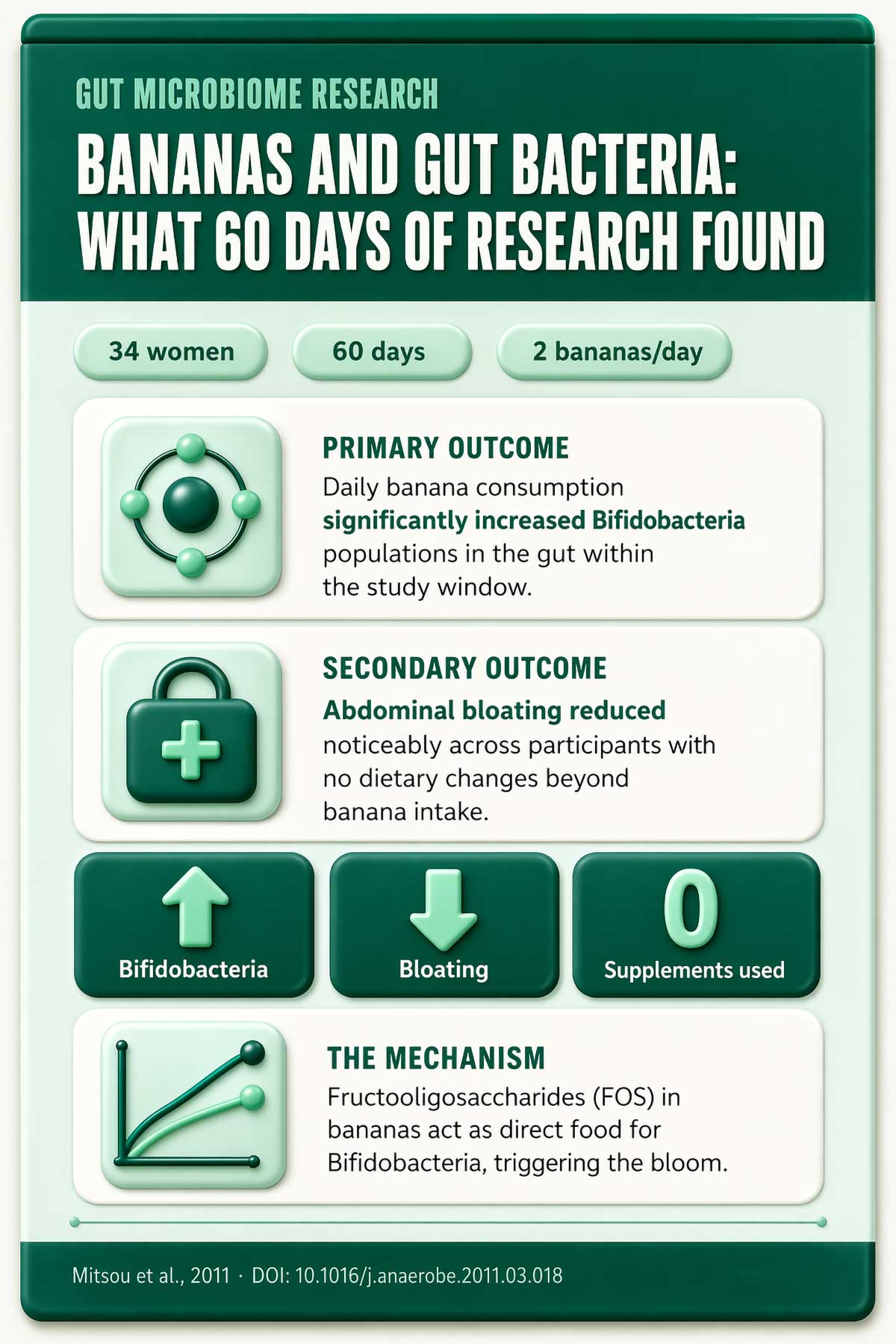
This lines up with earlier research that established that fructooligosaccharides, the primary prebiotic fiber in bananas, selectively increase Bifidobacteria in the human colon. This prebiotic effect is now one of the most consistently replicated findings in gut microbiome research.
What you might notice by day 14: less bloating after meals, more regular bowel movements, and a reduction in that heavy, full feeling after eating. These aren’t placebo effects. They’re early signs that your gut’s bacterial balance is shifting.
The Ripeness Paradox: The One Detail Almost Everyone Gets Wrong
Before going further, there’s a critical concept that changes everything. It’s called the Ripeness Paradox, and it’s the reason why most people eating bananas for gut health are wasting their effort.
Here’s what happens inside a banana as it ripens.
When a banana is green and unripe, its carbohydrates exist mostly as Resistant Starch Type 2, often written as RS2. This starch is literally “resistant” to your digestive enzymes. It can’t be broken down in your stomach or small intestine. It moves all the way to your colon, where specific gut bacteria feast on it. That fermentation process is what triggers the real gut-healing benefits.
As the banana ripens and turns yellow, those RS2 molecules are converted into simple sugars. By the time a banana is fully yellow, most of its resistant starch is gone. You’re left with a sweet snack that delivers potassium and quick energy, but almost zero prebiotic benefit for your microbiome.
A spotted or brown banana? Even more of the starch has converted. Those are nearly pure sugar at that point.
This doesn’t mean yellow bananas are bad. They’re still nutritious. But if gut health is your goal, color matters enormously. Green is the target.
Research has specifically investigated green banana flour, which is made from unripe bananas. The findings showed that the resistant starch in green banana products selectively feeds elite butyrate-producing bacteria, including Faecalibacterium prausnitzii, one of the most studied and beneficial bacteria in the human gut.
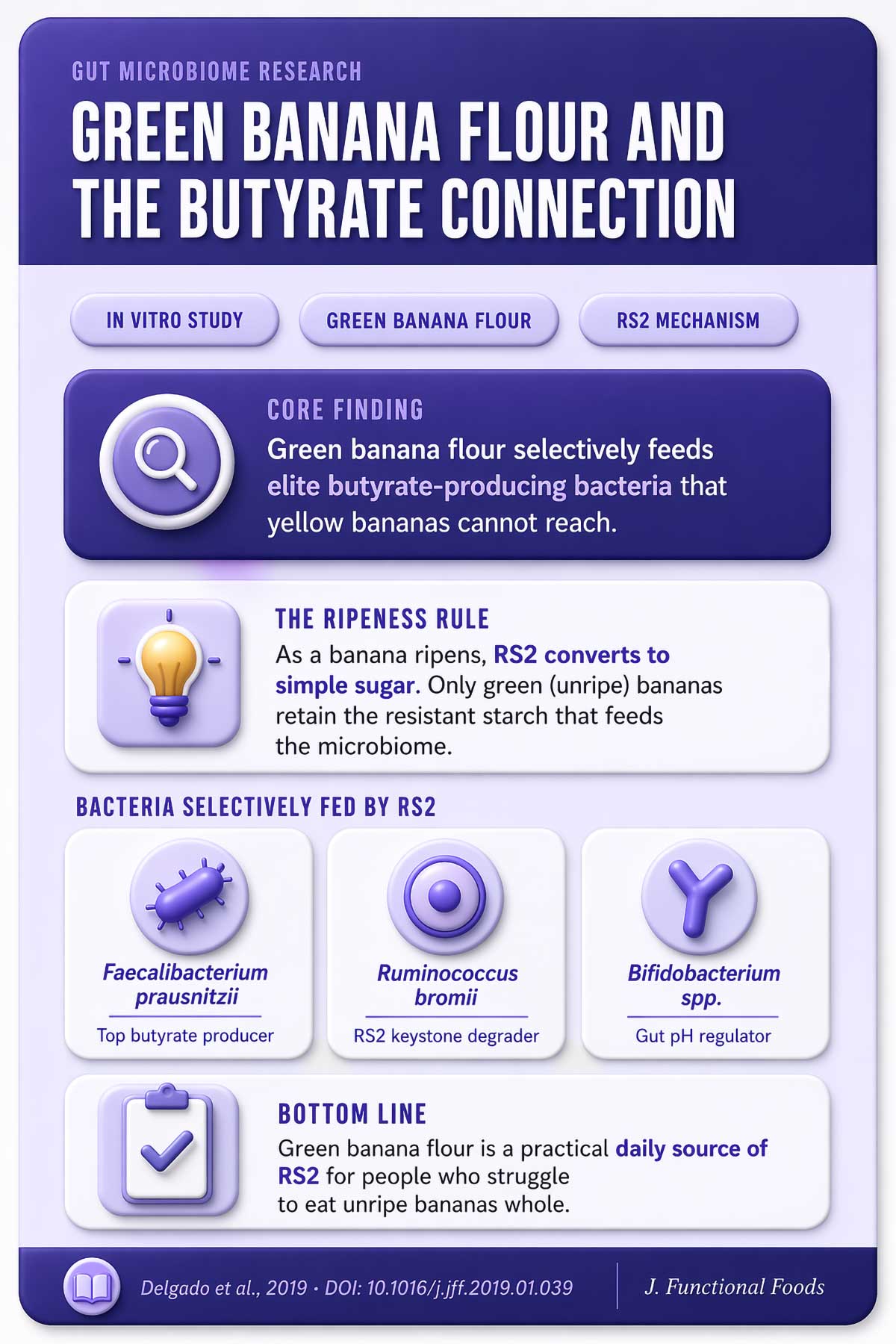
The simple rule: Yellow = Sugar and Potassium. Green = Prebiotics and Gut Healing.
Weeks 3 to 4: The Ruminococcus Shift and the Butyrate Spike
By week three, something more significant begins to happen. The resistant starch that your Bifidobacteria started processing begins to reach a deeper population of bacteria, including a genus called Ruminococcus bromii.
Ruminococcus bromii is sometimes called the “keystone” of resistant starch fermentation. It’s a specialist. It breaks down the dense crystalline structure of RS2, essentially unlocking it for other bacteria to consume. Without Ruminococcus bromii, much of the resistant starch you eat passes through without being properly fermented.
A landmark study by Walker and colleagues (2011), published in The ISME Journal, followed 14 overweight men across precisely controlled diets that included resistant starch. The researchers found rapid and specific shifts in the Ruminococcus bromii population, with these bacteria becoming significantly more abundant. The study showed just how quickly the gut microbiome responds to targeted dietary changes.
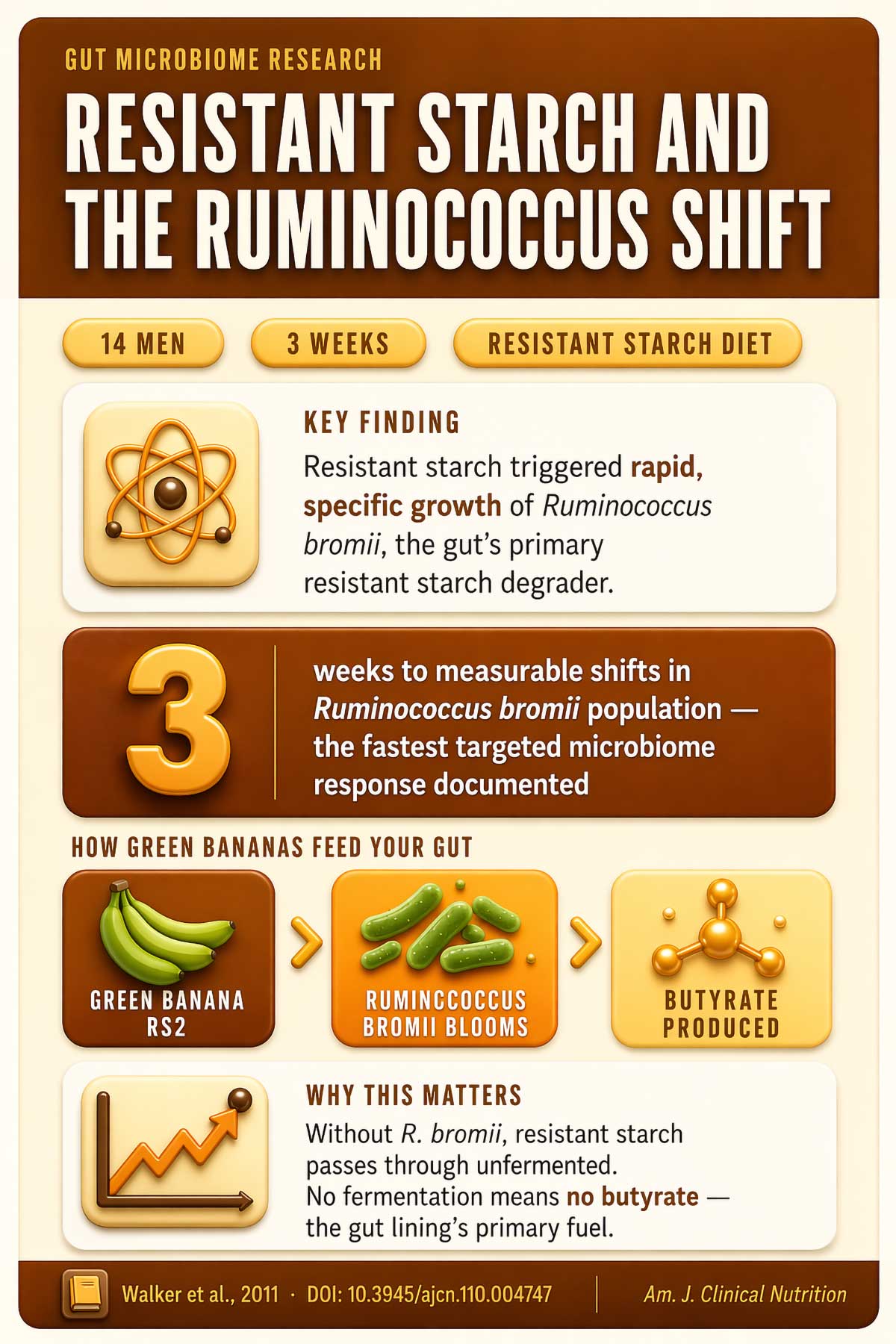
The payoff of this shift is butyrate.
Butyrate is a short-chain fatty acid produced when gut bacteria ferment resistant starch. It’s the primary energy source for the cells lining your colon. Think of it as the fuel that keeps your gut wall strong and intact. Without adequate butyrate, the cells of your gut lining weaken. The tight junctions between them loosen. This is what researchers call increased intestinal permeability, and it’s associated with a wide range of inflammatory conditions.
A detailed human review specifically examined the effects of RS2, the type found in green bananas, on butyrate production. The review confirmed that RS2 intake leads to a measurable spike in butyrate levels, which in turn acts as a powerful anti-inflammatory signal throughout the gut.
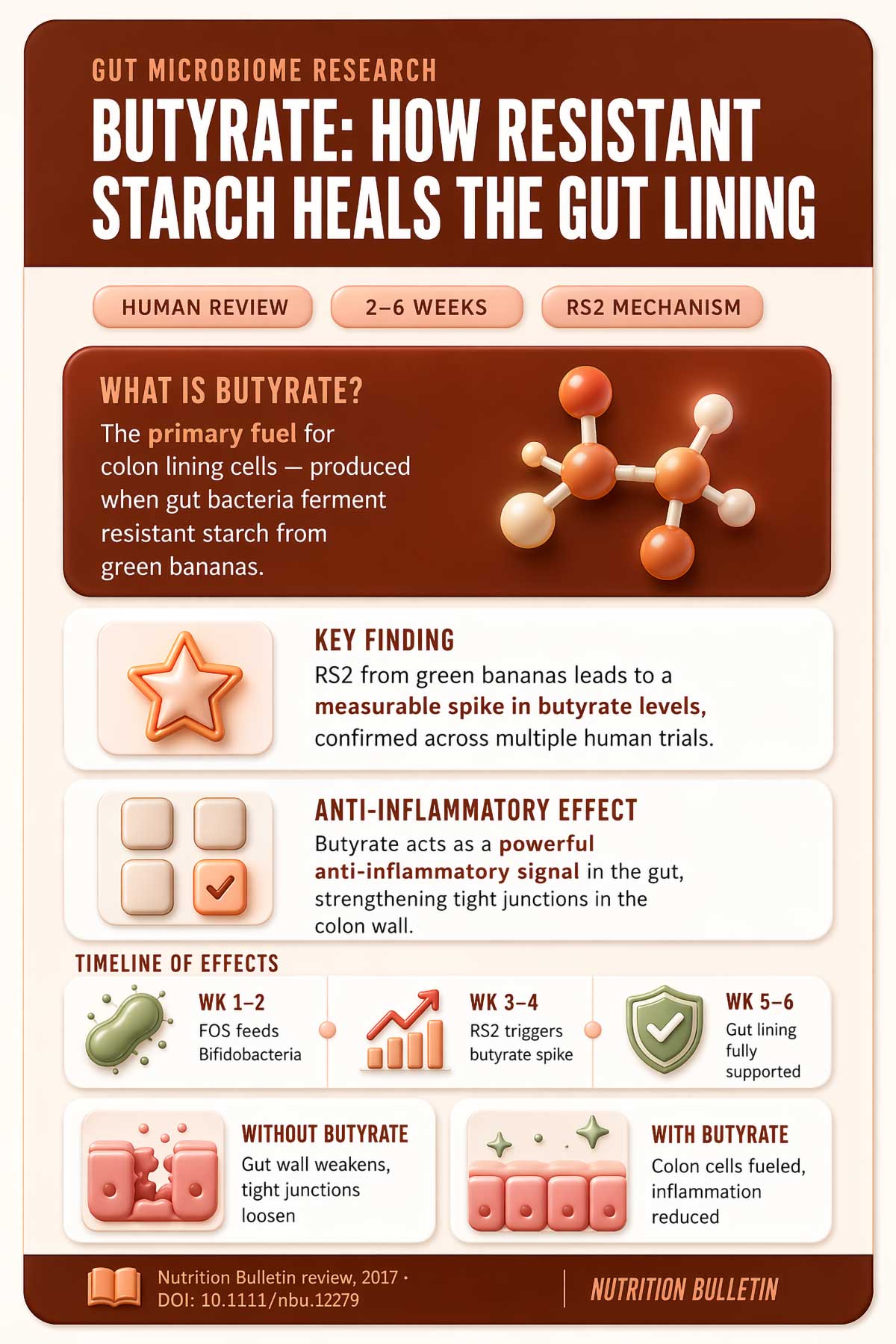
By weeks three and four, if you’re eating green bananas daily, this butyrate production should be ramping up. You may notice your digestion becoming more predictable. Any lingering inflammation in your gut is starting to quiet down.
Weeks 5 to 6: Peak Diversity and Systemic Benefits
The compounding effects of consistent prebiotic feeding become most visible by weeks five and six.
Microbial diversity is one of the strongest markers of gut health. A gut with many different species of bacteria is more resilient, more adaptable, and better at regulating the immune system. A gut with low diversity is linked to everything from autoimmune disease to depression.
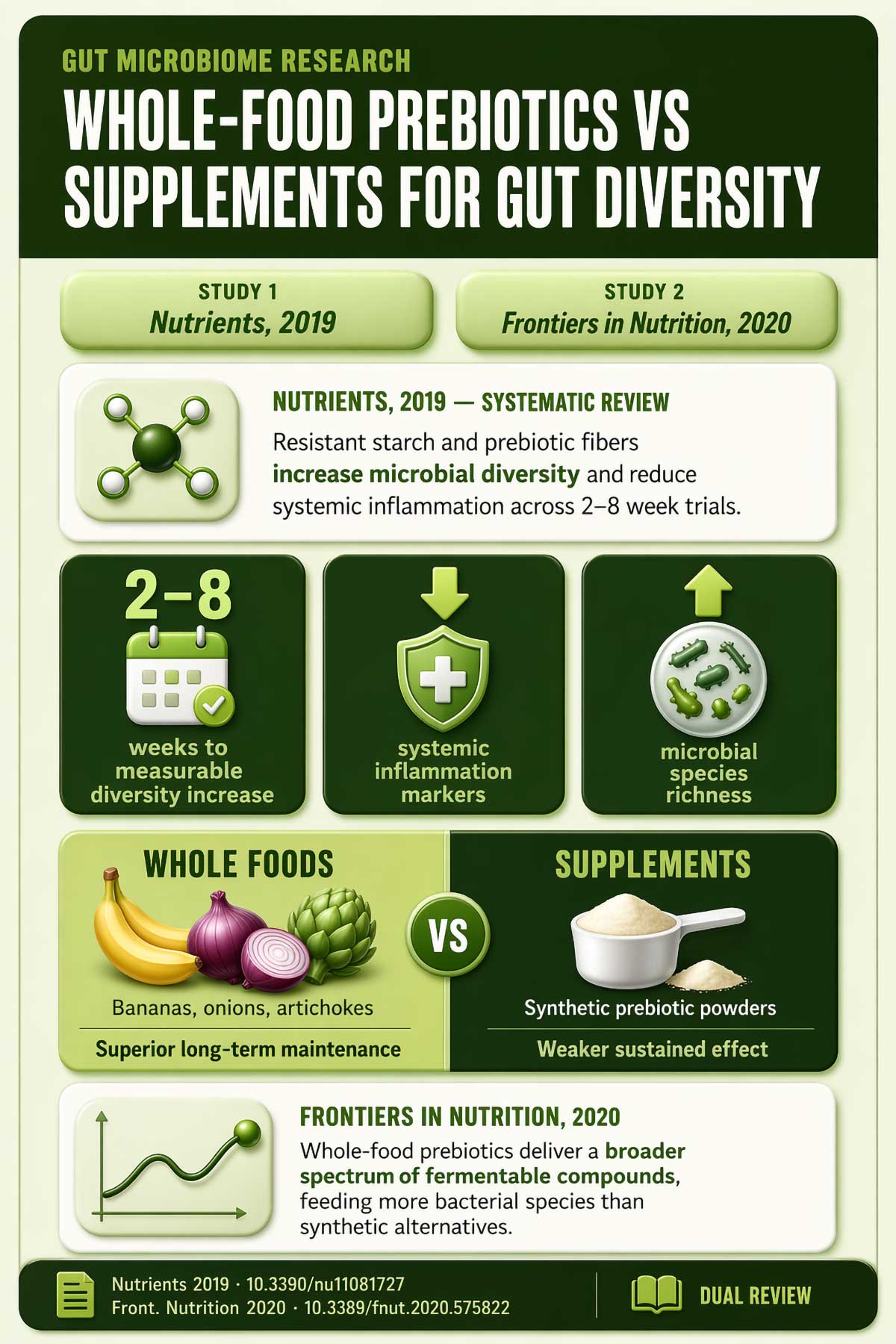
A systematic review published in the journal Nutrients (2019), which pooled data from multiple trials conducted over two to eight weeks, confirmed that resistant starch and prebiotic fibers increase microbial diversity while also reducing markers of systemic inflammation. Diversity didn’t just tick up slightly. In many trials, it shifted meaningfully.
Another review from Frontiers in Nutrition (2020), which tracked outcomes from trials lasting between two and twelve weeks, found that whole-food prebiotics like bananas, onions, and artichokes outperformed synthetic prebiotic supplements when it came to sustaining Bifidobacteria populations over time. The whole-food form appears to deliver a broader spectrum of fermentable compounds, which feeds a wider range of bacterial species.
It’s worth being clear about timing here. The microbial shifts, the Bifidobacteria bloom, the Ruminococcus rise, the butyrate spike, happen relatively fast. Some changes are measurable within days. But the downstream, body-wide benefits take longer to appear. That’s why six weeks is the meaningful milestone, not three days. You’re not detoxing. You’re rebuilding.
By week six, the effects of a healed and more diverse gut lining begin to show up in unexpected places. The gut-brain axis, the two-way communication network between your intestinal bacteria and your central nervous system, starts to stabilize. Many people report clearer thinking and more stable moods. Skin clarity often improves as systemic inflammation drops. Immune responses become more measured and less reactive.
These aren’t side effects. They’re what happens when your gut microbiome is doing its job properly.
How to Actually Eat Green Bananas Without Dreading It
The biggest practical barrier is taste. Unripe green bananas have a starchy, chalky, slightly bitter flavor. They’re not sweet. They don’t taste like the banana you’re used to. Some people find them genuinely unpleasant eaten plain.
Here are three ways to get the benefits without forcing yourself to chew through something you hate.
Blend them into smoothies. A slightly green banana blended with frozen berries, a handful of spinach, and a tablespoon of cacao powder is nearly indistinguishable from a regular smoothie. The strong flavors mask the starchiness completely. This is probably the easiest daily method for most people.
Try green banana flour. Green banana flour is made from dried, milled unripe bananas. It retains the RS2 content without the texture problem. A tablespoon stirred into yogurt, mixed into oats, or added to a protein shake is virtually tasteless. Many people find this the most practical approach for daily use, since it doesn’t require tracking down unripe bananas.
Cook them like plantains. Green bananas hold their shape when cooked. Slice them and sauté in a little olive oil with garlic and salt. They become a slightly starchy, savory side dish with a texture similar to cooked plantains or firm potato. This works well as a dinner side once or twice a week.
One practical note before you start: if your current diet is low in fiber, don’t go straight to a full green banana every day. Your gut needs time to adapt. Start with half a green banana, or a half tablespoon of green banana flour, for the first week. Going too fast can cause excess gas and bloating in the first 48 hours, which puts people off before the benefits even start. Slow and steady gets you to week six.
Start with one method and stick with it. Consistency matters far more than the exact delivery method.
Your 6-Week Gut Reset: A Simple Summary
Week one and two: FOS from the banana feeds Bifidobacteria, reducing bloating and stabilizing gut pH.
Week three and four: Resistant starch shifts the Ruminococcus bromii population, triggering a surge in butyrate production and strengthening the gut lining.
Week five and six: Microbial diversity peaks, systemic inflammation drops, and the benefits extend to mood, skin, and immune regulation.
The single most important thing you can do to make this work is eat bananas before they fully ripen. That slight greenish tint or firm, starchy texture isn’t a flaw. It’s the whole point.
Your challenge: swap your usual yellow banana for a green one, or add a tablespoon of green banana flour to your breakfast, every day for the next six weeks. Track how your digestion changes. Most people notice something within the first two weeks.
The science is clear. The barrier is low. And the upgrade your gut has been waiting for might be sitting in the produce aisle, a little underripe, waiting to be picked.