Most people assume eating oatmeal is enough to lower cholesterol. Decades of clinical research suggest the real difference comes down to one detail almost everyone overlooks.
The promise of oats for lowering cholesterol is old enough that it barely registers as advice anymore. Most people who hear it add a bowl to their morning and assume the biology takes care of itself.
The assumption isn’t entirely wrong. But the mechanism depends on a dose most people never reach, a form of oat most grocery-store options don’t deliver, and a timeline that requires more patience than the headlines suggest.
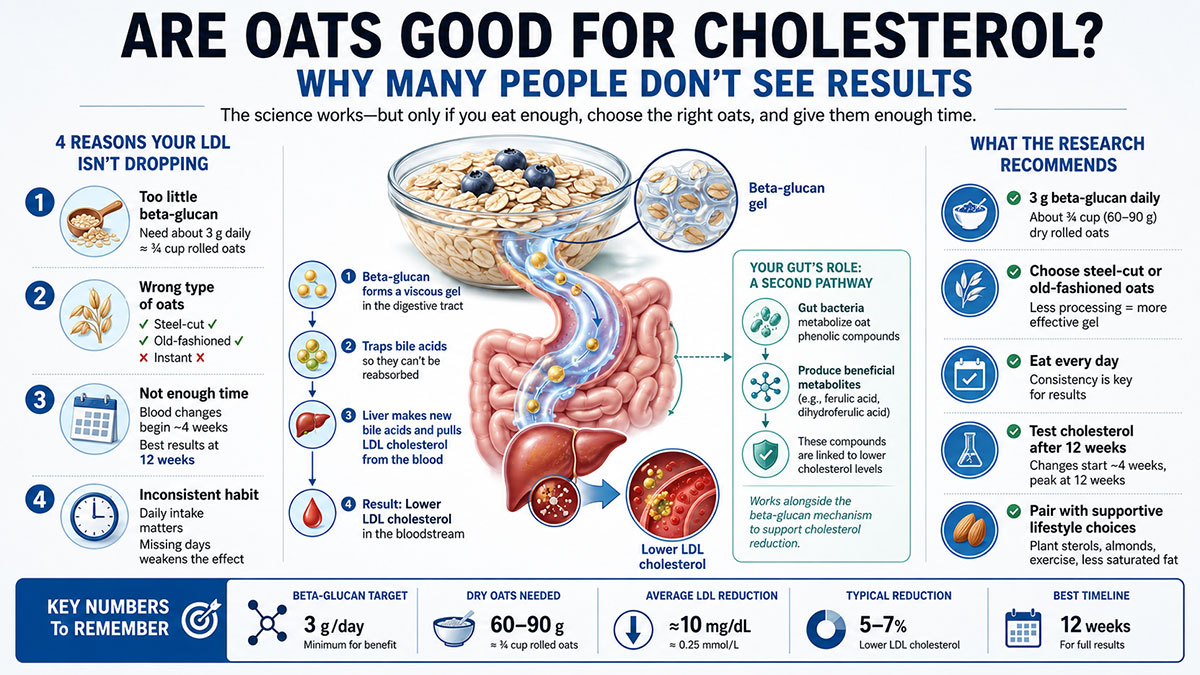
Oats reduce LDL cholesterol through a fiber called beta-glucan, which forms a viscous gel in the digestive tract and traps bile acids. The liver responds by pulling LDL from the bloodstream to make replacement bile acids.
Research across 58 randomized controlled trials shows that 3 grams of beta-glucan daily, roughly three-quarters of a cup of dry rolled oats, reduces LDL by approximately 0.25 mmol/L (about 10 mg/dL) after 6 to 12 weeks of consistent consumption.
The details of that sentence matter considerably. Three grams. Consistently. Six to twelve weeks.
What to Expect: The 6 to 12 Week Window
Four weeks is roughly when measurable changes first appear in blood tests. That’s when the bile acid binding mechanism has been active long enough to produce detectable LDL reductions. Full effect, however, takes considerably longer.
A 2024 systematic review in Food and Function by Li, Gao, and colleagues analyzed 17 randomized controlled trials involving 1,731 adults with dyslipidemia. Oat-based products produced a mean LDL reduction of 0.24 mmol/L and a total cholesterol reduction of 0.32 mmol/L compared with control diets. The certainty of evidence was rated moderate, and the authors noted that the risk of bias in several included trials was a limitation worth acknowledging.
What that means practically: schedule a blood test at 12 weeks, not six. Changes start earlier, but the peak effect comes later. Testing at week four gives a partial reading that might discourage you from continuing a protocol that’s still working.
How Much Can Your LDL Actually Fall?
The central estimate across the literature is a reduction of approximately 0.25 mmol/L (about 10 mg/dL). Whitehead and colleagues’ 2014 meta-analysis in the American Journal of Clinical Nutrition reviewed 28 randomized controlled trials and found LDL fell by 0.25 mmol/L and total cholesterol fell by 0.30 mmol/L. HDL cholesterol and triglycerides were largely unchanged.
Two studies conducted outside the North American and European trial base confirm the pattern isn’t population-specific. Thongoun, Pavadhgul, and colleagues in Thailand found a 10% LDL drop after four weeks of oat porridge compared to rice porridge.
Zhang and colleagues in China found similar reductions at six weeks, in a different population and against a different control. The significance isn’t the numbers, which align with the broader literature. It’s that the same result held in populations with different dietary baselines and different gut microbiome compositions. When a mechanism replicates across that kind of biological variation, it says something about the mechanism itself.
Not every trial finds these results, and that’s worth naming directly. Some studies report more modest effects, particularly when participants had lower baseline LDL, when compliance was inconsistent, or when heavily processed oats were used. The 0.25 mmol/L figure is a central estimate across populations and conditions. It is not a guaranteed individual outcome.
The Mechanism: How Beta-Glucan Traps Cholesterol
When you eat oats, the beta-glucan dissolves in the small intestine and forms a thick, sticky gel. Think of it as a sponge moving through your digestive tract. The sponge traps bile acids (compounds your liver makes from cholesterol and secretes into the gut to help digest fats). Normally, those bile acids are reabsorbed and recycled. When beta-glucan captures them, they get carried out of the body instead.
The liver detects the shortage and produces new bile acids to replace them. To do that, it pulls LDL cholesterol from the bloodstream. That’s how blood LDL drops.
The process depends critically on viscosity. The gel needs to be thick enough to capture bile acids during its transit through the intestine. Molecular weight is what determines that thickness. When oats are processed repeatedly, the beta-glucan molecules get physically broken into shorter segments.
Shorter molecules form less viscous gels. Less viscous gels trap fewer bile acids. The processing level of the oat you eat determines whether this mechanism activates at full strength or a fraction of it.
Your Gut’s Role: A Second Mechanism Researchers Are Still Mapping
The bile acid story was the accepted explanation for decades. Then a study changed the picture in an unexpected direction.
Klümpen, Mantri, Philipps, and colleagues at the University of Bonn, publishing in Nature Communications in 2026, ran two parallel randomized controlled trials in adults with metabolic syndrome. Beyond cholesterol measurement, they were tracking what gut bacteria were doing to compounds in oats. What they found added a second mechanism to the picture.
Gut bacteria metabolize phenolic compounds in oats and convert them into circulating metabolites, most notably ferulic acid and dihydroferulic acid. Those metabolites were inversely correlated with cholesterol levels in both oat intervention groups. The researchers concluded that microbially produced phenolic compounds appear to be a driving factor in oats’ cholesterol-lowering effect, alongside the beta-glucan gel mechanism.
Researchers still don’t have a complete picture of exactly which bacterial populations drive this most consistently. The evidence is compelling, the mechanism plausible, and the effect size real. What’s still being worked out is how large a contribution the phenolic pathway makes relative to beta-glucan, and whether specific oat preparations favor it more than others.
The practical implication for now is that heavily processed oats likely underperform on both counts: they deliver less viscous beta-glucan gel and probably less intact phenolic content to gut bacteria.
The 3-Gram Rule and How to Actually Hit It
Ho, Sievenpiper, Zurbau, and colleagues’ 2016 systematic review in the British Journal of Nutrition analyzed 58 randomized trials with 3,974 participants and confirmed a dose-response relationship. A median dose of 3.5 grams of beta-glucan per day lowered LDL by 0.19 mmol/L. The effect strengthened with higher doses, within a range, and weakened substantially below 3 grams. Three grams is the established floor.
Three grams requires 60 to 90 grams of dry oats, depending on the type. That’s roughly three-quarters of a cup before cooking, which becomes a generous bowl once water is added. This is a measured, intentional serving, not a casual scoop.
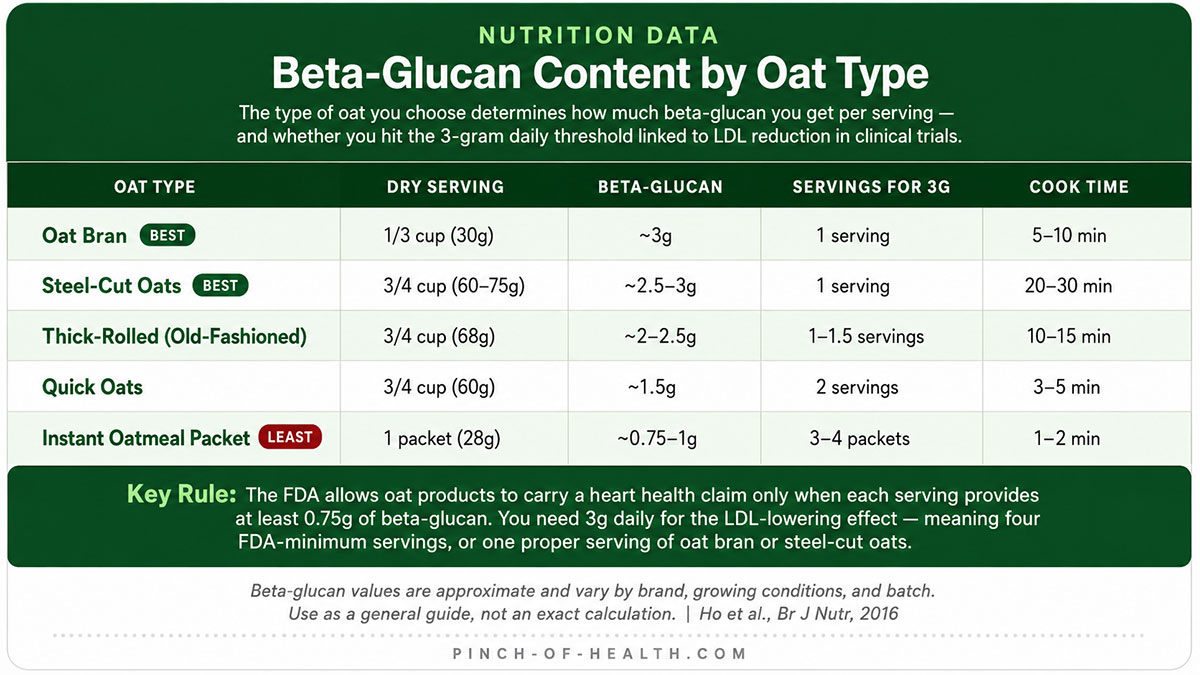
Steel-cut oats and oat bran retain the most beta-glucan because they’ve been processed the least. Oat bran is particularly concentrated: one-third of a cup provides approximately 3 grams. Steel-cut oats need about 40 grams (dry weight) per serving to approach that threshold. At 60 to 75 grams, the 3-gram target is reliably reached.
Thick-rolled (old-fashioned) oats perform nearly as well. Quick oats are more variable. Instant oat packets are the weakest option and are frequently formulated with added sugars that work against any cardiovascular benefit.
When shopping, look for oats labeled “steel-cut” or “old-fashioned” with “whole grain oats” as the only or first ingredient. Cooking time is a reliable proxy for processing level. Fifteen to thirty minutes of cooking means the grain structure is largely intact. Ready in ninety seconds means it isn’t.
Oats for High Cholesterol: Who Sees the Most Benefit
The research consistently shows the largest absolute reductions in people who start with higher baseline cholesterol. Someone with LDL at 4.5 mmol/L (about 174 mg/dL) has more room for improvement than someone already near an optimal level.
The range where the effect is most clinically meaningful is LDL between 3.0 and 5.0 mmol/L (116 to 193 mg/dL). Within that range, a 5 to 7% reduction can move the number into a better category and, combined with other dietary changes, sometimes eliminate the need for medication.
Below 3.0 mmol/L, the effect is real but modest in absolute terms. Above 5.0 mmol/L, a 5 to 7% reduction still leaves substantial remaining cardiovascular risk, and oats are better understood as a complement to medical treatment than an alternative to it.
Oats and statins work through entirely different pathways and don’t interfere with each other. People who can’t tolerate statins, who want to try dietary intervention first, or who are looking to reduce their statin dose with physician guidance are all reasonable candidates for a structured oat protocol.
Stacking Strategies: What to Combine With Oats
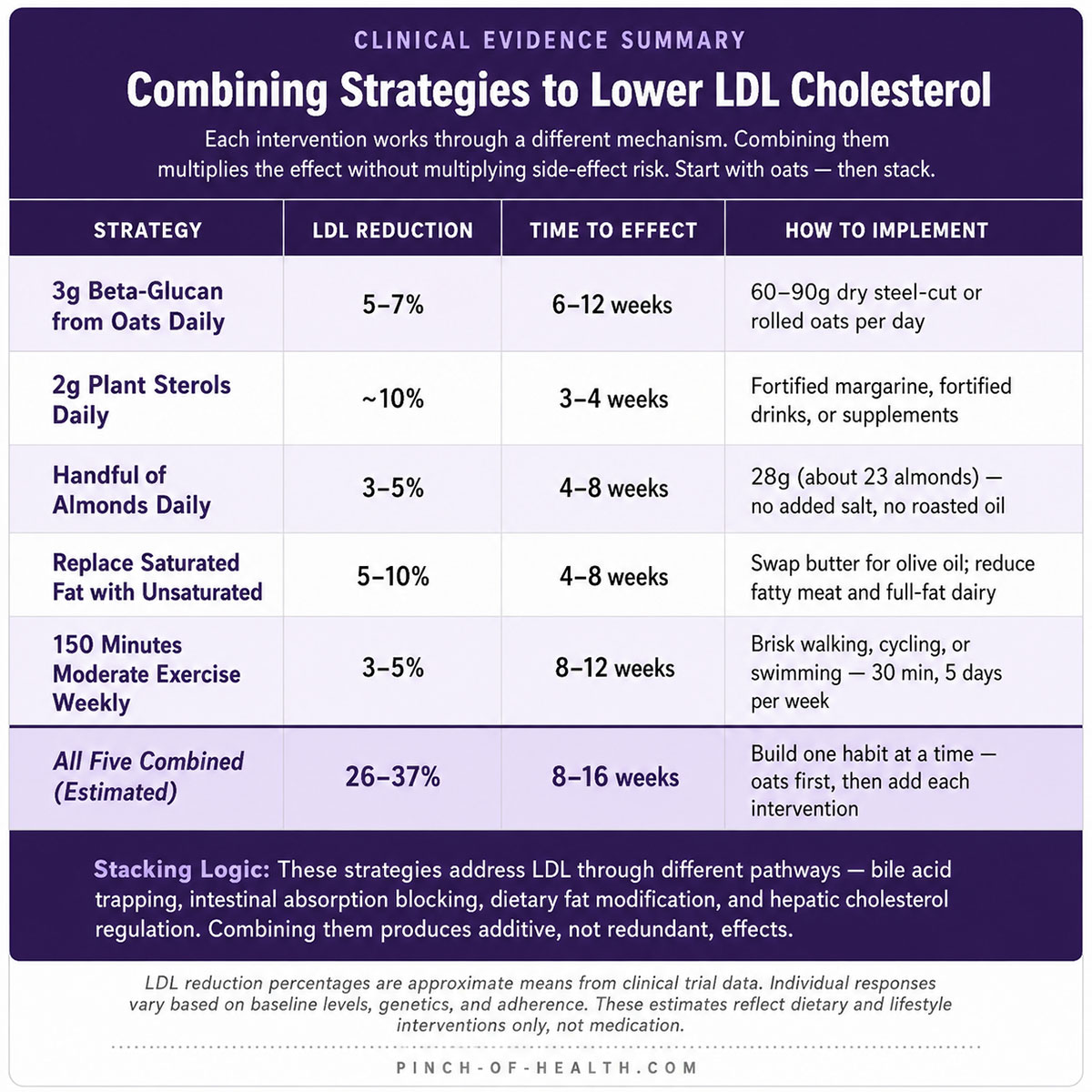
Oats produce a 5 to 7% LDL reduction. For people whose target is achievable with that, the protocol stands alone. For those who need larger reductions, the evidence supports adding complementary interventions.
Plant sterols deserve more attention than they usually get in this context. While beta-glucan captures bile acids on their way out, plant sterols block cholesterol from being absorbed in the first place. The two address the problem from different physiological angles, working simultaneously.
The effective dose is 2 grams daily, which is genuinely hard to reach from whole foods, so fortified margarine or a supplement is usually the practical route. A daily handful of almonds adds another 3 to 5% through their own plant sterols and unsaturated fats. Reducing saturated fats and adding moderate exercise each contribute roughly the same, with effects stacking across different mechanisms.
Oats vs. Statins: An Honest Comparison
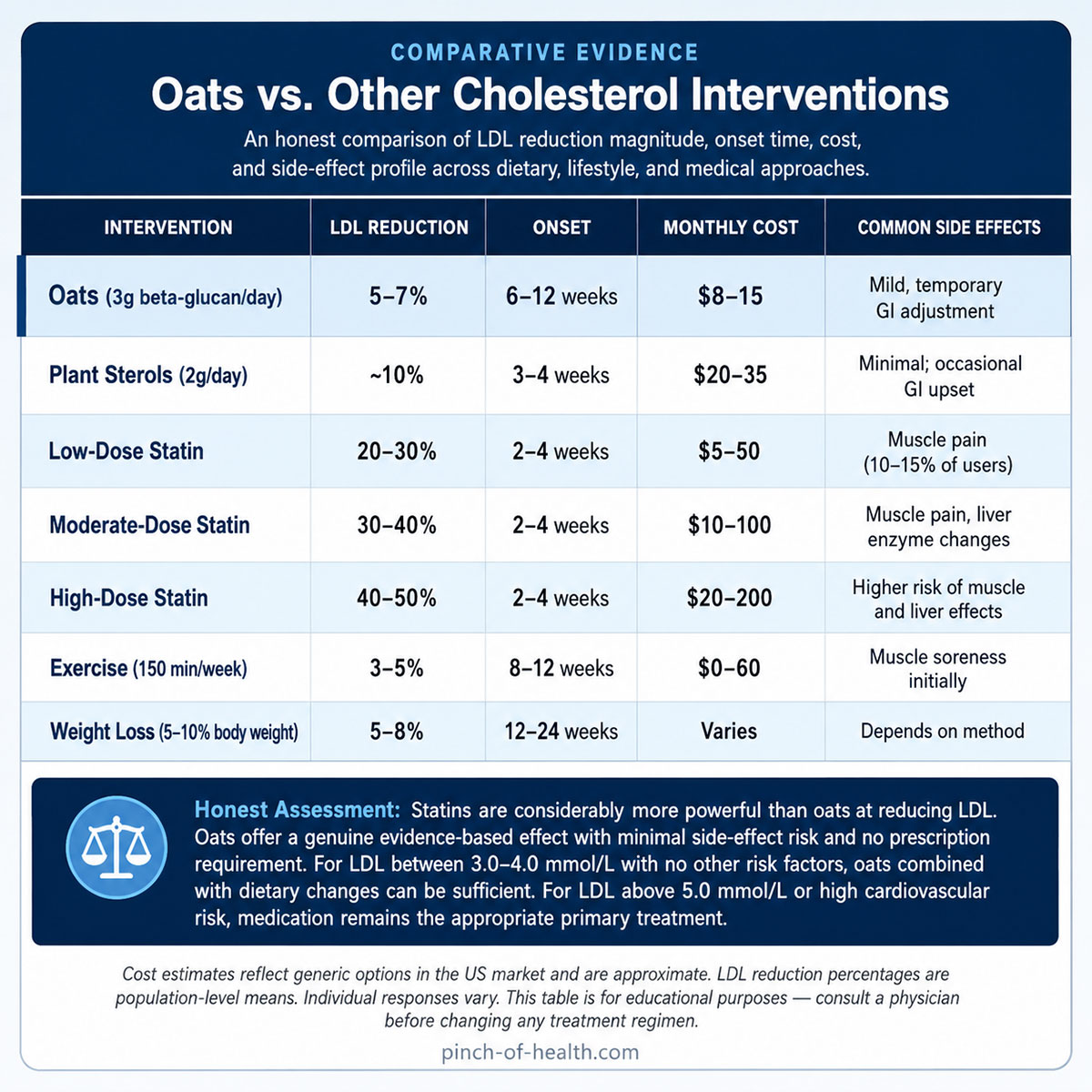
Statins reduce LDL by 20 to 50%, depending on the drug and dose. Oats reduce it by 5 to 7%. This is not a close comparison, and presenting it as one would mislead anyone whose cardiologist has recommended medication for good reason.
Where oats earn their place is in the specific situations where the gap matters less. For people with LDL between 3.0 and 4.0 mmol/L and no other cardiovascular risk factors, a 5 to 7% reduction can achieve the clinical target. For people already on statins who experience side effects at higher doses, adding a structured oat protocol may allow a dose reduction with physician guidance.
For people building a case to defer medication at a first cardiology appointment, 12 weeks of consistent oats with documented blood work shows something significant. Anyone who has already had a heart attack, stroke, or is managing diabetes with elevated cardiovascular risk should treat oats as a complement to medical treatment, not a replacement for it.
The most useful framing is that oats are a genuine, evidence-based intervention with a small and consistent effect and no meaningful side effects. They work in the range where they’ve been studied. That range is well-defined.
Can Just Two Days of Oatmeal Lower Cholesterol?
The 2026 study by Klümpen, Simon, and colleagues included a short-term, high-dose intervention that generated considerable media coverage. The actual data is more specific than most coverage acknowledged.
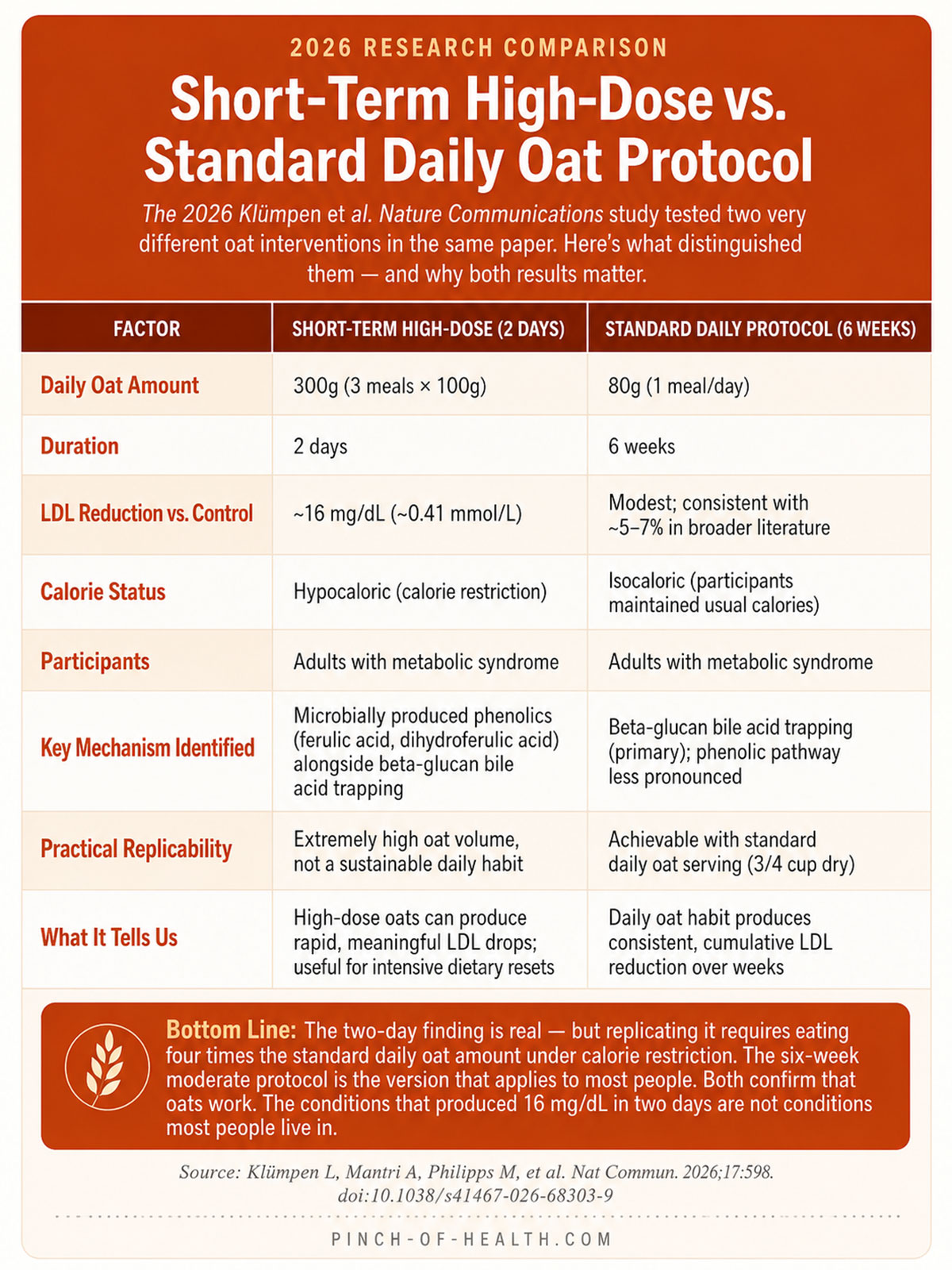
Seventeen adults with metabolic syndrome ate three oatmeal meals per day for two days. Each meal contained 100 grams of rolled oat flakes, for a total of 300 grams daily. At the end of the two-day period, LDL fell by approximately 16 mg/dL (0.41 mmol/L) compared with the control group, and total cholesterol fell by a similar amount.
That finding is real and statistically significant. But three oat meals per day at 100 grams each are roughly four times the amount most standard daily protocols call for. The participants also had metabolic syndrome, and the intervention involved calorie restriction.
The same paper’s six-week, moderate oat intervention (80 grams per day integrated into participants’ regular diet) produced much more modest cholesterol effects. That version is closer to what most people do in practice, and the effects are closer to the 5 to 7% reduction documented across the broader literature.
Two days at extreme doses can initiate a measurable change. The consistent daily commitment at a standard dose is what produces lasting results.
Making It Work: Daily Habits That Produce Results
The biology is straightforward. The habit is where most people get stuck.
Three preparations cover the most common obstacles. Classic oatmeal: three-quarters of a cup of steel-cut oats simmered in three cups of water for 20 to 25 minutes, then topped with ground flaxseed, fresh berries, and cinnamon. No added sugar, no flavoring packets.
Overnight oats: the same amount of thick-rolled oats mixed with a cup of unsweetened almond milk and half a cup of plain Greek yogurt, refrigerated overnight and eaten cold. No cooking required, ready in the morning.
Savory oat bowl: steel-cut oats cooked in vegetable broth and topped with sautéed mushrooms, fresh spinach, and a poached egg. For anyone who finds sweet oatmeal unpleasant, this preparation changes the experience entirely.
The most common failure is the simplest: the portion. Eyeballing a bowl that looks like three-quarters of a cup typically means eating 30 to 40 grams of dry oats, not 60 to 75. That single miscalculation halves the beta-glucan dose.
After that, the other errors compound in familiar patterns: instant packets delivering degraded beta-glucan, days skipped until the cumulative bile acid effect blunts, not enough water to move the fiber through efficiently, sugar added that works against the cardiovascular benefit, and a background diet so high in saturated fat that oats can’t compensate. Fix the portion first. The rest follow from there.
Oat milk is not a reliable substitute for whole oats. Commercial oat milk is typically strained, which removes most of the beta-glucan. A small number of brands now list beta-glucan content on the label. For those brands that show at least 0.75 grams per cup, consuming four cups daily would theoretically reach the 3-gram threshold, but that’s an impractical approach.
For people with celiac disease or confirmed gluten sensitivity, certified gluten-free oats carry the same cholesterol-lowering effect. A minority of celiac patients react to avenin, an oat protein, even in uncontaminated oats. Physician guidance before starting is appropriate for that group.
Cholesterol Reduction Calculator
Use the calculator below to estimate your predicted LDL reduction after 12 weeks based on your starting level and the strategies you plan to combine.
Cholesterol Reduction Calculator
Estimate your predicted LDL level after 12 weeks based on your starting number and the strategies you plan to use.
Note: These estimates are based on population-level clinical trial data. Individual results vary. Consult your healthcare provider before making changes to your treatment plan.
Conclusion
The science around oats and cholesterol is about as settled as nutritional evidence gets. The mechanism is identified, the dose is established, and the timeline is well-characterized across decades of trials in multiple countries and populations. What the research can’t do is close the gap between reading about a protocol and actually running one.
The people tracked in these trials measured their oats, used minimally processed varieties, ate them every day, and retested their cholesterol at 12 weeks. Most people who “eat oatmeal for their heart” do none of those four things with any precision. The biology is reliable. Whether you replicate the conditions that produced it is the only question that matters now.
Frequently Asked Questions
Can I split my daily oat serving throughout the day instead of eating it all at once?
The bile acid binding mechanism works best when beta-glucan is present in the intestine during a meal, when bile acid secretion is active. Very small, spread-out doses reduce the viscosity of the gel formed at any given point. If eating the full amount in one sitting is impractical, two servings of roughly 40 grams each at separate meals preserve more of the effect than splitting it across five or six small amounts throughout the day.
Can I use oat bran instead of whole rolled oats?
Yes, and oat bran is often the more practical choice. It’s more concentrated in beta-glucan than whole oats: one-third of a cup provides approximately 3 grams, versus three-quarters of a cup of rolled oats. It cooks in five to ten minutes. The cholesterol-lowering evidence for oat bran is as strong as for whole oats, and for anyone who finds the volume of a full oat serving difficult, it’s a direct substitute.
How long do I need to keep eating oats?
The benefit lasts as long as the habit continues. LDL typically rises back toward previous levels within a few months of stopping. This is true of any dietary intervention: the effect ends when the treatment ends. The more useful frame is to treat oats the way you’d treat any long-term heart-protective habit, as an ongoing practice rather than a course with a finish line.
What if my cholesterol doesn’t change after 12 weeks?
Start with the portion. A measured 75 grams of dry steel-cut oats looks substantially different from an eyeballed bowl, and underdosing is the most common explanation for a non-response. Confirm you’re using minimally processed oats, not instant packets.
Consider whether high saturated fat intake elsewhere in your diet is offsetting the effect. If all three are addressed and LDL still hasn’t moved, increasing to one cup of dry oats daily and adding 2 grams of plant sterols is a reasonable next step. If LDL remains elevated after six more weeks, a physician conversation about medication is appropriate.
Can I eat oats if I’m already on statins?
Yes. Oats and statins work through entirely different mechanisms and don’t interfere with each other. The practical benefit of combining them is that adding a structured oat protocol may allow a lower statin dose to achieve the same LDL target, reducing exposure to dose-dependent side effects. Any dose adjustment is a conversation with a prescribing physician, not a decision to make independently.
Medical Disclaimer: This content is for educational purposes only and does not replace medical advice. Consult your healthcare provider before making dietary changes, particularly if you are taking cholesterol medication or managing an existing cardiovascular condition. Never discontinue prescribed medications without physician guidance.