Your brain consumes 20% of your body’s oxygen despite making up only 2% of your weight. As you age, the blood vessels feeding your brain start to stiffen, and the natural cleanup systems that remove toxic proteins slow down.
But here’s what neuroscientists have discovered: people who drink 2-3 cups of green tea daily show up to 54% lower rates of cognitive decline in large population studies. While this doesn’t prove green tea alone causes the benefit—tea drinkers may have other healthy habits—the consistency across multiple studies combined with laboratory evidence makes a strong case. That’s the kind of protection that could mean the difference between staying sharp or struggling to remember your grandchildren’s names at 75.
This isn’t about some trendy superfood claim. Multiple studies involving tens of thousands of people, brain imaging scans, and direct measurements of brain activity all point to the same conclusion: green tea does something special for your brain that coffee doesn’t.
Let’s break down exactly what’s happening in your brain when you drink green tea, and why starting this habit now could protect your cognitive health for decades to come.
Green Tea Brain Benefits at a Glance
| Brain Benefit | Time to Feel It | How It Works | Research Strength |
|---|---|---|---|
| Calm focus and alertness | 30-60 minutes | L-theanine + caffeine boost alpha waves | Strong |
| Sharper attention and memory | 30-60 minutes | Enhanced parieto-frontal brain connectivity | Strong |
| Stress reduction | 40-60 minutes | L-theanine lowers stress response | Strong |
| Reduced cognitive decline risk | Years of daily use | EGCG protects neurons, reduces inflammation | Moderate-Strong |
| Lower Alzheimer’s risk | Years of daily use | Disrupts toxic protein buildup | Moderate |
| Better blood flow to brain | 60-90 minutes | Catechins improve vascular function | Moderate |
The “Alpha Wave” Effect: Why You Feel Calmly Alert
Have you ever noticed how coffee makes you jittery while tea keeps you focused? There’s actual brain science behind this difference.
Green tea contains a unique compound called L-theanine that you won’t find in coffee. When L-theanine enters your brain, it does something remarkable: it increases alpha brain waves.
Alpha waves vibrate at 8-13 cycles per second. Researchers in a 2008 study used EEG scans to measure brain activity after people consumed L-theanine. They observed these waves spike in the occipital and parietal brain regions about 40 minutes after consumption. These specific brain waves create what neuroscientists call “relaxed alertness”—you’re focused but not anxious, awake but not wired.
Buddhist monks discovered this effect centuries ago. They drank tea before meditation because it helped them stay alert during long sessions without the racing thoughts that coffee produces.
But here’s where it gets interesting for your daily life.
The Unique Combination: L-Theanine Plus Caffeine
Green tea contains both L-theanine and caffeine, but in a special ratio that produces effects neither compound can create alone.
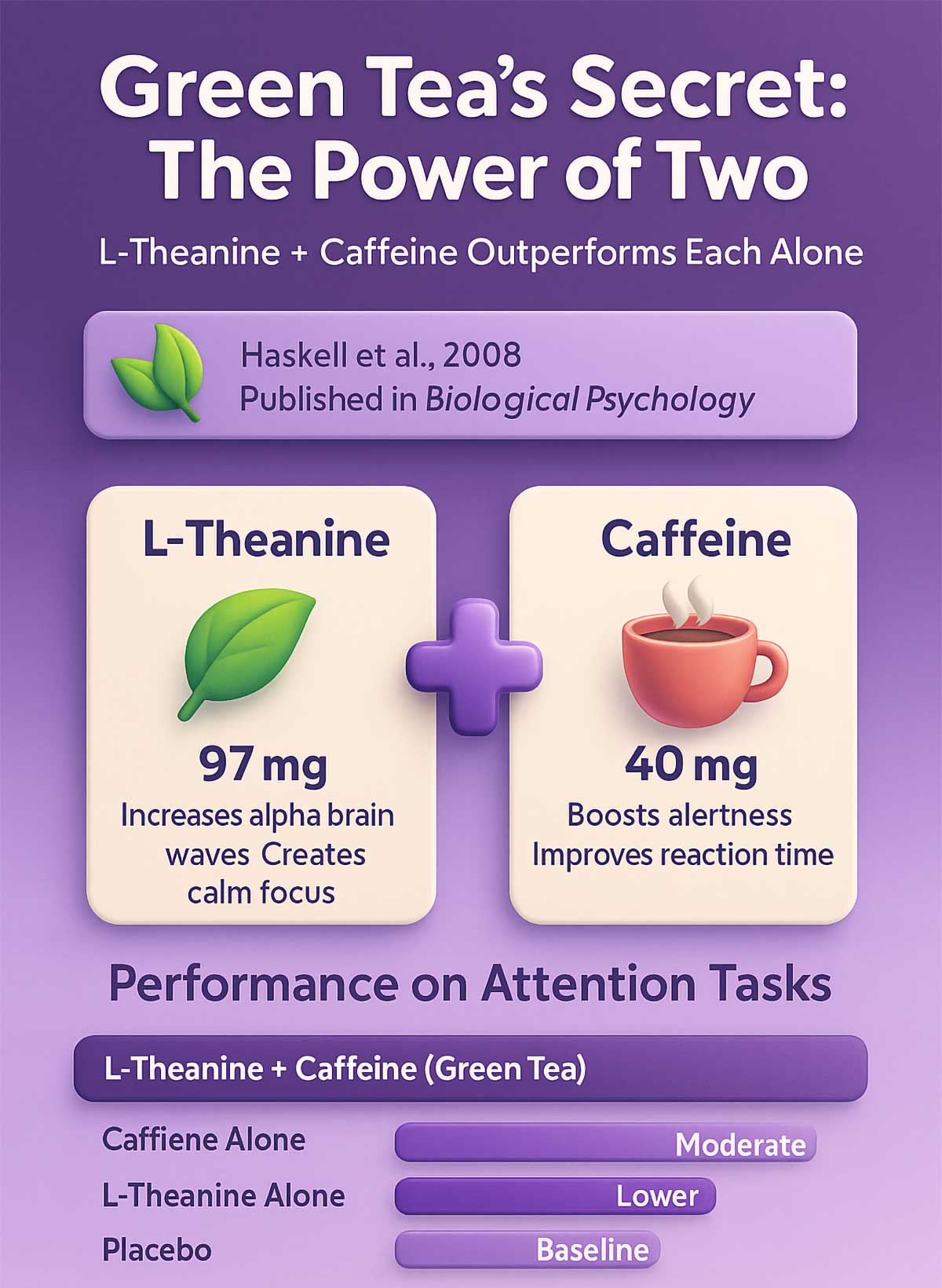
Researchers at the University of Surrey published a study in Biological Psychology where they tested people on attention-switching tasks. Some got caffeine alone. Some got L-theanine alone. Others got the combination found naturally in green tea at doses of 97 mg L-theanine and 40 mg caffeine.
The results were clear: the combination group performed better than either compound alone. They switched between tasks faster, made fewer mistakes, and ignored distractions more effectively. The accuracy improvements were statistically significant, showing that green tea’s unique compound profile outperforms isolated caffeine for complex cognitive tasks.
Brain imaging studies using fMRI scans show why. A 2014 study published in Psychopharmacology demonstrated that green tea extract increased connectivity between your parietal and frontal cortex—the brain regions that control working memory and attention. The researchers found that subjects who consumed green tea extract showed enhanced communication efficiency between brain networks during working memory tasks. Think of it like improving the Wi-Fi signal between two routers.
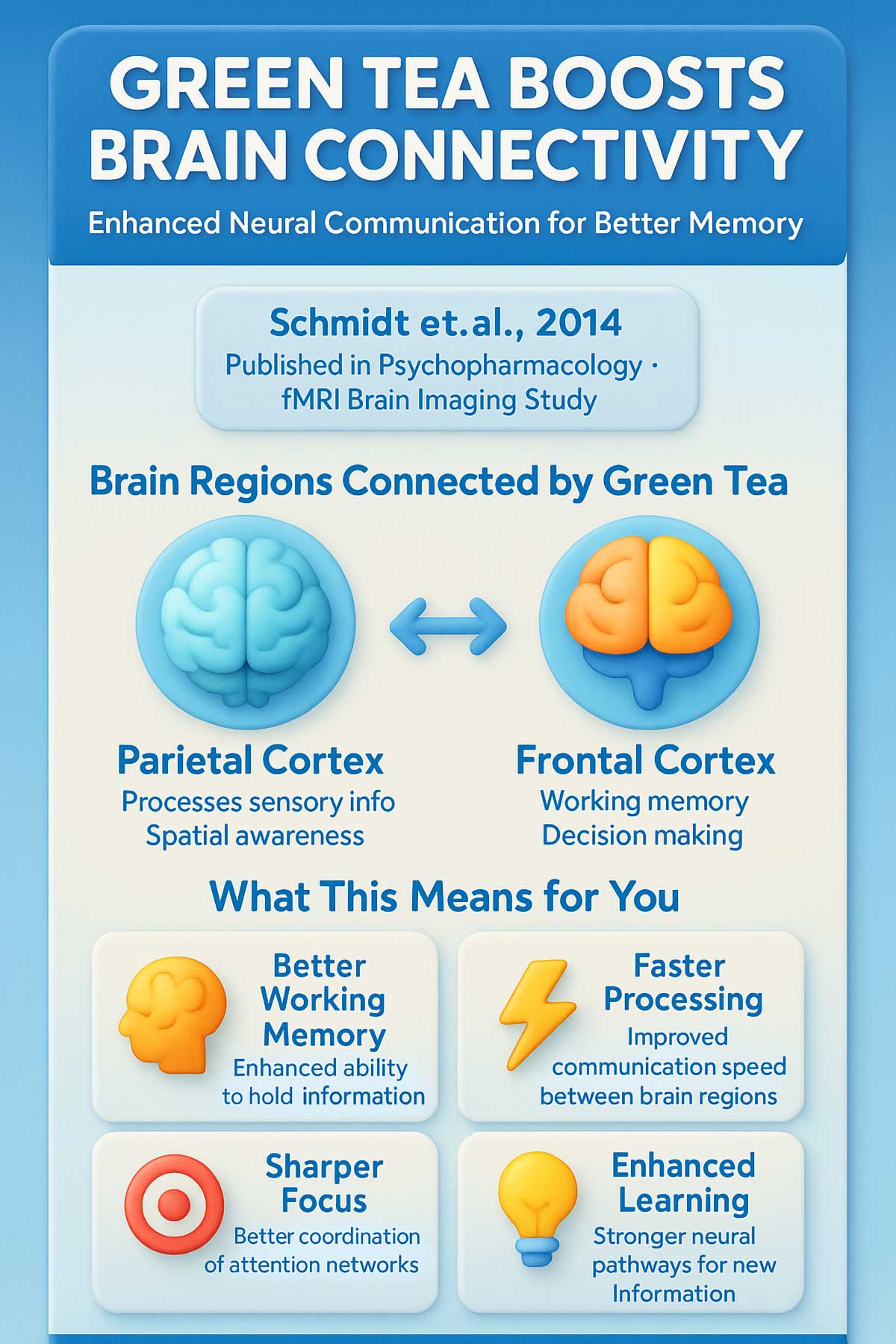
You’re not just getting a caffeine boost. You’re getting enhanced communication between the parts of your brain that help you think clearly, remember information, and stay focused on complex tasks.
This effect kicks in within 30-60 minutes and lasts 2-4 hours. Perfect for that afternoon slump when you need to focus but coffee would leave you too jittery to concentrate.
Green Tea vs. Coffee vs. Black Tea: Brain Benefits Compared
You might be wondering how green tea stacks up against your morning coffee or afternoon black tea. Each beverage offers different advantages for your brain.
| Beverage | Caffeine (per 8oz) | L-Theanine | Best For | Brain Protection |
|---|---|---|---|---|
| Green Tea | 25-50 mg | 20-30 mg | Sustained focus, calm alertness, long-term protection | High |
| Coffee | 95-165 mg | None | Immediate energy, short-term performance | Low-Moderate |
| Black Tea | 40-70 mg | 10-15 mg | Moderate energy with some calm | Moderate |
| Matcha | 70-140 mg | 40-60 mg | Maximum brain benefits | Very High |
Coffee wins for immediate alertness. If you need to wake up fast or power through a quick task, coffee’s higher caffeine content delivers stronger acute effects. But that comes at a cost—the jitters, the crash, and zero long-term neuroprotection.
Green tea takes a different approach. The moderate caffeine keeps you alert while L-theanine prevents overstimulation. You get smooth, sustained focus that lasts longer without the crash. Plus, the EGCG and other catechins are actively protecting your brain cells from long-term damage.
Black tea sits in the middle. It has more caffeine than green tea but less L-theanine, and the oxidation process that makes black tea dark reduces catechin content by about 60%. You still get some benefits, but not as much as green tea provides.
The smart strategy? Coffee for occasional energy bursts when you really need them. Green tea for daily cognitive support and long-term brain protection. Your 80-year-old brain will care a lot more about which one you chose to drink every day.
It Acts Like “Fertilizer” for Your Neurons
Here’s something most people don’t know about their brain: you can grow new neural connections at any age. The key is a protein called Brain-Derived Neurotrophic Factor, or BDNF.
Think of BDNF as fertilizer for your brain cells. It helps existing neurons survive longer and encourages new connections to form between brain cells. These connections—called synapses—are where learning and memory happen.
The problem? As you get older, your natural BDNF production drops. This is one reason why learning new skills gets harder and why memories don’t stick as easily as they used to.
Green tea contains a powerful compound called EGCG (short for epigallocatechin gallate—thankfully you don’t need to remember that). EGCG crosses from your bloodstream into your brain tissue, where it triggers your brain cells to produce more BDNF.
This is huge. You’re not just protecting old neurons from dying. You’re supporting the growth of new connections that can partially offset age-related decline.
The 54% Reduction in Cognitive Decline
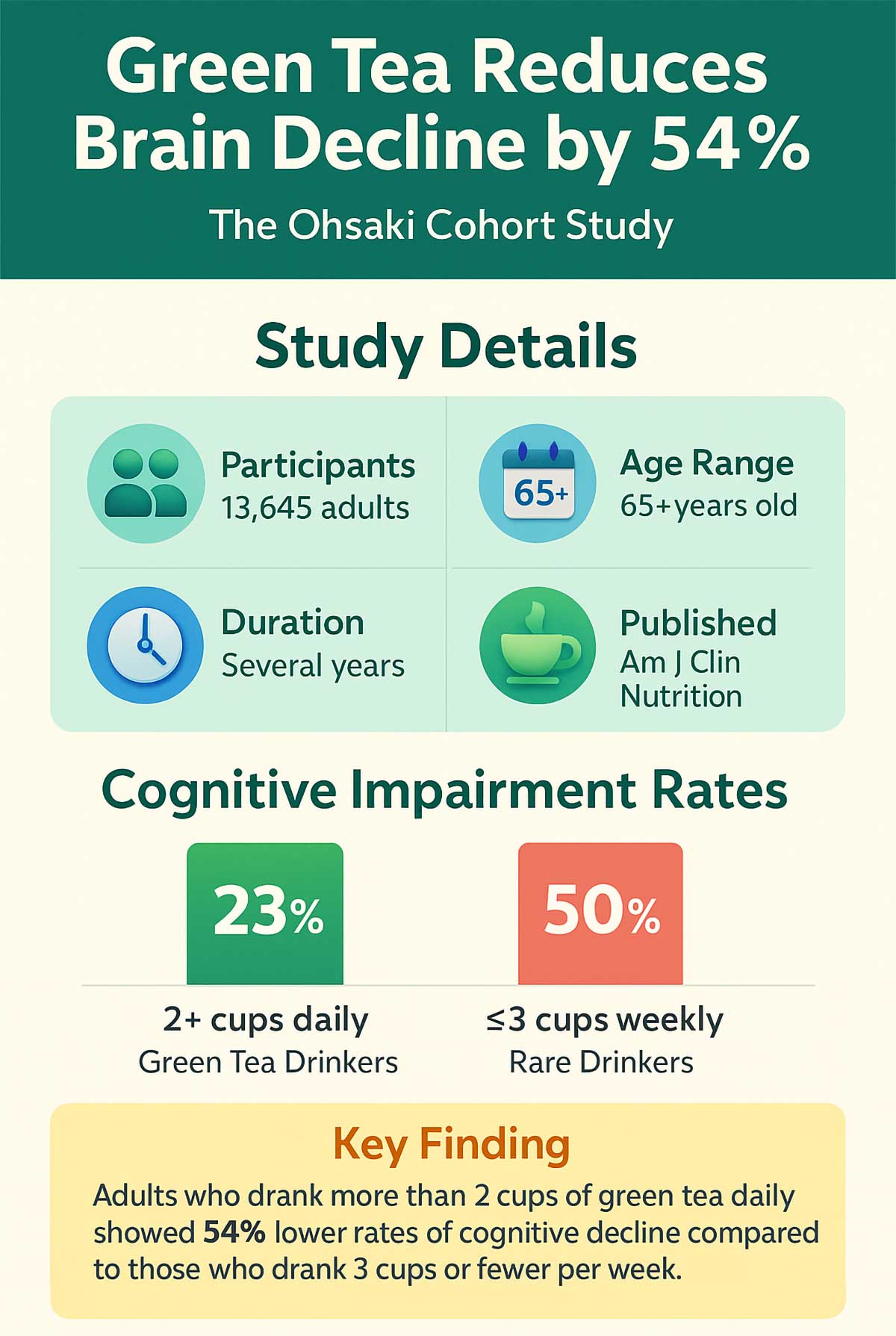
A landmark study published in the American Journal of Clinical Nutrition followed 13,645 adults aged 65 and older in the Ohsaki region of Japan. Researchers tracked what they ate and drank, then tested their cognitive function regularly over several years using standardized assessments.
The findings were striking: people who drank more than 2 cups of green tea daily had 54% lower rates of cognitive impairment compared to those who drank 3 cups or fewer per week. Even after adjusting for factors like education, exercise habits, and overall diet quality, the protective association remained strong.
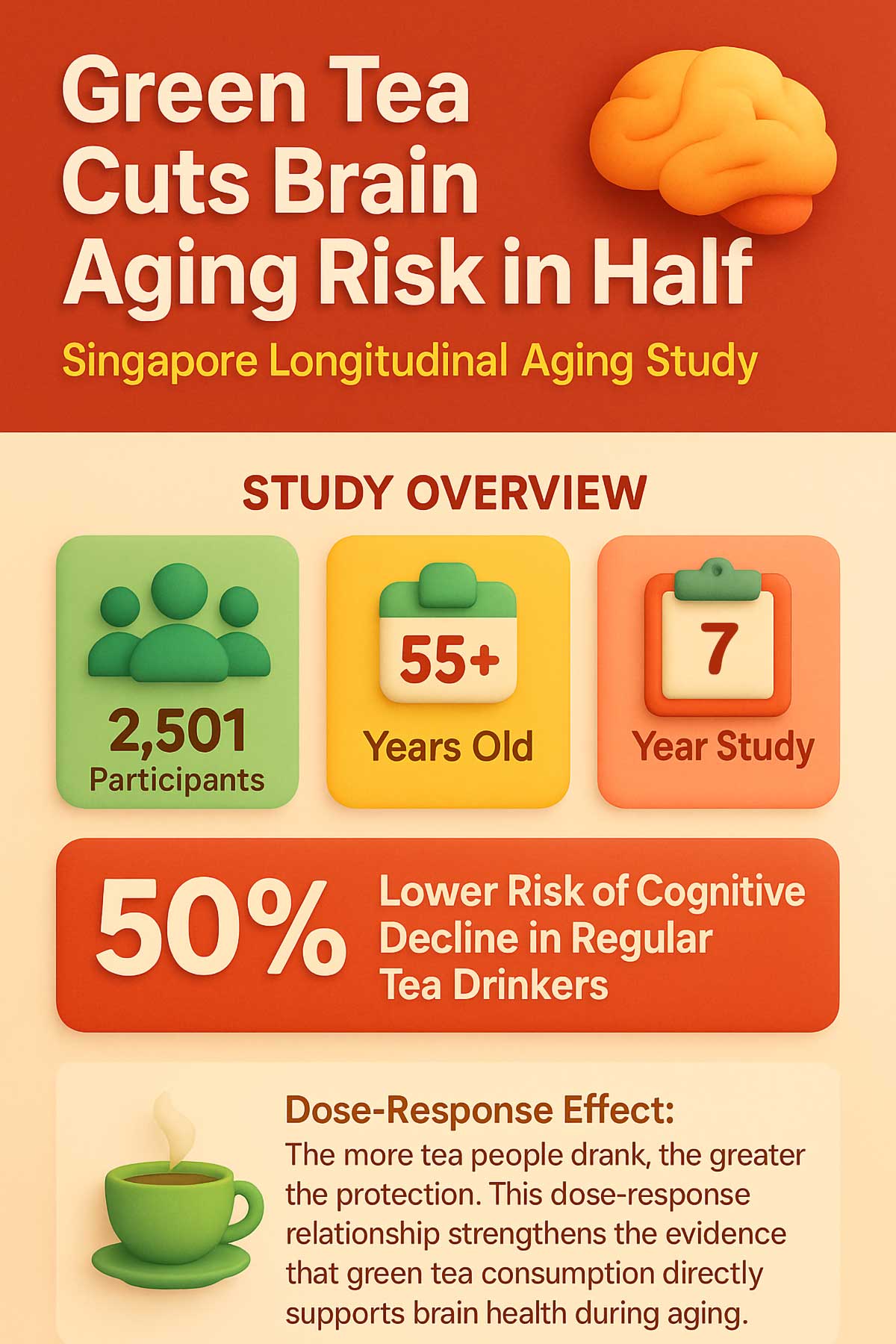
A separate study published in the Journal of Nutrition, Health & Aging followed 2,501 Chinese adults aged 55 and up in Singapore for 7 years. Regular tea drinkers showed 50% reduced risk of cognitive decline, and the benefits increased with the amount consumed. The dose-response relationship—more tea, more protection—strengthens the case for a real biological effect.
Now, drinking tea doesn’t guarantee you’ll never experience memory problems. These are population studies, which means they show associations, not absolute proof. People who drink tea regularly might also exercise more, eat better, or have other healthy habits that contribute to brain health.
But the consistency across multiple large studies, combined with the laboratory evidence showing how EGCG protects brain cells and boosts BDNF, makes a compelling case. At minimum, green tea appears to be a powerful tool in your brain health toolkit.
Scrubbing the Brain: Reducing the “Plaque” of Aging
Let’s talk about what scares most people as they get older: Alzheimer’s disease.
One of the key features of Alzheimer’s is the buildup of a sticky protein called amyloid beta. Think of it like gunk that clogs your neural highways, blocking signals between brain cells and eventually killing the neurons.
Researchers at McMaster University published findings in 2017 showing something important about EGCG. They discovered it can disrupt the formation of toxic amyloid clusters before they damage your brain cells. The study demonstrated that EGCG redirects amyloid beta peptides away from forming the toxic oligomers that kill neurons.
Here’s how it works: amyloid beta proteins naturally form in everyone’s brain. Usually, your body’s cleanup systems clear them away. But as you age, these cleanup systems slow down, and the proteins start sticking together into toxic clumps called oligomers.
EGCG appears to redirect these proteins away from forming toxic clusters. It’s like a traffic cop preventing a pile-up before it happens. The laboratory findings show that EGCG binds to amyloid beta in a way that prevents it from aggregating into the dangerous forms that damage brain tissue.
White Matter Protection
Your brain’s white matter is like the wiring that connects different brain regions. As you age, tiny damaged spots called white matter lesions can appear in this wiring. More lesions mean slower thinking, worse memory, and higher dementia risk.
A study published in Nature examined brain scans of older adults in Japan. Those who drank 3 or more cups of green tea daily had significantly fewer white matter lesions than those who rarely drank tea. The researchers used MRI imaging to quantify white matter hyperintensities—the technical term for these damaged areas—and found a clear dose-dependent relationship between tea consumption and brain structure preservation.
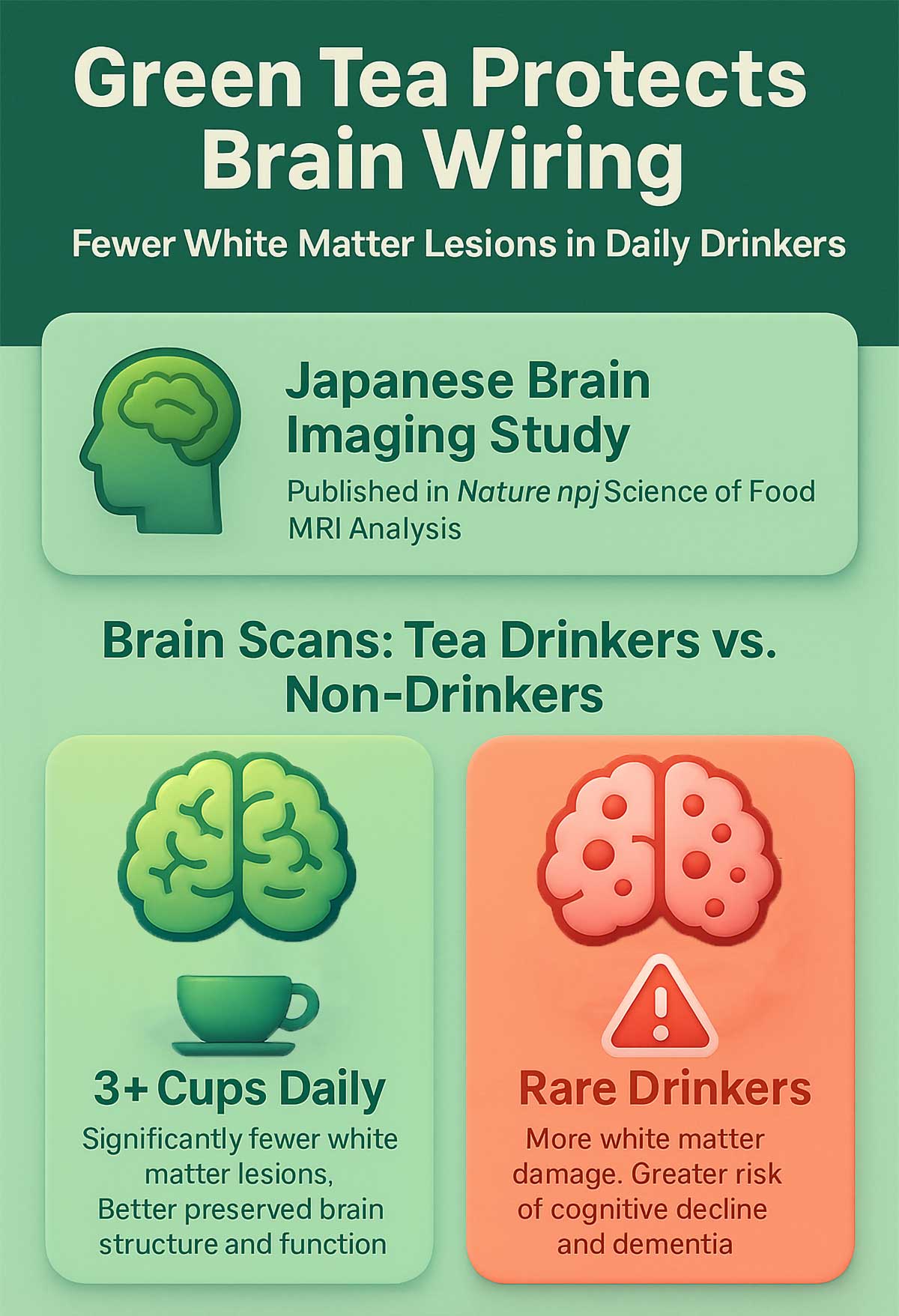
This matters because white matter damage often shows up before any memory symptoms appear. By the time you notice problems, significant damage has already occurred. Protecting your white matter now means preserving your cognitive function later.
The catechins in green tea—EGCG being the most powerful—act like a cleaning crew for your brain. They don’t just prevent new damage; they help maintain the existing neural pathways that keep your thinking sharp.
The 5 Best Types of Green Tea for Brain Health (Ranked)
Not all green tea is created equal. The processing method, growing conditions, and preparation style all affect how much brain-protective catechins and L-theanine you actually get. Here’s what you need to know when shopping.
1. Matcha (Highest Brain Benefits)
Matcha wins by a wide margin. This is powdered whole tea leaves, which means you consume everything—100% of the catechins, 100% of the L-theanine, and 100% of the other protective compounds. One cup of properly prepared matcha provides roughly the same catechin content as 3 cups of regular brewed green tea.
The downside? It’s pricier and has a stronger, more vegetal taste. The caffeine content is also higher at 70-140 mg per serving, though the L-theanine is proportionally higher too, maintaining that smooth focus effect.
Best for: people serious about maximizing brain benefits and willing to pay more.
2. Gyokuro (Highest L-Theanine of Brewed Teas)
Gyokuro is shade-grown for 20 days before harvest, which forces the plant to produce more chlorophyll and L-theanine. This Japanese tea has the highest L-theanine content of any brewed tea, making it ideal for that calm, focused feeling.
The flavor is sweet and rich with almost no bitterness. It’s expensive but worth it for the experience and brain benefits.
Best for: people who want maximum relaxation benefits and premium flavor.
3. Sencha (Best Overall Value)
Sencha is the everyday tea in Japan. It offers excellent catechin and L-theanine content at reasonable prices. The flavor is bright and grassy with mild astringency when brewed correctly.
Quality varies widely, so look for Japanese sencha specifically. Chinese green teas tend to have looser quality controls and may contain pesticide residues.
Best for: daily drinking and people new to green tea.
4. Dragon Well (Longjing) (Premium Chinese Option)
This famous Chinese green tea from Hangzhou offers good catechin content and a smooth, sweet, slightly nutty flavor. Authentic Dragon Well is pan-fired, which creates a different flavor profile than Japanese steamed teas.
The catch is authenticity. Much of what’s sold as Dragon Well is lower-quality tea from other regions. Buy from reputable sellers only.
Best for: people who prefer milder, sweeter teas.
5. Genmaicha (Best for Beginners)
Genmaicha mixes green tea with roasted brown rice. The rice dilutes the tea, reducing caffeine and catechin content by about 30-40%. This makes it gentler on the stomach and less intimidating for people who find pure green tea too strong.
The toasted rice adds a warm, comforting flavor that many people find more approachable. It’s also very affordable.
Best for: people sensitive to caffeine or new to tea who find regular green tea too intense.
You’re Probably Brewing It Wrong (And Killing the Benefits)
Here’s where most people mess up: they use boiling water.
When you pour 212°F water over green tea leaves, you destroy the delicate L-theanine molecules and scorch the catechins. The result? A bitter, harsh-tasting tea that makes you never want to drink it again. And you’ve just eliminated many of the brain-protective compounds you’re trying to get.
The science is clear on optimal brewing:
Temperature matters: Heat your water to 160-180°F (70-80°C). If you don’t have a thermometer, let boiling water sit for 2-3 minutes before pouring. Different teas have different sweet spots—matcha prefers 160-170°F, sencha does well at 170-175°F, and gyokuro wants 140-160°F.
Time matters: Steep for 2-3 minutes maximum. Longer steeping extracts more bitter tannins without significantly increasing beneficial compounds. Set a timer. Most people steep way too long because they forget about their tea.
Perfect Brewing Timer
Never over-steep your tea again • Preserve L-theanine & catechins
The citrus hack: Add a squeeze of lemon to your tea. Vitamin C stabilizes EGCG in your digestive system, potentially increasing absorption. A study published in Molecular Nutrition & Food Research found that citrus juice increased catechin bioavailability substantially compared to tea consumed alone. The compounds that protect your brain are fragile in the acidic environment of your stomach. Vitamin C helps them survive the journey.
Matcha Preparation: A Different Process
Matcha requires a different approach since you’re consuming the whole leaf. Sift 1/2 to 1 teaspoon of matcha powder into a bowl to remove clumps. Add 2-3 ounces of water at 160-170°F. Whisk vigorously in a W or M pattern for 30 seconds until a frothy layer forms on top. Add more hot water to reach your desired strength.
The whisking creates a suspension rather than a solution. Those tiny leaf particles contain all the brain-protective compounds, so you want them evenly distributed throughout your drink.
Brain-Boosting Green Tea Recipes
These recipes maximize absorption of brain-protective compounds while making green tea more enjoyable to drink daily.
Recipe 1: Classic Brain-Boost Green Tea (The Foundation)
This is your daily driver. Simple, effective, and optimized for cognitive benefits.
Ingredients:
- 1 tsp high-quality sencha or 1/2 tsp matcha powder
- 8 oz water
- 1 fresh lemon wedge
- Optional: 1/2 tsp raw honey
Instructions:
- Heat water to 170°F. Let boiling water cool for 3 minutes if you don’t have a thermometer.
- For loose leaf: Pour water over tea leaves in your cup and steep exactly 2 minutes. For matcha: Sift powder into a bowl, add 2 oz hot water, whisk vigorously for 30 seconds, then add remaining water.
- Remove leaves or whisk matcha smooth.
- Squeeze lemon wedge directly into tea. The vitamin C will stabilize the EGCG.
- If using honey, wait until tea cools to 140°F (still hot but drinkable). High heat destroys some beneficial enzymes in raw honey.
- Drink 40 minutes before you need peak focus for maximum alpha wave effect.
Brain Boost: Provides 25-30 mg L-theanine, 40-50 mg caffeine, and 100+ mg catechins. The lemon increases EGCG bioavailability by up to 5 times.
Best timing: 10 AM for morning focus or 2 PM for afternoon clarity without sleep disruption.
Recipe 2: Afternoon Focus Blend (No Crash)
This cold blend combines green tea with brain-supportive foods for sustained afternoon energy without the typical 3 PM crash.
Ingredients:
- 1 cup brewed green tea (cooled to room temperature)
- 1/4 cup fresh or frozen blueberries
- 1 tbsp chia seeds
- Squeeze of fresh lime
- 4-5 ice cubes
- Optional: 1/4 tsp cinnamon
Instructions:
- Brew green tea using proper temperature (170°F for 2-3 minutes) and let cool to room temperature. You can brew this in the morning and refrigerate.
- Add all ingredients to a blender.
- Blend on high for 45-60 seconds until completely smooth.
- Drink between 2-4 PM for sustained afternoon energy.
Why It Works: Blueberries add anthocyanins that provide additional neuroprotection and cross the blood-brain barrier. A study in the Journal of Agricultural and Food Chemistry showed that blueberry polyphenols enhance cognitive function independently, creating a synergistic effect with green tea catechins. Chia seeds provide omega-3 fatty acids that maintain brain cell membrane integrity. The combination prevents the afternoon crash by providing sustained energy without blood sugar spikes.
Brain Boost: All the benefits of green tea plus anthocyanins from blueberries and omega-3s from chia. This combination addresses multiple pathways of brain protection simultaneously.
Recipe 3: Bedtime Brain-Repair Tea (Decaf)
Your brain does critical repair work during sleep. This nighttime blend supports that process while being gentle enough not to disrupt sleep.
Ingredients:
- 1 tsp decaf green tea or 1/4 tsp decaf matcha
- 1/2 tsp dried chamomile flowers
- Small piece fresh ginger (about 1/4 inch, thinly sliced)
- 8 oz water at 165°F
- 1/4 tsp coconut oil or MCT oil
Instructions:
- Combine decaf green tea and chamomile in a tea infuser or directly in your cup.
- Add thinly sliced fresh ginger.
- Pour water heated to 165°F over the mixture.
- Steep for exactly 2 minutes. Shorter steeping reduces residual caffeine even further.
- Remove tea bag or strain out loose ingredients.
- Stir in coconut oil or MCT oil while tea is still hot. The fat will emulsify into the liquid.
- Drink 1-2 hours before bed.
Why It Works: Decaf green tea retains about 80% of the catechins but removes 97% of the caffeine. The EGCG continues working during sleep to reduce brain inflammation and support cellular repair. Chamomile adds apigenin, a compound that binds to brain receptors promoting relaxation. Ginger reduces inflammation throughout the body. The healthy fat from coconut oil increases EGCG absorption—catechins are partially fat-soluble, so a small amount of quality fat helps your body absorb more.
Brain Boost: Supports overnight brain repair and cleanup processes. Your brain’s glymphatic system—the waste removal system—is most active during deep sleep. This tea supports that natural cleaning process.
Note: Even decaf tea contains 2-5 mg of residual caffeine. If you’re extremely sensitive, skip evening tea entirely.
What to Expect: Your Week-by-Week Brain Benefits Timeline
Starting a new habit works better when you know what to expect. Here’s the realistic timeline for green tea’s brain benefits based on research findings.
Days 1-3: The Immediate Effects
You’ll feel the calm focus effect within the first hour of drinking properly brewed green tea. This is the L-theanine and caffeine combination increasing your alpha brain waves and improving attention. Many people notice less afternoon brain fog and smoother energy compared to coffee.
Don’t expect miracles. The improvements are real but subtle—think 10-15% better focus, not superhuman concentration. You might finish tasks with fewer distractions or find it easier to switch between different types of work.
Week 1: Adapting to the Rhythm
By the end of week one, you’ll notice patterns. You’ll recognize when the calm alertness kicks in (usually 30-45 minutes after drinking) and how long it lasts (typically 2-4 hours). You might sleep slightly better if you’re replacing late-afternoon coffee with earlier green tea.
Some people report better stress management during busy periods. A study published in the journal Biological Psychology found that L-theanine reduces physiological stress responses within one week of regular consumption. You might feel less frazzled when dealing with multiple demands.
Weeks 2-4: Establishing the Baseline
After two to four weeks of daily consumption, your brain adapts. The effects start feeling “normal” rather than noticeable. This doesn’t mean they’ve stopped working—you’ll realize the benefits when you skip a day and notice the difference.
Your working memory may improve slightly. Research shows that consistent green tea consumption enhances performance on memory tasks, but the improvements accumulate gradually. You might notice you’re forgetting things less often or recalling information more easily.
Months 2-3: The Adaptation Period
This is when many people quit because the immediate effects feel less dramatic. Push through. Your brain is still getting all the neuroprotective benefits even if you don’t consciously feel them.
Think of it like wearing sunscreen. You don’t feel it working, but it’s protecting your skin from damage every single day. EGCG is doing the same thing for your neurons—reducing inflammation, supporting BDNF production, and preventing amyloid buildup.
Months 6-12: Long-Term Protection Mechanisms Activate
After six months to a year of consistent daily consumption, the long-term neuroprotection mechanisms are fully active. Your brain has had sustained exposure to catechins, which means:
- Reduced chronic inflammation in brain tissue
- Better-maintained blood vessel function feeding your brain
- Consistent BDNF elevation supporting new neural connections
- Ongoing disruption of amyloid beta aggregation
You won’t feel these changes happening. But if you could compare brain scans from when you started to now, you’d likely see better-preserved brain structure and fewer markers of neurodegeneration.
Years 1-5+: Cumulative Risk Reduction
This is where population studies show their power. People who maintain consistent green tea consumption for years show dramatically lower rates of cognitive decline compared to non-drinkers.
The Ohsaki study and Singapore study both followed people for 5-7 years. The 50-54% reduction in cognitive decline risk emerges from this sustained, long-term consumption pattern. You’re building cognitive resilience that will matter most in your 70s and 80s.
Think of green tea as a daily investment in your future brain function. Each cup is a small deposit. After five years, you’ve made thousands of deposits. That compounds into significant protection.
Common Problems and Solutions
Starting any new health habit comes with challenges. Here’s how to troubleshoot the most common issues that prevent people from sticking with green tea.
“It tastes too bitter and grassy”
This is almost always a brewing problem. You’re using water that’s too hot or steeping too long.
The fix: Use water at 165-175°F maximum. Boiling water scorches the leaves. Steep for exactly 2 minutes, no more. Set a timer on your phone so you don’t forget.
Try adding a small amount of honey and that lemon wedge. The citrus brightens the flavor while increasing absorption of brain-protective compounds. Win-win.
If it’s still too strong, consider starting with genmaicha. The roasted rice softens the grassy notes and makes it taste warmer and more approachable. You can gradually transition to straight green tea once your palate adjusts.
Quality matters too. Cheap tea bags often contain lower-grade leaves with more bitterness. Invest in decent loose-leaf sencha from a Japanese tea company. The improvement in taste is dramatic.
“I don’t feel anything”
Green tea’s effects are subtle, especially compared to coffee’s obvious jolt. You’re looking for calm focus, not intense stimulation.
The fix: Try drinking your first cup on an empty stomach. Food in your digestive system slows absorption of L-theanine and caffeine. Have your tea 30 minutes before breakfast and pay attention to how you feel during the following hour.
Some people are “fast metabolizers” of caffeine due to genetic variations. If you’re one of them, try drinking 2 cups within 30 minutes for a more noticeable effect.
Give it a full week before judging. The stress-reduction and focus benefits become more apparent once your brain recognizes the pattern. After several days of consistent consumption, you’ll notice the difference more clearly when you skip a day.
If you truly feel nothing after two weeks, you might be among the small percentage of people who don’t respond strongly to L-theanine. The long-term neuroprotective benefits still apply, even without obvious acute effects.
“It makes me jittery”
If green tea makes you jittery, you’re likely sensitive to caffeine. Even the modest 25-50 mg per cup can affect sensitive individuals.
The fix: Switch to kukicha (twig tea), which is made from stems and has only 10-15 mg of caffeine per cup while retaining most of the L-theanine.
Try decaf green tea. The decaffeination process removes 97% of caffeine but keeps about 80% of the catechins. You lose some benefits but retain most of the neuroprotection.
Avoid drinking green tea after 2 PM. Caffeine has a half-life of 5-6 hours, which means even the small amount in green tea can disrupt sleep if consumed late in the day.
Consider matcha carefully if you’re caffeine-sensitive. While it has more L-theanine to balance the caffeine, the total caffeine content is much higher. Start with 1/4 teaspoon servings if you try it.
“It upsets my stomach”
Green tea tannins can irritate an empty stomach, especially if you’re not used to them.
The fix: Don’t drink green tea on a completely empty stomach. Have a small amount of food first—a handful of nuts works perfectly. The protein and fat buffer the tannins.
Reduce your steeping time to 90 seconds. This extracts less tannin while still giving you most of the beneficial catechins and L-theanine.
Try genmaicha. The roasted rice creates a coating effect that’s gentler on the stomach lining.
If problems persist, you might have acid reflux or gastritis. Consult a doctor before continuing with green tea. Some people with digestive issues do better taking green tea with food or switching to matcha lattes made with milk, which neutralizes acidity.
“I keep forgetting to drink it”
Habit formation is the real challenge with any daily practice.
The fix: Set phone alarms for 10 AM and 2 PM. Label them “Brain Protection Time” or something that resonates with you.
Prep your tea station the night before. Put your cup, tea, and kettle in obvious view so you see them first thing in the morning.
Link it to existing habits. Make green tea part of your breakfast routine or your pre-afternoon-work ritual. Habit stacking—attaching a new habit to an existing one—is one of the most effective behavior change strategies.
Keep tea bags in your desk drawer at work. Even if you forget at home, you have a backup plan.
Buy a quality travel mug that keeps tea hot for hours. Brew it at home, take it with you, and sip throughout your morning.
How to Buy Quality Green Tea (Without Wasting Money)
Walking into a tea shop or searching online can feel overwhelming. Hundreds of options, wildly different prices, and marketing claims that all sound the same. Here’s what actually matters.
Look for the Harvest Date
Tea is agricultural product that degrades over time. The catechins and L-theanine that protect your brain break down when exposed to oxygen, light, and heat.
Quality tea sellers list the harvest date on the package. Look for tea harvested within the last 6-12 months. Japanese teas are typically harvested in spring (April-May) with a smaller summer harvest. If you’re buying in December, spring-harvested tea from earlier that year is fine. Avoid tea more than 18 months old.
Most grocery store tea bags don’t list harvest dates because they’re often 2-3 years old. This isn’t dangerous, but you’re getting a fraction of the beneficial compounds.
Japanese Teas Usually Beat Chinese Teas
This isn’t about nationalism. It’s about agricultural regulations.
Japan has strict limits on pesticide use and mandatory testing. Chinese tea production is less regulated, and pesticide residues are a real concern. Multiple independent tests have found concerning levels of pesticides in Chinese green teas, even some organic ones.
Japanese teas—sencha, gyokuro, matcha—generally score better on purity testing. If you do buy Chinese tea, stick with very reputable sellers who test their products.
The one exception: high-quality Dragon Well from verified sources in Hangzhou can be excellent. But fake Dragon Well is everywhere, so buy from specialized tea vendors, not general retailers.
Organic Matters More for Tea Than Most Foods
Tea leaves are never washed before processing. Any pesticides sprayed on the plants end up concentrated in the leaves you drink.
Plus, tea plants are efficient at absorbing substances from the soil, including both nutrients and contaminants. If the soil contains heavy metals or pesticides, the tea will too.
Organic certification isn’t perfect, but it significantly reduces your exposure to unwanted chemicals. For tea specifically, the extra cost is worth it.
Avoid “Weight Loss” and “Detox” Marketing
Any tea marketed primarily for weight loss or detox is playing on gimmicks rather than real science. These products often use lower-quality tea and charge premium prices based on health claims.
Green tea does support metabolism modestly and provides antioxidants, but the effects are small. If a product promises dramatic weight loss or detoxification, it’s either lying or contains added ingredients beyond tea.
Buy plain, high-quality green tea. You’ll get all the real benefits without paying for marketing nonsense.
Where to Buy
Skip the tea aisle at regular grocery stores. The tea is usually stale and low quality.
Look for specialized online tea retailers that focus on Japanese teas, provide harvest dates, and test their products for purity. Many ship directly from Japan.
Japanese grocery stores often carry good everyday sencha at reasonable prices. The turnover is high, so the tea is fresh.
Local tea shops can be excellent if they source carefully and have high turnover. Ask about harvest dates and origins. Good shops will know these details and be happy to discuss them.
Who Shouldn’t Drink Green Tea (Important Safety Info)
Green tea is safe for most people, but certain conditions require caution or avoidance. Be honest with yourself about whether any of these apply to you.
Pregnant and Nursing Women
Caffeine crosses the placenta and passes into breast milk. While green tea has less caffeine than coffee, the amount still matters during pregnancy and nursing.
The American College of Obstetricians and Gynecologists recommends limiting caffeine to 200 mg daily during pregnancy.
Two cups of green tea (about 50-100 mg caffeine) is generally considered safe, but talk to your doctor first.
Green tea also contains compounds that can reduce folate absorption, which is needed for fetal development. If you drink green tea while pregnant, take it between meals rather than with food, and ensure you’re getting adequate folate from other sources or supplements.
People on Blood Thinners
Green tea contains vitamin K, which affects blood clotting. If you take warfarin (Coumadin) or similar blood thinners, green tea can interfere with your medication’s effectiveness.
This doesn’t mean you can never drink it, but you need consistency. If you decide to drink green tea daily, tell your doctor so they can adjust your medication dose accordingly. Don’t start and stop randomly—that causes dangerous fluctuations in your blood clotting.
Those with Iron Deficiency Anemia
The tannins in green tea bind to iron in your digestive system, reducing absorption by up to 60%. If you’re already iron deficient or anemic, this can worsen your condition.
The solution: drink green tea between meals, not with food. Wait at least 2 hours after eating before having tea. This way, you get the brain benefits without blocking iron absorption from your meals.
If you’re taking iron supplements, wait at least 2-3 hours between the supplement and green tea.
Anxiety Disorder Sufferers
Even though L-theanine reduces anxiety for most people, the caffeine in green tea can still trigger anxiety in susceptible individuals. If you have diagnosed anxiety disorders, start cautiously.
Try decaf green tea first. If that goes well, try regular green tea in small amounts—half a cup to start. Pay attention to your anxiety levels over the next few hours.
Some people with anxiety find green tea actually helps because the L-theanine effect outweighs the caffeine. But others find any caffeine problematic. You’ll need to test carefully to see which group you fall into.
People Taking Certain Medications
Green tea can interact with several types of medications:
MAO inhibitors (antidepressants): Green tea combined with MAOIs can cause dangerous blood pressure spikes.
Stimulant medications: Adding green tea’s caffeine to medications like Adderall or Ritalin can cause overstimulation, anxiety, and rapid heart rate.
Beta-blockers: These heart medications can interact with caffeine, potentially reducing the medication’s effectiveness or causing irregular heartbeat.
Certain antibiotics: Some antibiotics slow caffeine metabolism, causing caffeine to stay in your system longer and potentially causing jitters or sleep problems.
If you take any prescription medications regularly, ask your doctor or pharmacist whether green tea is safe to consume. This is especially important for heart medications, antidepressants, and stimulants.
Anyone with Liver Disease
This is the big one. If you have any liver condition—hepatitis, cirrhosis, fatty liver disease, or a history of liver problems—avoid green tea extracts completely.
Regular brewed green tea is generally safe even with mild liver issues, but concentrated extracts pose serious risks. Multiple case reports document liver damage from green tea extract supplements, particularly at doses above 800 mg EGCG daily.
The European Food Safety Authority reviewed the evidence in 2018 and concluded that high-dose EGCG supplements may pose liver health risks, especially when taken on an empty stomach. Stick with the beverage, not pills.
If you have liver disease and want to drink regular brewed tea, discuss it with your hepatologist first.
Calculate Your Ideal Green Tea Intake
Finding your optimal dose depends on several personal factors. This tool will help you determine how much green tea to drink based on your age, goals, and caffeine tolerance.
Calculate Your Ideal Green Tea Intake
Get personalized recommendations based on your age, goals, and caffeine tolerance
Triple Your Brain Protection: What to Combine with Green Tea
Green tea works best as part of a complete brain health strategy, not as a standalone solution. Think of these habits as multipliers that amplify the benefits you’re already getting from your daily tea.
Exercise: The BDNF Amplifier
Physical activity increases Brain-Derived Neurotrophic Factor even more than green tea alone. A study in the Journal of Applied Physiology found that 30 minutes of moderate exercise elevated BDNF levels by 30-50%. When you combine daily green tea with regular exercise, you’re supporting neuroplasticity through multiple pathways simultaneously.
The type of exercise matters less than consistency. Walking, swimming, cycling, or strength training all boost BDNF. Aim for at least 150 minutes weekly of moderate activity.
Mediterranean Diet: Complementary Polyphenols
The Mediterranean diet provides polyphenols from olive oil, berries, nuts, and vegetables that protect your brain through different mechanisms than green tea catechins. Research published in JAMA shows this eating pattern reduces cognitive decline risk by up to 35%.
The combination is powerful. Green tea catechins plus diet-derived polyphenols create comprehensive antioxidant coverage for your brain tissue. You’re protecting neurons from multiple types of damage simultaneously.
Quality Sleep: When Brain Cleanup Happens
Your brain’s waste removal system—called the glymphatic system—operates mainly during deep sleep. This system clears out the amyloid beta proteins and other metabolic waste that green tea helps prevent from forming.
Getting 7-9 hours of quality sleep nightly maximizes the benefits of everything else you’re doing. Green tea reduces amyloid formation during the day. Sleep clears existing amyloid at night. They work together.
Social Engagement: Building Cognitive Reserve
Regular social interaction builds cognitive reserve—your brain’s resilience against age-related decline. People with strong social connections show 70% reduced dementia risk in long-term studies.
Green tea protects your neurons. Social engagement creates new neural connections through novel experiences and conversations. You’re simultaneously defending existing brain cells while growing new pathways.
Learning New Skills: Neuroplasticity in Action
Learning challenges your brain to form new connections. Whether it’s a language, instrument, dance, or craft, novel skill acquisition creates structural brain changes that enhance cognitive reserve.
Green tea’s BDNF boost supports this process. You’re providing the biological environment that makes learning easier and more effective. The tea creates optimal conditions for neuroplasticity. The learning activates it.
The Synergy Effect
None of these habits work best in isolation. The real magic happens when you stack them. Daily green tea plus exercise plus quality sleep plus social connection plus learning creates a multiplied protective effect far greater than any single intervention.
Think of green tea as the easy daily habit that sets the foundation. It requires minimal effort—just 5 minutes to brew and drink. That simplicity makes it the perfect anchor for your brain health routine. Everything else builds on that foundation.
Conclusion
The honest truth is that green tea provides modest but meaningful cognitive benefits. We’re talking about 5-15% improvements on attention and memory tests, not superhuman brainpower. The immediate focus effects are real but subtle. The long-term protection is powerful but invisible.
But here’s the thing about brain health: small consistent advantages compound over decades.
Starting a daily green tea habit at 45 means 35 years of reduced inflammation, better blood flow to your brain, less amyloid buildup, and higher BDNF levels by the time you’re 80. That’s 35 years of your brain’s cleaning systems working more efficiently. That’s 35 years of better-protected neurons. That’s the difference between staying sharp enough to live independently or needing help with basic tasks.
The people in those Japanese and Singapore studies who showed 50% lower cognitive decline rates? They weren’t doing anything extreme. They were simply drinking 2-3 cups of tea daily for years. That’s it. No expensive supplements, no complicated protocols, no dramatic lifestyle overhaul. Just tea.
The 7-Day Challenge
Swap your second coffee for a cup of green tea every day for one week. Brew it properly at 165-175°F for 2-3 minutes. Add lemon if you like. Use a timer so you don’t forget about it and oversteep.
Pay attention to how you feel during that afternoon slump. Notice whether you can focus better during complex tasks. See if you sleep better without that second dose of heavy caffeine. Track whether you feel less stressed during busy periods.
Those alpha waves kick in within 40 minutes. The smooth, sustained focus lasts for hours. And while you’re enjoying those immediate benefits, EGCG is quietly working in your brain—reducing inflammation, protecting neurons, supporting BDNF production, and disrupting amyloid aggregation.
Your 80-year-old self will thank you for this decision. But honestly? Your brain will start thanking you this afternoon.
The question isn’t whether green tea can support your brain health. The research has answered that question clearly. The real question is whether you’ll actually do it. Will you take five minutes today to brew a proper cup? Will you do it again tomorrow? Will you make it a habit that lasts?
Those small daily choices—the ones that seem almost too simple to matter—are exactly the choices that determine how well your brain functions in 20, 30, 40 years. Start today. Your future self is counting on you.
FAQs
How long does it take for green tea to improve brain function?
You’ll feel the immediate focus and alertness benefits within 30-60 minutes of drinking properly brewed green tea. These acute effects last 2-4 hours. For long-term neuroprotection and reduced cognitive decline risk, you need consistent daily consumption for months to years. Population studies show the strongest benefits appear after 1-5+ years of regular intake.
Can green tea prevent Alzheimer’s disease?
Green tea shows promise for reducing Alzheimer’s risk but can’t guarantee prevention. Large population studies show regular tea drinkers have lower dementia rates, and laboratory research demonstrates that EGCG disrupts amyloid beta aggregation. The evidence is moderate and most applicable to prevention rather than treatment of established disease. Think of green tea as one protective factor among many, not a cure or guarantee.
Is green tea better than coffee for your brain?
It depends on your goal. Coffee provides stronger immediate alertness due to higher caffeine content, making it better for short-term performance boosts. Green tea offers smooth, sustained focus without jitters plus significant long-term neuroprotection from EGCG and other catechins. For daily cognitive support and brain health over decades, green tea is the better choice. For occasional energy when you really need it, coffee works well.
How much green tea should I drink daily for brain health?
Research consistently shows benefits at 2-3 cups daily, providing 100-200 mg L-theanine and 200-500 mg total catechins. This dose supports both immediate cognitive function and long-term neuroprotection. You can safely drink up to 8-10 cups of brewed tea, but beyond 3-5 cups the additional benefits are minimal. One cup of matcha provides roughly equivalent catechins to 3 cups of regular green tea.
Does green tea help with memory and focus?
Yes, according to multiple randomized controlled trials. The combination of L-theanine and caffeine improves attention-switching, working memory accuracy, and sustained focus within 30-60 minutes. Brain imaging studies show increased connectivity between regions controlling memory and attention. The effects are modest but real—typically 10-15% improvements on cognitive tasks. Long-term consumption may help preserve memory function as you age.
What time of day is best to drink green tea for brain benefits?
Morning (9-11 AM) and early afternoon (1-3 PM) are optimal. The morning cup supports focus for your most demanding cognitive tasks. The afternoon cup prevents the typical post-lunch energy dip without interfering with sleep. Avoid green tea after 3-4 PM since even its modest caffeine can disrupt sleep in sensitive individuals. The L-theanine alpha wave effect peaks 40 minutes after consumption, so time your tea accordingly before important tasks.
Can I drink too much green tea?
You’re unlikely to drink a dangerous amount of brewed tea. Up to 8-10 cups daily is considered safe for most people. Beyond that, excessive caffeine can cause jitters, anxiety, sleep disruption, and digestive upset. The real danger comes from concentrated green tea extract supplements, which can damage your liver at doses above 800 mg EGCG, especially on an empty stomach. Stick with brewed tea and avoid high-dose supplements unless supervised by a healthcare provider.
Does matcha have more brain benefits than regular green tea?
Yes, matcha provides significantly more brain-protective compounds because you consume the entire tea leaf rather than just the water-soluble components. One cup of matcha delivers roughly the same catechin and L-theanine content as 3 cups of brewed green tea. The caffeine content is also higher (70-140 mg vs 25-50 mg), though the L-theanine is proportionally higher too, maintaining the smooth focus effect. Matcha is more expensive but offers maximum brain benefits per serving.