Research shows that the right kind of movement can actually reduce knee pain and rebuild strength. You don’t need expensive equipment or hours at the gym. This 12-minute routine uses simple bodyweight exercises that target the muscles supporting your knee.
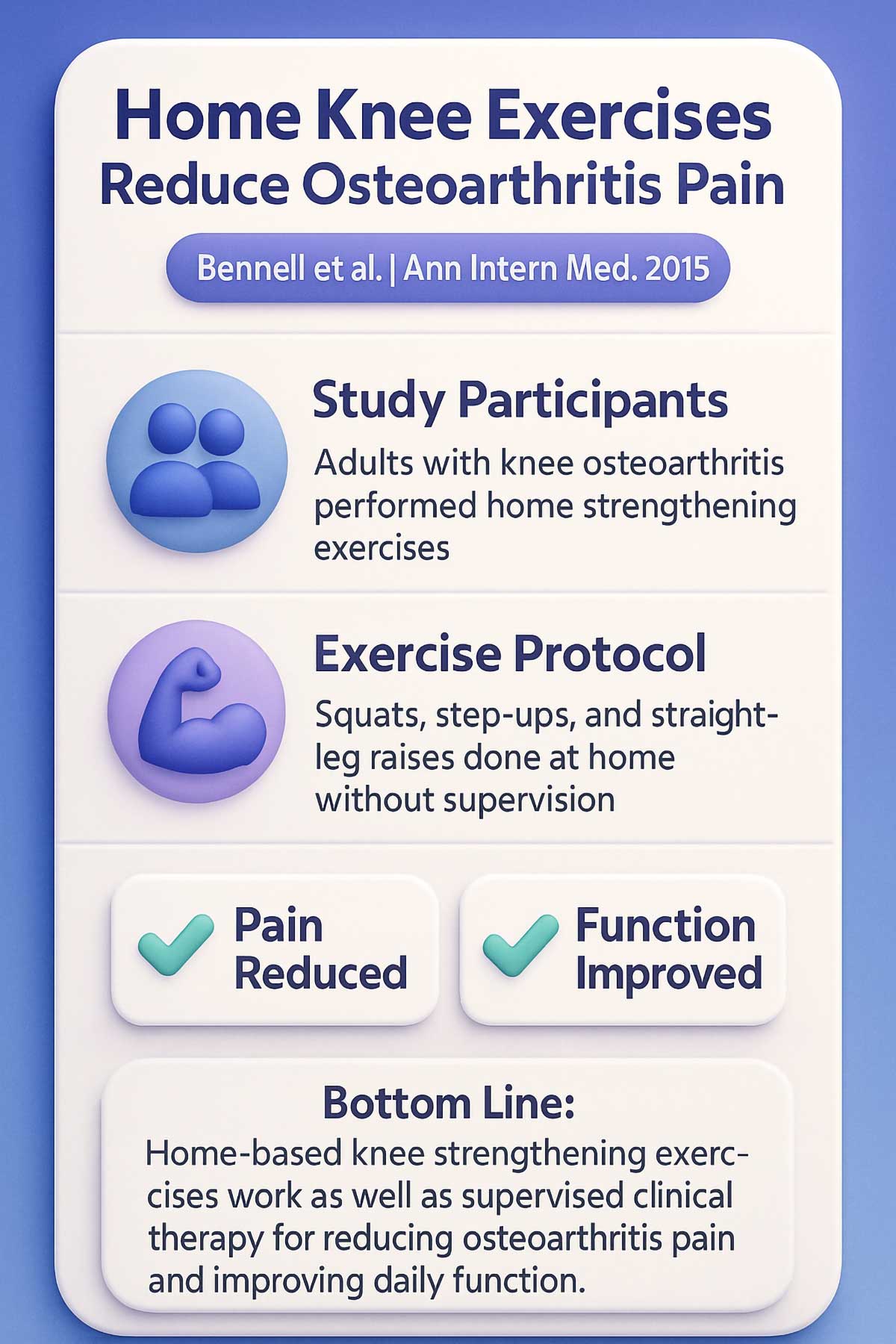
A 2015 study published in the Annals of Internal Medicine found that home-based strengthening exercises significantly reduced knee pain and improved function in adults with knee osteoarthritis, with results comparable to supervised clinical programs.
This routine works because it addresses the root causes of knee pain. Weak hips, inactive glutes, and poor balance all put extra stress on the knee joint. By fixing these issues, you reduce pain and prevent future problems.
Understanding Your Knee Pain
Before you start exercising, it helps to understand what’s actually happening inside your knee.
The Knee Anatomy Basics
Your knee is a hinge joint where three bones meet: the femur (thigh bone), tibia (shin bone), and patella (kneecap). Here’s what each part does:
The Patella (Kneecap): This small bone sits in front of your knee joint and acts like a pulley for your quadriceps muscle. When it doesn’t track properly in its groove, you get pain at the front of the knee.
The Meniscus: These are C-shaped pieces of cartilage that act as shock absorbers between your thigh and shin bones. They cushion impact and distribute weight.
The Ligaments: Four main ligaments (ACL, PCL, MCL, LCL) hold your knee bones together and control movement. They prevent your knee from sliding or twisting too far.
The Cartilage: This smooth tissue covers the ends of your bones and lets them glide smoothly. When it wears down, you get osteoarthritis.
Why Your Hips Matter More Than You Think
Most knee pain doesn’t start in the knee. It starts above it.
Your hip muscles, especially the glutes and hip abductors, control how your thigh bone moves. When these muscles are weak, your thigh rotates inward with every step. This creates abnormal forces on your kneecap and joint surfaces.
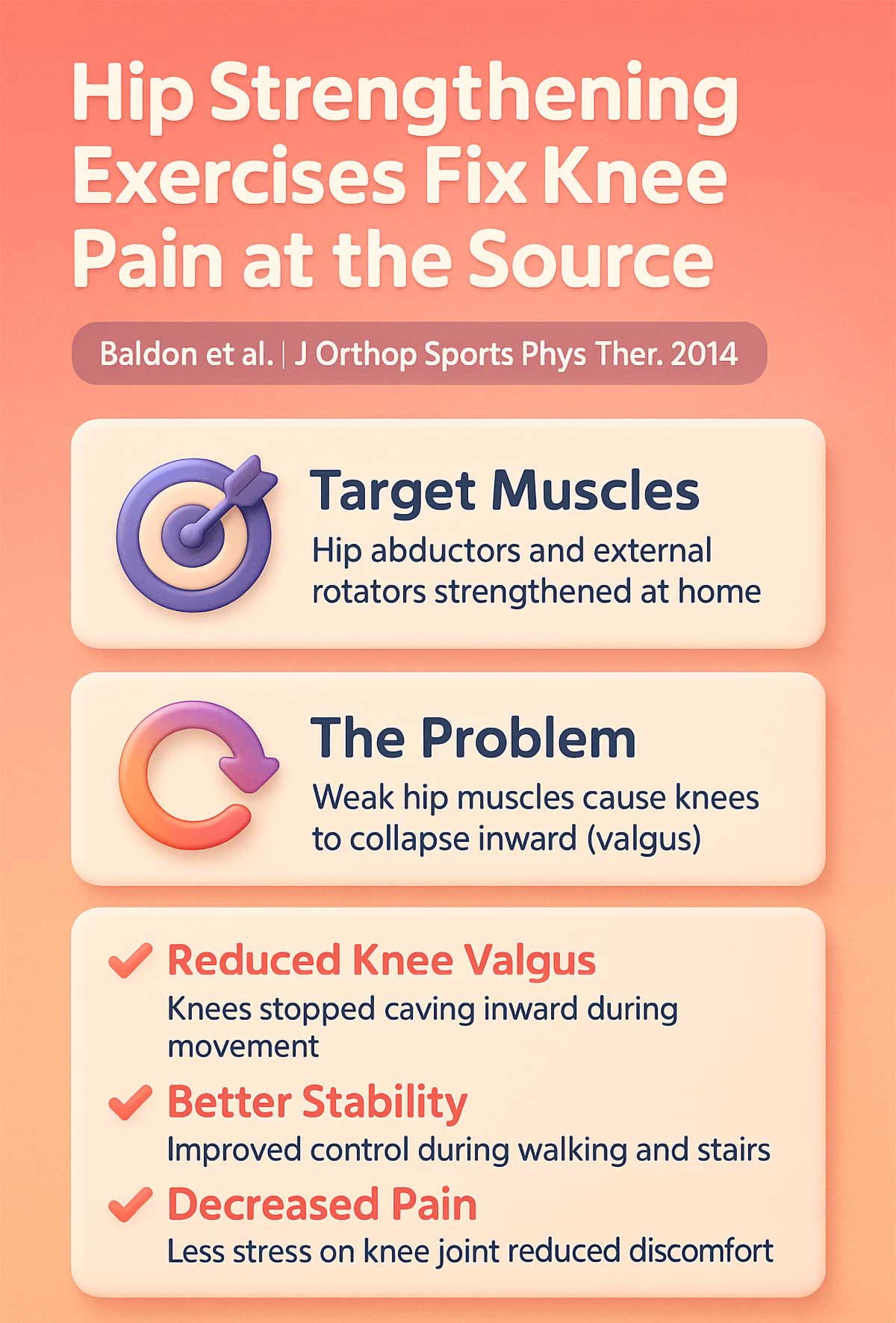
A 2014 study in the Journal of Orthopaedic and Sports Physical Therapy examined adults with knee pain who performed hip strengthening exercises at home. The results showed reduced knee valgus (inward knee collapse), better stability, and decreased pain. The researchers concluded that strengthening the hip abductors and external rotators changed the mechanics of the entire leg.
That’s why half of the exercises in this routine target your hips, not your knees.
Who This Routine Helps
This program is ideal for:
- Adults dealing with knee stiffness or osteoarthritis
- People who’ve been sedentary and want to rebuild strength
- Anyone recovering from minor knee injuries
- Seniors looking to improve stability and prevent falls
- People with patellofemoral pain (pain around the kneecap)
Knee Pain Assessment
Answer 7 quick questions to get your personalized exercise recommendations
Your Personalized Plan
🎯 Priority Exercises for You
💡 Additional Tips
The Pain Rule You Need to Know
Before you start, learn the difference between “green light” and “red light” pain.
Green light pain feels like muscle burn, stretching, or mild discomfort. This is safe. Your muscles are working. You can continue the exercise.
Red light pain feels sharp, stabbing, or makes you want to stop immediately. This is your signal to back off or skip that exercise.
If any move causes red light pain, stop. Try the easier version or move to the next exercise. Pain is your body’s way of communicating. Listen to it.
The 12-Minute Routine
Do this routine three days per week, with at least one rest day between sessions. Monday, Wednesday, and Friday works well for most people.
Quick Reference Guide
| Exercise | Target Area | Time | Main Benefit | Difficulty |
|---|---|---|---|---|
| Glute Bridge | Glutes, Hamstrings | 60 sec | Hip stability | Easy |
| Straight-Leg Raise | Quadriceps | 60 sec | Quad strength without bending knee | Easy |
| Clamshells | Hip Abductors | 60 sec | Prevents knee collapse | Easy |
| Sit-to-Stand | Quads, Glutes | 90 sec | Functional daily movement | Medium |
| Hip Abduction | Hip Stabilizers | 60 sec | Lateral stability | Easy |
| Wall Sit | Quads, Endurance | 45 sec | Builds strength without movement | Medium |
| Single-Leg Balance | Proprioception | 60 sec | Fall prevention | Medium |
| Calf Raises | Calves | 60 sec | Shock absorption | Easy |
Phase 1: Activation and Stability (Minutes 0–4)
These moves wake up the muscles that support your knee without heavy loading.
1. The Glute Bridge
Time: 60 seconds
Weak glutes cause the thigh bone to rotate inward, which stresses the kneecap. This exercise fixes your foundation first.
How to do it:
- Lie on your back with knees bent and feet flat on the floor
- Keep feet hip-width apart
- Push through your heels and lift your hips toward the ceiling
- Squeeze your glutes at the top
- Hold for 2 seconds, then lower slowly
- Repeat for 60 seconds
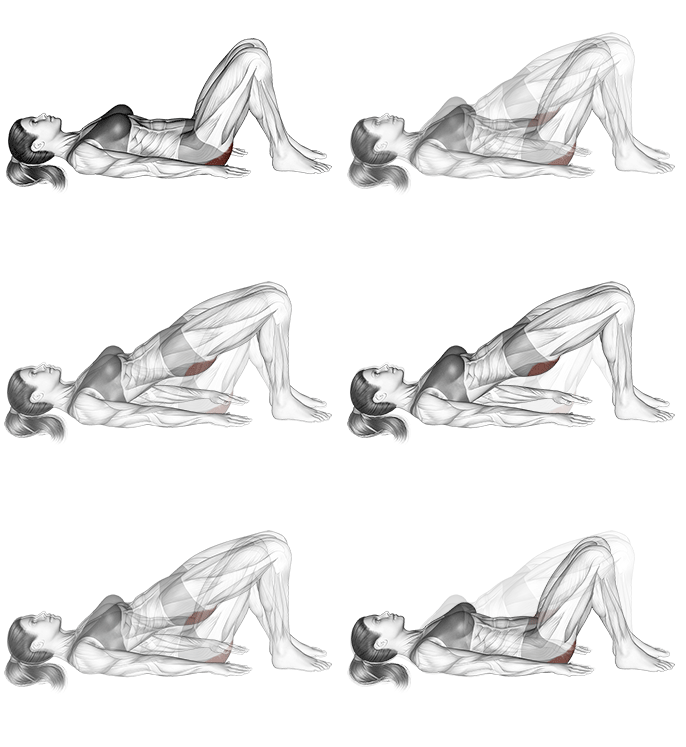
Key tip: Don’t arch your lower back. Keep your core tight and focus on using your glutes to lift.
2. Straight-Leg Raise
Time: 1 minute (30 seconds per leg)
This move isolates the quadriceps muscle without bending the knee joint. That makes it the safest strengthener for painful arthritic knees.
How to do it:
- Lie on your back with one leg bent and one leg straight
- Tighten the quad muscle on your straight leg
- Lift the straight leg to the height of the bent knee
- Hold for 2 seconds at the top
- Lower slowly
- Do 30 seconds on one leg, then switch
Key tip: Keep your knee straight the entire time. If your lower back hurts, bend the opposite knee more for support.
3. Clamshells
Time: 1 minute (30 seconds per side)
This exercise targets the hip muscles that prevent your knees from caving inward. Research shows that strengthening these muscles reduces knee valgus, a primary cause of wear and tear.
How to do it:
- Lie on your side with knees bent at 90 degrees
- Keep your feet together
- Lift the top knee while keeping your feet touching
- Open your knee like a clamshell
- Hold for 1 second at the top
- Lower with control
- Do 30 seconds on each side
Key tip: Don’t roll your hips backward. Keep your body stable and move only the knee.
Phase 2: Strength and Control (Minutes 4–9)
These exercises build the muscle fibers that absorb shock when you walk.
4. Sit-to-Stand (The Chair Squat)
Time: 90 seconds
This move mimics daily life. Functional strengthening here directly translates to easier stair climbing and getting out of cars.
How to do it:
- Sit on a sturdy chair
- Place feet hip-width apart
- Lean forward slightly so your nose moves over your toes
- Push through your heels to stand up
- Lower back down with control
- Barely touch the chair before standing again
- Repeat for 90 seconds
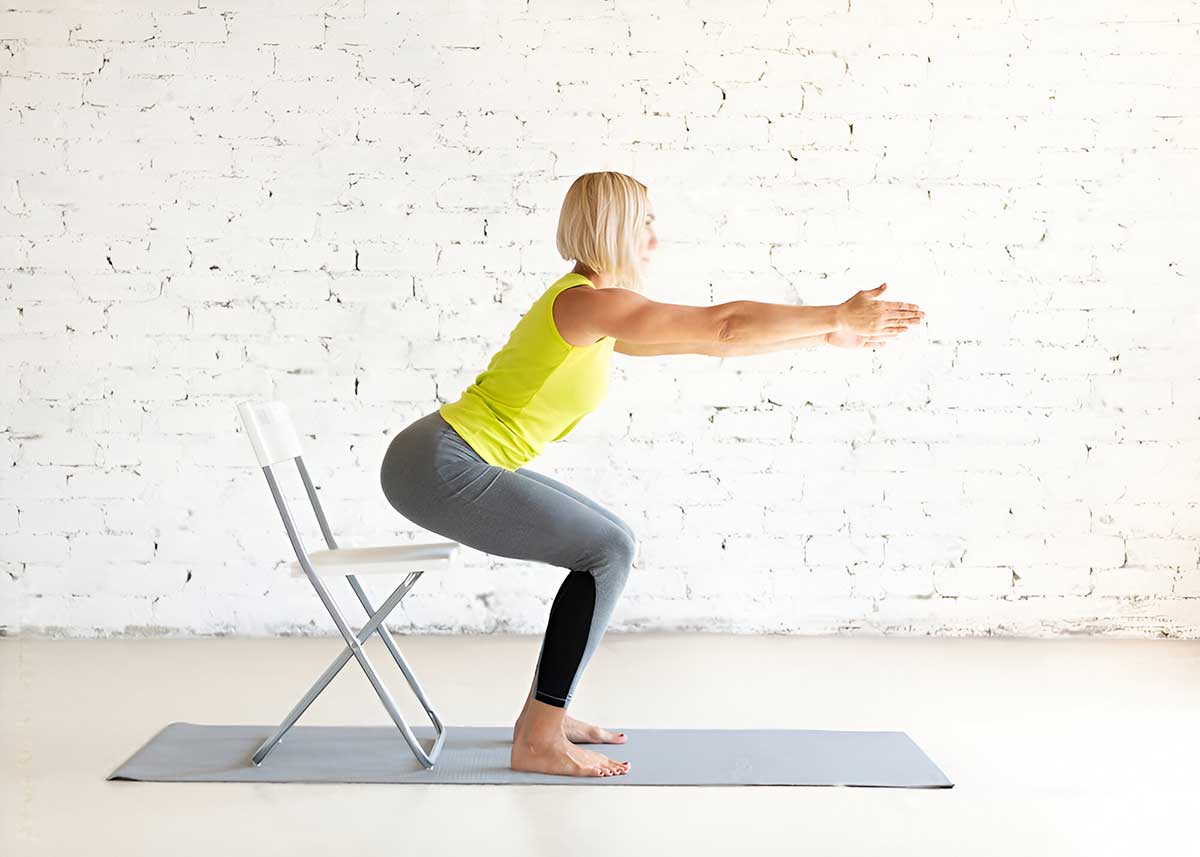
Key tip: The forward lean is crucial. “Nose over toes” before you push up takes pressure off your knees.
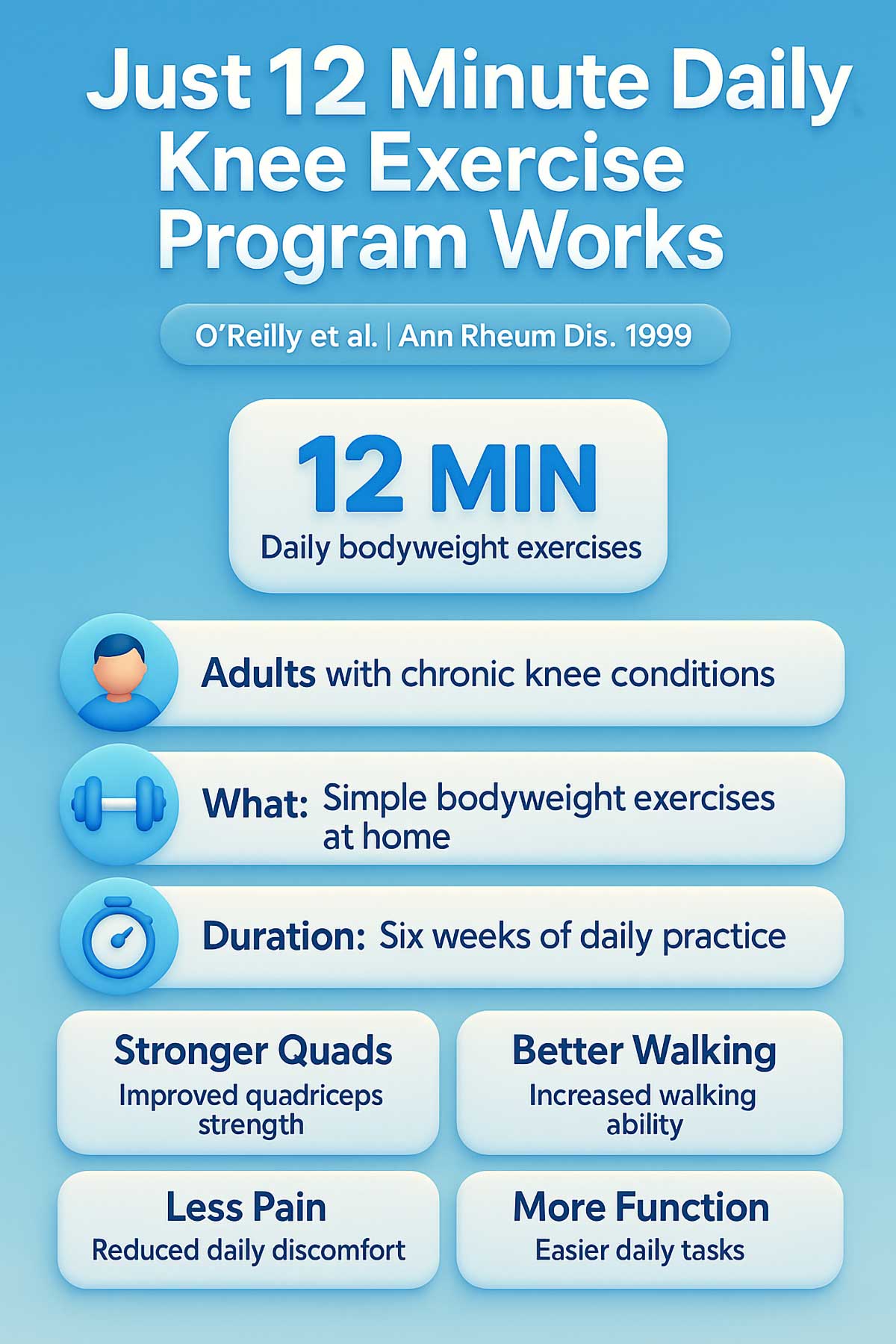
A 1999 study published in Annals of Rheumatic Diseases tested a 12-minute daily program of bodyweight exercises on adults with chronic knee conditions. After six weeks, participants showed improved quadriceps strength and walking ability, with many reporting they could complete daily tasks with less discomfort.
5. Standing Hip Abduction
Time: 1 minute (30 seconds per leg)
This exercise improves lateral stability. It’s essential for preventing the waddle-like gait often seen with knee pain.
How to do it:
- Stand next to a wall or chair for balance
- Shift weight to one leg
- Lift the other leg straight out to the side
- Keep your toes pointing forward
- Lower with control
- Repeat for 30 seconds, then switch legs
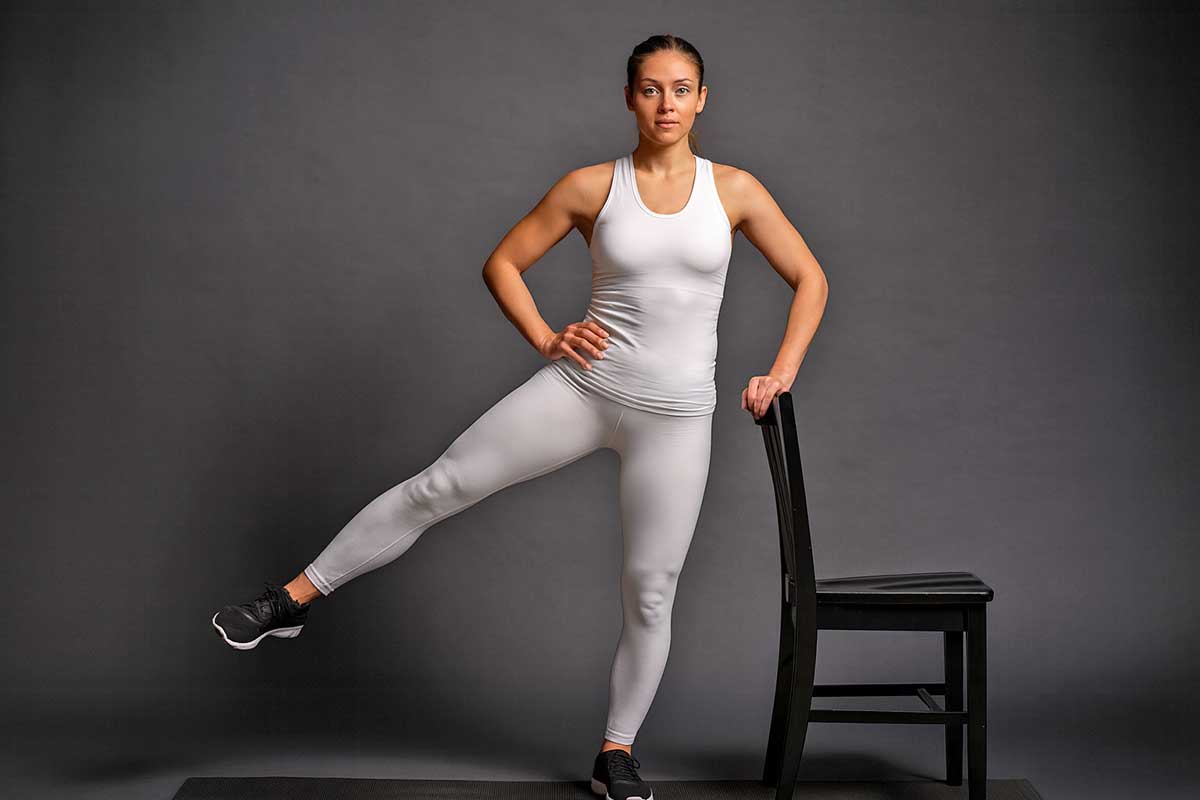
Key tip: Keep your torso upright. Don’t lean to the side as you lift.
6. Wall Sit
Time: 45 seconds
Isometric training builds strength without joint grinding. Research shows this type of exercise reduces pain sensitivity in the patellar tendon.
How to do it:
- Stand with your back against a wall
- Walk feet out about 2 feet from the wall
- Slide down until knees are bent at about 45-60 degrees (start shallow)
- Hold this position
- Keep your back flat against the wall
- Breathe normally
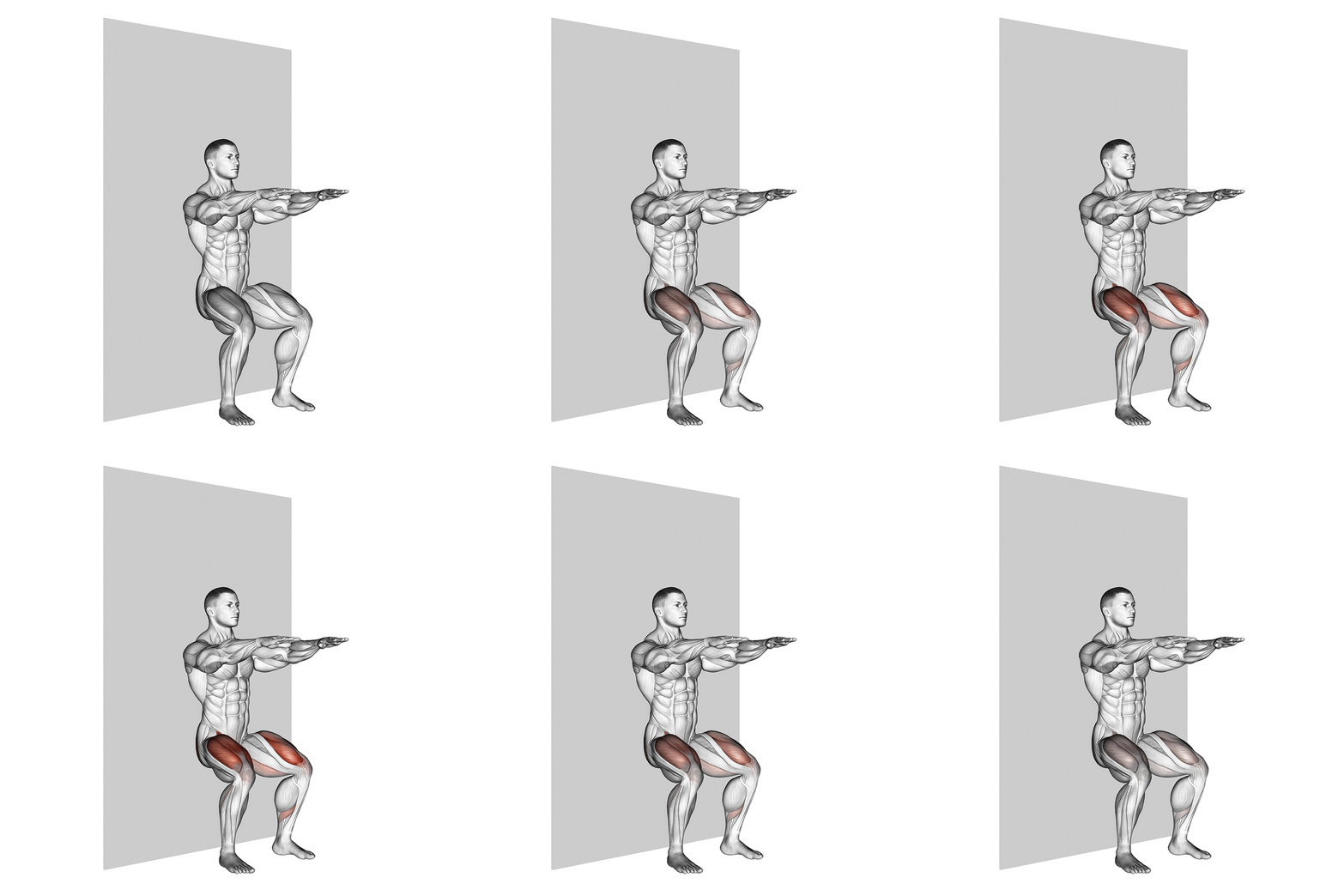
Key tip: Start with a shallow squat. Only sink deeper as pain permits. Even a partial wall sit provides benefits.
Phase 3: Balance and Mobility (Minutes 9–12)
These moves retrain your brain to stabilize the joint automatically.
7. Single-Leg Balance
Time: 1 minute (30 seconds per leg)
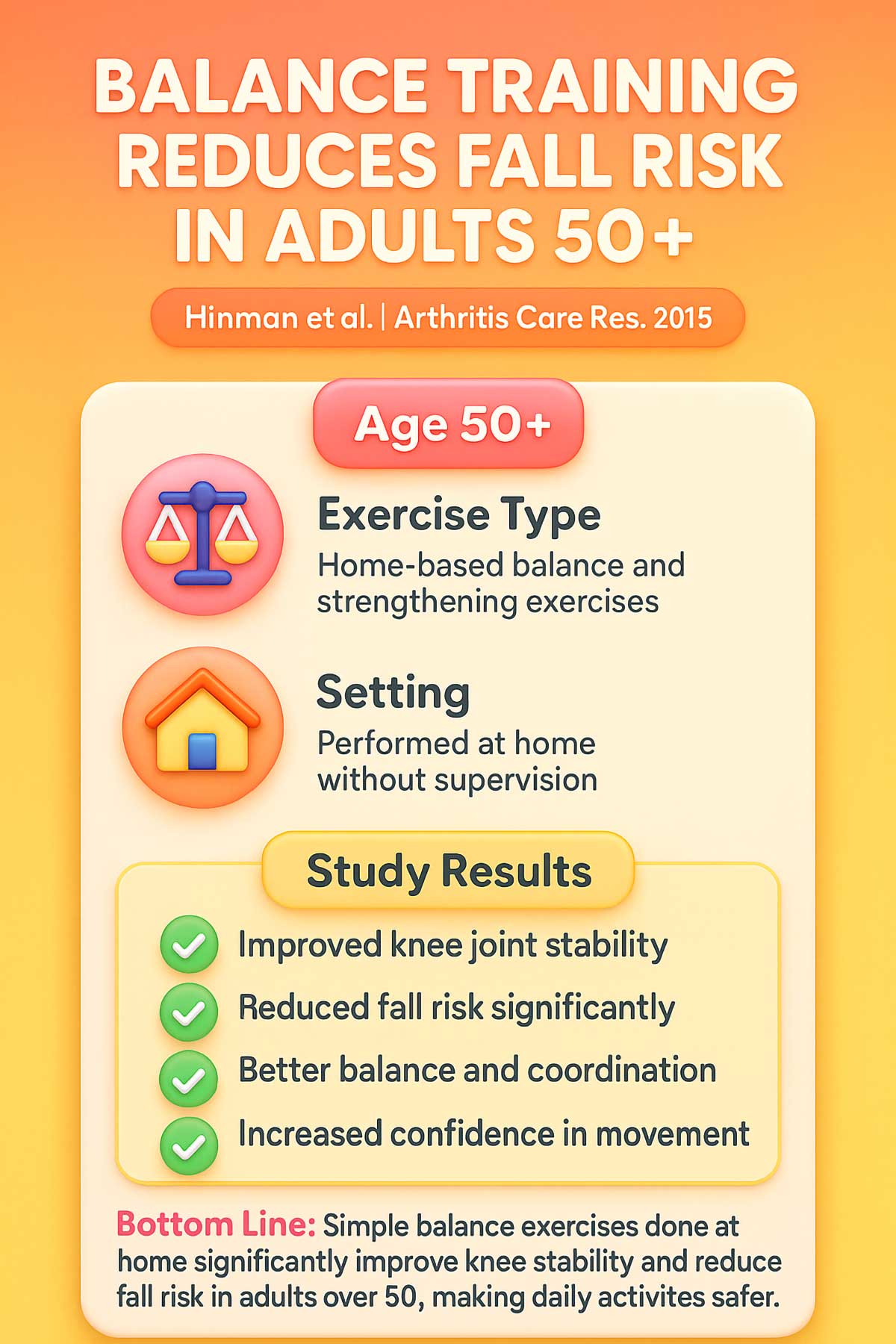
Improving body awareness reduces the risk of falls and random knee buckling. A 2015 study in Arthritis Care and Research found that home-based balance exercises combined with strengthening significantly improved knee joint stability and reduced fall risk in adults over 50.
How to do it:
- Stand near a counter or wall for safety
- Lift one foot slightly off the ground
- Hold this position for 30 seconds
- Use light finger support if needed
- Switch legs
Key tip: Focus on a spot on the wall. This helps your balance. As you get stronger, try letting go of the support.
8. Calf Raises
Time: 1 minute
Your calf muscles act as brakes and shock absorbers for the knee. Strong calves reduce impact forces on the joint.
How to do it:
- Stand with feet hip-width apart
- Hold onto a counter for balance
- Rise up onto your toes
- Hold for 1 second at the top
- Lower slowly
- Repeat for 1 minute
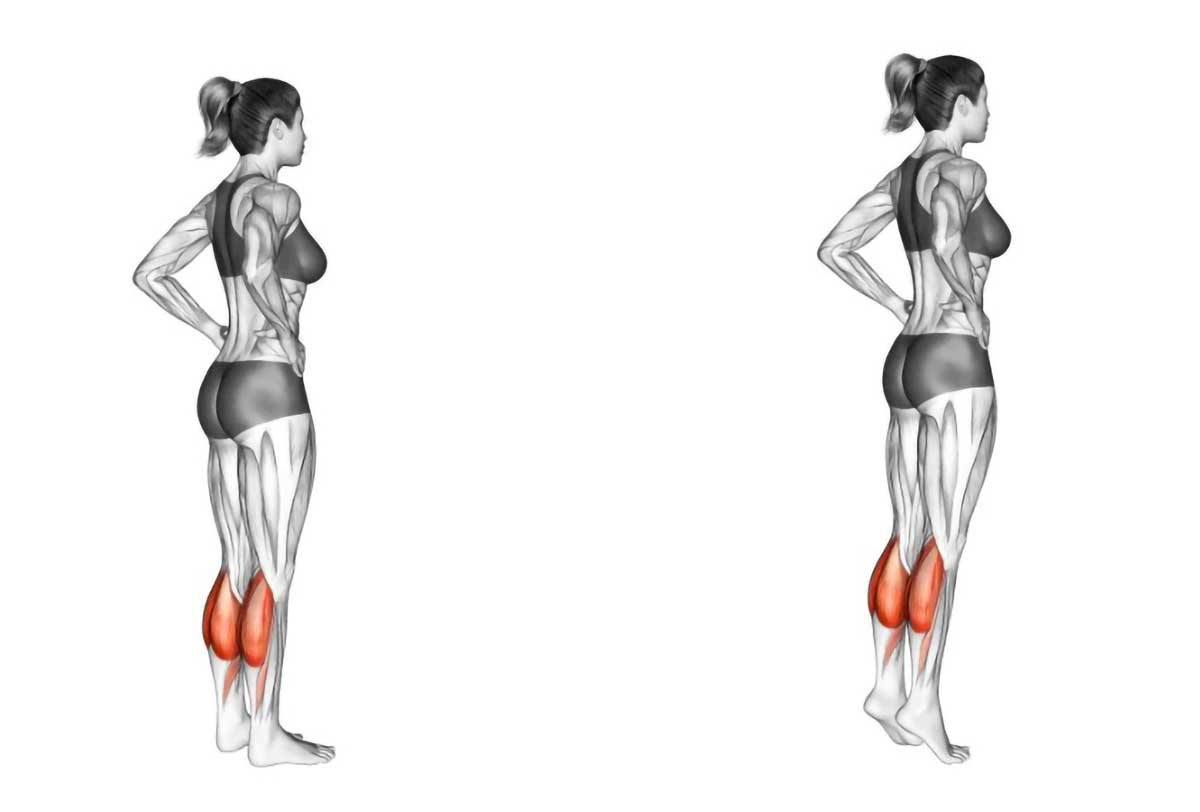
Key tip: Control the lowering phase. That’s where you build the most strength.
12-Minute Knee Exercise Timer
Follow along with audio cues and visual guidance
🎉 Workout Complete!
Great job! You completed all 8 exercises.
Exercise Modifications for All Levels
Everyone starts at a different fitness level. Use this guide to find the right version for you.
Modification Matrix
| Exercise | Easier Version | Standard Version | Advanced Version |
|---|---|---|---|
| Glute Bridge | Hold at top for just 1 second | Hold for 2 seconds | Single-leg bridge (one foot lifted) |
| Straight-Leg Raise | Bend knee slightly, smaller range | Full straight leg to height of bent knee | Add 2-second hold at top, flex foot |
| Clamshells | Smaller range of motion | Full range of motion | Add resistance band above knees |
| Sit-to-Stand | Use armrests to assist | No hands, touch chair lightly | Hover 2 inches above chair without sitting |
| Hip Abduction | Hold wall with both hands | Light fingertip touch for balance | No hands, hold leg at top for 2 seconds |
| Wall Sit | Quarter squat (30-degree bend) | Half squat (45-60 degrees) | Deeper squat (70-90 degrees), lift one heel |
| Single-Leg Balance | Both hands on counter | One fingertip on counter | No support, eyes closed (advanced only) |
| Calf Raises | Both feet, hold counter firmly | Both feet, light fingertip support | Single-leg calf raises |
Start with the easier versions if you’re new to exercise or experiencing significant pain. You can mix and match. Do some exercises at the standard level and others at the easier level.
Matching Exercises to Your Symptoms
Different knee problems respond better to different exercises. Use this guide to personalize your routine.
| Your Primary Symptom | Focus More On These | Modify These Initially |
|---|---|---|
| Pain going down stairs | Sit-to-Stand, Wall Sit, Calf Raises | Start wall sit at shallow angle |
| Knee gives out or feels unstable | Single-Leg Balance, Hip Abduction, Clamshells | Use more support during balance work |
| Pain when standing from sitting | Sit-to-Stand, Glute Bridge, Straight-Leg Raise | Use chair with arms initially |
| Stiffness in morning | All exercises, but warm up first | Do gentle walking for 5 min before routine |
| Pain at front of kneecap | Straight-Leg Raise, Clamshells, Hip Abduction | Keep wall sit shallow, skip if sharp pain |
| Pain on inside of knee | Clamshells, Hip Abduction, Single-Leg Balance | Focus on preventing knee from rolling inward |
Your 3-Days-Per-Week Success Plan
Consistency matters more than intensity. Here’s how to structure your week:
Monday/Wednesday/Friday: The 12-minute strength routine
Tuesday/Thursday/Saturday: Active recovery. Go for a 15-30 minute walk. Walking lubricates the joint through synovial fluid exchange without causing excessive wear.
Sunday: Complete rest or gentle stretching
The 12-Week Progression Plan
| Week | Focus | Intensity | What You Should Feel | Milestone |
|---|---|---|---|---|
| 1-2 | Learning form | Low (easier versions OK) | Muscle soreness, maybe slight fatigue | Complete all 12 minutes |
| 3-4 | Building consistency | Low-Medium | Exercises feel more familiar | Do routine without stopping |
| 5-6 | Increasing quality | Medium | Muscles burning during exercises | Less pain during daily activities |
| 7-8 | Adding challenge | Medium | Stronger, more controlled movements | Stairs feel easier |
| 9-10 | Refining technique | Medium-High | Confident in all movements | Can do standard versions |
| 11-12 | Pushing limits | High | Noticeably stronger | Try some advanced versions |
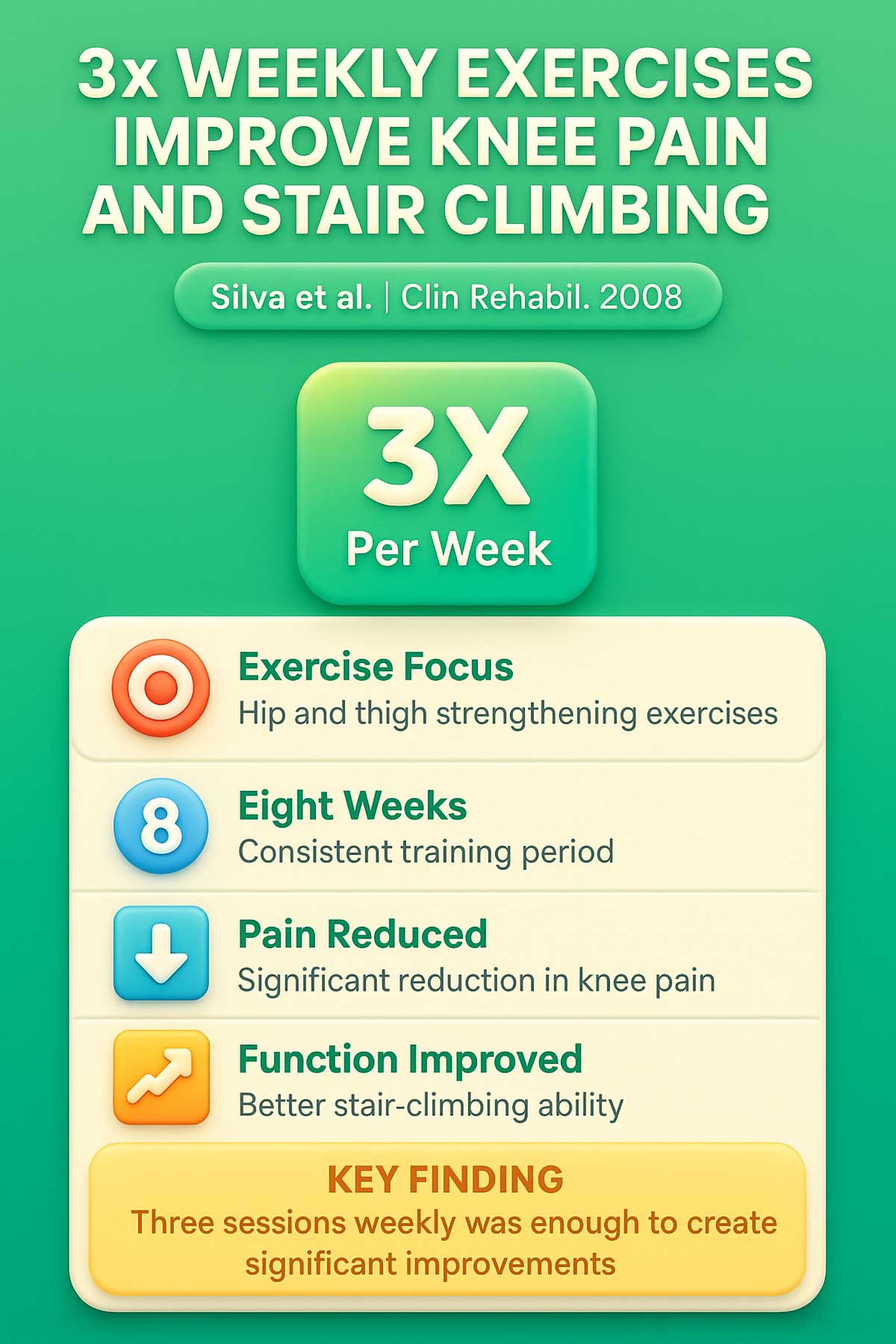
A 2008 study in Clinical Rehabilitation followed adults who performed simple hip and thigh strengthening exercises three times per week. After eight weeks, participants showed significant reductions in knee pain and improved stair-climbing ability. The researchers noted that consistency mattered more than the intensity of individual sessions.
Nutrition for Joint Health
Exercise builds strength, but nutrition reduces inflammation and supports healing. You don’t need a complete diet overhaul. Small changes make a big difference.
Foods That Support Healthy Knees
Omega-3 Fatty Acids: These reduce inflammation in joints. Find them in:
- Salmon, mackerel, sardines
- Walnuts and flax seeds
- Chia seeds
Vitamin D and Calcium: These support bone health and muscle function. Find them in:
- Greek yogurt
- Fortified milk or plant milk
- Leafy greens like kale and collard greens
- Eggs
Antioxidants: These fight oxidative stress that damages cartilage. Find them in:
- Berries (blueberries, strawberries, raspberries)
- Colorful vegetables (peppers, tomatoes, carrots)
- Green tea
Vitamin C: This helps build collagen, which supports cartilage. Find it in:
- Citrus fruits
- Bell peppers
- Broccoli
Foods to Limit
Certain foods can increase inflammation and make joint pain worse:
- Excess sugar and sweetened drinks
- Processed foods with trans fats
- Excessive alcohol
- High amounts of red meat
You don’t need to eliminate these completely. Just reduce them.
Simple Anti-Inflammatory Recipes
Recipe 1: Omega-3 Power Breakfast Bowl
Ingredients:
- 1 cup plain Greek yogurt
- 1 tablespoon chia seeds
- 1/4 cup walnuts, chopped
- 1/2 cup mixed berries (fresh or frozen)
- 1 teaspoon honey (optional)
Instructions:
- Scoop yogurt into a bowl
- Sprinkle chia seeds on top
- Add walnuts and berries
- Drizzle with honey if desired
- Let sit for 5 minutes to let chia seeds soften
Why it helps: Greek yogurt provides calcium and protein for muscle recovery. Chia seeds and walnuts deliver omega-3 fatty acids that reduce joint inflammation. Berries add antioxidants that protect cartilage.
Time: 5 minutes
Servings: 1
Recipe 2: Golden Milk Turmeric Smoothie
Ingredients:
- 1 banana (fresh or frozen)
- 1/2 cup pineapple chunks
- 1 teaspoon turmeric powder
- 1/2 teaspoon fresh grated ginger (or 1/4 tsp ground)
- 1 cup coconut milk or almond milk
- Pinch of black pepper
- 1/2 teaspoon honey (optional)
Instructions:
- Add all ingredients to a blender
- Blend until smooth
- Add more milk if too thick
- Drink immediately
Why it helps: Turmeric contains curcumin, a compound that research shows reduces joint inflammation. Black pepper helps your body absorb curcumin better. Pineapple contains bromelain, an enzyme with anti-inflammatory properties. Ginger also fights inflammation and may reduce pain.
Time: 5 minutes
Servings: 1
Recipe 3: Simple Baked Salmon with Greens
Ingredients:
- 1 salmon fillet (4-6 oz)
- 2 cups fresh spinach or kale
- 1 tablespoon olive oil
- 1/2 lemon
- Salt and pepper to taste
- 1 clove garlic, minced
Instructions:
- Heat oven to 400°F
- Place salmon on baking sheet
- Drizzle with half the olive oil, squeeze lemon over it
- Sprinkle with salt, pepper, and garlic
- Bake for 12-15 minutes until salmon flakes easily
- While salmon cooks, heat remaining oil in a pan
- Add greens and cook until wilted (2-3 minutes)
- Serve salmon over greens
Why it helps: Salmon is one of the best sources of omega-3 fatty acids, which multiple studies link to reduced joint pain and stiffness. Leafy greens provide vitamin K, which supports bone health. Olive oil contains oleocanthal, a compound with anti-inflammatory effects similar to ibuprofen.
Time: 20 minutes
Servings: 1
Hydration for Joint Health
Water makes up about 80% of your cartilage. When you’re dehydrated, your cartilage becomes less cushiony. This increases friction in your joints.
Aim for 8-10 glasses of water daily. More if you’re exercising or it’s hot outside.
A simple test: Check your urine color. Pale yellow means you’re well hydrated. Dark yellow means drink more water.
Using Equipment for Progression
You don’t need equipment to start, but these simple tools can help you progress after 4-6 weeks.
Resistance Bands
Light resistance bands add challenge without joint stress. Use them for:
- Clamshells (band around thighs just above knees)
- Hip abduction (band around ankles)
- Glute bridges (band around thighs)
Start with light resistance. You should be able to complete the full time with good form.
Ankle Weights
Once standard exercises feel easy, ankle weights (1-2 lbs) increase the challenge for:
- Straight-leg raises
- Hip abduction
Don’t use ankle weights in the first 4-6 weeks. Build a solid foundation first.
Using Your Stairs
If you have stairs at home, you can add an optional ninth exercise:
Step-Ups
Time: 1 minute (30 seconds per leg)
How to do it:
- Stand facing the bottom step
- Place right foot on step
- Push through right heel to step up
- Bring left foot to meet it
- Step back down with left foot first
- Repeat for 30 seconds, then switch lead leg
Start with the lowest step. This builds serious leg strength and directly improves stair climbing.
Common Mistakes That Wreck Progress
Pushing through the wrong kind of pain: Muscle burn is fine. Joint sharpness is not. Know the difference and respect it.
Ignoring your hips: Most knee pain is actually a hip problem in disguise. Weak hip muscles can’t control the thigh bone, which puts stress on the knee. That’s why half of these exercises target the hips.
Skipping days: Your body adapts to consistent stress. Doing the routine once per week won’t create change. Three times per week is the minimum for results.
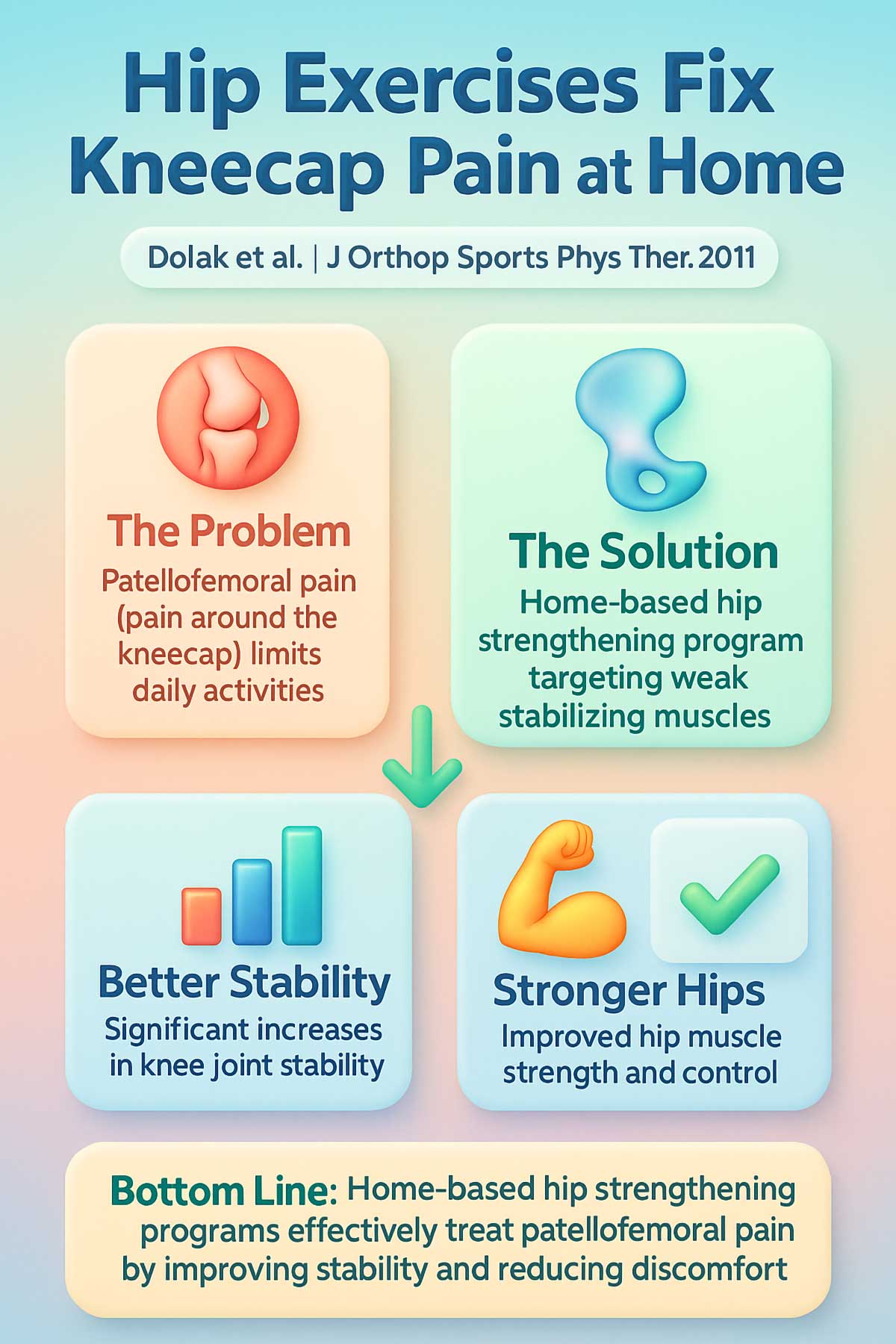
Going too hard, too fast: Start with the basics. A 2011 study in the Journal of Orthopaedic and Sports Physical Therapy examined people with patellofemoral pain who followed home-based hip strengthening programs. Those who built up gradually saw significant improvements in stability and reduced pain. Those who pushed too hard initially often aggravated their symptoms.
Expecting overnight results: Research shows that simple hip and thigh strengthening exercises reduce knee symptoms, but most studies measure results at 6-12 weeks. Give your body time to adapt.
Forgetting to breathe: Holding your breath during exercises raises blood pressure and reduces performance. Breathe naturally throughout each movement.
Sacrificing form for speed: Slow, controlled movements with proper form beat fast, sloppy repetitions every time.
Warning Signs and When to Stop
Not all pain is bad, but some signals mean you should stop immediately.
Red Flags That Require Medical Attention
| Symptom | What It Might Mean | Action |
|---|---|---|
| Knee is hot to touch and swollen | Infection or acute inflammation | See doctor within 24 hours |
| Can’t bear weight on leg | Fracture or severe ligament tear | Go to ER |
| Knee locks and won’t straighten | Meniscus tear or loose body in joint | See doctor within 2-3 days |
| Sudden severe pain after pop or snap | Ligament tear (ACL, MCL) | See doctor within 24 hours |
| Pain getting worse after 2-3 weeks of exercises | Wrong exercise selection or technique | See physical therapist |
| Numbness or tingling down leg | Nerve involvement | See doctor within 1 week |
Normal vs. Concerning Post-Exercise Sensations
Normal (Keep Going):
- Muscle soreness 24-48 hours after exercise
- Mild stiffness that improves with movement
- Slight swelling that goes down within a few hours
- Fatigue in the muscles
- “Good tired” feeling
Concerning (Modify or Stop):
- Sharp pain during exercise
- Swelling that lasts more than 24 hours
- Pain that wakes you up at night
- Knee feels hot or looks red
- Pain that’s worse the day after exercise than immediately after
The Swelling Test
Some swelling after exercise is normal for arthritic knees. But how much is too much?
The Ice Cream Test: If your knee swells after exercise, apply ice for 15-20 minutes. If the swelling goes down significantly within an hour, that’s normal inflammation. If it stays swollen for 24+ hours, you did too much.
The Science Behind the Routine
Your knee joint doesn’t work alone. It relies on the muscles above it (hips and quads) and below it (calves) for support.
When your hip muscles are weak, your thigh bone rotates inward with every step. This creates a force called knee valgus, where your knees cave inward. Over time, this wears down cartilage and causes pain.
Your quadriceps muscles act as shock absorbers. When they’re strong, they reduce the impact forces on your knee with every step. When they’re weak, your joint takes the full load. A 2015 Cochrane Review analyzed multiple studies and confirmed that quadriceps and hip strengthening exercises performed at home improved knee stability, reduced symptoms, and improved mobility in people with knee osteoarthritis.
Balance exercises improve something called proprioception. This is your body’s ability to sense where your joints are in space. Better proprioception means your muscles can react faster to prevent injury or instability.
The routine also triggers beneficial biological changes:
- Increased synovial fluid production (natural joint lubricant)
- Improved blood flow to cartilage and soft tissues
- Stronger bone density from weight-bearing activity
- Reduced inflammatory markers in the joint
- Better neuromuscular control (brain-to-muscle communication)
What to Expect Week by Week
Week 1: You might feel sore. This is normal. Your muscles are adapting. The soreness usually peaks 24-48 hours after exercise, then fades. Don’t skip your next session because of soreness. Moving actually helps it resolve faster.
Week 2-3: You’ll notice movements feel easier. You’ll remember the sequence without checking instructions. Stairs might not feel as challenging. Some people notice their pain is slightly better.
Week 4-6: Pain should decrease noticeably. You’ll feel more stable when walking or standing. Daily tasks like getting in and out of the car become easier. This is when most people become believers in the program.
Week 7-9: Your strength gains become obvious. You can do more repetitions or hold positions longer. You might naturally start using the standard or advanced versions of exercises.
Week 10-12: Research shows this is when most people see significant improvements in pain and function. A 2007 study in Physiotherapy found that bodyweight strengthening and mobility exercises improved pain, function, and muscular strength in older adults with knee pain, with the greatest benefits appearing after 10-12 weeks of consistent training.
Some people see results faster. Some take longer. Your timeline depends on your starting point, consistency, and the severity of your condition.
Obstacles and How to Overcome Them
“I don’t have 12 minutes.”
Yes, you do. You have time for what you prioritize. Wake up 15 minutes earlier. Do the routine while watching TV. Skip social media scrolling for one 12-minute block. If your knee pain is affecting your life, you have time to fix it.
“I keep forgetting to do it.”
Set phone alarms for your exercise days. Put your workout clothes out the night before. Tell someone your schedule and ask them to check in. Put a sticky note on your bathroom mirror. Build the habit by linking it to something you already do. “After I have coffee, I do my knee routine.”
“I feel silly exercising at home.”
You’re not silly. You’re taking control of your health. Close the door if you need privacy. Play music. Do it early before others wake up. But mostly, get over it. Your knee health matters more than feeling self-conscious.
“It hurts too much.”
Start with just the exercises that don’t hurt. Do the easier versions. Do 30 seconds instead of 60 seconds. Something is better than nothing. Pain should decrease over 2-3 weeks. If it doesn’t, see a doctor or physical therapist.
“I’m not seeing results fast enough.”
Track your progress. Small improvements add up. Can you walk 2 minutes longer than last week? That’s progress. Can you do sit-to-stands with less effort? That’s progress. Healing takes time. Impatience won’t speed it up.
“I missed a week and feel like I failed.”
You didn’t fail. You just took a break. Start again today. Consistency over perfection. Missing one week won’t erase your progress. Missing four weeks might. Just get back to it.
Making This Routine Part of Your Life
After 12 weeks, you’ll likely want to continue. Here’s how to maintain your results:
Maintenance Plan Option 1: Keep doing the exact same routine 3 times per week. If it’s working, don’t change it.
Maintenance Plan Option 2: Drop to 2 times per week for maintenance, using advanced versions of exercises to keep the challenge.
Maintenance Plan Option 3: Rotate in new exercises every 4-6 weeks to keep things interesting while maintaining the same muscle groups.
Adding Other Activities:
Once your knee pain is under control, you might want to add:
- Swimming or water aerobics (excellent low-impact cardio)
- Cycling (builds leg strength without impact)
- Yoga (improves flexibility and balance)
- Tai chi (great for balance and gentle strength)
- Walking for longer distances
Just don’t drop this routine completely. These exercises address the specific muscle imbalances that caused your knee pain. Stopping them completely often means pain returns within a few months.
The Real Reason Most People Quit
It’s not because the exercises don’t work. It’s because results aren’t instant.
We live in a world of immediate gratification. But your body doesn’t work that way. Your cartilage didn’t wear down in 12 minutes. Your muscles didn’t weaken overnight. They won’t heal that fast either.
The people who succeed with this program share one trait: they decide that 12 minutes three times per week is non-negotiable. Like brushing your teeth. Like taking medication. It’s just something they do.
You’re not trying to win a fitness competition. You’re trying to reduce pain and move better. That requires patience and consistency, not perfection.
Other Factors That Matter
Exercise is powerful, but it’s not the only factor in knee health.
Sleep: Your body repairs tissues during deep sleep. Poor sleep means slower recovery. Aim for 7-9 hours nightly.
Stress: Chronic stress increases inflammation throughout your body, including your joints. Find stress management techniques that work for you.
Weight: Every pound of excess weight puts 4 pounds of pressure on your knees. Losing even 5-10 pounds can significantly reduce knee pain. This routine helps, but diet matters more for weight loss.
Footwear: Worn-out shoes or shoes without proper support affect knee mechanics. Replace athletic shoes every 300-500 miles or every 6-12 months.
Work ergonomics: If you stand all day, use anti-fatigue mats. If you sit all day, take standing breaks every hour.
Special Considerations for Different Age Groups
Ages 40-55:
You’re likely dealing with early osteoarthritis or overuse from years of activity. This routine works well for you. Focus on consistency and don’t skip the hip exercises. You have the advantage of good healing capacity if you’re consistent.
Ages 55-70:
Balance work becomes extra important. Spend more time on the single-leg balance exercise. You might need to use the easier versions longer. That’s fine. Progress at your own pace. Falls become more dangerous in this age group, so the stability you gain is valuable beyond just knee pain.
Ages 70+:
Safety first. Always exercise near support. Start with all exercises at the easier level. You might need 4-6 weeks at the easier level before progressing. Your healing timeline might be longer, but the exercises work just as well. Studies show adults in their 70s and 80s can still build significant strength with bodyweight exercises.
For Athletes:
This routine works as a foundation or as rehab after injury. You’ll likely progress to advanced versions quickly. Consider adding this as a warm-up before other activities. The hip strengthening prevents future knee injuries.
When Professional Help Makes Sense
This routine helps most people, but sometimes you need more support.
See a physical therapist if:
- Pain hasn’t improved after 6 weeks of consistent exercise
- You’re unsure about proper form
- You have a complex injury history
- You want a personalized progression plan
- Pain is getting worse instead of better
See a doctor if:
- Your knee locks or gives out frequently
- You have significant swelling that won’t go down
- Pain is severe (8-10 on a 10-point scale)
- You heard or felt a pop followed by immediate pain and swelling
- You can’t bear weight on your leg
Physical therapists can assess your specific movement patterns and identify other issues this general routine might not address. They’re experts in exercise prescription and can modify this routine for your needs.
Doctors can order imaging (X-rays, MRI) to diagnose specific conditions and rule out serious problems. They can also prescribe medication if needed to control inflammation while you build strength.
This routine works alongside professional care, not instead of it.
Conclusion
You don’t need a gym membership to fix your knees. You need consistency and the right movements.
This 12-minute routine addresses the root causes of knee pain: weak hips, inactive quads, and poor balance. Research supports every exercise in this program. Studies show that home-based programs like this produce results comparable to supervised clinical therapy.
The exercises look simple. That’s the point. Simple movements done consistently create change. Complex programs that require equipment and expertise have higher dropout rates. This routine works because you can actually do it.
Your knees hurt because of how you’ve moved (or haven’t moved) for years. Fixing them takes time. But 12 minutes three times per week is a small investment for getting your life back.
Start today. Do the routine three times this week. Fill out the progress tracker. Make small improvements to your diet. Get enough sleep. Be patient with yourself.
The cycle of pain and inactivity ends when you decide to move. You’ve got 12 minutes. That’s all it takes.
Your knees are designed to move. They’re designed to carry you through life. Give them the strength they need to do their job. The routine is here. The research supports it.
FAQs
How long before I see results from knee exercises?
Most people notice small improvements within 2-3 weeks. These might be subtle: stairs feel slightly easier, or you can walk a bit farther. Significant pain reduction typically appears at 4-6 weeks. Maximum benefits usually show up around 10-12 weeks. Consistency is the key. Missing sessions delays results.
Can I do these exercises if I have arthritis?
Yes. Multiple studies confirm that strengthening exercises help people with knee osteoarthritis. The exercises in this routine were specifically chosen because they don’t require deep knee bending, which can aggravate arthritis. Start with the easier versions and progress slowly. If you have rheumatoid arthritis, check with your doctor first, as you may need to avoid exercise during flare-ups.
What if one knee hurts more than the other?
This is common. Do the routine as written, but you can modify the painful side more than the other side. For example, do the standard glute bridge but use the easier version of wall sit on the painful side. Both knees still benefit from the workout, even if they’re at different levels.
Should I exercise on days when my knee is swollen?
Mild swelling is OK. Moderate to severe swelling means rest that day. Apply ice and try again the next scheduled day. If your knee is consistently too swollen to exercise, see a doctor. Persistent swelling suggests you need medical evaluation.
Can these exercises prevent knee surgery?
Sometimes, yes. Research shows that strengthening programs can reduce pain and improve function enough that some people no longer need surgery. But this depends on the severity of your condition. For mild to moderate osteoarthritis, exercise is often as effective as surgery. For severe arthritis with bone-on-bone contact, you’ll likely still need surgery eventually, but exercise can delay it and improve your post-surgery outcomes.
How do I know if I’m doing the exercises correctly?
Film yourself with your phone. Compare your form to the descriptions. Common errors: arching your back during bridges, letting your knees cave inward during squats, or moving too fast through repetitions. If you’re unsure, one session with a physical therapist can check your form and make corrections.
What’s the difference between knee pain and muscle soreness?
Knee pain feels sharp, achy, or tender in the joint itself. It’s often on the front, side, or back of the knee. Muscle soreness feels like a dull ache in the thigh, hip, or calf muscles. It’s spread over a larger area and feels better with movement. Muscle soreness is good. Knee joint pain means modify the exercise.
Can I do these exercises after knee replacement surgery?
Maybe, but only with your surgeon’s approval. Most knee replacement patients do similar exercises as part of their physical therapy, but the timeline and modifications depend on your specific surgery and recovery. Generally, you’d wait 6-8 weeks post-surgery and get clearance first.
I’m very overweight. Will these exercises still work?
Yes. Extra weight does put more stress on knees, but these exercises don’t require jumping or high impact. Start with the easier versions. Use a higher chair for sit-to-stands. Hold onto support during balance work. As you get stronger, you may find daily activities easier, which naturally increases your activity level.
Can I do this routine every day instead of three times per week?
No. Your muscles need rest days to rebuild and get stronger. Doing this every day can lead to overuse injuries and won’t speed up results. If you want to do something on off days, go for a gentle walk. That’s perfect active recovery.
Should I stretch before or after the routine?
Light stretching after the routine is fine, but it’s not required. This routine includes mobility work (balance and controlled movements) that provides many stretching benefits. If your muscles feel tight, 5-10 minutes of gentle stretching after the workout can feel good. Don’t do intense stretching before the workout. It can temporarily weaken muscles.
My knee clicks or pops. Is that bad?
Painless clicking or popping is usually harmless. It’s often gas bubbles in the joint fluid or tendons sliding over bone. If the clicking comes with pain, swelling, or a catching sensation, that’s different. See a doctor if clicks are painful or if your knee locks up.