Instant oats and steel-cut oats don’t feed the same bacteria. Neither do warm oats and cold ones.
Inside your gut, that bowl of oats is about to start a slow, steady negotiation with trillions of bacteria, and the outcome depends on more than just eating oats. It depends on how you make them.
Most advice about oats stops at “they’re high in fiber.” That’s true, but it’s only part of the story. The real science is more specific, and frankly, more interesting. The type of oats you buy, whether you cook them or soak them overnight, and whether you eat them warm or cold, all of this changes which bacteria get fed, and how much.
This article covers what the research actually says about oats and gut health, including how long real microbial changes take and what signs to look for along the way.
Why Consistency Matters More Than a Single Bowl
The 4-to-6 Week Window
Eating oats once won’t change your gut. Neither will a week of overnight oats. A genuine shift in the population of beneficial bacteria, the kind measured in clinical research, takes sustained, daily intake over four to six weeks at minimum.
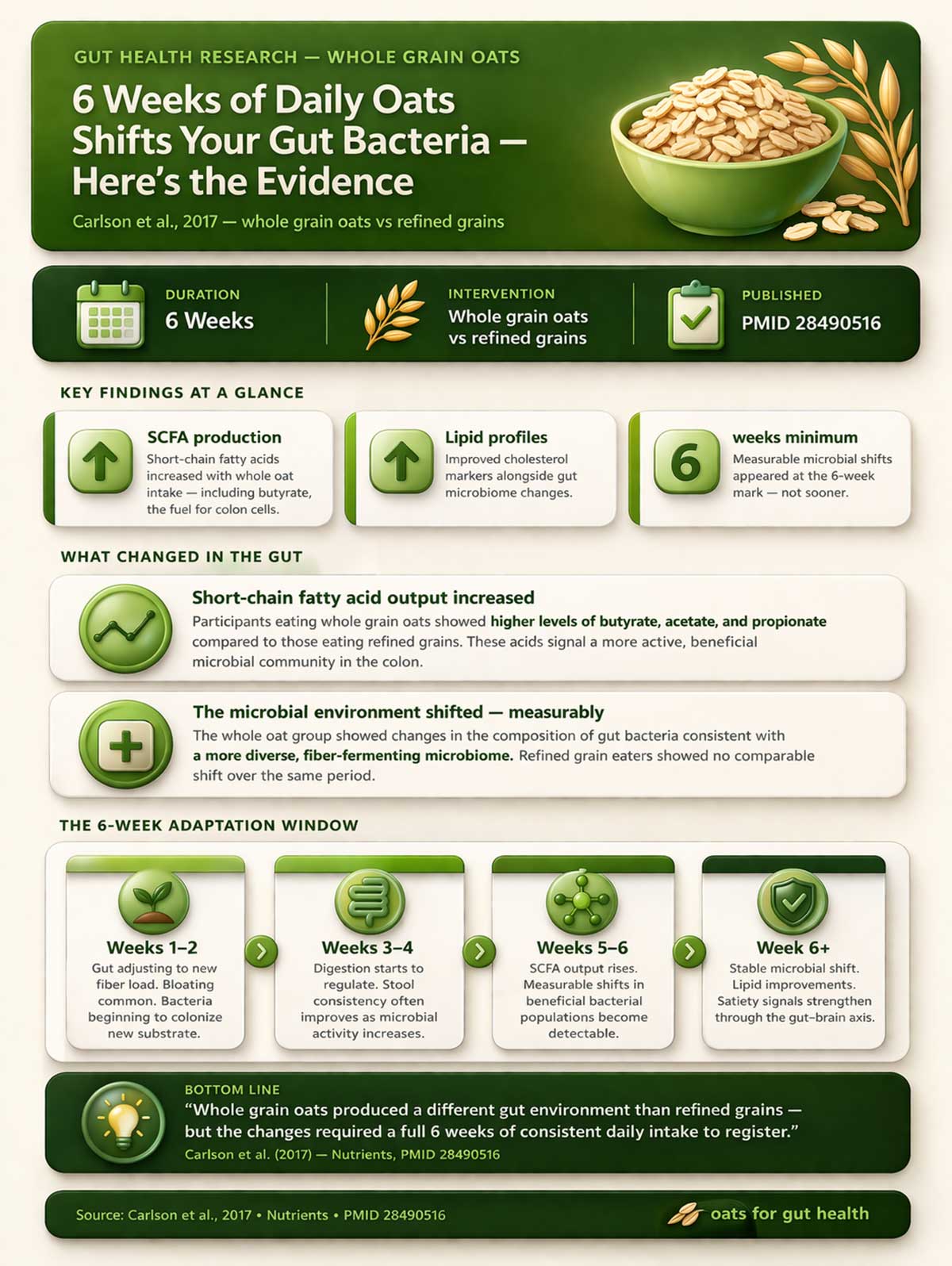
Studies like the one by Carlson et al. (2017), which looked at adults who ate whole grain oats daily over six weeks, found increased production of short-chain fatty acids (SCFAs) and improvements in lipid profiles. These are signs of a changed microbial environment, not just a fiber boost. But they showed up at six weeks, not six days.
A 2025 meta-analysis by Xu et al., which pooled data from 24 randomized controlled trials covering 816 participants, confirmed that prebiotic fibers including oat beta-glucan consistently increased Bifidobacteria counts, but the most meaningful effects were seen when interventions ran two weeks or longer, with greater shifts at eight to twelve weeks. (Note: the final DOI for this meta-analysis is pending confirmation at time of publication, readers are encouraged to search “Xu 2025 beta-glucan Bifidobacteria meta-analysis” for the verified citation.)
The takeaway? Think of the first week as a warm-up, not a finish line.
Why “Once a Week” Doesn’t Cut It
Gut bacteria are sustained by a continuous supply of fermentable material. When oat fiber reaches the large intestine undigested, it feeds specific bacterial strains that produce SCFAs like butyrate, acetate, and propionate. These acids lower the pH of the gut, which makes it harder for harmful bacteria to survive.
But that process needs fuel every day. Eating oats once or twice a week creates an inconsistent food supply. The beneficial strains can’t establish a foothold. Think of it like watering a plant — a single good soaking doesn’t replace daily care.
What Happens Week by Week
For many people, especially those jumping from a low-fiber diet, the first week of daily oats brings some bloating and extra gas. That’s normal, and it’s temporary. It’s the result of gut bacteria fermenting unfamiliar fuel. Don’t stop eating oats because of it.
By weeks two and three, most people notice their digestion starts to regulate. Stool consistency often improves, and the bloating begins to ease as the gut adapts.
By weeks four to six, more noticeable changes can appear: better satiety after meals, fewer energy crashes, and sometimes a reduction in digestive discomfort. These align with the signs of a shifting microbiome rather than just a dietary adjustment.
The Way You Prepare Your Oats Changes Everything
This is the part most articles skip. Oats aren’t a single food, they’re a spectrum, and where they sit on that spectrum determines which bacteria they feed.
Raw and Soaked (Overnight Oats)
Soaking raw oats overnight reduces phytic acid, an antinutrient that binds to minerals like zinc and iron and blocks absorption. Soaking helps your body access those nutrients more effectively.
Raw oats also contain “unaltered” starches, structures that haven’t been broken down by heat. These act as a prebiotic load in their native form, feeding bacteria in the gut that digest intact plant material. For people who want maximum prebiotic variety, raw soaked oats offer a different microbial benefit than cooked oats.
One practical note: raw oats are harder on some digestive systems. If bloating is already a problem, start with cooked oats and work toward overnight oats as your gut adjusts.
The Cook-and-Cool Method: Creating Resistant Starch Type 3
Here’s where it gets genuinely interesting. When you cook oats and then refrigerate them for several hours, or overnight, the starch undergoes a structural change called retrogradation. This creates Resistant Starch Type 3 (RS-3).
RS-3 is special because it passes through the small intestine without being digested. It arrives in the colon intact, where butyrate-producing bacteria like Ruminococcus bromii ferment it. Butyrate is a SCFA that feeds the cells lining the colon and plays a significant role in maintaining the gut’s mucus barrier.
A study by Martínez et al. (2010) on resistant starch intake in healthy adults confirmed that increased RS led to a measurable rise in Ruminococcus bromii and other butyrate-producing species, alongside improved SCFA output. This isn’t just fiber doing its job, it’s a specific structural change in the food creating a targeted bacterial response.
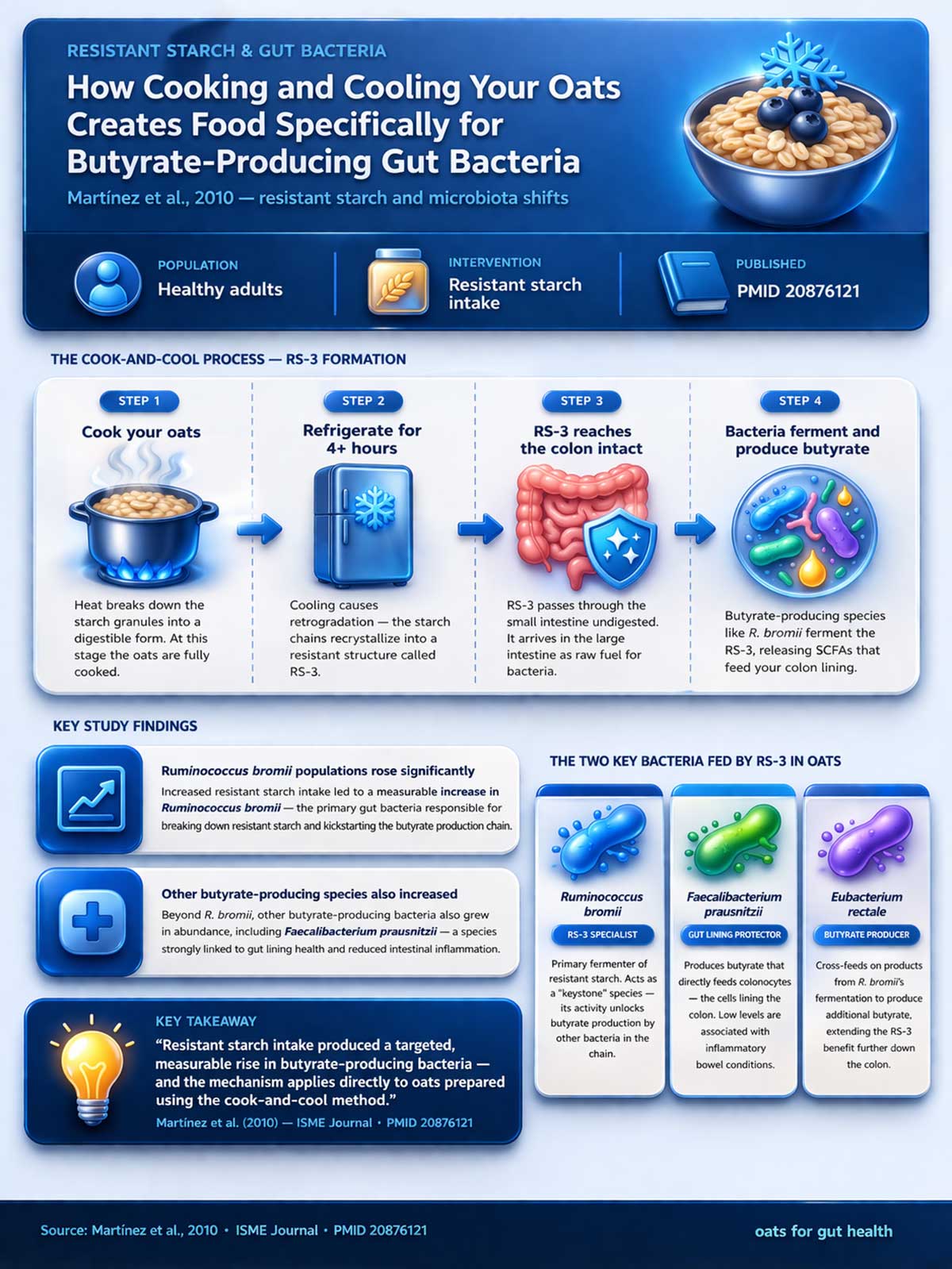
To make RS-3 oats: cook your oats as usual, let them cool to room temperature, then refrigerate for at least four hours. You can eat them cold or gently reheat, reheating at low temperatures preserves most of the RS-3 structure.
Steel-Cut vs. Instant: The Surface Area Rule
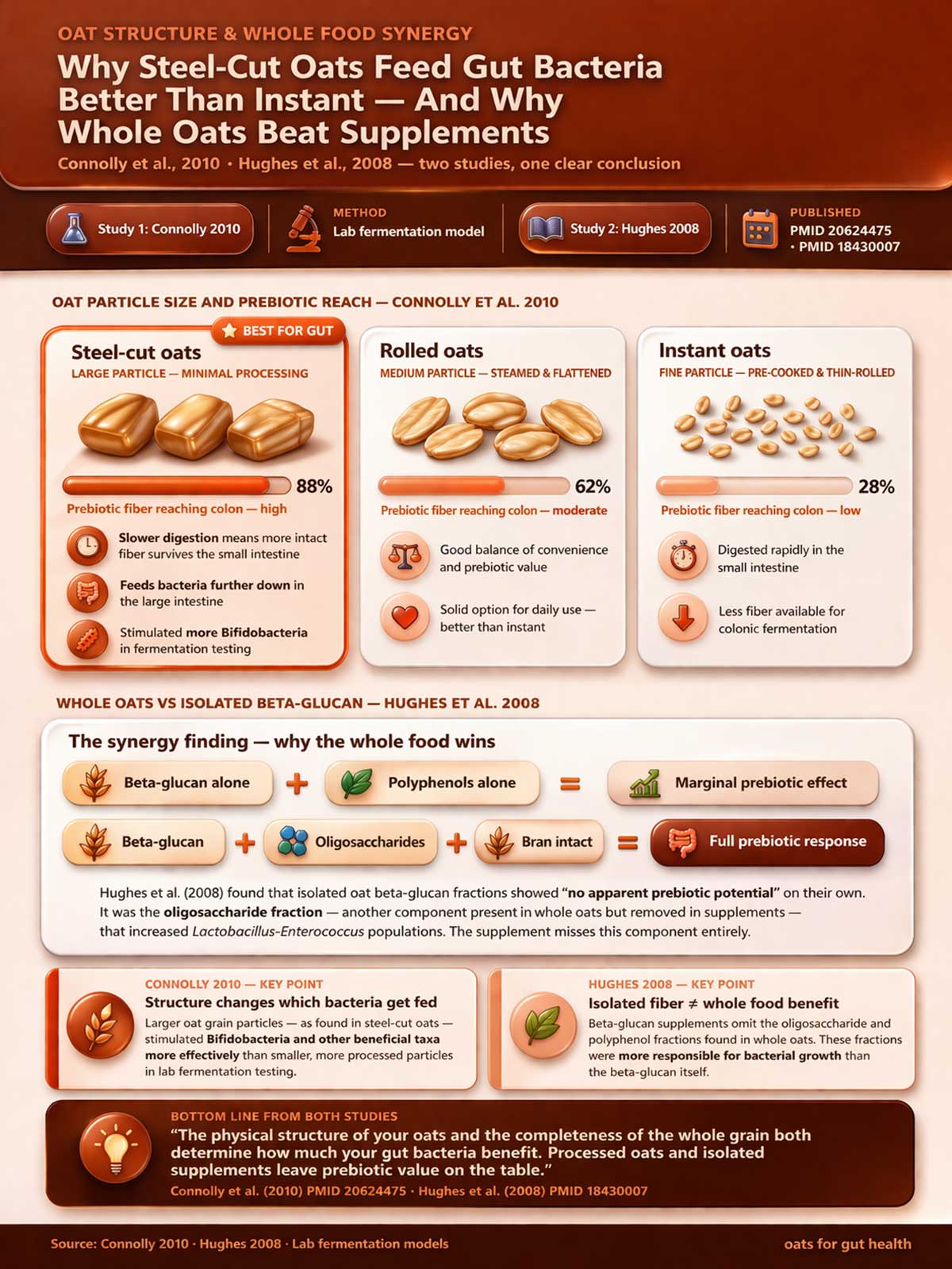
Steel-cut oats are groats that have been chopped into pieces. Rolled oats are steamed and flattened. Instant oats are rolled thinner and pre-cooked. Each step in that process increases surface area and speeds up digestion.
This matters because the faster oats are digested in the small intestine, the less reaches the large intestine where your gut bacteria live. Steel-cut oats, with their denser structure, act as a slow-release prebiotic. More of that fiber survives to reach the colon, feeding bacteria further down in the gut.
Connolly et al. (2010) examined whole oat grain flakes of different sizes in a lab fermentation model and found that larger particle sizes stimulated Bifidobacteria and other beneficial bacterial groups more effectively. The physical structure of the grain wasn’t just cosmetic, it changed the microbial outcome.
Instant oats aren’t useless, but if gut health is the goal, steel-cut or at least old-fashioned rolled oats give you more microbial benefit per bowl.
Preparation at a Glance
| Preparation | Best For | Key Benefit |
|---|---|---|
| Raw Soaked (Overnight) | Prebiotic variety, mineral absorption | Unaltered starches, reduced phytic acid |
| Cook-and-Cool (Refrigerated) | Gut lining repair, butyrate production | RS-3 development |
| Steel-Cut (Cooked Fresh) | General gut support, satiety | Slower digestion, sustained fiber release |
Oats Are More Than Just Beta-Glucan
Beta-glucan gets all the press. It’s the soluble fiber in oats that’s been studied for cholesterol reduction and blood sugar control. But focusing only on beta-glucan misses the bigger picture.
The Bran and Polyphenol Connection
Oats contain antioxidants called avenanthramides, found primarily in the bran. These compounds have anti-inflammatory properties and may also influence the gut environment by reducing oxidative stress in the intestinal lining.
When you eat whole oats, bran included, you’re not just getting fiber. You’re getting a package of fiber, polyphenols, and other compounds that appear to work together. Research by Kristek et al. (2019) found that whole oat bran with all its components intact was more effective at influencing gut microbiota than isolated beta-glucans or polyphenols alone. The combination mattered. Stripping oats down to just one component, even a well-studied one, loses something in the process.
Whole Oats vs. Fiber Supplements
Fiber gummies and beta-glucan supplements are convenient, but they don’t replicate eating whole oats. The synergy finding above is a strong argument for the whole food approach.
Hughes et al. (2008) tested isolated oat beta-glucan fractions on human gut microbiota in a lab setting and found that beta-glucan alone showed marginal prebiotic potential. It was actually the oligosaccharide fraction, another component of whole oats, that increased Lactobacillus-Enterococcus populations. Isolating one component and expecting the full food’s benefits is a reasonable assumption, but the evidence doesn’t always back it up.
Eat the whole oat.
Meet the Bacteria That Eat Your Oats
Bifidobacteria: The Primary Beneficiaries
Bifidobacteria are among the most well-studied beneficial bacteria in the human gut. They ferment dietary fiber and produce acetate and lactate, which acidify the colon and support immune function. Oat beta-glucan and related fibers consistently increase Bifidobacteria counts in human studies.
The Xu et al. (2025) meta-analysis found this effect across 24 RCTs, a significant, consistent increase in Bifidobacteria with prebiotic fiber intake including oat-derived beta-glucan. Not every study showed dramatic results, but the direction was clear.
The Butyrate Producers and Your Gut Lining
Butyrate is the primary energy source for colonocytes, the cells that line your colon. A healthy supply of butyrate keeps the gut lining intact, supports mucus production, and helps prevent “leaky gut,” where the intestinal barrier becomes permeable.
Ruminococcus bromii and species like Faecalibacterium prausnitzii are key butyrate producers that thrive on resistant starch. The cook-and-cool method specifically supports these strains because of how RS-3 is structured.
A 12-week trial by Luk-In et al. (2024) in chronically constipated adults found that RS-3 supplementation (from mixed food sources at 9g per day) significantly increased Bifidobacterium, Akkermansia, and Prevotella populations, improved stool frequency, and reduced the Firmicutes-to-Bacteroidota ratio — a measure associated with gut health and metabolic balance.
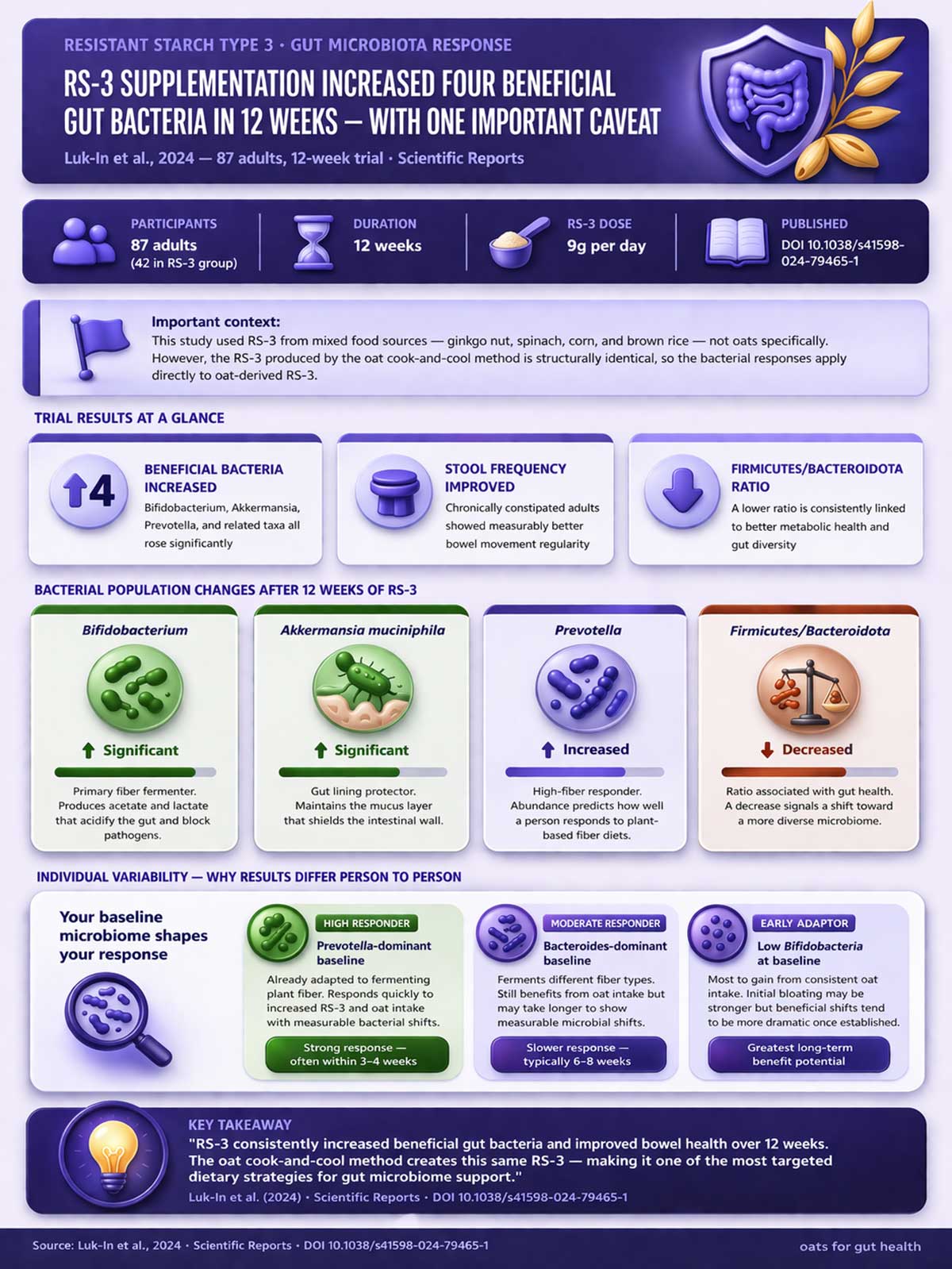
It’s worth noting this study used RS-3 from mixed sources, not oats specifically. But the mechanism, how RS-3 feeds butyrate-producing bacteria, applies equally to oat-derived resistant starch created through the cook-and-cool method described earlier on.
Why Some People Respond Better Than Others
Not everyone gets the same result from eating oats daily. Some people feel energized and regular after three weeks. Others feel bloated for longer than expected. A significant part of this comes down to what bacteria are already living in your gut before you start.
Hughes et al. (2008) used fecal samples from three different donors in their fermentation study and found notably different responses between donors, the same fiber produced different microbial outcomes depending on the starting community. This reflects what’s known about individual gut variability.
A concept called the “Prevotella factor” captures this well. People whose baseline microbiome is rich in Prevotella tend to respond more strongly to high-fiber, plant-based diets. Those with a Bacteroides-dominant profile may see more modest initial changes. Both are beneficial bacteria, they just ferment different types of fiber, which is why one person can thrive on oats immediately while another needs more time.
If you’re a “low-responder” in the early weeks, it doesn’t mean oats aren’t working. It may mean your microbiome is adjusting from a different baseline.
A Practical Guide to Getting the Most From Your Oats
The research supports oats strongly, but the details matter. Here’s how to put the science into practice.
Tip 1: The 24-Hour Soak
Soak raw oats in water or a mild acid like apple cider vinegar for at least 12–24 hours before eating. This reduces phytic acid content by roughly 20–50%, which slightly improves your absorption of minerals like iron, zinc, and magnesium. More importantly, it softens the oat structure without destroying the prebiotic content, preparing the oats for fermentation in the gut. Drain and rinse before eating or cooking.
Tip 2: Use the Cook-and-Cool Method
For butyrate production and gut lining support, cook your oats, refrigerate them for four or more hours, and eat them cold or gently reheated. This is the simplest way to increase RS-3 content at home. Steel-cut oats respond particularly well to this method — their dense structure produces more RS-3 during cooling.
Tip 3: Choose Your Toppings With Intent
What you put on your oats can extend their prebiotic effect. Blueberries add polyphenols that selectively feed Bifidobacteria and Lactobacillus strains. Walnuts provide healthy fats and polyphenols that support gut barrier integrity. Bananas, especially slightly green ones, add their own resistant starch. Together, these toppings create a more complete prebiotic environment than oats alone.
Holscher et al. (2015) found that a whole grain diet over six weeks significantly enriched fiber-fermenting microbiota and enhanced SCFA production, particularly butyrate. Dietary variety, not just oats, drove the strongest microbial response.
Tip 4: Drink Enough Water
Oat fiber, especially beta-glucan, is viscous. It absorbs water as it moves through the digestive system. Without enough fluid intake, this can slow transit time and cause the very constipation you’re trying to prevent. Aim for at least 8 cups of water per day when eating oats daily, more if you’re active.
Tip 5: Match Your Preparation to Your Goal
- For gut lining repair and butyrate production: cook-and-cool steel-cut oats
- For maximum prebiotic variety: overnight soaked raw oats with polyphenol-rich toppings
- For blood sugar balance: cook-and-cool oats, eaten cold or at room temperature
- For general gut support: any whole oat, eaten daily and consistently
Quick Start: Your First Week
| Action | Detail |
|---|---|
| Choose your oats | Steel-cut or old-fashioned rolled — not instant |
| Daily serving | 40g dry oats (roughly ½ cup) |
| Water intake | 8+ cups per day |
| Expect | Some bloating in Week 1 — it’s temporary |
| Track | Check for the three signs listed in Part 6 at Week 4 |
Three Signs Your Gut Is Responding
The Satiety Signal
One of the clearest signs that oat-derived SCFAs are doing their job is a lasting sense of fullness after eating. Beta-glucan slows stomach emptying, but SCFAs like propionate and butyrate also signal the brain, through the gut-brain axis, to reduce appetite. If you find yourself less hungry between meals after a few weeks of daily oats, that’s a functional sign your microbiome is shifting.
Better Stool Consistency
The Bristol Stool Scale is a clinical tool that classifies stool into seven types. Types 3 and 4, smooth, formed, easy to pass, indicate healthy transit time and adequate fiber fermentation. Many people eating consistent daily oats move from looser stools (type 6–7) or harder stools (type 1–2) toward this middle range within three to four weeks.
This improvement reflects both the water-binding properties of oat fiber and the fermentation activity of gut bacteria producing SCFAs that regulate colon movement.
Less Brain Fog and More Stable Energy
This one takes longer, usually five to six weeks, and it’s harder to measure directly. But reduced systemic inflammation, driven partly by increased butyrate and a more balanced gut microbiome, often shows up as clearer thinking and more consistent energy levels through the day.
Kjølbæk et al. (2020) studied adults with metabolic syndrome over eight weeks on a whole grain diet including oats and found improvements in both insulin sensitivity and microbial composition, shifts that have downstream effects on energy regulation and inflammatory markers.
The connection isn’t immediate, but it’s real.
Matching Your Oats to Your Goals
The simplest summary of everything above is this: oats are an effective prebiotic food, but they’re not one-size-fits-all. The way you prepare them, how consistently you eat them, and the state of your gut before you start all shape what you get out of them.
If you’re recovering from gut issues or want to support your intestinal lining, the cook-and-cool method with steel-cut oats gives you the most targeted benefit through RS-3 and butyrate production. If you’re looking to increase microbial diversity broadly, raw soaked oats with varied toppings offer a different set of fermentable substrates to a wider range of bacterial species.
The dose also matters. Most research uses between 40 and 100 grams of oats daily, or equivalent beta-glucan supplementation. A standard serving of dry oats is around 40 grams, roughly half a cup. That’s a reasonable daily amount to aim for.
Give it the full four to six weeks before judging the results. Early bloating is part of the process, not a reason to stop. Watch for the three signs described above as your guide.
Your gut bacteria are patient. They’ll do their part, as long as you keep showing up with the bowl.
Medical disclaimer: This article is for informational purposes only and does not constitute medical advice. Speak with a healthcare professional before making significant dietary changes, especially if you have a diagnosed gastrointestinal condition.