Researchers Monitored Heart Health in People Who Drank Pomegranate Juice Daily — This Is What They Discovered

Scientists followed people who drank pomegranate juice daily. Some for weeks. Others for months. A few stuck with it for an entire year. The results surprised even the researchers.

This isn’t about folklore or ancient wisdom. It’s about what happens inside your arteries when you drink this tart red juice every single day.

How Strong Is the Evidence?

Before we get into the details, let’s look at what the research actually tells us. Not all studies carry the same weight.

Benefit Evidence Strength Number of Studies Quality Rating
Blood Pressure Reduction Strong 8+ RCTs, 574 people ★★★★☆
Arterial Thickness Reversal Moderate 1 controlled trial, 19 people ★★★☆☆
LDL Oxidation Protection Moderate 1 observational, 10 people ★★★☆☆
Vascular Function Moderate 2-3 RCTs ★★★☆☆
Inflammatory Markers Weak/Negative Mixed results ★★☆☆☆

The blood pressure research is solid. Multiple teams tested it in different populations. The arterial reversal finding comes from smaller studies but the results are striking.

Keep this context in mind as you read. We’ll tell you exactly what worked, what didn’t, and how confident scientists are about each finding.

The 12-Month Artery Reversal Nobody Expected

Most nutrition studies last a few weeks. But one team of researchers had patience. They monitored 19 people with blocked arteries for a full year.

Ten participants drank just 50 mL of pomegranate juice daily. That’s less than a quarter cup. Nine others continued their normal routines without the juice.

After 12 months, ultrasound scans revealed something striking. The juice drinkers showed a 30% reduction in carotid intima-media thickness (CIMT). That’s the measurement of plaque buildup in your neck arteries.

The control group? Their arteries got 9% worse.

Pomegranate Juice for Heart Health Month Arterial Study

In a 2004 controlled clinical trial published in Clinical Nutrition, researchers tracked patients with carotid artery stenosis. The absolute CIMT measurements tell the real story. The pomegranate group went from 1.11 mm to 0.77 mm. The control group went from 1.11 mm to 1.21 mm. These numbers represent actual physical changes in artery walls.

Think of your arteries like old pipes. Most people’s pipes get more clogged over time. But this small group drinking pomegranate juice saw their pipes start to clear.

The key ingredient was time. The body doesn’t rebuild arteries overnight. It took the full year to see the reversal effect.

This study showed that patience pays off when it comes to heart health. Quick fixes don’t exist. But consistent habits create real change.

What to Expect Week by Week

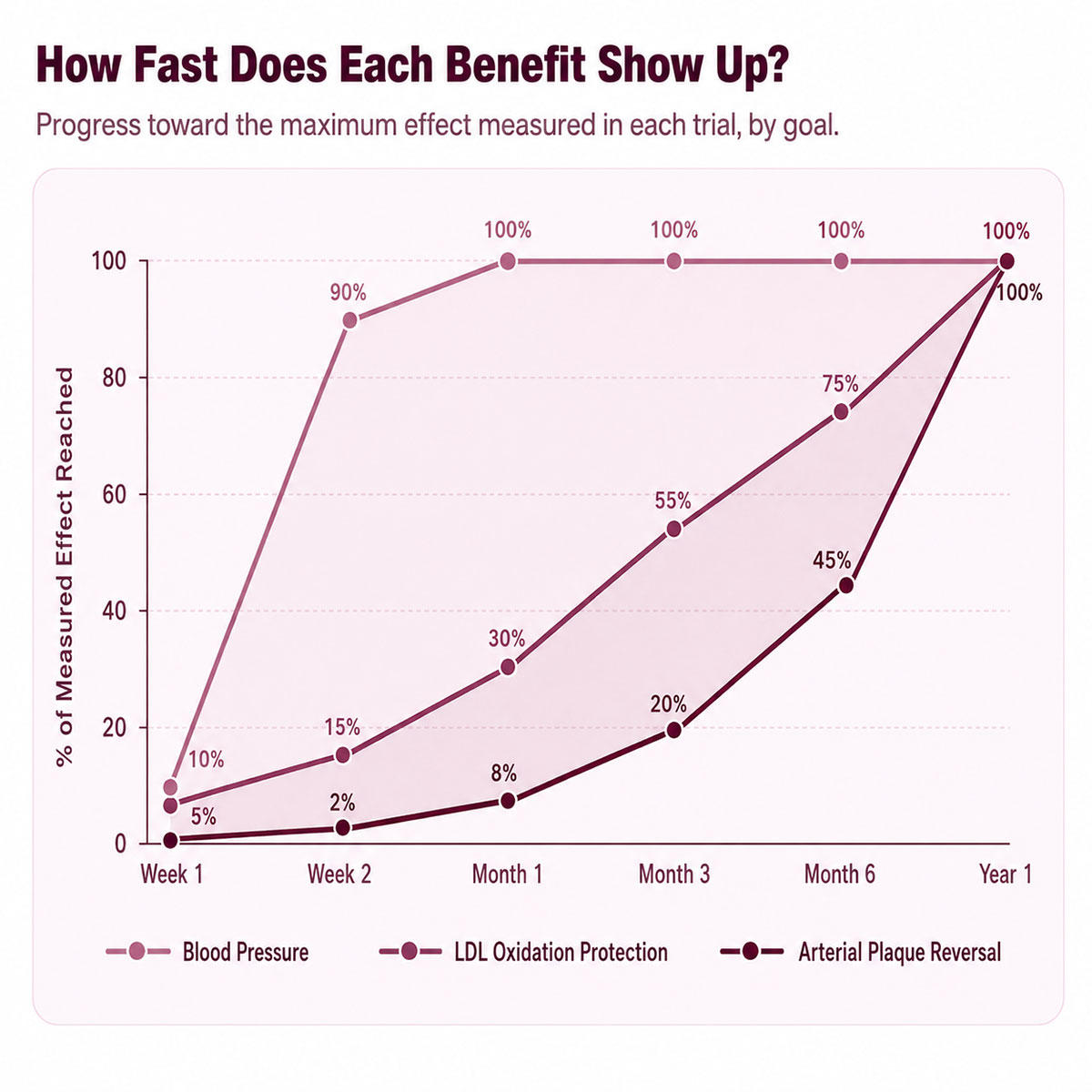
Wondering when you’ll actually see results? Here’s what the research timeline suggests.

Days 1-7: Your body begins absorbing polyphenols. Antioxidant levels in your blood start rising. You won’t feel different yet.

Days 8-14: Blood pressure may begin dropping. Most sensitive individuals notice changes during this window. Home monitoring picks up the shift.

Weeks 3-8: Endothelial function improvements kick in. Your arteries become more flexible. This happens beneath the surface. No symptoms tell you it’s working.

Weeks 9-12: LDL oxidation protection reaches peak levels. Your cholesterol becomes harder to damage. Blood tests would show this change.

Months 4-12: Arterial thickness changes become measurable. Plaque reversal may begin. Only imaging can detect this shift.

The benefits build on each other. Early changes set the stage for later ones. That’s why stopping after two weeks means missing the bigger picture.

Note: This timeline combines findings from multiple studies. Individual results may vary, and not all people will experience benefits at these exact intervals.

The Two-Week Blood Pressure Drop

You don’t need a year to see all the benefits. Some changes happen fast.

A team of Iranian researchers tested 21 adults with high blood pressure in a randomized, double-blind trial. Each person drank 150 mL of concentrated pomegranate juice every day. The monitoring period lasted just two weeks.

Blood pressure readings told a clear story. Systolic pressure (the top number) dropped by an average of 7%. Diastolic pressure (the bottom number) fell 6%. Individual responses ranged from 4% to 11% depending on baseline levels.

Pomegranate Juice Lowers Blood Pressure in Weeks

For someone with a reading of 140/90, that translates to roughly 130/84. Still not perfect, but moving in the right direction.

The juice works by blocking an enzyme called ACE. Your kidneys produce this enzyme to raise blood pressure when needed. But if you have high blood pressure, you need less ACE activity, not more.

Many prescription drugs work the same way. They’re called ACE inhibitors. Pomegranate juice appears to have a natural version of this effect.

A separate analysis combined data from eight different studies with 574 participants. Published as a meta-analysis in 2017, this review examined trials lasting between two and twelve weeks. The average blood pressure drop across all trials was 4.96 mmHg for systolic and 2.01 mmHg for diastolic.

Pomegranate Juice Blood Pressure Meta Analysis

That might sound small. But even modest reductions lower your risk of heart attack and stroke over time.

The two-week mark seems to be the sweet spot. If you’re going to try pomegranate juice for blood pressure, give it at least 14 days before checking results.

Blood Pressure Tracker & Predictor
Track your progress with pomegranate juice
Your Current Blood Pressure
120/80
Normal
(<120/80)
Elevated
(120-129)
Stage 1
(130-139)
Stage 2
(140+)
Predicted Blood Pressure Over Time

Based on research: These predictions use data from clinical trials. The 2-week predictions are based on the Asgary et al. (2014) study showing 7% systolic and 6% diastolic reduction with 150mL concentrated juice. The meta-analysis (Sahebkar et al., 2017) showed an average reduction of 4.96 mmHg systolic and 2.01 mmHg diastolic across studies. Predictions are conservative estimates and individual results vary. Always consult your doctor before starting any new health regimen.

When Blood Pressure Stays the Same But Your Heart Still Wins

Here’s where things get interesting. Sometimes the juice helps your heart without changing the numbers on your blood pressure cuff.

British researchers monitored 28 healthy adults who drank 500 mL of pomegranate juice daily for four weeks. Blood pressure readings? No significant change.

But other measurements told a different story.

They checked something called the augmentation index. It measures how stiff your arteries are. Stiff arteries make your heart work harder to pump blood through your body.

Pomegranate Juice for Arterial Health Vascular Function Study

The juice improved this measurement. Arteries became more flexible. Blood flowed easier. The heart didn’t have to push as hard.

Think of it like changing from a kinked garden hose to a smooth one. The water pressure might stay the same, but the water flows better.

This matters because arterial stiffness predicts heart problems independently from blood pressure. You can have normal blood pressure but stiff arteries. That still puts stress on your heart.

In this 2012 randomized crossover trial, researchers also found improved endothelial function. Your endothelium is the thin layer of cells lining your blood vessels. When it works well, your vessels dilate and contract smoothly. When it doesn’t, you’re at higher risk for clots and blockages.

So even in studies where blood pressure didn’t budge, the juice was still protecting hearts.

The Antioxidant Shield That Stops Cholesterol From Turning Dangerous

Having high LDL cholesterol is bad. But oxidized LDL cholesterol is worse.

When LDL particles get damaged by free radicals, they become sticky. They burrow into artery walls and form plaques. This is how blockages start.

Researchers monitored 10 people with atherosclerosis for one year. Each person drank 50 mL of pomegranate juice daily.

Blood tests showed LDL oxidation susceptibility dropped by up to 90% after 12 months. The cholesterol particles became much harder to damage. Individual results varied from 40% to 90% depending on baseline oxidation levels and other health factors.

At the same time, overall antioxidant status in the blood increased. The juice was flooding the bloodstream with compounds that neutralize free radicals.

Pomegranate Juice LDL Cholesterol Protection Study

The main heroes are polyphenols. Pomegranates contain several types: punicalagins, ellagic acid, and anthocyanins. These compounds act like bodyguards for your cholesterol.

They don’t lower your cholesterol numbers. But they make the cholesterol you have less likely to cause problems.

This is preventive medicine at the cellular level. You’re not waiting for a blockage to form and then treating it. You’re stopping the damage before it starts.

The year-long timeline matters here too. The protection got stronger the longer people stayed on the juice. This 2000 observational study tracked lipid peroxidation markers alongside the LDL measurements, showing that broader antioxidant protection increased throughout the year.

How Does It Compare to Other Heart-Healthy Drinks?

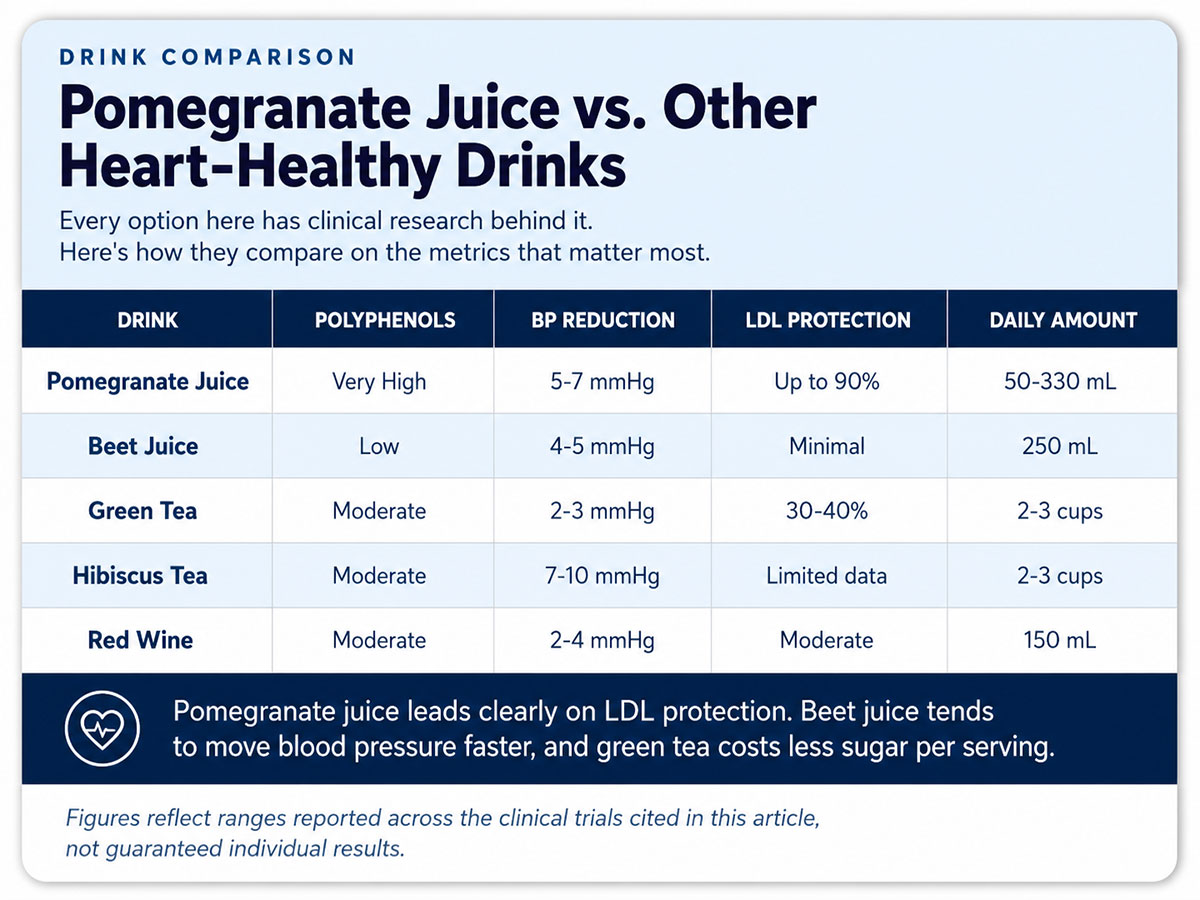
You’ve got options when it comes to beverages that help your heart. Here’s how pomegranate juice stacks up.

Beverage Polyphenol Content BP Reduction LDL Protection Daily Amount Special Notes
Pomegranate Juice Very High 5-7 mmHg Up to 90% 50-240 mL High sugar content
Green Tea Moderate 2-3 mmHg 30-40% 2-3 cups Caffeine included
Beet Juice Low 4-5 mmHg Minimal 250 mL High in nitrates
Red Wine Moderate 2-4 mmHg Moderate 150 mL Alcohol risks apply
Cranberry Juice Moderate Minimal Low 240 mL UTI benefits instead

Pomegranate juice wins on LDL protection. Green tea beats it for daily drinkability and lower sugar. Beet juice competes on blood pressure but tastes worse.

The choice depends on your specific health goals. If you have high cholesterol and want to protect it from oxidation, pomegranate is your best bet. If you’re mainly worried about blood pressure, beet juice works faster.

You can also combine them. There’s no reason to pick just one. Many people rotate between these drinks throughout the week.

Where Pomegranate Juice Doesn’t Deliver

Science requires honesty about what doesn’t work.

One study tested pomegranate juice in 24 adults with metabolic syndrome. They drank 240 mL daily for six weeks. Researchers hoped to see drops in inflammatory markers and blood pressure.

The results? No significant changes in either.

Metabolic syndrome is complex. It involves insulin resistance, obesity, high triglycerides, and other factors. Pomegranate juice alone couldn’t tackle all of them. This 2011 randomized controlled trial did find modest improvements in insulin sensitivity, but the inflammatory and blood pressure benefits didn’t materialize.

An even more disappointing trial involved 101 people on hemodialysis. These patients face extremely high cardiovascular risk. Researchers gave them pomegranate juice for an entire year.

The juice had no significant effect on cardiovascular outcomes or inflammation markers. Published in 2012, this study involved people with severe kidney damage. Their bodies were already too compromised to respond to dietary interventions.

When your heart and kidneys are already severely damaged, juice can’t fix everything. The body’s capacity to heal has limits.

These studies teach an important lesson. Pomegranate juice helps healthy and mildly affected hearts. But it’s not a cure for advanced disease.

If you’re on dialysis or have severe metabolic problems, don’t count on juice alone. You need comprehensive medical care.

How Much Should You Actually Drink?

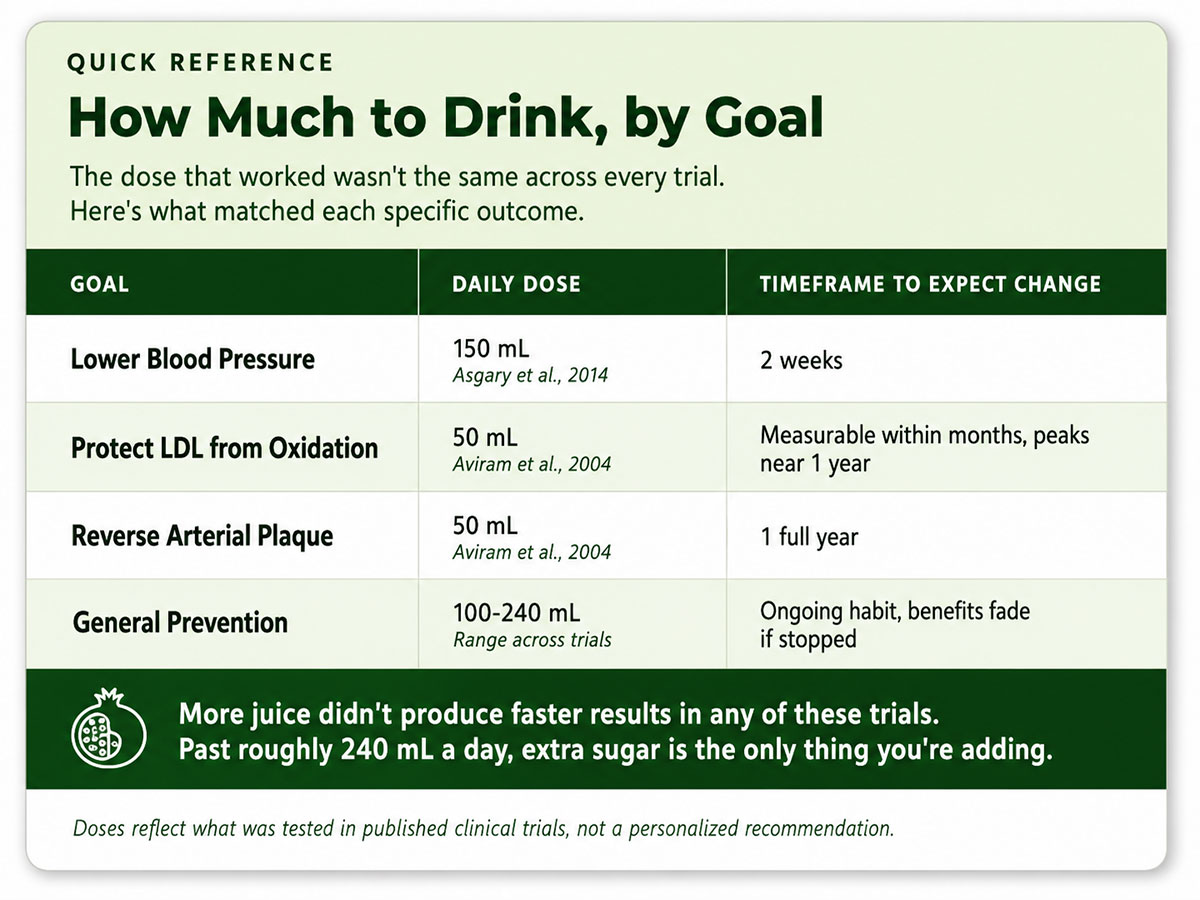
The studies that worked used specific amounts. Let’s break down the doses.

The arterial thickness study used 50 mL daily. That’s about three tablespoons. Small but mighty over the long term.

The two-week blood pressure study used 150 mL of concentrated juice. That’s roughly two-thirds of a cup. The concentration matters because it packs more polyphenols per ounce.

The four-week vascular function study used 500 mL. That’s just over two cups. This was regular strength juice, not concentrated.

The meta-analysis showed benefits across a range from 50 mL to 500 mL. More isn’t necessarily better. The 50 mL dose worked as well as higher amounts in some studies.

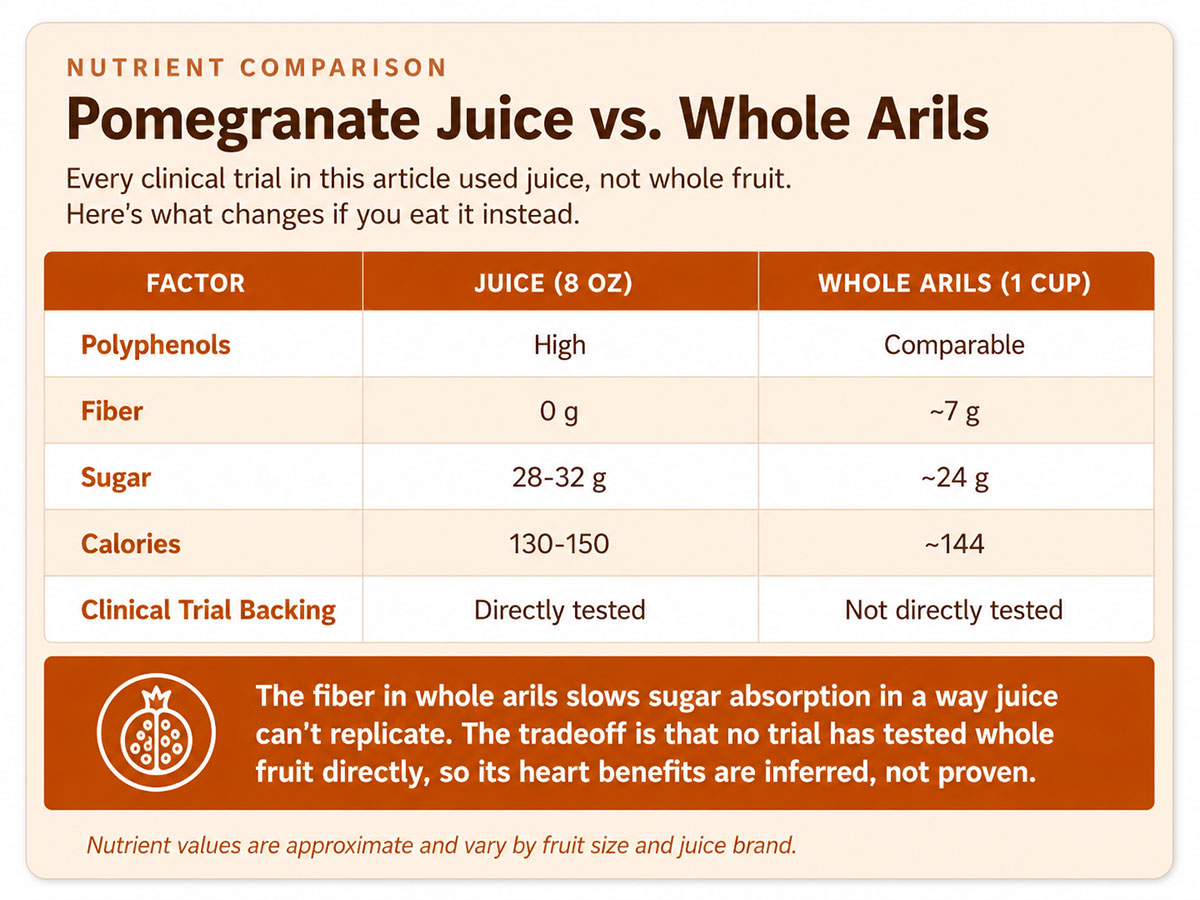
What about fresh fruit versus juice? No studies directly compared them for heart health. But eating the whole fruit gives you fiber, which juice lacks. The seeds (arils) contain all the polyphenols found in juice.

One whole pomegranate contains roughly 100-150 mL of juice. If you eat the entire fruit, you get the same polyphenols plus about 7 grams of fiber.

Here’s what the successful studies actually used:

Studies used different preparations. The 50 mL studies used commercial 100% juice. The 150 mL study used concentrate. The 500 mL study used standard juice. Results may not translate directly across preparations. Concentrated juice has 2-3 times more polyphenols per milliliter than standard juice.

If you choose juice, look for 100% pomegranate with no added sugar. The natural fruit has enough sugar already.

Timing probably doesn’t matter much. Pick a time you’ll remember. Morning with breakfast. Afternoon as a snack. What counts is drinking it every single day.

Consistency beat everything else in these studies. The people who saw results didn’t take breaks. They made it a habit.

How to Choose Quality Juice

Not all pomegranate juice is created equal. Here’s what to look for.

Label Reading 101:

Look for 100% pomegranate juice with no blends. The ingredient list should say “pomegranate juice” and nothing else. Maybe citric acid for preservation. That’s it.

Avoid “from concentrate” when possible. Less processing retains more polyphenols. Fresh-pressed or cold-pressed options preserve the most antioxidants.

Dark glass bottles protect antioxidants from light damage. Clear plastic bottles let light in. Light breaks down polyphenols over time.

Red Flags to Avoid:

“Pomegranate flavored” might contain 5% actual juice. The rest is sugar water with artificial flavor.

“Cocktail” or “blend” means they diluted it with apple or grape juice. You’re paying pomegranate prices for cheap filler.

Clear bottles mean the manufacturer doesn’t care about preserving quality. Light degrades the compounds you’re buying it for.

Added preservatives beyond citric acid suggest low-quality production methods.

The Color Test:

Real pomegranate juice is deep ruby red, almost purple. Hold the bottle up to light. If it’s bright pink or light red, it’s diluted. The darker, the better.

The Taste Test:

Pure pomegranate juice is tart and slightly bitter. Your face might pucker on the first sip. If it tastes sweet and pleasant without being concentrated, sugar was added. Check the label. Natural juice has about 30 grams of sugar per cup from the fruit itself. Anything higher means added sweeteners.

Where to Buy:

Most grocery stores stock POM Wonderful or Lakewood brands. Whole Foods and Trader Joe’s carry organic options. Online prices are 10-15% cheaper when buying by the case. A case lasts about one month at 50 mL daily.

Simple Recipes That Work

Ready to make this practical? Here are three ways to incorporate pomegranate into your routine.

Recipe 1: Heart-Healthy Morning Shot

This delivers the research dose in one quick gulp.

  • 50 mL pomegranate juice
  • 1 tsp fresh lemon juice
  • Pinch of cayenne pepper

Mix everything in a small glass. The lemon adds vitamin C, which helps your body absorb polyphenols. Cayenne improves circulation. Down it on an empty stomach first thing in the morning.

Takes 30 seconds to make. Gets it out of the way for the day.

Recipe 2: Pomegranate Green Smoothie

This dilutes the sugar content while keeping the polyphenols.

  • 100 mL pomegranate juice
  • 1 cup fresh spinach
  • 1/2 cup cucumber
  • 1/4 avocado
  • 5-6 ice cubes

Blend everything until smooth. The spinach adds magnesium for blood pressure. The avocado provides healthy fats that help absorb the polyphenols. Cucumber cuts the tartness without adding sugar.

This makes about 16 ounces. Drink it with breakfast or as an afternoon snack.

Recipe 3: Fresh Pomegranate Bowl

For people who prefer eating whole fruit.

  • 1/2 cup fresh pomegranate arils
  • 1/4 cup walnuts
  • 1/2 cup plain Greek yogurt
  • Drizzle of honey (optional)

Layer the yogurt in a bowl. Top with arils and walnuts. The walnuts provide omega-3 fatty acids. Studies show omega-3s and polyphenols work together to reduce inflammation better than either alone.

This gives you fiber from the arils, protein from the yogurt, and healthy fats from the walnuts. A complete heart-healthy snack.

How to Extract Juice at Home:

If you’re using fresh fruit, here’s the mess-free method.

  1. Score the pomegranate around its middle with a sharp knife. Cut just through the skin, not deep into the fruit.
  2. Fill a large bowl with cold water. Submerge the pomegranate and break it apart with your hands underwater. This prevents the juice from staining your hands and counter.
  3. The arils sink. The white membrane floats. Skim off the membrane and discard it.
  4. Scoop out the arils with a strainer. You’ll have about 1-1.5 cups.
  5. Blend the arils in a blender for 10-15 seconds. Don’t overblend or you’ll crush the seeds inside.
  6. Strain through cheesecloth or a fine-mesh strainer. Press gently to extract the juice.
  7. One medium pomegranate yields 100-150 mL of juice.

Store fresh juice in a glass jar in the fridge. Use within 3-4 days for maximum polyphenol content.

Can’t Stand the Tart Taste?

Mix your dose with:

  • Sparkling water (cuts sugar and tartness without diluting polyphenols much)
  • A splash of orange juice (vitamin C boosts polyphenol absorption by 30%)
  • Ice and fresh mint leaves (refreshing and masks bitterness naturally)

Don’t add sugar or sweeteners. That defeats the health purpose.

Combining Strategies for Better Results

Pomegranate juice works better with other heart-healthy habits. Think of it as one piece of a bigger plan.

The Stacking Approach:

Research shows antioxidants work together. Combining pomegranate with vitamin E or omega-3s may boost effects by 20-30%.

Morning routine:

  • 50 mL pomegranate juice
  • 1 gram omega-3 fish oil supplement
  • Whole grain toast with avocado

The healthy fats help absorb the polyphenols. Take them together for best results.

Lunch:

  • Large salad with leafy greens
  • Olive oil and lemon dressing
  • Grilled chicken or chickpeas

The olive oil provides more polyphenols. Different types work together.

Dinner:

  • Fatty fish (salmon, mackerel, sardines) twice weekly
  • Roasted vegetables
  • Quinoa or brown rice

Daily movement:

  • 30 minutes of walking
  • Doesn’t have to be intense
  • Consistency matters more than speed

Foods That Enhance Absorption:

Eat these with or near your pomegranate dose:

Healthy fats like nuts, avocado, or olive oil increase polyphenol absorption by helping them cross from your digestive system into your bloodstream.

Black pepper contains piperine, which increases polyphenol absorption by up to 20%. A pinch in your morning shot helps.

Fermented foods like yogurt, kefir, or sauerkraut improve gut health. Better gut health means better nutrient absorption across the board.

Foods That Reduce Effectiveness:

Avoid these around the time you take your juice:

High-sugar meals spike insulin. This creates oxidative stress that counteracts the antioxidants you just consumed. Space them apart by 2-3 hours.

Excessive alcohol damages your endothelium. It undoes the vascular benefits the juice provides. Limit to one drink per day if you drink at all.

Processed meats increase oxidative stress. They create the exact damage pomegranate juice tries to prevent. Skip them entirely if possible.

Tracking Your Results

If you start drinking pomegranate juice, track your progress. Changes happen slowly. Without tracking, you won’t notice them.

Week 1 Baseline:

Take your blood pressure at home. Use the same time each day. Morning before breakfast works best. Sit quietly for 5 minutes first. Take three readings and average them.

Rate your energy levels on a 1-10 scale. Write it down.

Note any digestive changes. Some people get mild stomach upset in the first few days.

Week 2 Check-in:

Take blood pressure again. Use the same method. Compare to your baseline.

Look for a 2-5 point drop in the top number. Some people see changes this early. Others need more time.

Note any medication side effects. If you’re on blood pressure meds, watch for dizziness or lightheadedness. That might mean your pressure is dropping too low.

Month 3 (Optional):

Schedule a doctor visit for a lipid panel. Compare your LDL levels to baseline.

The LDL number might not change. But you can ask about oxidized LDL testing. Some labs offer it. This shows whether your cholesterol is becoming less oxidized.

Month 12 (For Serious Trackers):

Consider asking your doctor about a carotid ultrasound to measure CIMT. This is what the research studies did.

Insurance might not cover it unless you have risk factors. But if you have a family history of heart disease, it’s worth checking.

This test shows actual plaque thickness in your neck arteries. A reduction means the juice is working at the deepest level.

Keep a Simple Log:

Use your phone notes or a paper journal.

Date Blood Pressure Energy (1-10) Notes
Jan 1 138/88 6 Starting today
Jan 15 134/86 7 Slight improvement
Feb 1 131/84 7 Continuing trend

This takes 30 seconds per day. But it shows patterns you’d otherwise miss.

Seasonal Tips and Storage

Fresh pomegranates peak from September to January. That’s when you get the best quality at the lowest prices.

Buy extra during this window. Extract the arils and freeze them in portions. Use freezer-safe bags or containers. Label them with the date.

Frozen arils last 6 months without losing polyphenol content. Pull out a portion when you need it. Let it thaw for 10 minutes, then blend.

Storing Fresh Juice:

Keep opened juice in the coldest part of your fridge. That’s the back of the bottom shelf, not the door.

Never leave it at room temperature after opening. Polyphenols degrade quickly when warm.

Use within 7-10 days of opening. After that, antioxidant levels drop by 20-30%.

Freeze juice in ice cube trays for longer storage. Pop out 2-3 cubes daily for your dose. Frozen juice keeps for 3-4 months.

Concentrate Options:

Consider buying concentrate during off-season months. It has a 2-year shelf life unopened.

Dilute according to package directions. Usually 1 part concentrate to 3-4 parts water.

This costs more upfront but lasts longer. One bottle provides 30-60 servings depending on concentration.

The Safety Checklist: Who Needs to Be Careful

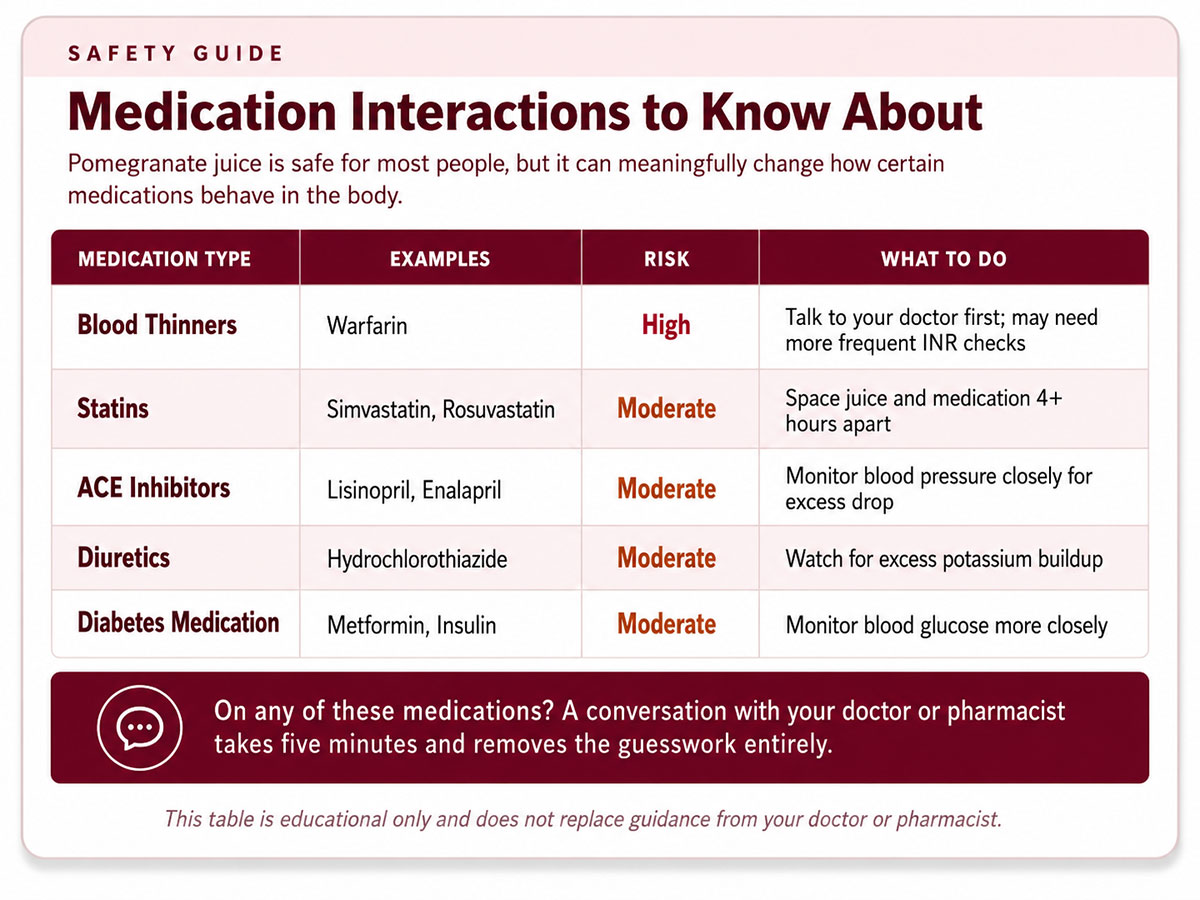
Pomegranate juice isn’t dangerous for most people. But certain medications don’t mix well with it.

Medication Type Examples Interaction Risk What Happens Recommendation
Blood Thinners Warfarin, Coumadin High Increased bleeding risk Consult doctor; may need dose adjustment
Statins Rosuvastatin, Simvastatin Moderate Higher drug levels in blood Take 4+ hours apart; monitor for muscle pain
ACE Inhibitors Lisinopril, Enalapril Moderate Additive BP lowering Monitor BP closely; may need medication reduction
Calcium Channel Blockers Amlodipine, Diltiazem Low-Moderate Potential additive effects Regular BP monitoring

Blood Thinners:

Pomegranate juice can increase the effects of warfarin. That raises your bleeding risk. Your INR levels might go too high. If you take warfarin, talk to your doctor before adding the juice. You might need more frequent INR testing or a dose adjustment.

Statins:

The juice may interfere with how your body breaks down certain cholesterol medications. This happens through liver enzymes. Rosuvastatin and simvastatin are most affected. Higher drug levels can cause muscle pain or even muscle damage. Take your statin at night and drink pomegranate juice in the morning. Space them at least 4 hours apart.

Blood Pressure Medications:

Since the juice lowers blood pressure on its own, combining it with BP meds might drop your pressure too low. Signs include dizziness, lightheadedness, or fainting. Monitor your readings closely if you take both. Your doctor might need to reduce your medication dose.

Sugar Content:

One cup of pomegranate juice contains about 30 grams of sugar. That’s roughly seven teaspoons. The sugar is natural, from the fruit itself. But it still affects blood glucose.

If you have diabetes, this matters. The juice might help your heart but hurt your blood sugar control. Check your glucose levels more often if you start drinking it. Consider the 50 mL dose instead of larger amounts.

Kidney Disease:

People with kidney disease need to be extra careful. Pomegranates are high in potassium. One cup of juice contains about 530 mg of potassium.

Damaged kidneys struggle to remove excess potassium. Too much can cause heart rhythm problems. If your kidney function is below 30%, avoid pomegranate juice unless your doctor approves it.

Allergic Reactions:

Some people are allergic to pomegranates. It’s rare but serious. Symptoms include itching, swelling, hives, and trouble breathing.

If you’ve never had pomegranate before, start with a small amount. Try one tablespoon. Wait a few hours. If nothing happens, you’re probably fine.

Who Should Avoid It Completely:

People scheduled for surgery should stop pomegranate juice 2 weeks before. The bleeding risk is too high when combined with surgical procedures.

Those with chronic low blood pressure (below 90/60) should skip it. The juice could drop pressure even lower.

Anyone taking multiple medications should get doctor approval first. The interactions become harder to predict with multiple drugs.

Medication Interaction Checker
Check if pomegranate juice is safe with your medications
No medications selected yet
Interaction Results

Medical Disclaimer: This tool provides educational information only and is not a substitute for professional medical advice. Always consult your doctor or pharmacist before starting pomegranate juice, especially if you take prescription medications. Individual responses vary, and your healthcare provider can assess your specific situation.

Should You Start Drinking It?

The evidence points to three solid benefits.

First, long-term use may reduce arterial thickness. The effect takes a full year to show up. But the 30% reversal in one study is significant. The absolute CIMT decreased from 1.11 mm to 0.77 mm over 12 months. That’s real physical change in artery walls.

Second, blood pressure drops appear within two weeks for people with hypertension. The effect is modest but real. An average drop of 5-7 mmHg helps reduce long-term cardiovascular risk.

Third, the juice protects LDL cholesterol from oxidation. This might prevent future blockages better than it treats existing ones. Up to 90% reduction in oxidation susceptibility after one year represents major protection.

The juice won’t replace your medications. It won’t cure advanced heart disease. But for prevention and mild improvements, the data looks promising.

Answer These Questions:

Is your blood pressure 130-150 systolic? You’re a strong candidate. The research shows clear benefits in this range.

Do you have early arterial stiffness? Good candidate. Even without high blood pressure, vascular function improvements help.

Are you on warfarin or multiple heart meds? Consult your doctor first. The interactions require medical supervision.

Do you have advanced kidney disease? Skip it. The potassium content creates too much risk.

Are you healthy but want prevention? Moderate benefit, low risk. If heart disease runs in your family, this adds a layer of protection.

The Best Candidates Are People With:

Mildly elevated blood pressure (130-150 systolic) who want to avoid medication or enhance current treatment.

Family history of heart disease looking for early prevention strategies.

High cholesterol despite medication who want extra protection against oxidation.

Early signs of arterial stiffness detected on vascular testing.

Your Action Plan:

Week 1: Buy one bottle of 100% pomegranate juice. Try 50 mL daily. Pick a consistent time. Morning works for most people. Take baseline blood pressure readings.

Week 2: Continue daily dosing. Check blood pressure again using the same method. Look for a 2-5 point drop in systolic pressure. Note how you feel. More energy? Better sleep? Digestive changes?

Week 3-4: If you notice benefits and tolerate it well, keep going. If you see no changes, don’t quit yet. Some benefits take longer. If you get stomach upset, try taking it with food instead of on an empty stomach.

Month 3: Assess whether to continue. Has your blood pressure improved? Do you feel better? If yes, make it a permanent habit. If no changes yet, consider the long-game approach. The arterial benefits took a full year in studies.

Month 12: If you’ve stuck with it and have cardiovascular risk factors, consider asking your doctor about a carotid ultrasound. This measures actual arterial thickness. It shows whether the juice is working at the deepest level.

Conclusion

Your arteries didn’t get clogged overnight. They won’t clear overnight either.

The most powerful results in the research came from people who stayed consistent for 12 months. They didn’t see dramatic changes in week one. Or even month three.

But by month twelve, their arteries had actually reversed course. The plaque got thinner instead of thicker.

That kind of reversal doesn’t come from pills or quick fixes. It comes from small daily actions repeated hundreds of times.

Fifty milliliters of tart red juice. Every single morning. For a full year.

That’s what the science says works.

FAQs

Can I just eat the seeds instead of drinking juice?

Yes. The arils contain the same polyphenols as juice. One whole pomegranate equals about 100-150 mL of juice. You get bonus fiber too, about 7 grams per fruit. The studies used juice, but whole fruit should work just as well. You might need to eat one pomegranate daily to match the 100-150 mL juice doses.

Does cooking destroy the heart benefits?

Heat reduces polyphenol content by 15-30%. Fresh or minimally processed is best. If you add pomegranate to hot dishes, add it at the end of cooking. Don’t simmer it for long periods. The antioxidants break down at high temperatures.

Can children drink it for heart health?

There’s no research on children. It’s safe in small amounts as part of a healthy diet. But focus on overall eating patterns instead. Kids need variety, not concentrated doses of one food. A few tablespoons as a treat is fine. Don’t push it as medicine.

Will it interfere with my vitamins?

No known interactions with standard vitamins. The antioxidants may actually enhance vitamin absorption. Vitamin C and vitamin E work better with polyphenols. They protect each other from breaking down. Taking them together might boost benefits.

How long does opened juice stay good?

Seven to ten days refrigerated. Polyphenols degrade after opening. The juice still tastes fine for 2-3 weeks. But the health compounds diminish. Freeze in ice cube trays for longer storage. Frozen juice keeps for 3-4 months without major polyphenol loss.

What if I miss a day?

Don’t stress about it. One missed day won’t undo your progress. The studies that worked used daily dosing. But life happens. Just get back on track the next day. Consistency over weeks and months matters more than perfection.

Can I drink more to get faster results?

Not recommended. More isn’t better. The 50 mL dose worked as well as 500 mL doses in studies. Higher amounts just add sugar and calories. Stick to 50-240 mL daily. Going higher won’t speed up the benefits.

Does the time of day matter?

No research compared different times. Pick whenever you’ll remember. Morning with breakfast. Afternoon as a snack. Before bed. What matters is drinking it at roughly the same time each day. This builds the habit.