Ten patients with narrowed neck arteries agreed to drink three tablespoons of pomegranate juice every morning for a year. Their doctors expected, at best, no further damage. Instead, the plaque started to recede.
That finding, published nearly two decades ago in Clinical Nutrition, still catches cardiologists off guard the first time they see it. It also left a question unanswered. Does a fruit juice do anything close to that for people whose arteries aren’t already in trouble, and if so, how much do you need, and for how long?
What the Evidence Actually Says
Not every claim made about pomegranate juice and the heart rests on equally solid ground. Some come from meta-analyses spanning hundreds of patients across multiple countries. Others come from a single small trial that has never been repeated.

The blood pressure research is the deepest of the bunch. The single most dramatic finding, the artery reversal, comes from a group small enough that no one should mistake it for a settled matter.
The Year Ten Patients Spent Reversing Artery Damage
Cardiologists studying carotid artery stenosis wanted to know something specific. Could an antioxidant-rich juice do more than sit quietly in a diet chart? Could it actually slow a disease that typically moves in one direction only?
Michael Aviram and colleagues, writing in Clinical Nutrition, tracked ten patients with narrowed carotid arteries against a control group who received no juice at all.
The treatment group drank 50 milliliters daily, roughly three tablespoons. After a year, ultrasound imaging showed their carotid intima-media thickness, the standard measure of arterial plaque, had dropped by up to 30 percent. The untreated group’s arteries got 9 percent worse over the same period.
That’s not a modest effect. That’s a reversal, in exactly the direction most nutrition interventions never manage.
The same blood draws told a second story. Paraoxonase, an enzyme that helps protect LDL cholesterol from oxidative damage, rose 83 percent in the juice group. LDL’s basal oxidative state fell by up to 90 percent, meaning the cholesterol these patients already had became substantially harder to turn into the sticky, artery-damaging particles that build plaque in the first place.
The effect held at one year. A handful of participants continued for up to three years, and the antioxidant protection persisted, but the arterial thickness itself stopped improving further. Whether the artery reversal has a natural ceiling, or whether the three-year extension simply didn’t involve enough people to detect more change, is a question this trial alone can’t answer.
How Fast Does Blood Pressure Actually Respond?
Twenty-one people with high blood pressure drank 150 milliliters of pomegranate juice daily for two weeks in a trial led by Sedigheh Asgary and published in Phytotherapy Research. Systolic pressure fell 7 percent. Diastolic fell by 6 percent.
Two weeks is fast for a dietary intervention. A later pooled analysis of eight randomized trials, led by Amirhossein Sahebkar and published in Pharmacological Research, found a smaller but consistent average across all of them: a 4.96 mmHg reduction in systolic pressure and 2.01 mmHg in diastolic.
Neither number sounds dramatic on its own. Reductions this size, sustained over years, are of the same magnitude that epidemiologists use to explain population-level drops in stroke and heart attack risk.
When Blood Pressure Barely Moves but Something Else Does
Not every trial found blood pressure to be the most interesting outcome. Researchers gave 51 healthy adults 330 milliliters of pomegranate juice daily for four weeks in a trial led by Alex Lynn, published in Plant Foods for Human Nutrition. Blood pressure dropped by a margin similar to the other trials, roughly 3 mmHg systolic.
A separate measure, pulse wave velocity, a common gauge of arterial stiffness, didn’t move at all. Neither did the participants’ overall blood antioxidant capacity.
Researchers still don’t fully agree on why one marker responds while a closely related one sits still. It’s possible pulse wave velocity requires longer than four weeks to shift, or that healthy adults with normal arteries simply have less room to improve on that particular measure than the carotid stenosis patients above did.
Heart Health Goal Tracker
Pick what you're actually trying to improve, and see the dose and timeline the research supports.
The Population Where the Story Gets More Complicated
Thirty adolescents with metabolic syndrome drank either grape or pomegranate juice for a month in a trial led by Roya Kelishadi. Blood pressure barely moved in either group.
Inflammatory markers told a more encouraging story. Several, including interleukin-6 and sE-selectin, dropped significantly by the end of the month in both juice groups.
Why blood pressure resisted change in this group while inflammation responded isn’t fully explained. Adolescent metabolic syndrome may simply behave differently from adult hypertension, and thirty teenagers over four weeks isn’t enough to settle the question either way.
The Sickest Patients Still Saw a Benefit
Going into a 2012 hemodialysis trial, the working assumption was that patients this sick, managing kidney failure and constant, body-wide inflammation, were probably past the point where a fruit juice could move the needle. A year-long trial of 101 hemodialysis patients, led by Lilach Shema-Didi and published in Free Radical Biology and Medicine, found otherwise.
Patients received 100 milliliters of pomegranate juice three times a week, timed to their dialysis sessions. Markers of oxidative stress and inflammation dropped significantly over the year. Hospitalizations for infection fell too.
A follow-up analysis of the same patients found a quarter of the juice group actually improved on measures of arterial plaque progression. None of the placebo group improved, and more than half got worse.
The catch surfaced after the trial ended. The anti-inflammatory benefit faded within three months of stopping the juice.
Consistency wasn’t a nice-to-have in this study. It was the entire mechanism.
Pomegranate Juice vs. Other Heart-Healthy Drinks
Pomegranate juice isn’t the only beverage with cardiovascular research behind it. Here’s how it stacks up against the usual alternatives people reach for.
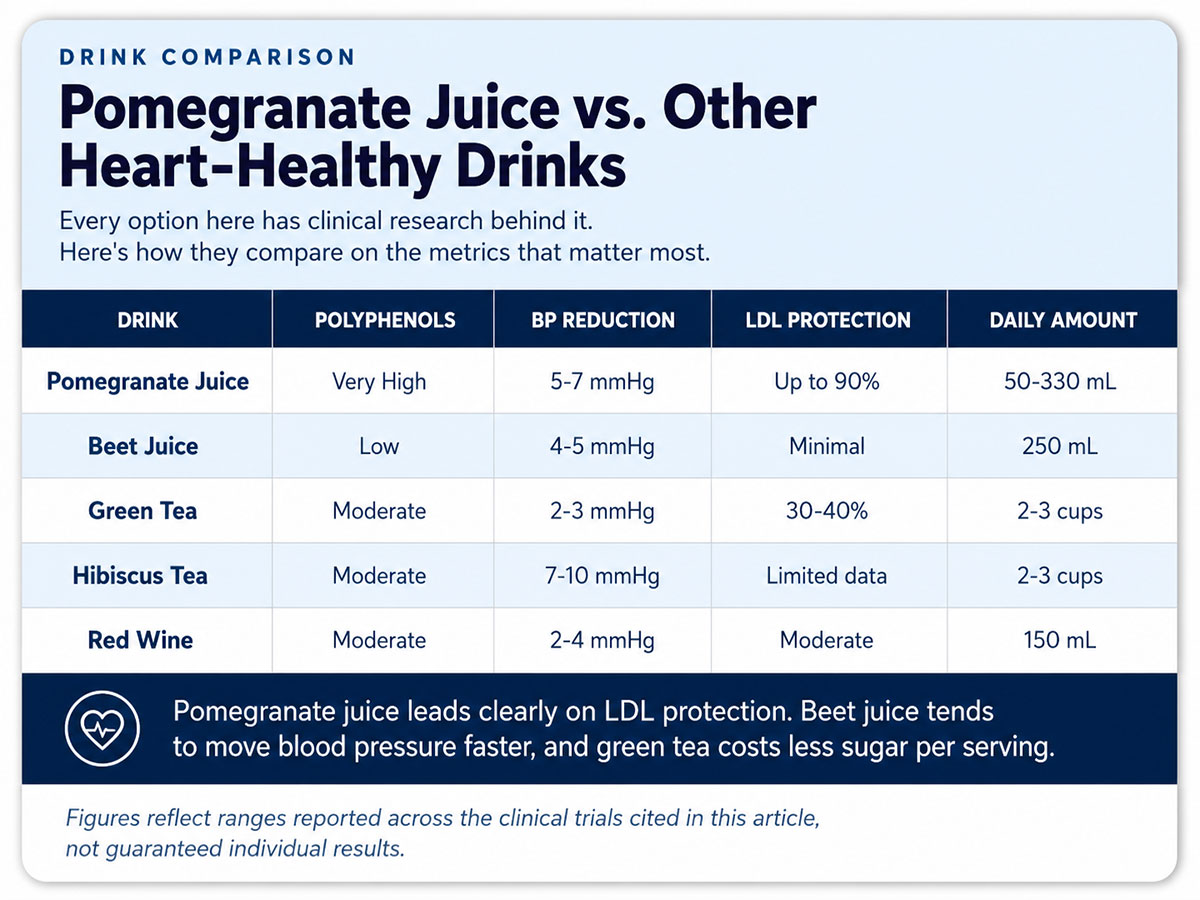
Pomegranate juice wins clearly on LDL protection. Beet juice tends to lower blood pressure faster, and green tea has less sugar per serving.
None of that means picking one and abandoning the others. Plenty of people rotate through two or three across a given week.
How Much Should You Actually Drink?
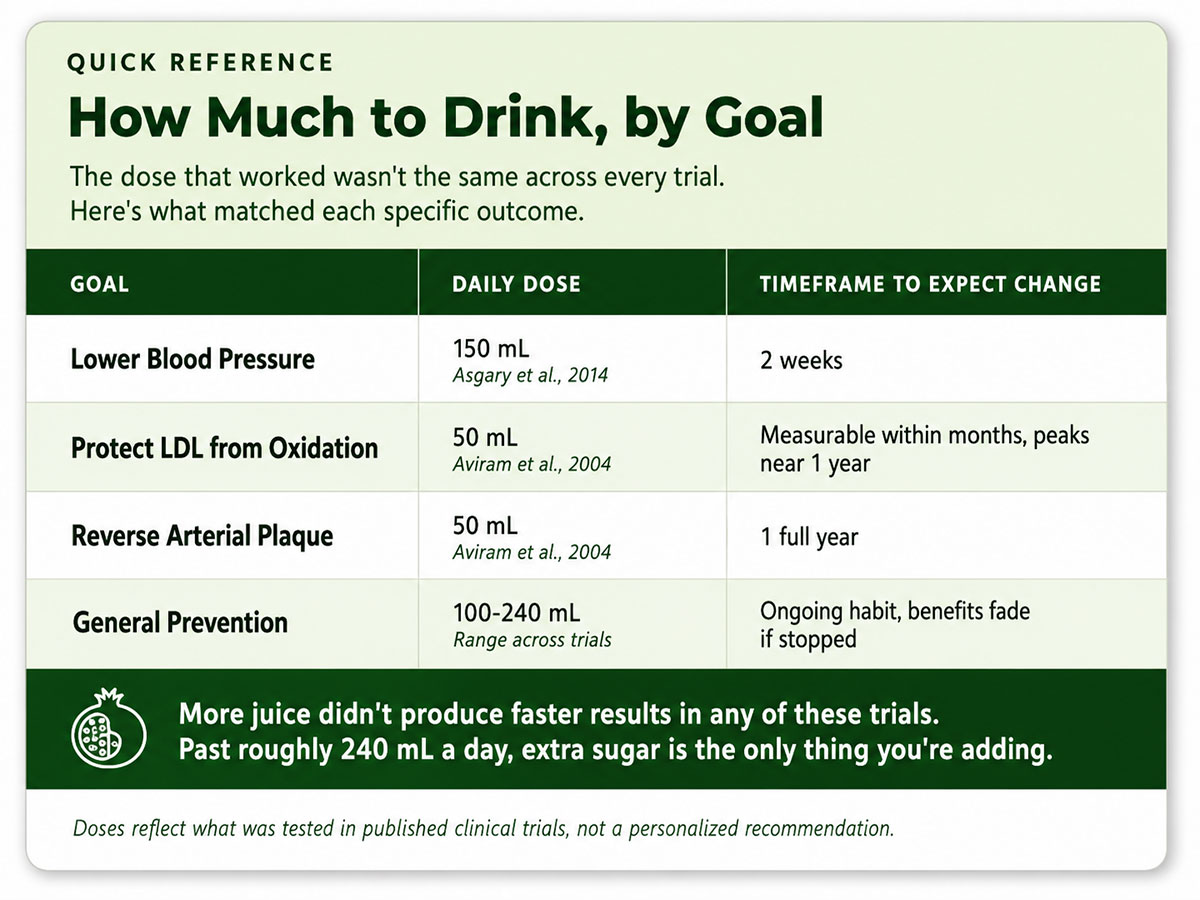
The studies above didn’t all use the same dose, and the dose mattered less than most people assume. The arterial reversal trial used just 50 milliliters a day, while the blood pressure trials used up to 330 milliliters.
Benefits showed up across that entire range.
More juice didn’t mean faster or bigger results in any of the trials above. Past roughly 240 milliliters a day, the extra sugar and calories stop providing you with anything that the research has measured.
Juice or Whole Fruit? What You’re Actually Choosing Between
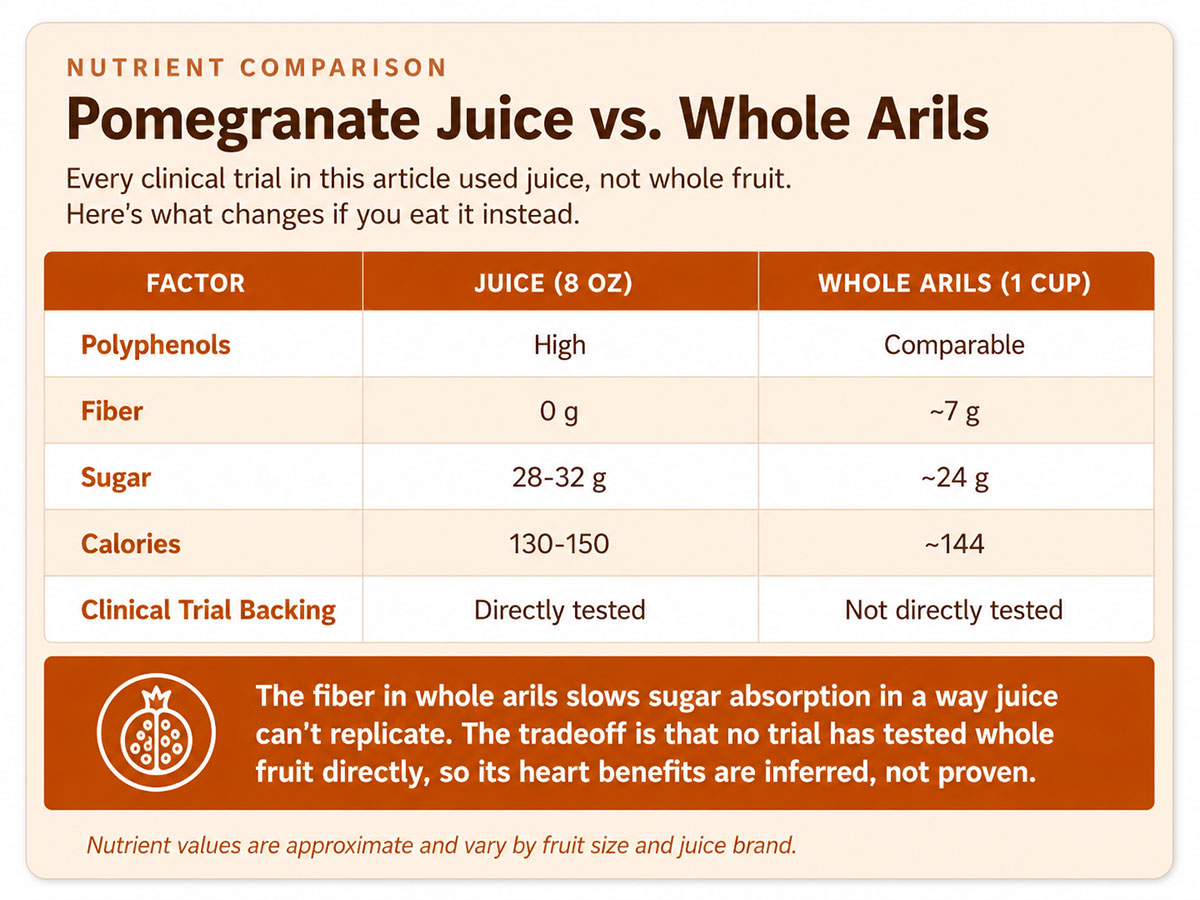
Every trial cited above used juice, not whole fruit, so the research technically only supports the juice form directly. The seeds, or arils, contain the same polyphenols as the juice, plus fiber that the juice doesn’t have.
One medium pomegranate yields roughly 100 to 150 milliliters of juice if you press it yourself, enough to cover most of the doses used in the trials above. Pairing arils with a few dates is a common approach in Middle Eastern cooking, and it adds potassium and fiber without the sugar concentration of a full glass of juice.
How to Choose Quality Juice
Real pomegranate juice has one ingredient. Citric acid is fine if it shows up too, since it’s just a preservative, but anything past that is dilution.
Skip anything labeled a blend or a cocktail. Those are usually diluted with apple or grape juice, and you end up paying pomegranate prices for mostly filler.
Dark glass bottles protect the polyphenols from light damage better than clear plastic does. Real pomegranate juice runs deep ruby red and tastes tart, almost puckering, straight out of the bottle. If it tastes sweet and mild, sugar was likely added somewhere along the way.
Fresh pomegranates peak from September through January. Buy extra during that window, extract the arils, and freeze them in portions. They’ll hold their polyphenol content for around six months that way.
Two Ways to Get Your Daily Dose
Heart-healthy morning shot
Mix 50 milliliters of pomegranate juice with a teaspoon of fresh lemon juice and a pinch of black pepper. The pepper contains piperine, which appears to improve polyphenol absorption. Drink it on an empty stomach and move on with your morning.
Pomegranate and greens smoothie
Blend 100 milliliters of pomegranate juice with a cup of spinach, half a cup of cucumber, a quarter of an avocado, and a handful of ice. The healthy fats in the avocado help your body absorb the polyphenols, and the cucumber cuts the tartness without adding sugar.
Combining Pomegranate With Other Heart-Healthy Habits
Pomegranate juice works better stacked against other habits than it does alone in an otherwise unchanged diet. A morning routine of 50 milliliters of juice alongside a handful of walnuts and a piece of whole-grain toast gives your body healthy fats, and the polyphenols in the juice appear to travel into the bloodstream more efficiently in their presence.
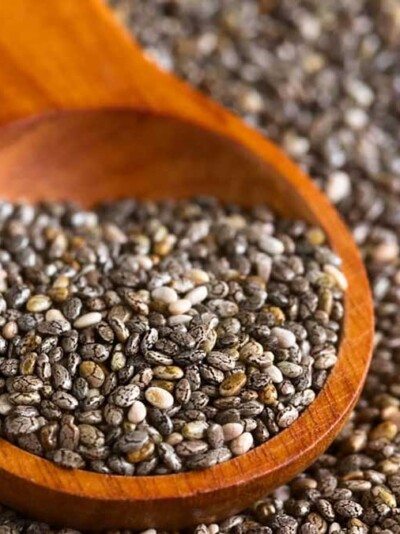
Fatty fish twice a week, a 30-minute daily walk, and a handful of chia seeds stirred into breakfast all pull in the same direction. None of these habits depend on each other to work, but the research on combining antioxidant-rich foods suggests the effects compound rather than simply add up.
Avoid pairing your dose with a high-sugar meal if you can help it. The insulin spike from refined carbohydrates creates oxidative stress that works directly against what the polyphenols are trying to do.
Who Should Be Careful
Pomegranate juice interacts with several medication categories in ways worth knowing about before making it a daily habit.
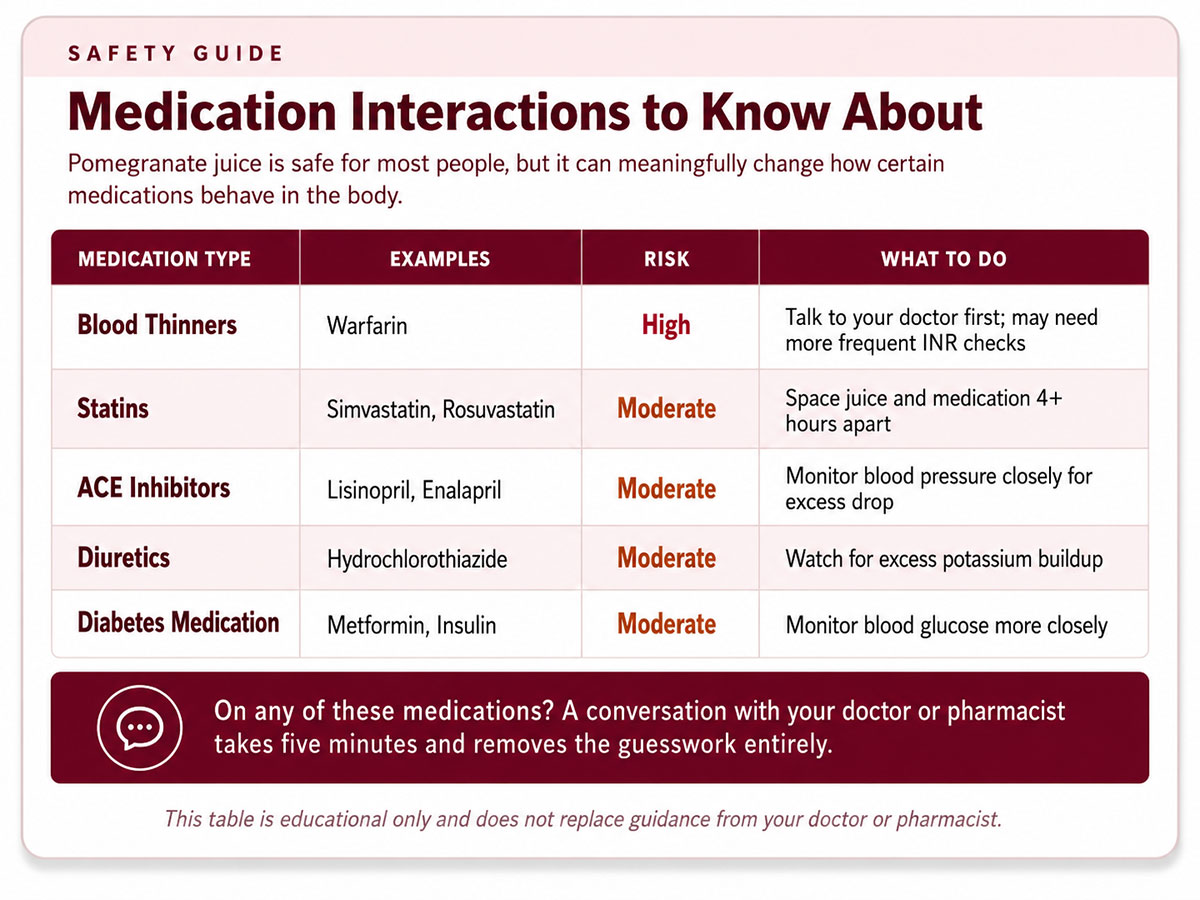
People on warfarin should talk to a doctor first, since pomegranate juice can raise bleeding risk and may require more frequent INR monitoring. The same caution applies to statins metabolized through the CYP3A4 liver enzyme, since juice can slow their breakdown and raise drug levels in the blood.
Anyone with kidney disease should be cautious too. A cup of juice carries roughly 530 milligrams of potassium, and damaged kidneys don’t clear excess potassium the way healthy ones do.
People scheduled for surgery should stop drinking it two weeks beforehand, given the bleeding risk. Chronic low blood pressure, generally under 90/60, is its own reason to skip it entirely.
Medication Interaction Checker
Select anything you currently take to see what pomegranate juice might change.
Track Your Own Response
The trials above measured group averages. Your own response is the only one that matters to you.
Give it at least two weeks before checking for a blood pressure change, and a full year if artery-level change is what you’re actually after. Nothing in the research suggests that faster is possible.
 Conclusion
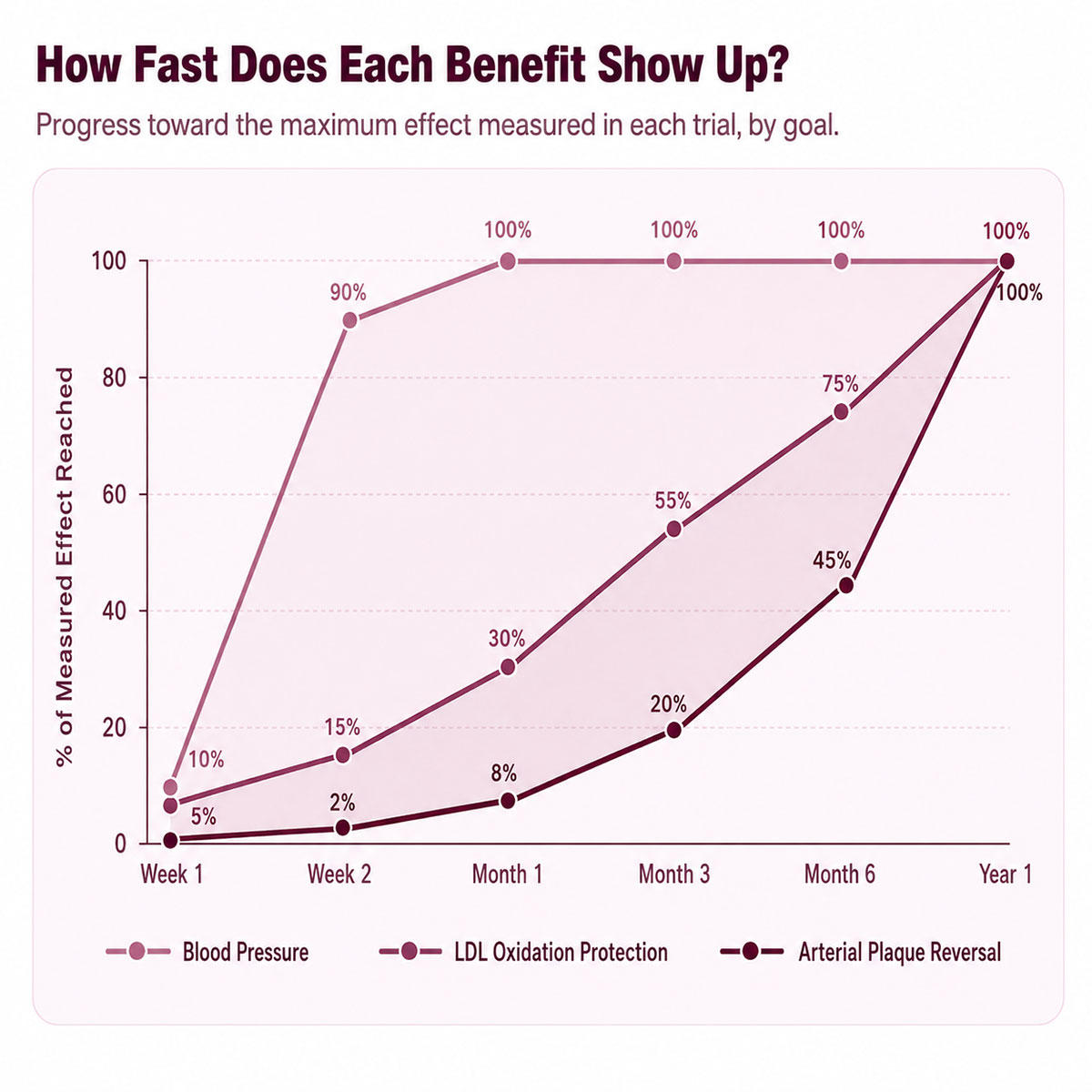
Ten patients drinking three tablespoons of juice a day sounds like too small an intervention to matter. It took a year to show up on an ultrasound, and even then, it worked on exactly the population doctors expected the least from: patients whose arteries were already narrowing.
The thread running through every trial here, from the two-week blood pressure drop to the hemodialysis patients whose benefits vanished within months of quitting, is the same. This isn’t a supplement you take once and forget. It’s a habit that only pays out for as long as you keep it.
Frequently Asked Questions
Does pomegranate juice cause heart palpitations?
No clinical evidence links pomegranate juice to palpitations directly. If they show up together, a heart medication already in your system, particularly a beta blocker or diuretic, is the more likely suspect, so it’s worth a call to your doctor rather than an assumption about the juice.
Is pomegranate juice safe for someone with heart failure?
None of the trials above enrolled heart failure patients specifically, so the direct evidence doesn’t exist yet. That gap matters more here than it does for most health claims, because heart failure management often restricts both potassium and fluid intake closely, and a daily glass of juice works against both restrictions at once.
The research this article is built around comes from healthy people and those with mild to moderate hypertension, and it doesn’t automatically transfer to a population managing a very different set of constraints. Anyone with heart failure should run this past a cardiologist before adding a daily glass, rather than assuming the general heart-health research applies.
Can I just eat the seeds instead of drinking juice?
Yes. The arils contain the same polyphenols as the juice, plus fiber that the juice lacks. One whole pomegranate roughly matches the 100 to 150 milliliter doses used in several of the trials above.
Does cooking destroy the benefits?
Heat reduces polyphenol content by an estimated 15 to 30 percent, so add pomegranate to hot dishes at the very end of cooking rather than letting it simmer.
What if I miss a few days?
One or two missed days won’t undo months of consistent use, based on how these trials were designed. The hemodialysis trial above is the clearest warning sign here. Its benefits faded within three months of stopping entirely, which suggests the habit itself, not any single dose, is doing the work.
Does drinking more speed up the results?
No. The 50-milliliter dose in the arterial reversal trial performed as well over a year as the larger 330-milliliter doses did in shorter trials. More juice past around 240 milliliters a day mainly adds sugar without adding the benefit that the research has actually measured.