You don’t necessarily need a gym membership to build muscle after 50. You don’t need expensive equipment either. What you need is a smart approach to bodyweight training that works with your body, not against it.
Most people think muscle building requires heavy weights. That’s not entirely true. Recent studies show something different. Training to near-failure with your body weight can build muscle comparably to lifting heavy iron. The key isn’t the load—it’s the effort.
This matters for you because it means freedom. You can train at home. You can protect your joints. You can slow and even partially reverse muscle loss without the intimidation of a weight room.
Let’s talk about how bodyweight exercises trigger muscle growth and the five movements that work best for adults over 50.
The Truth About Building Muscle Without Weights
Your muscles don’t know the difference between a barbell and your body weight. They only respond to tension and effort. When you push a movement close to failure, your muscle fibers break down. Your body repairs them stronger. That’s how muscle grows.
A 2012 study tracked young men for 10 weeks. One group lifted light loads (30% of their max). Another group lifted heavy (80% of their max). Both groups trained to failure. The results? Both groups built comparable amounts of muscle. When training was pushed to failure, the lighter loads triggered sufficient muscle protein synthesis to match the growth from heavy lifting.
Another study from 2017 reviewed dozens of trials. The researchers found no real difference in muscle growth between light and heavy loads when people trained hard enough. Volume and effort mattered more than weight.
While many of these studies used younger participants to establish the mechanisms of muscle growth, research specifically in older adults confirms these principles hold true. The 2019 ACSM guidelines and 2020 home-based training study show that adults over 50 respond similarly when training intensity is appropriate.
This changes everything for older adults. You get the muscle-building stimulus without stressing your joints. You avoid the injury risk of heavy barbells. You train anywhere, anytime.
Why Sarcopenia Doesn’t Have to Be Your Future
Sarcopenia is the fancy term for age-related muscle loss. After 30, you lose about 3-5% of your muscle mass per decade. By 60, that loss speeds up. You might notice it when climbing stairs gets harder. Or when getting up from a chair requires effort.
But here’s the good news. Resistance training can slow and even partially reverse this process. A 2010 meta-analysis looked at adults aged 50-93 doing resistance training. Participants increased lean body mass by about 2.4 pounds on average. While most studies used weights, the research shows older adults retain the ability to build muscle when training provides sufficient stimulus—which bodyweight exercises can deliver when performed correctly.
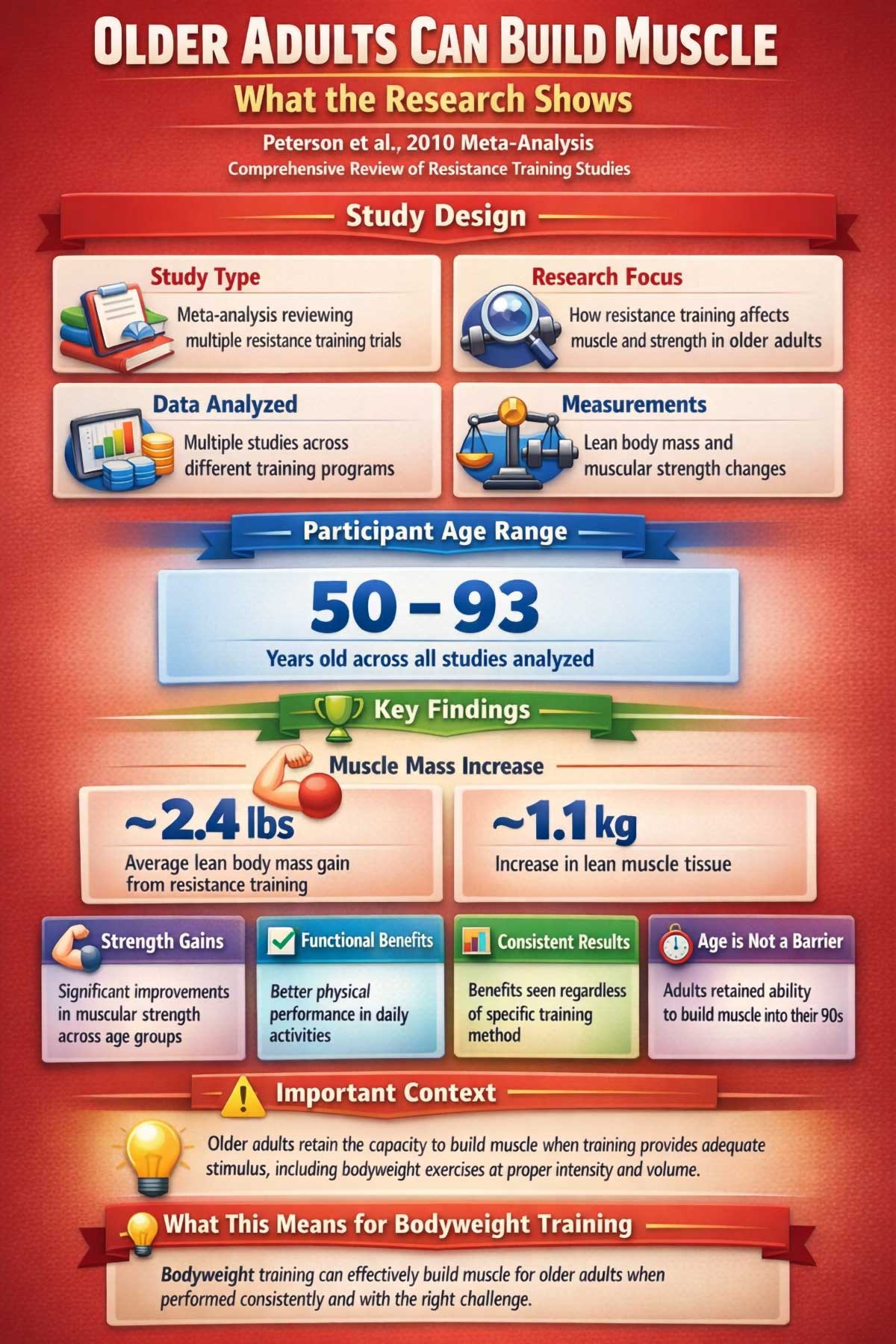
The American College of Sports Medicine published guidelines in 2019 specifically for older adults. Their message was clear: resistance training works. It builds muscle, improves strength, and boosts physical function. You don’t need heavy weights to get these benefits.
A 2020 study proved this point. Researchers had adults aged 60-75 do bodyweight exercises at home for 12 weeks. No equipment. No gym. The participants gained muscle mass and strength. The training worked because they pushed their sets close to failure.
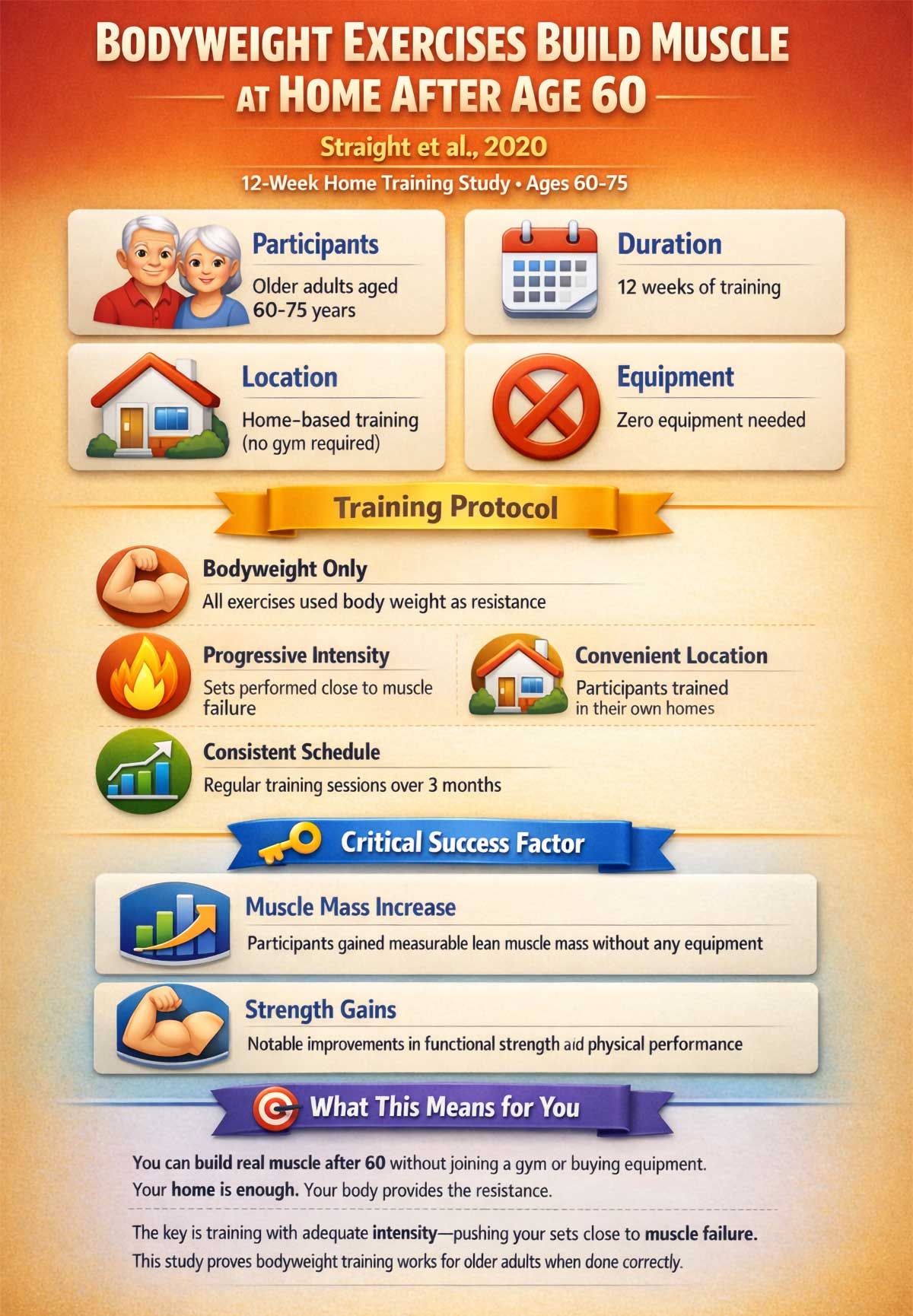
Your home is enough. Your body is the tool. Consistency is what counts.
The Slow-Motion Advantage
Speed isn’t your friend when building muscle after 50. Slow, controlled movement is.
Time under tension (TUT) means how long your muscle works during each rep. A slow 3-second lowering phase creates more tension than dropping fast. This tension triggers muscle growth.
A 2006 study compared slow-tempo training to normal speed. Young men used light weights (50% of their max) with controlled 3-second lifting and 3-second lowering phases. Despite the lighter loads, the slow tempo group built muscle comparable to those using heavier weights at normal speed. This principle translates well to bodyweight training, where controlling tempo increases the challenge without adding external resistance.
Why does this work? The slow tempo creates metabolic stress. Your muscles burn. Blood pools in the tissue. Growth signals activate. You get all this without the joint impact of heavy, fast reps.
For joints that have logged 50-plus years, this is a gift. You can build muscle while protecting your shoulders, knees, and spine.
The 5 Essential Bodyweight Exercises
These movements target multiple joints and major muscle groups. They’re safe, scalable, and can build muscle when performed with adequate intensity.
1. The Box Squat: Your Foundation Movement
Sit on a chair or box. Stand up. That’s the basic movement. But when done right, it’s one of the best muscle builders for your lower body.
Box squats target your glutes, quads, and hamstrings. These are your body’s largest muscle groups. Training them creates a strong metabolic response. Your body releases growth factors. Muscle building ramps up.
The box provides a safety stop. You won’t go too deep and stress your knees or lower back. You can focus on form without fear.
How to do it: Stand in front of a sturdy chair. Your feet should be shoulder-width apart. Lower yourself slowly (count to 3) until you touch the chair. Pause for a second. Drive through your heels to stand. That’s one rep.
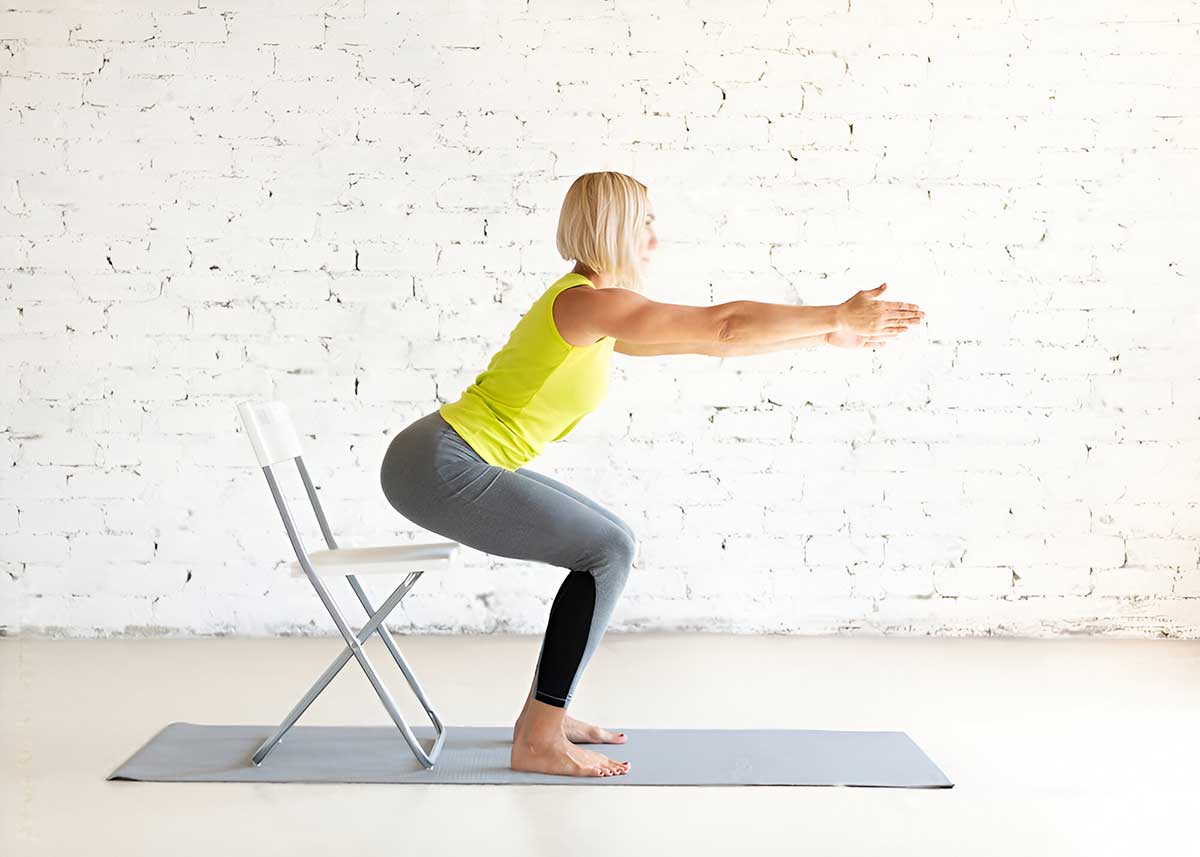
The 50+ progression: Start with a higher surface like a kitchen chair. As you get stronger, use a lower box. Eventually, pause just above the surface without sitting. For an extra challenge, slow down the lowering phase to 5 seconds. Or add a 2-second hold at the bottom.
Aim for 3 sets of 8-12 reps. When you can do 12 reps easily, make it harder by slowing your tempo.
2. The Incline Push-Up: Build Your Chest and Shoulders
Floor push-ups hurt many people’s wrists and shoulders. Incline push-ups solve this problem while still building serious upper body muscle.
When you push against an elevated surface, you reduce the load. But you can do more reps. Higher volume drives muscle growth, especially in older adults who respond well to metabolic stress.
The plank position during push-ups also engages your core. You’re building stability while targeting your chest, shoulders, and triceps.
How to do it: Place your hands on a sturdy table, countertop, or wall. Your body should form a straight line from head to heels. Keep your core tight like you’re bracing for a punch. Lower your chest slowly (3 seconds) toward the surface. Push back up. Don’t let your hips sag or pike up.
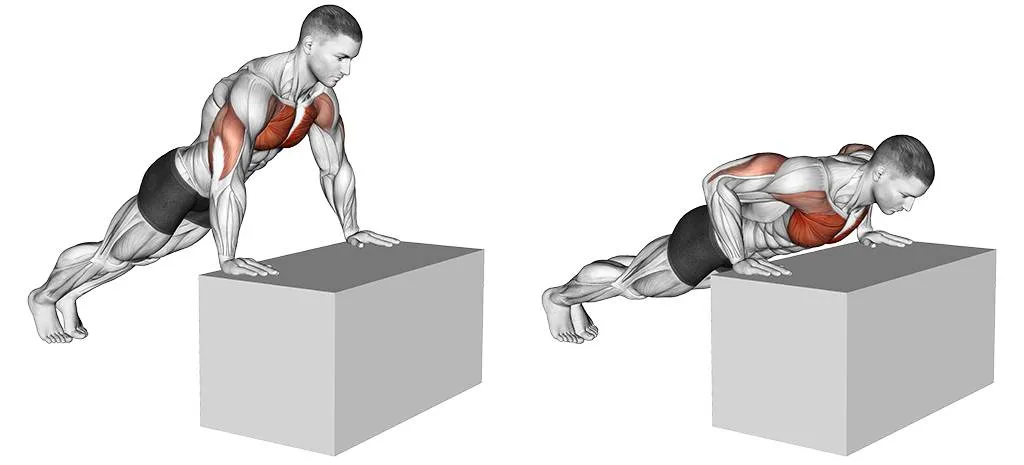
The 50+ progression: Start with wall push-ups if you’re new to this. Move to a countertop as you get stronger. Then use a sturdy chair. Each lower position increases the challenge. You can also slow the lowering phase to 5 seconds or add a pause at the bottom.
Do 3 sets of 10-15 reps. Rest 90 seconds between sets.
3. The Glute Bridge: Protect Your Posterior Chain
Your glutes and hamstrings power every step you take. They support your lower back. They prevent the shuffling walk that happens when these muscles weaken.
Glute bridges activate these muscles without loading your spine. You’re lying on your back. Gravity works with you, not against you.
How to do it: Lie on your back with knees bent. Your feet should be flat on the floor, hip-width apart. Squeeze your glutes and lift your hips until your body forms a straight line from shoulders to knees. Hold at the top for 2 seconds. Squeeze hard. Lower slowly (3 seconds) back down.
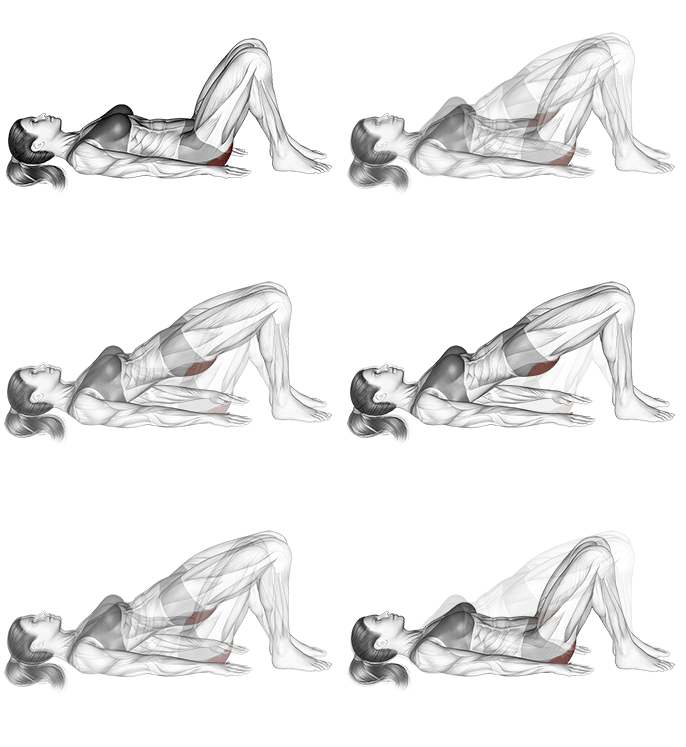
The muscle-building trick: That 2-second squeeze at the top is critical. It increases time under tension. It maximizes metabolic stress. These are the signals that tell your muscles to grow.
The 50+ progression: Start with both feet on the floor. As you get stronger, elevate your feet on a low step. For an advanced challenge, try single-leg bridges. Or add a longer hold at the top—work up to 5 seconds.
Perform 3 sets of 12-15 reps. Focus on the squeeze, not speed.
4. The Inverted Row: Build Your Back Without Pain
Years of sitting create rounded shoulders. Your upper back muscles weaken. This posture leads to pain and limited movement.
Inverted rows fix this. They strengthen your rhomboids, lats, and rear shoulders. These muscles pull your shoulders back and down. Good posture returns.
You only need a sturdy table or a low bar. Your feet stay on the ground. You control the difficulty by adjusting your body angle.
How to do it: Lie under a sturdy table. Grab the edge with both hands slightly wider than shoulder-width. Your body should be straight like a plank. Pull your chest toward the table (count to 2). Squeeze your shoulder blades together at the top. Lower yourself slowly (3 seconds) back down.
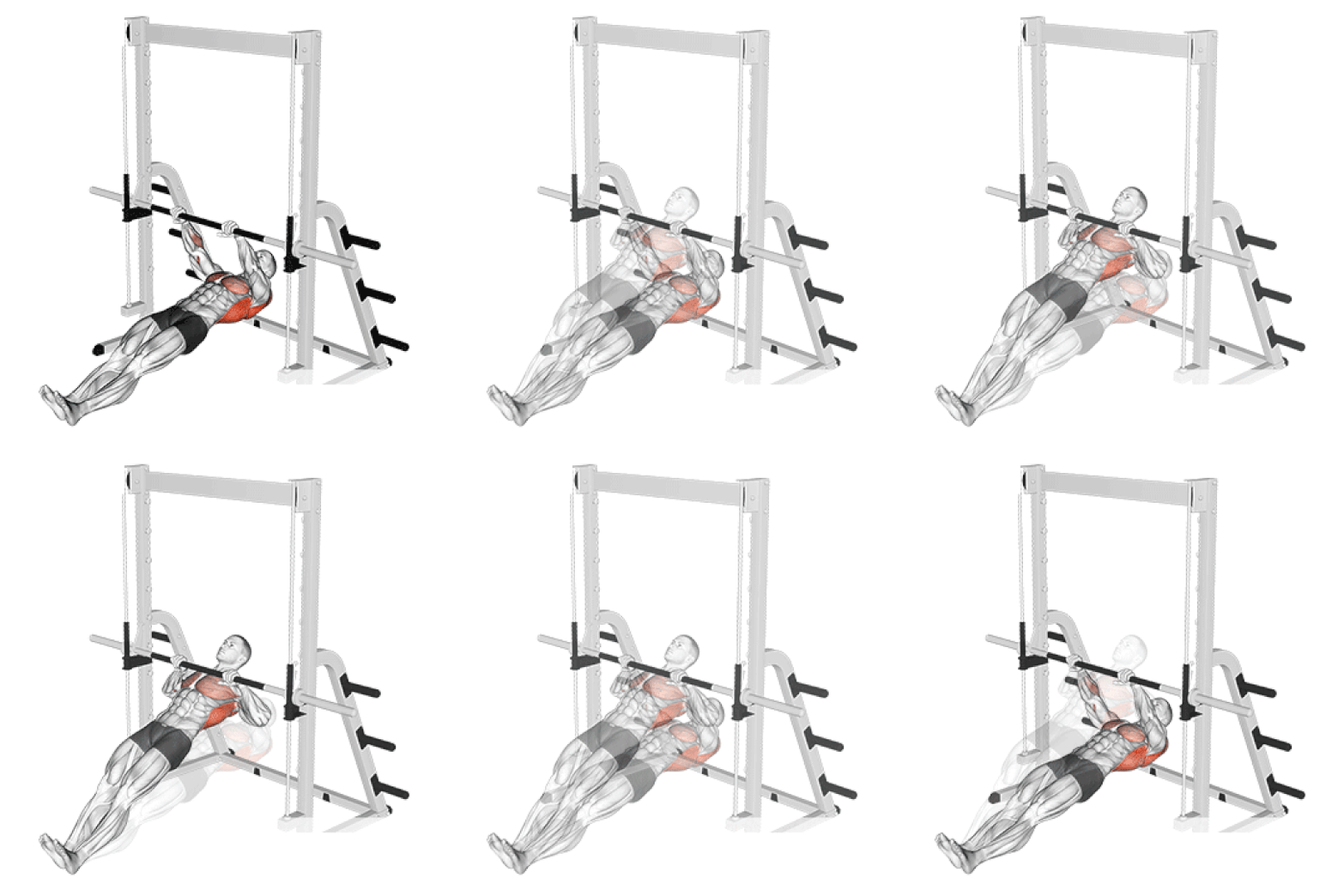
The 50+ progression: Start with your body at a steep angle—this makes it easier. As you get stronger, walk your feet forward to make your body more horizontal. Eventually, elevate your feet on a chair for maximum challenge. You can also pause for 2 seconds at the top of each rep.
Do 3 sets of 8-12 reps. If you can’t reach 8 reps, adjust your angle to make it easier.
5. The Wall Sit with Calf Raise: Build Lower Body Endurance
Wall sits create intense muscle tension without any movement. Add calf raises and you target your quads and calves at the same time.
This exercise builds muscular endurance. The constant tension creates a significant muscle pump. Blood flows into the tissue. Growth factors accumulate. Your muscles get the signal to adapt and grow.
Plus, there’s zero impact. Your knees and ankles are protected.
How to do it: Stand with your back against a wall. Slide down until your thighs are parallel to the floor (or as close as you can get). Your knees should align over your ankles, forming a 90-degree angle. Your shins should be vertical or close to it. Hold this position. Now lift your heels off the ground, then lower them. That’s one calf raise. Do 10-15 calf raises while holding the wall sit.
The 50+ progression: If a full wall sit is too hard, start with a higher position—don’t go as deep. Hold for 30 seconds without the calf raises. As you build strength, lower your position and add the calf raises. Work up to a 60-second hold with 15-20 calf raises.
Start with 2 sets. Build to 3 sets over several weeks.
The Smart Training Protocol for Muscle Growth After 50
How you structure your training matters as much as the exercises themselves.
Train Close to Failure
The last 2-3 reps of each set matter most. Those reps, when your muscles are burning and shaking, trigger the growth response. A 2010 study found that muscle protein synthesis rates jumped when people trained to failure with light loads. The easy reps at the start of a set don’t do much.
What ‘close to failure’ feels like: Your muscles should burn. The movement should slow down. You should feel uncertain whether you can complete another rep with good form. If you’re stopping while the exercise still feels easy, you’re not creating enough stimulus for growth. But you also don’t need to collapse in a heap—stopping 1-2 reps before absolute failure is sufficient.
Respect the 48-Hour Recovery Rule
Your muscles grow during rest, not during workouts. After 50, recovery takes longer. Your protein synthesis rates are slightly slower. Your inflammatory response is higher.
Wait at least 48 hours before training the same muscle groups again. This means training 3 days per week works better than 5 or 6. You might do Monday, Wednesday, and Friday. Or Tuesday, Thursday, and Saturday.
Listen to your body. If your muscles are still sore after 48 hours, wait another day.
Master the 3-0-3 Tempo
Count to 3 on the way down. No pause at the bottom. Count to 3 on the way up. This tempo maximizes time under tension without requiring heavy loads.
The eccentric phase (lowering) is especially important. This is where most muscle damage occurs. That damage, when repaired, leads to growth. A slow eccentric also protects your joints from sudden stress.
Don’t rush. Muscle building after 50 isn’t about speed. It’s about control and effort.
Nutrition: Your Muscle-Building Partner
Exercise creates the stimulus. Food provides the building blocks. You need both.
The Protein Requirement
Older adults need more protein per meal to trigger muscle protein synthesis. This is called anabolic resistance. Your muscles are less sensitive to protein’s growth signal.
Research suggests 25-40 grams of protein per meal for adults over 50. This might look like 4-5 ounces of chicken, fish, or lean beef. Or 1.5 cups of Greek yogurt. Or 4 eggs plus a glass of milk.
Spread your protein across three meals. Your muscles can only use so much protein at once. Eating 100 grams at dinner doesn’t work as well as eating 30-35 grams three times throughout the day.
Hydration Matters More Than You Think
Water helps nutrients reach your muscle cells. It lubricates your joints. It removes waste products from hard-working muscles.
Dehydration reduces strength and endurance. Even mild dehydration—just 2% of body weight—hurts performance.
Aim for half your body weight in ounces each day as a general guideline. If you weigh 180 pounds, that’s 90 ounces of water. Individual needs vary based on climate, activity level, and overall health. More if you’re sweating during exercise.
What to Expect: Realistic Results
Building muscle after 50 happens more slowly than it did at 25. You might gain 2-4 pounds of muscle in your first 3-6 months of consistent training—modest but significant improvements that impact your daily function and long-term health. The goal isn’t to look like a bodybuilder. It’s to maintain independence, prevent falls, and feel strong in your body.
These changes matter. That extra muscle supports your joints. It boosts your metabolism. It makes everyday tasks easier. Carrying groceries, playing with grandkids, getting up from the floor—all of it gets better.
Your 30-Day Bodyweight Blueprint
Here’s how to put everything together.
Frequency: Train 3 days per week. Take at least one day off between sessions.
The Workout: Perform all 5 exercises in order. Do 3 sets of each exercise before moving to the next one. Rest 90-120 seconds between sets.
- Box Squats: 3 sets of 8-12 reps
- Incline Push-Ups: 3 sets of 10-15 reps
- Glute Bridges: 3 sets of 12-15 reps
- Inverted Rows: 3 sets of 8-12 reps
- Wall Sits with Calf Raises: 2-3 sets of 30-60 seconds
Progressive Overload: Each week, try to add one rep to each set. Or slow down your tempo by one second. Small improvements add up. After 4 weeks, you’ll be noticeably stronger.
Week 1-2: Learn the movements. Focus on form. Get comfortable with the tempo.
Week 3-4: Push closer to failure. Add reps where you can. Start tracking your progress.
Beyond 30 Days: Make the exercises harder using the progressions listed above. Or add a fourth day of training. Or increase your sets to 4 per exercise.
You Can Start Today
Significant muscle loss isn’t inevitable. Weakness isn’t part of aging. You have the power to rebuild your strength at any age.
These five bodyweight exercises work because they’re based on science, not trends. They create tension, metabolic stress, and muscle damage—the three mechanisms of muscle growth. They do this safely, without requiring weights or a gym.
Your body is ready. Your home is equipped. What you do in the next 30 days will determine how you feel in the next 30 years.
Start with one workout this week. Master the movements. Feel your muscles working. Notice the burn. That’s growth happening.
You’re not too old. You’re not too weak. You’re exactly where you need to be to start building the strength and muscle that will carry you through the years ahead.