Most bottles proudly advertise “extra virgin,” but that label doesn’t reveal what many scientists consider the most important health measurement. Here’s why it matters.
Most extra-virgin olive oil sitting on a supermarket shelf is a blend, sometimes of oils from four or five countries, mixed to protect the bottler against a bad harvest anywhere in the supply chain. Partanna does something almost unfashionable by comparison. One town. One family. One olive.
That single-mindedness sounds like a marketing line until you consider what it costs a producer to refuse blending. There’s no safety net if one harvest runs short, no cheaper fruit trucked in from elsewhere to stretch a batch. Just the Asaro family’s own Nocellara del Belice olives, pressed the way they have been since 1916.
This guide checks that story against the label, the lab data, and the research on what olive oil’s phenolic compounds actually do once they’re on your plate.
Is Partanna Olive Oil Actually Good Quality?
Partanna is a genuine, well-made extra-virgin olive oil. It’s cold-pressed within hours of harvest from a single Sicilian olive variety, tests within standard EVOO chemistry limits for acidity and peroxide value, and carries flavor notes (artichoke, green almond, a peppery finish) that match independent reviews rather than marketing copy alone.
A 2024 review from The Kitchn independently landed on a similar description: soft and buttery up front, with a light pepper bite on the finish. That’s consistent with how food judges typically score Nocellara del Belice oils, not only with how Partanna markets its own.
None of that means every claim floating around about the brand holds up equally well. A few need correcting, starting with where the oil actually comes from.
One Olive, One Family: Where Partanna Comes From
The Asaro family has grown olives in Sicily’s Valle del Belice for longer than most American olive oil brands have existed. Antonio Asaro started the operation in 1916 in the town of Partanna, in Sicily’s Trapani province. Five generations later, his descendants still run it, currently under CEO Tommaso Asaro.
Every bottle in Partanna’s core lineup (Robust, Everyday Mild, Organic Unfiltered, Bambino) comes from a single olive: Nocellara del Belice, the same variety more commonly known outside Sicily as Castelvetrano. That’s worth stating plainly, because blended oils dominate the category, and shoppers reasonably assume a premium bottle means a more complex blend.
The Asaro family does produce blended oils too, under sibling brand names like Frankies and Oro di Sicilia, mixing Nocellara del Belice with Biancolilla and Cerasuola olives. Partanna itself does not.
The distinction is worth knowing for anyone comparing extra-virgin olive oil generally, not only this one brand. A single-varietal oil tastes more consistent from year to year, since there’s only one fruit’s chemistry to track rather than several shifting proportions.
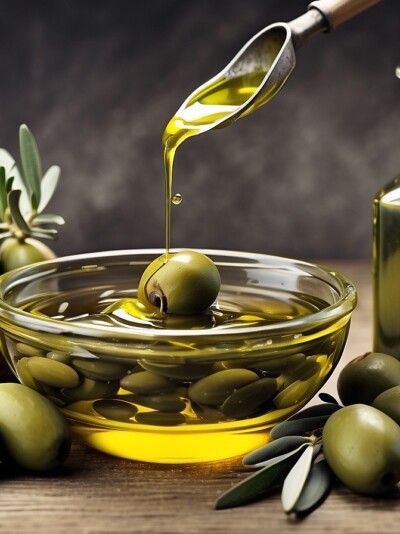
How Partanna Olive Oil Is Made
Partanna picks its olives by hand, typically in mid-October, and gets them to the mill within one to four hours. Most producers don’t talk about what happens in the hours they don’t manage this well. Olives start oxidizing the moment they leave the tree, and a delayed press is one of the quiet, common ways olive oil quality degrades before it ever reaches a bottle.
The olives are washed, crushed with the pits intact, and malaxed, a slow mixing stage, below roughly 80°F to keep the process classified as cold-pressed. A centrifuge then separates the resulting paste into oil, water, and solids. Depending on the product line, the oil is lightly filtered or left unfiltered for a heavier, cloudier texture.
Partanna stores the finished oil in stainless steel and ships most of it in dark tins rather than clear glass. Light degrades olive oil’s polyphenols over time. The tin is a shelf-life decision, not packaging nostalgia, and it sets up the section on polyphenols below.
What Does Partanna Olive Oil Taste Like?
Nocellara del Belice oils have a recognizable profile: buttery texture up front, notes of artichoke and green almond through the middle, and a peppery bite on the finish that food scientists associate with oleocanthal, one of the compounds responsible for the throat-catching sensation high-polyphenol olive oils are known for.
That peppery kick usually signals a fresher, higher-polyphenol oil rather than a flaw, since the same phenolic compounds that irritate the back of the throat are the ones doing measurable antioxidant work once the oil is in the bloodstream. That link between taste and chemistry took researchers longer to confirm than you’d expect.
Retail listings back up the flavor claims with something more concrete than marketing language: Partanna’s core products are consistently rated between 4.6 and 4.8 stars across major retailers, spanning thousands of combined reviews on Amazon, Walmart, and Whole Foods.
Partanna’s Polyphenol Content: What the Numbers Actually Mean
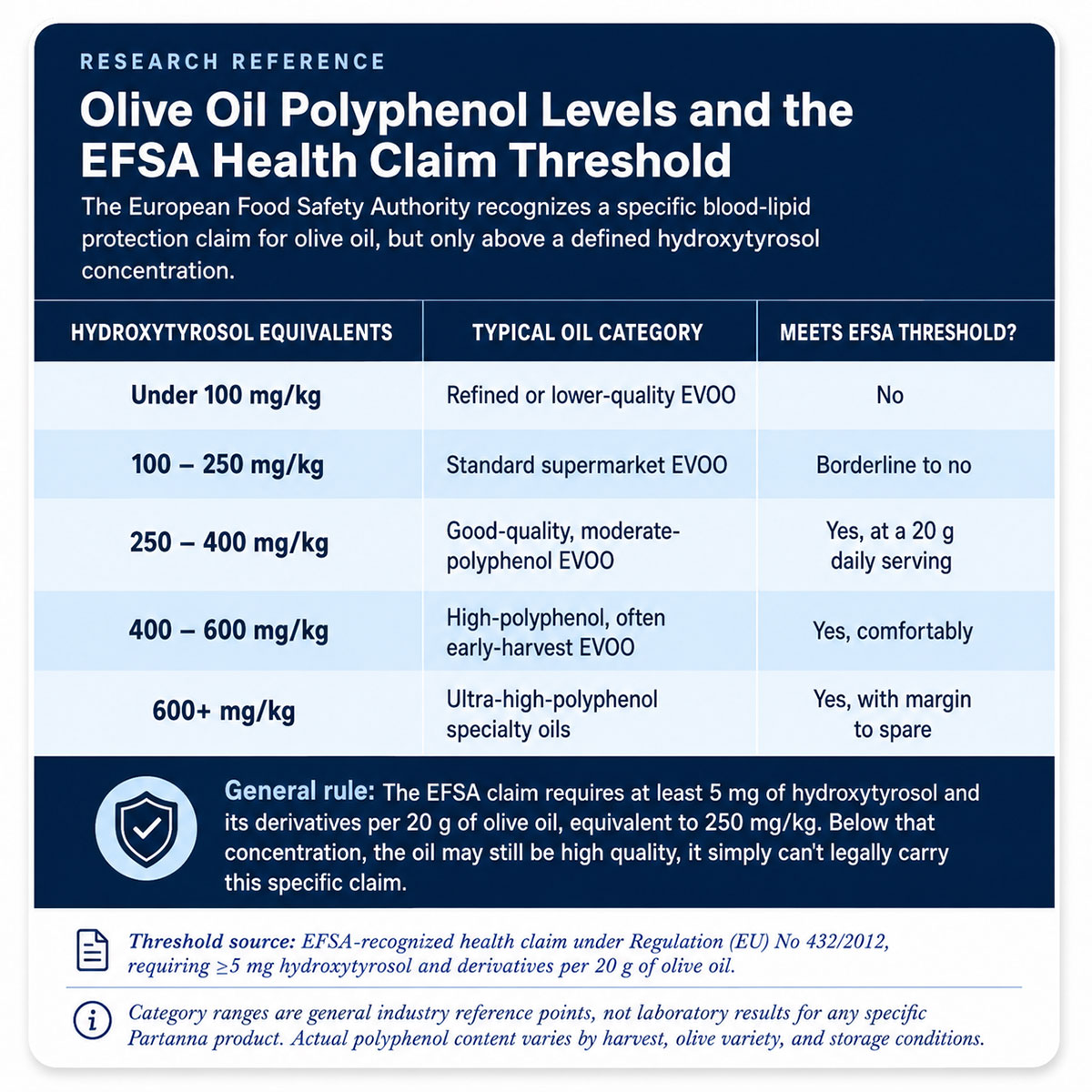
Whether an olive oil “counts” for heart-health benefits comes down to one figure most shoppers have never heard of: hydroxytyrosol content. The European Food Safety Authority recognizes a specific claim that olive oil polyphenols help protect blood lipids from oxidative stress, but only for oils containing at least 5 mg of hydroxytyrosol and its derivatives per 20 g of oil.
Much of that threshold traces back to the EUROLIVE trial, a multicenter European study published in the Annals of Internal Medicine. Two hundred healthy men rotated through three olive oils that differed only in polyphenol content. LDL oxidation markers fell in a clear dose-dependent pattern as polyphenol content rose, and the effect tracked the phenols specifically, not simply the fat.
Partanna doesn’t publish a batch-level polyphenol assay on its retail packaging, which makes it impossible to say with certainty where any single bottle lands against the EFSA threshold. What can be said: Nocellara del Belice is generally regarded as a moderate-to-high polyphenol varietal, especially when harvested early and pressed within hours, both of which Partanna’s stated process does. Early harvest sacrifices oil yield for a sharper, more phenol-rich oil, and Partanna’s mid-October window sits on the earlier side of the Sicilian season.
The honest answer is that only a lab test settles it for any specific bottle. That’s true of nearly every retail olive oil without a printed polyphenol count. This is an industry-wide labeling problem, not a Partanna-specific one.
The calculator below does the math for any oil, Partanna’s included. Enter a lab-reported polyphenol figure, sometimes printed on higher-end bottles or available from a producer on request, along with how much oil is used daily, and it shows whether that combination clears the EFSA-recognized threshold.
Olive Oil Polyphenol Dose Calculator
Check any olive oil against the EFSA-recognized 5 mg hydroxytyrosol threshold.
How Partanna Compares to Other Premium Olive Oils
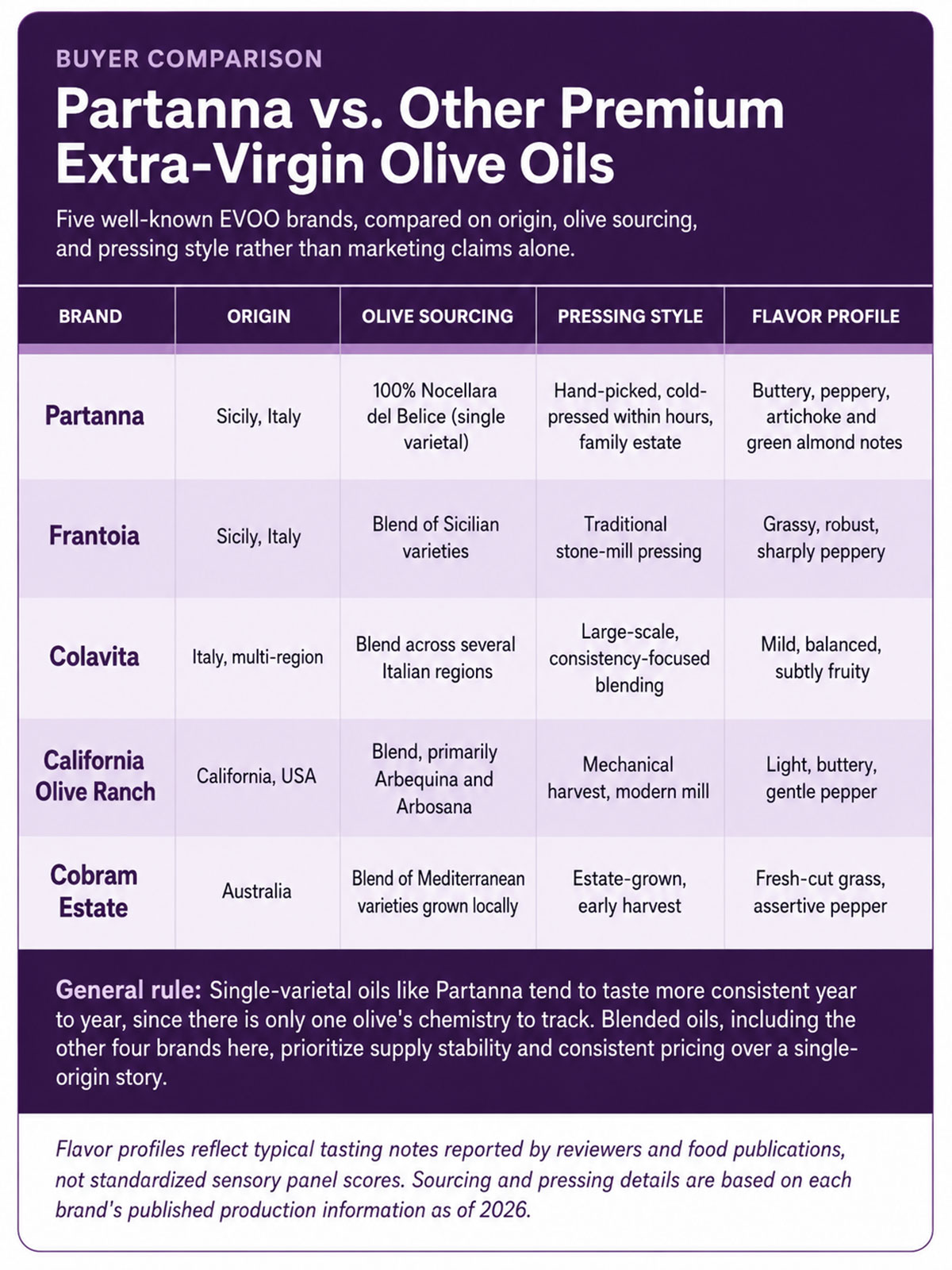
Partanna occupies a specific niche: single-varietal, Sicilian, mid-range priced. The table below shows where it sits against other extra-virgin brands that shoppers commonly compare it to.
The clearest differentiator is the single-olive sourcing. Colavita and Frantoia are also Italian oils built around a specific regional identity, but neither markets itself around one named olive variety the way Partanna does. California Olive Ranch and Cobram Estate take the opposite approach, leaning on large-scale consistency across blended plantings rather than a single-estate story.
Tuscany’s producers solve the same consistency problem through geography instead of a single olive. Laudemio protects its identity through a defined growing region rather than one variety, which changes the flavor profile in ways worth knowing if terroir matters more to you than the fruit itself.
Nutrition Facts and Health Benefits
One tablespoon of Partanna olive oil delivers roughly 120 calories and 14 grams of fat, most of it monounsaturated oleic acid. The full breakdown is below.
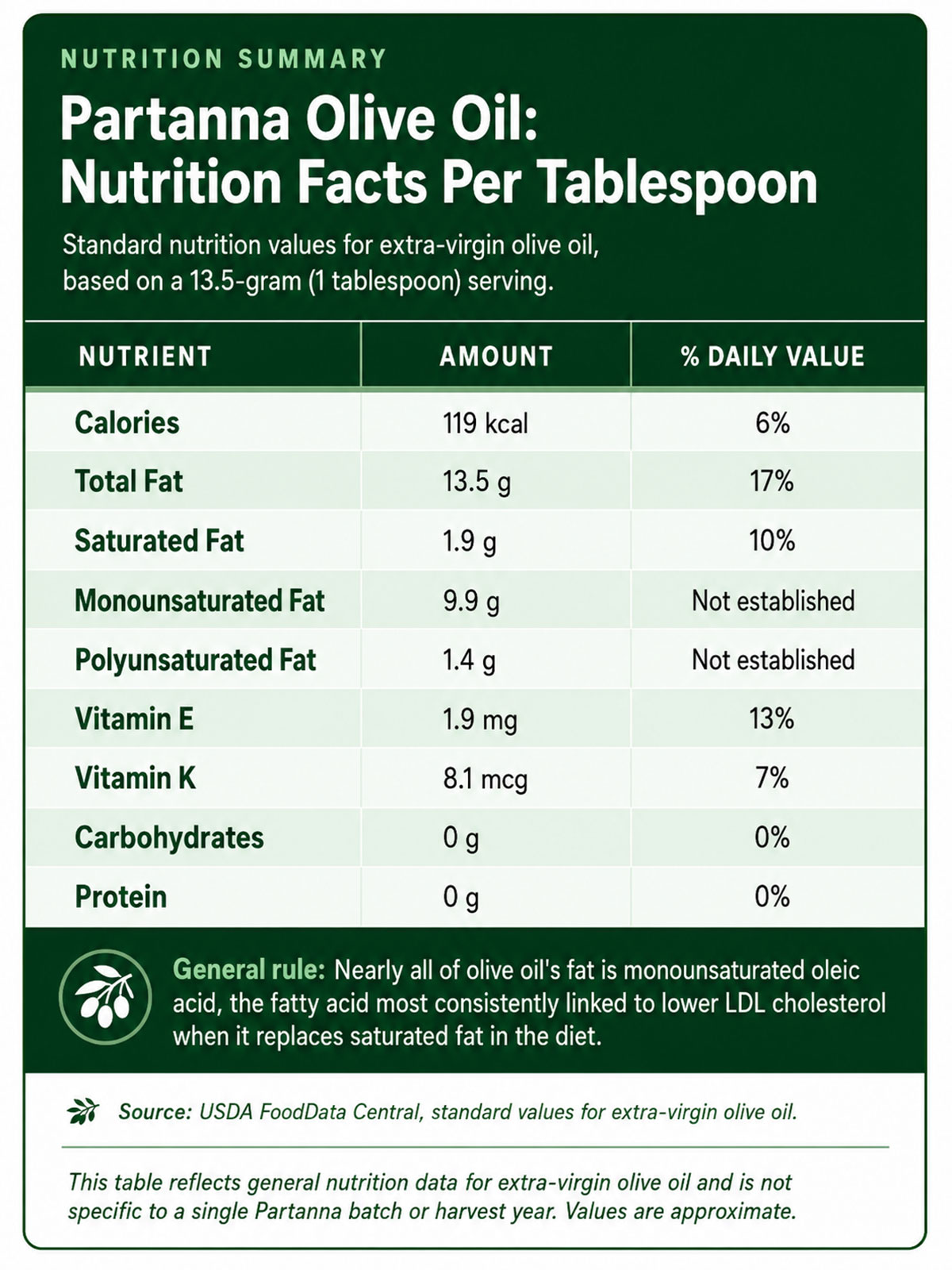
Oleic acid is the mechanism behind olive oil’s most consistent cardiovascular finding. A systematic review and dose-response meta-analysis in the British Journal of Nutrition found that higher olive oil intake was associated with meaningful reductions in LDL cholesterol, with the effect scaling as intake increased.
A separate meta-analysis of 32 cohort studies covering more than 840,000 people, published in Lipids in Health and Disease, ran into something that complicated the simple MUFA-is-good story: the mortality benefit only showed up when the fat came from olive oil specifically. MUFA from other animal or plant sources produced no comparable effect.
The PREDIMED trial is the most-cited nutrition study of the last two decades for a reason. Researchers didn’t rely on survey data. They handed real olive oil to thousands of participants at genuine cardiovascular risk and tracked outcomes for years afterward.
The resulting analysis, published in BMC Medicine, followed more than 7,000 people and found that higher intake specifically of the extra-virgin variety, not ordinary olive oil, was associated with lower cardiovascular disease and mortality risk.
Partanna also contains squalene, a compound sometimes marketed for skin and UV protection. Researchers still don’t agree on whether dietary squalene does much for skin at all. European food regulators have specifically declined to approve a squalene-linked protective claim, citing insufficient evidence, even as topical and animal studies point in a promising direction.
Is Partanna Olive Oil Real or an Imitation?
Genuine Partanna olive oil is sold through major retailers, Amazon, Whole Foods, Walmart, Costco, and the brand’s own site, all of which source directly from Partanna Foods or authorized distributors. Counterfeit and mislabeled olive oil is a documented problem across the broader industry, but it typically shows up through gray-market resellers and unverified marketplace listings, not established retail channels. That distinction surprises most people at first.
If the price seems unusually low for the size, that’s the clearest signal something is off. Sicilian single-varietal EVOO has a real production cost floor that discount pricing can’t clear.
Checking the harvest date printed on the tin is a second safeguard. Genuine Partanna oil lists a specific harvest year, and that date should fall within the last one to two years of your purchase.
Price, Sizes, and Where to Buy
Partanna sells in sizes from a 3.4-ounce Bambino bottle up to a 3-liter tin, and the price per ounce drops meaningfully at the larger sizes.
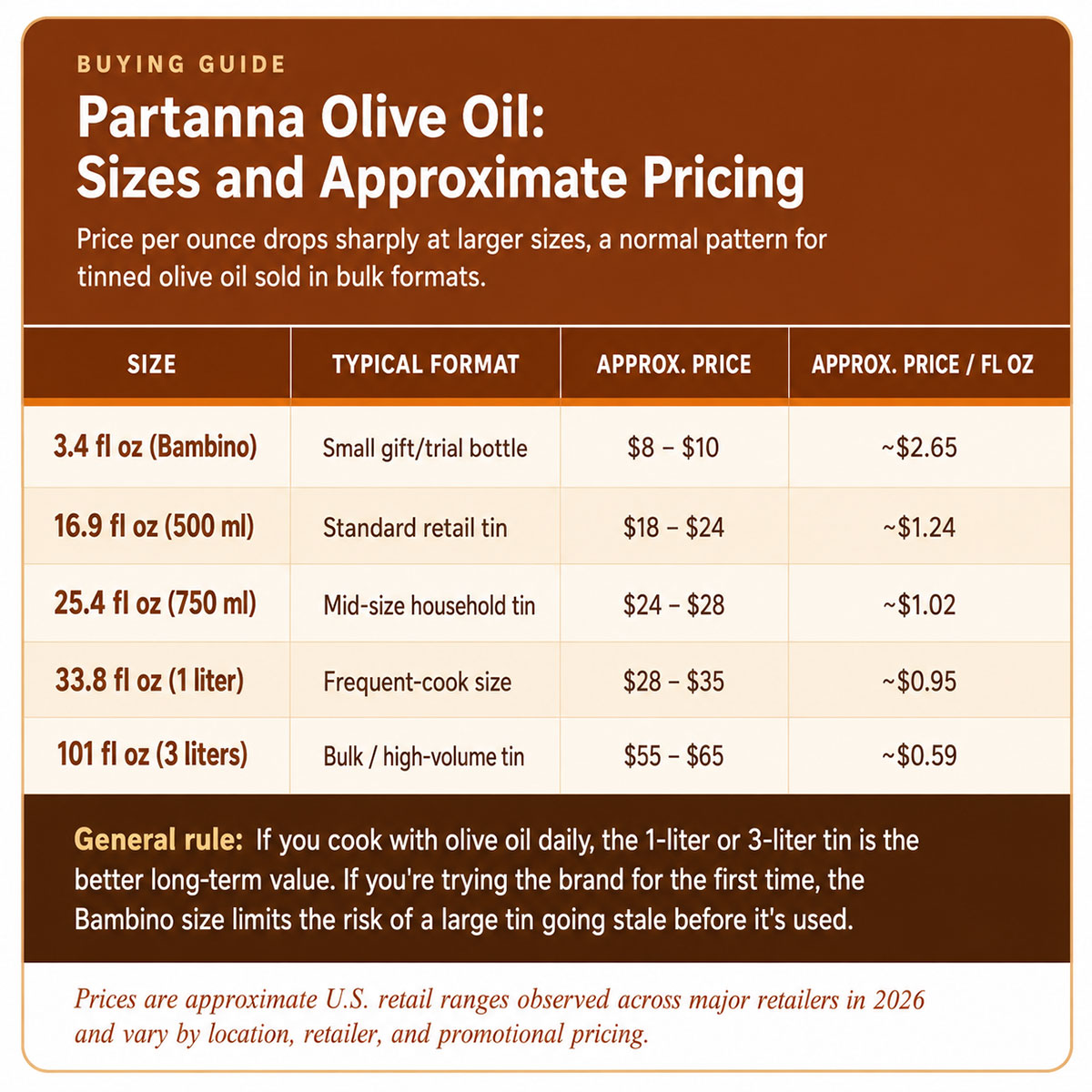
For a household that goes through olive oil quickly, the 3-liter tin is the better per-ounce value by a wide margin. For anyone testing the oil for the first time, or buying it as a gift, the smaller Bambino size avoids the risk of a large tin going stale before it gets used.
Costco, Whole Foods, Amazon, and Walmart currently stock some portion of the Partanna lineup, though exact sizes and formats vary by location and shift over time.
What This Comes Down To
Most olive oil brands compete by blending, chasing a bigger, safer, more consistent supply. Partanna competes by narrowing everything down to one family, one olive, and one town, betting that restraint reads as quality rather than risk.
The polyphenol question this guide keeps circling back to extends well past Partanna. It points to an entire industry that sells health claims without printing the one number that would let a shopper check them.
Until more producers list hydroxytyrosol content the way they list calories, the honest answer to “is this the best olive oil” depends on a test almost nobody at the grocery store has access to run.
Frequently Asked Questions
What’s the difference between Partanna Robust and Partanna Everyday Mild?
Both come from the same Nocellara del Belice olive. Robust is pressed for a stronger, peppery, more assertive flavor, closer to what an early harvest produces. Everyday Mild is pressed for a gentler, more buttery profile intended for daily cooking rather than finishing.
Is Partanna olive oil organic?
Partanna sells a specific Organic Unfiltered line certified by third-party organic certifiers. The standard Robust and Everyday lines are not certified organic, though the brand states its groves avoid GMOs and synthetic pesticides across the board.
How should I store Partanna olive oil once it’s opened?
Keep it sealed, away from direct light and heat, ideally below 70°F. The dark tin already blocks light while sealed, but a poured decanter or open bottle left near a stove will lose polyphenols and flavor faster than most people expect.
Can I use Partanna olive oil for high-heat cooking?
Yes, within reason. Extra-virgin olive oil’s smoke point sits between 375°F and 405°F, which comfortably covers sautéing and most roasting. It’s not the right choice for deep frying at higher temperatures, where a neutral oil with a higher smoke point performs better.
Is Partanna sold at Costco?
It varies by location and season, so check with your local store rather than assuming it’s a given.