29,000 adults. 10 years. One finding: a simple lifestyle cut dementia risk by 90%. The habit ranked #1 isn’t what most people expect.
For millions of aging adults and their families, memory loss isn’t just a worry. It’s one of the most feared health outcomes of getting older. And for years, the medical community offered a fairly grim message: genetics loads the gun, and aging pulls the trigger.
New research is changing that story.
A landmark study published in The BMJ followed 29,072 adults over ten years — from 2009 to 2019 — and tracked how daily habits affected memory over time. The results were striking. People with a healthy lifestyle were nearly 90% less likely to develop dementia or mild cognitive impairment compared to those with poor habits. That’s not a modest benefit. That’s a near-complete reversal of risk.
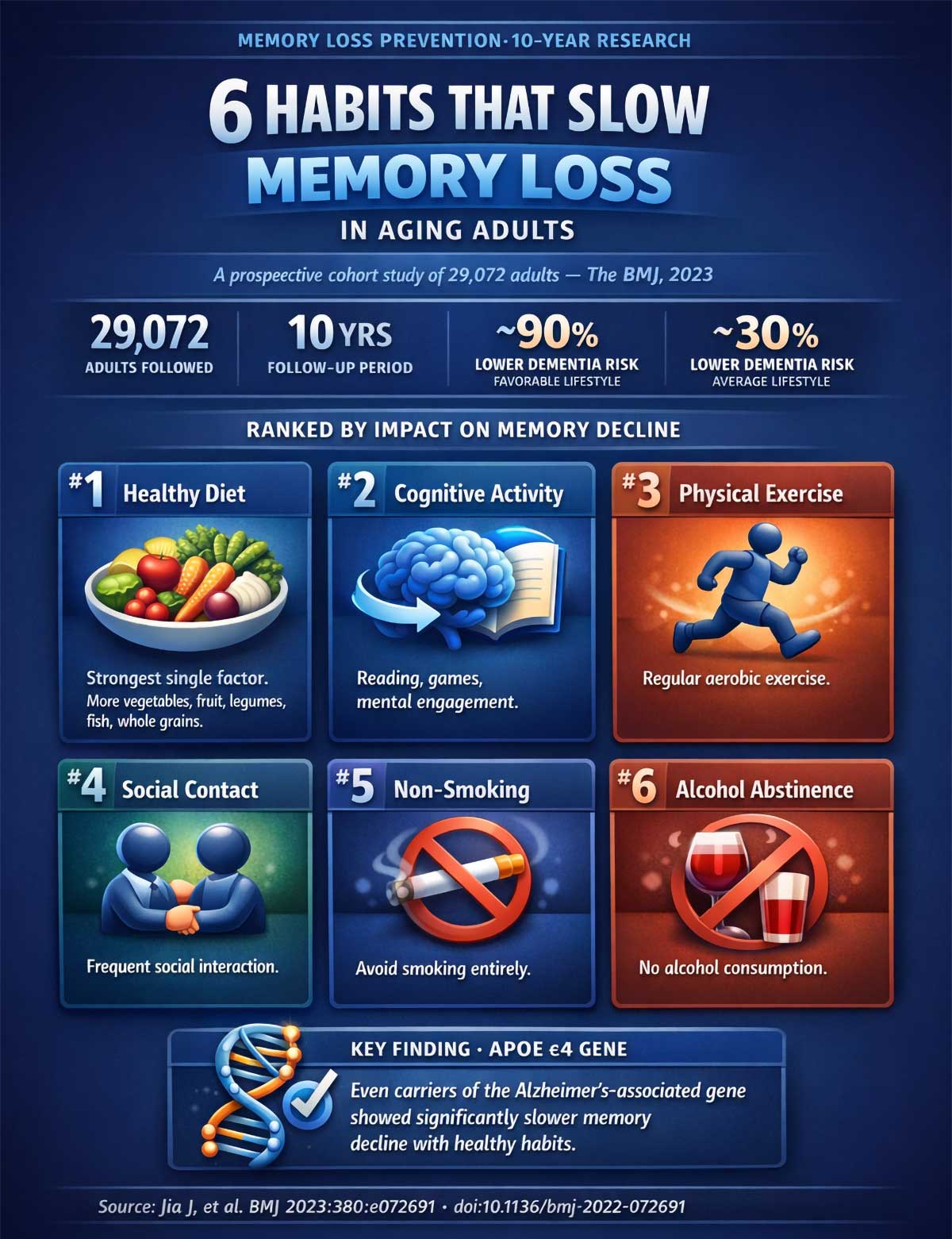
Even more surprising: that protection extended to people carrying the APOE ε4 gene — the gene most closely linked to Alzheimer’s disease.
So what were these six habits? And which ones mattered most?
A Decade of Data — Why This Study Is Different
Most health research tells us what people ate or did at one point in time. This study did something better. It tracked real people, over a full decade, watching their memory change as their habits did.
Researchers worked with 29,072 participants. The average age was 72. Nearly half were women. This was a prospective cohort study — meaning researchers followed people forward in time, not backward. That makes the findings much more reliable than a typical survey.
At regular checkpoints, the team measured memory performance using standard cognitive tests. They also scored each participant’s lifestyle across six key areas. The result was a “healthy lifestyle score” — a cumulative picture of how well each person’s habits lined up with known protective behaviors.
The six habits were:
- Eating a healthy diet
- Doing regular physical exercise
- Staying socially active
- Keeping the mind engaged through cognitive activity
- Not smoking
- Not drinking alcohol
Each habit was scored. The more a person followed, the higher their score. And the higher the score, the slower their memory declined.
The Genetic Myth That Needs to Go
Before getting into the habits themselves, there’s a belief worth addressing. Many people assume that if Alzheimer’s runs in their family — or if they’ve been told they carry certain genetic markers — their brain’s future is decided.
That’s not what the evidence shows.
The APOE ε4 gene is the most well-known genetic risk factor for Alzheimer’s disease. Carrying one copy raises risk significantly; carrying two copies raises it further still — though estimates vary across studies and depend on age and sex. For decades, a positive test felt like a verdict.
But in this 10-year study, people who carried the APOE ε4 gene and maintained a healthy lifestyle still showed much slower memory decline than gene carriers with poor habits. Lifestyle didn’t erase the gene. But it blunted its impact in a meaningful way.
Genetics sets a tendency. Habits shape the outcome. That’s a very different message than “your DNA decides.”
The Six Habits — Ranked by Impact
Not all six habits had equal weight. The study identified a clear pecking order. Diet sat at the top. After that came cognitive activity, then physical exercise. Rounding out the list were social contact, not smoking, and avoiding alcohol.
Together, they formed a protective shield around the aging brain. But understanding each one — and what the research actually measured — makes the difference between vague advice and a real plan.
Habit #1: Diet — The Top Performer
Of all six factors, diet had the strongest effect on slowing memory decline. Not exercise. Not brain games. Food.
This finding aligns with what nutrition researchers have been building toward for years. The brain is a biological organ. It needs specific nutrients to function. When it’s consistently deprived of them — or flooded with inflammatory foods — it pays a price over time.
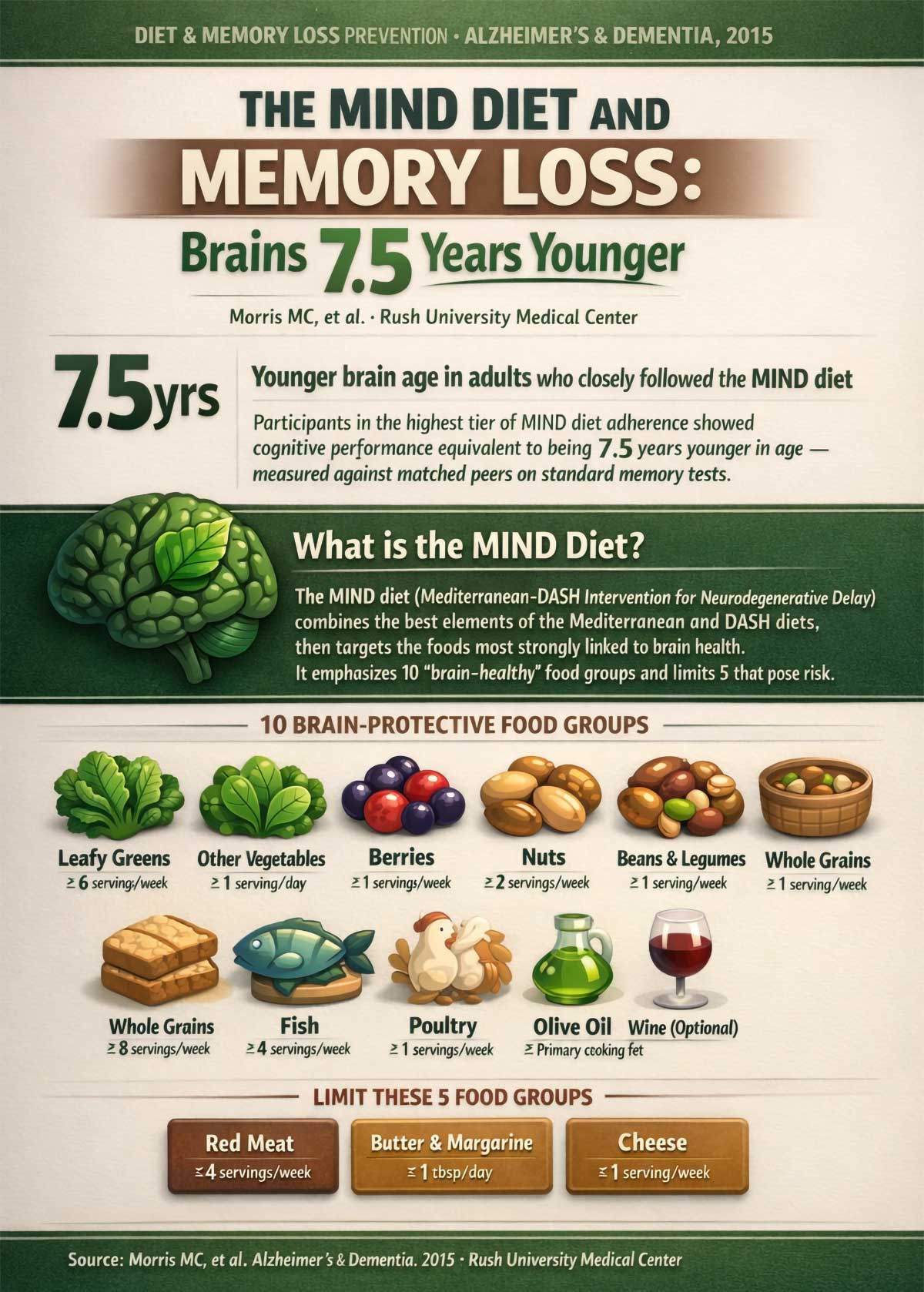
The study used the Chinese Dietary Balance Index to measure diet quality. Participants who scored well ate more vegetables, fruits, legumes, whole grains, and fish. They ate less red meat, sodium, and processed food.
This pattern mirrors the broader Mediterranean-style and MIND diet approaches that have shown up in other large studies. A 2015 study in Alzheimer’s & Dementia found that people who closely followed the MIND diet had brains that functioned like they were 7.5 years younger. The MIND diet specifically targets brain health, blending Mediterranean and DASH diet principles.
The practical takeaway isn’t complicated. Swap one processed snack per day for a handful of nuts or berries. Add leafy greens — spinach, kale, arugula — to meals three or four times a week. Eat fish twice a week if you can. These aren’t dramatic changes. But over a decade, they add up.
Diet is the #1 habit. It’s worth treating it that way.
Habit #2: Keeping the Mind Active
The study found that cognitive activity — things like reading, writing, and playing cards — ranked second in protecting memory. That’s important because many people assume brain-training apps are the answer. The evidence doesn’t fully support that.
What the research measured was regular mental engagement: activities that require active thinking, problem-solving, and attention. Reading a novel. Writing letters. Playing mahjong or chess. These are tasks that demand real cognitive effort, not just screen time.
The Rush Memory and Aging Project — a long-running cohort study out of Rush University Medical Center — has followed older adults for years and consistently found that those who read regularly and stayed intellectually active had lower rates of cognitive decline. The brain responds to being challenged.
Think of it like this: a muscle that gets used regularly stays stronger longer. The brain isn’t a muscle, but the analogy holds. Regular mental effort builds what researchers call “cognitive reserve” — a kind of buffer that helps the brain handle damage and aging without losing function as quickly.
You don’t need a subscription to a brain-training platform. A library card will do just fine.
Habit #3: Staying Connected to Others
Social contact ranked fourth in the study’s hierarchy. But don’t let that position undersell it. Isolation is genuinely dangerous for the aging brain.
A 2024 meta-analysis drawing on data from over 600,000 individuals, published in Nature Mental Health, found that loneliness was associated with a roughly 30% increased risk of all-cause dementia — comparable in scale to other well-established risk factors like physical inactivity.
The study defined “active social contact” as regular face-to-face interaction with friends, family, or community members. Meaningful conversation. Group activities. Shared meals. Not passive digital scrolling.
Why does social connection protect the brain? There are a few explanations. Social interaction requires active listening, emotional processing, and language use — all cognitively demanding. It also reduces chronic stress, which is increasingly understood as a driver of brain inflammation. And people with strong social networks tend to sleep better, eat better, and stay more physically active.
The message isn’t that being introverted is dangerous. It’s that regular, meaningful interaction with other people appears to buffer the brain against decline. Even one or two close relationships, maintained consistently, may be protective.
Habit #4: Physical Exercise
Exercise came in third in the study’s ranking — just below cognitive activity and above social contact. That might surprise people who’ve heard “exercise is the best thing for your brain.” It’s excellent. Just not quite #1, based on this evidence.
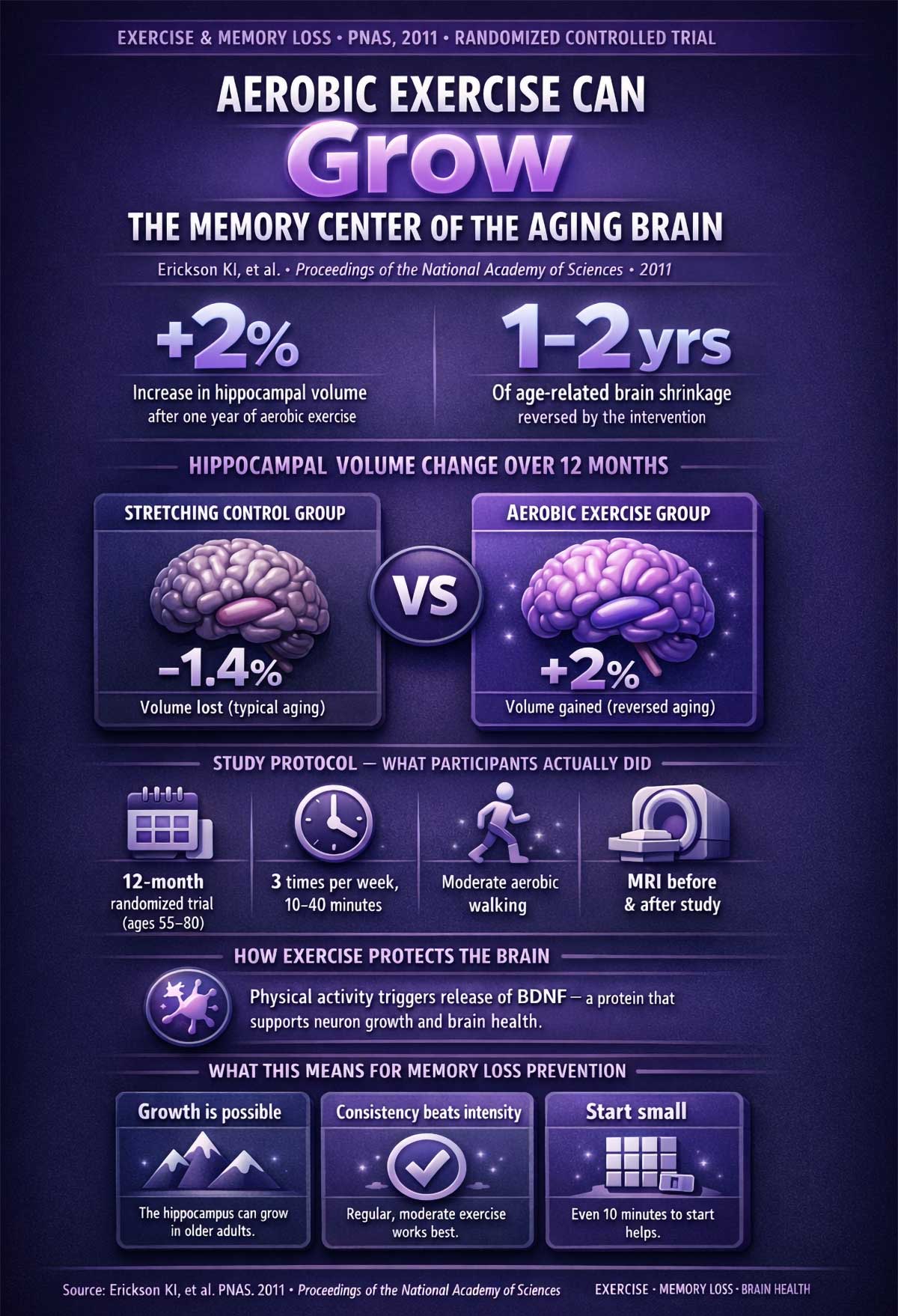
What physical activity does for the brain is well-documented. It increases blood flow to the hippocampus — the brain’s memory center. It promotes the release of BDNF (brain-derived neurotrophic factor), a protein that supports the growth and survival of neurons. It reduces inflammation and improves sleep quality. Both of those are independently linked to better brain health.
For this study’s participants — with a mean age of over 72 — “regular exercise” was defined based on age-appropriate thresholds. The takeaway isn’t that you need to run marathons. Consistent moderate movement, done regularly, was the marker that mattered.
A 2011 randomized controlled trial published in the Proceedings of the National Academy of Sciences found that structured aerobic exercise — beginning with short sessions and building to 40 minutes — increased hippocampal volume by about 2% over one year, effectively reversing typical age-related brain shrinkage.
Walking, swimming, gardening, cycling — the specific form matters less than the consistency. Aim for movement most days of the week.
Habits #5 and #6: The “Never” List
Two of the six habits weren’t about what to do — they were about what not to do. Not smoking. Not drinking alcohol.
These may seem obvious. But their inclusion in a “healthy lifestyle score” reflects something important: they’re often the habits people minimize or negotiate away. “I only have a few drinks a week.” “I quit years ago, so I’m fine now.” The research treats non-smoking and alcohol abstinence as active, ongoing choices — not checkboxes.
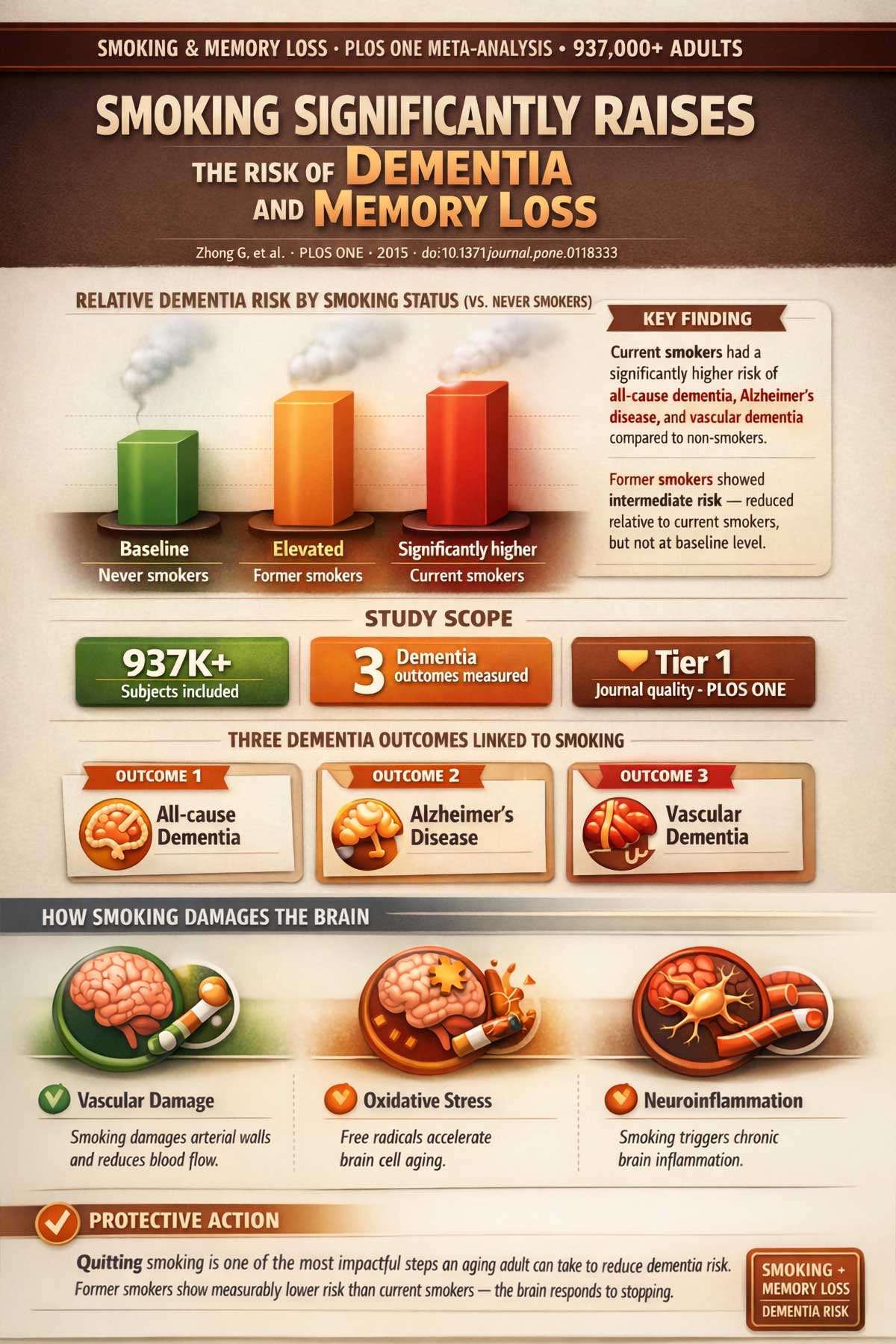
Smoking damages blood vessels throughout the body, including those that feed the brain. Chronic smoking reduces blood flow, promotes inflammation, and has been linked in multiple studies to faster cognitive aging. A 2015 meta-analysis in PLOS ONE, covering over 937,000 subjects, found that current smokers had a significantly higher risk of all-cause dementia, Alzheimer’s disease, and vascular dementia compared to non-smokers.
Alcohol’s relationship with brain health is more debated in public conversation than the research literature might suggest. Many people have heard that moderate drinking is harmless — or even helpful. The BMJ study placed “never drinking” in the healthy category, reflecting a growing body of evidence that regular alcohol consumption is associated with brain volume loss and white matter damage over time. The science in this area continues to develop, but the study’s findings are clear: abstinence was the standard associated with slower memory decline.
Combined, avoiding both smoking and alcohol appears to amplify the benefits of the other four habits. They don’t just reduce harm in isolation. They allow the protective effects of diet, exercise, cognitive engagement, and social connection to work more fully.
The APOE ε4 Finding: Hope for High-Risk Families
The gene angle deserves its own moment, because the finding genuinely changes the way people should think about genetic risk.
The APOE ε4 allele increases the likelihood of Alzheimer’s disease. People who inherit this variant face meaningfully elevated risk — and those carrying two copies face even greater odds, though estimates vary across studies depending on age, sex, and other factors. For many families, these numbers feel like a forecast.
What the 10-year BMJ study found was that even among APOE ε4 carriers, maintaining a healthy lifestyle score was associated with significantly slower memory decline. The gene didn’t disappear. But its influence on cognitive aging was reduced when healthy habits were in place.
This aligns with a broader concept in genetics called “gene-environment interaction.” Genes create a predisposition. They shift the odds. But they rarely write the entire outcome — especially for complex conditions like Alzheimer’s, which are influenced by dozens of biological and lifestyle factors.
If you have a family history of dementia, this is not a reason to panic. It’s a reason to act — and act early. The evidence suggests the habits that protect the brain work for high-risk individuals too. Not equally well in every case. But significantly, and meaningfully.
Knowing your risk is useful. Using it as an excuse to give up is not supported by the data.
What “Average” Looks Like — and Why It Still Matters
One of the most practically useful findings from this study is what happened in the middle.
The study divided participants into three groups: favorable lifestyle, average lifestyle, and unfavorable lifestyle. Most of the conversation around dementia prevention focuses on the extremes — perfect habits versus very poor ones. But the vast majority of people fall somewhere in between.
People with average lifestyles — not following all six habits perfectly, but doing reasonably well — were about 30% less likely to develop dementia or mild cognitive impairment compared to those with unfavorable habits.
Thirty percent. Without being perfect.
This matters because perfectionism can be its own barrier to action. If the choice feels like “all or nothing,” many people choose nothing. But the evidence suggests that moving from poor habits to average habits produces real, measurable brain protection. And moving from average to favorable produces even more.
You don’t need to overhaul your life overnight. You need to shift the dial. Pick one habit from this list and work on it this week. Diet is a strong place to start, given that it ranked first. But any of the six is a valid entry point.
Your 6-Habit Checklist
Based on the 10-year BMJ study of 29,072 adults, here is the ranked list of habits linked to slower memory decline:
1. Eat a brain-healthy diet — More vegetables, fruit, legumes, fish, and whole grains. Less processed food, sodium, and red meat.
2. Stay mentally active — Read regularly. Write. Play games that require real thinking. Challenge your brain in ways that demand focus.
3. Move your body — Regular moderate exercise, most days of the week. Consistency matters more than intensity.
4. Stay socially connected — Maintain regular face-to-face contact with friends, family, or community. Meaningful interaction, not just passive presence.
5. Don’t smoke — If you currently smoke, stopping is one of the most protective steps you can take for your brain and your cardiovascular system.
6. Limit or avoid alcohol — The study treated abstinence as the protective standard. If you drink, talk to your doctor about what level is appropriate for your health profile.
Conclusion
Memory loss doesn’t have to be treated as inevitable. For a long time, that was the quiet assumption baked into how aging was discussed — a gradual fade, determined largely by genetics and luck.
What a decade of data from nearly 30,000 people shows is that the brain responds to how it’s treated. The habits people build in their 60s, 70s, and beyond have measurable effects on how well memory holds up over time.
The choices aren’t exotic. They’re not expensive. They don’t require perfect genetics or perfect willpower. They require consistency, over time, in areas that are fundamentally within reach for most people.
If memory concerns are already affecting daily life — getting lost in familiar places, forgetting important appointments, struggling with tasks that used to feel routine — it’s worth talking to a doctor. Some causes of memory loss are treatable. And early evaluation makes a real difference in outcomes.
For everyone else: the evidence is clear. The habits are known. The window to act is now.