Two million people. Sixty-three studies. One surprising food kept showing up as the strongest protector against dying from heart disease.
Turning 45 has a way of changing things. Suddenly, you notice your father’s old blood pressure pills on the kitchen counter. Your doctor starts mentioning cholesterol at every visit. Maybe a friend your age had a scare. That shift in awareness is not a bad thing. It is actually the moment when the choices you make every day start to matter most.
The good news is that protecting your heart does not mean giving up everything you enjoy or living on bland food. One of the most powerful things you can do fits in the palm of your hand and takes about ten seconds to prepare. Literally.
A growing body of research, including a massive 2025 analysis of data from nearly two million people, points to a single daily habit that can cut your risk of major heart events by nearly 30 percent. That habit is eating 28 grams (one ounce) of nuts every day.
Why 28 Grams? The “Sweet Spot” the Science Keeps Landing On
Not a bowlful. Not a random snack here and there. Just 28 grams, which is about one ounce, or roughly the amount that fits in a small shot glass.
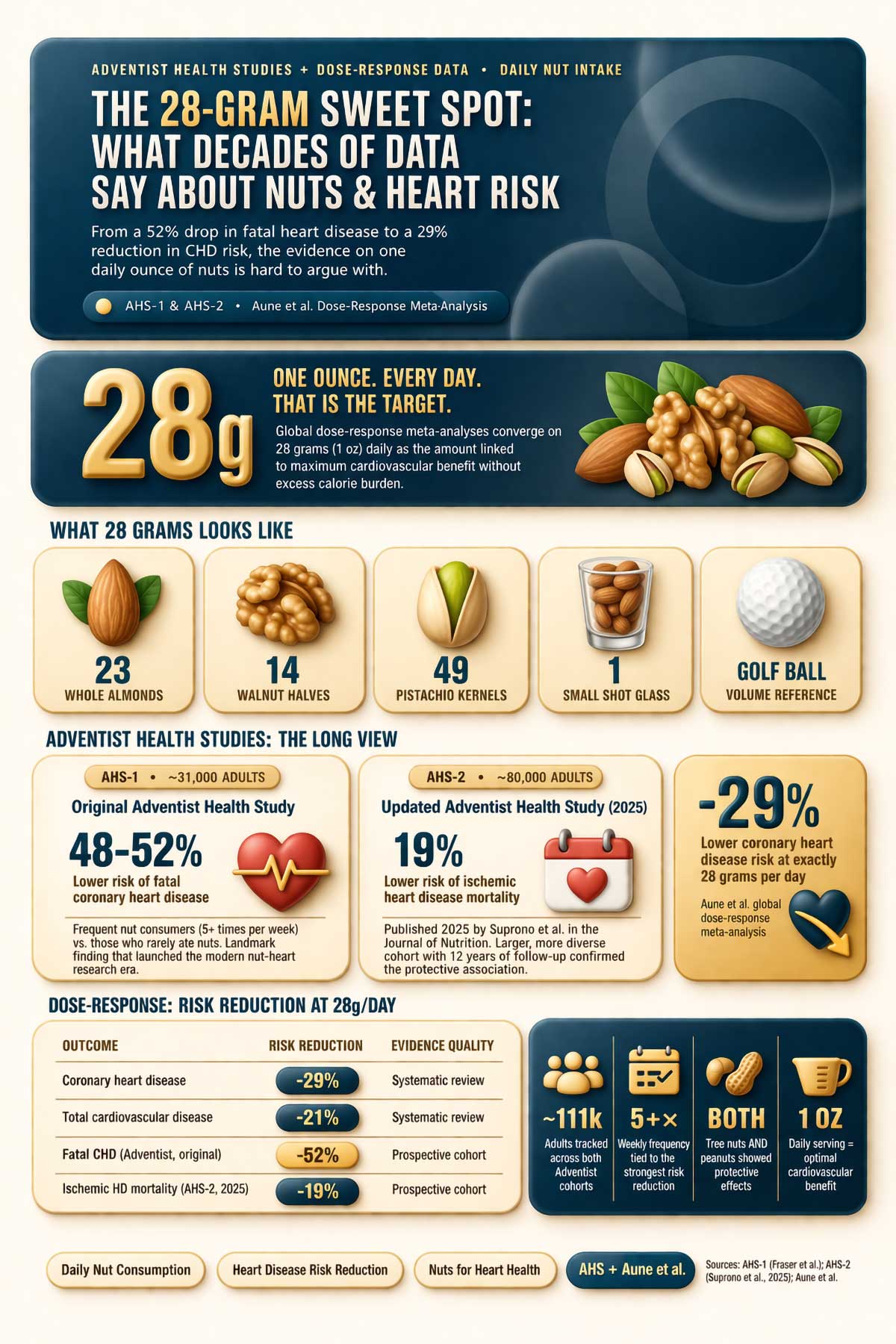
That precise number keeps showing up in long-term research. A global dose-response analysis pulled data from multiple large population studies and found that 28 grams of nuts per day was linked to a 21 percent lower risk of cardiovascular disease overall and a 29 percent lower risk of coronary heart disease. That is the type of heart disease that causes most heart attacks.
Why does a small daily amount work so well? The answer comes down to what is packed inside each nut.
Nuts are loaded with unsaturated fats, the kind that help push down LDL (bad) cholesterol. They also contain plant sterols, which are natural compounds that block cholesterol absorption in your gut. Add in soluble fiber, magnesium, and antioxidants, and you have a food that works on multiple fronts at once. Think of it like a scrub brush for your arteries. Each day you eat nuts, you are helping clear out some of the buildup that contributes to blockages.
Nuts also lower levels of a marker called C-reactive protein, which your doctor uses to measure inflammation. Chronic inflammation is now recognized as one of the key drivers of heart disease, so reducing it consistently over months and years adds up to real protection.
5 Nuts That Work Like Bodyguards for Your Heart
Not all nuts offer the same benefits, though most are good choices. These five stand out in the research.
1. Walnuts: The Omega-3 Titan
Walnuts are the only common tree nut that contains a meaningful amount of alpha-linolenic acid, which is a plant-based form of omega-3 fatty acid. Omega-3s reduce triglycerides, ease arterial stiffness, and help lower blood pressure.
The evidence here goes back decades. The Adventist Health Studies followed tens of thousands of adults and found that those who ate nuts frequently had a 48 to 52 percent lower risk of fatal coronary heart disease in the first study. An updated analysis from 2025 found a 19 percent lower risk of dying from ischemic heart disease among frequent nut consumers compared to those who rarely ate them.
A small handful of walnuts before bed or tossed into oatmeal in the morning is one of the simplest swaps you can make for your arteries.
2. Almonds: The Plaque-Fighting Vitamin E Powerhouse
Almonds are exceptionally high in vitamin E, a fat-soluble antioxidant that guards the walls of your arteries from oxidative damage. When LDL cholesterol oxidizes, it becomes more likely to stick to artery walls and form plaque. Vitamin E helps interrupt that process.
Almonds are also rich in magnesium, a mineral that helps relax blood vessels and maintain a steady heartbeat. Many adults over 45 are low in magnesium without knowing it, which makes almonds a particularly smart snack choice.
Twenty-three whole almonds is close to that 28-gram daily serving. That is easy to count, easy to carry, and easy to fit into your day.
3. Pistachios: The Blood Pressure Balancer
Pistachios are packed with potassium, which counteracts the effects of sodium and helps keep blood pressure in a healthy range. They are also rich in phytosterols, the same plant compounds that block cholesterol absorption.
What makes pistachios interesting is that studies show they improve vascular tone, meaning they help your blood vessels stay flexible and responsive rather than stiff. Stiff arteries are a major risk factor for heart attacks and strokes, particularly in people over 45. A small handful of pistachios in the afternoon is a satisfying snack that is doing real work in the background.
4. Macadamia Nuts: The High-Fat Healer
Macadamias have a reputation for being high in fat, which puts some people off. But the fat they contain is mostly monounsaturated fat, the same type found in olive oil and widely credited with the heart-protecting benefits of the Mediterranean diet.
Monounsaturated fat raises HDL (good) cholesterol while lowering LDL. It also reduces triglycerides and has anti-inflammatory properties. People who follow a Mediterranean-style diet have consistently lower rates of heart disease than those on a standard Western diet, and macadamia nuts fit neatly into that eating pattern.
5. Hazelnuts: The Inflammation Eraser
Hazelnuts are rich in phenolic compounds, which are plant-based molecules with strong anti-inflammatory and antioxidant properties. These compounds help protect cells from the kind of low-grade chronic damage that quietly raises heart disease risk over time.
Research has shown that regular hazelnut consumption improves total cholesterol profiles, lowering LDL while keeping HDL stable. Hazelnuts are also a good source of folate and vitamin E, making them one of the more well-rounded choices for long-term heart protection.
Decades of Data: What the Long-Term Studies Show
It is one thing for a food to show promise in a short lab study. It is another for it to hold up across millions of people over thirty-plus years. Nuts have done exactly that.
The PREDIMED Trial
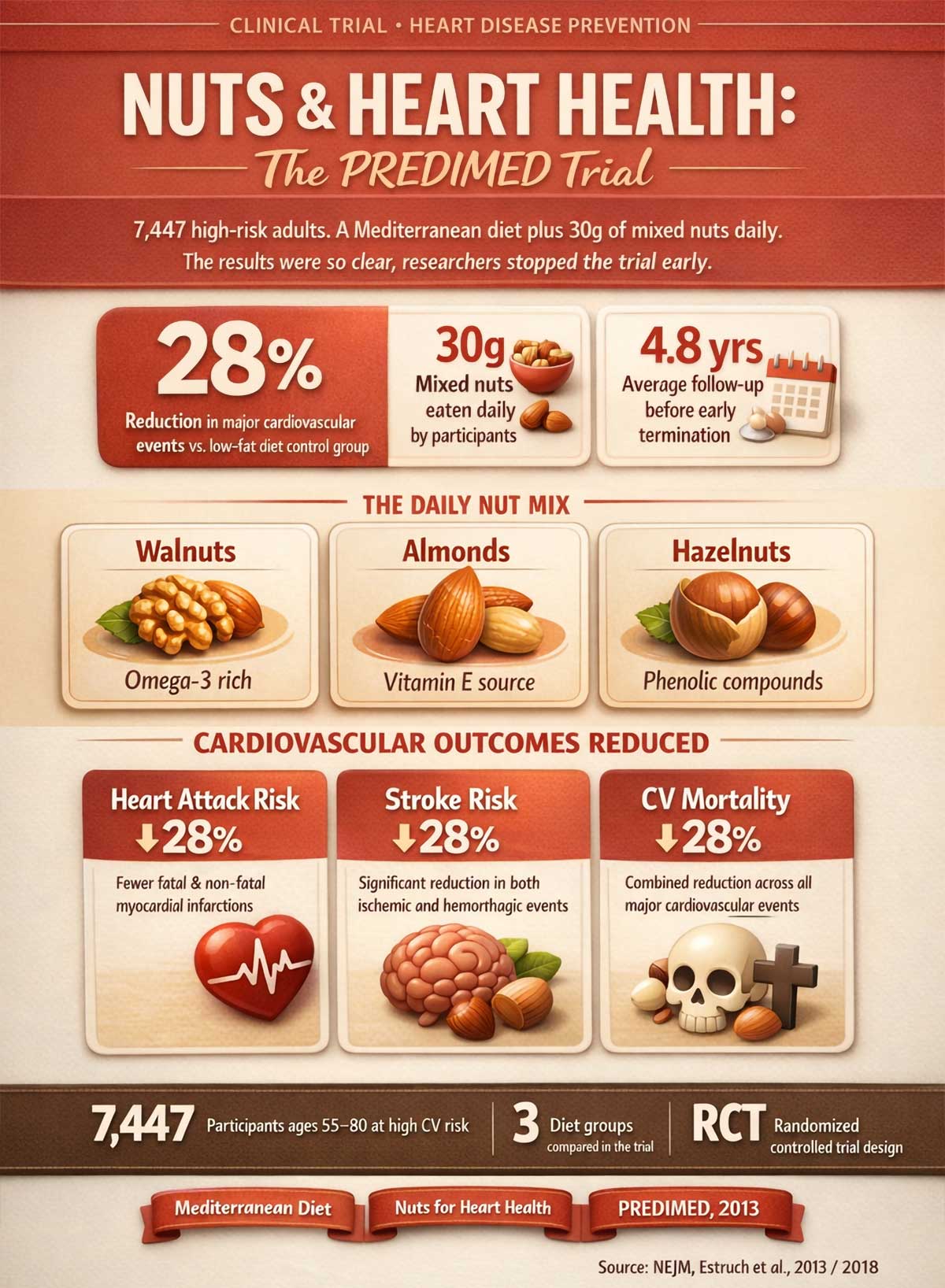
One of the most talked-about nutrition studies in recent history, the PREDIMED trial enrolled 7,447 adults between the ages of 55 and 80, all of them at high cardiovascular risk. Researchers split them into groups: some followed a Mediterranean diet with 30 grams of mixed nuts per day, others followed a standard low-fat diet.
The nut-eating group had a 28 percent reduction in major cardiovascular events, including heart attacks, strokes, and cardiovascular deaths, compared to the low-fat control group. The results were so clear that the study was stopped early by the safety monitoring board. When the benefit is that obvious, continuing a trial just to confirm it raises ethical concerns.
The mixed nuts used in PREDIMED included walnuts, almonds, and hazelnuts. Three of the five nuts on this list.
The Nurses’ Health Study and Health Professionals Follow-Up
These two landmark studies followed roughly 210,000 adults for up to 34 years. Over those three-plus decades, researchers tracked what people ate and what health events they experienced.
The data showed a clear dose-response relationship: the more nuts people ate, the lower their risk of cardiovascular disease. Regular nut eaters had about a 14 percent lower risk of total cardiovascular disease and a
20 percent lower risk of coronary heart disease compared to those who rarely ate nuts. These findings held up even after adjusting for other lifestyle factors like smoking, exercise, and overall diet quality.
Thirty-four years is a long time. That kind of follow-up turns a promising trend into solid evidence.
The 2025 Umbrella Meta-Analysis
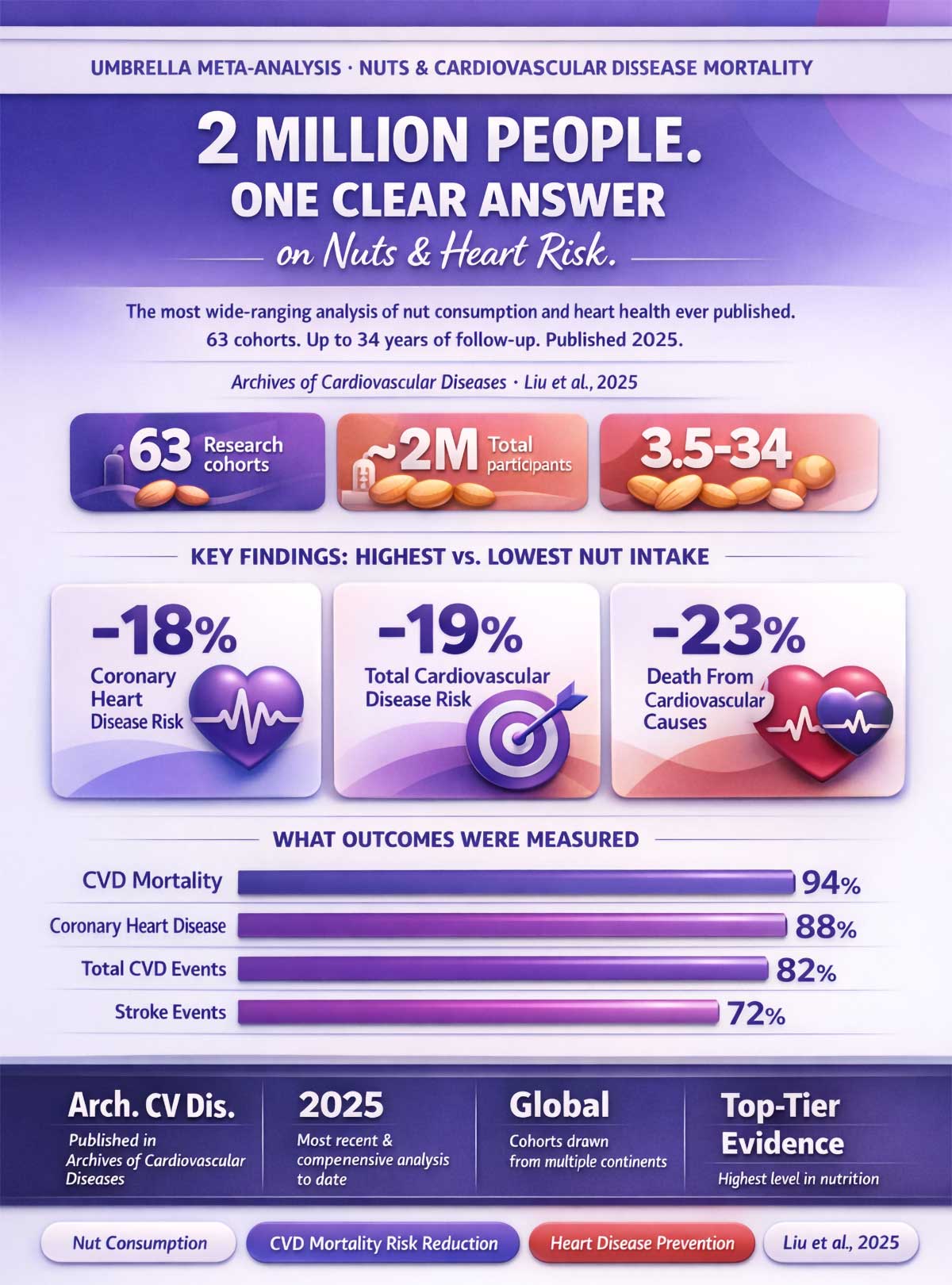
Published in the Archives of Cardiovascular Diseases, this 2025 analysis pooled data from 63 different research cohorts covering nearly two million participants. Studies ranged in length from 3.5 to 34 years.
The findings: people with the highest nut intake had an 18 percent lower risk of coronary heart disease, a 19 percent lower risk of total cardiovascular disease, and a striking 23 percent lower risk of dying from cardiovascular causes compared to those with the lowest intake. That last number is worth sitting with. Not just having a heart event, but dying from one, was 23 percent less likely in high nut consumers.
This kind of umbrella analysis, one that synthesizes dozens of studies at once, is considered among the strongest forms of nutritional evidence available.
How to Do It Right (Without Gaining Weight)
All of this evidence applies to nuts in their natural or lightly processed state. Processing strips away the benefits and adds risks.
The Raw vs. Roasted Rule
Nuts roasted in hydrogenated or partially hydrogenated oils are a different food. Those oils contain trans fats, which actively raise LDL and lower HDL, the exact opposite of what you want. Nuts coated in heavy salt, sugar, or candy glazes also lose their appeal from a heart standpoint.
Look for raw nuts, dry-roasted nuts, or nuts with no added ingredients. The label should be short. If it lists partially hydrogenated oil, put the bag back.
How to Visualize 28 Grams
A kitchen scale makes this easy, but most people are not going to weigh their nuts every day. These are practical reference points:
- About 23 whole almonds
- About 14 walnut halves
- About 18 medium cashews
- About 49 pistachio kernels
- Roughly the volume of a small shot glass or a golf ball
Eating a little more than this occasionally is fine. Eating three or four times this amount every day will add calories that most people do not need and can offset the weight-neutral benefits seen in the research.
If weight management is a concern, try replacing a less healthy snack with nuts rather than adding them on top of your current intake. Swap the afternoon crackers or the handful of chips for a small portion of almonds or walnuts. You get the heart benefit without the extra calories.
Mix It Up
No single nut covers every base. Rotating between walnuts, almonds, pistachios, macadamias, and hazelnuts across the week gives you a broader spectrum of nutrients. A simple approach: buy a bag of mixed raw nuts with no added salt or oil and keep them in a small container at your desk or in your bag.
Conclusion
Heart disease does not arrive without warning. It builds quietly over years, driven by inflammation, oxidative damage, rising cholesterol, and stiffening arteries. The window to slow that process is open right now.
You do not need a radical diet overhaul to start protecting yourself. One ounce of nuts per day, backed by two million data points, thirty-plus years of tracking, and a landmark clinical trial stopped early because the results were so clear, is one of the most accessible forms of preventative care available to you.
Pick up a small bag of raw walnuts or almonds at the store this week. Count out about 23 pieces. Eat them as your afternoon snack. That is it. That is the daily habit that the research keeps pointing to.
Your heart has been working non-stop since before you were born. A small crunchy handful each day is a reasonable way to return the favor.