Most people start worrying about their brain in their sixties. The research says the window that matters is twenty years earlier.
A Whitehall II cohort study led by Archana Singh-Manoux at INSERM followed 7,390 adults aged 45 to 70 and measured their memory, reasoning, and verbal fluency three times over ten years. Every cognitive score except vocabulary declined in every age group, including the youngest (those aged 45 to 49). The rate of decline accelerated with age. Not at retirement. At 45.
Your brain has two ages. There’s the one on your driver’s license. Then there’s how well your prefrontal cortex and hippocampus are performing, which often tells a very different story. These two numbers don’t always match. You might be 52 on paper but have the cognitive profile of someone ten years younger. Or vice versa.
The good news is that the brain is unusually responsive to how you use it. No other organ quite works this way. The key is identifying the signs early enough to act on them.
Your Brain Doesn’t Age Gradually. It Changes in Jumps.
One assumption about cognitive aging is so widespread it rarely gets questioned: the idea that the brain declines in a slow, steady slope from middle age onward. Research published in 2025 in the Proceedings of the National Academy of Sciences by Botond Antal and colleagues challenges that picture directly.
The researchers found that brain aging doesn’t follow a smooth trajectory. It progresses in nonlinear jumps, with the first identifiable transition occurring in middle age and coinciding with changes in metabolic markers, including insulin sensitivity. The brain’s energy metabolism, protein composition, and neural connectivity all shift at specific transition points rather than eroding at a constant rate.
This matters for how you interpret the nine signs below. Several of them can appear to come on suddenly when they’re really the visible result of a transition already underway below the threshold of daily awareness. The timing is also why midlife is the right moment to pay attention, not the moment most people think of.
Sign #1: The “Lag” Factor (Slower Processing Speed)
The Symptom
You’re driving and a car brakes sharply ahead of you. It takes a beat longer than it used to before your foot moves. In a fast group conversation, you feel like you’re always one step behind the joke.
Tasks that used to happen automatically now seem to require more conscious effort. The actions themselves aren’t harder. The timing is.
The Neuroscience
Processing speed is often the first cognitive capacity to show measurable change with age. Timothy Salthouse, a cognitive psychologist at the University of Virginia, built a substantial body of research spanning adults from their twenties through their eighties.
That work established that processing speed declines earlier than other mental abilities and predicts how other cognitive functions will age later. The theoretical framework he published in Psychological Review remains one of the most cited in aging neuroscience.
The mechanism runs through white matter. Think of white matter as the brain’s wiring: bundles of fibers connecting different regions and allowing signals to travel quickly between them. As white matter integrity decreases with age, neural signals take longer to arrive. The processing capacity is still there. The speed at which it operates is not.
The Fix
Speed-of-processing drills work because white matter responds to demand. The neural insulation that determines how quickly signals travel between brain regions is not static, and cognitive training that requires rapid responses appears to support the maintenance of those pathways in ways that passive mental activity does not. Apps requiring quick pattern recognition or fast decision-making provide literal practice in the mechanism responsible for the timing delay.
High-intensity interval training (HIIT) also targets processing speed through BDNF. Intense exercise triggers the release of this protein, which specifically supports myelin integrity, the white matter insulation that determines signal transmission speed. Three 20-minute sessions per week is the dose most studies have used, and the processing speed improvements appear at that threshold.
Sign #2: The “Where Did I Put It?” Loop (Increased Forgetfulness)
The Symptom
Misplacing keys is normal. Forgetting what keys are for is not. That distinction is worth keeping clear.
Normal aging brings episodic memory gaps: you forget where you parked, what you ate for breakfast three days ago, or the name of someone you met briefly last month. You still remember your past clearly.
You still know who people are and what objects do. If you’re forgetting appointments made an hour earlier or repeating the same story to the same person in the same conversation, that’s different.
The Neuroscience
The hippocampus, the seahorse-shaped structure that encodes new memories, loses some volume each year from midlife onward. The dentate gyrus inside it becomes less efficient at forming new memory traces.
Carolyn Harada and colleagues at the University of Alabama reviewed what normal cognitive aging actually looks like in their 2013 paper in Clinics in Geriatric Medicine and found that measurable declines in episodic memory are consistent across healthy aging populations, and look distinctly different from the pattern seen in Alzheimer’s disease or other dementias.
Normal aging affects retrieval speed and the formation of new traces. It does not affect semantic memory (what things mean and how they work) until much later.
The Fix
The dentate gyrus has less margin for incidental encoding, the kind that happened automatically when you were younger without requiring deliberate effort. That’s what’s being lost. Deliberate encoding compensates: vivid mental imagery, linking new information to something already deeply familiar, narrating a sequence out loud as you complete it. These aren’t study tricks. They’re workarounds for a system that now requires what it used to do on its own.
Diet reaches the hippocampus in ways that matter here. The MIND diet, which combines Mediterranean and DASH eating principles with emphasis on leafy greens, berries, nuts, and fish, was designed specifically as a brain-protective eating pattern. Evidence suggests it may slow hippocampal volume change in ways other dietary patterns do not.
Sign #3: The Multitasking Meltdown (Difficulty Task-Switching)
The Neuroscience (first this time)
What Denise Park at the University of Texas at Dallas and Patricia Reuter-Lorenz at the University of Michigan found, when they developed the Scaffolding Theory of Aging and Cognition published in the Annual Review of Psychology, was unexpected enough to reshape how neuroscientists think about the middle-aged brain.
Older brains don’t go quieter during demanding tasks. They go louder. Functional imaging shows increased prefrontal activation in older adults performing the same tasks as younger adults. The brain assembles additional neural circuits as a workaround for declining efficiency in the original pathways.
That workaround is real and often effective. The problem is its ceiling. Compensatory scaffolding takes more resources than the original system and has less capacity under simultaneous load. When multiple demands arrive at once, the brain’s workaround strategy hits its limit faster than it would have at 35.
The 2009 STAC framework is where the “simply can’t coordinate” description most people use for aging and multitasking goes wrong: the brain is trying harder, not giving up. What you’re encountering is the ceiling of a system operating with different tools.
The Symptom
That’s what the overwhelm actually is. An email you’re composing, a phone call coming in, a timer going off in the kitchen: the compensatory scaffolding runs out of bandwidth, and what was manageable in sequence becomes unmanageable in parallel.
Getting back on track takes longer. The thread of what you were doing before the interruption dissolves more completely than it used to.
The Fix
Stop trying to outrun the scaffolding ceiling. Design around it instead. The compensatory system that allows task-switching in the aging brain has a lower ceiling than it used to, not a broken mechanism. Structuring your environment so that simultaneous demands require a deliberate action to introduce (closing the inbox, a timer committing you to one task at a time) works with the scaffolding rather than demanding it exceed its capacity.
Mindfulness practice, at ten minutes a day, has evidence behind it for the specific prefrontal circuits that compensatory scaffolding relies on. The mechanism is less about meditative state and more about repeatedly practicing the act of noticing when attention has drifted and returning it deliberately to one point of focus. That is exactly what the aging prefrontal cortex has less margin for, and exactly what the practice trains.
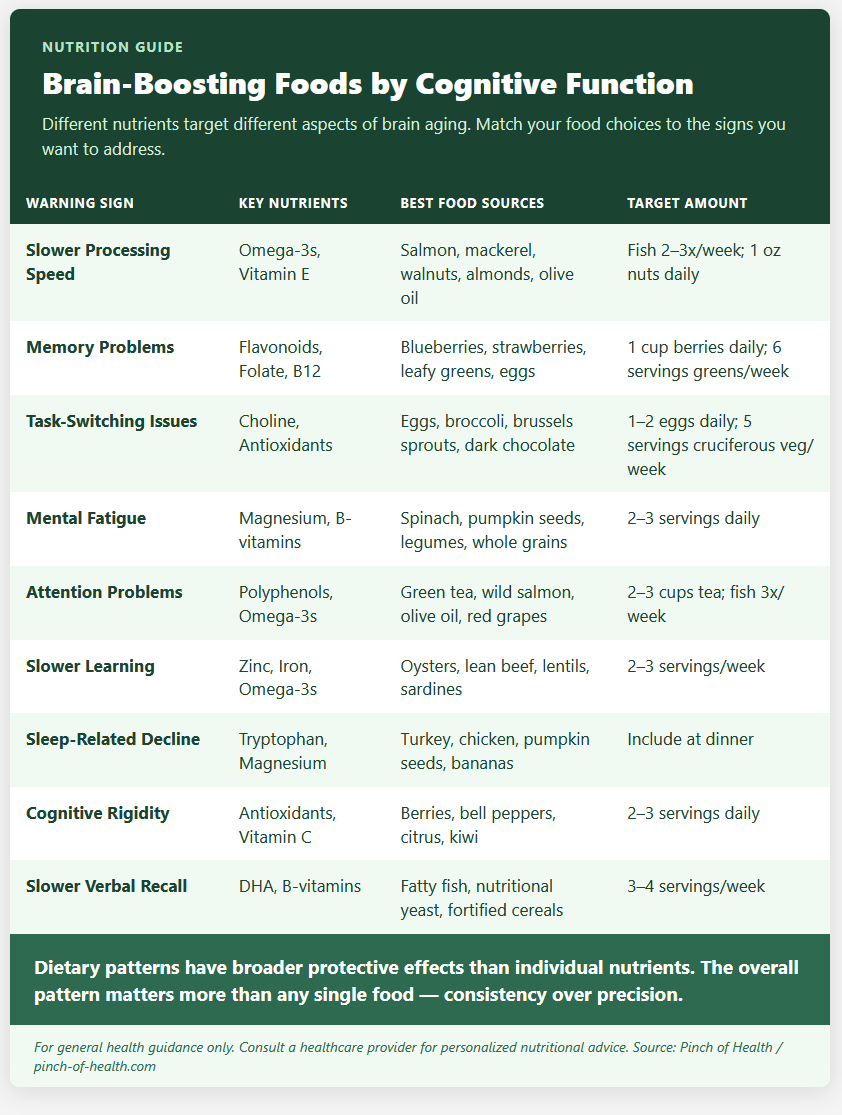
Brain-Boosting Foods by Cognitive Function
Different nutrients reach different parts of the brain’s aging machinery. Here’s what the research maps to each of the nine warning signs:
Sign #4: The 2:00 PM Wall (Chronic Mental Fatigue)
The Symptom
Reading three emails feels like running a mental marathon. By mid-afternoon, your thinking goes slow and foggy. The work itself hasn’t changed, and the volume isn’t unusual. The exhaustion arrives anyway.
This is different from the normal tiredness of a demanding day. The fatigue appears after tasks that didn’t previously produce it, at a level that doesn’t match what was asked of the brain.
The Neuroscience
EEG studies comparing younger and older adults during sustained attention tasks have found that older brains show increased activity during the same tasks, a finding consistent with the compensatory recruitment pattern described in Sign #3.
The brain is working harder to produce the same result. Neural efficiency declines: what once required low effort now requires high effort, and high effort burns through mental resources faster. What used to happen automatically now draws on conscious processing capacity.
The brain operates in cycles of roughly 90 minutes of high focus followed by a need for recovery. As neural efficiency decreases, that recovery need becomes more urgent and the dip more pronounced.
In years of coaching competitive athletes, the sign that surprised me most consistently was this one, not the memory lapses. People who were physically fit by any measure, training hard, sleeping adequately, still hit mid-afternoon walls that had nothing to do with their conditioning. The brain and the body don’t tire at the same rate, and the cognitive wall often arrives well before the physical one does.
The Fix
Neural efficiency doesn’t improve through willpower, but it responds to structure. The ultradian rhythm maps this: roughly 90 minutes of productive cognitive work, followed by a recovery window the brain needs before the next cycle begins.
Focus in 90-minute blocks. Then take a real 10-minute break, one that means leaving screens and ideally moving your body briefly. The break is not optional time. It is the mechanism by which the next block becomes available.
Pushing through the fatigue doesn’t extend the productive window. It shortens the one that follows.
Sign #5: The Wandering Mind (Reduced Attention Span)
The Symptom
You start a chapter and discover three paragraphs later that nothing has registered. You reread the same section. In a long meeting, your mind moves elsewhere before you’ve decided to let it.
The content isn’t too difficult. The attention span to hold it has shortened.
The Neuroscience
Researchers at Trinity College Dublin led by Laura McAvinue examined sustained attention across 113 participants aged 12 to 75 in their 2012 study in Attention, Perception, and Psychophysics. Age-related decline in sustained attention was consistent across the sample, and the researchers found it linked to reductions in frontal gray matter volume and white matter integrity. The frontal lobes manage the ability to hold attention on one thing for an extended period. Less volume, less capacity.
The Fix
Sustained attention capacity doesn’t disappear with age. The environments built around constant short-cycle stimulation undermine it. Social media doesn’t destroy attention span the way a lesion does, but it trains the expectation of interruption until focus requires effort that used to be automatic. The discomfort of trying to hold a book for 30 minutes straight is the sensation of training an undertrained system, not evidence of permanent loss.
Start at 15 minutes of uninterrupted reading and add five minutes per week. Most people’s ceiling is higher than they think.
Sign #6: The “New Dog, Old Tricks” Struggle (Slower Learning)
The Symptom
New software at work feels frustrating in a way older software didn’t. Picking up a new skill takes noticeably longer than it did a decade ago. The information arrives clearly enough, but something between arrival and retention isn’t working as efficiently.
The Neuroscience
The Betula Project, a long-running Swedish cohort study on memory, health, and aging (with Lars Nyberg among its key investigators), followed participants from age 35 to 80 across multiple waves of testing.
Work from this cohort published in the Journal of Internal Medicine showed that episodic memory and learning speed begin declining earlier than most people expect, with rates accelerating after 60.
The changes connect to hippocampal volume loss and shifts in dopamine pathway efficiency. Dopamine helps encode new information, and as those pathways shift with age, fewer strong memory traces form per learning event.
Synaptic plasticity (the brain’s ability to form and strengthen new neural connections) decreases with age but doesn’t disappear. It requires more deliberate conditions to operate than it did at twenty-five.
The Fix
The protégé effect works because of what teaching requires the encoding system to do. Passive review asks the hippocampus to form a general trace. Teaching asks it to organize information, find analogies, identify gaps, and produce it on demand.
Those demands put more pressure on the dopamine-dependent encoding pathways per learning event, forming stronger traces than recognition alone produces. Learn something with the explicit goal of explaining it clearly to someone else within 24 hours.
The other effective condition is mild production pressure. Needing to produce information, rather than simply recognize it, challenges the encoding system in exactly the way that benefits it. Discussion groups, teaching moments, or even explaining your learning out loud to yourself all create that condition.
Sign #7: The Midnight Fog (Sleep-Related Cognitive Decline)
The Mechanism (first this time)
The discovery that the brain runs a dedicated waste clearance system, and that it operates primarily during deep sleep, changed how researchers think about cognitive aging. The glymphatic system is a network of channels that open during slow-wave sleep and allow cerebrospinal fluid to flush metabolic byproducts from brain tissue.
Among the compounds it clears is beta-amyloid, the protein whose accumulation links to Alzheimer’s disease. The process runs at reduced capacity during lighter sleep stages and stops almost entirely during wakefulness.
Age reliably reduces slow-wave sleep. Bryce Mander and colleagues at UC Berkeley documented exactly how in their 2017 paper Sleep and Human Aging in Neuron: age-related loss of slow-wave activity in the prefrontal cortex disrupts the coordination between slow waves and sleep spindles that transfers new memories from hippocampal storage into longer-term networks.
Less deep sleep means two things happening in parallel, both accelerating cognitive aging: reduced memory consolidation and reduced glymphatic clearance. Total sleep time doesn’t measure either. You can spend eight hours in bed and still leave the glymphatic system with too narrow an operating window.
The Symptom
Seven or eight hours in bed, but you wake unrefreshed. The sleep felt light and broken. The next day your thinking is slower, decisions take more effort, and memory is noticeably worse. The pattern keeps repeating even on nights when total time in bed was adequate.
The Fix
Sleep quality is more controllable than most people assume. Working with competitive athletes whose cognitive recovery mattered as much as physical recovery, I found that timing consistency produced more effect than most expected: athletes sleeping seven hours on a reliable schedule often recovered better cognitively than those getting eight on irregular timing. The circadian signals that time sleep stages depend on predictability to operate accurately.
Temperature is the most underused lever for slow-wave sleep. Core body temperature needs to drop to reach the deep stages where glymphatic clearance happens. Keeping the bedroom at 60 to 67°F (15 to 19°C) supports that drop. Complete darkness, consistent bed timing within a 30-minute window, and no alcohol within three hours of sleep all protect slow-wave sleep duration, not just overall time in bed.
Untreated sleep apnea should be addressed before any other sleep hygiene work. It targets slow-wave sleep directly. Loud snoring or gasping during sleep warrants a sleep study, because optimizing other conditions around an untreated apnea problem produces limited results.
The 10-3-2-1-0 Sleep Formula
This protocol addresses the most common obstacles to deep sleep in a sequence that builds from evening to bedtime:
10 hours before bed: No more caffeine. The half-life of caffeine is 5 to 6 hours, which means an afternoon coffee at 3 PM is still meaningfully active at 9 PM.
3 hours before bed: No large meals. Digestion disrupts sleep architecture. A small tryptophan-containing snack (turkey, a banana, or pumpkin seeds) is acceptable.
2 hours before bed: No more work. Mental activation primes the prefrontal cortex for vigilance, which runs opposite to what the brain needs to transition into slow-wave sleep.
1 hour before bed: No screens. Blue light suppresses melatonin production. Physical books, conversation, or gentle stretching are all replacements that don’t carry that cost.
0 times hitting snooze: Snooze cycles fragment the sleep architecture of the final sleep stage without adding meaningful rest. The fatigue from them lasts longer than the fatigue from simply getting up.
For room conditions: complete darkness (light suppresses melatonin at low thresholds), consistent bedtime within a 30-minute window, and no alcohol within three hours of sleep. Alcohol fragments REM sleep during the second half of the night even when it appears to help with falling asleep initially.
Sign #8: The Rigid Thinker (Reduced Cognitive Flexibility)
The Mechanism (first this time)
Trey Hedden and John Gabrieli at Stanford published a review of cognitive neuroscience and aging in Nature Reviews Neuroscience in 2004 that set a framework still referenced widely. Their central finding on the prefrontal cortex: the largest age-related volumetric changes in the brain (larger than hippocampal changes, larger than changes in other regions) occur in prefrontal areas responsible for inhibitory control and cognitive flexibility.
Inhibitory control is the brain’s mechanism for suppressing established habits when the situation calls for a different response. As prefrontal volume decreases with age, the grip that existing habits have on behavior gets stronger, and switching to new approaches requires more deliberate effort than it once did.
The implication is counterintuitive. Rigidity in older adults reflects what’s happening in the prefrontal cortex, not a personality trait that develops with age. The neural suppression mechanism that allows new strategies to override established ones becomes less efficient. Your habits become louder. They crowd out the capacity to do something differently.
The Symptom
Plans change, and you feel genuinely stressed, not just mildly annoyed. You notice yourself preferring the same routes, same sequences, same approaches, not because they’re better, but because deviating from them requires an effort that didn’t use to be necessary. Thinking shifts toward “my way” without a corresponding sense that you’ve consciously chosen it.
The Fix
The fix is deliberate novelty: not self-improvement novelty as an abstraction, but anything that requires your brain to process an environment it doesn’t have a script for. A different route home. Your non-dominant hand brushing your teeth. A cooking class that doesn’t use any technique you already know. Each small unfamiliarity exercises the prefrontal circuits that manage behavioral switching.
These aren’t metaphors for growth. They’re literal practice for the neural mechanism that cognitive flexibility depends on.
Sign #9: The Tip-of-the-Tongue Syndrome (Slower Verbal Recall)
The Symptom
You know the word. You can feel it, almost have it, and then it dissolves. Names are especially difficult. You recognize a person completely, and their name simply isn’t there when you reach for it. Mid-conversation, you pause and search for a word that would have arrived automatically before.
The Neuroscience
The Whitehall II study found that verbal fluency (the ability to rapidly produce words in a category or by initial letter) begins declining by age 45. The mechanism isn’t vocabulary loss. The underlying knowledge is intact.
What changes is the speed and reliability of access to it. The pathways between knowing a concept and retrieving the specific word for it lose efficiency with age. Retrieval becomes slower and, in some cases, temporarily unsuccessful even when the information is clearly stored.

What the Research Suggests (and Where It Doesn’t Reach)
Active verbal production appears more helpful than passive exposure in observational research on language maintenance with age. Reading combined with discussion, debate, or writing produces more benefit than reading alone.
Word games and puzzles exercise the access pathways rather than the vocabulary store alone, which aligns with the mechanism described above. These are reasonable, defensible recommendations.
What the research can’t yet tell us with confidence is how large the effect actually is, or whether the benefit transfers across different verbal contexts in meaningful ways. Verbal recall is one of the nine signs where the mechanism is well-understood, and the interventions are rational, but the evidence for specific prescriptions is considerably weaker than for, say, exercise and processing speed, or sleep and memory consolidation.
Keeping your language system active in ways that require production rather than reception is the current best guidance. That’s a defensible position. It isn’t the same as a precise prescription with a known dose and a known return.
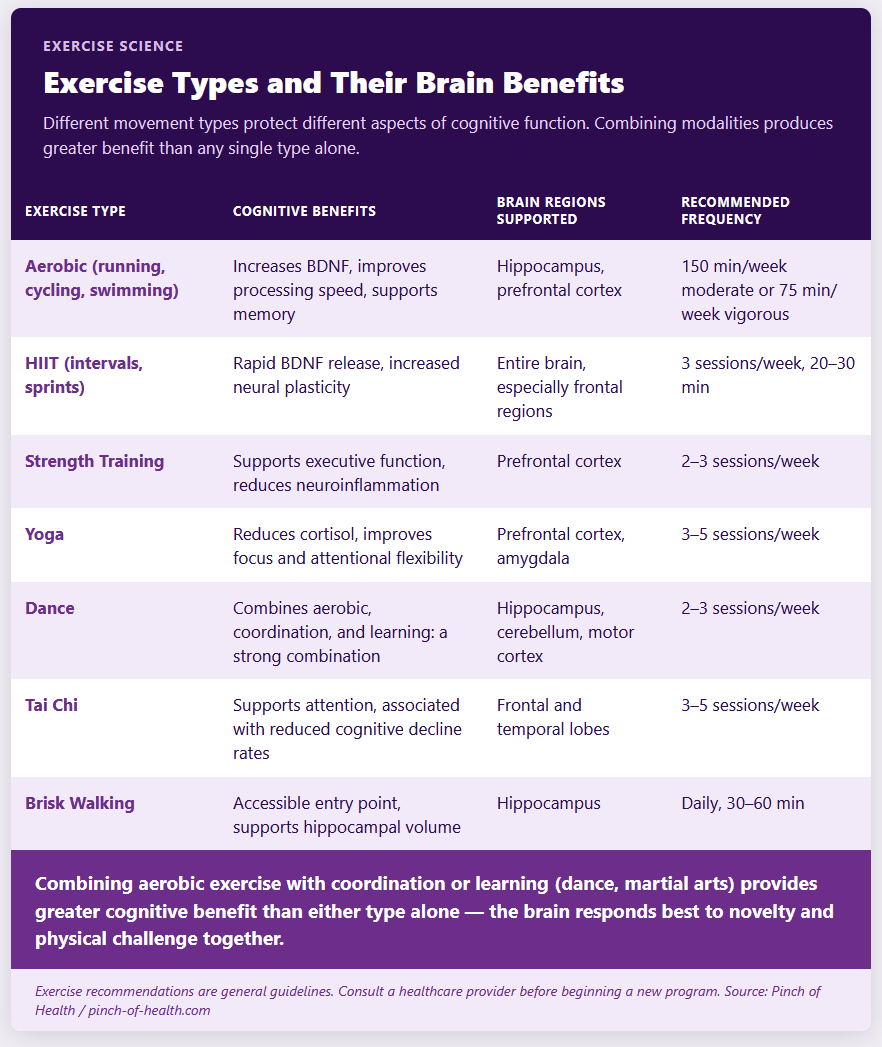
Exercise Types and Their Brain Benefits
Different types of exercise protect different aspects of brain health. Combining modalities provides greater benefit than any single type alone.
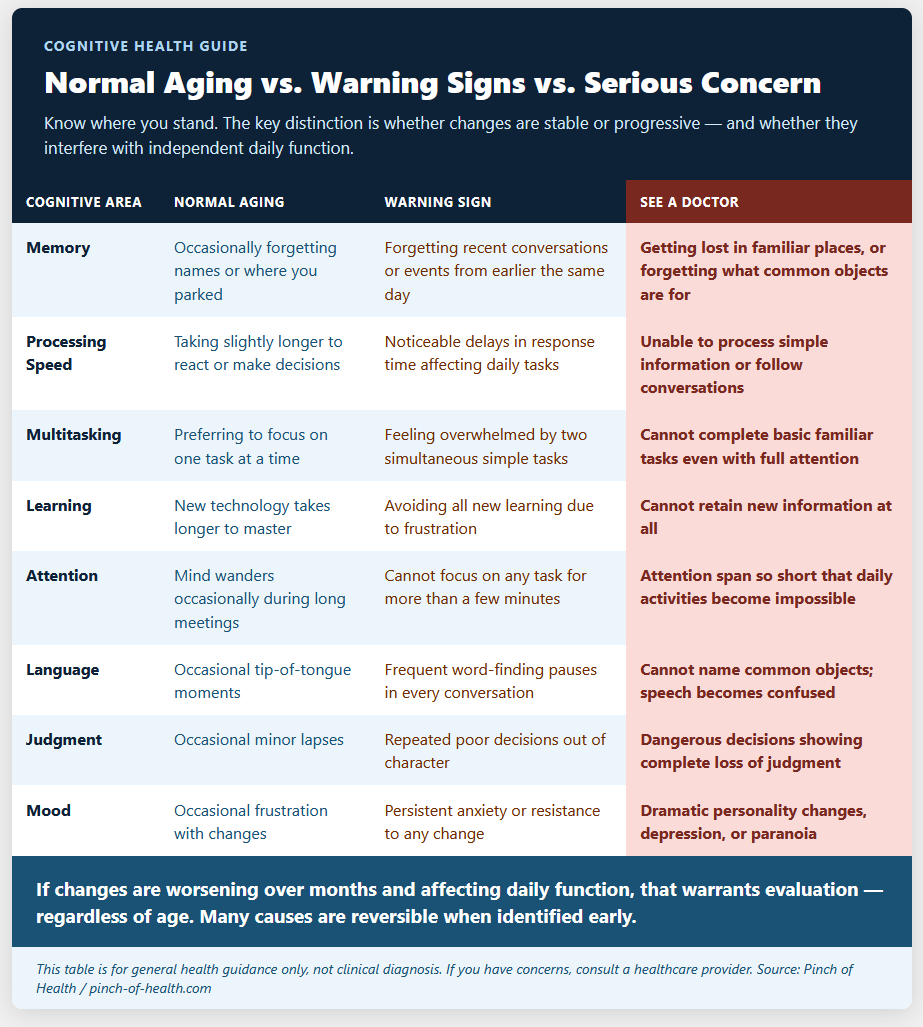
The Brain Health Audit: Normal vs. Warning Signs vs. Serious Concern
The nine signs above fall between two endpoints that are worth naming clearly. Normal aging brings changes that are real and measurable but don’t interfere with the ability to function independently. The far end, the one that warrants urgent medical evaluation, involves changes that do interfere with daily function, often in multiple domains simultaneously.
The signs in this article sit in between. They’re not expected features of aging that should be accepted without attention, but they’re also not clinical warning flags in isolation. They’re the brain telling you it needs different inputs.
Normal aging includes occasional name-finding pauses, taking slightly longer to learn new things, needing to write things down more often, and feeling mentally tired after a genuinely demanding day.
Warning signs include forgetting important events or conversations from the same day, getting lost in familiar places, struggling to follow simple multi-step instructions, difficulty managing money or bills, and changes in mood or personality that others notice before you do.
Seek evaluation promptly if you or someone you know is forgetting what common objects are for, cannot complete familiar tasks even with full attention, or shows dramatic personality shifts or paranoia.
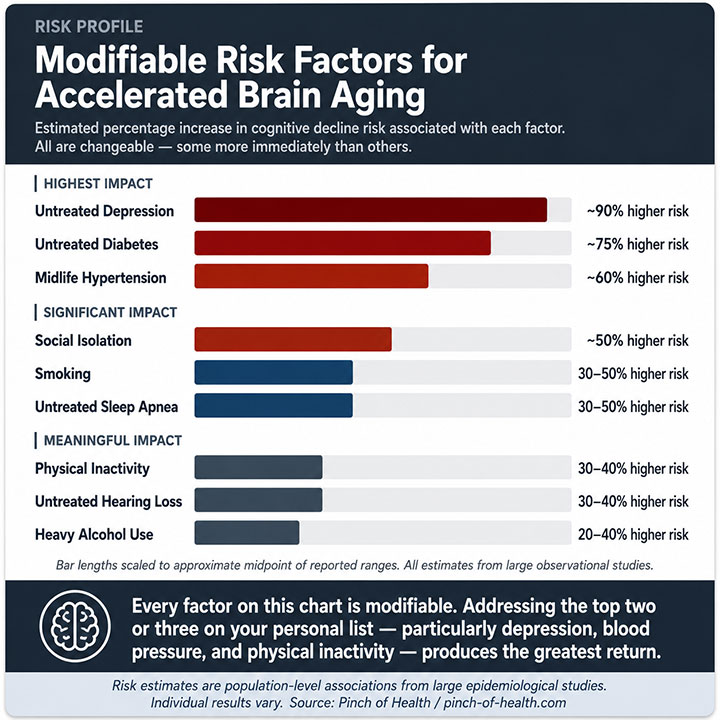
Risk Factors for Accelerated Brain Aging
Some risk factors are fixed. Knowing them clarifies what you’re working with. Most of the highest-impact factors are ones you can act on.
What You Cannot Change
Age: Risk increases meaningfully after 65, though the changes begin earlier, as the nine signs above show.
Genetics: The APOE-e4 variant increases Alzheimer’s risk two to three times with one copy and eight to twelve times with two copies, though many carriers never develop dementia.
Family history adds a two-to-threefold risk increase with an affected first-degree relative.
Sex: Women have higher lifetime dementia risk, partly due to longer lifespan and hormonal changes after menopause.
Past head injuries: A traumatic brain injury at any age increases later dementia risk by 50 to 200%.
What You Can Change
Physical inactivity and social isolation are among the highest-impact modifiable risk factors, both associated with 30 to 50% higher cognitive decline rates in large observational studies.
Smoking increases decline risk by 30 to 50% but returns to near-normal levels within five years of quitting.
Heavy alcohol use (more than 14 drinks per week for men, more than 7 for women) directly shrinks hippocampal volume. Untreated hypertension in midlife is associated with a 60% higher risk of vascular dementia.
Untreated depression roughly doubles cognitive decline risk in the available literature.
Untreated hearing loss is the modifiable risk factor that most people don’t think of as a brain issue. Evidence associates it with a 30 to 40% increase in cognitive decline risk, likely because the additional effort required to process sound leaves fewer resources for memory and attention. Hearing aids appear to reduce this risk.
Untreated health conditions across the board (high blood pressure, diabetes, high cholesterol, sleep apnea) all accelerate brain aging through vascular and inflammatory mechanisms.
Evidence-Based Supplements for Brain Health
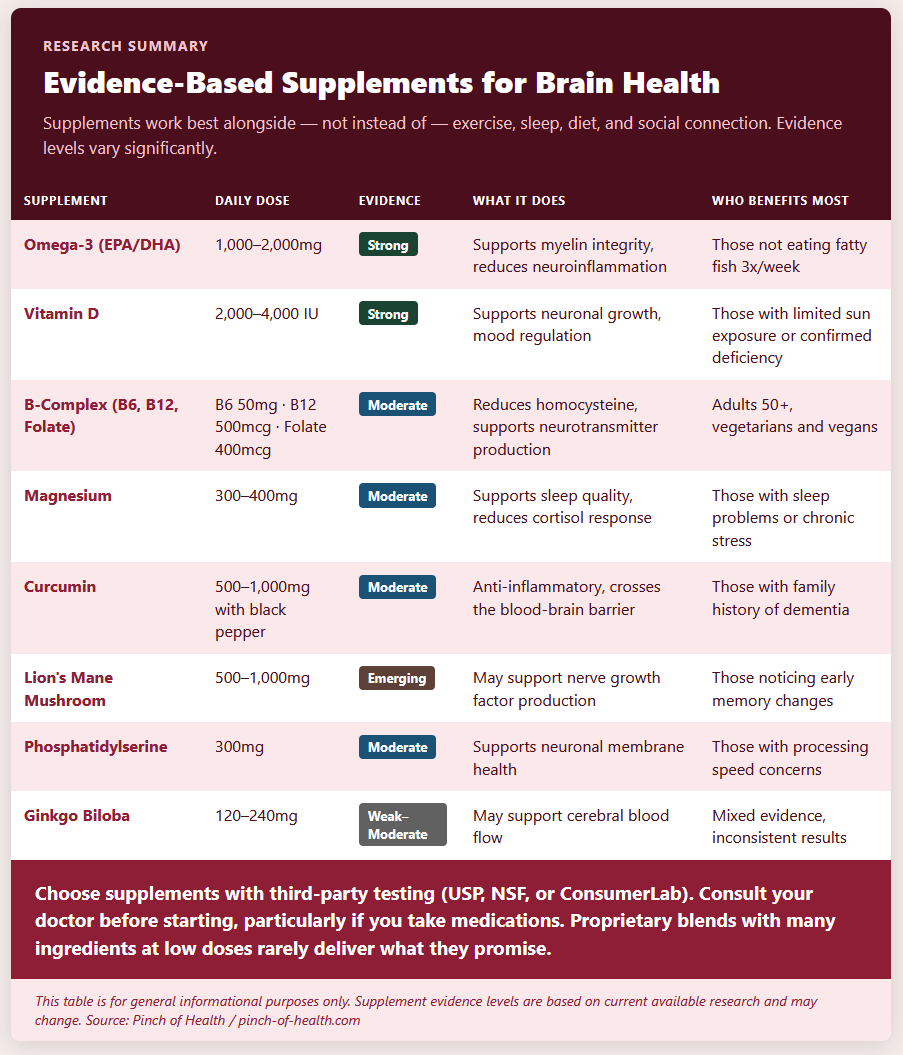
Supplements can support brain health under specific conditions. They don’t replace the lifestyle foundations (sleep, exercise, diet, social connection) and most fall short of their marketing claims. The distinctions below reflect the actual evidence levels.
What the Evidence Doesn’t Support
Coconut oil for Alzheimer’s has no quality evidence behind it. Coral calcium is unsupported for brain health. Most nootropic stacks marketed to healthy people are the supplement equivalent of a confidence trick.
The individual ingredients may appear in legitimate research at specific doses, but the doses in the product are usually too low to replicate those findings. “Brain enhancement” formulas with proprietary blends and no third-party testing are, as a category, an unnecessary expense.
Medications That May Affect Cognition
Several common medications have anticholinergic effects, meaning they block acetylcholine, a neurotransmitter central to memory and learning. Taking medications in these categories long-term is worth raising with your doctor specifically to ask about alternatives.
Common medications worth discussing if taken regularly include: diphenhydramine (found in Benadryl, Tylenol PM, and similar sleep aids), first-generation antihistamines, bladder control medications such as oxybutynin and tolterodine, benzodiazepines including lorazepam and diazepam, the muscle relaxant cyclobenzaprine, older antidepressants including amitriptyline and paroxetine, and the stomach medication cimetidine.
Newer alternatives often exist with less cognitive impact. Don’t discontinue any medication without medical guidance. The conversation with your prescribing doctor starts with: “Are there any alternatives to this that would have less effect on cognition?”
When to See a Doctor
Not every memory slip requires a clinical evaluation. Several of them in a day, over several weeks, in combination with other changes: that pattern warrants a conversation.
See a doctor if you or someone you know experiences memory loss that disrupts daily function rather than inconveniencing it, difficulty completing familiar tasks that previously required no thought, confusion about time or place (losing track of what day, season, or location you’re in), new problems producing words in speech or writing beyond occasional tip-of-tongue moments, or noticeable changes in judgment, financial decision-making, or mood that others comment on.
A cognitive evaluation typically starts with a screening tool like the Montreal Cognitive Assessment (MoCA) or the Mini-Mental State Examination (MMSE), which take 10 to 15 minutes. If results indicate further investigation, neuropsychological testing examines memory, attention, language, visual-spatial abilities, executive function, and processing speed in more depth.
Blood tests rule out reversible causes: vitamin B12 deficiency, thyroid problems, and certain infections can all produce cognitive symptoms. Brain imaging identifies structural changes, strokes, or other visible abnormalities.
Many causes of cognitive problems are reversible when found early: depression, sleep apnea, medication effects, and vitamin deficiencies. Even for those that aren’t reversible, earlier intervention changes the trajectory more than later intervention does.
Questions worth bringing to the appointment include: What is the most likely cause of these symptoms? Which tests are recommended and why? Are any of my medications affecting cognition? What lifestyle changes would you prioritize for my situation? How often should I be reassessed?
Lifestyle Modifications Ranked by Effectiveness
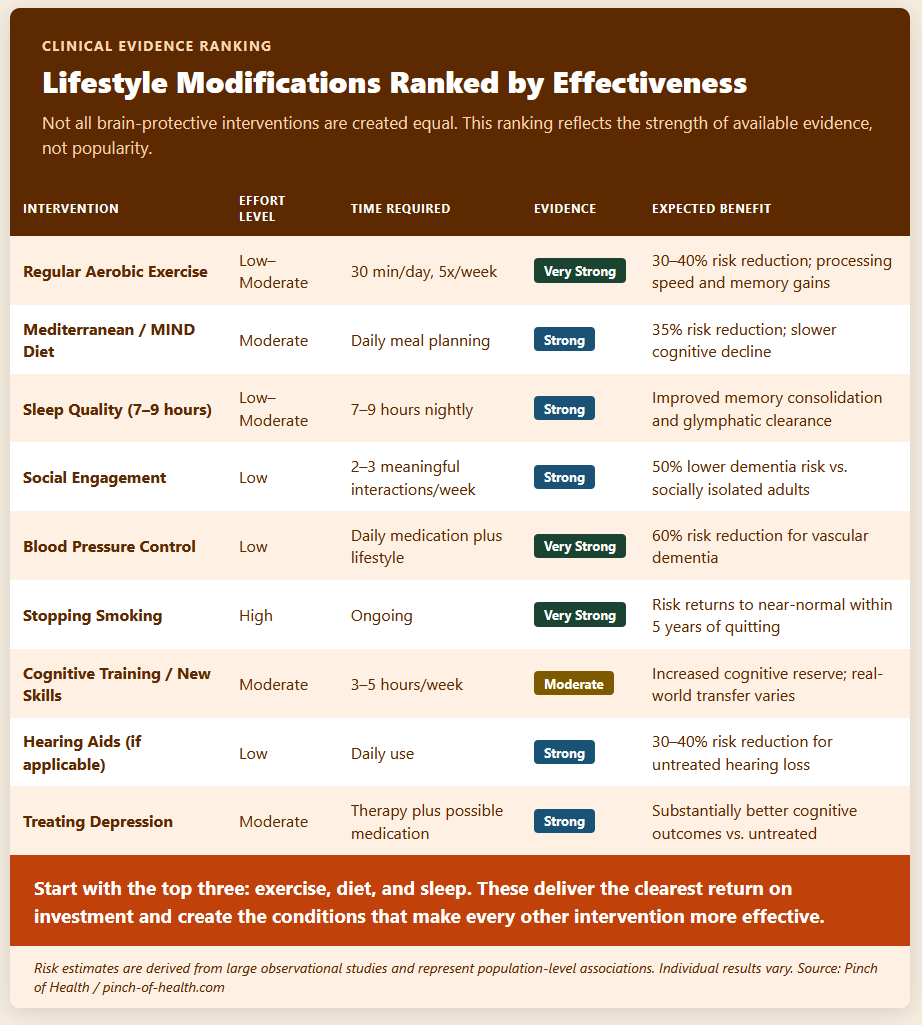
Not all interventions deliver equally. The ranking below reflects evidence strength, not popularity.
The 30-Day Brain Reset Challenge
A structured four-week plan for building the three highest-evidence habits progressively, then adding cognitive training.
Week 1: Sleep Foundation
Days 1–2: Track your current sleep patterns (time in bed, actual sleep, and how you feel on waking). Days 3–4: Implement the 10-3-2-1-0 protocol. Days 5–6: Address room conditions (temperature 60–67°F, complete darkness). Day 7: Lock in a consistent bed and wake time, including weekends.
Daily check: Did you get 7 or more hours? Did you wake feeling rested?
Week 2: Movement
Days 8–9: A 30-minute walk daily, brisk enough to raise your heart rate noticeably. Days 10–12: Add two-minute speed intervals (fast for two minutes, normal pace for two minutes, repeated five times). Days 13–14: Try one new physical activity: a dance class, a swim session, or a cycling route you haven’t used before.
Daily check: Did you move for at least 30 minutes? Did your heart rate increase?
Week 3: Nutrition
Days 15–16: Add berries to breakfast and lunch. Days 17–18: Include fatty fish or a plant-based omega-3 source. Days 19–20: Replace one processed meal with a whole-food option. Day 21: Cook one of the brain-healthy recipes in the appendix below.
Daily check: Did you eat six servings of vegetables? Did you avoid processed foods at most meals?
Week 4: Mental Training
Days 22–23: Start 15-minute deep-work sessions with all notifications off. Days 24–25: Learn something new with the specific intent to explain it to someone else within 24 hours. Days 26–27: Break one established routine every day (different route, different hand, different approach). Days 28–30: Engage in meaningful social interaction: conversation, not passive consumption.
Daily check: Did you challenge your brain with something unfamiliar? Did you connect with someone meaningfully?

Weekly Brain Training Schedule
A practical weekly template covering all nine signs. Adjust based on your schedule. Consistency matters more than perfect adherence.
Monday (Speed and Processing): 20-minute HIIT workout in the morning, 15 minutes of a speed-of-processing app in the afternoon, brain-healthy dinner (salmon if possible).
Tuesday (Memory and Learning): Start the day with the memory-boosting smoothie bowl from the appendix. Spend 30 minutes learning something new in the afternoon, then explain it to someone in the evening.
Wednesday (Attention and Focus): One 45-minute deep-work session in the morning with no notifications. A deliberate no-social-media afternoon. Thirty minutes of complex reading in the evening.
Thursday (Flexibility and Adaptation): Take a different route to wherever you’re going. Use your non-dominant hand for at least two routine tasks. Cook something from a recipe you’ve never tried.
Friday (Social and Verbal): Start with the egg scramble from the appendix. Join a conversation that requires active participation, not just listening. Dinner with meaningful discussion rather than a screen.
Saturday (Physical and Mental Challenge): Try a physical activity that requires learning: a dance class, a new sport, or a martial arts session. Word games or puzzles in the afternoon. Early bedtime to protect slow-wave sleep.
Sunday (Integration and Rest): Gentle yoga or tai chi in the morning. Fifteen minutes of planning for the week ahead. Full implementation of the 10-3-2-1-0 protocol starting mid-afternoon.
Myth vs. Fact: Brain Aging
Myth: We only use 10% of our brain.
Brain imaging consistently shows activity throughout the brain, including during rest. There is no scientific basis for this figure. Neuroimaging research has thoroughly refuted it.
Myth: Brain cells can’t regenerate.
Neurogenesis (the production of new neurons) continues in the hippocampus throughout life. Exercise, learning, and adequate sleep all support this process. The rate slows with age, but it does not stop.
Myth: Memory loss is inevitable with aging.
Significant memory loss is not a guaranteed outcome of aging. Many people maintain sharp memory into their nineties. Lifestyle factors explain much of the variation between people at the same chronological age.
Myth: Crossword puzzles prevent dementia.
Puzzles improve performance at puzzles. Transfer to other cognitive domains is limited. Learning genuinely new skills (a language, an instrument, a new physical activity) builds cognitive reserve in ways that familiar mental activities do not, because they require the brain to form new organizational patterns rather than reinforcing existing ones.
Myth: Brain training apps make you smarter overall.
Most cognitive training apps improve performance on the specific tasks they train. Real-world transfer is modest. Learning actual new skills with practical application produces more general benefit.
Myth: Supplements can reverse Alzheimer’s disease.
No supplement has been shown to reverse Alzheimer’s disease in quality clinical evidence. Some supplements support brain health conditions that reduce risk. Claims of reversal are not supported by the available science.
Myth: Nothing can be done about cognitive decline.
Lifestyle interventions have consistently reduced dementia risk by 30 to 40% in large studies. Even people already showing early cognitive changes can slow progression meaningfully through exercise, diet, sleep, and mental stimulation.
Your Action Plan: Where to Start
Assess yourself against the nine signs honestly. One or two recognized signs may reflect normal life stress and temporary factors. Four or more, appearing consistently, suggests your biological brain age may be running ahead of your chronological age.
Fix sleep first. Every other intervention depends partly on sleep quality for its effect. The 10-3-2-1-0 protocol is the entry point. If you snore or wake frequently, get a sleep study before assuming the problem is behaviorally solvable.
Move your body with some intensity. One hundred fifty minutes of moderate aerobic exercise per week is the floor, not the ceiling. Add brief HIIT intervals twice a week. Three months at that volume produces measurable changes in the brain.
Eat toward the MIND diet principles. More leafy greens, berries, nuts, fish, and olive oil. Less processed food, refined sugar, and red meat. Perfection isn’t required. The evidence suggests adherence at moderate levels still produces meaningful effects.
Stay socially connected. Not proximity, but genuine engagement. Conversations that require active participation, debate, and emotional attention protect cognitive function in ways passive social presence does not.
Manage your medical conditions. High blood pressure, diabetes, and high cholesterol each damage the brain through vascular mechanisms when left uncontrolled. They are direct accelerants of brain aging, not incidental factors.
If you’re concerned about what you’re experiencing, ask your doctor about cognitive baseline testing. Having a baseline makes changes trackable. Most causes of cognitive concern that get found early turn out to be treatable.
Brain-Healthy Recipes
Recipe 1: Memory-Boosting Berry Smoothie Bowl
Why it works: Anthocyanins in mixed berries cross the blood-brain barrier and reduce oxidative stress in memory centers. Walnuts provide omega-3 ALA. Spinach delivers folate for neurotransmitter production.
Ingredients:
- 1 cup frozen mixed berries (blueberries, strawberries, blackberries)
- 1/2 frozen banana
- 1 cup spinach
- 1/2 cup unsweetened almond milk
- 1 tablespoon ground flaxseed
- 1 tablespoon almond butter
- Toppings: 1/4 cup fresh blueberries, 2 tablespoons chopped walnuts, 1 tablespoon hemp seeds, optional drizzle of honey
Instructions:
- Blend frozen berries, banana, spinach, almond milk, flaxseed, and almond butter until smooth.
- Pour into a bowl.
- Add toppings and eat immediately.
Approximately 350 calories, 15g protein, 18g healthy fats, 8g fiber per serving.
Recipe 2: Omega-3 Rich Salmon with Walnut Pesto
Why it works: Wild salmon provides DHA and EPA, omega-3 fatty acids that maintain myelin sheath integrity. Walnuts add vitamin E and additional omega-3s. Olive oil contains oleocanthal, which has anti-inflammatory properties relevant to neuroinflammation.
Ingredients:
- 4 (5-oz) wild salmon fillets
- 1 cup fresh basil leaves
- 1/2 cup raw walnuts
- 3 cloves garlic
- 1/4 cup extra virgin olive oil
- 2 tablespoons lemon juice
- 1/4 cup grated Parmesan cheese
- Salt and pepper to taste
Instructions:
- Preheat oven to 400°F.
- Blend basil, walnuts, garlic, olive oil, lemon juice, and Parmesan until smooth. Season with salt and pepper.
- Place salmon on a parchment-lined baking sheet. Spread 2 tablespoons pesto over each fillet.
- Bake for 12 to 15 minutes until the fish flakes easily.
- Serve with roasted vegetables or quinoa.
Approximately 420 calories, 35g protein, 28g healthy fats, 3g carbohydrates per serving.
Recipe 3: Brain Power Breakfast with Spinach and Egg Scramble
Why it works: Eggs are among the richest food sources of choline, which converts to acetylcholine, a neurotransmitter central to memory and learning. Turmeric contains curcumin, which crosses the blood-brain barrier and has neuroprotective properties in the research literature. Spinach provides lutein and folate.
Ingredients:
- 3 large eggs
- 2 cups fresh spinach
- 1/2 cup mushrooms, sliced
- 1/4 cup cherry tomatoes, halved
- 2 tablespoons feta cheese
- 1 tablespoon olive oil
- 1 clove garlic, minced
- Salt, pepper, and 1/4 teaspoon turmeric
Instructions:
- Heat olive oil in a pan over medium heat.
- Add garlic and mushrooms. Cook 3 minutes.
- Add spinach and tomatoes. Cook until spinach is wilted.
- Whisk eggs with salt, pepper, and turmeric.
- Pour eggs into the pan. Scramble gently until just set.
- Top with feta cheese and serve with whole grain toast or avocado.
Approximately 320 calories, 24g protein, 22g healthy fats, 8g carbohydrates, 3g fiber per serving.
The Bottom Line
The research on brain aging points in a direction that is less comfortable than “decline is inevitable” but more demanding than “just stay positive”: the choices you make from midlife onward have a meaningful and measurable effect on what your brain looks like at seventy-five. That’s not a guarantee in either direction.
Some people do everything right and still experience significant decline. Others do very little and remain sharp into old age. But the gap between those two groups narrows considerably when the right inputs are in place, and it widens considerably when they’re not.
The research doesn’t resolve cleanly into a single winner. Exercise advocates point to BDNF and hippocampal volume. Sleep researchers point to glymphatic clearance and memory consolidation. Social connection researchers point to cognitive reserve.
The honest answer is probably that they interact: a well-slept brain responds better to exercise, and an exercised brain enters sleep with different chemistry. What’s not contested is the timing. The window for the highest-impact changes is the decade most people aren’t paying attention yet.
The transitions the Antal research identifies, the predictable jumps in metabolic markers and neural connectivity that happen at specific points in midlife rather than gradually, aren’t purely bad news. They’re predictable enough to prepare for, and preparation is most effective exactly when it feels least urgent. The brain you have at fifty is a more accurate preview of seventy than anything else you can measure today.
FAQs
Can you reverse brain aging?
You can slow it and in some ways partially reverse it. Exercise reliably increases hippocampal volume. Treating sleep apnea improves memory function. Correcting vitamin B12 deficiency restores some cognitive performance.
The brain retains plasticity throughout life, which means new learning and new habits produce new neural structure at any age. Full reversal of accumulated change isn’t realistic, but meaningful improvement is.
How is normal aging different from dementia?
Normal aging affects the speed and ease of cognitive function without interfering with the ability to function independently. Dementia involves progressive decline that does interfere with daily life: forgetting how to do familiar tasks, getting lost in known places, inability to manage finances or follow conversations.
The distinction runs deeper than severity: what matters is whether the changes are stable or progressive, and whether they impair independent daily function. If changes are worsening over months and affecting daily function, that warrants evaluation.
Does coffee help or hurt brain aging?
Moderate coffee consumption (three to five cups daily) is associated with lower dementia risk in epidemiological research, including studies that have followed populations for decades. The likely mechanisms include antioxidant effects and possible protection against neurodegenerative protein accumulation.
The timing matters: caffeine after 2 PM measurably disrupts slow-wave sleep architecture, which is itself a risk factor for accelerated brain aging. Morning and early afternoon coffee is supported by the evidence. Late afternoon and evening coffee works against the sleep quality that protects the brain.
How much sleep do older adults need?
Seven to nine hours remains the evidence-supported range for adults at every age. The idea that older adults need less sleep is a common misconception. What changes is sleep architecture: older adults get less slow-wave sleep and experience more nighttime awakenings.
The total sleep requirement stays the same. Accepting poor sleep as “just how it is” at sixty misunderstands what’s normal aging versus what’s addressable. Poor sleep quality at any age accelerates cognitive decline.
Can you improve your brain after 60?
Yes. Adults who start exercising after 60 show improvements in cognitive function and brain volume. New skill acquisition at any age creates new neural connections. The brain remains plastic throughout life, though the rate of change is slower and the conditions for learning require more deliberateness.
The honest qualifier: the improvements are real but modest compared to what earlier intervention produces. Starting at 60 beats starting at 70, just as starting at 45 beats starting at 60.
What foods cause brain aging faster?
Processed foods high in added sugar and trans fats are associated with hippocampal shrinkage and cognitive decline in observational studies. Regularly high sugar intake specifically links to changes in memory-related brain regions.
Alcohol beyond moderate levels shrinks brain volume over time, with the hippocampus particularly affected by heavy chronic use. Ultra-processed foods as a category (not any single ingredient) show the strongest associations with accelerated cognitive aging in current dietary research.