Walk down any supermarket oil aisle, and the labels compete on taste, aroma, and origin. Almost none of them mention the number that actually decides whether any of that matters: 27°C. Exceed it during processing, even briefly, and the compound responsible for a good chunk of olive oil’s health reputation stops existing in any meaningful amount.
That number is the entire definition of cold extraction. It has nothing to do with how “fruity” a label sounds or how rustic the bottle looks, and everything to do with a thermometer nobody hands you at checkout. Understanding it changes how you shop, how you cook, and which of the health claims attached to this oil are actually worth taking seriously.
What is cold extracted olive oil?
Cold extraction is a temperature rule, not a marketing category. Oil earns the designation only when it’s separated from crushed olives at temperatures below 27°C (80°F), a threshold set because heat above that point starts breaking down the compounds that give the oil both its health properties and its flavor.
Conventional extraction uses heat deliberately because heat pulls more oil out of the same batch of olives. That trade-off is the whole story: more yield, less quality. Cold extraction accepts a smaller harvest in exchange for keeping the oil’s polyphenols, aromatic compounds, and enzymatic activity intact.
Cold extracted vs. cold pressed: understanding the terminology
The two terms get used interchangeably, and for a home cook, that’s mostly fine. They describe two different things underneath, though.
Cold pressed originally referred to a specific piece of equipment: a hydraulic press squeezing oil out of olive paste mechanically. Cold extracted is the newer, broader term, covering the centrifuges that produce almost all commercial olive oil today. Both processes stay under that same 27°C ceiling, and when they’re done properly, the resulting oil is comparable in quality regardless of which machine did the work.
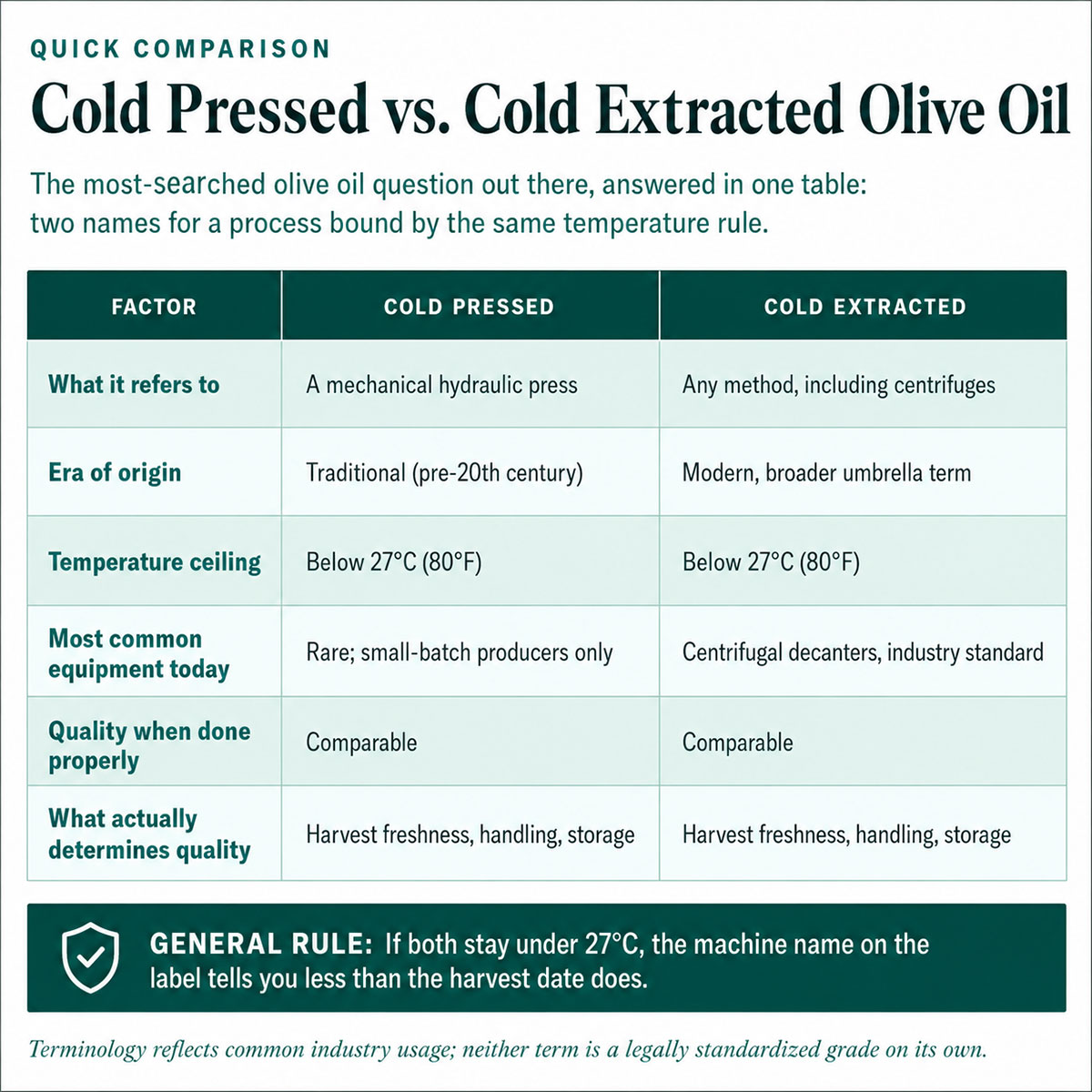
The confusion is understandable. A century ago, “cold pressed” meant something precise. Today it survives mostly as a marketing phrase stapled onto a process that still rarely involves an actual press.

What temperature is cold extraction?
27°C (80°F) is the number, and it isn’t arbitrary. International olive oil standards fix it there because that’s roughly where heat-sensitive polyphenols and aromatic compounds start to degrade, and where the enzymatic activity behind a fresh oil’s flavor complexity begins shutting down. Producers chasing the “cold extracted” or “extra virgin” label have to keep the entire process, crushing, mixing, and separating, under that line.
The production process
Getting from olive tree to bottle involves seven steps, and cutting corners at any one of them shows up in the final oil.
- Harvesters pick the olives at optimal ripeness, usually by hand or with gentle mechanical shakers.
- Workers wash the olives to remove leaves, twigs, and other debris.
- Stone mills or modern stainless steel crushers grind the olives, pits included, into a paste.
- The paste is slowly mixed for 20 to 40 minutes in a process called malaxation, which lets tiny oil droplets merge into larger, more extractable ones.
- Centrifugation or pressing separates the oil from the water and solid matter left behind in the paste.
- Some producers filter the finished oil to remove remaining particles, while others bottle it unfiltered.
- The oil moves into stainless steel tanks, kept away from light and heat, until it’s bottled.
Temperature control has to hold through every one of those steps. A facility that nails steps one through six and lets the paste overheat during malaxation has still made a lesser oil.
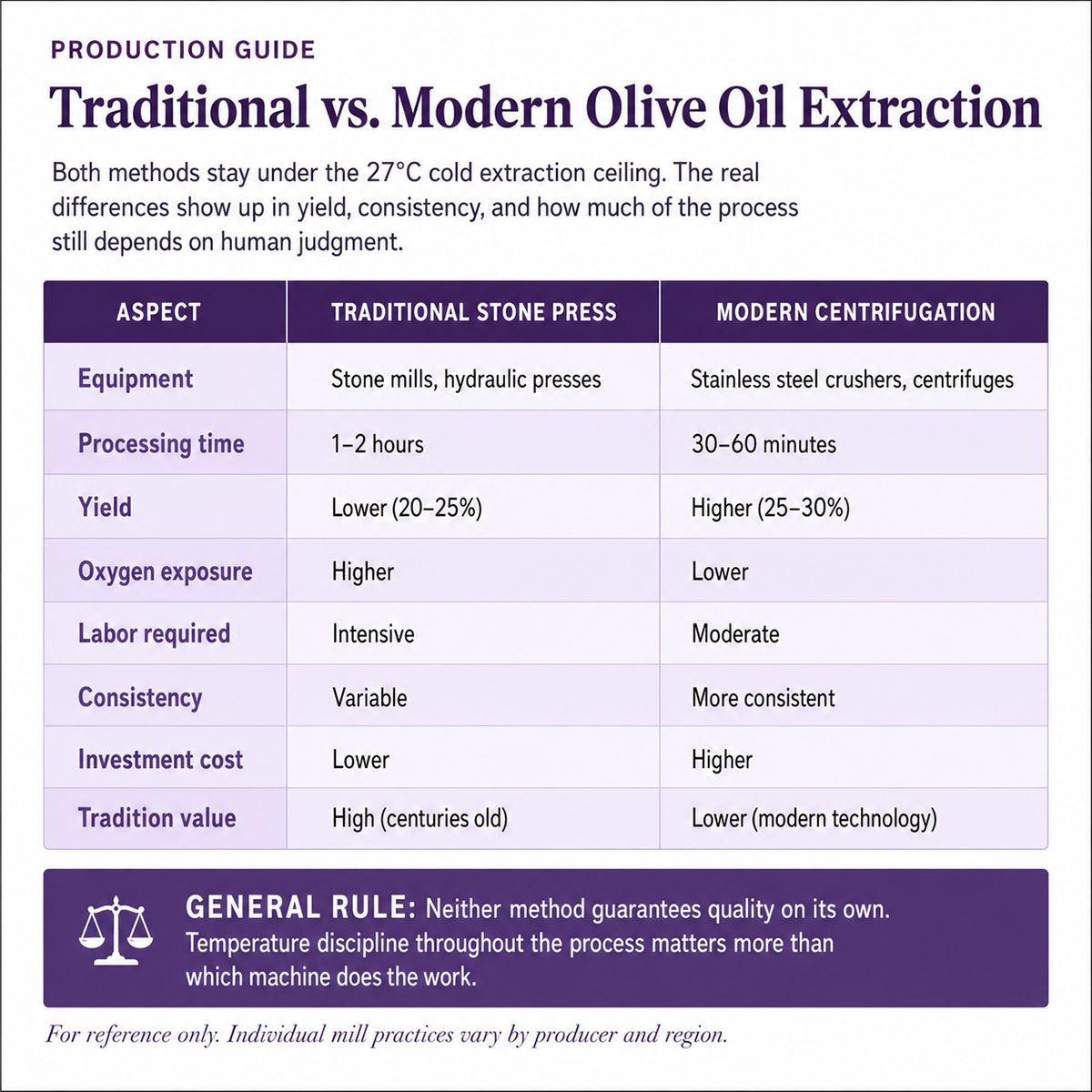
Traditional vs. modern extraction methods
The equipment has changed more than the underlying principle.
How do you cold extract oil?
Most commercial cold extraction today follows a specific centrifugal sequence. Stainless steel mills crush the olives into paste first, and that paste undergoes malaxation at carefully controlled temperatures.
A horizontal centrifuge, called a decanter, separates the oil from water and solids next, and a second, vertical centrifuge purifies it further. The oil may then be filtered or bottled as-is.
Small producers, particularly across parts of Spain, Italy, and Greece, still rely on traditional stone mills and hydraulic presses. The equipment differs. The temperature discipline does not.
Nutritional profile
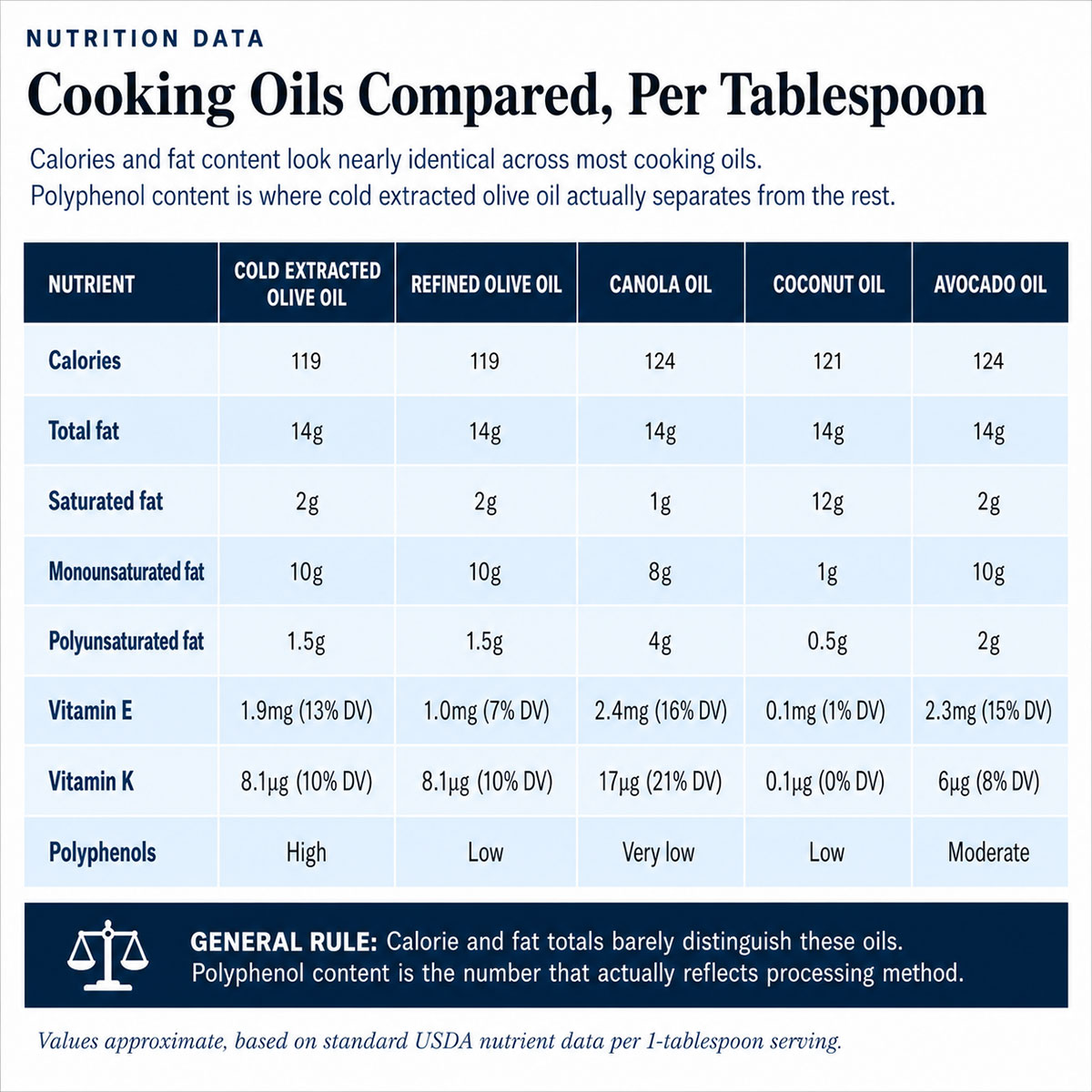
A tablespoon of cold extracted olive oil carries a fairly predictable macronutrient profile. The real story is in what heat-based processing strips out of it.
The oil is built mostly around monounsaturated fat, primarily oleic acid, the fatty acid most closely tied to olive oil’s cardiovascular reputation. It also carries vitamin E, an antioxidant, and vitamin K, which supports blood clotting and bone metabolism. What actually separates cold extracted oil from its refined counterpart is the polyphenol content: plant compounds with antioxidant and anti-inflammatory activity that heat-based extraction destroys almost entirely.

Nutritional comparison of different cooking oils (per tablespoon)
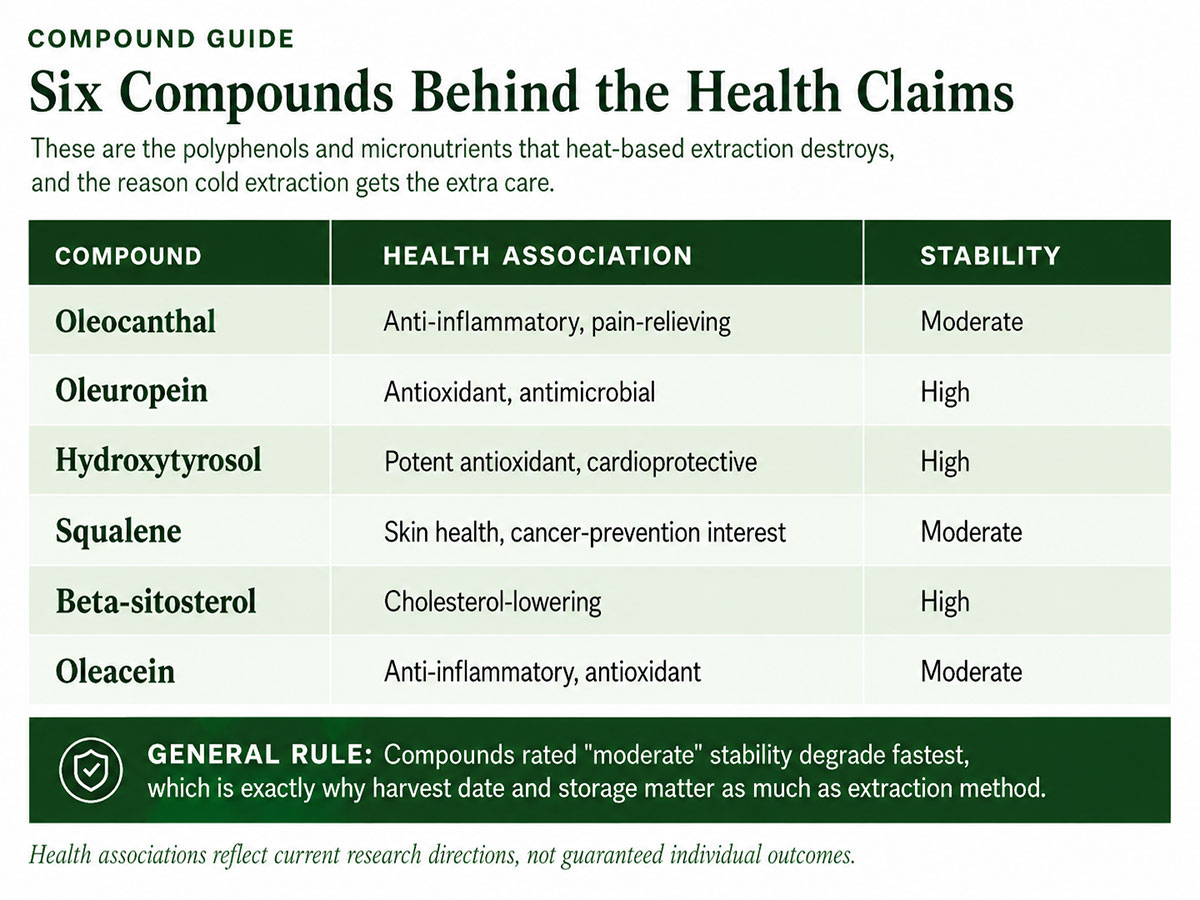
Key bioactive compounds in cold extracted olive oil
Six compounds do most of the work, and several of them resurface throughout the health benefits below.
Health benefits
Five separate benefits are attributed to this oil, and they don’t all rest on the same foundation. One comes from the largest randomized dietary trial ever conducted. Two come out of mouse cages and cell culture dishes. That distinction matters more than most olive oil write-ups let on, and it’s worth carrying through each of the five sections below.
Heart health: the strongest case in this article
For years, doctors treated dietary fat with blanket suspicion. Then a Spanish research team ran the largest randomized trial ever conducted on a dietary pattern for cardiovascular prevention, and the results were good news for fat.
The PREDIMED trial, published in the New England Journal of Medicine, split more than 7,000 older adults at high cardiovascular risk into three groups: a low-fat control diet, a Mediterranean diet supplemented with mixed nuts, and a Mediterranean diet supplemented with extra-virgin olive oil. After a median of five years, the olive oil group had roughly 30% fewer major cardiovascular events, meaning heart attack, stroke, or cardiovascular death, than the control group.
That’s a bigger effect than most dietary interventions ever produce.
Researchers attribute much of it to oleic acid’s influence on LDL cholesterol, working alongside anti-inflammatory polyphenols that appear to protect the lining of blood vessels directly. This is the one claim in this article backed by a large, randomized, decade-spanning trial rather than a lab dish or a mouse cage.
Anti-inflammatory effects: the ibuprofen connection
Why does a good bottle of fresh olive oil sting the back of your throat? That peppery burn led directly to one of the more unusual discoveries in olive oil research.
In 2005, Monell Chemical Senses Center biologist Gary Beauchamp noticed the sensation matched something he recognized from an old study on liquid ibuprofen. His team went looking for the overlap and found it: a compound called oleocanthal, present in fresh extra-virgin olive oil, that inhibits the same COX enzymes ibuprofen does.
Published in Nature, the researchers calculated that about 50 grams of oil, roughly four tablespoons, delivers anti-inflammatory activity equal to about 10% of a standard adult ibuprofen dose.
That’s not a reason to swap out a medicine cabinet for a salad dressing. It’s a reasonable explanation for one piece of the Mediterranean diet’s long-standing anti-inflammatory reputation, and a decent argument for arthritis sufferers to make sure olive oil, not a refined substitute, is their default cooking fat.
Cancer risk: a promising mechanism, not a proven outcome
Here the evidence gets thinner, and it’s worth saying so.
Laboratory work has shown that oleocanthal can rupture the lysosomes inside cancer cells, the internal compartments holding the cell’s own digestive enzymes, causing those enzymes to spill out and destroy the cell from within.
Researchers published the mechanism in Molecular & Cellular Oncology, and a follow-up study found that oleocanthal-rich extra-virgin oils reduced tumor growth in mice bred to develop pancreatic tumors, while oleocanthal-poor oils did not. Healthy cells were largely unaffected in both studies, likely because their lysosomal membranes are more stable to begin with.
Population data points in a similar direction, if more loosely. A 2022 meta-analysis pooling 45 studies found that people with the highest olive oil intake had roughly a third lower risk of any cancer, with the clearest signal for breast and gastrointestinal cancers.
Colorectal cancer specifically didn’t reach statistical significance in that same analysis, a useful reminder that “olive oil and cancer” isn’t a single finding so much as a scattered evidence base, with some strong signals and others that don’t hold up as well.
None of this is a human clinical trial. It’s cell cultures, mouse models, and observational cohorts, each useful on its own terms, none conclusive by itself.
Brain health: solid mechanism, animal evidence so far
Temple University neuroscientist Domenico Praticò spent years tracing how the Mediterranean diet might slow Alzheimer’s, and his lab landed on a specific mechanism worth naming: autophagy, the process cells use to clear out their own debris.
In a study published in the Annals of Clinical and Translational Neurology, mice bred to develop Alzheimer’s-like pathology were fed a diet enriched with extra-virgin olive oil starting before symptoms appeared.
By nine months, the olive oil group performed better on memory and learning tests, and showed fewer amyloid-beta plaques and tau tangles, the two brain changes most closely tied to the disease, than mice on a standard diet. Praticò’s team credits the effect largely to olive oil activating autophagy in brain tissue.
It’s a mouse study, not a human one, and that distinction matters more here than almost anywhere else in this article. Mouse models of Alzheimer’s have a long history of promising results that didn’t carry over cleanly to people. The mechanism is credible, but whether it holds up in a human brain is still an open question researchers are actively working through.
Blood sugar: a small trial, a striking number
A four-year study of just 418 people produced one of the more striking numbers in this entire article: a nearly 50% drop in new type 2 diabetes diagnoses.
A three-arm trial called PREDIMED-Reus is where that number comes from. Researchers split 418 participants without diabetes between a low-fat control diet and a Mediterranean diet supplemented with a full liter of olive oil per week.
The olive oil group’s diabetes incidence came in at 10.1%, against 17.9% in the control group, a relative reduction of around 44%, according to the trial results in Diabetes Care. When combined with the trial’s other Mediterranean diet arm, supplemented with nuts instead of oil, the overall reduction across both intervention groups was roughly 52%.
It’s a smaller, earlier trial than the main PREDIMED cardiovascular study, and it ran at a single site in northeastern Spain. The direction of the finding lines up with the larger trial’s results. The exact size of the effect is still being refined.
Culinary applications
None of that evidence matters much if the oil never makes it into a pan. The good news is that cold extracted olive oil earns its versatility from a flavor and chemical profile that heat-processed oils simply don’t have.
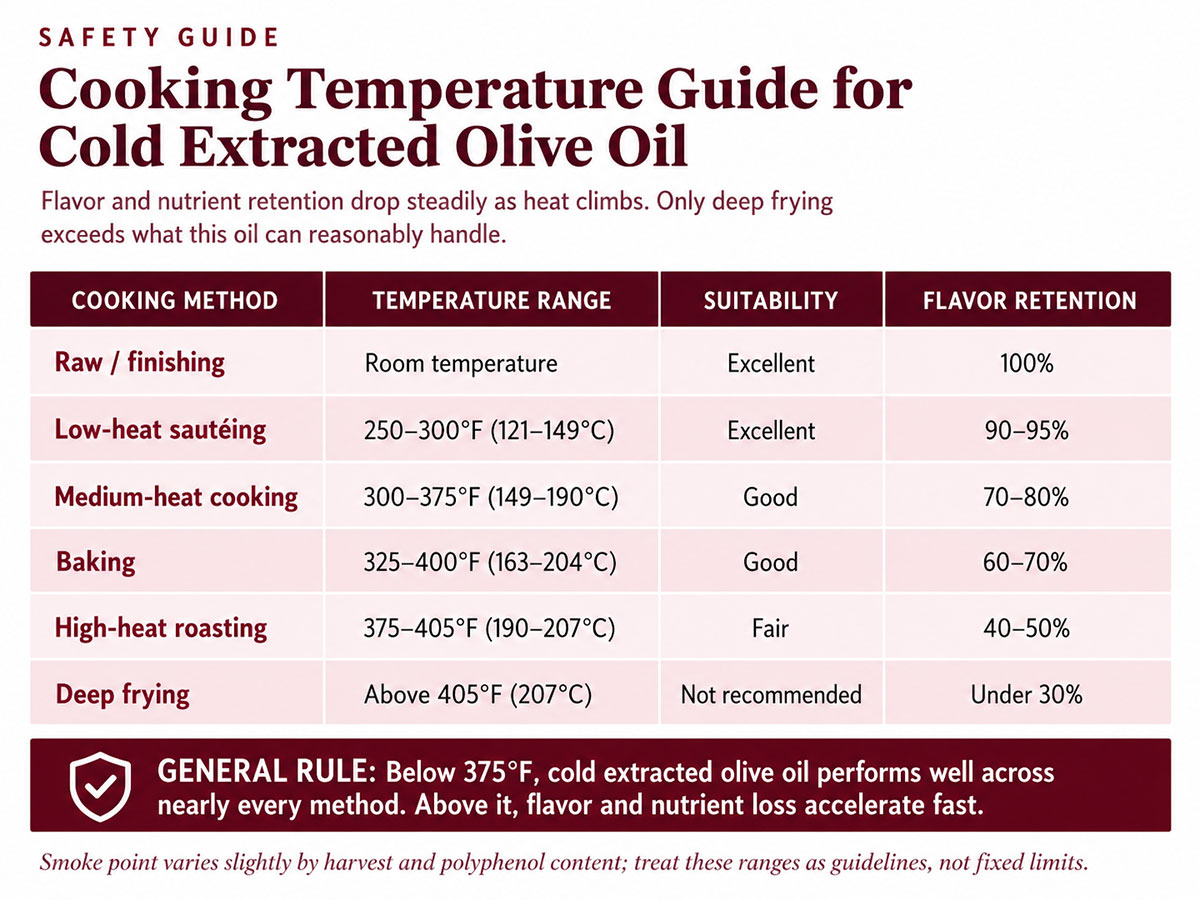
Cooking temperature guide for cold extracted olive oil
The oil holds up better under heat than most people assume, though not without limits.
What Can You Actually Cook With This?
Pick a cooking method to see how cold extracted olive oil holds up.
Raw applications
- Salad dressings and vinaigrettes make full use of the oil’s raw flavor.
- A finishing drizzle over a cooked dish adds a layer of flavor that heat can’t replicate.
- Bread dipping showcases the oil’s fruitiness directly, without anything else competing for attention.
- Cold sauces like pesto or aioli depend on raw olive oil for their character.
Cooking applications
- Sautéing vegetables at low to medium heat stays comfortably within the oil’s range.
- Roasting at moderate temperatures preserves more flavor than high-heat methods do.
- Marinades benefit from the oil’s antioxidant content, which helps protect proteins during cooking.
- Some bakers substitute it for butter in specific recipes, trading richness for a fruitier, moister crumb.
Can you cook with cold extracted olive oil?
Yes, despite a persistent myth that it can’t handle heat. Quality cold extracted olive oil has a smoke point of 375 to 405°F, which covers nearly every home cooking method short of deep frying. Its antioxidant content actually helps it resist oxidative breakdown during cooking better than many refined oils manage.
Can you infuse olive oil without cooking?
Yes. Cold infusion preserves the qualities of both the oil and whatever you’re infusing it with.
- Start with clean, dry herbs, spices, or citrus zest.
- Combine them with cold extracted olive oil in a clean jar.
- Seal it and store it in a cool, dark place for one to two weeks.
- Strain out the solids and transfer the oil to a clean bottle.
- Use it within a month, and keep it refrigerated.
Garlic and fresh herb infusions carry a genuine botulism risk if they aren’t prepared and stored properly, which is exactly why the steps above matter.
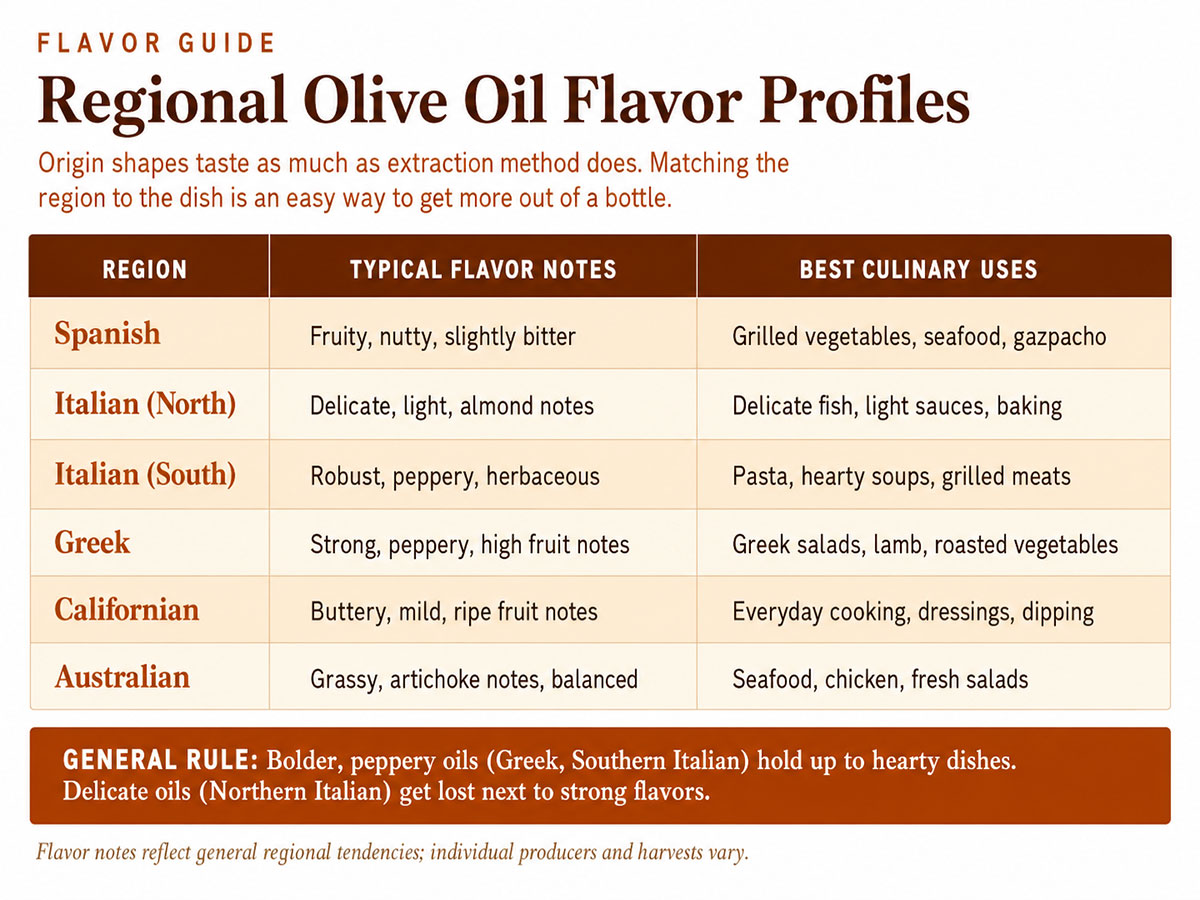
Regional flavor profiles
How to select quality cold extracted olive oil
Finding a genuinely good bottle takes more effort than reading the front label.
Label reading
- A “cold extracted” or “cold pressed” claim on the label is a starting point, though not proof on its own.
- An “extra virgin” designation signals the highest quality grade available.
- A harvest date, not just a best-by date, tells you how fresh the oil actually is.
- A dark glass bottle protects the oil from the light exposure that degrades it fastest.
Certification standards

- International Olive Council (IOC) approval carries global weight.
- Protected Designation of Origin (PDO) or Protected Geographical Indication (PGI) status applies to specific European regional oils.
- The California Olive Oil Council (COOC) seal certifies American-made oils against a standard stricter than federal law requires.
- The North American Olive Oil Association (NAOOA) seal offers a similar quality check for oils sold across the US.
How to tell if olive oil is cold pressed/extracted
- Check the bottle for a recognized certification seal.
- Look for a harvest date within the past 12 to 18 months.
- Read the label for precise language like “cold extracted,” “first cold press,” or “extra virgin,” rather than vaguer marketing terms.
- Expect to pay for it. Genuinely cold extracted oil is rarely the cheapest option on the shelf.
- Taste it. A good cold extracted oil should show fruity, bitter, or peppery notes, sometimes all three at once.
- Check the packaging. Dark glass, tin, or stainless steel all protect against light exposure.
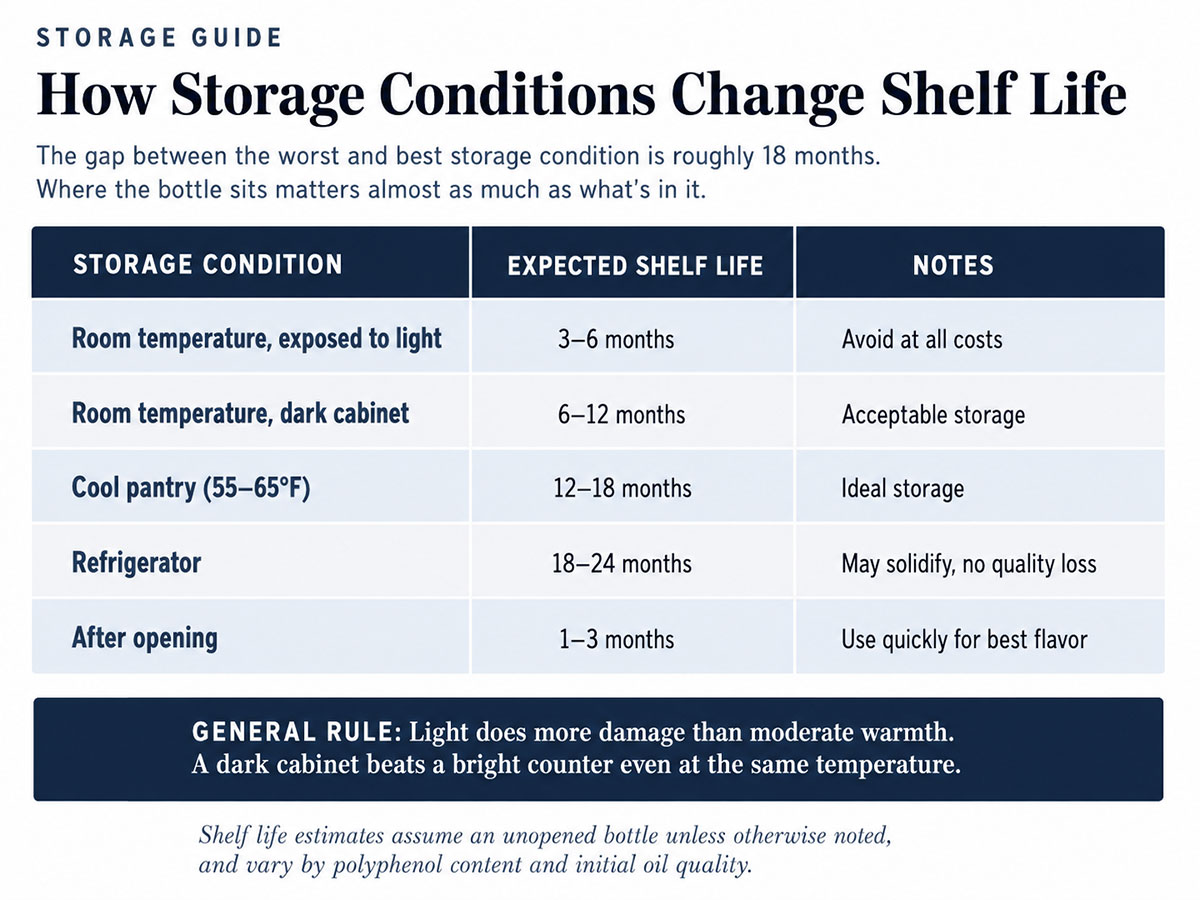
Storage recommendations and shelf life
Even the best bottle degrades faster than most people expect once it leaves the store.
Common misconceptions
“First cold press” terminology
Modern production almost never involves an actual press anymore. Centrifugation does nearly all the work now. “First cold press” survives as a phrase because it sounds artisanal, not because it describes what happens inside most modern mills.
Extra virgin vs. cold extracted
All extra virgin olive oil is cold extracted, but not all cold extracted oil qualifies as extra virgin, which also requires clearing additional chemical and sensory standards beyond the temperature threshold alone.
Is cold pressed olive oil the same as unrefined?
Not exactly. All cold pressed oils are unrefined, but the reverse isn’t true. Unrefined only means no chemicals or excessive heat were used, and an unrefined oil can still have exceeded the cold extraction temperature threshold at some point during processing.
Is unfiltered or cold pressed olive oil better?
This comparison doesn’t really hold up because the two terms describe different things entirely. Cold pressed refers to the extraction temperature. Unfiltered refers to whether olive particles remain in the oil after extraction, and an oil can be both cold pressed and unfiltered at the same time. Unfiltered versions carry more polyphenols but have a shorter shelf life, so the better choice comes down to whether a bolder flavor or a longer-lasting bottle matters more to you.
Cooking myths

The idea that cold extracted olive oil can’t handle heat is mostly nothing more than a myth. Quality versions have smoke points of 375 to 405°F, which handles sautéing, roasting, and baking without issue. High-heat frying is really the only method that exceeds what this oil can reasonably handle.
Disadvantages of cold extracted olive oil
Higher cost
Cold extraction pulls less oil out of the same batch of olives than heat-based methods do, and the more careful handling and smaller-scale production add further expense on top of that.
Shorter shelf life and storage sensitivity
The same polyphenols responsible for this oil’s health reputation are also its weakness. They’re chemically unstable, which is why cold extracted oil has a shorter shelf life than its refined counterparts, and why light, heat, and oxygen degrade it faster than they degrade a bottle of something more processed. Careful storage isn’t optional the way it is with a neutral cooking oil. It’s the price of the polyphenols in the first place.
Stronger flavor
The robust, sometimes peppery flavor profile can overwhelm dishes where a neutral oil would serve better.
Lower smoke point
Cold extracted olive oil has a lower smoke point than heavily refined oils, which rules it out specifically for high-heat frying.
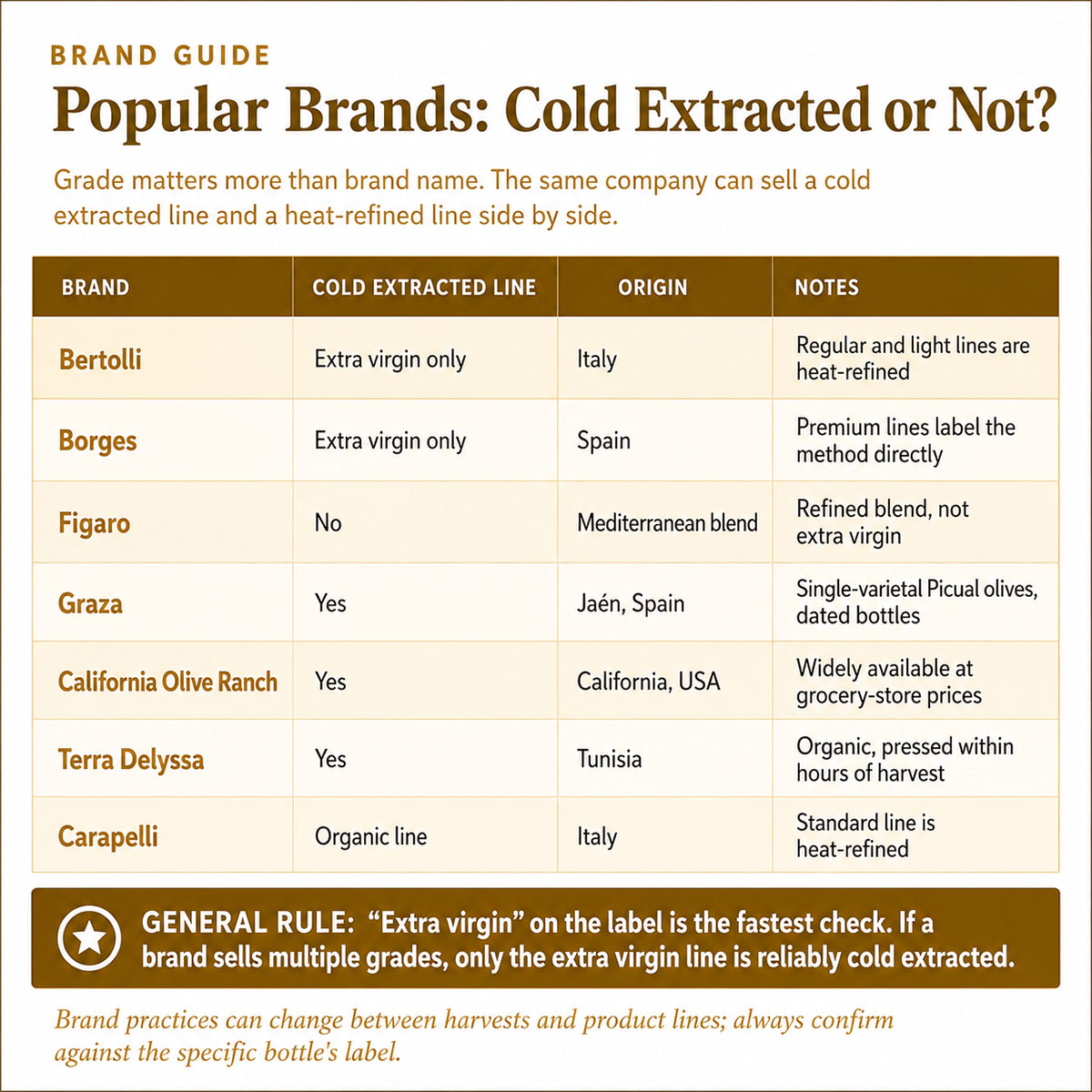
Popular olive oil brands and cold extraction
Is Bertolli olive oil cold pressed?
Bertolli’s extra virgin line is cold extracted. Their standard and light olive oils go through heat-based refinement instead, so the “extra virgin” designation on the label is the detail worth checking before buying.
Is Borges olive oil cold pressed?
Borges extra virgin olive oil is cold extracted, and the brand’s premium lines tend to advertise the production method directly on the label.
Is Figaro olive oil cold pressed?
Figaro is primarily a refined olive oil blend, not a cold extracted product. Heat processing during production disqualifies it from either the cold pressed or cold extracted category.
A handful of other widely available brands are worth knowing where they stand.
Conclusion
That 27°C threshold from the opening isn’t a technicality. It’s the difference between an oil that still contains the compounds researchers have spent two decades studying and one that’s lost most of them to heat before it ever reaches a bottle.
The health case for cold extracted olive oil is real, but it isn’t one case. It’s five, resting on wildly different amounts of evidence, and the honest version of this oil’s reputation holds the heart-health data with real confidence while holding the cancer and Alzheimer’s research more loosely, as promising leads rather than settled facts. That distinction won’t show up on any label. It’s worth carrying into the kitchen anyway.
FAQs
What is the healthiest olive oil to use?
Extra virgin, cold extracted olive oil is the standout choice, thanks to its polyphenol content and minimal processing. A harvest date within the past year is the best indicator of how much of that content is still intact.
What is the next healthiest oil to olive oil?
Avocado oil is the closest competitor, with a similar monounsaturated fat profile, a high smoke point, and a mild flavor that works in more dishes. Unrefined sesame oil and walnut oil round out the list for specific uses.
Why is cold-pressed oil expensive?
It yields less oil per olive than heat-based extraction, roughly 20 to 30 percent less, and the more careful handling and smaller production scale add cost on top of that.
How long does cold pressed olive oil last?
Properly stored and unopened, it typically holds for 12 to 18 months from the harvest date. Once opened, plan to use it within one to three months for the best flavor and nutritional value.

Is cold olive oil healthy?
Yes. It’s among the healthiest cooking fats available, carrying monounsaturated fats, antioxidants, and anti-inflammatory compounds linked to reduced cardiovascular risk, along with more preliminary links to certain cancers and cognitive decline.
What type of olive oil is best for cooking?
For most home cooking, up to about 375°F, cold extracted extra virgin olive oil handles the job well despite its reputation otherwise. Only at deep-frying temperatures does refined, lighter olive oil pull ahead on smoke point, at the cost of the health benefits that come with the cold extracted version.
Is it safe to drink cold pressed olive oil?
Yes. A tablespoon or two on its own is safe and, for many people, part of a long Mediterranean tradition of taking olive oil straight, often first thing in the morning.
Should I drink water after taking olive oil?
There’s no medical need to. Some people drink water afterward simply to clear the taste or texture, but it’s a preference rather than a requirement.
What is the difference between hot extraction and cold extraction?
Hot extraction uses temperatures above 27°C to pull more oil out of the same batch of olives. Cold extraction stays under that line, trading yield for the heat-sensitive compounds that give the oil its flavor and health properties.
Does extra virgin mean cold pressed?
Yes, by definition. Extra virgin olive oil must be cold extracted below 27°C, though it also has to clear additional chemical and sensory standards that a merely cold-pressed oil doesn’t have to meet.
Which is better, cold pressed or cold extracted?
Neither, really. The terms describe two eras of the same process: cold pressed points to the old hydraulic-press method, cold extracted covers the centrifuges that dominate production now, and oil quality comes down to how well either method was executed, not which name sits on the label.
Can I use cold extracted olive oil for frying?
For most frying, yes. Its smoke point of roughly 375 to 405°F comfortably covers pan-frying and sautéing. Deep frying, which routinely climbs above 405°F, is the one method where a refined oil with a higher smoke point makes more practical sense.
At what temperature should you not use olive oil?
Stay under its smoke point of approximately 375 to 405°F (190 to 207°C). Beyond that range, the oil starts breaking down into compounds that taste worse and may be less healthy to consume.