Most people assume probiotics are the reason fermented vegetables work. One clinical trial found something that challenges that idea entirely.
In 2021, researchers at Stanford University ran a ten-week trial comparing two diets. One group increased their fiber intake with legumes, whole grains, and vegetables. The other group added more fermented foods to every meal: kimchi and other fermented vegetables, kefir, and yogurt.
By the end of the study, the fiber group’s gut microbiomes had barely changed. In the fermented food group, 19 inflammatory proteins had decreased in the blood, gut microbial diversity had increased, and 4 types of immune cells showed reduced activation across the entire cohort.
“We expected high fiber to have a more universally beneficial effect,” said Erica Sonnenburg, a senior research scientist at Stanford. The data said otherwise.
That finding, published in Cell by Hannah Wastyk, Gabriela Fragiadakis, and senior author Justin Sonnenburg, reframes what fermented vegetables are actually doing. These are not simply probiotic delivery systems. They change the gut’s immunological environment in ways that a fiber-rich diet, at least over 10 weeks, does not.
Fifteen fermented vegetables. One honest ranking of what the evidence actually shows, including a finding about sauerkraut that changes how you should read every fermentation label.
How These Foods Were Ranked
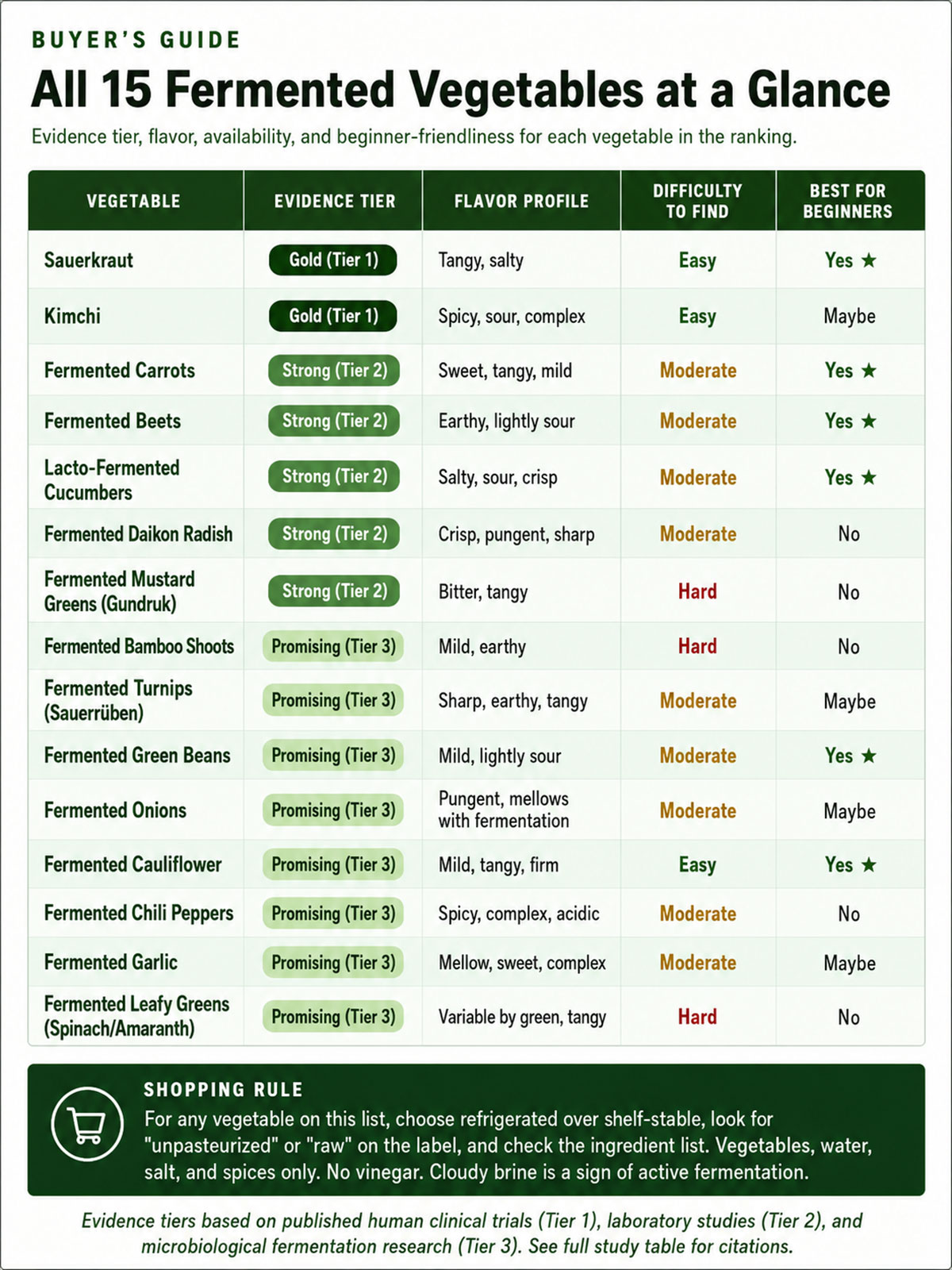
The rankings use a three-tier system based on evidence quality. Tier 1 includes vegetables tested in human clinical trials. Tier 2 covers foods backed by laboratory studies that have measured how they produce beneficial compounds or affect bacterial populations. Tier 3 contains vegetables with documented microbiological activity in fermentation research, where human trials have not yet been conducted.
One qualifier is worth stating before the list begins. The Nielsen sauerkraut trial, the only published randomized trial studying a fermented vegetable specifically in people with IBS, found that both the pasteurized and unpasteurized groups improved significantly. That finding has implications throughout this ranking system and is explained in full in the sauerkraut entry below.
Gold Standard (Tier 1): Foods tested in human clinical trials with measurable gut health outcomes.
Strong Support (Tier 2): Foods backed by laboratory studies showing they produce beneficial compounds such as short-chain fatty acids, or that they host reliable LAB populations during fermentation.
Promising Research (Tier 3): Foods with solid microbiological evidence, where human clinical trials are not yet available.
Find Your Perfect Fermented Vegetables
Find Your Perfect Fermented Vegetables
Answer 6 questions to get personalized recommendations
What's your main health goal?
How adventurous is your palate?
Have you eaten fermented vegetables before?
How sensitive is your stomach?
Do you follow any dietary restrictions?
How easy do you want it to be?
Tier 1: The Clinical Powerhouses
These two vegetables have the strongest scientific backing. Human clinical trials have measured changes in gut bacteria populations, reductions in IBS symptom severity, and shifts in immune markers from consuming them.
1. Sauerkraut (Fermented Cabbage)
Sauerkraut sits at the top of this ranking on the strength of its clinical evidence, and on the strength of what that evidence specifically revealed. In 2018, Elsa Sandberg Nielsen and her team at the University of Copenhagen ran a randomized, double-blinded trial with 34 people diagnosed with IBS. One group ate 75 grams of unpasteurized sauerkraut daily for six weeks. The other group ate the same amount of pasteurized sauerkraut.
Both groups improved significantly in IBS symptom severity scores. The difference in improvement between the two groups was not statistically significant. Only the unpasteurized group showed higher counts of L. plantarum and L. brevis in their stool samples.
That finding is in contrast with how fermented vegetables are usually marketed. The prebiotic compounds produced during fermentation (organic acids, fiber degradation products, bioactive metabolites) may matter as much as, or more than, the live bacteria alone. The authors themselves noted the study was small at 34 participants, which means these conclusions are directional, not definitive. But the finding matters because it suggests that a quality pasteurized sauerkraut may offer more benefit than a poorly made raw version, and that the goal is the best fermented product you can reliably consume, not necessarily the most expensive raw jar on the shelf.
Sauerkraut contains multiple strains of lactic acid bacteria. The primary ones are Lactobacillus plantarum and Leuconostoc species, which produce organic acids that create an environment where beneficial microbes maintain their population. Raw cabbage contains glucosinolates. During fermentation, bacteria convert these into isothiocyanate compounds that have been studied for their antimicrobial properties and cancer-protective potential in population research.
How to buy it: Look for jars in the refrigerated section labeled “unpasteurized” or “raw.” Shelf-stable versions have been heat-treated. Per the Nielsen trial, a quality pasteurized product from the refrigerated section may still be worth choosing over a shelf-stable can.
Serving size: Start with 1 to 2 tablespoons daily. The Nielsen trial used 75 grams.
Simple Homemade Sauerkraut
Ingredients:
- 1 medium head cabbage (about 2 pounds)
- 1 tablespoon sea salt (non-iodized)
Instructions:
- Remove outer cabbage leaves. Set one aside. Slice the rest thin.
- Place sliced cabbage in a large bowl. Add salt.
- Massage the cabbage for 5 to 10 minutes until it releases liquid.
- Pack cabbage tightly into a clean glass jar. Press down firmly.
- Pour the released liquid over the cabbage. It should cover the vegetables completely.
- Place the reserved leaf on top. Weigh it down with a small glass or fermentation weight.
- Cover loosely. Leave at room temperature for 3 to 10 days. Taste from day 3.
- When it reaches your preferred tanginess, seal and refrigerate.
Storage: Keeps 2 to 6 months refrigerated. The fermentation continues slowly even in the refrigerator, deepening the flavor over time.
2. Kimchi (Napa Cabbage and Radish Base)
Kimchi is the most microbiologically complex fermented vegetable with human trial data. A 2024 randomized, double-blind trial with 90 overweight adults found that regular kimchi consumption significantly reduced body fat and produced measurable shifts in gut microbiota composition. Both kimchi groups in the trial showed increased populations of Akkermansia muciniphila, a bacterium associated with gut barrier integrity and metabolic health, alongside reduced levels of Proteobacteria, a bacterial group often elevated in gut dysbiosis.
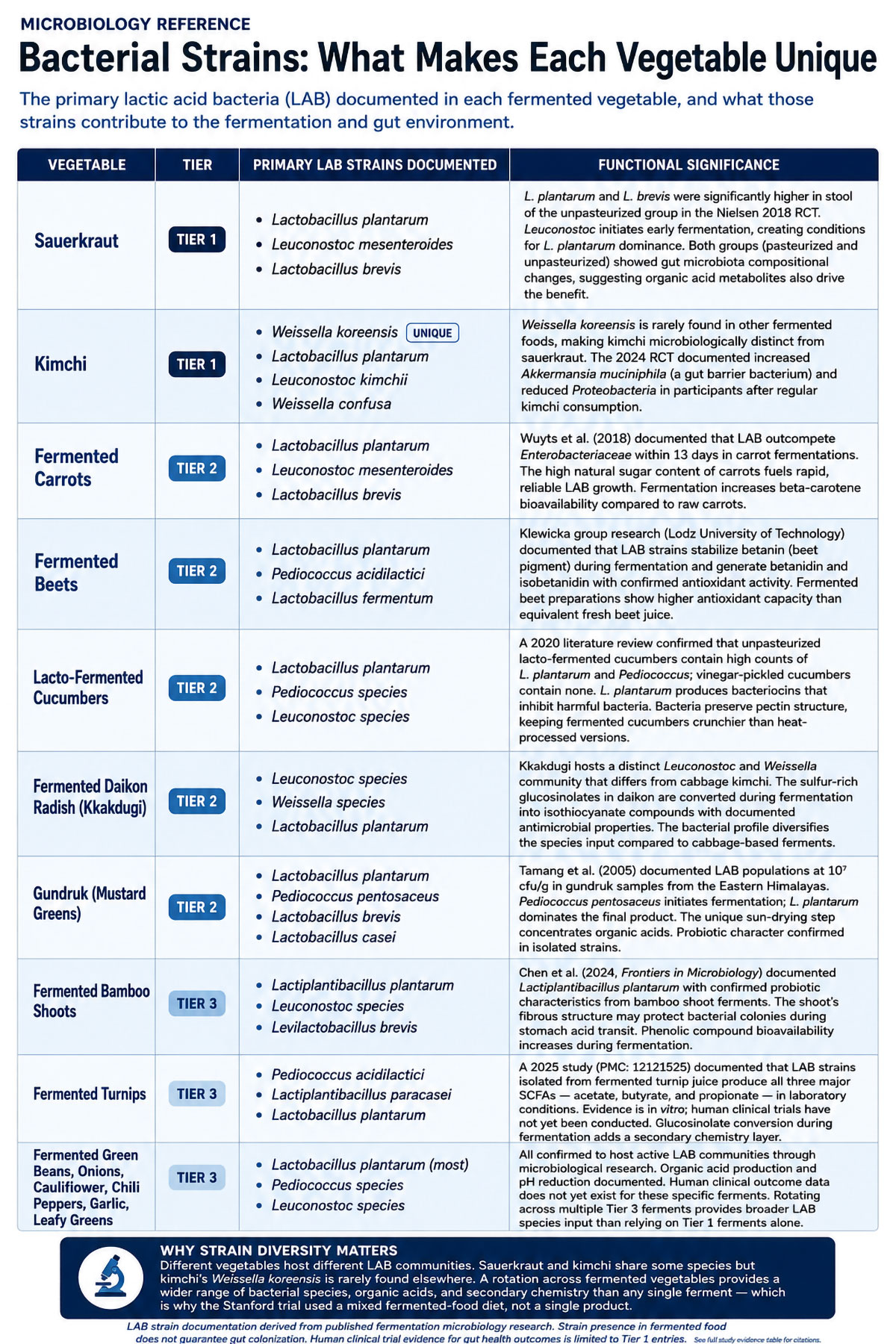
What makes kimchi distinctive is its bacterial profile. It contains Weissella koreensis, a strain rarely found in other fermented foods, alongside multiple Lactobacillus species. Earlier work published in Molecular Nutrition & Food Research found that eight weeks of kimchi consumption was associated with increases in Bifidobacterium abundance, and that this abundance was inversely linked to waist circumference. The mechanism appears to involve both the probiotic bacteria and the polyphenol compounds from garlic, ginger, and red pepper. Fermentation converts those polyphenols into more bioavailable forms.
The spicy, sour flavor comes from fermentation byproducts and chili. If you are new to fermented foods, the intensity can be adjusted. Try mixing a small amount into rice, soup, or scrambled eggs before eating it straight.
Types to try: Napa cabbage kimchi (baechu) is the most common. Radish kimchi (kkakdugi) offers similar benefits with a different texture.
Storage tip: Keep it tightly sealed. Fermentation continues in the refrigerator, making it tangier over weeks. Many people find the taste more complex and less sharp after two to three weeks of refrigeration.
Understanding Bacterial Strains: What Makes Each Vegetable Unique
Tier 2: Strong Lab Evidence
These vegetables show consistent results in laboratory studies. Researchers have measured how they affect bacterial populations, produce beneficial compounds, or transform their original chemical profile in ways that laboratory and animal models suggest are relevant to gut health. Human clinical trials are limited or absent.
3. Fermented Carrots
Carrots contain high natural sugar content, which supports robust bacterial growth during fermentation. Researchers at the University of Antwerp tracked 38 spontaneous carrot fermentations in 2018 and found that Lactobacillus and Leuconostoc species reliably displaced the initial bacterial population within two weeks. The result was a stable, LAB-dominant ferment. That study, led by Sander Wuyts and published in Applied and Environmental Microbiology, documented the ecological succession of bacteria in detail.
What the Wuyts documentation also confirmed (and what is worth noting for anyone buying fermented carrots for the first time) is that the fermentation process increases beta-carotene bioavailability compared to raw carrots. Raw carrots already have one of the better carotenoid profiles of any root vegetable. Fermented carrots deliver more of that carotene to the bloodstream. The lactic acid bacteria in carrot ferments produce short-chain fatty acids through their metabolic activity, the same organic compounds that feed the cells lining the colon and support the gut’s immune signaling. No human clinical trial has specifically measured carrot ferment consumption against a gut health outcome, so this entry sits in Tier 2 on the strength of the microbiology and the known mechanism.
Flavor profile: Sweet and tangy. Less intense than sauerkraut or kimchi. A good starting point for people new to fermented foods.
Beginner-Friendly Fermented Carrot Sticks
Ingredients:
- 1 pound carrots, cut into sticks
- 2 cups water
- 1 tablespoon sea salt (non-iodized)
- 2 garlic cloves (optional)
- 1 teaspoon peppercorns (optional)
Instructions:
- Dissolve salt in water to create brine.
- Pack carrot sticks vertically in a clean jar.
- Add garlic and peppercorns if using.
- Pour brine over carrots, leaving 1 inch of space at the top.
- Weigh down carrots to keep them submerged below the brine.
- Cover loosely and ferment 3 to 7 days at room temperature.
- Refrigerate when they reach the desired tanginess.
Tip: Carrots retain their crunch through fermentation. They are ready when they taste pleasantly sour with a still-firm texture.
4. Fermented Beets
Beets contain nitrates that support blood vessel function, and fermentation extends that profile. Research from Lodz University of Technology, including work from E. Klewicka’s group on lacto-fermented beetroot, has documented that fermentation with Lactobacillus strains stabilizes betanin (the pigment responsible for beets’ deep red color) while generating new betalain compounds, including betanidin and isobetanidin, that have demonstrated antioxidant activity in laboratory models. Separate work in Food Chemistry confirmed higher antioxidant activity in fermented beet preparations compared to equivalent fresh beet juice preparations.
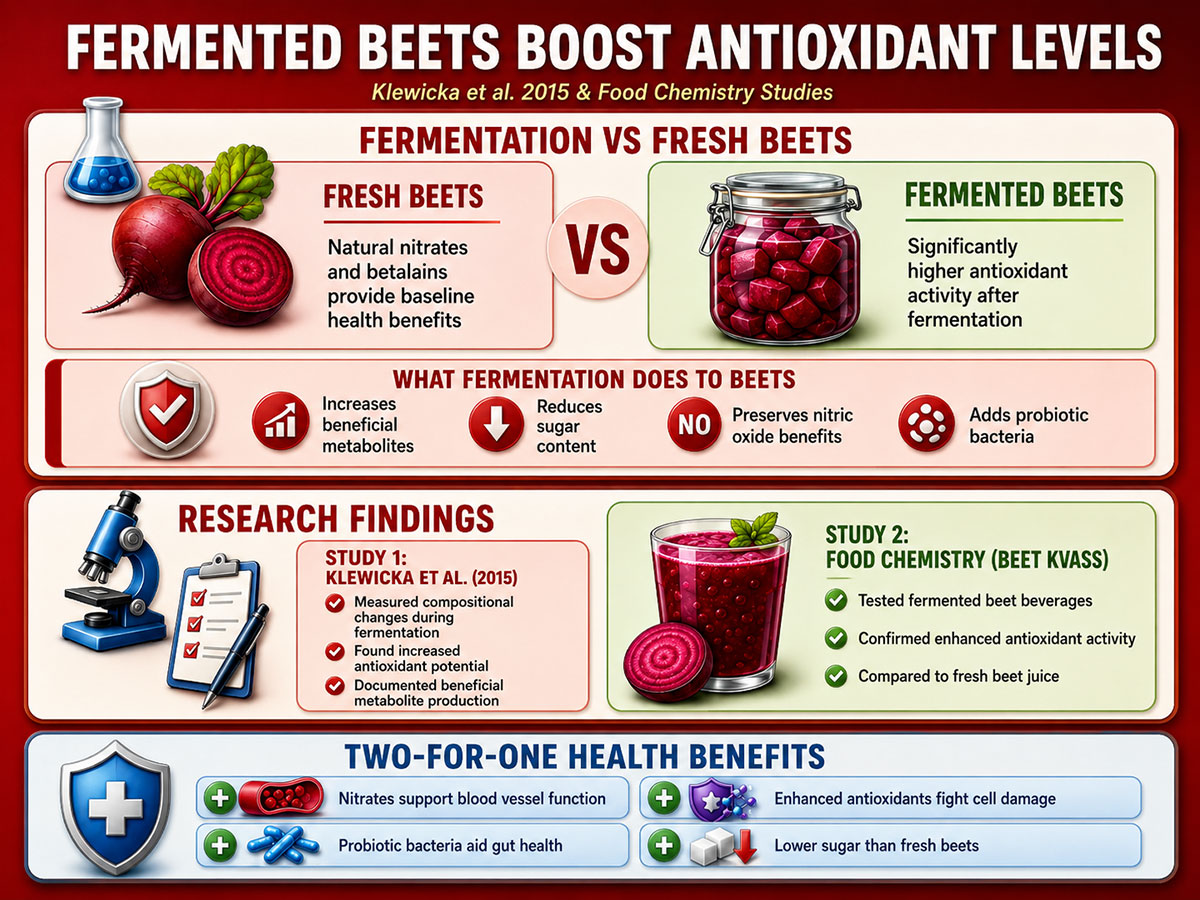
Fermentation also reduces the natural sugar content as bacteria consume it, which means fermented beets carry a lower glycemic load than raw beets. The nitrate content, which supports nitric oxide production and vascular health, remains present after fermentation.
Fermented beets sit at the intersection of two mechanisms the Stanford trial measured: organic acids from fermentation that contribute to anti-inflammatory signaling, and nitrate compounds that support vascular endothelial function. No study has tested fermented beets against the specific inflammatory proteins Sonnenburg’s group tracked, but the chemistry runs in the same direction.
Forms available: Lacto-fermented beet slices or beet kvass, a fermented drink made from beets in brine. Beet kvass has a milder flavor than the slices and is a useful introduction.
Note: The Klewicka group’s work on beetroot fermentation spans multiple publications between 2006 and 2022, primarily from Lodz University of Technology. Readers seeking a specific citation should search PubMed for “Klewicka beetroot fermentation” to identify the most relevant paper for their purposes.
What Are Short-Chain Fatty Acids?
Short-chain fatty acids (SCFAs) are among the most important byproducts of fermented vegetable consumption. When lactic acid bacteria ferment plant fiber, they produce three primary SCFAs: butyrate, propionate, and acetate.
Butyrate is the primary energy source for the cells lining the colon. Population research, including long-running cohort studies, links elevated butyrate production to reduced colonic inflammation and lower colorectal cancer risk. Propionate travels to the liver, where it participates in blood sugar regulation and cholesterol synthesis. Acetate is the most abundant SCFA produced. The body uses it for energy and fat metabolism.
These compounds do more than fuel the gut lining. They send signals to the immune system, regulate inflammatory responses, and contribute to the integrity of the gut barrier, the layer of cells controlling what passes from the intestine into the bloodstream. The Stanford finding about inflammatory protein reduction aligns with this mechanism: more SCFA production from a fermented food diet may drive downstream reductions in systemic inflammation.
Carrots, beets, and onions rank well partly because their sugar and fiber profiles support substantial SCFA production during fermentation.
5. Lacto-Fermented Cucumbers (Traditional Pickles)
The label matters more with cucumbers than with any other vegetable on this list. Most pickles sold in mainstream supermarkets are vinegar pickles. They taste sour because of acetic acid, not lactic acid. They contain no live cultures. They are not fermented vegetables in any biologically meaningful sense. The distinction matters because cucumbers are the product most people reach for when they try to add fermented foods to their diet, and most of the time, they are buying the wrong thing.
A 2020 literature review on traditional fermented vegetable preparations confirmed that unpasteurized lacto-fermented cucumbers contain high counts of L. plantarum and Pediococcus species. Vinegar-pickled cucumbers contain none. Population research has linked fermented pickle consumption to greater gut bacterial diversity, though causality cannot be established from association data. Those associations were measured in populations consuming lacto-fermented products. The shelf-stable jar at the deli counter was not in those studies.
Real fermented pickles stay crunchier than vinegar versions because the bacteria do not break down pectin the way heat processing does. That texture difference is often the fastest diagnostic before reading the label. A pickle that snaps and tastes rounded-sour rather than sharp-from-vinegar is more likely to be the real product. The reliable confirmation is the ingredient list: cucumbers, water, salt, spices. No vinegar. Find it in the refrigerated section.
The reason precision here matters beyond label literacy: the Sonnenburg trial and the Nielsen sauerkraut study were measuring products that had actually undergone fermentation. Every health claim in this ranking rests on that specific chemistry. Buying a vinegar pickle means opting out of that chemistry entirely. Not a reduced version of the benefit. None of it.
6. Fermented Daikon Radish
Daikon differs from cabbage ferments because of its sulfur-rich glucosinolate compounds, which transform during fermentation into molecules with antimicrobial properties against harmful bacteria. Korean kkakdugi (cubed radish kimchi) has been studied in fermentation microbiology research and found to host Leuconostoc and Weissella species that develop a distinct bacterial profile from cabbage-based ferments, meaning daikon ferments may diversify the bacterial inputs to your gut beyond what sauerkraut and kimchi alone provide.
The evidence here is microbiological. We know the bacteria are present and active, and we know the glucosinolate conversion happens. Human clinical outcome data do not yet exist specifically for fermented daikon.
Texture: Crisp with a refreshing bite. The fermentation process reduces the raw sharpness.
Spice level: Varies widely depending on preparation. Some versions use minimal chili. Others are quite hot.
7. Fermented Mustard Greens (Gundruk)
Gundruk is a Himalayan staple that has been studied in food science research more rigorously than most of the Tier 3 vegetables. Research by Jyoti Prakash Tamang and colleagues, who have published extensively on traditional Asian fermented foods, documented the LAB populations and organic acid metabolites in traditional leafy-green ferments, including gundruk, confirming active Lactobacillus and Pediococcus communities and probiotic character in the Himalayan preparation method.
The compounds produced during gundruk fermentation include organic acids not found in fresh mustard greens. Observational research in populations that consume gundruk regularly has documented associations with appetite regulation and digestive health, though these associations come from communities that consume multiple traditional fermented foods, not controlled trials.
Cultural context: Common in Nepal, Bhutan, and parts of India. Often used in soups and stews, which means the bacteria are typically consumed before any cooking that might kill them.
Availability: Harder to find in Western stores. South Asian specialty markets often carry it, or it can be prepared at home with fresh mustard greens.
Understanding Glucosinolates: Why Cruciferous Vegetables Are Special
Cabbage, radish, turnips, mustard greens, and cauliflower all belong to the cruciferous family and contain sulfur compounds called glucosinolates. Fresh and raw, these compounds have mild biological effects. Fermentation changes the picture substantially.
Bacteria break glucosinolates down into isothiocyanates and related metabolites during fermentation. Population research has linked these compounds to reduced cancer risk, and laboratory research documents their antimicrobial effects against harmful gut bacteria and their role in activating detoxification enzymes in human cells. Fermented cruciferous vegetables deliver both the probiotic bacterial input and this secondary chemistry, which is why they appear across multiple tiers in this ranking despite varying levels of human trial evidence.
Tier 3: Bioactive Specialists
These vegetables have documented roles in fermentation microbiology research. Some contain unique compounds that fermentation transforms. Others deliver both probiotic bacteria and prebiotic fiber in one package. What they share is a limited human clinical data footprint: we know the biology is active, but we do not yet have the trials that would confirm what that biology produces in human health outcomes.
That limitation matters. A Tier 3 ranking here means “promising and worth including in a varied rotation,” not “no evidence.” The evidence simply stops at the level of microbiology rather than proceeding into clinical trials.
8. Fermented Bamboo Shoots
Bamboo shoots undergo a distinct structural change during fermentation. The fibrous scaffold of the shoot appears to protect bacterial colonies during transit through stomach acid, which may improve the survival rate of bacteria reaching the colon. Microbiological studies have confirmed that LAB strains with prebiotic activity develop in bamboo shoot ferments, and that phenolic compounds in the shoots are transformed into more bioavailable forms during fermentation. Research published in Frontiers in Microbiology (Chen et al., 2024) documented LAB colonization patterns in bamboo shoot fermentation, including Lactiplantibacillus plantarum with confirmed probiotic characteristics, which is why bamboo shoots appear here despite having no human clinical trials: the mechanism is unusually well-characterized for a Tier 3 entry.
Where to find them: Asian grocery stores carry fermented bamboo shoots in jars or vacuum-sealed packages. The texture softens during fermentation but retains some bite.
9. Fermented Turnips (Sauerrüben)
Turnips share the cruciferous family with cabbage and carry a distinct glucosinolate profile. Research isolating LAB strains from fermented turnip juice, including a 2025 study, has documented that Pediococcus acidilactici and Lactiplantibacillus paracasei strains isolated from turnip ferments produce all three major short-chain fatty acids (acetate, butyrate, and propionate) in meaningful quantities in laboratory conditions. The evidence is in vitro, not clinical, but the SCFA production mechanism is confirmed rather than inferred.
Glucosinolate conversion during fermentation produces sulfur compounds that have documented protective effects on gut tissue in laboratory models.
Traditional use: Common in German and Eastern European cuisines. Often paired with fatty meats to aid digestion.
Taste: Earthy with a sharp, tangy finish. Milder than radish but more assertive than fermented carrots.
10. Fermented Green Beans
Microbiological studies of traditionally fermented green beans have documented strong LAB activity and organic acid production. Organic acids lower the fermentation environment’s pH, inhibiting harmful bacteria while the LAB population grows. The research is microbiological. Human outcome data does not exist for this specific ferment, and that is a real distinction from Tier 1 and Tier 2 entries.
Green beans ferment reliably at home and carry a milder flavor than most fermented vegetables, making them a practical entry point for people building a diverse fermented food rotation.
Crunch retention: Green beans can go soft if fermented beyond seven to ten days. Look for batches that still have snap.
Serving ideas: Chop and add to salads, or eat straight from the jar as a snack with cheese.
11. Fermented Onions
Fermented onions offer what researchers call a synbiotic effect: they contain prebiotic fructooligosaccharides that feed beneficial bacteria in the gut, while the fermentation process adds probiotic LAB to that same substrate. Laboratory model research has found that fermented onions promote Bifidobacteria growth in simulated gut environments.
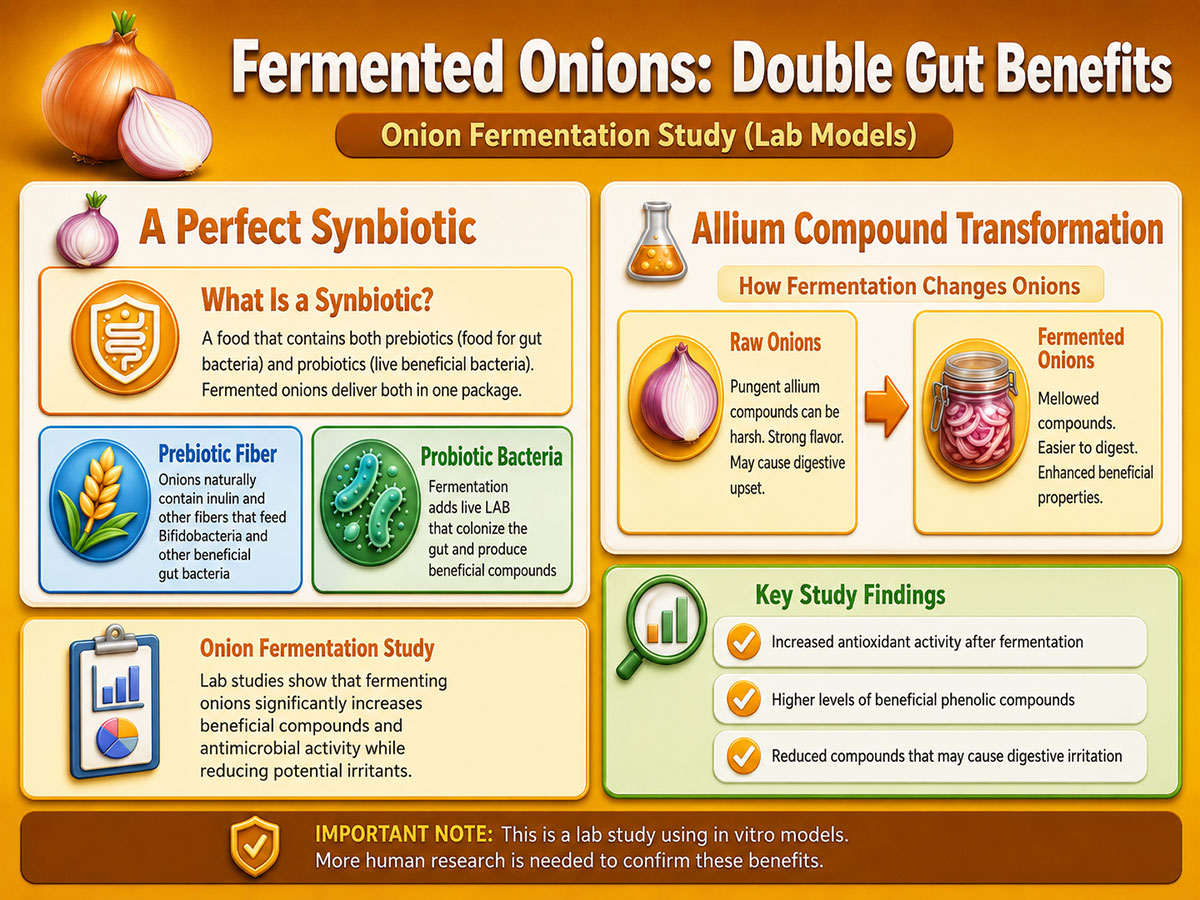
The pungent compounds that make raw onions sharp (especially the thiosulfinate group) are converted by fermentation into less reactive, more stable molecules. The prebiotic-plus-probiotic combination mirrors the dietary pattern the Stanford trial was measuring: not a single fermented product, but a rotation of foods providing both live bacteria and the substrate those bacteria need to establish in the colon.
For people on a low-FODMAP elimination protocol, fermented onions present a complication. Fermentation reduces fructan content but does not eliminate it. If you are in an active elimination phase, consult with a registered dietitian before including onions in any form.
Use them for: Topping grain bowls, folding into eggs, or as a condiment with fish and meat dishes. A few slices go a long way.
12. Fermented Cauliflower
Cauliflower appears frequently in mixed ferments like giardiniera for practical reasons: its dense structure protects bacterial colonies during transit through stomach acid, and it maintains texture through longer fermentation periods when softer vegetables would break down.
The vegetable contains glucosinolates that convert to sulforaphane and related isothiocyanates during fermentation. A review of traditional mixed vegetable ferments documented LAB increases and glucosinolate conversion in cauliflower ferments. The bioavailability enhancement for sulforaphane specifically requires further study in humans.
Texture advantage: Cauliflower stays firm and maintains its shape through fermentation, which is one reason it appears in so many commercial and traditional mixed pickle preparations.
Mixed Fermented Vegetables (Giardiniera Style)
Ingredients:
- 2 cups cauliflower florets
- 1 cup carrot slices
- 1 cup celery, chopped
- 1/2 cup red bell pepper, sliced
- 3 garlic cloves
- 1 tablespoon sea salt (non-iodized)
- 2 cups water
- 1 teaspoon red pepper flakes (optional)
Instructions:
- Dissolve salt in water to create brine.
- Pack all vegetables into a clean half-gallon jar.
- Pour brine over vegetables until completely covered.
- Weigh down vegetables to keep them submerged.
- Cover loosely and ferment 5 to 7 days at room temperature.
- Refrigerate when they reach the desired tanginess.
13. Fermented Chili Peppers
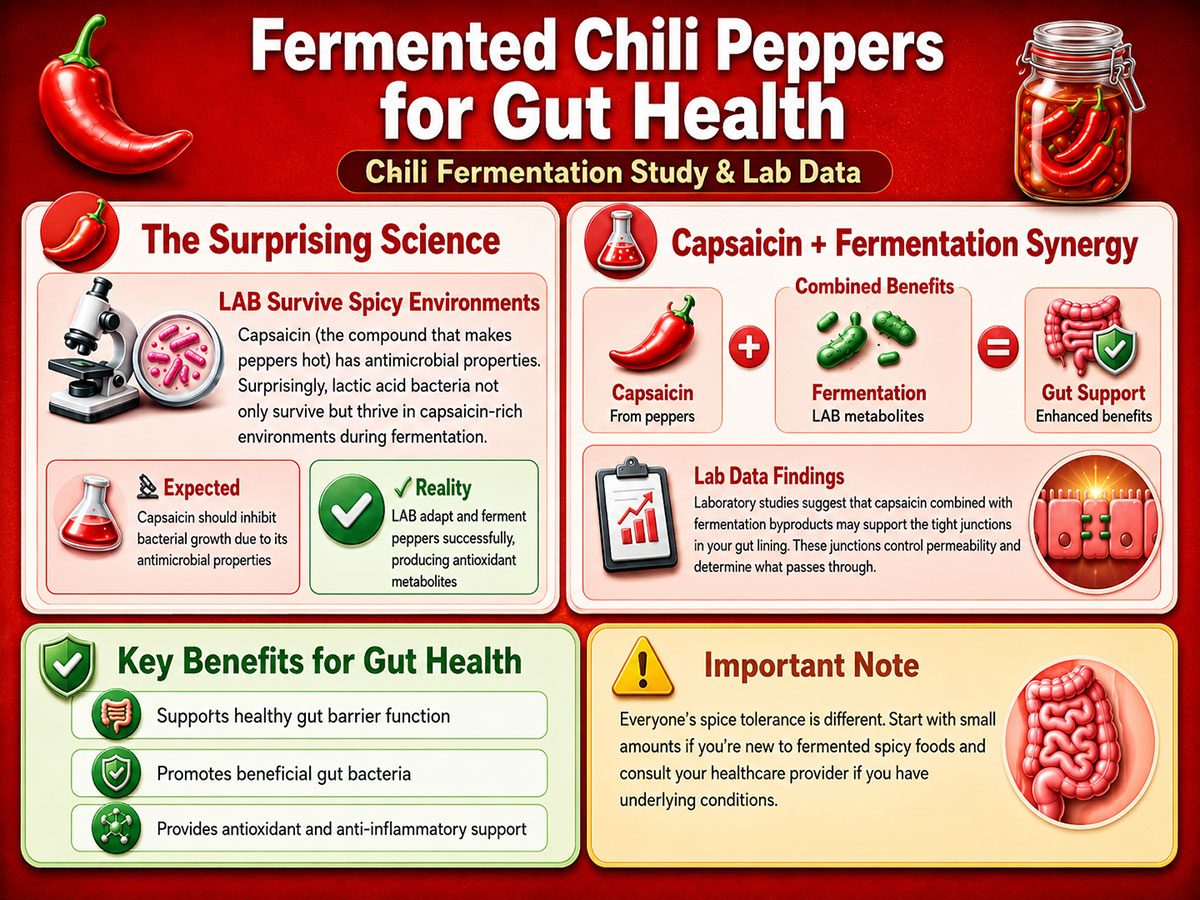
Capsaicin, the compound that makes chili peppers hot, has antimicrobial properties in laboratory settings. The fact that LAB strains can survive and ferment in capsaicin-rich environments is, on reflection, a meaningful observation about bacterial resilience.
Research on chili fermentation has documented that LAB outcompete initial bacterial populations and produce antioxidant metabolites in the process. Laboratory data indicate that the combination of capsaicin and fermentation-derived organic acids may support tight junction function in the gut lining, the cellular structure that controls permeability between the gut and bloodstream.
The evidence is laboratory-based. Capsaicin is also a direct gut irritant for some people, and fermented chili preparations should be introduced gradually for anyone with a sensitive digestive system.
Traditional versions: Mexican salsa fermentada, Korean gochujang (a fermented chili paste), and many Southeast Asian fermented chili preparations all use lacto-fermentation.
14. Fermented Garlic
Garlic presents an interesting tension in fermentation research. Its allicin compounds have documented antimicrobial properties against some bacterial species, which raises a question about whether fermented garlic suppresses the same beneficial bacteria it is supposed to feed.
A review on fermented and black garlic published in Food & Function documented that fermentation increases antioxidant and antimicrobial activity while the allicin derivatives become more stable and bioavailable than in fresh garlic. Animal gut studies have shown microbiome effects from fermented garlic consumption. Whether those effects are uniformly positive in humans, given garlic’s dual role as both a prebiotic and antimicrobial agent, has not been settled by clinical research.
The honest answer is that fermented garlic is worth including in a varied diet. High doses as a targeted gut intervention are less well-supported by evidence than the marketing sometimes suggests.
Patience required: Garlic takes several weeks to ferment properly. The cloves soften and develop a complex, mellow flavor. Honey-fermented garlic and brine-fermented cloves are both common and both are documented to produce different but active ferments.
15. Fermented Leafy Greens (Spinach and Amaranth)
Leafy greens’ high fiber content supports substantial bacterial growth during fermentation, and microbiological studies of traditional preparations, including Ethiopian fermented greens (such as gomen) and certain East Asian pickled greens, have confirmed active LAB populations and gut-related metabolite production. The ranking reflects limited clinical data, not a lack of biological potential.
One practical concern: leafy greens can become slimy if fermentation conditions are not well-controlled. This is a texture problem rather than a safety one, but it affects how reliably consumers find and purchase quality versions.
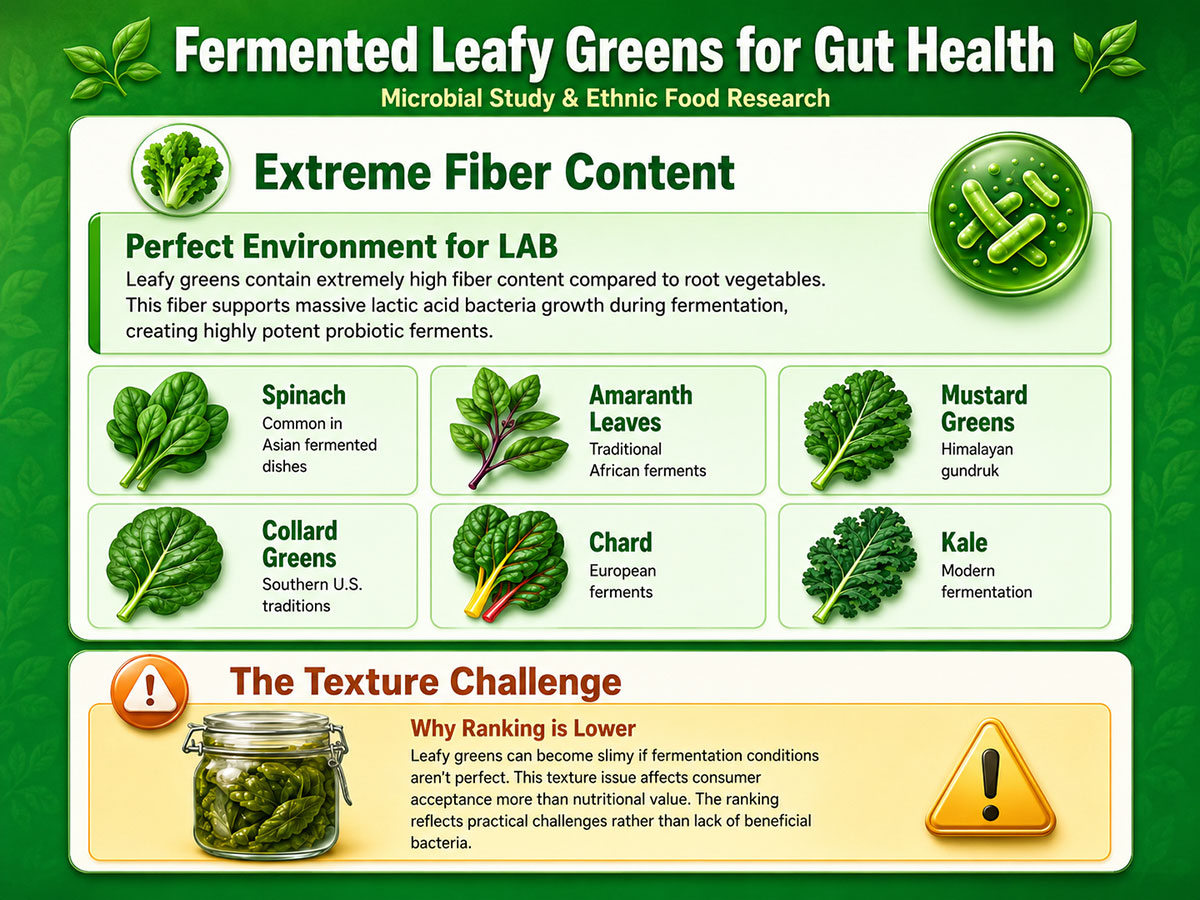
Where they are common: Ethiopian cuisine, some East Asian pickle traditions, and certain South Asian preparations use fermented leafy greens. They are less common in Western markets than the other entries on this list.
How Fermentation Changes Nutritional Value
Fermentation does not just add bacteria. It transforms the vegetables themselves in ways that affect nutrient availability and biological activity.
Vitamin production: Bacteria produce B vitamins during fermentation, including folate and riboflavin. Vitamin K2, a form associated with cardiovascular and bone health, is generated by bacterial activity and is present in meaningful amounts in longer ferments. Vitamin C levels in fermented vegetables can increase or decrease depending on fermentation time and conditions.
Mineral bioavailability: Fermentation reduces phytic acid and other antinutrients that bind minerals in the digestive tract. This makes iron, zinc, and magnesium from fermented vegetables more absorbable than the same minerals from raw versions of the same vegetables.
Protein changes: Bacteria partially break proteins into amino acids during fermentation, making them easier to digest and potentially reducing their allergenic potential in people with food sensitivities.
Sugar reduction: Bacteria consume natural sugars during fermentation. Fermented carrots and beets contain less sugar than their raw counterparts as a result.
Fiber transformation: Total fiber content does not change substantially during fermentation, but the structural changes bacteria produce make the fiber easier to digest and generate fermentation substrates that feed beneficial bacterial populations in the colon.
Health Benefits by Goal: Which Vegetables to Choose
Symptom-to-Vegetable Matcher
Select your health concerns to find the best fermented vegetables
What are your main health concerns?
How to Add Fermented Vegetables Safely
Gut bacteria populations shift when you introduce fermented foods. That shift can cause temporary bloating or gas as new bacterial strains compete for resources. Starting with small amounts minimizes discomfort.
Daily Amounts by Experience Level
Week 1 to 2 (beginners): 1 to 2 tablespoons daily. The Nielsen IBS trial used 75 grams daily (about 5 tablespoons), but that was after participants had established a baseline tolerance.
Week 3 to 4: 1/4 cup daily.
Maintenance: 1/4 to 1/2 cup daily.
Experienced: Up to 1 cup daily if well-tolerated.
Best Times to Eat Fermented Vegetables
With meals: The most practical and gut-friendly approach. Adding fermented vegetables alongside food reduces the direct acid exposure to the gut lining and creates conditions where the bacteria and organic acids work alongside the rest of the meal’s nutrient profile.
Before meals: Some research suggests that consuming fermented foods before eating may support appetite regulation and prepare digestive conditions, though this is less well-established than the with-meals approach.
Not recommended: On a completely empty stomach, first thing in the morning if you have a sensitive gut. The organic acid load can cause discomfort without food present to buffer it.
After antibiotics: Particularly useful for rebuilding gut bacterial populations. Wait until you have finished the antibiotic course, then begin with small amounts and increase gradually.
The Start Low, Go Slow Rule
Begin with one tablespoon daily for three days. If there is no discomfort, increase to two tablespoons. Continue increasing gradually until you reach a quarter to half cup daily.
Some people experience a brief period of increased digestive activity when starting fermented foods. Headache, fatigue, or digestive upset that passes within a few days is common when adjusting. Starting with smaller amounts typically avoids this entirely.
Who Should Be Careful
People with histamine intolerance or mast cell activation syndrome often react poorly to fermented foods because the fermentation process generates histamine, which these conditions impair the body’s ability to break down. Symptoms can include headaches, hives, flushing, or digestive distress. If these occur after eating fermented foods, speak with a healthcare provider about possible histamine sensitivity before continuing.
For people with IBS who are following a low-FODMAP elimination protocol, the guidance is nuanced. Fermentation reduces FODMAP content in some vegetables but does not eliminate it. Sauerkraut from cabbage has been successfully used in IBS populations (as in the Nielsen trial), but fermented onions, garlic, and some legume-based ferments should be avoided during an active elimination phase.
Shopping vs. Making Your Own
Store-bought options offer consistent quality and safety when purchased from reputable brands in the refrigerated section. Homemade versions are less expensive and allow full control over salt levels, add-ins, and fermentation time. Both approaches produce functionally similar results when done correctly.
The one distinction worth noting: shelf-stable versions have been heat-treated and no longer contain live bacteria, but retain the organic acids produced during fermentation. Those acids have their own beneficial effects on gut pH and harmful bacterial populations, so a shelf-stable sauerkraut is not worthless. It is simply different from a refrigerated raw version.
Smart Shopping: Label Reading Guide
The label is where most people go wrong with fermented vegetables. These are the indicators that distinguish a genuine fermented product from a vinegar pickle with a health claim on the packaging.
What to Look For
- “Unpasteurized” or “Raw” on the label
- Located in the refrigerated section, not on an ambient shelf
- Ingredient list: vegetables, water, salt, spices only. No vinegar.
- Cloudy brine (a sign of bacterial activity and organic acid production)
- “Contains live cultures” or “probiotics”
Red Flags
- Shelf-stable storage location
- Vinegar as a primary ingredient
- “Pasteurized” on the label
- Contains sodium benzoate, potassium sorbate, or other preservatives
- Completely clear, transparent brine
A note on price: real lacto-fermented vegetables cost more than vinegar pickles because fermentation takes time and requires refrigerated logistics. Expect to pay $8 to $15 per jar for quality refrigerated sauerkraut or kimchi. Anything significantly cheaper in the ambient aisle is almost certainly a vinegar product.
Storage and Shelf Life
Refrigerated fermented vegetables keep for two to six months after opening, sometimes longer. The fermentation continues slowly in the refrigerator, which deepens the flavor over time. An opened jar of sauerkraut at the back of your refrigerator is not going bad. It is maturing.
If a fuzzy mold (not just a film) appears on the surface of a home ferment, discard it. A thin white film on the brine surface is usually kahm yeast, harmless and common, which can be skimmed off. Fuzzy mold (green, black, or pink) means the ferment has been compromised and should be discarded.
Common Fermentation Problems and Solutions
Problem 1: My Ferment Smells Bad
Truly bad ferments have a putrid, rotting smell, clearly different from the sharp, tangy, slightly funky smell of a healthy ferment. If the smell makes you recoil rather than just wince, trust that instinct and discard it. A healthy ferment smells sour and acidic, sometimes sulfurous from cruciferous vegetables, but not rotten.
Problem 2: Mold Appeared on Top
A white film is kahm yeast, harmless, common in the first few days before acidity builds, and easily skimmed. Fuzzy colored mold (green, black, pink) is a different situation. Discard the batch. Fuzzy mold usually means vegetables crept above the brine line at some point. The harder lesson is that this can happen even when you checked: fermentation produces CO2 that can shift vegetables upward overnight. A fermentation weight helps. It does not always prevent this. Some batches are lost despite doing everything right.
Problem 3: It’s Too Salty
Rinse a small amount before eating. The salt content is necessary for the fermentation process but can be reduced by rinsing the serving portion without removing the beneficial organic acids from the vegetables themselves.
Problem 4: Vegetables Got Mushy
Fermentation continued too long, or the vegetables were not firm enough at the start. Adding tannin-rich leaves (grape, oak, or black tea leaves) to the jar at the start helps preserve texture, particularly for cucumbers and green beans. Next batch, taste from day 3 and refrigerate as soon as the desired tanginess is reached.
Problem 5: Nothing’s Happening (No Bubbles)
The room may be too cold, or the salt concentration may have been too high, slowing bacterial activity. Move the jar to a warmer spot (65 to 75°F is ideal) and give it another day or two. Bubbles do not always appear vigorously. Some ferments are quieter than others. Taste after five days even if you see no activity.
Fermented Vegetables for Special Diets
Low-FODMAP: Sauerkraut from cabbage is the most studied option for people managing IBS through FODMAP protocols. Fermentation reduces FODMAP content in cabbage substantially. Avoid fermented onions and garlic during elimination phases. Fermented carrots and cucumbers are generally well-tolerated but should be introduced in small amounts first.
Autoimmune Protocol (AIP): Sauerkraut and fermented carrots are the most appropriate options, as they avoid nightshades (which rules out fermented peppers) and seeds. Kimchi typically contains chili and may need to be replaced with a milder kimchi-style ferment.
Low-sodium needs: Salt is necessary for safe lacto-fermentation. The minimum effective level is approximately 1.5% by weight of the vegetables. Lower concentrations risk pathogen contamination. For people who need to limit sodium, rinse serving portions before eating to reduce sodium intake while retaining the organic acid and probiotic content.
Post-antibiotic recovery: Any of the Tier 1 or Tier 2 vegetables are appropriate for rebuilding microbiome diversity after antibiotic treatment. Rotating between sauerkraut, kimchi, and fermented carrots provides a broader range of bacterial species than relying on a single fermented food.
How to Eat Fermented Vegetables: Pairing Ideas
Fermented vegetables pair naturally with foods that provide complementary gut benefits. High-fiber whole grains give gut bacteria more fermentable substrate in the colon. Prebiotic-rich foods like overnight oats, slightly underripe bananas (for their resistant starch), and cooked-then-cooled potatoes create conditions where probiotic bacteria can establish more easily.
Practical combinations that work:
- Sauerkraut alongside eggs, rice, or grain bowls
- Fermented carrots as a side to fish dishes or lentil soups
- Kimchi stirred into fried rice or added to ramen after cooking (add after removing from heat to protect live cultures)
- Fermented pickles with legume-based meals
- Fermented beet slices in salads with leafy greens and walnuts
One practical note: adding fermented vegetables to hot food after it has been plated, rather than during cooking, preserves more of the live bacterial cultures.
Building Your Fermented Vegetable Rotation
Microbiome diversity responds to dietary diversity. A gut fed on sauerkraut alone will not receive the full range of bacterial species that a rotation of sauerkraut, kimchi, fermented carrots, and fermented cucumbers provides. Each vegetable hosts a somewhat different LAB community and produces a different organic acid profile.
In practice, most people who maintain fermented vegetables long-term settle on two or three products they can buy reliably and actually enjoy eating. That is the right amount. Sauerkraut on eggs, kimchi stirred into rice, fermented carrots alongside lunch: a rotation built around convenience and preference will outlast one built around optimisation. The bacterial diversity argument for rotating across all fifteen is real, but it is secondary to the consistency argument from the Stanford data. A narrow rotation maintained for months produces different outcomes than a comprehensive rotation maintained for two weeks.
Your 7-Day Fermented Vegetable Challenge
This is a practical introduction, not a strict protocol. The goal is to build the habit of including fermented vegetables daily for one week, with variety across the seven days.
Days 1 to 2: 1 to 2 tablespoons of sauerkraut with one meal daily.
Days 3 to 4: Sauerkraut continues, add 1 tablespoon of kimchi or fermented cucumbers with a different meal.
Days 5 to 6: Try fermented carrots or fermented beet slices as an addition to lunch or dinner.
Day 7: Maintain whichever combination felt best and most sustainable. That is your rotation baseline going forward.
People with digestive sensitivity should start at half the suggested amounts and increase only when comfortable at each stage. The seven-day timeline is a suggestion. Extending it to two weeks at lower quantities is equally valid.
Conclusion
The Stanford trial’s most counterintuitive finding had nothing to do with fermented foods helping. Fiber, the dietary intervention most strongly associated with gut health over the past thirty years, produced no increase in microbiome diversity over the same ten weeks. That is a finding about timing, mechanism, and what the gut microbiome needs to actually shift, rather than simply to be fed.
The answer to “which fermented vegetable should I eat?” remains the one you will eat consistently. The clinical trial data behind sauerkraut and kimchi means nothing if they stay in the back of the refrigerator until they ferment past palatability. A daily tablespoon of fermented carrots on eggs, maintained for months, will deliver more benefit than an occasional serving of the most clinically studied ferment on this list.
Start there. The rotation comes later.
FAQs
What are the best fermented vegetables for gut health?
Among the fifteen ranked here, sauerkraut has the most counterintuitive clinical evidence and kimchi has the greatest bacterial diversity by strain count. If you are starting from nothing, refrigerated unpasteurized sauerkraut is where the evidence points most clearly. Not because it is the most interesting option, but because the only trial specifically testing a fermented vegetable in people with gut problems used that product, at 75 grams daily, and both the pasteurized and unpasteurized versions worked. For building a rotation beyond that foundation, adding fermented carrots provides a mild, accessible second ferment with documented LAB activity, and lacto-fermented cucumbers from the refrigerated section extend the bacterial species coverage without requiring specialty store access.
What vegetable has the most probiotics?
No single measure applies across fermented vegetables because probiotic counts vary with fermentation time, temperature, and preparation method. Among vegetables with human clinical evidence, sauerkraut and kimchi have the most documented bacterial diversity. Unpasteurized sauerkraut measured shortly after fermentation can contain 10 million to 100 million colony-forming units of LAB per gram. Kimchi hosts Weissella koreensis alongside multiple Lactobacillus species, making it one of the most microbiologically diverse single-food ferments studied in peer-reviewed research.
What are lacto-fermented vegetables?
Lacto-fermented vegetables are vegetables preserved through salt and naturally occurring Lactobacillus bacteria, rather than through vinegar or heat. The salt draws out the vegetable’s natural liquid, creating a brine where bacteria convert sugars into lactic acid. That acid preserves the food and produces the organic acids, bioactive compounds, and bacterial cultures associated with gut health research. The process requires no added starter culture, no vinegar, and no heat. Salt, vegetables, and time are the only inputs.
Can I eat fermented vegetables every day?
Yes, for most people. The clinical trials showing gut health benefits used daily consumption for six to ten weeks. People with histamine intolerance or mast cell activation syndrome may react poorly to fermented foods and should consult a healthcare provider before regular inclusion. People in a low-FODMAP elimination protocol should stick to sauerkraut from cabbage and fermented cucumbers rather than fermented onions or garlic during the elimination phase.
What vegetables should not be fermented?
Very soft vegetables (ripe tomatoes, zucchini, ripe peaches) ferment poorly in long preparations because their cell walls break down quickly, producing a mushy result. They can be used in brief two-to-three-day ferments but will not hold their texture over a week. Frozen vegetables and previously cooked vegetables are poor candidates because heat and ice crystals damage cell structure and destroy the naturally occurring bacteria that initiate fermentation. Damaged, mouldy, or very old vegetables should not be used, as compromised produce introduces competing bacterial populations that can override the desired LAB fermentation. For people following a strict low-FODMAP elimination diet, onions and garlic should be avoided even in fermented form during the elimination phase.
Do fermented vegetables need to be refrigerated?
Fermented vegetables with live cultures should be stored in the refrigerator after fermentation is complete or after opening. Refrigeration slows but does not stop the fermentation process, preserving both the bacterial cultures and the texture of the vegetables. Shelf-stable fermented vegetables (sauerkraut in cans, shelf-stable pickles) have been pasteurized and do not require refrigeration, but they also do not contain live bacterial cultures. For maximum probiotic benefit, always choose refrigerated options with a “raw” or “unpasteurized” label.
Are pickles the same as fermented vegetables?
Not typically. Most commercial pickles in Western supermarkets are preserved in vinegar, which adds acidity but involves no fermentation and produces no live cultures. True fermented pickles are lacto-fermented in salt brine and contain active bacteria. The ingredient list is the fastest check: fermented pickles list cucumbers, water, salt, and spices only. Vinegar pickles list cucumbers and vinegar, with salt as a secondary ingredient. Only the fermented version provides the probiotic and organic acid benefits associated with gut health research.
Can fermented foods lower cholesterol?
Some research suggests they can, particularly kimchi. Earlier clinical work found that six weeks of regular kimchi consumption was associated with reductions in triglycerides and improvements in HDL cholesterol levels in healthy adults. The mechanism likely involves fermentation metabolites affecting hepatic lipid processing rather than direct action from the bacteria. That matters because it suggests the lipid benefit extends beyond the live bacterial cultures that most fermented food marketing emphasizes.
The evidence comes from small trials and the effect size is modest. Fermented vegetables would be a poor substitute for an established cholesterol intervention and a reasonable addition to one. Anyone managing cholesterol clinically should discuss the inclusion with their healthcare provider.
What fermented foods are good for gout?
Gout is driven by elevated uric acid, which comes primarily from purine metabolism. Most fermented vegetables have a negligible purine load, making them generally appropriate for people managing gout. Fermented cabbage, cucumbers, and carrots in salt brine are low-purine and unlikely to affect uric acid levels. Alcohol-based fermented products (beer, kombucha with high residual alcohol) should be avoided, as alcohol impairs uric acid excretion. No specific clinical trials have studied fermented vegetables as a treatment for gout, so their value is as a gut-supportive, low-purine dietary addition rather than as a targeted intervention. A registered dietitian or rheumatologist can provide guidance appropriate to your specific situation.
How long do fermented vegetables last?
Refrigerated raw fermented vegetables typically keep for two to six months after opening, sometimes longer. The fermentation continues slowly even in cold storage, deepening the flavor over time. Shelf-stable versions last much longer unrefrigerated but do not contain live cultures. Home ferments stored in sealed jars in the refrigerator can last three to six months without quality loss, though the texture will soften gradually over that period.
Can you get enough probiotics from fermented vegetables?
For most healthy adults, yes, and arguably with advantages supplements cannot replicate. A quality unpasteurized fermented vegetable at peak fermentation can carry bacterial counts comparable to or higher than most commercial probiotic capsules. But the more meaningful comparison is not the count. It is the package. Fermented vegetables arrive with the prebiotic substrate and organic acids that help bacteria establish in the gut. A probiotic capsule arrives without them.
That said, people with specific diagnosed conditions (recurrent C. difficile is the clearest example) may need clinically validated strains at precise doses that food cannot reliably deliver. The evidence for food-sourced probiotics is good. The evidence for strain-specific therapeutic probiotics is different and narrower.
Which fermented vegetable is easiest to make at home?
Fermented carrot sticks are the most forgiving first ferment. Carrots have high natural sugar content that fuels rapid, reliable LAB activity. They maintain their texture through fermentation better than most vegetables and rarely develop surface mold because the bacteria consume the sugar quickly. The process requires nothing beyond carrots, salt, water, and a clean jar. Sauerkraut is the classic starting point for those who prefer something with stronger research backing and broader culinary use.
Do fermented vegetables help with bloating?
The answer is more complex than most fermented food marketing suggests. For people with IBS or gut dysbiosis, introducing fermented vegetables sometimes initially increases bloating as gut bacteria populations shift. This typically resolves within a week or two of regular, small-amount consumption. Over time, the organic acids and bacterial diversity from fermented vegetables support the bacterial balance that contributes to normal motility and reduced gas production. Starting with small amounts (one to two tablespoons daily) and increasing gradually minimizes the initial adjustment period. If bloating persists beyond two to three weeks of regular consumption, consider discussing histamine intolerance or FODMAP sensitivity with a healthcare provider.
It is also worth saying plainly that some people eat fermented vegetables consistently for months and notice no meaningful change in bloating. The Nielsen trial was underpowered and IBS-specific. Its findings do not automatically extend to every gut presentation. If nothing has shifted after six weeks, that is a signal to speak with a provider, not a reason to increase the dose.