A controlled trial dropped LDL cholesterol in 8 weeks using one food. No medication. No dramatic diet overhaul. But most people eat the wrong variety.
If your doctor has flagged your LDL, you already know the routine by heart. Cut the steak, buy the oats, watch the fat. It turns dinner into a tedious spreadsheet, a daily, exhausting calculation against a condition that feels completely detached from real life.
So when a wellness blog tells you to just eat an apple, it feels insulting. It sounds like an old wives’ tale, not actual medicine. But a recent controlled trial actually put a single food to the test (without making participants overhaul their entire lives) to see if a minor habit change could actually move the needle.
Except it might be. And the part most people get wrong isn’t whether apples work. It’s which apple they’re buying.
The Apple You’re Choosing Is Probably the Wrong One
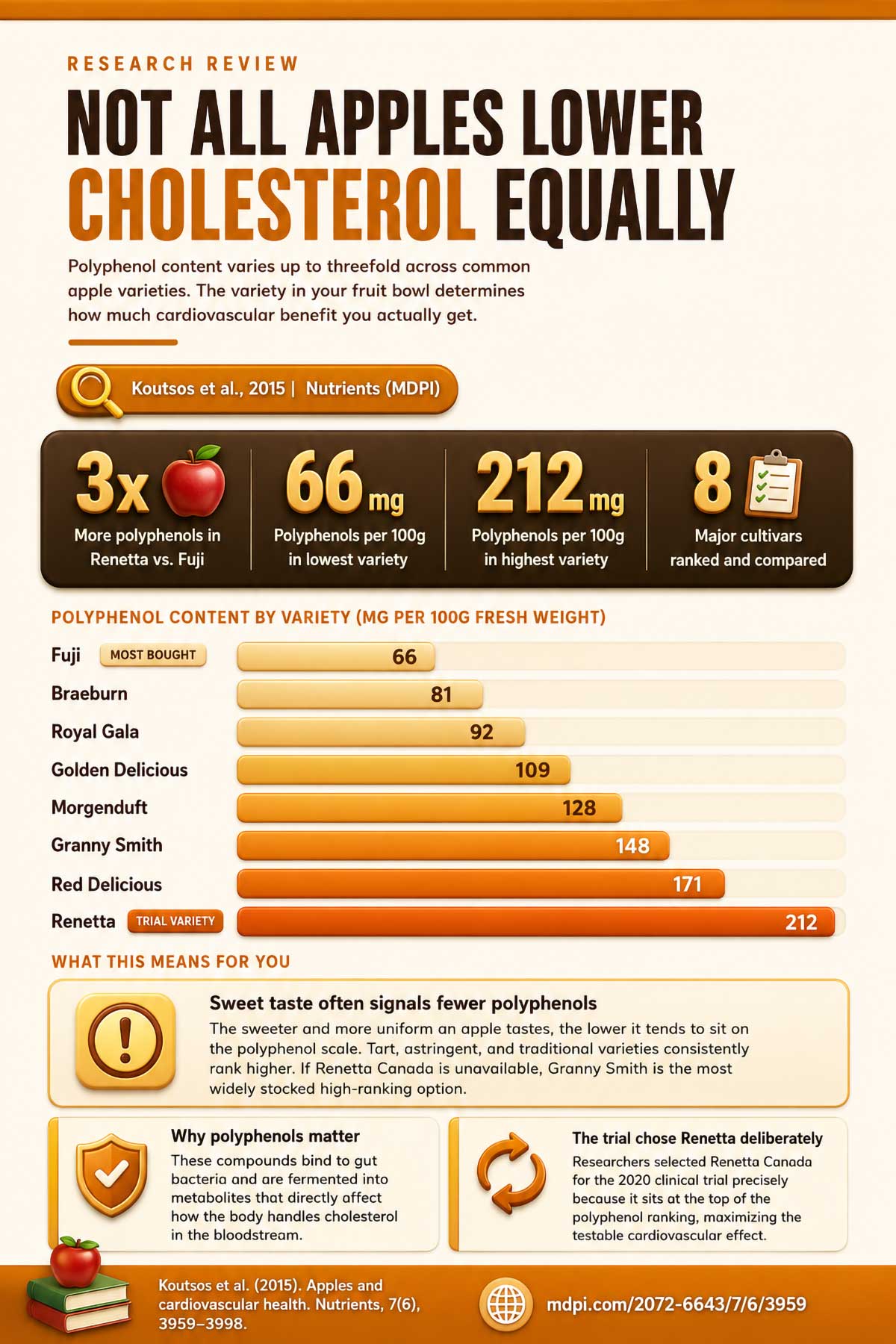
Walk into any supermarket and the front-runners are obvious. Fuji. Royal Gala. Braeburn. They’re sweet, they’re consistent, and they look the part. They’re also, from a heart health standpoint, the weakest options on the shelf.
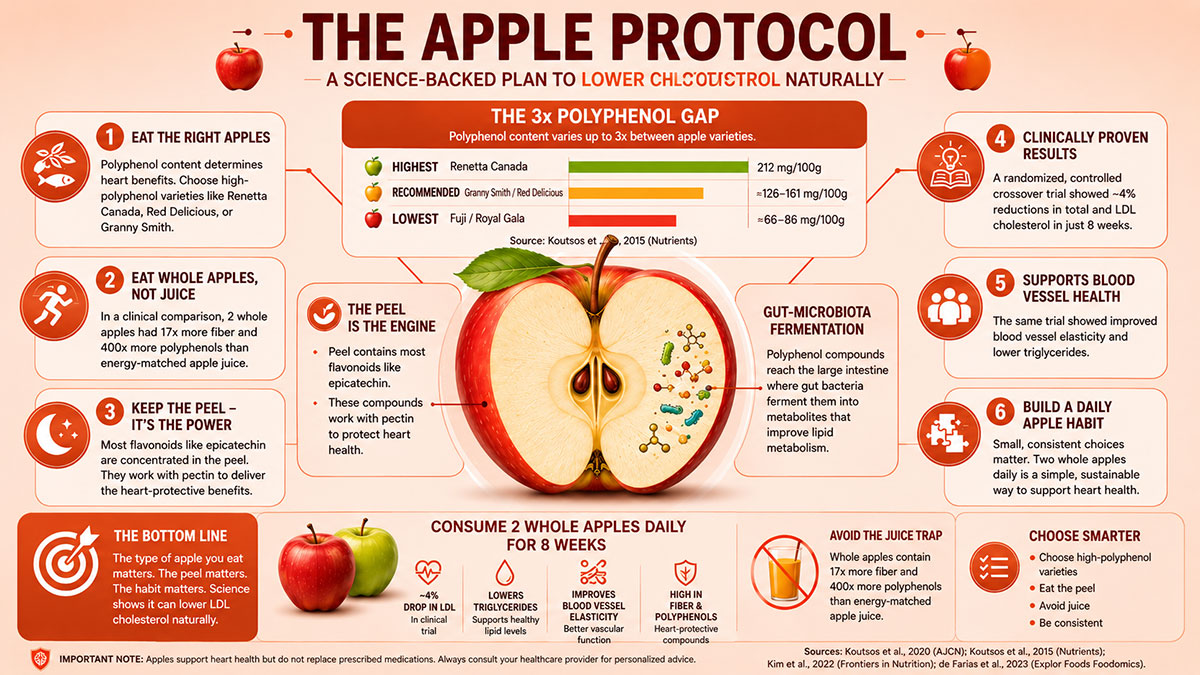
Apple polyphenols are the plant compounds that lower cholesterol. But they’re not evenly distributed across apple varieties. Not even close. Koutsos et al. (2015), a comprehensive review published in Nutrients, mapped polyphenol concentrations across major commercial and traditional apple varieties and found that levels ranged from roughly 66 mg per 100g all the way to 212 mg per 100g of fresh weight. That’s a threefold gap between the bottom and top of the scale.
The ranking, from lowest to highest polyphenol content, goes: Fuji, Braeburn, Royal Gala, Golden Delicious, Morgenduft, Granny Smith, Red Delicious, Renetta. The Fuji that fills most fruit bowls sits at the very bottom. The Renetta Canada, an old traditional variety rarely seen in mainstream retail, sits at the top. This matters more than it sounds, because the clinical trial that generated the most compelling data on apples and cholesterol didn’t use a generic apple. It used Renetta, specifically, and that choice was deliberate.
What 8 Weeks of Two Apples a Day Actually Did
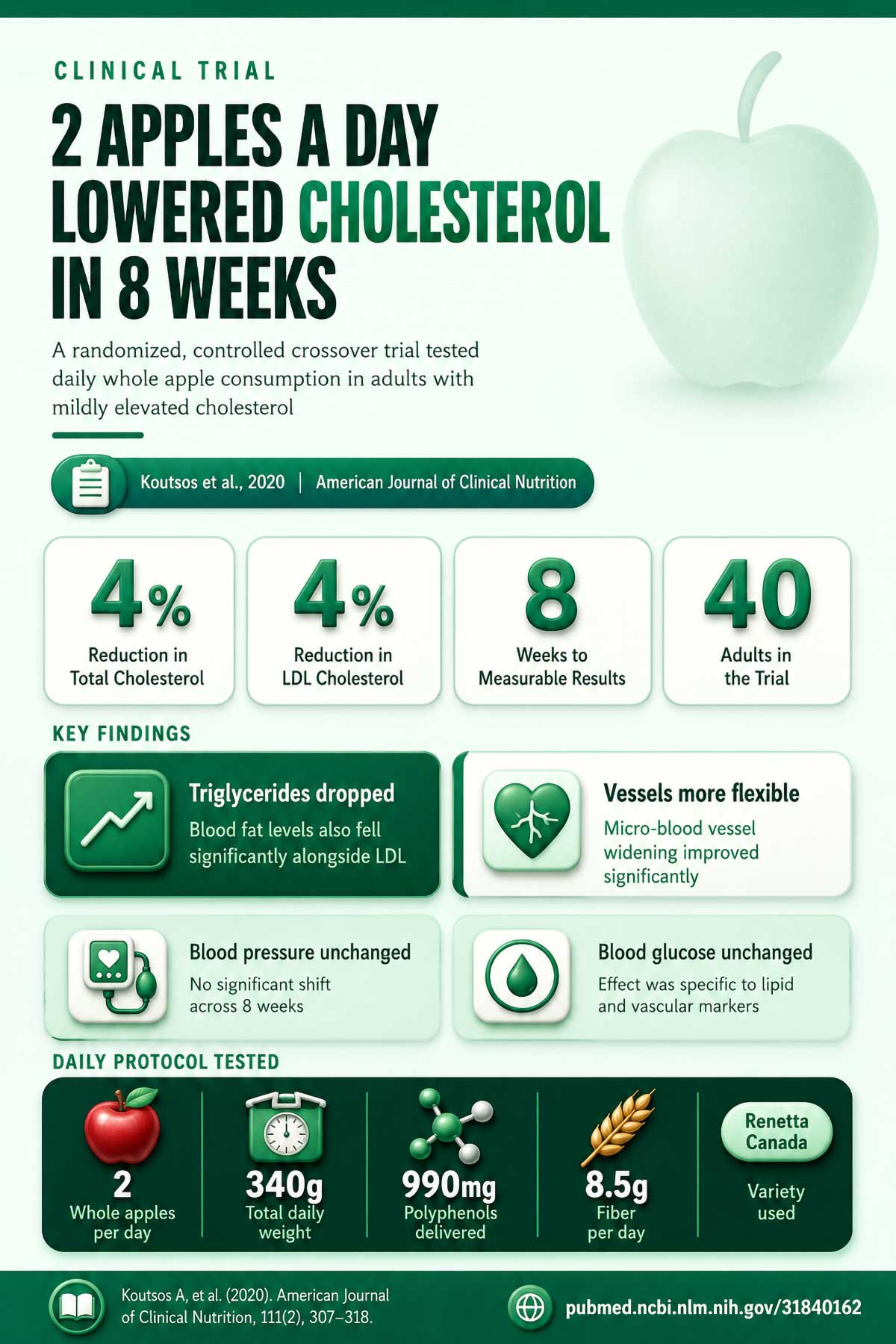
The trial ran for eight weeks. Forty adults with mildly elevated cholesterol ate two whole Renetta Canada apples per day, roughly 340 grams, delivering around 990mg of polyphenols and 8.5 grams of fiber daily. The design was a randomized, controlled crossover trial, separated by a four-week washout period, which is about as rigorous as dietary research gets.
The results, published in the American Journal of Clinical Nutrition by Koutsos et al. (2020), showed a significant reduction in total cholesterol and LDL cholesterol of approximately 4% each. Triglycerides also dropped. Blood vessel elasticity, measured as the widening of micro-blood vessels, improved significantly. Blood pressure and blood glucose didn’t change, which tells its own story: the apple wasn’t acting like a blunt dietary intervention. The effect was specific to the lipid and vascular markers, and it held up across the crossover design, making it harder to dismiss as noise.
A broader look at the evidence points the same direction. A 2022 systematic review and meta-analysis in Frontiers in Nutrition (Kim et al.) pooled data from 18 randomized controlled trials and found that when apple consumption was compared directly against a placebo control, the reductions in total cholesterol and LDL reached statistical significance. Participants who started with higher baseline cholesterol levels consistently showed the greatest benefit.
Why the Peel Is the Whole Point
Pectin gets a lot of credit. It’s the soluble fiber in apples, the compound that forms a gel in the digestive tract and binds to bile acids, which the body then has to replace by pulling cholesterol from the blood. It’s sold as a supplement. It’s added to jams. It’s the ingredient most commonly cited when apples and cholesterol get discussed together. But pectin taken in isolation is a fraction of the story.
A 2023 systematic review in Exploration of Foods and Foodomics (de Farias et al.) focused on adults with diagnosed high cholesterol and found that regular consumption of whole fresh or dried apples did improve lipid markers, but with a critical condition: the peel had to be consumed. Removing the skin strips out the majority of flavonoids, including epicatechin, that work in tandem with pectin to produce the heart-protective effect. The mechanism runs deeper than simple fiber binding. A large portion of these compounds escape digestion in the upper gut and arrive in the large intestine mostly intact. There, gut bacteria ferment them into compounds that improve how the body processes fat. Pectin feeds this process. The peel-derived polyphenols direct it. One without the other is a considerably weaker intervention.
Peeling your apple isn’t just a matter of preference. It’s a metabolic decision.
Juice Is Not a Substitute
Apple juice is almost everywhere. It’s in school lunches, it’s marketed as a health drink, and it carries the vague cultural association of being fruit-adjacent, and therefore fine. The numbers tell a different story.
A comparison from the University of Reading, summarizing the data behind the 2020 AJCN trial, found that two whole apples contained 17 times more fiber and 400 times more total polyphenols than an energy-matched apple juice control. Not somewhat more. Not meaningfully more. Four hundred times more polyphenols. Juicing removes everything that drives the cholesterol-lowering benefit and leaves behind sugar water with brand recognition. The whole food isn’t just slightly better. It’s in a different category entirely.
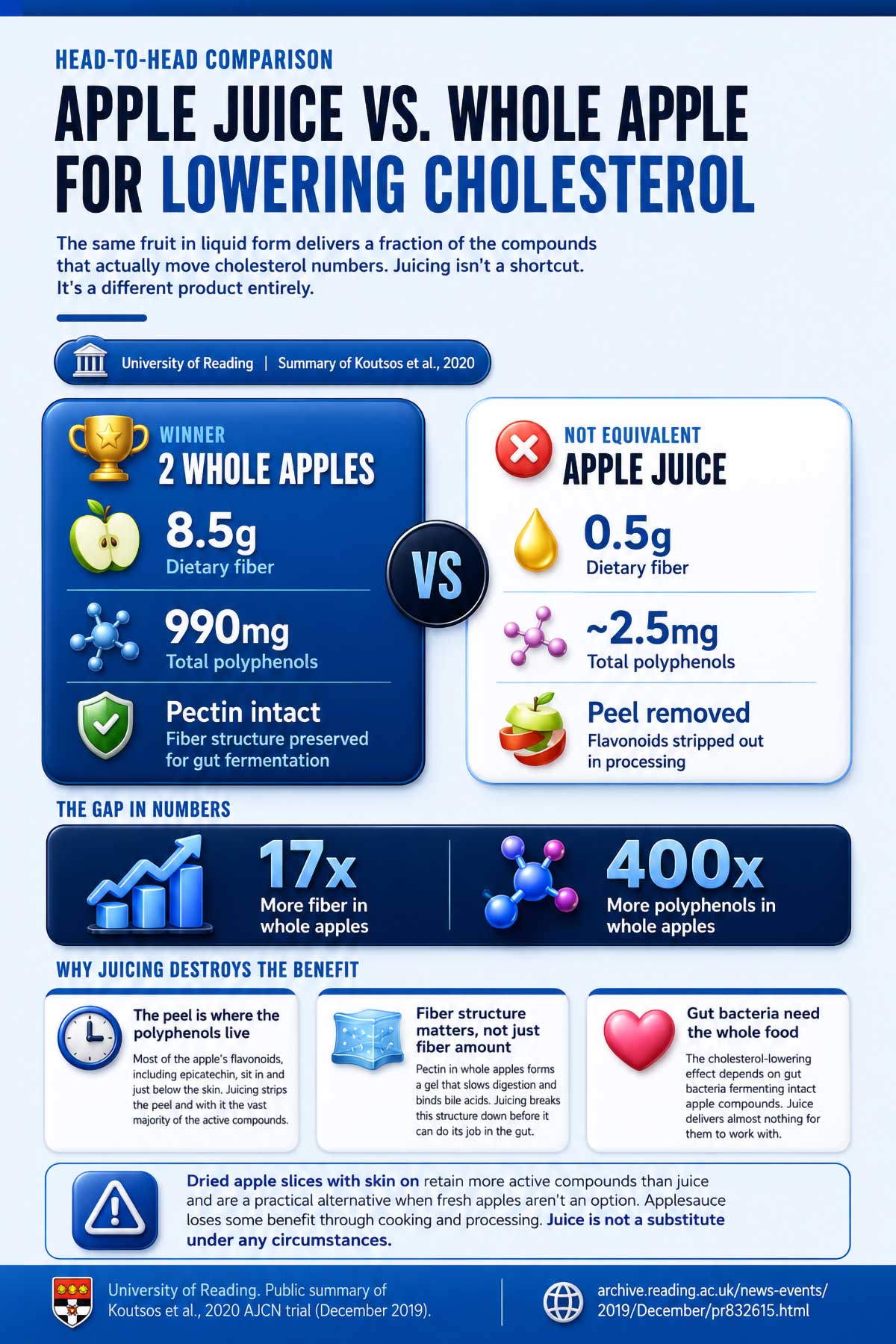
Applesauce sits in a gray zone. Processing and cooking break down some polyphenols and alter the fiber structure, though dried whole apple rings (with skin) retain more of the active compounds than juice does. If fresh apples aren’t practical every day, dried slices with the skin on are a reasonable second option. Juice is not.
A 4% Reduction: What That Number Means in Practice
Four percent sounds modest. And relative to what a statin can do, it is. Experts commenting via the Science Media Centre, including professors of cardiology and metabolic medicine, were clear: a 4% reduction in cholesterol is significant and genuinely good for long-term heart risk, but it cannot replace prescription medication for people at high risk of a cardiac event. No responsible reading of this data suggests otherwise.
What the 4% figure does represent is a real, measurable dietary effect from a single food, consumed daily, over eight weeks, with no adverse outcomes and no side effects. For someone at low to moderate risk managing cholesterol through lifestyle changes, that’s not a small thing. It also stacks. Apples alongside a diet higher in oats, legumes, and healthy fats can add up to a combined effect that’s meaningfully larger than any one change in isolation. The research tested apples alone, and they moved the needle. Part of a broader dietary shift, the potential is greater still.
The Practical Gap (and How to Close It)
The Renetta Canada is not widely available in most supermarkets. That’s a real limitation, and glossing over it would be dishonest. But the cultivar data gives a clear direction even without Renetta on the shelf.
Granny Smith sits several rungs below Renetta on the polyphenol scale, but it’s far above Fuji and Gala, and it’s stocked nearly everywhere. Red Delicious ranks higher than its reputation suggests. It’s often passed over because the texture doesn’t appeal to modern palates, but from a polyphenol standpoint it outperforms the sweeter varieties most people default to. The broader principle from the cultivar data is straightforward: lean toward traditional, less-sweet, more tart varieties. The astringency you might find slightly off-putting is partly the taste of those polyphenols doing their job.
Organic vs. conventional matters less than variety selection, though pesticide residues on the skin are a reasonable concern given that you should be eating the peel. Washing thoroughly under running water removes a meaningful portion of surface residues. Peeling to avoid pesticides defeats the purpose entirely.
Two whole apples. Skin on. Tart variety when possible. Every day for at least eight weeks. That’s the protocol the research actually tested, and it’s specific enough to follow.
Pairing Apples With the Rest of Your Diet
Apples don’t exist in a vacuum, and neither does cholesterol. The same gut bacteria that ferment apple polyphenols into cholesterol-lowering compounds also respond to other fermentable fibers. Oats, barley, legumes, and flaxseed all contribute to the same microbial environment that makes the apple protocol work. Eating two Granny Smiths while otherwise consuming a low-fiber diet blunts the effect. Gut microbiota diversity matters, and it depends on consistent, varied fiber intake across the whole diet, not just one food.
Timing doesn’t appear to be critical based on the available evidence. The 2020 trial didn’t specify a particular time of day for apple consumption. Eating them as a standalone snack rather than alongside a large meal may allow more consistent digestion, but there’s no strong data to support strict timing rules. What mattered in the trial was consistency, two apples, every day, for the full eight weeks.
What This Really Settles
The grandmother’s advice was never wrong. It was underspecified. Folk wisdom pointed at the right food and the right habit but left out which apple, why the skin matters, and why juice doesn’t count. The clinical evidence doesn’t make the adage magical. It makes it precise. And precision, when you’re trying to move a stubborn number on a blood panel, is what actually changes things.