These bean-shaped organs filter about 50 gallons of blood daily. They remove waste, balance fluids, and keep your body running smoothly. Your kidneys don’t need a detox. They ARE the detox system. But here’s what they do need: protection from oxidative stress, support for healthy blood pressure, and defense against inflammation.
The internet overflows with “kidney cleanse” teas that promise miracles. Many are useless. Some are dangerous. A few actually help based on real science.
This article cuts through the noise. You’ll learn which teas have solid research backing, which ones work for specific kidney concerns, and which ones could land you in the emergency room.
Each tea has been ranked by evidence strength. That means clinical trials beat animal studies. Animal studies beat traditional use claims. No marketing hype. Just facts.
One critical point before we start: if you have kidney disease (CKD stages 3-5), kidney stones, or take blood pressure meds, talk to your doctor before adding any herbal tea. Even helpful teas can interact with drugs or worsen certain conditions.
Understanding Your Kidney Function Numbers
Before choosing any tea, you should know your baseline kidney health. Here are the key numbers your doctor checks:
GFR (Glomerular Filtration Rate): This measures how well your kidneys filter blood.
- Normal: 90 or higher
- Mild reduction: 60-89 (Stage 2 CKD)
- Moderate reduction: 30-59 (Stage 3 CKD)
- Severe reduction: 15-29 (Stage 4 CKD)
- Kidney failure: Below 15 (Stage 5 CKD)
Creatinine Levels: A waste product that builds up when kidneys don’t work well.
- Normal for men: 0.7-1.3 mg/dL
- Normal for women: 0.6-1.1 mg/dL
- Higher levels indicate reduced kidney function
Urine Output: How much you urinate daily matters.
- Normal: 800-2000 mL (about 3-8 cups) per day
- Too little may indicate kidney problems
- Too much could signal diabetes or diuretic use
Blood Pressure: The silent kidney killer.
- Target: Below 130/80 mmHg for kidney health
- High BP is the second leading cause of kidney failure
Get these numbers checked annually if you’re healthy. Check them more often if you have diabetes, high blood pressure, or a family history of kidney disease.
Understanding What Your Kidneys Actually Need
Your kidneys are filters, not sponges that need wringing out. They don’t accumulate toxins that require flushing. They process and eliminate waste constantly.
What actually supports kidney health? Three things matter most:
Healthy blood pressure. High blood pressure damages the tiny blood vessels in your kidneys. Over time, this causes scarring and reduced function. Blood pressure control is the single most important factor in kidney protection.
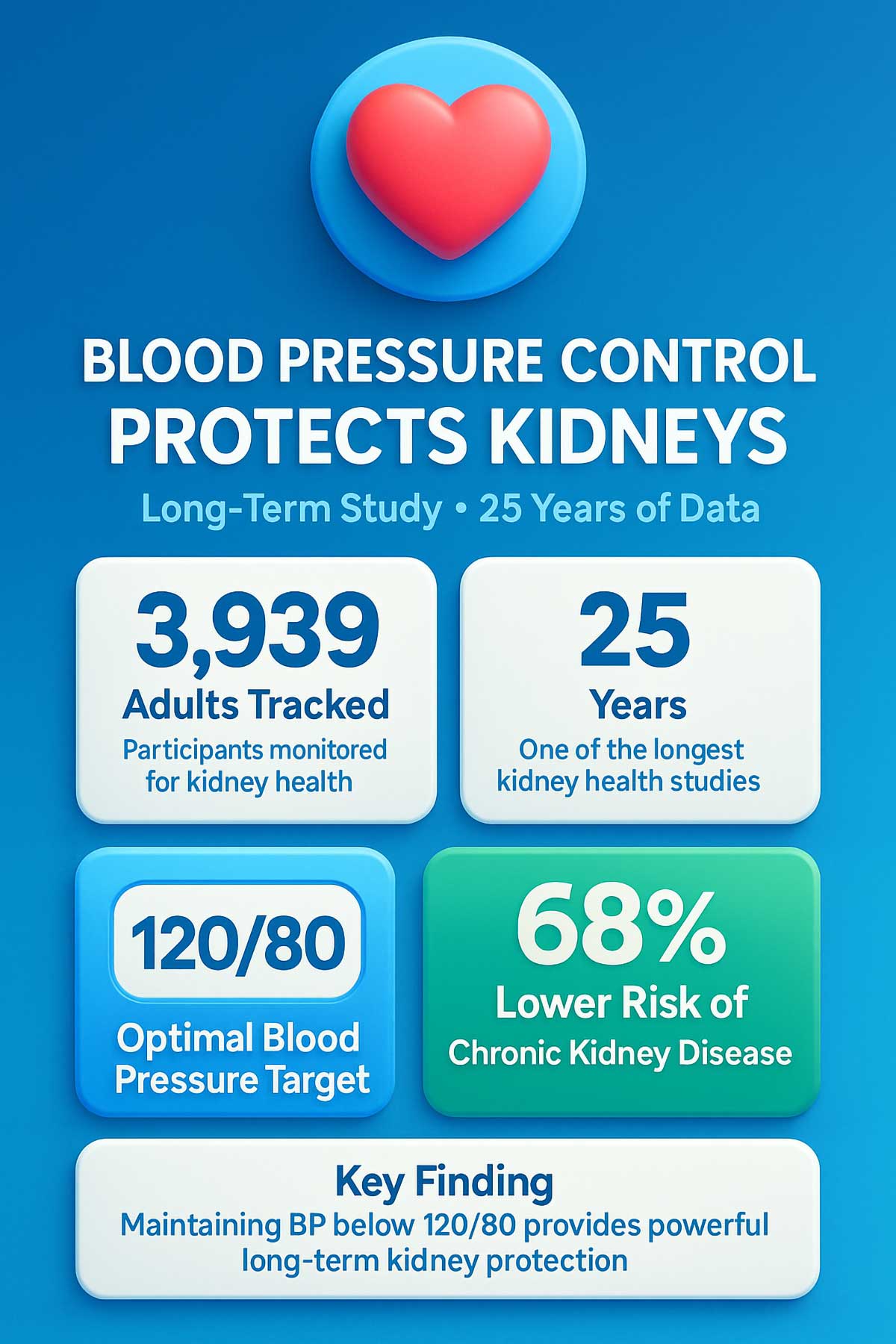
A 2018 analysis published in the Journal of the American Society of Nephrology tracked 3,939 adults for 25 years. Those who maintained blood pressure below 120/80 mmHg had a 68% lower risk of developing CKD compared to those with uncontrolled hypertension.
Reduced oxidative stress. Free radicals damage kidney cells just like they damage other tissues. Antioxidants from food and drinks help neutralize these harmful molecules.
Controlled inflammation. Chronic inflammation speeds up kidney damage. Anti-inflammatory compounds can slow this process.
Most tea research focuses on these three mechanisms. Some teas lower blood pressure. Others provide antioxidants. A few reduce inflammation. None of them “cleanse” or “detox” your kidneys because that’s not how kidneys work.
The rankings below reflect evidence strength for these protective effects. Think of these teas as shields, not cleaners.
The 7 Best Teas for Kidney Health (Ranked by Evidence)
1. Green Tea
Evidence Level: Strong (mechanistic studies plus human data)
Green tea earns the top spot for good reason. Its active compound, EGCG (epigallocatechin gallate), protects kidney cells from multiple types of damage.
Here’s what the research shows. EGCG reduces oxidative stress in kidney tissue. It fights inflammation. It may even slow the scarring process (fibrosis) that happens when kidneys get damaged.
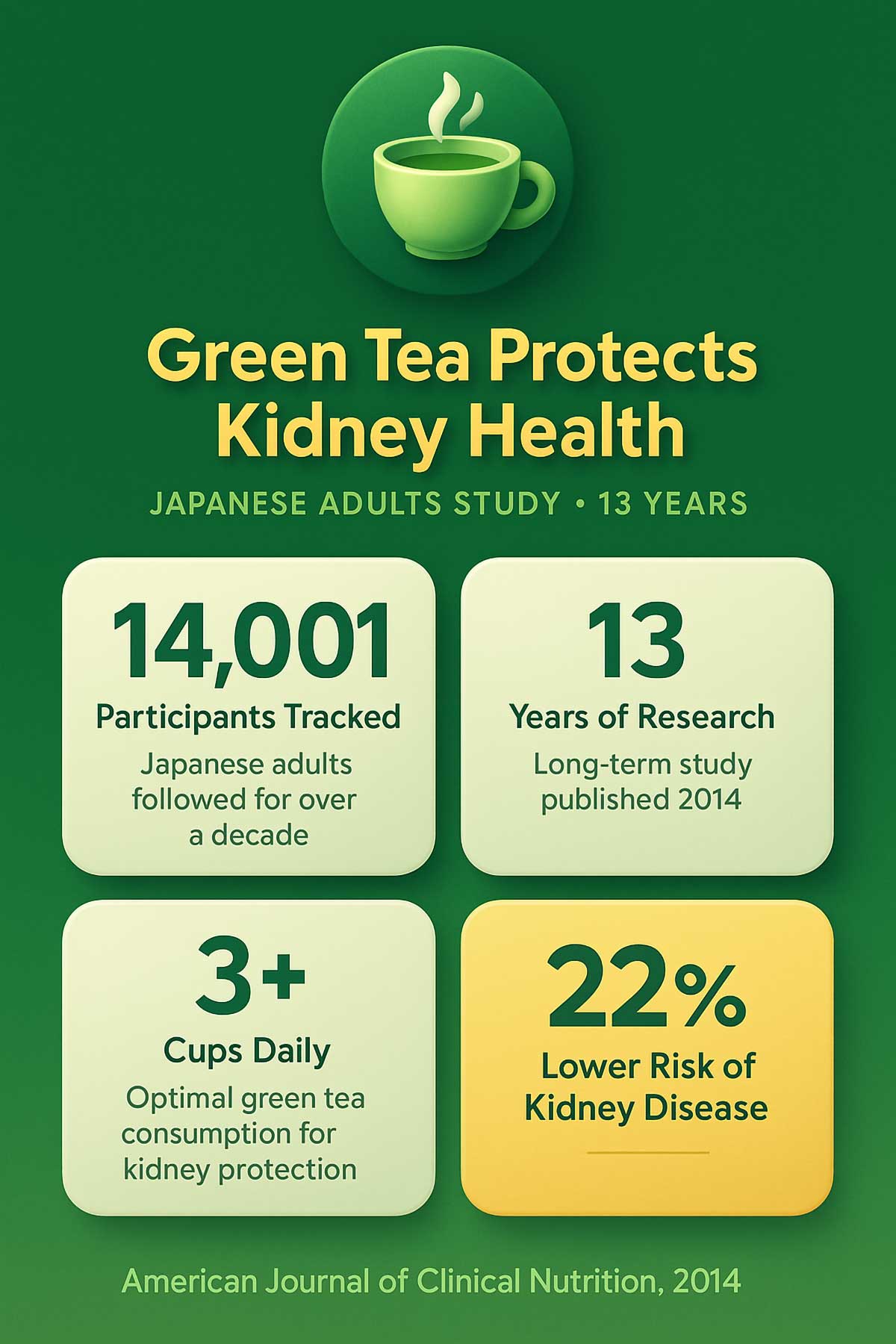
A 2014 study in the American Journal of Clinical Nutrition followed 14,001 Japanese adults for 13 years. Those who drank 3 or more cups of green tea daily had a 22% lower risk of developing kidney disease compared to those who rarely drank it. The protective effect was strongest in women and people with diabetes.
The mechanism is clear. EGCG acts like a shield for your kidney cells. It neutralizes free radicals before they can damage cell membranes. It also modulates inflammatory pathways that contribute to kidney injury.
Best for: General kidney protection, metabolic health support, reducing inflammation.
How to prepare it: Steep 2-3 cups daily in water heated to 160-180°F for 3-5 minutes. Quality matters here. Loose-leaf green tea typically contains more EGCG than tea bags.
Perfect Green Tea Recipe for Kidney Health:
- Heat 8 oz filtered water to 170°F (just before boiling)
- Add 1 teaspoon loose-leaf green tea or 1 tea bag
- Steep for 3-4 minutes (longer makes it bitter)
- Add a squeeze of fresh lemon (citrate helps prevent stones)
- Optional: Add 1/2 teaspoon raw honey after cooling slightly
- Drink 2-3 cups daily for best results
The catch: Green tea contains moderate oxalates (about 15-20mg per cup). If you’re prone to calcium oxalate kidney stones, limit yourself to 2 cups daily and drink plenty of water. Adding lemon juice helps. The citrate in lemons can block stone formation.
Avoid matcha powder if you’ve had kidney stones. It’s extremely high in oxalates (up to 200mg per serving).
Also note the caffeine content. Each cup has about 25-50mg of caffeine. This could affect blood pressure control in sensitive people.
2. Hibiscus Tea
Evidence Level: Strong (multiple clinical trials)
Hibiscus tea might be the most underrated kidney protector available. It lowers blood pressure as effectively as some medications.
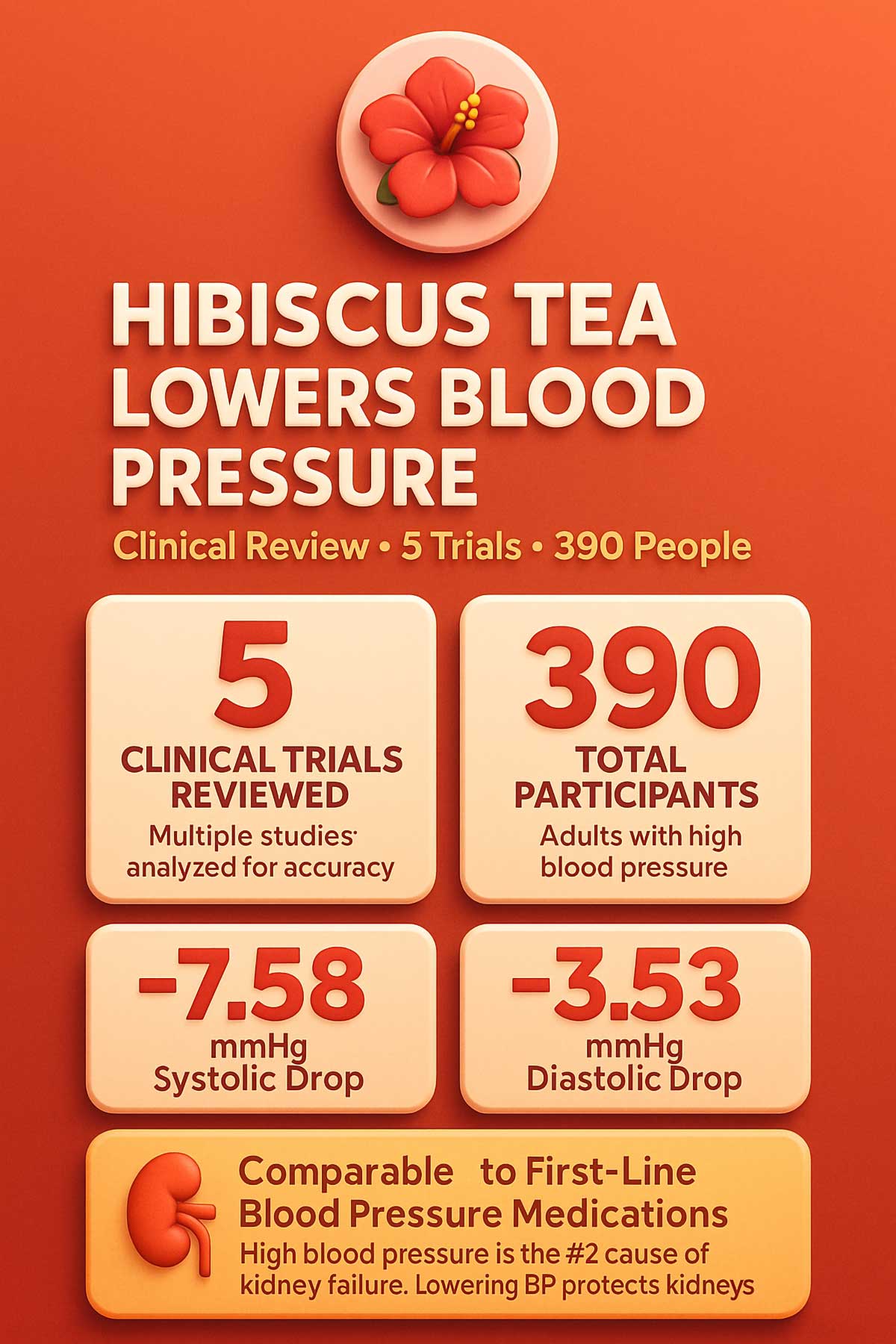
A 2015 review in the Journal of Hypertension analyzed 5 clinical trials involving 390 participants. Hibiscus consumption reduced systolic blood pressure by an average of 7.58 mmHg and diastolic pressure by 3.53 mmHg. These effects were comparable to some first-line blood pressure medications.
The anthocyanins in hibiscus work like natural ACE inhibitors. They help blood vessels relax and widen. Animal studies also show hibiscus extracts reduce kidney scarring and injury markers.
Best for: People with high blood pressure, those seeking natural blood pressure support, general kidney protection.
How to prepare it: Use 1-2 teaspoons of dried hibiscus calyces (the flower part). Steep in hot water for 5-10 minutes. You can drink it hot or cold. Many people add a touch of honey because hibiscus has a tart, cranberry-like flavor.
Kidney-Protective Hibiscus Iced Tea Recipe:
- Bring 4 cups water to a boil
- Remove from heat and add 2 tablespoons dried hibiscus flowers
- Steep for 10 minutes
- Strain and let cool
- Add juice of 1 lime (for flavor and stone-preventing citrate)
- Optional: Add 1-2 teaspoons honey or stevia
- Serve over ice
- Makes 4 servings (consume within 3 days)
The catch: If you’re already taking blood pressure medication, monitor your pressure closely. Hibiscus can enhance the effects of these drugs, potentially causing blood pressure to drop too low. Pregnant women should avoid hibiscus. It may affect hormone levels.
The tea is quite acidic. Drink it through a straw or rinse your mouth with water afterward to protect tooth enamel.
3. Palo Azul Tea
Evidence Level: Moderate-Strong (targeted kidney research)
Palo Azul flew under the radar in most “best tea” lists. That’s a mistake. This traditional Mexican herb has specific evidence for kidney stone prevention and diabetic kidney protection.
The name means “blue stick” in Spanish. When you shine UV light on properly brewed Palo Azul tea, it glows fluorescent blue. That’s due to unique flavonoids found almost nowhere else in nature.
A 2011 study published in the Journal of Ethnopharmacology found that Palo Azul extract significantly inhibited calcium oxalate crystal formation in laboratory tests. The researchers identified specific flavonoids that prevent crystals from aggregating into stones.
Other studies found Palo Azul protects against glucose-induced kidney damage in diabetic animals. The same flavonoids that prevent stones also reduce oxidative stress from high blood sugar.
Best for: People with a history of kidney stones, diabetics concerned about kidney health, those seeking traditional kidney support.
How to prepare it: You can’t just steep Palo Azul in hot water. You need to boil it. Use about 1 ounce of bark chips per gallon of water. Boil for 45-60 minutes. The long boiling time extracts the active compounds. Let it cool, then strain.
The tea has a mild, slightly woody taste. You can drink it hot or cold throughout the day.
Traditional Palo Azul Kidney Tonic Recipe:
- Add 1 oz (about 1 cup) Palo Azul bark chips to 1 gallon cold water in a large pot
- Bring to a boil, then reduce to gentle simmer
- Simmer uncovered for 60 minutes (water will turn amber-golden)
- Let cool to room temperature
- Strain through fine mesh strainer
- Store in refrigerator up to 5 days
- Drink 1-2 cups daily between meals
- Test quality: Shine a UV blacklight on the tea – it should glow fluorescent blue
The catch: Quality varies widely between products. Look for bark that produces the characteristic blue glow under UV light (use a blacklight). Large-scale human trials are limited. Most evidence comes from animal studies and traditional use.
4. Rooibos Tea
Evidence Level: Moderate (excellent safety profile, antioxidant research)
Rooibos wins the safety award. It’s oxalate-free, caffeine-free, and low in tannins. That makes it suitable for almost everyone, including people with kidney stones and those sensitive to caffeine.
This South African red tea contains a unique antioxidant called aspalathin. Animal studies show rooibos provides antioxidant protection to kidneys exposed to toxins. Small human studies confirm its antioxidant activity and excellent safety profile.
A 2024 review in the journal Nutrients examined rooibos safety data from multiple human studies. Researchers found no adverse effects even with high consumption levels. The tea showed consistent antioxidant benefits without the risks associated with caffeine or oxalates.
Best for: Everyone, especially people with kidney stones, caffeine-sensitive individuals, children, and those who want the safest option.
How to prepare it: Steep 1-2 teaspoons in boiling water for 5-7 minutes. You can steep it longer without making it bitter. Some people steep it for 10-15 minutes to extract more antioxidants.
Rooibos has a naturally sweet, slightly nutty flavor. It tastes good plain or with a splash of milk.
The catch: Direct human studies proving kidney benefits are limited. The benefits are likely modest but real. Think of rooibos as a safe daily beverage that provides gentle antioxidant support.
5. Stinging Nettle Leaf Tea
Evidence Level: Moderate (traditional use plus emerging research)
Nettle has been used as a kidney tonic for centuries. Modern research is starting to catch up with traditional wisdom.
Nettle acts as a mild diuretic. It helps your body eliminate excess fluid without causing the potassium loss that pharmaceutical diuretics cause. Some animal studies suggest it may reduce protein in urine (proteinuria), an early sign of kidney damage.
The flavonoids in nettle provide antioxidant protection. But the evidence for direct kidney benefits in humans remains limited.
Best for: Mild fluid retention in healthy people, general kidney support, urinary tract health.
How to prepare it: Use nettle leaf, not nettle root (the root is used for different purposes). Steep 1-2 teaspoons of dried leaves in hot water for 5-10 minutes.
The catch: Nettle can interact with blood pressure medications, diuretics, and blood thinners. If you take any of these drugs, check with your doctor first.
People with advanced kidney disease (CKD stages 3-5) should avoid nettle unless approved by a nephrologist. Even mild diuretics can affect fluid balance in damaged kidneys.
Some people experience minor stomach upset. Start with a small amount to test tolerance.
6. Ginger Tea
Evidence Level: Moderate (strong animal data, indirect human benefits)
Ginger doesn’t target kidneys directly. Instead, it protects them by improving the metabolic factors that cause kidney damage.
The active compounds in ginger—6-gingerol and 6-shogaol—reduce oxidative stress and inflammation throughout the body. Multiple animal studies show ginger protects against diabetic kidney damage.
A 2019 meta-analysis in the journal Phytotherapy Research reviewed 12 clinical trials with 586 diabetic patients. Those who consumed ginger supplements showed significant improvements in fasting blood sugar, HbA1c (long-term blood sugar marker), and inflammatory markers. These metabolic improvements indirectly protect kidneys from diabetes-related damage.
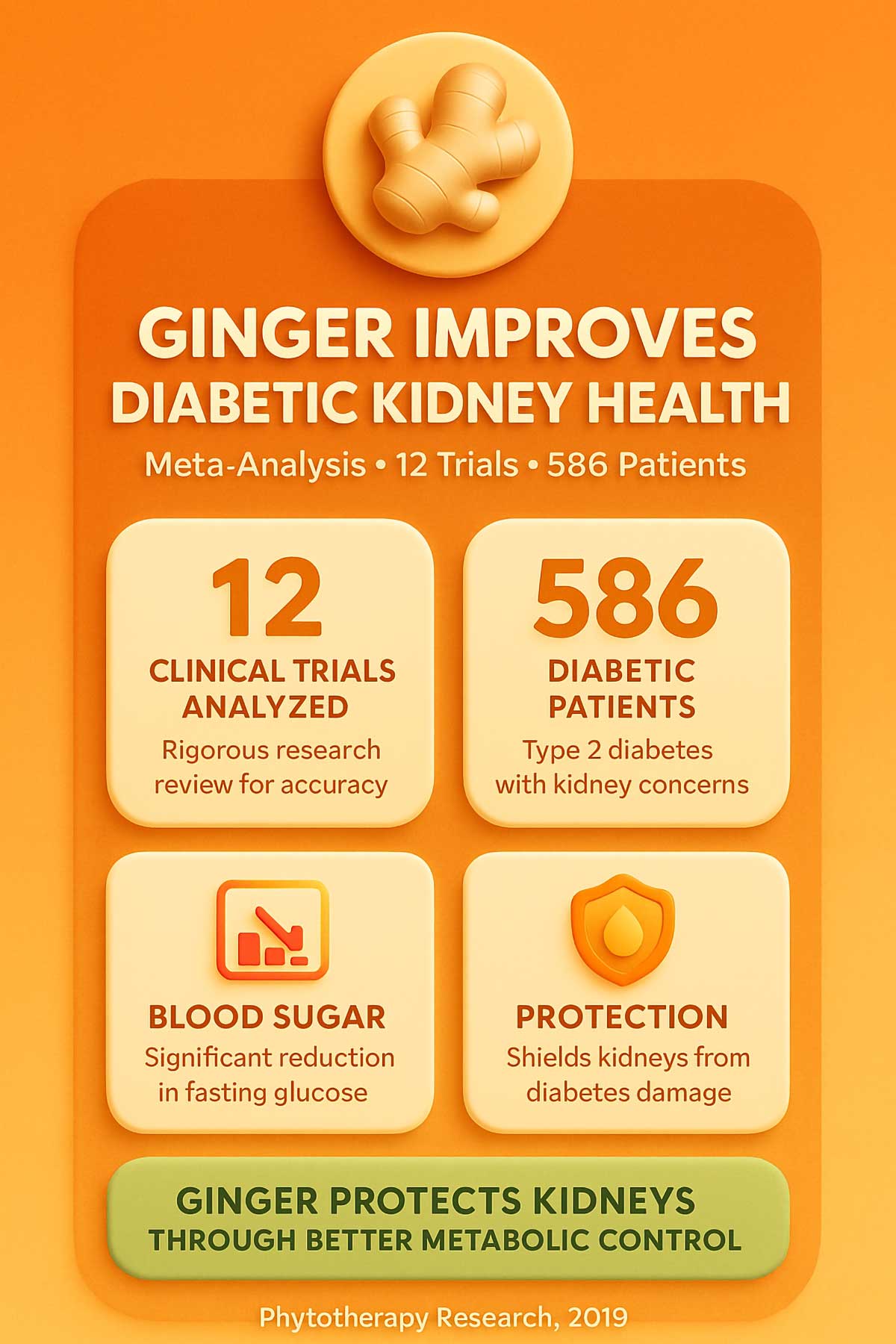
Human studies show ginger improves blood sugar control and reduces inflammatory markers. These benefits indirectly protect kidneys from metabolic damage.
Best for: Diabetics, people with metabolic syndrome, reducing systemic inflammation.
How to prepare it: Use fresh ginger for maximum benefit. Slice a 1-inch piece of peeled ginger and steep in hot water for 10 minutes. You can also use 1 teaspoon of dried ginger powder.
Add lemon and honey to taste. The combination is both delicious and potentially kidney-protective (lemon provides citrate).
The catch: No direct human trials prove ginger prevents or treats kidney disease. The benefits are indirect through improved metabolic health.
Ginger has mild blood-thinning effects. If you take warfarin or other anticoagulants, talk to your doctor before consuming ginger regularly.
Large amounts can cause heartburn or stomach upset in sensitive people.
7. Dandelion Leaf Tea
Evidence Level: Weak-Moderate (limited human data)
Dandelion rounds out the list, but it comes with serious caveats. It’s a natural diuretic that’s high in potassium. Unlike pharmaceutical diuretics that deplete potassium, dandelion provides it.
For healthy people with mild fluid retention, this can be beneficial. Some animal studies show antioxidant and anti-inflammatory effects in kidney tissue.
Best for: Healthy individuals with mild fluid retention, those who want a potassium-rich diuretic.
How to prepare it: Use dandelion leaves, not the root (which has different properties). Steep 1-2 teaspoons of dried leaves in hot water for 5-10 minutes.
The catch—this is critical: Dandelion is DANGEROUS for people with chronic kidney disease. When kidneys don’t work well, they can’t excrete potassium properly. High potassium levels (hyperkalemia) can cause fatal heart rhythm problems.
If you have CKD (especially stages 3-5), avoid dandelion completely. Even if your kidneys are healthy but you take potassium-sparing diuretics, ACE inhibitors, or ARBs, check with your doctor first.
The human research supporting dandelion for kidney health is very limited. Most evidence comes from animal studies or traditional use.
Oxalate Content: The Stone Former’s Guide
If you’ve had calcium oxalate kidney stones, oxalate content becomes your top concern. Here’s how different teas compare:
| Tea Type | Oxalate per Cup | Stone Former Safety | Notes |
|---|---|---|---|
| Rooibos | 0 mg | Excellent | Completely safe, unlimited |
| Chamomile | 2-5 mg | Excellent | Very safe option |
| Palo Azul | 5-10 mg | Excellent | May actually prevent stones |
| Hibiscus | 8-12 mg | Good | Safe in moderation |
| Green Tea | 15-20 mg | Fair | Limit to 2 cups daily |
| Ginger Tea | 10-15 mg | Good | Generally safe |
| Black Tea | 50-100 mg | Poor | Limit to 1 cup or avoid |
| Matcha Powder | 150-200 mg | Very Poor | Avoid completely |
| Star Anise | 100+ mg | Very Poor | Avoid completely |
Key Takeaway: If you form kidney stones, stick with rooibos, chamomile, or Palo Azul. Drink plenty of water (aim for 2.5-3 liters daily) and add lemon juice for citrate, which blocks stone formation.
The Danger Zone: Teas That Can Harm Your Kidneys
Some teas and herbal drinks can seriously damage your kidneys or interact dangerously with medications. These aren’t theoretical risks. People have died or suffered kidney failure from these substances.
Quick Reference: Dangerous Teas for Kidneys
| Tea/Herb | Risk Level | Primary Danger | Who Must Avoid | Mechanism of Harm |
|---|---|---|---|---|
| Star Fruit | SEVERE | Neurotoxin buildup | Anyone with ANY kidney dysfunction | Caramboxin causes seizures, death |
| Licorice Root | SEVERE | Hypertension, fluid retention | Anyone with BP issues, CKD, on diuretics | Pseudo-hyperaldosteronism |
| St. John’s Wort | SEVERE | Drug interactions | Transplant patients, anyone on multiple meds | Reduces immunosuppressant levels |
| Concentrated Black Tea | HIGH | Kidney stones, acute injury | Stone formers, excessive consumers | High oxalate (50-100mg/cup) |
| Java Tea | HIGH | Hyperkalemia | CKD patients, on K-sparing meds | Extremely high potassium |
| “Kidney Cleanse” Blends | HIGH | Unknown interactions | Everyone | Unregulated ingredients |
Star Fruit Tea
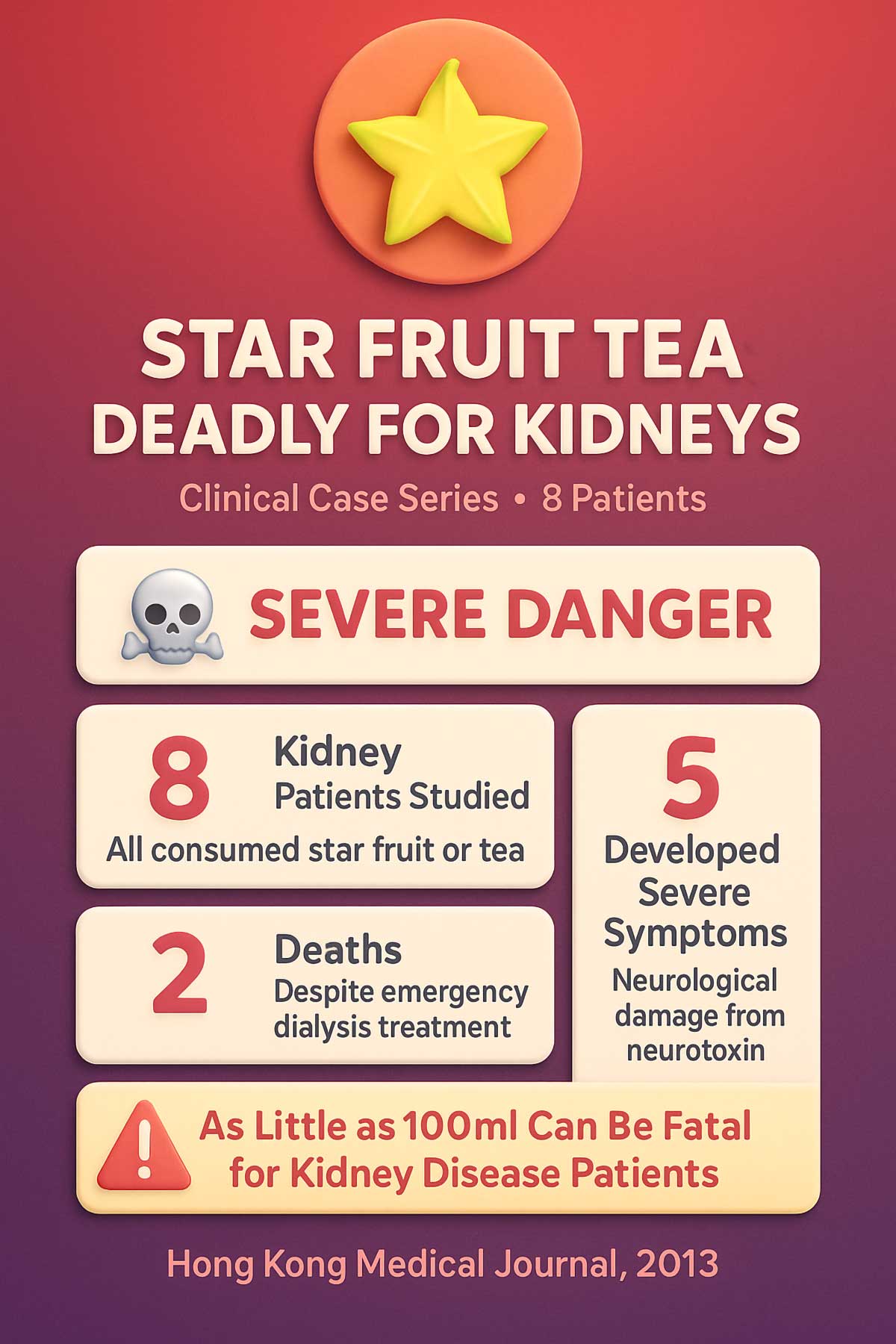
Star fruit (and tea made from it) contains a neurotoxin called caramboxin. Healthy kidneys filter this toxin out without problems. But damaged kidneys can’t remove it.
The result? The toxin builds up in your brain. It causes hiccups, confusion, seizures, and can lead to death. As little as 100ml of star fruit juice has killed people with kidney disease.
A 2013 case series in the Hong Kong Medical Journal documented 8 patients with kidney disease who consumed star fruit. Five developed severe neurological symptoms. Two died despite emergency dialysis treatment. The toxin crossed the blood-brain barrier and caused irreversible damage.
Who must avoid it: Anyone with ANY level of kidney dysfunction. Don’t risk it.
Licorice Root Tea
Licorice contains glycyrrhizin. This compound causes pseudo-hyperaldosteronism. Your body retains sodium and water while losing potassium. Blood pressure spikes. Swelling develops.
Case reports document people developing dangerous high blood pressure, irregular heart rhythms, and acute kidney injury from licorice tea.
Who must avoid it: Anyone with high blood pressure, heart problems, kidney disease, or taking diuretics or blood pressure medications.
Even healthy people shouldn’t consume large amounts regularly.
St. John’s Wort Tea
St. John’s Wort powerfully interacts with dozens of medications. It speeds up drug metabolism, reducing blood levels of critical medicines.
For kidney transplant patients, this is catastrophic. St. John’s Wort can drop immunosuppressant levels so low that the body rejects the transplanted kidney. Multiple transplant rejections have been documented from this herb.
It also reduces effectiveness of blood pressure medications, statins, and many other drugs.
Who must avoid it: Kidney transplant recipients (absolutely), anyone taking multiple medications, especially immunosuppressants or heart medications.
Excessive Black Tea
Black tea isn’t inherently dangerous. But drinking large amounts of very strong black tea (especially iced tea concentrate) can dramatically increase kidney stone risk.
Black tea is high in soluble oxalates. One case report in the New England Journal of Medicine documented a 56-year-old man who developed kidney failure from drinking 16 cups of extremely strong iced tea daily. He consumed approximately 1,500mg of oxalates per day. The oxalates formed crystals that damaged his kidneys permanently.
Who should limit it: People with a history of calcium oxalate kidney stones. Limit black tea to 1-2 cups daily. Drink plenty of water.
Java Tea (Cat’s Whiskers)
This Southeast Asian herb is sometimes sold for kidney health. It’s extremely high in potassium. People with kidney disease can develop life-threatening hyperkalemia from it.
Who must avoid it: Anyone with CKD stages 3-5, anyone on potassium-sparing medications.
“Kidney Cleanse” Blends
Unregulated herbal blends marketed for “kidney cleansing” or “detox” often contain high doses of multiple diuretics, unknown herbs, or undisclosed ingredients.
These products have caused electrolyte imbalances, kidney injury, and dangerous drug interactions. The FDA doesn’t regulate these products before they hit shelves.
Who should avoid them: Everyone. If you want herbal support, choose single herbs with known safety profiles.
Tea and Medication Interactions: A Critical Guide
Many teas interact with common medications. This tool shows major interactions you need to know about:
💊 Tea & Medication Safety Checker
Check for potential interactions between teas and your medications
Key Principle: If you take any medications, talk to your doctor or pharmacist before adding herbal teas to your routine. Even safe-looking teas can cause problems when combined with drugs.
Matching the Right Tea to Your Situation
Not all teas work for all people. Here’s how to choose based on your specific situation.
If You Have Healthy Kidneys
You have the most options. Focus on teas that provide general protection:
Top choices:
- Green tea (2-3 cups daily) – Strongest evidence
- Hibiscus (1-2 cups daily) – Excellent for BP
- Rooibos (unlimited) – Safest option
Your 7-Day Kidney Support Tea Rotation:
Monday:
- Morning: Green tea with lemon
- Afternoon: Rooibos
- Total water: 2.5 liters
Tuesday:
- Morning: Hibiscus iced tea
- Afternoon: Ginger tea with honey
- Total water: 2.5 liters
Wednesday:
- Morning: Green tea with lemon
- Afternoon: Rooibos
- Total water: 2.5 liters
Thursday:
- Morning: Hibiscus tea
- Afternoon: Green tea
- Total water: 2.5 liters
Friday:
- Morning: Green tea with lemon
- Afternoon: Rooibos with chamomile
- Total water: 2.5 liters
Saturday:
- Morning: Hibiscus iced tea
- Afternoon: Ginger tea
- Total water: 2.5 liters
Sunday:
- Morning: Green tea
- Afternoon: Rooibos
- Total water: 2.5 liters
Guidelines: Rotate different teas rather than drinking only one type. Stay well-hydrated with water in addition to tea. Limit total tea intake to about 1 liter daily to avoid excessive oxalate consumption.
If You’ve Had Kidney Stones
Oxalate content becomes critical. Some teas increase stone risk. Others may help prevent stones.
Safe choices:
- Rooibos (zero oxalates) – Best choice
- Palo Azul (may prevent stones) – Traditional option
- Hibiscus (low-moderate oxalates) – Safe in moderation
- Chamomile (very low oxalates) – Gentle option
Limit or avoid:
- Black tea (50-100mg oxalate per cup)
- Matcha (extremely high – up to 200mg)
- Strong green tea (limit to 2 cups daily)
Stone Prevention Tea Protocol:
- Drink 2-3 liters of total fluids daily (aim for pale yellow urine)
- Add fresh lemon juice to water and tea (citrate blocks stones)
- Choose rooibos as your primary tea (unlimited)
- Limit green tea to 2 cups maximum
- Avoid black tea and matcha completely
- Monitor urine output (should be 2-2.5 liters daily)
If You Have Early-Stage CKD (Stages 1-2, GFR 60-90)
Your kidneys still function well, but you need to be more careful than healthy people.
Safest choices:
- Rooibos (lowest risk profile)
- Hibiscus (if not on ACE inhibitors or ARBs)
- Chamomile (very safe)
- Green tea (2 cups maximum)
Requires medical clearance:
- Any diuretic teas (nettle, dandelion)
- Teas that might interact with your medications
- Ginger (if on blood thinners)
What to monitor:
- Blood pressure (weekly)
- Potassium levels (every 3-6 months)
- Kidney function tests (GFR, creatinine every 6 months)
- Urine output (daily awareness)
If You Have Advanced CKD (Stages 3-5, GFR Below 60)
This requires serious caution. Your kidneys can’t handle excess potassium, and fluid balance is critical.
Safest option:
- Rooibos with medical approval (low potassium, zero oxalates)
Possibly safe:
- Chamomile (check with your nephrologist)
- Very dilute green tea (1 cup daily with approval)
Absolutely avoid:
- Star fruit (can be fatal)
- Licorice (causes fluid retention)
- High-potassium teas (dandelion, nettle, java tea)
- All diuretic teas
- All “kidney cleanse” products
- Excessive amounts of any tea
Critical rule: Don’t add ANY herbal tea without discussing it with your nephrologist first. Even “safe” teas can affect electrolyte balance or interact with medications.
Fluid restriction note: If your doctor has restricted your fluids (common in stages 4-5), count all tea toward your daily fluid allowance. Typical restrictions are 1-1.5 liters total daily.
If You’re a Kidney Transplant Recipient
Your immune system is suppressed to prevent rejection. Drug interactions are extremely dangerous.
Generally safe (with approval):
- Rooibos
- Chamomile
- Very limited green tea (1 cup daily)
Absolutely avoid:
- St. John’s Wort (can cause rejection and death)
- Any “immune-boosting” teas
- High-potassium teas
- All “detox” products
- Echinacea
- Astragalus
Talk to your transplant team: Before adding ANY herbal product. Even seemingly harmless teas can interact with immunosuppressants like tacrolimus, cyclosporine, or mycophenolate.
A 2017 study in Transplantation documented 23 transplant patients who experienced organ rejection after using herbal supplements. Seven of these patients lost their transplanted organs. The most common culprits were St. John’s Wort, echinacea, and unidentified ingredients in “detox” blends.
Kidney-Supportive Tea Blend Recipes
These custom blends combine beneficial teas for specific kidney health goals. Each recipe makes one serving unless noted.
Morning Metabolic Boost Blend
Purpose: Supports blood sugar control and provides antioxidant protection
Ingredients:
- 1 teaspoon green tea
- 3 slices fresh ginger (about 1/2 inch)
- Juice of 1/4 lemon
- 1/2 teaspoon raw honey (optional)
- 10 oz water
Preparation:
- Heat water to 170°F
- Add green tea and ginger slices
- Steep for 4 minutes
- Strain and add lemon juice
- Add honey if desired after tea cools slightly
- Drink first thing in the morning
Best for: Diabetics, metabolic syndrome, morning energy
Blood Pressure Support Evening Blend
Purpose: Natural blood pressure reduction without caffeine
Ingredients:
- 1 tablespoon dried hibiscus flowers
- 1 teaspoon rooibos
- 3-4 fresh mint leaves (optional)
- 12 oz water
Preparation:
- Bring water to a boil
- Add hibiscus and rooibos
- Steep for 8-10 minutes
- Add mint leaves in last 2 minutes
- Strain and drink warm or chilled
- Consume 1-2 hours before bed
Best for: High blood pressure, evening relaxation
Stone Prevention Daily Sipper
Purpose: Zero oxalate hydration with stone-blocking citrate
Makes: 2 liters (drink throughout the day)
Ingredients:
- 3 tablespoons rooibos tea
- 2 tablespoons Palo Azul bark (if available)
- Juice of 2 lemons
- 2 liters water
Preparation:
- If using Palo Azul: Boil bark in 1 liter water for 30 minutes, then strain
- Brew rooibos in remaining 1 liter hot water for 10 minutes, strain
- Combine both teas (or use 2 liters rooibos if no Palo Azul)
- Add lemon juice
- Store in refrigerator
- Drink 2-3 cups throughout the day
Best for: Kidney stone formers, anyone needing high fluid intake
Anti-Inflammatory Afternoon Blend
Purpose: Reduces systemic inflammation
Ingredients:
- 1 teaspoon green tea
- 4 slices fresh ginger
- 1/2 teaspoon turmeric powder
- Pinch of black pepper (enhances turmeric absorption)
- 8 oz water
- 1 teaspoon honey
Preparation:
- Heat water to 170°F
- Add green tea, ginger, turmeric, and black pepper
- Steep for 5 minutes
- Strain thoroughly
- Add honey
- Drink in early afternoon (contains caffeine)
Best for: Chronic inflammation, autoimmune conditions, arthritis
Evening Antioxidant Calm Blend
Purpose: Caffeine-free antioxidants for nighttime
Ingredients:
- 2 teaspoons rooibos
- 1 teaspoon chamomile
- 3-4 fresh or dried lavender flowers (optional)
- 10 oz water
- 1/2 teaspoon vanilla extract (optional)
Preparation:
- Bring water to a boil
- Add rooibos and chamomile
- Steep for 7-10 minutes
- Add lavender in last 3 minutes if using
- Strain and add vanilla if desired
- Drink 1 hour before bed
Best for: Evening relaxation, anyone avoiding caffeine, better sleep
⏱️ Perfect Tea Timer
Brew kidney-healthy tea perfectly every time
Tea Preparation Troubleshooting Guide
Common problems have simple solutions. Here’s how to fix tea preparation issues:
Problem: My green tea tastes bitter and harsh
- Solution: Water is too hot. Use 160-170°F, not boiling
- Solution: Steeping too long. Limit to 3-4 minutes
- Solution: Using too much tea. Start with 1 teaspoon per 8 oz
Problem: Hibiscus stains my teeth
- Solution: Drink through a straw
- Solution: Rinse mouth with water immediately after drinking
- Solution: Brush teeth 30 minutes after consumption (not immediately – acid can soften enamel)
Problem: Tea makes me nauseous
- Solution: Don’t drink on an empty stomach
- Solution: Reduce brewing strength by half
- Solution: Try rooibos or chamomile instead (gentler options)
Problem: I don’t taste any flavor in my Palo Azul
- Solution: You’re not boiling it long enough. Must boil for 45-60 minutes
- Solution: Using too little bark. Use full 1 oz per gallon
- Solution: Low quality bark. Test with UV light for blue glow
Problem: My tea gets cloudy when refrigerated
- Solution: This is normal for some teas (tannins precipitate when cold)
- Solution: Strain through coffee filter after brewing
- Solution: Add small amount of lemon juice to prevent cloudiness
Problem: Tea tastes metallic or off
- Solution: Your water quality is poor. Use filtered water
- Solution: Kettle or pot needs cleaning. Descale with vinegar
- Solution: Tea is old or improperly stored. Buy fresh, store in airtight container
Storage and Quality: Getting the Most from Your Tea
How you store tea affects its benefits and safety. Follow these guidelines:
Proper Storage Methods
Loose-leaf teas:
- Store in airtight containers (glass or metal, not plastic)
- Keep in cool, dark place (not above stove or near window)
- Avoid moisture exposure
- Use within 6-12 months for best potency
Tea bags:
- Keep in original sealed packaging until use
- Transfer opened boxes to airtight containers
- Use within 6 months
- Check for musty smell (indicates moisture damage)
Fresh ingredients (ginger, lemon):
- Ginger: Store whole root in refrigerator up to 3 weeks
- Ginger: Freeze peeled, sliced ginger up to 6 months
- Lemons: Room temperature for 1 week, refrigerated for 3-4 weeks
Signs of Quality Tea
What to look for:
- Vibrant color (green tea should be green, not brown)
- Fresh, aromatic smell (not musty or flat)
- Whole leaves or large pieces (not dusty powder)
- Clear origin and harvest date on package
- Organic certification when possible
Red flags (avoid):
- Musty, damp, or moldy smell
- Faded, brownish color in green teas
- Excessive dust or broken pieces
- No origin information
- Suspiciously cheap prices
- Past expiration date
Shelf Life Guide
| Tea Type | Unopened | Opened | Signs of Expiration |
|---|---|---|---|
| Green Tea | 12-18 months | 6 months | Brown color, flat taste |
| Black Tea | 24 months | 12 months | Loss of aroma |
| Hibiscus | 24 months | 12 months | Faded color, no tartness |
| Rooibos | 24 months | 12 months | Loss of sweet aroma |
| Herbal Blends | 12 months | 6 months | Musty smell |
| Palo Azul Bark | 36 months | 24 months | No blue fluorescence |
| Fresh Ginger | N/A | 3 weeks refrigerated | Mold, soft spots |
Cost-Benefit Analysis: Getting Value from Kidney Teas
Understanding costs helps you make smart choices.
Money-Saving Tips
Buy in bulk:
- Purchasing 1 pound vs. 2-3 oz saves 40-60%
- Split bulk orders with friends
- Store properly to maintain freshness
Skip the premium packaging:
- Fancy tins and boxes increase cost 30-50%
- Transfer to your own containers
- Focus on tea quality, not package design
Grow your own:
- Mint (for tea blends) grows easily in pots
- Lemon balm is simple to cultivate
- Fresh herbs cost pennies vs. dollars
Compare organic wisely:
- Organic matters most for teas grown with heavy pesticides (conventional tea)
- Rooibos naturally requires few pesticides (organic premium less critical)
- Green tea: Organic worth the cost
- Hibiscus: Organic recommended
Best value choices for kidney health:
- Green tea from Asian markets (bulk)
- Rooibos from grocery store (bulk bags)
- Fresh ginger from produce section
The Real Truth About “Detoxing” Your Kidneys
Let’s address the elephant in the room. The entire concept of “kidney detox” is misleading.
Your kidneys continuously filter waste products from your blood. They don’t accumulate toxins that need periodic cleansing. They ARE the cleansing system.
When companies sell “kidney detox” teas, they’re selling a solution to a problem that doesn’t exist. Healthy kidneys need support, not detoxification.
What does kidney support actually mean? Three things:
Adequate hydration. Your kidneys need enough water to function properly. Aim for pale yellow urine. That indicates good hydration.
Blood pressure control. This is the single most important factor. High blood pressure damages kidney blood vessels. Keep your blood pressure below 130/80 mmHg.
Metabolic health. Control blood sugar. Maintain a healthy weight. Reduce inflammation through diet and lifestyle.
Certain teas can support these goals. Green tea provides antioxidants. Hibiscus lowers blood pressure. Ginger improves metabolic health.
But no tea will “flush toxins” from your kidneys. That’s not how kidneys work, and it’s not what they need.
If you see products claiming to “cleanse,” “detox,” or “purify” your kidneys, be skeptical. These are marketing terms, not medical concepts.
Common Kidney Tea Myths Debunked
The internet spreads misinformation. Let’s clear up the most common myths:
Myth: Detox teas flush out kidney stones
Truth: Stones don’t get “flushed out” by drinking tea. Small stones (under 4mm) may pass naturally with adequate hydration. Large stones require medical treatment. Tea doesn’t dissolve existing stones, but some teas (like Palo Azul) may help prevent new stone formation.
Myth: More tea equals better results
Truth: Excessive tea consumption can harm kidneys. Too much can lead to oxalate overload (stones), caffeine-related blood pressure issues, or herb-drug interactions. Stick to recommended amounts: 2-3 cups daily maximum for most teas.
Myth: All herbal teas are safe for kidneys
Truth: Some herbal teas are deadly for kidney patients. Star fruit tea can cause fatal seizures in people with kidney disease. Licorice can spike blood pressure and cause fluid retention. Java tea can cause fatal hyperkalemia. Always research safety first.
Myth: Green tea cures kidney disease
Truth: No tea cures kidney disease. Green tea may help protect healthy kidneys from damage and slow progression of early kidney disease, but it cannot reverse established kidney failure. Anyone with CKD needs medical treatment, not just tea.
Myth: You should avoid all tea if you have kidney problems
Truth: Some teas are safe even with kidney disease. Rooibos is safe for most kidney patients. Chamomile is generally safe. The key is choosing the right tea for your specific situation and getting medical approval.
Myth: Expensive specialty teas work better
Truth: Price doesn’t equal efficacy. Simple, bulk green tea from an Asian market often contains more beneficial compounds than expensive branded blends. Focus on quality (fresh, whole leaves) rather than price or fancy packaging.
Myth: Tea can replace blood pressure medication
Truth: Tea cannot replace prescribed medications. Hibiscus can lower blood pressure significantly, but people with hypertension need medical treatment. Tea works best as a complement to medication, not a replacement. Never stop prescribed meds without doctor approval.
Kidney-Healthy Lifestyle
Tea supports kidney health, but it’s just one piece of the puzzle. Here’s how to integrate tea into a complete kidney-protection plan:
The DASH Diet and Tea
The DASH (Dietary Approaches to Stop Hypertension) diet is proven to protect kidneys. Tea fits perfectly into this plan.
DASH Diet Basics:
- Lots of fruits and vegetables (8-10 servings daily)
- Whole grains (6-8 servings daily)
- Lean proteins (2-3 servings daily)
- Low-fat dairy (2-3 servings daily)
- Limited sodium (under 2,300mg daily, ideally 1,500mg)
- Limited added sugars
How tea helps:
- Replaces sugary drinks (soda, juice)
- Provides antioxidants without calories
- Hibiscus specifically lowers blood pressure (key DASH goal)
- Keeps you hydrated (crucial for kidney health)
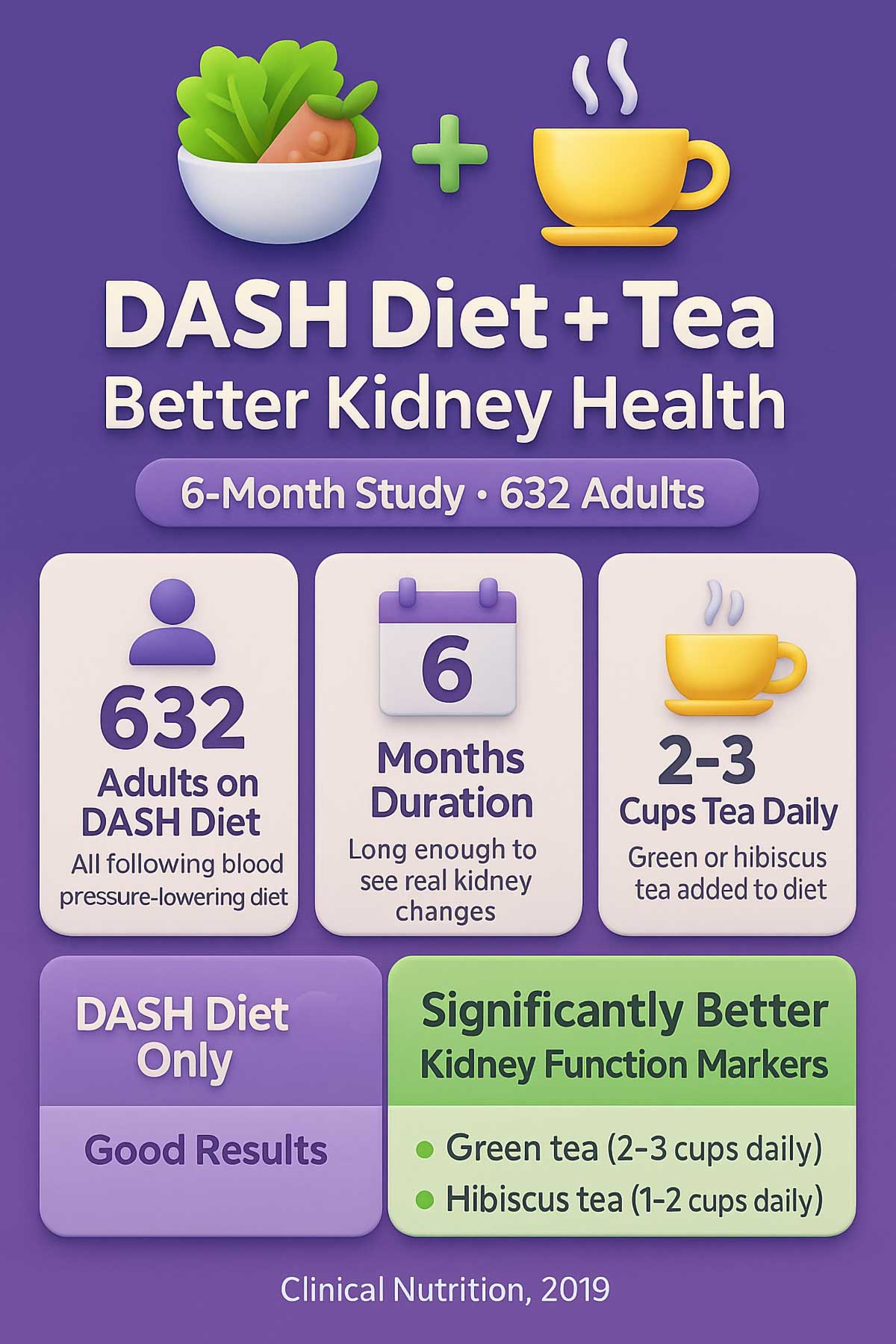
A 2019 study in Clinical Nutrition tracked 632 adults following the DASH diet. Those who also drank 2-3 cups of green or hibiscus tea daily had significantly better kidney function markers after 6 months compared to those who didn’t drink tea.
Exercise and Kidney Health
Physical activity protects kidneys by controlling blood pressure, blood sugar, and weight. Tea can support exercise performance and recovery.
Exercise recommendations:
- 150 minutes moderate activity weekly (brisk walking, cycling)
- 75 minutes vigorous activity weekly (jogging, swimming)
- Strength training 2 days weekly
Pre-workout: Green tea 30 minutes before exercise may improve endurance. One study found that EGCG increases fat burning during exercise by 17%.
Post-workout: Ginger tea reduces muscle inflammation and supports recovery.
Hydration: Count tea toward daily fluid goals, but drink extra water during intense exercise.
Sleep Quality and Kidney Function
Poor sleep harms kidney health. A 2019 study in the Journal of the American Society of Nephrology found that people who slept less than 6 hours nightly had a 19% higher risk of kidney function decline.
Evening tea ritual for better sleep:
- Drink rooibos or chamomile tea 1 hour before bed
- Avoid green tea after 2 PM (caffeine disrupts sleep)
- Consistent bedtime routine signals your body to relax
- Warm tea promotes slight body temperature drop that aids sleep
Stress Management
Chronic stress raises blood pressure and inflammation, both harmful to kidneys.
Tea as part of stress management:
- Mindful tea preparation creates a calming ritual
- Taking a tea break interrupts stress cycles
- Warm beverages activate calming parasympathetic nervous system
- L-theanine in green tea reduces stress hormones (cortisol)
Combine tea with other stress management techniques: deep breathing while drinking tea, meditation before your morning tea ritual, gentle stretching while evening tea steeps.
When Tea Is Not Enough: Recognizing Medical Emergencies
Tea supports kidney health, but it cannot replace medical care. Seek immediate medical attention if you experience:
Emergency symptoms:
- Blood in urine (red or dark brown urine)
- Severe back pain below ribs (kidney area)
- Sudden decrease in urination or no urination
- Severe swelling in legs, ankles, or face
- Difficulty breathing or shortness of breath
- Confusion or altered mental state
- Seizures
- Severe nausea and vomiting that prevents fluid intake
See your doctor soon (within 1-2 days) if you notice:
- Persistent changes in urination frequency or volume
- Foamy or bubbly urine (may indicate protein)
- Unexplained fatigue or weakness
- Loss of appetite
- Persistent itching
- Metallic taste in mouth
- Muscle cramps or twitching
Schedule a routine visit if you have:
- Family history of kidney disease
- Diabetes or high blood pressure (annual kidney function tests)
- Age over 60 (annual screening)
- History of kidney stones (every 1-2 years)
- Taking medications that affect kidneys (regular monitoring)
Your Kidney Health Action Plan
Here’s a summary of actionable steps to protect your kidneys starting today:
Week 1: Assessment and Baseline
- Schedule appointment for kidney function tests (creatinine, GFR, urinalysis)
- Check blood pressure at home or pharmacy
- Review all medications and supplements with doctor or pharmacist
- Assess current fluid intake (track for 3 days)
Week 2: Tea Selection and Preparation
- Based on your health status, choose 2-3 appropriate teas from this guide
- Purchase high-quality teas from reputable sources
- Set up proper storage containers
- Practice proper brewing techniques
Week 3: Integration and Routine
- Replace one sugary drink daily with kidney-healthy tea
- Establish morning or evening tea ritual
- Track fluid intake to ensure adequate hydration (2-3 liters daily)
- Monitor how you feel (energy, urination patterns, any changes)
Week 4: Optimization
- Rotate tea varieties to avoid over-consumption of single type
- Adjust brewing strength to your taste preferences
- Check in with doctor if you take medications (any needed adjustments?)
- Make tea drinking a sustainable daily habit, not a short-term fix
Ongoing Maintenance
- Continue 2-3 cups daily of appropriate teas
- Annual kidney function testing
- Blood pressure monitoring (weekly if you have hypertension)
- Stay hydrated with mix of tea and water
- Maintain healthy lifestyle (diet, exercise, sleep, stress management)
Conclusion
After reviewing hundreds of studies, here’s what the science actually supports:
For general kidney protection: Green tea has the strongest evidence. Two to three cups daily provides antioxidant protection without significant risk for most people. Choose quality loose-leaf tea, brew properly at 170°F for 3-4 minutes, and add lemon for extra stone-preventing citrate.
For blood pressure support: Hibiscus is your best bet. Multiple clinical trials support its effectiveness at lowering blood pressure by 7-14 mmHg. One to two cups daily can significantly reduce hypertension, a major cause of kidney damage.
For kidney stone prevention: Choose rooibos (zero oxalates) as your primary beverage. If you want additional support, try Palo Azul using the traditional preparation method. Avoid high-oxalate teas like black tea and matcha completely.
For the safest option: Rooibos wins every time. It’s suitable for almost everyone, including people with kidney stones, caffeine sensitivity, children, and most kidney disease patients (with medical approval).
For diabetic kidney protection: Green tea or ginger offer the best indirect protection through improved metabolic health. The benefits come from better blood sugar control and reduced inflammation, which protect kidneys from diabetes-related damage.
The most important principle: Hydration matters more than any specific tea. Your kidneys need 2-3 liters of total fluids daily more than they need any particular herb or antioxidant.
Start with the basics. Drink enough water. Control your blood pressure. Manage your blood sugar if you’re diabetic. Get regular kidney function tests if you’re at risk.
Then consider adding kidney-supportive teas as part of a broader health strategy. They’re tools, not magic bullets.
Know your baseline. Check your creatinine levels and GFR (glomerular filtration rate) with your doctor. These numbers tell you how well your kidneys are working.
If you take any medications, especially blood pressure drugs, diuretics, immunosuppressants, or blood thinners, talk to your doctor or pharmacist before adding herbal teas. Even beneficial herbs can interact with medications.
And if anyone tries to sell you a “kidney detox” or “kidney cleanse” product, save your money. Your kidneys don’t need cleansing. They need protection, support, and adequate hydration.
That’s what evidence-based tea consumption can provide.
FAQs
Can I drink tea if I’m on dialysis?
This requires careful consideration. Dialysis patients have strict fluid restrictions (typically 32-48 oz daily total). If you drink tea, it counts toward this limit.
Safest choices: Rooibos (low potassium, zero oxalates), very dilute chamomile.
Absolutely avoid: Any high-potassium teas (dandelion, nettle, java tea), star fruit, licorice.
Critical: Discuss ANY tea with your dialysis team. Even small amounts of potassium can be dangerous when kidneys don’t work.
Will tea affect my kidney function test results?
Generally no, but there are exceptions. Drinking tea won’t falsely elevate creatinine or reduce GFR measurements. But excessive green tea consumption (more than 5 cups daily) might temporarily affect certain blood markers.
For accurate tests: Maintain normal hydration (don’t overhydrate or underhydrate before testing), avoid extreme diet changes 2-3 days before tests, tell your doctor about any supplements or herbal teas you take regularly.
How long before I see benefits from kidney-protective teas?
This depends on what you’re measuring. Blood pressure effects from hibiscus appear within 2-4 weeks in most studies. Antioxidant markers improve within days to weeks. But kidney function changes slowly.
For prevention: Consistent daily consumption over months to years provides the best protection. Think of tea as insurance, not treatment.
For existing kidney disease: Don’t expect dramatic GFR improvements. Tea may slow progression but won’t reverse damage.
Can children drink these teas?
Some teas are safe for children, others aren’t. Rooibos is excellent for kids (no caffeine, naturally sweet). Chamomile is generally safe for children over 6 months. Hibiscus can be given to children over 2 years in moderation.
Avoid for children: Caffeinated teas (green, black), diuretic teas (nettle, dandelion), any tea with drug interactions.
For children with kidney issues: Consult a pediatric nephrologist before giving any herbal teas.
Are tea extracts as good as brewed tea?
Not usually. Brewed tea provides several advantages:
Hydration: You get beneficial compounds plus the water your kidneys need.
Safety: Concentrated extracts can cause side effects. A 2017 case report documented a woman who developed acute liver injury from taking concentrated green tea extract supplements (the equivalent of 10-15 cups of tea daily). She had no problems drinking regular green tea.
Cost: Brewing tea costs much less than buying daily supplements.
Quality control: Tea quality is easier to verify than supplement quality.
Supplements make sense only if you can’t tolerate tea’s taste or need a specific standardized dose for research purposes.
What about decaf green tea?
Decaf green tea retains most EGCG and other beneficial compounds. It’s a good option if you’re caffeine-sensitive or drink tea in the evening.
The decaffeination process removes 96-98% of caffeine but only 5-15% of EGCG. You still get significant kidney-protective benefits.
Choose: CO2 or water-processed decaf (chemical-free methods). Avoid: Chemical solvent decaffeination (can leave residues).
Can tea interact with my vitamins or supplements?
Yes, tea can interact with some supplements:
Green tea + iron supplements: Green tea reduces iron absorption by up to 60%. Take iron supplements 2-3 hours apart from tea.
Any tea + calcium supplements: Tea can reduce calcium absorption slightly. Not usually significant, but take calcium 1-2 hours apart from tea for maximum absorption.
Green tea + vitamin K supplements: Green tea contains some vitamin K. If you’re on warfarin (which vitamin K affects), maintain consistent tea intake.
Hibiscus + potassium supplements: Hibiscus acts like an ACE inhibitor. Combined with potassium supplements, this might raise potassium too high in susceptible people.
Is it safe to drink tea during pregnancy?
This depends on the tea. Pregnancy affects kidney function (blood volume increases, kidneys work harder). Some teas are safe, others dangerous.
Safe in moderation during pregnancy:
- Rooibos (unlimited, caffeine-free)
- Ginger tea (helps morning sickness, 1-2 cups daily)
- Limited green tea (1 cup daily due to caffeine)
Avoid during pregnancy:
- Hibiscus (may affect hormones, cause uterine contractions)
- Nettle (may stimulate uterus)
- Dandelion (diuretic effects)
- Licorice (hormone effects)
- Any “detox” or “cleanse” products
Best practice: Stick to rooibos and ginger during pregnancy. Consult your OB-GYN before adding other teas.
My tea tastes different from last time. Is something wrong?
Tea flavor naturally varies based on:
Harvest season: Spring harvest green tea tastes different from summer harvest.
Storage conditions: Tea loses flavor over time, especially if exposed to air, light, or moisture.
Water quality: Different water (hard vs. soft, chlorinated vs. filtered) dramatically affects tea taste.
Brewing variables: Even 30 seconds longer steeping or 10 degrees hotter water changes flavor.
If tea tastes musty, moldy, or spoiled (not just different), throw it out. If it just tastes weaker or different, it’s probably fine but losing potency.
Medical Disclaimer: This article provides educational information only and does not replace medical advice. Consult your healthcare provider before making changes to your diet, especially if you have kidney disease or take medications.