Most people add chia to yogurt, smoothies, or oatmeal and assume they’re getting the same benefits seen in research. The studies tell a different story.
Yes, chia seeds can lower blood pressure. But most people eating them for their heart are eating roughly a quarter of the dose used in the trials that found it worked.
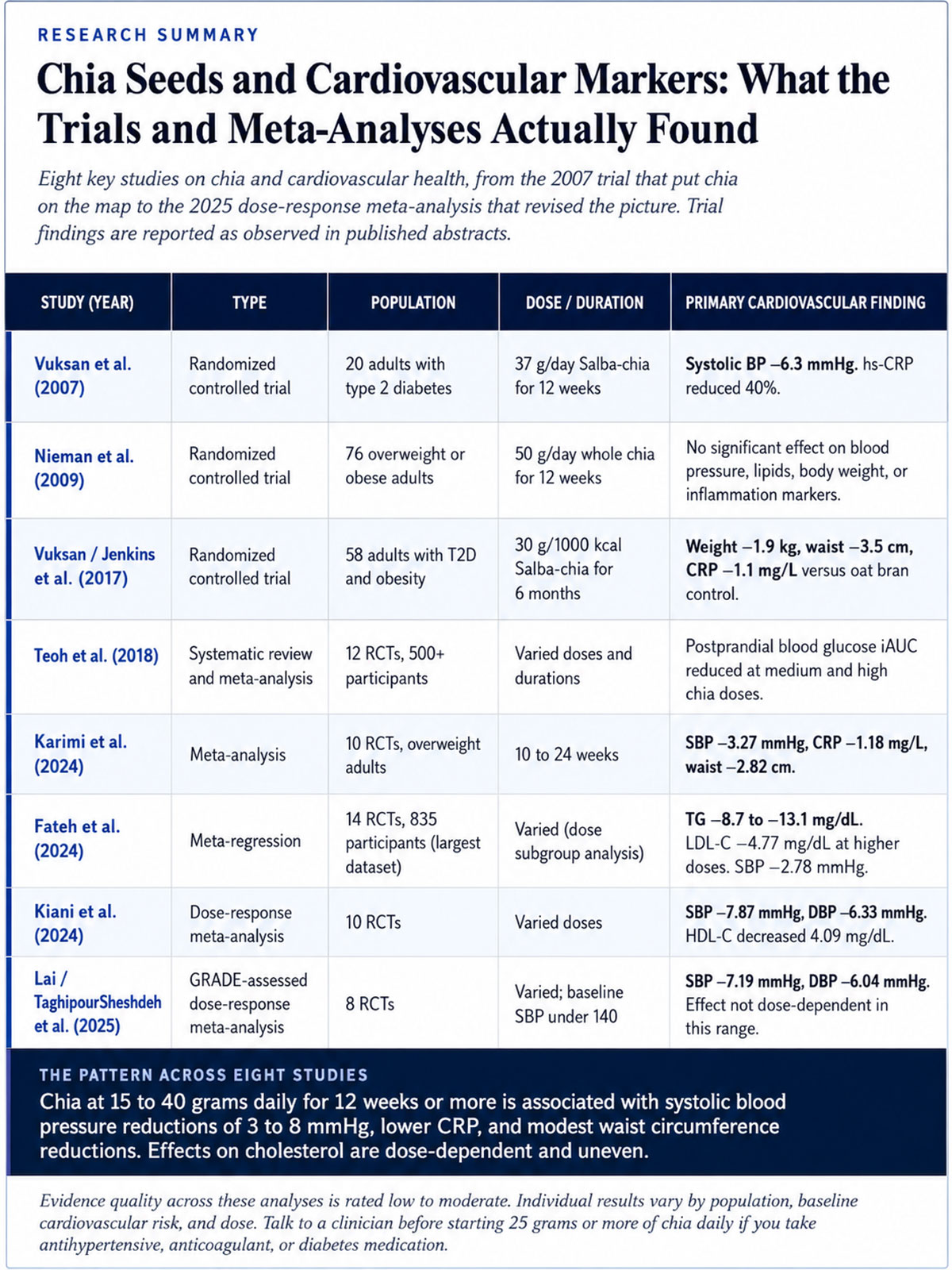
Five meta-analyses published between 2023 and 2025 reached the same conclusion through different routes. Across studies, daily chia consumption of 15 to 40 grams (1 to 3 tablespoons) for 12 to 24 weeks was associated with systolic blood pressure reductions of 3 to 7 mmHg and diastolic reductions of up to 6 mmHg. The effect was strongest in adults with baseline systolic pressure under 140.
That window, pre-hypertension, the systolic 130s, what doctors call “elevated” or “stage 1,” is where chia’s recent research is most relevant. And it’s where most patients are still being told to wait six months and watch.
The 7 mmHg Finding That Changes the Math
A 5 mmHg drop in systolic blood pressure, at a population level, is associated with roughly 13% lower stroke risk and about 8% lower heart attack risk. That’s the benchmark cardiologists use when they evaluate a new antihypertensive medication. It’s also, within a margin, what the cleanest chia trials have now shown.
Faranak TaghipourSheshdeh and colleagues spent two years pooling data for what would become the most rigorous chia blood pressure analysis to date. Their 2025 GRADE-assessed meta-analysis in Nutrition Reviews looked at eight randomized controlled trials and reported a weighted mean systolic reduction of 7.19 mmHg. Diastolic dropped 6.04 mmHg. Both findings were statistically significant.
The effect held in participants whose baseline systolic pressure was under 140, the pre-hypertensive range. And the analysis found something unexpected: the size of the effect did not depend on the dose. Lower amounts produced similar results in this population, which contradicts the standard “more chia equals more benefit” framing.
The finding cuts against decades of food-as-medicine messaging that tied effect size to portion size. The body’s response to chia, at least on blood pressure, may saturate at a smaller dose than the trials have been testing.
That finding took a while to sink in.
Three Ways Chia Works on Blood Pressure
Most consumer health articles list two mechanisms: the omega-3 fatty acids and the soluble fiber. A third one shows up in the research literature but rarely in patient guidance, and it explains why the BP effect is more consistent than chia’s effect on other heart markers.
Start with alpha-linolenic acid (ALA), a plant-based omega-3. Chia is one of the richest food sources available, with roughly 5 grams per tablespoon. ALA reduces the production of pro-inflammatory signaling molecules and has a mild blood-thinning effect, which together reduce vascular resistance.
Soluble fiber is the second factor. One ounce of chia (about 2 tablespoons) provides roughly 10 grams of fiber, much of it the type that forms a gel in the gut. Fiber intake at this level is associated with reduced arterial stiffness and steadier post-meal blood sugar levels, both of which indirectly affect blood pressure.
The third mechanism is less familiar. Chia protein contains short peptide chains that inhibit angiotensin-converting enzyme (ACE), the same molecular target as common blood pressure medications like lisinopril and enalapril. A 2013 study in the International Journal of Food Science found that chia protein hydrolysates inhibited ACE activity by 53 to 69% in vitro, with the strongest effect in the smallest peptide fractions. Follow-up work in 2019 confirmed the peptides interact directly with the enzyme’s catalytic site.
This is in vitro and mechanistic evidence, not yet directly tested in humans as the cause of the BP effect. The honest framing: lab studies suggest chia peptides may act like a mild, food-derived ACE inhibitor. The human trials haven’t isolated this pathway yet. But the convergence of three independent mechanisms (omega-3, fiber, ACE inhibition) helps explain why blood pressure responds more reliably to chia than cholesterol or weight does.
How Much Chia, and For How Long?
The studies that found a clear effect used between 15 and 40 grams of chia daily, sustained for at least 12 weeks. The most consistent effects appear at 25 grams or more per day, which works out to roughly 2 to 3 tablespoons.
For context: a typical “I sprinkle chia on my yogurt” habit is closer to 5 to 8 grams. That’s a third of the lower-bound trial dose and a sixth of what the highest-dose trials tested. The disconnect between what most people eat and what researchers have tested is the single biggest reason chia’s reputation has outpaced its measurable effect for many users.
The 12-week mark is not arbitrary. Blood pressure responses to dietary change typically take 8 to 12 weeks to stabilize and become measurable against day-to-day variability. A 2-week trial of chia is too short to tell. Even a month is too short.
One practical caveat: moving to 25 grams of chia per day is a significant fiber increase. Chia contains about 10 grams of fiber per tablespoon. Going from a sprinkle to 3 tablespoons overnight produces predictable digestive consequences: bloating, gas, or loose stools. A gradual ramp over 2 to 3 weeks gives the gut time to adapt and makes the habit easier to keep.
Chia Dose Calculator
Based on the daily intake ranges used in the published cardiovascular trials
How to take it
—
What to watch for
—
Inflammation: Where the Data Converges
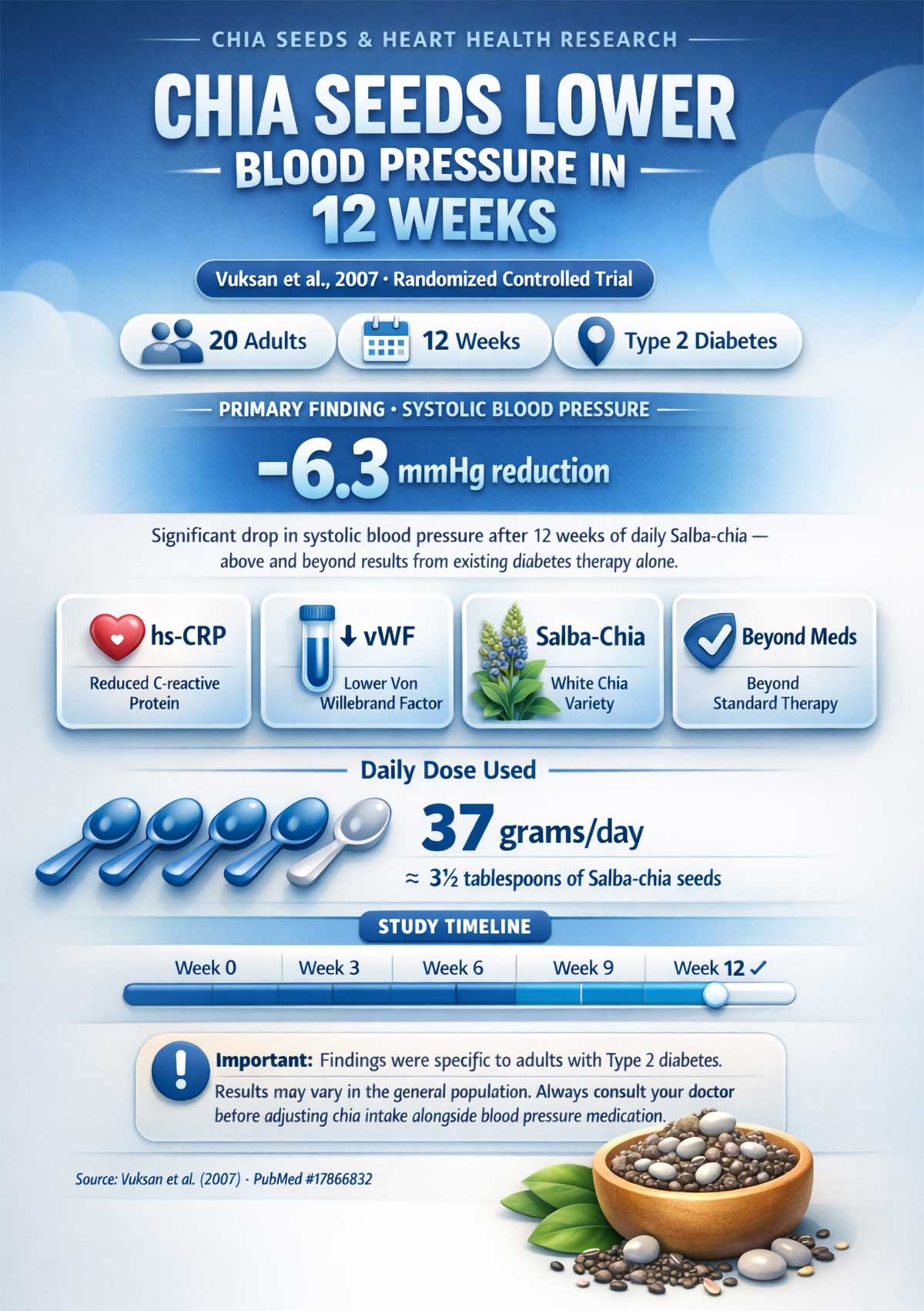
Vladimir Vuksan, an endocrinology researcher at the University of Toronto, ran the first major chia cardiovascular trial in 2007. Published in Diabetes Care, the study tested 37 grams of Salba-chia daily for 12 weeks in 20 patients with type 2 diabetes. Systolic blood pressure dropped an average of 6.3 mmHg. High-sensitivity C-reactive protein, an inflammation marker linked to heart attack risk, dropped 40%. The findings made chia a research priority for the next decade.
One transparency note worth flagging: the trial was funded by ChiaNova, a company later renamed Salba Research & Development, and Vuksan held a pending patent application for chia in cardiovascular treatment at the time. The disclosure was published openly. The findings have since been replicated in independent samples, but the funding context is part of the honest read.
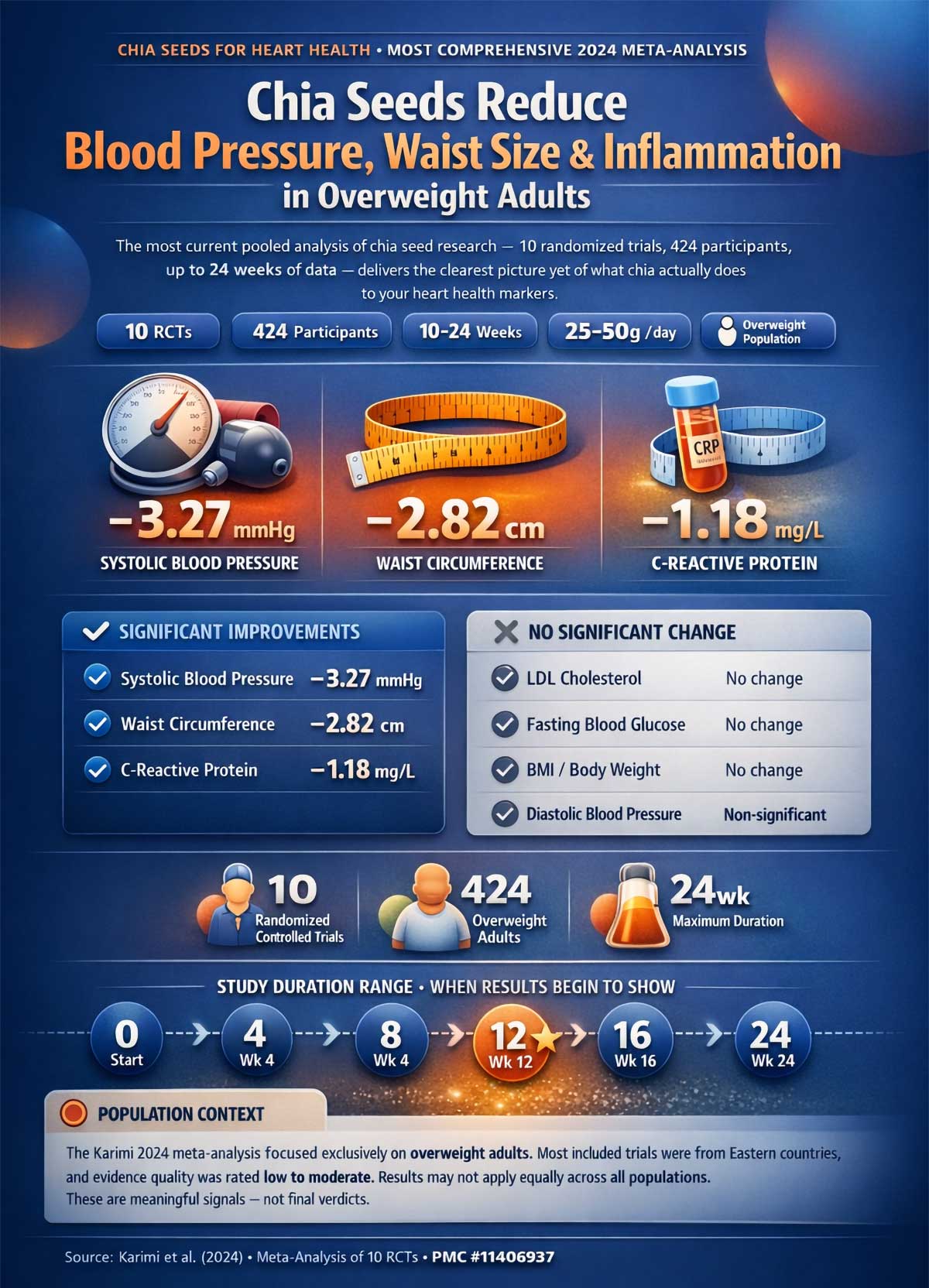
The 2024 Karimi meta-analysis in Nutrition & Metabolism, pooling 10 randomized trials in overweight adults, found a 1.18 mg/L reduction in CRP and a 2.82 cm reduction in waist circumference across 10 to 24 weeks of chia consumption. A separate Vuksan-led trial in 2017, this one a 6-month calorie-restricted intervention in 58 patients with type 2 diabetes and obesity, produced a 1.1 mg/L CRP reduction and a 3.5 cm waist circumference drop, alongside a 1.9 kg weight loss compared to the oat bran control.
Three independent samples, three CRP reductions within a tight range. That convergence matters because the inflammation data is pooled from populations that differ in almost every other way: age, BMI, diabetes status, and duration of intervention. When a signal holds that cleanly across that much variation, it is not noise. It could be what chia is most reliably doing.
The Cholesterol Question
This is where the narrative gets more complicated, and where most chia articles fall short.
Many people add chia hoping to lower their LDL or total cholesterol. The evidence for this is genuinely mixed. The 2009 Nieman trial tested 50 grams of chia daily in 76 overweight adults for 12 weeks. Published in Nutrition Research, the trial found plasma ALA rose 24.4%, confirming that the chia was absorbed. But there was no significant effect on LDL, total cholesterol, HDL, body weight, or inflammation markers. It was the cleanest “null finding” trial in the chia literature.
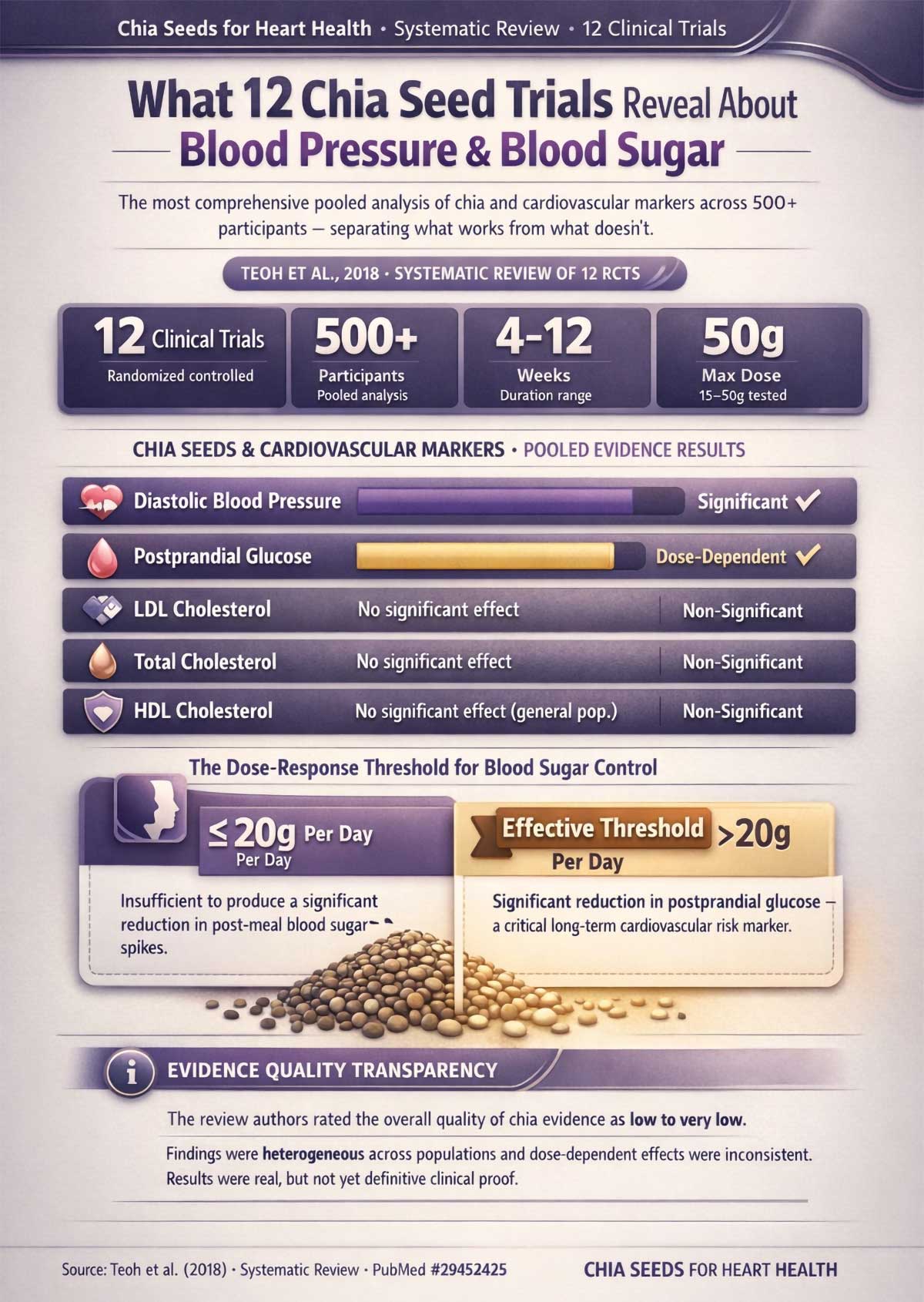
For years, the consumer takeaway from this work was simple: chia doesn’t lower cholesterol. The 2024 Fateh meta-regression complicates that picture. Pooling 14 trials with 835 participants (the largest dataset in the field), the analysis found triglyceride reductions at both lower and higher doses, and a small but statistically significant LDL drop of 4.77 mg/dL in the higher-dose subgroup. The effect on triglycerides was particularly clear in participants with elevated baseline values, mirroring earlier dyslipidemia-specific work.
Then there’s a finding most consumer articles don’t mention. The 2024 Kiani dose-response meta-analysis in Complementary Therapies in Medicine reported a 4.09 mg/dL drop in HDL cholesterol, the “good” cholesterol, alongside the expected BP reductions. Researchers haven’t settled on why this happens. Some hypotheses point to the high ALA load shifting lipid partitioning patterns. The honest framing is that chia’s effect on the lipid panel is dose-dependent and unevenly distributed, more useful for triglycerides than LDL, and not entirely free of trade-offs.
The takeaway is that chia is a blood pressure and inflammation tool with secondary, dose-dependent effects on triglycerides. It is not a cholesterol-lowering food in the way olive oil is, and presenting it as one oversells the data.
Should You Eat Chia if You’re Already on Blood Pressure Medication?
The short answer is yes, with a caveat. Chia’s effect compounds with antihypertensive medications, and that’s usually beneficial. In Vuksan’s 2007 trial, nine of the 20 patients were already taking blood pressure medication. Chia added a 3 to 6 mmHg drop on top of their existing therapy.
But “compounds with” cuts both ways. A small group of patients on aggressive multi-drug antihypertensive regimens may find their pressure drops below target, which produces lightheadedness or fatigue. This is rare, and the fix is usually a medication adjustment by the prescriber, not stopping the chia.
The interaction that catches most patients off guard is the ACE inhibitor overlap. Chia protein contains peptides that may work on the same molecular target as lisinopril, enalapril, and ramipril, so the effects can be amplified. The same logic applies to angiotensin receptor blockers (telmisartan, losartan, valsartan). For people on calcium channel blockers, diuretics, or beta-blockers, the additive effect is real but typically more modest.
Two other classes deserve a mention. Anticoagulants like warfarin or apixaban may be affected by chia’s mild antiplatelet effect, which comes from its omega-3 content, at higher daily doses. And for people on GLP-1 agonists like semaglutide or tirzepatide, adding 25 grams of fiber to a system already slowed by the medication can worsen the nausea that often peaks early in titration. None of these is a reason to avoid chia. All of them are reasons to have a conversation with your practitioner before you’re already at 3 tablespoons a day.
Who Shouldn’t Eat Chia Seeds Daily?
A few groups should approach chia carefully or skip it altogether.
People with hypotension, or who maintain consistently low blood pressure, should approach chia as they would any antihypertensive food. The effect is real, and stacking it on already-low pressure produces lightheadedness. People with swallowing difficulties or a history of dysphagia should never eat dry chia by the spoonful. The seeds absorb 10 to 12 times their weight in liquid and can swell in the esophagus if swallowed dry. Soak them first, or eat them mixed into a moist food.
People experiencing active flares of inflammatory bowel disease or diverticulitis should avoid the high-fiber load until their condition stabilizes. People with known seed allergies, particularly sesame, should test a small amount first because cross-reactivity has been reported. Pregnant or breastfeeding people have no established contraindication, but the trial evidence in these populations is thin. The conservative guidance is to stay within the food-source amounts most people eat (a tablespoon or two) rather than the higher therapeutic doses used in research.
Three Practical Ways to Hit the Effective Dose
Soak or Grind, Not Sprinkle
Whole dry chia seeds pass through the digestive system partly intact. Soaking releases the gel layer that drives the post-meal blood sugar effect, and grinding improves nutrient absorption. The Vuksan trials used milled chia for exactly this reason. Soaking for 15 to 20 minutes is enough. Grinding takes 10 seconds in a coffee grinder. Sprinkling dry chia on a salad and chewing it briefly is the least effective form, and probably explains why so many casual users report no perceived effect.
Build It Into a Meal, Not a Garnish
The post-meal glucose effect requires the chia to be present when food arrives. A morning bowl of overnight oats with 2 tablespoons of chia, or a smoothie blended with 3 tablespoons, puts the seed exactly where it works best. Stirred into yogurt at breakfast, mixed into a soup at lunch, or baked into a homemade cracker, the principle is the same. Treat chia as part of the meal rather than a daily supplement to keep track of.
Vary the Format Before Week Three
Most people who try a chia routine quit by week three, and the reason is usually monotony. Chia pudding is popular because it’s simple to prep, but eating cold sweet chia every morning for three months is a habit very few people sustain. The path to a 12-week dose is treating chia as a texture tool rather than a feature. A spoonful stirred into soup. Pressed into a spice crust on baked fish. Blended into a smoothie where it disappears. Mixed into bread dough as part of the flour. The flavor is mild, and the seeds add bulk and binding, so most savory applications absorb the dose without changing the meal.
The Honest Advice
What changes the picture for most readers is two gaps. One is between the dose used in the trials and what they have actually been eating. The other is between the 12-week timeline and the month most people give chia before quitting. The research has converged. The habits, mostly, haven’t.
None of which makes chia a miracle. None of it makes the work of taking blood pressure medication, losing weight, or sleeping enough optional. What chia offers is a quietly effective option for someone in the systolic 130s who would rather try a 25-gram daily food habit for 12 weeks before adding a prescription. That’s more honest advice than labeling chia a “superfood.” For the reader who has been waiting for one, it’s also a more useful one.