Cottage cheese might be the most underrated protein source you can buy. Here’s what makes it different: cottage cheese releases protein slowly. While most protein sources flood your system and fade fast, cottage cheese keeps feeding your muscles for hours. This matters more than most people think.
Over the next 4-8 weeks, your body can change in ways that surprise you. Your muscles stay protected longer. Your recovery improves. And the benefits stack up day after day.
Let’s break down what actually happens inside your body when you make cottage cheese a daily habit.
Who Benefits Most from Daily Cottage Cheese?
Before we get into the science, let’s talk about who sees the biggest results from this strategy.
Older Adults (50+)
Your muscles become stubborn as you age. Scientists call this “anabolic resistance.” Your body needs more protein to trigger the same muscle-building response that worked when you were younger. Cottage cheese provides the concentrated protein dose older adults need, especially before bed when muscle breakdown accelerates.
Athletes in Training
You push your body hard. Every training session creates damage that needs repair. The slow-release protein in cottage cheese supports recovery during the critical 24-48 hour window after exercise. You’re not just feeding today’s workout. You’re preparing for tomorrow’s.
People Cutting Calories
When you eat less to lose fat, your body looks for energy anywhere it can find it. That includes your muscles. High-protein foods like cottage cheese tell your body to burn fat instead. You lose weight while keeping the muscle you worked hard to build.
Beginners to Strength Training
You’re in the “newbie gains” phase. Your body responds fast to training right now. But only if you give it enough protein. Cottage cheese makes hitting your protein target easy and affordable. You maximize this limited window of rapid progress.
Vegetarians
Finding complete protein sources without meat gets tricky. Cottage cheese delivers all nine essential amino acids in the ratios your body needs. No combining required. No guesswork involved.
Budget-Conscious Fitness Enthusiasts
Protein supplements cost $1-2 per serving. Good quality meat runs even higher. Cottage cheese gives you 28 grams of slow-release protein for about 60-80 cents per cup. Your wallet and your muscles both benefit.
The 24-Hour Muscle Protection System
Your muscles face constant threats. Every day, your body breaks down muscle tissue. This happens when you’re stressed, when you skip meals, and even when you sleep.
Most protein sources fight this for a few hours at best. Cottage cheese works differently.
What Casein Actually Does
The secret lies in casein. This protein makes up about 80% of cottage cheese. Unlike whey protein, which digests in 1-2 hours, casein takes 6-7 hours to fully break down. Some studies show it can release amino acids for up to 8 hours.
Think of it like time-release medicine. Instead of one big spike, you get steady delivery. Your muscles receive a constant stream of building blocks throughout the day.
A 2017 study in the American Journal of Clinical Nutrition tracked amino acid levels in people’s blood after they ate different protein sources. Casein kept amino acid levels high for more than 7 hours. Whey peaked fast but dropped within 3 hours. The difference was striking.
The Anti-Breakdown Effect
This slow release creates what researchers call an “anti-catabolic shield.” Catabolism means muscle breakdown. The shield means protection. When you eat cottage cheese, you’re literally guarding your muscle tissue from damage.
But there’s more to it. The protein density helps in another way. One cup of low-fat cottage cheese packs about 28 grams of protein with only 163 calories. This high protein-to-calorie ratio keeps you full longer. When you’re not hungry, you’re less likely to lose muscle from eating too little.
Why Protein Density Matters
Studies show that people who eat high-protein foods between meals maintain more lean mass than those who don’t. The protein stops your body from breaking down muscle for energy.
Research published in Nutrition & Metabolism found that people eating high-protein snacks maintained better muscle mass during weight loss compared to those eating low-protein snacks. The total daily protein was the same. The timing made the difference.
Key Takeaway: Casein protein in cottage cheese digests slowly over 7-8 hours, providing sustained amino acid delivery that protects muscles from breakdown between meals and during sleep.
Cottage Cheese Nutritional Breakdown
Understanding what’s in your food helps you make better choices. Here’s what you get in every cup of low-fat cottage cheese:
| Nutrient | Per 1 Cup (226g) Low-Fat | % Daily Value | Muscle Benefit |
|---|---|---|---|
| Protein | 28g | 56% | Slow-release casein for sustained amino acid delivery |
| Leucine | ~2.5g | N/A | Triggers muscle protein synthesis |
| Calcium | 138mg | 14% | Bone strength and muscle contraction |
| Phosphorus | 303mg | 24% | Bone density and energy metabolism |
| Vitamin B12 | 1.4mcg | 59% | Energy production for workouts |
| Selenium | 20mcg | 36% | Antioxidant protection for muscle cells |
| Sodium | 746mg | 32% | Choose low-sodium versions (300-400mg) |
| Calories | 163 | 8% | High protein-to-calorie ratio supports fat loss |
The numbers tell a clear story. You get more than half your daily protein needs in one cup. The micronutrients support the muscle-building process in multiple ways. And you do it all for fewer than 200 calories.
The Overnight Muscle Repair Window
Your body doesn’t stop working when you sleep. In fact, nighttime is when some of your most important muscle repair happens.
But there’s a problem. Most people go 8-10 hours without eating. During this time, your body needs amino acids to fix damaged muscle fibers. If it can’t find them in your bloodstream, it takes them from your muscles.
This is where cottage cheese before bed changes the game.
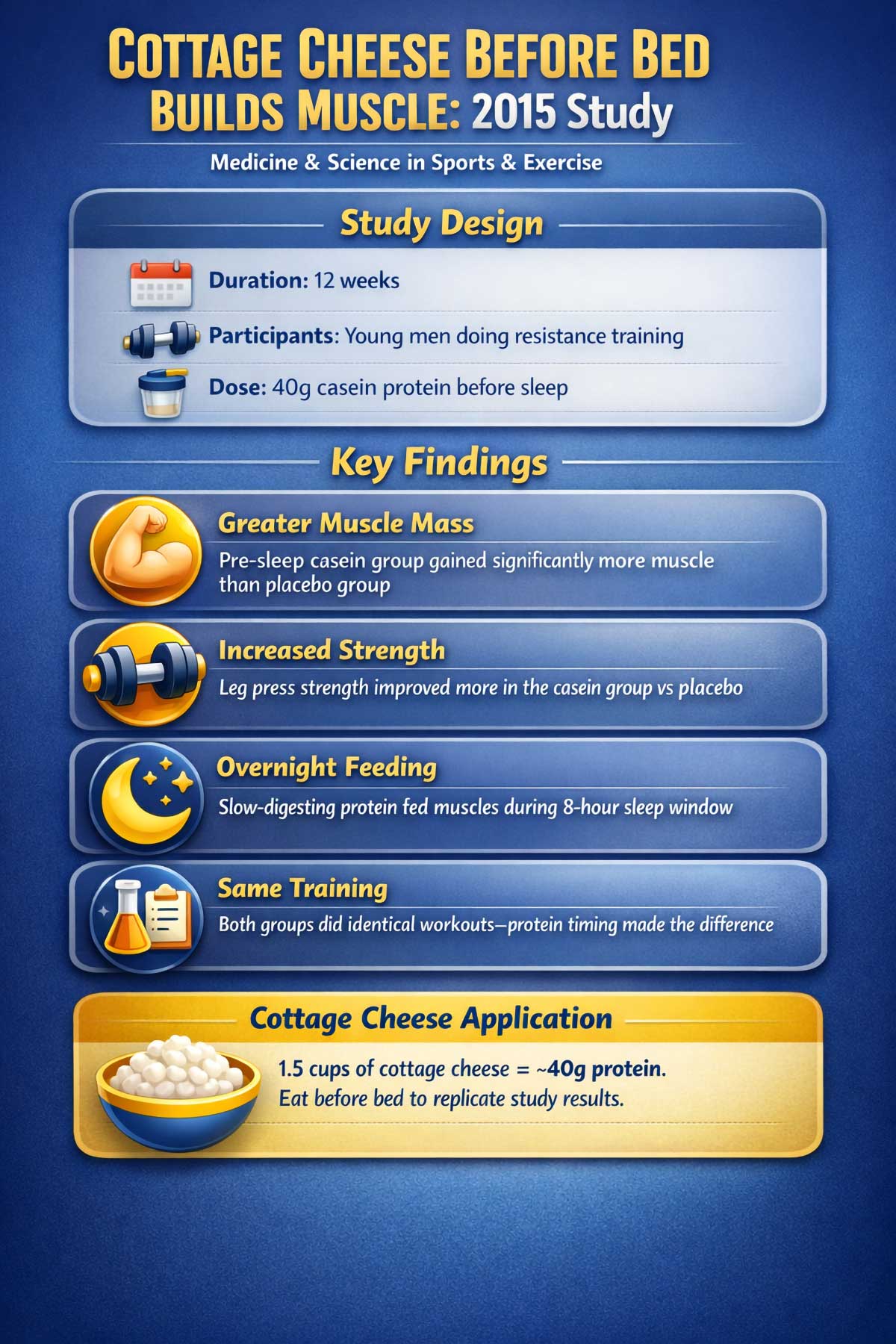
Research on pre-sleep protein shows clear results. In a 2015 study published in Medicine & Science in Sports & Exercise, young men who ate 40 grams of casein protein before bed gained more muscle and strength over 12 weeks than those who didn’t. The overnight feeding made the difference. These men did the same training program. They ate the same total daily protein. The only variable was the pre-sleep casein. That single change led to measurable gains in both muscle mass and leg press strength.
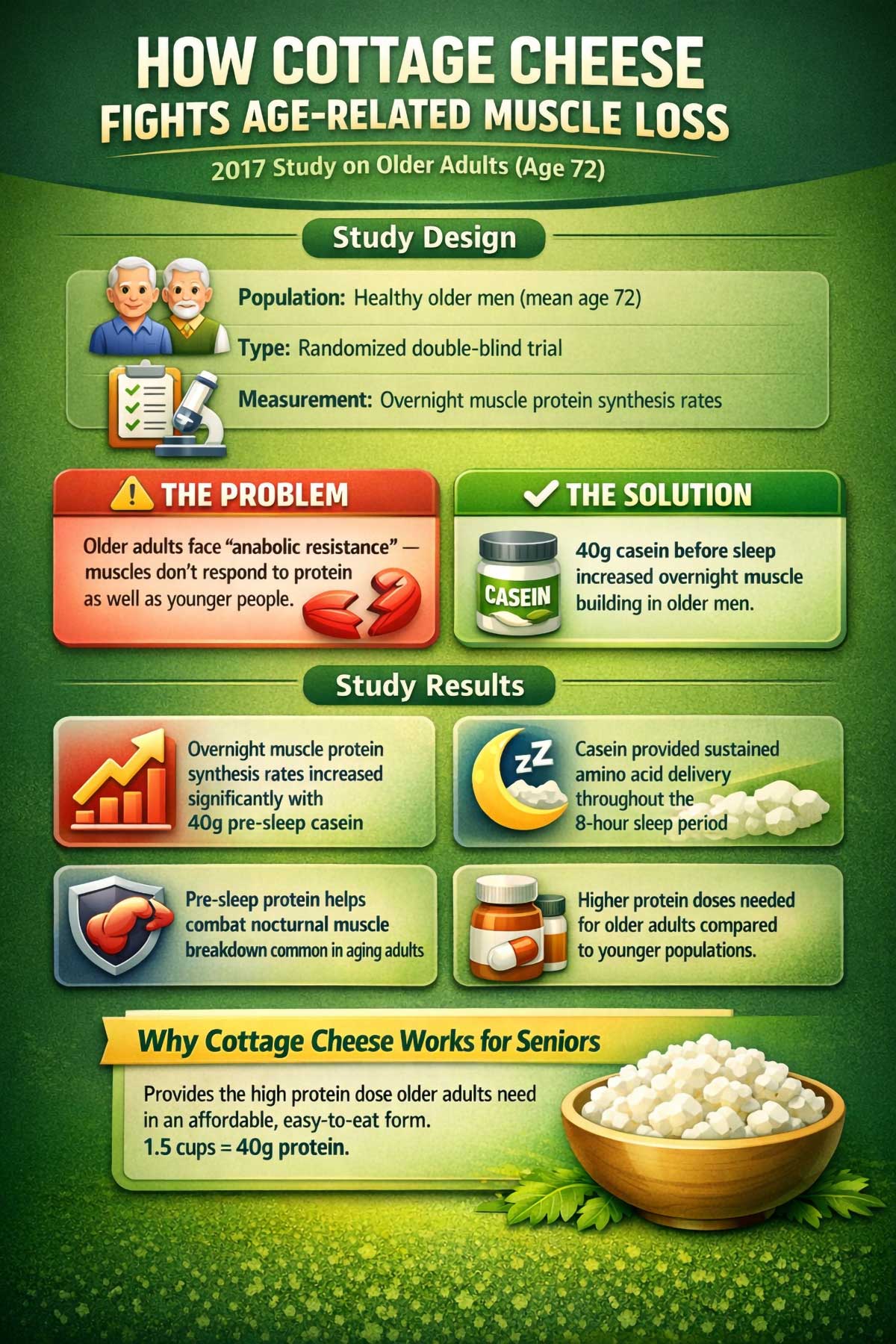
Another study looked at older men, average age 72. Scientists gave them 40 grams of casein before sleep and measured their overnight muscle protein synthesis using advanced tracer techniques. The result? Their overnight muscle protein synthesis rates went up significantly compared to a lower dose. This matters because older adults struggle more with building and keeping muscle.
The 40-gram mark seems to be a sweet spot. This amount provides enough amino acids to fuel repair without excess. One and a half cups of cottage cheese gets you close to this target.
But age makes this even more important. Older adults face something called “anabolic resistance.” Their muscles don’t respond to protein as well as younger people’s do. They need more protein per meal to trigger the same growth signal.
Pre-sleep cottage cheese helps fight this. The slow protein release keeps amino acid levels high all night. Your muscles get what they need when they need it. You wake up having protected your muscle mass instead of losing it.
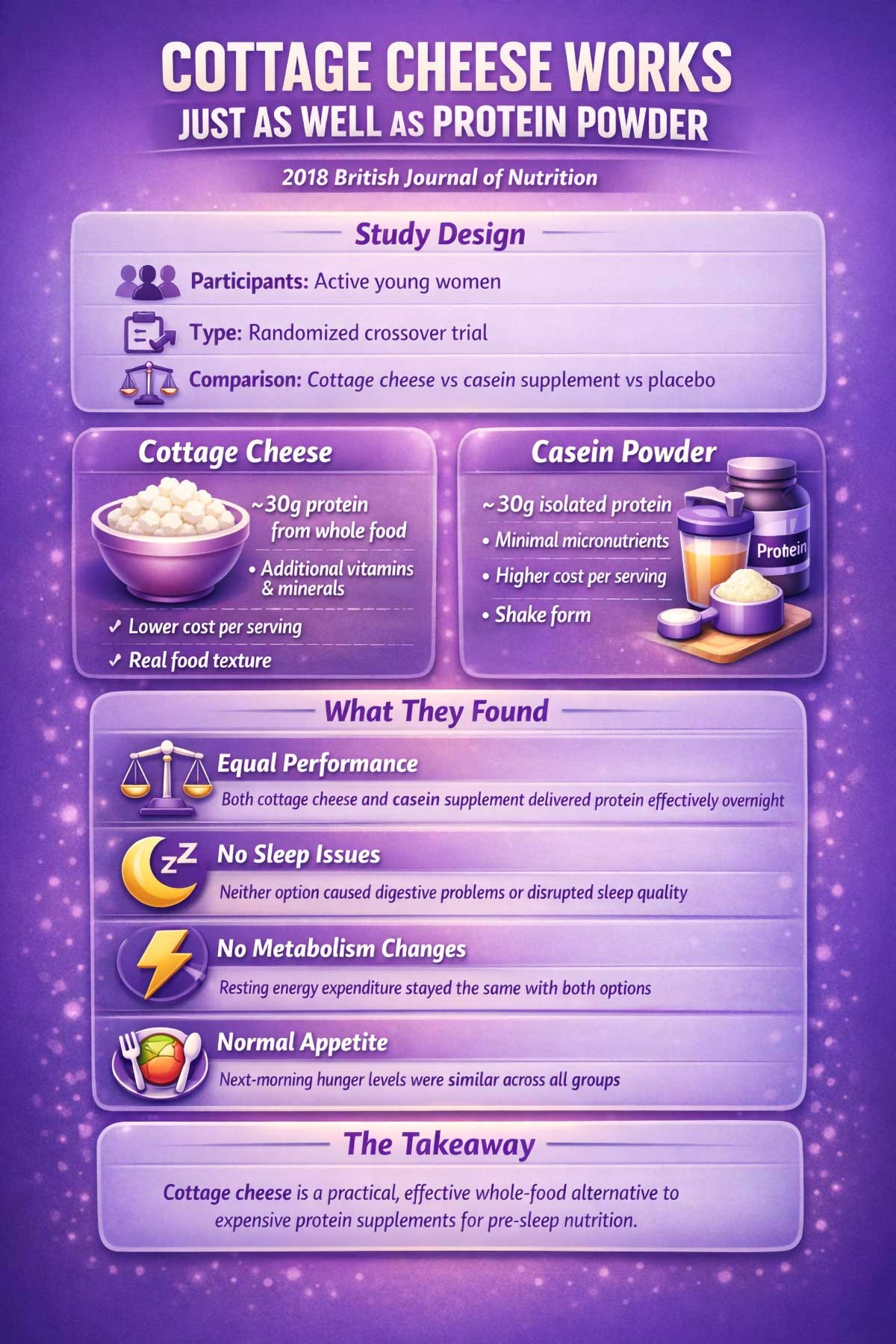
A 2018 study published in the British Journal of Nutrition tested cottage cheese directly against casein supplements. Researchers gave active young women either whole-food cottage cheese (about 30 grams of protein) or an equivalent casein supplement before bed. Both worked equally well for overnight protein delivery. Neither caused negative effects on metabolism or hunger the next morning. But cottage cheese costs less and provides extra nutrients. The whole food option held its own against the isolated supplement.
Quick Fact: One and a half cups of cottage cheese before bed provides approximately 40 grams of protein, the optimal dose shown in research to maximize overnight muscle protein synthesis.
The Leucine Switch: Turning On Muscle Growth
Not all protein is equal. Your body needs 20 different amino acids to build muscle. But one stands above the rest: leucine.
Leucine acts like an ignition key. It literally switches on the muscle-building process in your cells through a protein complex called mTOR. Without enough leucine, the signal never fires. Your muscles can’t grow or repair properly, no matter how much total protein you eat.
Scientists have found a threshold. You need about 2.5 to 3 grams of leucine per meal to max out muscle protein synthesis. Fall short of this, and you’re leaving gains on the table.
Cottage cheese delivers. One cup provides roughly 2.5 grams of leucine. This hits the target perfectly.
Compare this to other foods. Chicken breast has more leucine per ounce, but cottage cheese brings it in a slow-release package. You get the leucine trigger plus extended delivery. That’s a powerful combo.
Here’s what makes whole food cottage cheese different from supplements. When you drink a protein shake, you get isolated protein. Fast absorption, quick spike, then it’s gone. Cottage cheese gives you protein embedded in a food matrix. The curds take time to break down. The fat content (even in low-fat versions) slows digestion further.
This structure matters. Some research suggests that whole food protein sources may provide a more sustained anabolic signal than supplements. The amino acids trickle into your bloodstream instead of flooding it all at once.
Your muscles respond to both the peak level and the duration of amino acids in your blood. Cottage cheese optimizes both factors. You hit the leucine threshold, then maintain elevated amino acids for hours.
For people trying to preserve muscle while cutting calories, this becomes crucial. The extended amino acid delivery helps prevent muscle loss even when you’re in a caloric deficit. Your body has less reason to break down muscle tissue for energy because it has a steady protein supply.
A 2020 position paper published in Frontiers in Nutrition reviewed the optimal protein intake for older adults at risk of sarcopenia. The experts recommended 25-40 grams of high-quality protein containing at least 2.5-3 grams of leucine per meal to maximize muscle protein synthesis. Cottage cheese fits these guidelines perfectly, making it an ideal choice for aging adults who need to fight muscle loss.
Key Takeaway: Leucine acts as a biological switch that activates muscle protein synthesis. One cup of cottage cheese provides 2.5g of leucine, meeting the threshold needed to trigger maximum muscle-building response.
How Cottage Cheese Compares to Other Protein Sources
Making smart choices requires understanding your options. Here’s how cottage cheese stacks up:
| Protein Source | Protein (per 100g) | Digestion Speed | Leucine Content | Cost per 20g protein | Best Timing |
|---|---|---|---|---|---|
| Cottage Cheese | 11g | Slow (7-8 hours) | 1.1g | $0.60-0.80 | Before bed, between meals |
| Greek Yogurt | 10g | Medium (3-4 hours) | 1.0g | $0.70-1.00 | Post-workout, breakfast |
| Whey Protein | 80g | Fast (1-2 hours) | 8-10g | $0.50-0.70 | Post-workout |
| Chicken Breast | 31g | Medium (3-4 hours) | 2.5g | $0.80-1.20 | Meals |
| Eggs | 13g | Medium (3-4 hours) | 1.1g | $0.40-0.60 | Any time |
Each protein source has its place. Whey works great right after training when you want fast absorption. Chicken provides a protein-dense meal option. Eggs give you versatility and cost savings.
But cottage cheese owns the overnight slot. Nothing else provides the same slow, steady amino acid release at such a reasonable price. You can combine these sources throughout the day for optimal results. Fast proteins after training. Slow proteins before bed. Medium-speed options at meals.
When Cottage Cheese Meets the Weight Room
Eating protein alone builds some muscle. Training alone builds some muscle. But combine them, and something special happens. Scientists call it a synergistic effect. The total result exceeds the sum of the parts.
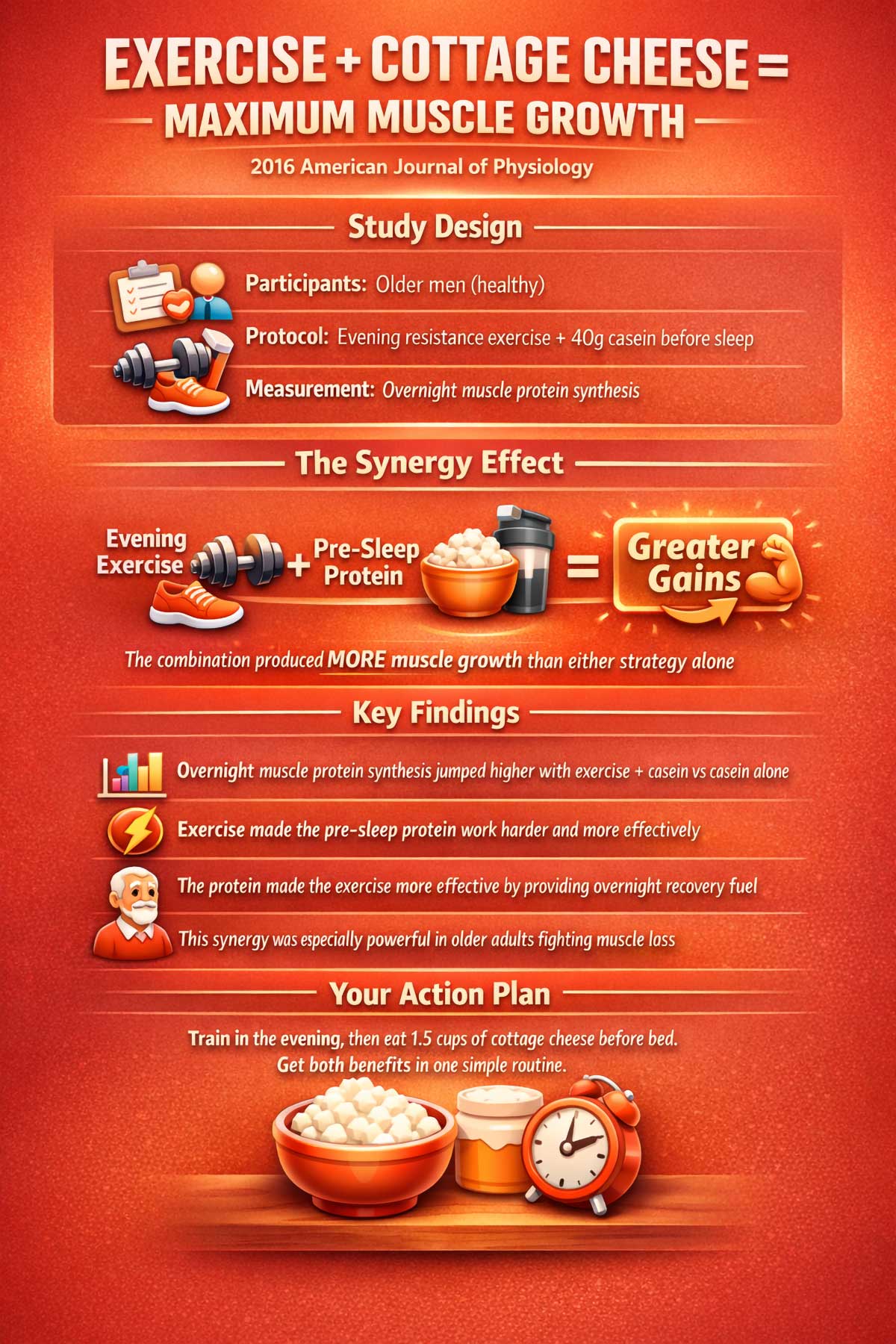
Multiple studies prove this. In a 2016 study published in the American Journal of Physiology, older men did evening resistance training and ate 40 grams of casein before bed. Their overnight muscle protein synthesis jumped higher than men who only ate the casein without exercising. The exercise made the protein work harder. The protein made the exercise more effective. Together, they created a response that neither could achieve alone.
This isn’t just for older adults. Young athletes see the same pattern. When you lift weights, you create tiny damage in muscle fibers. Your body repairs this damage and builds the muscle back stronger. But it needs raw materials: amino acids.
Cottage cheese after training provides those materials. The slow-release protein keeps feeding your muscles during the critical recovery window. Most people think this window lasts 30-60 minutes post-workout. Actually, it extends for 24-48 hours.
By eating cottage cheese daily, you ensure your muscles never run dry. Every training session gets the support it needs. Over 8 weeks of consistent training and eating, the gains compound. You’re not just building muscle each workout. You’re also preventing the breakdown between sessions.
The timing strategy matters. Some people do best with cottage cheese right after training. Others prefer it before bed. Both work. The key is consistency. Your muscles need steady protein every single day.
For people who train in the evening, cottage cheese before bed is perfect. You finish your workout, eat dinner, then have cottage cheese as a bedtime snack. This covers both your post-workout needs and your overnight needs in one shot.
Morning trainers can use cottage cheese differently. Have it at lunch or as an afternoon snack. Then get another protein source before bed. The goal remains the same: keep your muscles fed around the clock.
The Supporting Cast: Nutrients Beyond Protein
Cottage cheese isn’t just protein. Every serving brings a team of nutrients that support muscle health in different ways.
Vitamin B12: Your Energy Source
Vitamin B12 powers your energy system. Your cells use B12 to convert food into ATP, the energy molecule that fuels everything you do. This includes muscle contractions during workouts. One cup of cottage cheese provides about 59% of your daily B12 needs.
Low B12 means low energy. You can’t train hard if you’re tired. The B12 in cottage cheese helps ensure your workouts stay intense enough to drive muscle growth.
Selenium: Cell Protection
Selenium protects your muscle cells. When you exercise hard, you create oxidative stress. This is normal, but too much can damage cells. Selenium helps your body produce antioxidant enzymes that fight this stress. Cottage cheese gives you about 36% of your daily selenium in one cup.
This protection matters during intense training phases. The harder you push, the more oxidative stress you generate. Selenium helps your muscles recover from that stress without excess damage.
Calcium and Phosphorus: The Bone Connection
You can’t build a strong body on a weak frame. Your bones support every muscle you have. Cottage cheese provides both calcium and phosphorus, two minerals your bones need to stay dense and strong.
One cup delivers about 14% of your daily calcium and 24% of your phosphorus. This might not seem huge, but it adds up over 8 weeks. Every day, you’re reinforcing the foundation your muscles sit on.
These nutrients work together. The protein builds muscle. The B12 fuels your training. The selenium protects against damage. The calcium and phosphorus strengthen your skeleton. This complete package explains why whole foods often beat supplements.
A 2023 systematic review and meta-analysis published in Nutrients examined protein supplementation in older adults with sarcopenia or frailty. The researchers pooled data from multiple studies and found that protein supplementation, especially when combined with resistance training, improved appendicular muscle mass and strength. But the benefits depended on dose, timing, and baseline nutritional status. The whole food sources that provided additional micronutrients showed particularly good results.
6 High-Protein Cottage Cheese Recipes That Don’t Get Boring
Theory means nothing without application. Here’s how to make cottage cheese taste good enough to eat every single day.
Recipe 1: Pre-Bed Protein Bowl (Sweet)
Ingredients:
- 1 cup low-fat cottage cheese (28g protein)
- ½ cup blueberries (antioxidants for recovery)
- 1 tbsp almond butter (healthy fats slow digestion further)
- Dash of cinnamon (blood sugar control)
Instructions: Mix cottage cheese and almond butter until creamy. Top with blueberries. Sprinkle cinnamon on top.
Nutritional info: 32g protein, 290 calories
Best for: Evening/bedtime
The almond butter adds healthy fats that slow digestion even more. The berries provide antioxidants that fight exercise-induced oxidative stress. Cinnamon may help with insulin sensitivity. This bowl covers multiple bases at once.
Recipe 2: Savory Protein Dip
Ingredients:
- 1 cup cottage cheese (28g protein)
- 2 tbsp Greek yogurt (adds 3g protein)
- 1 tsp garlic powder
- 2 tbsp fresh dill and chives, chopped
- Black pepper to taste
- Cucumber slices and bell peppers for dipping
Instructions: Blend cottage cheese and Greek yogurt until smooth. Stir in garlic powder and fresh herbs. Refrigerate for 30 minutes to let flavors blend. Serve with vegetables.
Nutritional info: 31g protein, 180 calories
Best for: Afternoon snack
This dip works great for people who don’t like sweet foods. The herbs and garlic mask any dairy taste. The vegetables add fiber and micronutrients without many calories. You can prep this on Sunday and eat it all week.
Recipe 3: High-Protein Cottage Cheese Pancakes
Ingredients:
- 1 cup cottage cheese (28g protein)
- 2 eggs (12g protein)
- ½ cup oats
- 1 tsp vanilla extract
- ½ tsp baking powder
Instructions: Blend all ingredients until smooth. Let batter rest 5 minutes. Cook on medium heat like regular pancakes, about 3 minutes per side. Makes 6 small pancakes.
Nutritional info: 40g protein per batch (serves 2, 20g each)
Best for: Post-workout breakfast
These pancakes give you both fast and slow protein. The eggs provide quick-digesting protein. The cottage cheese provides slow-digesting casein. Together, they cover both immediate and extended recovery needs. Top with Greek yogurt instead of syrup for even more protein.
Recipe 4: Protein-Packed Smoothie
Ingredients:
- ¾ cup cottage cheese (21g protein)
- 1 banana
- ½ cup frozen mango
- 1 cup unsweetened almond milk
- Ice
- Optional: 1 scoop vanilla protein powder for an extra boost
Instructions: Blend all ingredients on high until completely smooth. The high-speed blending eliminates any cottage cheese texture. You’ll never know it’s in there.
Nutritional info: 23g protein, 280 calories (without added protein powder)
Best for: Quick breakfast or snack
The fruit provides carbs for energy. The cottage cheese provides sustained protein. The combination works well before long workouts or as a meal replacement when you’re short on time. The key is blending long enough to make it totally smooth.
Recipe 5: Mediterranean Cottage Cheese Bowl
Ingredients:
- 1 cup cottage cheese (28g protein)
- ½ cup cherry tomatoes, halved
- ¼ cucumber, diced
- 4 Kalamata olives
- 1 tsp olive oil
- Squeeze of lemon juice
- Za’atar or oregano to taste
Instructions: Place cottage cheese in a bowl. Arrange vegetables on top. Drizzle with olive oil and lemon juice. Sprinkle with herbs.
Nutritional info: 30g protein, 240 calories
Best for: Lunch or dinner side
This bowl brings Mediterranean flavors without the bread. The olive oil provides healthy fats. The vegetables add volume and fiber. The combination keeps you full for hours. You can eat this alongside grilled chicken or fish for a complete high-protein meal.
Recipe 6: Chocolate Protein Pudding
Ingredients:
- 1 cup cottage cheese (28g protein)
- 1 tbsp unsweetened cocoa powder
- 1 tsp honey or stevia
- ¼ tsp vanilla extract
Instructions: Blend all ingredients until completely smooth and creamy. Refrigerate for at least 1 hour to thicken. Top with a few dark chocolate chips if desired.
Nutritional info: 29g protein, 190 calories
Best for: Evening dessert/pre-bed
This pudding satisfies chocolate cravings while delivering slow-release protein for overnight recovery. The cocoa powder adds antioxidants. You get dessert that actually helps your muscles instead of hurting your progress.
Common Mistakes That Sabotage Your Results
Knowing what to do isn’t enough. You also need to know what not to do. Here are the mistakes that stop people from getting results.
Eating Too Little Total Protein
Cottage cheese supplements your protein intake. It doesn’t replace other sources. You still need protein at breakfast, lunch, and dinner. Your daily target should be about 0.7-1 gram of protein per pound of body weight. A 150-pound person needs 105-150 grams daily. One cup of cottage cheese provides 28 grams. That leaves 77-122 grams to get from other foods.
Don’t think cottage cheese alone will build muscle. It’s one piece of a complete nutrition plan.
Choosing High-Sodium Versions
Some cottage cheese brands pack 700-800 milligrams of sodium per cup. That’s about a third of your daily limit. High sodium causes water retention. You’ll feel bloated. You might see the scale go up from water weight, which can be discouraging.
Look for low-sodium or no-salt-added versions. These usually contain 300-400 milligrams per cup. You get all the protein without the bloat.
Skipping Resistance Training
Protein alone won’t build muscle. You need to give your body a reason to use that protein. Resistance training creates that reason. When you lift weights, you signal your body that it needs to build stronger muscles. The protein provides the raw materials to answer that signal.
Without training, the protein just maintains what you already have. That’s useful, but it’s not growth. If you want to see changes in 8 weeks, you need both: consistent training and consistent protein.
Inconsistent Timing
Eating cottage cheese three times this week and zero times next week won’t work. Your muscles need steady protein every single day. The benefits come from sustained amino acid delivery over weeks and months.
Pick a schedule and stick to it. Before bed every night. After lunch every day. Whatever works for your life. Just make it consistent.
Ignoring Lactose Intolerance Symptoms
Some people can’t digest lactose well. Symptoms include bloating, gas, cramps, and diarrhea. If you experience these after eating cottage cheese, don’t push through it. Your body is telling you something.
Try lactose-free cottage cheese instead. Several brands make it. You get all the protein without the digestive problems. Or consider that cottage cheese might not be your best option. Greek yogurt, eggs, or other protein sources might work better for your body.
Expecting Overnight Results
You won’t wake up with bigger muscles after one night of eating cottage cheese. This is an 8-week strategy, minimum. The first week, you might notice better sleep or less morning soreness. By week 3-4, your recovery between workouts improves. By week 6-8, you start seeing measurable changes in muscle mass or body composition.
Be patient. Trust the process. The science works, but only if you give it time.
Cottage Cheese for Special Populations
Different people have different needs. Here’s how to adjust this strategy for your situation.
Lactose Intolerance
Cottage cheese contains less lactose than milk. The bacterial cultures used to make it eat some of the lactose during production. Many people with mild lactose intolerance can handle cottage cheese fine, especially in moderate amounts.
If regular cottage cheese bothers you, lactose-free versions are widely available. Brands like Green Valley and Good Culture make excellent lactose-free cottage cheese with the same protein content.
Kidney Disease
High-protein diets put extra stress on kidneys. If you have kidney disease or reduced kidney function, talk to your doctor before eating cottage cheese daily. You might need to limit protein intake. Your doctor can tell you what’s safe for your specific situation.
For healthy people with normal kidney function, the protein in cottage cheese poses no risk. Multiple large studies have found no connection between high protein intake and kidney damage in healthy individuals.
High Blood Pressure
Sodium raises blood pressure in salt-sensitive people. Regular cottage cheese contains substantial sodium. If you have high blood pressure or are at risk, choose low-sodium versions exclusively.
The protein itself actually helps blood pressure. Studies show that higher protein intake is associated with lower blood pressure over time. Just watch the sodium content.
Pregnancy
Pasteurized cottage cheese is safe and beneficial during pregnancy. The high protein supports fetal development. The calcium helps build strong bones. The B12 supports neural development.
Make sure you buy pasteurized cottage cheese. Most commercial brands are pasteurized, but check the label to be certain. Unpasteurized dairy products can contain harmful bacteria that are dangerous during pregnancy.
Type 2 Diabetes
High protein helps blood sugar control. Protein slows the absorption of carbs, preventing blood sugar spikes. This makes cottage cheese an excellent snack choice for people with type 2 diabetes.
Just watch the flavored versions. Some contain added sugars that defeat the purpose. Stick to plain cottage cheese and add your own fruit in controlled amounts.
Your 8-Week Action Plan
Knowing the science means nothing if you don’t apply it. Here’s how to make cottage cheese work for your goals.
Step 1: Choose Your Timing
For maximum muscle preservation, eat cottage cheese before bed. This covers your overnight needs. Aim for 1 to 1.5 cups, which gives you 28-40 grams of protein.
If you train in the evening, this strategy doubles as post-workout nutrition. You hit two birds with one stone.
For people who train in the morning or afternoon, split your intake. Have one serving mid-day and another before bed. This keeps your muscle protein synthesis elevated throughout the 24-hour cycle.
Step 2: Pick the Right Product
Not all cottage cheese is equal. Look for these features:
- Low sodium if you’re watching salt intake. Some brands pack 400-800 mg per cup. Others stay under 300 mg.
- Live and active cultures. Some cottage cheese contains probiotics. These may help protein absorption by improving gut health.
- Full-fat versus low-fat. Both work. Full-fat has more calories but keeps you fuller longer. Low-fat saves calories while still delivering the casein you need.
Read labels carefully. The protein content should be at least 11-14 grams per half cup. Anything less means you’re paying for filler.
Good brands to try: Good Culture, Nancy’s, Organic Valley, Daisy, Breakstone’s. Compare protein per serving and sodium content. Pick what fits your budget and tastes best to you.
Step 3: Beat Flavor Fatigue
Use the recipes from earlier in this article. Rotate through different flavors to keep things interesting. Monday might be sweet with berries. Tuesday could be savory with vegetables. Wednesday you make the chocolate pudding version.
Variety prevents burnout. You’re more likely to stick with something you enjoy eating.
Step 4: Track Your Progress
Take progress photos on day 1 and day 56. The mirror often shows changes that the scale misses. If you have access to body composition testing, measure at the start and end.
Most importantly, pay attention to how you feel. Do you wake up less sore? Can you push harder in the gym? Are you less hungry between meals? These subjective measures matter as much as objective ones.
Step 5: Commit to Consistency
Circle 8 weeks from today on your calendar. That’s your finish line. Between now and then, eat cottage cheese every single day. No exceptions. No “I’ll start again Monday.” Just consistent action.
Set a daily reminder on your phone. Put the cottage cheese at eye level in your fridge so you can’t miss it. Do whatever it takes to make this a non-negotiable habit.
What You Can Expect After 60 Days
Eight weeks isn’t long in the grand scheme. But it’s enough time to see real changes.
Your muscles will be better protected. The daily protein supply prevents the breakdown that happens when you go too long between meals. This adds up to noticeable differences in lean mass, especially if you’re also training consistently.
Your recovery improves. When your muscles have steady access to amino acids, they repair faster. You can train more often or more intensely without burning out. This accelerates your progress beyond what diet or training alone would achieve.
Your appetite becomes easier to manage. The high protein content keeps you full for hours. Many people find they eat less overall because they’re not fighting constant hunger. This makes maintaining or losing weight much simpler.
But here’s the real benefit: sustainability. Cottage cheese isn’t a quick fix or a magic bullet. It’s a simple, affordable, practical protein source that you can eat forever. No pills, no powders, no complicated protocols. Just real food that happens to be perfectly designed for muscle preservation.
The 8-week mark is just the beginning. The habits you build now can support your health for years. Your muscles don’t stop needing protein after two months. They need it every single day for the rest of your life.
Next Steps: Your Action Plan Starting Today
You’ve read the science. You understand the benefits. Now it’s time to take action.
Step 1: Buy Cottage Cheese Today
Don’t wait until Monday. Don’t wait until your next shopping trip. Go to the store today and buy a tub of cottage cheese. Look for low-sodium varieties with at least 11 grams of protein per half cup. Start with a brand that looks good to you. You can try others later.
Step 2: Choose Your Timing Strategy
Decide right now when you’ll eat cottage cheese every day. Before bed is the most research-backed timing. But consistency matters more than perfect timing. Pick a time you can stick with.
Step 3: Prep Three Recipes
Look back at the six recipes in this article. Pick three that appeal to you. Buy the ingredients this week. Make one recipe each for the next three days. This gives you variety right from the start and prevents flavor fatigue.
Step 4: Set Up Your Progress Tracking
Print or save the tracking table from earlier. Take your starting measurements today. Weigh yourself. Take a front, side, and back photo in fitted clothing. Write down how you feel: energy level, sleep quality, workout performance. You’ll compare these to your 8-week results.
Step 5: Commit to 8 Weeks
Mark your calendar 8 weeks from today. That’s your checkpoint. Between now and then, you eat cottage cheese every single day. No excuses. No exceptions. Just consistent action.
Tell someone about your plan. Accountability increases success rates. When you tell a friend or family member what you’re doing, you’re more likely to follow through.
Conclusion
Thousands of athletes and fitness enthusiasts use this exact strategy. The science is solid. The food is affordable. The only question is: will you stick with it long enough to see the results?
Cottage cheese makes meeting your protein needs easy. One daily serving gives you the slow-release casein, the leucine threshold, the overnight protection, and the supporting nutrients your muscles need to thrive. It’s not flashy. It’s not new. But it works.
The research is clear. Pre-sleep casein improves overnight muscle protein synthesis. It helps older adults fight anabolic resistance. It supports muscle preservation during weight loss. It enhances training-induced gains when combined with resistance exercise.
But research only matters if you apply it. Knowledge without action changes nothing.
Start today. Pick up a tub on your next grocery run. Eat it before bed tonight. Then do it again tomorrow. And the next day. By the time 8 weeks pass, you’ll understand why this simple food has stayed relevant for decades. Your body will show you the answer.
FAQs
How much cottage cheese should I eat per day for muscle building?
Aim for 1 to 1.5 cups (28-40g protein) before bed, plus additional servings if needed to meet your daily protein target of 0.7-1g per pound of body weight. A 150-pound person needs 105-150 grams of protein daily. Cottage cheese can provide 28-56 grams of that total, depending on how much you eat.
Is cottage cheese better than Greek yogurt for muscle growth?
Cottage cheese contains more casein, which digests slower and provides longer-lasting amino acid delivery. Greek yogurt digests faster. Both are excellent protein sources. Cottage cheese works better before bed. Greek yogurt works better post-workout or at breakfast when you want faster absorption. Use both strategically throughout your day.
Can I eat cottage cheese every day safely?
Yes, for most people. Choose low-sodium versions if you have high blood pressure. If you’re lactose intolerant, try lactose-free varieties. People with kidney disease should consult their doctor before eating high amounts of protein daily. For healthy individuals with normal kidney function, daily cottage cheese poses no risks.
What’s the best time to eat cottage cheese for muscle gain?
Before bed is optimal. The slow-digesting casein protein feeds your muscles during the 8-hour overnight fast when muscle breakdown typically occurs. Research consistently shows that pre-sleep protein improves overnight muscle protein synthesis and, when combined with training, leads to greater muscle gains over time.
Does cottage cheese help with weight loss?
Yes. High protein content (28g per cup) increases satiety and helps preserve muscle mass during caloric restriction. When you lose weight, you want to lose fat, not muscle. Muscle burns calories even at rest, so keeping it helps maintain your metabolism. Studies show that high-protein diets lead to better body composition during weight loss compared to low-protein diets.
How long until I see results from eating cottage cheese daily?
When combined with resistance training, most people notice improved recovery within 2-3 weeks and measurable muscle preservation or growth by 6-8 weeks. The first changes are subjective: better sleep, less soreness, improved energy. Physical changes take longer. Be patient and trust the process.
Can I use cottage cheese as a post-workout protein?
Yes, though it digests slower than whey protein. It works best post-workout for evening trainers or as a secondary protein source 2-3 hours after a faster-digesting option. Some people combine fast and slow proteins after training: a whey shake immediately post-workout, then cottage cheese 2-3 hours later. This provides both immediate and extended recovery support.
What’s the difference between cottage cheese and casein protein powder?
Both contain casein, but cottage cheese is a whole food with additional nutrients (B12, selenium, calcium, phosphorus) and costs less. Studies show both work equally well for overnight muscle protein synthesis. Cottage cheese typically costs 60-80 cents per 28 grams of protein. Casein powder costs 70-90 cents per serving. The whole food option gives you more nutrients for similar or lower cost.
Will cottage cheese make me gain weight?
Only if it puts you into a caloric surplus. Cottage cheese is relatively low in calories for the amount of protein it provides. One cup has 163 calories and 28 grams of protein. That’s a favorable ratio. If you’re gaining unwanted weight, look at your total daily calorie intake, not just the cottage cheese. You might need to reduce portions elsewhere in your diet.
Can vegetarians eat cottage cheese for muscle building?
Yes. Cottage cheese is an excellent protein source for vegetarians. It provides all nine essential amino acids in the ratios needed for muscle protein synthesis. It’s a complete protein, just like meat or eggs. For vegetarians who eat dairy, cottage cheese solves the common problem of finding convenient, affordable, complete protein sources.