Brain scans, decades-long studies, and thousands of participants all point to the same conclusion: a few overlooked habits matter far more than most realize.
Scientists have moved past the “do crossword puzzles” advice. They’re now tracking how everyday choices physically reshape your brain, changes measurable on an MRI scan, not just detectable on a memory test. Mental acuity (the brain’s ability to process information quickly, hold thoughts in working memory, focus under pressure, and make clear decisions) isn’t fixed at birth the way intelligence largely is. It responds, for better or worse, to what you do with your body and your time every day.
In ten years of coaching a competitive karate athlete through performance nutrition and high-demand training cycles, I watched attention and decision-making under pressure become as trainable as cardiovascular fitness. The research that now explains that observation runs deeper than most people realize, and prioritizes some habits most people have never considered.
The 12 habits below aren’t pulled from generic wellness lists. Each one connects to specific documented changes in brain structure or function. Some target memory centers. Others protect the networks that sustain focus. A few address risks that most people ignore until they’re already paying the cost.
1. Build Your Memory Center with Aerobic Activity
Your hippocampus is the brain region that stores new memories and helps you navigate your environment. It naturally shrinks with age, about 1 to 2% per year after 50. You can reverse that shrinkage.
What Kirk Erickson Found
Psychologist Kirk Erickson at the University of Pittsburgh randomized 120 older adults into two groups for one year: half walked briskly for 40 minutes three times per week; the other half did stretching and toning. Brain scans at the end told a clean story. The aerobic group’s hippocampus grew by 2%, while the stretching group continued to shrink by 1.4%. That 3.4% difference, documented in the 2011 Proceedings of the National Academy of Sciences, represents roughly one to two years of reversed aging in a single structure.
The aerobic group also showed improved spatial memory, the kind used to recall where you parked, or to navigate a new neighborhood. A separate meta-analysis of 29 studies confirmed what Erickson’s team found: exercise produces measurable improvements in executive function, the mental toolkit for planning, focusing, and managing competing demands.
Why Exercise Builds Brain Volume
Aerobic exercise triggers the release of brain-derived neurotrophic factor (BDNF), a protein that acts like fertilizer for brain cells. BDNF supports the health of existing neurons and encourages new neuron growth in the hippocampus, a process called neurogenesis that scientists once thought stopped in early adulthood. It doesn’t.
Exercise also increases blood flow to the brain, delivers more oxygen and nutrients, reduces inflammation, lowers insulin resistance, and stimulates the growth of new blood vessels in brain tissue. No single drug does all of that. And the effects stack.
What Counts as Aerobic Exercise
- Brisk walking (15 to 20-minute mile pace)
- Jogging or running
- Cycling, outdoor or stationary
- Swimming laps
- Dancing (ballroom, Zumba, or hip-hop)
- Rowing or elliptical training
- Group fitness classes
- Pickleball or tennis
- Hiking uphill
The threshold is sustained movement that elevates your heart rate to 60 to 80% of your maximum. A working estimate: subtract your age from 220 to get your maximum heart rate, then aim for 60 to 80% of that number. If you can still hold a conversation but feel your pulse, you’re in the right zone.
Sample Brain-Building Week:
- Monday: 30-minute brisk walk
- Tuesday: Rest or gentle yoga
- Wednesday: 40-minute bike ride
- Thursday: 20-minute swim
- Friday: Rest or stretching
- Saturday: 45-minute hike
- Sunday: 30-minute dance class or active recreation
Aim for 30 to 40 minutes of aerobic activity four to five days per week. If you’re starting from a sedentary baseline, begin with 10-minute walks and build gradually. The Erickson protocol ran at three sessions per week. Measurable hippocampal growth appeared within 12 months. Start wherever you are.
Common obstacles:
- If time is short, splitting the session works just as well: two 15-minute blocks across the day produce the same benefit as one continuous session.
- No gym required. Walking, hiking, and dancing all count as aerobic exercise.
- Swimming and cycling protect the knees and hips for people with joint problems.
- A workout partner or group class provides the social accountability that makes consistency easier.
2. Guard Your Sleep: Your Brain Depends on It
Five hours of sleep per night is where things fall apart. Sleep restriction research shows that people consistently getting five to six hours develop measurable drops in attention, working memory, and processing speed, and those deficits accumulate with each passing day.
The Sleep Debt Problem
After two weeks of restricted sleep, your brain performs as though you’ve been awake for 24 hours straight. Sleep researchers at the University of Pennsylvania, tracking healthy adults restricted to six hours per night across 14 consecutive nights, found something that complicates how people think about powering through: the cognitive deficits kept building even as subjects reported feeling only “slightly sleepy.” Your brain adapts to running on reduced sleep. Your performance doesn’t.
In that 2003 Sleep study led by Hans Van Dongen, subjects who slept six hours nightly for two weeks performed as poorly on reaction time and working memory tasks as subjects who had been awake for 24 consecutive hours. Three nights of recovery sleep did not fully reverse the deficit. That finding has held in subsequent studies: the cognitive debt from chronic short sleep is harder to repay than most people assume.
The Glymphatic System: What Happens While You Sleep
The brain uses sleep to flush out waste products that build up during waking hours. This happens through the glymphatic system, a network of channels that only becomes fully active during sleep, particularly deep sleep stages. Skip sleep, and toxic proteins accumulate. Among them is beta-amyloid, which is directly linked to Alzheimer’s disease. Even a single night of sleep deprivation measurably increases beta-amyloid levels on brain imaging.
Sleep also consolidates memories. During sleep, the brain replays and strengthens neural connections formed during the day, transferring information from temporary storage in the hippocampus to longer-term storage in the cortex. Without enough sleep, that transfer is incomplete. You can study or learn something carefully during the day and lose significant portions of it overnight.
Signs You’re Not Getting Enough Sleep
- You need an alarm to wake up most mornings
- You hit snooze repeatedly
- You feel groggy for the first hour after waking
- You need caffeine to function in the afternoon
- You fall asleep within five minutes of lying down (ideal is 10 to 20 minutes)
- You sleep much longer on weekends than on weekdays
- You have trouble focusing in meetings or conversations
- You feel emotionally reactive or irritable
Sleep Quality Checklist
Your bedroom environment directly affects sleep quality. Address each of these:
Temperature: Keep the room between 65 and 68 degrees Fahrenheit. Use breathable bedding materials. Consider a cooling mattress pad if needed.
Darkness: Install blackout curtains or use an eye mask. Cover or remove electronic lights from clocks and chargers. Use dim red lighting if you need to navigate at night.
Noise: Use earplugs or a white noise machine if your environment is loud. Consider noise-canceling options if a partner snores.
Bed association: Reserve your bed for sleep and intimacy only. No phones, television, or work. If you can’t fall asleep after 20 minutes, get up and do something calm elsewhere until you feel tired.
Sleep Hygiene Protocol
6 to 8 hours before bed: Stop caffeine completely. Avoid long naps (20 minutes maximum, earlier in the day).
2 to 3 hours before bed: Finish eating. Begin winding down. Dim household lights.
1 to 2 hours before bed: Put screens away or use blue light filters. Take a warm bath or shower (the subsequent cooling aids sleep onset). Shift to reading, gentle stretching, or quiet activity.
30 minutes before bed: Final bathroom visit. Set the room temperature. Phone on Do Not Disturb.
Consistency matters more than any single long sleep. Going to bed and waking at the same time every day, including weekends, keeps your circadian system calibrated. Your brain runs on rhythm. Irregular sleep timing disrupts that rhythm even when total hours look sufficient.
3. Train Your Brain Beyond Puzzles
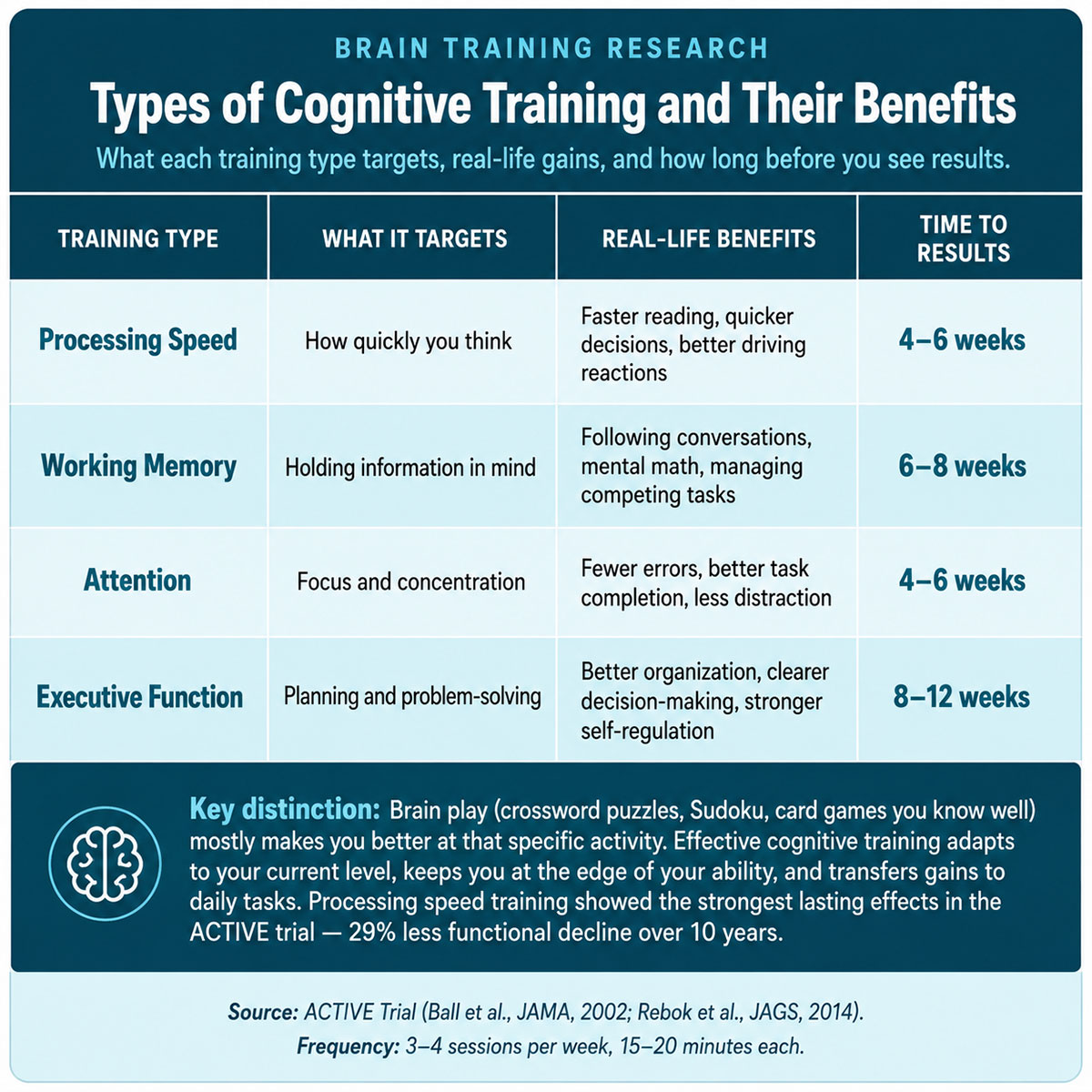
Crossword puzzles are enjoyable. They also mostly make you better at crossword puzzles. If you want cognitive gains that transfer to daily life, you need training that actually challenges your processing speed.
The ACTIVE Trial: 10 Years of Data
The Advanced Cognitive Training for Independent and Vital Elderly (ACTIVE) trial remains the most rigorous long-term study of cognitive training conducted. Researchers followed 2,832 older adults across 10 years, assigning participants to 10 sessions of training in memory, reasoning, or processing speed over five to six weeks.
People who trained didn’t just improve in their trained area. A decade later, those who received processing speed training showed 29% less decline in daily functional activities compared to the control group: tasks like managing finances, preparing meals, and taking medications correctly. That’s a meaningful protective effect from 10 sessions of targeted training.
Processing speed training showed the strongest lasting effects. That makes sense, because processing speed underlies almost everything else. If your brain processes information faster, reading improves, conversations become easier to follow, and decisions happen more efficiently. See the original ACTIVE trial publication in JAMA (2002) for the foundational findings.
Brain Play vs. Effective Training
Not all brain activities are equal.
Brain play (minimal transfer to daily life): crossword puzzles, Sudoku, word searches, card games you’ve played for years, trivia. These are enjoyable and keep the mind active. They mostly make you better at those specific activities.
Effective cognitive training (transfers to daily function): processing speed exercises that require responding quickly to changing patterns, working memory tasks that increase capacity, dual-task training, attention switching, and pattern recognition under time pressure. The distinguishing feature is adaptation: effective training adjusts as you improve, keeping you at the edge of your current ability.
Types of Cognitive Training and Their Benefits
Recommended Cognitive Training Approaches
Digital programs with evidence: Programs built on ACTIVE trial protocols, apps that adapt difficulty to your performance in real time, training that provides immediate feedback, and exercises designed as games but targeting specific cognitive domains.
Analog alternatives: Speed card games like Set or Blink, timed pattern puzzles, memory exercises with increasing difficulty, learning a new skill such as an instrument, a language, or a dance form.
How to Structure Cognitive Training
- Frequency: 3 to 4 sessions per week
- Duration: 15 to 20 minutes per session
- Intensity: challenging but not frustrating
- Variety: rotate between different cognitive domains
- Progression: increase difficulty as you improve
Sample Training Week:
- Monday: Processing speed exercises (15 minutes)
- Wednesday: Working memory training (20 minutes)
- Friday: Dual-task practice (15 minutes)
- Saturday: Learn something new (30 minutes)
Look for programs that focus on processing speed, adapt to your level, and make you respond quickly to changing patterns. Fifteen to twenty minutes, three to four times per week. The benefit builds over months, not days, and it builds on top of the other habits in this list, not instead of them.
4. Manage Stress Before It Shrinks Your Brain
Chronic stress doesn’t just make you feel worse. It physically damages your hippocampus, the same memory center that aerobic exercise builds up. The two habits work in opposite directions. Which one wins depends on your daily choices.
The Cortisol-Brain Connection
When you’re stressed, your adrenal glands release cortisol. Brief bursts are useful: they help you respond to real threats. But when cortisol remains elevated for weeks or months, the dendrites in your hippocampus shrink. These are the branch-like projections that neurons use to communicate. Fewer connections mean worse memory and slower thinking.
Brain imaging studies of people with chronic stress or depression (conditions involving sustained high cortisol) consistently show reduced hippocampal volume. The encouraging finding is that this damage is often reversible when stress is effectively managed.
Evidence from High-Stress Populations
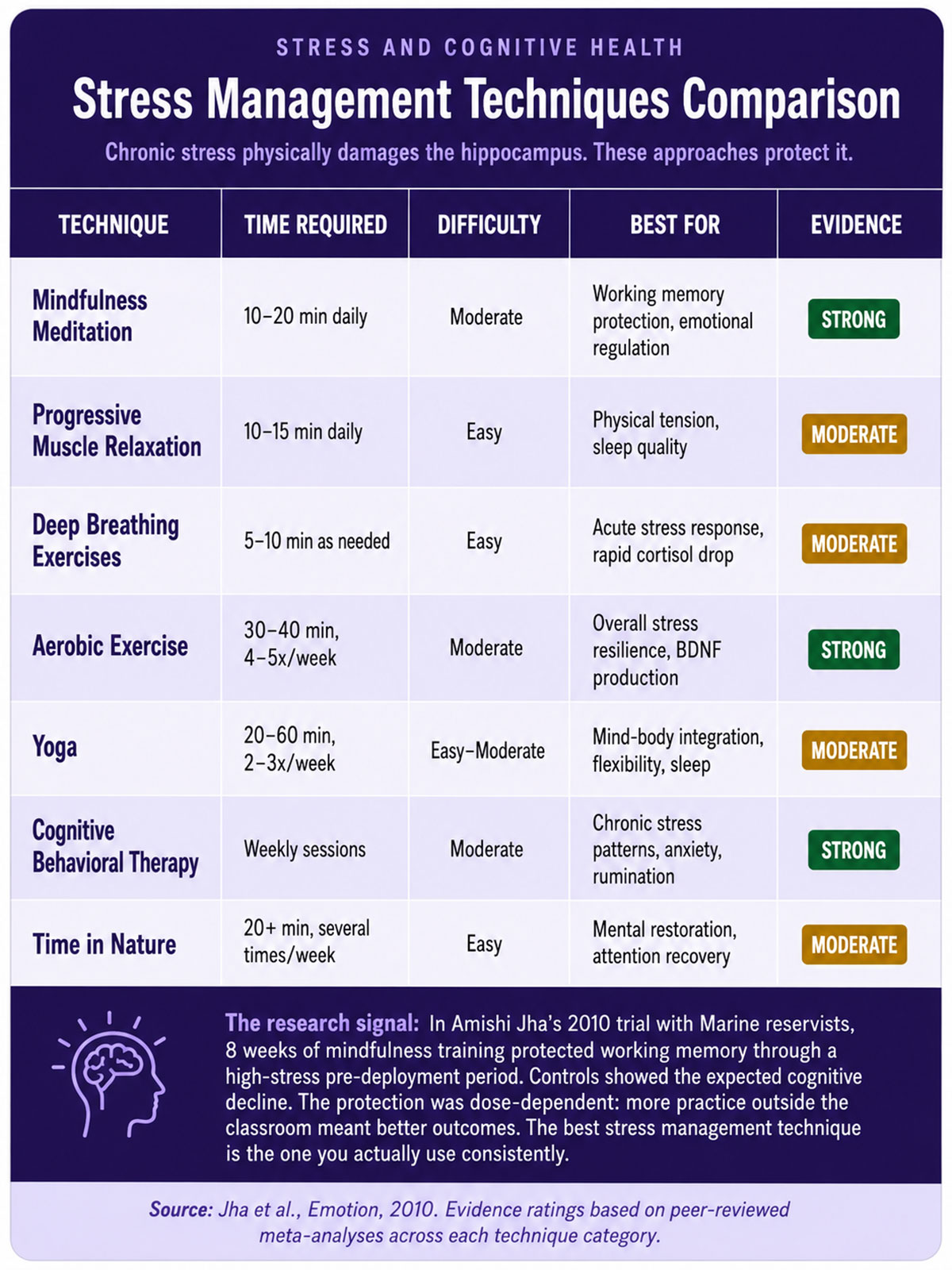
Cognitive neuroscientist Amishi Jha at the University of Miami wanted to know whether mindfulness training could protect working memory in people facing extreme, sustained stress. She ran an eight-week mindfulness program with Marine reservists preparing to deploy, then measured their working memory before and after. The trained group maintained their working memory through the high-stress pre-deployment period. Those who received no training showed the expected cognitive decline.
The findings, published in the journal Emotion in 2010, pointed to something practical: the protection wasn’t about reducing the stress itself. It was about building the mental capacity to stay functional under it. The Marines who practiced more outside the classroom retained more cognitive function. The relationship was dose-dependent.
That finding took a while to sink in for me. In a decade of working with an athlete through high-demand competition seasons, I watched what happened when stress management was treated as optional versus essential. The cognitive edge (the ability to read an opponent and make fast decisions under pressure) tracked closely with recovery practices. Neuroscience caught up to what coaching experience was already showing.
Stress Management Techniques Comparison
How to Start a Mindfulness Practice
Weeks 1 to 2: Basic breath awareness. Sit comfortably for five minutes. Close your eyes. Focus on your breath moving in and out. When your mind wanders (and it will), gently bring attention back. That’s the practice: noticing when you’ve drifted and returning. Nothing more complicated than that.
Weeks 3 to 4: Extend duration. Increase to 10 minutes. Continue breath focus. Notice body sensations without judgment. Keep returning when attention wanders.
Week 5 and beyond: Deepen the practice. Work up to 15 to 20 minutes. Try body scan meditation. Practice observing thoughts without engaging them. Guided apps can help if you find open practice difficult.
Stress Reduction Throughout Your Day
Long meditation sessions aren’t the only option. Small practices throughout the day compound over time.
Morning: Five minutes of breathing before checking your phone. Mindful breakfast: no screens, notice taste and texture. Set a clear intention for the day.
Midday: A two-minute breathing break between tasks. A short walk outside. Brief stretching with attention on body sensations.
Evening: A transition ritual when arriving home: change clothes, take 10 deep breaths before engaging with family. No work email after dinner. Ten minutes of gentle stretching or yoga.
Before bed: Body scan to release tension. Three specific things you noticed or appreciated today. Progressive muscle relaxation if sleep is elusive.
Find a method that fits your life and use it consistently. Mindfulness meditation shows the strongest evidence for protecting working memory, but the best stress management practice is the one you actually do.
5. Eat Like Your Brain Is Watching
Your brain consumes about 20% of your body’s energy while accounting for only 2% of your body weight. What you eat isn’t background noise for brain function. It’s fuel, building material, and inflammation management all at once.
The Mediterranean Diet Advantage
Two substudies from the large PREDIMED nutrition trial have made the strongest case for a specific eating pattern. In Barcelona, Valls-Pedret and colleagues followed 447 adults at high cardiovascular risk for a median of 4.1 years, randomly assigning participants to a Mediterranean diet with extra-virgin olive oil, a Mediterranean diet with mixed nuts, or a low-fat control diet. When cognitive testing came at the end, both Mediterranean groups showed significantly better memory and executive function than the control group. That study was published in JAMA Internal Medicine in 2015.
A separate PREDIMED substudy from Navarra, following 522 participants for 6.5 years, confirmed the same pattern on global cognitive tests, including the Mini-Mental State Examination. The finding is consistent: the Mediterranean eating pattern, sustained over years, produces measurable differences in how the aging brain performs. See the Navarra substudy published in the Journal of Neurology, Neurosurgery and Psychiatry in 2013.
Observational evidence adds another layer. A large study following 1,393 older adults for over five years found that the highest adherence to a Mediterranean diet was associated with significantly reduced risk of Alzheimer’s disease compared with the lowest adherence, a protective association documented by Nikolaos Scarmeas at Columbia University in the Annals of Neurology. This is observational data, meaning the relationship is real, but causation cannot be confirmed with certainty.
Three Ways Mediterranean Eating Protects Your Brain
The fats in olive oil and nuts support the myelin sheaths that insulate neurons, helping electrical signals travel efficiently between brain cells. Extra-virgin olive oil contains oleocanthal, a compound with anti-inflammatory properties comparable to low-dose ibuprofen.
The antioxidants concentrated in vegetables, fruits, and olive oil reduce oxidative stress in brain tissue. Your brain uses enormous amounts of oxygen, generating reactive molecules that can damage cells. Antioxidants neutralize these molecules before damage accumulates.
The overall pattern protects blood vessels, and healthier vessels translate directly into more reliable blood flow to brain tissue. The Mediterranean diet reduces vascular inflammation and maintains the vessel flexibility required to respond to shifting brain demands.
Brain-Boosting Mediterranean Diet Basics
Daily foods: Vegetables (4 to 5 servings, raw and cooked), fruits (2 to 3 servings, whole, not juiced), whole grains (3 to 4 servings), olive oil as your main cooking fat (3 to 4 tablespoons), and a handful of nuts.
Weekly foods: Fish and seafood 3 to 4 times, with fatty fish like salmon, sardines, and mackerel as the priority. Poultry 2 to 3 times. Eggs 2 to 4. Legumes 3 or more times. Moderate amounts of cheese and yogurt.
Limited foods: Red meat less than 2 times per month. Occasional sweets. Processed foods rarely. Replace butter with olive oil.
Sample Brain-Healthy Day of Eating
Breakfast (7:00 AM): Greek yogurt (1 cup) with mixed berries (1/2 cup), walnuts (1 oz), and a drizzle of honey. Whole-grain toast with avocado and tomato slices. Green tea.
Mid-Morning Snack (10:00 AM): Apple slices with almond butter (1 tablespoon). Handful of almonds.
Lunch (12:30 PM): Large salad with mixed greens, cherry tomatoes, cucumbers, red onion, chickpeas (1/2 cup), grilled chicken breast (4 oz), feta cheese, and kalamata olives. Dressed with olive oil (2 tablespoons) and lemon juice. Whole-grain pita on the side.
Afternoon Snack (3:30 PM): Hummus (1/4 cup) with carrot and cucumber sticks. A handful of walnuts.
Dinner (6:30 PM): Baked salmon (5 oz) with herbs and lemon. Roasted vegetables (broccoli, bell peppers, zucchini, red onion) tossed with olive oil (2 tablespoons). Quinoa (1 cup cooked). Side salad with olive oil dressing.
Evening (Optional, 8:00 PM): Small bowl of berries or a piece of dark chocolate (70% cacao or higher).
Brain-Healthy Mediterranean Recipes
Of all the meals that fit this pattern, the salmon bowl earns its place most directly: omega-3s from the fish, antioxidants from the vegetables, and anti-inflammatory fats from olive oil in a single dish.
Recipe 1: Omega-3 Power Salmon Bowl
Ingredients:
- 5 oz wild-caught salmon fillet
- 1 cup cooked quinoa
- 2 cups mixed greens (spinach, arugula, kale)
- 1/2 cup cherry tomatoes, halved
- 1/4 cup cucumber, diced
- 1/4 avocado, sliced
- 2 tablespoons extra-virgin olive oil
- 1 tablespoon fresh lemon juice
- 1 tablespoon chopped fresh parsley
- 1 tablespoon chopped fresh dill
- 1 garlic clove, minced
- Salt and black pepper to taste
- Optional: 1 tablespoon pumpkin seeds
Instructions:
- Preheat oven to 400°F. Line a baking sheet with parchment paper.
- Season salmon with half the herbs, garlic, salt, and pepper.
- Bake salmon for 12 to 15 minutes until cooked through and flaky.
- While the salmon cooks, arrange quinoa in a large bowl as the base.
- Add mixed greens on top of quinoa.
- Arrange tomatoes, cucumber, and avocado around the bowl.
- Mix olive oil, lemon juice, remaining herbs, and garlic for dressing.
- Place cooked salmon on top of the bowl.
- Drizzle with dressing and sprinkle with pumpkin seeds if using.
- Serve immediately.
This meal combines omega-3 fatty acids from salmon, antioxidants from the vegetables, healthy fats from olive oil and avocado, and complete protein. It provides steady energy without blood sugar spikes. Serves 1. Prep time: 5 minutes. Cook time: 15 minutes.
Walnuts are the highest plant-based source of omega-3 fatty acids, and the cacao here isn’t decorative: flavonoids in dark cacao increase blood flow to the brain within hours of consumption. That makes this more than a convenient snack.
Recipe 2: Brain-Boosting Walnut Energy Balls
Ingredients:
- 1 cup walnuts
- 1 cup pitted dates (about 12 to 15 dates)
- 2 tablespoons raw cacao powder
- 1 tablespoon ground flaxseed
- 1/2 teaspoon vanilla extract
- Pinch of sea salt
- Optional: shredded coconut for rolling
Instructions:
- Add walnuts to a food processor. Pulse until coarsely chopped.
- Add dates, cacao powder, flaxseed, vanilla, and salt.
- Process until the mixture sticks together when pressed (1 to 2 minutes).
- Roll into balls about 1 inch in diameter (makes 12 to 15 balls).
- Optional: roll in shredded coconut.
- Store in the refrigerator for up to two weeks.
Walnuts are the highest plant-based source of omega-3 fatty acids. Dates provide natural sweetness and fiber. Cacao contains flavonoids that increase blood flow to the brain. Each ball is approximately 80 to 90 calories. A practical pre-exercise or mid-afternoon option.
Turmeric is the detail worth noting here. Curcumin, its active compound, is one of the few dietary molecules with documented evidence for crossing the blood-brain barrier and reducing neural inflammation directly.
Recipe 3: Mediterranean Chickpea and Vegetable Stew
Ingredients:
- 3 tablespoons extra-virgin olive oil
- 1 large onion, diced
- 3 garlic cloves, minced
- 2 carrots, diced
- 2 celery stalks, diced
- 1 red bell pepper, diced
- 1 can (28 oz) diced tomatoes
- 2 cans (15 oz each) chickpeas, drained and rinsed
- 4 cups vegetable broth
- 2 cups spinach or kale, chopped
- 1 teaspoon cumin
- 1 teaspoon paprika
- 1/2 teaspoon turmeric
- Salt and pepper to taste
- Fresh lemon juice
- Fresh parsley for garnish
Instructions:
- Heat olive oil in a large pot over medium heat.
- Add onion and cook until softened, about 5 minutes.
- Add garlic, carrots, celery, and bell pepper. Cook 5 minutes.
- Add tomatoes, chickpeas, broth, and spices.
- Bring to a boil, then reduce heat and simmer 20 minutes.
- Add spinach or kale and cook until wilted, 2 to 3 minutes.
- Season with salt, pepper, and a squeeze of lemon juice.
- Garnish with fresh parsley. Serve with whole grain bread.
Packed with fiber, plant protein, and antioxidants. Turmeric contains curcumin, which crosses the blood-brain barrier and has documented anti-inflammatory effects. Serves 6. Freezes well for meal prep.
Practical Food Swaps for Brain Health
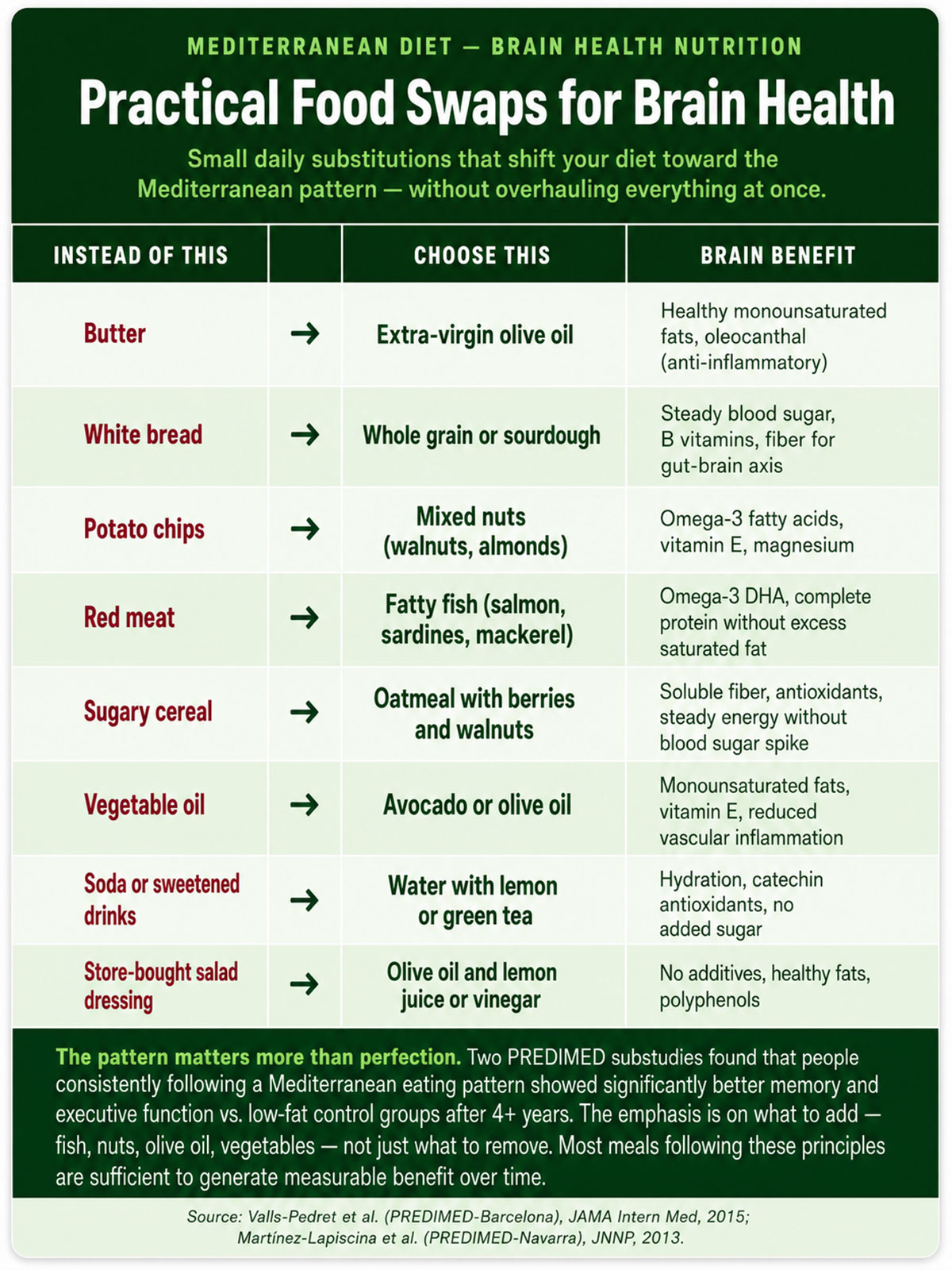
Build meals around vegetables, fruits, whole grains, fish, nuts, and olive oil. Make extra-virgin olive oil your main cooking fat. Eat fatty fish twice per week minimum. Snack on nuts instead of chips. The pattern matters more than perfect adherence: most meals following these principles are enough to generate measurable benefit over time.
6. Get Your Hearing Checked
Hearing loss rarely makes anyone’s brain health shortlist. It probably should be at the top.
Untreated hearing loss accounts for 8% of all dementia cases worldwide. That makes it the single largest modifiable risk factor in midlife, according to the 2020 Lancet Commission on Dementia Prevention. Bigger than smoking (5%). Bigger than high blood pressure (2%). This finding reshuffled priorities for many researchers when it landed, and the 2024 update to that Commission, expanding to 14 modifiable risk factors and a potential 45% of dementia cases preventable, has kept hearing health near the top of the list.
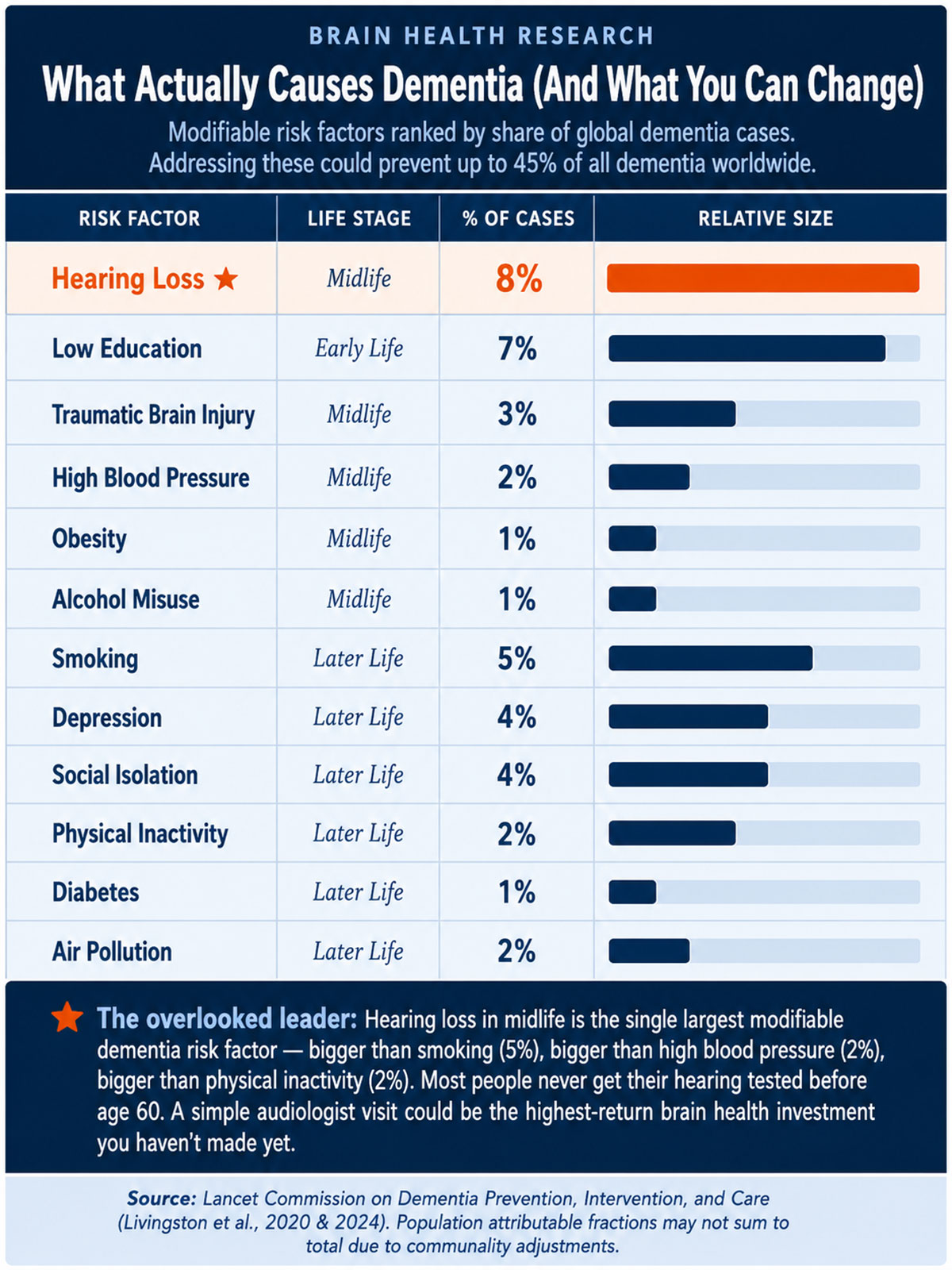
The Hidden Connection Between Hearing and Cognition
When hearing is impaired, the brain compensates by diverting processing resources toward simply understanding sound. Picture your brain as a system with finite processing capacity. If a significant portion goes toward decoding what someone said, less is available for remembering the content or thinking about what it means.
Over years and decades, that constant drain appears to accelerate cognitive decline through several pathways: energy diverted from memory to sound processing, progressive social withdrawal that reduces mental stimulation, structural changes in the brain from reduced auditory input, and shared underlying vascular damage affecting both hearing and cognition.
People with untreated hearing loss also tend to withdraw from social situations because conversation is exhausting. That social isolation compounds the problem. Habit 7 in this list shows why.
The ACHIEVE Trial: What the Evidence Actually Shows
The Aging and Cognitive Health Evaluation in Elders (ACHIEVE) study is the first large randomized controlled trial specifically designed to test whether hearing aids reduce cognitive decline. Researchers enrolled 977 adults aged 70 to 84 with untreated mild to moderate hearing loss and followed them for three years.
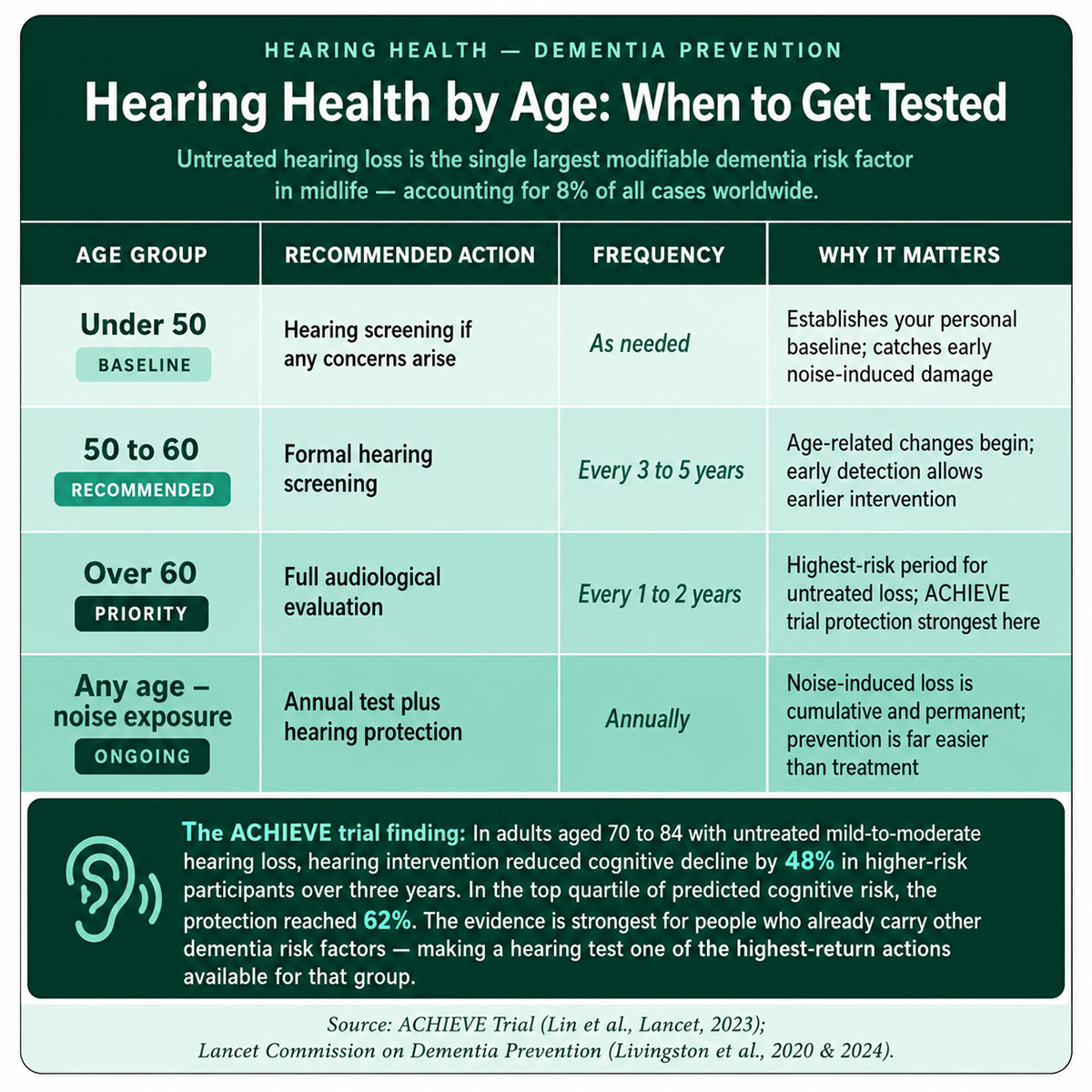
The overall trial result was neutral, with no statistically significant benefit in the full study population. But a pre-specified analysis of a higher-risk subgroup tells a more interesting story. Participants already enrolled in a long-running cardiovascular health study (the ARIC cohort), who carried more risk factors for cognitive decline at baseline, showed 48% slower cognitive decline with hearing intervention compared to controls over three years. A subsequent secondary analysis found that among participants in the top quartile of predicted cognitive risk, the protection reached 62%.
The implication is specific: hearing intervention works hardest for people who need it most. If you carry risk factors (age over 70, cardiovascular history, family history of dementia), the evidence for getting a hearing test is strongest for you.
Signs You Might Have Hearing Loss
Hearing loss develops gradually. You adapt without fully noticing. Warning signs include:
In conversations: frequently asking people to repeat themselves, difficulty following when multiple people talk at once, trouble hearing women’s or children’s voices (high frequencies go first), needing to watch faces to understand what’s said, and misunderstanding similar-sounding words.
At home: turning up the television or radio while family members complain, missing doorbells, phone rings, or alarms, difficulty hearing on the phone, and struggling in restaurants or noisy environments.
Socially and emotionally: feeling exhausted after social events from the sustained listening effort, avoiding group gatherings, feeling isolated or left out, and others noting that you seem less engaged.
If family members have suggested you might have hearing loss, take that seriously. They typically notice before you do.
Types of Hearing Loss
Sensorineural hearing loss is the most common type, accounting for approximately 90% of cases. It involves damage to inner ear hair cells or the auditory nerve and is often age-related or noise-induced. Usually permanent but manageable with hearing aids. Both ears are typically affected.
Conductive hearing loss involves a problem in the outer or middle ear, blocking sound, caused by earwax, infection, fluid, or structural issues. Often temporary and treatable medically or surgically.
Mixed hearing loss combines both types and requires a treatment approach that addresses both.
Hearing Health by Age
Hearing Aid Myths vs. Reality
Myth: “My hearing isn’t bad enough yet.” Waiting makes the adjustment harder. Your brain adapts to reduced input over time. Early intervention is more effective because the auditory pathways haven’t reorganized around the deficit.
Myth: “Hearing aids are bulky and obvious.” Modern devices are small and discreet. Many sit inside the ear canal and are nearly invisible. Some connect to smartphones for calls and media.
Myth: “They cost too much.” Prices range widely. Over-the-counter hearing aids, available in the US since 2022 for mild to moderate loss, offer more affordable options. Medicare Advantage plans may include some coverage.
Myth: “One ear is fine, so I don’t need help.” The brain processes sound from both ears together. Even single-ear loss affects speech comprehension and sound localization in ways that increase cognitive strain.
If you’re over 50, schedule a hearing test. Early hearing loss is subtle. You might simply think people have started mumbling more than they used to. If testing identifies hearing loss, discuss options with an audiologist. The cognitive protection case is particularly strong if you carry other risk factors for dementia.
7. Build Rich Social Connections
Loneliness accelerates cognitive decline. Social isolation produces physical changes in brain structure and function over time, not just emotional distress.
The Research on Social Connection
A study of 1,138 older adults with an average age of 80 found that those who reported feeling lonely showed cognitive decline at 2.2 times the rate of those who didn’t feel lonely, even after controlling for depression, physical health, and baseline cognitive function. Other research indicates that people with rich social networks carry up to 60% lower dementia risk compared with those who are socially isolated. That’s a protective effect comparable to not smoking or controlling blood pressure.
The critical finding: loneliness is about the quality of connection, not quantity. Being surrounded by people while feeling disconnected provides no protection. A few deep relationships outperform many superficial ones.
How Social Engagement Protects Your Brain
Social interaction is cognitively demanding in the best possible way. A single conversation simultaneously requires language processing, memory retrieval, theory of mind (understanding what the other person knows and feels), emotional processing, executive function, and sustained attention. That complexity is genuine cognitive training, and unlike brain games, conversation is intrinsically rewarding, so you do it naturally.
Social connection also reduces chronic stress. Having reliable relationships lowers cortisol levels, which protects the hippocampus from the damage described in Habit 4.
Active vs. Passive Social Interaction
Not all social contact is equivalent. Your brain needs active engagement:
Active social interaction (high brain benefit): in-person conversations, video calls with real back-and-forth dialogue, collaborative activities like cooking or working on a project together, playing games that require real-time interaction, volunteering, group classes or clubs, caring for others.
Passive social contact (low brain benefit): scrolling social media, watching television with others without discussing what you’re watching, being in crowded spaces without interacting, attending lectures without participation, following people online without engaging.
The defining factor is real-time cognitive processing and response. Passive contact doesn’t demand the same from your brain.
Social Engagement Ideas by Personality Type
For introverts: regular one-on-one coffee dates with close friends, smaller book clubs, structured volunteering roles, classes in something you enjoy, walking groups where activity takes pressure off constant conversation, and online communities with video meetups.
For extroverts: group activities and team sports, larger community organizations, group fitness classes, meetup groups, hosting dinner parties, and large family gatherings.
For everyone: weekly phone or video calls with distant friends or family, joining clubs around hobbies, regular volunteering, taking classes to learn new skills, and playing cards or board games with others.
Building and Maintaining Social Connections
Start small: reach out to one person this week. Accept invitations even when you don’t feel like it. Put recurring social events on your calendar.
Be consistent: schedule regular meetups at the same time each week or month. Join groups that meet repeatedly. Reliability builds deeper connections.
Prioritize quality: spend time with people who energize you. Have meaningful conversations, not just small talk. Share experiences, not just information.
Overcome barriers: Transportation issues are solved by phone or video calls. Limited mobility makes you the host. Social anxiety is easier to manage in structured settings with a clear role. And if time is short, pairing socializing with another activity tends to make both easier to keep up: walking with a friend, cooking a meal together.
Aim for at least two to three meaningful social interactions per week. The key word is active: participating, not just being present.
8. Treat High Blood Pressure as a Brain Issue
The damage that shows up at 70 was accumulating at 45. High blood pressure quietly narrows the tiny arterioles feeding deep brain structures. They don’t announce this. Your annual physical won’t show it. But brain scans taken years later reveal the evidence: small clusters of damaged tissue called white matter lesions, scattered through the regions responsible for processing speed and decision-making. The number of lesions correlates directly with cognitive impairment. And they multiply silently, over decades, from blood pressure most people never treated because they felt perfectly fine.
The Long-Term Brain Impact
The ARIC study (Atherosclerosis Risk in Communities) followed 15,744 middle-aged adults for 25 years, tracking blood pressure, blood sugar, and other cardiovascular markers starting in midlife. The pattern was consistent: untreated high blood pressure in your 40s and 50s significantly increased dementia risk two to three decades later. Participants felt fine during their middle years. But brain scans taken later showed accumulating white matter lesions, areas of reduced blood flow and tissue damage that correlate directly with cognitive impairment.
The American Heart Association and American Stroke Association reviewed this evidence and reached a clear conclusion: hypertension, diabetes, obesity, and smoking accelerate cognitive decline through cumulative damage to cerebral blood vessels, a process called vascular cognitive impairment. Silent, slow, and largely preventable.
How High Blood Pressure Damages Your Brain
The damage works through a few overlapping routes. High blood pressure thickens and narrows the tiny arterioles feeding deep brain structures, progressively reducing the blood reaching the tissue they serve. The first visible evidence tends to be white matter lesions: bright spots on brain MRI scans marking areas where blood flow has been chronically insufficient. More lesions mean slower processing speed and worse executive function. At the severe end, weakened vessels develop microscopic tears, causing small bleeds that damage surrounding neurons, and full silent strokes that produce no obvious symptoms at the time but accumulate into measurable cognitive impairment over years.
Blood Pressure Targets by Age
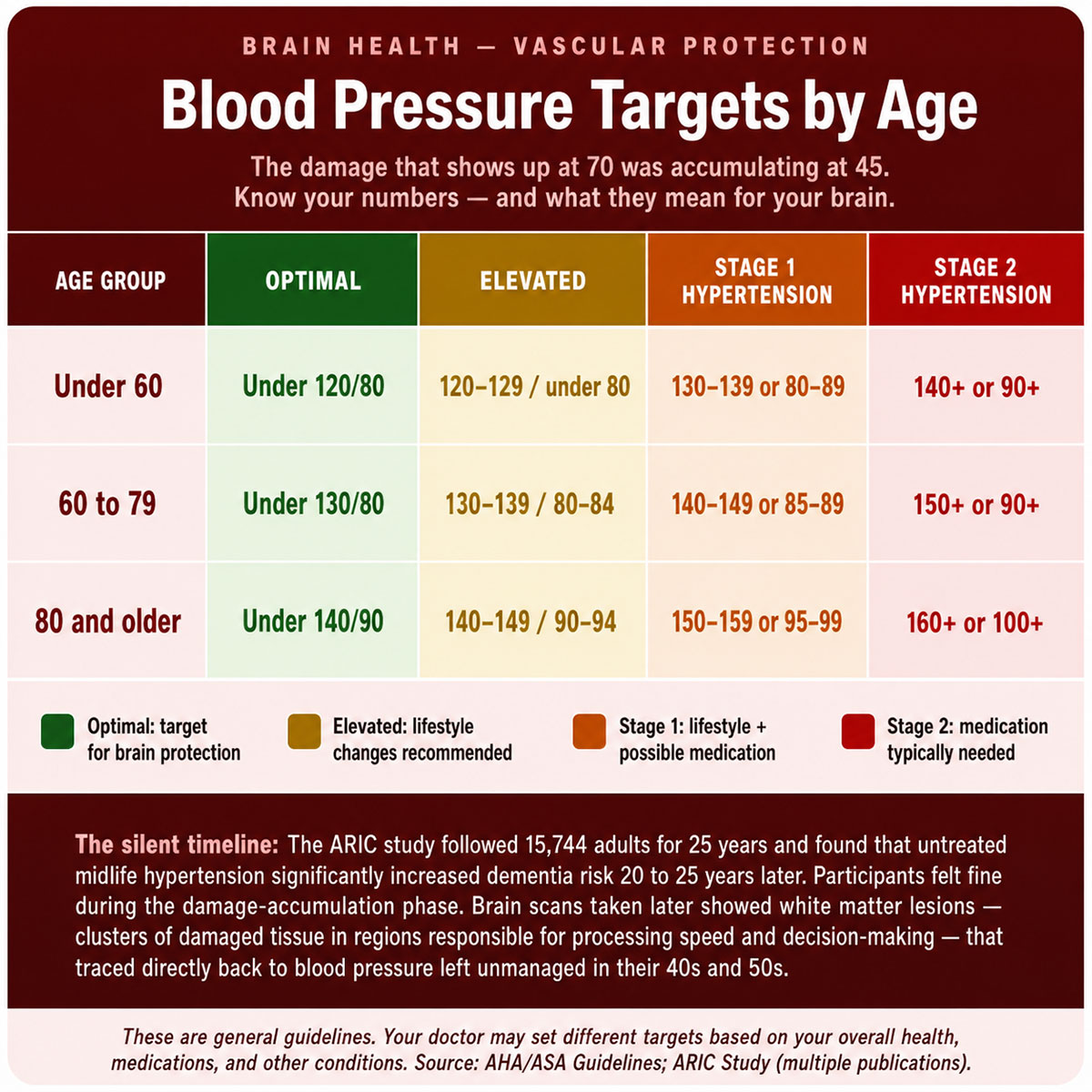
These are general guidelines. Your doctor may set different targets based on your overall health, medications, and other conditions.
Lifestyle Changes That Lower Blood Pressure
Diet: Reduce sodium to under 2,300 mg daily (1,500 mg if you already have hypertension). Increase potassium from fruits and vegetables. Follow a DASH-style eating pattern, which closely resembles the Mediterranean diet. Limit alcohol to one drink daily for women, two for men. Increase beets, leafy greens, and berries, which support blood vessel relaxation.
Physical activity: 30 minutes of aerobic exercise most days reduces blood pressure by 5 to 8 mmHg. Resistance training two days per week adds further benefit.
Weight management: Losing 5 to 10% of body weight if overweight reduces blood pressure measurably. Each kilogram lost corresponds to approximately 1 mmHg reduction.
Stress reduction: Mindfulness meditation reduces blood pressure. Deep breathing exercises and adequate sleep both contribute.
When Medication Is Necessary
Lifestyle changes work for many people with mild hypertension. When blood pressure remains elevated despite those efforts, medication becomes necessary for brain protection. Think of medication as a tool for preventing decades of silent vascular damage, not a commentary on willpower. The evidence is clear that controlled blood pressure, whether through lifestyle or medication, protects cognitive function long-term.
Home Blood Pressure Monitoring
Use a validated automatic upper-arm cuff. Measure at the same time each day: morning and evening. Sit quietly for five minutes before measuring. Take two to three readings, one minute apart. Keep a log to share with your doctor. Home readings give a more accurate picture than a single office measurement and catch both white-coat hypertension (high only at the doctor’s) and masked hypertension (normal at the doctor’s, high at home).
Know your numbers. Blood pressure under 120/80 is the target for optimal brain health. If yours is higher, the work of bringing it down (through lifestyle, medication, or both) is among the most consequential things you can do for the brain you’ll have at 75.
9. Check Your B Vitamins and Homocysteine
Most people don’t need supplements. This section describes an exception, one that only matters for certain people, and that requires testing before it’s relevant to you.
The Homocysteine Connection
Homocysteine is an amino acid produced as a byproduct of protein metabolism. Your body uses three B vitamins (B6, B12, and folate) to convert it into other useful compounds. When those vitamins are insufficient, homocysteine accumulates. Elevated levels are linked to accelerated brain shrinkage and increased cognitive decline risk, likely through oxidative damage to blood vessel walls and direct effects on neurons.
The VITACOG Study: Precision Nutrition
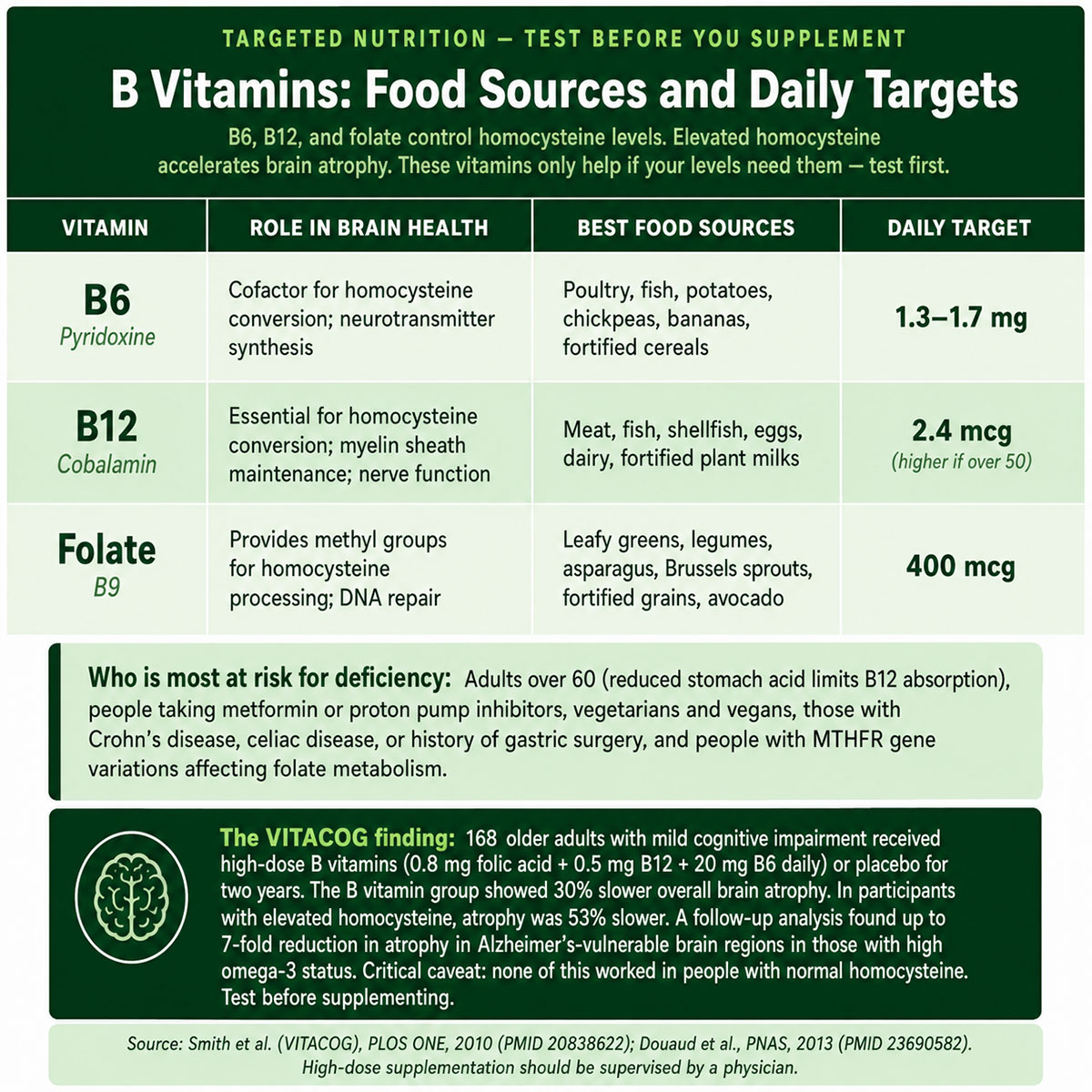
A team at the University of Oxford recruited 168 older adults over age 70, all with mild cognitive impairment and elevated homocysteine levels at baseline. Half received high-dose B vitamins (folic acid 0.8 mg/day, B12 0.5 mg/day, B6 20 mg/day) daily for two years. The other half received a placebo.
The MRI results, reported in the 2010 PLOS ONE publication of the VITACOG trial, showed 30% slower overall brain atrophy in the B vitamin group compared to placebo. Among participants with homocysteine above 13 micromoles per liter at baseline, atrophy was 53% slower.
A follow-up analysis by Gwenaelle Douaud and colleagues, published in the 2013 Proceedings of the National Academy of Sciences, looked specifically at brain regions most vulnerable to Alzheimer’s disease, including the medial temporal lobe and hippocampus. In participants with high omega-3 status at baseline, B vitamins reduced atrophy in those Alzheimer’s-vulnerable regions by up to seven-fold compared to placebo. That’s a specific and striking finding for people in the right risk category.
The critical point here: none of this worked in people with normal homocysteine levels. B vitamins didn’t help them. And at very high doses, some research suggests B vitamins could have negative effects in certain populations. Testing before supplementing is the whole point of this habit. Without it, the intervention makes no sense.
Who’s at Risk for High Homocysteine?
Age-related factors: Adults over 60, whose reduced stomach acid limits B12 absorption, and postmenopausal women.
Medication-related: Metformin (commonly prescribed for diabetes) impairs B12 absorption. Proton pump inhibitors like omeprazole reduce stomach acid. Certain anti-seizure medications also interfere.
Digestive conditions: Crohn’s disease, ulcerative colitis, celiac disease, history of gastric bypass surgery, and pernicious anemia.
Dietary factors: Vegetarians and vegans, since B12 is found almost exclusively in animal products. Heavy alcohol consumption. Poor overall diet lacking in fruits and vegetables.
Genetic factors: MTHFR gene variations affecting folate metabolism, and a family history of elevated homocysteine.
B Vitamins: Food Sources and Daily Targets
When to Test and How to Interpret Results
Get tested if you’re over 60, have memory concerns or a family history of dementia, take medications that affect B vitamin absorption, follow a vegetarian or vegan diet, have digestive disorders affecting absorption, or have unexplained fatigue or cognitive symptoms.
Normal ranges to know: Homocysteine under 10 micromoles per liter is optimal. Levels between 10 and 15 are borderline high. Above 15 requires attention. B12 above 300 pg/mL is adequate, with some experts recommending 400+ for optimal cognitive health. Folate between 2.7 and 17 ng/mL is normal. B6 between 5 and 50 micrograms per liter is normal.
Supplementation Guidelines
If homocysteine is elevated: Work with your doctor to determine appropriate doses. The VITACOG study used 0.8 mg folic acid, 0.5 mg B12, and 20 mg B6 daily, doses far higher than standard multivitamins. Monitor levels every 3 to 6 months.
If B12 is low but homocysteine is normal: Supplementation is still worth considering for energy and nerve health. Sublingual or intramuscular forms bypass digestive absorption issues that affect oral B12 in older adults.
If all levels are normal: Focus on food sources. Retest every 2 to 3 years or if cognitive symptoms develop.
Important cautions: Very high B6 doses (above 100 mg daily) can cause nerve damage. Some research suggests high-dose folic acid could have negative effects in people with low B12. Do not self-prescribe high-dose B vitamins without testing first.
Simple Food-Based Approach
Breakfast: Scrambled eggs (B12, folate). Whole-grain toast (fortified with B vitamins). Orange juice (folate).
Lunch: Spinach salad (folate, B6). Grilled chicken (B6, B12). Chickpeas (folate, B6).
Dinner: Salmon (B6, B12). Roasted Brussels sprouts (folate). Quinoa (folate, B6).
Snacks: Banana (B6). Fortified nutritional yeast on popcorn (B12 for those avoiding animal products).
10. Drink Coffee, But Do It Right
Coffee gets categorized as a vice in many wellness circles. The cognitive health research suggests a more useful framing: moderate coffee consumption, timed correctly, is among the more evidence-supported things you can do for an aging brain.
The Women’s Health Initiative Memory Study
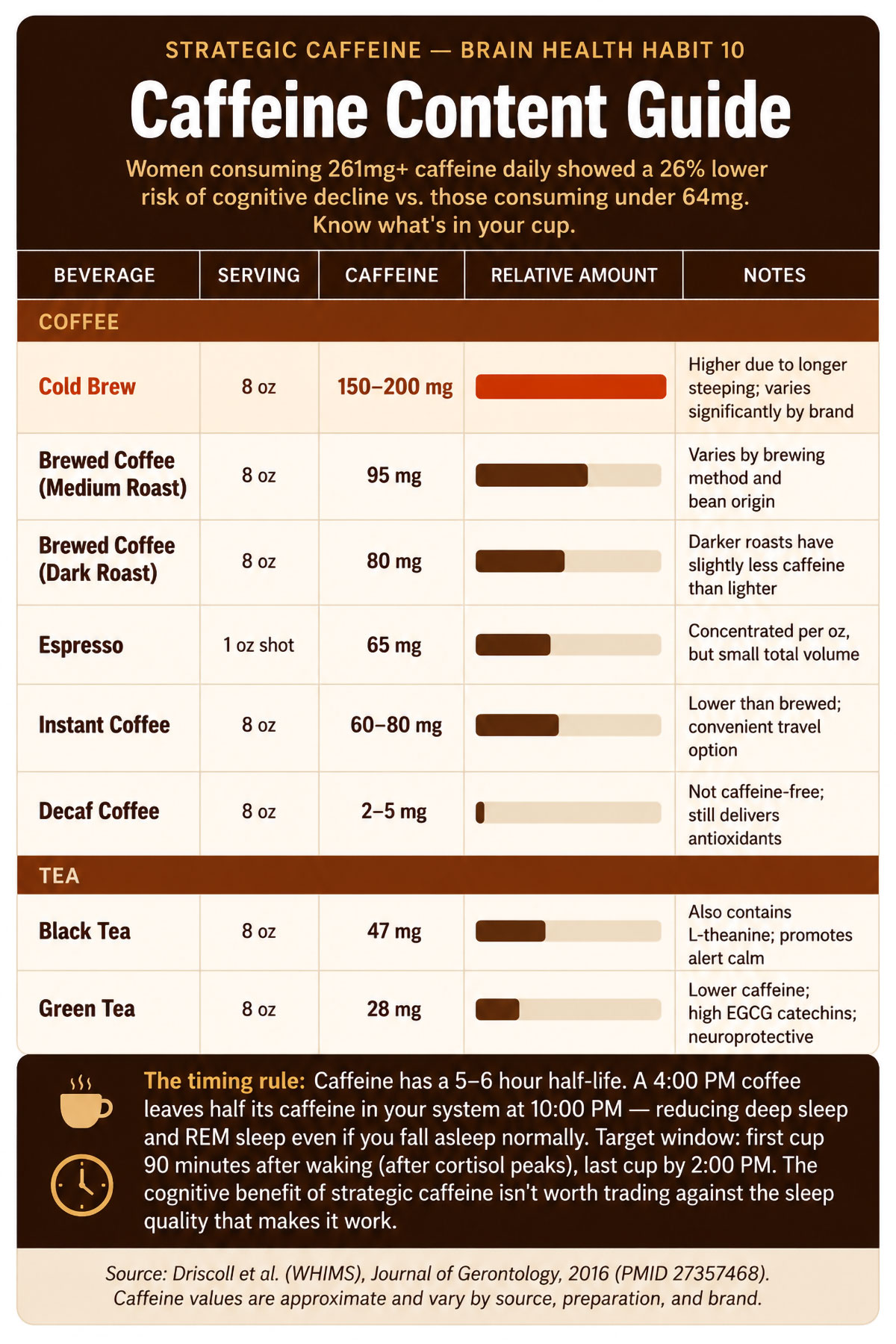
Researchers analyzing data from 6,467 women aged 65 to 80, enrolled in the Women’s Health Initiative Memory Study and tracked for up to 10 years, found that women consuming above the median caffeine intake for this group (a mean of 261 mg daily, or approximately three cups of coffee) carried a 26% lower risk of cognitive decline compared to those consuming below the median (mean of 64 mg). The full study details were published in the Journal of Gerontology in 2016. The data are observational, meaning the association is consistent, but causation cannot be confirmed with certainty.
Multiple systematic reviews confirm a consistent inverse association between moderate coffee consumption and cognitive decline risk. The relationship appears dose-dependent up to a point: three to five cups daily shows the strongest protective signal. Above five cups, additional benefit disappears, and side effects increase.
Why Caffeine Works: The Adenosine Story
Caffeine’s direct effects: Caffeine works by impersonating exhaustion. Your brain produces a molecule called adenosine throughout the day that steadily builds and signals tiredness. Caffeine’s molecular structure is close enough to adenosine’s that it fits the same receptors, blocking them without triggering the fatigue signal. You’re not actually less tired. You’ve interrupted the communication between your body’s tiredness system and your brain. That’s why the afternoon crash is real: when caffeine clears, all the accumulated adenosine that was waiting hits at once. Dopamine and norepinephrine release add a mood and focus boost on top of the fatigue blocking, which is why the first cup of the day, timed correctly, is pharmacologically different from the fourth.
Neuroprotective compounds: Coffee contains substantial amounts of antioxidants, particularly chlorogenic acid and caffeic acid, which reduce oxidative stress and inflammation in brain tissue. It also appears to reduce the accumulation of beta-amyloid plaques associated with Alzheimer’s disease.
Vascular protection: Regular coffee consumption is associated with lower stroke risk and better vascular health. Since vascular damage accelerates cognitive decline, protecting blood vessels indirectly protects the brain.
Caffeine Content Guide
The Timing Problem: Why Afternoon Coffee Undermines Sleep
Caffeine has a half-life of five to six hours in most people. An afternoon coffee at 4:00 PM leaves half of that caffeine in your system at 10:00 PM. You might fall asleep, but the quality suffers. Caffeine reduces deep sleep and REM sleep, the stages most important for memory consolidation and glymphatic brain cleaning. This creates a trap: coffee provides morning cognitive support while quietly undermining the nighttime processes that make clear thinking possible.
Optimal Coffee Timing Protocol
Wait 90 minutes after waking for your first cup. Your body produces cortisol naturally in the first 60 to 90 minutes after waking. Drinking coffee during this cortisol peak reduces your caffeine sensitivity over time. Save it for when your natural alertness dips.
Mid-morning window: 8:30 to 11:00 AM is the sweet spot. Your cortisol has come down, and caffeine provides its most noticeable boost.
Early afternoon: A third cup by 2:00 PM at the latest allows caffeine to clear before bedtime for most people.
Sample schedule:
- 7:00 AM: Wake up
- 8:30 AM: First cup (8 oz)
- 11:00 AM: Second cup (8 oz)
- 1:30 PM: Third cup if needed (6 to 8 oz)
- After 2:00 PM: Switch to decaf or herbal tea
Individual Variation: Know Your Limits
Signs of too much caffeine: jitteriness or anxiety, rapid heartbeat, difficulty falling asleep, digestive upset, headaches, or dependence (severe headaches without it). People who are pregnant, have anxiety disorders, acid reflux, heart arrhythmias, or certain medication interactions should be cautious and consult a doctor about their appropriate intake level.
Coffee Quality Matters
Choose organic when possible. Coffee is heavily sprayed with pesticides on many conventional farms. Fresh beans ground at home preserve antioxidants better than pre-ground options. Paper-filtered coffee removes diterpenes, compounds that raise LDL cholesterol in unfiltered preparations. Avoid adding large amounts of sugar or heavy cream, which both counteract the health benefits you’re working to preserve.
What About Green Tea?
Green tea delivers a different caffeine profile (28 mg per cup), paired with L-theanine, an amino acid that produces alert relaxation without jitteriness. Green tea is rich in catechins, particularly EGCG, which have documented neuroprotective properties. If coffee makes you anxious or overstimulated, green tea offers cognitive benefits with fewer side effects.
Three to five cups daily, timed to stop by early afternoon. Adjust down if you’re sensitive. The cognitive benefit isn’t worth trading away the sleep quality that makes those benefits possible.
11. Get Morning Light to Reset Your Brain’s Clock
Your brain runs on an internal clock called the circadian rhythm, a 24-hour cycle that controls alertness, sleep timing, hormone release, memory consolidation, and cognitive performance. Light is the primary signal that keeps this clock synchronized with the outside world. Modern indoor life has largely disconnected us from that signal.
Why Circadian Rhythm Matters for Mental Acuity
Circadian disruption impairs attention and focus, memory consolidation, processing speed, mood regulation, and decision-making. Shift workers with chronically disrupted circadian rhythms show accelerated cognitive decline and higher dementia risk. Even more moderate disruption (irregular sleep schedules or insufficient daytime light exposure) measurably affects daily cognitive performance.
The Camping Study: Natural Light Resets Your Clock
Integrative physiology professor Kenneth Wright at the University of Colorado ran a revealing experiment. Eight people camped for one week in the Rocky Mountains with no artificial light (campfires allowed, flashlights and electronic devices off). Before and after, the team measured participants’ circadian rhythms using melatonin timing.
After just one week of natural light exposure, participants in the 2013 Current Biology study shifted their circadian rhythms by nearly two hours, producing melatonin earlier in the evening and waking more naturally with the sun. The shift happened in all eight participants regardless of whether they were self-described night owls or early risers. The master clock in the brain (the suprachiasmatic nucleus) is highly responsive to natural light when we give it the chance to work.
How Light Affects Your Brain
Morning light exposure: advances your circadian phase (helps you fall asleep earlier), increases alertness and cognitive performance, suppresses melatonin so you feel appropriately awake, helps regulate appetite and metabolism, and improves mood. It’s the most evidence-supported non-drug treatment for seasonal affective disorder.
Evening light exposure: delays your circadian phase, suppresses melatonin production when you should be winding down, and interferes with sleep quality. Blue-spectrum light from screens is particularly disruptive to this process.
The First 30 Minutes Rule
Bright light exposure within the first 30 to 60 minutes after waking provides the strongest circadian signal. It doesn’t require direct sunlight: even cloudy outdoor light is dramatically brighter than indoor lighting.
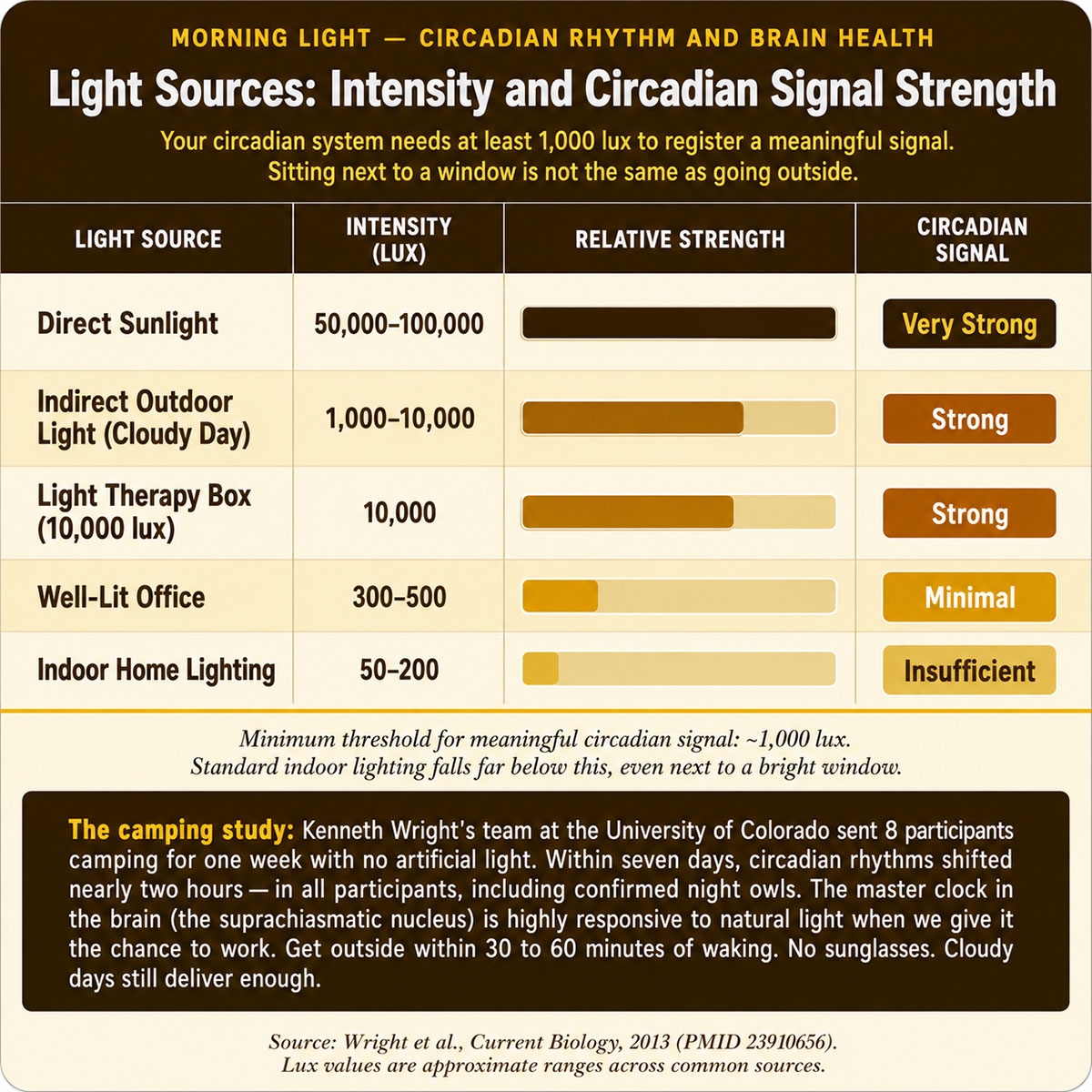
Your circadian system needs at least 1,000 lux to register a meaningful signal. Sitting next to a window is not equivalent to going outside.
Practical Morning Light Strategies
Ideal approach: Go outside within 30 minutes of waking. Spend 10 to 30 minutes in outdoor light. Leave sunglasses off: the light needs to reach your eyes. Face generally toward the sun (don’t stare directly). Combine this with something enjoyable: coffee, a walk, stretching, or reading.
Good alternatives if you can’t go outside: sit next to a large window while eating breakfast; use a 10,000-lux light therapy box for 20 to 30 minutes; open curtains immediately on waking; position your workspace near windows.
By season: summer requires 10 to 15 minutes. Winter requires 20 to 30 minutes, as light is weaker. Higher latitudes in winter benefit most from a light therapy box.
Evening Light Management
Morning light is only half the equation. You also need to reduce evening light exposure to let melatonin production begin on schedule.
Three hours before bed: dim overhead lights; use lamps instead of bright ceiling fixtures; begin transitioning to evening mode.
Two hours before bed: reduce screen use or use blue-light filters; shift to physical books instead of tablets; keep lighting warm-toned (yellow or orange spectrum, not blue-white).
One hour before bed: very dim lighting only. Candles or salt lamps work well. Prepare your bedroom: dark, cool, quiet.
Ten to thirty minutes outside, within an hour of waking. No sunglasses required. Cloudy days still deliver enough light. If winter or schedule makes this difficult, a 10,000-lux therapy box used immediately on waking achieves the same effect. It costs less than most supplements and has stronger evidence than most of them.
12. Break Up Long Sitting
You can’t out-exercise a sedentary lifestyle. Even people who work out every morning and then sit for eight hours aren’t as protected as they think. The gym session addresses one set of physiological risks. Prolonged sitting creates a separate, independent set, and the two don’t fully cancel each other out.
The Research on Sedentary Behavior
A systematic review of 13 studies found that sedentary behavior was independently associated with worse cognitive performance in older adults, even after controlling for total physical activity levels. Separately, an analysis of 145,328 participants from the UK Biobank found that both low physical activity and high sedentary time independently raised dementia risk. The combination of both was the worst outcome, but high sedentary time still raised risk even in people who met recommended exercise guidelines.
Why Sitting Hurts Your Brain
Reduced cerebral blood flow: Transcranial Doppler ultrasound studies show that blood flow to the brain decreases during prolonged sitting, as blood pools in the legs. Your brain receives less oxygen and glucose, its two primary fuels.
Metabolic effects: Extended sitting increases insulin resistance and impairs glucose processing. The brain is a major glucose consumer, so metabolic dysfunction directly degrades brain function.
Hippocampal thinning: Adults who sit more show thinner medial temporal lobes on brain MRI, the region containing the hippocampus. This thinning correlates with worse memory performance.
Inflammation: Prolonged sitting increases inflammatory markers in the blood. Chronic inflammation is independently linked to accelerated cognitive decline.
The “Active Couch Potato” Phenomenon
This describes someone who exercises regularly but then sits the rest of the day, gym at 6:00 AM, desk for nine hours, car commute, couch at night. Total sitting time: twelve hours or more. Studies show this pattern doesn’t provide the same protection as being active throughout the day. Movement benefits are largest when distributed across the day, not concentrated in a single session.
How Much Sitting Is Too Much?
Research points toward a threshold effect: sitting above 8 to 10 hours daily significantly increases health and cognitive risks. But even at lower amounts, the pattern of sitting matters. A meta-analysis found that interrupting sitting every 30 minutes with short activity breaks improved health markers compared to uninterrupted sitting across the same total time.
Movement Snack Ideas (2 to 5 Minutes Each)
At the office: walk to a colleague’s desk instead of sending an email; take the stairs to another floor and back; do squats or lunges if you have a private space; walk during phone calls; stretch hip flexors, chest, and shoulders at your desk; do calf raises while waiting for coffee to brew.
At home: walk during television commercial breaks; do light cleaning during breaks; fold laundry while standing; pace during phone calls; play actively with pets; check the mailbox or take out the trash.
Simple exercises anyone can do: bodyweight squats (15 to 20 reps); wall push-ups (10 to 15 reps); marching in place (1 to 2 minutes); arm circles and shoulder rolls (30 seconds each); gentle twisting stretches (30 seconds each side).
Setting Up an Active Workday
Hourly movement protocol: Set a recurring alarm for every hour during your workday. When it sounds:
- Stand up immediately.
- Move for 2 to 5 minutes: walk, stretch, or do simple exercises.
- Return to work.
Sixteen to forty minutes of extra movement across an 8-hour workday. It doesn’t replace dedicated exercise, but it prevents the independent cognitive costs of prolonged sitting.
Workspace modifications: a standing desk lets you alternate sitting and standing; a treadmill desk works for low-intensity tasks; placing your printer and supplies across the room increases incidental movement; keeping your water bottle away from your desk means regular walks to refill it; taking walking meetings when content doesn’t require a screen.
The 20-8-2 Rule
Some ergonomics researchers recommend this posture rotation: sit for 20 minutes, stand for 8 minutes, move actively for 2 minutes, then repeat. The exact ratios matter less than the underlying principle: vary your position frequently, and include actual movement, not just standing still.
- Walk around your workspace for 2-3 minutes
- Do 15-20 bodyweight squats
- Stretch your hip flexors, chest, and shoulders
- Walk up and down stairs
- Do standing desk work for 10-15 minutes
- Walk to a colleague's desk instead of emailing
- Refill your water bottle (walking + hydration)
- Do calf raises while standing
Movement Breaks for Better Thinking
Movement breaks don’t just benefit your long-term brain health. Studies show that short activity interruptions improve focus when you return to tasks, increase creativity and problem-solving, reduce mental fatigue, and decrease errors on cognitive tasks.
That means taking a 3-minute walk isn’t time lost from work. It’s a cognitive investment with a 30 to 60-minute return. The most productive people in knowledge-work environments tend to understand this intuitively. The research confirms why.
How These Habits Work Together
These 12 habits aren’t independent actions. They form a biological network, and understanding a few of the connections makes it much easier to stay motivated when the benefits seem slow to arrive.
The connection most people miss is the one between hearing health and social engagement. Untreated hearing loss doesn’t just raise dementia risk directly. It makes conversation more cognitively costly, so people quietly pull back from social situations. That withdrawal carries its own risk. Treating hearing loss isn’t just one habit on this list. It’s the intervention that makes two others possible. When you’re deciding where to start, look for that kind of multiplier: one change that enables several others. Sleep works the same way from the other direction: improve it, and exercise recovery improves, cognitive training sticks better, and stress response moderates. The foundation habits aren’t interchangeable. They’re load-bearing.
None of these habits exists in isolation. The people who get the most cognitive protection tend to be the ones who build several of them together, over time, until they stop feeling like habits and start feeling like the normal shape of a week.
Building a Sharper Brain: Your Action Plan
Mental sharpness isn’t a fixed characteristic. It’s the outcome of repeated daily choices operating through different biological mechanisms: some building new brain tissue, others protecting existing blood vessels, others clearing the waste products that accumulate during waking hours. These 12 habits cover those mechanisms.
Quick Reference: The 12 Habits at a Glance
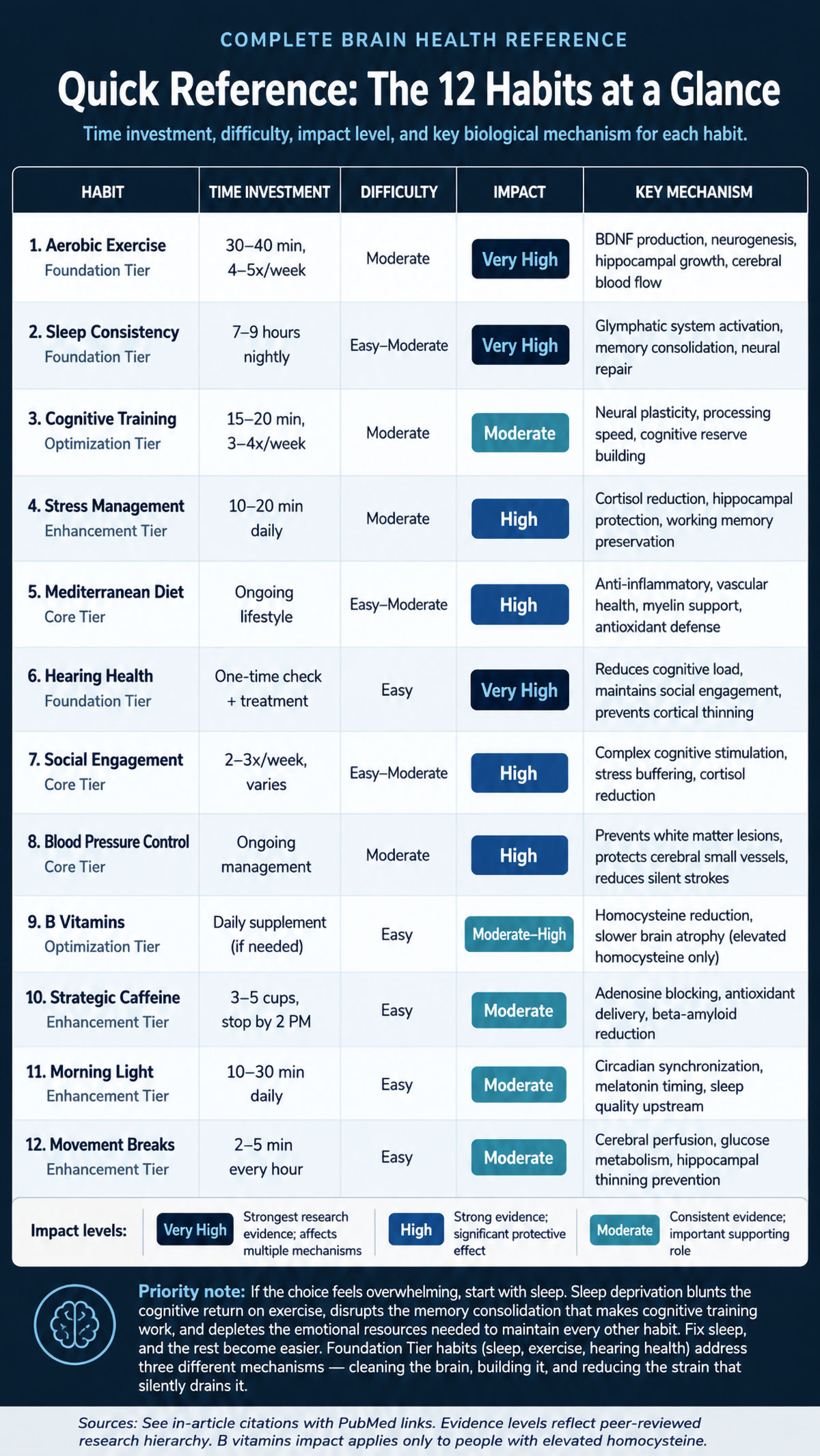
The Priority Pyramid: Where to Start
Not everyone can address all 12 habits simultaneously. Here’s how to prioritize based on research impact and practicality:
Foundation Tier (start here, highest return on effort):
- Sleep consistency: affects every other cognitive function. Without adequate sleep, nothing else works properly. Aim for 7 to 9 hours at consistent times.
- Aerobic exercise: the strongest evidence for reversing age-related brain volume loss. The 2% hippocampal growth in Erickson’s trial is measurable and meaningful.
- Hearing health: often overlooked, accounts for 8% of modifiable dementia risk. Simple screening can identify problems early. Treatment provides significant protection in at-risk individuals.
These three address different mechanisms: sleep cleans the brain, exercise builds it, and hearing health reduces the cognitive strain that silently drains it.
If the choice still feels abstract, start with sleep. Sleep deprivation blunts the cognitive return on exercise, disrupts the memory consolidation that makes cognitive training work, and depletes the emotional resources needed to maintain every other habit. Fix sleep, and the rest becomes easier.
Core Tier (add within 1 to 3 months):
- Mediterranean-style eating: practical long-term, reduces Alzheimer’s risk through anti-inflammatory and vascular mechanisms. Easier than restrictive diets because the emphasis is on what to add, not just what to remove.
- Blood pressure management: prevents vascular damage that accumulates silently over decades. Midlife blood pressure control directly protects late-life cognition.
- Social engagement: up to 60% reduced dementia risk. Enjoyable, self-reinforcing, and provides complex cognitive stimulation across multiple brain networks simultaneously.
Enhancement Tier (add as habits solidify):
- Stress management: protects working memory under pressure and supports sleep quality.
- Morning light exposure: easy to implement, supports both sleep and mood. Combines well with Habit 1 (outdoor morning walk).
- Strategic caffeine: simple optimization of something many people already do.
- Movement breaks: minimal time investment with direct cognitive benefit during the workday.
Optimization Tier (fine-tuning):
- Cognitive training: works best once a lifestyle foundation is already in place.
- B vitamin assessment: targeted intervention for a specific subpopulation. Requires testing first. Only beneficial if homocysteine is elevated.
Your 30-Day Brain Health Kickstart Plan
Week 1 Foundation: Sleep and Movement. Set consistent bedtime and wake time (including weekends). Add one 20-minute walk daily. Get outside for 10 minutes in the morning.
Track: sleep and wake times, daily walk completion. Why start here: sleep affects everything else, and walking is accessible to almost everyone.
Week 2: Build Exercise and Refine Sleep. Continue a consistent sleep schedule. Increase walks to 30 minutes, three days this week. Check your bedroom: dark? Cool (65 to 68°F)? Quiet? Stop caffeine by 2:00 PM.
Add: blackout curtains or an eye mask if needed; phone charger out of the bedroom; 5 minutes of stretching before bed.
Week 3: Add Nutrition and Social Connection. Maintain a sleep schedule and 3 to 4 exercise days. Switch to olive oil as your main cooking fat. Add one Mediterranean-style dinner this week. Eat fatty fish twice. Add a handful of nuts daily. Schedule one social activity for next week.
New meal additions: salmon bowl with quinoa and vegetables; Greek yogurt with berries and walnuts for breakfast; extra vegetables added to lunch.
Week 4: Solidify and Expand. Aim for 4 to 5 days of 30 to 40-minute aerobic activity. Mediterranean meals for half the week. Set hourly movement alarms during your workday. Attend the social activity you scheduled. If over 50, schedule a hearing test.
Add: 5 to 10 minutes of mindfulness or deep breathing. Continue all previous habits.
End of Month Assessment. Rate yourself on sleep consistency, exercise frequency, food quality, energy levels, mental clarity, and mood. Choose one to two habits from the Enhancement Tier to add in Month 2.
90-Day Extended Plan
Month 2: Enhancement. Add a daily stress management practice (10 minutes of mindfulness). Get your hearing checked if over 50 and have not yet done. Refine your coffee timing. Add one more social activity weekly.
Month 3: Optimization. Consider a cognitive training program if interested. Get blood pressure checked. If over 60, ask your doctor about a homocysteine test. Evaluate which habits are working most reliably and invest more in those.
Ongoing: Monthly check-ins on habit consistency. Quarterly assessment of subjective cognitive improvements. Annual hearing and blood pressure checks. Continuous adjustment based on what’s working in your specific life.
Conclusion
The clearest finding from this body of research is also the most inconvenient one: the habits that protect your brain in your 70s and 80s are mostly built, or neglected, in your 40s and 50s. Vascular damage from midlife hypertension shows up as dementia risk 20 to 25 years later. Hearing loss left untreated through your 50s means years of elevated cognitive strain, compounding quietly with each passing year. The glymphatic cleaning that sleep enables every night is doing work that no supplement or training regimen can replicate.
The encouraging corollary is that most of these risks are modifiable, and most of the protective habits are already within reach. You don’t need all 12. You need to find the three or four that will actually stick, and to start with the ones that carry the most biological weight. Sleep, aerobic movement, and a hearing test. For most people, those three alone would meaningfully reduce long-term risk.
The best time to start was 20 years ago. The second-best time is now.
FAQs
How long before I see results?
It depends on which habits and what outcomes you’re measuring:
- Immediate (same day): better focus after exercise, improved alertness from morning light, reduced stress response from mindfulness practice
- Short-term (1 to 4 weeks): better sleep quality, more consistent energy through the day, improved mood, sharper focus
- Medium-term (1 to 3 months): measurable improvements on memory tasks, better stress resilience, lower blood pressure from lifestyle changes
- Long-term (6 to 12 months): potential changes in brain volume from exercise, reduced cognitive decline markers, and established neural pathways from training
- Very long-term (years to decades): reduced dementia risk, maintained cognitive function, slower age-related decline
Most people notice subjective improvements within 2 to 4 weeks of consistent changes. Measurable brain changes take longer but are happening even when you can’t feel them.
What if I miss a day or have a setback?
Brain health is built on patterns, not perfection. Missing one workout or having a poor night of sleep won’t erase your progress. The brain responds to cumulative effects over weeks and months, not daily perfection.
When you have a setback, don’t catastrophize. Don’t compound it by giving up for the week. Simply resume the next day. Look for patterns: do you consistently skip exercise on certain days? Adjust the plan. Think of it like brushing your teeth. Missing one night doesn’t end your dental hygiene practice. You brush the next morning.
Do I need to do all 12 habits?
No. The top five (sleep, exercise, hearing health, Mediterranean diet, and blood pressure control) provide the most benefit based on research. These five address the major mechanisms of cognitive decline. Sleep cleans the brain and consolidates memory. Exercise builds new neurons and increases brain volume. Hearing health reduces cognitive load and maintains social engagement. Diet reduces inflammation and supports vascular health. Blood pressure control prevents cumulative vascular damage.
If you sustain these five, you’re doing extremely well. Some habits (like B vitamins) only help specific people anyway.
I’m only 30. Should I wait until I’m older to worry about this?
No. Brain health habits are most effective when started early. The vascular damage that produces dementia at 70 often begins at 45. The cognitive reserve built through education, social engagement, and mental activity accumulates gradually over decades. Hearing loss left untreated through your 30s and 40s compounds silently before anyone thinks to address it.
Starting at 30 means preventing damage rather than trying to reverse it, building cognitive reserve before it’s tested, and forming habits automatically before life gets more complicated. Think of it like retirement savings: small, consistent contributions started early outperform desperate catch-up attempts later.
Can these habits reverse existing cognitive decline?
It depends on severity and cause. With mild cognitive impairment or early decline, exercise can increase hippocampal volume in older adults; the Mediterranean diet shows memory improvements in some trials; hearing aids slow cognitive decline in people with hearing loss; sleep improvement supports consolidation and glymphatic cleaning. These habits can slow, stop, or modestly reverse early decline in some people.
With moderate to severe dementia, habits won’t reverse significant existing damage, but they can slow progression and improve daily function and quality of life. The earlier you start, the better the outcome, but it’s never too late to generate some benefit.
What if I have a family history of Alzheimer’s or dementia?
Family history increases risk but doesn’t make decline inevitable. Only a small percentage of Alzheimer’s cases (fewer than 5%) are caused by genetic mutations that guarantee disease development. For most people with a family history, lifestyle factors modify risk substantially. Research suggests people with high genetic risk may benefit even more from protective habits than those with lower genetic risk. Genetics load the gun. Lifestyle influences whether and when it fires. Use your family history as motivation, not resignation.
What are the signs of cognitive decline I should know about?
Normal aging includes occasional forgetfulness: misplacing keys, blanking on a name, needing a moment to recall a word. Signs that warrant medical attention are different in character. These include memory problems that disrupt daily life (missing appointments, repeating the same question in a conversation), difficulty with familiar tasks like managing finances or following a recipe, confusion about dates or time, trouble with language beyond normal word-finding pauses, poor judgment or decision-making that’s new and uncharacteristic, withdrawal from social activities, and personality changes. If you notice these patterns in yourself or someone close to you, a doctor’s evaluation is appropriate.
I have ADHD, depression, or anxiety. Will these habits help?
Many of these habits show benefits for mental health conditions alongside cognitive function. Exercise has strong evidence for reducing depression and anxiety, and for improving ADHD symptoms through increased dopamine and norepinephrine. Sleep is critical for mood regulation: poor sleep worsens all mental health conditions, and better sleep often improves symptoms within days. Morning light is the most evidence-supported non-drug treatment for seasonal affective disorder. Mindfulness has documented benefits for anxiety and emotional regulation in ADHD. Social connection reduces depression and provides accountability. The Mediterranean diet shows emerging evidence for reduced depression risk through the gut-brain axis.
These habits don’t replace medication or therapy when those are needed, but they’re powerful adjuncts that most mental health professionals now actively recommend alongside traditional treatments.
How do I stay motivated when results are slow?
Track what you can control and measure (days exercised this week, average sleep hours, servings of vegetables daily, social activities attended) rather than outcomes you can’t directly observe. Notice subtle changes: your energy at 3:00 PM, how well you follow long conversations, your calmness under pressure, and how often you misplace things. Small improvements count and appear faster than most people expect.
Use social accountability: a workout partner, a group with similar goals, family involvement, or positive sharing. Write down why brain health matters to you specifically. Not a generic reason, but your actual one. The person you want to be able to think clearly at 80, the conversation you want to be able to follow, and the independence you want to maintain. Focus on the habits. The outcomes follow.