Can oats really help lower LDL cholesterol? The answer is yes, backed by solid science. But there’s more to the story than simply eating oatmeal. The dose matters. The form of oats you choose matters. And understanding what to expect—and when—can help you make the most of this evidence-based approach.
Let’s look at what actually happens when you eat oats every day for several weeks.
Why the 3-to-12 Week Window Matters
Your cholesterol doesn’t drop overnight. Researchers have found that it takes at least three weeks of consistent oat intake to see measurable changes in your blood work. Most clinical trials run for 4 to 12 weeks because that’s when the effects become clear.
Here’s what happens during that time. Beta-glucan, the active fiber in oats, needs to build up a steady presence in your digestive system. Each day you eat oats, this soluble fiber works to trap cholesterol and bile acids in your gut. Over time, your liver responds by pulling more cholesterol from your blood to make new bile acids.
Think of it like draining a bathtub while the faucet is still running. The first few days won’t show much change. But after a few weeks of consistent “draining,” the water level drops noticeably.
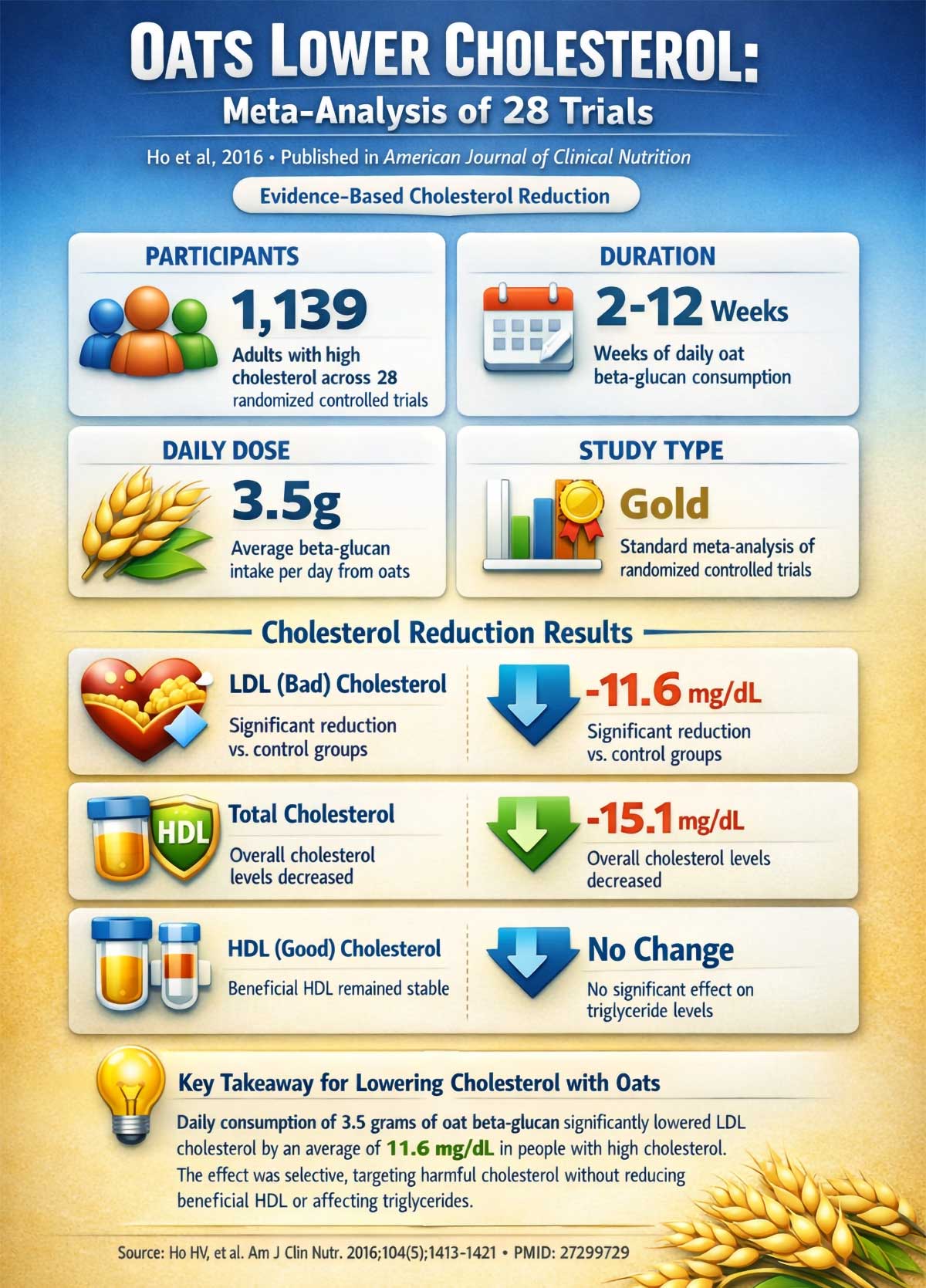
A 2016 meta-analysis led by Ho and colleagues examined 28 trials involving 1,139 adults with high cholesterol. Participants consumed an average of 3.5 grams of oat beta-glucan daily for 2 to 12 weeks. The results showed significant LDL reductions compared to control groups, with the most pronounced effects appearing after at least four weeks of consistent intake.
Studies across 58 different trials show that people who stuck with their daily oats for at least three weeks saw real improvements in their lipid panels. Those who ate oats for 12 weeks often saw even better results.
The key word here is “consistent.” Missing days can slow your progress. Your body needs that regular dose of beta-glucan to keep the cholesterol-lowering process going.
The 3-Gram Rule: How Much Do You Need?
Not all oat servings are equal. The research points to a specific target: you need at least 3 grams of beta-glucan daily to see results.
Multiple meta-analyses confirm this threshold. Studies reviewed by health agencies like the FDA and EFSA (European Food Safety Authority) found that 3 grams is the minimum effective dose. But here’s an interesting finding: more may work better.
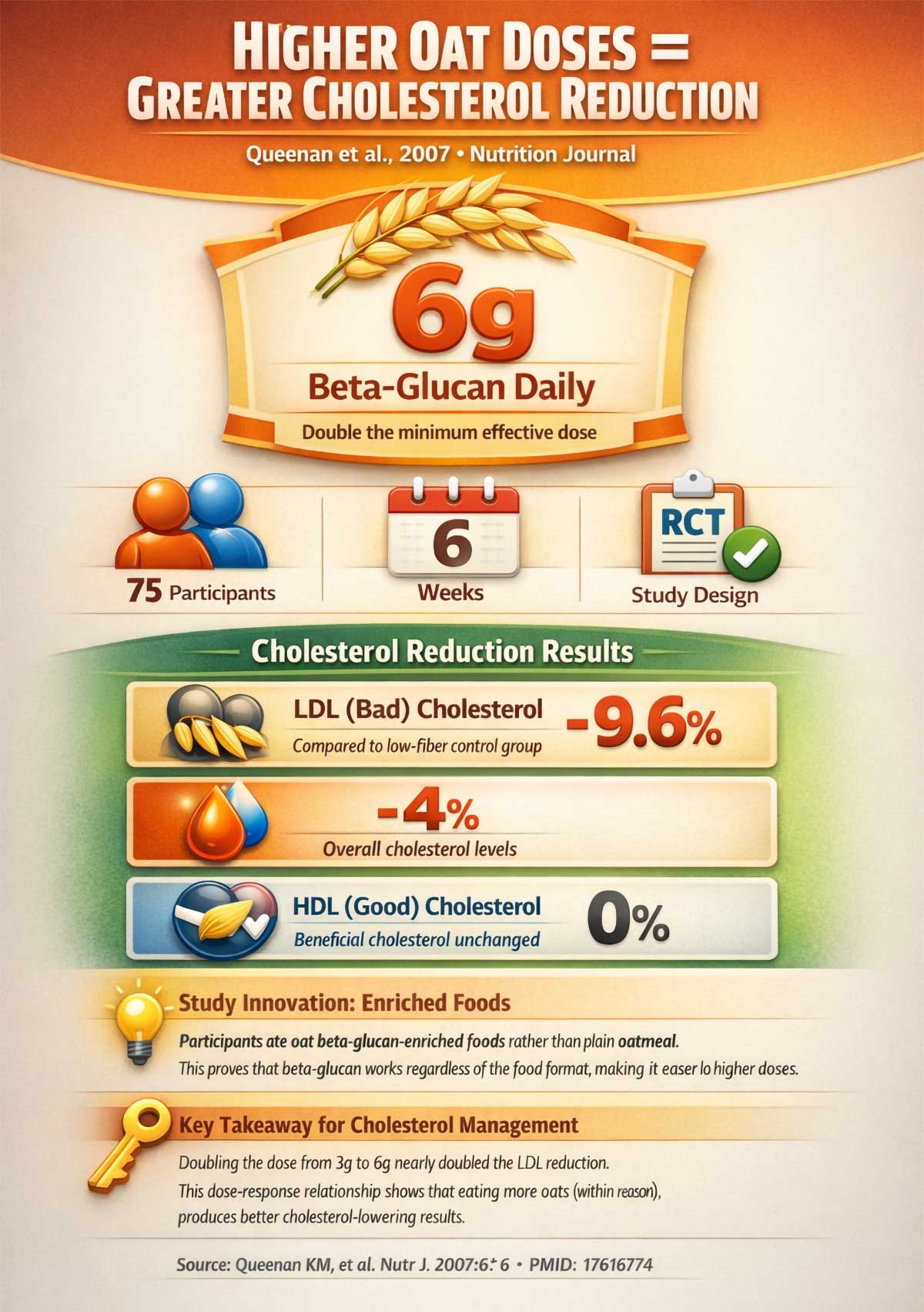
In a 2007 trial published by Queenan and team, 75 adults with elevated cholesterol consumed foods enriched with 6 grams of oat beta-glucan daily for six weeks. Their LDL dropped by 9.6% and total cholesterol fell by 4% compared to those eating low-fiber foods. Notably, HDL cholesterol remained unchanged, showing that oats selectively target harmful cholesterol without affecting the good kind.
So how do you get 3 grams? Here’s a simple breakdown:
One cup of cooked oatmeal (made from rolled oats) gives you about 2 grams of beta-glucan. To hit the 3-gram mark, you could eat 1.5 cups of cooked oatmeal. Or you could eat one cup of oatmeal and add a few tablespoons of oat bran, which packs more beta-glucan per serving.
The average dose in successful trials was around 3.5 grams per day. Most people found this easy to stick with. It’s not a huge amount of food, and you can split it across meals if needed.
One bowl at breakfast can get you most of the way there.
Beta-Glucan Content by Oat Type
| Oat Type | Serving Size | Beta-Glucan Content | Servings Needed for 3g |
|---|---|---|---|
| Steel-cut oats (cooked) | 1 cup | 2.0–2.5g | 1.5 cups |
| Rolled oats (cooked) | 1 cup | 1.8–2.2g | 1.5 cups |
| Instant oats (cooked) | 1 cup | 1.5–2.0g | 2 cups |
| Oat bran (raw) | 1/4 cup | 2.2–2.8g | 1/4 cup + 1/2 cup rolled oats |
| Oat flour | 1/4 cup | 1.0–1.5g | 3/4 cup (not practical as porridge) |
Pro Tip: Combine 3/4 cup rolled oats with 2 tablespoons of oat bran for an easy 3-gram dose in one bowl.
Beyond LDL: The Total Impact on Your Blood Lipids
Most people focus on LDL (the “bad” cholesterol), and for good reason. Elevated LDL directly raises your risk of heart disease. But oats do more than just lower LDL.
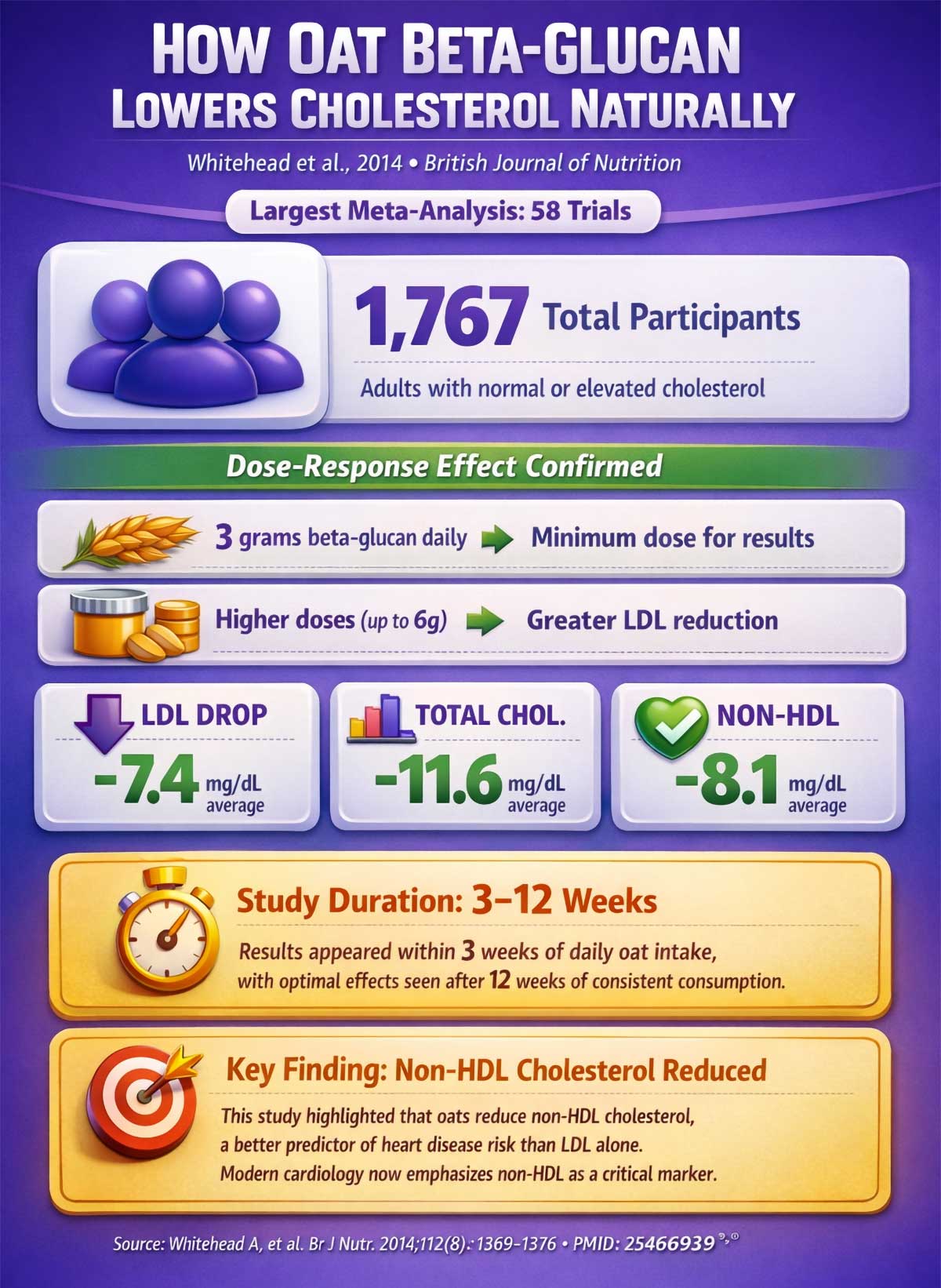
Research shows oats also reduce total cholesterol and something called non-HDL cholesterol. Non-HDL includes all the potentially harmful cholesterol particles in your blood, not just LDL. Many doctors now consider non-HDL a better predictor of heart disease risk than LDL alone.
In a 2014 meta-analysis of 58 trials, oat beta-glucan lowered non-HDL cholesterol by 0.21 mmol/L (about 8 mg/dL). That’s significant. It means oats target multiple harmful cholesterol types at once.
What about HDL, the “good” cholesterol? Studies consistently show that oats don’t lower HDL. That’s good news. You want to keep HDL high because it helps remove cholesterol from your arteries.
Triglycerides, another type of fat in your blood, also remain mostly unchanged with oat intake. The effects are specific to cholesterol-carrying particles, not to all lipids across the board.
This selectivity is what makes oats valuable. They lower what you want lowered without harming what you need.
Sample Lipid Panel: Before and After 12 Weeks
Before Starting Oats (Typical High Cholesterol Profile)
| Measurement | Value | Category |
|---|---|---|
| Total Cholesterol | 240 mg/dL | High |
| LDL Cholesterol | 160 mg/dL | High |
| HDL Cholesterol | 50 mg/dL | Acceptable |
| Non-HDL Cholesterol | 190 mg/dL | Very High |
| Triglycerides | 150 mg/dL | Normal |
After 12 Weeks of Daily Oats (3g beta-glucan)
| Measurement | Value | Change | Category |
|---|---|---|---|
| Total Cholesterol | 225 mg/dL | -15 mg/dL | Borderline High |
| LDL Cholesterol | 148 mg/dL | -12 mg/dL | Borderline High |
| HDL Cholesterol | 50 mg/dL | No change | Acceptable |
| Non-HDL Cholesterol | 175 mg/dL | -15 mg/dL | High |
| Triglycerides | 148 mg/dL | -2 mg/dL | Normal |
Note: Results based on average reductions seen across multiple meta-analyses. Individual results vary.
Understanding Your Cholesterol Numbers
Knowing your starting point helps you set realistic goals. Here’s how medical professionals categorize LDL cholesterol levels:
| LDL Level (mg/dL) | Category | Risk Level |
|---|---|---|
| Less than 100 | Optimal | Lowest risk |
| 100–129 | Near Optimal | Low risk |
| 130–159 | Borderline High | Moderate risk |
| 160–189 | High | High risk |
| 190 and above | Very High | Very high risk |
An 8% to 10% drop might not sound huge, but it can move you from one risk category to another. If you start at 160 mg/dL (high), a 12 mg/dL reduction brings you to 148 mg/dL (borderline high). That shift matters for your long-term heart health.
How Beta-Glucan Traps Cholesterol in Your Gut
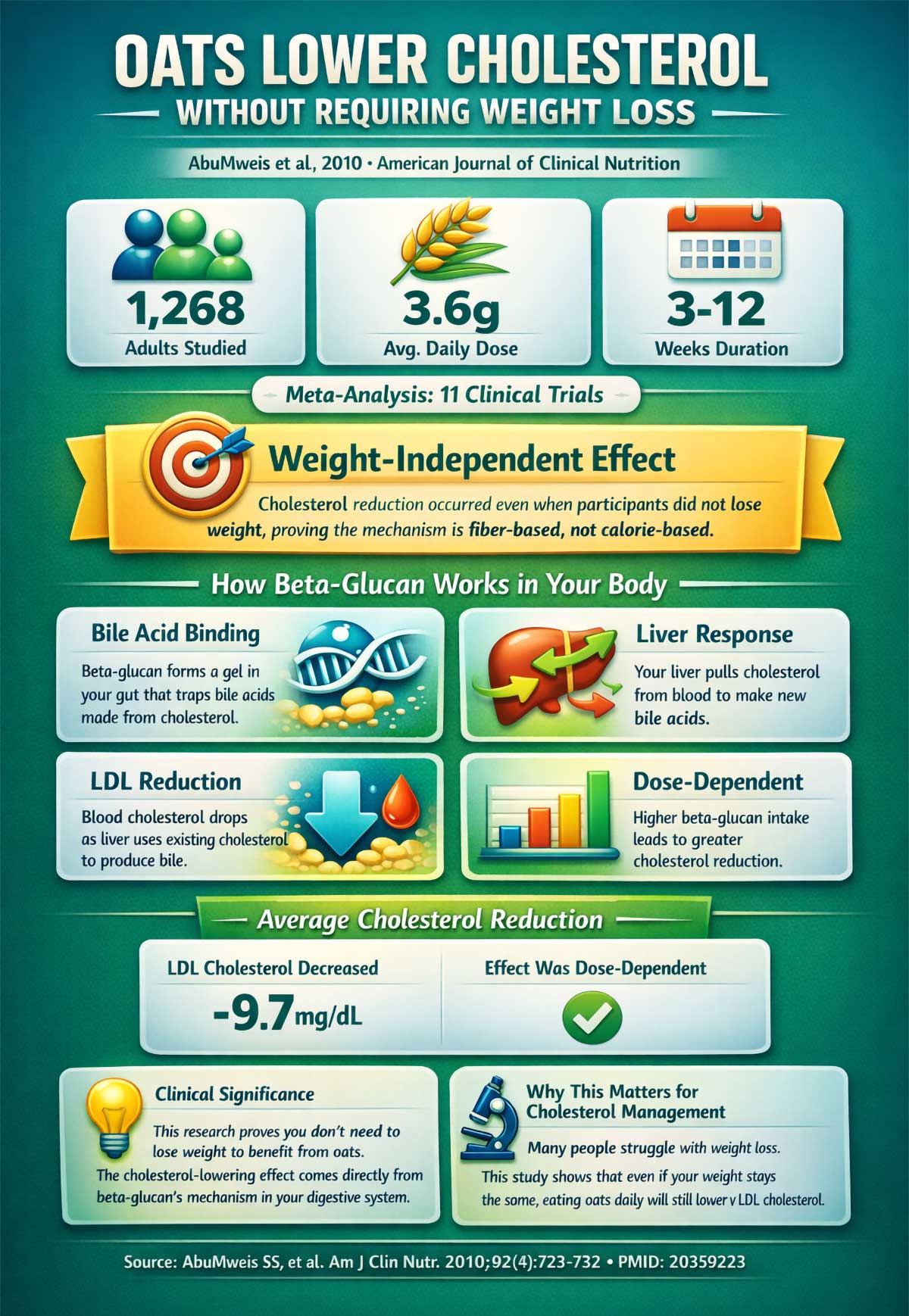
Beta-glucan works through a clever mechanism. When you eat oats, the soluble fiber dissolves and forms a thick gel in your small intestine. This gel is viscous, like honey.
As food moves through your digestive tract, the gel traps bile acids. Your liver makes bile acids from cholesterol, and your body normally reabsorbs most of them. But when beta-glucan traps these bile acids, your body can’t recycle them. Instead, they get flushed out.
Your liver now faces a shortage. To make new bile acids, it pulls cholesterol from your bloodstream. This is the “drain” effect we mentioned earlier. The more bile acids that get trapped and removed, the more cholesterol your liver takes from your blood.
This process explains why viscous fiber works so well. Not all fiber does this. Wheat bran, for example, is mostly insoluble fiber. It adds bulk but doesn’t form the sticky gel that traps bile acids. Corn fiber has similar limits.
Oat beta-glucan is uniquely viscous. That viscosity is what makes it effective for lowering cholesterol.
The gel also slows digestion, which has added benefits for blood sugar control. But the cholesterol-lowering effect comes directly from the bile acid binding.
Foods That Boost the Cholesterol-Lowering Effect
Pairing oats with certain foods can amplify the heart-healthy benefits. Here’s what works:
Walnuts and Almonds: These nuts provide omega-3 fatty acids and plant sterols that work alongside beta-glucan to lower LDL. A handful (about 1 ounce) adds healthy fats that also help raise HDL slightly. The combo gives you a two-pronged attack on cholesterol.
Berries: Blueberries, strawberries, and raspberries contain anthocyanins and other antioxidants that protect your blood vessels from oxidative damage. While they don’t directly lower cholesterol, they reduce the inflammation that makes high cholesterol more dangerous.
Ground Flaxseed: Flax delivers alpha-linolenic acid (ALA), a plant-based omega-3. Two tablespoons provide about 3 grams of fiber and have been shown to reduce LDL by an additional 5% to 10% when combined with other dietary changes. Grind the seeds fresh for best absorption.
Cinnamon: This spice may help reduce total cholesterol and triglycerides according to some studies, though the effect is modest. Half a teaspoon adds flavor without sugar and provides antioxidants. It won’t replace the oats, but it’s a smart addition.
Real Numbers: What Drop Can You Expect?
Let’s get specific. When researchers combine data from multiple studies, they find consistent results.
Across 28 trials involving people with high cholesterol, daily oat beta-glucan (about 3.5 grams) lowered LDL by an average of 0.30 mmol/L. That translates to roughly 11.6 mg/dL.
For total cholesterol, the drop was about 0.39 mmol/L (around 15 mg/dL).
These numbers might seem small, but they matter. An 8% to 10% reduction in LDL can significantly lower your risk of heart disease. The American Heart Association notes that every 1% drop in LDL reduces heart disease risk by about 1% to 2%.
Here’s another key finding: these drops happen regardless of weight loss. A 2010 meta-analysis by AbuMweis and colleagues analyzed 11 trials with 1,268 adults and found that oat beta-glucan reduced LDL by an average of 0.25 mmol/L (about 9.7 mg/dL). Critically, this effect was dose-dependent and occurred independent of weight loss, proving that the cholesterol reduction comes from the fiber mechanism itself, not from shedding pounds.
If your LDL is 140 mg/dL (considered high), a 10 mg/dL drop brings you to 130 mg/dL. That’s the difference between high and borderline-high. For some people, that shift can mean avoiding medication or adding a powerful tool alongside medication.
The results are consistent across different populations, ages, and baseline cholesterol levels. Whether your LDL starts at 130 or 180, oats can help bring it down.
Choosing the Right Type of Oats
Not all oats are processed the same way. Does the form matter for cholesterol lowering? Mostly, no. But there are some practical differences.
Steel-cut oats are whole oat groats chopped into pieces. They take longer to cook but retain all their beta-glucan. Rolled oats (also called old-fashioned oats) are steamed and flattened. They cook faster and still contain plenty of beta-glucan. Instant oats are cut smaller and pre-cooked, so they’re ready in minutes.
The beta-glucan content is similar across these forms. The main difference is texture and cooking time. So choose based on what you’ll actually eat consistently.
Oat bran deserves special mention. It’s the outer layer of the oat grain, and it’s concentrated in beta-glucan. Just a few tablespoons of oat bran can deliver 2 grams or more of beta-glucan. If you don’t like large bowls of oatmeal, oat bran offers a smaller, more potent option. You can stir it into yogurt, smoothies, or soups.
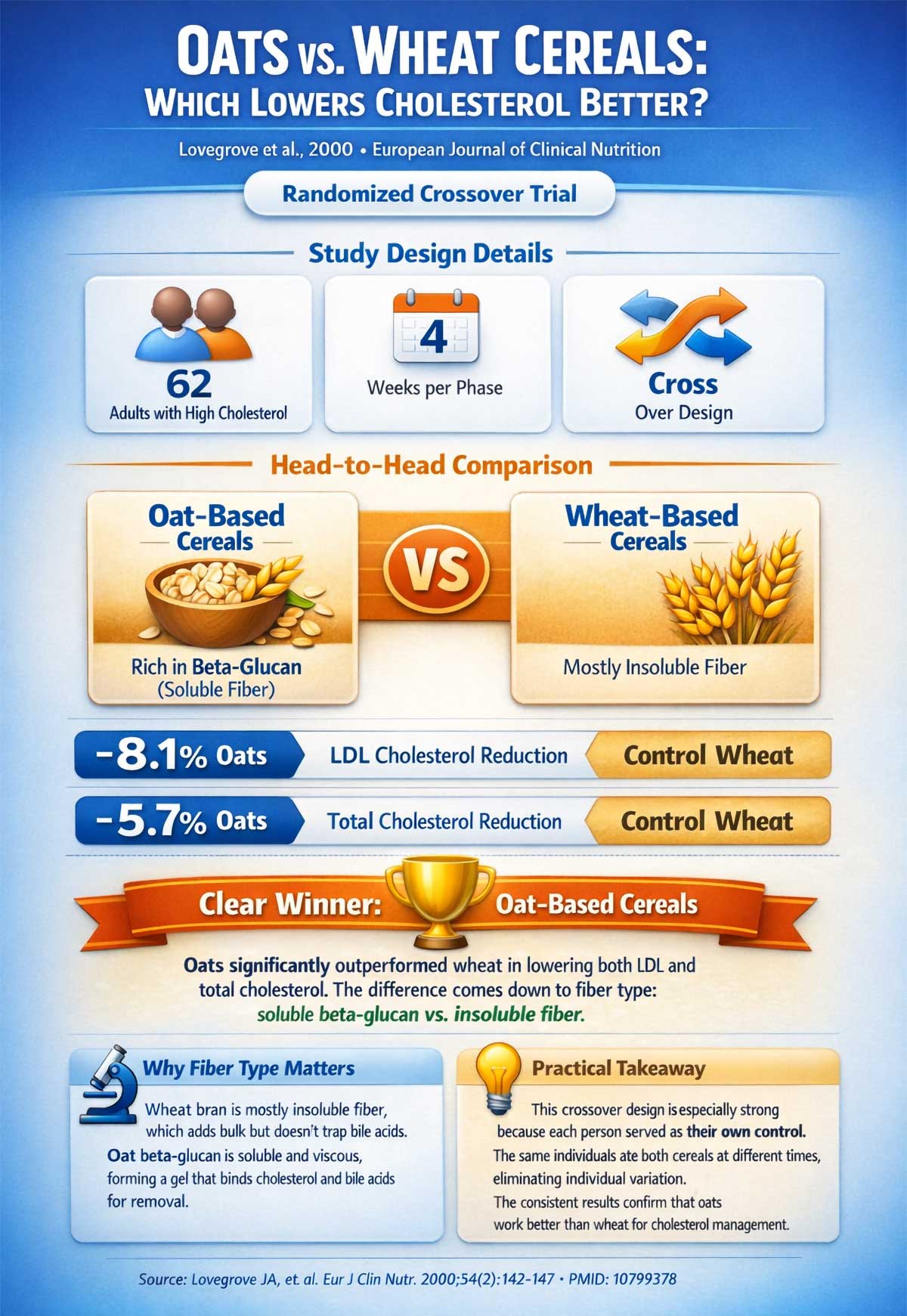
A 2000 study by Lovegrove and team tested this directly. They gave 62 adults with mild high cholesterol either oat-based breakfast cereals or wheat-based cereals for four weeks in a crossover design. The oat group saw LDL drop by 8.1% and total cholesterol by 5.7% compared to the wheat group. This confirms that the type of grain matters, and any form of oats delivers results as long as you get enough beta-glucan.
What about overnight oats? Soaking oats in milk or water overnight doesn’t destroy the beta-glucan. The fiber remains active. Some people find overnight oats easier to digest, and they’re convenient for busy mornings.
Avoid instant oat packets with added sugar. While they contain beta-glucan, the extra sugar can work against your heart health goals. High sugar intake raises triglycerides and can lead to weight gain, both of which hurt your lipid profile.
Plain oats are your best bet. Add your own toppings for flavor.
Three Cholesterol-Lowering Oat Recipes
These recipes are designed to deliver at least 3 grams of beta-glucan per serving while tasting great. Each one offers a different approach to fit your preferences.
Recipe 1: Basic Cholesterol-Busting Oatmeal
Beta-Glucan Content: 3.2g per serving
Prep Time: 10 minutes
Servings: 1
Ingredients:
- 3/4 cup rolled oats
- 2 tablespoons oat bran
- 1.5 cups water or unsweetened almond milk
- 1/4 teaspoon cinnamon
- 1/2 cup fresh blueberries
- 1 tablespoon chopped walnuts
- Optional: 1 teaspoon honey (if needed)
Instructions:
- Combine oats, oat bran, and liquid in a small pot.
- Bring to a boil, then reduce heat to low.
- Simmer for 5 minutes, stirring occasionally.
- Remove from heat and let sit for 1 minute to thicken.
- Top with cinnamon, blueberries, and walnuts.
- Add honey sparingly if you need sweetness.
Why It Works: The combination of rolled oats and oat bran hits your 3-gram target without requiring a huge portion. Walnuts add omega-3s, and berries provide antioxidants. The cinnamon gives you flavor without sugar.
Recipe 2: No-Cook Overnight Oats with Berries
Beta-Glucan Content: 3.0g per serving
Prep Time: 5 minutes (plus overnight soaking)
Servings: 1
Ingredients:
- 1 cup rolled oats
- 1 cup unsweetened oat milk or almond milk
- 1/4 cup plain Greek yogurt (optional, for creaminess)
- 1 tablespoon ground flaxseed
- 1/2 cup mixed berries (strawberries, raspberries)
- 1 tablespoon sliced almonds
- 1/4 teaspoon vanilla extract
Instructions:
- Mix oats, milk, yogurt, flaxseed, and vanilla in a jar or container.
- Stir well to combine.
- Cover and refrigerate overnight (or at least 4 hours).
- In the morning, stir and add berries and almonds on top.
- Eat cold or warm briefly in the microwave if preferred.
Why It Works: Soaking doesn’t reduce beta-glucan effectiveness. This method is perfect for busy mornings. The flaxseed adds extra fiber and omega-3s. Greek yogurt provides protein to keep you full longer.
Recipe 3: Savory Oat Bran Bowl
Beta-Glucan Content: 3.5g per serving
Prep Time: 8 minutes
Servings: 1
Ingredients:
- 1/3 cup oat bran
- 1/3 cup rolled oats
- 1.25 cups low-sodium vegetable broth
- 1 cup baby spinach
- 1/4 cup diced tomatoes
- 1 tablespoon nutritional yeast (optional, for savory flavor)
- 1/4 teaspoon garlic powder
- Black pepper to taste
- 1 poached or soft-boiled egg
Instructions:
- Combine oat bran, rolled oats, and broth in a pot.
- Bring to a boil, then reduce to simmer.
- Cook for 4 to 5 minutes, stirring frequently.
- Add spinach and cook until wilted (about 1 minute).
- Stir in diced tomatoes, nutritional yeast, garlic powder, and pepper.
- Top with your cooked egg.
Why It Works: Not everyone likes sweet breakfast foods. This savory option delivers high beta-glucan from oat bran while giving you vegetables and protein. The egg adds satiety. Nutritional yeast provides a cheese-like flavor with B vitamins.
Making Oats Work for You: Tips for the 12-Week Plan
You’ve got the science. Now let’s talk about making it stick.
Start with a plan. If you’re aiming for 3 grams of beta-glucan daily, figure out your oat portions ahead of time. One cup of cooked oatmeal plus 2 tablespoons of oat bran is a solid combo.
Add mix-ins that boost heart health. Berries are packed with antioxidants that protect your blood vessels. Walnuts and almonds provide healthy fats that raise HDL. A sprinkle of ground flaxseed adds omega-3s. These additions don’t just improve flavor; they support the same goals as the oats.
Watch your toppings. Brown sugar, honey, and maple syrup add calories and spike blood sugar. Try cinnamon, vanilla extract, or a small amount of fresh fruit for sweetness instead. If you must use a sweetener, keep it minimal.
Be consistent. The studies show results after 3 to 12 weeks of daily intake. Eating oats twice a week won’t cut it. You need that regular, steady dose. Think of it like taking a daily supplement. You wouldn’t skip days and expect the same result.
Track your progress. Ask your doctor for a cholesterol test before you start, then retest after 6 to 12 weeks. Seeing the numbers drop is motivating. It also helps you confirm that oats are working for your body.
Don’t go it alone if your cholesterol is very high. Oats are powerful, but they’re not a replacement for medication when it’s needed. Talk to your doctor about how oats fit into your overall plan.
Your 12-Week Tracking Checklist
Common Mistakes That Reduce Effectiveness
Even with the best intentions, some habits can sabotage your results. Here’s what to avoid:
Mistake 1: Using Instant Packets with Added Sugar
Those flavored instant oat packets are convenient, but most contain 10 to 15 grams of added sugar per serving. High sugar intake can raise triglycerides and promote weight gain, which works against your cholesterol goals. The beta-glucan is still there, but you’re adding problems while trying to solve one.
Fix: Buy plain instant oats if you need the speed. Add your own fruit, nuts, and a dash of cinnamon for flavor without the sugar bomb.
Mistake 2: Inconsistent Intake
Eating oats three or four days a week won’t give you the results seen in studies. The research is clear: participants ate oats daily. Your body needs that consistent dose of beta-glucan to maintain the bile acid binding process.
Fix: Treat oats like a prescription. You wouldn’t skip medication doses and expect it to work. Same principle applies here. Prep overnight oats in batches if mornings are rushed.
Mistake 3: Not Eating Enough to Hit 3 Grams
A small bowl with half a cup of cooked oats only delivers about 1 gram of beta-glucan. That’s not enough to move the needle on your cholesterol. Many people underestimate portions.
Fix: Use the table earlier in this article to calculate your exact needs. Measure your dry oats before cooking until you get a feel for the right amount. Adding oat bran is an easy way to boost beta-glucan without eating a massive bowl.
Mistake 4: Cooking Oats in Whole Milk
Whole milk contains saturated fat, which can raise LDL cholesterol. If you’re cooking your oats in whole milk or adding butter, you’re working against yourself.
Fix: Use water, unsweetened almond milk, or oat milk as your cooking liquid. If you want creaminess, stir in a tablespoon of plain Greek yogurt after cooking instead of using whole milk throughout.
Mistake 5: Giving Up Too Soon
Some people try oats for two weeks, don’t see results, and quit. The studies show it takes at least three weeks, often longer, to see measurable changes.
Fix: Commit to the full 12 weeks. Mark it on your calendar. Think of the first month as the loading phase. Your body is adapting. The payoff comes when you stick with it.
Conclusion
The verdict is clear. Oats work to lower LDL cholesterol, and the effect is backed by decades of rigorous research. The FDA and EFSA both recognize the link between oat beta-glucan and reduced cholesterol. In 1997, the FDA authorized a health claim stating that soluble fiber from oats, as part of a diet low in saturated fat and cholesterol, may reduce the risk of heart disease.
Here’s what the science tells us: eat at least 3 grams of beta-glucan daily. Stick with it for at least 3 to 12 weeks. Expect an LDL drop of about 7 to 12 mg/dL, or roughly 8% to 10%. That’s enough to make a meaningful dent in your heart disease risk.
The mechanism is simple but effective. Beta-glucan traps bile acids in your gut. Your liver pulls cholesterol from your blood to replace them. Over time, your LDL goes down.
This isn’t about trends or fads. It’s about using food as medicine in the most practical way possible. A bowl of oats costs pennies. It’s safe, accessible, and backed by gold-standard trials.
A 2011 meta-analysis by Tiwari and Cummins reviewed 10 trials with 1,308 adults and confirmed that oat beta-glucan at doses of 3 grams or more per day consistently reduced LDL by 0.25 mmol/L and total cholesterol by 0.30 mmol/L. The effects were consistent across different populations, reinforcing that this is a reliable, evidence-based approach anyone can use.
Once you hit the 12-week mark and see results, keep going. The benefits don’t stop after three months. Making oats a regular part of your diet can support your heart health for years to come.
Your next blood test could show the proof. Give it 12 weeks. Stay consistent. And let the research guide you to a healthier cholesterol level.
FAQs
Can I Eat Oats If I Have Diabetes?
Yes, and oats may actually help with blood sugar control. The beta-glucan fiber slows digestion, which prevents sharp spikes in blood glucose after meals. A 2015 review found that oats improved glycemic control in people with type 2 diabetes. Just avoid the sugary instant packets and stick with plain oats. Pair them with protein (like nuts or Greek yogurt) to further stabilize blood sugar. Check with your doctor about how oats fit into your meal plan, especially if you take insulin.
Do Instant Oats Work as Well as Steel-Cut Oats?
Yes, as long as they’re plain and unflavored. The beta-glucan content is similar across all oat types. The main differences are texture, cooking time, and how quickly they digest. Steel-cut oats have a lower glycemic index, meaning they raise blood sugar more slowly, but the cholesterol-lowering effect is essentially the same if you’re eating the same amount of beta-glucan. Choose based on convenience and taste preference.
Will Eating Oats Help Me Lose Weight?
Oats can support weight loss because the fiber keeps you full longer, which may reduce overall calorie intake. But the cholesterol-lowering effect happens independent of weight loss. You don’t need to lose weight for oats to work on your cholesterol. That said, if you do lose weight while eating oats regularly, you’ll see even better improvements in your lipid profile. Just watch your portions and toppings to avoid adding excess calories.
Can I Take Oat Supplements Instead of Eating Oatmeal?
Beta-glucan supplements exist, usually in capsule or powder form. Some studies show they work, but most research has been done on whole oats or oat bran. Whole oats also provide other nutrients like B vitamins, iron, and magnesium that supplements don’t include. Plus, eating oats as food helps you feel full and can replace less healthy breakfast options. If you really can’t stomach oats, supplements are an option, but whole food sources are preferable.
How Long Do the Effects Last If I Stop Eating Oats?
The cholesterol-lowering effect is not permanent. If you stop eating oats, your cholesterol will likely return to previous levels within a few weeks to months. Think of oats as an ongoing strategy, not a one-time fix. The good news is that oats are safe for long-term daily use. Unlike medications, there are no side effects from eating oats every day for years. You can make them a permanent part of your diet.
Are There Any Side Effects from Eating Oats Daily?
Most people tolerate oats well. Some experience mild bloating or gas when they first start eating more fiber, but this usually resolves within a week or two as your gut bacteria adapt. Start with smaller portions and gradually increase to 3 grams of beta-glucan if needed. Drink plenty of water to help fiber move through your system. People with celiac disease should choose certified gluten-free oats, as regular oats can be contaminated with wheat during processing.