Most people think omega-3 simply supports brain health. MRI scans told a far more surprising story after just eight weeks of consistent daily intake.
Scientists placed healthy adults in an MRI scanner. They measured brain volume. They tested memory and mental speed. Then they asked a simple question: what happens when people take omega-3 supplements consistently for eight weeks?
The scans showed changes that typically take months to appear. Memory scores climbed. Mental fog cleared. And the changes in brain structure were too pronounced to be attributed to chance.
Your brain needs omega-3 fatty acids to function. Without adequate supply, it cannot build new cells, send signals efficiently, or maintain the structural integrity that supports memory. Most people consume far less than the research suggests is necessary.
What follows is a look at what the scans showed, where the evidence holds and where it breaks down, and what any of this should change about your diet and supplementation.
Why your brain runs on omega-3s
Your brain is approximately 60% fat by dry weight. This is not a design flaw. Every neuron sits wrapped in a fatty membrane that regulates what passes in and out, controls signaling speed, and determines how flexibly the cell responds to new demands over time.
The fats that make up the membrane are not interchangeable. The brain selects for specific types, and omega-3 fatty acids are the ones it depends on most. The question of which omega-3 matters more for the brain turns out to have a specific answer, though it’s rarely explained well on supplement labels.
Which omega-3 fatty acids are best for the brain?
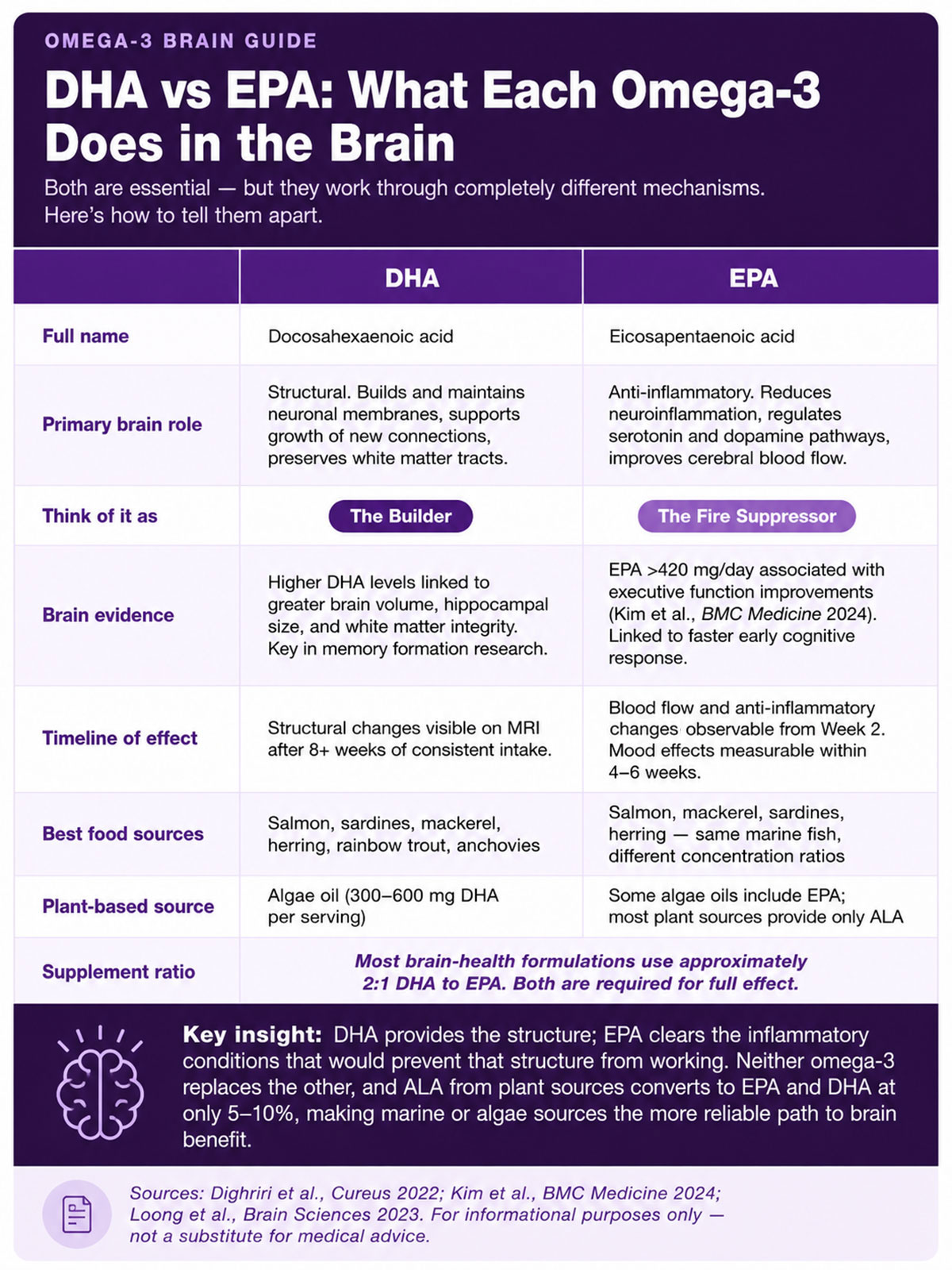
DHA (docosahexaenoic acid) is the structural omega-3. It makes up the vast majority of the omega-3 fats present in brain tissue, where it builds and maintains neuronal membranes, supports the growth of new connections between neurons, and preserves the white matter tracts that carry signals across brain regions.
Higher DHA levels in red blood cells correlate with greater brain volume, including in the hippocampus, the structure most closely associated with memory formation and retrieval.
EPA (eicosapentaenoic acid) works differently. Its primary brain role is anti-inflammatory rather than structural. EPA reduces neuroinflammation, regulates the production of neurotransmitters including serotonin and dopamine, and improves cerebral blood flow.
A 2024 meta-analysis in BMC Medicine found that cognitive benefits were tied specifically to EPA intake above 420 mg daily, not just total omega-3s. Where DHA provides the building material, EPA clears the inflammatory conditions that would otherwise prevent that material from working.
ALA (alpha-linolenic acid) comes from plant sources: walnuts, flaxseeds, chia seeds, hemp seeds. The body converts small amounts of ALA into DHA and EPA, but the conversion rate is poor, typically in the range of 5 to 10 percent. ALA is a worthwhile dietary component, but it is not a reliable substitute for the marine forms in the context of brain health.
Think of DHA as the builder, EPA as the fire suppressor, and ALA as a backup that the body would rather not rely on for brain support.
The omega-6 imbalance makes the problem worse
The brain doesn’t just need omega-3s. It needs them in proportion to omega-6 fatty acids, which compete for the same cellular uptake pathways. The historical human diet maintained a ratio of omega-3 to omega-6 somewhere around 1:4. Modern Western eating has pushed that figure to approximately 1:15 or 1:20 for many people.
The main drivers of that shift are soybean oil, corn oil, sunflower oil, and the processed foods made with them. When omega-6 floods the system, dietary omega-3 has less room to work, even when intake is technically adequate. Reducing those oils while increasing fatty fish creates a meaningfully different cellular environment for brain tissue to function in.
There is a blood marker that makes this less abstract. High-sensitivity CRP (hs-CRP) is a measure of systemic inflammation that EPA supplementation has been shown to reduce, sometimes by meaningful margins.
What makes it useful here is what the epidemiological data found when researchers tracked it forward: elevated hs-CRP in midlife predicts accelerated cognitive decline years later, independently of other risk factors. Whether anti-inflammatory nutrition is actually reaching the brain is something you can test for before any cognitive change would be perceptible.
Signs your omega-3 intake may be running low
The symptoms of low omega-3 status are frustratingly nonspecific. Dry or flaky skin, persistent brain fog, joint stiffness, poor sleep quality, slow memory retrieval, and low mood all appear on the standard list. The problem is that any three of these could equally point to a sleep disorder, a thyroid issue, or dehydration. The symptom checklist approach is less diagnostic than it looks.
A more reliable indicator is dietary frequency. If you eat fatty fish less than once a week, and particularly if you rely on plant-based eating without algae oil supplementation, you are almost certainly below adequate intake regardless of what else you consume.
That combination of symptoms plus dietary pattern is enough reason to treat it as a hypothesis worth testing with a proper Omega-3 Index measurement, rather than waiting for a cleaner diagnosis to emerge.
What eight weeks of supplementation actually showed
The studies that shifted this area from supplement-industry claims into peer-reviewed neuroscience were not dietary surveys. They were trials in which researchers measured brain structure before supplementation began, and again after consistent intake over weeks.
Week 2: when the fog started lifting
Participants in controlled trials reported cognitive changes faster than researchers anticipated. Focus improved. Tasks that had felt mentally costly became easier. One participant said it felt as though someone had turned up the brightness on her thoughts.
That description matches what the physiological data showed. A 2022 systematic review published in Cureus by Dighriri and colleagues analyzed nine randomized controlled trials involving 1,319 participants and found that omega-3 intake increased learning, memory, cognitive function, and cerebral blood flow.
The early changes appear to be driven largely by EPA, which begins reducing neuroinflammation relatively quickly once intake increases. Less inflammation means better blood flow, which means more oxygen reaches neurons that had been operating at reduced capacity.
The timing varies by individual. People who were significantly deficient at baseline tended to notice the shift earlier. Those who already ate fish regularly showed smaller early changes, but still improved over a longer window.
Week 4: measurable gains in memory recall
By the fourth week, memory data in multiple trials had separated from baseline. Participants recalled names and details more accurately and made fewer errors on working memory tasks.
DHA is the primary structural component of synapses, the junctions where neurons exchange signals and where memories are formed and consolidated. More DHA availability means stronger synaptic connections, which appear in memory performance before it registers in structural brain scans.
Researchers wanted to know whether the dose mattered, not just the compound. A 2014 meta-analysis in the International Journal of General Medicine by Jiao and colleagues pooled data from 12 randomized controlled trials and found a statistically significant reduction in cognitive decline rate at doses below 1.73 grams of EPA and DHA per day.
Doses above that threshold showed no measurable benefit, which points to a ceiling effect rather than a dose-response curve. A higher dose does not mean more protection beyond a moderate amount.
Week 8 and beyond: scans showed physical change
What emerged after eight weeks was the finding that moved this conversation beyond subjective reports.
Brain volume changed, not in regions unrelated to cognition, and not by an imperceptible margin. A 2023 observational study published in Brain Sciences by Loong and colleagues examined 40 cognitively healthy older adults with a mean age of 76, comparing their omega-3 blood levels against structural MRI and cognitive test results.
Higher EPA levels and a higher overall Omega-3 Index correlated specifically with better delayed recall, faster processing speed, and greater entorhinal cortex thickness. EPA, DHA, and the Omega-3 Index together were associated with greater total white matter volume.
The brain can generate new neurons and new connections throughout life, a capacity called neuroplasticity that slows with age and with chronic inflammation. Omega-3s support this process through three parallel mechanisms: they provide structural material for new neuronal membranes, they reduce the inflammatory signals that suppress new growth, and they improve the vascular environment through which oxygen and nutrients reach the tissue.
The eight-week mark appears to be where all three mechanisms have been operating long enough to register on imaging equipment.
What consistent intake builds over the long term
Protection against cognitive decline
The longer-term trial data strengthen the picture considerably. A 2024 meta-analysis in BMC Medicine by Kim and colleagues pooled 24 randomized controlled trials involving 9,660 adults aged 40 and older, with study durations ranging from three to 36 months.
Omega-3 supplementation produced meaningful improvements in executive function, the cognitive domain covering planning, task-switching, and sustained focused attention. The benefit was most pronounced within the first 12 months and was specifically associated with daily intake above 500 mg of total omega-3s.
Together, those two analyses begin to map something neither could establish independently: a useful intake range, with a floor below which cognitive benefit becomes unreliable and a ceiling above which it appears to plateau.
A 2025 dose-response meta-analysis published in Scientific Reports by Shahinfar and colleagues took a broader approach. Their analysis pooled 58 randomized trials to map the relationship between dose and cognitive outcome.
Each 2,000 mg per day increment was associated with significant improvements in attention, processing speed, primary memory, language, and global cognitive function. That is the upper end of what most brain health protocols use, and the findings suggest it may represent close to the ceiling of cognitive benefit in adults without existing impairment.
Where the protection stops
This part tends to get minimized in coverage of this topic, and it should not be.
Omega-3s appear to delay the onset of cognitive problems, but they do not reverse damage that has already occurred. The research consistently draws a line at mild cognitive impairment. People who had not yet crossed into clinical decline showed the benefits described above, while those who had already developed Alzheimer’s disease did not.
The inflammation-reduction and structural support mechanisms that help a healthy brain maintain function cannot undo the amyloid plaques and tau tangles that characterize Alzheimer’s at later stages.
The evidence, read carefully, describes a preventive window, not a therapeutic one. The implication for timing is direct: starting omega-3 supplementation in midlife or earlier, before any cognitive symptoms are present, produces the most consistent results across trials. By the time someone is managing a diagnosis, the intervention has largely passed its window of highest effectiveness.
Mood and EPA’s specific role
The brain doesn’t use omega-3s only for memory and structure. EPA, in particular, plays a measurable role in neurotransmitter regulation, specifically in the pathways governing serotonin and dopamine activity.
Low omega-3 status correlates with higher rates of low mood and anxiety in population data, and supplementation trials have found a moderate reduction in anxiety symptoms at approximately 1 gram of EPA and DHA daily.
This is a supportive effect, not a treatment. Omega-3 supplementation at therapeutic doses is not a substitute for clinical management of mood disorders. What the evidence supports is a more modest claim: adequate omega-3 intake appears to maintain the neurochemical environment that mood regulation depends on, and deficiency is one of several factors that can destabilize it.
Who benefits most, and what the dosing research says
Older adults (65 and above) show the most robust cognitive response to supplementation, which tracks with the fact that baseline inflammation tends to be higher and omega-3 stores lower in that age group.
People with mild cognitive impairment show measurable improvements on cognitive testing. Those starting from a very low dietary baseline, meaning people who rarely eat fatty fish, show the largest absolute gains because there is the most ground to recover.
Younger adults in good cognitive health see smaller effects. Omega-3s appear to work best when there is something specific to recover from or protect against, not simply to maintain what is already functioning well.
People who carry the APOE4 gene variant, a genetic risk factor for Alzheimer’s disease, appear to benefit from higher omega-3 intake. Research from UT Health San Antonio found that APOE4 carriers with a higher Omega-3 Index had less small-vessel disease and better abstract reasoning scores than carriers with lower levels.
The evidence does not yet support a specific dose recommendation for this group, but higher intake within the safe range appears to matter more for them than for the general population.
Pregnancy creates a distinct need. The developing fetal brain draws DHA directly from maternal stores. This makes adequate intake during pregnancy a nutritional priority, independent of the mother’s own cognitive concerns.
Obstetric guidelines recommend a minimum of 200 to 300 mg of DHA daily during pregnancy, from low-mercury sources such as sardines, salmon, or algae oil supplements.
How much, and for how long
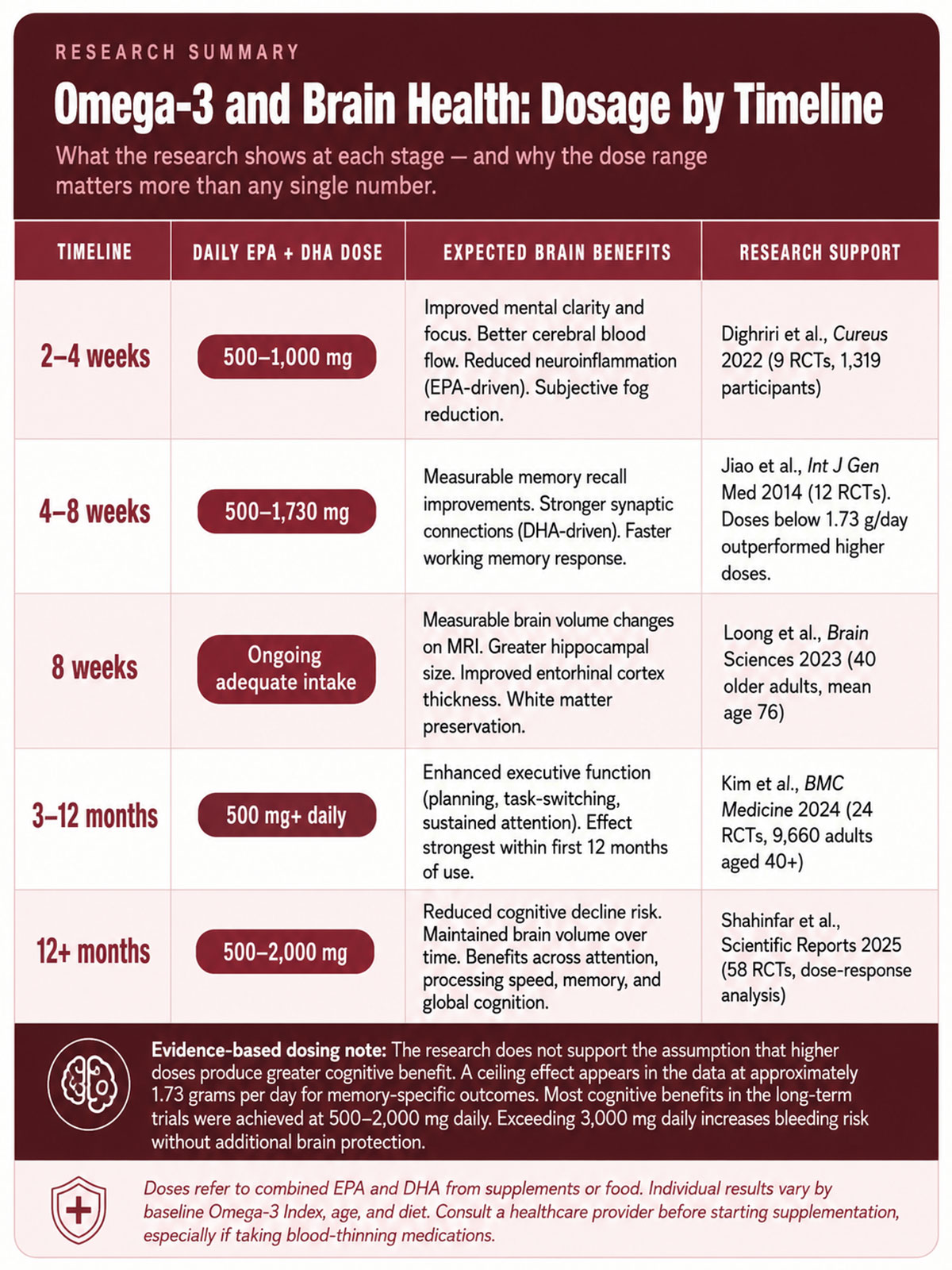
The 2014 Jiao meta-analysis established that doses below 1.73 grams daily outperformed higher doses on cognitive decline outcomes. The pattern points to a ceiling effect in that outcome measure rather than a dose-response curve.
The 2025 Shahinfar dose-response analysis found a linear benefit relationship up to 2,000 mg daily across a broader set of cognitive outcomes. These findings are not contradictory. The 2014 analysis was focused narrowly on memory decline rate, while the 2025 analysis measured attention, processing speed, and global cognition at a higher resolution.
The practical range for most adults seeking brain protection sits between 500 mg and 2,000 mg of combined EPA and DHA daily, with the higher end more relevant for people over 60 or with documented deficiency confirmed by Omega-3 Index testing.
Absorption: what helps and what reduces it
Omega-3s are absorbed poorly on an empty stomach. Fat-soluble compounds require dietary fat present in the gut to trigger the bile release and micelle formation needed for proper uptake. Taking a fish oil capsule with breakfast that includes eggs, or with a lunch containing olive oil, can increase absorption of that dose substantially, compared to taking it alone.
Supplement form also affects how much actually reaches tissue. Fish oil in triglyceride form is absorbed better than ethyl ester form, which is a cheaper variant common in budget brands. Look for “re-esterified triglycerides” or “triglyceride form” on the label.
For people who consistently have difficulty with fat absorption, krill oil’s phospholipid structure may work better. Splitting the daily dose between morning and evening meals also improves total uptake at higher doses, rather than taking the full amount at once.
Oxidation is the practical issue most people overlook. Fish oil degrades with exposure to light, heat, and air. A bottle that smells strongly fishy when opened has already turned rancid, and oxidized oil may increase oxidative stress rather than reduce it. Store bottles in the refrigerator after opening, use them within three months, and choose dark bottles over clear ones when purchasing.
Food, supplements, and how to combine them
Food first
Two servings of fatty fish per week, at approximately 3 ounces per serving, provide roughly 3,000 to 4,000 mg of EPA and DHA. That exceeds the weekly intake associated with cognitive benefits in most trials. Salmon, mackerel, sardines, herring, and rainbow trout all qualify. Leaner fish like tilapia or cod provide far less, so portions would need to increase substantially to reach the same omega-3 yield from those sources.
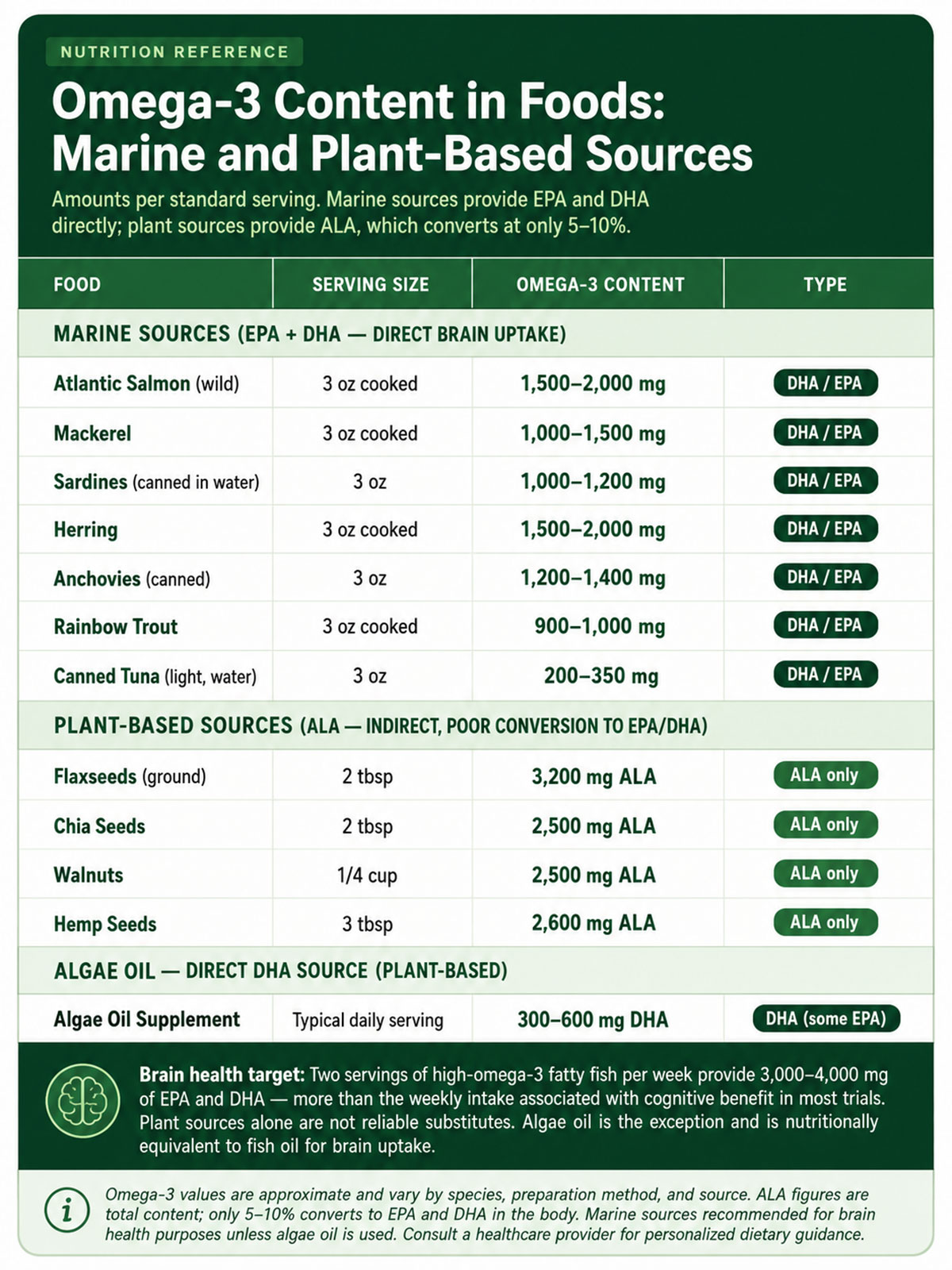
Three to four servings per week increase weekly intake proportionally and provide a buffer against weeks with lower dietary variety. Fatty fish also provide vitamin D, selenium, and iodine alongside omega-3s. These nutrients together support thyroid function and broader neurological health in ways supplementation alone does not replicate.
The practical case for food over supplements isn’t only about nutrient density. People who eat fatty fish regularly aren’t managing a dosing protocol. That consistency tends to outlast a supplement habit that depends on daily remembering.
Plant-based options: what actually works
ALA-rich foods, including ground flaxseed, chia seeds, walnuts, and hemp seeds, are worthwhile dietary additions but unreliable substitutes for marine omega-3s. The poor ALA-to-DHA/EPA conversion rate is the limiting factor.
Algae oil is the exception worth knowing about. It provides DHA directly (and EPA in some formulations), sourced from the same algae that marine fish consume to accumulate their own omega-3s.
A typical algae oil dose provides 300 to 600 mg of DHA per serving and is physiologically equivalent to fish oil for brain uptake. The most effective plant-based strategy combines ALA-rich foods daily with an algae oil supplement providing at least 300 mg of DHA.
Reducing omega-6 oil intake at the same time, particularly from soybean and corn oil, gives the absorbed omega-3s less competition for cellular incorporation.
Choosing a supplement
The label math on most fish oil products is designed to impress rather than inform. What gets advertised is total fish oil, which can include filler oils with minimal EPA or DHA. A product listing 1,000 mg of fish oil but only 250 mg of combined EPA and DHA delivers roughly a quarter of what the front panel implies. Check the supplement facts panel for EPA and DHA listed separately. That is the number that matters for any of the cognitive outcomes described in this article.
Third-party testing matters for purity. Fish oil can concentrate mercury and PCBs from the fish it derives from. Brands carrying USP, NSF, or IFOS certification have been independently tested. That certification is worth the modest price difference over untested products, particularly for people taking higher doses over extended periods.
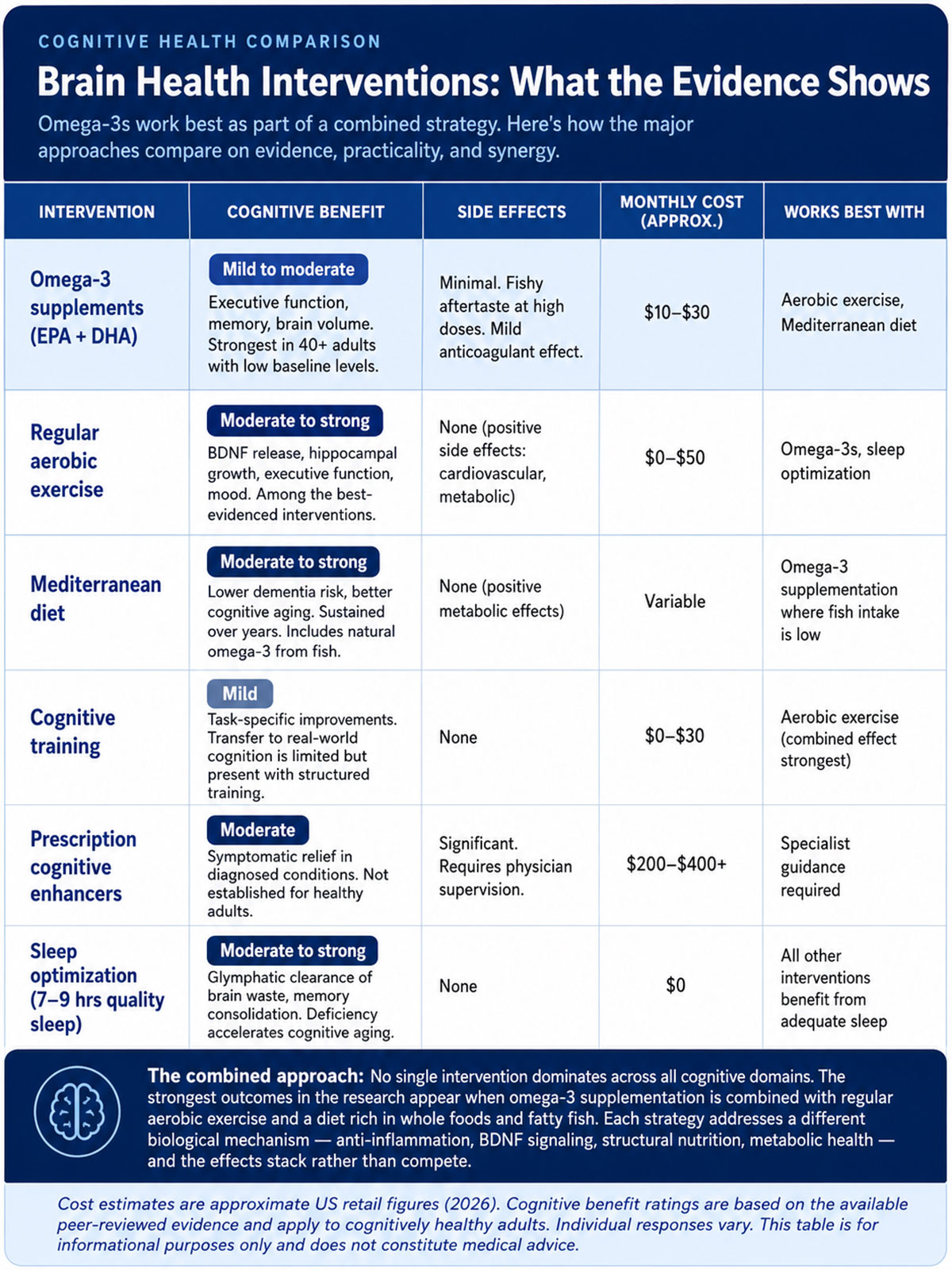
Omega-3 supplementation works best as part of a combined strategy rather than a standalone intervention. The table below compares it against other evidence-supported approaches for cognitive health.
Testing your Omega-3 Index
The Omega-3 Index is a blood test that measures EPA and DHA as a percentage of total red blood cell fatty acids. It shows whether supplementation and dietary changes are reaching tissue, not just circulating briefly after a dose. Most Americans test between 4 and 5 percent. The range associated with cognitive protection in the research is 8 to 12 percent.
That gap is more significant than it appears. Most people who take omega-3 supplements assume they are hitting the research range. Without testing, there is no way to verify it, and the population-level data suggest most are not.
Testing once at baseline and again after three to four months of consistent supplementation shows whether the current approach is working, whether dosage needs adjustment, or whether an absorption issue is reducing efficacy. Home test kits are available from several labs without a physician’s order, though a physician can also include it in routine bloodwork.
Safety and side effects
Omega-3 supplements are well-tolerated by most people at standard doses. The common side effects, fishy aftertaste and mild digestive discomfort, are manageable by switching to enteric-coated capsules, refrigerating the bottle, or taking the supplement with food. Loose stools can occur at doses above 3,000 mg daily and typically resolve when the dose is reduced.
In practice, most omega-3 supplementation ends not because of a meaningful side effect but because of a fishy aftertaste that enteric-coated capsules or refrigerating the bottle would have prevented.
The one clinically meaningful consideration is blood thinning. Omega-3s have a mild anticoagulant effect, which is generally neutral to beneficial but becomes relevant for people taking warfarin, clopidogrel, or high-dose aspirin. Discussing supplementation with a physician before starting is appropriate for anyone on those medications or scheduled for surgery within several weeks. The FDA considers up to 5,000 mg daily generally recognized as safe, but the cognitive research does not support doses above 2,000 to 3,000 mg daily. The additional dose adds bleeding risk without adding measurable brain benefit.
The healthy adults who went into the MRI scanner eight weeks earlier came out with different brains. Not subjectively different. Measurably different, on a machine calibrated to millimeters. The part of the brain most involved in storing what happened yesterday and recognizing what to do with new information had grown. What produced that change is not a novel pharmaceutical compound. It is a dietary factor that has been part of the human food supply for hundreds of thousands of years. The gap between what most people currently eat and what the brain needs is not large. It turns out to be large enough to show up on a scan.
Omega-3 Brain Health Intake Calculator
Track your weekly EPA and DHA intake from food and supplements. See how your intake compares to the levels studied for cognitive benefit.
Frequently asked questions
How long does it take for omega-3 to improve brain function?
Subjective improvements in focus and mental clarity typically appear within two to four weeks of consistent daily use. Measurable changes in memory and executive function show up in research trials after four to twelve weeks. Long-term structural benefits and protection against cognitive decline require ongoing intake and accumulate over months to years. There is no shortcut to the eight-week structural changes documented in the imaging research, and occasional or inconsistent supplementation does not produce them.
Which omega-3 is better for brain health: DHA or EPA?
Both are necessary, but they serve different functions. DHA provides the structural material for neurons and shows up most strongly in brain volume and memory research. EPA produces anti-inflammatory effects and plays a larger role in mood regulation and blood flow. The 2024 BMC Medicine meta-analysis found that cognitive benefits were specifically tied to EPA intake above 420 mg daily, while DHA is the one measured in structural brain imaging studies. The two work together, and formulations providing both at a ratio of approximately 2:1 DHA to EPA are the most common and best-supported for general cognitive health. Whether that ratio is genuinely optimal, versus simply reflecting what was common in research protocols that showed benefit, has not been tested head-to-head. It is a reasonable starting point, not a precision target.
Can omega-3 prevent Alzheimer’s disease?
This is the question that gets the most cautious answer. Omega-3 intake is associated with a lower risk of mild cognitive impairment, which sometimes progresses toward Alzheimer’s. The research draws a hard line there. Once Alzheimer’s pathology is established, the same mechanisms that help a healthy brain maintain function cannot dismantle amyloid plaques or tau tangles. Multiple trials have tested this specifically and found no reversal effect. What omega-3s appear to do is extend the window before those pathological processes take hold, which makes the timing of supplementation more important than the dose. Starting in midlife, before any symptoms are present, is when the evidence is strongest.
Is fish oil or krill oil better for the brain?
Both provide EPA and DHA and produce similar outcomes at equivalent doses. Krill oil delivers omega-3s in phospholipid form, which may be absorbed slightly more efficiently, particularly in people who have difficulty absorbing fats. Fish oil provides more total EPA and DHA per capsule at a considerably lower cost. A quality fish oil in triglyceride form, tested by a third-party lab, is the more cost-effective choice for most people. Krill oil is a reasonable alternative for anyone who reports persistent digestive discomfort with standard fish oil capsules.
Do I need supplements if I eat fatty fish twice a week?
Probably not. Two servings per week of high-omega-3 fish (salmon, mackerel, sardines, or herring) provide approximately 3,000 to 4,000 mg of EPA and DHA weekly, which exceeds the intake associated with cognitive benefits in most trials. If you eat leaner fish in smaller portions, or if you have spent years with very low intake before adopting that pattern, an Omega-3 Index test will give a more accurate answer than frequency alone.
Can you take too much omega-3?
Yes. Doses above 3,000 mg daily increase bleeding risk, particularly in people who also take aspirin or other anticoagulant medications. The cognitive research does not find additional brain benefits above 2,000 mg daily, so there is no practical reason to exceed that ceiling outside of specific medical guidance. Higher doses add risk without adding measurable cognitive protection, which is the clearest argument for staying within the evidence-supported range.