Exercise and diet get most of the attention, but some of the strongest evidence points elsewhere. These overlooked habits could make a bigger difference than expected.
In 2020, a group of the world’s leading dementia researchers published a number that stopped the field: up to 40% of dementia cases are preventable. Not treatable. Not manageable. Preventable, through changes people could actually make.
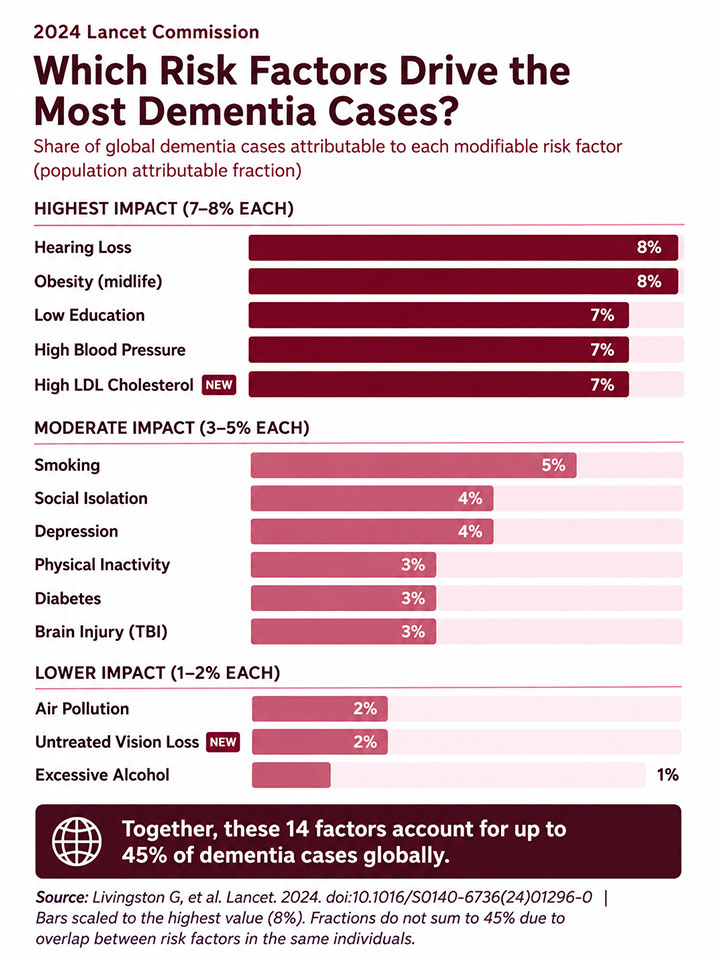
Four years later, the same commission came back with a revision. The number had risen to 45%, and the list of modifiable risk factors had grown from 12 to 14. Two additions: high LDL cholesterol, and untreated vision loss. Neither has caught up in most dementia prevention guides yet. This one has.
But there’s something those guides won’t tell you, and it’s worth saying upfront. That 45% figure is a population-level estimate, calculated by adding up what would theoretically happen if every risk factor were eliminated in every person.
A 2026 analysis in Nature reviewed the best randomized trials testing these interventions in real people, the FINGER study in Finland, the POINTER study in the United States, and found something the headlines didn’t emphasize: the effects were small. Real, statistically meaningful, worth doing. But small. A personal risk reduction of 45% is not what the evidence supports for any individual.
That’s not a reason to do nothing. Quite the opposite. The habits in this guide are the closest thing medicine has to a dementia prevention strategy, and the evidence behind many of them is strong. Some are not glamorous. Several will require actual changes. One involves checking your cholesterol. Two involve doctors most people haven’t scheduled appointments with. None of them are supplements.
Below are 20 ways to prevent dementia and Alzheimer’s, organized by strength of evidence and life stage. Start with the medical ones. They carry the highest population-level impact. The behavioral ones build on top.
Updated August 2025: 2024 Lancet Commission
The 2024 Lancet Commission on Dementia Prevention expanded the list of modifiable risk factors from 12 to 14, raising the preventable fraction from 40% to 45%. Two factors have been added throughout this guide: high LDL cholesterol and untreated vision loss, alongside corrected citations for every named study.
Understanding Dementia: A Brief Primer
Dementia is not a single disease. It’s a collective term for a range of symptoms, including memory loss, impaired reasoning, and personality changes, severe enough to interfere with daily life. The most common cause is Alzheimer’s disease, which accounts for 60–80% of cases and involves the buildup of amyloid-beta plaques and tau tangles that damage brain cells beginning in the hippocampus.
Vascular dementia, the second most common type, results from reduced blood flow to the brain, often after a series of small strokes or due to damaged blood vessels. It tends to affect planning and processing speed before memory. Lewy body dementia and frontotemporal dementia make up most of the remainder, each with its own profile of symptoms and progression.
Understanding the different types matters for one reason: the habits below protect against all of them, but through different pathways. Blood pressure control primarily targets vascular dementia. Exercise and diet fight both vascular damage and the toxic protein buildup that drives Alzheimer’s. Social engagement and cognitive challenge build what researchers call “cognitive reserve”, extra neural capacity that lets the brain compensate for damage longer before symptoms appear.
Two people with similar levels of Alzheimer’s pathology at autopsy can have dramatically different clinical histories. One spent decades cognitively declining, while the other stayed sharp to the end. The likely difference is cognitive reserve, accumulated through a lifetime of the habits in this guide.
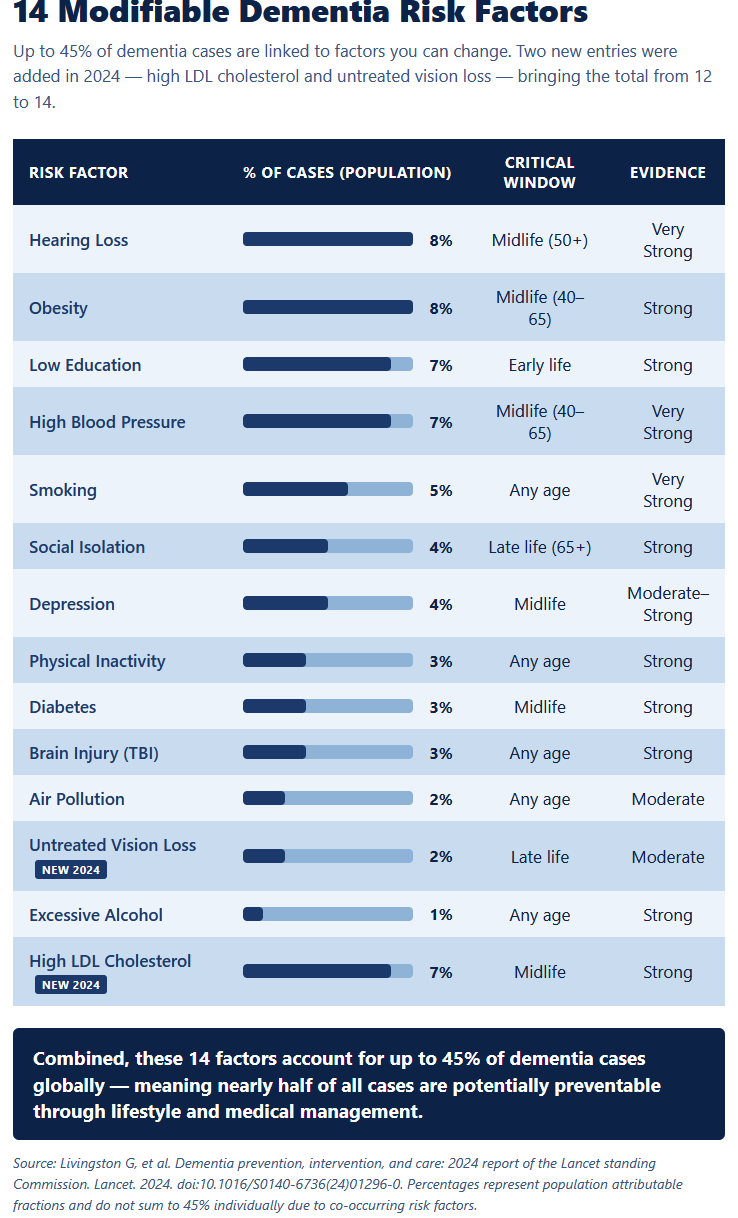
Modifiable Risk Factors: The Full 2024 Picture
The table below reflects the 2024 Lancet Commission report, not the older 2020 version that most guides still cite. Two factors are new. Two are currently absent from most dementia prevention articles, including, until now, this one.
Note that percentages represent population attributable fractions, the estimated share of dementia cases that could theoretically be prevented if a given risk factor were eliminated globally. They don’t sum to 45% because many people carry more than one risk factor.
Brain Health Risk Calculator
Updated for the 2024 Lancet Commission's 14 risk factors, including LDL cholesterol and vision loss.
What “Preventable” Actually Means
Before getting into the 20 habits, one clarification deserves its own space, because most guides skip it, and it matters.
The 45% figure is built from something called population attributable fractions. Researchers estimate what proportion of dementia cases are attributable to each modifiable risk factor across the whole population, then add those fractions together under the theoretical assumption that all 14 factors could be eliminated. That’s not the same as saying an individual who follows all 20 habits in this guide will reduce their personal risk by 45%.
The best randomized trials testing this question directly, including the FINGER study, which put 2,650 participants through a two-year intensive lifestyle overhaul of diet, exercise, cognitive training, and cardiovascular management, found real benefits on cognitive test scores, but small ones. The 2026 review in Nature described the results as modest and noted that none of these trials has yet reduced actual dementia incidence.
This is not a reason to dismiss the habits. It’s a reason to hold them accurately. The evidence that specific interventions, particularly hearing treatment and blood pressure control, can slow cognitive decline in individuals at high risk is solid.
The evidence that a comprehensive lifestyle program produces dramatic personal risk reductions is not. The honest framing is this: these habits represent your best available tools, and the earlier you start most of them, the more leverage they provide.
The 7 That Matter Most
If you want the condensed version before the full guide: these are the seven habits with the strongest evidence and the highest potential impact across most adult life stages. The remaining 13 build on top of them.
- Get your hearing tested after age 50, and use hearing aids if recommended
- Control blood pressure in midlife (target below 120/80 between ages 40–65)
- Exercise aerobically, at least 150 minutes per week at moderate intensity
- Quit smoking, at any age
- Get 7–8 hours of sleep and treat sleep apnea if present
- Check your LDL cholesterol and manage it if elevated
- Maintain a healthy weight in midlife, with particular attention to metabolic health
The remaining 13 habits follow, organized by category.
The Big 4: Medical Safeguards With Maximum Impact
1. Get Your Hearing Checked, and Treated
Hearing loss is the single largest modifiable dementia risk factor identified by the Lancet Commission, accounting for 8% of cases globally. The mechanism is partly cognitive: when the brain devotes excessive resources to processing degraded sound, it has fewer resources available for memory and higher-order thinking. Researchers call this auditory deprivation, and its effects accumulate silently over years.
The most rigorous trial on this question is the ACHIEVE study, a randomized controlled trial of 977 adults aged 70–84 with untreated hearing loss. Among participants at higher baseline risk of cognitive decline, hearing aids slowed cognitive decline by 48% over three years.
The effect did not appear in the healthier volunteer group, which is actually the more honest and interesting finding. Hearing intervention may do the most where cognitive risk is already elevated, which means midlife is exactly when to start tracking it.
Most people don’t get hearing tested until loss becomes obvious. By that point, years of auditory deprivation may have already narrowed the protective window.
Get an audiogram after age 50. If hearing aids are recommended, wear them consistently, not just in quiet settings. Early warning signs include frequently asking people to repeat themselves, turning up the volume higher than others prefer, or feeling exhausted after social events from the cognitive effort of listening.
2. Control Blood Pressure in Midlife
High blood pressure damages the brain through two pathways: it injures the tiny blood vessels that supply brain tissue, and it impairs the clearance of amyloid proteins that drive Alzheimer’s disease. Both effects are worse when hypertension goes unmanaged during midlife, the ages 40 to 65 window represents the peak risk period.
The SPRINT-MIND trial found that intensive blood pressure control, targeting systolic pressure below 120 mmHg rather than the standard 140, reduced the risk of mild cognitive impairment by 19% over the study period.
One caveat worth noting: the trial did not reach statistical significance for its primary endpoint of probable dementia alone, only for the MCI and combined MCI-or-dementia outcomes. Blood pressure control matters for brain health. Whether it prevents dementia outright remains technically an open question, though the direction of evidence is consistent.
Aim for below 120/80 during midlife. In adults over 75, targets become more individualized, very low blood pressure in late life may actually increase risk in some patients, so work with your doctor rather than targeting the midlife number indefinitely.
Blood pressure targets by life stage:
- Ages 40–65: below 120/80 where achievable (strongest dementia-protective window)
- Ages 65–75: below 130/80 is typically appropriate
- Ages 75 and older: discuss individualized targets with your doctor
3. Stop Smoking
Current smokers face a 30–50% higher dementia risk compared to people who never smoked. The mechanisms are not subtle: smoking damages blood vessels, increases oxidative stress, triggers chronic inflammation, and accelerates brain shrinkage. None of these effects are hypothetical, they show up in imaging studies and post-mortem brain analysis alike.
What may be less obvious is the recovery timeline. Former smokers who quit decades earlier have dementia risk profiles close to those who never smoked at all. Risk starts declining within five years of quitting. After 10 to 15 years, it approaches baseline. That gradient holds regardless of how long or how heavily someone smoked.
Quitting is harder than any other item on this list. It’s also, for current smokers, the one change with the most concentrated impact. Nicotine replacement, prescription medications, and counseling all improve success rates independently, combined, their effect is considerably stronger. Talk to your doctor about cessation support rather than treating this as a willpower problem.
4. Maintain a Healthy Weight in Midlife
Obesity in midlife, particularly between ages 40 and 65, increases dementia risk by 30–40% and accounts for 8% of dementia cases in the Lancet framework. The mechanism runs through metabolic inflammation: excess adipose tissue, especially abdominal fat, produces inflammatory proteins that cross the blood-brain barrier and interfere with the clearance of amyloid and tau.
The relationship inverts after age 65. Low body weight in late life is often a sign of underlying illness rather than protection. The midlife window is where weight management has the most direct brain-protective effect.
The relevant measure is metabolic health, not weight alone. A person with higher body weight who has normal fasting glucose, healthy blood pressure, and low inflammatory markers may carry less dementia risk than a person at a “normal” weight with metabolic dysfunction.
Waist-to-hip ratio (below 0.9 for men, below 0.85 for women) tracks abdominal fat more reliably than BMI. Fasting glucose below 100 mg/dL and HbA1c below 5.7% are the most relevant metabolic markers to monitor.
Manage Your Cholesterol
5. Get Your LDL Cholesterol Checked
This one was added to the Lancet Commission framework in 2024, which means it’s missing from nearly every dementia prevention guide written before that update, including the previous version of this article.
The evidence comes from large cohort studies involving more than one million participants and a Mendelian randomization meta-analysis of 27 studies, which found that elevated LDL cholesterol in midlife is independently associated with increased dementia risk. The Mendelian randomization design is worth noting: it uses genetic variants as natural experiments to test causal relationships, which makes it more resistant to confounding than standard observational data.
High LDL may contribute to dementia through vascular damage, through accelerating amyloid accumulation, or through both. Researchers still don’t agree on the exact mechanism. What the 2024 Commission concluded is that the evidence for an association is now strong enough to list it alongside the other 13 factors.
Standard lipid panels are available through routine blood work. If your LDL is elevated, typically above 130 mg/dL in most guidelines, though targets vary by overall cardiovascular risk, management may include diet changes, statins, or both. This is a conversation to have with your doctor, not a self-management decision.
Protect Your Eyesight
6. Treat Vision Loss Early
The second new factor added in 2024. Untreated vision loss accounts for approximately 2% of dementia cases globally, smaller than hearing loss’s 8%, but the same principle applies. When the brain compensates for degraded sensory input, it draws on cognitive resources that would otherwise support memory and reasoning. Over time, that drain compounds.
The protective intervention is straightforward: regular eye exams and correcting vision loss when it occurs, through glasses, contact lenses, or surgery for conditions like cataracts. The evidence doesn’t suggest that normal age-related prescription changes drive dementia risk, the signal is strongest for uncorrected vision impairment that goes unaddressed.
Annual eye exams after age 60 are recommended for most adults. Don’t skip them because your vision “seems fine.” Many forms of vision loss progress slowly enough that people accommodate to them without noticing the decline.
Move Your Body, Build Your Brain
7. Do Aerobic Exercise for Memory
Physical activity touches almost every known mechanism of dementia protection: it raises BDNF (Brain-Derived Neurotrophic Factor), improves cerebral blood flow, reduces inflammation, clears amyloid, and directly grows the hippocampus, the brain’s primary memory structure.
The most-cited evidence comes from a randomized controlled trial by Kirk Erickson and colleagues at the University of Pittsburgh, published in the Proceedings of the National Academy of Sciences in 2011.
Older adults assigned to a year of aerobic walking, 40 minutes, three times a week, showed a 2% increase in hippocampal volume, effectively reversing one to two years of age-related brain shrinkage. The control group, doing stretching only, lost 1.4% of hippocampal volume over the same period. Multiple subsequent studies have replicated the finding, including in coordinative exercise formats like dancing.
The target is 150 minutes of moderate-intensity aerobic activity per week. Moderate intensity means you can hold a conversation but not easily sing, brisk walking, swimming, cycling, and dancing all qualify. Pick something you will actually sustain. Consistency over years matters more than intensity in any single session.
In over a decade of working with a competitive karate athlete, I found that the single biggest predictor of whether someone built a real aerobic base wasn’t which activity they chose, it was whether they scheduled it like an appointment rather than fitting it in when convenient. The brain doesn’t distinguish between a brisk walk and a spin class. It responds to the dose.
8. Lift Weights for Executive Function
Cardio and strength training protect the brain through different pathways. Resistance exercise stimulates skeletal muscle to produce compounds called myokines, which cross into the brain and preferentially benefit the frontal lobe, the region governing planning, decision-making, and self-regulation.
Research shows strength training two to three times per week improves attention and slows the progression of white matter lesions, which are a marker of brain aging associated with dementia risk. The effect is additive to aerobic exercise, not a substitute for it.
Two to three sessions per week targeting major muscle groups are enough to produce measurable benefit. Bodyweight exercises work. Light resistance bands work. The critical variable is progressive overload over time, not the type of equipment.
A beginner routine (2–3 sets of 10–12 reps each):
- Squats or chair sits
- Push-ups or wall push-ups
- Rows with a resistance band
- Shoulder press with light weights
- Plank holds (20–30 seconds)
9. Break Up Sitting Time
This one is stranger than it sounds. A preliminary study by Prabha Siddarth and colleagues at UCLA found that more hours spent sitting per day was associated with reduced medial temporal lobe thickness, independent of how much exercise the participants otherwise did. In other words, sitting eight hours a day appeared to affect the brain differently than simply not exercising.
The sample was small (35 people), and the finding is classified as preliminary. But the proposed mechanism has biological plausibility: prolonged sitting appears to impair glucose metabolism and reduce cerebral blood flow in ways that brief movement breaks can interrupt.
Set a timer for every 30 minutes during sedentary work. Stand up and move for two minutes. Walk to get water. Do a few calf raises. These “exercise snacks” require no gym, no equipment, and no change of clothes, and they may offset some of the structural brain effects of extended sitting that your weekly workout cannot.
10. Focus on Metabolic Health
Type 2 diabetes increases Alzheimer’s risk by approximately 50% and vascular dementia risk by close to 100%. Even prediabetes and insulin resistance, conditions millions of people carry without knowing, are associated with elevated risk. The pathways are multiple: vascular damage, chronic low-grade inflammation, insulin resistance in brain tissue itself, and impaired clearance of amyloid proteins.
Prevention is more protective than treatment after diagnosis. The habits elsewhere in this guide, regular exercise, a diet built around whole foods, adequate sleep, and stress management, collectively do more to prevent diabetes than most pharmaceutical interventions can do once it’s established.
Monitor HbA1c annually if you have risk factors (family history, overweight, sedentary lifestyle, or prior gestational diabetes). A reading below 5.7% is normal; 5.7–6.4% is prediabetes and worth taking seriously now, not later.
Eat to Protect Your Brain
11. Follow MIND Diet Principles
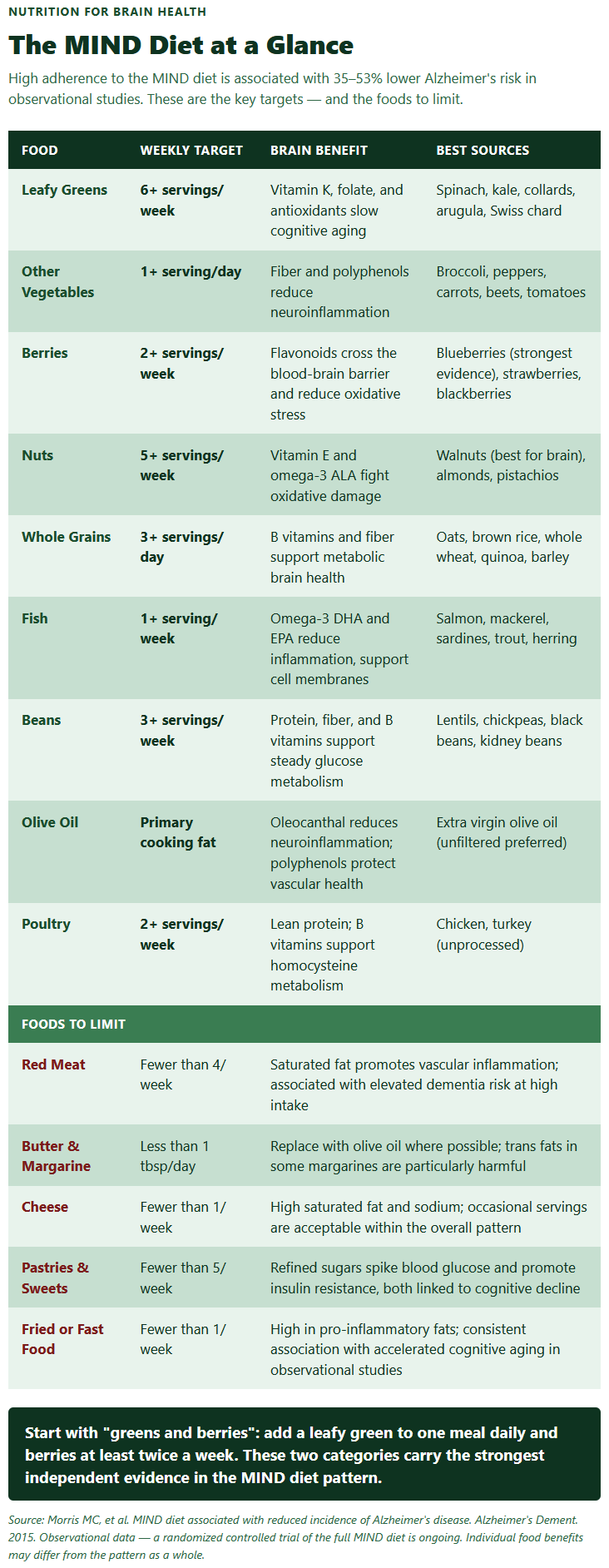
The MIND diet combines elements of the Mediterranean and DASH diets with particular emphasis on foods associated with brain protection in observational research. High adherence is associated with 35–53% lower Alzheimer’s risk in observational studies, though that’s a correlation from diet questionnaires, not a randomized trial, and needs to be held accordingly.
The core of the pattern: leafy greens at least six times a week, berries at least twice a week, nuts five or more times a week, fish at least once a week, and olive oil as the primary cooking fat. Red meat, butter, cheese, pastries, and fried food are limited, not banned, the diet works through a consistent pattern, not rigid restriction.
The “greens and berries” heuristic is the most practical entry point: add a leafy green to one meal daily and berries a few times a week, and you’ve covered the two categories with the strongest independent evidence in this dietary pattern.
12. Rethink Alcohol Consumption
The science here has shifted, and the shift is uncomfortable.
Older studies suggested moderate drinking might be neutral or even slightly protective for the brain. Those studies typically compared drinkers to abstainers, a group that included people who had stopped drinking because of health problems. When researchers controlled for that bias, the protective effect disappeared.
Alcohol is a neurotoxin. It shrinks the hippocampus, disrupts the deep sleep stages needed for amyloid clearance, and interferes with the glymphatic system, the brain’s overnight waste removal system.
Heavy drinking (more than 14 units per week for men, more than 7 for women) clearly increases dementia risk by 20–40%. Whether truly moderate drinking is neutral or mildly harmful is still debated, but genetic studies using Mendelian randomization designs have found no evidence of a protective threshold.
The safest position for brain health is minimal or no alcohol. If you drink, less is better. The idea that a daily glass of wine is good for the brain is not supported by the current evidence.
13. Add Anti-Inflammatory Foods
Chronic neuroinflammation interferes with how brain cells communicate and may accelerate the progression of amyloid and tau pathology. Dietary patterns rich in omega-3 fatty acids, polyphenols, and antioxidants appear to reduce systemic and neuroinflammation, though direct evidence from randomized trials remains limited.
Fatty fish (salmon, mackerel, sardines) twice a week, walnuts daily, and blueberries and other dark-colored berries several times a week are the practical targets. These overlap substantially with the MIND diet recommendations, which is intentional: the evidence base is largely the same. Extra virgin olive oil, rich in oleocanthal (a compound with anti-inflammatory properties), is worth using as the primary cooking and dressing fat.
These foods work as a pattern, not as isolated supplements. Fish oil capsules have not consistently shown the same benefits as dietary fish, and the supplement market for brain health has a long history of getting ahead of the evidence.
14. Check Your B12 and Homocysteine Levels
Elevated homocysteine, an amino acid that accumulates when B-vitamin status is inadequate, is directly toxic to neurons and associated with accelerated brain atrophy. B vitamins (B12, B6, and folate) serve as cofactors for the enzymes that break down homocysteine, so deficiency in any of them can cause the level to rise.
The VITACOG trial, a randomized controlled trial by researchers at Oxford published in PLOS ONE in 2010, found that B-vitamin supplementation slowed brain atrophy by approximately 30% over two years, but only in participants with elevated homocysteine at baseline.
In those with homocysteine above 13 µmol/L, the protective effect was even stronger, reaching 53% slower atrophy. In participants with normal homocysteine, no benefit appeared. A 2025 metabolomics follow-up of the same trial confirmed and extended those findings, suggesting the mechanism involves B vitamins modulating multiple metabolic pathways beyond homocysteine reduction alone.
This is targeted intervention for a deficiency, not universal supplementation advice. People at elevated risk of B12 deficiency include those over 60, vegans and vegetarians, people taking metformin or proton pump inhibitors, and people with digestive disorders affecting absorption. If you’re in any of these categories, test before supplementing, and ideally, work with a doctor to interpret the results rather than treating a number in isolation.
Target levels:
- Vitamin B12: above 400 pg/mL (some clinicians recommend above 500)
- Homocysteine: below 10 µmol/L
- Folate: above 10 ng/mL
Build Cognitive and Emotional Armor
15. Prioritize Deep Sleep
Sleep is when the brain clears itself. The glymphatic system, a network of fluid channels that becomes highly active during deep non-REM sleep, physically flushes amyloid-beta and tau from brain tissue overnight. Shortchanging deep sleep doesn’t just leave you tired. It may be leaving those proteins to accumulate.
Both too little sleep (below six hours) and too much (above nine hours) are associated with higher dementia risk in longitudinal studies. The target is seven to eight hours of consolidated sleep with adequate time in the deeper stages.
Obstructive sleep apnea is the most commonly missed threat here. The condition, which affects an estimated 30% of adults over 65, fragments sleep and prevents the deep stages needed for glymphatic clearance.
Many people who snore loudly and feel unrefreshed despite adequate time in bed are experiencing sleep apnea rather than ordinary insomnia. Treatment with CPAP has been shown to improve cognitive outcomes and may slow dementia-relevant brain changes.
If you snore loudly, wake with headaches, or feel persistently exhausted despite sleeping enough hours, ask your doctor about a sleep study. It’s one of the most underused tools in dementia prevention.
Sleep hygiene basics that actually matter:
- Consistent wake time, even on weekends (this is the most effective anchor for circadian rhythm)
- Cool bedroom, 65–68°F is optimal for sleep quality
- No screens for 60 minutes before bed (blue light suppresses melatonin)
- No caffeine after 2 pm
- Morning sunlight within an hour of waking (this sets the circadian clock more reliably than any supplement)
16. Learn Something Genuinely Difficult
The mechanism behind cognitive reserve is real: new learning creates neural pathways that provide a buffer against damage. What the evidence doesn’t particularly support is the idea that easy, repetitive cognitive activities, the kind that feel stimulating, produce meaningful new pathways.
The original ACTIVE trial, a four-arm randomized study of 2,832 older adults, found that cognitive training improved performance in the specific domain trained (speed of processing, reasoning, or memory) for up to 10 years. Benefits transferred poorly to other domains. That finding led many to conclude that brain training was mostly useless beyond its narrow trained domain.
Then, in February 2026, the same team published a 20-year follow-up in Alzheimer’s and Dementia. Participants who received speed-of-processing training plus booster sessions had a 29% lower dementia incidence 10 years later, and 25% lower at 20 years.
That’s a hard clinical endpoint, not a test score. It’s the first randomized trial to show a training intervention reduces actual dementia incidence, and it complicates the “brain games don’t work” conclusion considerably.
Speed-of-processing training is a specific type: adaptive, increasingly difficult tasks requiring fast, accurate responses to complex visual information. It’s not the same as doing word puzzles. What translates from this finding to everyday life is the principle: the challenge level matters, and it needs to stay ahead of your comfort zone.
Learning a language, playing a musical instrument, or taking on complex strategy games that require real adaptation, these are practical analogues.
The struggle itself is the mechanism. If an activity is no longer frustrating, it’s no longer building new circuitry.
17. Find Purpose and Meaning
Patricia Boyle and colleagues at the Rush Alzheimer’s Disease Center tracked 246 older adults for up to 10 years, then conducted brain autopsies after death. In a 2012 paper in JAMA Psychiatry, they found that people who scored higher on a “purpose in life” measure maintained better cognitive function even when their brains showed significant Alzheimer’s pathology, amyloid plaques and tau tangles in amounts that, in lower-purpose individuals, correlated with significant cognitive decline.
The implication is that purpose may not prevent the pathological changes in the brain, but it appears to change how much cognitive damage those changes produce. Whether that’s through stress hormone regulation, behavioral differences, or something less understood is still being worked out.
Boyle’s finding raises a question that doesn’t have a clean answer: if purpose protects the brain from its own pathology, what counts as enough? The research doesn’t set a threshold. What it does consistently show is that the protective signal appears across a range of activities, volunteering, mentoring, creative projects, even sustained athletic pursuits, as long as they are experienced as meaningful rather than obligatory. The activity is almost beside the point. The felt sense of mattering is what appears to do the work.
18. Stay Socially Connected
Social isolation is as damaging to brain health as smoking, according to the Lancet framework, accounting for 4% of dementia cases. The mechanism is partly cognitive (social interaction is the most complex and multidomain task humans regularly perform), partly emotional (loneliness elevates cortisol), and partly behavioral (socially connected people are more likely to exercise, eat well, and attend medical appointments).
Quality of connection matters more than quantity. A 2022 meta-analysis in The Lancet Healthy Longevity, which pooled data across multiple longitudinal cohort studies, found that meaningful social connections predicted slower cognitive decline, and that face-to-face contact produced stronger effects than digital contact, though digital connection still provided benefit for people who could not easily access in-person interaction.
If social isolation is a real constraint, start with structure rather than hoping motivation appears. Join one recurring group activity, a class, a volunteer role, a club, and commit to showing up for four weeks before evaluating whether it’s worth continuing. The activation energy for starting matters more than the choice of activity.
19. Treat Depression as a Medical Priority
Depression doubles dementia risk, accounting for 4% of cases. The mechanisms are several: sustained cortisol elevation is directly toxic to hippocampal cells, reduced BDNF impairs neurogenesis, and chronic inflammation associated with depression overlaps significantly with the neuroinflammatory processes seen in Alzheimer’s.
The Lancet Commission framework treats midlife depression as the stronger risk factor compared to late-life depression, suggesting that the brain changes from untreated depression in midlife may have long-term consequences beyond the depressive episode itself.
This is not a section about managing stress. Depression is a medical condition, and the research shows its brain effects accumulate whether or not a person is aware they’re experiencing it. Persistent low mood, loss of interest in previously enjoyed activities, or changes in sleep and appetite that last more than two weeks warrant medical evaluation, both for current wellbeing and for what the evidence says about long-term brain health.
20. Manage Chronic Stress
Sustained stress elevates cortisol, and cortisol damages the hippocampus. That’s the core mechanism, and it’s well established in both animal and human studies. Chronic stress also disrupts sleep, promotes inflammatory markers, and undermines the behavioral habits (exercise, nutrition, social connection) that protect the brain through other pathways.
What the evidence supports for stress management is less exotic than the wellness market would suggest. The most studied behavioral intervention is Mindfulness-Based Stress Reduction (MBSR), an 8-week structured program developed at the University of Massachusetts Medical School.
Multiple trials have found it produces measurable reductions in cortisol and inflammatory markers in older adults. Regular aerobic exercise is among the most effective stress-reduction tools available, and its stress-lowering and brain-protective mechanisms overlap substantially, making it doubly worth prioritizing.
The goal is not to eliminate stress, some stress is part of being engaged in life, and short-term stress can even be cognitively beneficial. The goal is to prevent the chronic, unresolved version from running continuously in the background without any recovery. Sleep, exercise, and one regular stress-reduction practice (whatever that happens to be for you) cover most of what the evidence actually supports.
Signs that stress may require professional support:
- Physical symptoms (headaches, muscle tension, digestive problems) persisting for more than two weeks
- Sleep disruption that doesn’t resolve with standard sleep hygiene
- Difficulty making decisions or concentrating on ordinary tasks
- Relying on alcohol or food as primary coping strategies
21. Choose Real Learning Over Brain Game Subscriptions
Commercial brain training apps have a history of marketing claims that run well ahead of their evidence. The strongest, most recent data, the 20-year ACTIVE follow-up discussed in habit 16, found benefit from a specific type of structured speed-of-processing training delivered by trained staff, not from the passive-feel-good experience most commercial brain games provide.
The practical implication: skip the subscription. Spend that time and money on learning something genuinely new, a language, an instrument, a skill that requires active adaptation to remain challenging. The underlying principle is the same as in the ACTIVE trial, but the implementation is more applicable to daily life.
Protect Your Brain From Your Environment
22. Reduce Air Pollution Exposure
Air pollution doesn’t get its own lifestyle section in most dementia guides because there’s not much to do about it individually. Two percent of dementia cases, the Lancet Commission’s estimate for fine particulate matter (PM2.5), is a small fraction at the personal level.
At a population scale, it’s millions of people. PM2.5 crosses the blood-brain barrier and promotes neuroinflammation; whether it accelerates amyloid buildup directly or primarily through vascular damage is still being worked out.
The most practical individual steps are modest: check air quality indexes before outdoor exercise on high-pollution days, avoid running or cycling near high-traffic roads, and use HEPA filtration in bedrooms if you live in an area with consistently poor air quality. The bigger levers here are policy ones.
23. Protect Against Head Injury
Traumatic brain injury, including mild concussions, accounts for 3% of dementia cases globally. Physical brain trauma triggers chronic inflammation and appears to accelerate amyloid and tau accumulation, effects that are cumulative across multiple injuries.
Helmets during cycling, motorcycling, and contact sports. Seatbelts, always. After age 65, falls become the most common source of traumatic brain injury, and unlike most items on this list, they’re often sudden and avoidable with simple environmental changes: adequate lighting, grab bars in bathrooms, no loose rugs on hard floors. Worth doing before you need to.
Putting It All Together
Prioritizing by Age and Life Stage
Twenty-three habits is too many to change simultaneously. The research actually supports a different approach: choose the highest-leverage items for your current life stage, do those well, and let the behavioral ones accumulate around the medical foundation.
In your 40s and 50s (midlife prevention): Blood pressure, weight and metabolic health, and a baseline hearing test are the three things with the strongest and most time-sensitive evidence. What you do with blood pressure and metabolic health between ages 40 and 65 has outsized effects on brain health decades later. Establishing an exercise routine is also a midlife priority, cognitive reserve is built over decades, not weeks.
In your 60s and 70s (late-life protection): Hearing treatment moves to the top, this is when most people develop clinically significant hearing loss and when the ACHIEVE trial’s protective window is most relevant. Social engagement and sleep quality become higher priorities as networks naturally contract and sleep architecture shifts. LDL and vision checks belong here if they haven’t been addressed.
In your 80s and beyond: The evidence still supports benefit from exercise, social engagement, and cognitive challenge at this stage. Cognitive reserve built earlier pays dividends, but the brain maintains some plasticity throughout life. Focus on what’s sustainable and enjoyable, the protective effect comes from consistency, and consistency requires activities that fit into an actual life.
The 30-Day Starting Point
If you want a structured entry point rather than the whole 23 items at once:
Week 1: Schedule medical appointments, hearing test, blood pressure check, and blood work (fasting glucose, HbA1c, LDL, B12, homocysteine). Before anything behavioral changes, get the baseline data. These numbers determine which medical items on this list require action.
Week 2: Add daily movement. Twenty to thirty minutes of walking is enough to start. The goal is consistency, not intensity, daily walking for a month is worth more than an intense gym session twice a week.
Week 3: Make one nutritional change that reflects the MIND diet. Daily leafy greens at one meal represent the single most evidence-supported dietary adjustment. Everything else builds on top of that.
Week 4: Choose one new learning challenge. Sign up for a class, download a language-learning app, or book your first music lesson. The specific choice matters less than choosing something you’ll return to past the first week.
Conclusion
The 45% figure is real. So is the gap between what it promises and what an individual can actually expect. Those two things are both true, and the best dementia prevention guides hold them together rather than choosing one.
What the evidence actually supports is this: a small number of habits, hearing treatment, blood pressure management, aerobic exercise, not smoking, have solid, replicated, individual-level evidence behind them.
The rest are worth doing, backed by coherent mechanisms and consistent population-level signals, but they don’t carry the same proof of individual benefit. That’s not a reason to skip them. It’s a reason to start with the medical ones, build the behavioral ones around them, and not wait for certainty that isn’t coming.
The single most underused tool in this entire guide is an audiogram. Most people have never had one. Most people over 50 have some degree of hearing loss they haven’t been told about. The ACHIEVE trial’s finding that treating hearing loss in people at elevated cognitive risk slowed decline by 48% over three years is the strongest individual-level result in the dementia prevention literature right now. It costs less than a gym membership. Schedule the appointment.
Frequently Asked Questions
Is there a way to prevent dementia?
There is no guaranteed prevention, but approximately 45% of dementia cases are linked to 14 modifiable risk factors that can be addressed through lifestyle and medical management. The habits with the strongest evidence are hearing treatment, blood pressure control in midlife, aerobic exercise, and not smoking. Starting earlier produces more protective benefit, but the brain maintains some plasticity throughout life.
Are there ways to prevent dementia that don’t require medication?
Many of the most effective strategies are behavioral, not pharmaceutical. Aerobic exercise, a MIND-pattern diet, quality sleep, social engagement, and managing stress all reduce risk without medication. That said, some of the highest-impact interventions, blood pressure control, LDL management, hearing aids, and treating sleep apnea, may require medical treatment to be fully effective.
What are the 7 habits to avoid dementia?
If condensed to seven: get your hearing tested and treated, control blood pressure in midlife, exercise aerobically at least 150 minutes per week, quit smoking, check and manage LDL cholesterol, get 7–8 hours of quality sleep (and treat sleep apnea if present), and maintain a healthy weight in midlife with attention to metabolic markers.
Is it ever too late to start?
No. The brain maintains plasticity throughout life, and protective habits at any age provide some benefit. The earlier you start the high-impact medical interventions, particularly blood pressure and metabolic health, the greater the protective window. But the 20-year ACTIVE trial follow-up found benefit from cognitive training started in adults aged 65 to 94, so late starts are not futile.
Do I need all 23 habits to see benefits?
No. The modifiable risk factors are additive, but so are the protective habits, addressing three to five of the highest-impact ones produces meaningful reduction in risk. Start with the Big 4 medical safeguards and the metabolic and cholesterol checks, then layer in behavioral habits as they become sustainable.
What about supplements marketed for brain health?
For most people with adequate nutrition, supplements show no benefit in clinical trials. The one exception is B12 supplementation for people with documented deficiency or elevated homocysteine. Omega-3 supplements have not consistently replicated the benefits seen with dietary fish. The supplement market for dementia prevention is considerably ahead of the evidence.
What causes 70% of dementia?
This is a question that actually conflates two different statistics. Alzheimer’s disease is the cause of approximately 60–80% of dementia cases. Separately, the 2024 Lancet Commission estimated that approximately 55% of dementia risk is non-modifiable, meaning it comes from factors like genetics and aging that current interventions can’t change. The 45% that is potentially modifiable is where the habits in this guide apply.