Yoga is a proven tool that helps runners build strength, prevent injuries, and run with better form. Research shows that yoga improves flexibility, balance, and core strength in healthy adults—all vital for running posture and stride efficiency. Studies also reveal that an eight-week yoga program improved balance and running economy in recreational runners.
In this article, you’ll learn how yoga and running work together. You’ll discover seven beginner-friendly poses designed for runners. And you’ll get a simple plan to add yoga to your training schedule.
Quick Reference: Yoga Poses for Runners at a Glance
| Pose Name | Best Timing | Primary Muscles Targeted | Hold Time | Difficulty |
|---|---|---|---|---|
| Cat-Cow Stretch | Pre-Run | Spine, Core, Hip Flexors | 8-10 breaths | Beginner |
| Dynamic Chair Pose | Pre-Run | Glutes, Quads, Ankles | 8-10 reps | Beginner |
| Lunge with Twist | Pre-Run | Hips, Thoracic Spine | 5 reps per side | Beginner |
| Downward-Facing Dog | Post-Run | Hamstrings, Calves, Shoulders | 5-8 breaths | Beginner |
| Low Lunge | Post-Run | Hip Flexors | 5-8 breaths | Beginner |
| Reclining Pigeon | Post-Run | Hips, Glutes, IT Band | 8-10 breaths | Beginner |
| Legs-Up-The-Wall | Post-Run | Full Leg Recovery | 5-10 minutes | Beginner |
The Synergy Between Yoga and Running: More Than Just Stretching
Most runners think yoga is all about stretching. They’re wrong.
Yes, yoga helps with flexibility. But it does so much more.
Beyond Flexibility
Yoga builds real strength in the muscles you need most for running. Think glutes, core, and hamstrings. These aren’t just show muscles. They’re the foundation of your stride.
Strong glutes power you up hills. A solid core keeps your form stable when you’re tired. Tight hamstrings? Research published in Complementary Therapies in Medicine found that regular yoga practice increases hamstring and hip flexibility while reducing perceived stiffness. That means less tension and smoother runs.
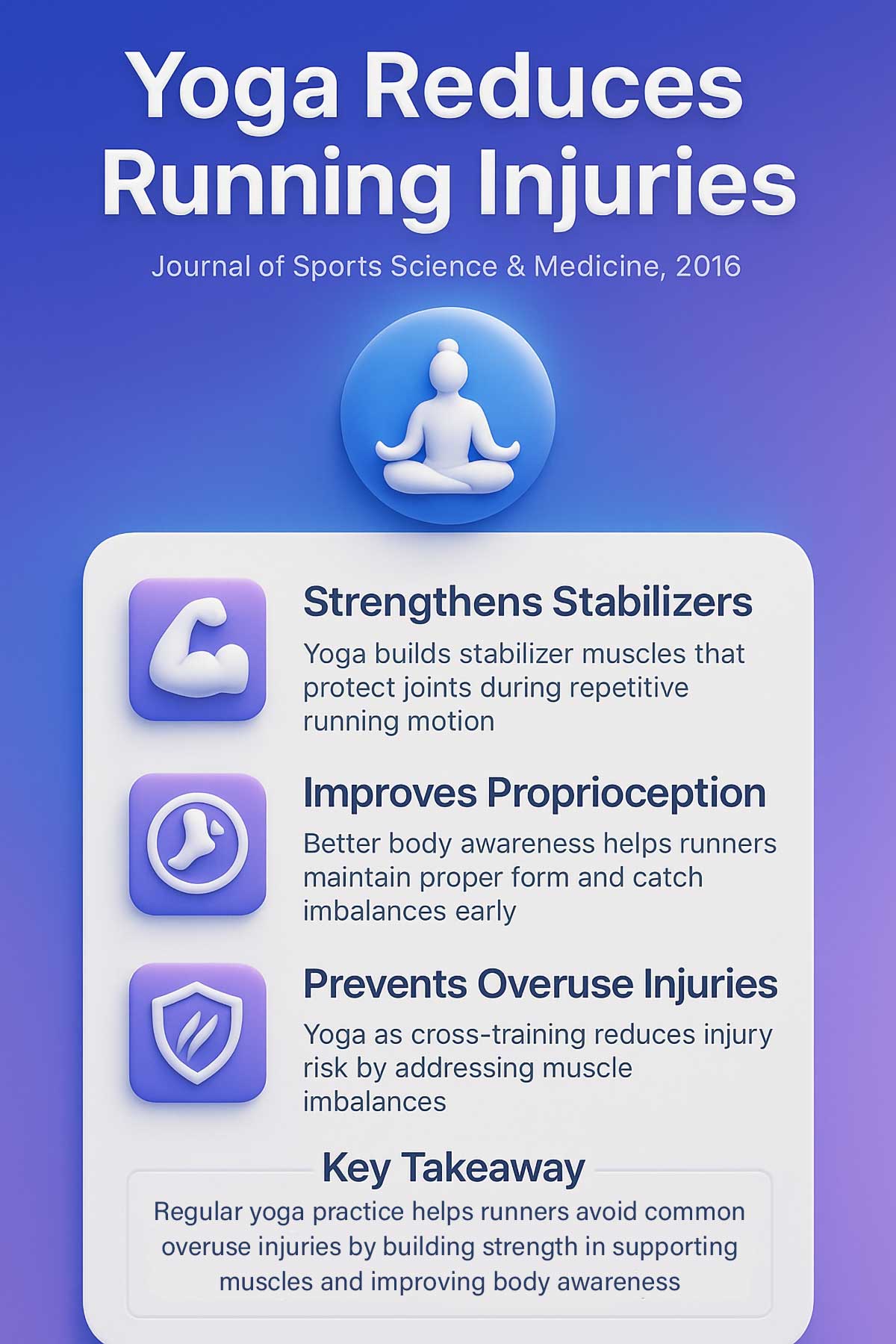
Yoga also strengthens stabilizer muscles and improves proprioception—your body’s sense of where it is in space. A 2016 study in the Journal of Sports Science & Medicine showed that yoga as cross-training reduces overuse injury risk by building these exact qualities. This helps you avoid the injuries that sideline so many runners.
The Power of the Breath
Running isn’t just a leg workout. It’s a breathing challenge too.
Yoga teaches you pranayama—controlled breathing techniques that expand lung capacity and sharpen focus. When you learn to breathe deeply and calmly on your mat, you carry that skill into your runs. You stay calm when the pace picks up. You manage your effort better on long distances.
Mind-Body Connection
Here’s where yoga really shines for runners.
Yoga trains you to notice what your body is doing. You learn to feel when your hips are uneven or when one side is tighter than the other. This enhanced body awareness helps identify and correct gait imbalances before they turn into injuries.
On the mat, you practice making small adjustments. On the road, those adjustments become automatic. Your form improves. Your runs feel easier. And you stay healthy.
What the Science Says About Yoga for Runners
The benefits of yoga for runners aren’t just anecdotal. Multiple studies back up what runners experience on the mat and on the road.
A 2001 study in the Journal of Strength and Conditioning Research examined how yoga affects the physical qualities runners need most. Researchers found that yoga improves flexibility, balance, and core endurance in healthy adults—all key factors for running posture and stride efficiency. These aren’t separate benefits. They work together to make you a better runner.
But here’s what matters most: running economy. That’s how efficiently your body uses oxygen at a given pace. Better running economy means you can run faster using the same amount of energy. Or run the same pace with less effort.
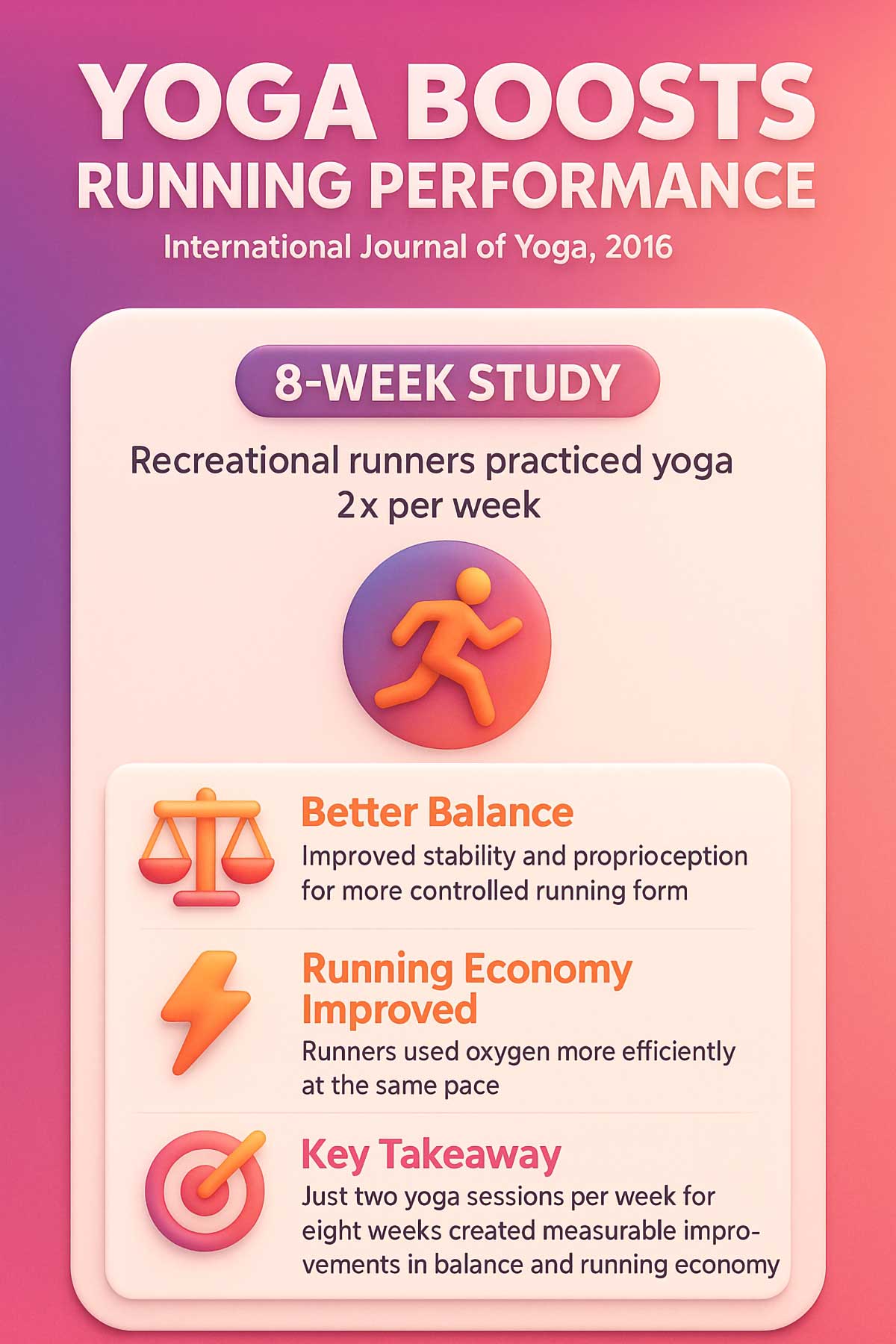
Research published in the International Journal of Yoga tested this directly. Recreational runners who practiced yoga twice weekly for eight weeks showed measurable improvements in both balance and running economy. Think about what that means for your training. You’re not just getting more flexible. You’re actually becoming a more efficient runner.
The mechanism behind these improvements involves several factors. Yoga enhances neuromuscular control—the connection between your brain and muscles. It improves joint range of motion in key areas like the hips and ankles. And it builds the kind of functional core strength that keeps your pelvis stable when you’re fatigued.
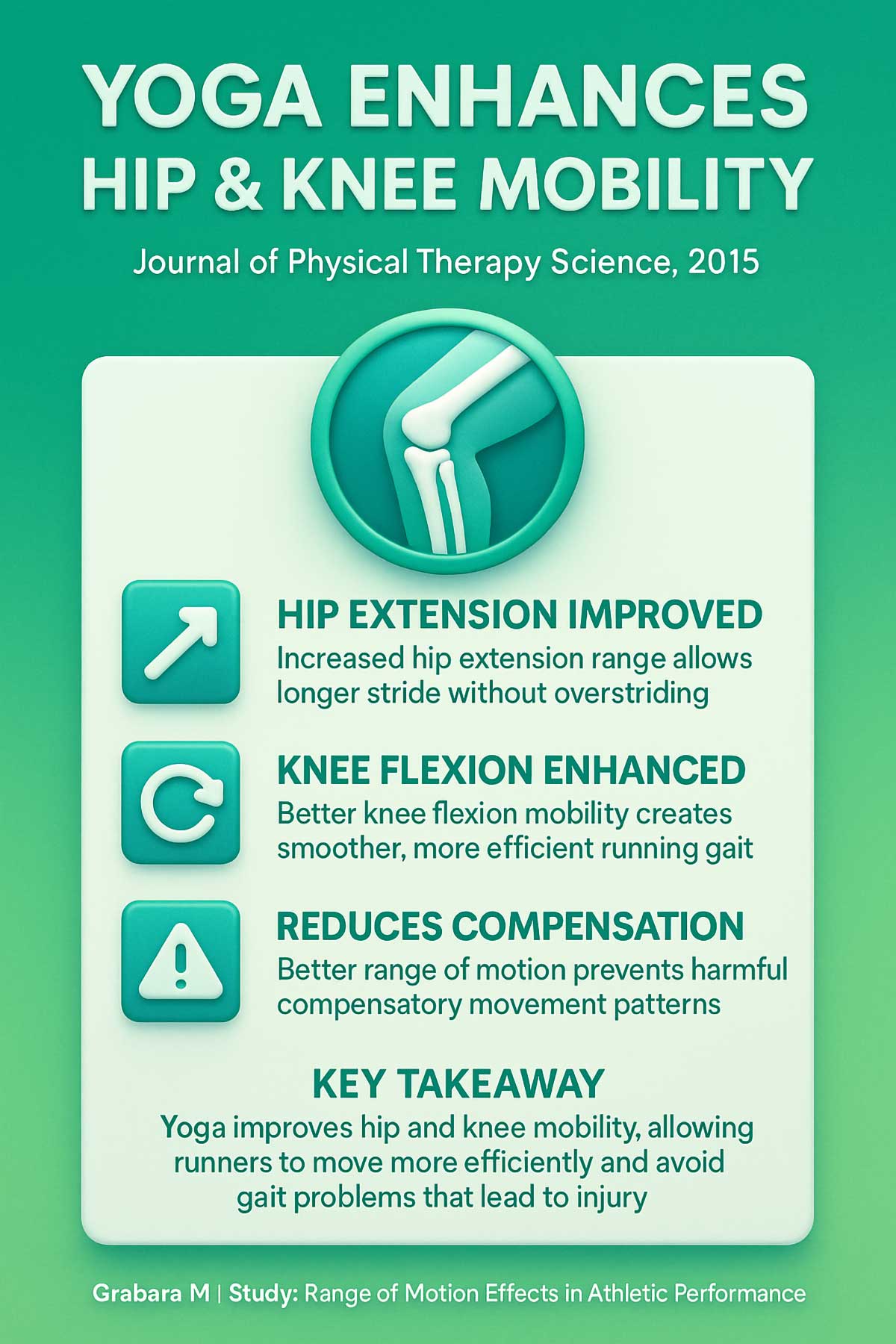
A 2015 study in the Journal of Physical Therapy Science found that yoga enhances hip extension and knee flexion range of motion. This matters because limited range of motion in these joints forces your body to compensate. Those compensations show up as altered gait patterns. And altered gait patterns lead to injuries.
Key Takeaway: Yoga doesn’t just make you feel better. It creates measurable changes in the physical qualities that determine running performance. The science is clear: consistent practice leads to better flexibility, stronger stabilizer muscles, improved running economy, and reduced injury risk.
Common Running Problems & Yoga Solutions
| Running Issue | Root Cause | Recommended Poses | Practice Frequency | Expected Timeline |
|---|---|---|---|---|
| IT Band Pain | Tight hips and glutes | Reclining Pigeon, Low Lunge, Downward Dog | Daily post-run | 2-4 weeks |
| Shin Splints | Tight calves, weak ankles | Downward Dog, Dynamic Chair, Legs-Up-Wall | 4-5x per week | 3-6 weeks |
| Runner’s Knee | Weak glutes, tight hip flexors | Dynamic Chair, Low Lunge, Cat-Cow | Daily | 4-6 weeks |
| Tight Calves | Repetitive impact, limited ankle mobility | Downward Dog, Legs-Up-Wall | Post-run daily | 2-3 weeks |
| Lower Back Pain | Weak core, tight hip flexors | Cat-Cow, Low Lunge, Reclining Pigeon | 5-6x per week | 3-5 weeks |
| Plantar Fasciitis | Tight calves and ankles | Downward Dog, toe stretches | Twice daily | 4-8 weeks |
Your Pre-Run Activation (Dynamic Warm-up)
Before you lace up your shoes, take five minutes for a dynamic warm-up.
The goal here isn’t to stretch deeply. You want to wake up your muscles and get blood flowing. Think movement, not holding.
Pose 1: Cat-Cow Stretch (Marjaryasana-Bitilasana)
This pose warms up your spine and core while gently waking up your hip flexors.
How to do it:
- Start on your hands and knees. Place your wrists directly under your shoulders and your knees directly under your hip bones.
- Spread your fingers wide. Press firmly through your palms and the tops of your feet.
- Inhale and arch your back. Drop your belly toward the floor. Lift your chest and tailbone up toward the ceiling. Let your shoulder blades slide down your back. This is Cow Pose.
- Exhale and round your spine. Tuck your chin toward your chest and your tailbone toward your knees. Draw your belly button up toward your spine. Press the floor away with your hands. This is Cat Pose.
- Flow between these two shapes for 8-10 breaths. Move with your breath—inhale for Cow, exhale for Cat.
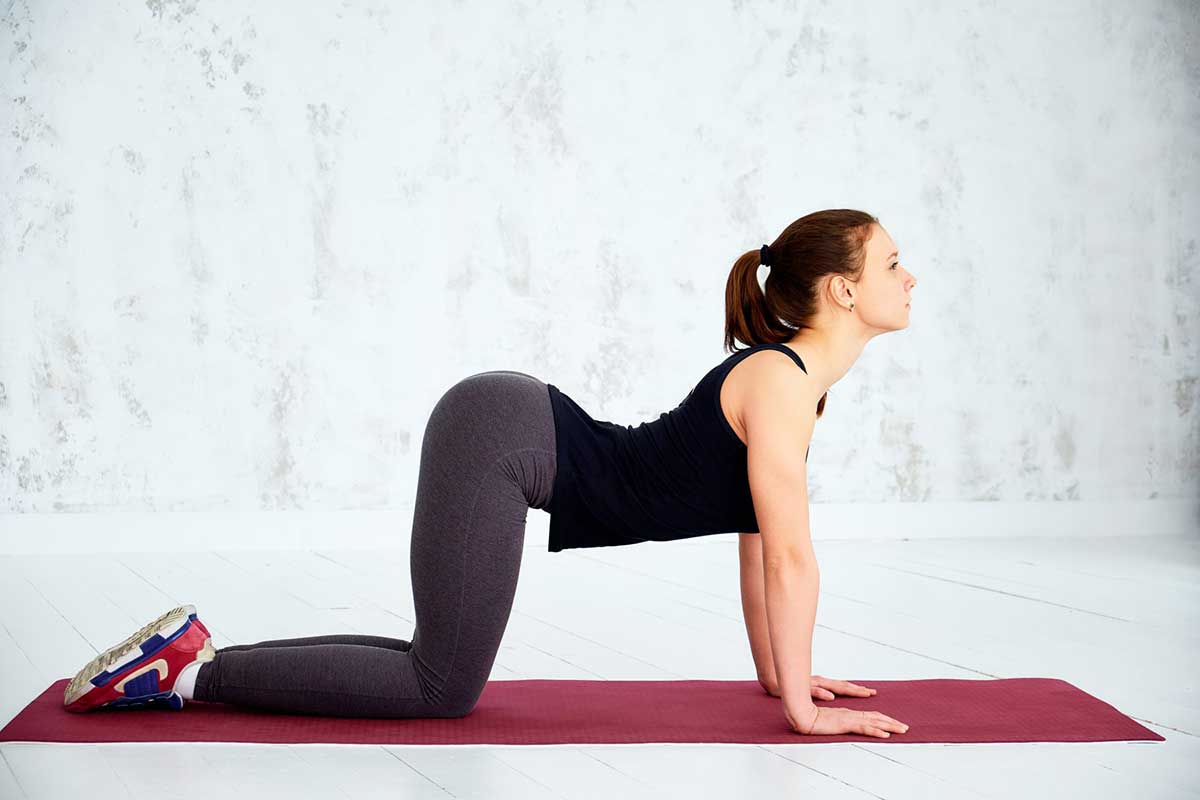
What you should feel: Gentle movement through your entire spine. A sense of opening across your chest in Cow. A stretch along your back in Cat.
What you shouldn’t feel: Sharp pain anywhere in your spine. Wrist pain. Knee discomfort.
Quick alignment check: Keep your neck long in both poses. Don’t let your head drop heavily or crank back too far.
Pose 2: Dynamic Chair Pose (Utkatasana Flow)
This fires up your glutes, quads, and ankles—the exact muscles you’ll use when you run.
How to do it:
- Stand with your feet hip-width apart. You should be able to fit one fist between your inner ankles.
- Inhale and reach your arms overhead. Keep your shoulders relaxed away from your ears.
- Exhale and bend your knees. Sit your hips back and down like you’re sitting in a chair. Keep your weight in your heels. You should be able to wiggle your toes.
- Let your torso lean slightly forward, but keep your chest lifted. Don’t round your back.
- Inhale and press through your heels to stand back up. Reach your arms higher.
- Repeat this flow 8-10 times. Focus on controlled movement.
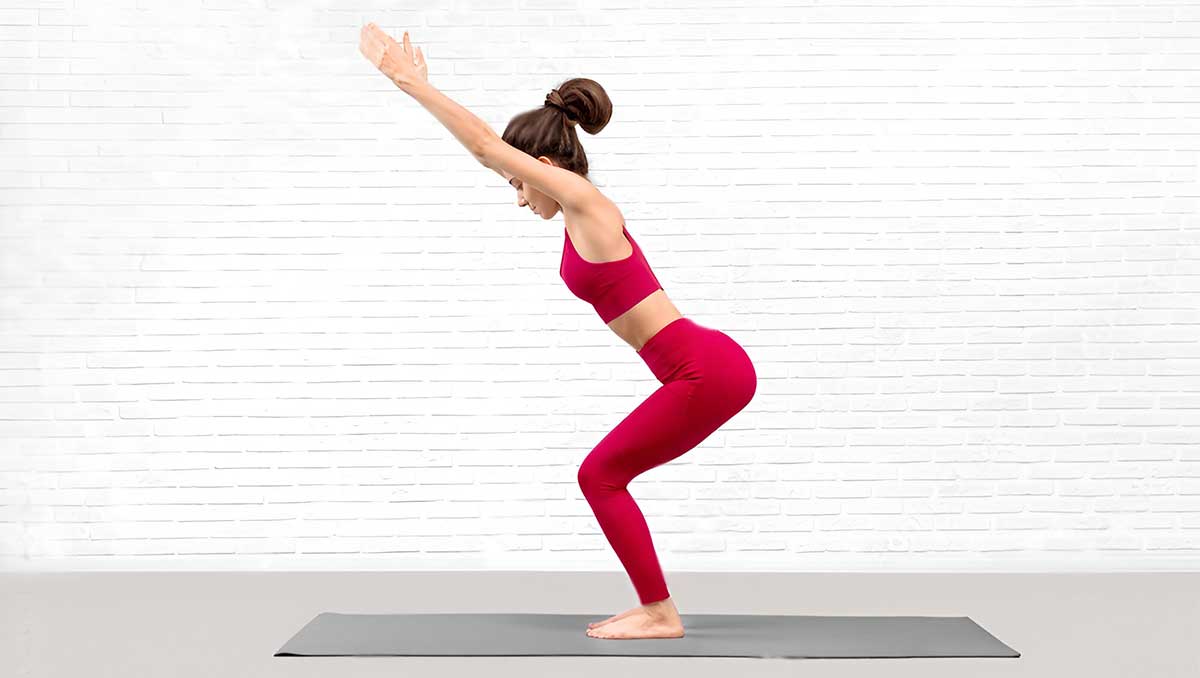
What you should feel: Your quads and glutes working. A sense of strength and stability through your legs.
What you shouldn’t feel: Knee pain. Strain in your lower back. Pain in your heels.
Quick alignment check: Look down. You should be able to see your toes in front of your knees. If you can’t, you’re leaning too far forward.
Pose 3: Lunge with Thoracic Spine Twist (Parivrtta Anjaneyasana)
This opens your hips and improves rotation in your upper body. That matters because good arm swing comes from your thoracic spine, not just your shoulders.
How to do it:
- Step your right foot forward into a lunge. Your right knee should stack directly over your right ankle.
- You can keep your left knee on the ground for more support, or lift it for more challenge.
- Place your left hand on the ground inside your right foot. If you can’t reach the ground, use a block or stack of books.
- Inhale and reach your right arm toward the ceiling. Let your chest rotate open. Follow your hand with your eyes.
- Exhale and bring your arm back down to the starting position.
- Repeat 5 times, then switch sides. Move slowly and with control.
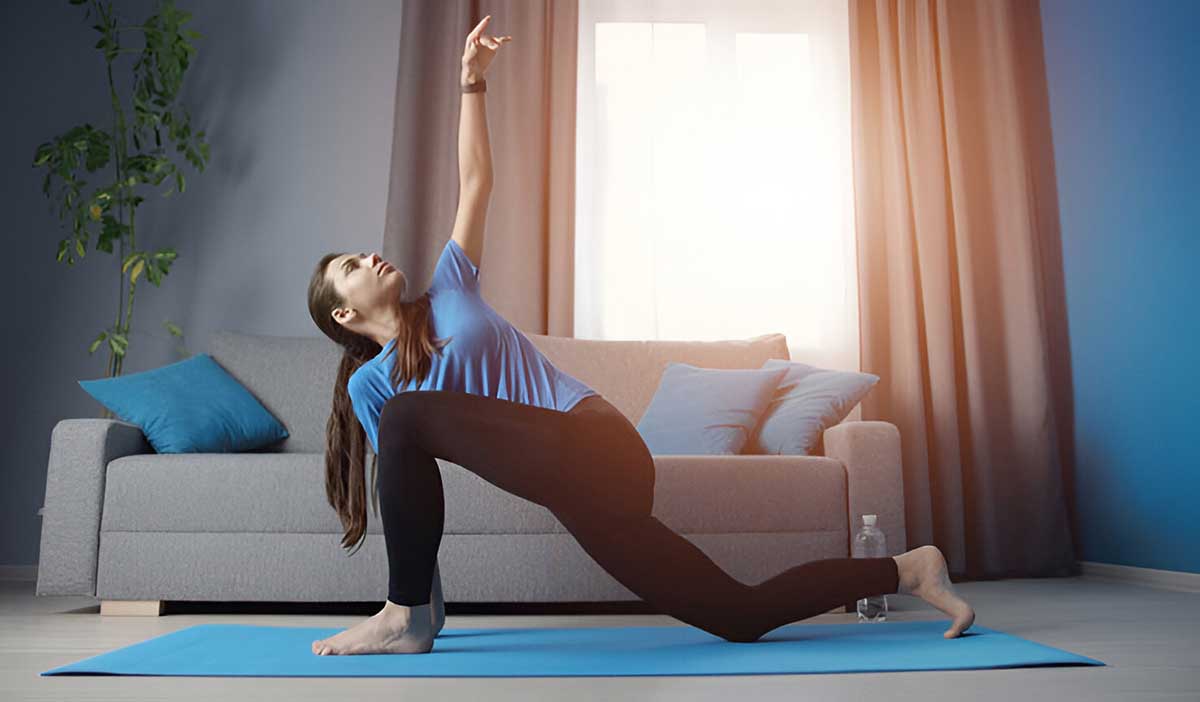
What you should feel: A stretch in your right hip flexor and left hip. Rotation through your mid-back. Gentle opening across your chest.
What you shouldn’t feel: Strain in your lower back. Sharp pain in your front knee. Pinching in your shoulders.
Quick alignment check: Keep your front knee tracking over your second or third toe. Don’t let it collapse inward.
Common Mistakes Runners Make in Yoga (And How to Avoid Them)
Mistake 1: Pushing Too Deep When Muscles Are Cold
Cold muscles don’t stretch well. If you force a deep stretch before your body is warm, you risk straining muscle fibers. This is why pre-run yoga should be dynamic and gentle.
The fix: Save deep stretching for after your run when your muscles are warm. Before running, focus on movement and activation.
Mistake 2: Holding Your Breath
When a pose feels hard, many people hold their breath. This creates tension and defeats the purpose of yoga.
The fix: If you can’t breathe smoothly in a pose, back off slightly. Your breath should be steady and calm. If it’s not, the pose is too intense.
Mistake 3: Comparing Your Flexibility to Others
Yoga isn’t a competition. Your tight hamstrings don’t care how flexible someone else is.
The fix: Focus on your own body. Notice small improvements week by week. That’s what matters.
Mistake 4: Skipping Poses That Feel Easy
Simple poses like Cat-Cow might not feel impressive, but they’re foundational. They teach you body awareness and movement patterns you’ll use in harder poses.
The fix: Respect every pose. Even “easy” ones serve a purpose in your practice.
Mistake 5: Not Modifying for Injuries
Pushing through pain is not brave. It’s foolish. If you have an injury, you need to modify poses to work around it.
The fix: Use props. Skip poses that aggravate injuries. Ask yourself: “Will this help me heal or make things worse?”
Mistake 6: Practicing Only When You Feel Good
Many runners skip yoga when they’re sore or tired. That’s exactly when you need it most.
The fix: Adjust intensity, but don’t skip entirely. Gentle movement aids recovery better than complete rest.
Your Post-Run Recovery (Static Cooldown)
After your run, it’s time to slow down. This is when you hold poses longer to release tension and help your muscles recover.
Pose 4: Downward-Facing Dog (Adho Mukha Svanasana)
This is a full-body stretch that targets tight hamstrings, calves, and shoulders.
How to do it:
- Start on your hands and knees with your wrists directly under your shoulders.
- Spread your fingers wide and press firmly through your entire palm, especially the base of your index finger.
- Tuck your toes under and lift your hips up and back. Your body should form an upside-down V shape.
- Press your hands firmly into the ground. Lengthen your spine from your tailbone to the crown of your head.
- Work your heels toward the floor. It’s completely fine if they don’t touch. Most runners’ heels won’t reach the ground at first.
- Let your head hang freely between your arms. Don’t tense your neck.
- Hold for 5-8 breaths. With each exhale, see if you can lengthen your spine a bit more.
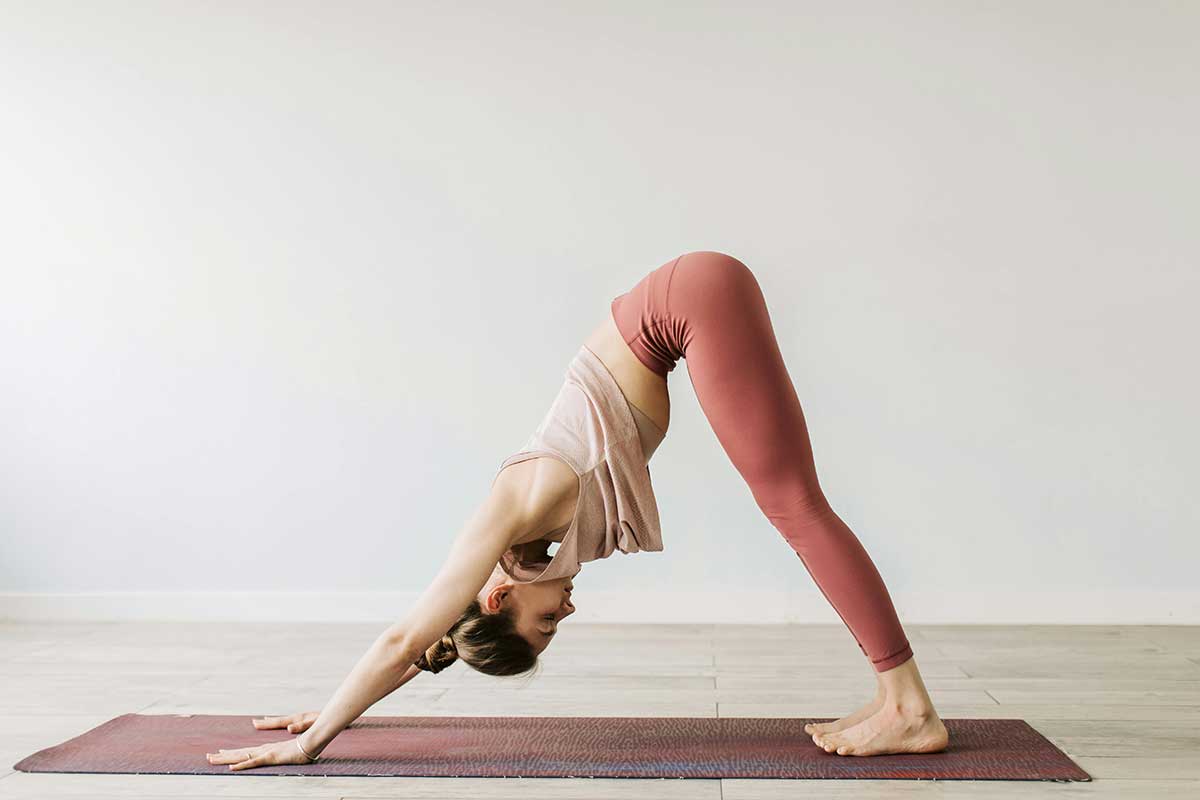
What you should feel: A stretch along the back of your legs, from your heels to your sitting bones. Length through your spine. Gentle opening across your shoulders and upper back.
What you shouldn’t feel: Sharp pain behind your knees. Strain in your lower back. Excessive pressure in your wrists.
Modification: If your hamstrings are very tight, bend your knees generously. The goal is a long spine, not straight legs. You can also pedal your feet, bending one knee while straightening the other.
Quick alignment check: Your sitting bones should point toward the ceiling. If your lower back is rounded, bend your knees more.
Pose 5: Low Lunge (Anjaneyasana)
This gives you a deep stretch in your hip flexors. These muscles get tight from all the running you do.
How to do it:
- From Downward-Facing Dog, step your right foot forward between your hands. You might need to use your hand to help guide your foot into position.
- Lower your left knee to the ground. Untuck your left toes so the top of your foot rests on the ground.
- Stack your right knee directly over your right ankle. This is critical for knee safety. Your shin should be vertical.
- Place your hands on your right thigh. Press down gently to lift your chest.
- You can stay here, or reach your arms overhead for a deeper stretch. Keep your shoulders relaxed.
- Gently shift your hips forward to increase the stretch in your left hip flexor. Don’t force it.
- Hold for 5-8 breaths. Then switch sides.
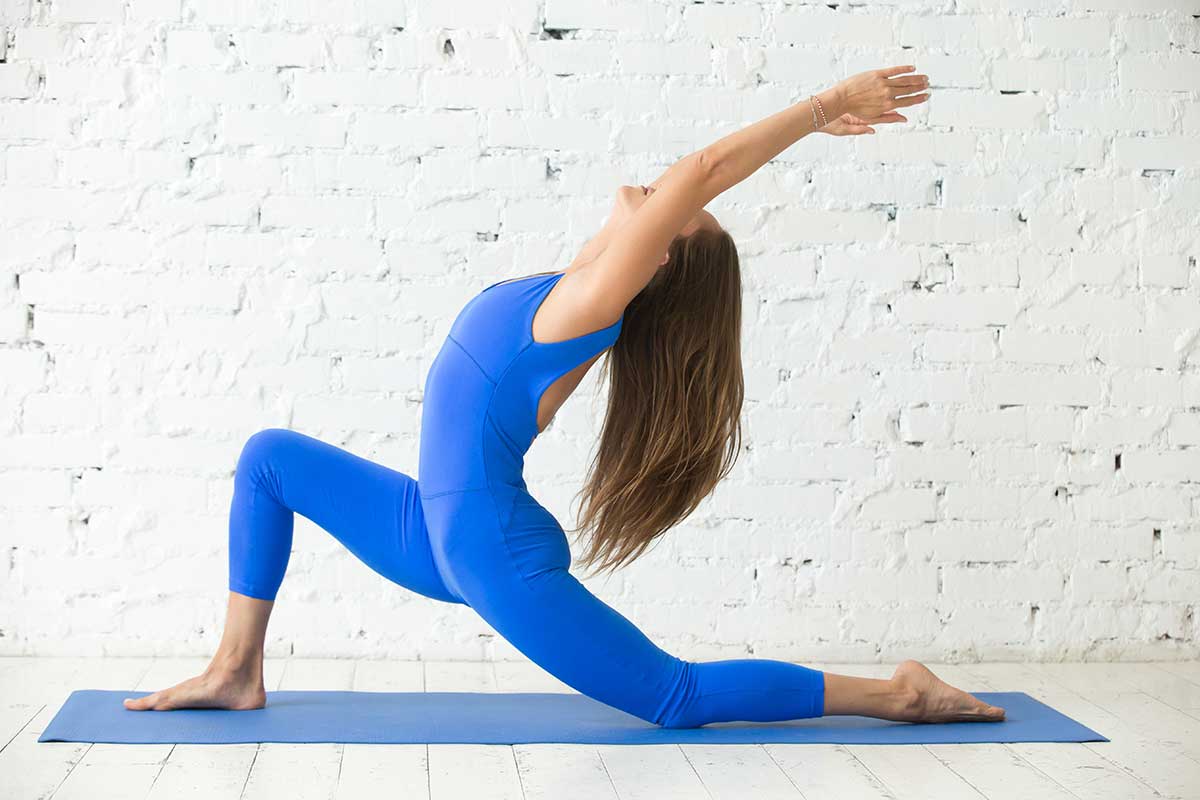
What you should feel: A stretch along the front of your back leg, from your knee to your hip. Gentle opening across the front of your hip.
What you shouldn’t feel: Sharp pain in your front knee. Pinching in your lower back. Strain in your back knee.
Modification: Place a folded blanket or towel under your back knee for cushioning. If the stretch is too intense, don’t shift your hips as far forward.
Quick alignment check: Press your back toes into the ground slightly. This engages your back leg and protects your lower back.
Pose 6: Reclining Pigeon Pose (Eka Pada Rajakapotasana variation)
This releases tension in your hips and glutes. Tight glutes can lead to IT band issues, so this pose is gold for runners.
How to do it:
- Lie on your back with your knees bent and feet flat on the ground, about hip-width apart.
- Cross your right ankle over your left thigh, just above your left knee. Your right knee points out to the side.
- Flex your right foot strongly. Pull your toes back toward your shin. This protects your knee joint.
- Reach your right arm through the space between your legs. Reach your left arm around the outside of your left leg.
- Clasp your hands behind your left thigh. Or hold onto your left shin if you can reach it comfortably.
- Gently pull your left leg toward your chest. Keep your head and shoulders relaxed on the ground.
- Hold for 8-10 breaths. You should feel the stretch deepen slightly as you breathe.
- Switch sides and repeat.

What you should feel: A deep stretch in your right hip and glute. The sensation might be intense, but it should feel like a “good hurt,” not sharp pain.
What you shouldn’t feel: Sharp pain in your right knee. Strain in your neck from lifting your head. Pinching in your hip joint.
Modification: If you can’t reach your hands behind your thigh, use a towel or strap looped around your thigh. If the stretch is too intense, keep your left foot on the ground instead of lifting your leg.
Quick alignment check: Keep your right foot flexed throughout. If your foot is floppy, you’re putting stress on your knee.
Pose 7: Legs-Up-The-Wall Pose (Viparita Karani)
This is pure recovery. It helps reduce swelling and fatigue in your legs after a hard run.
How to do it:
- Sit sideways next to a wall, with your right hip and shoulder touching the wall.
- In one smooth movement, swing your legs up the wall as you lower your back to the floor. You’ll end up lying on your back with your legs extended up the wall.
- Scoot your hips as close to the wall as feels comfortable. Some people like their hips touching the wall. Others prefer a few inches of space.
- Let your arms rest by your sides, palms facing up. Or place your hands on your belly.
- Close your eyes and focus on your breath. Let gravity do the work.
- Stay here for 5-10 minutes. Set a timer so you can fully relax.
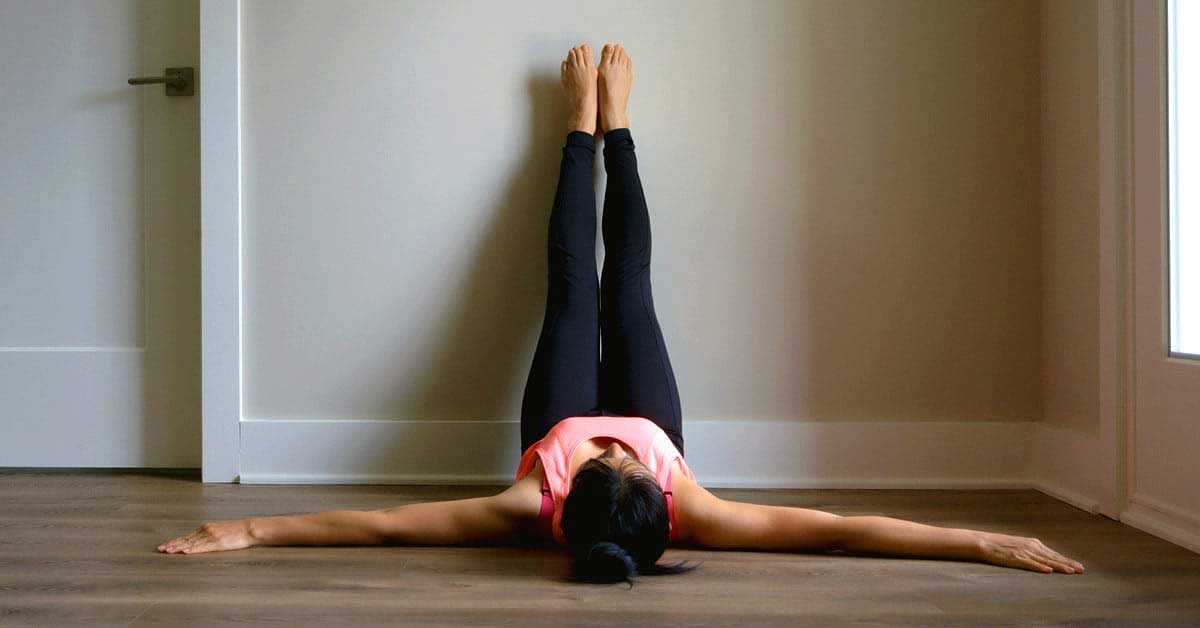
What you should feel: Gentle stretch in the back of your legs. A sense of relief and release. Often, a feeling of calm washes over you after a few minutes.
What you shouldn’t feel: Tingling or numbness in your legs (if this happens, come out of the pose). Strain in your lower back.
Modification: If your hamstrings are very tight, move your hips farther from the wall. You can also bend your knees slightly. Place a folded blanket under your hips for extra support.
Quick tip: This pose is perfect for the end of a long run or race. It helps reduce inflammation and promotes lymphatic drainage in your legs.
🧘 Yoga Pose Timer for Runners
Select your sequence and let the timer guide you through each pose
🔥 Pre-Run Warm-Up
5 minutes • Dynamic activation
🌙 Post-Run Recovery
15 minutes • Deep stretching
How Yoga Prevents the 5 Most Common Running Injuries
1. IT Band Syndrome
What it is: The iliotibial band runs along the outside of your thigh from your hip to your knee. When it gets tight and inflamed, you feel sharp pain on the outer side of your knee.
Why runners get it: Weak glutes and tight hips force your IT band to work overtime. Your body compensates for instability with tension.
How yoga helps: Poses like Reclining Pigeon and Low Lunge release tension in your hips and glutes. Dynamic Chair Pose strengthens your glutes so they can do their job properly. When your glutes are strong and your hips are mobile, your IT band doesn’t have to compensate.
Best poses: Reclining Pigeon, Low Lunge, Dynamic Chair, Lunge with Twist
Practice frequency: Daily, especially after runs. Hold hip stretches for at least 8-10 breaths.
2. Plantar Fasciitis
What it is: Inflammation of the thick band of tissue that runs along the bottom of your foot. You feel stabbing pain in your heel, especially with your first steps in the morning.
Why runners get it: Tight calves and limited ankle mobility create tension that pulls on your plantar fascia. High mileage and poor foot mechanics make it worse.
How yoga helps: Downward-Facing Dog provides a powerful calf stretch. Poses that improve ankle mobility reduce strain on your plantar fascia. The gentle pressure and strengthening also build arch support naturally.
Best poses: Downward-Facing Dog, toe stretches (curl and spread your toes in any pose), Legs-Up-The-Wall
Practice frequency: Twice daily—gentle stretches in the morning, deeper stretches after runs.
3. Runner’s Knee (Patellofemoral Pain Syndrome)
What it is: Pain around or behind your kneecap. It often feels worse when running downhill or going down stairs.
Why runners get it: Weak hips and glutes allow your knee to collapse inward with each step. This creates uneven pressure on your kneecap. Tight hip flexors also pull your pelvis out of alignment.
How yoga helps: Chair Pose builds the glute and quad strength that keeps your knee tracking properly. Low Lunge releases tight hip flexors. Cat-Cow improves core stability, which supports proper lower body alignment.
Best poses: Dynamic Chair, Low Lunge, Cat-Cow, Lunge with Twist
Practice frequency: Daily. Focus on activation (Chair Pose) before runs and stretching (Low Lunge) after runs.
4. Achilles Tendinitis
What it is: Pain and stiffness in your Achilles tendon, the thick cord that connects your calf to your heel bone.
Why runners get it: Tight calves put constant strain on your Achilles. Sudden increases in mileage or speedwork overload the tendon. Limited ankle mobility forces your Achilles to work harder than it should.
How yoga helps: Downward-Facing Dog stretches your entire posterior chain, including your Achilles. Legs-Up-The-Wall reduces inflammation. Regular practice improves ankle mobility and calf flexibility, taking pressure off your Achilles.
Best poses: Downward-Facing Dog, Legs-Up-The-Wall, gentle calf stretches
Practice frequency: Post-run daily, focusing on gentle, sustained stretches rather than aggressive pulling.
5. Lower Back Pain
What it is: Aching or sharp pain in your lower back, often worse during or after runs.
Why runners get it: Weak core muscles can’t stabilize your pelvis during the repetitive impact of running. Tight hip flexors pull your pelvis into an anterior tilt, which stresses your lower back. Poor running form compounds the problem.
How yoga helps: Cat-Cow teaches you to move your spine and engage your core. Low Lunge releases the tight hip flexors that pull on your lower back. Reclining Pigeon reduces tension in your hips, which often refers pain to your lower back.
Best poses: Cat-Cow, Low Lunge, Reclining Pigeon, Downward-Facing Dog
Practice frequency: Daily, with extra focus on core engagement during every pose.
Breathing Techniques Every Runner Should Know
Breath is the bridge between your body and mind. When you control your breath, you control your stress response, your focus, and even your running performance.
1. Diaphragmatic Breathing (Belly Breathing)
This is the foundation of efficient breathing. Most people breathe shallowly into their chest. Runners need to breathe deeply into their diaphragm.
How to practice:
- Lie on your back with your knees bent.
- Place one hand on your chest and one on your belly.
- Inhale slowly through your nose. Your belly should rise while your chest stays relatively still.
- Exhale slowly through your nose or mouth. Your belly should fall.
- Practice for 5 minutes daily.
When to use it: During easy runs to stay relaxed. In Legs-Up-The-Wall pose to deepen recovery. Before bed to improve sleep quality.
Benefits for runners: Increases oxygen uptake. Reduces tension in your shoulders and neck. Helps you stay relaxed during long runs.
2. Box Breathing (Four-Square Breathing)
This technique calms your nervous system. It’s perfect for race-day nerves or when you feel anxious during a hard workout.
How to practice:
- Inhale through your nose for 4 counts.
- Hold your breath for 4 counts.
- Exhale through your nose for 4 counts.
- Hold empty for 4 counts.
- Repeat for 5-10 rounds.
When to use it: Before a race or hard workout. When you feel anxious or overwhelmed. After a stressful day to reset.
Benefits for runners: Activates your parasympathetic nervous system (rest and digest). Improves focus and mental clarity. Reduces pre-race jitters.
3. Alternate Nostril Breathing (Nadi Shodhana)
This balancing breath technique reduces stress and improves respiratory function.
How to practice:
- Sit comfortably with your spine straight.
- Use your right thumb to close your right nostril.
- Inhale slowly through your left nostril.
- Close your left nostril with your ring finger. Release your thumb.
- Exhale through your right nostril.
- Inhale through your right nostril.
- Close your right nostril. Release your ring finger.
- Exhale through your left nostril.
- This completes one round. Do 5-10 rounds.
When to use it: On rest days to aid recovery. Before bed to calm your mind. When you feel mentally scattered.
Benefits for runners: Balances your nervous system. Improves lung function. Enhances mental focus and clarity.
4. Counted Breath During Running
This technique helps you maintain pace and stay present during runs.
How to practice:
- Count your foot strikes as you breathe.
- Start with a 3:3 pattern—inhale for 3 steps, exhale for 3 steps.
- For easier efforts, try 4:4 or 5:5.
- For hard efforts, you might naturally fall into 2:2 or 2:1.
When to use it: During tempo runs to maintain steady effort. When your mind wanders during long runs. During races to stay focused.
Benefits for runners: Keeps you from going out too fast. Helps you maintain steady effort. Gives your mind something to focus on during hard moments.
Quick tip: Practice these breathing techniques during your yoga sessions first. Once they feel natural on the mat, take them to your runs.
Your First Week: A Complete Day-by-Day Plan
This plan gives you a specific structure for your first week of adding yoga to your running routine. Follow it exactly, or adjust based on your current training schedule.
Day 1: Monday – Easy 3-Mile Run + Post-Run Flow
Run: 3 miles at comfortable pace
Yoga (10 minutes after your run):
- Downward-Facing Dog: 6 breaths
- Low Lunge (right): 6 breaths
- Low Lunge (left): 6 breaths
- Reclining Pigeon (right): 8 breaths
- Reclining Pigeon (left): 8 breaths
- Legs-Up-The-Wall: 3 minutes
Focus: Notice which side feels tighter. Don’t try to fix it—just observe.
Day 2: Tuesday – Rest Day + Flexibility Session
No running
Yoga (20 minutes):
- Cat-Cow: 10 breaths
- Downward-Facing Dog: 8 breaths
- Low Lunge (right): 8 breaths
- Lunge with Twist (right): 5 reps
- Low Lunge (left): 8 breaths
- Lunge with Twist (left): 5 reps
- Reclining Pigeon (right): 10 breaths
- Reclining Pigeon (left): 10 breaths
- Legs-Up-The-Wall: 5 minutes
- Diaphragmatic breathing: 3 minutes
Focus: This is active recovery. You should feel challenged but not exhausted.
Day 3: Wednesday – 4-Mile Run with Hills + Recovery Flow
Run: 4 miles with gentle hills
Yoga (12 minutes after your run):
- Downward-Facing Dog: 8 breaths
- Low Lunge (right): 8 breaths
- Low Lunge (left): 8 breaths
- Dynamic Chair: 6 reps (to strengthen tired legs)
- Reclining Pigeon (right): 10 breaths
- Reclining Pigeon (left): 10 breaths
- Legs-Up-The-Wall: 5 minutes
Focus: Your legs will be tired from the hills. Be gentle with yourself.
Day 4: Thursday – Easy 3-Mile Run + Pre-Run Activation
Yoga BEFORE your run (5 minutes):
- Cat-Cow: 8 breaths
- Dynamic Chair: 8 reps
- Lunge with Twist (right): 5 reps
- Lunge with Twist (left): 5 reps
Run: 3 miles easy
Yoga AFTER your run (8 minutes):
- Downward-Facing Dog: 6 breaths
- Low Lunge (right): 6 breaths
- Low Lunge (left): 6 breaths
- Legs-Up-The-Wall: 4 minutes
Focus: Notice how different your body feels when you warm up with yoga first.
Day 5: Friday – Rest Day + Deep Stretch Session
No running
Yoga (25 minutes):
- Cat-Cow: 10 breaths
- Downward-Facing Dog: 10 breaths
- Low Lunge (right): 10 breaths
- Lunge with Twist (right): 6 reps
- Downward-Facing Dog: 5 breaths
- Low Lunge (left): 10 breaths
- Lunge with Twist (left): 6 reps
- Downward-Facing Dog: 5 breaths
- Reclining Pigeon (right): 12 breaths
- Reclining Pigeon (left): 12 breaths
- Legs-Up-The-Wall: 8 minutes
- Box breathing: 5 minutes
Focus: This is your longest session of the week. Take your time. Go deep.
Day 6: Saturday – Long Run (6-7 miles) + Extended Recovery
Pre-run yoga (5 minutes):
- Cat-Cow: 8 breaths
- Dynamic Chair: 10 reps
- Lunge with Twist (each side): 5 reps
Run: 6-7 miles at easy pace
Post-run yoga (20 minutes):
- Downward-Facing Dog: 8 breaths
- Low Lunge (right): 10 breaths
- Low Lunge (left): 10 breaths
- Reclining Pigeon (right): 12 breaths
- Reclining Pigeon (left): 12 breaths
- Legs-Up-The-Wall: 10 minutes
- Diaphragmatic breathing: 5 minutes
Focus: Your body needs extra recovery after a long run. Give it what it needs.
Day 7: Sunday – Rest or Easy 2-Mile Shake-Out
Option 1 (Full Rest):
- Gentle yoga flow: 15 minutes of easy poses
- Alternate nostril breathing: 10 minutes
Option 2 (Shake-out run):
- Easy 2-mile run
- Post-run: Legs-Up-The-Wall for 10 minutes
Focus: Reflect on the week. How does your body feel compared to last Monday?
Integration by Training Phase
Your yoga practice should adapt to your training cycle. What you do during base building looks different from what you do during peak training or recovery.
| Training Phase | Yoga Focus | Session Duration | Intensity Level | Frequency |
|---|---|---|---|---|
| Base Building | Flexibility, form work | 20-30 minutes | Moderate | 4-5x per week |
| Peak Training | Recovery, injury prevention | 10-15 minutes | Low-moderate | Post-run daily |
| Taper | Gentle movement, mental prep | 15-20 minutes | Low | 3-4x per week |
| Post-Race Recovery | Deep stretching, restoration | 30-40 minutes | Low | 4-6x per week |
| Off-Season | Strength building, flexibility | 30-45 minutes | Moderate-high | 5-6x per week |
Base Building Phase
This is when you’re building your mileage foundation. You’re not racing. You’re not doing intense speed work. You’re just putting in consistent miles.
Yoga focus: Use this time to work on flexibility and form. You have the energy and recovery capacity to hold poses longer and go deeper into stretches.
What to do: Practice 20-30 minute sessions 4-5 times per week. Include all seven poses with longer holds. Add extra hip and hamstring work.
Peak Training Phase
You’re running hard. Your body is tired. You might be doing tempo runs, intervals, or long runs at faster paces.
Yoga focus: Recovery and injury prevention become your priorities. This isn’t the time to push your flexibility limits.
What to do: Keep sessions short—10-15 minutes post-run. Focus on releasing tension rather than building flexibility. Listen to your body carefully.
Taper Phase
You’re reducing mileage before a big race. Your legs need to feel fresh, not fatigued.
Yoga focus: Gentle movement that maintains mobility without creating fatigue. Mental preparation and relaxation.
What to do: 15-20 minute sessions, 3-4 times per week. Keep intensity low. Add breathing exercises. This is about staying loose, not getting looser.
Post-Race Recovery
Your race is done. Your body needs to heal and rebuild.
Yoga focus: Deep stretching and restoration. Help your body recover from the damage of hard racing.
What to do: Longer sessions of 30-40 minutes, 4-6 times per week. Emphasize restorative poses. Add extra time in Legs-Up-The-Wall. Be patient with your body.
Off-Season
You’re taking a break from structured training. This is your chance to build qualities you can’t build during race prep.
Yoga focus: Build strength and flexibility. Work on weaknesses. Try more challenging variations.
What to do: 30-45 minute sessions, 5-6 times per week. Explore harder variations of poses. Work on balance. Build the foundation for next season.
Complete Pre-Run Sequence (15 Minutes)
This sequence prepares your body for running. Do it before any run, but especially before hard workouts.
Total time: 15 minutes
Warm-Up (3 minutes)
- Cat-Cow: 12 breaths, moving slowly and mindfully
- Focus: Wake up your spine and core
Hip Activation (4 minutes)
- Lunge with Twist (right side): 6 reps, moving with your breath
- Lunge with Twist (left side): 6 reps
- Hold the last rep on each side for 3 breaths
- Focus: Open your hips and thoracic spine
Leg Activation (5 minutes)
- Dynamic Chair: 12 reps, moving steadily
- Hold the last rep for 5 breaths
- Downward-Facing Dog: 8 breaths
- Focus: Activate glutes, quads, and calves
Final Prep (3 minutes)
- Dynamic Chair to Downward Dog flow: 5 rounds
- From standing, flow into Chair
- From Chair, fold forward and step back to Downward Dog
- From Downward Dog, step forward and rise to standing
- Focus: Connect breath to movement, prepare for the rhythm of running
Quick tip: Your body should feel warm and ready, not tired. If you feel fatigued, you pushed too hard.
Complete Post-Run Sequence (15 Minutes)
This sequence helps your body recover after running. Use it after every run, adjusting holds based on how tired you feel.
Total time: 15 minutes
Initial Release (3 minutes)
- Downward-Facing Dog: 10 breaths
- Focus: Let your hamstrings and calves start to release
Hip Flexor Opening (4 minutes)
- Low Lunge (right): 8 breaths
- Low Lunge (left): 8 breaths
- Focus: Release the hip flexors that worked hard during your run
Deep Hip Release (5 minutes)
- Reclining Pigeon (right): 12 breaths
- Reclining Pigeon (left): 12 breaths
- Focus: Let tension melt out of your hips and glutes
Recovery (3 minutes)
- Legs-Up-The-Wall: Stay here for the remaining time
- Practice diaphragmatic breathing
- Focus: Allow gravity to drain your legs and reduce inflammation
Transition tip: Move slowly between poses. Your muscles are warm and pliable, but also fatigued. Respect that.
How Yoga Translates to Better Running Form
Yoga doesn’t just make you feel better. It changes how you run.
Hip Mobility Creates Longer Stride
When your hip flexors are tight, they limit how far your leg can extend behind you. This shortens your stride. You end up taking more steps to cover the same distance.
Research in the Journal of Physical Therapy Science demonstrated that yoga enhances hip extension range of motion. This means your leg can extend farther back during push-off. The result? A longer, more efficient stride without overstriding in front.
The yoga connection: Low Lunge directly targets hip flexor flexibility. Reclining Pigeon releases your glutes, which allows your hip flexors to lengthen more easily.
Core Strength Stabilizes Your Pelvis
A stable pelvis is the foundation of good running form. When your core is weak, your pelvis rotates excessively with each step. This wastes energy and creates imbalances that lead to injury.
The yoga connection: Every yoga pose requires core engagement. Cat-Cow teaches you to control pelvic movement. Dynamic Chair builds the deep core muscles that stabilize your pelvis during running.
Ankle Mobility Improves Toe-Off
Your ankle needs to bend (dorsiflexion) when your foot lands and extend (plantarflexion) when you push off. Limited ankle mobility forces your body to compensate. You might land too heavily on your heels or not push off effectively.
The yoga connection: Downward-Facing Dog creates ankle dorsiflexion, improving the flexibility you need for landing. Dynamic Chair strengthens the muscles that control ankle movement.
Shoulder Flexibility Relaxes Arm Swing
Tense shoulders waste energy. Your arms should swing freely from your shoulders, powered by rotation in your thoracic spine. When your shoulders are tight, you end up shrugging or holding tension.
The yoga connection: Downward-Facing Dog opens your shoulders. Lunge with Twist improves thoracic rotation. Together, they create the mobility for a relaxed, efficient arm swing.
Balance Training Improves Proprioception
Every time you run, you’re essentially hopping from one foot to the other. Balance and proprioception determine how efficiently you can control that movement.
The study published in the International Journal of Yoga found that yoga improved balance in recreational runners. Better balance means better control during each foot strike. Less wobble. Less wasted energy. Less injury risk.
The yoga connection: Holding poses like Low Lunge (with your back knee lifted) challenges your balance. This trains the proprioceptive system that keeps you stable while running.
Signs Your Yoga Practice Is Working
You might wonder if yoga is actually helping your running. Here are concrete signs of progress.
Week 1-2: Immediate Effects
- Reduced post-run soreness
- Better sleep quality
- Increased body awareness during runs
- Feeling more relaxed in general
Week 3-4: Building Momentum
- Noticeably improved flexibility in specific poses
- Easier recovery between hard workouts
- Fewer aches and pains
- Running form feels smoother
Week 5-8: Real Changes
- Longer stride without forcing it
- Better posture during tired miles
- Improved running economy (easier breathing at same pace)
- Injuries that were bothering you start to resolve
- You can touch your toes (if you couldn’t before)
Week 9-12: Long-Term Benefits
- Consistent PRs or improved race times
- Significantly fewer rest days needed
- Better balance and stability
- Increased mental focus during hard efforts
- Yoga feels natural, not like a chore
Tracking Your Progress
Keep a simple log:
- Rate your flexibility in each pose (1-10)
- Note which side feels tighter
- Track how many breaths you can hold comfortably
- Record running-specific improvements (pace, recovery time, injury status)
Quick tip: Take a photo of yourself in Downward-Facing Dog on Day 1. Take another photo every month. You’ll be amazed at the visible changes in your form.
Seasonal Yoga Adjustments for Runners
Your yoga practice should change with the seasons, just like your running does.
Winter: Injury Prevention Focus
Winter is marathon training season for many runners. High mileage means high injury risk.
Adjust your practice:
- Increase frequency to 5-6 times per week
- Add extra hip and IT band work
- Spend more time in restorative poses
- Practice indoors where it’s warm—cold muscles don’t stretch well
Key poses: Reclining Pigeon (daily), Low Lunge (daily), Legs-Up-The-Wall (after long runs)
Spring: Race Prep and Mobility
Spring brings races. You need to stay mobile without creating fatigue.
Adjust your practice:
- Keep sessions moderate—15-20 minutes
- Focus on dynamic pre-run warm-ups
- Add mental preparation and breathing work
- Reduce intensity during taper weeks
Key poses: Dynamic Chair (before speed work), gentle hip openers, breathing exercises
Summer: Recovery-Focused in Heat
Summer heat adds stress to your body. Recovery becomes more important.
Adjust your practice:
- Practice early morning or evening when it’s cooler
- Emphasize hydration before and after
- Add extra restorative poses
- Consider taking yoga rest days during heat waves
Key poses: Legs-Up-The-Wall (with cold compress), gentle stretches, restorative breathing
Fall: Building Strength for Next Cycle
Fall is often off-season or early base building. You have energy to spare.
Adjust your practice:
- Increase session length to 30-40 minutes
- Work on strength-building poses
- Push your flexibility boundaries
- Try more challenging variations
Key poses: Extended holds in Chair Pose, deeper hip work, balance challenges
What You Actually Need to Practice
You don’t need fancy equipment. But a few basics make your practice safer and more comfortable.
Must-Have: Yoga Mat
A good mat is your only essential investment. For runners, choose one that’s thicker than standard—about 6mm. Your knees will thank you.
What to look for:
- Good grip (you shouldn’t slip in Downward Dog)
- Adequate cushioning for kneeling poses
- Easy to clean (you’ll be sweating on it)
- Long enough (many runner-specific mats are extra long)
Cost: $30-80 for a quality mat that will last years
Nice-to-Have: Yoga Blocks
Blocks bridge the gap between where you are and where the ground is. They’re especially useful if you have tight hamstrings.
When you’ll use them:
- Under your hands in Lunge with Twist
- To modify Downward Dog
- For additional support in any pose where you can’t reach the ground
Cost: $10-20 for a set of two
Nice-to-Have: Yoga Strap
A strap helps you get into poses that require flexibility you don’t have yet.
When you’ll use them:
- To reach your thigh in Reclining Pigeon
- For assisted hamstring stretches
- To improve shoulder flexibility
Cost: $8-15
Nice-to-Have: Bolster or Firm Pillow
A bolster makes restorative poses more comfortable.
When you’ll use it:
- Under your hips in Legs-Up-The-Wall
- For supported back bends
- Under your knees when lying on your back
Cost: $30-60 for a proper bolster, or use firm couch pillows
Free Alternatives
You don’t need to buy anything if you’re just starting:
- Instead of blocks: Use thick books or sturdy boxes
- Instead of a strap: Use a belt, towel, or old tie
- Instead of a bolster: Use firm couch cushions or rolled blankets
- Instead of a mat: Use a large towel on carpet
Where to Practice
You need a space about 6 feet by 3 feet. That’s it.
Best spaces:
- Living room with carpet or a mat
- Bedroom with door closed for privacy
- Garage or basement if you have space
- Outdoor deck or patio in good weather
What you don’t need:
- A dedicated yoga room
- Mirrors (they can actually distract you)
- Perfect silence (gentle background music is fine)
- Other people (solo practice works great)
Runner’s Terms Explained
Running Economy: How efficiently your body uses oxygen at a given pace. Better economy means you can run faster using less energy. It’s like gas mileage for runners.
Proprioception: Your body’s ability to sense where it is in space without looking. Good proprioception helps you maintain balance and adjust your form automatically while running.
Hip Flexors: The muscles at the front of your hip that lift your knee during running. They get tight from repetitive motion and sitting. Main culprits for lower back pain in runners.
IT Band: Iliotibial band—a thick band of tissue running down the outside of your thigh from hip to knee. Not actually a muscle, so you can’t stretch it directly. You have to release the muscles around it.
Gait: Your running pattern—how your foot strikes, how your body moves through space, how your arms swing. Everyone’s gait is unique, but inefficient gait patterns lead to injuries.
Stabilizer Muscles: Smaller muscles that control fine movements and keep your joints stable. They don’t generate power like your quads or glutes, but they prevent injuries by maintaining proper alignment.
Cadence: How many steps you take per minute while running. Higher cadence (around 170-180 steps per minute) generally reduces impact and injury risk.
Core: Not just your abs. Your entire midsection, including deep muscles that wrap around your spine and connect to your pelvis. A strong core keeps your pelvis stable and transfers power from your legs to your upper body.
Thoracic Spine: Your mid-back—the part of your spine that connects to your ribs. Good thoracic rotation allows proper arm swing. Tightness here makes you twist from your lower back, which causes pain.
Dorsiflexion: Bending your foot upward, bringing your toes toward your shin. Important for landing efficiently when running.
Plantarflexion: Pointing your foot downward, like standing on your toes. Essential for effective push-off during running.
Conclusion
Yoga won’t replace your running. It’ll make your running better.
The research backs this up. Studies show that regular yoga practice improves the flexibility, balance, core strength, and running economy that make you a stronger, more efficient runner. Yoga reduces your risk of overuse injuries by building stability and body awareness. And it provides mental training tools that help you push through hard moments in races.
You don’t need fancy gear or a studio membership. You just need a mat and a few minutes after your runs.
Start with the seven poses in this article. Follow the first-week plan. Make yoga part of your routine, not an extra chore.
Your hips will open up. Your form will improve. Those nagging injuries will start to fade. And you might find that the time you spend on your mat becomes your favorite part of training.
FAQs
How soon after running should I do yoga?
Start your post-run yoga within 10-15 minutes of finishing your run. Your muscles are still warm, which makes stretching more effective and safer. If you wait too long, your muscles cool down and tighten up.
That said, some yoga is better than none. If you need to shower, eat, or rest first, do your yoga later. Just be extra gentle and take longer to warm up.
Can I do yoga on the same day as speedwork?
Yes, but timing matters. Do a short dynamic yoga warm-up (5 minutes) before speed work to activate your muscles. After speed work, do a gentle recovery flow (10-15 minutes) focusing on releasing tension, not pushing deeper into stretches.
Avoid deep, intense yoga sessions on speed work days. Your body needs energy for the hard running. Save longer, more intense yoga sessions for easy run days or rest days.
How long before I see results?
You’ll feel immediate benefits after your first session—reduced tightness, better mood, less soreness. But measurable changes take time.
Flexibility: 2-3 weeks for noticeable improvement in specific poses. 6-8 weeks for significant overall flexibility gains.
Strength: 3-4 weeks to feel stronger in poses. 8-12 weeks for that strength to translate to better running form.
Injury prevention: 4-6 weeks of consistent practice to reduce injury risk. If you already have an injury, 3-8 weeks to see improvement, depending on severity.
Running performance: 6-10 weeks to see measurable improvements in running economy, pace, or recovery time.
Be patient. Consistency matters more than intensity.
Should I do yoga before or after strength training?
After strength training, every time. Here’s why: yoga requires balance, stability, and body awareness. If you do it after lifting heavy weights, when your muscles are fatigued, you increase injury risk.
Better approach: Yoga on separate days from heavy lifting, or yoga in the morning and lifting in the evening. If you must do both in one session, lift first, then do gentle yoga (not deep stretching).
What if I’m not flexible at all?
Perfect. That means you have the most to gain. Tight muscles respond quickly to consistent stretching.
Start here:
- Use modifications for every pose
- Use props generously (blocks, straps, walls)
- Bend your knees in Downward Dog
- Focus on what you CAN do, not what you can’t
- Compare yourself only to yourself yesterday
Remember: flexibility is a result of practice, not a requirement for starting. The stiffest runners often see the most dramatic improvements.
Can yoga replace stretching completely?
Almost, but not quite. Yoga covers most of what runners need for flexibility and recovery. But you might still want to add:
Dynamic stretches before runs: Leg swings, walking lunges, high knees Sport-specific movements: Drills that mimic running motion Quick stretches during runs: Brief calf stretches at stop lights
Think of yoga as your main recovery and flexibility practice. Add other stretches as needed for specific situations.
How does yoga compare to foam rolling?
They work differently and complement each other.
Foam rolling: Releases muscle knots (trigger points) and increases blood flow. It’s like a deep tissue massage you give yourself. Great for immediate relief.
Yoga: Improves flexibility, builds strength, enhances body awareness, and addresses movement patterns. Better for long-term change and injury prevention.
Best approach: Foam roll for 5-10 minutes before yoga. The rolling prepares your muscles for deeper stretching. Or foam roll on days when you’re too tired for full yoga practice.
Is hot yoga good for runners?
It depends on your goals and current training load. Hot yoga (practiced in rooms heated to 95-105°F) has benefits and risks for runners.
Benefits:
- Muscles warm up quickly and stretch deeper
- Heavy sweating can feel cleansing
- Heat challenges your body differently
Risks:
- Dehydration, especially if you’re already running a lot
- Easy to overstretch and injure yourself
- Can interfere with hard training due to added stress
- Recovery might be slower
Recommendation: Skip hot yoga during peak training or hot weather. Try it during off-season or base building phases. Stay well-hydrated. Never do hot yoga the day before a race or hard workout.
Do I need to practice every day?
No, but consistency matters more than frequency. Three quality sessions per week will give you better results than seven rushed sessions.
Minimum for results: 3 times per week, 10-15 minutes each Optimal for most runners: 4-5 times per week, 15-20 minutes each Maximum benefit: Daily practice, varying intensity and length
Listen to your body. Some weeks you’ll have more energy for yoga. Other weeks you’ll need to scale back. That’s fine.
What if a pose hurts?
Stop immediately. Pain is your body’s warning signal.
Good discomfort: Sensation of stretching, muscle engagement, mild burning in working muscles. This should feel challenging but tolerable. You can breathe normally.
Bad pain: Sharp, stabbing, or pinching sensations. Pain in joints rather than muscles. Pain that makes you hold your breath or tense up. Pain that lingers after you release the pose.
If something hurts, back off, modify, or skip that pose. Come back to it later. Forcing through pain leads to injury, not progress.