A daily cup sounds harmless enough. But when researchers tracked what happened over 12 weeks, they uncovered a detail most green tea advice leaves out.
The research on green tea and liver health reads differently depending on how carefully you look. Most coverage reads the positive findings and stops there. The clinical papers themselves tell a more specific story: green tea appears to benefit people with fatty liver disease in measurable ways, and does very little for people whose livers are already healthy.
That distinction is the entire clinical point, and the one that matters if you’re deciding whether to make this a daily habit.
Roughly one in three adults worldwide has non-alcoholic fatty liver disease (NAFLD), many without knowing it. That’s the population the evidence actually addresses. The mechanism behind the benefit is real, well-documented, and more interesting than standard antioxidant framing.
What EGCG does once it reaches liver cells is worth understanding before the dosing guidance makes any sense.
Liver Health Risk Assessment
Answer 10 quick questions to understand your liver health risk and get personalized green tea recommendations
What You Should Do
${o}
Your Green Tea Plan
${l}
Important: This assessment is for educational purposes only and is not a medical diagnosis. If you scored moderate to high risk, please consult with a healthcare provider for proper evaluation and blood work.
The compound responsible for most of green tea’s liver-related effects is EGCG (epigallocatechin gallate), the most abundant catechin in brewed tea. After absorption through the gut, EGCG reaches the liver via the portal circulation within a few hours of drinking. What happens at the cellular level from there involves three distinct pathways, each relevant to how fatty liver disease develops.
The first involves a protein called Nrf2, which functions as a cellular stress sensor. Guoyi Tang and colleagues at the University of Hong Kong, writing in the journal Antioxidants (2021), trace how EGCG activates Nrf2 in liver cells, and the specific implication of that activation is worth slowing down on.
Rather than delivering protective compounds from outside the cell, Nrf2 signals it to produce its own antioxidant enzymes: glutathione, superoxide dismutase, catalase.
EGCG is acting as an instructor, not a supplier. That distinction matters for understanding why brewed tea and high-dose supplement extracts behave differently, and it explains why the supplement safety risk discussed below is real.
The second pathway centers on AMPK, which researchers call the “metabolic master switch” because of how broadly it governs energy use. When EGCG activates AMPK in liver cells, the metabolic balance shifts toward oxidizing stored fat rather than synthesizing new lipids. For a liver already accumulating excess lipids (the defining feature of NAFLD), this is directly relevant.
Tang’s review also documents a third pathway: NF-kB suppression. NF-kB drives chronic inflammatory signaling, and EGCG appears to reduce its activity in a way that attenuates the sustained low-grade inflammation that accelerates fatty liver progression.
A 2024 review by Winiarska-Mieczan and colleagues, published in Nutrients, positions EGCG within a broader picture of how dietary compounds interact with liver disease. The review also flags something that doesn’t appear in most popular articles: the same mechanisms that make EGCG protective at typical brewed-tea doses can become problematic at high concentrations. The dose shapes the outcome in a way that matters practically.
The honest caveat on all of this mechanism research: most of it comes from cell studies and animal models. The pathway documentation is robust. Whether drinking three cups of Sencha daily delivers enough EGCG for these pathways to produce detectable clinical effects in a person’s blood work is the question the human trials set out to answer, and that question has a more conditional answer than the mechanism data alone would suggest.
Who Actually Benefits, and Who Probably Doesn’t
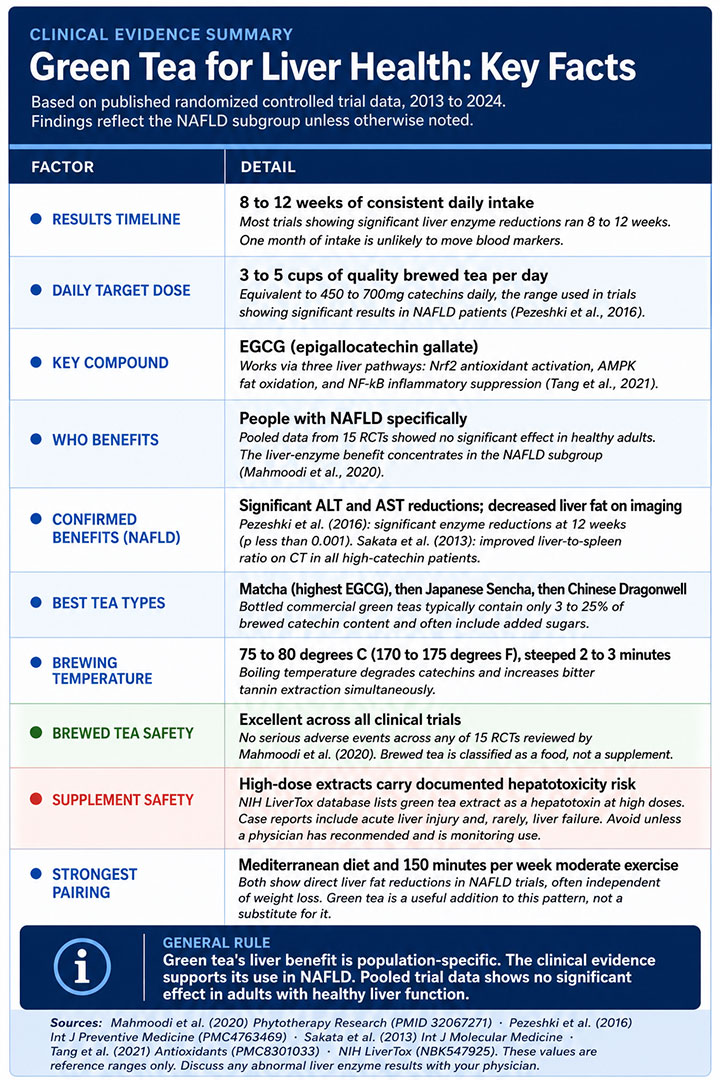
In 2020, a team led by Mahmoodi published a systematic review and meta-analysis of 15 randomized controlled trials in Phytotherapy Research. Their aim was to pool the available clinical data and determine whether green tea or green tea catechin actually changes liver enzymes at the population level.
The pooled result across all 15 trials was non-significant. ALT, AST, and alkaline phosphatase all moved in the expected direction, but none of the changes reached statistical significance when the full trial pool was combined.
That finding tends to get quietly omitted from popular coverage. What the same paper found in subgroup analysis is the more useful result: among participants who had NAFLD going into the trials, green tea produced a moderate, meaningful reduction in liver enzymes.
Among healthy participants with normal liver function at baseline, liver enzymes ticked slightly upward (still within normal range, not a sign of injury), which signals that the mechanism works differently depending on starting conditions.
Green tea catechins benefit a liver that’s already stressed, and produce very little measurable effect in one that isn’t. Researchers still don’t fully agree on why the effect is so population-specific.
Most people reading this section have a number in mind: an elevated ALT on a metabolic panel, a fatty liver finding on an ultrasound, or a NAFLD diagnosis they’re trying to do something practical about. The evidence is aimed at exactly that person.
One plausible explanation is that the Nrf2 and AMPK pathways respond more forcefully when the cell is already under oxidative or metabolic stress, the same conditions that characterize NAFLD. That’s a hypothesis, not a confirmed mechanism, and it’s worth naming as such.
What the Clinical Trials Found
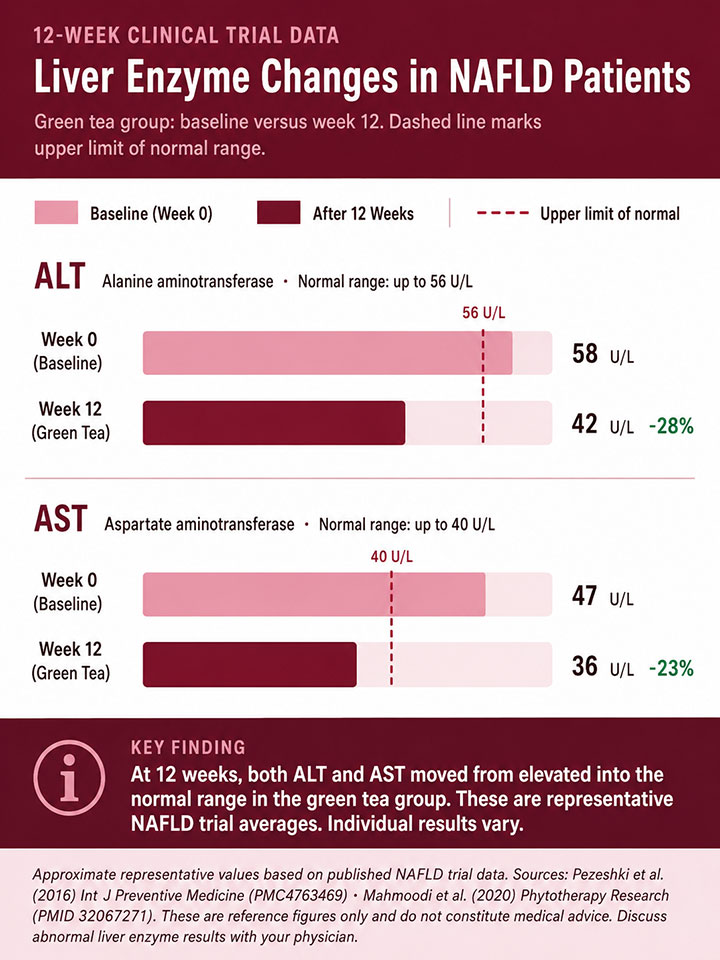
For people with fatty liver disease specifically, the randomized trial data is more consistent than the pooled meta-analysis result suggests. Pezeshki and colleagues enrolled 80 NAFLD patients in a double-blind, placebo-controlled trial reported in the International Journal of Preventive Medicine (2016). All participants had elevated liver enzymes at baseline.
The intervention group received 500mg of green tea extract daily for 12 weeks, an amount equivalent to three to four cups of quality brewed Sencha.
By the end of the trial, the green tea group showed statistically significant reductions in both ALT and AST (p < 0.001). The placebo group also improved slightly, which is common in NAFLD trials where enrollment itself prompts some behavior change, but the magnitude of improvement was meaningfully larger in the intervention group.
Imaging-based evidence comes from a smaller but methodologically distinct study. Sakata and colleagues (2013), writing in the International Journal of Molecular Medicine, tracked 17 NAFLD patients drinking either high-density catechin green tea, low-density catechin green tea, or a placebo for 12 weeks.
Liver status was measured using both ultrasonography and CT scanning, objective imaging rather than blood markers alone. Every participant in the high-density catechin group showed an improved liver-to-spleen attenuation ratio by week 12, a direct measure of hepatic fat content that doesn’t rely on subjective markers.
ALT also decreased significantly in that group. The sample size limits how far this finding can be generalized, and replication in larger trials would add confidence. It remains the clearest direct evidence in the literature that regular high-catechin tea changes what the liver actually looks like on imaging, not just what the blood tests read.
Two caveats on this evidence base should be on the table before drawing conclusions from individual trials. Most studies use green tea extract capsules rather than brewed tea, which raises genuine questions about whether results translate directly to the beverage.
The Mahmoodi meta-analysis result (that the pooled effect is non-significant across all 15 trials) is the most methodologically conservative reading of the full literature and shouldn’t be dismissed in favor of individual positive trials.
The evidence for NAFLD patients is real and fairly consistent. For healthy adults with normal liver function, it is weak.
How Much to Drink, and When
The doses that produced measurable change in the clinical trials clustered between 450mg and 700mg of catechins per day. A cup of quality loose-leaf Sencha or Dragonwell delivers roughly 100-150mg per serving.
Three to five cups daily gets into that range. Most people start at two cups and add a third after a few days rather than going straight to five, since brewed tea contains caffeine and tolerance varies.
Consistency over weeks matters more than any single day’s dose. The Pezeshki trial ran for 12 weeks before liver enzyme reductions reached significance. One month of tea drinking is unlikely to produce a detectable change in ALT or AST.
Two to three months of daily intake is the timeframe the evidence actually supports, which is a different expectation from what most “green tea for liver detox” articles set.
Best Time to Drink Green Tea for Fatty Liver
No clinical trial has compared morning versus afternoon intake and found a meaningful difference in liver outcomes. What matters more is avoiding the interactions that reduce catechin absorption or create unnecessary metabolic competition.
Catechins reduce non-heme iron absorption by approximately 25-30% when tea is consumed with food. For most adults, this is a non-issue. For anyone managing iron deficiency alongside liver disease, drinking tea between meals (at least one hour away from iron-rich food) is the practical adjustment.
For people sensitive to caffeine, drinking past mid-afternoon tends to interfere with sleep quality, which matters independently for liver health. The liver does a significant portion of its fat-metabolism work during sleep. Decaffeinated green tea avoids this issue entirely, preserves 80-90% of the catechin content, and is the practical option for evening intake.
Green Tea Catechin Calculator
Your Personalized Plan
Recommended Daily Cups
-
Daily Catechin Intake
-
Daily EGCG Intake
-
Your Daily Schedule
Best Green Tea for Liver Health: Which Type Has the Most EGCG
Japanese Sencha is the most practical choice for consistent daily use: reliably high catechin content, widely available, and forgiving to brew. Matcha delivers more EGCG per serving than any steeped tea because the whole leaf is consumed as a ground powder rather than as an infusion. One properly prepared cup of matcha is roughly equivalent to three cups of steeped Sencha in catechin concentration.
Chinese Dragonwell (Longjing) is pan-fired rather than steamed, which gives it a slightly lower catechin level than Sencha but a more accessible flavor for people who find the grassier Japanese styles difficult.
Decaffeinated green tea, for anyone managing caffeine intake, works. Commercial decaffeination preserves 80-90% of catechins. Bottled commercial green teas are a different matter: testing has found catechin content at 3-25% of freshly brewed tea, and most products contain enough added sugar to counteract the metabolic benefit entirely.
The target catechin dose (450-700 mg daily) is achievable with basic quality loose-leaf tea from any reputable retailer. No specialist sourcing is required. The bigger variable is consistency over weeks, not tea variety.
How to Brew It So the Catechins Survive
Water temperature is the variable most people don’t control and that degrades results most directly. Catechins break down at boiling temperature while bitter tannins increase simultaneously, which is also why many people who say they don’t like green tea have never tasted it properly brewed.
The target range is 75-80°C (170-175°F), which without a thermometer is the moment small bubbles are just beginning to form at the base of the kettle before the water breaks into a rolling boil.
Steeping for two to three minutes at that temperature is the standard used across most research protocols. Milk proteins bind to catechins and reduce catechin absorption. Lemon juice may slightly increase catechin stability in the cup and has a modest effect on bioavailability in some research.
Cold brewing (steeping tea leaves in cold water for eight to twelve hours) produces a smoother, lower-caffeine cup that preserves most catechins, and is a practical option for people who find hot-brewed green tea bitter.
The Supplement Warning
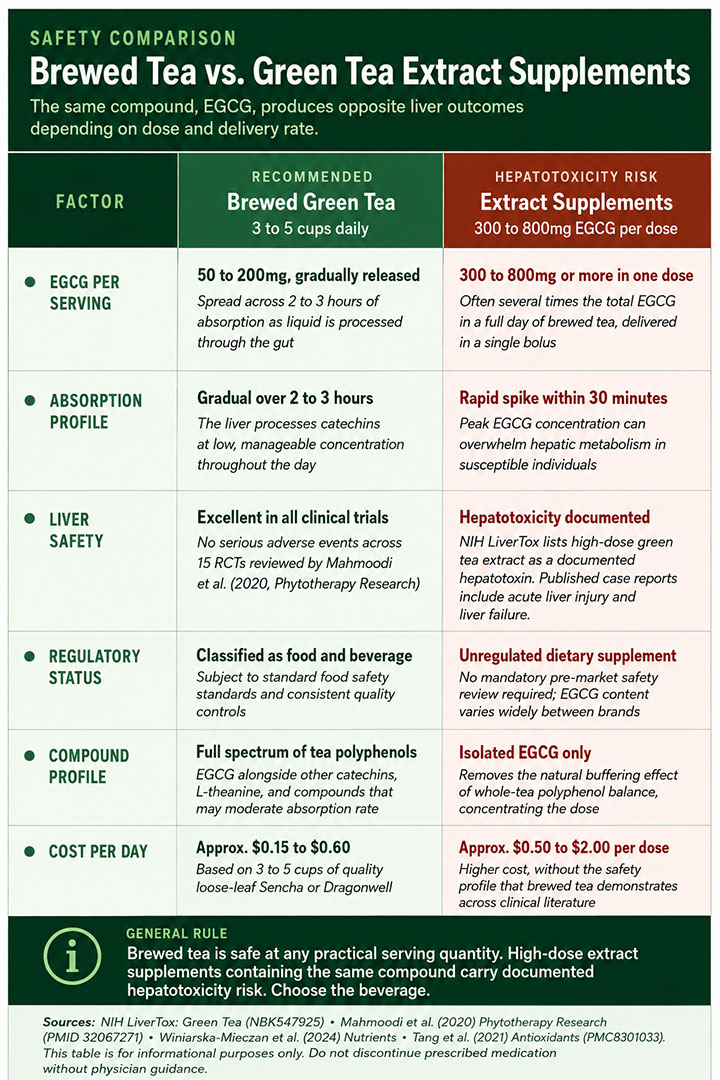
The NIH’s LiverTox database, which tracks drug and supplement-induced liver injury, lists green tea extract as a documented hepatotoxin at high doses. That’s the same compound that appears to protect the liver in brewed-tea form. The difference is dose and delivery rate, not the compound itself.
Brewed tea releases catechins gradually as liquid is absorbed across the small intestine, and the liver processes them over two to three hours at low concentration.
A green tea extract capsule delivers a bolus of 300-800mg of EGCG within 30 minutes of ingestion, often several times what a full day of brewed tea provides. For a subset of people, this rapid high-concentration delivery overwhelms the liver’s capacity to process it safely.
Published case reports in the LiverTox database describe acute liver injury requiring hospitalization after use of concentrated green tea extract products. Some of those cases progressed to liver failure. Across the human clinical trials of brewed tea and low-dose catechin supplementation, the safety record is excellent.
The Mahmoodi meta-analysis found no serious adverse events across any of the 15 included trials. That safety profile does not extend to concentrated extract supplements, which operate in an entirely different dosing regime.
Stick with actual brewed tea. Skip supplements unless a physician has specifically recommended them and is monitoring liver function alongside.
Green Tea Alongside Other Liver Habits
Coffee has arguably the strongest observational evidence of any beverage for liver outcomes. A large-scale pooled analysis of data from multiple prospective cohorts and more than 400,000 participants found that two or more cups of coffee daily were associated with substantially lower risk of liver cirrhosis compared to non-drinkers.
Green tea and coffee work through different mechanisms: coffee primarily via chlorogenic acids and caffeine’s effects on liver enzyme activity, green tea via EGCG’s direct metabolic action at the cellular level. Pick whichever you’ll actually drink consistently.
Diet matters considerably more than any single beverage. The Mediterranean dietary pattern (vegetables, olive oil, fatty fish, legumes, whole grains, minimal added sugar) is the most studied nutritional approach for NAFLD and consistently produces larger effects than individual foods in trial comparisons. Green tea fits naturally within that pattern but cannot substitute for it.
Consistent physical activity also has a claim on liver fat that predates the green tea literature by decades. Research across multiple controlled trials, including a randomized study published in JAMA Internal Medicine, has found that 150 minutes of moderate-intensity exercise per week (standard public-health guidance, nothing extreme) reduces liver fat measurably in NAFLD patients, often without accompanying weight loss or dietary change.
This matters for how to think about green tea: the beverage is one tool in a picture where movement and diet are doing heavier work. Framing it as the primary intervention misreads the evidence.
Who Should Be Extra Careful
Green tea is safe for most adults at three to five cups of brewed tea daily, which is also roughly the dose where the liver-benefit evidence actually lives. The cautions below are real, but none of them make green tea a high-risk addition for the population most likely to benefit.
People taking warfarin or other vitamin K-dependent anticoagulants should discuss their daily green tea intake with their prescribing physician, since the vitamin K content can affect anticoagulation management and larger amounts may require dose monitoring.
People with iron deficiency or anemia should drink tea between meals rather than with food. Catechins reduce non-heme iron absorption by approximately 25-30%, so timing the tea at least one hour away from iron-rich meals or iron supplements avoids the interaction.
Pregnant and breastfeeding women should limit caffeine intake to standard guidance levels (generally under 200mg per day). Two to three cups of regular green tea daily (or any amount of decaffeinated) stays well within that range. The catechins themselves are not the concern in this context.
Anyone with GERD or acid reflux may find green tea irritating, particularly on an empty stomach. Drinking tea with a small amount of food generally reduces irritation. People with more advanced liver disease (cirrhosis, active viral hepatitis, prior drug-induced liver injury) should confirm with their hepatologist before adding regular green tea to their diet. The NAFLD evidence doesn’t straightforwardly apply to those populations.
A Recipe Worth Making
Matcha With Turmeric and Black Pepper
Matcha delivers the highest EGCG concentration of any green tea preparation because the whole leaf is consumed rather than steeped. Adding turmeric and black pepper compounds the effect: turmeric supplies curcumin, which targets liver inflammation through a different pathway than EGCG, while black pepper increases curcumin absorption substantially. This combination isn’t health-food theater.
Ingredients: 1 tsp matcha powder, 8 oz unsweetened oat or almond milk, 1/2 tsp turmeric powder, a small pinch of black pepper, 1 tsp raw honey (optional).
Method: Sift matcha into a bowl to remove clumps. Add 2 oz of water at 175°F and whisk vigorously until frothy. Heat and froth the milk separately. Pour the milk into the matcha, stir in turmeric and black pepper, and add honey if using.
For a simpler daily option that avoids caffeine and bitterness: steep two teaspoons of loose-leaf Sencha in cold water overnight in a covered pitcher and strain in the morning. Cold brewing reduces caffeine by roughly 50% while preserving most catechins, and produces a noticeably smoother cup than any hot-brewed method.
The Specific Finding Is the Useful One
The specificity in this research is a feature, not a caveat. A dietary intervention that works for a defined population in a measurable way is more clinically useful than a general promise that works a little for everyone.
If you have NAFLD (diagnosed or suspected), three to five cups of quality brewed green tea daily is one of the few dietary additions with a reasonable body of evidence behind it, at a cost of pennies per cup and a safety profile that clinical trials have found genuinely favorable.
The supplement industry tried to bottle that same effect and made it risky in the process. The unremarkable cup, brewed simply and drunk consistently, is the one the research actually supports.
Frequently Asked Questions
Is green tea good for your liver?
For people with non-alcoholic fatty liver disease, the clinical evidence is reasonably consistent: regular daily intake of quality brewed green tea reduces liver enzymes in most trials and appears to reduce hepatic fat content in imaging studies.
For people with healthy liver function at baseline, the pooled clinical data does not show a significant benefit. The benefit concentrates in people whose livers are already under metabolic or inflammatory stress.
Is green tea good for fatty liver specifically?
Yes, and that’s the more precise statement the evidence supports. The trials showing meaningful liver enzyme reductions predominantly enrolled participants with NAFLD.
The Pezeshki trial (2016) found significant ALT and AST reductions after 12 weeks in NAFLD patients at a dose equivalent to three to four cups of brewed Sencha daily.
The Mahmoodi meta-analysis confirmed the NAFLD subgroup benefit while finding no significant effect in healthy populations.
What happens if you drink green tea every day for 30 days?
At three to five cups daily, 30 days is likely too short to produce measurable changes in liver enzymes or liver fat. The trials that found significant improvements ran for 8-12 weeks. The first month’s value is primarily in establishing a consistent daily habit.
The detectable changes in blood work come after two to three months of sustained intake. Some people report modest improvements in digestion and energy stability earlier than that, but blood-based liver markers typically require a longer runway.
Can green tea ever be bad for your liver?
Brewed tea is not associated with liver injury in any of the clinical trial literature. High-dose green tea extract supplements are documented in the NIH LiverTox database as hepatotoxins in a subset of users. The distinction is dose and delivery rate, not the compound itself.
At the concentrations present in brewed tea, EGCG is processed safely. At the concentrations delivered by concentrated extract capsules, it can overwhelm hepatic metabolism in susceptible individuals.
Is green tea good for liver cirrhosis patients?
People with cirrhosis should discuss this specifically with their hepatologist rather than relying on general guidance. Cirrhosis significantly alters how the liver processes compounds, and the NAFLD evidence base doesn’t map cleanly onto cirrhotic physiology.
Green tea is generally considered low-risk in that population, but the question warrants a direct conversation with the treating physician rather than a general-purpose answer.
Will decaf green tea work just as well?
For liver enzyme and liver fat effects: largely yes. Decaffeination removes 96-98% of caffeine but preserves 80-90% of catechins. The liver outcomes documented in the research literature are attributed to catechins, not to caffeine. Decaf is a practical option for people avoiding stimulants, evening drinkers, and anyone managing caffeine sensitivity alongside liver disease.
Does bottled green tea from the store work?
Not reliably. Commercial bottled green teas have been tested at catechin levels of 3-25% of freshly brewed tea, and most products contain added sugars that directly counteract the metabolic rationale for drinking it in the first place. Brewing loose-leaf tea at home costs less per cup and delivers multiple times the active compound content.
Can I use green tea to treat my fatty liver instead of medication?
Green tea is a complementary approach, not a replacement for medical care. If a physician has prescribed medication or monitoring for liver disease, continue that treatment. For mild NAFLD without current medication, lifestyle-based approaches (diet, exercise, and green tea as part of that pattern) are often the recommended first-line approach, but those lifestyle changes still require medical monitoring to confirm they’re producing improvement.
Will green tea interact with my medications?
The interactions that matter most are with warfarin (vitamin K content affects anticoagulation), beta-blockers (caffeine may affect heart rate at high green tea intake), and certain antibiotics (caffeine metabolism can be affected).
If you take prescription medications daily, let your physician know you’re drinking three to five cups of green tea. They can identify whether any of those interactions apply to your specific regimen.
Adrian is an independent health researcher. His interest in nutrition and gut health started after a bout of amoebic dysentery while on a surf trip to Peru. He's spent the past decade as a fitness and nutrition coach for a competitive karate athlete.