Walk the supplements aisle and you will find a hundred products promising sharper memory, cleaner thinking, and a brain that ages more slowly. The claims are printed confidently. The science behind most of them is not.
Harvard Health has called out the category directly, and AARP’s Global Council on Brain Health reviewed the most popular options and found that for healthy adults without a specific deficiency, the research largely does not support the marketing.
That conclusion is more useful than it might sound. Because the council’s report also found something the supplement industry prefers you overlook: a small number of compounds have genuine human trial data, enough to take seriously, enough to talk about honestly.
This article ranks 10 of them by the strength of that evidence. Not by sales, not by ingredient counts, and not by how confidently the bottle is labeled. The order follows the clinical research, and where the research is weak, contested, or genuinely uncertain, that is stated too.
If you have ever bought something because of a five-star health claim and felt nothing three months later, the ranking below explains why that happens and which supplements have a better case for themselves.
Does any of this actually work?
The honest answer is: some of it does, for some people, under specific conditions. The AARP Global Council’s 2019 report was widely read as a flat rejection of the entire supplement category, but the nuance matters.
The council concluded that supplements taken by healthy adults without nutritional deficiencies showed little benefit. That leaves open a meaningful population: older adults who are deficient in key nutrients, or those already experiencing mild memory changes.
Research published in Nutrition Reviews in 2021 analyzed data from more than 3,400 participants across randomized controlled trials and found that B vitamin supplementation slowed cognitive decline in people without dementia, but only when the intervention started early and ran for at least several months.
The same pattern repeats across multiple supplements reviewed below: the evidence is strongest in people who are already at some disadvantage, whether through nutritional deficiency, elevated homocysteine, or early-stage memory concerns.
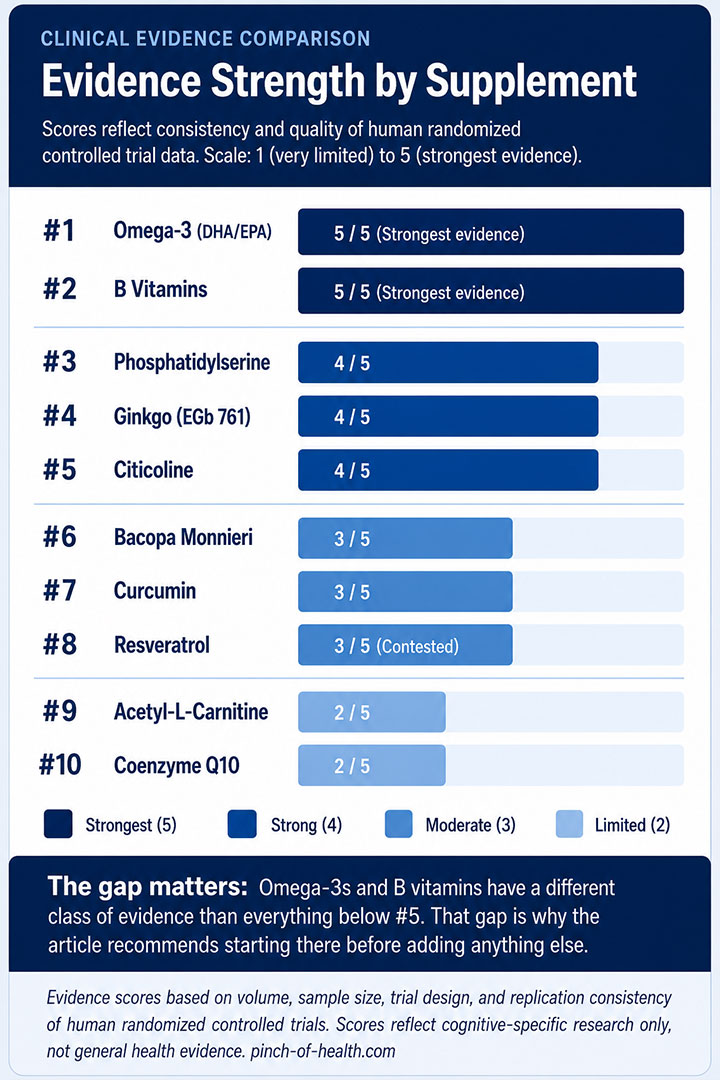
The ranking below reflects that. Supplements backed by multiple large, well-designed trials in relevant populations land at the top. Those with one small positive trial, or with contested results across studies, land lower. CoQ10, the last entry, is there because its evidence for cognitive benefit in healthy older adults is genuinely thin.
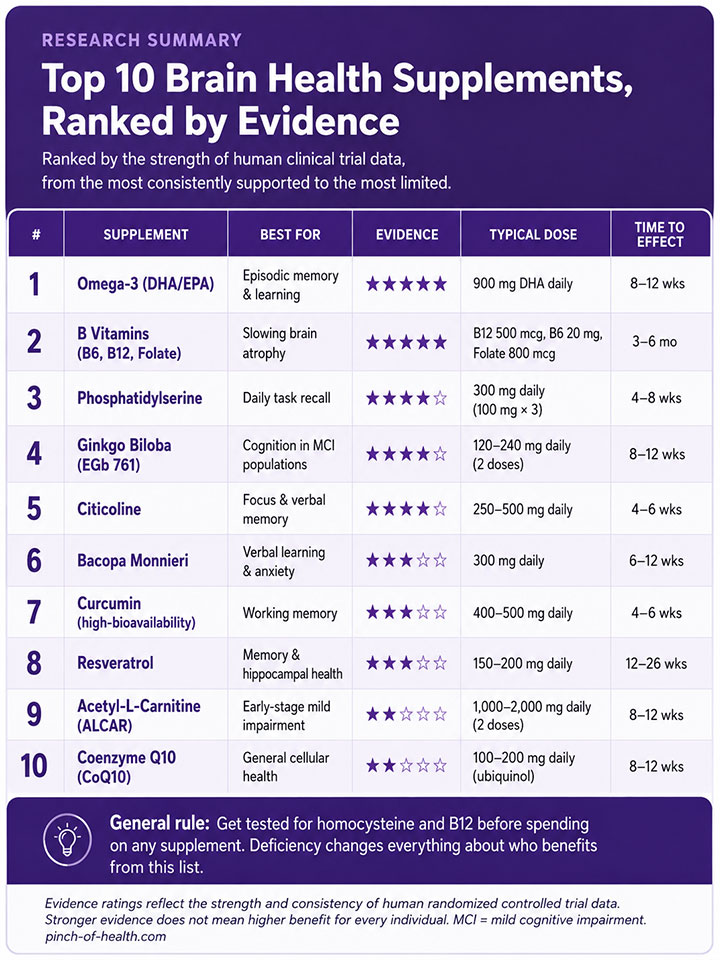
1: Omega-3 Fatty Acids (DHA and EPA)
Omega-3s are the most-studied supplement on this list, by a significant margin. DHA is the primary structural omega-3 fat in brain tissue, making up a large share of cell membrane composition. EPA supports circulation and reduces neuroinflammation. Both matter, but the cognitive research points most clearly to DHA.
The landmark study here is the MIDAS trial, run by Karin Yurko-Mauro and colleagues at Martek Biosciences. They enrolled 485 adults over 55 with mild memory complaints and ran a randomized, double-blind, placebo-controlled trial for 24 weeks.
Participants took 900 mg of algal DHA daily. The primary outcome was the CANTAB Paired Associate Learning test, which measures visuospatial episodic memory, the kind of memory involved in learning where objects are, recognizing faces alongside names, and recalling events from earlier in the day.
The DHA group made significantly fewer errors than the placebo group, and verbal recognition memory improved as well.
The MIDAS trial is worth dwelling on. Episodic memory is precisely what most people over 60 notice declining first. It is also the domain most affected in early Alzheimer’s disease. A 24-week trial in a population that is neither healthy nor clinically impaired, producing a statistically significant result on a validated cognitive test, places omega-3s in a different category from most of the supplements below.
One note worth flagging: a 2025 dose-response meta-analysis of 58 randomized trials found gains in attention and memory at approximately 2,000 mg daily, somewhat higher than the MIDAS dose. That finding needs replication, but it suggests the optimal dose question is not fully settled.
Research-backed dose: 900 mg DHA daily, taken with a fatty meal for better absorption. Look for supplements that list the DHA content separately from total omega-3s. Many capsules contain more EPA than DHA, and brain-specific benefits appear tied more closely to DHA.
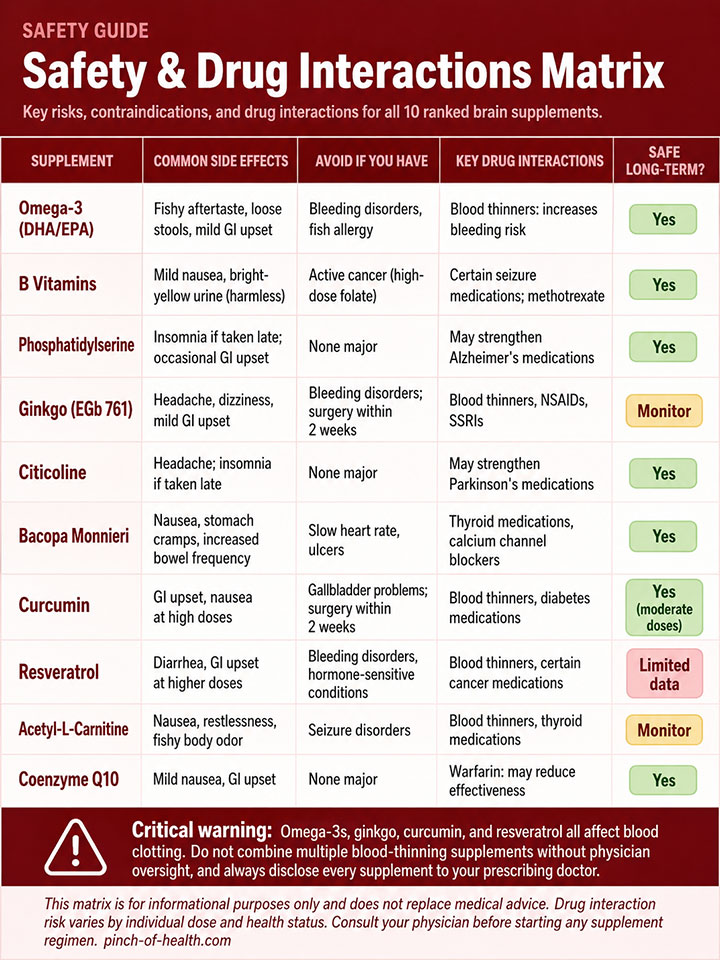
Common side effects: Fishy aftertaste, mild GI upset. Store in the refrigerator to reduce oxidation and fishy burps. Avoid if you have a bleeding disorder, and flag use with your doctor if you take blood thinners.
Time to notice effects: 8 to 12 weeks.
2: B Vitamins (B6, B12, and Folate)
These three B vitamins work as a system. Their primary role in brain health is lowering homocysteine, an amino acid that accumulates in the blood when B vitamin intake is insufficient. Elevated homocysteine is associated with accelerated brain atrophy, impaired cognition, and increased dementia risk.
The key trial is the VITACOG study, led by A. David Smith at Oxford and published in PLOS One in 2010. The researchers enrolled 271 people over 70 with mild cognitive impairment and ran a two-year randomized, double-blind, placebo-controlled trial.
Participants received folic acid at 0.8 mg per day, B12 at 0.5 mg per day, and B6 at 20 mg per day. Brain volume loss was measured with serial MRI scans at the start and end of the study. The B-vitamin group lost brain volume at a significantly slower rate.
Among participants with homocysteine above 13 micromoles per liter at baseline, the atrophy rate dropped by 53% compared to placebo. A secondary analysis of cognitive and clinical outcomes, published by de Jager and colleagues in International Journal of Geriatric Psychiatry in 2012, confirmed the cognitive benefit was most pronounced in people with elevated homocysteine at the outset.
That 53% figure is not widely quoted, but it should be. The Witte 2014 study discussed under Resveratrol (#8) used brain MRI to show structural changes after 26 weeks of supplementation, and that was considered noteworthy in a trial of 46 people.
The VITACOG trial did something similar with 271 participants over two years, in a population where the effect is measurable, and the mechanism is understood. B vitamins belong this high on the ranking.
There is a meaningful catch, though: the benefit appears specific to people with elevated homocysteine. A 2021 meta-analysis in Nutrition Reviews pooled data from 3,431 participants and found that B supplementation slowed cognitive decline in non-demented adults, but the effect was strongest when homocysteine was elevated at baseline.
Without that data point, you are probably taking these on faith. A simple blood test can tell you whether you need them.
Research-backed dose: B6 at 20 mg, B12 at 500 mcg, folate at 800 mcg daily, taken in the morning with food. Look for methylcobalamin (B12) and methylfolate rather than cyanocobalamin and folic acid. The methylated forms are better absorbed, particularly in older adults.
Common side effects: Mild nausea, bright-yellow urine (harmless). Get homocysteine levels checked before starting.
Time to notice effects: 3 to 6 months for measurable changes.

3: Phosphatidylserine
Phosphatidylserine is a phospholipid that forms a major part of neuron cell membranes, where it supports signal transmission and membrane integrity. The brain produces it naturally, but levels decline with age.
The Crook et al. 1991 trial in Neurology is the most cited study. Thomas Crook and colleagues treated 149 people aged 50 to 75 with age-associated memory impairment for 12 weeks, using 300 mg per day of phosphatidylserine against placebo.
Those treated showed improvement on tests of learning and daily memory tasks, with the strongest effects in participants who started out performing worst.
There is something important to say about this study that the original article left out: the phosphatidylserine used was bovine cortex-derived (BC-PS), extracted from cow brains. That form is no longer available due to concerns about bovine spongiform encephalopathy (BSE).
Modern supplements use soy or sunflower-derived PS, which has a different fatty acid composition. The evidence for plant-derived PS is weaker than the original bovine-derived studies suggest.
A review published in ScienceDirect Topics notes that soy-derived PS has shown some positive results in elderly people with memory complaints, but the effect size appears more modest. The evidence is real. It just needs that caveat attached to it.
The standard dose from the research is 300 mg daily, divided across three meals rather than taken at once (each serving is 100 mg, which is how most capsules are sold). One practical note that matters: taken too late in the day, phosphatidylserine causes sleep disruption in some people, so keep the last dose before mid-afternoon.
No significant drug interactions are documented, though it may increase the effect of Alzheimer’s medications if you take them. Effects in the trials appeared between four and eight weeks, though the bovine-vs-plant sourcing gap means the timeline from modern soy-derived supplements may run a little longer than those early studies suggest.
4: Ginkgo Biloba Extract (EGb 761)
Ginkgo biloba has been used in traditional medicine for centuries. The research-relevant form is a standardized extract called EGb 761, which must contain 22 to 27% flavonoid glycosides and 5 to 7% terpene lactones. Ginkgo powder without standardization is a different product.
A 2015 systematic review and meta-analysis by Tan and colleagues, published in the Journal of Alzheimer’s Disease, pooled data from nine randomized controlled trials with a total of 2,561 patients, with trial durations ranging from 22 to 26 weeks.
In people with cognitive impairment and dementia, EGb 761 showed significant benefits for cognition and activities of daily living. The results in healthy adults with normal cognition were considerably more modest.
Researchers still do not agree on why the population difference is so pronounced, but the pattern is consistent across reviews.
It is worth being direct about what this means: if your memory is currently normal for your age, ginkgo is probably not doing much. It belongs at #4 on this list because the evidence is solid for the population it actually works in, not because it is a general-purpose cognitive supplement.
Research-backed dose: 120 to 240 mg daily, split into two doses, morning and early afternoon. Look for products labeled “EGb 761” with the standardization percentages listed. Stop use at least two weeks before any scheduled surgery due to bleeding risk.
Common side effects: Headache, dizziness, mild GI upset. Avoid with blood thinners, NSAIDs, and certain antidepressants.
Time to notice effects: 8 to 12 weeks.
5: Citicoline (CDP-Choline)
Citicoline is a naturally occurring compound the brain uses to produce acetylcholine, the neurotransmitter most closely associated with memory and attention. When you take citicoline as a supplement, it crosses the blood-brain barrier and supports acetylcholine synthesis and phospholipid production simultaneously.
The most relevant trial for healthy older adults is the Spiers et al. 1996 study in the Archives of Neurology. The researchers enrolled 95 adults between 50 and 85 with age-associated memory impairment, randomized to either 1,000 mg per day of citicoline or placebo for three months.
Participants who took citicoline showed improved verbal memory, particularly in the subgroup with less efficient memories at baseline. A follow-up crossover study at 2,000 mg per day showed similar improvements in both immediate and delayed verbal recall.
A more recent 2021 trial published in the Journal of Nutrition enrolled 100 healthy older adults and found that 500 mg per day for 12 weeks improved episodic memory and composite memory scores compared to placebo.
The findings are consistent, and the mechanism is well-understood. Citicoline ranks fifth rather than higher primarily because the evidence base, while solid, is less extensive than omega-3s or B vitamins.
Research-backed dose: 250 to 500 mg daily, in the morning. Start at the lower end to assess tolerance. Citicoline is naturally produced by the body, and long-term safety data are favorable.
Common side effects: Headache, insomnia if taken late. May strengthen the effect of Parkinson’s medications.
Time to notice effects: 4 to 6 weeks. Some people report faster response than with other supplements on this list.
6: Bacopa Monnieri
Bacopa has been used in Ayurvedic medicine for centuries under the name Brahmi. Unlike most supplements on this list, it appears to address both memory and anxiety, which makes it relevant for a specific kind of reader: someone who is noticing memory concerns and finding that stress is compounding them.
The Calabrese et al. 2008 study, published in the Journal of Alternative and Complementary Medicine, enrolled 54 adults over 65 (48 completed the trial) in a randomized, double-blind, placebo-controlled design.
Participants took 300 mg per day of standardized Bacopa extract for 12 weeks. Word recall improved compared to placebo. Depression and anxiety scores also decreased in the Bacopa group, while they increased slightly in the placebo group.
The anxiety-and-memory combination finding is genuinely interesting. It does not appear to be a placebo effect in the standard sense, because anxiety reduction alone does not reliably produce memory improvement in trials of this type.
The leading hypothesis involves two mechanisms working in parallel: Bacopa’s active compounds, called bacosides, appear to increase acetylcholine activity in the hippocampus while simultaneously reducing cortisol response to acute stress.
Animal models have shown both effects clearly. The human evidence suggests they happen together, which would explain why the memory and mood improvements track so closely in the trials. Whether that dual action is causal or correlational is still being studied, but it is a more specific mechanistic story than most supplements on this list can offer.
Bacopa requires patience. Benefits are consistently slow to appear across every trial that measured them: allow 6 to 12 weeks before drawing conclusions. Look for extracts standardized to at least 45% bacosides.
Research-backed dose: 300 mg daily with breakfast. Food significantly improves absorption and reduces the nausea that occurs in a minority of users.
Common side effects: Nausea, stomach cramps, increased bowel frequency. Avoid with thyroid medications and calcium channel blockers.
Time to notice effects: 6 to 12 weeks.
7: Curcumin (Enhanced Bioavailability Forms Only)
Curcumin is the active polyphenol in turmeric. It has well-characterized anti-inflammatory and antioxidant properties. Both processes appear to play a role in age-related cognitive decline: chronic neuroinflammation and oxidative stress.
The problem is that plain curcumin from turmeric powder is absorbed so poorly by the body that eating turmeric produces almost no detectable curcumin in blood plasma. For most people adding turmeric to their diet for brain health, the curcumin itself is not reaching the brain.
The Cox et al. 2015 study at Swinburne University used a solid lipid curcumin formulation called Longvida at 400 mg per day in 60 healthy adults aged 60 to 85. After four weeks, working memory and mood improved significantly.
Fatigue ratings dropped. A 2020 partial replication study by the same team produced consistent results at 12 weeks. The key is the delivery vehicle: Longvida and similar high-bioavailability forms (products listing BCM-95, Meriva, or a piperine-plus-fat matrix) produce measurable blood levels, whereas plain curcumin capsules often do not.
The evidence base here is narrower than for the supplements ranked above: two trials, both from the same research group at Swinburne, both relatively small. That is not a trivial limitation. If you spend $45 on a bottle based on two studies from one lab that have not been independently replicated at scale, you are making a bet, not following the science.
The effects may well be real, the mechanism is plausible, and the bioavailability problem is genuine, but this is a supplement where certainty about what you are getting requires more than what the current research can offer. Start here only after covering the stronger options above.
Research-backed dose: 400 to 500 mg daily of a high-bioavailability formulation, taken with your largest meal. Labels should name the specific high-bioavailability form. Piperine (black pepper extract) increases absorption substantially but can interact with certain medications.
Common side effects: GI upset, nausea at high doses. Avoid before surgery. Interacts with blood thinners and diabetes medications.
Time to notice effects: 4 to 6 weeks.
8: Resveratrol
Resveratrol is a polyphenol found in grape skins, berries, and peanuts. It has attracted research interest as a potential caloric restriction mimetic: it may activate some of the same cellular pathways that make caloric restriction beneficial for aging.
The Witte et al. 2014 study in the Journal of Neuroscience followed 46 healthy overweight adults between 50 and 75 who took 200 mg per day of resveratrol for 26 weeks. Memory performance improved, and brain MRI scans showed increased functional connectivity in the hippocampus, with three outcomes correlating with each other: better glucose metabolism, stronger hippocampal connectivity, and improved verbal episodic memory. That combination of behavioral and neuroimaging findings in a small trial was striking enough to generate considerable follow-up interest.
What happened next, though, is part of the honest picture. A 2017 meta-analysis by Farzaei and colleagues pooled data from four studies including the Witte trial and found no significant effect of resveratrol on cognitive performance overall.
The Witte finding has not been robustly replicated. Resveratrol’s human evidence base remains promising but contested, which is why it sits at #8 rather than higher.
Long-term safety data in humans is also more limited than for the higher-ranked supplements on this list.
Research-backed dose: 150 to 200 mg daily, with food. Monitor with a physician if you take blood thinners, as interaction risk is real.
Common side effects: Diarrhea, GI upset at higher doses.
Time to notice effects: 12 to 26 weeks.
9: Acetyl-L-Carnitine
Acetyl-L-carnitine (ALCAR) is an acetylated form of the amino acid L-carnitine that crosses the blood-brain barrier more effectively than standard L-carnitine, plays a role in mitochondrial energy metabolism, and has been studied in populations with mild cognitive impairment and early Alzheimer’s disease.
The Montgomery, Thal, and Amrein 2003 meta-analysis, published in International Clinical Psychopharmacology, pooled data from 21 double-blind randomized controlled trials involving 1,204 adults with mild cognitive impairment or mild Alzheimer’s disease. Doses ranged from 1.5 to 3.0 g per day for 3 to 12 months.
The meta-analysis found a significant benefit on clinical scales and psychometric tests. On the same evidence, a Cochrane systematic review published the same year by Hudson and Tabet reached a more cautious conclusion: the evidence was insufficient to recommend clinical use, with substantial methodological heterogeneity across the included trials.
Two research groups, same data, opposite verdicts. That is an unresolved finding, not a settled one. The benefit for early cognitive impairment is plausible mechanistically and has some support, but the case for use by healthy adults without impairment is considerably weaker.
ALCAR belongs at #9 because the evidence is real but modest and contested, primarily relevant at the earliest stages of cognitive concern rather than as prevention.
Research-backed dose: 1,000 to 2,000 mg daily, split into two doses, morning and early afternoon. Can be taken without food but switch to with-food if nausea occurs.
Common side effects: Nausea, restlessness, fishy body odor. Avoid with seizure disorders. Interacts with blood thinners and thyroid medications.
Time to notice effects: 8 to 12 weeks.
10: Coenzyme Q10 (CoQ10)
CoQ10 makes this list for an unusual reason: the cognitive evidence is weak, and saying so plainly is worth doing. It belongs on a ranked list of brain supplements the way a footnote belongs in a paper: an honest accounting of what almost made the argument and what fell short.
The body produces CoQ10 naturally, and its role in mitochondrial energy production is well established. Levels decline with age, and statin medications reduce them further. The cardiovascular research behind it is solid, but whether any of that translates to cognitive benefit in humans is the question the research has not yet answered.
The human evidence specifically on CoQ10 and cognitive function in older adults is thin. A 2019 protocol paper in Frontiers in Aging Neuroscience described the design of a 90-day randomized controlled trial of ubiquinol (200 mg per day) in adults over 60, framing CoQ10 as a novel cognitive treatment with potential given its established effects on mitochondrial function.
The trial is not a finding. A 2014 Japanese observational cohort study by Yamagishi and colleagues found that lower serum CoQ10 levels at baseline were associated with a higher risk of disabling dementia over follow-up, but that is a blood-level association, not an intervention result. Randomized trial data on CoQ10 and cognition in healthy older adults is limited and inconclusive.
CoQ10 appears at the bottom of this ranking precisely because the evidence that places it higher simply does not yet exist. It is a reasonable component of a general health regimen, particularly if you take statins. As a specific cognitive supplement, it is ahead of the evidence.
Research-backed dose: 100 to 200 mg daily of the ubiquinol form, which absorbs better than ubiquinone. Take with a fatty meal.
Common side effects: Mild nausea, GI upset. May reduce the effectiveness of warfarin. Discuss with your prescribing physician before starting.
Time to notice effects: 8 to 12 weeks, with the caveat that clear cognitive evidence for this dose in healthy older adults has not been established.
A few more worth knowing about
Every ranked list like this one has a border problem: the compounds just outside the cutoff are often more interesting than the ones that barely made it in. CoQ10 is at #10 because its cognitive evidence is thin.
Three supplements sit just outside the ranking for the same reason: the human trial data is not there yet, though the mechanisms are plausible. They appear frequently in other articles and deserve a straight answer about where they actually stand.
Magnesium L-threonate is a specific form of magnesium developed to increase magnesium levels in brain tissue. Animal studies showed meaningful effects on synaptic density and memory. Human trials are limited but ongoing.
Standard magnesium supplements do not cross the blood-brain barrier effectively, whereas magnesium L-threonate is specifically designed to do so. The data is not yet sufficient to rank it, but it is a legitimate area of investigation.
Creatine has long been used in exercise science, but researchers are increasingly interested in its role in brain energy metabolism. The brain uses a significant amount of ATP, particularly during cognitively demanding tasks.
Preliminary human trials suggest creatine supplementation may benefit working memory and processing speed in sleep-deprived or vegetarian individuals, who have lower baseline creatine levels. The evidence in well-nourished adults is thinner. A ranking entry is not warranted yet, but this is worth watching.
Lion’s mane mushroom (Hericium erinaceus) is the most frequently cited natural cognitive supplement not covered in the ranking above. Some small human trials and a body of animal research suggest it may stimulate nerve growth factor synthesis. T
he human evidence is preliminary and needs larger, independent replication. For now, lion’s mane belongs on the watchlist, not the shopping list.
What to avoid after 50
A number of supplements are actively marketed for brain health but carry real risk or have evidence problems serious enough to warrant caution.
Huperzine A inhibits acetylcholinesterase, the enzyme that breaks down acetylcholine. That sounds useful in theory, but it produces drug-level effects and can cause a dangerous buildup of acetylcholine, particularly when combined with Alzheimer’s medications or cholinergic supplements like citicoline. It should not be taken without physician oversight.
Vinpocetine acts as a blood thinner alongside its other effects. Combined with omega-3s, ginkgo, or pharmaceutical blood thinners, the additive risk is real.
DMAE (dimethylaminoethanol) has minimal high-quality human research behind it. Some studies suggest it may worsen cognition in certain conditions. The risk-benefit calculation does not favor it.
High-dose vitamin E (400 IU or higher) is associated with increased all-cause mortality in older adults at those doses, based on a meta-analysis that pooled data across multiple trials. The dose matters here. Standard dietary amounts from food are not a concern. Supplements at or above 400 IU daily are.
How to choose a quality supplement
The supplement industry is not regulated the way pharmaceutical drugs are. What is on the label does not have to match what is in the bottle unless a third-party organization has independently verified it.
Three certifications are worth looking for: USP (United States Pharmacopeia), NSF International, and ConsumerLab’s CL Seal. Each confirms that the stated ingredients are present at the stated amounts, without contamination.
Beyond certification, specific form matters for several supplements reviewed here. Omega-3 labels should list the DHA content explicitly, not just total omega-3s. Ginkgo must say “EGb 761” with the standardization percentages.
Curcumin must name its high-bioavailability form. B12 is more effectively absorbed as methylcobalamin than cyanocobalamin. These are not marketing distinctions. They reflect meaningfully different absorption profiles.
Proprietary blends that list a combined weight for multiple ingredients are a warning sign. If the individual amounts are not disclosed, you cannot verify that any single compound is present at a dose the research supports.
Can you combine these?
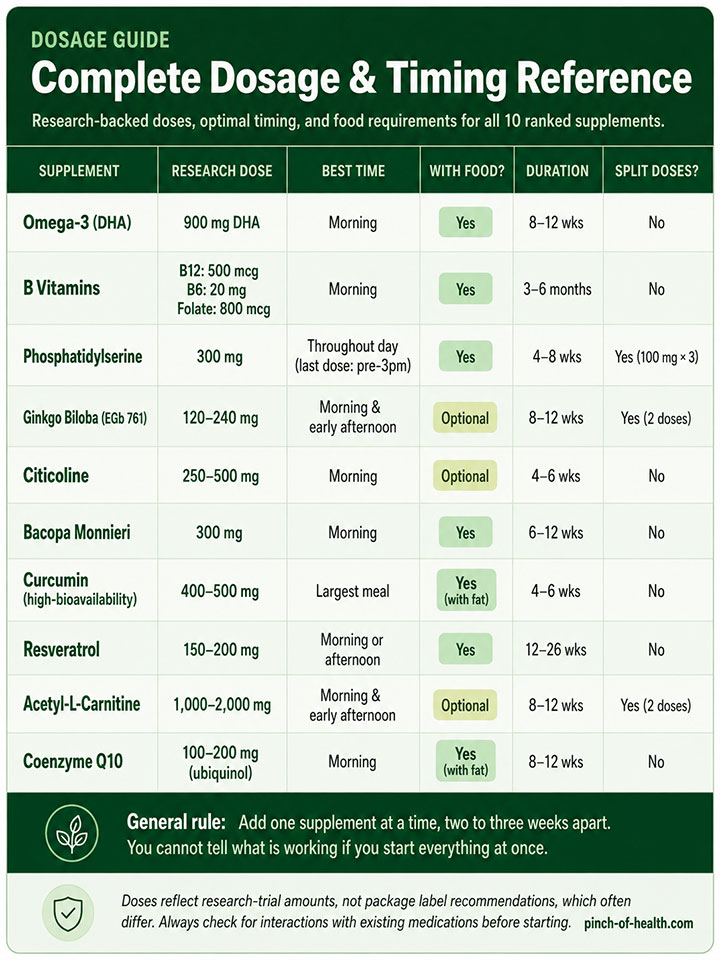
Yes, with some structure and some caution. The safest approach is to add one supplement at a time, waiting two to three weeks between additions. This tells you what is working and what is producing side effects. Starting everything simultaneously makes neither question answerable.
The most well-supported combinations involve omega-3s as the base. Pairing omega-3s with B vitamins addresses two different mechanisms, structural membrane support and homocysteine management, without interaction concerns.
Adding phosphatidylserine to that stack targets a third mechanism, membrane integrity and signal transmission. These three together represent a reasonable starting point for someone who wants a multi-pronged approach grounded in the strongest evidence on this list.
Several supplements on this list affect blood clotting, including omega-3s, ginkgo, curcumin, and resveratrol. Combining multiple blood-thinning effects without physician oversight, or without disclosing all supplements to your prescribing physician, carries real risk. Bring the list of what you take to every appointment.
Brain Supplement Stack Builder
Select the supplements you are considering. Get a custom stack summary with doses, timing, and safety notes.
When supplements are not the answer
The lifestyle findings in this space are more consistent than the supplement findings, and two of them are worth stating plainly.
Kirk Erickson at the University of Pittsburgh led a randomized controlled trial of 120 older adults assigned either to a moderate walking program (40 minutes, three times per week) or to stretching and toning exercises.
After one year, the walking group showed a 2% increase in hippocampal volume, effectively reversing one to two years of age-related shrinkage. The stretching group’s hippocampus decreased in volume over the same period. No supplement in this article has that result behind it.
Social activity also matters more than most people expect. Bryan James at the Rush Alzheimer’s Disease Center studied 1,138 older adults over an average follow-up of five years, extending to 12 years.
A one-point increase in social activity score was associated with a 47% reduction in the rate of cognitive decline, after controlling for physical activity, cognitive activity, and health status. The mechanism is not fully understood, but the association is among the strongest in the cognitive aging literature.
A dietary pattern worth noting: Martha Clare Morris’s observational study of the MIND diet, which emphasizes leafy greens, berries, olive oil, fish, and nuts while reducing red meat and processed foods, found that high adherence was associated with a rate of cognitive decline equivalent to being 7.5 years younger in age.
A 2023 randomized clinical trial of the MIND diet in 604 older adults by Lisa Barnes and colleagues, published in the New England Journal of Medicine, did not find a significant difference between the MIND diet and a calorie-matched control diet over three years.
The observational data and the trial result sit in genuine tension. Both should inform how you think about diet and brain health, rather than one canceling the other out.
The realistic expectation
The supplements at the top of this ranking have something in common beyond the quality of their evidence: they work by addressing real deficits or providing nutrients the brain uses in ways that are structurally and mechanically documented.
DHA is in your brain. Homocysteine causes damage that B vitamins can slow. Phosphatidylserine is a membrane component. These are not speculative mechanisms.
What that means in practice is that the people most likely to notice something are people who were deficient or mildly impaired to begin with. Healthy adults in their 50s with good diets may see less. That is not a failure of the science. It is the science being honest about who benefits and under what conditions.
Start with omega-3s and B vitamins. Verify your homocysteine before you begin, give it three months, and keep notes on what you notice. You will end up with more useful information than most people who buy supplements on the strength of a label claim. That is a better starting point than any ranking can be on its own.
Frequently Asked Questions
How long before I notice effects?
Faster supplements on this list, citicoline and curcumin, may produce changes within four to six weeks. Omega-3s typically take 8 to 12 weeks. B vitamins need three to six months to show measurable effects on brain structure. The brain did not change overnight, and supplementation does not reverse that on a short timeline.
Are these safe for long-term use?
Omega-3s, B vitamins, and phosphatidylserine have been used safely in multi-year studies. Resveratrol’s long-term data in humans is limited. Get annual blood work, disclose everything to your physician, and stop any supplement that produces new symptoms.
What vitamin cuts dementia risk by 40%?
This figure circulates frequently online but does not trace back to a specific trial. What the VITACOG research does show, with solid evidence, is that B vitamins reduced brain atrophy rates by 53% in people with high homocysteine levels. That is not a dementia risk reduction figure, but it is real, large, and verifiable. Getting your homocysteine measured and correcting it with B vitamins if levels are elevated is one of the better-supported cognitive interventions available without a prescription.
Can supplements reverse memory loss?
No supplement reverses significant memory loss or treats dementia. The research shows that some may slow decline or support function in people with mild concerns. If memory problems are affecting daily life, that warrants a medical evaluation, not a supplement purchase.
Should I take breaks from these?
For most supplements on this list, continuous use is appropriate and more consistent with how the trials were run. Cycling off and on introduces variability that makes it harder to assess effect. If you want to periodically reassess whether a supplement is still contributing, a planned pause of four to six weeks with attention to any changes is more informative than random cycling.