That morning stiffness doesn’t have to be your reality. A simple 10-minute yoga routine can change how you move through your day.
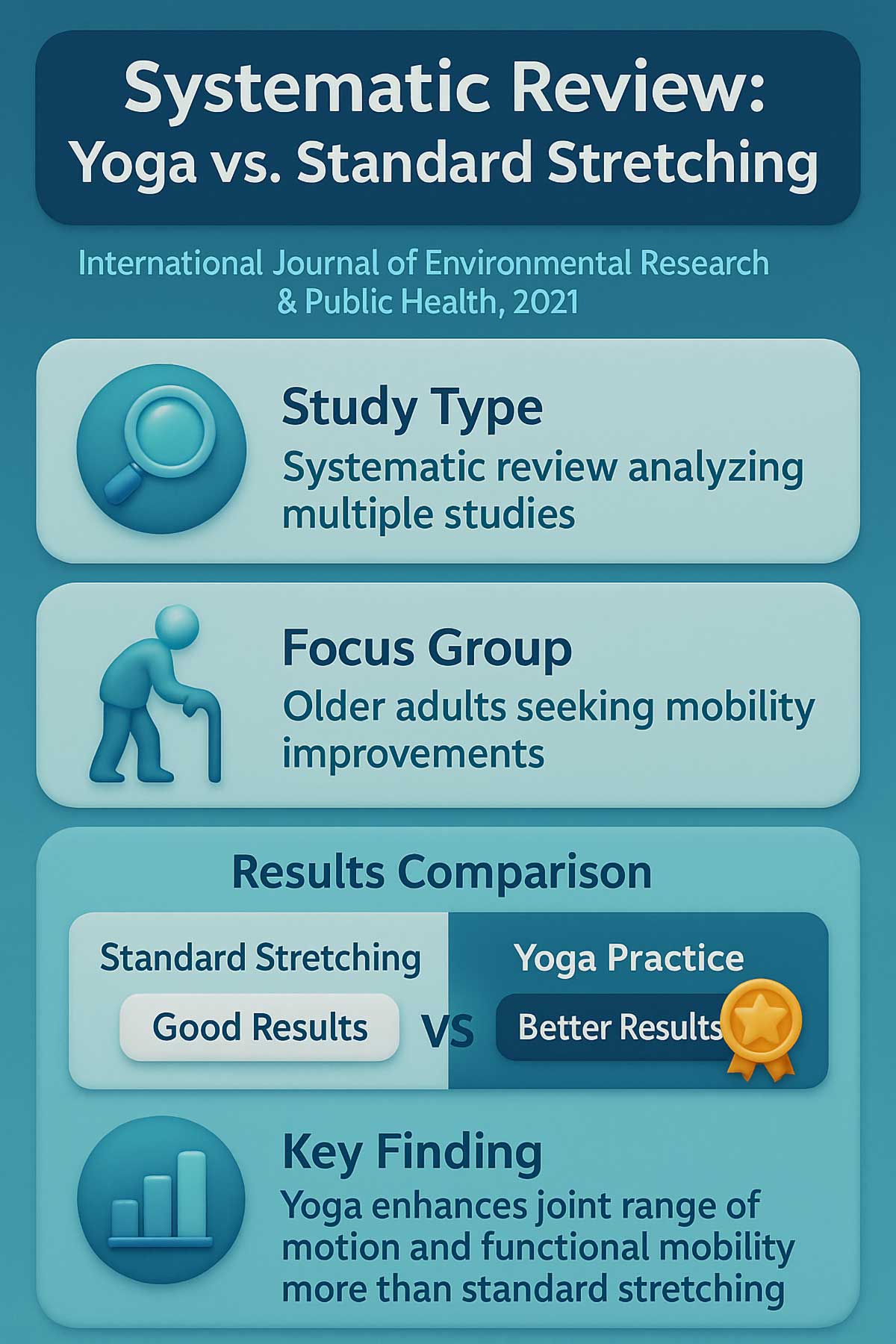
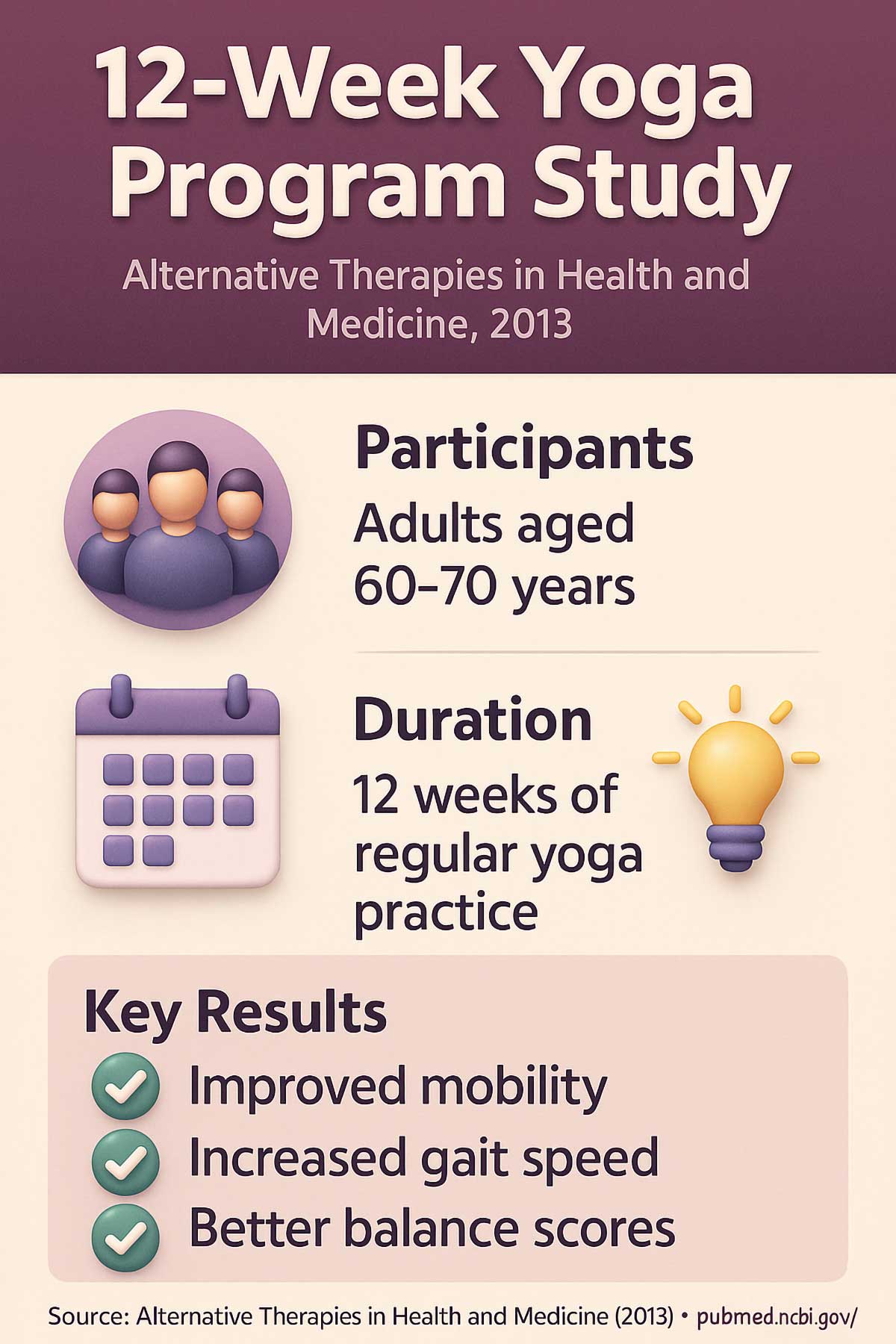
Research from Alternative Therapies in Health and Medicine shows that adults aged 60-70 who completed a 12-week yoga program experienced measurable improvements in mobility and gait speed.
Even better, a 2021 systematic review published in the International Journal of Environmental Research and Public Health confirms that yoga enhances joint range of motion and functional mobility better than standard stretching for older adults.
This routine is different. It’s designed specifically for bodies over 50. No pretzel poses. No complicated sequences. Just six gentle movements that wake up your joints and keep them healthy.
You don’t need any experience. You don’t need special equipment. You just need 10 minutes and a willingness to move.
Pre-practice safety checklist
Before you begin, make sure you’ve covered these basics:
Part 1: The “Why” Behind Your Morning Flow
Why Mobility Matters After 50
Mobility isn’t about doing splits or touching your toes. It’s about the things that matter in daily life.
Can you bend down to tie your shoes without wincing? Can you turn your head to check your blind spot when driving? Can you get down on the floor to play with your grandkids?
These simple movements define your independence. When mobility declines, everything gets harder.
The Science-Backed Benefits of a Daily Yoga Practice
Improves Flexibility and Reduces Stiffness
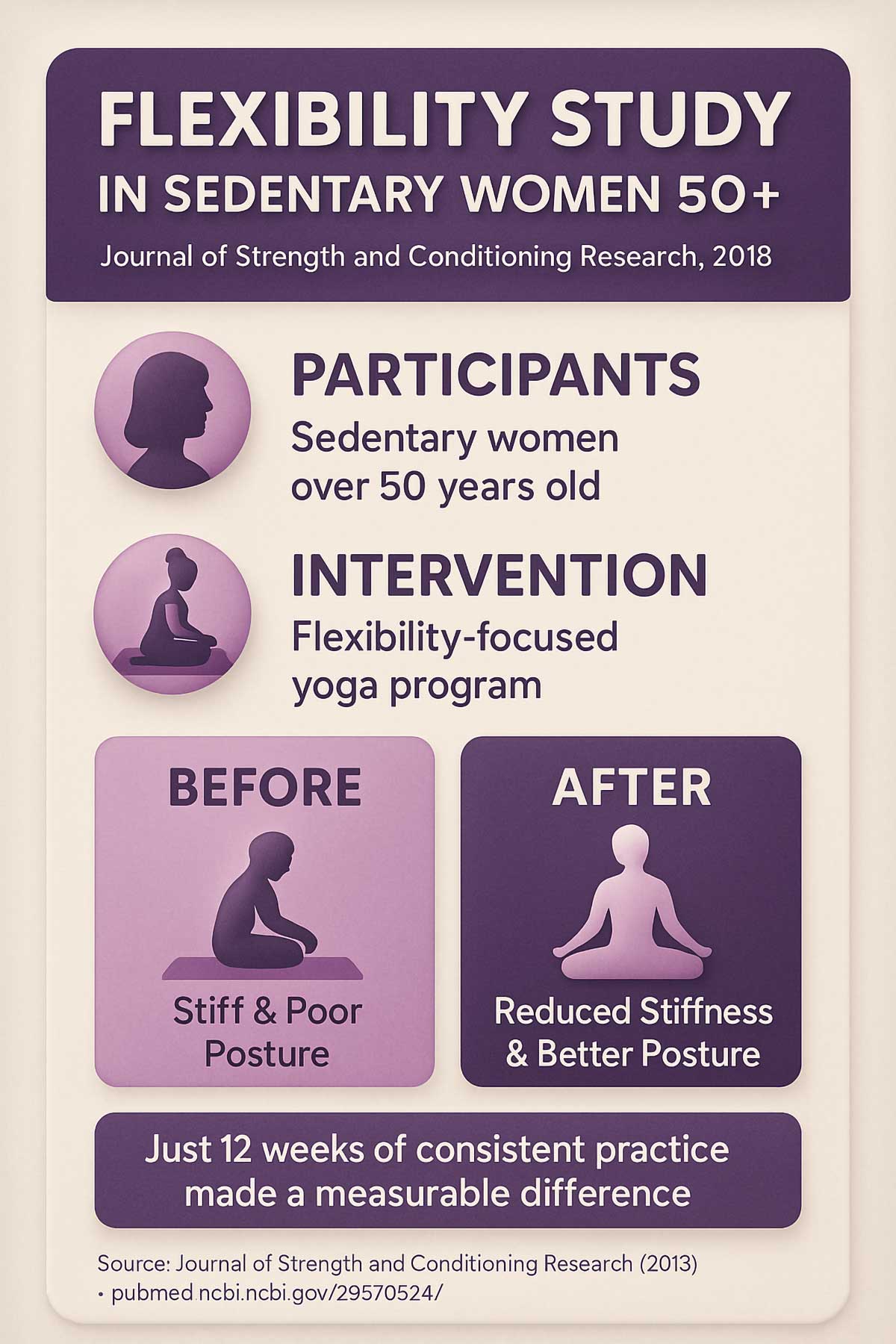
Your body responds to gentle, regular movement. A 2018 study in the Journal of Strength and Conditioning Research examined sedentary women over 50 who participated in flexibility-focused yoga. The results were clear: participants experienced reduced stiffness and improved posture after just 12 weeks of consistent practice.
The key is consistency, regular daily practice beats occasional intense workouts every time.
Yoga works better than standard stretching for older adults. The flowing movements target multiple muscle groups at once. Your spine gets more flexible. Your hips open up. Your shoulders release tension.
Enhances Balance and Prevents Falls
Balance isn’t just about standing on one foot. It’s about catching yourself when you trip. It’s about walking on uneven ground without fear.
The 2013 study mentioned earlier found that older adults who practiced yoga showed significant improvements in balance scores. Better balance means fewer falls. Fewer falls mean more confidence to stay active.
Falls are the leading cause of injury in adults over 65. Anything that improves balance can literally save your life.
Keeps Joints Healthy
Here’s what most people don’t know: joints need movement to stay healthy. When you move, synovial fluid lubricates your joints. This fluid brings nutrients and removes waste.
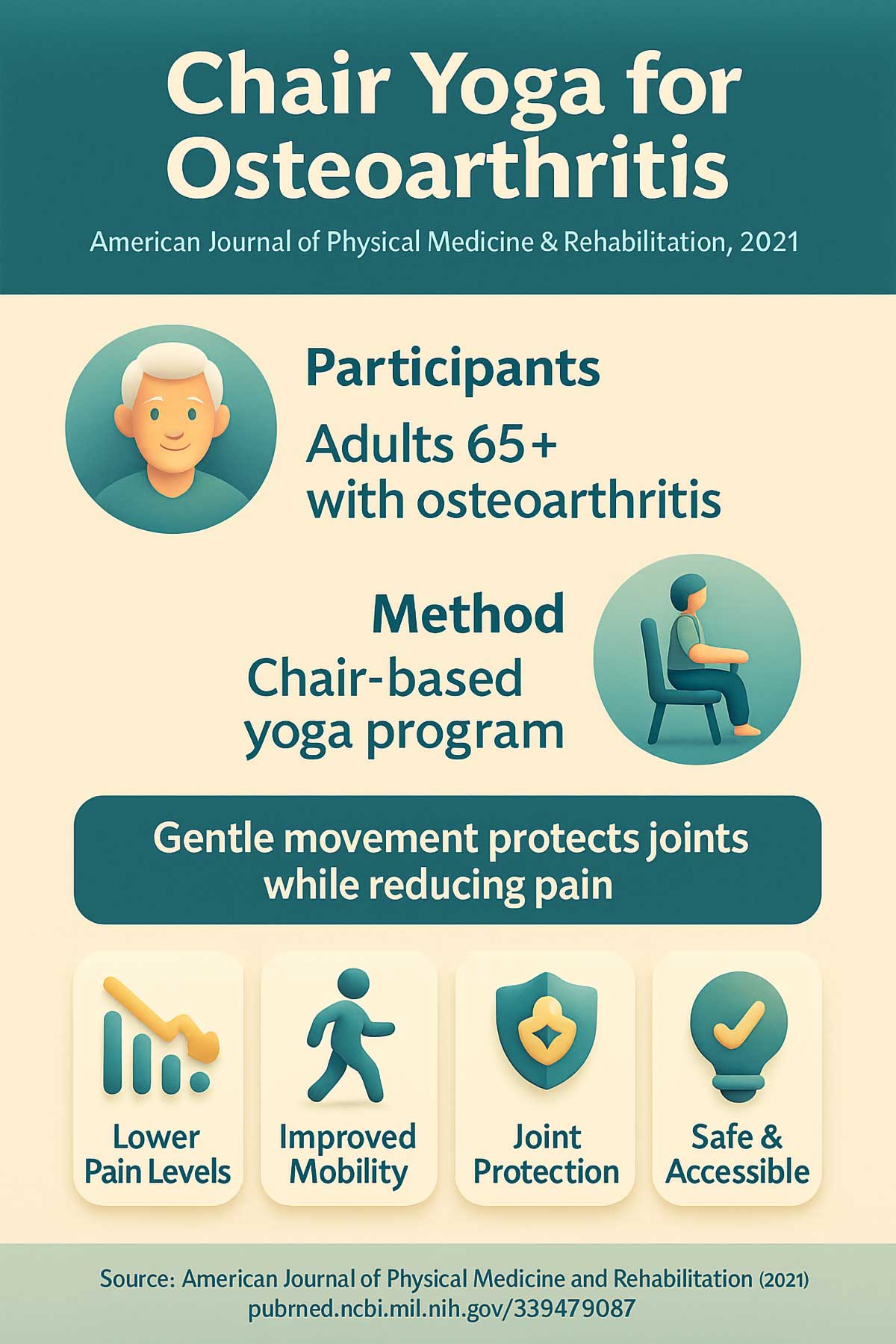
Research published in the American Journal of Physical Medicine and Rehabilitation in 2021 studied adults 65 and older with osteoarthritis. Those who practiced chair yoga experienced lower pain levels and improved mobility compared to those who didn’t exercise. The gentle movements didn’t wear down their joints. They protected them.
Think of it like oil in a door hinge. Regular movement keeps everything running smoothly.
What the Research Shows: Key Findings
| Study Focus | Key Finding | Population | Publication |
|---|---|---|---|
| Mobility & Balance | 12-week program improved gait speed and balance | Adults 60-70 | Altern Ther Health Med (2013) |
| Joint Range of Motion | Yoga enhances functional mobility better than standard stretching | Older adults | Int J Environ Res Public Health (2021) |
| Stiffness Reduction | Flexibility-focused yoga reduced stiffness and improved posture | Sedentary women 50+ | J Strength Cond Res (2018) |
| Osteoarthritis Pain | Chair yoga lowered pain and improved mobility | Adults 65+ with OA | Am J Phys Med Rehabil (2021) |
| Quality of Life | Regular yoga reduced mobility decline | Older populations | Complement Ther Med (2016) |
What You’ll Need: Props and Setup
Don’t let equipment worries stop you. You need very little to start.
Essential:
- Yoga mat or thick towel (for cushioning)
- Sturdy chair without wheels (for modifications)
- Comfortable space with room to extend your arms
Optional but helpful:
- Yoga blocks (or thick books)
- Cushion for sitting poses
- Wall nearby for balance support
What to wear: Loose, comfortable clothing that doesn’t restrict movement. Avoid anything with buttons or zippers that dig in when you bend. Practice barefoot or in non-slip socks.
Best location: Choose a quiet space where you won’t be interrupted. Good lighting helps. If possible, practice in the same spot each day. Your brain will associate that space with your routine.
Breathing Techniques for Beginners
Before you start the poses, you need to know how to breathe. Most people hold their breath during stretches. This makes everything harder.
The Basic Breath Pattern: Breathe in through your nose for a count of four. Breathe out through your nose for a count of four. Your belly should expand as you breathe in, and draw in as you breathe out.
Why nasal breathing matters: Breathing through your nose filters the air and regulates the flow. It keeps you calm and focused. Mouth breathing can make you feel anxious or dizzy.
The three-part breath: This is the foundation of yoga breathing. Breathe into your belly first, then your ribs, then your chest. Exhale in reverse: chest, ribs, belly. It sounds complicated but feels natural after a few tries.
What to do if you feel dizzy: Stop moving. Sit down. Breathe normally. You might be breathing too fast or holding your breath without realizing it. Slow down and try again.
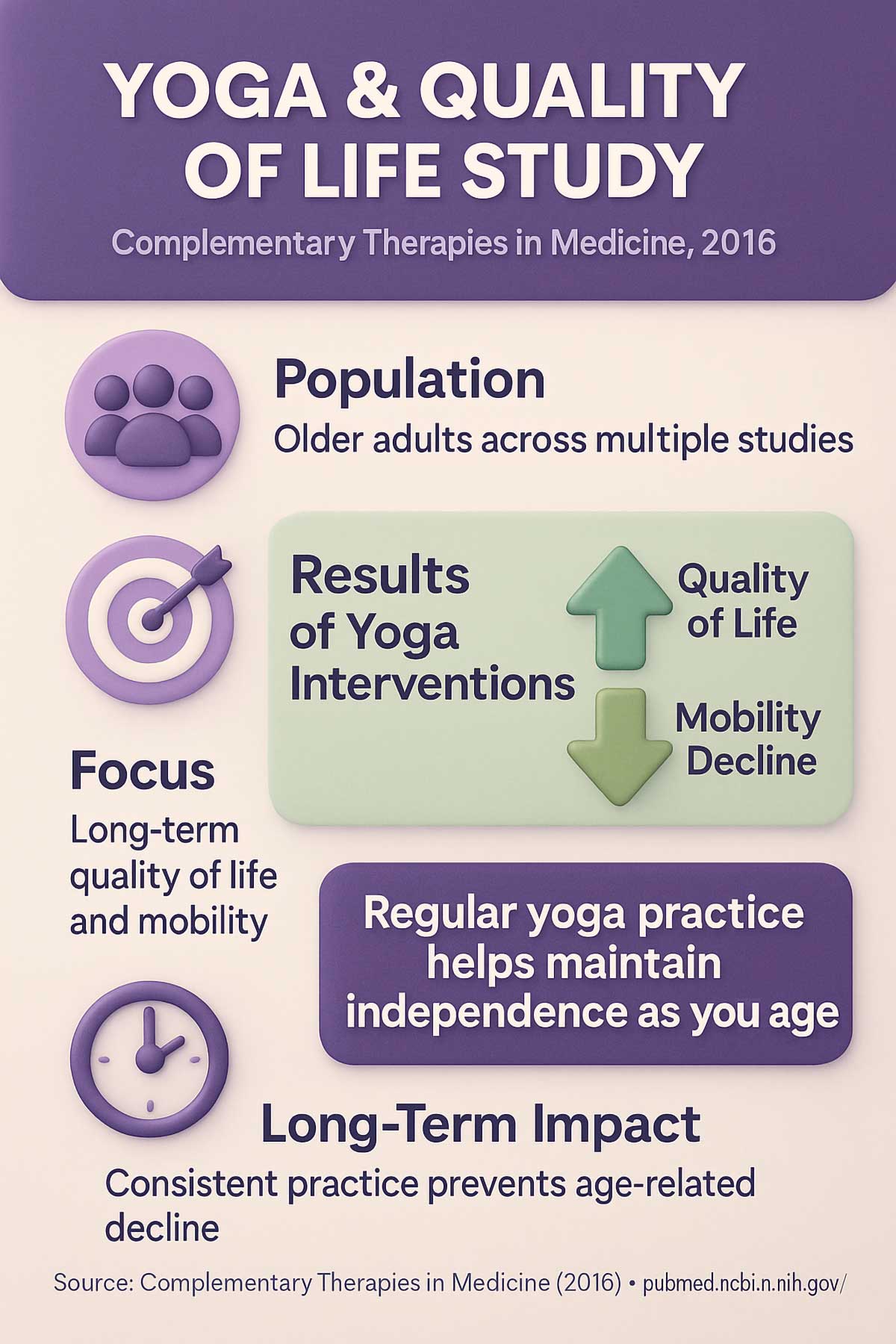
A 2016 study published in Complementary Therapies in Medicine found that yoga interventions improved quality of life and reduced mobility decline in older populations. Proper breathing was identified as a key component of these benefits.
Part 2: Your 10-Minute Mobility Yoga Routine
Each pose in this routine targets a specific area. You’ll warm up your spine, open your hips, and stretch your hamstrings. All without putting stress on your joints.
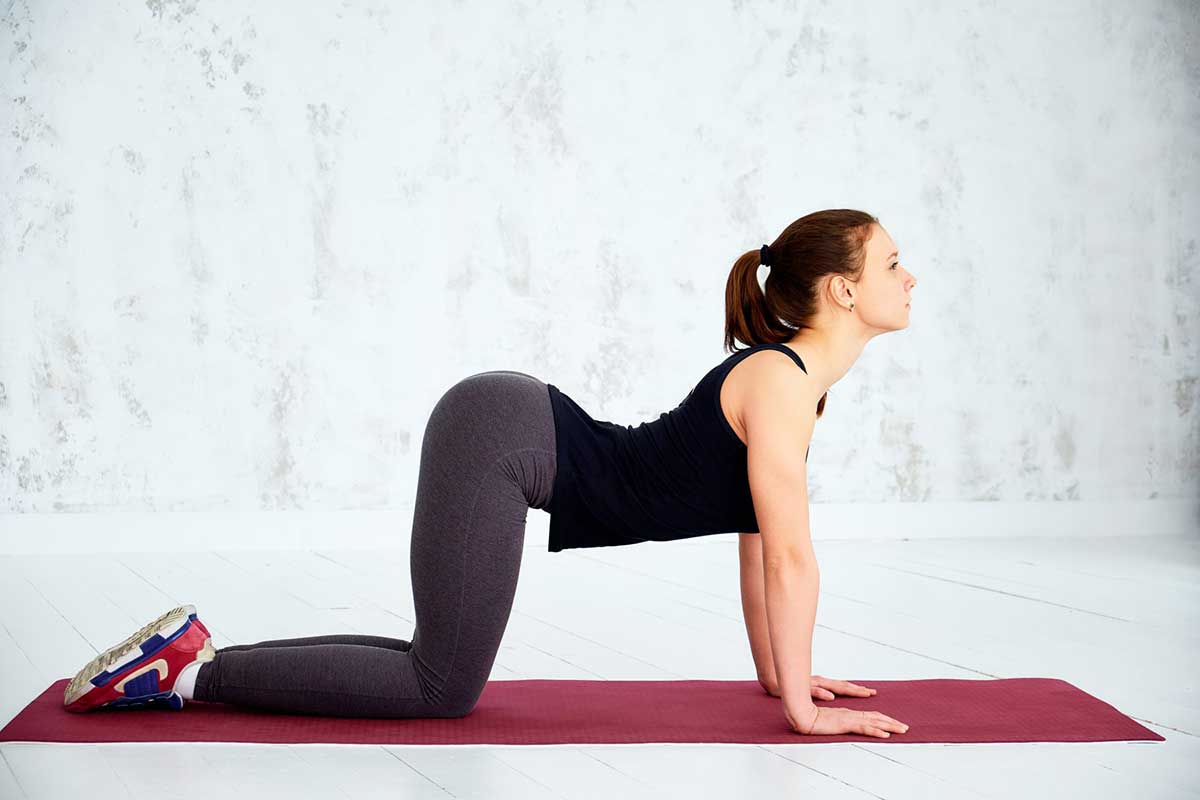
1. Cat-Cow Stretch (Marjaryasana-Bitilasana)
Why it’s perfect for over 50s: This pose gently warms up your spine. It eases back stiffness and improves posture. Best of all, it’s done on your hands and knees, so there’s no pressure on your joints.
Step-by-Step Instructions:
- Start on your hands and knees. Place your wrists under your shoulders and your knees under your hips.
- Arch your back and lift your chest and tailbone toward the ceiling. This is Cow Pose.
- Round your spine and tuck your chin toward your chest. Pull your belly button toward your spine. This is Cat Pose.
- Flow between these two positions five to eight times.
Breath Cue: Breathe in as you arch your back. Breathe out as you round your spine.
Make it work for you:
Chair Modification: Sit on the edge of a sturdy chair with your feet flat on the floor. Place your hands on your knees. Arch your back and lift your chest as you breathe in. Round your spine and drop your chin as you breathe out.
Deeper Stretch: Hold each position for two full breaths instead of flowing quickly between them.
Common mistake to avoid: Don’t shrug your shoulders up toward your ears. Keep your neck long and your shoulder blades drawing down your back.
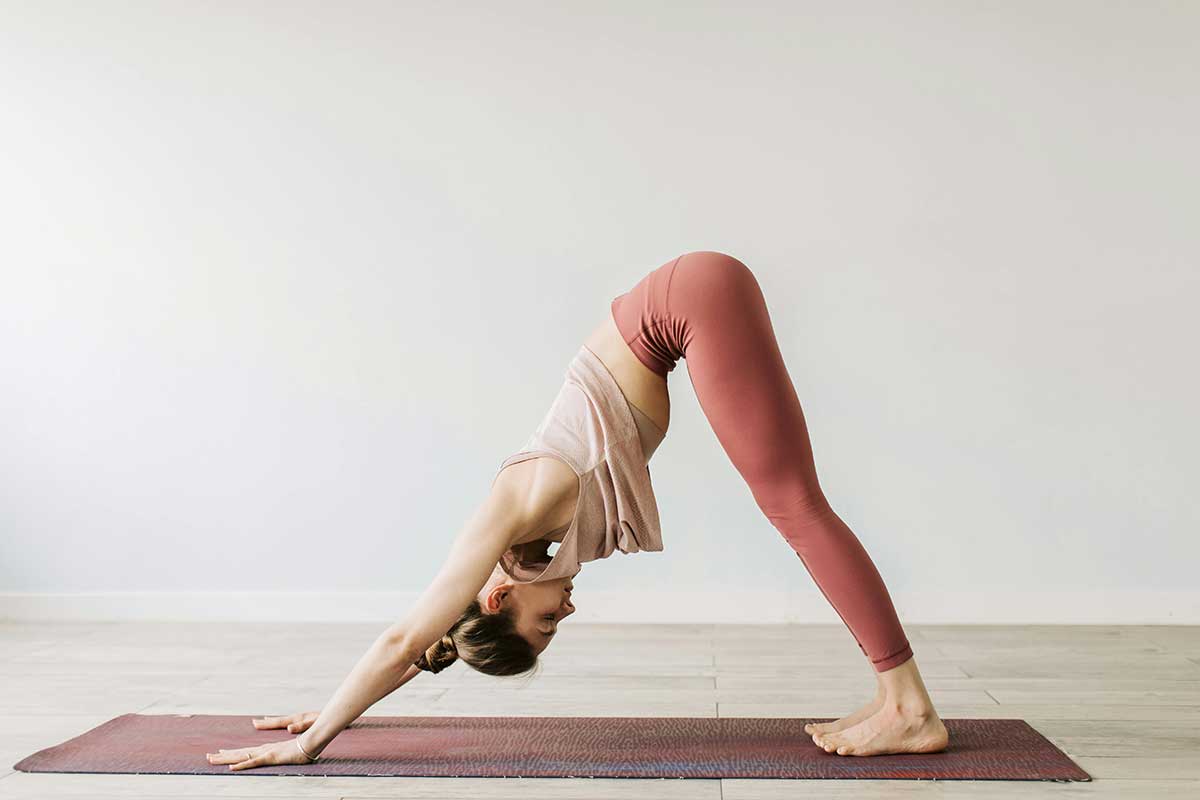
2. Downward-Facing Dog (Gentle Variation)
Why it’s perfect for over 50s: This modified version stretches your hamstrings and lengthens your spine. It builds strength in your arms and shoulders without strain.
Step-by-Step Instructions:
- From your hands and knees, tuck your toes under and lift your hips toward the ceiling.
- Keep your knees bent. Don’t worry about straightening your legs.
- Press your hands firmly into the floor and draw your shoulder blades down your back.
- Hold for three to five slow breaths.
Breath Cue: Breathe deeply and evenly. With each breath out, relax a little more.
Make it work for you:
Chair Modification: Stand facing a chair. Place your hands on the chair back. Walk your feet back until your body forms an L-shape. Keep your knees soft and your spine long.
Deeper Stretch: If your hamstrings feel comfortable, slowly straighten one leg at a time. Alternate between legs like you’re pedaling a bike.
Common mistake to avoid: Don’t round your shoulders forward. Push the floor away and keep your chest moving toward your thighs.
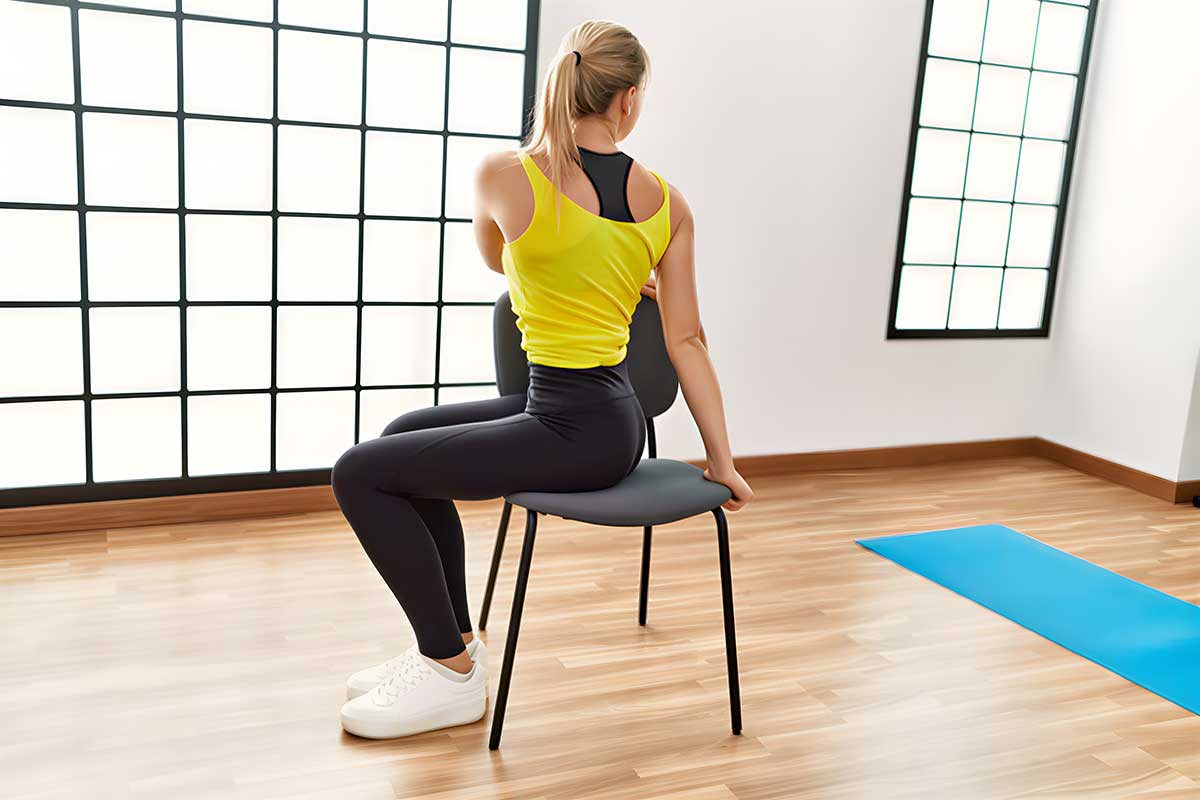
3. Seated Spinal Twist
Why it’s perfect for over 50s: This twist improves rotational mobility in your spine. It releases tension in your back and massages your internal organs. The seated position makes it safe and accessible.
Step-by-Step Instructions:
- Sit on the floor with your legs extended. Bend your right knee and place your right foot outside your left thigh.
- Place your right hand behind you for support. Wrap your left arm around your right knee.
- Sit up tall and twist to the right. Look over your right shoulder.
- Hold for five breaths. Repeat on the other side.
Breath Cue: Breathe in to sit taller. Breathe out to twist a bit deeper.
Make it work for you:
Chair Modification: Sit sideways on a chair with the chair back on your right. Hold the chair back with both hands and twist to the right. Keep your hips facing forward. Repeat on the other side.
Deeper Stretch: Hook your left elbow outside your right knee for more rotation.
Common mistake to avoid: Don’t twist from your lower back. The rotation should come from your mid and upper back. Keep your hips stable and facing forward.
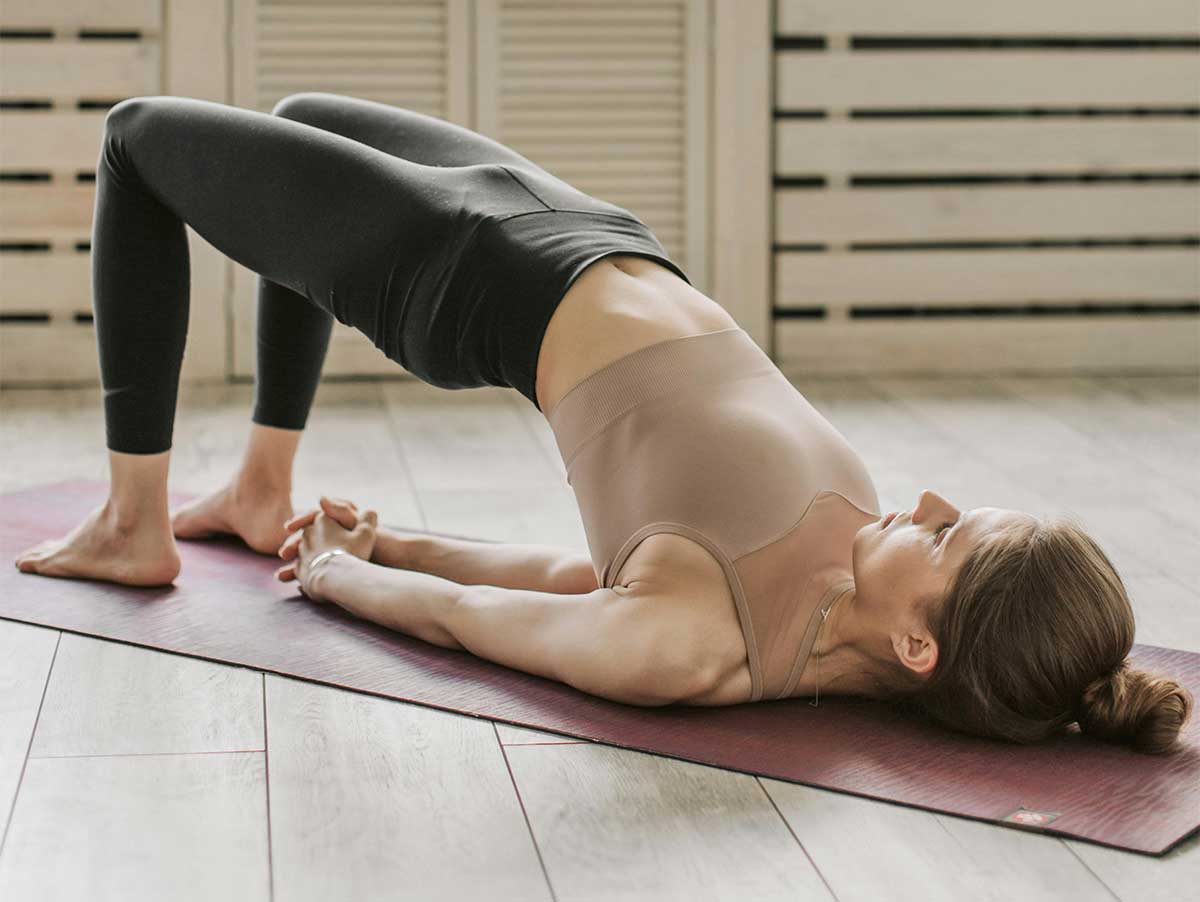
4. Bridge Pose
Why it’s perfect for over 50s: Bridge Pose strengthens your glutes and back muscles. These muscles support your hips and spine. Strong glutes mean better mobility and less back pain.
Step-by-Step Instructions:
- Lie on your back with your knees bent and feet flat on the floor. Place your feet hip-width apart.
- Press your feet into the floor and lift your hips toward the ceiling.
- Keep your thighs parallel. Don’t let your knees fall out to the sides.
- Hold for five breaths, then lower slowly.
Breath Cue: Breathe in to prepare. Breathe out as you lift your hips.
Make it work for you:
Chair Modification: Sit on the edge of a chair. Place your hands on the armrests or seat beside your hips. Press down and lift your hips slightly off the chair. Hold for three breaths.
Deeper Stretch: Clasp your hands under your back and press your arms into the floor. This lifts your chest higher.
Common mistake to avoid: Don’t push your hips too high. Stop when your body forms a straight line from shoulders to knees. Going higher can compress your lower back.
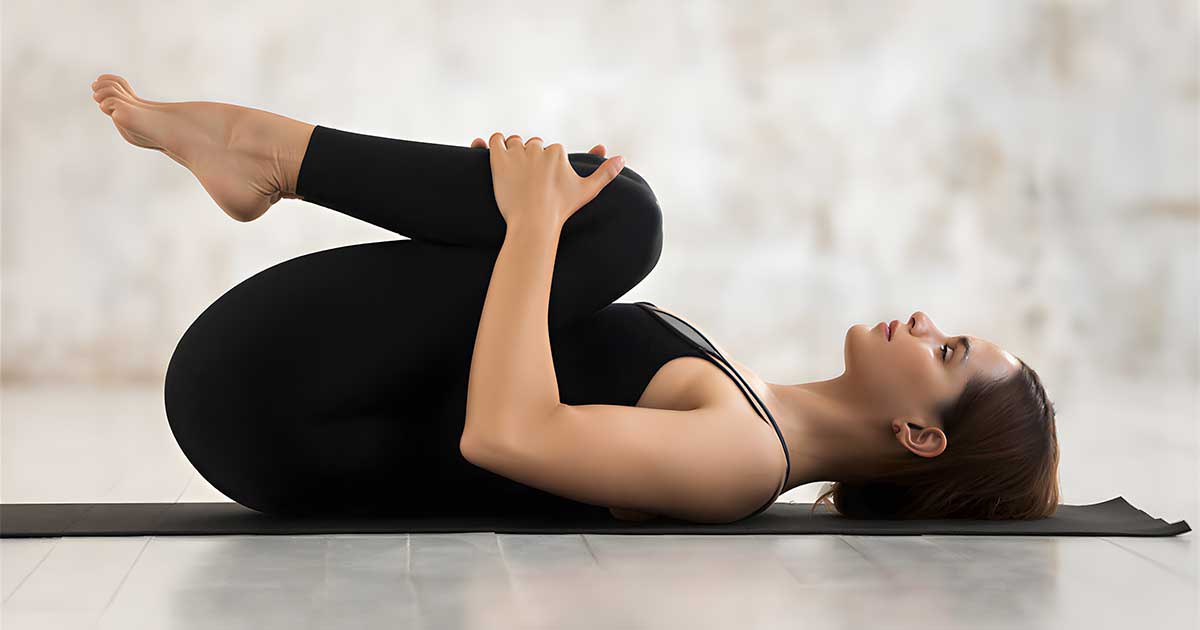
5. Knee-to-Chest Pose
Why it’s perfect for over 50s: This gentle pose releases your lower back. It improves hip flexion, which helps you climb stairs and get in and out of cars more easily.
Step-by-Step Instructions:
- Lie on your back with both knees bent and feet on the floor.
- Draw your right knee toward your chest. Hold the back of your right thigh or shin.
- Keep your left foot on the floor or extend your left leg if that feels better.
- Hold for five breaths. Repeat on the other side.
Breath Cue: Breathe deeply. With each breath out, draw your knee a little closer.
Make it work for you:
Chair Modification: Sit on a chair. Lift your right foot off the floor and hug your right knee toward your chest. Hold for five breaths. Repeat on the other side.
Deeper Stretch: Hug both knees to your chest at the same time. Rock gently from side to side to massage your lower back.
Common mistake to avoid: Don’t pull on your knee joint. Always hold the back of your thigh or your shin. This protects your knee from strain.
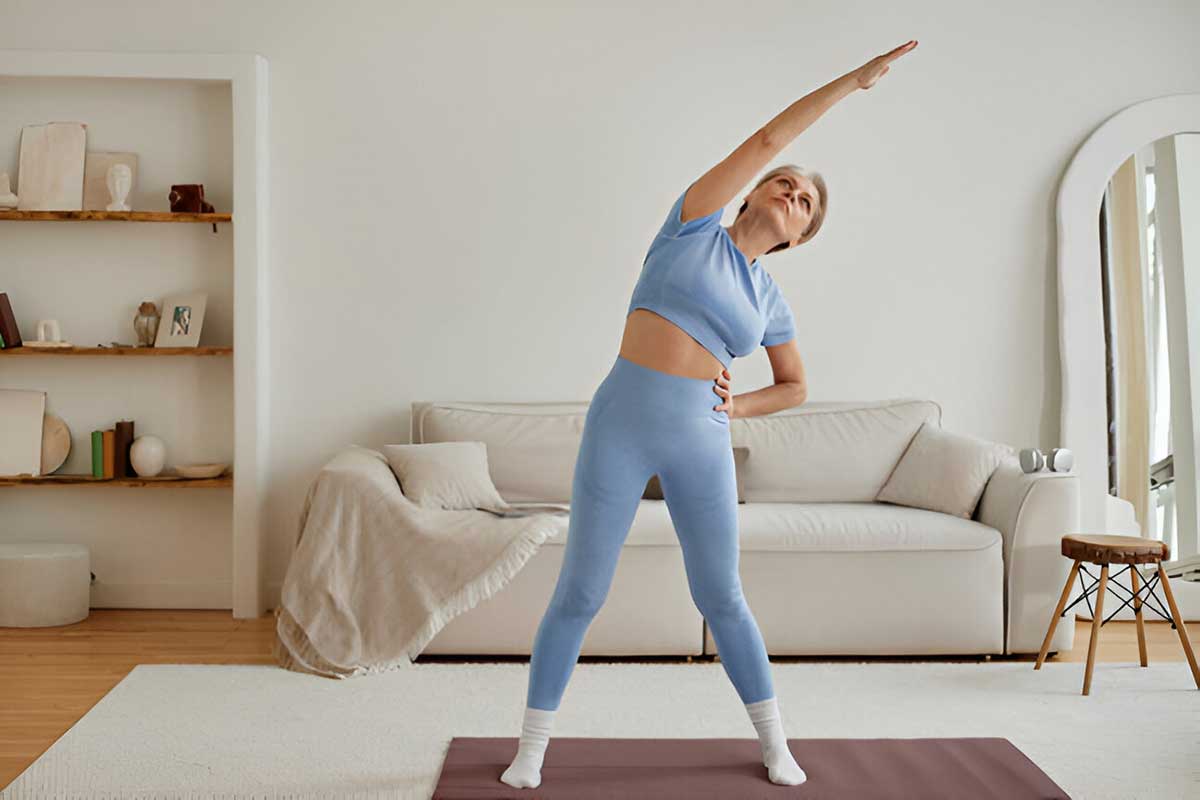
6. Mountain Pose with Side Bends
Why it’s perfect for over 50s: Side bends improve lateral spinal flexibility. They stretch the muscles between your ribs, making breathing easier. This pose also challenges your balance in a safe way.
Step-by-Step Instructions:
- Stand with your feet hip-width apart. Let your arms hang by your sides.
- Breathe in and reach your right arm up toward the ceiling.
- Breathe out and lean to the left. Keep your hips level and your chest facing forward.
- Hold for three breaths. Return to center and repeat on the other side.
Breath Cue: Breathe in to reach up. Breathe out to bend to the side.
Make it work for you:
Chair Modification: Sit tall on a chair with your feet flat. Reach your right arm up and bend to the left. Place your left hand on the chair seat for support.
Deeper Stretch: Hold each side bend for five breaths instead of three.
Common mistake to avoid: Don’t lean forward or backward. Your body should stay in one plane, like you’re pressed between two panes of glass.
10-Minute Mobility Flow
Follow along with or without voice prompts
Settings
Common Mistakes and How to Fix Them
Even simple poses can go wrong if you’re not aware of these pitfalls. Here’s what to watch for.
Holding your breath This affects about 80% of beginners. When you concentrate on a pose, you naturally hold your breath. Set a mental reminder: if you’re not breathing, you’re not doing yoga. Take a breath right now as you read this.
Rounding shoulders in Downward Dog Your shoulders should stay away from your ears. Think about drawing your shoulder blades down your back. Press the floor away with your hands.
Forcing the stretch instead of breathing into it Flexibility comes from relaxation, not force. When you feel a stretch, breathe into that area. Imagine your breath softening the tight muscles.
Comparing yourself to others or images online Your body is unique. Your flexibility depends on your bone structure, past injuries, and current health. The goal isn’t to look like a yoga teacher. The goal is to feel better than you did yesterday.
Moving too quickly between poses Slow transitions are just as important as the poses themselves. They prevent dizziness and protect your joints. Take your time.
Modifications for Specific Conditions
Your body might need extra consideration. Here’s how to adapt the routine for common health concerns.
If you have arthritis (hip, knee, or shoulder)
Hip arthritis: Use more cushioning under your knees in Cat-Cow. In Bridge Pose, place a folded blanket under your lower back for support. Skip or modify poses that cause pain.
Knee arthritis: Avoid kneeling directly on hard surfaces. Use extra padding or do all poses in a chair. Don’t force any knee bending.
Shoulder arthritis: Keep your arms lower in side bends. In Downward Dog, use the wall modification instead of putting weight on your shoulders.
The 2021 study on chair yoga and osteoarthritis found that consistent practice reduced pain levels without aggravating joint conditions. The key was respecting pain limits and using modifications.
If you’ve had a recent joint replacement
Wait until your doctor clears you for exercise. This usually happens 6-12 weeks after surgery. Start with only chair modifications. Don’t do any twisting motions near the replaced joint until your physical therapist approves.
Ask your surgeon which movements to avoid. Hip replacement patients usually need to avoid crossing the legs or bending past 90 degrees.
If you have chronic back pain
Focus extra attention on the breath cues. Breathing reduces muscle tension, which often causes back pain. Avoid any pose that increases pain. The Knee-to-Chest pose is particularly helpful for lower back discomfort.
If lying flat hurts, place a pillow under your knees in floor poses.
If you have limited shoulder mobility
Skip the full Downward Dog. Use only the chair version. In side bends, keep your arm lower or rest your hand on your head instead of reaching overhead.
Never force your shoulders beyond their comfortable range. Mobility will improve gradually.
If you have balance issues
Always practice near a wall or sturdy furniture. Use the chair modifications for all standing poses. Consider doing the entire routine seated until your balance improves.
Balance gets better with practice. The studies on yoga and fall prevention show that consistent practice builds confidence and stability over time.
Part 3: Putting It All Together & Making It a Habit
Your 10-Minute Flow Chart
Here’s how to structure your morning routine:
| Time | Pose | Duration | Key Focus |
|---|---|---|---|
| 0-1 min | Centering Breath | 5 deep breaths | Mental preparation, set intention |
| 1-3 min | Cat-Cow Stretch | 5-8 rounds | Spinal mobility, warm-up |
| 3-5 min | Downward-Facing Dog | 2 sets of 5 breaths | Hamstrings, shoulders, full body |
| 5-6 min | Seated Spinal Twist | 5 breaths each side | Rotational mobility, back release |
| 6-7 min | Bridge Pose | 2 sets of 5 breaths | Glute strength, back support |
| 7-9 min | Knee-to-Chest Pose | 5 breaths each side, repeat | Lower back release, hip flexion |
| 9-10 min | Mountain Pose Side Bends | 3 breaths each side, 2 rounds | Lateral flexibility, balance |
Minutes 0-1: Sit quietly. Take five deep breaths. Set your intention for the day. This mental preparation matters as much as the physical movement.
Minutes 1-3: Cat-Cow Stretch. Flow smoothly between the two positions. Let your breath guide the movement.
Minutes 3-5: Downward-Facing Dog. Hold for five breaths, rest in child’s pose or on hands and knees, then repeat. Don’t skip the rest period.
Minutes 5-6: Seated Spinal Twist. Five breaths on each side. Move slowly into and out of the twist.
Minutes 6-7: Bridge Pose. Hold for five breaths, lower slowly, rest for a few breaths, then repeat.
Minutes 7-9: Knee-to-Chest Pose. Five breaths holding the right knee, then five breaths holding the left knee. If time allows, do a second round.
Minutes 9-10: Mountain Pose with Side Bends. Three breaths on each side, then repeat. Finish standing tall in Mountain Pose for three final breaths.
Consistency is Key
Ten minutes seems small. But small actions done daily create big changes.
Link this routine to something you already do. Try it right after your first cup of coffee. Or do it before you check your phone in the morning. Habit stacking works because your brain already has a trigger built in.
Some days will feel easy. Other days, your body will feel tight. That’s normal. The routine stays the same. Your body changes day to day.
Don’t skip days because you feel stiff. Those are the days you need this most. On really tough mornings, commit to just the first three minutes. Usually, once you start, you’ll finish.
What to Expect: Monthly Milestones
Knowing what to expect helps you stay motivated. Here’s a realistic timeline.
Week 1-2: The Adjustment Phase Your body is learning new movements. You might feel slightly sore, similar to any new activity. This is normal. Morning stiffness should start easing within 30 minutes of waking instead of lasting all morning.
Week 3-4: Early Improvements You’ll notice improved ease getting in and out of your car. Bending to pick things up feels less awkward. Your balance starts to feel more stable.
Week 6-8: Building Confidence You feel more confident on stairs and uneven surfaces. The poses that felt hard in week one now feel comfortable. You might naturally hold poses a breath or two longer.
Week 10-12: Measurable Progress This matches the timeline from research studies. You should notice measurable improvements in flexibility. You can reach lower when bending. You can stand on one foot longer while putting on shoes. Your posture improves without thinking about it.
The 12-week mark is when many studies measure results because that’s when the benefits become clear and lasting.
Track Your Progress
Rate your morning stiffness and balance confidence each week. Ten means severe stiffness or very poor balance confidence. One means no stiffness and complete balance confidence.
Research shows that adults who practiced yoga for 12 weeks experienced measurable improvements in mobility and gait speed. Your tracker will show your personal progress.
In the notes column, write specific changes you notice. “Can reach my shoes without pain” or “Walked on the beach without wobbling” are the real victories.
Listen to Your Body
Pain is different from discomfort. Discomfort is that gentle pulling sensation when you stretch. That’s okay. It means you’re working at your edge.
Pain is sharp or shooting. It makes you hold your breath. Pain that lasts after you stop the pose is a warning sign. That’s your body saying “stop.”
Use the chair modifications without shame. They’re not easier. They’re smarter. They let you move safely within your current ability.
If something hurts, back off. Try a gentler version. Skip that pose for today. There’s no prize for pushing through pain.
Troubleshooting Common Challenges
Problems will come up. Here’s how to handle them:
| Challenge | Solution |
|---|---|
| Too stiff to get on the floor | Use chair modifications for all poses. You’ll get the same benefits. |
| Wrist pain during poses | Use fists instead of flat palms. Or try forearm positions. |
| Can’t balance in standing poses | Practice near a wall or counter for support. Touch it lightly with one finger. |
| Feel dizzy during practice | Slow down transitions, especially when moving your head. Avoid quick movements. |
| Morning is too rushed | Try evening practice, or split the routine (5 min AM, 5 min PM). Both times work. |
| Knees hurt when kneeling | Double up your mat or place a folded towel under your knees. Use more cushioning. |
| Can’t remember the sequence | Keep the flow chart visible. Use your phone to set interval timers for each pose. |
| Feel discouraged by lack of flexibility | Focus on how you feel, not how far you can reach. Flexibility comes slowly but surely. |
Support Your Practice with Nutrition
Your joints need more than just movement. What you eat affects inflammation and joint health.
Anti-Inflammatory Smoothie for Joint Health
Try this smoothie after your morning practice. It contains compounds that support joint health and reduce inflammation.
Ingredients:
- 1 cup unsweetened almond milk
- 1/2 cup frozen blueberries
- 1/2 banana
- 1 tablespoon ground flaxseed
- 1/2 teaspoon turmeric
- 1/4 teaspoon fresh ginger (or ground ginger)
- 1 handful fresh spinach
- Ice as needed
Instructions: Blend all ingredients until smooth. Drink within 30 minutes of making it for maximum nutrient benefit.
Why these ingredients work:
- Blueberries contain antioxidants that fight inflammation
- Turmeric has curcumin, studied for joint health benefits
- Ginger reduces muscle soreness
- Flaxseed provides omega-3 fatty acids
- Spinach offers vitamin K for bone health
This isn’t a magic cure. But combined with your daily yoga practice, proper nutrition supports your body’s natural healing processes.
Beyond 10 Minutes: When and How to Progress
After several weeks of consistent practice, you might want to expand your routine. Here’s how to do it safely.
Signs You’re Ready to Add More
Don’t rush this. Wait until:
- You’ve practiced consistently for at least 6-8 weeks
- The current routine feels comfortable, not challenging
- You finish your 10 minutes wanting to do more
- You have extra time in your schedule
If you’re still struggling with the basics, there’s no rush to add more. Depth matters more than duration.
How to Add Poses Safely
Start by extending poses you already know. Hold each one for two extra breaths. This adds 2-3 minutes to your routine without learning new movements.
Next, repeat the entire sequence twice. This gives you a 20-minute practice using familiar poses.
Only then should you consider adding new poses. Add one new pose per week, not all at once.
When to Consider a Regular Yoga Class
You might benefit from a class when:
- You want personal feedback on your form
- You’d enjoy the social aspect and community
- You’re ready for more variety in poses
- You want to learn relaxation techniques
Look for classes labeled “gentle yoga,” “senior yoga,” or “yoga for beginners.” Many studios offer classes specifically for over-50s.
Try a few different teachers. Each one has a different style. Find someone whose pace and approach matches your needs.
Online Resources for Over-50s Yoga
Many quality online programs exist for older adults. Look for instructors who:
- Demonstrate modifications for every pose
- Move slowly and explain clearly
- Have training in working with older adults
- Focus on safety and adaptation
Check reviews from other students in your age group. Their experiences will tell you if the program is truly suitable.
When to Seek Professional Guidance
See your doctor if:
- You experience sharp or persistent pain during or after practice
- You feel dizzy or lightheaded frequently
- A joint swells or feels hot after practice
- You have a sudden decrease in mobility or range of motion
- Any existing condition worsens
Most people practice safely at home. But professional guidance helps if you have complex health conditions or need personalized modifications.
Physical therapists can assess your specific limitations and suggest adaptations. Certified yoga therapists specialize in working with health conditions and injuries.
Step Into Your Day with Confidence and Ease
You don’t need an hour at a yoga studio. You don’t need expensive classes or fancy equipment.
Ten minutes each morning is enough. These six poses target the areas that matter most for staying mobile and independent.
Your morning stiffness will ease. Your balance will improve. Simple tasks like bending down or reaching overhead will feel easier.
The research is clear: regular yoga practice reduces mobility decline and improves quality of life in older adults. You’re not just stretching. You’re investing in your future independence.
Start tomorrow. Set your alarm 10 minutes earlier. Roll out of bed and onto your mat or into your chair.
Print the flow chart. Put it where you’ll see it each morning. Let it remind you that this small daily action leads to significant, lasting change.
Your future self will thank you for it. Not next year. Not next month. You’ll feel the difference in weeks.
The body you have at 60, 70, or 80 depends on the choices you make today. Choose movement. Choose consistency. Choose these 10 minutes.
FAQs
How long until I see results from yoga for mobility?
Most people notice small improvements within 2-3 weeks. Morning stiffness eases first. Measurable flexibility and balance improvements typically appear around 8-12 weeks with consistent daily practice. This timeline matches the research studies on yoga and mobility in older adults.
Can I do yoga for mobility every day?
Yes. This gentle routine is designed for daily practice. Unlike high-intensity workouts that need rest days, gentle yoga benefits from daily repetition. Your body adapts better with consistent practice. If you feel unusually sore, take a rest day or do only the gentlest poses.
Is 10 minutes of yoga really enough?
For mobility maintenance and improvement, yes. The studies showing benefits used programs ranging from 10-30 minutes. Consistency matters more than duration. Ten minutes every day beats 60 minutes once a week. As you progress, you can add more time.
What’s the best time of day to practice yoga for mobility?
Morning is ideal for most people. Your body is stiff from sleep, so morning practice relieves that stiffness and sets a positive tone for the day. But evening practice works too, especially if mornings are rushed. Choose a time you can stick with consistently.
Can I do yoga for mobility if I’ve never exercised?
Absolutely. This routine is designed for beginners. Start with chair modifications if you’re concerned. Listen to your body and move gently. You might be surprised how quickly your body responds to regular movement, even if you’ve been sedentary for years.
Will yoga for mobility help with arthritis pain?
Research suggests it can. The 2021 study on chair yoga and osteoarthritis found that participants experienced reduced pain and improved mobility. Yoga doesn’t cure arthritis, but it helps manage symptoms. The gentle movement lubricates joints and strengthens supporting muscles. Always consult your doctor about arthritis management.
Do I need special equipment for yoga for mobility?
No special equipment is required. A yoga mat or thick towel for cushioning is helpful. A sturdy chair for modifications is useful. That’s all you need. You don’t need blocks, straps, or other props, though they can be helpful as you progress.
Can I do yoga for mobility with a knee or hip replacement?
After your doctor clears you for exercise, yes. This usually happens 6-12 weeks post-surgery. Start with only chair modifications. Avoid any movements your surgeon says to avoid. Hip replacement patients typically can’t cross legs or bend past 90 degrees initially. Follow your physical therapist’s guidance.
What if I can’t do a pose even with modifications?
Skip it. Move to the next pose. Not every pose works for every body. You might have an old injury or structural limitation that makes certain movements uncomfortable. That’s fine. Do the poses that feel good and skip the ones that don’t.
How do I know if I’m doing the poses correctly?
You should feel a gentle stretch or muscle engagement, not pain. Your breathing should stay steady and calm. If you can’t breathe comfortably, you’re pushing too hard. Taking a video of yourself can help you check your form against the instructions.
Medical Disclaimer: Consult your doctor before starting any new exercise program, especially if you have chronic conditions, recent injuries, or have undergone surgery. This article is for informational purposes only and does not replace professional medical advice.