Most people assume mental fatigue after 40 is just part of getting older. Researchers now say several hidden biological drains are often responsible.
Your brain uses about 20% of your daily calories despite making up only 2% of your body weight. That ratio is not a curiosity. It’s the context for everything that follows. A high-demand organ running on a fixed energy budget, tasked with more complex work as life gets more complicated, doing it inside a body that begins recovering from stress more slowly after 40. The math was always going to catch up with you.
What most people experience as afternoon brain fog, word-finding difficulty, or a vague sense that thinking has gotten harder is not imagined, and it is not simply aging. It’s a specific set of biological processes that researchers can now measure and, in many cases, reverse.
The 12 habits below target those processes directly. They’re grounded in peer-reviewed evidence and work best as a system, not a checklist. But you don’t need all 12 at once. Start with three. The ones that address your biggest drain.
Common Signs of Mental Fatigue After 40
- Needing to re-read the same paragraph two or three times before it registers
- Feeling mentally drained despite having slept adequately
- Reaching for a word that sat at the tip of your tongue a moment ago
- Decision fatigue arriving earlier in the day than it used to
- Tasks that once took 20 minutes now take 40
- Reduced motivation for mentally demanding work by early afternoon
If any of those sound familiar, you’re not dealing with permanent decline. You’re dealing with a system under more strain than it can efficiently manage. That’s a fixable problem.
How Your Brain Creates Mental Energy
Picture the brain as a city with continuous, overlapping electrical activity. Neurons fire across billions of connections, each signal requiring fuel delivered through a dense web of blood vessels. When the supply chain runs smoothly, thinking is fast, and decisions feel effortless. When it doesn’t, every cognitive task costs more than it should.
Several specific systems become less efficient after 40. The hippocampus, which handles memory formation, loses roughly 1–2% of its volume each year. Dopamine receptors in the prefrontal cortex thin out, making executive decisions metabolically more expensive. The eye’s lens yellows, filtering out the blue wavelengths the brain uses to calibrate alertness. And the glymphatic system (the brain’s overnight waste-clearance network) becomes less effective as sleep architecture shifts. None of this is inevitable or irreversible. But understanding what’s happening tells you exactly which levers to pull.
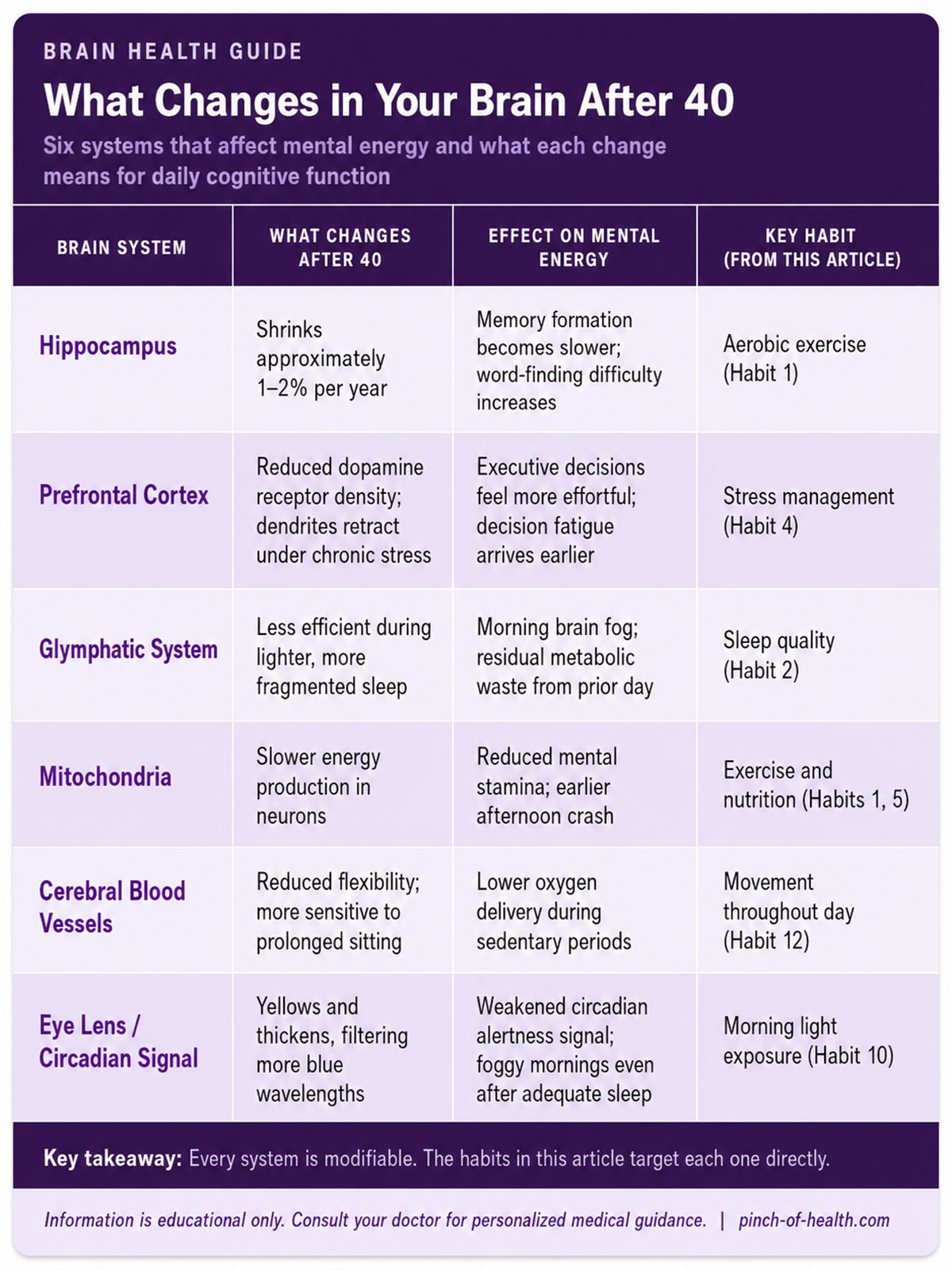
The 12 habits below address these specific systems. Some work quickly. Most are built over 4–8 weeks. All of them become more powerful in combination.
1. Move Your Body to Grow Your Brain
Your brain produces a protein called Brain-Derived Neurotrophic Factor, or BDNF, that supports the growth and maintenance of neurons. Aerobic movement (walking, swimming, cycling, anything that raises your heart rate for 20–30 minutes) triggers its release. Researchers sometimes describe BDNF as fertilizer for brain cells, which is more accurate than most biology metaphors.
Kirk Erickson at the University of Pittsburgh led a randomized controlled trial published in the Proceedings of the National Academy of Sciences in 2011 that tracked 120 sedentary adults aged 55–80 over a year. The study found that the walking group (three sessions a week, 40 minutes each) increased hippocampal volume by 2%, effectively reversing 1–2 years of age-related shrinkage. The control group, which did stretching and toning only, continued declining.
Movement also strengthens mitochondrial function in brain cells (the energy-production machinery that determines how long you can sustain focused mental work before you hit a wall).
What to do: Aim for 150 minutes of moderate aerobic activity each week. Break it into 30-minute sessions, five days a week. Brisk walking counts, as do dancing, cycling, and swimming. The key marker is whether you can hold a conversation but not easily sing. That’s the right intensity range.
Your Weekly Exercise Plan
- Monday: 30-minute brisk walk
- Tuesday: Rest or gentle stretching
- Wednesday: 30-minute swim or bike ride
- Thursday: Rest or yoga
- Friday: 30-minute brisk walk
- Saturday: 40-minute nature walk
- Sunday: Rest
2. Clean Your Brain While You Sleep
The glymphatic system wasn’t confirmed in mammals until 2012. A waste-clearance network hiding in plain sight in an organ researchers had been studying for two centuries. It runs almost exclusively during sleep, flushing out metabolic byproducts (including the beta-amyloid and tau proteins associated with Alzheimer’s pathology) through a system of fluid channels surrounding blood vessels.
Lulu Xie and colleagues at the University of Rochester published the landmark study on this in Science in 2013, showing that the glymphatic system increased waste clearance by roughly 60% during sleep compared to wakefulness. When sleep is poor or fragmented, those proteins don’t get cleared. The result is the morning fog that caffeine doesn’t fully fix.
After 40, sleep architecture shifts toward lighter, more fragmented sleep. Less time in the deep slow-wave phases where glymphatic activity peaks. This makes sleep quality more metabolically important than it was at 30. Quantity alone is no longer the right metric.
What to do: Anchor a consistent sleep schedule, including weekends. Keep the bedroom cool (65–68°F works for most people). Stop screens at least an hour before bed. If you regularly wake unrefreshed despite 7–8 hours in bed, ask your doctor about a sleep apnea screening. The condition is more common in adults over 40 than most people realize and is frequently missed.
The Sleep Optimization Checklist
- Set a fixed bedtime within a 30-minute window each night
- Finish eating at least 3 hours before bed
- Dim lights throughout your home after 8 PM
- Keep bedroom temperature between 65–68°F
- Use blackout curtains or a sleep mask
- Stop caffeine intake after 2 PM
- Avoid alcohol within 3 hours of bedtime
- Ask your doctor about magnesium glycinate if sleep quality remains poor
3. Stop Your Brain From Wasting Energy on Worry
The Default Mode Network (the DMN) is one of the stranger things neuroscience has identified. It’s a collection of brain regions that activate specifically when you’re not focused on a task. Daydreaming. Replaying conversations. Worrying about tomorrow’s meeting at 11 PM. The network burns a significant amount of glucose, and in adults who carry chronic stress, it’s often overactive well into the hours when it should be quiet.
That overhead cost shows up as depleted attention before the day’s real cognitive work has started. Mindfulness meditation reduces DMN activity and strengthens the prefrontal circuits that govern attention. The evidence on this is more consistent than the wellness industry suggests.
A 2010 study in Consciousness and Cognition by Fadel Zeidan at the University of North Carolina Charlotte found that just four 20-minute meditation sessions improved participants’ sustained attention, working memory, and self-reported cognitive energy during demanding tasks. The sessions were simple guided practices, not extended retreats.
What to do: Start with 10 minutes daily. A guided app works well for structure. The goal isn’t a blank mind. It’s practicing the return of attention when it drifts. That redirection reflex is what reduces DMN energy drain during the rest of the day.
4. Protect Your Brain From Stress Damage
Cortisol, in the short term, helps you function under pressure. In sustained elevation, it produces structural changes in the brain that are visible on imaging. The dendrites in the prefrontal cortex (the decision-making center) retract. Connections pull back. Every executive function becomes metabolically more expensive as a result.
Bruce McEwen, a neuroendocrinologist at Rockefeller University, documented these mechanisms across decades of research. His comprehensive 2007 review in Physiological Reviews, titled “Physiology and Neurobiology of Stress and Adaptation: Central Role of the Brain,” showed that chronic cortisol exposure causes atrophy of neurons in both the hippocampus and prefrontal cortex (the structures most directly involved in memory, focus, and decision-making). The damage is not metaphorical. It’s a measurable tissue change.
The recovery capacity for stress diminishes after 40. What a 28-year-old shakes off in a night takes longer to clear.
What to do: The intervention isn’t eliminating stress. That’s not realistic. It’s reducing its physical impact through a combination of regular exercise, strong social connections, and boundaries on work time that all measurably reduce cortisol burden. Tactical breathing also works directly: inhale for 4 seconds through the nose, hold for 4, exhale for 6 through the mouth. That pattern activates the parasympathetic nervous system and produces a measurable brake on the stress response within minutes.
5. Feed Your Brain the Right Fuel
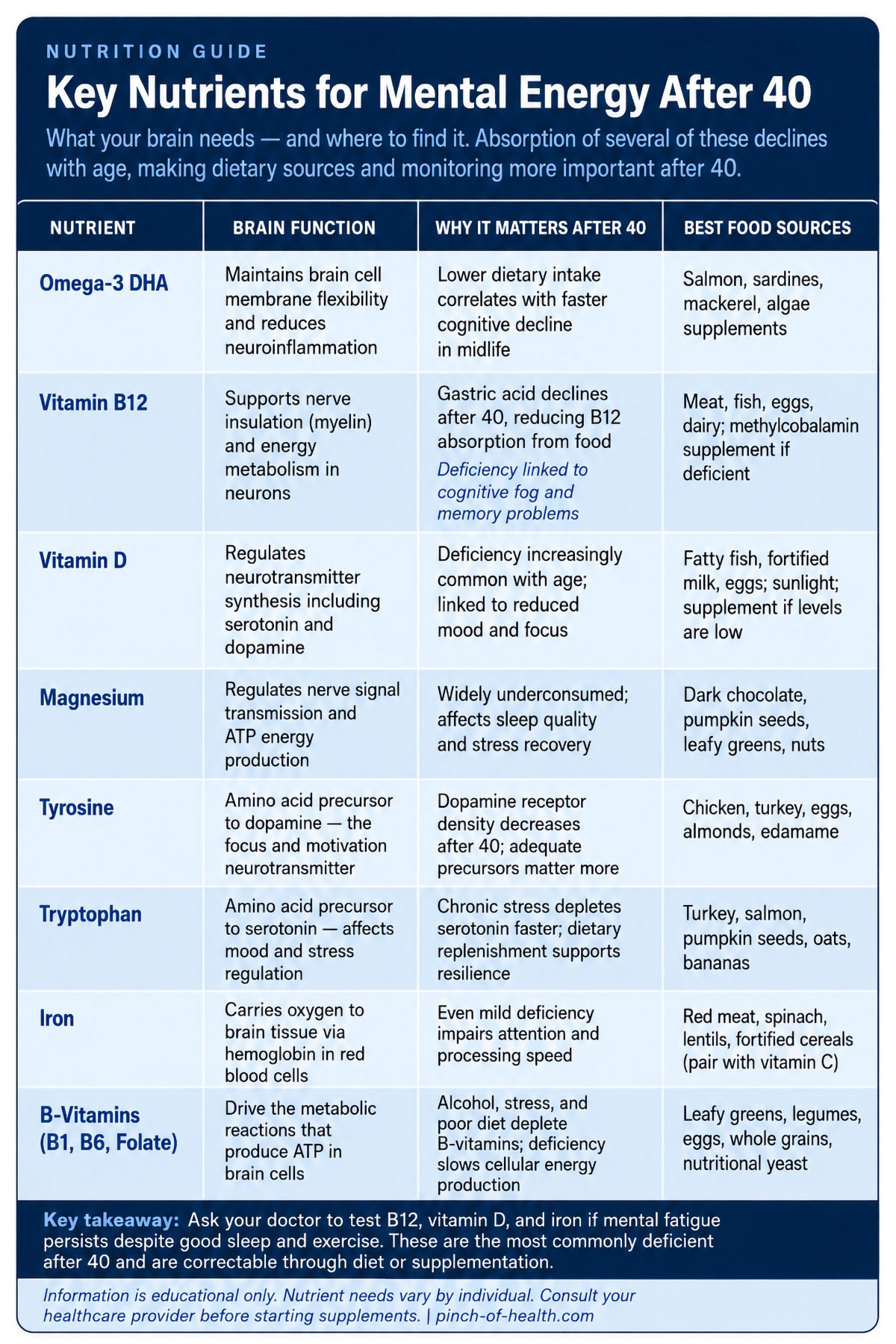
Glucose powers neurons, but the brain’s functional chemistry requires more than calories. Serotonin synthesis requires tryptophan. Dopamine requires tyrosine. Both come from dietary protein. Cell membranes depend on omega-3 fatty acids, particularly DHA. Energy metabolism at the cellular level requires B vitamins. And after 40, the gut absorbs several of these nutrients less efficiently than it did earlier.
Fernando Gómez-Pinilla at UCLA reviewed the evidence on diet and brain function in Nature Reviews Neuroscience in 2008, describing how specific nutrients influence synaptic plasticity and cognitive energy through multiple molecular pathways. High-sugar, low-protein meals produce blood glucose swings that the brain registers as “cognitive brownouts” (brief periods of reduced processing capacity that look like laziness but are actually a fuel problem).
What to do: Include 20–30 grams of protein at each meal. Add omega-3 sources (fatty fish, walnuts, flaxseeds) at least three times a week. If fatigue persists despite good sleep and exercise, ask your doctor to check vitamin B12 and D levels. Both become commonly deficient after 40 and both affect mental energy directly.
The Cognitive Plate Formula
Each meal should include a protein source (20–30g) for neurotransmitter production, healthy fats for cell membranes, colorful vegetables for antioxidant protection, and complex carbohydrates for steady glucose delivery.
Quick Brain-Fuel Snacks
- Greek yogurt with walnuts and berries
- Hard-boiled eggs with cherry tomatoes
- Apple slices with almond butter
- Tuna on cucumber slices
- Trail mix with nuts and a small amount of dark chocolate
Brain Health Supplement Checker
Check evidence ratings and potential interactions before you start
6. Stop Task-Switching to Save Mental Fuel
The claim that your brain can’t multitask has been repeated so often that it’s lost most of its force. The more actionable version is this: when you switch tasks, part of your attention doesn’t come with you.
Sophie Leroy, an organizational psychologist at the University of Washington, named this phenomenon “attention residue” in her 2009 paper in Organizational Behavior and Human Decision Processes. Her experiments showed that when people switched from an unfinished task to a new one, residual cognitive activity from the first task persisted, measurably degrading performance on the second. The more incomplete the first task felt, the stronger the residue and the longer it lasted.
The implication is stranger than it sounds. You don’t need to be consciously thinking about a previous task for it to be draining you. The cognitive overhead is running in the background, occupying working memory that would otherwise be available for what’s in front of you.
After 40, the neural efficiency of task-switching declines. The energy cost per switch increases. What felt manageable in your 30s becomes a measurable drain by early afternoon.
What to do: Use time-blocking. Dedicate specific, uninterrupted periods to single tasks. Turn off notifications during focused work. When you must switch, take a 2-minute break first. A brief pause to mentally close the previous task reduces residue significantly, according to follow-up work by Leroy and colleagues.
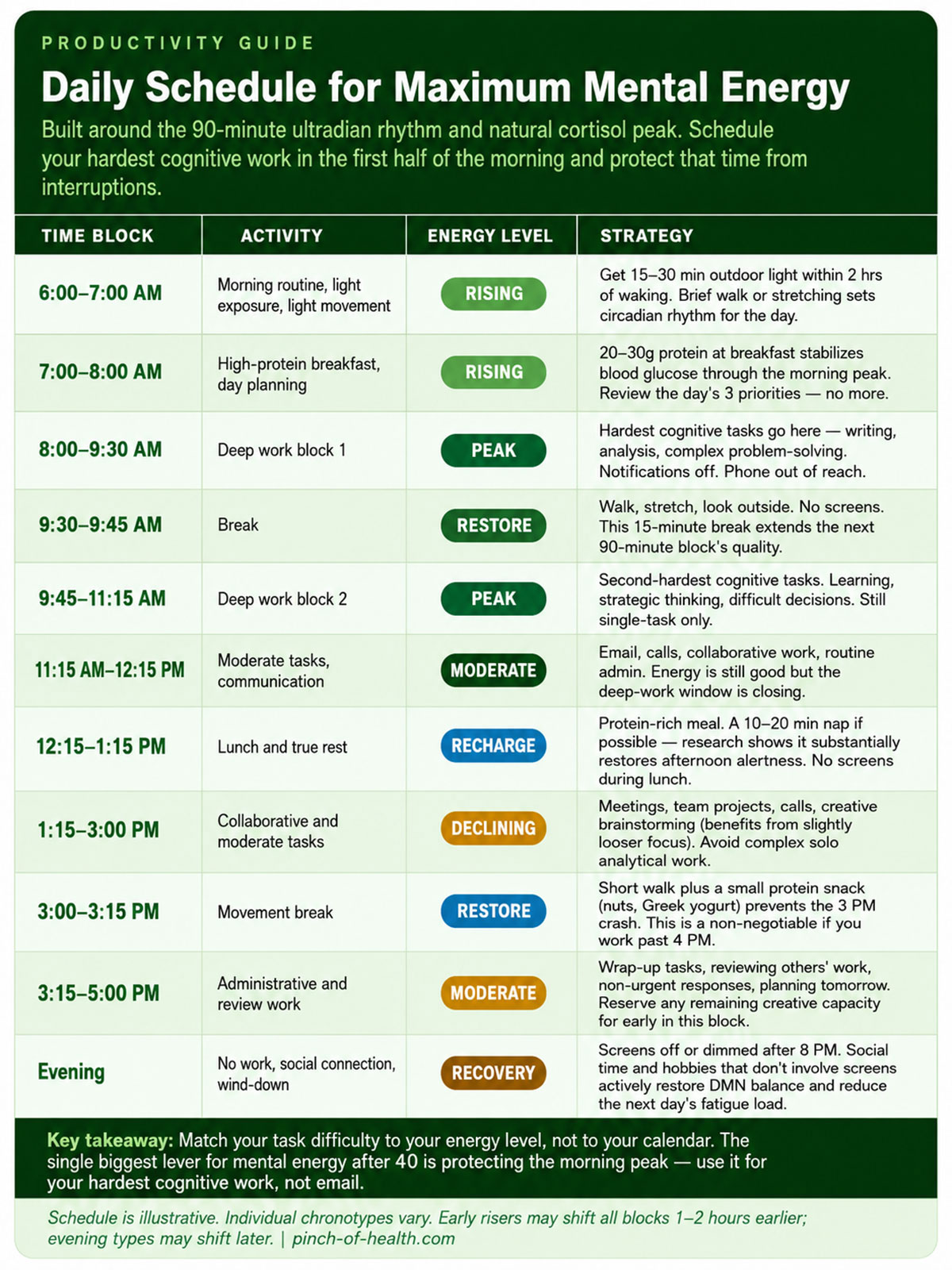
Sample Daily Schedule for Maximum Mental Energy
The schedule below is designed around natural energy peaks and the 90-minute ultradian rhythm. Adjust to your own chronotype. The biological timing differs between individuals, but the structure works regardless of whether you’re a morning or afternoon person.
Focus Protection Strategies
- Turn off all notifications during deep work blocks
- Use a website blocker for distracting sites during focused periods
- Batch email checking to two or three specific windows per day
- Tell colleagues your “do not disturb” hours and hold to them
- Use noise-canceling headphones as a focus signal to your environment
7. Build Cognitive Reserve Through New Learning
Novel, challenging mental activity builds something called cognitive reserve (a buffer of neural connections that keeps the brain functioning well even as some age-related changes occur). This is not about crossword puzzles. Puzzles become automatic with practice, and automaticity eliminates the challenge that produces the benefit. You need genuine novelty and sustained effort.
The ACTIVE trial, published in JAMA in 2002, remains the largest controlled study of cognitive training in older adults. The trial showed that specific cognitive training improved reasoning, processing speed, and memory, with benefits lasting up to 10 years in some participants. That’s the gold-standard evidence. The more interesting finding came later.
Denise Park at the University of Texas at Dallas wanted to know whether the type of new activity mattered. Her 2014 study in Psychological Science compared groups assigned to genuinely demanding new skills (digital photography, quilting) against those doing familiar or socially engaging activities. The demanding-skill groups showed substantially stronger episodic memory gains. The variable wasn’t just novelty. It was progressive challenge that required the learner to keep reaching.
What to do: Pick one complex skill to pursue over the next year. A language. An instrument. A craft that requires fine motor coordination and ongoing problem-solving. The brain benefit comes from the learning process itself, not from achievement.
8. Take Breaks Before Your Brain Demands Them
Sustained mental effort depletes glucose and neurotransmitter stores in active brain regions. Metabolic byproducts accumulate. The mechanisms that filter out distractions become less reliable. Psychologists call this “Directed Attention Fatigue” (the progressive erosion of focus quality that most people experience as their afternoon brain, which is slower and more distractible than their morning brain).
Atsunori Ariga and Alejandro Lleras at the University of Illinois published a study in Cognition in 2011 showing that brief breaks preserved cognitive performance during prolonged tasks in a way that continuous work did not. The finding wasn’t intuitive: the researchers had expected that deactivating attention temporarily would create a cost. Instead, the brief interruptions served as a reset that extended the total duration of effective focus.
After 40, recovery from mental effort takes longer than it did earlier. The practical implication is that proactive breaks (taken before performance declines) are more effective than breaks taken in response to already-degraded performance.
What to do: Work in 90-minute blocks, then take 5–10 minutes to do something genuinely different. Walk around. Look outside. Stretch. Screen-based breaks don’t count. They add cognitive load rather than reducing it. The 90-minute rhythm maps onto the brain’s natural ultradian cycle, which oscillates between higher and lower alertness at roughly that interval.
Effective Break Activities by Energy State
The 20-20-20 rule is worth adding for screen-heavy days: every 20 minutes, look at something 20 feet away for 20 seconds. It relaxes the ciliary muscles in the eye and provides a low-cost micro-break that compounds across the day.
9. Use Social Connection as Brain Training
Social interaction is among the most cognitively demanding activities humans perform. You’re processing language, tracking multiple conversation threads, reading facial and vocal cues, managing your own emotional responses, and building mental models of what another person is thinking (all simultaneously). That kind of multi-system engagement builds the neural connections that form cognitive reserve.
David Bennett at Rush University Medical Center followed a large group of older adults for years. His 2006 study in Lancet Neurology found that larger social networks and more frequent social activity predicted slower cognitive decline, even in participants who showed Alzheimer’s-related brain pathology at autopsy. The pathology was present. The cognitive reserve, built through social engagement, appeared to offset it.
Social connection also reduces cortisol and inflammatory markers that directly affect brain function, though researchers are still working out which pathway matters most. The Bennett finding is the harder one to shake: ordinary social engagement appeared to offset actual Alzheimer’s pathology visible at autopsy. The biology was there. The decline wasn’t.
Prioritize depth over frequency. One substantive conversation outperforms ten brief exchanges for cognitive benefit. Group activities that combine learning with social engagement (a book club, a language exchange, a cooking class) provide both reserves simultaneously.
10. Reset Your Internal Clock With Light
A small cluster of neurons in the hypothalamus called the suprachiasmatic nucleus governs your circadian rhythm. It takes its primary timing signal from light (specifically, high-intensity light in the blue wavelength range that reaches the retina in the morning) and triggers a cascade: cortisol rises appropriately, melatonin drops, alertness increases on schedule.
After 40, the eye’s lens begins yellowing and thickening, a structural change that most people notice only as needing reading glasses. The less-noticed consequence is that the yellowed lens filters out progressively more blue-wavelength light, the specific range the suprachiasmatic nucleus uses to calibrate when daytime starts. The circadian signal weakens. The brain receives a quieter version of the morning alert it needs. For many adults over 40, the result is that baseline fogginess that coffee addresses only partially. Not because the caffeine isn’t working, but because the problem was never about caffeine.
Christian Cajochen at the University of Basel confirmed this mechanism in a 2005 study in the Journal of Clinical Endocrinology and Metabolism, showing that morning light exposure directly affected alertness and cognitive performance through both circadian and immediate neural pathways.
What to do: Get 15–30 minutes of bright outdoor light within two hours of waking. Cloudy-day outdoor light still provides far more lux than typical indoor lighting. If outdoor light isn’t available, a 10,000-lux light therapy device for 20 minutes achieves a comparable effect. Minimize bright light exposure in the two hours before bed. The same system that sets your morning alertness also governs how well your glymphatic system clears waste overnight.
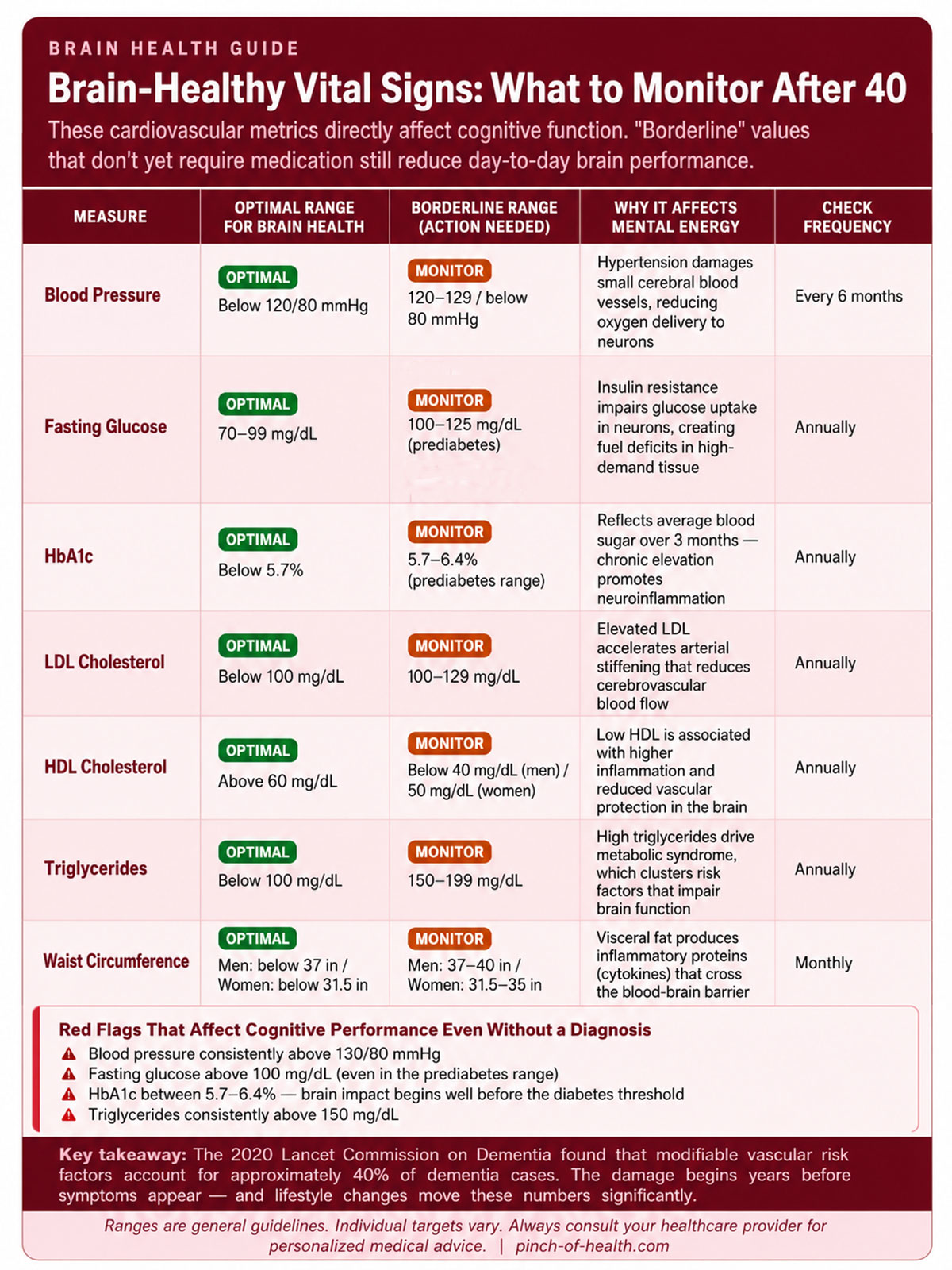
11. Treat Borderline Health Markers as Brain Issues
Cardiovascular metrics are cognitive metrics. Hypertension damages small blood vessels in the brain, reducing the nutrient and oxygen delivery that neurons require. Insulin resistance impairs glucose uptake at the cellular level, creating energy deficits in the exact tissue that needs steady fuel most. Obesity promotes systemic inflammation that crosses the blood-brain barrier.
The 2020 Lancet Commission on Dementia Prevention estimated that modifiable risk factors (hypertension, obesity, diabetes, and physical inactivity among them) account for approximately 40% of dementia cases. The Commission’s analysis emphasized that the vascular damage begins years, sometimes decades, before any cognitive symptoms appear.
The numbers your doctor classifies as “borderline but not requiring medication” still affect day-to-day brain performance. A fasting glucose of 105 doesn’t trigger a clinical intervention, but it represents a brain running on impaired fuel delivery.
What to do: Monitor blood pressure, fasting glucose, HbA1c, and lipids at the intervals your doctor recommends. Don’t wait for the numbers to cross into disease territory before addressing them. Diet, exercise, and stress management move these markers significantly, and the brain benefits appear before the cardiovascular benefits do.
12. Move Throughout the Day, Not Just During Exercise
Prolonged sitting reduces blood flow to the brain through a mechanism involving decreased shear stress on blood vessel walls. The drop in cerebrovascular flow affects cognitive function even in people who exercise regularly. That’s the part most people don’t expect.
A 2018 study in PLOS ONE found that sedentary behavior was associated with thinning of memory-critical brain regions, independent of how much formal exercise participants reported. The finding built on a 2014 review in Trends in Cognitive Sciences that showed how physical activity throughout the day (not concentrated into a single session) supports the large-scale brain networks involved in attention and executive function.
Researchers call this category of movement Non-Exercise Activity Thermogenesis (NEAT). Frequency matters more than intensity for the cognitive benefit. An hour at the gym followed by eight sedentary hours is not the same as movement distributed across the day, even if the calorie counts match.
What to do: Stand and move for 2–3 minutes every 30–60 minutes during sedentary work. Have walking meetings when the task allows. Stairs instead of elevators as a default. A standing desk or converter is a reasonable investment if your work requires long seated periods. The interruptions feel minor. Over a full day, they add up to substantially improved brain oxygenation.
The Compound Effect: Why These Habits Work Together
Each habit addresses a distinct biological system. But they interact in ways that multiply their individual effects. Exercise improves sleep quality. Better sleep reduces cortisol output. Lower cortisol improves glucose metabolism. Stable glucose supports neurotransmitter production. Adequate neurotransmitters make focused work less costly, which makes learning easier, which builds cognitive reserve. The chain connects every habit to every other one.
You don’t need to start all 12 at once. Most people find that three habits (ideally one from the sleep cluster, one movement habit, and one focus strategy) produce noticeable changes within two to three weeks. The rest of them become easier to add once the foundation is in place.
Your 30-Day Mental Energy Reset Plan
Week 1: Foundation Building. Choose three habits from the list that address your most obvious drain. Track your mental energy at 9 AM, 1 PM, and 4 PM daily. Adjust one meal to include adequate protein and healthy fats.
Week 2: Sleep and Movement. Implement the sleep checklist. Add 20 minutes of morning walking. Continue tracking. Add one 10-minute meditation session.
Week 3: Focus and Recovery. Start time-blocking your highest-value work. Take structured breaks every 90 minutes. Get morning light exposure daily.
Week 4: Integration. Add two or three more habits. Review your energy tracking. Where did things improve? Plan what you’ll sustain beyond the 30 days.
Common Obstacles and Solutions
When to Seek Professional Help
These habits help most people. But persistent mental fatigue sometimes signals an underlying medical issue that lifestyle changes alone won’t address.
See your doctor if you experience mental fatigue that doesn’t improve after 4–6 weeks of consistent lifestyle changes, a sudden or notable decline in cognitive function, memory problems that interfere with daily tasks, depression or mood changes alongside the fatigue, or sleep problems that persist despite following good sleep habits.
Conditions that can cause or worsen mental fatigue include sleep apnea, thyroid dysfunction, vitamin B12 or D deficiency, prediabetes and insulin resistance, depression and anxiety disorders, chronic inflammation, and medication side effects. A full panel of blood work and a sleep screening (neither of which requires specialist referral) can rule out most of these in a single appointment.
Conclusion
The cognitive changes that happen after 40 are real, measurable, and often frustrating. The research reviewed here keeps finding the same thing: those changes are more responsive to ordinary habits than the dread around them suggests. The glymphatic system still clears waste when you sleep well. The hippocampus still grows when you walk consistently. The DMN still quiets when you give it a reason to. That’s not a triumphant conclusion. It’s just where the evidence sits. The biology is more forgiving than most people expect.
FAQs
Does mental fatigue go away?
Yes, with the right interventions. Mental fatigue results from depleted resources, accumulated waste products, and inefficient energy use, not permanent structural damage. When the underlying causes are addressed (poor sleep, chronic stress, nutrient deficiencies, sedentary behavior), most people notice measurable improvement within 4–6 weeks of consistent habit changes.
What are the 5 stages of burnout?
Burnout progresses through distinct phases. The first is high energy and enthusiasm, followed by the onset of occasional stress and reduced efficiency. The third phase involves chronic stress and persistent exhaustion. In the fourth phase, physical symptoms, cynicism, and detachment become prominent. The fifth is habitual burnout, where these patterns embed as a new baseline. Mental fatigue after 40 often surfaces in phases 3 and 4, which is why early intervention matters.
How do you treat mental fatigue?
Treatment works best when it targets multiple systems at once. Prioritize sleep quality over duration. Add 150 minutes of weekly aerobic exercise to increase BDNF and hippocampal function. Eat protein-rich meals every 4–5 hours to stabilize blood glucose. Take structured breaks every 90 minutes. Manage stress through breathing practices and firm work-time boundaries. Get morning sunlight within two hours of waking. Monitor cardiovascular health markers. The combination outperforms any single intervention.
What exercises are good for mental fatigue?
Moderate-intensity aerobic exercise provides the strongest cognitive benefit. Brisk walking, swimming, cycling, and dancing all trigger BDNF release and increase hippocampal volume with consistent practice. Three to five 30-minute sessions per week is the evidence-supported target. Activities that combine physical and cognitive demand (tennis, dancing, martial arts) provide additional reserve-building benefit. Avoid overtraining, which raises cortisol and can worsen mental fatigue rather than relieve it.
What vitamin deficiency causes fatigue?
Several deficiencies directly impair mental energy. Vitamin B12 deficiency causes cognitive fog and memory problems, and becomes more common after 40 due to reduced gastric acid production and absorption efficiency. Vitamin D deficiency affects neurotransmitter regulation and mood. Iron deficiency reduces oxygen transport to brain tissue. Magnesium deficiency impairs nerve function and cellular energy metabolism. These are all testable. Ask your doctor for a standard panel if fatigue persists despite lifestyle changes.
How to diagnose mental fatigue?
Mental fatigue diagnosis starts with ruling out medical causes. A doctor should check thyroid function, key vitamin levels, blood glucose, and screen for sleep apnea and mood disorders. After excluding medical causes, the diagnosis focuses on the symptom pattern: difficulty sustaining concentration, slower processing, increased effort for routine tasks, decision fatigue, and reduced motivation. Tracking your cognitive energy at consistent times across several days helps identify patterns and gives your doctor useful information.
What does mental fatigue feel like?
Mental fatigue feels like thinking through resistance. Simple decisions require more effort than they should. You read the same sentence twice without it registering. Names and words sit just out of reach. Tasks that once took 20 minutes take 40. Unlike physical tiredness, mental fatigue often doesn’t respond to caffeine or a short rest. The depletion is in the brain’s chemistry, not your level of wakefulness.
Is brain fog mental fatigue?
Brain fog is the subjective experience of mental fatigue (the fuzzy thinking, poor recall, and lack of mental clarity). Mental fatigue is the underlying biological state: depleted neural resources, accumulated metabolic waste, and disrupted neurotransmitter levels. Treating the biological causes (improving sleep, reducing cortisol, stabilizing blood glucose) consistently resolves the subjective brain fog experience.
What is one of the first signs of cognitive decline?
Difficulty with executive function (planning, organizing, following multi-step instructions) often appears before memory problems. Increased mental effort for tasks that used to be automatic is another early signal. That said, the distinction between normal age-related changes and pathological decline matters: occasional word-finding difficulty is common after 40 and doesn’t indicate disease. Forgetting how to perform familiar tasks, or experiencing disorientation in familiar places, is more concerning and warrants a medical evaluation.
How long does mental fatigue last?
Duration depends on the cause and how consistently it’s addressed. Acute mental fatigue from one demanding day typically resolves with a full night of quality sleep. Chronic mental fatigue from sustained stress or entrenched poor habits takes 4–8 weeks to improve with consistent effort. Fatigue driven by an untreated medical condition persists until the root cause is treated. Initial improvements with the habits in this article typically appear within 2 weeks; substantial improvement usually takes 6–8 weeks.
What leads to mental fatigue?
Multiple factors converge. Poor sleep prevents the brain’s glymphatic waste-clearance system from doing its overnight work. Chronic stress causes physical changes in the prefrontal cortex and hippocampus through sustained cortisol exposure. Nutrient deficiencies impair neurotransmitter production. Prolonged sitting reduces cerebrovascular blood flow. Constant task-switching depletes cognitive resources faster than sustained focus does. After 40, these individual factors compound: hippocampal shrinkage, reduced dopamine receptor density, slower stress recovery, and less efficient nutrient absorption all run simultaneously.
At what age do you start losing cognitive ability?
Processing speed peaks around age 30 and declines gradually. Working memory and attention show subtle changes through the 40s. But cognitive reserve (built through education, complex work, social engagement, and lifelong learning) can offset these changes for decades. Many abilities, including vocabulary and accumulated knowledge, continue improving well into the 60s. The key distinction is between normal aging and preventable decline driven by poor sleep, chronic stress, sedentary behavior, and suboptimal nutrition. The second category is largely within your control.
What are the 4 types of fatigue?
Physical fatigue affects the muscles and cardiovascular system. Mental fatigue impairs cognitive function and decision-making. Emotional fatigue depletes the capacity to regulate feelings and manage interpersonal demands. Chronic fatigue is persistent exhaustion lasting months despite adequate rest, and often has overlapping physical, mental, and emotional components. After 40, these types frequently interact: chronic stress produces emotional fatigue that impairs sleep, which generates mental fatigue, which makes physical recovery slower. The 12 habits in this article address all four types through their interconnected effects on brain and body physiology.