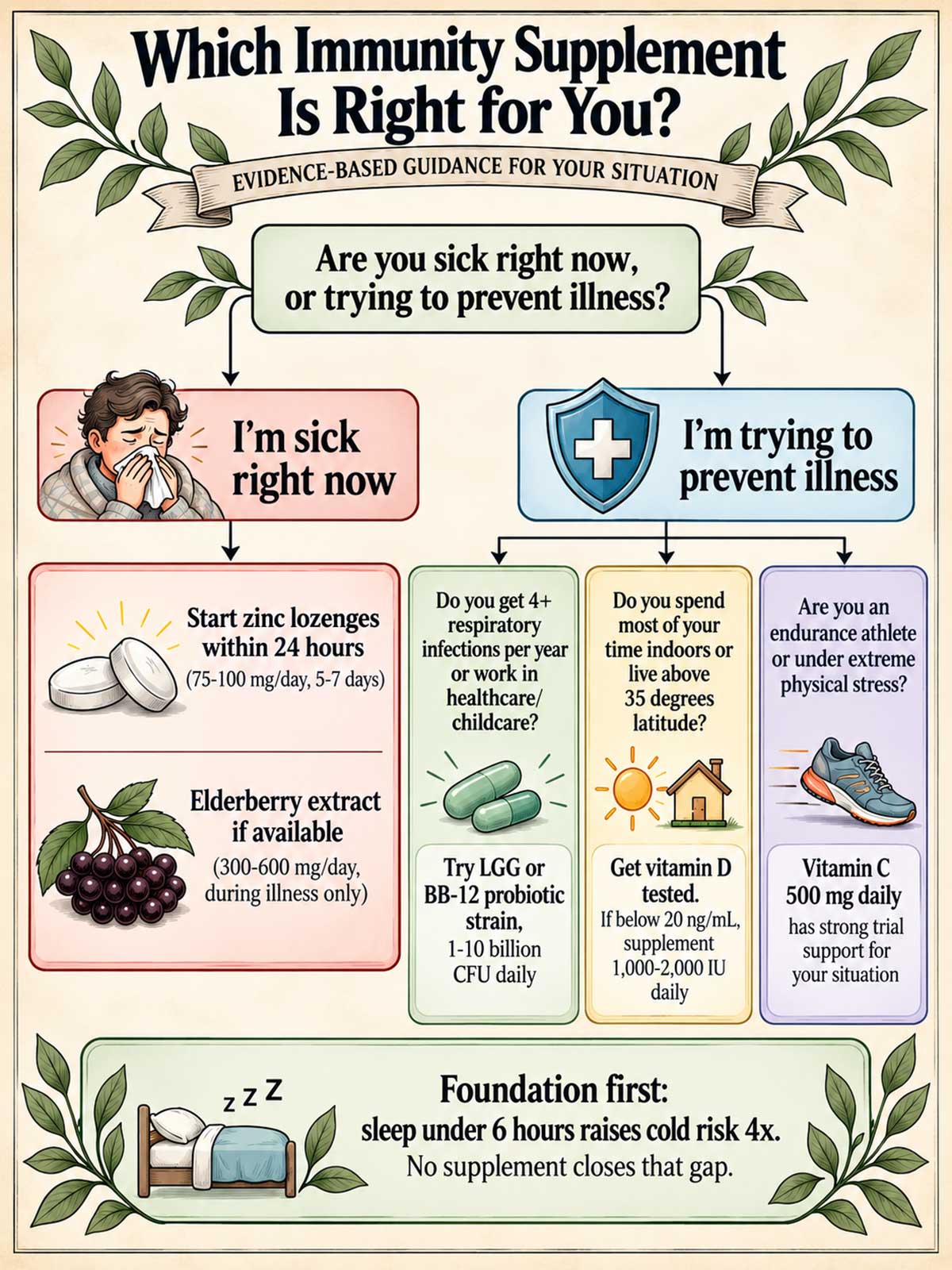
Every autumn, the same ritual begins. People reach for orange juice, elderberry gummies, and zinc lozenges by the handful. The supplement industry collects roughly $177 billion a year on this instinct.
The disappointing part is that most of those purchases are probably doing very little, not because the products are fraudulent, but because the relevant science is more conditional than the label copy suggests.
The research on immunity support supplements is genuinely interesting. Some of it is surprising in both directions: one supplement that almost nobody takes correctly actually cuts cold duration nearly in half, while another that outsells it consistently fails to outperform a placebo when researchers put it to a proper test. The details matter here, and the details are not what most people think they know.
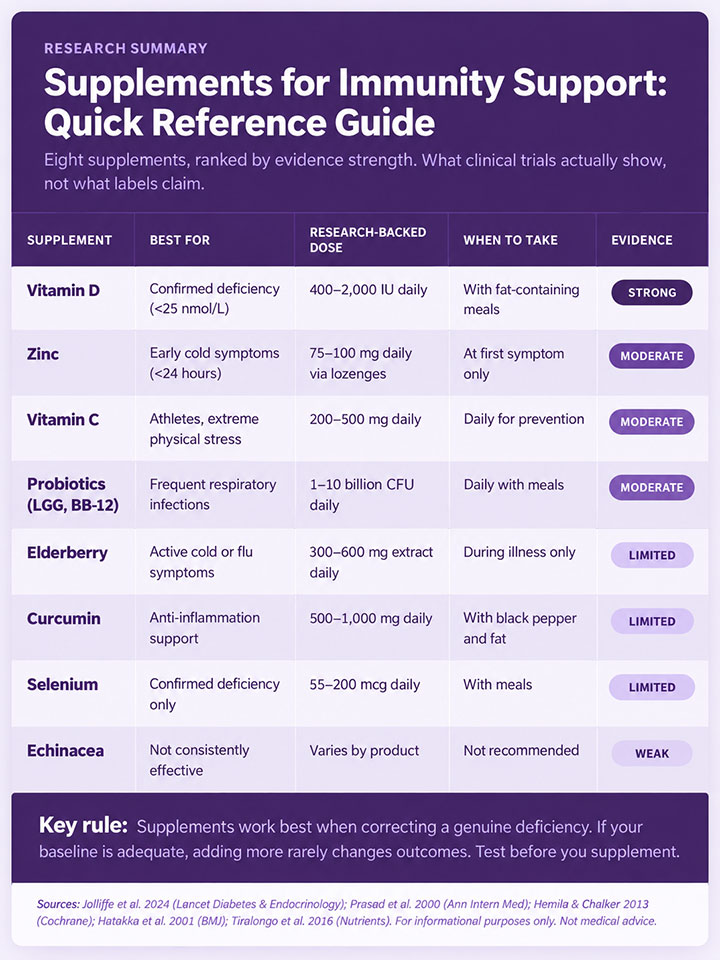
Eight supplements regularly appear in immunity formulas. Clinical trial data exists for all of them. The findings are messier and more specific than any “immune boosting” label will admit.
Vitamin D: Strong Evidence, Narrow Target
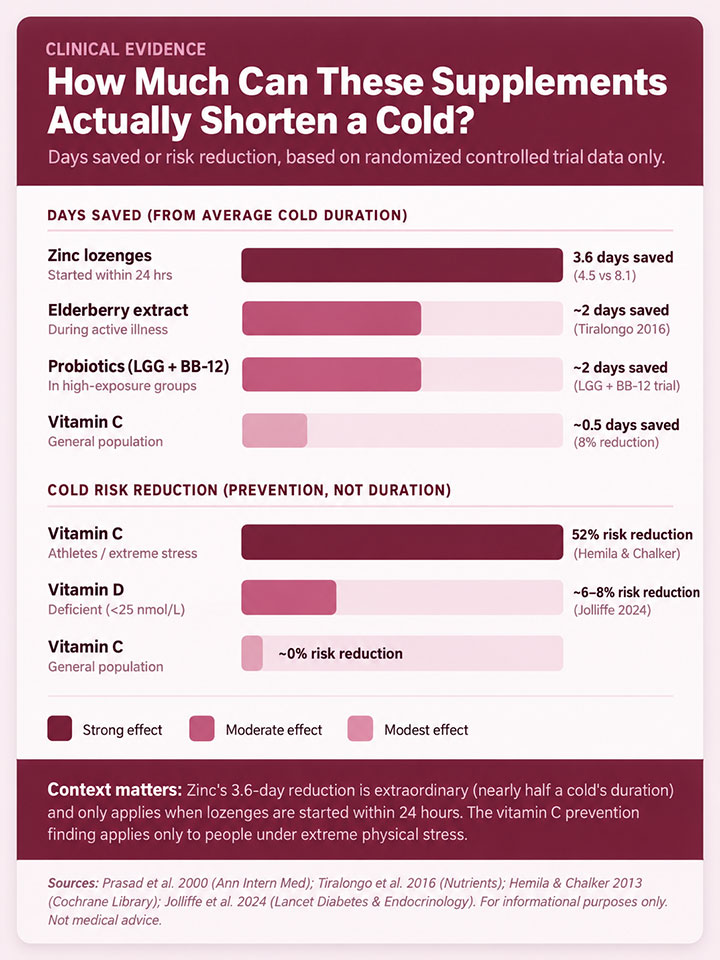
The case for vitamin D is real, but it depends almost entirely on where you’re starting from. A 2024 meta-analysis in The Lancet Diabetes and Endocrinology, drawing on 64,086 participants across 46 randomized trials, found that supplementation reduced respiratory infection risk by roughly 6%. That sounds modest. For most people with adequate baseline levels, it is.
The subgroup data is where the picture shifts. People with very low vitamin D levels, specifically below 25 nmol/L, saw substantially stronger protection. Think of a gas tank: adding fuel to an empty tank makes a real difference. Adding it to one that’s already full does not.
Who actually falls below that threshold? The list is longer than most people assume. People with indoor jobs who rarely see midday sun, those in northern climates during winter, individuals with darker skin (who require more sun exposure to produce equivalent amounts), adults over 65 (whose skin becomes less efficient at synthesis with age), and anyone with a malabsorption condition like Crohn’s disease or celiac disease are all at higher risk of genuine deficiency.
The practical consequence of all this is straightforward. Getting your levels checked first is the right move. A standard 25-hydroxyvitamin D blood test costs roughly $30-50 without insurance and tells you whether supplementation will actually do something.
If your levels are sufficient, 1,000 IU of daily vitamin D is unlikely to change how often you get sick. If they’re low, the benefit is meaningful.
Daily doses in the 400-2,000 IU range work best for most people. There is no evidence that mega-doses offer additional protection, and doses higher than 10,000 IU daily over an extended period carry a real risk of toxicity through calcium buildup.
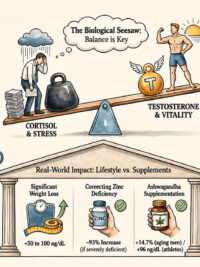
Zinc: The Window Is Smaller Than You Think
The zinc data is probably the most striking on this list, and also the most frequently misread. In a controlled study published in the Annals of Internal Medicine, 48 participants who received zinc acetate lozenges had colds lasting an average of 4.5 days.
Those in the placebo group averaged 8.1 days. Nearly half the cold duration. That is not a rounding error. That is clinically meaningful.
The catch is that this only works if you start within 24 hours of the first symptom. The Cochrane review on zinc confirms this condition. Wait longer than that, and the data stops supporting a benefit.
Zinc appears to work by creating an inhospitable environment for the rhinovirus in the throat. That is also why lozenges outperform capsules for cold treatment. Direct contact with throat tissue matters, not digestion.
The recommended dose during acute illness is 75-100 mg daily in divided doses (via lozenges), for no longer than 5-7 days. Long-term use at high doses is a separate problem: zinc above 100 mg daily over extended periods depletes copper, weakens immunity through a different pathway, and can reduce your sense of taste or smell. Think of it as a quick-response tool, not a daily strategy.
Vegetarians and vegans tend to have lower circulating zinc because the mineral is less bioavailable from plant sources. The same applies to older adults and those with digestive conditions. For these groups, keeping lozenges on hand and reaching for them fast at the first sign of illness makes more sense than daily supplementation.

Vitamin C: The Marathon Runner Exception
The Cochrane review on vitamin C, covering data from over 11,000 participants across 29 trials, produced one of the most misunderstood findings in nutrition science. Regular supplementation does not prevent colds in the general population. The effect in community-based studies is essentially zero.
But researchers Harri Hemilä and Elizabeth Chalker found something genuinely odd hiding in the subgroup data. In five separate trials of people under extreme physical stress, including marathon runners, skiers, and Canadian soldiers on subarctic exercises, vitamin C cut cold risk by roughly 52%.
Same supplement, wildly different effect. Cold duration, separately, was reduced by about 8% in adults and 14% in children who took it regularly.
Researchers still don’t agree on exactly why the extreme-stress population responds so differently. The leading hypothesis involves oxidative stress depleting vitamin C at a much faster rate during sustained physical exertion. If that depletion is real, supplementation is correcting a genuine deficit. For the person at a desk, there is no equivalent deficit to correct.
Your body absorbs roughly 200-500 mg of vitamin C at once. Higher than that, and the excess is excreted. The 1,000 mg and 2,000 mg products are mostly marketing. For the rare person who actually benefits from supplementation, 500 mg daily is the dose with clinical support.
If you are an endurance athlete, smoke, or work in extreme cold, the case for regular vitamin C is genuine. Otherwise, an orange delivers the vitamin alongside fiber and other compounds no capsule contains.
One question that comes up regularly is whether slow-release formulations or higher doses change the picture. The short answer is no, not meaningfully.
Slow-release vitamin C aims to maintain steadier plasma levels by extending absorption time, but no well-powered trial has shown this produces better immune outcomes than taking standard ascorbic acid in divided doses across the day, which achieves the same plasma-stability goal at lower cost.
The Cochrane review examined therapeutic doses above 1g daily separately and found the dose-response relationship flattens well below that threshold.
Intravenous high-dose vitamin C in clinical settings is a separate matter, sometimes used in cancer-adjacent contexts and certain immune-compromised populations, but that is clinical medicine rather than supplement guidance, and those conversations belong with a physician.
For everyone else, 200-500mg daily in divided doses is where the evidence sits, and going higher adds cost without adding benefit.
Probiotics: Strain Matters More Than Brand
The gut-lung relationship is one of the more counterintuitive findings in immunity research over the last decade. Beneficial bacteria in the intestinal tract appear to train immune cells locally, which then travel to the respiratory tract and increase its resistance to infection. This mechanism, called the gut-lung axis, is reasonably well established in the literature.
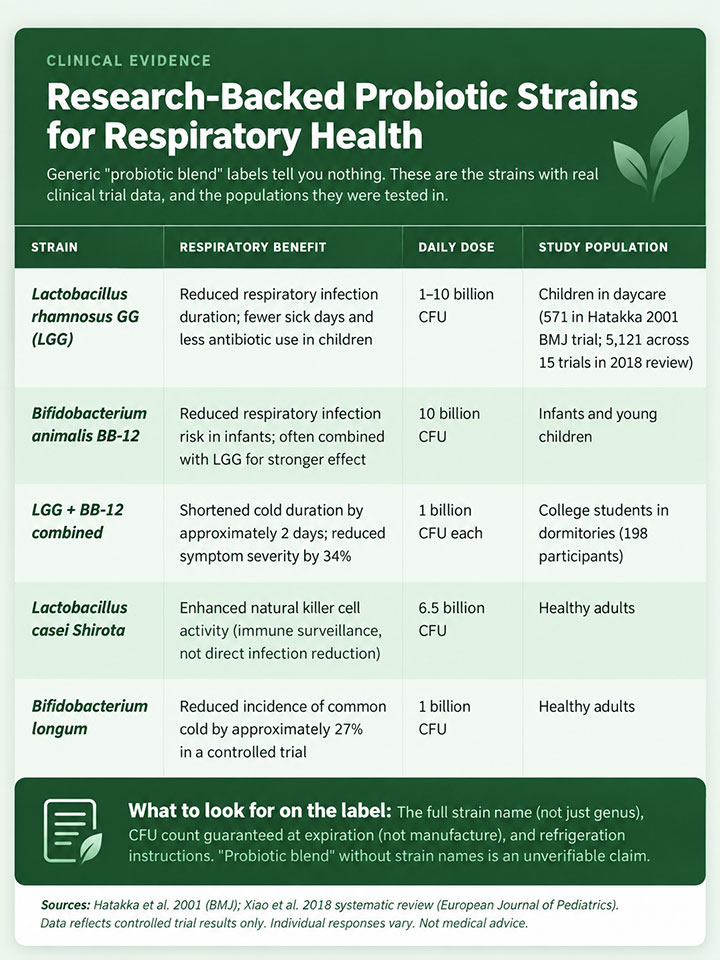
Translating that mechanism into an actual supplement purchase is where things get complicated. A 2018 systematic review in the European Journal of Pediatrics, analyzing 15 randomized trials in 5,121 children in daycare settings, found that Lactobacillus rhamnosus GG (LGG) modestly but significantly reduced respiratory tract infection duration, and that effect was strain-specific in a way the gut-lung research alone doesn’t predict.
Katja Hatakka and colleagues at Valio Research in Helsinki found similar results in a BMJ trial of 571 children given LGG-supplemented milk over seven months: fewer sick-leave days, fewer respiratory infections with complications, and less antibiotic use.
The operative word throughout that research is specific. “Probiotic” as a product category is nearly meaningless. The term covers thousands of different bacterial strains, each with distinct effects. A product labeled “probiotic blend” tells you almost nothing about whether it will help your respiratory immunity.
What matters is whether the label names the exact strain tested in clinical trials: Lactobacillus rhamnosus GG and Bifidobacterium animalis BB-12 are the two with the most consistent evidence for respiratory benefit.
Practical label details compound the strain question. CFU count tells you how many bacteria the product contains, and expiration date and storage requirements tell you how many will still be alive when you take it.
Most probiotics require refrigeration, and heat kills the bacteria before they reach your gut. Labels that guarantee live-culture counts at the expiration date, not at manufacture, are the ones worth the premium.
People who get respiratory infections four or more times a year, those who have recently taken antibiotics, and children in high-exposure environments like schools or daycare are the populations where the evidence for probiotic benefit is strongest.
Elderberry: Use It During Illness, Not Before
Evelin Tiralongo and colleagues at Griffith University in Australia ran a clean trial on this: 312 economy class passengers on intercontinental flights, randomized to elderberry extract or placebo, starting ten days before travel.
Placebo group participants who developed colds accumulated 117 total symptom-days. The elderberry group accumulated 57. Their symptoms were also significantly less severe. The 2016 paper in Nutrients is well-designed and often cited.
The honest note is that this was one study, in a specific population (stressed travelers in cramped conditions), using a specific extract preparation. The evidence base for elderberry is promising but thin relative to the product’s popularity.
There were also early concerns during the pandemic that elderberry might over-stimulate immune responses. For healthy people with common colds, that concern has not materialized in the evidence, but it does mean the product’s “natural therefore harmless” reputation is somewhat overstated.
The practical guidance is narrow but clear: take elderberry when you are actively sick, at 300-600 mg of standardized extract daily, and stop when symptoms resolve. Daily long-term use as prevention is not supported by the data. People with autoimmune conditions or on immunosuppressant drugs should speak with a doctor first.
Echinacea: An Honest Assessment
Echinacea is the supplement that should be easiest to evaluate, given decades of research, and somehow isn’t. Multiple trials show a modest 10-15% reduction in cold risk. Multiple others show no effect at all. The honest answer is that the product category is too variable to evaluate cleanly.
Three different species are sold under the name (Echinacea purpurea, E. angustifolia, E. pallida), using different plant parts, different extraction methods, and different processing standards. You cannot predict which product you’re getting from a store shelf label.
That is not a critique of any particular manufacturer. It’s a structural problem with the research that makes confident recommendations impossible.
Given that vitamin D, zinc, and probiotics all have more consistent evidence behind them and more predictable products available, echinacea is not where anyone’s first supplement dollar should go.
What Are the Signs of a Weak Immune System?
Before reaching for any of the supplements above, it’s worth asking whether your immune system is giving you signals worth paying attention to. Most people with low vitamin D feel nothing at all, which is one reason deficiency is widespread even in people who assume they’re fine.
When warning signs do surface, they include persistent fatigue that sleep doesn’t resolve, muscle weakness or aching, frequent illness (more than four to six respiratory infections per year), and wounds that take longer than expected to heal.
Chronic stress is also a significant immune suppressant that supplements cannot offset. Cortisol, released during sustained psychological stress, actively suppresses immune cell function. People who are under high stress, sleeping poorly, and eating a narrow range of foods are not going to find meaningful protection in a supplement cabinet.
Recurring infections, more than four to six a year, are a pattern worth investigating properly. So are infections that hit harder than expected, or that take longer to clear. A supplement might be one answer. But these patterns can also point to something that genuinely needs a clinical workup, and the difference matters.
Do Immune Supplements Actually Work?
Some do: in specific populations, at specific doses, under specific conditions. That is an honest answer, even if it is not the one the supplement industry prefers to advertise.
Vitamin D works for people who are genuinely deficient. Zinc lozenges work if taken fast enough. Specific probiotic strains modestly reduce respiratory infection frequency and duration in high-exposure groups. Vitamin C works for people under extreme physical stress. Elderberry appears to reduce symptom duration during an active illness.
Echinacea, curcumin, and selenium round out a lot of “immune support” formulas on the basis of general anti-inflammatory properties rather than evidence that they prevent or shorten infections. Being biologically necessary is not the same as producing a measurable benefit in someone who is not deficient.
Curcumin and Selenium: Food First
Curcumin, the active compound in turmeric, is a potent anti-inflammatory that blocks several inflammatory pathways in the body. Selenium supports proper immune cell function. Both genuinely matter to health.
The clinical trials showing they prevent or reduce respiratory infections are, at this point, weak. Being biologically necessary is different from demonstrating that supplementation in non-deficient people produces a meaningful outcome in a proper trial.
Curcumin has a serious absorption problem on its own. The body breaks it down quickly before it can reach the bloodstream in useful amounts. Combining it with piperine (the active compound in black pepper) does improve absorption significantly, according to a 1998 study by Shoba et al. in Planta Medica that found a 2,000% increase in bioavailability in human volunteers.
Worth noting: that figure comes from a single industry-adjacent study that has not been independently replicated at that magnitude, though the general effect of piperine on curcumin absorption is well-accepted.
Selenium is easier. Two Brazil nuts contain roughly a full day’s requirement. Excess selenium, above 400 mcg daily, causes hair loss, brittle nails, and nausea. There is genuinely no case for supplementing selenium unless a blood test has confirmed deficiency.
Cooking with turmeric and black pepper delivers curcumin in a form the body can actually use. Two Brazil nuts cover selenium for the day. For most people who eat a varied diet, that is genuinely all this requires. The supplement aisle version is adding very little.
What the Research Actually Says About Immunity Basics
A 2015 study in the journal Sleep by researchers at UC San Francisco and Carnegie Mellon followed 164 healthy adults, tracked their sleep with wrist actigraphy for a week, then exposed them to rhinovirus under controlled conditions.
Those sleeping fewer than 6 hours per night were 4.2 times more likely to develop a cold than those sleeping more than 7 hours. No supplement on this list produces an effect that large.
The findings on sleep, stress, diet, and moderate exercise are consistent across decades of research. The immune benefits of a varied diet rich in vegetables, seven to eight hours of sleep, and regular moderate-intensity movement are not exciting to sell, which is probably why the $177 billion supplement market tends not to lead with them. That does not make them less real.
Immune Supplement Finder
Answer 5 quick questions. Get a personalized, evidence-based recommendation.
How to Choose Supplements That Actually Fit Your Situation
Start with what you actually need, not what a label promises. For vitamin D, three or more of the following risk factors put a $30-50 blood test well ahead of any supplement purchase: working indoors, living above 35 degrees north latitude, rarely eating fatty fish, or being over 65. If testing confirms deficiency (under 20 ng/mL), supplementing 1,000-2,000 IU daily is well-supported.
For zinc: keep lozenges in the medicine cabinet, not the supplement routine. Take them at the first symptom, not as prevention. If you are vegetarian, vegan, or over 65, you may want to be especially prompt about this.
For probiotics: look for products that name the strain, not just the genus. L. rhamnosus GG or B. animalis BB-12 on the label is a meaningful signal. “Probiotic blend” is not. A product specifying CFU count at the expiration date rather than at manufacture is worth the extra cost.
Third-party testing seals from USP, NSF International, or Informed Choice verify that what the label says matches what is in the bottle. That verification is worth paying for on any supplement you decide to use regularly.
Track what you take for three months. Note sick days, energy, and any side effects. After three months, ask whether there is a real, measurable difference. If there isn’t, stop. Not every supplement belongs in every routine, and the willingness to quit something that isn’t working is, oddly, the most evidence-based habit in the whole enterprise.
Supplement Interactions Worth Knowing
A few combinations need separation rather than stacking. None of these interactions are dramatic enough to make any supplement dangerous, but they are specific enough to matter if you’re taking two or three at once and not seeing the expected effect.
Zinc depletes copper over time at higher doses, so neither should be taken daily without monitoring. Calcium blocks iron absorption when taken together, which matters if you are managing anemia. Probiotics should be taken two to three hours after an antibiotic dose, not simultaneously, so the antibiotic doesn’t clear the bacteria before they establish.
Absorption is the other variable most people overlook. Fat-soluble vitamins, including vitamin D, are absorbed considerably better with a meal that contains fat.
A small amount of avocado, nuts, or salmon alongside the capsule is not a trivial detail, and the research on vitamin D’s immune effects was largely conducted under conditions where absorption was adequate.
Zinc lozenges for acute cold treatment work through direct throat contact and should not be swallowed whole. The effect the research measured depends on where the zinc ends up.
Conclusion
The supplement industry is good at selling the feeling of doing something. Some of what it sells is genuinely useful: a deficient person who takes vitamin D, a sick person who reaches for zinc lozenges within the first 24 hours, a child in daycare whose parent adds the right probiotic strain to breakfast. These interventions have real clinical backing.
Most purchases, though, are filling a psychological gap rather than a nutritional one. The $177 billion spent annually on dietary supplements globally, a figure from multiple market research assessments of the 2023 global market, is not a sign that supplementation works.
It’s a sign that the uncertainty around health is uncomfortable, and that discomfort is lucrative. The three things with the strongest evidence for protecting immune function are sleep, diet, and stress management, none of which fit in a capsule.