For decades, we’ve been told that building muscle means lifting heavier weights. The latest research tells a very different story, and it could save you time, money, and your joints.
The gym industry has spent decades selling the premise that iron is mandatory. Heavy barbells, cable machines, weight stacks. The message is that without them, you’re not really training. That premise has a problem. The research doesn’t support it.
What muscle growth actually requires is progressive mechanical tension and effort close to failure. Your body has no way of knowing whether that tension comes from a loaded barbell or from your own bodyweight pushed to its limit. What drives hypertrophy is the stimulus, not the implement creating it.
Seven movements, three days per week, nothing to buy. The science behind why this works is less complicated than the fitness industry makes it sound.
Why Bodyweight Training Matches Gym Results After 40
Researchers Clifton Kotarsky and colleagues wanted to know whether progressive bodyweight training could hold its own against the bench press, and they chose to measure the answer with ultrasound rather than self-report.
In a 2018 study in the Journal of Strength and Conditioning Research, they put two groups of moderately trained men through four weeks of training: one group using progressive push-up variations, the other using traditional bench press loading. Pectoral and tricep muscle thickness increased significantly in both groups, with no meaningful difference between them.
That finding held across age groups too. A 2023 study in Experimental Physiology by Ogawa and colleagues followed healthy adults between 30 and 64 years old through eight weeks of either free-weight resistance training or body mass-based training.
Both groups gained comparable muscle hypertrophy. The bodyweight group produced one result the weight-training group did not: a reduction in intramuscular fat content in the thigh.
The mechanism behind both results is the same one Brad Schoenfeld and colleagues documented in a widely cited meta-analysis in the Journal of Strength and Conditioning Research: when volume and proximity to failure are equated, low-load training produces similar hypertrophy to high-load training. The load itself is the least important variable. How close to failure you push each set is what matters.
For adults over 40, bodyweight training offers something traditional weight training cannot: the load scales with your body. You are never forced above a weight your joints cannot handle. Progression happens through movement difficulty rather than through adding kilograms, which keeps the stimulus appropriate and the injury risk low.
The 7 Exercises You Actually Need
These seven movements cover every major muscle group. They progress from beginner to advanced using bodyweight alone, without requiring a single piece of equipment beyond your floor.
1. The Push-Up
Push-ups earn their place here because no other exercise offers the same range of progression using nothing but a floor and a wall. You can start against a countertop and end up doing single-arm decline reps, a progression span that most gym exercises cannot match without buying more equipment.
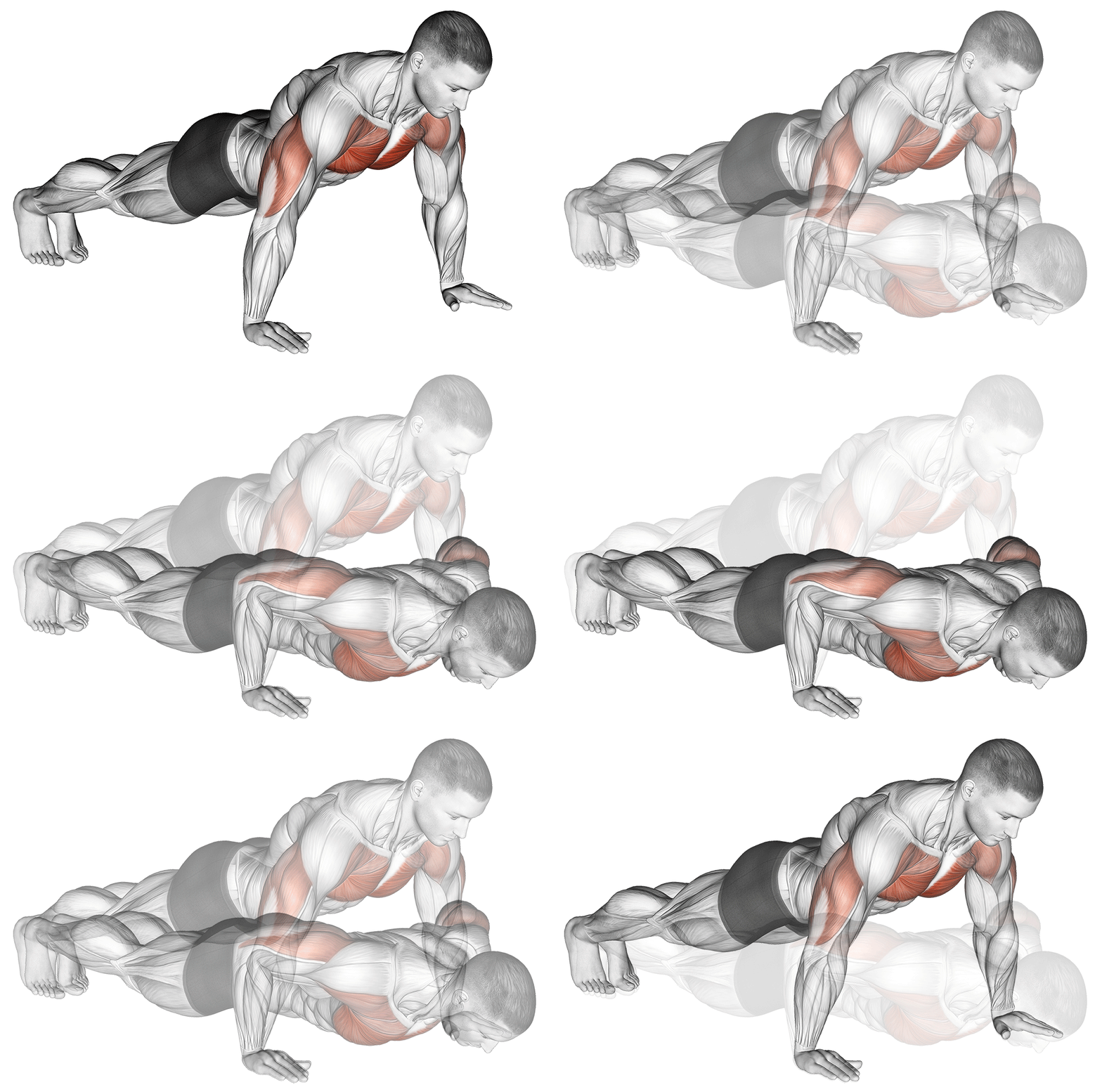
How to do it:
- Place your hands slightly wider than shoulder-width, fingers pointing forward.
- Keep your body in a straight line from head to heels, core braced.
- Lower your chest toward the floor, elbows tracking at roughly 45 degrees from your torso.
- Stop about an inch from the floor and press back to the start.
Starting point: If a standard push-up is not achievable yet, place your hands on a kitchen counter or sturdy table. The higher the surface, the lower the load. Work progressively lower surfaces until you reach the floor. Once standard push-ups feel manageable for 20 reps, elevate your feet on a chair for decline push-ups or slow the lowering phase to three to four seconds.
2. The Inverted Row
Most people pushing 40 spend far more time pressing than pulling. That imbalance shows up as rounded shoulders, tight pecs, and a back that tires out before anything else does. The inverted row corrects it. The only equipment it requires is a sturdy table or a broomstick balanced across two chairs.
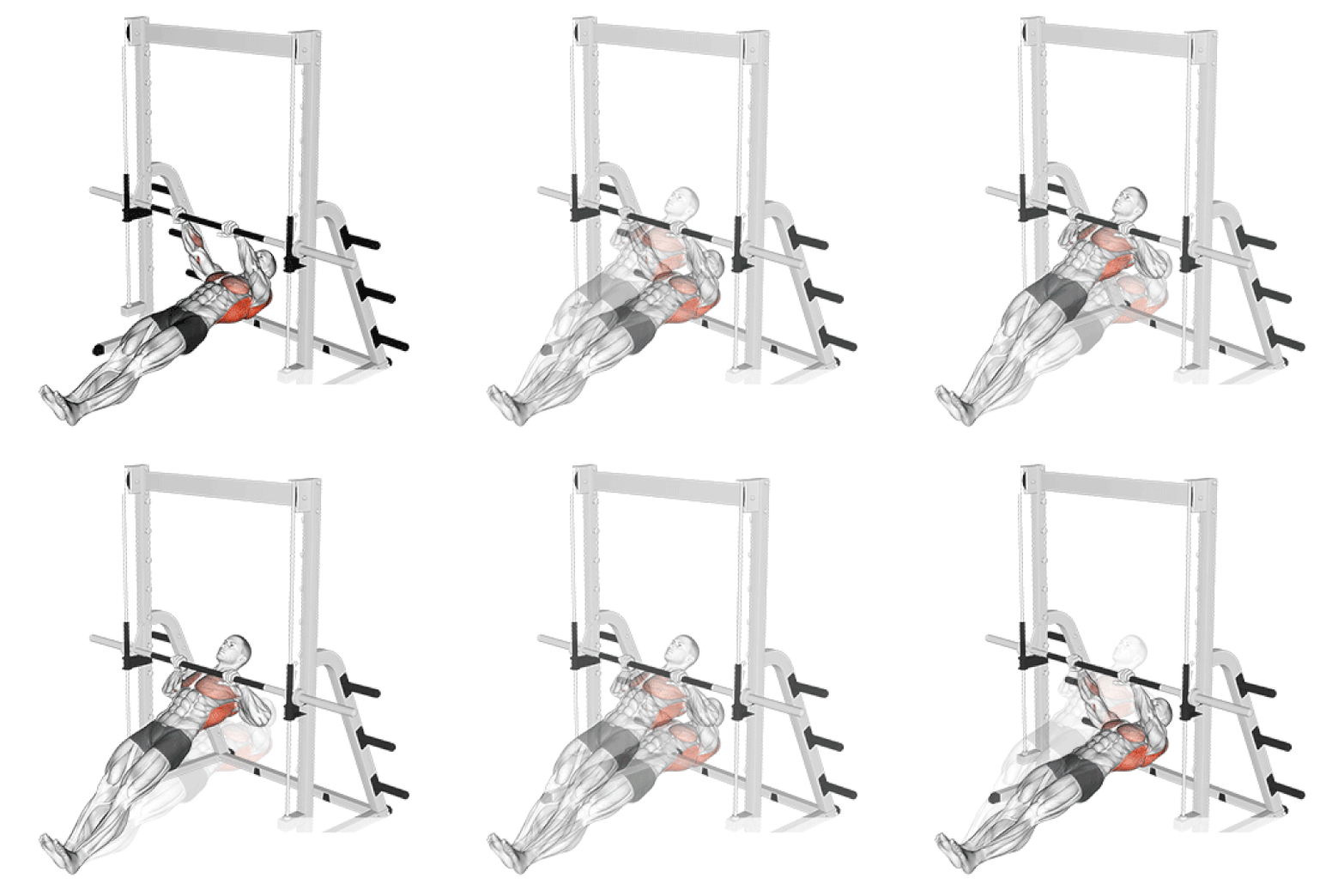
How to do it:
- Lie underneath a table or low bar, reaching up to grip it at roughly shoulder-width.
- Keep your body in a straight line from head to heels, core engaged.
- Pull your chest up to the bar, leading with your elbows behind you rather than flaring them wide.
- Lower with control to full arm extension.
Starting point: Bend your knees with feet flat on the floor. This reduces the load considerably. As you get stronger, straighten your legs, then elevate your feet on a chair. Test any improvised bar by applying weight gradually before committing to a set.
3. The Bodyweight Squat
After 40, strength matters. So does the ability to move well. Bodyweight squats load the quads, glutes, and hamstrings while simultaneously maintaining the hip mobility that most people start losing in their late thirties, a combination no leg press machine replicates.
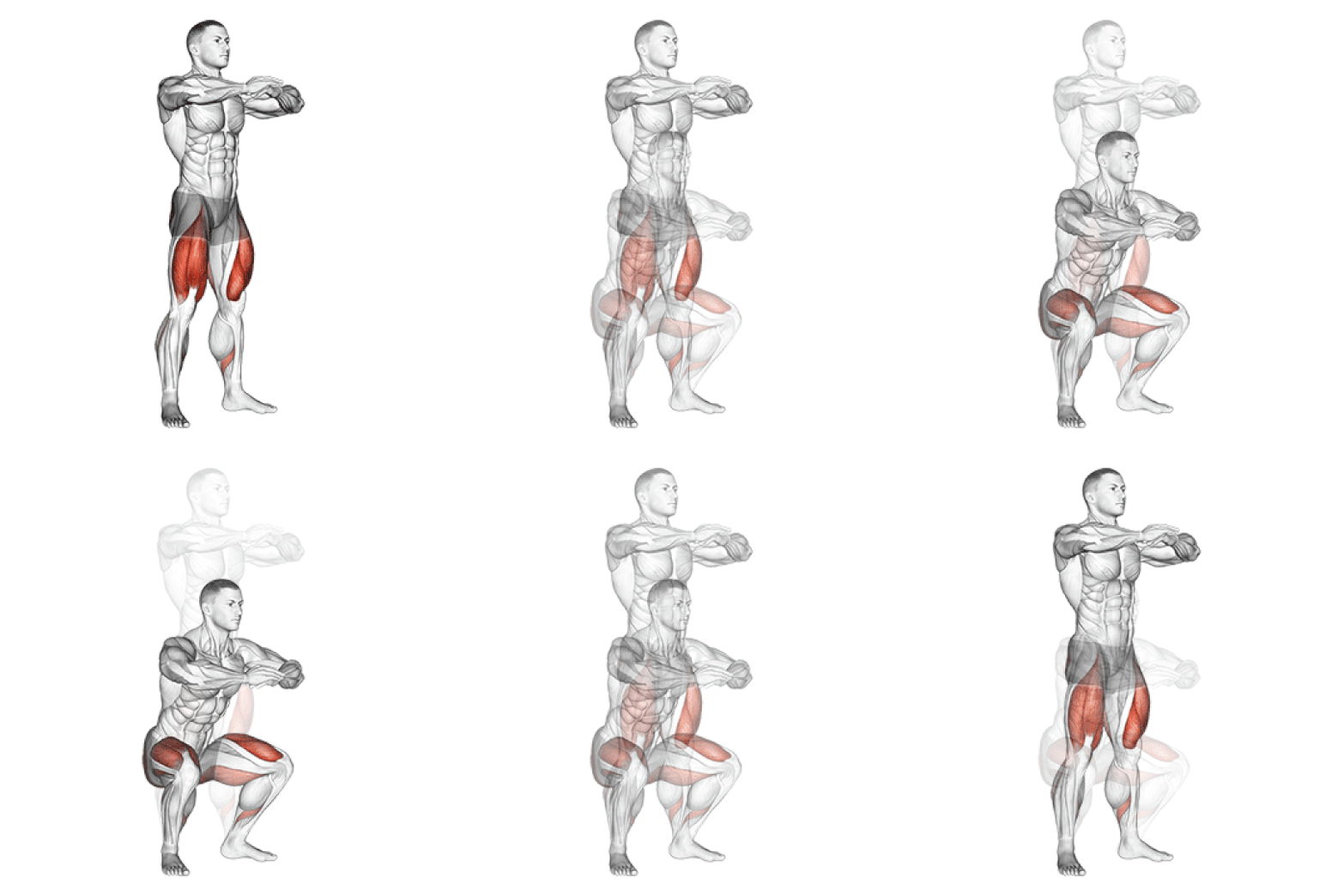
How to do it:
- Stand with feet roughly shoulder-width apart, toes turned out slightly.
- Keep your chest tall, and your core braced as you lower, as though sitting back into a chair.
- Go as deep as you can while keeping your heels flat on the floor.
- Drive through your heels to return to standing, squeezing your glutes at the top.
Starting point: Squat to a chair or bench and lightly tap it before standing back up. This teaches the movement pattern and gives you a target depth. Progress to full squats without assistance, then to pause squats (hold the bottom for three seconds), then to jump squats or single-leg work.
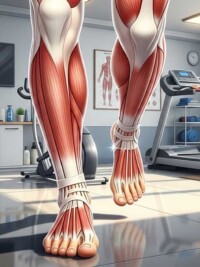
4. The Glute Bridge
Prolonged sitting switches off the glutes. Not entirely, but enough that most people who spend the majority of their day in a chair arrive at their forties with posterior chains that underperform relative to the rest of their body. The glute bridge isolates exactly what sitting inhibits, without loading the spine.
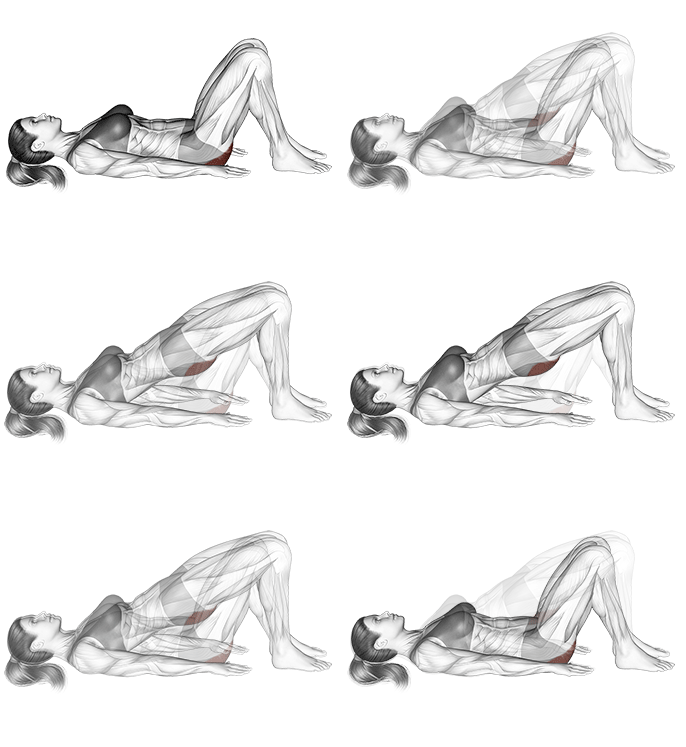
How to do it:
- Lie on your back with knees bent, feet flat on the floor roughly six inches from your hips.
- Press through your heels and lift your hips, squeezing your glutes hard at the top.
- Your body should form a straight line from knees to shoulders.
- Hold the top position for two seconds, then lower with control.
Starting point: Standard double-leg bridges for 15 reps per set. Once that feels easy, lift one leg and bridge on a single leg. From there, elevate your feet on a chair or couch and add a five-second hold at the top.
5. The Lunge
Lunges have a way of revealing things. Most people discover, somewhere in their first set, that one leg is noticeably weaker or less stable than the other, a discrepancy that bilateral exercises like squats hide entirely. That discovery is useful. Strength imbalances between sides are a significant injury risk factor as you age, and lunges are one of the few exercises that expose and directly address them.
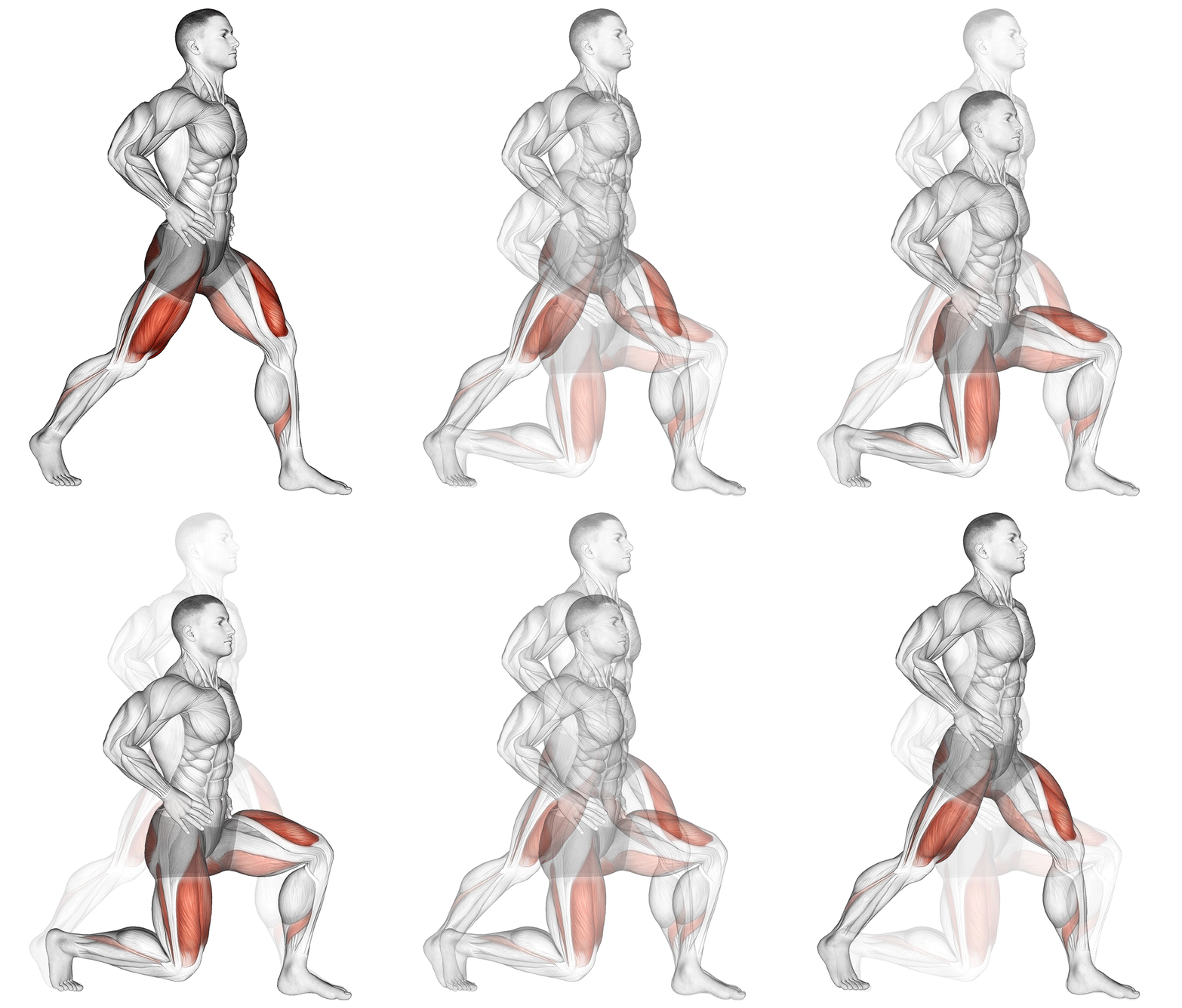
How to do it:
- Stand tall with feet hip-width apart.
- Step one foot back, lowering your rear knee toward the floor (reverse lunges) or step forward and lower your front knee (forward lunges).
- Keep your front shin vertical and your front knee aligned over your ankle.
- Press through your front heel to return to standing.
Starting point: Reverse lunges place less strain on the knee than forward lunges and are the better starting point. Hold a wall or chair for balance if needed. Progress to forward lunges, then to walking lunges, then to pause lunges holding the bottom position for two to three seconds.
6. The Plank
The plank does not train your abs the way most people expect. It trains anti-extension, which is the ability to resist forces that would bend your spine under load. That capacity is what protects your lower back during every other movement in this program and in daily life. A strong plank means a safer squat, a more stable row, and a back that does not give out when you pick something up off the floor.
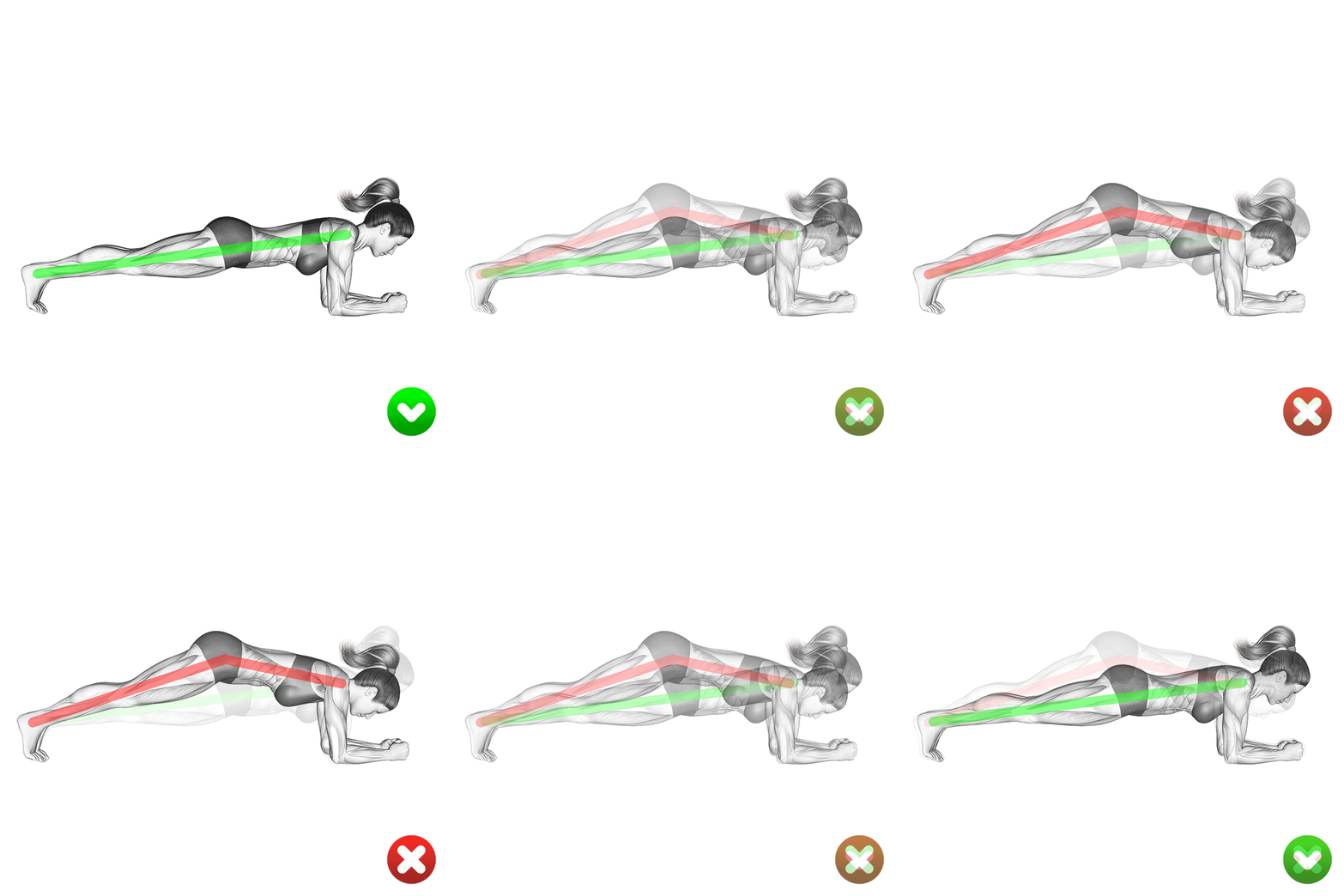
How to do it:
- Rest on your forearms and toes, elbows directly below your shoulders.
- Tighten your core as though bracing for a punch, and squeeze your glutes.
- Keep your body in a straight line, hips neither sagging nor piking upward.
- Breathe normally throughout. Do not hold your breath.
Starting point: Begin with 20 to 30-second holds for three sets. Build toward 60-second holds, then progress to side planks (45 seconds per side), plank shoulder taps, or single-leg planks.

7. The Pike Push-Up
This is the one exercise in the program that most people skip and later regret. The shoulder musculature gets very little direct work in programs built around push-ups and rows. The push-up is primarily a horizontal press, not a vertical one. The pike push-up fills that gap. It also happens to be the prerequisite for anyone who eventually wants to work toward handstand push-ups.
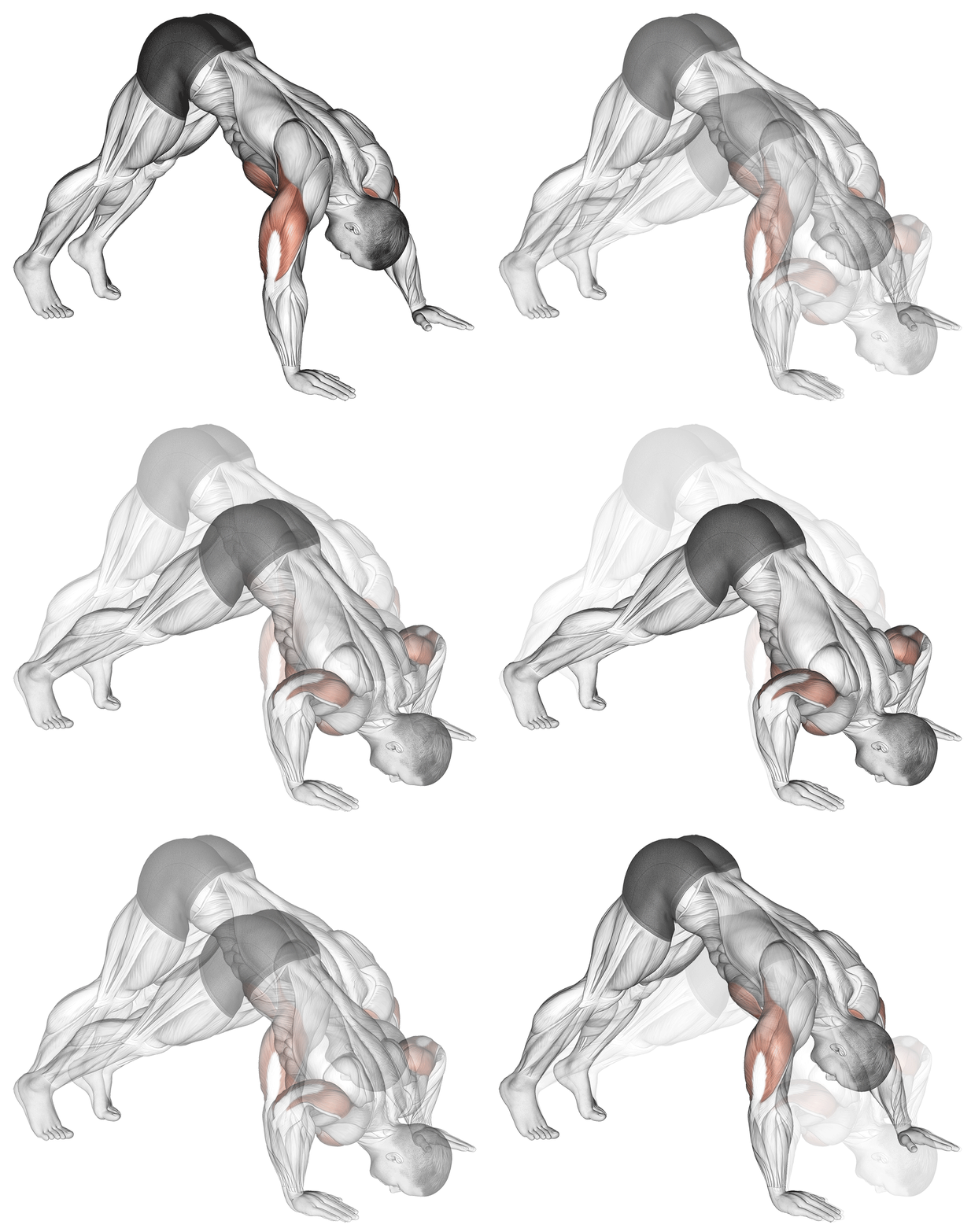
How to do it:
- Start in a push-up position, then walk your hands back toward your feet and lift your hips high to form an upside-down V shape.
- Keep your legs as straight as flexibility allows.
- Bend your elbows and lower the top of your head toward the floor between your hands.
- Press back up to the inverted-V position.
Starting point: Place your hands on an elevated surface like a chair seat to reduce the load on your shoulders. Progress to floor pike push-ups, then elevate your feet on a chair to increase the shoulder loading. Wall handstand push-ups are the eventual advanced target.
The Progression Cheat Sheet
The table below replaces the progression guidance scattered through each exercise section above. Use it as your reference when you hit the rep ceiling on any movement.
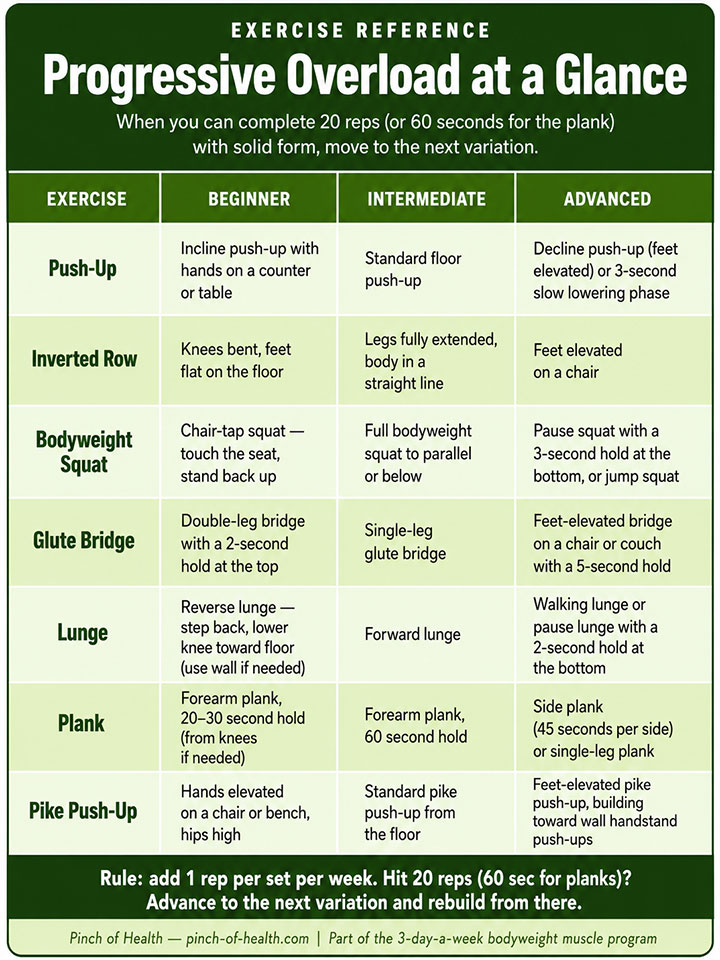
The rule is simple: when you can complete 20 reps in a set with solid form, move to the next variation listed. Add one rep per set each week until you reach 20 again. That rate of progression is slower than it sounds and faster than most people expect.
Your Bodyweight Exercise Routine to Build Muscle: 3 Days Per Week
Three days per week is the training frequency that gives your muscles enough stimulus to grow and enough time to repair between sessions. Research on muscle protein synthesis suggests it remains elevated for 36 to 48 hours after training, which means spacing sessions at least one day apart allows each workout to start from a fully recovered baseline.
Workout A (Monday and Friday):
- Push-ups: 3 sets to near failure (stop with 1–2 reps still in you)
- Bodyweight squats: 3 sets to near failure
- Inverted rows: 3 sets to near failure
- Plank: 3 sets, 45–60 second holds
Workout B (Wednesday):
- Pike push-ups: 3 sets to near failure
- Lunges: 3 sets per leg to near failure
- Glute bridges: 3 sets to near failure
- Plank: 3 sets, 45–60 second holds
Rest 90 to 120 seconds between sets. On rest days, light walking or gentle movement supports recovery without interfering with it.
How to Progress Each Week
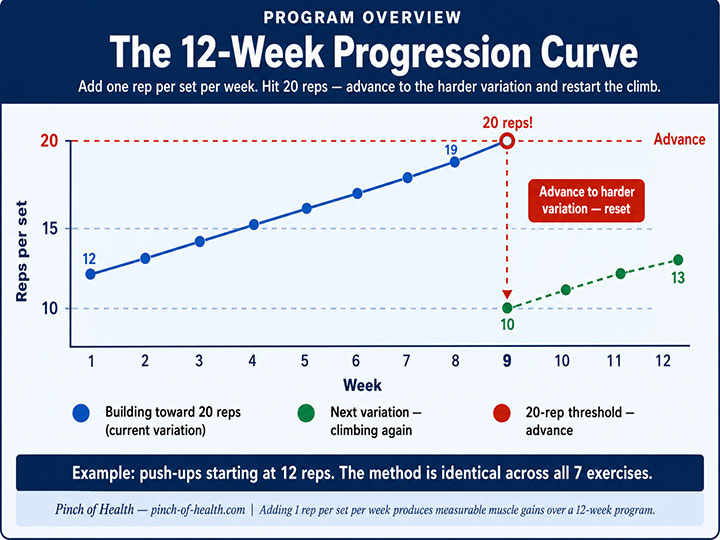
Add one rep to each set each week. That is the whole system. If you completed 12 push-ups per set this week, aim for 13 next week. When you reach 20 reps on an exercise, move to the next harder variation. Your rep count will drop back to 8 or 10, and you start building again from there.
This rate of progression feels almost too conservative. Over 12 weeks it adds up to serious structural change. The trainers who keep people making progress for years tend to be the ones who resist the temptation to speed it up.
Your 5-Minute Warm-Up
Cold muscles do not respond well to sudden demands. After 40, the warm-up is not optional. It reduces injury risk and measurably improves your performance on the working sets.
- Arm circles: 10 forward, 10 backward
- Leg swings: 10 per leg, front-to-back and side-to-side
- Slow bodyweight squats: 10 reps
- Push-up position hold: 20–30 seconds
- Cat-cow stretches: 10 reps
- Easy reverse lunges: 5 per leg
Move smoothly and without force. You should feel warm by the end, not tired. On cold mornings, add two minutes of brisk walking or marching in place before the sequence.
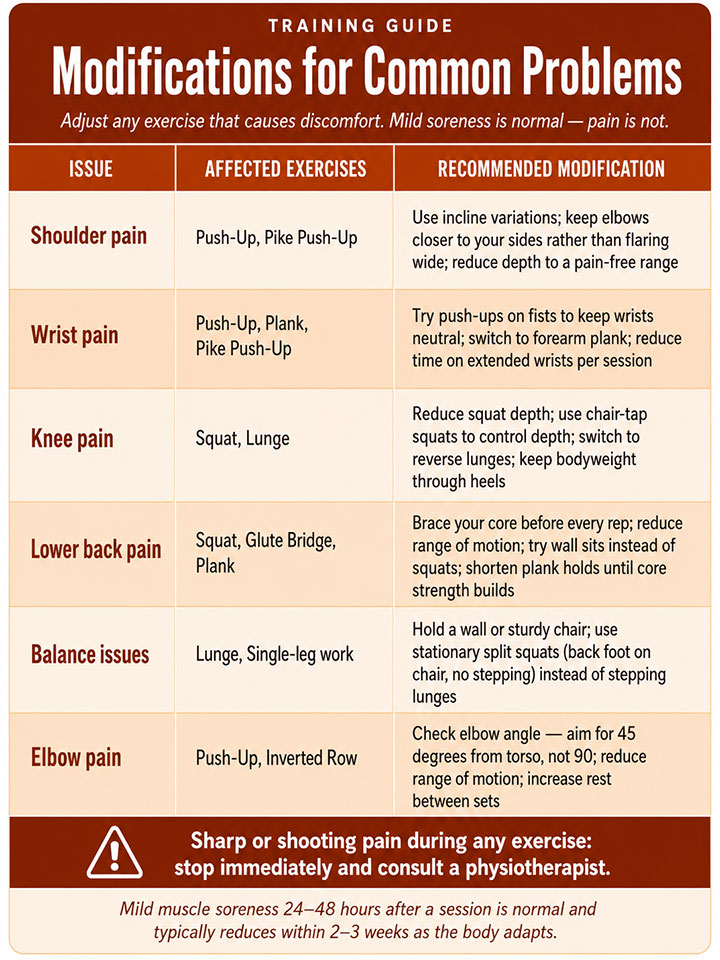
Modifications for Common Problems
Pain during exercise is information. Sharp or shooting pain means stop and consult a physiotherapist. Mild discomfort when starting a new movement is normal and typically resolves within a week or two as tissue adapts.
Five Mistakes That Slow Your Progress
Training to absolute failure every set. Going to complete failure sounds productive. What it actually does is accumulate more fatigue than your body can clear before the next session, which degrades performance over time. Leave one to two reps in the tank on every set except the last one. Save true failure for the final set of each exercise, where the fatigue cost is paid after the workout, not during it. The fix: stop each set while you could still do one more rep with good form.
Not tracking your reps. Your memory is not reliable across a 12-week program. If you do not write down what you did, you cannot know whether you are actually progressing, and you will repeat the same numbers for weeks without realizing it. The fix: record your rep counts after each set. It takes 30 seconds and directly changes what you do the following week.
Inconsistent protein intake. You might hit your protein target on training days and fall short on rest days, or eat most of it at dinner with almost none at breakfast. Muscle repair happens continuously across the week, not only on training days. The fix: hit your protein target every day, spread across three to four meals. Aim for 0.7 to 1 gram per pound of bodyweight.
Skipping the warm-up. The warm-up feels like wasted time until it is not there and something pulls. The fix: do it every session without exception. It takes five minutes and costs more time to skip it than to do it.
Progressing too fast. Adding reps or jumping to harder variations before your body has consolidated the current level feels like ambition. It is usually overreaching, and it reliably leads to stalled progress or a minor injury that sets you back further than the time you were trying to save. The fix: trust one rep per set per week.
What You Need to Eat to Support Muscle Growth
Training stimulus is what triggers muscle growth. Protein is what supplies the raw material to act on that trigger. Without adequate protein, the training is only half the equation.
Aim for 0.7 to 1 gram of protein per pound of bodyweight, spread across three to four meals. A 160-pound person needs 112 to 160 grams per day. After a workout, a meal with 25 to 40 grams of protein within two hours supports the muscle protein synthesis window. Good sources include chicken, fish, eggs, Greek yogurt, cottage cheese, and legumes.
Sleep is the other variable most people underestimate. Muscle repair happens primarily during deep sleep, not during the workout. Chronic poor sleep impairs both growth hormone secretion and muscle protein synthesis. The training effort then partially goes to waste. Seven to nine hours per night is a training input, not a recovery luxury. Treat it as one.
Hydration affects performance more than most people track. Muscles are roughly 75 percent water. A useful rule: divide your bodyweight in pounds by two to get your minimum daily water intake in ounces. Add 16 ounces for each hour of training.
What to Expect Over 12 Weeks
The first two weeks are largely neurological. Your nervous system is learning which motor units to recruit and in what order. Strength gains during this phase come faster than muscle gains. You will notice exercises getting easier before you see any physical change.
Most people consider quitting around week three. The soreness that felt like evidence something was working has faded. The mirror has not changed. What is actually happening is that neural efficiency is consolidating, motor patterns are adapting, and genuine hypertrophic stimulus is beginning to accumulate. There is nothing visible to show for any of it yet. Staying through week three is the most important decision you will make in this program.
By weeks five to eight, actual muscle growth is measurable. Clothes fit differently in the chest and shoulders. The scale may not change much, or at all, if you are simultaneously losing fat, which is common, particularly for people who have not trained consistently before. Photos taken at week eight compared to week one are more reliable than the scale at this stage.
Weeks nine to twelve consolidate the structural gains. Strength improvements become substantial. Movements that felt limiting in week one are manageable or even easy. Most people who make it to week twelve want to plan the next twelve weeks, which is the right instinct.
When Progress Stalls
A genuine plateau means the same rep counts across three or more consecutive workouts despite adequate sleep, protein, and recovery. One bad session is fatigue, not a plateau.
The most reliable fix is a deload week. For seven days, do only two sets of each exercise and stop four reps short of failure instead of one or two. The reduction in training volume allows accumulated fatigue to clear, and most people return to their regular sessions the following week and immediately break through the previous ceiling. Plan a deload every eight to ten weeks even when you are not stalled. Think of it as maintenance rather than retreat.
If a specific exercise is stuck while others are progressing, adding one extra set of that exercise on a rest day (at moderate effort, leaving three to four reps in reserve) for two to three weeks often breaks the pattern. Do not apply this approach to multiple exercises at once.
The Research Behind This Program
Taken together, these four studies point in the same direction. Progressive overload is the variable that drives hypertrophy, and the body cannot detect whether that overload comes from a barbell or from a harder variation of an exercise you can do in your kitchen.
Kotarsky’s 2018 push-up research and Ogawa’s 2023 body mass-versus-free-weight comparison both confirm this at the muscular level. What makes the Ozaki 2020 findings particularly relevant to this program’s demographic is what they showed at the population level: untrained adults between 57 and 75 can build measurable muscle thickness in 12 weeks of twice-weekly low-load training.
Hayao Ozaki and colleagues extended the picture in a 2020 study in the Journal of Sports Science and Medicine that specifically targeted older adults. Untrained adults between 57 and 75 years old performed low-load bodyweight and resistance-band training twice weekly for 12 weeks.
Muscle thickness increased significantly across multiple sites, as did isometric strength and physical function. The supervised group outperformed the partly unsupervised group on hypertrophy specifically, which is a useful finding: the quality and consistency of each session matter.
For the comparison between bodyweight and free-weight training in the mid-life demographic this program is designed for, the 2023 Experimental Physiology study by Ogawa and colleagues is the most directly applicable.
Healthy adults aged 30 to 64 trained with either free weights or body mass-based exercises for eight weeks. Both groups developed hypertrophy. The bodyweight group also reduced intramuscular fat in the thigh, an outcome the free-weight group did not produce.
The theoretical framework supporting all three findings was formalized in Schoenfeld and colleagues’ 2015 meta-analysis in the Journal of Strength and Conditioning Research: when training volume and proximity to failure are equated between low-load and high-load protocols, hypertrophy is statistically similar. The data does not support the gym industry premise that heavier is inherently better for muscle growth.
Conclusion
The people who quit this kind of program tend to do it around week three. The exercises feel hard but not in the satisfying way yet. The mirror hasn’t changed noticeably. The novelty is gone. Week three is also exactly when the adaptation is actually happening.
The nervous system is consolidating, hypertrophic stimulus is accumulating, and the body is starting to build the foundation that weeks five through twelve will make visible. The feeling that nothing is happening is often the most accurate sign that the work is in. Push through week three.
Frequently Asked Questions
Can I do this if I haven’t exercised in years?
Yes. Start with the most beginner variation of each exercise. If standard push-ups are not achievable, use a wall or countertop. If full squats are uncomfortable, squat to a chair. Work within whatever range of motion you currently have and build from there. Plan for four to six weeks before the full program feels manageable.
What if I can’t do a single push-up?
Start with wall push-ups, hands at chest height against a smooth wall. After a week, move your hands to a countertop. Then a table, then a chair, then the floor. This progression takes four to eight weeks for most complete beginners and is entirely normal.
Is it possible to build muscle with bodyweight exercises alone?
Yes. This is not a workaround or a partial substitute. Research that directly compares bodyweight and free-weight training shows comparable hypertrophy when effort and volume are equated. The ceiling on bodyweight training is higher than most people think, because the exercises can be made progressively more difficult without adding external weight.
Can I add cardio to this program?
Yes, with some care about timing and volume. Walking on rest days does not interfere with recovery. Two to three sessions of low-intensity steady-state cardio per week (easy cycling, swimming) are compatible with this program. Daily intense running or hour-long cardio sessions on top of strength training will compete with recovery and slow muscle development.
How long should workouts actually take?
The five-minute warm-up plus Workout A or B runs 30 to 40 minutes at most, with rest periods of 90 to 120 seconds between sets. If your sessions are running longer, you are resting too long between sets. Set a timer.
What about supplements?
Protein powder is convenient for hitting your daily protein target when whole-food sources are limited, but it is not necessary if your diet already covers the target.
Creatine monohydrate at 5 grams per day is the best-supported supplement for strength training performance and is safe for long-term use.
Vitamin D is worth testing for, since deficiency is common after 40 and affects muscle function. Testosterone boosters, BCAAs, and fat burners do not have meaningful evidence behind them at standard doses.
Can I train more than 3 days per week?
Three days per week is sufficient and well-supported by the research for this stage of training. Adding more sessions does not meaningfully accelerate results for most people in the first 6 to 12 months and increases the risk of accumulating fatigue faster than you can clear it. If you want additional activity on off days, walking or mobility work is a better addition than extra strength sessions.
What if I miss a workout?
Continue with your next scheduled session. Do not attempt to compress two sessions into one day to compensate. Missing one workout does not affect your overall results. If you miss multiple weeks due to illness or travel, scale back to two sets for your first session back, then return to normal volume immediately.
What is the 3-3-3 rule for working out?
The phrase circulates with competing definitions. The most common fitness interpretation is three strength workouts per week, three days of cardio, and three days of rest or active recovery. A separate version describes it as three workouts per week, 30 minutes each, sustained for three months. Neither is a formal program standard. Think of both versions as a general structure for building consistency rather than a precise prescription.
What are the big 5 bodyweight exercises?
There is no single canonical list, but the most commonly cited grouping includes push-ups, pull-ups (or inverted rows if a bar is unavailable), squats, lunges, and planks. This program uses all five of those movements plus the glute bridge and pike push-up, which add posterior-chain and shoulder-specific stimulus that the basic five leave undertrained.